Iran Lobby

Exposing the Activities of the lobbies and appeasers of the Mullah's Dictatorship ruling Iran

  • Home
  • About
  • Current Trend
  • National Iranian-American Council(NIAC)
    • Bogus Memberships
    • Survey
    • Lobbying
    • Iranians for International Cooperation
    • Defamation Lawsuit
    • People’s Mojahedin
    • Trita Parsi Biography
    • Parsi/Namazi Lobbying Plan
    • Parsi Links to Namazi& Iranian Regime
    • Namazi, NIAC Ringleader
    • Collaborating with Iran’s Ambassador
  • The Appeasers
    • Gary Sick
    • Flynt Leverett & Hillary Mann Leverett
    • Baroness Nicholson
  • Blog
  • Links
  • Media Reports

Shrinking Hopes of the Iran Regime

May 12, 2015 by admin

Shrinking Man (1)The Iran regime continues to suffer reversals on several fronts as it becomes increasingly clear it has overreached in supporting proxy wars and acting as an international rogue state, alarming its neighbors, as well as members of Congress even as it seeks to close a favorable nuclear deal.

Even while the third round of nuclear talks to move the April framework forward begins shortly, Iran’s mullahs have exhibited a callous disregard for international opinion as it engages in an ever brutal human rights crackdown which was highlighted by the arrest of noted human rights lawyer and death penalty opponent Narges Mohammadi without warning or explanation.

According to report released by Iran Human Rights group, in the 18 months since the election of President Rouhani in June 2013, Iranian authorities executed more than 1,193 people. This is an average of more than two executions every day.

The number of executions in that period was 31 percent higher than the number in the 18 months before President Rouhani assumed power. The number of juvenile offenders executed in 2014 was the highest since 1990.

Other human rights and Iranian resistance groups have pegged the number of executed by the regime even higher at 1,500 men, women and children.

But the prospect of a nuclear agreement is being met with growing skepticism with unexpected signs of trouble emerging including the potential for Iran to vastly increase its cyber warfare capabilities.

In a piece in The Hill, Fred Kagan, a national security scholar at the American Enterprise Institute (AEI) and co-author of a recent report on the Iranian cyber threat, said “We’re in a lose-lose situation from that standpoint. Would you rather have them do that with more resources or fewer?”

Rep. John Ratcliffe (R-Texas), recalled a speech last year in which Iran’s top mullah Ali Khamenei reminded university students they were “cyberwar agents.”

“I do not expect Iran’s quest for power to decrease if an agreement is reached, and cyber warfare is clearly part of its strategy,” he said.

In another clear signal about the threat the Iran regime poses to the region, a summit organized by the Obama administration in Washington invited the leaders of the six Arab Gulf states involved in the military campaign in Yemen against Iran-backed Houthi rebels, but only two monarchs confirmed their attendance with Saudi Arabia’s King Hamad bin Isaa Al Khalifa conspicuously declining the invitation.

The decision amounts to a public vote of no confidence in the U.S.-led response to Iranian aggression and proxy wars in Yemen, Syria and Iraq fueled by Iranian cash, weapons and fighters.

All of which served as a backdrop to a vote in the U.S. Senate yesterday by an unanimous zhi90-0 margin calling for the Iran regime to release three Americans – Saeed Abedini, Amir Hekmati and Jason Rezaian – that it holds in its prisons and assist in locating still-missing former FBI agent Robert Levinson.

Sen. James Risch (R-Idaho), who introduced the measure, argued the four should have been released before the U.S. started negotiating a nuclear agreement with Iran.

“Iran thinks it elevates its position in the world because it does these kinds of things. It does not,” Risch said. “Certainly it shows toughness, but a barbarian type of toughness that the world is not impressed with at all.”

The contradictions in these nuclear talks were described by Jennifer Rubin writing in the Washington Post’s Right Turn blog:

“In short, not only can we not trust the Iranians to comply with whatever is in a final deal but we also cannot trust the administration to call them on it when Iran again cheats, as we know it will. In big ways and small, the administration has already signaled it will have a high tolerance for violations so as not to upset its diplomatic goals. Imagine how much more tolerant the Obama administration will be when cheating would spell the demolition of the president’s ‘legacy.’”

As the scrutiny deepens and expands on the Iran regime, more of the world’s news media are beginning to ask the kinds of hard questions the mullahs do not want to answer as they see their hopes for pulling a fast one on the world quickly shrinking.

By Michael Tomlinson
Filed Under: Blog Tagged With: Iran, Iran deal, Iran executions, Iran Human rights, Iran Rouhani, Iran Talks, Nuclear Deal, Sanctions

The Dark Years of Iran Regime Can End

May 11, 2015 by admin

Parsi HeadshotThe reliable foot soldier for the Iran regime, Trita Parsi of the National Iranian American Council, offered an editorial over the weekend in the Huffington Post in which he blamed the decision to invade Iraq by former President George W. Bush as being the pivotal turning point for the deterioration of the Middle East.

Parsi goes on to say the regime in Tehran can be a key actor “by virtue of its strong state, Iran can play a critical stabilizing role in the region.”

Unfortunately, Parsi is once again drinking the Kool-Aid of the mullahs and ignoring history and its obvious lessons.

While the Bush administration’s decisions in Iraq are certainly debatable, pointing to the Middle East’s problems from only a decade back in time is silly. The hijacking of the Iranian revolution by the religious fanatics of Khomeini’s mullahs and turning Iran into a giant sectarian factory for terrorism and extremism over the past three decades can be viewed as a much more significant act.

The Iran regime’s involvement as the chief sponsor of Hezbollah turned Lebanon, a once-thriving economic and multi-cultural jewel into a bloody sectarian battlefield since the 1980s.

The regime’s infiltration of Iraq during the U.S.-led invasion resulted in the deaths and injuries of thousands of military personnel and civilians, while also laying the ground work for the rise of Shiite militias and death squads plunging that country back into civil war.

Iran’s unconditional support of Syria’s embattled president allowed the formation of ISIS to spring up as Iran’s Quds Force fighters alongside Syrian army units targeted moderate, Western-backed Syrian rebels.

And only last month have we seen the wreckage caused by Iran’s backing of Houthi rebels in Yemen with the collapse of that government and a full-blown proxy war now being waged by Saudi Arabia and a coalition of Arab states against Iran’s proxies.

Top that off with Iran’s secret drive to build a nuclear weapon and you now have introduced an unrestrained arms race into the Middle East as Saudi Arabia and other neighbors to Iran seriously consider the need to arm themselves against the threat from Tehran.

What the U.S. or for that matter any other country has done in the Middle East has paled compared to the damage and destruction wrought by Iran’s relentless mullahs over the past 30 years.

But what is most incredulous about Parsi’s claims is the idea that a nuclear deal with Iran will forge a new framework by which cooperation between the U.S. and Iran would be the norm moving forward. To say that Iran’s mullahs do not have an adversarial view of the West and the U.S. in particular is absurd, given the annual rituals in Tehran to lead national “Death to America” chants and hold American citizens as hostages in prison without charge or trial to be used as political pawns like some nightmarish replay of North Korea’s negotiating tactics.

The regime in Iran has never followed an international agreement it later viewed as being inconvenient towards their objectives. Iran has never offered any example where it has reigned in extremist behavior in favor of acting in accordance with international law.

There is little reason to think things would be different regardless of Parsi’s assurances to the contrary.

By Michael Tomlinson


Filed Under: Blog Tagged With: Iran, Iran Lobby, Iran Talks

Iran Lobby Loses 98-1 in Senate Vote

May 8, 2015 by admin

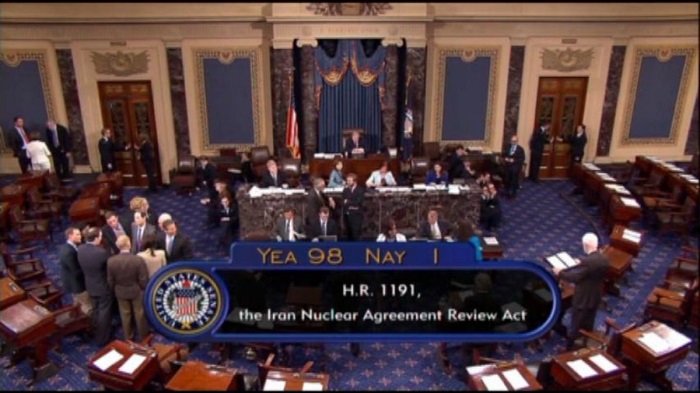
98-1 VoteThe Senate voted by a whopping 98-1 margin to approve the Corker-Menendez bill giving it 30 days to review and approve or vote down any nuclear agreement negotiated with the Iran regime and the P5+1 group of nations; affirming the utter failure by Iran’s lobbyists to halt the drive for Congressional review.

While the passage of this landmark legislation – where it is headed towards a similar passage in the House – represents the hard work of a bipartisan coalition of legislators to wedge Congress into the Iran nuclear talks, it boldly shows the ineffectual nature of the Iran lobby, especially the National Iranian American Council led by Trita Parsi.

The NIAC has loudly opposed any effort to allow Congress approval of any deal. When the Corker-Menendez bill was first introduced, NIAC issued a quick denouncement warning that “under this legislation, Congress would delay the implementation of any nuclear deal reached with Iran while deciding whether to permanently remove the President’s powers to execute a deal.”

The NIAC rightly recognizes that allowing Congress to approve any deal would bring the regime’s conduct into the equation and allow a public debate on whether or not a regime involved in proxy wars, terrorist activities, brutal human rights abuses and provoking sectarian civil wars is trustworthy enough for an agreement.

A recent NBC News poll found 68 percent of Americans believed Iran was either not too likely or not likely at all to abide by a nuclear agreement. Senators are not dumb, they can read a poll better than anyone else and these types of numbers compelled them to ignore the complaints of the Iran lobby and opt for further oversight.

But the legislative win wasn’t complete. There still remained within the bill some troubling provisions outlined by the Washington Post and decried by co-sponsor Sen. Robert Menendez (D-NJ) including “provisions that may wind up in a final deal — affording Iran immediate sanctions relief (‘a signing bonus’), allowing Iran to keep working on advanced research, reliance on the faulty concept of snapback sanctions, the failure to secure anytime/any place inspections, Iran’s refusal to come clean on past military dimensions of the program and excluding terrorism from sanctions consideration.”

But Sen. Menendez signaled that this bill would not be the final word on the Iran regime’s conduct, promising additional legislation.

“I stand ready to work with colleagues immediately on pursuing other concerns such as missile technology, such as terrorism, such as their human rights violations, such as their anti-Semitism, such as the Americans who are being held hostage. And to look at either sanctions or enhanced sanctions if they already exist on some of these elements that we should be considering. That is separate and apart from a nuclear program,” he said.

The NIAC, stinging from the Senate defeat, has turned its attention to the upcoming House vote, where it is also headed to another defeat, placing its hopes in a letter circulated among Democratic House members urging President Obama to stay the course in seeking a deal with the Iran regime. The letter, signed by 150 House members, including six non-voting members from U.S. territories, does not represent enough members to halt an override of a presidential veto.

It is clear that even after a “all hands on deck” mobilization by the NIAC to get enough signatures for the House letter, knowing the overwhelming defeat it faced in the Senate, it still could not muster the 145 House members necessary to sustain a presidential veto and instead attempted to hide the failure by counting the six non-voting members.

The fact that NIAC attempted this pathetic fig leaf did little to hide its waning ability to influence the ongoing nuclear debate.

By Michael Tomlinson

Filed Under: Blog, News Tagged With: Iran, Iran Lobby, Iran Talks

Khamenei Rants Pose Obstacles for Iran Lobby

May 7, 2015 by admin

HeadacheThe Iran regime is a peculiar nation since it is by constitution a religious theocracy which places it in exclusive company in the world; the only other theocratic nations include the Holy See, more commonly known as the Vatican and headed by Pope Francis and the Central Tibetan Administration, which is the Tibetan government in exile headed up by the Dalai Lama. One could also argue ISIS is a theocracy in the territory it now claims and controls.

The reason virtually no other nation is theocratic in nature rests largely on the idea that people want to government by a secular set of laws accountable to them or at the very least to the dictators or monarchs ruling them. Vesting decision making into the specific interpretations of a higher power by religious authorities generally invites trouble throughout human history.

In Iran’s case, absolute power rests in the Supreme Leader, Ali Khamenei who has ruled the regime since 1981, a reign of 34 years exceeded in length only by a few African dictators. In his position, Khamenei’s whims carry the force of royal decree over virtually all parts of Iranian life including the military, judiciary, culture, economy and religion.

This absolute power also poses a significant problem for regime supporters who have spent a considerable amount of time covering up or spinning Khamenei’s more outrageous statements over the past three decades. Loyal supporters such as the National Iranian American Council have substantial experience in protecting regime leaders having ample experience with the wildly provocative speeches and comments made by former President Mahmoud Ahmadinejad who regularly denied everything including the Holocaust.

Khamenei’s more recent comments about ongoing nuclear talks have proven to be more problematic for regime lobbyists and spin doctors. His most recent remarks came the other day in a speech to Iranian teachers in which he reiterated sternly that the regime would not complete any deal under any military threats. He alluded to comments made by two U.S. officials, neither of whom could be identified by journalists or the statements Khamenei mentioned.

Besides creating fictionalized accounts of negotiations, Khamenei has also been busy denouncing any deal that did not immediately reward the regime with the lifting of all economic sanctions. He also directly contradicted talking points issued by the U.S. and French governments after the framework agreement was announced last month in Geneva.

The fact that Khamenei feels emboldened enough to make serious attacks at a proposed nuclear deal reflects how little regard he has for international opinion, let alone international action against the regime. This has been borne out by his recent military decisions to engage in proxy wars in Syria, Iraq and now Yemen, not to mention the seizure of a commercial vessel and engage in a game of chicken with the U.S. Navy.

This increased extremist behavior by Khamenei has been noticed by more news media who have sounded warnings about its implications.

Foreign Policy Initiative took note of this trend by saying “Iran’s behavior suggests that it sees no contradiction between its efforts to reach a nuclear agreement and its regional hegemonic ambitions.”

The Washington Post also noted efforts by Iran to leverage nuclear talks, writing “we already see that Iran is mastering ‘linkage’ — trying to intimidate the United States on other issues with the threat it will walk out of nuclear talks.”

A position reinforced by the Hill which noted Khamenei vented on Twitter with “Ayatollah Ali Khamenei, Iran’s supreme leader, vowed on Wednesday that his nation would leave nuclear negotiations if it feels threatened by America’s armed forces.”

All of which proves troublesome for people like Trita Parsi and Reza Marashi of NIAC who have to go to great lengths to encourage journalists not to listen to Khamenei or spin that his comments are meant only for domestic consumption.

One would wonder why Khamenei would even bother with domestic audiences in which his word is law and any dissident is punished by a swift arrest and imprisonment in prison.

By Michael Tomlinson

Filed Under: Blog Tagged With: Iran Lobby, Khamenei, Marashi, NIAC

The Top 1 Percent in the Iran Regime

May 6, 2015 by admin

Rich Kids of Tehran1A bright yellow Porsche Boxster GTS driven by a young woman from a poorer neighborhood of Tehran with the wealthy owner a grandson of a high ranking mullah next to her hit speeds of 120 miles per hour before losing control and slamming into a tree; instantly killing the 20 year old woman with the 21 year old owner dying hours later of injuries.

The crash, which otherwise might have drawn scant attention in New York, Paris or Tokyo, caused a firestorm in tightly controlled Iran where social media has fueled pent-up outrage over the chasm between the rich, wealthy elites of the ruling class and the hardscrabble lives of ordinary Iranians. To make matters worse, the man killed was engaged to be married, but not to his young companion, furthering the perception that the strict laws and harsh penalties imposed by the regime’s mullahs exempt their own families and supporters.

The glaring contradiction in having unmarried a man and woman together in a society where a woman found in the company of a man other than her family can result in a swift beating by Basiji paramilitary militia reveals the hypocrisy running rife through the regime’s leadership.

The flow of cash and wealth to a select few, the regime’s own 1 percent, is the product of efforts by the regime to circumvent economic sanctions put in place to slow down Iran’s nuclear program, but have turned into a lucrative illicit trade benefitting just a few and helping to fuel the regime’s support for terror groups and its many proxy wars it is engaged in, most recently in Yemen.

The allocation of wealth within the regime based on family connections or need to fund overseas expansion of its extremist religion leaves ordinary Iranians struggling amidst the excessive display of wealth by family members of mullahs and those connected to the Revolutionary Guards Corps which controls vast sections of Iran’s economy and industry.

All of which is another reason why the ruling mullahs, including top mullah Ali Khamenei, have been absolutely adamant on the unconditional and total lifting of all economic sanctions, including U.S., European Union and United Nations penalties because they want to open the floodgates to foreign investment further enriching them and their families.

But the regime is a master of contrary perceptions to suit its needs. Another example was a speech by Iranian Foreign Minister Javad Zarif in New York where he chastised Sunni Arab nations’ air campaign against Iranian-backed Houthi rebels in Yemen, and yet refused to accept the regime’s $35 billion annual support of Syrian President Bashar al-Assad in a similar vein, even with Iranian Quds Force fighters actively fighting on the ground.

But it seems Zarif has become as adept at speaking out of both sides of his mouth as his loyal supporters in the U.S. such as Trita Parsi of the National Iranian American Council. In an interview on Charlie Rose’s show, Zarif insisted the regime did not imprison people for mere opinions.

“We do not jail people for their opinions,” Zarif said. His comments were met by derision on social media from former political prisoners to call him a liar pointing out dozens of political prisoners including journalists, bloggers, political activists and other dissidents languishing in Iranian prisons.

In the most blatant example of these flip-flops, the regime moved forward with the arrest of human rights activist Narges Mohammadi this week. She was scheduled to appear in court in connection with a new case filed against her by regime authorities, but a request for a delay in that case was denied, leaving her lawyer no time to study the charges against her. Her situation remains in doubt.

While the regime continues to enrich its own members, at the expense of Iranian citizens, it also continues to oppress the same people it is depriving of an economic future. Unfortunately, there can be no Occupy Wall Street movement in Tehran since protest is likely to send you straight to Evin Prison like so many others.

By Laura Carnahan

Filed Under: Blog Tagged With: Iran Economy, Iran Mullahs, Iran Talks, Khamenei, Rich mullahs, Sanctions

Scrutiny of Iran Regime Increasing Over The Nuclear Talks

May 5, 2015 by admin

Magnifying ScrutinyDespite the best efforts of lobbying allies of the Iran regime, including the National Iranian American Council, scrutiny of Iran’s actions and its policies are intensifying with the perception that this latest third round of talks will be the last chance for the Obama administration to close a deal.

With the stakes high, news organizations are finally turning their attention on the regime, and in light of the latest proxy wars started by Iran in Yemen, journalists are taking heed of what those acts may portend for a possible deal.

One such area of increased attention was the collective warning from Sunni Arab leaders to the U.S. that Iran’s role in arming and funding Shiite allies in the Middle East is powering extremist groups like Islamic State and Al Qaeda.

These same Arab leaders are pressing the Obama administration to more aggressively support Saudi Arabia and its allies in pushing back Iranian influence in Yemen, Syria, Lebanon and elsewhere in order to drain support for Islamic State and Al Qaeda.

Journalistic skepticism continued with the apparent contradiction over the issue of the economic sanctions should a nuclear deal be completed. Bloomberg View columnist Josh Rogin detailed speeches by Vice President Joe Biden and Treasury Secretary Jack Lew in which they outlined the administration plan to only lift sanctions after many years of compliance and only through Congressional action.

But “that explanation directly conflicts with what Iranian Foreign Minister Javad Zarif told an audience at New York University earlier that day,” Rogin wrote.” Zarif said that UN sanctions would be lifted within days of an agreement being signed and that all sanctions would be permanently lifted, including Congressional sanctions, once Iran met its initial obligations.”

In Commentary Magazine, Jonathan S. Tobin offered similar skepticism over the idea of “snapback sanctions” actually being of any effect. He correctly points out a critical flaw in the deal being contemplated:

“Just as important, the administration is drawing a broad distinction between branches of the Iranian Revolutionary Guard, the regime’s terror sponsor as well as an economic powerhouse. Lew promised that the U.S. would rightly hold the IRGC’s Quds Force responsible for its terrorist actions and keep sanctions in place on them. But the rest of the IRGC’s vast infrastructure will be exempt from sanctions after the deal is implemented. Such a distinction will enable Tehran to go on funding terrorism through the IRGC’s vast holdings that amount to a third of the Iranian economy. Money, like terrorism is fungible but if you’re determined to turn a blind eye to how the Iranian regime operates, anything is possible.”

But besides focus on the Iran regime’s foreign policy and nuclear talks, journalists are taking a closer look at the human rights abuses that continue to grow in new and alarming ways.

Agence France-Presse ran a story on the regime’s efforts to outlaw certain styles of haircuts for young Iranian men that the mullahs viewed as subversive and oddly “devil worshipping.”

Mostafa Govahi, the head of Iran’s Barbers Union, was quoted in the state-run ISNA news agency that “any shop that cuts hair in the devil worshipping style will be harshly dealt with and their license revoked,’ he said, noting that if a business cut hair in such a style this would ‘violate the Islamic system’s regulations.”

In addition, the mullahs aimed to ban tattoos, tanning beds and the plucking of eyebrows in a departure into the realm of weirdness. We can only assume given the regime’s preference for imprisonment and public hangings, haircutting in Iran might now be considered a dangerous profession.

And in a further embarrassment to those supporting a nuclear deal with Iran, the Observer chronicled the plight of homosexuals in Iran where an estimated 4,000-6,000 gays and lesbians have been executed by the regime since 1979 to today.

At a time when the U.S. is having a national debate over same-sex marriage, there is scant attention being paid to the abuses gays are undergoing in Iran; until now.

All of which points to the growing and well deserved scrutiny the regime is now undergoing. We can only hope the effect of a magnifying glass aimed at the regime’s policies will be similar to putting a bug under the burning glare of the sun.

By Michael Tomlinson

Filed Under: Blog, News Tagged With: Iran, Iran deal, Iran Lobby, Iran sanctions, Iran Talks, IRGC, Sanctions

Iran Lobby – Trita Parsi Playing Defense Full Time

May 4, 2015 by admin

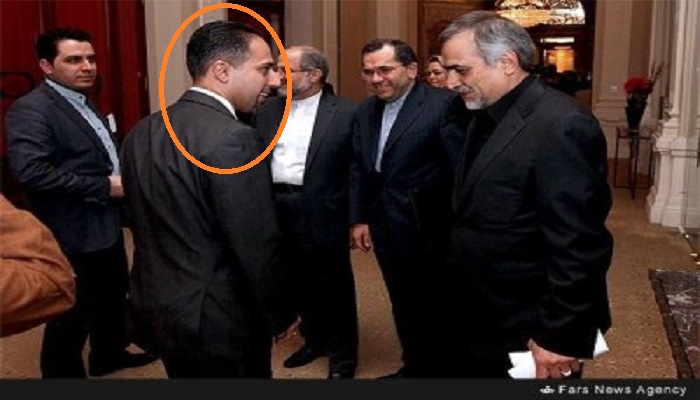
Trita Parsi paying respect the Iranian regime's delegation in Geneva

Trita parsi, greeting the mullah’s delegation in Geneva during the nuclear negotiations -March 2015

In Las Vegas over the weekend, the “Fight of the Century” took place with Floyd Mayweather winning the welterweight championship over Manny Pacquiao with a display of his textbook defensive boxing skills that kept his aggressive opponent at bay, earning him the unified title.

While, Mayweather raked in a reported $200 million for a night’s work, Trita Parsi, the head of the National Iranian American Council, has been busy earning his money on behalf of the Iranian regime trying to plug more holes in the regime’s façade of “moderation” than the Little Dutch Boy had fingers in the dike.

In Politico, Parsi was deflecting questions over insane comments being made by Iran regime officials, including some whoppers that Sen. John McCain (R-AZ) was caught meeting with the founder of ISIS, Abu Bakr al-Baghdadi, the Sunni militant group’s self-declared caliph. The photo used by the regime broadcast doctored images that even a high school student using Photoshop could have done a better job creating.

The litany of imagined and conjured offenses by the U.S. against the mullahs span the spectrum of silly to crazy, but they all point to a recurring pattern of propaganda efforts by the regime in Tehran to portray mullah’s Iran as the offended nation, thereby justifying all of its actions in the name of defending the Islamic nation from its enemies, real or imagined.

In an even more bizarre twist, the Iran regime finally accused imprisoned Washington Post reporter Jason Rezaian of espionage, but oddly charged him with working with the NIAC as proof of his spying against the regime, claiming conversations he had with Parsi through Twitter was proof enough.

Parsi was left in the uncomfortable situation of having to denounce Rezaian was working with the NIAC, but at the same time correct the New York Times characterization of the NIAC as being “supportive of Iran” on all issues. It must be a trying task for Parsi to keep straight all of the disingenuous things he says to various news media.

Parsi, in another interview with the Loyola Marymount University’s Asia Pacific Media Center, claimed the charges against Rezaian were all part of a plot to undermine nuclear negotiations with Iran and the P5+1, which is an odd statement to make. One would think Iran’s provocative attempt to ship arms to Houthi rebels via armed convoy was enough to undermine talks, or Iran’s seizure of an unarmed cargo vessel might be enough to trouble negotiators, both acts that Parsi failed to criticize.

But Parsi also found himself back in the spotlight with disclosures by the Washington Free Beacon that he had met with the White House several times between 2013 and 2014 according to visitor logs to pressure for a deal with the regime.

Interestingly, The Free Beacon also reported links between meetings at the White House with Joseph Cirincione, president of the Ploughshares Fund, a group trying to sell a nuclear deal which has also provided generous funding to NIAC, meeting at the White House as well to help sell the regime’s deal.

According to the Wall Street Journal, Ploughshares has spent more than $7 million funding groups such as NIAC and experts like Parsi who have publicly defended making concessions to Iran’s mullahs as part of a nuclear deal with Iran.

All of that money has certainly helped enrich regime allies such as Parsi. In fact, we should probably congratulate him on the successful sale of his home for $705,000.

It’s good to know business with the mullahs can be lucrative.

By Michael Tomlinson

Filed Under: Blog, National Iranian-American Council

High Seas Drama Proves Iran Regime Untrustworthy

May 1, 2015 by admin

Maersk TigrisWhile the Iran regime has been working hard to portray itself as a peace-loving group of mullahs only interested in the peaceful splitting of the atom, drama was playing out on the high seas as Iran engaged in a high-stakes poker game with the U.S. Navy and commercial fishing vessels much to the consternation of the regime’s lobbying and PR allies who had to answer some uncomfortable questions.

It began last week with the decision by the mullahs to send a nine-ship convoy steaming towards Yemen with what was believed to be a large cache of supplies and weapons for Houthis rebels they had been backing in the overthrow of Yemen’s government.

This was followed by the decision to send in the U.S. nuclear-powered aircraft carrier Theodore Roosevelt with escorts into the Gulf of Aden to deter and possibly detain the Iranian flotilla, which eventually turned back to Iranian waters.

Then this week saw an act bordering on piracy when Iranian navy ships fired across the bow of a Marshall Island-flagged container ship steaming through the Straits of Hormuz. After the ship refused to turn towards Iranian waters, it was boarded and the 24-man crew detained and the ship confiscated over a reported legal dispute.

Earlier reports indicated the Iranian navy ships had reportedly been on the lookout for a U.S.-flagged commercial ship and mistakenly stopped the Maersk Tigris. The U.S. and Marshall Islands share a defense treaty and it remains to be seen if the boarding of the vessel would trigger the security agreement.

The rapid escalation in provocative moves by the regime in international waters has posed a sticky problem for regime supporters, even Congressional supporters of a nuclear agreement with Iran were at a loss of explanation for the actions.

“We have to assure the sea lanes are open. I think it’s important to find out exactly what happened,” said Sen. Jack Reed (D-R.I.), the Armed Services Committee’s ranking Democratic member.

“But we can’t tolerate interference with vessels moving up and down in international waters. It’s very serious when ships are intercepted like that,” he said.

In response, the U.S. Navy instituted a new policy of escorting commercial ships through the Persian Gulf and monitor for any distress signals sent out from vessels traversing the Straits of Hormuz in clear warning to the mullah’s regime in Iran.

Reza Marashi, who has entitled himself as “research director” of the regime’s chief lobbying group the National Iranian American Council, offered the ludicrous notion that Iran may have boarded the ship because of suspicions it was from rival Saudi Arabia and heading to the United Arab Emirates.

“If that’s true, it could be part of an escalation in the conflict between Tehran and Riyadh,” Marashi said. One theory he offered was that the Iranians could be retaliating for the Saudi bombing of a landing strip in Yemen where Iran was said to be planning to land a plane.

Marashi probably would have also offered as explanation that Mercury was in retrograde or aliens had seized control of the Iranian navy commander’s brain since those excuses made as much sense for the regime’s blatant disregard for international maritime law.

All of which poses a pickle for supporters such as the NIAC who have long argued that the Iran regime could be a trustworthy and believable partner in an international nuclear agreement, but is now faced with yet another inconvenient example of Iran’s mullahs flouting the law.

The near constant displays of disregard for agreements, treaties and law by Iran’s mullahs should not catch anyone unawares and only reinforces the growing perception in America that any agreement Iran signs will not be worth the paper it’s printed on.

By Michael Tomlinson

Filed Under: Blog, Current Trend, National Iranian-American Council Tagged With: Iran Lobby, Iran Talks, Yemen

Ending Sanctions Goal for Iran Lobby

April 30, 2015 by admin

Cash1Iran regime president Hassan Rouhani gave a speech marking Iran’s Labor Day in which he said a ratified nuclear deal would end business for sanctions busters who made millions from the illegal sale of black market Iranian oil and the importation of banned goods and technology. It was a curious statement to make since Rouhani and other regime leaders have benefitted greatly in the black market trafficking of goods.

But the Iranian PR and lobbying machine are busy trying to make the case that ending sanctions would empower the Iranian people and disenfranchise powerful hardline conservative entities as the Revolutionary Guard Corps. It is a disingenuous argument to make since the opposite is the more realistic outcome based on moves being made by Rouhani and his boss, top mullah Ali Khamenei.

It is important to remember that the number one condition of Iran’s mullahs for any deal is a complete lifting of all economic sanctions at the same time when a deal is signed. That includes U.S. sanctions (both executive and Congressional), European Union sanctions and sanctions placed by the UN Security Council. Why? Because it would open floodgates to over $100 billion in immediate cash into Iranian coffers, coffers controlled almost exclusively by the Revolutionary Guard.

In addition, the lifting of sanctions would include the immediate availability of Iranian oil back on the open market, generating almost 3 million barrels of oil for the regime. Right now, the company controlled by the Guard is maintaining a fleet oil tankers in the Gulf filled to the brim with oil in offshore storage it plans to release the minute an agreement is signed.

Also, the large bulk of utilities and services in Iran are also controlled by shell companies for the Guard, this includes the nation’s cellular providers, internet providers, electronics importers, drug importers, power companies, and water companies. The Guard recently took control of Iran’s telecommunications company with a $7.8 billion stake.

All of these firms would be able to take in foreign investment with many market analysts estimating foreign investment in Iran at close to $1 trillion; with most of that money being channeled through Guard controlled companies. The net contribution to the Revolutionary Guard would dwarf anything it currently makes on the black market.

Why this is important to the regime, besides filling the pockets of Guard commanders and regime mullahs and their families, is to help replenish state accounts drained from funding four proxy wars right now, including costly fights in Syria, Iraq and Yemen. Not to mention the need for the Guard to seriously upgrade its technology, including the recent sale of state-of-the-art S-300 anti-aircraft missile systems from the Russians to Iran. Far from hurting the Guard, ending sanctions would be the lifesaver for the Guard just when it needed it the most.

The regime needs cash badly, which is why it is making an all-out push to have all sanctions dropped immediately. It also explains why the West has at its disposal no more leverage than it does now as Iran is badly straining from mismanagement by the mullahs, its conflicts and corruption.

To not take advantage of that opportunity to force serious concessions from Iran’s mullahs in areas such as human rights and terror activities, not to mention its nuclear program would be a historic blunder; one that the world might never recover from.

By Michael Tomlinson


Filed Under: News Tagged With: Iran Economy, Iran Lobby, IRGC

Important Day for Voice of Opposition to Iran Regime

April 30, 2015 by admin

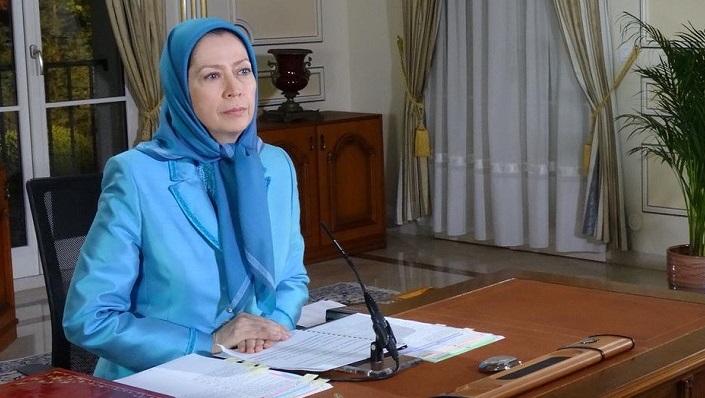
Maryam Rajavi, leader of the Iranian opposition, testifying before the US Congress via video conference

Maryam Rajavi, leader of the Iranian opposition, testifying before the US Congress via video conference

The House Foreign Affairs Committee’s Subcommittee on Terrorism, Nonproliferation and Trade held a hearing on Capitol Hill on the rise and threat posed by ISIS. That in and of itself is not earthshattering news since elected officials have debated heatedly how to address the growing pandemic that is extremist Islamic groups such as ISIS, Boko Haram and the Houthis.

hat was significant was the witness list of speakers because on it was Mrs. Maryam Rajavi, the president-elect of the National Council of Resistance of Iran, a leading Iranian dissident group, who made an appearance via videoconference. It was an important appearance because it represented a key opportunity for the strongest voice of the largest grassroots dissident group to the regime to address Congress on the links between ISIS and Iran.

As Rep. Brad Sherman (D-CA) noted in his comments, the NCRI has proven instrumental in the past in revealing secrets the Iran regime has sought to keep hidden from the outside world such as the secret Natanz nuclear research facility.

Mrs. Rajavi was given the opportunity by the subcommittee because NCRI members have been on the ground in Iran and Iraq having vast knowledge of the situation as the main opposition to the regime in Iran and given the role of the Iranian regime in all crisis in the region. Because there are literally hundreds of thousands of people displaced or brutalized by ISIS and militia forces controlled and directed by Iran’s mullahs, the NCRI has shown itself to be very knowledgeable regarding the regime’s activities in the region.

In her comments to the subcommittee, Mrs. Rajavi explained the origins of ISIS, such as the funding and training of ISIS leader Abu Bakr al-Baghdadi in Iran, including even a doctorate degree in Islamic jurisprudence from Baghdad Islamic University, along with Iranian support for other key ISIS founders who arose out of the war fought against U.S. and coalition forces during the invasion of Iraq and the sectarian civil war in Syria that Iran was backing.

Mrs. Rajavi dubbed the Iran regime as the “godfather” of the Islamic State militant group and noted that “the ultimate solution to this problem is regime change.”

She went on to explain the core issue linking the Iran regime and the Islamic State was the perpetuation of violent and extremist Islamic teachings which provided a template of terror, brutality and abuse for terror groups to follow.

And in a clear warning to Representatives in attendance, she urged caution in approving any nuclear deal that rewarded Iran with economic relief without concrete proof of dismantling of its nuclear program.

“None of the sanctions should be lifted before an agreement has been signed that effectively and definitively denies the mullahs the bomb,” Mrs. Rajavi said. “Otherwise, the regime will spend billions of unfrozen assets to buy weapons, including advanced missiles from Russia.”

Rep. Sheila Jackson Lee (D-TX) praised Ms. Rajavi’s appearance as well and called the session “a historic hearing,” notable for bringing Iran’s opposition into official discourse.

That, more than anything else, was what the Iran regime’s lobbying and PR machine feared the most. The idea that a moderate, Muslim woman, leading a group of dissidents to Iran’s mullahs, would actually be able to speak before the greatest legislative body in the world and tell simply and matter-of-factly of the horrors and abuses being visited on thousands of her fellow Iranian citizens.

It is even more laughable when you hear of some of the complaints voiced by these regime apologists who apply one standard to the NCRI in denouncing it, yet in another breath argue for open and honest dialogue and trust with the Iran regime that has a three decade history of kidnapping, targeting, attacking and killing thousands of American military and civilian personnel in places such as Lebanon, Afghanistan, Syria, Iraq and elsewhere.

The fact that Mrs. Rajavi was able to speak represents a small, but historic step in allowing the voices of those most oppressed to finally have a voice and a forum.

By Laura Carnahan

Filed Under: Blog, News Tagged With: Brad Sherman, Congress, house foreign affairs committee, House foreign affairs hearing, Iran, Iran Lobby, Maryam Rajavi, Sheila Jackson Lee, Ted Poe

  • « Previous Page
  • 1
  • …
  • 59
  • 60
  • 61
  • 62
  • 63
  • …
  • 72
  • Next Page »

National Iranian-American Council (NIAC)

  • Bogus Memberships
  • Survey
  • Lobbying
  • Iranians for International Cooperation
  • Defamation Lawsuit
  • People’s Mojahedin
  • Trita Parsi Biography
  • Parsi/Namazi Lobbying Plan
  • Parsi Links to Namazi & Iranian Regime
  • Namazi, NIAC Ringleader
  • Collaborating with Iran’s Ambassador

Recent Posts

  • NIAC Trying to Gain Influence On U.S. Congress
  • While Iran Lobby Plays Blame Game Iran Goes Nuclear
  • Iran Lobby Jumps on Detention of Iranian Newscaster
  • Bad News for Iran Swamps Iran Lobby
  • Iran Starts Off Year by Banning Instagram

© Copyright 2026 IranLobby.net · All Rights Reserved.