Iran Lobby

Exposing the Activities of the lobbies and appeasers of the Mullah's Dictatorship ruling Iran

  • Home
  • About
  • Current Trend
  • National Iranian-American Council(NIAC)
    • Bogus Memberships
    • Survey
    • Lobbying
    • Iranians for International Cooperation
    • Defamation Lawsuit
    • People’s Mojahedin
    • Trita Parsi Biography
    • Parsi/Namazi Lobbying Plan
    • Parsi Links to Namazi& Iranian Regime
    • Namazi, NIAC Ringleader
    • Collaborating with Iran’s Ambassador
  • The Appeasers
    • Gary Sick
    • Flynt Leverett & Hillary Mann Leverett
    • Baroness Nicholson
  • Blog
  • Links
  • Media Reports

NIAC Leads Charge for Great Iran Giveaway

June 25, 2015 by admin

GiveawayReza Marashi, another one of the National Iranian American Council’s regime cheerleaders, offered an editorial on the final hurdles facing nuclear negotiators in Switzerland. It is an impressive piece of fiction, worthy of a Hugo Award for fantasy writing.

His ignoring the televised rants by top mullah Ali Khamenei in denouncing any freeze on Iran’s nuclear program and opposition to any inspections of military or secret sites and demand for an immediate lifting of economic sanctions by the entire world even before ink is dry on an agreement is proof that Marashi is attempting that unique political high wire act; covering for a boss who suffers foot-in-mouth disease.

But I sympathize with Marashi. It can’t be easy to spin a line when your top guy goes on national television to basically undermine everything you’re saying. Marashi might find better luck defending the Confederate battle flag these days.

In another flight of fancy, Marashi claims that “Iran gave more than it received in the interim nuclear deal, and is looking to collect on that investment.” We certainly agree on the second part of that statement, Iran’s mullahs are certainly looking to collect – about $140 billion in frozen assets in what would be a gigantic payday, but the first part of the statement is disingenuous.

The Wall Street Journal, amongst scores of other news media, has documented the avalanche of concessions granted to the Iran regime by P5+1 negotiators without any comparable concessions from the mullahs. Those concessions began with the most important and earliest concession which was to move away from dismantling Iran’s nuclear program to complex Rube Goldberg structure of stretching out the “breakout” time for creating a nuclear weapon.

Marashi, his colleague at the NIAC Trita Parsi and other regime sympathizers, have created a new vocabulary of deceit with newly invented terms such as “snapback sanctions” and “breakout times” to replace conditions such as “dismantling centrifuges” and “eliminating fuel stockpiles.” It amounts to a shell game any tourist on the sidewalks of New York city would recognize with Iran’s mullahs hiding their nuclear program under a walnut and moving it rapidly around.

But what Iran’s mullahs truly want – and badly – is the cash. The $140 billion at the end of their nuclear rainbow is desperately needed – not by the ordinary Iranian citizen strangled by a corrupted economy – but a religious theocracy bled dry from three costly proxy wars in Syria, Iraq and Yemen and crashing oil prices. The mullahs need that money to prop their floundering regime afloat and keep their extremists allies well-equipped with guns, rockets and cash to pay mercenaries recruited from Afghanistan, Lebanon, Somalia and Nigeria.

To put it into perspective, according to the International Monetary Fund, Iran’s total foreign currency reserves amounts to only $110 billion, ranking it 21st in the world. The U.S. only has currency reserves of $121.5 billion, ranking it 19th. A $140 billion cash infusion into Iran would vault it to 11th place, ahead of Mexico, Germany, the U.K., France and Italy and just behind powerhouses Russia, Saudi Arabia, Japan and China.

That, more than anything else, is what the mullahs are craving like heroin to an addict. They need that cash to pay for their military adventures, to support terror groups and to maintain the massive expenditures required to continue building its nuclear infrastructure including new equipment it intends to buy from Russia and North Korea.

And if that wasn’t enough, Marashi also proposes that UN sanctions be rewritten to exclude tying sanctions to non-nuclear issues “such as arms procurement and export, human rights, and terrorism.” In effect, giving Iran a free pass to acquire arms, export them to its proxies, continue hanging people at a breakneck pace and lavish terror groups with more support.

Clearly Marashi has given up all pretense of finding common ground with negotiating countries and instead is all-in with the mullahs in trying to get everything they can before the June 30th deadline. The “throw everything in the basket” approach is reminiscent of looters sweeping through a CVS store grabbing everything they can before burning it down.

The end result will leave a deeply destabilized world with a nuclear-capable and flush with cash Iran still controlled by a small cadre of extremist mullahs.

By Michael Tomlinson
Filed Under: Blog, National Iranian-American Council Tagged With: Iran, Iran deal, Iran Lobby, Iran Talks, Irantalks, NIAC, Reza Marashi, Sanctions, Trita Parsi

Iran’s Top Mullah Doubling Down on Hardline

June 24, 2015 by admin

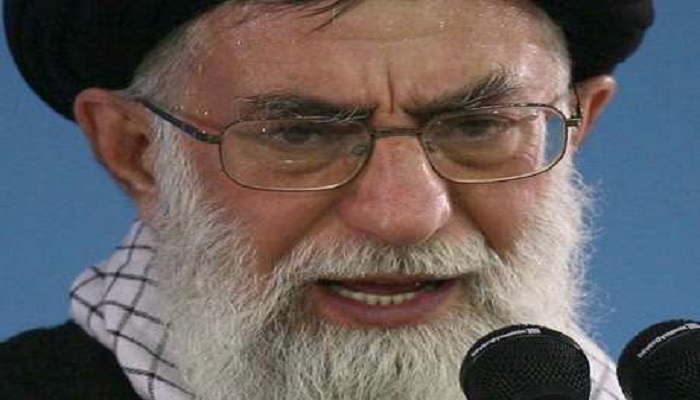
Khamenei Military SpeechPity Trita Parsi of the National Iranian American Council and chief cheerleader for the Iran regime. He toils tirelessly to spin arguments in favor of closing a nuclear deal with Iran by emphasizing a newfangled moderation within Iran and the need to empower Iran’s “moderates” against the uncompromising “hardliners.”

Unfortunately for him, the key player in Iran, Ali Khamenei, who under the Islamic state’s constitution basically gets the final word on almost every aspect of Iranian life, undercut Parsi yet again with another of his now-famous rants denouncing all things Parsi previously hailed as significant milestones during these three torturous years of talks.

One might feel compassion for Parsi if it wasn’t for the fact that obfuscation has become a high art form for him in defending a regime that by all objective standards is corrupt and bloodthirsty.

In a speech broadcast live on Iranian state television and widely reported in global media, Khamenei doubled down on previous demands and called for sanctions against Iran to be lifted before the regime dismantled one bolt of its nuclear infrastructure and before any verification by international inspectors takes place. He also ruled out any freeze on Iran’s nuclear enrichment for a decade – as previously announced in the interim framework agreement – and repeated his refusal to allow inspections of any military sites.

“All financial and economic sanctions imposed by the U.N. Security Council, the U.S. Congress or the U.S. government should be lifted immediately when we sign a nuclear agreement,” Khamenei said.

Khamenei’s statements, when taken into context of what it means to not suspend nuclear development and not allow international inspections, show clearly the regime’s intent of not only maintaining the capability for developing a nuclear weapon, but dramatically shorten the window from years to mere months.

In an editorial in the New York Times by Prof. Alan Kuperman of the Nuclear Proliferation Prevention Project at the University of Texas, the good professor calculated that Iran’s breakout window actually shrinks from a proposed year to only three months.

Guy Benson in a Townhall.com piece reminds us of the perplexing revelation that during nuclear talks, Iran had actually already increased its stockpile of enriched uranium by 20 percent instead of shrinking it as previously agreed to.

Guy Taylor of the Washington Times began a series of reports examining the regime’s awful history of evasion and duplicity in hiding its nuclear program and denying access to inspections and raised red flags over the Obama administration’s assertions that it already knew for certain Iran’s prior history on nuclear development and didn’t need to know more.

“If you look forward without looking back, then you miss decades of Iranian nuclear mendacity and a well-established record of Iranian(regime’s) cheating and challenging the IAEA,” said Mark Dubowitz, executive director of the Foundation for Defense of Democracies, in the Washington Times report. “I think Secretary Kerry should be more cautious in assuming that the U.S. intelligence community has ‘absolute knowledge’ of Iran’s nuclear program.

“The Iranians stonewalled the IAEA for years. They’ve been denying inspectors’ access, and they’ve been building illicit nuclear facilities that we’ve been unable to detect,” he said. “We’ve gone through six separate U.N. Security Council resolutions since 2006, and time and time again, in every report, the IAEA has said it was unable to certify that Iran’s nuclear program is peaceful — that there are no undeclared sites or activities and there is no illicit diversion of nuclear material.”

Taylor further writes:

“Indeed, a timeline on the official website of the IAEA outlines a history of back-and-forth between the U.N. nuclear inspectors and Iranian authorities dating back to 2002.

“Although there is sporadic evidence of cooperation from Tehran over the years, the period was highlighted by repeated incidents of frustration by IAEA inspectors, who felt they were either outright blocked or intentionally misled during investigative visits to Iran.

“Such frustration reached a critical moment in 2006, when the U.N. Security Council responding by passing a resolution demanding that “Iran suspend uranium enrichment by 31 August or face possible economic [and] diplomatic sanctions.”

It is those sanctions and ones imposed by the U.S. that Khamenei has doubled down on to see removed in order to gain access to an estimated $140 billion windfall in frozen regime assets. Given the regime’s past use of funds in proxy wars and terror activities, we can only assume what a payday like that would mean to Hezbollah in Syria and Lebanon, Houthi rebels in Yemen and Shiite militias in Iraq.

By Michael Tomlinson

Filed Under: Blog Tagged With: Iran, Iran deal, Iran Lobby, Khamenei, Trita Parsi

Apologizing for Iran Regime is a Full-Time Job

June 23, 2015 by admin

ApologyIn our politically-correct, social-media driven society, many smart people have taken to complaining over the use of the public apology for almost every conceivable slight; perceived or otherwise.

In the arena of politics and diplomacy though, the art of apologizing sometime reaches historic proportions with a refinement worthy of a well-aged wine. Often times a political or diplomatic apology takes the form of the “non-apology apology” which is when a politician will often not apologize for a given action or policy, but apologize instead for the perceived distress such action causes.

It usually includes phrases such as “I’m sorry you feel that way” and “to anyone who may be offended” and is a calculated effort to demonstrate compassion and empathy when in fact there is none. For those who have long defended the Iran regime, it is a veritable way of life.

Apologists such as Trita Parsi of the National Iranian American Council, Jim Lobe of Lobelog, Bijan Khajehpour of Atieh International and Mark Fitzpatrick of the International Institute of Strategic Studies, have been loud and vocal supporters of the Iran regime and have taken great pains to excuse its actions; even its most barbarous and callous acts.

Parsi for example has historically apologized for Iran’s human rights violations such as the holding of American hostages on trumped up charges with no open trials as being evidence of a political schism amongst moderate and hardline factions within the regime’s ranks.

Fitzpatrick has also made excuses for Iran’s foreign policy adventures and proxy wars in places such as Syria and Yemen as potentially stabilizing actions, rather than the chaotic acts they actually are. Not to mention that mullahs in Iran are indeed the source of the chaos in most cases.

In each case, the Iran lobby’s apologists have gone out of their way to come up with every possible answer explaining the regime’s actions except the obvious, most logical and correct one which is Iran’s mullahs are firmly set on pursuing a course of action that solidifies their grip on power and expands their extremist ideology.

Sohrab Ahmari, an editorial page writer for the Wall Street Journal, has exhaustively written in Commentary Magazine of the deep and incontrovertible connections between the regime and the wide range of apologists covering for Iran’s mullahs, including Parsi.

“Parsi holds views that have surely warmed the ayatollahs’ hearts. An Iranian-born Swedish citizen, Parsi had made a name with his 2008 book Treacherous Alliance. The book’s basic claim was that the conflict between Khomeinist Iran and the U.S. and Israel was primarily a matter of Tehran’s seeking strategic respect in the region and not, as Jerusalem insisted, on anti-Semitic ideology,” Ahmari writes.

“His argument elided the many ways in which the regime had actually attempted to back its ideological proclamations with action. It also invited readers in effect to excuse the regime’s ugly rhetoric as the lashing out of a rising power,” he added.

The failure of constant apologizing for the regime is that it eventually does nothing to cover up the actions the regime takes and rings hollow to anyone with a brain.

As Tyron Edwards, an American theologian best known for a book of quotations called “A Dictionary of Thoughts,” wrote in the 19th century: “Right actions for the future are the best apologies for wrong ones in the past.”

What he wrote over 170 years ago still applies today. Actions and not words are the best guide to future behavior and the Iran regime has exhibited plenty of actions which are the only real ruler nuclear negotiators in Switzerland should go by.

By Michael Tomlinson


Filed Under: Blog, National Iranian-American Council Tagged With: Bijan Khajehpour, Iran, Iran deal, Iran Lobby, Iran Talks, Lobelog, Mark Fitzpatrick, Trita Parsi

Iran Regime Has No Intention of Changing

June 22, 2015 by admin

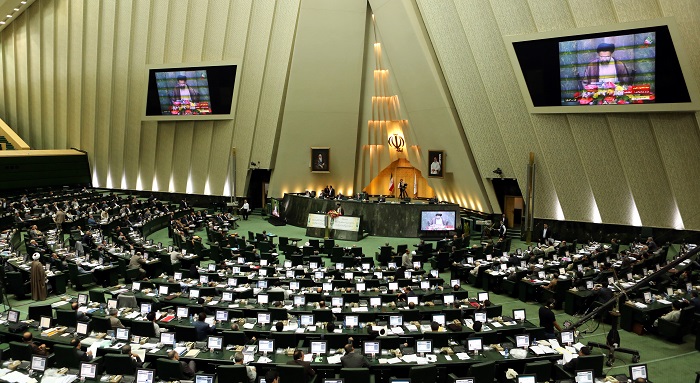
epa03823138 A general view of the parliament during the parliament session on 13 August 2013 in Tehran, Iran. Iranian president Hassan Rowhani proposed his cabinet to the parliament on 12 August 2013. All designated ministers need the majority votes of the 290 deputies before taking office. Rowhani said that his government will take distance from any form of extremism and rather adopt a moderate approach for ending the country?s international isolation.  EPA/ABEDIN TAHERKENAREH

A general view of the parliament during the parliament session on 13 August 2013 in Tehran, Iran. Iranian president Hassan Rowhani proposed his cabinet to the parliament on 12 August 2013. All designated ministers need the majority votes of the 290 deputies before taking office. Rowhani said that his government will take distance from any form of extremism and rather adopt a moderate approach for ending the country?s international isolation. EPA

Trita Parsi, the head of the National Iranian American Council and chief apologist for the Iran regime, has long maintained that the bluster of Iranian lawmakers and other officials in denouncing a proposed nuclear deal was evidence of a schism within Iran between moderates and hardliners and that only agreement on a deal could empower moderate elements to win out.


The NIAC has even gone so far as to claim that heinous and brutal human rights violations are the product of these ideological struggle amongst Iran’s ruling mullahs.

It has been a straw man for the Iran lobby and an effort to divert attention from the truth which is in fact while there are divisions within Iran’s ruling class on how to share power, but both divisions stands firmly united behind a single goal; the preservation and expansion of their power and corrupted extremist Islamic ideology.

With little more than a week remaining before a self-imposed June 30 deadline for a nuclear agreement between Iran and the P5+1 group of nations, Iran’s mullahs have expressed little to no interest in completing a deal.

This Sunday, Iran’s parliament voted to oppose inspections of government military sites as part of any agreement, in direct opposition to what negotiators from the U.S. and France have called a “must-have” condition for any agreement. The legislative move follows similar statements made by the regime’s top mullah, Ali Khamenei, who also declared Iranian regime’s military sites off-limits to inspectors.

The mullah’s legislation states in part: “The International Atomic Energy Agency, within the framework of the safeguard agreement, is allowed to carry out conventional inspections of nuclear sites.”

However, it concludes that “access to military, security and sensitive non-nuclear sites, as well as documents and scientists, is forbidden.”

All of this follows a series of concessions already granted by the P5+1 including the exclusion of ballistic missile technology, the retaining of thousands of enriching centrifuges and moves to accommodate Hezbollah and Pakistani nuclear component exporters. Not to mention the failure of the Iran regime to curb its support for three proxy wars, the release of four American hostages and any loosening of brutal human rights repression. This is while over 1800 people have been executed in Iran during Rouhani’s tenure.

As the Washington Examiner pointed out this weekend, even though the Obama administration is intently focused on securing a nuclear deal with the Iran regime, it has all but ignored the terrorism that Iran sponsors and facilitates throughout the region as outlined in the State Department’s annual report on terrorism released on Friday.

As Sen. Mark Kirk (R-IL) aptly pointed out: “Now that the administration admits nuclear talks haven’t diminished Iran’s support for terrorism, to what extent has Iran used the interim nuclear deal’s $12 billion in sanctions relief payments to fund terrorists or other terror-supporting regimes?”

“As we move closer to the June 30th deadline for a final nuclear deal that could return as much as $140 billion in frozen funds to Iran, the White House remains silent on this critical question.”

And this strikes to the heart of the argument made by Parsi and other regime allies. If there is a battle of moderate and hardline influences within Iran, where is the proof of moderation on the battlefield so to speak? Nowhere has the regime exercised any restraint or moderation as it pursues its extremist policies.

Has Iran regime cut off aid to Hezbollah and Assad in Syria? No, it’s committed another 15,000 troops, this time, including drawing mercenary recruits from Afghanistan. Have mullahs released American prisoners as a show of good faith? No, it is moving ahead with a closed trial of Jason Rezaian, a Washington Post reporter on espionage charges for reporting. Has Iranian regime sought to reassure the world it will comply with nuclear inspection? No, it still refuses to answer questions from the International Atomic Energy Agency in 12 areas of concern over the military dimensions of its nuclear program.

It does not take a leap of logic to see that the Iran regime is firmly committed to its course of nuclear weapons development and is merely taking the world along for a joy ride as its seeks its real prize; the release of $140 billion in frozen cash and opening the floodgates of billions more in foreign investment.

Parsi and his cohorts can’t even hide this truth with their obfuscations.

By Michael Tomlinson

Filed Under: Blog, News Tagged With: IAEA, Iran, Iran deal, Iran Lobby, Iran Nuclear, Jason Rezaian, Military Dimensions of Iran Nuclear Program, Trita Parsi

Iran Lobby Calls “Czar” Key to Sanctions Relief

June 19, 2015 by admin

Czar Nicholas (1)Czar Nicholas II of Russia was the last monarch to bear that title until his execution during the Russian Revolution in 1918, but the title of “czar” would still stay in fashion in American politics as an informal description of high-ranking officials named to oversee specific programs or issue areas.

The first use of “czar” by an American president was Franklin Roosevelt who named 11 “czars” during his administration to oversee areas such as transportation, censorship, petroleum, war production and even rubber; often as part of the recovery from the Great Depression and in response to the demands of World War II.

Since then presidents have used czars sparingly with latter administrations naming one or two periodically. It wasn’t until Presidents George W. Bush and Barack Obama that the practice mushroomed with the naming of 33 and 38 czars respectively. In President Obama’s case, he has appointed czars for Ebola response, faith-based partnerships, AIDS, trade, information technology and even one for the invasive Asian carp.

But now the Obama administration is considering the appointment of a new czar to oversee final negotiations and implementation of a nuclear agreement between the P5+1 group of nations and the Iran regime. The idea behind this new czar would be to have a single point person serving as lead coordinator for implementation and enforcement.

While State Department sources have mulled the idea of a czar in response to the failure of the U.S. to enforce the 1994 nuclear agreement with North Korea, which eventually was ignored by the rogue state as it violated its terms to build a nuclear arsenal, the Iran lobby views the position as being a key instrument by which to ensure the speedy lifting of economic sanctions.

“It would also send a message to the American bureaucracy to be efficient, not just in making sure that Iran holds up its end of the deal, but also in ensuring that the U.S. fulfills its promises, especially when it comes to easing sanctions,” said Trita Parsi, head of the regime’s chief cheerleading lobby the National Iranian American Council.

The viewpoint of Parsi and other regime supporters is that the consolidation of U.S. responsibility for Iran nuclear issues within a single point person provides an incredibly advantageous opportunity to manipulate a single high-ranking official who could cut through the clutter and get sanctions lifted quickly on the pretext of complying with the terms of an agreement.

Having an Iran czar solves several problems for regime supporters at once:

  • It takes the Obama administration off the hook by de-escalating talks from Secretary Kerry to another official who may face less media scrutiny to complete a deal;
  • It provides direct access for the Iran lobby to a single person responsible for all things related to Iran. Instead of having to slug it out with State Department bureaucrats or intelligence officials at the Defense Department or even members of Congress, the regime’s lobby could have just one “go-to” person; and
  • Given the Iran lobby’s ability to place former employees in high-ranking administration positions, the appointment of a non-Senate approved czar allows them to slide one of their own into the position.

On the other hand, floating the idea of an Iran czar also strikes many observers as an act of desperation in the effort to close a floundering deal with less than two weeks left before a self-imposed June 30 deadline. Under the terms of compromise legislation passed by Congress and signed by President Obama, the U.S. is hoping to have an agreement in place by July 9 in order to trigger the 30 day congressional review period, rather than the 60 day review period should they miss that deadline.

Reports in the Associated Press from diplomats from all six nations participating indicate  “Iran and six powers are still apart on all main elements of a nuclear deal with less than two weeks to go to their June 30 target date and will likely have to extend their negotiations. Their comments enforce concerns that obstacles to a pact remain beyond the public debate on how far Iran must open its nuclear program to outside purview under any deal.”

The appointment of a czar to complete a deal would follow similar pronouncements made of “agreements in principle” with only details to be worked out. Having a designated czar allows the Obama administration to walk away from the bargaining table, away from global press scrutiny, and allow for rapid concessions to be made to Iran’s mullahs in relative privacy.

The scenario becomes increasingly likely as disclosures of new concessions granted to the regime seem to leak out daily from Switzerland. Indeed, the agreement is becoming riddled with as many holes as Swiss cheese.

By Michael Tomlinson

Filed Under: Blog, National Iranian-American Council Tagged With: appointing a new czar, Iran, Iran deal, Iran Talks, NIAC, Trita Parsi

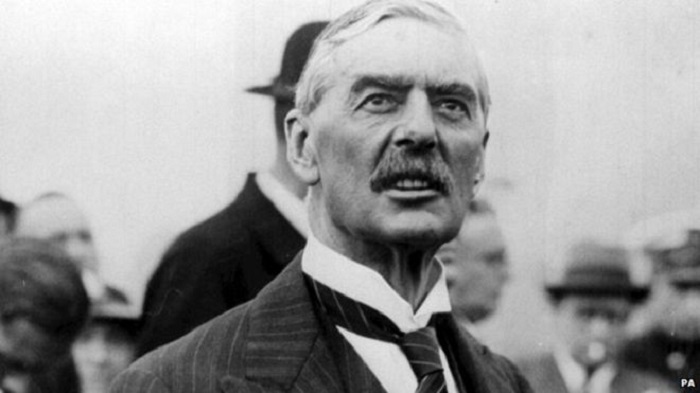
What Price Appeasement of Iran Regime?

June 18, 2015 by admin

ChamberlainAny kind of negotiation is often an exercise in incremental concession. There is a give and take bound by the needs and desires of the participants at the table. While outside forces influence what happens, the real outcome of any negotiation results strictly from what the parties at the table are willing to give up in order to get what they desire more.

In the case of the ongoing negotiations between the P5+1 group of nations and the Iran regime, the results of nearly three years of talk have revealed these to be less about what the give and take of hard bargaining is, but rather what the U.S. is seemingly willing to give up in order to claim any kind of PR victory in sealing a deal.

As part of that process, the U.S. has steadily given ground on a remarkable range of concessions to mullahs in Iran without securing anything nearly comparable in return. If this was a negotiation between a labor union and company; with the union being Iran and the company being the U.S., the union would have already had the name changed on the building, the managers fired, pay hikes conceded with three days off each week.

So thoroughly have Iran’s mullahs fleeced the world that is it remarkable no one has bothered to catalogue the litany of concessions. Some news media have tried, but the scope of what has been given up exceeds the space available in most daily newspapers.

One columnist taking exception to the Iran fire sale is Lawrence J. Haas of U.S. News and World Report who writes in his World Report blog:

“Facing a June 30 deadline to complete an agreement, U.S. negotiators reportedly are dropping the central demand that, as part of an agreement, Iran must come clean about the ‘possible military dimensions,’ or PMDs, of its nuclear program – that is, the past weapons-related activities,” Haas said.

“Washington’s reversal is particularly striking in light of its insistence – when reports surfaced three months ago that it was considering backing down on possible military dimensions – that it would do no such thing. When, for instance, The Wall Street Journal reported in March that U.S. negotiators were preparing to cave on the issue, Secretary of State John Kerry stated unequivocally that the Iranians would have to come clean about possible military dimensions before the United States would strike a final agreement,” Haas added.

This follows a New York Times report that Secretary of State John Kerry signaled the administration’s willingness to ease economic sanctions without fully resolving evidence suggesting Iranian regime’s scientists have been involved in secret nuclear weapons development.

The ledger of concessions have filled steadily with major heavyweight concessions dealt with years ago including exempting ballistic missile development, improvements in domestic human rights conditions, suspension of death penalty executions and ceasing support for terror groups and militia involved in proxy wars; all given away without any reciprocal concession from Iran’s mullahs.

The most stunning concession came over the weekend in which the Obama administration proposed the U.S. closing the International Atomic Energy Agency’s as yet unresolved case against Iran’s undeclared military sites and forgo actual IAEA inspections of suspect Iranian nuclear sites.

Instead, the U.S. proposed allowing the IAEA conduct token inspections of a handful of sites already publicly known and not allowing inspections of undeclared sites. The stunning news was an about face of a “red-line in the sand” set by the administration for enforcing an agreement with “anytime, anywhere” inspection provisions.

This latest concession effectively permits Iran to develop and assemble nuclear weapons in relative peace and quiet and is an admission by the Obama administration it is prepared to give the mullahs their nuclear weapon.

The Wall Street Journal took a look at more subtle concessions the U.S. has provided during the course of negotiations including pulling U.S. funding support for a Lebanese civil society group aggressively opposed by Hezbollah, the terror group which has enjoyed long-term support from mullahs in Iran.

The Journal also cited the case of Buhary Seyed Abu Tahir, a Dubai-based Sri Lankan businessman who in 2004 was cited personally by President George W. Bush as the “chief financial officer and money launderer” for the nuclear-proliferation network of Pakistani scientist A.Q. Khan. According to a 2004 investigation by Malaysian authorities, in 1994 or 1995 Mr. Khan asked Mr. Tahir to ship uranium centrifuges to Iran.

“The Bush Administration put Mr. Tahir on the U.S. Office of Foreign Assets Control (OFAC) list of sanctioned persons. But the Treasury Department removed his name from that list on April 3, exactly one day after the framework agreement was announced,” the Journal said.

The concessions keep coming at a steadily increasing pace to June 30 and indicate a worrisome trend the Obama administration is basically negotiating against itself at this point in making offer after offer to the Iranians without receiving anything in return in a glaring example of desperation.

The policy of appeasement has never succeeded in history and there is no reason to think doing so to mullahs in Iran will yield any different outcome.

By Michael Tomlinson

Filed Under: Blog, News Tagged With: Iran, Iran deal, Iran Talks, nuclear talks, Obama administration bad deal with Iran.

The Iran Lobby Fig Leaf

June 16, 2015 by admin

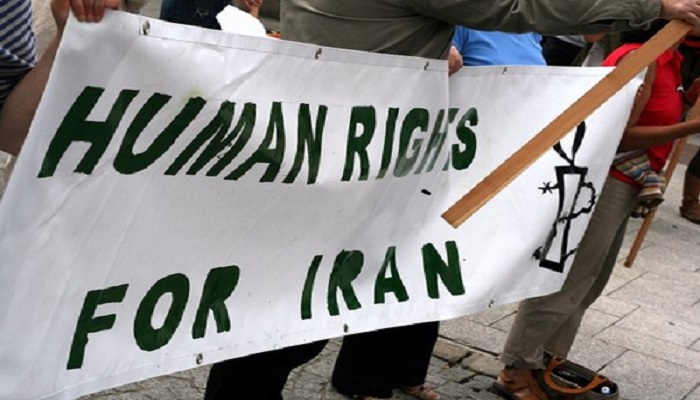
Human Rights for IranThis weekend in Paris was marked by one of the largest gatherings ever assembled of people dedicated to change in the Iran regime and the return of that nation to freedom and democracy.

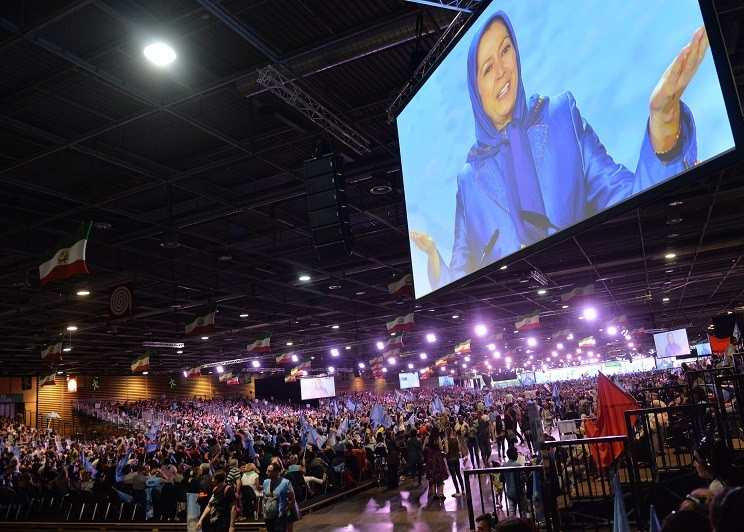
With a crowd estimated at over 100,000 people, the gathering sponsored by the Iranian diaspora, supporters of the resistance umbrella group, the National Council of Resistance of Iran, featured an eight hour marathon of speeches and remarks by delegations representing over 60 nations, all focused on the brutal nature of the regime and the harsh repression and cruel treatment of Iran’s citizens by their religious mullah overlords.

Even with that much program time, a proper accounting of Iran’s human rights abuses would fill a month’s worth of speeches; so vast and large is the ledger of the abuses by the mullahs. The full extent of Iran’s human rights abuses have been so chronic as to warrant the appointment of a Special Rapporteur by the United Nations focused exclusively on Iran.

The appointment of Ahmed Shaheed as the UN Special Rapporteur on Human Rights for Iran is one of only ten such appointments currently in effect; ranking Iran alongside persistent human rights abusers as Haiti, Myanmar, North Korea and Sudan.

Shaheed has continually spoken out against abuses by the mullahs, most notably as recently as June 5, 2015 over the rapid escalation of arrests and imprisonment of journalists, including American journalist Jason Rezaian.

“The recurrent use of vague references to threats to national security, propaganda against the system and insult to authorities to prosecute and detain journalists or activists is in contradiction to both international norms relating to freedoms of expression and association and the principle of legality,” Mr. Shaheed stated.

Amnesty International’s annual report goes into extensive detail on the litany of human rights abuses flowing from the mullah’s mandates including restrictions on the freedom of expression, association and assembly, widespread use of torture, codified unfair trials, institutional mistreatment of ethnic and religious minorities, the broad denial of women’s rights, lack of privacy, denial of education, and frequent and indiscriminate use of the death penalty.

The chronicle of abuses does not even include the special ire and venom reserved for Iranian dissidents such as those who assembled in Paris by Iran’s mullahs who have sought for the past 35 years to discredit, defame, attack and murder members of Iran’s resistance groups such as the NCRI and People’s Mojahedin Organization of Iran (PMOI).

In the course of resisting Iran’s despotic rule, the groups have seen over 120,000 members murdered by the regime, most recently in hangings from trumped up show trials and at Camp Liberty in Iraq where 2,500 dissident refugees are frequently attacked by Iranian security forces and paramilitaries.

Yet even after the catalogue and almost daily chronicle of abuses against Iranians and Iranian-Americans by the regime, their most vocal supporter, the National Iranian-American Council, has barely uttered a word of protest or criticism even when the abuses are specifically aimed at Iranian-Americans, nominally the reason why the NIAC exists in the first place.

The litany of abuse had become so rampant, so blatant and appearing daily in the front pages of newspapers and global newscasts, that the NIAC finally had to issue some kind of statement recognizing the gross mistreatment going on or risk become a laughingstock every time they opened their mouths; some might argue it already is a laughingstock, but that’s another matter.

So what did the NIAC do to strike fear in the hearts of the mullahs and their prison guards, torturers, hangmen and puppet jurists? It issued a 379-word long press statement in which it “condemns the Iranian government’s recent violations of its international human rights obligations.”

Most notable in the brief statement was that 148 words of it dealt, not with human rights, but with the proposed nuclear deal being negotiated in Switzerland. Even when faced with the overwhelming human misery and suffering being caused by Iran’s leadership, the NIAC can barely force itself to utter a peep about it.

By way of comparison, an editorial written by NIAC policy fellow Ryan Costello in The Hill blog the same week devoted a brawny 891 words to the topic of the issue of inspections of military sites, nearly four times the amount devoted to human rights.

It is a mere fig leaf by the NIAC to cover up for the fact it is a group appearing to be solely dedicated not to the plight of Iranian-Americans, especially four of them languishing in Iran now, but rather towards supporting the political aims of a small cadre of religious rulers in Iran.

By Michael Tomlinson

Filed Under: Blog, News Tagged With: Iran, Iran Lobby, Iran Talks, National Council of resistance of Iran, NCRI, NIAC

Iran- The Importance of Resistance as a Force for Good

June 15, 2015 by admin

18583574530_7b81c1431b_b“Disobedience is the true foundation of liberty. The obedient must be slaves.”

So said famed American author and poet Henry David Thoreau in his landmark essay “Resistance to Civil Government” in which he argued passionately for the importance of disobedience to an unjust state. Thoreau wrote that in 1849 and since then it has influenced the thinking of the likes of Martin Luther King, Jr. and Mohandas Gandhi in the art of civil disobedience.

But resistance to corrupt governments is nothing new. You can look at the 800th anniversary celebrations taking place for Magna Carta, the document that first enshrined protection of church rights, protection for the barons that forced King John of England to sign it from illegal imprisonment, access to swift justice, and limitations on feudal payments to the Crown.

It is almost a genetic imperative for human beings to resist anything that would aim to shackle the free expression of will, creativity or thought. One would like to think in the 800 years since Runnymede or the 166 years since Walden Pond, the world had advanced more in the area of brutality and corruption, but sadly in some parts of the world, it seems we’ve actually gone backwards.

One such place is the Islamic state of Iran, which under the tight rein of a religious theocracy imposed by mullahs, has committed human atrocities and brutalities at home and abroad with mind-numbing frequency. In the 18 months since Hassan Rouhani was handpicked to become president, over 1,700 political dissidents, religious minorities, cultural subversives and ordinary citizens have been executed, most in barbaric public hangings more appropriate for the Dark Ages than the 21st Century.

But a spark of hope, born 50 years ago in Iran struggling against the despotic rule of one tyrant, only to shift after a revolution was hijacked to fight the mullahs who now rule Iran, has now been fanned into a fierce flame of resistance which was on bold display in a crowded, massive convention hall in Paris on Saturday.

The People’s Mojahedin of Iran (PMOI) was started by a group of Muslim Iranian university students, as a Muslim, progressive, nationalist and democratic organization that has since morphed into one of a number of resistance groups joined under the banner of the National Council of Resistance of Iran (NCRI) in working for regime change in Iran and bringing about a new era of freedom and democracy.

The annual meeting sponsored by Iranian diaspora supporting the NCRI brought an impressive crowd of over 100,000, including 600 dignitaries from over 100 nations, together to join in what amounts to a giant pep rally for regime change. It’s a remarkable sight with bleacher stands packed with men, women and children of all ethnicity, religions and languages waving flags enthusiastically, clapping loudly and cheering heartily after speech after speech.

The fact that these people were still just as enthusiastic in the seventh hour listening to speeches by the representatives of Romania and Portugal as they were when Mrs. Maryam Rajavi, head of the NCRI, and Rudy Giuliani, the expressive former mayor of New York, spoke earlier in the day is either a testament to the effectiveness of French coffee or the deep and abiding passion these delegates had for the plight of their brothers, sisters, husbands, wives and children residing in Iran.

Association, let alone membership, with PMOI or its members is punishable by death in Iran. The same holds true for a number of other resistance groups. Yet these people Instagram selfies, tweet defiance and hashtag support to such an extent, the #Iran_Maryam hashtag used for the gathering ended up as a leading global Twitter trend.

But this resistance movement is more than slogans. It carries with it a very real cost and yields tremendous benefits. The NCRI and its extensive network of supporters within Iran has been able to get past government censors, Internet blockades and confiscated satellite dishes to get the word out about protests and demonstrations, arrests, executions and imprisonments and disclosures about secret Iranian nuclear facilities the mullahs were dying to keep secret.

The fact that the resistance gathering took place only two weeks before the June 30 deadline for the current round of nuclear talks was no accident. It was a shout out to the P5+1 group of nations reminding them of the failure to deliver a real deal that not only guarantees Iran does not develop a nuclear weapon, but also has to change how it does business in the arena of human rights and it support for proxy wars against its neighbors.

As the gathering closed and satisfied and resolute people boarded their buses and headed for trains, you could hear their determination in their voices and the hope in their faces that the window for regime change was finally at hand, which only makes me wish that “Get Up, Stand Up” by Bob Marley and Peter Tosh was the exit song.

“Get up, stand up, Stand up for your rights. Get up, stand up, Don’t give up the fight.”

By Michael Tomlinson

Filed Under: Blog, News, Others Tagged With: Iran, Iran Gathering, IRan Resistance, Iranian resistance conference, Maryam Rajavi, NCRI, pmoi

Iran-Giving Voice to the Voiceless

June 15, 2015 by admin

VoicelessOn Saturday, June 13, a cavernous convention hall in Paris will be filled with over 100,000 people who will be joined together in what has become an annual rite of summer; energizing and galvanizing for regime change in Iran and a global movement to turn the Islamic state back to a free, democratic country.

It’s a significant meeting earning wide praise in global news media, blogs, columnists and opinion pages including the Washington Times, The Hill, American Thinker, the Chicago Sun-Times and Western Free Press.

Organized by the Iranian diaspora supporters of the National Council of Resistance of Iran and led by Mrs. Maryam Rajavi, the group’s president, the Grand Gathering of Iranian expatriates will include a formidable array of 600 political dignitaries, including former Democratic and Republican administration officials and 120 parliamentarians from more than 60 countries.

Just a few of the noteworthy luminaries will include a bipartisan delegation from the U.S. Congress, General Hugh Shelton (former U.S. Joint Chiefs of Staff), Gov. Howard Dean (former chair of the Democratic National Committee), Alan Dershowitz (renowned jurist and human rights activist), Michelle Alliot Marie (former defense and foreign minister of France), Sid Ahmed Ghozali (former prime minister of Algeria), Gunter Verhugen (former vice president of the European Commission), and many others.

The fact that Iran, a regime led by mullahs who enforce a brutal suppression of human rights and engage in actively exporting proxy wars and terror for a corrupted ideology, could bring such a wide diversity of political parties, ethnicities, nationalities, religions and economic backgrounds together united in one common goal is irony of the highest order.

The timing of the meeting is also auspicious coming just two weeks before a self-imposed deadline of June 30 for the P5+1 group of nations to come to final agreement with Iran on its nuclear program. The gathering is an opportunity to shine a global spotlight on the dangerous shortcomings in the proposed deal and what still needs to be done to ensure global security.

In an interview with the Washington Times’ Guy Taylor, Mrs. Rajavi warned that “the failure to prevent the Iranian regime’s meddling in Iraq after the 2003 Iraq War, which morphed into the gradual occupation of Iraq by the Iranian regime, gave an unprecedented boost to the growth of fundamentalism.”

“Similarly, the [Khamenei] regime’s crimes in Syria and Iraq and the genocide against Sunnis, which is accompanied by Western silence, have enabled the rise of [the Islamic State],” Mrs. Rajavi added.

It’s a sentiment shared by Linda Chavez, author, syndicated columnist and radio talk show host, wrote in an editorial in the Chicago Sun-Times that “when it comes to supporting our ‘partners on the front lines,’ the one group that gets the cold shoulder from this administration is the organized Iranian opposition. Tehran faces growing internal opposition, which it has answered by engaging in more repression of its own people. Since Hassan Rouhani became president in 2013, Iran has executed more than 1,700 people, a higher total than at a similar point in former Iranian President Mahmoud Ahmadinejad’s tenure. These executions signal that the Iranian regime is growing weaker, not stronger.”

Raymond Tanter, professor emeritus at the University of Michigan and president of the American Committee on Human Rights, echoed the same support for the NCRI in his editorial in The Hill saying “it is only prudent for the West to listen to Iranian dissidents as well in formulating a sound policy on Iran.”

Listening to that voice, the voice of leaders like Mrs. Rajavi, gives the voiceless millions not only in Iran, but also in Syria, Iraq, Yemen, Afghanistan and other places where the Iran regime’s long reach of terror funding and proxies have caused uncountable deaths and inflicted untold suffering on men, women and children a powerful ally in the fight for freedom and regime change in Iran.

As Ken Blackwell, former U.S. ambassador to the United Nations, wrote in American Thinker: “the voices of these leaders and world-renowned experts will also be joined by thousands of Iranians whose brothers and sisters in Iran are brutally repressed.  Their voices not only tell of the threat Iran poses, but also testify to the popularly supported democratic alternative to the Iranian regime.  It may not happen tomorrow, or even the next day, but Iran’s actions at home and across the region exposes the leadership’s hardline, irrational beliefs and the importance of the alternative these Iranians represent.”

To join and watch the gathering live, go online at www.iranfreedom.org and use the hashtag of #iranfeedom and help make a difference.

By Michael Tomlinson

Filed Under: Blog, News

The Heartbeat of a Resistance Movement

June 12, 2015 by admin

Rosa-ParksOn December 1, 1955, in Montgomery, Alabama, Rosa Parks was asked by a bus driver to move to the back of a municipal bus for coloreds and leave the section reserved for white passengers. In response she said “No.”

A simple word, but one filled with profound meaning because while her act of defiance landed her in jail and caused her to lose her job as a seamstress in a local department store, it launched the now famous Montgomery Bus Boycott which was immortalized in the movie “Selma” and helped push Rev. Martin Luther King, Jr. to national prominence.

If we consider the context of place and time, Rosa Parks’ decision could not have been an easy one knowing it could land her in an Alabama jail during segregation when scores of blacks had been mistreated or even killed.

“I have learned over the years that when one’s mind is made up, this diminishes fear; knowing what must be done does away with fear,” Parks said in response to questions over her fears.

That same mindset is one that countless activists around the world have as they battle oppressive regimes with acts of defiance great and small; whether it was Malala Yousafzai, the youngest Nobel Laureate who was shot in the face by Taliban opposed to her activism for women’s rights and education, or Maryam Rajavi, a woman who leads one of the largest resistance groups to the Iran regime in the National Council of Resistance and whose members have been arrested, imprisoned, tortured and killed by the Iran’s religious courts.

Parks quote is important because it clearly illustrates what often separates activists from the rest of us; the willingness to put oneself at risk knowing their actions might bring arrest or even worse upon them.

Nowhere is that more true than in the Islamic state of Iran where the ruling mullahs enforce a brutal religious code that rules everything from civil life to economic matters to making war on its neighbors. Anyone offering up dissent is usually ticketed for a one-way trip to Evin Prison and often a nearby public square for a hanging.

It is a barbaric system that many of risen up to oppose. Mrs. Rajavi’s group, including the PMOI/MEK groups, have led a long-suffering campaign to help get the word out on protests inside Iran past the Internet blockades, social media bans and confiscation of satellite dishes imposed by the mullahs.

This includes recent mass protests by Kurds in the north, large protests over the teetering economy, and waves of protests by teachers sweeping across Iran over wages and working conditions all point to a deep level of disaffection and disenfranchisement by the Iranian people and their religious overlords.

It’s worth remembering that the original Iranian revolution to overthrow the Shah was precipitated with a remarkably similar set of circumstances such as severe economic displacement among the people and a harsh crackdown by the government on dissenters which only grew as the protests grew.

The same scenario is now happening in Iran. Given the steep declines in Iranian GDP over the past year because of the massive drains on the treasury in funding Assad in Syria to the tune of $35 billion and to keep Shiite militias in Iraq equipment and Houthi rebels in Yemen supplied has placed the Iranian economy on a precarious ledge.

This Saturday in Paris, the global resistance to the Iran regime will be holding its annual gathering with a livestream available. We can only hope from that meeting of the thousands come a similar number of Rosa Parks whose simple acts of defiance can be the building blocks, brick by brick, of a new, democratic and free Iran.

By Laura Carnahan

Filed Under: Blog, Current Trend, News Tagged With: Maryam Rajavi, mek, pmoi, resistance

  • « Previous Page
  • 1
  • …
  • 56
  • 57
  • 58
  • 59
  • 60
  • …
  • 72
  • Next Page »

National Iranian-American Council (NIAC)

  • Bogus Memberships
  • Survey
  • Lobbying
  • Iranians for International Cooperation
  • Defamation Lawsuit
  • People’s Mojahedin
  • Trita Parsi Biography
  • Parsi/Namazi Lobbying Plan
  • Parsi Links to Namazi & Iranian Regime
  • Namazi, NIAC Ringleader
  • Collaborating with Iran’s Ambassador

Recent Posts

  • NIAC Trying to Gain Influence On U.S. Congress
  • While Iran Lobby Plays Blame Game Iran Goes Nuclear
  • Iran Lobby Jumps on Detention of Iranian Newscaster
  • Bad News for Iran Swamps Iran Lobby
  • Iran Starts Off Year by Banning Instagram

© Copyright 2026 IranLobby.net · All Rights Reserved.