Iran Lobby

Exposing the Activities of the lobbies and appeasers of the Mullah's Dictatorship ruling Iran

  • Home
  • About
  • Current Trend
  • National Iranian-American Council(NIAC)
    • Bogus Memberships
    • Survey
    • Lobbying
    • Iranians for International Cooperation
    • Defamation Lawsuit
    • People’s Mojahedin
    • Trita Parsi Biography
    • Parsi/Namazi Lobbying Plan
    • Parsi Links to Namazi& Iranian Regime
    • Namazi, NIAC Ringleader
    • Collaborating with Iran’s Ambassador
  • The Appeasers
    • Gary Sick
    • Flynt Leverett & Hillary Mann Leverett
    • Baroness Nicholson
  • Blog
  • Links
  • Media Reports

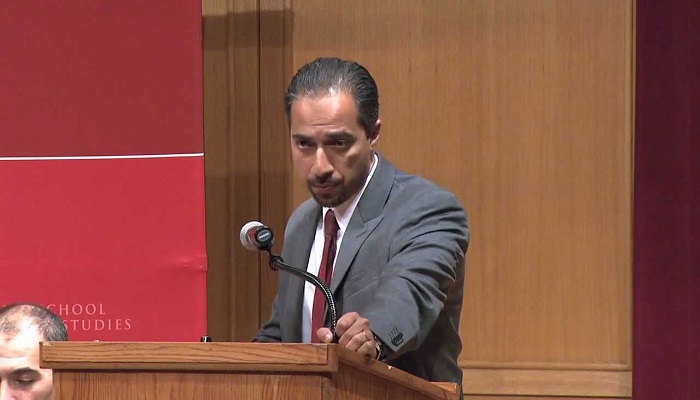
“Deadline Schmedline” Trita Parsi Not Worried for Regime

July 10, 2015 by admin

“Deadline Schmedline” Trita Parsi Not Worried for Regime

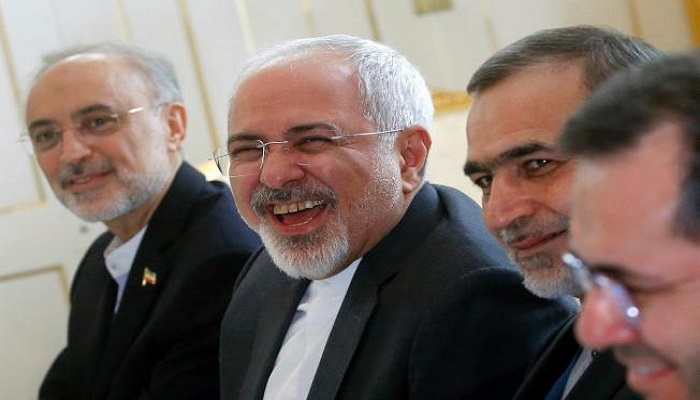
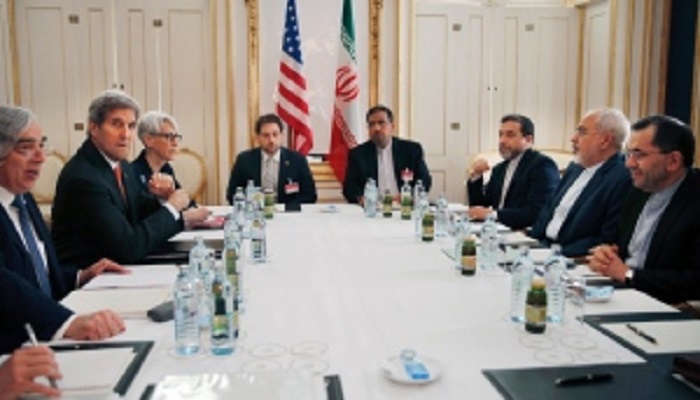
Trita Parsi has had close working relationship with Javad Zarif, when he was Iran’s Ambassador to the United Nations. In a deposition, Parsi stated he only communicated in 2006 with Zarif in order to “interview him.” But this is not true.
Emails made public demonstrate that Parsi and Zarif collaborated on numerous political issues. Parsi publicly distributed an Iranian regime document to influence US policy. He made arrangements for the ambassador to participate in a conference on Capitol Hill and to meet members of Congress, and sought the ambassador’s council regarding the feasibility of a new Persian Gulf security arrangement.
About the collusion between Parsi and Zarif, a former Associate Deputy Director of the FBI said Parsi should have been registered as a foreign agent of Iran. Arizona Senator Jon Kyl contacted the US Justice Department, urging an investigation of Parsi.

Noun: dead·line


  • a date or time when something must be finished : the last day, hour, or minute that something will be accepted

“Deadline schmedline, I’m still not worried.”

  • Trita Parsi, head of the National Iranian American Council, in tweet from Vienna

Apparently Parsi, chief cheerleader and lobbyist for the Iran regime, has a slightly different view of deadlines than the foreign ministers of six countries negotiating with regime, but not so different from his mullah masters in Tehran since Iran has now blown past five self-imposed deadlines to reach a nuclear deal over the past two years.

The new, new deadline is today to meet a deadline set in legislation granting Congress 30 days to review any deal instead of a 60 day period; the logic being having a longer review period would allow opposition to a Iranian nuclear more time to lobby Congress.

In fact, Iran’s mullahs care little about deadlines since what they seem most interested in is taking verbal potshots at their opposite numbers, especially the U.S. as evidenced by heated exchanges from regime foreign minister Javad Zarif who chastised P5+1 negotiators for taking exception to regime’s latest demand to lift embargoes against the conventional arms trade.

Parsi was almost crowing about Zarif’s verbal explosion by tweeting out how well received it would be back in Iran by the mullahs.  All of which makes it plain Parsi could really care less about a deal as long as the regime gets to play the rest of the world as fools.

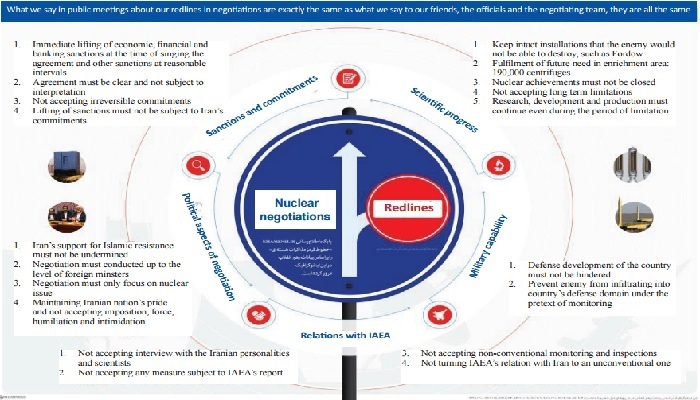
In each case as a new deadline approached, the regime has sabotaged the hope of any agreement by issuing new, aggressive demands; typically through a public rant by top mullah Ali Khamenei or more recently by issuing his very own infographic of “red lines” the regime would not cross in concessions.

And Parsi has faithfully sought to provide cover for the mullahs in his media interviews and social media tweets even though he probably knows what he is saying is either false or contradicted by the very mullahs he’s trying to make excuses for.

Take for example his tweet the other day chastising the amount of money spent by Saudi Arabia and other Gulf states as part of their overall military budgets. He lists Iran’s military spending at only $10.6 billion which is patently false since the regime halted public reporting of its military expenditures since 2009 when the mullahs stole the presidential election and spurred massive protests by the Iranian people which were brutally put down.

The Stockholm International Peace Research Institute tracks global military spending but has no data for Iran past 2009 and the data it did have before then did not include regime spending for paramilitary forces such as the Revolutionary Guards Corps and Quds Force, nor did it take into account aid given to terror groups such as Hezbollah or proxies such as Shiite militias in Iraq or Houthi rebels in Yemen.

But Parsi is by no means the only apologist for the regime. His colleague Reza Marashi has been just as busy in trying to explain why the mullahs keep heaping on demand after demand even after a so-called interim agreement was reached and only “technical” details had to be worked out.

His contention in the Los Angeles Times was that the mullahs worry the “White House will use administrative authority to temporarily lift U.S. sanctions on Iran but that Congress won’t follow through to permanently remove sanctions that were enacted into law.”

It is an odd position to take since the lifting of sanctions was agreed upon in the interim agreement only after verifying the regime had lived up to the conditions of a deal, including verification and reductions in enriched uranium stockpiles; both conditions repudiated by the regime since last April’s agreement.

But the truth doesn’t seem to faze Parsi and his cohorts and neither it seem do deadlines.

By Michael Tomlinson

Filed Under: Blog Tagged With: Iran, Iran deal, Iran Lobby, Iran Talks, Reza Marashi, Trita Parsi

As Nuke Talks Fail, Trita Parsi Contributes to Global Warming With Hot Air

July 9, 2015 by admin

As Nuke Talks Fail, Trita Parsi Contributes to Global Warming With Hot Air

As Nuke Talks Fail, Trita Parsi Contributes to Global Warming With Hot Air

As yet another deadline slipped away in nuclear talks between the Iran regime and the P5+1 group of nations, the new trial balloon being floated was the idea of open-ended negotiations and keeping alive the November 2013 interim agreement which has already paid out to the Tehran’s mullahs a whopping $17 billion in cash.

But why did negotiators let a June 30 self-imposed deadline slip away, only to see another July 7 deadline fall by the wayside? It is because the Iran regime really has no interest in a deal that continues to deprive the mullahs of the $140 billion in frozen assets they need and restricts how they might spend all that cash.

Indeed, while regime supporters such as Trita Parsi of the National Iranian American Council, Jim Lobe of Lobelog and Atieh Khajehpour of Atieh International have all proclaimed loudly the mullahs commitment to a deal, Iran’s leaders have consistently sabotaged any progress in talks.

The latest example was that as Tuesday’s deadline came and went, Western news sources cited statements from a senior member of the Iranian negotiating team who disclosed the regime fully expects any agreement to also include a lifting of United Nation sanctions imposed on the sale of conventional weapons and ballistic missiles.

“This is one of the important issues we are discussing,” said the official, a negotiator who spoke to Western reporters on the condition of anonymity.

The demand was significant because the P5+1 had already conceded to the regime the idea of removing ballistic missile technology from discussions, but the regime’s insistence on lifting sanctions on all conventional weapons is telling because of the regime’s enormous level of support of three proxy wars with Hezbollah in Syria, Shiite militias in Iraq and Houthi rebels in Yemen.

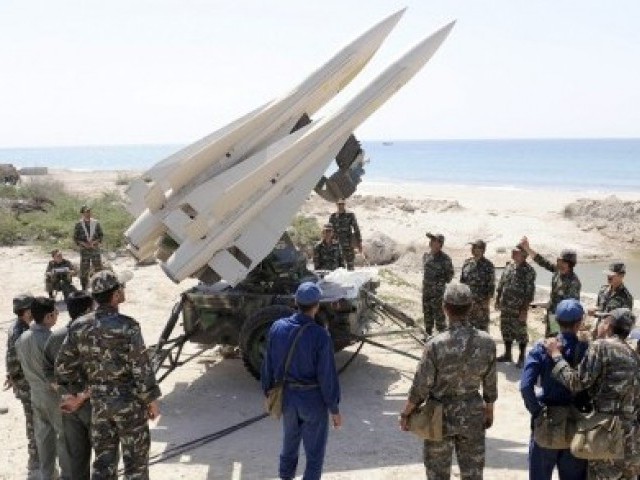
The drain on Iranian regime’s military is significant as the mullahs ship guns, rockets, anti-tank weapons, missiles, ammunition and other equipment to their proxies in each of these wars. The fact the mullahs are demanding a lifting to sanctions to allow for the flow of cash and arms back into Iran is ample proof to anyone with a brain what Iranian regime’s future foreign policy direction is once a deal is completed; which makes what regime supporters such as Parsi say look foolish and ridiculous.

Parsi has repeatedly contended that a nuclear deal with Iran would aid moderates within the regime, boost America’s role in the region, improve security for American interests and help destroy ISIS.

But the evidence to the contrary has been as clear as crystal. Any political moderates remaining in Iran have been thrown in the regime’s notorious Evin prison or executed amongst the 1,800 sent to the gallows by Hassan Rouhani’s administration.

Americans have been taken hostage and remain as bargaining chips by the mullahs, while America’s traditional allies in Egypt, Saudi Arabia and Turkey have been faced with terror strikes in their borders, open warfare with Iranian proxies and have acted unilaterally to defend themselves.

The fact that the regime itself built the template by which ISIS has modeled itself is another rebuttal to what Parsi contends. Ironically while Parsi has been huffing and puffing claiming “moderate” aims of the mullahs, Jordanian security forces revealed the arrest of an Iranian agent working for the regime’s Quds Force who was caught with a sizable amount of explosives to be used in a strike against the U.S. ally.

But Parsi’s attempt at fooling the world is proving inept as the actions of the regime – almost all of which have contradicted everything Parsi has claimed – are finally being denounced on editorial pages everywhere.

“Now Iran’s negotiators are piling on more last-minute demands. They want the United Nations to lift restrictions on Iranian regime’s trade in missiles and other conventional arms. They act, at least publicly, as though they have all the leverage, that they know their adversary craves a deal more than they do,” said the Chicago Tribune in an editorial.

“Where would they get that idea? Probably from the U.S. and its allies, who reportedly have been backpedaling on key points to eke out a deal,” The Tribune added.

While Parsi and his colleague Reza Marashi enjoy the weather in Vienna and hob nob with journalists and fellow regime sympathizers who have gathered there like rock band groupies following the Iranian delegation, the world outside that bubble have already come to the conclusion that Iran’s mullahs have no interest in a deal, only in re-opening their bank accounts and restocking their military hardware for waging even more war.

By Michael Tomlinson

Filed Under: Blog Tagged With: Ballistic Missiles, Iran, Iran Lobby, Iran Talks, Iran Talks Vienna, Parsi

Iran Lobby Pulling Out All the Stops

July 7, 2015 by admin

Iran Lobby Pulling Out All the Stops

Iran Lobby Pulling Out All the Stops

The 4th of July weekend was filled with more than fireworks and celebration. It had more than BBQs and hot dog eating contests or mesmerizing Women’s World Cup finale. The holiday weekend also a blizzard of last minute lobbying by supporters of the Iran regime in a desperate attempt to push for a final key concessions including some new disturbing demands by the mullahs in Tehran.

In the vanguard were staffers from the regime’s chief lobbying group, the National Iranian American Council, which sent its representatives anywhere they could find a microphone, camera, notebook or warm body willing to listen to them.

There was no limit to what they were willing to comment about, even if it had no real tie in with ongoing nuclear negotiations or for that matter, anything of relevance to Iranian-Americans, the purported audience they were founded to help.

Reza Marashi of the NIAC spent his weekend being quoted in Voice of America about an online campaign to foster love for the Iran regime. I’m still trying to figure out just how that movement halts Iran’s funding of three proxy wars in Syria, Iraq and Yemen.

He also attempted to persuade the BBC in the Viennese hotel lobby where negotiations were taking place that talks had moved from the “expert” level and now was in the hands of “ministers.” An interesting observation since he said the exact same thing last year and in April when the interim framework agreement was announced with much fanfare and 24 hours later each side disputed what was agreed to.

But give Marashi credit for attempting wild spin control such as when he told Bloomberg News that “both sides have more maneuvering ability in their negotiating position than they are willing to let on.”

An interesting contention when regime leader Ali Khamenei laid down several red lines in the sand in the form of a detailed infographic repudiating almost everything regime negotiators had hinted at in terms of compromises.

Public lobbying for the regime’s positions wasn’t limited to the NIAC though. Long-time regime business associate Bijan Khajehpour of Atieh International has made the argument that the immediate lifting of sanctions would benefit the Iranian people with the injection of fresh capital into the economy. While everyone knows that the estimated $140 billion in frozen assets and nearly $100 billion in direct foreign investment was being eagerly awaited by the regime’s ruling mullahs who desperately need the cash to replenish coffers drained dry by three proxy wars, plunging oil prices and deep-seated corruption resulted from regime elites and their families skimming off the economy.

The most impressive linguistic gymnastics have come from Trita Parsi, the leader-for-life of the NIAC, who has given full-throated support for all of the demands laid out by Khamenei. Ironically, Parsi’s own book has been used to explain how during the Bush administration, the opportunity arose for a deal with Iran to be struck only to fail because of the “unreasonable” demands by the U.S. for regime change.

History has demonstrated though that Iran’s mullahs have never been serious about delivering a deal that undercuts their power, ability to control their neighbors, nor reduce their ongoing sectarian warfare against other religions. While Parsi contends the mullahs were perfectly willing to give up supporting terror groups like Hezbollah and cooperate with nuclear inspectors, the opposite has been the truth.

Parsi has never explained why a regime he himself has portrayed as being committed to a path of peace has instead turned into the single source of bloodshed, war, sectarian violence, terrorism and practitioner of unrivaled human rights abuses on the planet right now.

Indeed, Iran is appropriately enough the “godfather” of much of what troubles the world now. About the only thing Iran’s mullahs are not responsible for are the Greek Eurozone vote and the collapse of the Japanese women’s soccer team in the Women’s World Cup championship game.

But Parsi deserves our final attention since it has been his championing of the mullahs that has turned the once promising idea of a voice for Iranian-Americans into a propaganda megaphone for the mullahs.

In a question and answer session with Deutsche Welle, Parsi was asked if “a deal only helps Iran’s elite, the hardliners, or do you think a deal could actually help to unleash Iran’s moderate society?”

“It is the moderates in Iran who are pushing for this deal. It is the pro-democracy movement that is overwhelmingly in favor of this deal,” Parsi said.

That statement, more than any other he has made over the past few weeks, sheds the brightest light on the rank hypocrisy Parsi spouts. He attempts to convince us moderate forces are in control in Iran; the same moderate forces that:

  • Instituting brutal put downs of any street demonstration or protests over the past four years;
  • Proclaiming a “moderate” president in Hassan Rouhani who has overseen 1,800 executions in the past 2 years at a clip almost double that of his deranged predecessor, Ahmadinejad;
  • Plunged the Middle East into three massive wars in Syria, Iraq and Yemen with the full military, economic and political backing of the regime, including committing thousands of Iranian soldiers and paramilitary militias;
  • Oversaw the most massive crackdown on communications in Iran, essentially blacking out the entire country through installation of a cyberwall, confiscation of satellite dishes and banning of access to social media.

These things and more are the proof that puts to lies what Parsi, Marashi and all other regime supporters’ contend are the true nature of the mullahs’ intentions.

By Michael Tomlinson

Filed Under: Blog, National Iranian-American Council Tagged With: Iran, Iran Lobby, Reza Marashi, Trita Parsi

Trita Parsi Tries to Dignify Terror

July 3, 2015 by admin

Trita Parsi- Iran Lobby

Trita Parsi- Iran Lobby

With the 4th of July upon us, it’s appropriate for us to reflect back on some words from one of the Founding Fathers; in this case Thomas Jefferson who wrote in 1774:

“A free people claim their rights as derived from the laws of nature, and not as the gift of their chief magistrate.”

It’s an appropriate thought as we look at negotiations between the Iran regime and the P5+1 group of nations wrestling with how to keep Iran from possessing nuclear weapons, but if that issue is really just a tangent of an ever greater problem facing the world today which is the recalcitrant and predatory nature of the regime’s mullah leadership.

Jefferson was right thought in 1774 and his words apply today because the claim of authority assumed by Iran’s mullahs was forcibly wrested away from the Iranian people in the 1979 revolution and subverted into the perverse extremist theocracy it has become now.

All of which makes what Trita Parsi, leader of the regime’s chief lobbying group, the National Iranian American Council, wrote in National Interest patently absurd and indicative of how craven Parsi has become in shilling for the mullahs.

“But the necessity to uphold dignity is at the very center of both the problems and the solutions in the ongoing nuclear negotiations,” Parsi said.

Parsi’s contention that affording Iran’s mullahs “dignity” is the clear path an agreement. He equates this by using the example of the demands by the P5+1 to allow inspections of regime military sites in order to ascertain if Iran has militarized its nuclear development and whether or not the U.S. would allow similar inspections of its military bases under similar circumstances.

It’s an absurd proposition on Parsi’s part for two significant reasons: 1) Mullahs in Iran and not the U.S. was violating international agreements it had signed to not develop nuclear weapons; and 2) Under nuclear treaties with the Soviet Union and later Russia, the U.S. allowed access to its nuclear bases and facilities for international monitors and Soviet and Russian personnel to witness the dismantling of warheads and missiles.

Parsi also takes exception to the idea of “anytime, anywhere” inspections, blaming that condition for offending Iranian dignity and precipitating a crisis in talks. He further suggests that Iran has always given inspectors access and has no problem with it if it was delivered in a manner preserving of Iranian dignity.

I give Parsi credit for his imagination. He might make a good fantasy writer some day with these fairy tales he concocts, but the truth of the situation is that the regime has repeatedly halted inspections, cutting locks off of monitoring lockers and removing inspection cameras. In fact, the regime still to this day has refused answering questions in a dozen areas raised by the International Atomic Energy Agency over the military dimensions of Iran’s nuclear program.

Far from preserving Iranian dignity, Ali Khamenei and his fellow mullahs have refused these questions and concessions not out some sense of national pride, but rather from the very real fear their military secrets would be discovered and the entire false façade they had constructed of a peaceful nuclear program would come crashing down.

Remember, the regime had hidden even the existence of secret nuclear facilities at Parchin, Natanz and Arak.

The fact that Khamenei himself has posted his own definitive red lines where he will brook no compromise renders Parsi’s arguments moot since the regime’s top mullah has taken upon himself to repudiate Parsi’s claims over and over again.

Why does Parsi discuss Iranian dignity when he never deals with the primary factor which is the regime is the violator of international law and agreements in the first place? Does the dignity of a murderer become important as part of his trial? Do a war criminal’s actions deserve dignity when being examined by prosecutors?

The fact that Iran has been caught in criminal activities effectively negates its right to be treated as an equal amongst nations who abide by international law. China does not fund Hezbollah. France does not supply Houthi rebels with arms. The United Kingdom does not recruit Afghan mercenaries and send 15,000 of them to support the Assad regime in Syria, but the Iran regime does all these things and more.

Instead of writing about the dignity of the regime’s mullahs, Parsi would do better about writing of the indignities being suffered by American hostages such as Jason Rezaian of the Washington Post, or the Iranian families whose loved ones have been hanged by the thousands by the mullahs. Parsi might consider the plight of the millions of Syrians, Iraqis, Yemens and Lebanonese who have been displaced as refugees fleeing the proxy wars Iran has started.

By Laura Carnahan

Filed Under: Blog, National Iranian-American Council Tagged With: Iran, Iran Lobby, Iran Talks, Trita Parsi

Iran’s Mullahs Get Ready for a Spending Spree

July 2, 2015 by admin

Iran’s Mullahs Get Ready for a Spending Spree

Iran’s Mullahs Get Ready for a Spending Spree

Who doesn’t like shopping; especially when you’re about to get a $140 billion credit line? The Iran regime’s mullahs are eagerly anticipating the windfall due to them with a completed nuclear agreement. The cornerstone of nuclear talks for the regime has been the condition for the immediate and total lifting of all economic sanctions from the UN Security Council, European Union and U.S.

In fact, there has been no ambiguity about what Iran’s top mullah, Ali Khamenei is seeking in a nuclear deal having posted his very own infographic listing his specific “red lines” where he would not allow regime negotiators to cross in order to gain a deal with the P5+1 group of nations.

The value of those frozen assets has already been demonstrated when the U.S. released over $17 billion in cash to the regime since the interim framework agreement was announced in April of 2015 and follows a prior interim agreement reached in 2013. In fact the regime just received over 13 tons of gold released by South Africa at the direction of the U.S. as part of those agreements. The massive influx of cash came at an opportune time for the regime.

The benchmark price of crude oil had plummeted from a high of $107.89 per barrel in June of 2014 to only $57.30 per barrel in April of 2015, crushing the Iranian economy and its black market sales of illegal crude.

The 47 percent drop in oil came at the same time that the Iran regime had significantly stepped up its support for Houthi rebels as they overthrew the government in Yemen, spent over $6 billion annually to prop up the Assad regime in Syria, and billions more to fund Shiite militias throughout Iraq.

The cash delivered by the U.S. was a godsend for the mullahs and kept their precarious hold over an increasingly embittered Iranian population firm. The mullahs recognize that replenishing their coffers remains the most vital aspect of these negotiations and would normally provide enormous leverage for the P5+1 – particularly the U.S. – but the Obama administration seems to be intent on securing a deal, any deal, without using this economic leverage to gain substantial changes in Iran’s foreign policy direction or abysmal human rights record.

This hasn’t been lost on the mullahs or their circle of supporters who have sought to push forward foreign investment in order to create the feeling of inevitability of a lifting of sanctions. Economists have estimated the regime could receive an additional windfall of over $100 billion in direct foreign investment with the lifting of sanctions in addition to the $140 billion it would get from unfrozen assets.

Already regime supporters such as Reza Marashi of the National Iranian American Council and Bijan Khajehpour of Atieh International are already posturing and trying to facilitate this influx of foreign investment. In Khajehpour’s case, he would personally gain by helping direct investors to regime industries through his consulting firm.

But any thought of this enormous windfall benefitting the Iranian people is foolish and misplaced given past history. Khamenei himself delivered a speech February of 2014 in which he called for an “economy of resistance” and set the stage for preparing the Iranian people for continued hardships. Those hardships have resulted in widespread, but lightly reported, mass protests and demonstrations throughout Iran from everyone ranging from school teachers to factory workers to ethnic minorities.

The fact that regime mullahs directed the massive shifting of funds to fund proxy wars, terror groups and its nuclear program at the expense of its own citizens clearly demonstrates what will happen with this $140 billion payday and is bearing more intense media scrutiny as journalists and columnists delve deeper into where all those billions will most likely go.

As Michael Singh, managing director of the Washington Institute for Near East Policy, writes in the Wall Street Journal: “The agreement terms reportedly under discussion provide Iran with substantial economic relief while demanding precisely nothing from it regarding its sponsorship of terrorism and destabilizing regional behavior.”

Sounding a similar warning is Ray Takeyh, a senior fellow at the Council on Foreign Relations, who wrote in the Washington Post: “The massive financial gains from the deal would enable the Islamic Republic’s imperial surge while allowing a repressive regime that was on the brink of collapse in 2009 to consolidate power. This would be no small achievement for Iran’s emboldened rulers.”

As the regime continues to manipulate the U.S. with false promises, the mullahs are busy getting their shopping list ready for the day their bank accounts are flush with cash again.

By Laura Carnahan

Filed Under: Blog, News Tagged With: Iran, Iran Lobby, Iran Talks, Jamal Abdi, Marashi, NIAC, Sanction, Sanction relief

Iran Lobby Admits Skirting Lobbying Laws

July 1, 2015 by admin


Iran Lobby Admits Skirting Lobbying Laws

Iran Lobby Admits Skirting Lobbying Laws

There was an admission made yesterday during ongoing nuclear talks between the Iran regime and the P5+1 and it wasn’t that the negotiators were going to miss yet another deadline. No, the real news that leaked out and escaped the notice of most news organizations came from the National Iranian American Council, the regime’s longtime loyal lobbying group.

The NIAC announced the formation of a 501(c)4 lobbying arm dubbed “NIAC Action” dedicated to openly carrying the mullahs water through the halls of Congress and collect funds on behalf of the mullahs to advance a nuclear agreement giving Tehran’s cash-starved mullahs access to $140 billion in frozen funds and allow it to retain its nuclear infrastructure without intrusive international scrutiny or inspection.

While the NIAC claims it launched its lobbying group to counter what it feels is the strong anti-regime lobby already operating in the U.S., the more practical reality is that the NIAC had been skirting federal lobbying laws and had to make this move in order to avoid further investigation and possible charges for violating federal laws.

News media have previously chronicled the suspicious and often blatant lobbying efforts by members of the NIAC, especially its founder Trita Parsi who recently lost a defamation suit aimed at a journalist who reported on Parsi and the NIAC’s lobbying actions on behalf of the regime.

An appeal by Parsi resulted not only in another loss but also resulted in NIAC being forced to pay $184,000 and condemnation for blatant and systematic abuse of the discovery process and repeated false and misleading declarations to the court.

NIAC’s Jamal Abdi attempted to spin the lack of coordination between the NIAC and Iran regime officials by saying “We are not lobbying on behalf of the Iranian government. We don’t coordinate. We don’t take money from the Iranian government or the U.S. government.”

But Abdi neglected to mention any prohibition on accepting funding from individuals who receive funding directly or indirectly from the Iranian regime or its vast network of shell companies and false fronts built over the past decade to evade economic sanctions and fund worldwide terror groups such as Hezbollah.

The NIAC has been a constant fixture at the sites of nuclear talks, in news media and online through its aggressive social media efforts. It skirted the letter of federal law by claiming status as a 501(c)3 “social welfare” group even though it organized “legislative action days” where it sent teams to Congressional offices and “lobbied” key representatives and Senators on important Iran-related legislation.

Unsurprisingly, key NIAC staff who have long sought to pressure and influence members of Congress have moved over to key slots at the lobbying arm, including Abdi who is now the executive director, Ryan Costello and Tyler Cullis who move over as policy and legal fellows respectively. It will bear watching to see the amount of cross-over and coordination that occurs between these two groups and whether or not federal lobbying laws will be violated.

It is unsurprising that this new lobbying arm for the NIAC is not devoted the stated mission of the NIAC which is to promote “greater understanding between the American and Iranian people,” but instead was specifically created “to protecting a nuclear deal.”

This will also allow the NIAC to even endorse U.S. political candidates, although an endorsement by a group so closely identified as a mouthpiece for a state sponsor of terrorism, currently holding American hostages and engaging in three proxy wars responsible for the murder and displacement of millions of people would hardly be a welcome endorsement by any Republican or Democratic candidate.

At least the truth is unveiled and we now know the full extent of what the Iran lobby is willing to do to secure a deal for the mullahs.

By Michael Tomlinson


Filed Under: Blog, National Iranian-American Council, News Tagged With: Iran, Iran Lobby, Iran Talks, Jamal Abdi, NIAC, Ryan Costello, Trita Parsi, Tyler Cullis

The Iran Regime’s Red Lines in Nuclear Talks

June 30, 2015 by admin

Khamenei's Redliens on Nuclear Talks-New deception tecnics

Khamenei’s Redliens on Nuclear Talks-New deception tecnics

With June 30 having arrived and no nuclear agreement being reached between the Iran regime and the P5+1 group of nations, one could call everything “business as usual” with yet another deadline preceded by frantic talks and then slipping away without a ripple of consequence.

Of course the “new” immediate deadline will be July 9, in which the Obama administration needs to deliver an agreement to Congress to trigger a 30 day review period, otherwise if they miss it, Congress will have 60 days to review as part of a compromise deal struck between the administration and Sens. Bob Corker (R-TN) and Robert Menendez (D-NJ).

But this new deadline is just as likely to slide by as the one today and the reason for it was put on display today in bright, bold red lines by the regime’s top mullah, Ali Khamenei, who wasted no time taking to Twitter and his official website to post his own version of “Major Red Lines in Nuclear Negotiations” for the regime.

Khamenei’s red lines, unlike those laid down by President Obama after Assad in Syria gassed his own people, are firmly set and unlikely to change since Khamenei is empowered by the mullahs’ constitution to hold the final approval of any foreign agreements, which makes his red lines worth examining.

Khamenei’s red lines essentially repudiates every pointed allegedly agreed upon condition in earlier interim, framework agreements and reasserts the regime’s opposition to virtually all the conditions the P5+1 have sought over the past three years; even after making significant and grave concessions to the regime.

They include:

  • No long-term restrictions on the regime’s nuclear program as opposed to the decade-long restriction sought by negotiators;
  • Continuation of the regime’s nuclear research and development program during the restriction period in spite of prior agreements to halt such research;
  • Immediate lifting of all economic, financial and banking sanctions with signing of an agreement, including all sanctions imposed by the UN Security Council, European Union and U.S. Congress and administration without requirements the regime was in compliance;
  • Lifting of sanctions must be conditioned on the start of the regime’s implementation of the agreement, not after international inspections have verified its compliance;
  • Verification by the UN’s inspectors at the International Atomic Energy Agency will not be accepted by the regime, nor will inspectors be granted unconditional access to any regime facility;
  • No inspection of military facilities will be allowed, nor will interviews of any regime scientist or technical personnel; and
  • The regime opposes any longer term period of review, inspection or compliance beyond the fixed term, which means no 15 or 25 year window to maintain compliance.

The fact that Khamenei repudiated almost every condition regime foreign minister Javad Zarif and its president, Hassan Rouhani touted as landmark agreements should come as no surprise really. Khamenei’s public tweets and statements following the interim agreement announced jointly by the regime and the P5+1 to much fanfare on April, 2015 clearly showed his displeasure and contention that the regime had not submitted to any of these conditions.

Not even regime cheerleader Trita Parsi of the National Iranian American Council could alter the inevitable outcome with his unsurprising appearance in Vienna, Austria, the site of these talks where he attempted to convince any reporter with a notebook, camera or microphone that the regime was indeed serious about these talks and on the verge of closing a deal.

But given the clear and unmistakable conditions laid out by Khamenei, the only real question is how willing is the Obama administration to concede even more and essentially give the regime a blank check or at least a $140 billion check, the amount in frozen assets the regime’s mullahs are lusting after to replenish their coffers drained by three proxy years in Syria, Iraq and Yemen.

William Kristol writing in The Weekly Standard warns the administration may have very well caved in on the all-important issue of inspection access by conceding that since the U.S. would not allow universal access to its own military sites, it could afford Iran the same consideration.

All of which sets the stage for the final act before July 9 of whether or not the P5+1 completely cave and adhere to all of Khamenei’s conditions or recognize in the final act that Iran’s mullahs really have no desire for an agreement and instead have been fooling the world for the past three years.

By Michael Tomlinson

Filed Under: Blog, News Tagged With: Iran, Iran deal, Iran Talks, Iran Talks Vienna

What You Need to Know About the Iran Nuclear Talks

June 29, 2015 by admin


What You Need to Know About the Iran Nuclear Talks

With only a day left before the self-imposed deadline of June 30 for this third and latest round of talks between the Iran regime and the P5+1 group of nations over Iran’s nuclear development program, it is becoming increasingly clear with leaked news reports that the deadline will be missed as regime foreign minister Javad Zarif heads back to consult with his mullah masters in Tehran.

It really is not surprising this deadline will be missed as well. Remember, this session was allegedly set to work out the “details” of the so-called “framework agreement” from last April in which both sides had supposedly agreed on the broad outlines, but within 24 hours conflicting documents were produced on what the framework agreement actually contained.

That “agreement” followed a similar missed deadline the year before and yet another agreement in November of 2013. Remember the 2013 deal? It released $17 billion in cash and assets to the regime for its alleged compliance with reduction in the stockpiles of enriched uranium, but instead, during the past two years under that interim agreement, those stockpiles actually increased by a whopping 20 percent.

It’s worth mentioning that the Iran regime got those billions just as global oil prices slumped and it was shelling out $6 billion to support Assad in Syria with Hezbollah fighters, not to mention the additional billions it spent to support the Houthi revolt in Yemen and Shiite militias in Iraq.

In essence, we have been paying for Iran’s proxy wars for the last two years.

But given the past three years of negotiating, what has been the common thread of failure in each of the previous sessions? Two words: Ali Khamenei.

The regime’s top mullah is empowered by mullah’s constitution with dictatorial powers over virtually all aspects of Iranian life including the judiciary, culture, foreign policy, economy and military matters. Jay Solomon reports in the Wall Street Journal how Khamenei’s constantly shifting demands, almost schizophrenic public rants and hardline stances have doomed every prior negotiating session and has potentially derailed this one as well.

“Mr. Khamenei’s hardline positions, announced in a nationally televised speech, appeared to back away from commitments his negotiators made in April to restrain parts of Iran’s nuclear program and to allow international inspections of the country’s military sites,” Solomon writes. “

“But there is concern in Washington and Europe that Iran’s paramount political leader may be boxing in his own diplomats by establishing terms they can’t deliver on. The 75-year-old cleric is viewed by the White House as the final decision maker on all issues concerning Iran’s nuclear program and foreign policy,” he added.

Solomon also disclosed the existence of secret messages passed between the regime and President Obama in which the mullahs in Tehran demanded as a sign of U.S. good faith the release of certain prisoners in 2009. The regime also demanded the blacklisting of certain Iranian opposition resistance groups and an increase in U.S. visas for regime students to study at U.S. universities.

It is noteworthy that the regime specifically called for actions against Iranian resistance groups, which have helped marshal global opinion against the regime over the years – and in the case of the National Council of Resistance of Iran – have helped disclose once-secret Iranian nuclear facilities angering the mullahs.

But in a startling concession, the U.S. arranged for the release of four Iranians including two convicted arms smugglers and a prominent scientist convicted of illegal exports to Iran. That early example of American concessions set the stage for the regime and Khamenei to believe they could get whatever they wanted from the U.S. and led to two years of mind-numbing talks in which the P5+1 caved on a whole series of concessions designed to appease Khamenei and hardline mullahs.

Now with admission that the June 30 deadline is moot, Western diplomats are breaking their silence and raising the scenario that the Iran regime is now backing out of its earlier commitments.

“There are a number of different areas where we still have major differences of interpretation in detailing what was agreed in Lausanne,” said British Foreign Minister Philip Hammond in a Reuters report.

“There is going to have to be some give or take if we are to get this done in the next few days,” he added. “No deal is better than a bad deal.”

Other Western officials echoed Hammond’s remarks, saying some of the backtracking involved the mechanics of monitoring Iranian compliance with proposed limits on nuclear activities according to Reuters.

The final clues of how far away the regime is removed from reality came in a posting by Reza Marashi from the National Iranian American Council and a lead supporter of the mullahs who is in Geneva along with his colleague Trita Parsi hobnobbing with the Iranian delegation in hotel hallways and lobbies.

Since Marashi and Parsi enjoy such close access to the confidential nature of these talks through the Iranian delegation, it’s worth noting the issue areas they call “myths” as clues to what frightens the mullahs the most.

  • The appearance that the regime will receive a windfall from immediate lifting of all sanctions;
  • The lack of verified inspection measures to prevent Iranian regime from cheating;
  • The emboldening of Iran’s mullahs to act freely in the region now that a deal is in place;
  • The worsening of human rights in Iran now that there is no leverage to improve the situation;
  • The ability to secure a better deal with mounting pressure on the regime from wider protest within Iran and abroad.

Ironically, Marashi has laid out the case precisely posed by opponents of a bad nuclear deal in which Khamenei’s mouth has uttered all of these points in direct contradiction to Marashi over the past two years.

The kicker is the trial balloon floated by Parsi in which he basically delivers the regime’s position on Huffington Post of a three phase approval deal which includes the U.S. Congress approving the lifting of sanctions and the terms of a deal without it even being signed by the Iranians. He must have gotten the idea from Rep. Nancy Pelosi (D-CA) during the healthcare debate when she argued Congress had to pass the law to find out what was in it.

Parsi and Marashi seem to believe Congress and the American people will fall for the same trick twice.

By Michael Tomlinson


Filed Under: Blog, National Iranian-American Council, News Tagged With: Iran, Iran Talks, Iran Talks Vienna, Marashi, NIAC, Trita Parsi

NIAC Discussion on Geopolitical Implications of Iran Deal or shameful Lobbying for mullah

June 27, 2015 by admin

Iran Lobby on the Nuclear Discussions

Iran Lobby on the Nuclear Discussions

In an article published on Center for Security Policy, written by Caitlin Anglemier, The National Iranian American Council (NIAC)’s usual approach in serving as Iran’s lobby in Washington D.C. has been highlighted. Excerpts from this article are published here to describe the path the Iranian lobby and fellow travelers are talking while we are getting very close to the June 30th self claimed nuclear talks deadline.

On June 25, NIAC held a discussion on “The Geopolitical Implications of an Iran Deal”. The panel of speakers included: Peter Beinart, contributing editor for The Atlantic and National Journal; Fred Kaplan, war stories columnist for Slate; Dr. Trita Parsi, President of the National Iranian American Council; and Barbara Slavin, South Asia Center senior fellow for the Atlantic Council, known within the Iranian community for appeasing the mullahs.

In her article, Caitlin Anglemier reports: “The talk began with a discussion on how foreign policy has become a primary focus of the Republican party and how generally, the Democratic party tends to place more emphasis on social and economic issues. The discussion then drifted towards discussing the negotiation talks themselves and the ten-year time period aspect. The panel acknowledged the concern that many have, which is that the ten-year period is just delaying the inevitable truth that Iran could obtain a nuclear weapon within a year. But the panel emphasized the importance of those ten years. While that negative viewpoint is out there, why not try to focus on the time positively and the opportunity it provides for even more talks, negotiations, and compromising?

In trying to frame the ten-year period in such a positive manner, the NIAC panel attempted to depict a reality that is simply not accurate. Solely based on how the nuclear deal negotiations have gone so far, it would be foolish to think that ten years of talks and additional demands would go any better than what has transpired-which has not been good at all.”

The report continues: “The discussion then moved to reflecting on the implications of all the money involved in the deal talks. “…[the US] will have released a total of $11.9 billion to the Islamic Republic [of Iran] by the time nuclear talks are scheduled to end in June, according to figures provided by the State Department”. The panel seemed to indicate that if a deal is successfully reached, Iran would utilize the freedom gained from lifted sanctions as well as the cash assets given from the United States to benefit the people of Iran. The panel’s theory was that if Iran continued, over the next ten years, to send money overseas for alternative projects, the people of Iran would start questioning the government and would become upset. In the past, Iran has used the funds it had to fund terrorism and terrorist organizations. If the country has placed an emphasis on aiding terrorism over taking care of its people in the past, why would that change after a new deal?”

It is also a fact that a big chunk of Iran’s economy is in the hands of IRGC, which is the main force behind all the nuclear activities, Regime’s meddling in Syria, Iraq, Yemen, etc (the Quds force), and therefore it goes without saying that all the money that will return to Iran will be channeled in the same manor it did before.

Caitlin Anglemier refers to the last part of the discussion about another tactic used by the Iranian lobby in counting “benefits of collaborations” with the Iranian regime on the fight against ISIS. She says: The last part of the discussion before questioning commenced revolved around the “misfortunate reality” that the US can’t work in alliance with Iran to combat the Islamic State. The panel emphasized how the Islamic State is well aware of the fact that all of its major opponents are at war with one another, and has already taken advantage of this situation. At first glance it does seem that Iran has taken steps towards combatting the Islamic State. However, Iran is actually continuing to fund Hezbollah as well as Shia tribes and militias. While the US clearly wants to abolish the Islamic State, this must be accomplished without simultaneously strengthening Iran and its militant connections. This hypothetical alliance with Iran against IS could never manifest itself in reality.”

Referring to the questions about the the exact details of the deal talks and their implications, she writes: “More importantly, even if we were able to compromise and establish a negotiation with Iran on their desires and demands, we have no reason to believe that they will be honest and follow through on said demands in the future. Therefore, this essentially indicates that a “deal” is just a blissfully ignorant façade.

Conclusive, the discussion was polite, peaceful, and very informative. It would be easy to imagine a listener walking away with a positive mental image of Iran and the extensive benefits a successful nuclear deal agreement. However, we must take it upon ourselves to not be so easily deceived. Pursuing an agreement with Iran in nuclear talks is not only a waste of time and resources, it would result in directly providing Iran with significant relief from sanctions as well as billions of dollars. And contrary to what some apparently believe, these billions will in fact not be used towards benefiting the wellbeing of the Iranian citizens, but will continue to be used in funding terrorism and terrorist organizations.

We must abandon these attempts at negotiations with Iran before we make ourselves out to be even greater pushovers than we have already portrayed.”

Filed Under: American-Iranian Council, Current Trend, Duping Anti-War Groups, Latest from Lobbies & Appeasers, National Iranian-American Council Tagged With: Barbara Slavin, caitlin Anglemier, Featured, Fred Kaplan, Iran deal, Iran Talks, NIAC, nuclear talks, Peter Beinart, Trita Parsi

Stopping Concessions to Iran Regime Key to Regional Peace

June 26, 2015 by admin


Stopping Concessions to Iran Regime Key to Regional Peace

Stopping Concessions to Iran Regime Key to Regional Peace

With only a week left before the June 30 deadline for an agreement between the P5+1 group of nations and the Iran regime, the Iran lobby is working overtime spitting out editorials, policy papers and other propaganda stressing the same messages it has been hammering on for three years.

This was no more evident than in a piece published in Foreign Policy by Trita Parsi, head of the regime’s chief cheerleader the National Iranian American Council, who trotted out the old standard that the only choices at the bargaining table was between war and peace; claiming that this dispute was “rarely resolved through diplomacy without the various sides going to war first.”

Of course that is a false choice and a weak scare tactic because the choices are much more varied and numerous than Parsi would have us believe. In fact, the National Council of Resistance of Iran, the largest Iranian dissident groups in the world, held a press conference today where they released a report outlining the laundry list of same deceptions and falsehoods Parsi has been flogging.

Alireza Jafarzadeh, the NCRI-US deputy director, outlined some of these other choices for negotiators and chief among them was the potential for regime change itself within the Iran regime which has been wracked by large scale demonstrations across the country by disgruntled teachers and workers who are fed up with large-scale corruption and the diversion of the nation’s wealth away from the economy and to fund terror groups and proxy wars in places such as Syria, Iraq and Yemen.

It certainly did not help that the mullahs decided to fortify a faltering Assad government in Syria with an additional 15,000 troops, comprised heavily of paid mercenaries from Iraq and Afghanistan.

And this is what Parsi attempts to misled with his editorial. While he claims the choices are stark between war and peace, he neglects to mention that Iran mullahs are already at war with Saudi Arabia in Yemen, Sunnis tribes in Iraq and the Syrian people who are standing up against he dictatorship ruling the country. The regime’s Revolutionary Guards and Quds Force are already fighting on battlefields throughout the Middle East.

And this even isn’t a recent development. Iranian regime’s military has long supplied local militias in Iraq in their fight against U.S. and coalition forces, including training in constructing improvised explosive devices, LEDs, which have claimed thousands of American lives.

“What does this mean? It means that Iran doesn’t seem particularly interested in entering into a dialogue with the Obama Administration at the moment,” wrote Jeffrey Goldberg in the Atlantic in 2011.

All of which puts the lie to Parsi’s chief argument since Iran’s mullahs have already been waging war against U.S. interests and personnel for the past five years. This brings us to another of Parsi’s ham-handed arguments, namely that a deal represents a watershed moment in the relationship between Iran and the U.S. and would make Iran more amenable to working with the U.S.

Another silly proposition since Iran’s mullahs have shown a shocking willingness to turn American hostages into bargaining pawns and demanded – and received – the exclusion of human rights and ballistic missile technology from any part of the negotiations.

The NCRI report clearly showed this by delving deeply into how Tehran has approached nuclear talks by consistently keeping military sites out of inspections, foot dragging requests for disclosure by the International Atomic Energy Agency, retaining its nuclear infrastructure in its entirety including its centrifuges, uranium stockpiles and heavy water reactors, and keeping talks alive after three years with false promises and interim agreements, leaving it free to pursue its military actions abroad.

By Michael Tomlinson


Filed Under: Blog, National Iranian-American Council, News Tagged With: Iran, Iran deal, Iran deceptions, Iran Lobby, Iran Talks, NIAC, nuclear talks, P5+1 negotiations with Iran, Trita Parsi

  • « Previous Page
  • 1
  • …
  • 55
  • 56
  • 57
  • 58
  • 59
  • …
  • 72
  • Next Page »

National Iranian-American Council (NIAC)

  • Bogus Memberships
  • Survey
  • Lobbying
  • Iranians for International Cooperation
  • Defamation Lawsuit
  • People’s Mojahedin
  • Trita Parsi Biography
  • Parsi/Namazi Lobbying Plan
  • Parsi Links to Namazi & Iranian Regime
  • Namazi, NIAC Ringleader
  • Collaborating with Iran’s Ambassador

Recent Posts

  • NIAC Trying to Gain Influence On U.S. Congress
  • While Iran Lobby Plays Blame Game Iran Goes Nuclear
  • Iran Lobby Jumps on Detention of Iranian Newscaster
  • Bad News for Iran Swamps Iran Lobby
  • Iran Starts Off Year by Banning Instagram

© Copyright 2026 IranLobby.net · All Rights Reserved.