Iran Lobby

Exposing the Activities of the lobbies and appeasers of the Mullah's Dictatorship ruling Iran

  • Home
  • About
  • Current Trend
  • National Iranian-American Council(NIAC)
    • Bogus Memberships
    • Survey
    • Lobbying
    • Iranians for International Cooperation
    • Defamation Lawsuit
    • People’s Mojahedin
    • Trita Parsi Biography
    • Parsi/Namazi Lobbying Plan
    • Parsi Links to Namazi& Iranian Regime
    • Namazi, NIAC Ringleader
    • Collaborating with Iran’s Ambassador
  • The Appeasers
    • Gary Sick
    • Flynt Leverett & Hillary Mann Leverett
    • Baroness Nicholson
  • Blog
  • Links
  • Media Reports

The Iran Lobby’s Guide to Distorting the Truth

August 14, 2015 by admin

The Iran Lobby’s Guide to Distorting the Truth

The Iran Lobby’s Guide to Distorting the Truth

The Iran regime’s leading lobby, the National Iranian American Council, launched an official lobbying arm in the form of NIAC Action since it was coming under greater scrutiny for engaging in lobbying activities in violation of federal law. Also, Trita Parsi, the head of the NIAC, recently lost a defamation lawsuit he brought against an Iranian American journalist who wrote on the same topic.

NIAC Action was launched ostensibly to help advocate for Iranian American issues, but anyone looking at its site will quickly realize its sole purpose for existence is to push for the proposed nuclear deal and enable the mullahs in Tehran to get their hands on $100 billion in frozen assets and relief from economic sanctions that had threatened their hold over the Iranian people.

Interestingly enough, NIAC Action provides its followers a tool kit to help them at local town hall meetings being held by members of Congress over the summer recess who will hear from their constituents about their feelings on the nuclear deal. The tool kit is classic tactical programming to help feed and stoke the narrative the Iran lobby has been pushing from day one; namely that the deal is a choice between war and peace.

NIAC Action has taken that absurd one step further by trying to align a vote on the nuclear deal to the vote on going to war in Iraq. One of their talking points to supporters reads:

“The President has said that Congress’ vote on the Iran deal is the most important foreign policy vote lawmakers will take since the vote to authorize the war with Iraq. Many lawmakers have come to regret that they did not stand up to vote against the war with Iraq. Will you stand up and vote in support of the nuclear deal to prevent a war with Iran?”

The message point is an excellent example of the desperation regime supporters must feel and their willingness to troll the depths of fear mongering to get their point across. In many ways, the NIAC Action talking points are revealing for what they don’t say.

They make no mention of the need to carefully watch the behavior of Iran’s mullahs going forward. They make no mention of the need to reassure Americans that the mullahs can be trusted. They make no mention of how the mullahs will use the $100 billion windfall they are about to receive. They make no mention of the mullahs’ commitment to improve human rights and release Iranian American hostages being held in Iranian prisons.

Why? Simply put, they know it would be lying.

So absent the ability to tell the truth in order to reassure highly skeptical Americans as evidenced by a string of recent public opinion polls, NIAC Action has chosen to double down on fear tactics in an effort to cow the American people. It’s a tactic being shared in recent comments by Secretary of State John Kerry who warned that the value of America’s currency would take a hit on the global market should the deal fail to pass.

He warned of the potential for “the American dollar to cease to be the reserve currency of the world, which is already bubbling out there.”

If we give them another week, I’m sure the administration and Trita Parsi will also tell us global warming will increase and polar bears will become extinct if the nuclear deal is not approved.

The histrionics coming from NIAC Action are the strongest indication yet of how weak its position is and how blatant a tool for the mullahs it has become.

Rest assured the inventive and fanciful minds at the NIAC will probably include the eventual downfall of Western civilization as a result of a failed nuclear deal next.

By Michael Tomlinson
Filed Under: Blog, National Iranian-American Council Tagged With: Iran deal, NIAC, NIAC Action, Trita Parsi

Myths from Iran Lobby about Support for Nuclear Deal

August 13, 2015 by admin

Myths from Iran Lobby about Support for Nuclear Deal

Myths from Iran Lobby about Support for Nuclear Deal

According to Trita Parsi, the head of the National Iranian American Council and chief cheerleader and lobbyist for the Iran regime, in an editorial on Huffington Post proposed that an overwhelming majority of Iranian Americans support the proposed nuclear agreement with the mullahs in Tehran.

Is there a scientific, statistically valid poll he cites as evidence? No. Is there some comprehensive survey or focus group sampling he discusses? No. Does he quote any academic, independent think tank, researcher or university for his assertion? No. Does he name any study, poll, survey or report supporting his claim? No.

All we have to go with is Parsi’s words and imagination, but that is not unusual and par for the course for this man who claims the mantle of Iranian American leadership, but does nothing by shill for the Iranian government.

Parsi has made no efforts to bridge the divides within the Iranian American community, routinely denouncing opponents and dissidents to the regime and praising the mullahs even when they commit gross violations of human rights perpetrated against Iranian Americans such as Saeed Abedini, Jason Rezaian and Amir Hekmati who all languish in Iranian prisons.

Parsi’s extensive social media postings on Twitter for example hardly mention the plight of these Iranian American men and he has never directed a single tweet at official Twitter accounts for high-ranking regime officials such as Hassan Rouhani or Ali Khamenei asking for mercy on behalf of these men unjustly imprisoned and tortured.

But that is the heart of Parsi’s lobbying tactics; to claim leadership and yet do nothing on behalf of the very people you claim to represent. Oddly enough, NIAC has spent almost all of its public pronouncements on issues directly related to the Iran regime and its citizens (to the extent it benefits the government’s policies) and nothing to the plight of Iranian Americans.

For example, Parsi has lobbied on behalf of Iranian students studying here from Iran who are subject to greater scrutiny when they study fields related to nuclear weapons development, but does not address broad social topics afflicting and dividing the Iranian American community such as addressing the generational gap in ex-pats who fled Iran during the Islamic revolution and younger Iranian Americans struggling to come to terms with the bloody legacy of their nation’s heritage.

Heck, he might help the cause of Iranian Americans and their image by even devoting himself to trying to correct stereotypes arising from the “Shahs of Sunset” reality show, but then again that doesn’t help further the cause of the mullahs does it?

It’s also unfortunate that Parsi in his editorial has to fall back on using the old “silent majority” phrase to justify his position. He probably forgot that the term originated with President Richard Nixon who coined the phrase in a televised address to talk about those Americans who did not join mass protests against the Vietnam War in 1969. An oversight, but all-too appropriate one for a guy who seems to have a penchant for dissembling the truth to suit his political needs.

Who knew Parsi was such as Nixon fan?

But more importantly, the central premise of Parsi’s piece – that popular support for the nuclear deal is growing – has been thoroughly blown out of the water with the release of several national and reputable polls which show steep and increasing declines in support for the deal, trust in the Iran regime to comply with the deal, lack of belief the U.S. got what it wanted, strong belief the U.S. gave away too much to the mullahs, and strong sentiment Iran is going to cheat anyway.

Those polls have come from places such as the Pew Research Center, Monmouth University, Quinnipiac University, WSJ, NBC, CNN, Washington Post etc.

As much as Parsi would have everyone believe him on his word, he has yet to offer up any proof of his assertions.

By Michael Tomlinson

Filed Under: Blog Tagged With: Iran deal, NIAC, NIAC Action, Trita Parsi

Supporting the Iran Deal Enables the Iran Regime

August 11, 2015 by admin

Supporting the Iran Deal Enables the Iran Regime

Supporting the Iran Deal Enables the Iran Regime

Cause and effect. It’s a simple concept, but one that affects nearly everything in our lives. You text while driving, you get into an accident. You don’t pay your taxes, you get into trouble with the IRS. You give $100 billion in cash to a regime that sponsors terrorism, you will get more terrorism. Cause and effect.

The proposed Iran nuclear deal is a living embodiment of that concept since approval of the deal will inevitably lead to a significant increase in the already bad behavior the regime already engages in. If a criminal gets away with his crimes and the police reward him with a limitless credit card, it stands to reason the criminal is not likely to change his ways. Its basic human psychology and Iran’s mullahs are no different in behaving the same way.

Since the deal was announced, the behavior of Iran’s leaders has lived up to all of our worst expectations.

Iran continues to hold Americans hostage and has made no efforts to free them or loosen the policies that imprison thousands of political dissidents, religious and ethnic minorities and scores of others languishing in Iran’s prisons.

Iran’s leaders, including its top leader Ali Khamenei, continue a relentless and even more hate-filled diatribe against the West, the U.S. in particular and regularly denounce the very deal they signed.

Iran still funds and supports its proxies engaged in brutal sectarian wars in Syria, Iraq and Yemen, going so far as to recruit Afghan mercenaries to fight in Syria.

Iranian mullahs hosts trade delegations from Europe and Russia in anticipation of opening up the floodgates to foreign investment once the deal is approved and has already sent its notorious head of its Quds Forces on an illegal trip to Russia to begin a shopping spree of new military hardware which already began with the shipment of a previously embargoed advanced anti-aircraft missile system.

It’s Iranian regime’s behavior that has more and more Americans worried that mullahs got more than they even hoped for in negotiations and is ready to reap the benefits without any changes to its behavior. A new Monmouth University poll showed a deepening concern by Americans about the deal and misgivings over the agreement’s ability to curb any of the regime’s abhorrent behavior.

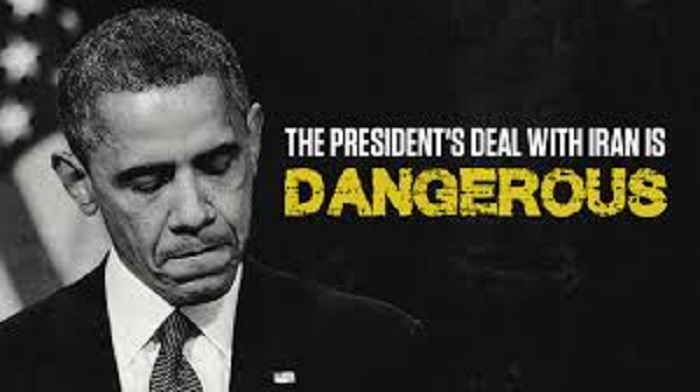
Oddly President Obama continues to discount the public statements and diatribes of Khamenei and other Iranian leaders and refuses to give them any credence, even though the public statements of any foreign leader are usually taken at face value and in this case, more Congressional representatives are taking statements seriously.

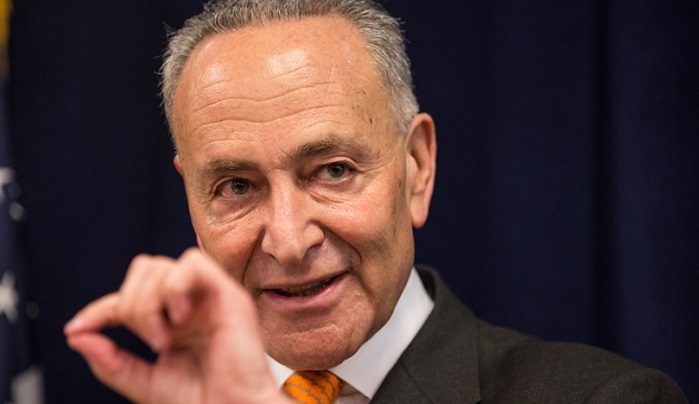
Sen. Chuck Schumer (D-NY), the third-ranking Democrat in the Senate and in line to be the new Senate Minority Leader, publicly broke with the president in opposing the deal after weighing all the arguments carefully, saying “I believe we should go back and try to get a better deal. The nations of the world should join us in that.”

Schumer is correct that the U.S. can do better; certainly at the very least in getting a deal that correctly links the regime’s conduct in areas such as human rights and support for terror as conditions for getting any kind of economic relief. Quid pro quos are an integral part of international diplomacy and the U.S. ought to demand something, anything from the mullahs in return for the windfall they so hungrily desire.

But without any linkage, the mullahs in Tehran are simply enabled and emboldened to act as they always have – with impunity.

But American veterans of the Iraq war have announced their intention to join the campaign against the deal and remind Americans that thousands of Americans were killed and wounded directly at the hands of Iranian regime agents, Quds Force and Revolutionary Guard members who equipped, trained and led Iraqi militias in attacking Americans and now involved in a sectarian war against Sunnis in Iraq.

The first of the group’s videos features retired staff sergeant Robert Bartlett, who was badly injured by one of those bombs while serving in Iraq in 2005. “Every politician who is involved in this will be held accountable, they will have blood on their hands,” he says in the ad. “A vote for this deal means more money for Iranian terrorism. What do you think they are going to do when they get more money?”

Therein lays the central question we face. How does the behavior of Iran’s mullahs make anyone believe things will be different once the agreement is in place; especially when it has more holes in it than Swiss cheese?

But profiting from death is not a new trick for the mullahs. Iran’s Environment Protection Agency issues about 500 licenses to foreign visitors to hunt rare and protected animal breeds, including the Transcaspian Urial, a rare breed of sheep that is only legally available to hunt in Iran.

If people get upset over Cecil the Lion meeting his demise at the hands of a hunter looking for a trophy, maybe animal rights activists should add Iran as well and try to save Sally the Sheep.

By Michael Tomlinson

Filed Under: Blog Tagged With: Iran deal, Iran nuclear deal, Sen. Chuck Schumer

Iran Regime Already Acting As If Sanctions Are Over

August 11, 2015 by admin

Iran Regime Already Acting As If Sanctions Are Over

Iran Regime Already Acting As If Sanctions Are Over

The unavoidable and unmistakable consequence of the proposed agreement with the Iran regime over its nuclear weapons program is that various national and business interests view it as a green light to begin acting as if all sanctions levied against the Iranian regime were being lifted right away.

For its part, the mullahs in Tehran have warmly and gladly embraced that concept and are moving quickly to deepen the economic relationships Iran has with the outside world in order to create sizable economic returns regardless of what Congress does in approving or disapproving the deal.

This has been seen in the veritable parade of business middlemen, potential investors, corporate representatives and government officials that have flooded into Tehran like a sudden rainstorm, including trips by high ranking officials such as European Union foreign policy chief Federica Mogherini even though during all trips, the Iran regime acted as business as usual in publicly hanging several political prisoners and dissidents.

None of the ministers visiting Iran uttered any public protest in a sign that only bolsters and appeases the mullahs.

Even though the 159-page agreement allegedly maintains sanctions until the regime demonstrates its commitment to reducing its nuclear infrastructure, it has already moved aggressively to reap the benefits in terms of its conventional military power.

Qassem Soleilmani, the head of Iran’s Quds Force recently flew to Moscow to discuss arms purchases even though he still remains under a United Nations travel ban for his role in helping launch Iran’s nuclear program as well as directing and supplying the bulk of terror operations allied with the regime such as Hezbollah.

“I can’t confirm these specific reports but it is an indication of our ongoing concerns with Iran and their behavior,” White House press secretary Josh Earnest told reporters Friday at the daily press briefing in what may be one of the greatest understatements of the year.

Soleimani has been blamed in the deaths of some 500 Americans in Iraq through militias trained and armed by his forces in the use of dreaded improvised explosive devices (IEDs). Soleimani was also seen on the front lines in Iraq helping coordinate the growth of Shiite militias battling ISIS in defiance of the travel ban.

But the Quds Force is only the tip of the iceberg for the regime since the Revolutionary Guards Corps is set to reap the biggest economic windfalls since much of the Iranian economy and its largest companies and industries are under the direct control or ownership of the IRGC and its leaders.

In all, about 90 current and former IRGC officials, entities such as the IRGC itself, and firms that conducted transactions for the Guards will be taken off nuclear sanctions lists by either the United States, EU or United Nations, according to a Reuters tally based on annexes to the text of the nuclear deal.

A handful will see EU sanctions removed once the nuclear deal is enacted on “Implementation Day” expected within the next year. Others such as Bank Saderat Iran (BSI), accused by Washington of transferring money to groups it deems “terrorist,” such as Hezbollah, will have EU sanctions lifted in eight years; and that’s being hopeful.

Now, the Guards will be able to lever their dominance in Iran’s economy to serve as a conduit for the new business flowing into Iran, and will likely demand joint ventures, shared profits, and other benefits from ompanies seeking to access Iran’s lucrative markets,  said Mark Dubowitz, executive director of the Foundation for Defense of Democracies.

“Any company that wants to do business in a key strategic sector of Iran’s economy will have to do business with the Revolutionary Guards,” he said.

On top of which reports are now coming out that Iran is busy sanitizing suspected nuclear sites such as Parchin in anticipation of being inspected and given a clean bill of health.

None of which should reassure anyone about the nuclear agreement’s ability to stop anything the mullahs wanted to do anyway. It does raise the most obvious question of why supporters of the deal continue to support it light of the regime’s clear and unambiguous intentions to continue pursuing policies fomenting sectarian violence, terror and civil war throughout the Middle East?

The regime’s motives and actions are on display for everyone to see and they tell an unmistakable and terrifying story.

By Michael Tomlinson

Filed Under: Blog

The Big Lie About Human Rights and the Iran Nuclear Deal

August 7, 2015 by admin


The Big Lie About Human Rights and the Iran Nuclear Deal

The Big Lie About Human Rights and the Iran Nuclear Deal

One of the more incredible stretches of imagination surrounding the proposed nuclear deal between the Iran regime and the rest of the world is the notion that the agreement with Tehran’s mullahs might somehow spur improvements in the regime’s bleak human rights record.

One of the strongest proponents of that lie has been the regime’s paid lobbyists, the National Iranian American Council, which put out a policy memo on its website attempting to reinforce the misconception.

The memo essentially consists of quotes taken from various people and groups identified with human rights issues in Iran, but notably does not include any quotes or comments from groups who have traditionally monitored regime human rights abuses, such as Amnesty International, nor does it include any comments from relatives or families of loved ones who languish in regime prisons or been subject to torture and executions.

It is also notable how many of the quotes are taken from purported human rights activists who in reality serve the regime such as Akbar Ganji, a self-described Iranian journalist who was previously a commander in the regime’s Revolutionary Guard and still has deep ties to the regime’s leadership.

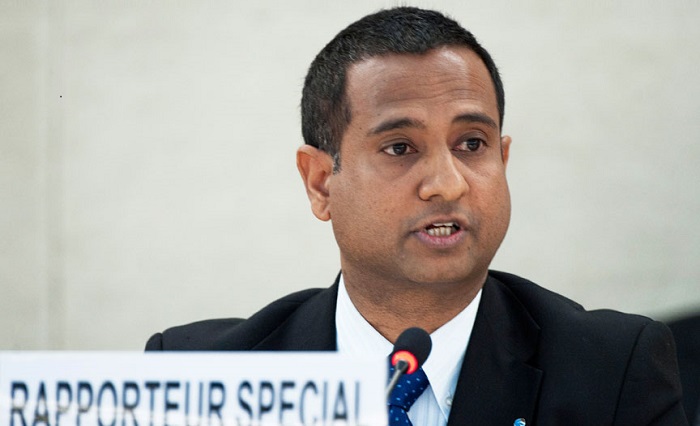
The fact that NIAC also used a quote from Ahmed Shaheed, the United Nations Special Rapporteur for human rights in Iran is laughable considering revelations that the Iran regime launched a sophisticated smear campaign against him through the use of a fabricated WikiLeaks cable purporting to show bribes from Saudi Arabia that never existed.

“The apparently orchestrated campaign against Shaheed seems to fit into a familiar pattern of Iran smearing activists, dissidents, or even journalists by propagating misinformation about them.

Iran has repeatedly condemned Shaheed’s reports as unsubstantiated, biased and collated from anti-Iranian outlets. Shaheed has never been allowed to travel to Iran since his initial mandate was approved by the UN in 2011.

One could go through practically the entire list of quotes provided by the NIAC and simply use Google searches to reveal how factually incorrect and in error they are. It is an admirable show of deception on the NIAC’s part that rivals many of their past efforts to distort the regime’s true record.

The real record on the regime’s abysmal human rights record has been well documented not only by Shaheed and Amnesty International, but also by opposition groups such as the National Council of Resistance of Iran, news media and through the statements and actions made by ordinary Iranians demonstrating and protesting against the regime and those imprisoned such as Americans Jason Rezaian, Saeed Abedini and Amir Hekmati who still languish despite the nuclear agreement.

But everything the NIAC says seems to be constantly undercut by their masters in Tehran. Another glaring example was the complaint filed by the regime against White House press secretary Josh Earnest who has taken to insisting the U.S. retained the right to “use military force in the long run and the use of nuclear inspections to gain intelligence about Iran’s nuclear facilities”; calling Earnest’s statements a “material breach” of the nuclear deal itself.

The outlandish complaint was lodged with the International Atomic Energy Agency which has come under heavy criticism for negotiating two secret side deals with the regime and not making either available to the public or members of Congress currently reviewing the agreement.

The irony of the Iran regime’s complaint is that it exposes both provisions as being completely false and unenforceable since the regime has already clearly considered both to be invalid, even though deal supporters such as Trita Parsi and Reza Marashi of the NIAC have gone to great lengths to champion those same provisions of key examples of why the deal works.

One has to wonder who the American public should believe on this issue: the Iranian government or those lobbyists being paid by that same government and its allies?

By Michael Tomlinson

Filed Under: Blog, News, The Appeasers Tagged With: Ahmad Shaheed, Iran, Iran deal, Iran Lobby, Iran sanctions, Nuclear Deal, Trita Parsi

Why Iran Regime Cannot Stomach Any Opposition

August 6, 2015 by admin

Why Iran Regime Cannot Stomach Any Opposition

Why Iran Regime Cannot Stomach Any Opposition

Like all totalitarian regimes throughout history, the Iranian government cannot tolerate any dissent, especially from within its own citizenry, since opposition from the Iranian people is a condemnation of their government’s policies and proof to the world it has no legitimacy.

This often extends to the point where oppressive governments rig elections in order to show popular support at the polls when in fact, there is no support for the regime. Take for example Nazi Germany in which opposition political parties were effectively outlawed and the parties in power received what they called an overwhelming mandate from the people.

The same principle applies to the mullahs in Tehran who reserved the power for themselves to decide arbitrarily which candidates met the selection criteria to even be allowed on the ballot. This rigging of the candidate slate has a long history in mullah’s Iran where certified nut jobs such as Mahmoud Ahmadinejad were “elected” in stolen elections that provoked the largest mass protests since the overthrow of the Shah’s government.

The regime’s current puppet, Hassan Rouhani, was the beneficiary of the same selection process that cleared the ballot of anyone else who might threaten him and his fellow mullahs and allowed them to present to the world a certified “moderate” face in order to guile the West into jumpstarting nuclear negotiations which the regime needed desperately in order to access $160 billion in frozen assets to revive an economy brought low by official corruption and gross mismanagement.

All of which explains to some degree the fanatical hatred the regime has for any Iranian dissident group. Its long-running efforts to discredit any group that dares oppose the mullahs include everything within its disposal; from diplomatic pressure, mass arrests and imprisonment, outlawing participation or membership, attacks in news media and even resorting to launching online assaults and social media campaigns denouncing dissidents. The tactics are as old as ancient times with the only difference being the advent of technology.

In terms of technology, the Iran regime has sought to create a wide range of online front groups, web pages and blogs dedicated to discrediting any Iranian opposition group and attempt to give the perception of a social media wave of support for its policies. Of particular focus for these regime false fronts has been the National Council of Resistance of Iran, an umbrella opposition group housing various resistance efforts such as the People’s Mojahedin Organization of Iran (PMOI) or otherwise known as the Mujahedeen-e-Khalq (MEK).

The number of regime online fronts is stunning in many ways and reaches across all platforms to include social media such as Twitter, Facebook and LinkedIN to websites and blogs and multimedia like YouTube. One glaring example of one of those sites is the Campaign Against Sanctions and Military Intervention in Iran (CASMII) which makes an extra special effort to regularly denounce the MEK.

Interestingly, if one scrolls down the CASMII website, you can see the affiliated links to the large universe of Iran regime websites, including such notorious efforts as Stop Iran War, Code Pink: Iran, Mossadegh Project News and Iran Affairs. It also includes official regime news links such as Payvand News which gives one a better idea of how closely aligned CASMII and its brethren are to the mullahs in Tehran.

A careful reading of the CASMII site reveals some odd features, namely there are no names of any staff, no quotes by anyone associated with CASMII, no indication who supports it, no way to mail a letter, place a call or knock on a door with these people. It is also revealing when one reads the statements and posts on CASMII, especially relating to the Iranian resistance, how broad sections are cut and paste jobs from regime news sites, regime press statements or articles written by regime supporters.

But the true nature of sites such as CASMII comes from what is not on there. No mention of critical comments made by groups such as Amnesty International of the Iran regime’s brutal suppression of the Iranian people. No mention of any stories about the support of terror groups such as Hezbollah by Iran. No discussion of the fixing of disputed elections and the killing of protesters in the streets of Tehran. No call for the release of American hostages being held in Iranian prisons.

The absence of comments is just as revealing as the garbage put out by these front groups. CASMII, like many of the groups listed as links, serves essentially as a link farm to help boost page views and clicks to favorable articles, mostly on sympathetic sites and news organizations such as Huffington Post, Guardian newspaper, National Iranian American Council and Buzzfeed.

CASMII and these other sites do little to add to any real policy debate over the Iran nuclear deal and instead are just part of the background noise being generated by the regime in the hope of drowning out the real debate taking place in town halls across America as congressional representatives and senators go home to talk to their constituents.

By Michael Tomlinson

Filed Under: Blog, Duping Anti-War Groups, The Appeasers

Iran Nuclear Deal Struggles Against Rising Criticism

August 4, 2015 by admin

Iran Nuclear Deal Struggles Against Rising Criticism

Iran Nuclear Deal Struggles Against Rising Criticism

A new Quinnipiac University poll published yesterday was a brutal refutation of the arguments being made by supporters of the Iran regime and its proposed nuclear weapons deal. In it, only a meager 28 percent of Americans said they approved of the deal with the mullahs in Tehran, compared to 57 percent who said they disapproved of the deal, with the vast majority of respondents saying the deal would make America less safe.

Even more unnerving for supporters of the regime, President Obama’s approval rating in handling the situation in Iran plummeted from a high of 48 percent in 2013 to an anemic 35 percent in this latest poll; reinforcing the perception amongst voters that the deal is not only a bad one, but a stinker.

The Quinnipiac poll mirrors the dissatisfaction measured in a Pew Research Center poll released earlier and reinforces the downward trend line in public opinion, despite the protestations by regime lobbyists such as Trita Parsi and Reza Marashi of the National Iranian American Council who have shouted to the rooftops that the choices before Americans is between war and peace. In fact, Americans are coming to the realization the choices are really between a struggling, anemic Iran and a robust, flush with cash Iran.

The decline in public support by American voters has undoubtedly been influenced by a steady stream of revelations about the deal, including the existence of secret side agreements reached between the Iran regime and the watchdog International Atomic Energy Agency.

Reza Najafi, Iran’s ambassador and permanent envoy to the IAEA, stated over the weekend that no country is permitted to know the details of future inspections conducted by the IAEA. In addition, no U.S. inspectors will be permitted to enter Iran’s nuclear sites.

“The provisions of a deal to which the IAEA and a second country are parties are confidential and should not be divulged to any third country, and as Mr. Kerry discussed it in the Congress, even the U.S. government had not been informed about the deal between IAEA and Iran,” Najafi was quoted as saying by Iran’s Mehr News Agency.

Due to the secretive nature of these agreements, IAEA officials vising with lawmakers are barred from revealing to them the details of future inspections.

The revelation has rattled lawmakers on Capitol Hill, several of whom are now rallying colleagues to sign a letter to President Barack Obama protesting these so-called side deals, but more importantly the existence of the secret deals and the statements by regime officials tells us exactly how the regime operates. It professes support for cooperation while secretly planning to take advantage of that appeasement.

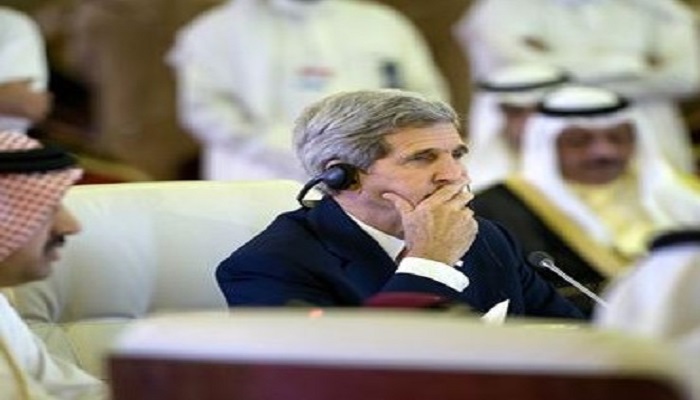
In another sign the Obama administration was struggling with its messaging with regime supporters, Secretary of State John Kerry flew to Doha to meet with Arab states in the Persian Gulf in an attempt to reassure them about the deal, but in a clear sign that even the U.S. doesn’t believe the Iran regime’s intentions are peaceful, Kerry reassured Gulf states the U.S. would speed up arms sales to them included ballistic missile defense systems to counter the expected development of Iranian missile technology that was left out of the nuclear deal by the U.S. in the first place.

The irony would comical if it wasn’t so serious.

“The agreement legitimizes Iran’s nuclear program, pretty much guarantees its ability to produce nuclear weapons in 15 years, and will make it a far wealthier country than it has been in three decades. The regime will have more money to demonstrate immediate economic gains, and access to international markets to make those gains permanent. It will have more money — coupled with the lifting of the arms embargo — to purchase weapons from Russia to challenge U.S. military access to the Persian Gulf. And it will have a lot more money to augment its asymmetrical capabilities,” said Michael Gerson in the Washington Post, adding to the building arguments against the deal.

“Thus the inexorable pattern will not be: Iran violates the deal; sanctions snap back; Iran resumes compliance. Quite the reverse. The far more likely future is: Iran violates the deal; sanctions snap back; Iran tells us, using a diplomatic term of art, to take our deal and stuff it,” said former U.S. ambassador to the United Nations John Bolton in an editorial in the New York Times. “Unfortunately, snapback sanctions are just as likely to be empty political rhetoric”…”The list of reasons to oppose the Vienna deal is already long, but the pitfalls of snapback sanctions surely rank near the top.”

It goes without saying that the deal empowers the Iran regime and provides very little ability to halt the expansion of Iran’s particular form of virulent Islamic extremism, which remains the mullahs’ highest priority as they expand their dominion over Syria, Lebanon, Iraq and Yemen and now threaten Saudi Arabia and the Gulf states.

The regime recognizes the stakes and is working aggressively to curb any dissent domestically and ensure one a convincing message of moderation is presented for consumption in the West.

By Laura Carnahan

Filed Under: Blog

Iran Regime’s Brutal Track Record Hurts Nuclear Deal Chances

August 3, 2015 by admin

Iran Regime’s Brutal Track Record Hurts Nuclear Deal Chances

Iran Regime’s Brutal Track Record Hurts Nuclear Deal Chances

The summer congressional recess is upon us and with it the official start of the lobbying season will commence with both sides throwing everything they have in the debate over approval of the proposed nuclear deal with the Iran regime.

As part of that debate, supporters of the mullahs in Tehran are attempting to portray this debate in false terms. One example is the regime’s most loyal ally, the National Iranian American Council, whose leader, Trita Parsi has taken to using the metaphor that the debate rests solely on two choices – war and peace – even though there remains a considerable range of options available, but untried by the administration.

Parsi has also taken to characterize the forces arrayed against the deal as being a David vs. Goliath match up of moneyed interests against the little guy. He is referring to the much-publicized multi-million dollar ad blitz being unleashed by opponents of the deal, but he neglects to place that into context.

No one would ever accuse the Iran regime as being the “little guy.” Through its network of appeasers pours substantial resources into a broad lobbying and public relations network to push its agenda, most notably the NIAC and sympathetic bloggers and journalists such as Jim Lobe and Ali Gharib. But Parsi and other regime supporters are not taking this debate lightly.

Parsi related a conference call held with supporters of the deal and President Obama in which the president said to supporters: “You guys have to be more active, loud and involved and start making your voices heard with Congress.”

The regime also stands as the biggest state sponsor of terrorism and continues to supply arms, fighters and funding to terror groups such as Hezbollah, brutal regimes such as Assad in Syria and extremist groups such as Shiite militias in Iraq and Houthi rebels in Yemen.

Sitting on the wealth of an oil reach country, mullahs in Iran are far from being a weakling in this debate even though Parsi works hard to portray his mullah masters as poor, misunderstood and put-upon moderates.

One increasingly serious problem for proponents of the deal has been the disclosure of secret side deals between the regime and the International Atomic Energy Agency which have not been made public as part of the debate over the agreement, even though the bipartisan measure passed by Congress and signed by the president allowing review of the agreement stipulated that all annexes, addendums and supporting materials had to be presented as part of the review.

Sens. Tom Cotton (R-AK) and Mike Pompeo (R-KS) wrote in the Wall Street Journal this weekend that the regime was allowed to draw up two side deals with the IAEA that could make the overall deal problematic.

“The first governs the IAEA’s inspection of the Parchin military complex, the facility long suspected as the site of Iran’s long-range ballistic-missile and nuclear-weapons development. The second addresses what—if anything—Iran will be required to disclose about the past military dimensions of its nuclear program,” they said.

“Weaponization lies at the heart of our dispute with Iran and is central to determining whether this deal is acceptable. Inspections of Parchin are necessary to ensure that Iran is adhering to its end of the agreement. Without knowing this baseline, inspectors cannot properly evaluate Iran’s compliance. It’s like beginning a diet without knowing your starting weight. That the administration would accept side agreements on these critical issues—and ask the U.S. Congress to do the same—is irresponsible,” Sens. Cotton and Pompeo added.

Sen. Chris Coons (D-DE) remarked on how phone calls against the deal in his state have turned into 10-1, an avalanche of opposition he has to listen to.

Much of the anxiety over the deal comes from a relatively simple problem: No one really trusts the mullahs to abide by the deal even if the U.S. approves it. The regime’s track record, even during the negotiations, proved time and time again that Iran’s mullahs were single-mindedly intent on pursuing their own agenda irrespective of what was happening at the bargaining table.

Nowhere was that more evident than in the Obama administration’s quick concessions to take human rights abuses and the support of terrorism off the table early in negotiations. The willful ignorance of Iran’s abysmal track record in these areas is what is at the heart of the angst now being felt by Americans who are being asked to essentially trust the mullahs.

David Hearst, editor of the Middle East Eye for the Huffington Post, dived deep into the origins of the unrest rippling across the Middle East with the rise of ISIS and placed responsibility on Iran’s manipulation of Iraqi politics and former prime minister Nouri al-Maliki to dump his Sunni partners once the U.S. pulled out and virtually guarantee ISIS new recruits from disenfranchised Sunnis.

“Of course there was another winner in Maliki’s soft coup — Iran. Khedery called General Qassim Soleimani, the head of the Quds Force unit of Iran’s Revolutionary Guard Corps, the most powerful man in Iraq and the Middle East. He could have added Syria,” Hearst said.

All of which contributes to the uncertainty brewing with the American voter over whether or not to trust Iran’s mullahs.

By Michael Tomlinson

Filed Under: Blog

New Polling Shows Bi-Partisan Opposition to Iran Deal

July 30, 2015 by admin

New Polling Shows Bi-Partisan Opposition to Iran Deal

New Polling Shows Bi-Partisan Opposition to Iran Deal

A pair of new polls came out this week not only showing a growing majority of Americans opposed to the proposed nuclear agreement with the Iran regime, but a more bi-partisan consensus forming that large portions of the deal should be rejected outright by Congress.

The more revealing poll came from Democratic pollster Pat Caddell, working with the Republican firm McLaughlin & Associates in a bi-partisan manner on behalf of Secure America Now, a non-partisan group, in which a whopping 80 percent of Americans opposed giving the Iran regime an estimated $150 billion in early sanctions relief absent congressional approval.

In addition, 72 percent of Americans said that Congress should not approve a deal that does not allow independent U.S. inspections of Iran’s military facilities, while another 68 percent do not believe that inspections by the United Nations allowing a 24-day notification period would prevent Iran from cheating.

The poll also found 65 percent of Americans think the deal will result in other nations seeking their own nuclear weapons, setting off a regional arms race, and 63 percent disagree with the Obama administration’s contention the deal stops Iran from developing nuclear weapons.

“It’s abundantly clear that the more Americans learn about key details within the Iran agreement, the less they like it,” Caddell said. “Opposition to the deal is growing as the facts work their way into kitchen table conversations across the country.”

The other poll from CNN/ORC found 52 percent of Americans saying Congress should reject the deal with only 44 percent supporting it. Some opposition to the deal may be fueled by skepticism. A CNN/ORC poll in late June, conducted as the deal was being worked out, found that nearly two-thirds of adults thought it was unlikely the negotiations would result in an agreement that would prevent Iran from developing nuclear weapons.

Both polls point to a basic skepticism about the ability to trust the mullahs in Tehran to follow through on any agreement, let alone promise not to build nuclear weapons after the ten-year term of the agreement. Americans of all political stripes have come to the conclusion while it is desirable to make sure Iran does not develop nuclear weapons, few actually believe this deal would prevent the mullahs from doing so either in the short or long term.

Both polls mirror findings in a nationwide Pew Research Center poll which showed a majority of Americans disapproving the deal and a significant majority not trusting the mullahs to follow through on any agreement.

Scott Clement in the Washington Post looked at the trend line in polling from earlier this year to after the agreement was announced and provides some reasons why support for the deal has plummeted in the latest polls, including:

  • Support for the deal has declined across the political spectrum making the arguments from Iran lobby supporters such as Trita Parsi of the National Iranian American Council that opponents were merely conservative neocons ring hollow now that growing numbers of Democrats and independent voters are now opposed to the deal;
  • Now that the entire 159-page agreement is available online, voters are actually reading the document and not liking what they see. While the devil may be in the details, the details seem to be hurting the president’s cause as Americans find areas such as inspections and verification to be troubling; and
  • The significant realization that there is actually a deal on the table and that it is no longer an exercise in intellectual abstraction, but rather there is now a very real possibility the mullahs in Tehran are going to be a financial and military windfall, which suddenly makes Americans nervous.

The Secure America Now poll offers the most troubling results for the Iran lobby. That poll took the time to explain the components of the deal and its implications to respondents, which yielded the massively large results against the deal, such as the potential of giving the mullahs in Tehran billions of dollars in sanctions relief.

Also noteworthy was the testimony given by Army General Martin Dempsey, chairman of the Joint Chiefs of Staff, at a Senate hearing the other day in which he denied ever presenting the options regarding approving the nuclear deal as stark choices between war and peace.

“At no time did that come up in our conversation nor did I make that comment,” Dempsey told Senator Joni Ernst (R-Iowa) during a Senate hearing on the Iran deal. “I can tell you that we have a range of options and I always present them.”

Dempsey also acknowledged that he advised the president not to agree to the lifting of sanctions pertaining to Iran’s ballistic missile program and other arms. “Yes, and I used the phrase ‘as long as possible’ and then that was the point at which the negotiation continued — but yes, that was my military advice,” he told Senator Kelly Ayotte (R-NH). In the event the new deal goes into effect, the arms embargoes will expire over the next several years.

His testimony undercuts the central message point being made by Parsi and other regime supporters, that the only alternative to the deal is military conflict with the regime. It’s disingenuous and a strawman that does not exist.

As the polling shows, more Americans of every political stripe are beginning to see how false that argument is becoming.

By Michael Tomlinson

Filed Under: Blog

Growing Concerns on a Bad Iran Nuclear Deal

July 29, 2015 by admin

imagesThe fight against the proposed nuclear deal with the Iran regime took on a decidedly edgier and more local flavor as citizen journalists, local news media and grassroots opponents began to make their voices heard as more people begin to focus on the contents of the 159-page document.

While the national media spotlight has been dominated by presidential candidates from both parties weighing in the deal and Senators and Representatives giving their opinions for and against the deal, the proverbial little guys was starting to make their voices heard across America.

In the Albany Herald, a community newspaper in Georgia, Eric Hogan, wrote a guest column that captured the growing consensus amongst ordinary Americans.

“The practical effect of this incredibly bad nuclear deal that has been negotiated with Iran is that President Obama will be financing the Iranian nuclear program with the $100 billion plus cash injection the Iranians receive for approving the deal. Any leftover funds will be available to increase their position as already the biggest sponsor of terrorism in the world. Iran is assured it can become a nuclear power — legally in 10 years or sooner if they decide to cheat,” Hogan said.

“The world had no need to rush and could have patiently waited for Iran’s collapsing economy to force them to give up on the bomb. There were many alternatives other than war available for dealing with Hitler from 1936 to 1939. But, after 1939, it was either war or surrender,” he added.

That kind of sentiment will almost surely go on display next month during the summer recess for Congress as members go back to their home districts and hear from constituents at local town halls. As both sides of the deal gear up to launch massive lobbying and public relations campaigns, the setting is eerily reminiscent of the battle over Obamacare in 2009 with similar contentious town hall settings being played out before the media.

As Martin Matishak writes in the Fiscal Times “if the Republican-controlled Congress votes to disapprove the deal, Obama can veto the legislation. In that case, the president needs 145 of the 188 Democrats in the House to back the agreement, and he can’t afford to lose more than 13 backers in the Senate to sustain his veto.”

Last May, a letter was signed by 145 Democratic House members expressing their support for the deal, which indicates how incredibly close and razor thin the margin is for the president and the mullahs in Tehran.

But Iran lobby forces are not taking the effort for passage lightly; launching their own grassroots effort in coordination with the administration in an effort to try and persuade undecided House members to make their votes known now rather than wait for the summer onslaught of lobbying from deal opponents.

Part of the argument during this debate will assuredly focus on the administration’s contention that the only choices available to Congress are war and peace depending on how one votes for the deal, but there are other choices as articulated by notables such as Mrs. Maryam Rajavi who leads the largest Iranian dissident group in the National Council of Resistance of Iran and David Adesnik who writes of the alternatives to the Iran deal in The Weekly Standard.

“War is not imminent because the structure of the deal now on the table gives Iran very strong incentives to remain cooperative at least until the next American president takes office and Tehran finishes negotiating long-term contracts with the multinational energy firms that are so eager to claim a share of the Iranian market,” Adesnik said.

“Therefore, if a two-thirds majority in Congress prevents President Obama from waiving sanctions, the result will not be an Iranian sprint toward the bomb, but rather the first step toward restoring America’s diplomatic leverage. In addition, if Congress says no, Iran may find it very difficult to access the $100-150 billion of escrow funds and frozen assets it hoped to collect as the result of deal,” he said.

“Finally, given what strong incentives the Iranians have to remain in compliance, the next president and the next Congress will almost certainly have the same opportunity as today to accept the terms negotiated in Vienna. Thus there is nothing to lose by waiting and much to be gained,” Adesnik added.

Already protests and demonstrations against the deal have begun to spring up across America in New York’s Times Square where 10,000 people gathered, to San Diego’s Balboa Park on the other side of the country.

And even as the regime’s foreign minister Javad Zarif embarked on a handshake-and-smile tour of Gulf states, Saudi Arabia’s foreign minister Abdel al-Jubeir accused Iran of making threats against Bahrain, demonstrating the regime’s hostile designs against its neighbors.

His comments came after Bahrain this weekend announced it had foiled a plot to smuggle arms by two Bahrainis with ties to Iran and recalled its ambassador to Tehran after what it characterized as repeated hostile Iranian statements. Jubeir made his comments at a press conference held with visiting European Union foreign policy chief Federica Moghrini, in which he said he raised the issue of Iran’s aggressiveness.

By Laura Carnahan

Filed Under: Blog

  • « Previous Page
  • 1
  • …
  • 53
  • 54
  • 55
  • 56
  • 57
  • …
  • 72
  • Next Page »

National Iranian-American Council (NIAC)

  • Bogus Memberships
  • Survey
  • Lobbying
  • Iranians for International Cooperation
  • Defamation Lawsuit
  • People’s Mojahedin
  • Trita Parsi Biography
  • Parsi/Namazi Lobbying Plan
  • Parsi Links to Namazi & Iranian Regime
  • Namazi, NIAC Ringleader
  • Collaborating with Iran’s Ambassador

Recent Posts

  • NIAC Trying to Gain Influence On U.S. Congress
  • While Iran Lobby Plays Blame Game Iran Goes Nuclear
  • Iran Lobby Jumps on Detention of Iranian Newscaster
  • Bad News for Iran Swamps Iran Lobby
  • Iran Starts Off Year by Banning Instagram

© Copyright 2026 IranLobby.net · All Rights Reserved.