Iran Lobby

Exposing the Activities of the lobbies and appeasers of the Mullah's Dictatorship ruling Iran

  • Home
  • About
  • Current Trend
  • National Iranian-American Council(NIAC)
    • Bogus Memberships
    • Survey
    • Lobbying
    • Iranians for International Cooperation
    • Defamation Lawsuit
    • People’s Mojahedin
    • Trita Parsi Biography
    • Parsi/Namazi Lobbying Plan
    • Parsi Links to Namazi& Iranian Regime
    • Namazi, NIAC Ringleader
    • Collaborating with Iran’s Ambassador
  • The Appeasers
    • Gary Sick
    • Flynt Leverett & Hillary Mann Leverett
    • Baroness Nicholson
  • Blog
  • Links
  • Media Reports

Khamenei Tweet Gets No Defense from Iran Lobby

July 27, 2015 by admin

Khamenei Tweet Gets No Defense from Iran Lobby

Iranian leader tweets graphic of Obama with gun to head From: http://www.usatoday.com/story/news/world/2015/07/25/iranian-leader-tweets-graphic-obama-gun-head/30667081/

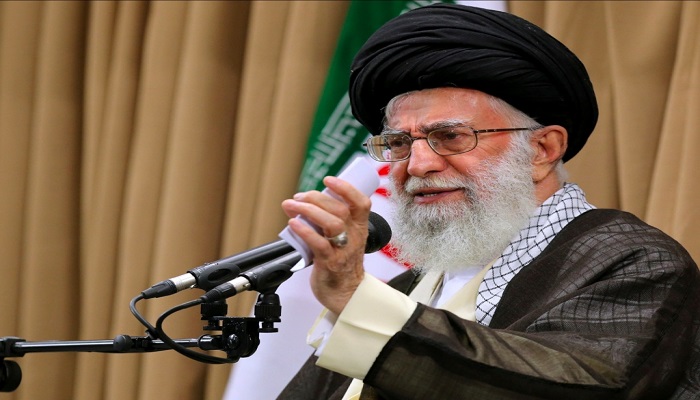
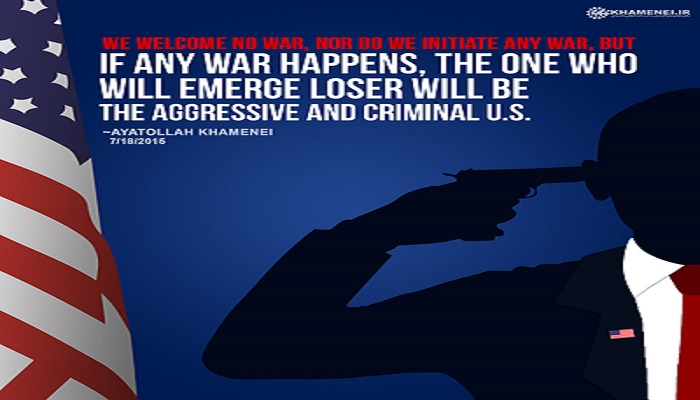
Iran’s top mullah Ali Khamenei sent an explosive tweet from his official English-language account at @khameneni_ir. It read:

“US president has said he could knock out Iran’s military. We welcome no war, nor do we initiate any war, but…”

The tweet appeared underneath a graphic depicting an image appearing to be President Obama holding a gun to his head. The quote in the image attributed to Khamenei said:

“If any war happens, the one who will emerge loser will be the aggressive and criminal U.S.”

Khamenei has been as regular as clockwork in his periodic rants against the U.S. generally and the proposed nuclear deal specifically, using his Twitter feed to send out his own version of “red lines” the regime would not cross in any nuclear deal, while only last week delivering a speech claiming America’s aims in the region were “180 degrees” opposite of Iran’s.

Supporters of the regime ignored the tweet and its implications. For example, Trita Parsi, head of the National Iranian American Council and the regime’s lead lobbying organization, did not even mention the offensive tweet in his own Twitter account, preferring instead taking shots at those opposing the deal.

But what could he and other regime apologists really say? Khamenei is just venting? Khamenei is just dispensing vitriol for domestic consumption?

The fact is Khamenei is Iranian regime’s supreme leader. There is no other chief executive above him. His decisions on foreign policy, going to war, executing political prisoners, issuing a new religious law affecting all of Iran’s citizens or deciding what flavor of ice cream to outlaw are absolute and undisputed.

Consequently his comments are not trivial, nor should they be taken lightly or ignored. In most ways his comments, even nuances, are as important to understanding his intentions as during the Cold War when the West tried to divine the intentions of Soviet leaders by who was standing next to whom during May Day parades of military hardware.

But aside from Khamenei’s comments and tweets, the regime took steps to ensure there was no domestic disputes over the proposed nuclear deal in order to ensure its passage so that the regime could gain access to the estimated $160 billion in frozen assets and military hardware it desperately needs after waging three proxy wars in Syria, Iraq and Yemen.

A top secret document sent to newspaper editors has surfaced on the internet.

Issued by the ministry in charge of the press, the two-page document faxed to media organizations relays directives from Iran’s Supreme National Security Council. It says editors should praise the deal and the negotiating team.

It stresses the need “to safeguard the achievements of the talks”; avoid sowing “doubt and disappointment among the public”; and avoid giving the impression of “a rift” at the highest levels of government.

The irony is unmistakable as it clamps down on any domestic dissent, while the regime’s leadership is allowed to freely express its disdain for the U.S. and the conditions laid out in the agreement such as inspection of Iranian military facilities.

Interestingly, the regime directive asked Iranian news media to “note the big achievements in our nuclear program as a result of the agreement”; a candid reassurance of the wins for the regime under the deal.

In contrast the criticism of the deal in the U.S. continued to grow as former U.S. ambassador to the United Nations John Bolton issued a scathing critique in the Los Angeles Times, declaring:

“Assuming Iran scrupulously complies with every provision agreed to in Vienna — an absurdly unlikely scenario given the ayatollahs’ objectives and history — its ambitions for nuclear weapons will simply have been delayed eight to 10 years.

“In all likelihood, the ayatollahs are already at work violating the accords. After all, Iran has systematically breached its voluntarily-assumed obligations under the Nuclear Non-Proliferation Treaty for more than 30 years,” Bolton writes.

“Moreover, Iran’s ballistic missile efforts — its development of the means to deliver nuclear weapons all over the world — will barely be touched. Nor does the deal in any way address Iran’s clandestine weaponization efforts, which it has denied and hidden from the International Atomic Energy Agency with great skill,” he added.

Also, a previously undisclosed report by the Obama administration led several lawmakers in Congress to conclude world powers will never be able to get to the bottom of Iran’s efforts to build a nuclear weapon and that the regime would never be fully pressed to explain its past nuclear program efforts.

“Details of the report, which haven’t been previously disclosed, indicate the deal reached this month could go ahead even if United Nations inspectors never ascertain conclusively whether Iran pursued a nuclear weapons program—something Tehran has repeatedly denied,” according to the Wall Street Journal.

“Some senators complained last week that they were told by administration officials that Iran would be allowed to manage some of the IAEA’s investigation. They said they were told Tehran would conduct its own soil sampling at a military site called Parchin, where, allegedly, explosive devices were tested,” the Journal reported.

The entire process is rightly ridiculed by lawmakers and critics of the deal. It is akin to asking a suspected criminal to gather evidence at his own crime scene and hand it over to investigators.

It is provisions such as this and many others in the 159 page agreement, as well as in two secret side deals made with the International Atomic Energy Agency and the regime which has yet to be made public that has made many in Congress highly skeptical.

By Michael Tomlinson

 

Filed Under: Blog Tagged With: Iran, Iran deal, Iran Lobby, Trita Parsi

Public Opinion not trusting Iran Regime Nuclear Deal

July 22, 2015 by admin

Public Opinion not trusting Iran Regime Nuclear Deal

Public Opinion not trusting Iran Regime Nuclear Deal

As news media begin to digest the 159 pages of the proposed nuclear agreement between the Iran regime and the P5+1 group of nations, a consensus is beginning to form on many editorial pages and within the public consciousness that the deal may indeed be a bad one.

The remarkable thing about social media, Google searches and blogs is that every citizen has the ability to read the same documents, examine the same talking points and debate the same conclusions as the diplomats who sat at the bargaining table over the past three years and what they are finding is beginning to disturb them.

The latest national survey from the Pew Research Center conducted from July 14-20, found more Americans disapprove than approve of the deal. Among the findings, of the 79 percent of Americans who have heard about the deal, just 38 percent approve, while 48 percent disapprove of it with only 14 percent offering no opinion.

Unsurprisingly, among those familiar with the agreement, 35 percent had not too much confidence and 38 percent had no confidence that Iran’s mullahs would uphold their side of the bargain for a whopping 73 percent of Americans not trusting the regime to keep its word.

That kind of decisive margin ranks up there with beliefs about death and taxes and is problematic for supporters of the deal, including regime lobbyists such as the National Iranian American Council.

Also a majority of Americans (54 percent) do not have much or any confidence in the ability of international monitors to keep track of Iran’s compliance or of any cheating by the regime.

The split along partisan lines was even deeper, but in a troubling sign for regime supporters, the margin of support amongst conservative or moderate Democrats was considerably narrower at 48 percent approve and 33 percent disapprove; combined with the overwhelming Republican and independent disapproval and it adds up for a bad demographic mix for House and Senate Democrats weighing whether or not to back the deal.

In another blow to claims being made by Trita Parsi, Reza Marashi and Tyler Cullis of the NIAC, 42 percent of Americans expect little change in U.S.-Iran relations as a result of the deal and another 28 percent expect relations to actually worsen. Americans don’t buy what the NIAC has been trying to sell about this deal being “transformational.”

Strikingly, how the deal is described to Americans was found to be an important factor in how they perceived and rated the deal as the Pew survey and a Washington Post/ABC News survey done at the same time reflected differing results, largely because of how the deal was described in the first place, which means as debate heats up in Congress, precise language will have a significant impact.

But in more troubling signs for Iran regime supporters, even Secretary of State John Kerry weighed in on statements from regime leader Ali Khamenei “vowing to defy American policies in the region,” commenting he found those remarks “very disturbing” and “very troubling.”

That seems like quite an understatement.

Jennifer Rubin in the Washington Post’s Right Turn blog goes on to detail flaws coming to light now that the deal is being dissected including warnings from Olli Heinonen, the former deputy director general of the International Atomic Energy Agency that the proposed 24-day inspection delay is a recipe for cheating.

She also writes that translations of statements made by regime foreign minister Javad Zarif from inside Iran trumpeted the regime’s win in denying access to any of its military facilities to outside inspection, in direct contradiction to what supporters of the deal have promised.

Rubin also cites Max Boot’s editorial in which he details the similar nature of the Iran deal with the one negotiated with North Korea that eventually was evaded easily by the rogue nation, allowing it to construct a nuclear arsenal and ballistic missile capability that now threatens South Korea, Japan, Canada and the western United States.

“The larger problem is that, like North Korea, Iran is a big country: If the government wants to hide something, it will likely succeed. Compliance depends on voluntary cooperation. Perhaps Iran will cooperate, but so far, it has not come clean with the IAEA about 12 existing ‘areas of concern’ regarding the ‘possible military dimensions’ of its nuclear program,” Boots writes.

“That is not a good sign. It suggests that Iran, like North Korea (or, for that matter, Iraq during the 1990s), is likely to play a game of cat-and-mouse with inspectors — and that if it does cheat, as North Korea did, the world will again discover it is too late to do anything about it,” he added.

Also, the Obama administration found itself on the defensive after letting the United Nations Security Council vote on the deal even before submitting it to Congress for approval, angering many members of the president’s own party, including Rep. Elliot Engel (D-NY), the top Democrat of the House Foreign Affairs Committee who joined the Republican chair, Ed Royce (R-CA) expressing “disappointment” in the move.

All of which augers a difficult two months for regime supporters who need to keep 13 Democratic Senators from supporting a certain veto override by the president. Most head counts have shown anywhere from 12-14 Democrats expressing dissatisfaction with aspects of the deal which means the race will come down to the wire just as the presidential campaign heats up.

By Laura Carnahan

Filed Under: Blog Tagged With: Iran, Iran deal, Iran Lobby, Reza Marashi, Trita Parsi

Iran Nuclear Deal Coming Under More Scrutiny

July 21, 2015 by admin

Iran Nuclear Deal Coming Under More Scrutiny

Iran Nuclear Deal Coming Under More Scrutiny

One of the more interesting results from the proposed nuclear deal between the P5+1 group of nations and the Iran regime has been the almost frantic efforts of the supporters of the deal to reassure Iran’s frightened neighbors. That effort, highlighted in a Wall Street Journal story by Carol Lee and Gordon Lubold includes efforts to arm Arab states.

“The U.S. is specifically looking at ways to expedite arms transfers to Arab states in the Persian Gulf and is accelerating plans for them to develop an integrated regional ballistic missile defense capability, a senior administration official said.”

“One of the administration’s top challenges is to counter backlash over a provision in the nuclear pact that would lift United Nations embargoes on arms and ballistic missile technologies to Iran, in five and eight years,” Lee and Lubold said.

It is an absurd turn of events whereby we are now proposing to beef up the defenses of Iran’s neighbors in response to the very real and legitimate fear they have over the mullahs empowerment through the lifting of sanctions granting Tehran access to billions of dollars and new weapons, including ballistic missiles placing all of their countries within striking distance.

As Brett Stephens writes in his column in the Wall Street Journal:

“Let’s follow this logic. If the Iran deal is as fail-safe as President Obama claims, why not prove it by giving the Saudis exactly the same nuclear rights that Iran is now to enjoy? Why race to prevent an ally from developing a capability we have just ceded to an enemy? What’s the point of providing the Saudis with defense capabilities they presumably don’t need?”

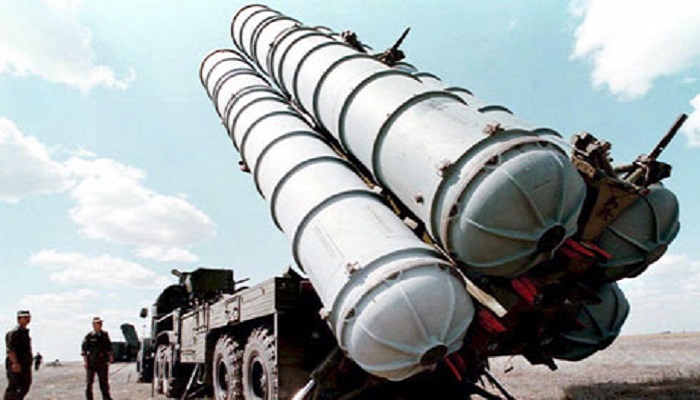
Stephens also pointed out that “on Thursday, Moscow confirmed that it will proceed with the sale to Iran of its state-of-the-art S-300 surface-to-air missile system, notwithstanding the deal’s supposed five-year arms embargo on Iran and over no objections from the White House. The sale means that a future president ordering airstrikes against Iran would do so against an adversary that can shoot American planes out of the skies. That’s also not true today.”

So even though the concept of this nuclear deal is to make the region a safer place, in reality it has sparked a new arms race and threatens to engulf the Middle East into another spiral of violence, but with upgraded weapons this time.

“Let it be entered into the record that the United States government has agreed to release monies that it believes will be used to fund Iran’s terrorist proxies. It has done so on the intriguing rationale that, in order to prevent the Middle East from becoming a very dangerous place in the future, it is necessary to allow it to become a very dangerous place now. To adapt a phrase, the administration believes that it has to destroy a region in order to save it,” Stephens adds.

This arms race scenario was recognized in a Chicago Tribune editorial which said on Monday:

“The most troubling weaknesses are outside the realm of the nuclear program. A 2010 U.N. Security Council arms embargo on Iran will eventually be lifted. That embargo covers a vast range of military equipment, from tanks and artillery to ballistic missiles. Under the new deal, the conventional arms embargo lifts in five years, the ballistic missile ban in eight years. Russia and China — major arms exporters that want to do business with Iran — pushed for this provision.”

Adding that “Tehran will eventually have freedom to traffic in arms as it stands to reap more than $100 billion once sanctions ease. Iran’s enemies in the region have reason to worry. Mullahs in Iran support terror groups across the Middle East. Tehran will again be part of the international banking system and able to sell its oil on the open market.”

Those sentiments were expanded on in an editorial by Eric Terzuolo, a former U.S. Foreign Service Officer, who wrote in the Washington Post warning not to trust the regime:

“We should not delude ourselves into thinking that Iran’s efforts to counter the Islamic State reflect anything except distinctly Iranian geopolitical interests. Iran’s proxy Hezbollah is thriving as the arbiter of Lebanese politics, and Iran and Hezbollah have collaborated in supporting the residues of the heinous Assad regime in Syria…Post reporter Jason Rezaian is only the latest in a series of U.S. citizens to suffer arbitrary treatment at the hands of Iranian authorities.”

Taking it one step further, Bloomberg View columnist Stephen L. Carter examined all 159 pages of the agreement and found it builds in simple mechanisms for the Iran regime to cheat without any consequences.

“The trouble is that the West, in its focus on creating a mechanism for the snap-back of sanctions, has left itself without any other, lesser weapons. As several analysts have pointed out, there is the option to re-impose full UN sanctions … and nothing else. Remember that the parties, including the U.S., have undertaken not to enact any additional nuclear sanctions except through the process set forth in the agreement — that is, going through the Joint Commission and the Security Council,” Carter writes. “There is no way to impose small, measured sanctions for small, measured violations. This is what I mean when I say that room for cheating is built into the structure of the agreement.”

Clearly the consequences of such a deal are now quickly rippling out across the Middle East and spawning potentially devastating repercussions for everyone involved.

By Laura Carnahan

Filed Under: Blog

Khamenei Reassures World Iran Regime Committed to Terror

July 20, 2015 by admin

Khamenei Reassures World Iran Regime Committed to TerrorThere is something uncanny in the ability of Iran’s top mullah, Ali Khamenei, to speak his mind clearly and openly without hesitation or evasion. It’s a quality that his top U.S. lobbyist, Trita Parsi of the National Iranian American Council, would be well-served in adopting, but unfortunately that would defeat the cause of giving the mullahs in Tehran a $160 billion payday and a new supply of weapons to go along with two million barrels of oil sold every day on the open market.
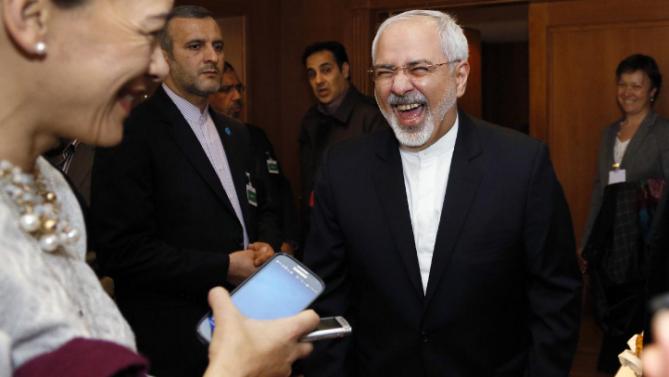
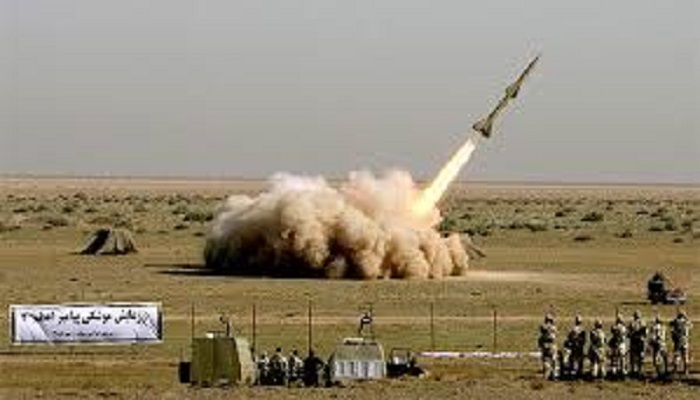
All of these things are part of the agreement reached between the Iran regime and the P5+1 group of nations last week. While the deal was being hailed by supporters as a significant advancement for peace and regional stability, Khamenei, the sole leader of Iran’s foreign and military policies, once again vented his vitriolic hatred of the U.S. and his stubborn support for spreading religious terror and extremism.

“Our policy regarding the arrogant U.S. government will not change,” Khamenei said in a televised address to mark Eid al-Fitr, the Muslim feast day at the end of the holy month of Ramadan. “We don’t have any negotiations or deal with the U.S. on different issues in the world or the region.”

“Whether [the deal is] ratified or not, we will not give up on our friends in the region,” Khamenei added.

Iran provides vital support for the Syrian regime, Hezbollah in Lebanon and Shiite militias in Iraq, among other groups engaged in proxy wars such as the Houthi rebels who overthrew the Yemen government earlier this year.

He went on to hail the deal as a win for Iran in its decade-long struggle to preserve its nuclear achievements, including thousands of centrifuges that enrich uranium and the preservation of hardened sites protected against the possibility of air strikes.

But Khamenei’s comments, coming on the heels of fervent comments by Parsi and other regime supporters that Iran had indeed changed its tune, provide ample proof from the regime’s top leader that Iran has absolutely no intention of changing any of its policies, which frankly should not come as a surprise to anyone since Khamenei has been nothing if not consistent in his attitudes towards the West.

It should also give Democrats in Congress pause when they consider the only supporters and endorsers of this deal are Syrian regime head Bashar al-Assad, Russia which stands to become Iran’s biggest military hardware supplier and China which wants to lock up long-term sales of Iranian oil.

Virtually all of other Arab nations including Saudi Arabia and Egypt opposing this deal.

If undecided Congressmen really want to understand what is motivating the Iran regime and how this proposed agreement only emboldens and re-energizes a beleaguered regime, it’s worth reading Wall Street Journal’s deep dive into Khamenei’s speech and the deep-rooted hatred of the U.S. the regime’s leaders have and will always embrace.

Supporters of the deal such as Parsi who claim normalized relations would bring about an attitude change in the mullahs’ worldview are just blowing smoke. Such predictions are premature at best and dead wrong at worst.

“They overlook how central the hatred of the U.S. has been” to the mullah’s regime’s identity and ideology. WSJ article concludes that anti-Americanism allows mullahs to claim leadership among all extremists, even Sunnis, and it is the core of their policies in places like Afghanistan, Iraq and Syria.

And that is the crux of the argument that Parsi and his colleagues are afraid of ever getting a public airing. The ruling elite in Iran, led by Khamenei and his fellow mullahs, are deeply committed to a shared religious worldview that places any nation, people or religion not in their specific extremist Shiite camp as being an apostate and suitable for elimination.

It is the same religious dogma and approach that ISIS practices with great brutality and regularity and it shouldn’t come as any surprise since Iran under the mullahs, is truly the role model for ISIS.

All of which means this deal in Congress will probably be a very hard sell.

By Michael Tomlinson

Khamenei Reassures World Iran Regime Committed to Terror

Filed Under: Blog Tagged With: Congress on Iran Deal, Iran deal, Iran Lobby, Trita Parsi

Iran Lobbies Falsififying of Choices on Iran Deal as War or Peace

July 18, 2015 by admin

Containment Is the Third Choice In Dealing With Iran Regime

Containment Is the Third Choice In Dealing With Iran Regime

Yesterday we examined the histrionics of Trita Parsi, the head of the National Iranian American Council and lobbyist-in-chief for the Iran regime’s policies, including his principle argument that the only two choices facing us when it comes to Iran is peace through a nuclear deal or war through attacking Iran.

While Parsi harps on semantics of discussions being the basis of a change in Iran’s approach to the world, the track record of the mullahs hardly merits that. In fact, it’s worthwhile remembering why sanctions were imposed in the first place:

  • In 1995, President Clinton imposes an executive order banning all trade with Iran in response to the conduct of regime leader Akbar Hashemi Rafsanjani and the bloody Iran-Iraq war. Congress soon follows with the Iran=Libya Sanctions Act denying Iran access to loans and financial assistance for its oil industry;
  • In 2005, Iran begins enriching uranium in violation of international agreements with the UN Security Council. This starts a string of sanctions from the UN and U.S. under President George W. Bush freezing assets of those regime individuals connected to the nuclear program;
  • In 2010, Congress passes and President Obama signs into law the Comprehensive Iran Sanctions, Accountability, and Divestment Act which greatly enhanced sanctions on the regime in response to brutal crackdowns of protests over fixed elections;
  • In 2012, the European Union imposes a ban on sales of Iranian oil and blocks to financial markets and transactions in response to the growth of the regime’s nuclear program.

These sanctions did not come out of the blue or on a whim. They came as a direct response to provocative regime behavior and actions. Iran’s mullahs were the ones that brought these responses onto themselves and contrary to what Parsi would have people believe those sanctions were self-inflicted by Iran.

Nowhere is that more evident than in how Iran sought to keep its nuclear program secret and only with Iranian dissident and resistance groups and the work of International Agencies were many of Iran’s secret nuclear sites revealed, including:

  • Arak: Site of a heavy water production plant, nuclear reactor and high-explosive test chamber uncovered by the People’s Mujahedin of Iran resistance group;
  • Ardakan: First reported in 2003 by the National Council of Resistance of Iran, this site was an acknowledged uranium mill capable of producing 50 metric tons of uranium annually;
  • Fordow: Secret facility uncovered by intelligence agencies in 2009 containing 3,000 centrifuges to enrich uranium;
  • Natanz: Hardened fuel enrichment plant built deep underground and reinforced with barriers to withstand direct bombing and home to 7,000 centrifuges enriching uranium, revealed in 2002 by Alireza Jafarzadeh, noted author and dissident figure now working with the National Council of Resistance of Iran;
  • Parchin: Revealed by the International Atomic Energy Agency as having been used for implosion testing necessary for modeling nuclear warhead detonation.

Again, Parsi never explains why Iran has maintained secret nuclear facilities. He has never explained why Iran needs to test implosion devices and highly enriched processing facilities for medical isotopes. Parsi has never explained why each U.S., UN and EU sanction was placed in direct response to a regime action.

The facts are that containment of the Iran regime had been working. The regime was cut off from financing and was bleeding mountains of cash because of its expenditure of arms and men in supporting religious wars in Syria, Yemen and Iraq.

Discontentment ran deep within the Iranian people who rose up in protests over presidential elections in 2009 and most recently in mass demonstrations by teachers, ethnic minorities and young people over a plummeting economy and harsh human rights repression.

The time was ripe for regime change and under the pressure an effective containment strategy brought to bear on the mullahs, real change was within the grasp of the P5+1 group of nations and they let it slip away.

As Mrs. Maryam Rajavi, leader of the National Council of Resistance of Iran, said in response to the lost opportunity:

“Had the P5+1 been more decisive, the Iranian regime would have had no choice but to fully retreat from and permanently abandon its efforts to acquire nuclear weapons. Specifically, it would have been compelled to halt all uranium enrichment and completely shut down its bomb-making projects,” Mrs. Rajavi said.

But nothing better illustrates Parsi’s snarky view of the concerns over Iran’s brutal suppression of women, young people, Christians, Kurds and many others than this tweet he sent out:

“1/2 If America ends up getting delicious Iranian pistachios, and Iran ends up getting shitty McDonalds, then yes, US won #NoWinWin #IranDeal”

While Iranians languish in prison, Americans are held without trial, Iranian militia fight in three wars and millions of refugees are displaced by them, Parsi tweets about pistachios. It is ample proof of the fool he has become and the lackey he is.

By Michael Tomlinson

Filed Under: Blog Tagged With: Iran, Iran deal, Iran Lobby, NIAC, Trita Parsi

Trita Parsi Stays the Course of Covering for Iran Regime

July 16, 2015 by admin

Trita Parsi Stays the Course of Covering for Iran Regime

Trita Parsi Stays the Course of Covering for Iran Regime

Trita Parsi, the head of the National Iranian American Council, has been taking a victory lap of sorts with the announcement of an agreement between the P5+1 group of nations and the Iranian regime on nuclear weapons development.

His comments in news articles reminds us of the infamous “Mission Accomplished” moment of former President George W. Bush when he dramatically landed on a U.S. aircraft carrier to proclaim the war in Iraq was over and the U.S. had won; only to have the nation plunged into another decade of war against insurgents and local militias backed by Iran’s military.

The irony is too good to resist when we consider the clock is running now over the next two months for Congress to review an agreement and muster the votes necessary to override a certain veto by President Obama.

Plenty of time for Parsi to fall flat on his face.

But in reality, the only true validation of Parsi’s points will come simply by the Iranian regime’s actions. The choices the mullahs make will decide how much of a liar Parsi has become. Past history would seem to make the odds stacked heavily against Parsi.

The Iran regime lobby understands this and is pulling out all the stops to lobby Congress with the first step from the NIAC’s new formal lobbying arm (as opposed to the years-long informal lobbying it’s been doing) was to run a full page ad in the New York Times heralding the deal.

In an interview, Parsi warned that “make no mistake, if Congress rejects this good deal with Iran, there will be no better deal forthcoming and Congress will be left owning an unnecessary war.”

It’s an old argument and a silly one because the choices are not peace and war, but rather peace and war later since the restrictions on the regime’s weapons program and nuclear research end in five and 10 years respectively. Consequently – assuming Iranian regime doesn’t cheat – the next president will be faced with the exact same choices President Obama is faced with, except Iran will have nuclear weapons at that point and missile delivery systems.

All of which means, all we have done is postpone fighting with the Iran regime for a few years and allowed them to do what the North Koreans did with their agreement; cheat and build nuclear weapons in secret.

“We now know that the U.S. and Iran need not remain hostile enemies, but can interact with each other to achieve shared interests,” said Parsi in an interview with Glenn Greenwald in The Intercept.

Another Parsi talking point that alludes to the shared goals of fighting ISIS for example, but ignores the fact that Iran – as the world’s leading sponsor of global terror – does not share the same interests as the U.S. The evidence is abundant from providing IEDs to Shiite militias to kill American troops in Iraq to arresting and holding American citizens without trial in Iran; the mullahs do not share any common interests with the U.S. To expect a sudden change in the actions of a regime controlled by a small cadre of fanatically motivated mullahs is fanciful.

But that’s not all Parsi shills out.

“Saudi Arabia spends 13 times more money on its defense than Iran does. But somehow Iran, and not Saudi Arabia, is seen by the US as the potential aggressor,” Parsi said in Counterpunch.

Parsi has been using this erroneous stat since the mullahs demanded a lifting of the United Nations arms embargo. The fact that Parsi argued that the U.S. had to accommodate Iran by arming it unless it wanted to see talks end demonstrates his priorities, which is not pursuing peace, but buying arms for the mullahs.

What Parsi hopes no one discusses is the third path, the one the mullahs are terrified over because the choices are not really between peace and war. They are between war now or war later under this deal, but the third option is the one practiced by U.S. presidents since the end of World War II and that is the option of “containment.”

It is a policy that led to the dramatic reduction in nuclear arms resulting from the original SALT and later START treaties; examples that the P5+1 unfortunately choose not to follow.

It is a policy that we will examine more fully next time.

By Michael Tomlinson

Filed Under: Blog

The Restocking of Iran Regime Bank Accounts and Weapons

July 15, 2015 by admin

The Restocking of Iran Regime Bank Accounts and WeaponsThe announcement of an agreement between the Iran regime and the P5+1 group of nations sets the stage for a protracted fight over the next 60 days in Congress where the deal must be approved and failing that, an override of a certain veto from President Obama has to occur in order to prevent the mullahs from cashing in on what looks to be one of the most generous paydays since Rome was sacked by the Visigoths in the year 410.
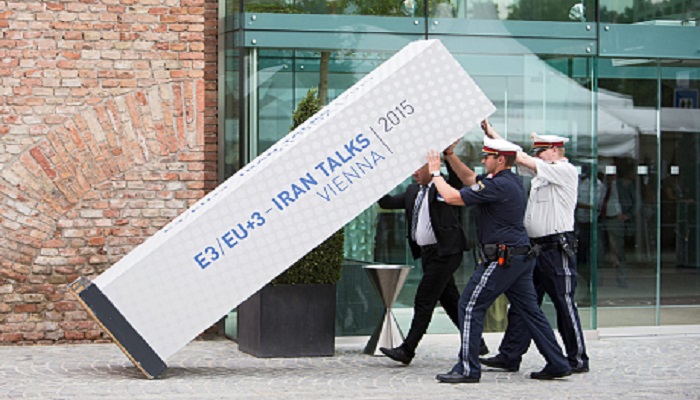
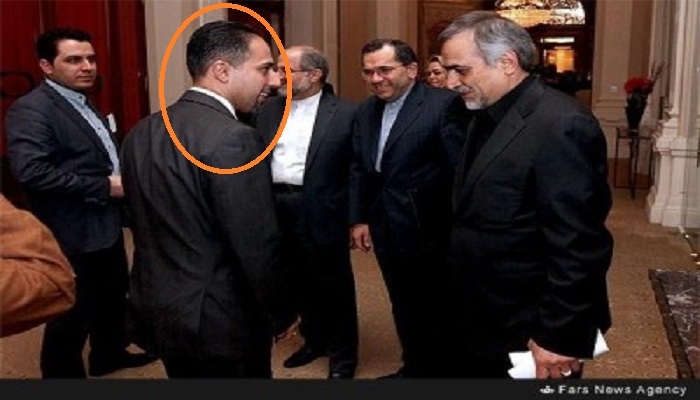

There will be an intensive amount of examination and dissection of the agreement’s provisions, but for today it’s worth looking at what some of the reaction has been and what it tells us about the real ambitions and aims of the Iranian regime.

“All Democrats, all Republicans should be looking at this deal very skeptically,” said Harvard University law professor Alan Dershowitz in an interview on Newsmax TV. “This should not break down into liberal, conservative, Republican, Democrat. It should be all Americans concerned about the possibility that Iran will develop a nuclear weapon in 10 years.”

“We have given Iran the path it has been seeking for almost 35 years. The other states in the region are not going to sit idly by, which is why in effect the nuclear arms race is already underway,” former U.N. Ambassador and Fox News contributor John Bolton said, adding that Iran and other nations have used civilian nuclear energy programs as cover for covert enrichment programs.

And from critics who know the intentions of the Iranian regime best came a strong statement from the National Council of Resistance of Iran’s leader, Mrs. Maryam Rajavi.

“There needs to be strict United Nations monitoring of the ‘cash poured into the regime’s pockets so that they would be spent on the Iranian people’s urgent needs,” said Iranian opposition leader Mrs. Rajavi. “Otherwise, Khamenei would continue to fund the IRGC (the Iranian regime’s Guards Corps) to export terrorism and fundamentalism to Iraq, Syria, Yemen and Lebanon.”

Ironically enough, Trita Parsi and Tyler Cullis of the National Iranian American Council, chief cheerleaders and lobbyists for Iran’s mullahs, offered an absurd argument in Foreign Policy describing a scenario where a lifting of the arms embargo against the regime would not alter the military balance in the region.

They cite the size of the military budget for Saudi Arabia and other Gulf states versus what the Islamic republic spends, but their arguments are not only incorrect, but deliberately false since Iran has not publicly reported its military spending since 2012 and does not include the vast expenditures it makes in military exports for proxies such as Hezbollah, Houthis and Shiite militias fighting in Syria, Yemen and Iraq.

They also ignore the centerpiece of Iranian military policy for the past five years which has been to rely heavily on paid mercenaries such as Afghan fighters, Shiite terror groups and paramilitaries to fight on behalf of the regime. In Syria’s case, Iran’s military dispatched 15,000 new fighters primarily made up of paid mercs alone.

When all of these other secret expenditures are taken into consideration, along with the size of the Iranian regime’s army, the mullahs’ firepower ranks 23rd in the world, exceeding the military capabilities of Saudi Arabia (ranked 28th), Mexico (31st), North Korea (36th), United Arab Emirates (50th) and Yemen (79th).

Which is why the arguments Parsi and Cullis posed strike at the heart of the needs of the Iranian regime; namely to get their hands on the $160 billion in frozen assets and foreign investment available to them, as well as the ability to sell two million barrels of oil on the open market each day again. The fact the Iran lobby has argued so passionately for lifting of the arms embargo shows the desperate need for the mullahs to restock their military hardware.

Over the next two months we will hear much debate over the specifics of the agreement, but what cannot be overlooked are the motivations of the mullahs in Tehran and the central flaw with this deal; which is it rests solely on the premise that the mullahs can be trusted.

It’s a deeply flawed premise given their actions over the past decade leading up to today which has never changed or deviated from the path of regional hegemony.

Congress would be well served to reject this deal because the choice is indeed between peace and war, unfortunately approving this deal will start a nuclear arms race, allow billions in new arms to flow to battlegrounds and spark a spiral into more wars.

By Michael Tomlinson


Filed Under: Blog Tagged With: Iran deal, Iran Lobby, Iran Talks Vienna, NIAC, Taylor cullis, Trita Parsi

Why Congress Will Not Listen to the NIAC

July 14, 2015 by admin

The end of talks in Vienna

The end of talks in Vienna

The National Iranian American Council lobbies on behalf of the Iranian regime. That much has been well documented through financial records, emails, court judgements, interviews, public statements and investigative stories by journalists.  The NIAC has even formalized that lobbying in launching an official lobbying arm in the form of NIAC Action.

The question remains though, will anyone on Capitol Hill listen to them?

There are a plethora of reasons why very few Senators or Representatives and their staffers will listen to them, especially in the wake of the current agreement between the regime and the P5+1 group of nations that the Congress will begin a 60 day review period.

First and foremost, any lobby’s power on Capitol Hill is derived from a few simple levers of influence such as: financial muscle to make campaign contributions, grassroots muscle to deliver workers in the field to walk precincts or man phone banks or direct influence through relationships and knowledge.

There are abundant examples of this every day. The National Rifle Association has been effective in holding off gun control legislation because it has over four million members shelling out over $200 million to support largely conservative candidates in favor of its position, while the AFL-CIO labor unions boast over 11 million members and spent over $46 million in direct lobbying alone to influence largely liberal candidates.

Every industry and cause in America has a powerful lobby, as well as foreign governments, including ones like the Iranian regime, but federal law prohibits Iran from directly contributing to candidates or even speaking to them directly on legislation; hence the need to create the NIAC to carry the mullahs’ water.

NIAC has an annual budget of less than $2 million with expenses around $1 million, which puts its financial clout somewhere around spotted owl society. The NIAC has recently posted a job for a development director since its leader, Trita Parsi, has quickly deduced he needs more cash quickly in order to get on the radar screen of Congress.

Consequently, if its political action committee were to even make a donation to a candidate, it is reasonable to assume that candidate might decline such as gift since it would be inviting intense scrutiny and attack from anti-regime opponents who would be more than happy to point out the error of a candidate’s ways in taking money from a group directly associated with Tehran.

It would be akin to taking money from BP right after the Gulf oil spill or donations from Monsanto while you’re reviewing regulations on GMOs.

Then there is the question of NIAC’s grassroots muscle, which has proven to be spotty at best and non-existent otherwise. Several “Days of Action” legislative outreach days have yielded pitiful results with small numbers of petitions being delivered primarily to already supportive members’ offices. NIAC is staffed with only a small number of people who attempt to demonstrate their outsized significance largely through social media that speaks to their own sphere of supporters.

Even media coverage of NIAC has seen a steep decline where their comments have moved lower and lower in news stories and been largely relegated to cheerleading quotes for the Iranian regime, much like a parrot would copy a master’s remarks. Absent articles about ongoing nuclear talks and their media presence shrinks to the size of a thimble.

As for their influence with their expertise, even that has come under harsh criticism as news media disclosures about former staffers and interns for NIAC moving into critical policy making roles within the Obama administration while reviewing policy on current nuclear talks have forced legislative staff to keep them at arm’s length lest their bosses be tagged with the same accusations.

In fact, Tyler Cullis of NIAC recently sent an email blast to congressional offices arguing for the lifting of the United Nations embargo on conventional weapons trade with Iran in order to facilitate the agreement; particularly since this has become one of the loopholes of the agreement. Since everyone knows that if the world gives them unrestricted access to arms they can buy and export to their proxies waging war in Syria, Yemen and Iraq.

The fact that Cullis is not even a staffer for the new lobbying arm, but engaging in direct lobbying of congressional staffers, caused many eyebrows to be raised, but the desperate gambit by NIAC was necessary because Iran was demanding the action at the 11th hour.

To give you an idea of how desperate NIAC staffers are to help the mullahs, Reza Marashi claimed on CBS This Morning that the deal was “too big to fail” and thus had to be approved.

The last time we had something given to the American people as too big to fail, it was our nation’s banks as they gorged on bad debt and collapsed sending the nation spiraling into recession.

This Iranian “too big to fail moment” might end up sending the rest of the world into a new nuclear arms race and prolonged sectarian wars for years to come at the hands of the mullahs.

All of which is why at the end of the day, it would be wise for Democrats and Republicans to just ignore the NIAC.

By Michael Tomlinson

Filed Under: Blog Tagged With: Iran, Iran deal, Iran Lobby, NIAC, NIAC Action

NIAC Funded Through Regime Sources as Iran Lobby Ramps Up

July 13, 2015 by admin

Tritta Parsi paying respect to the Iranian regime delegation in Geneva

Trita Parsi paying respect to Iran delegation in Geneva Talks

With the potential announcement of an agreement between the Iran regime and the P5+1 group of nations, the scene will undoubtedly shift to Congress where both houses will have 60 days to review the agreement under legislation authored by Sen. Bob Corker (R-TN), chair of the Senate Foreign Relations Committee, as part of a bipartisan compromise.

With that upcoming debate, a fierce lobbying campaign will break out between those opposed to the agreement and the lobbying machine deployed by Tehran’s mullahs to get it passed. Chief among them will be the National Iranian American Council, the leading advocacy group for the Islamic state, which has formally launched its own full-fledged lobbying arm in anticipation of the fight ahead.

The creation of the lobbying group has come under intense scrutiny given its timing just before congressional review, as well as the need to funnel and direct funds towards supporting the Iran regime. The question of financial support for the NIAC has been a persistent question and a recent story by The Daily Beast shed new light on where the chief cheerleaders for Iran’s mullahs are getting their money.

The story, written by Michael Weiss and Alex Shirazi and contributed by Jackie Kucinich, examined contributions made by Vahid Alaghband, an Iranian businessman who’s Balli Aviation Ltd., tried to sell 747 airliners to Iran despite a federal ban on such sales. His company pled guilty to two criminal counts in 2010 and under the plea deal with the U.S. Justice Department, paid a $2 million criminal fine, served five years of corporate probation and paid an additional $15 million in civil penalties.

“…Alaghband stands out from the rest, because the beneficiary of his firm’s deals with Tehran was an Iranian airline accused by the U.S. government of working with the regime’s foreign intelligence operatives and shipping arms and troops to Syria,” said the article.

“Plus, if an agreement between Iran and the world’s major powers is concluded in the coming days—as is widely expected—operators like Alaghband could stand to benefit.”

The deep ties to the regime also included a conspiracy in to export 747 aircraft by first obtaining export licenses from the U.S. government and then using an Armenian subsidiary to buy the planes for Mahan Air, Iran’s largest airline, which the State Department believes is controlled by former Iranian president Akbar Hashemi Rafsanjani.

Mahan Air was also sanctioned by the Treasury Department in 2011 for “providing financial, material and technological support to the Islamic Revolutionary Guard Corps-Qods Force (IRGC-QF),” or the expeditionary arm of the Islamic Republic’s praetorian military division, now heavily active in both Syria and Iraq. At the time, the Treasury Department accused the Qods Force of “secretly ferrying operatives, weapons and funds” on Mahan flights.

In 2007, Alaghband offered to give a $900,000 donation over three years to the PARSA Foundation, intended for the Brookings Institution to support pro-Iranian rapprochement. This followed a previous donation of $50,000 he made to PARSA.

PARSA’s second-largest recipient of funding was the NIAC which received a total of $591,500 from the group, but funding is not the only link between NIAC and the Iran regime with other news organizations and Iranian dissident groups having pointed out close ties between NIAC leaders such as Trita Parsi with regime officials that came to light as a result of a failed defamation suit brought by Parsi against an investigative journalist.

All of which casts doubt on NIAC Action, the new lobbying muscle being deployed to help the mullahs. As noted in an article in Commentary Magazine, the launching of the lobbying arm was followed by an email sent by NIAC staffer Tyler Cullis (and not from the NIAC Action ironically enough) calling for the immediate lifting of the United Nations arms embargo as part of the nuclear agreement.

As Commentary Magazine writes: “What the vast majority of Iranian-Americans know, and what Congress should ask NIAC, is how lifting the arms embargo meant to repress Iran’s sponsorship of terrorism is in anyway an interest of the United States, the Iranian-American community, or regional stability and security.”

“That NIAC would advocate the lifting of the arms embargo is both curious and revealing. Rather than promote Iranian-American political activism or public diplomacy, NIAC increasingly appears to align itself squarely with the publicly declared interests of the Islamic Republic of Iran,” the article adds.

Indeed, the mere fact that the NIAC is hard at work sending emails to congressional staffers urging the lifting of an arms embargo designed to prevent the Iran regime from exporting arms outside of Iran is hugely significant and provides proof that the mullahs are not intent on fostering peace, but instead are desperate to gets fresh supplies of arms and ammunition to their Hezbollah proxies in Syria, Shiite militias in Iraq and Houthi rebels in Yemen as three wars rage on.

As debate opens in Congress, it would be wise for Democratic and Republican staffers to look at the sender of these email missives and if it comes from the NIAC, they should send it straight to “Junk Mail.”


Filed Under: Current Trend, National Iranian-American Council Tagged With: alaghband, Featured, Iran, Iran sanctions, Irandeal, Irantalks, irantalksvienna

Iran Lobby Playing Blame Game

July 10, 2015 by admin

Iran Lobby Playing Blame GameJuly 9 has come and gone and yet another deadline has blown by in excruciating nuclear talks between the Iran regime and the P5+1 group of nations; totaling now six missed deadlines in the past two years.

But with talks collapsing again, a fresh round of finger pointing continues to break out as U.S. and Iranian negotiating teams took to competing news leaks to start the blame game as to which side was at fault for the impasse.

Regime foreign minister Javad Zarif took to Twitter to float the accusation that it was the other side that had changed demands in the middle of negotiations. It is an absurd claim since it has been the mullahs in Tehran who have dropped several verbal bombs that have blown up talks including an extraordinary demand to lift United Nations embargoes on the arms trade.

Given the fact that the regime is hip deep in supplying three major wars now in Syria, Iraq and Yemen, the prospect of the regime being flooded with new arms it could redirect to its forces in these conflicts has effectively killed talks.  With this last minute demand, Iran’s mullahs may have overreached as evidenced by the sudden stiffening in the U.S. position and the threat by Secretary of State John Kerry to walk away from talks.

Both Russia and China have supported a lifting of the embargo since they stand to be the biggest sellers of weapons to the regime. The behind the scenes rift amongst the P5+1 members may very well have been a calculated move by the mullahs in order to sow discord right at the deadline and apply maximum leverage in order to extract the best deal possible.

Some news media and analysts have speculated that significant concessions granted to the regime over the past two years may have emboldened the regime into thinking it was winning and encouraged the mullahs to overreach with their latest demands, only to see the golden opportunity to gain sanctions relief be dealt a setback with the missing of this week’s deadlines.

More broadly though, these sudden demands by Iran and finger pointing have laid bare the absurdity of the regime lobbying forces that have been deployed to help manage the media during talks. Chief among them have been the National Iranian American Council which has sent two of its staffers, Trita Parsi and Reza Marashi, to camp out in Vienna and offer soundbites to any journalist willing to listen.

Parsi especially has been active on his Twitter trying to shore up the regime position and jumped into the blame game as well once word came down from the Iranian delegation that the Americans had finally seemed to wise up to the regime’s games.

“Iranian view is that US withdrew today a proposal it had put forward yesterday, WANTING to pass the Corker deadline #IranTalksVienna,” Parsi said in a tweet.

Parsi has tried to put lipstick on a pig in tweeting out pithy little attacks on the U.S. as talks broke down, as well as supporting Russian foreign minister Lavrov’s tweets as he took exception to the stiffening in U.S. resolve.

All of which amounted to squat for Parsi and his lobbying partners as world financial markets took notice of the regime blunder and global oil prices stabilized as belief spread that the window for a nuclear had closed.

At the end of this week, the mullahs seriously miscalculated about demanding immediate sanctions relief so they could gain access to the estimated $140 billion in frozen assets as well as resume trade in arms and missiles to restock inventories drained dry through its proxy wars.

The demands came at such bad times so close to deadlines as to raise the specter of desperation on the part of Iran’s leadership. The past several months have seen mass protests and disruptions throughout Iran as ordinary citizens, teachers and young people have demanded improved economic conditions and relief from oppressing human rights restrictions.

The mullahs may have been feeling the pinch and made these demands not out of some strategic negotiating position, but simply out of desperation to save themselves, in which case the West would be well-served to walk away from these talks and call the regime’s bluff and find out just how bad off the mullahs really are.

At the end of the day, do we really need a nuclear deal if the only option is a bad one?

By Laura Carnahan

Iran Lobby Playing Blame Game

Filed Under: Blog Tagged With: Iran Lobby, Iran Talks Vienna, Trita Parsi, zarif

  • « Previous Page
  • 1
  • …
  • 54
  • 55
  • 56
  • 57
  • 58
  • …
  • 72
  • Next Page »

National Iranian-American Council (NIAC)

  • Bogus Memberships
  • Survey
  • Lobbying
  • Iranians for International Cooperation
  • Defamation Lawsuit
  • People’s Mojahedin
  • Trita Parsi Biography
  • Parsi/Namazi Lobbying Plan
  • Parsi Links to Namazi & Iranian Regime
  • Namazi, NIAC Ringleader
  • Collaborating with Iran’s Ambassador

Recent Posts

  • NIAC Trying to Gain Influence On U.S. Congress
  • While Iran Lobby Plays Blame Game Iran Goes Nuclear
  • Iran Lobby Jumps on Detention of Iranian Newscaster
  • Bad News for Iran Swamps Iran Lobby
  • Iran Starts Off Year by Banning Instagram

© Copyright 2026 IranLobby.net · All Rights Reserved.