Iran Lobby

Exposing the Activities of the lobbies and appeasers of the Mullah's Dictatorship ruling Iran

  • Home
  • About
  • Current Trend
  • National Iranian-American Council(NIAC)
    • Bogus Memberships
    • Survey
    • Lobbying
    • Iranians for International Cooperation
    • Defamation Lawsuit
    • People’s Mojahedin
    • Trita Parsi Biography
    • Parsi/Namazi Lobbying Plan
    • Parsi Links to Namazi& Iranian Regime
    • Namazi, NIAC Ringleader
    • Collaborating with Iran’s Ambassador
  • The Appeasers
    • Gary Sick
    • Flynt Leverett & Hillary Mann Leverett
    • Baroness Nicholson
  • Blog
  • Links
  • Media Reports

  Iran Lobby Shifts Focus, Now Demanding More Dialogue With Iran

September 18, 2015 by admin

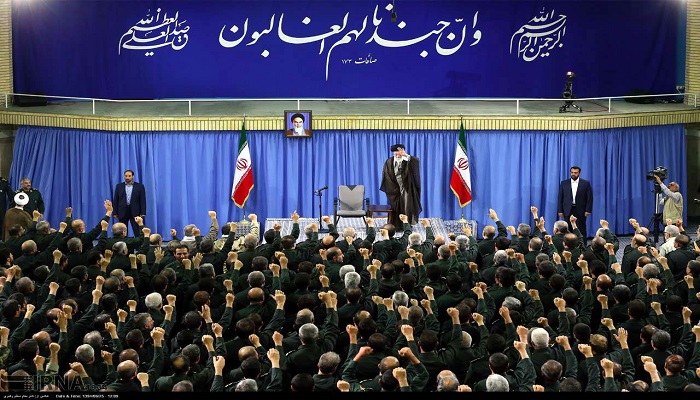
Khamenei-with-IRGC-The main force behind Terror in Iran, Iraq, Syria, Yemen, Lebanon, etc.

Khamenei-with-IRGC-The main force behind terror in Iran, Iraq, Syria, Yemen, Lebanon, etc.

The failure of Congress to halt the implementation of the nuclear deal with the Iran regime opens the floodgates for the regime to reap financial, military, economic and political rewards, but those gains may prove tenuous and illusory since in order to win passage of the agreement, the Obama administration took the unusual route of proposing it not as a full-fledged treaty, but as an administrative action that an incoming administration could conceivably reverse.

Since the Iran regime was adamant on delinking anything not related to the nuclear issue including human rights violations, support of terrorism, development of ballistic missiles and proxy wars, the reality is sinking in for supporters of the regime that they need to pay lip service to these other issues in order to stave off renewed calls to punish Iran for its transgressions.

This was evident by the issuance of a press release by lead regime lobbyist, Trita Parsi of the National Iranian American Council, who even acknowledged that the deal’s passage would not cause significant shifts in regime policy:

“While dialogue does not guarantee that Iran’s foreign policy conduct will shift to Washington’s liking, the absence of engagement all but guarantees that there will be either no change or a change in the wrong direction,” Parsi said.

While Parsi is showing its true face by advocating more dialogue with the criminal mullahs, his call for greater dialogue were again undermined by the statements of the regime’s top mullah, Ali Khamenei.

In his weekly televised speech, Khamenei warned commanders of the regime’s Revolutionary Guards to be on alert for “political and cultural” infiltration by the U.S. according to Agence France-Press.

“The main purpose of the enemies is for Iranians to give up on their revolutionary mentality,” Khamenei told a gathering of Guards commanders and personnel in Tehran.

“Enemy means global arrogance, the ultimate symbol of which is the United States,” he said, calling on the powerful branch of the military to protect the revolution.

“Economic and security breaches are definitely dangerous, and have dire consequences,” he said.

“But political and cultural intrusion by the enemy is a more serious danger that everyone should be vigilant about,” he added.

Parsi of course did not call for Khamenei to moderate his language or stop the continued depiction of the U.S. as Iran’s greatest “enemy.” Parsi saves his rhetorical fire – not to his mullah taskmasters – but for the U.S. leadership that he actively lobbies.

Khamenei threw more cold water on Parsi’s press release and his call for greater dialogue by saying last week that Iran would not hold any negotiations with the U.S. beyond the nuclear issue. Short of calling Parsi a liar, Khamenei certainly refutes most of what Parsi has to say.

It’s no surprise that Khamenei made his appeal directly to the leaders of the Revolutionary Guards which was created by the mullahs to preserve the mullah’s rule and maintain the stranglehold the leadership holds over Iran’s economy and its people.

The passage of the deadline to sink the nuclear deal also marked a celebration of sorts by supporters of the regime as evidenced by Ben Wikler, Washington director of Moveon.org, piece in Huffington Post which gleefully recounted how the regime’s supporters marshalled their forces to prevent the agreement’s demise.

The only thing missing was a photo of Wikler and Parsi holding hands in front of a “Mission Accomplished” banner over an Iranian missile battery.

But while Wikler breathlessly recounts the campaign to support the deal, this moment may prove Pyrrhic for supporters as the next year reveals the true nature of the regime as it no doubt continues to support conflicts in Syria, Iraq and Yemen and Americans grow increasingly uneasy about the deteriorating situation in the Middle East along with the rise of extremist groups and a full-blown refugee crisis.

Broad public disapproval of the nuclear deal has already been registered in virtually every public opinion poll and the fact the deal was passed with no bipartisan support and only through a minority vote of 42 Democratic senators may condemn any member running for re-election not only in 2016, but also 2018.

In essence, the regime lobby is praying mightily the American people will have a short memory and that the mullahs don’t blow it for them; neither scenario seems likely.

Already we’ve seen the veneer being peeled off of the Iran lobby with a flood of news articles examining the lobby, especially the NIAC and its financial backers. Ben Cohen, senior editor of TheTower.org, joined in this review by posting a story on JNS.org recounting the various investigative news stories recently published about the NIAC including The Daily Beast and others and smartly asks the inevitable question that should be on the lips of every Capitol Hill staffer:

“Now that the truth about NIAC is emerging, one has to ask why anyone who seeks respectability in Washington would have anything to do with Parsi and his cohorts,” Cohen said.

“The Islamist regime in Iran is the root of the problem, not its cure: as long as it remains in place, there should be no talk of normalization. Second, that there shouldn’t even be an Iran lobby in America, if by ‘Iran lobby’ we mean individuals and groups like NIAC, whose mission is to sell this vicious regime as an attractive partner for Western democracies,” Cohen added.

Cohen is correct when he assesses only regime change in Iran will force changes in policy away from sponsorship of terror and human rights abuses. The real hope and future lies not in the nuclear deal Parsi has championed, but in a new presidential administration that can tear it up.

By Michael Tomlinson
Filed Under: Blog, National Iranian-American Council, The Appeasers Tagged With: Dialogue with Iran, Featured, IRGC, Khamenei's speech, NIAC, Trita Parsi

Controversy Over Iran Lobby Connections Grows

September 17, 2015 by admin

Controversy Over Iran Lobby Connections Grows

Controversy Over Iran Lobby Connections Grows

The fallout from recent revelations about the nature and reach of the Iran lobby continues as more news media pick up various threads that are unraveling from Iran regime supporters such as the National Iranian American Council, which made an effort to pay former president Bill Clinton to deliver a speech to one of its fundraising galas.

“As we’ve said before, as a matter of course, all requests were run by the State Department,” said an official in the former president’s office. “And most importantly, ultimately, the president did not give this speech.”

It says a lot about associating with NIAC when you are relieved you didn’t take its money for a speech. For all of NIAC’s organizing, lobbying and fundraising, the disclosure of the paid speech forced a rapid backpedal away from the NIAC as it became clear no one wanted to be associated with a group so blatantly tied to Tehran’s mullahs. It also demonstrated that close association with the NIAC is not a recipe for long-term political health.

The struggle by the NIAC to overcome the Iran lobby label was taken up by liberal group Media Matters in a piece slamming original Daily Beast article by an Iranian dissident that examined the close ties NIAC and its staffers had with an influential Iranian family, the Namazis, who profit from consulting businesses helping to steer Western companies into partnerships with Iranian ventures, most owned or controlled by Iranian government entities such as the Revolutionary Guards Corps.

Conspicuously, the Media Matters piece, which included statements by Trita Parsi of NIAC, failed to address the most basic facts in the Daily Beast article which was the past employment of NIAC staffers by the Namazis-controlled Atieh consulting firm, several of whom later went on to work in positions at the U.S. State Department and National Security Council.

The Media Matters piece also did not address Parsi’s own damning emails and documents that came out of failed defamation lawsuit against Hassan Dai who at the time was a journalist for the Voice of America reporting critically on the NIAC. Parsi and the NIAC not only lost that suit and the subsequent appeal, but were excoriated by the three-judge appeals panel and ordered to pay for Dai’s legal fees for destroying and altering calendars and emails to hide their relationship with regime officials.

Media Matters contention that the Namazis would not materially benefit from the lifting of economic sanctions and that benefits would flow to the Iranian people instead was one of the boldest distortions played out. Iran has consistently been ranked as one of the most corrupt regimes on the planet with vast swaths of the economy such as telecommunications, energy and commodities controlled through shell companies owned by the Revolutionary Guards Corps or regime leaders such as Hassan Rouhani and Ali Khamenei.

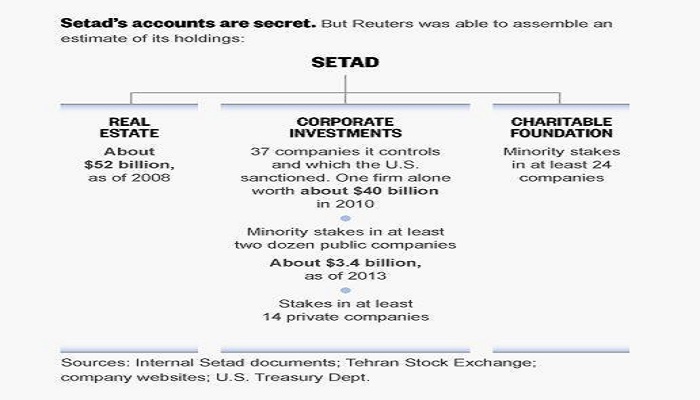
Reuters reported on one such arrangement controlled by Khamenei, one of the most powerful and secretive organizations in Iran – “Setad Ejraiye Farmane Hazrate Emam,” or Setad.

“The deal, which is likely to go into effect after clearing a major Congressional hurdle last week, lifts U.S. secondary sanctions on Setad and about 40 firms it owns or has a stake in, according to a Reuters tally based on annexes to the deal.

“The delisting of Setad — which has little connection to Iran’s nuclear program but is close to Iran’s ruling elite — feeds into U.S. Republicans’ criticism that the deal will empower Iran’s hardliners and help fund its regional ambitions.”

Reuters went on to report that with stakes in nearly every sector of Iran’s economy, Setad built its empire on the systematic seizure of thousands of properties belonging to religious minorities, business people, and Iranians living abroad, according to a 2013 Reuters investigation, which estimated the network’s holdings at about $95 billion.

Iranians who said their family properties were seized by Setad described in interviews in 2013 how men showed up and threatened to use violence if the owners didn’t leave the premises at once, said Reuters.

Already, one Setad firm appears to be moving to take advantage of the deal. Ghadir Investment Company, which the U.S. Treasury identified as a Setad-linked firm, signed a 500 million euro ($565 million) contract with the engineering unit of Finmeccanica, a spokesman for the Italian defense group said in August, according to Reuters.

Not only will the regime directly benefit economically from the nuclear deal, Parsi and his allies are now trying to spin the argument that things will improve in places such as Syria where nearly four million Syrian refugees have fled in the face of Afghan mercenaries hired by Iran, Hezbollah fighters armed by Iran and Syrian army troops loyal to the Assad regime funded by Iran.

Parsi went so far as to tell BuzzFeed that the deal would at the least help the conflict from escalating, but he neglected to mention the rapid escalation and destabilizing presence of Russian military troops and hardware now landing with regularity in Syria in support of Assad and working in cooperation with the Iran regime.

He also neglected to mention the regime’s Quds Force commander Qassem Soleimani’s secret visit to Moscow in violation of United Nations sanctions to discuss the acquisition of new military hardware and coordinate operations in Syria where his Quds Forces has been in the vanguard of fighting there.

Now as the news media see the deep ties the NIAC has to the regime and with all of the Republican presidential candidates vowing to ditch the nuclear deal on the day they take office, the fire sale is on for the regime to swipe, take and steal as much as it can before the door is finally closed on them.

By Michael Tomlinson

Filed Under: Blog, National Iranian-American Council Tagged With: Namazi, National Iranian American Council, NIAC, Trita Parsi

Iran Lobby Stands to Reap Rewards of Nuclear Deal

September 16, 2015 by admin

Iran Lobby Stands to Reap Rewards of Nuclear Deal

Iran Lobby Stands to Reap Rewards of Nuclear Deal

An in-depth piece of reporting by Alex Shirazi (a pseudonym of an Iranian dissident) in The Daily Beast examined the financial windfall key members of the Iran lobby are due to inherit through passage of the nuclear agreement with the Iran regime; specifically the involvement of an Iranian family called the Namazis which played a key role in the creation of the National Iranian American Council, the lead lobbying force for the regime.

Shirazi examines the family’s history coming out the Iranian revolution and the opportunity it saw to turn a thawing in relations between the U.S. and the Iran regime into serious business opportunities, including Pari Namazi and her husband, Bijan Khajehpour, who returned to Tehran in 1993 to launch a company called Atieh Bahar Counsulting, offering services to foreign companies interested in doing business in Iran.

That company provided a pipeline of communication directly into the leadership of the regime and after more family members joined the enterprise, Atieh’s client list rapidly grew to include global brands such as “German engineering giant Siemens; major oil companies BP, Statoil, and Shell; car companies Toyota, BMW, Daimler, Chrysler, and Honda; telecom giants MTN, Nokia, Alcatel; and international banks such as HSBC,” according to Shirazi.

But that success was marred by their close relationship with leaders of regime who were revealed to be hip deep in corruption schemes including Mehdi Hashemi, the son of then regime president Hashemi Rafsanjani, who was later imprisoned on bribery charges.

Coupled with revelations that the regime was in violation of the Nuclear Non-Proliferation Treaty in 2002 by disclosures from the National Council of Resistance of Iran, a leading Iranian dissident group, the Namazis’ saw their fortunes wan until Bijan Khajehpour began a relationship with Hassan Rouhani who would later be the handpicked president and sold to the world as the “moderate” face of the Iran regime.

With this new relationship, Shirazi describes the creation of the strategy that gave birth to the NIAC and the Iran lobby as Siamak Namazi met with Trita Parsi and together issued the document that laid the groundwork for the Iran lobby’s work:

  1. Hold “seminars in lobbying for Iranian-American youth and intern opportunities in Washington DC.”
  1. Increase “awareness amongst Iranian-Americans and Americans about the effects of sanctions, both at home and in Iran.”
  1. End “the taboo of working for a new approach on Iran”—i.e., end the then-two-decade-old U.S. policy of containment.

Soon after the NIAC was created which Parsi heads and gave birth to an official lobbying arm, NIAC Action, both of which led the vanguard action pushing for the Iran nuclear deal.

Most interestingly, Shirazi describes how while serving as president of NIAC, Parsi wrote intelligence briefings as an “affiliate analyst in Washington, D.C.” for Atieh, focusing on such topics as whether or not the American Israel Public Affairs Committee (AIPAC) would revive its anti-Iran campaigning on the eve of the Iraq war, or on the efforts by the Mujahideen-e Khalq (MeK), an Iranian opposition group to oppose the regime.

Parsi became a strong booster of Khajehpour to American media while being paid by for his work and not disclosing that financial arrangement with Atieh.

With almost half a million Iranian Americans living in the U.S., NIAC only boasts 5,000 dues paying members, but claims a vast network of supporters for the regime’s causes. NIAC has also served as a proving ground for staffers who are funneled into U.S. government positions and other non-governmental organizations supportive of the regime.

Shirazi describes the background of Reza Marashi, who works for NIAC after coming to from a stint at Atieh and with the U.S. State Department as an Iran desk officer, a similar position that has other NIAC staffers, most notably Sahar Nowrouzzadeh who is now National Security Council director for Iran in the Obama administration and therefore the top U.S. official for Iran policy, have occupied.

Interestingly enough, Nowrouzzadeh does not list her employment as NIAC and Marashi refuses to acknowledge his time at Atieh.

Shirazi points out, as we did on this blog previously, how Parsi and the NIAC public and social media statements have hardly mentioned any criticism of regime policy, nor condemned the most notorious actions of the regime such as the three proxy wars in Syria, Iraq and Yemen it is fighting, nor the continued imprisonment of Iranian Americans such as Amir Hekmati and Saeed Abedini.

What the NIAC does focus on specifically is the lifting of sanctions against the regime and opposing any efforts within and outside the U.S. government to support regime change within Iran, both of which would have serious consequences on the prospects of the Namazi family.

Shirazi also recounts the failure of Parsi’s defamation lawsuit in 2008 against Hassan Dai, an Iranian exile working as an investigative journalist with the Voice of America. That lawsuit revealed a trove of documents substantiating much of the relationship Parsi and NIAC had with the regime leadership.

The reach and ambition of the NIAC was revealed this week by Fox News’ Ed Henry who disclosed that emails released from Hillary Clinton’s personal server included a request from former president Bill Clinton to State Department staff about the possibility of delivering a paid speech to a gathering hosted by NIAC. President Clinton eventually declined the speech, but the incident demonstrated Parsi’s desire to push into the highest levels of American policy making.

By Michael Tomlinson

Filed Under: Blog, National Iranian-American Council Tagged With: Marashi, Namazi Family, Nowrouzzadeh, Shirazi, Trita Parsi

The Iran Lobby’s Plan B

September 15, 2015 by admin

The Iran Lobby’s Plan B

The Iran Lobby’s Plan B

With the recent failure of the Senate to mount an override of a Democratic filibuster, and the implementation of the proposed nuclear agreement with the Iran regime on the way, it is ironic though that such significant foreign policy issue will be implemented without any bipartisan support and no majority support from the American people.

But regardless of the votes last week, it has become clear that the Iran lobby is gearing up to combat a plethora of “Plan B” options being formulated by opponents of the regime since the decision to submit the agreement not as a formal treaty, but rather an executive action leaves the agreement subject to revision or even reversal when a new president is elected in 2016.

Sen. Ben Cardin (D-MD), the ranking Democratic member on the Senate Foreign Relations Committee who helped craft the bipartisan compromise legislation requiring the congressional vote on the deal, announced his intention to submit new legislation addressing many of the loopholes in the proposed nuclear agreement to which he has publicly announced his opposition.

Jim Lobe of Lobelog.com and Tyler Cullis of the National Iranian American Council both offered up their critiques in an attempt by regime supporters to fend off any new legislation threatening to derail their efforts.

What Lobe and Cullis describe as “poison pills” are actually the kinds of common-sense provisions that should have been included in the nuclear deal in the first place such as requirements that the president cannot lift certain sanctions imposed on regime banks for terrorism-related or ballistic-missile related reasons until the president certifies those banks have ended their facilitation of transactions aiding Iran’s support for terrorism and ballistic-missile development.

Ironically, these conditions were part of the original set of “red lines” drawn by U.S. negotiators at the outset of talks, including requirements for “anytime, anywhere” inspections, all of which were pulled off the table in the final agreement.

The fact that Cullis and Lobe argue so strenuously against these inclusion of these types of restrictions on the regime’s conduct speaks volumes about their commitment not to ensuring peace and stability in the Middle East, but allowing the Iran regime a free hand to conduct its terror operations and development of missile systems that can deliver nuclear warheads over vast distances.

As syndicated columnist Cal Thomas has correctly pointed out in an editorial published on FoxNews.com:

“Promises of stringent inspections are meaningless, especially when Iran has already said it will never allow outside access to its military sites. Ali Akbar Velayati, the Iranian security adviser to Supreme Leader Ayatollah Ali Khamenei, has stated firmly that, ‘Regardless of how the P5+1 countries interpret the nuclear agreement, their entry into our military sites is absolutely forbidden. The entry of any foreigner, including IAEA inspectors or any other inspector, to the sensitive military sites of the Islamic Republic is forbidden, no matter what.’”

But aside from Cardin’s proposal, the Defund Iran coalition also announced an effort to ask voters in Arizona, Colorado, Florida, Missouri and Ohio to change their state constitutions to bar any state dollars from being invested in ways that might help the Iran regime, with plans to expand the effort to an additional 25 other states in the coming weeks.

“Every dollar we stop makes a difference to the solider who gets blown up by an IED financed by Iran,” said Sarah Steelman, a former Missouri state treasurer and current chairwoman of Defund Iran. “Not one penny of the people’s money should go to any company that does business that goes to Iran—or any other sponsor of terror.”

According to Philip Elliot writing for Time magazine, banning investments in funds or companies some find objectionable is hardly a new tactic as shown by the pressure built over two decades for Americans to withhold investments with ties to South Africa in order to protest that nation’s apartheid systemic discrimination. More recently, some groups have pressured Americans to do the same toward Israel over its treatment of Palestinians.

Thirty states already have some form of law or regulation that bans state dollars to go to Iran. The new moves would codify existing bans, but perhaps complicate some of them. States will have to decide how aggressively to write the constitutional language. Would they simply ban pensions from investing in energy companies that buy oil from Iran, or would they also ban economic development dollars from going to retailers who open outposts in Tehran? A defense contractor, for instance, could see its tax deals with a state threatened if it also sells parts to a company that does business with Iran, Elliott said.

That groundswell of popular support at the grassroots and state level is in no doubt motivated by the continuing worrisome stream of revelations and news coming out of the regime such as the release of a new book authored by Saeid Golker that took a scholarly look at the regime’s dreaded state-financed Basij militia.

Gareth Smyth of the Guardian’s Tehran bureau examined Golker’s work, writing that “Golkar’s central argument – reflected in the book’s title, Captive Society: The Basij Militia and Social Control in Iran – is that the Basij is more widespread and effective than generally realized.”

“There are 12,000 Starbucks in the US and 22,000 around the world,” Golker says, “but in Iran we have more than 50,000 Basij bases and offices.”

He estimates one in three students is a member, as are 65 percent of state employees, which clearly shows the expansive and pervasive presence of the militia throughout all levels of Iranian society in a model reminiscent of the much-feared East German Stasi intelligence service that turned family members into informers for the state against other family members.

And in another demonstration of the regime’s flouting of human rights, Amnesty International called on the regime to halt the impending “execution of Mahmoud Barati, a teacher who was convicted of drug-related offences following an unfair trial that is believed to have included a confession obtained through torture and other ill-treatment.”

“The Iranian authorities must end their unprecedented killing spree – more than 700 people have been executed so far this year, most of them convicted on drug-related charges,” said Amnesty International in a statement.

It is doubtful the regime will halt its executions, nor does it seem possible it plans to release any of the Iranian-Americans it is currently holding hostage.

By Michael Tomlinson

Filed Under: Blog Tagged With: Democrat's Filibuster, Iran Lobby, NIAC, Trita Parsi

Iran Lobby Promises of a “Changed” Iran Regime are Untrue

September 14, 2015 by admin

Glowering KhameneiOne of the central propaganda tenets of the Iran lobby, especially viewpoints espoused by the National Iranian American Council, Ploughshares Fund and media such as Lobelog is that the proposed nuclear deal with the Iran regime would help improve internal conditions in Iran, strengthen so-called “moderate” factions and lessen the tensions with the West.

But time and time again, the words and actions of the regime’s own leadership have continually undercut, undermined and proved those views to be false and misleading. In fact, the regime’s leader, Ali Khamenei, once again gave another of his patented speeches denouncing the U.S. yet again as the “Great Satan” and vowed that Iran would not negotiate on any topic beyond the just-concluded nuclear agreement.

“We agreed to talks with the U.S. only for the nuclear issue,” Khamenei said, according to his official website. “In other areas, we did not allow talks with the U.S. and we will not negotiate with them.”

As the titular head of the government and sole decision-maker on its foreign policy, Khamenei has repudiated virtually all of the key talking points used by regime supporters such as Trita Parsi and Reza Marashi of the NIAC. It is clear that Khamenei was only interested in securing a deal that will allow billions in frozen assets back into the regime, lifts embargoes on trade, finances and arms sales and attaches no conditions on Iran’s human rights violations or support of terror and proxy wars.

But the Iran lobby continues to ignore these statements and plows ahead with its obfuscations. Take for example Parsi’s recent appearance on C-SPAN’s Washington Journal segment where he sidestepped questions about the regime’s ability to continue to spread terror and acquire upgraded military hardware.

The crowning hypocrisy comes when Parsi denounces comparisons of the Iran nuclear deal to the infamous Munich deal with Nazi Germany and labels it “fear propaganda” when he himself has been one of the chief merchants of fear mongering by pushing the “war vs. peace” scenario for passage of the deal.

All of the efforts put forth by the Iran lobby have largely failed on the American people though as shown by the latest Pew Research Center poll released this week which showed a steep decline in support for the deal, falling from 33% approval in mid-July to now only 21% approving the deal just two months later.

Nearly half of Americans (49%) disapprove of the agreement with just three-in-ten (30%) having no opinion.

While the differences between Republican and Democrat approval and disapproval showed a wide gap, crucial independent voters remained opposed to the deal by a significant 47% to 20% margin auguring a contentious election season next year for any candidate supporting the deal.

Pressed further, the survey shows that of those polled who knew a little or a lot about the deal, opposition to the deal grew even larger by more than a two-to-one margin (57% to 27%) which demonstrates that the more people hear about the deal, the more they dislike it, which has to prove troubling for regime lobbyists such as Parsi.

The public continues to express little confidence that Iran’s leaders will live up to their side of the nuclear agreement. Just 2% have a great deal of confidence that Iran’s leaders will abide by the agreement, while another 18% say they have a fair amount of confidence. About seven-in-ten (70%) say they are not too confident (28%) or not confident at all (42%) in Iran’s leaders, said Pew Research Center in a statement.

We can only assume that the 2% having a great deal of confidence in the regime’s leaders must be staffers of the NIAC and Ploughshares Fund since that’s about all there is in America.

The fact that Khamenei flatly rejected any further talks with the U.S. on any other topics spells trouble for the Middle East and rest of the world over the next several years. The consequences of a resurgent Iran are already being felt with a Syrian regime now being bolstered by Russian troops and Iran-paid Afghan mercenary troops fighting in an ever-expanding conflict that is causing a refugee crisis throughout Europe and now touching on America.

The Syrian refugee crisis is emblematic of what is truly wrong with the proposed nuclear deal. As Lina Sergie Attar writes in The Daily Beast:

“One of the biggest complaints of supporters of the Iran deal about its critics is that they oppose the deal for no real reason but the sake of opposing. Perhaps for some politicians, that’s true. Syrians, though, can’t afford the luxury of contrariness. There is one very important reason to oppose any sort of concessions with Iran: Syria. Any deal that supports the regime that fuels the Assad regime’s military is simply a deal that rewards genocide, destruction, and mass displacement of innocent people,” she said.

“Today, almost half of the Syrian population has been displaced as a result of the relentless brutality of the Assad regime and the shocking violence of ISIS and Al Qaida. Eleven million people no longer live in their homes. Four million of them are refugees in neighboring countries. Over the past year, thousands of refugees have decided to risk their lives for a better future in Europe, embarking on harrowing ‘death routes’ across sea and land,” she added.

All of which can be laid at the doorstep of the Iran regime and their supporters.

By Michael Tomlinson

Filed Under: Blog, National Iranian-American Council

Ramifications of Iran Deal Now Being Felt

September 8, 2015 by admin

Ramifications of Iran Deal Now Being Felt

Ramifications of Iran Deal Now Being Felt

The web of Iran regime supporters working towards passage of the proposed nuclear agreement have consistently pushed the narrative that approval of the deal would usher in a new period of stability throughout the Middle East and open the door to further engagement with the regime, strengthen so-called “moderates” within Iran and bring about peace in our time.

Leading the pack have been cheerleaders such as Trita Parsi of the National Iranian American Council, Jim Lobe of Lobelog, Joseph Cirincione of the Ploughshares Fund, Jamal Abdi of the NIAC Action and commentator Ali Gharib just to name a few, but all of their rosy talk has not obscured the ramifications of the deal which are now peeking through the carefully constructed façade of lies built by the Iran lobby.

One crack came in the form of concerns raised by a newly released report compiled by a group of high-ranking U.S. military officers about what the Iran regime will do with the billions of dollars it will receive in unfrozen assets compared to a U.S. military that has ramped down considerably and may not be able to handle a resurgent and aggressive Iran.

“As Iran bristles with more and newer arms, the United States will have fewer and older ones to counter them,” says the report from Retired Marine Gen. James Conway, Retired Air Force Gen. Charles Wald, Retired Navy Adm. Mark Fitzgerald, Retired Army Gen. Lou Wagner, Retired Vice Adm. John Bird, Retired Air Force Lt. Gen. David Deptula, and Retired Air Force Maj. Gen. Lawrence Stutzriem.

Already, the former officials pointed out, the U.S. Navy won’t be able to maintain a carrier presence in the Persian Gulf for approximately two months this year due to reduced availability of carriers under budget sequestration.

If Iran decides to race for a nuclear weapon after the main provisions of the deal expires, the U.S. will be weaker militarily if sequestration remains the law of the land, Conway said.

“We believe the [deal] will in a sense unleash Iran in a conventional sense in ways that we have not previously seen,” Conway said.

The most obvious consequence of the regime’s influence and actions in the region has been the onslaught of millions of refugees fleeing the three main proxy wars Iran is involved in, including Syria, Iraq and Yemen. The plight of Syrian refugees fleeing the Assad regime and his mercenary army made up of Afghan fighters paid for by Iran mullahs, along with Iranian regime’s Quds Forces has been documented as they flood into Europe by foot, boat and train, often under perilous conditions.

Benjamin Weinthal, a fellow at the Foundation for Defense of Democracies, wrote an editorial in the New York Daily News where he examined how past decisions by European nations and the U.S. not to move militarily against the Assad regime after he used chemical weapons led directly to the current refugee crisis.

“European politicians have remained silent on Iranian regime’s role in forcing Syrians to flee for their lives. Iran’s rulers have provided Assad with an economic lifeline to wage war. Hezbollah — Iran’s wholly owned terrorist subsidiary — has thousands of combatants fighting to retain Assad’s regime,” Weinthal said.

“Making matters worse, Europe and the U.S. are slated to release $150 billion in sanctions relief money to Iran as part of the deal to curb Tehran’s illicit nuclear weapons program. Assad will soon get a fresh economic shot in the arm,” he added.

Assad hailed the nuclear deal as a “great victory.” The nuclear deal was agreed to about a week after Iran extended him a $1 billion line of credit.

The Iran regime demonstrated its single-minded support of Assad when mullah’s foreign minister Javad Zarif criticized demands for Assad’s ouster saying such calls have prolonged Syria’s civil war in an absurd claim since Iranian regime’s support of Assad has been literally the only thing keeping him in power.

Zarif went so far as to say that those who have in the past years demanded Assad’s ouster “are responsible for the bloodshed in Syria” in a veiled reference to international calls for Assad to step down.

The Iran regime has been growing bolder in flexing its new-found moment on the international stage as Zarif made his outlandish statements while hosting a delegation from Spain which follows similar European delegations making the trek to Tehran to kiss the proverbial ring of the mullahs.

In fact, several western diplomats estimate that sanctions against the regime could be lifted as soon as the first three months of 2016 in a stunning repudiation of the original promises of three to five years made by the Iran lobby in selling the deal.

But there remain hopeful signs of defiance yet in the face of the overwhelming appeasement in placating the Iran regime, such as recent moves in Iraq by Grand Ayatollah Ali al-Sistani who leads the Shiite majorities in southern Iraq to distance themselves from Iranian control exercised through ousted Iraqi prime minister Nouri al-Maliki.

Maliki was largely viewed as an Iranian puppet and has been held responsible by Iraq’s Shiite and Sunni populations for allowing ISIS to take control over large parts of the nation and fostering deep levels of government corruption.

Sistani’s recent moves does offer a visible break from the Iran regime’s long stranglehold over Iraqi affairs.

Back in the U.S., Sen. Mike Pompeo (R-KS) and David B. Rivkin, Jr., a senior fellow at the Foundation for the Defense of Democracies, authored an editorial in the Washington Post in which they raised the potential for the filing of a lawsuit under the terms of the Iran Nuclear Agreement Review Act of 2015 which requires the Obama administration to submit to Congress “any additional materials related thereto, including . . . side agreements, implementing materials, documents, and guidance, technical or other understandings, and any related agreements, whether entered into or implemented prior to the agreement or to be entered into or implemented in the future.”

They cite the decision by the administration not to submit for Congressional review a secret side deal between the regime and the International Atomic Energy Agency, which Iran has vocally opposed releasing.

“Both houses should vote to register their view that the president has not complied with his obligations under the act by not providing Congress with a copy of an agreement between the IAEA and Iran, and that, as a result, the president remains unable to lift statutory sanctions against Iran,” Pompeo and Rivkin said. “Then, if the president ignores this legal limit on his authority, Congress can and should take its case to court.”

By Michael Tomlinson

Filed Under: Blog, National Iranian-American Council

The Insidious Infiltration of American Government by Iran Lobby

September 7, 2015 by admin

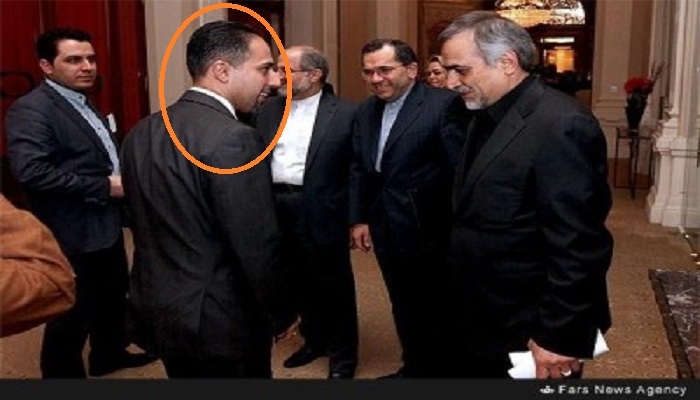
Tritta Parsi paying respect to the Iranian regime delegation in Geneva

Trita Parsi paying respect to Iran delegation in Geneva Talks

Matthew RJ Brodsky, senior Middle East analyst at Wikistrat and former editor of inFOCUS Quarterly, took a deep dive in Huffington Post into the lobbying forces of the Iran regime and the progress it has made in infiltrating deep into American policy making positions under the Obama administration.

What piqued his interest and those who track the activities of the Iran lobby was the latest batch of emails released from Hillary Clinton’s email server in which the pro-regime group The Iran Project provided the administration with a 10-page plan that eventually served as the roadmap for engaging with the regime once again and led to the run up in negotiating the nuclear weapons agreement.

Brodsky includes the ground breaking investigative analysis done by Lee Smith, a senior fellow at the Hudson  Institute and senior editor of the Weekly Standard, who examined the ties Trita Parsi, the head of the National Iranian American Council, has with Iran regime insiders such as Akbar Hashemi Rafsanjani.

Parsi founded the NIAC in 2002 and was described by Smith as being the “tip of the spear of the Iran Lobby,” in terms of funneling a large number of former staffers into key administration positions and gaining the ear of key members of the Obama administration.

Breitbart News discovered the hiring of Sahar Nowrouzzadeh, a former NIAC staffer, as the National Security Director for Iran who sat in on several high level meetings with President Obama while discussing negotiations with the Iran regime on the nuclear deal.

The NIAC attempted to dismiss Nowrouzzadeh’s position as a mere intern, but a 2004 document uncovered by Breitbart News described her as a former “staff member” at NIAC.

Jeffrey Goldberg of The Atlantic referred to Parsi as someone who “does a lot of the leg-work for the Iranian regime.”

Parsi’s close ties to the regime came under greater scrutiny during the tense negotiations between the regime and P5+1 negotiators in which Parsi and his NIAC colleague Reza Marashi were often seen conferring with members of the Iranian delegation and often were quoted by news media covering the talks using the same talking points and keys messages as the official regime news agencies.

Bloomberg reporter Eli Lake wrote about Parsi’s close connection with regime foreign minister Javad Zarif uncovered in documents made public as part of a failed defamation lawsuit brought by Parsi against an Iranian American journalist who accused Parsi of working on behalf of the regime.

NIAC and Parsi have moved out of the legally shadowy world of indirect lobbying by forming an official lobbying arm called NIAC Action which made no bones about its open lobbying for positions favorable to the regime and began the solicitation of funds as it expected to make donations to political campaigns it deems supportive of the Iranian regime.

Brodsky in his Huffington Post column also examined the flow of funds to regime lobbying groups and traced how the Rockfeller Brothers Fund spent millions of dollars since 2003 towards promoting a nuclear agreement with the regime, primarily through donations given to The Iran Project. That funding has been supplemented by additional contributions made through the Ploughshares Fund which has given substantial amounts of funding to the NIAC directly.

Ironically, the policy memos written by The Iran Project proved to be key elements of the Obama administration’s outreach to the Iran regime including a call to open a direct dialogue to top regime mullah Ali Khamenei by promising to not seek regime change as a means of reassuring the mullahs which came in the form of a personal letter from Obama early in his first term.

Paramount for the Iran lobby was not only securing a favorable nuclear deal for the regime, but more importantly unlinking any agreement from conditions related to the regime’s conduct in areas such as terrorism, human rights or military interventions through proxies and terror groups.

The de-linking of all these areas may very well turn out to be the biggest win for the Iran lobby.

By Michael Tomlinson

Filed Under: Blog, National Iranian-American Council, The Appeasers Tagged With: Iran Project, NIAC, NIAC Action, Trita Parsi

Dealing With the Iran Deal Hangover

September 4, 2015 by admin


Dealing With the Iran Deal Hangover

Dealing With the Iran Deal Hangover

Depending on who is keeping count, the Obama administration has either gotten the necessary number of commitments from Democratic Senators to overcome efforts to derail the proposed nuclear arms agreement with the Iran regime, or is on the verge of securing it, which raises the next inevitable question facing supporters of the deal: What’s next?

The regime’s expansive lobby and collection of supporters and apologists have shouted to the rooftops that this deal will auger in a new era of cooperation and moderation from the regime throughout the Middle East. It has been well-documented here already just how silly those statements have been, but the important issue for those politicians supporting the deal is the potential embarrassment they will pay should the mullahs end up not being moderate.

Stephen A. Seche, former U.S. ambassador to Yemen and executive vice president of the Arab Gulf States Institute in Washington, D.C., writing in the Boston Globe examined the ramifications post-deal approval.

“The irony is that while Administration officials trumpet the nuclear deal as a triumph of soft power (diplomacy and reasoned negotiation) over hard power (military attacks on Iran’s nuclear facilities), Washington’s efforts to assure anxious Arab allies in the wake of the deal seem remarkably focused on reinforcing their capacity to engage Iran militarily,” he said.

“Listen to Secretary of State John Kerry’s remarks following his Aug. 3 meetings with Gulf foreign ministers in Qatar. He sounded more like a senior Pentagon official than America’s chief diplomat: ‘We agreed to expedite certain arms sales . . . to engage in very specific training to upgrade military capacity in the region . . . to talk about how to integrate the region’s ballistic missile defense,’” Seche added.

The fact that the first thing the Obama administration did was go to Sunni Arab Gulf states and Saudi Arabia and promise extensive new shipments of weapons to offset the anticipated expansion of Iran’s military says much for what the future will hold.

Most interestingly, moments after the administration secured enough votes to approve the deal, a letter from Secretary of State John Kerry popped into congressional inboxes where he admitted “that, despite the deal, Iran will continue to back terrorist groups across the globe” and promises to boost military support and funding to Israel and Gulf states such as Saudi Arabia, according to a copy of the letter obtained by the Washington Free Beacon.

“Important questions have been raised concerning the need to increase security assistance to our allies and partners in the region and to enhance our efforts to counter Iran’s destabilizing activities in the region,” Kerry writes. “We share the concern expressed by many in Congress regarding Iran’s continued support for terrorist and proxy groups throughout the region, its propping up of the Assad regime in Syria, its efforts to undermine the stability of its regional neighbors, and the threat it poses to Israel.”

One might think the administration is being magnanimous in victory, but in fact it now has to deal with the consequences of its action, namely prepare for the Iran regime to exert its perceived new freedoms to act aggressively against its neighbors without consequences. Since the agreement was narrowly defined to deal only with the nuclear issue with no linkages to reforms or changes in Iran’s policies or practices, the Obama administration has virtually no leverage left to deal with the extremist mullahs.

The Iran regime really has no intention of altering its behavior in light of the agreement as verified yet again by another violent display in Tehran, this time by members of the regime’s Bassij militia who burned American, British and Israeli flags outside of the former U.S. embassy.

According to Agence France-Presse accounts “some 30 people took part in trampling and burning the flags at a ceremony to unveil a plaque on the embassy’s fence of 100 derogative expressions to describe the United States. The phrases, all used by the Islamic republic’s late founder Ayatollah Ruhollah Khomeini, included: ‘Great Satan’, ‘criminals’, ‘corrupt’, ‘arrogant’ and ‘anti-Koran’.”

It’s good to know the regime is bulking up on derogatory phrases for the U.S., but we should not expect anything less from a regime which has made it abundantly clear its distaste of the U.S. and contempt for any moderation or accommodation with its traditional enemy. In the mullahs eyes, the deal is not so much a new measure of cooperation, as much a fleecing of a stupid America.

As regime lobbyists such as Trita Parsi of the National Iranian American Council take a victory lap, it’s worth remembering how the burden now moves squarely onto the shoulders of representatives to the extent that every violent act, horrific violation of human rights or act of terror will be connected directly to their vote.

That is a particular long time to have a hangover.

By Michael Tomlinson

Filed Under: Blog Tagged With: Iran Lobby, Trita Parsi

Iran Regime Engages in More Extremists Actions

September 3, 2015 by admin

Iran Regime Engages in More Extremists Actions

Iran Regime Engages in More Extremists Actions

Who knew the American flag could be a “Satanic symbol” but in Tehran under the mullahs, it not only is, but along with the Union Jack, is a forbidden item for sale on T-shirts in the Islamic state as the religious theocracy cracks down on merchants looking to cash in on the perceived thawing in relations with the West.

“This morning we took these clothes off leading distributors,” said city police chief General Hossein Sajedinia as quoted by the ISNA news agency.

Sajedinia said reports about the activity had been received in the past two weeks, leading to surveillance and detentions and the closing of any stores selling such items.

So much for the “moderate” Iran government.

The disconnect between the perception being pushed by regime advocates such as the National Iranian American Council and apologists such as Ali Gharib and Paul Pillar of a cuddly and soft new Iranian government and the real on-the-ground truth of a brutal, harsh and unrelenting regime is stark and incontestable.

Since the July 14 agreement between the Iran regime and the P5+1 group of nations, the regime has done little to reassure the rest of the world that it has indeed changed. In fact, its actions since then have only reinforced critics of the regime who have long maintained that Iran’s mullahs have absolutely no intention of changing course.

The biggest concession the regime won from the rest of the world was not allowing it to keep the bulk of its nuclear infrastructure intact, nor was it the lifting of trade and financial embargoes allowing it to access $150 billion in frozen assets or sell four million barrels of oil on the open market or buy advanced military weapons systems again.

No, the biggest concession was uncoupling the actions of the regime from any future repercussions. In effect, the cutting of Iran’s conduct from any measurable yardstick of internationally accepted normative behavior from any consequences from future sanction or action has emboldened Iran’s mullahs to feel invigorated with their new-found freedom and they have left the starting gate running harder and faster than Triple Crown winner American Pharoah.

NPR correspondent Michele Kelemen focused on this disconnect in examining the Iran regime’s steadfast refusal to answer questions from the International Atomic Energy Agency over the past decade over the military dimensions of its nuclear program.

Harvard University’s Olli Heinonin, a former top official at the International Atomic Energy Agency, says having full knowledge about the past will be crucial in the future — when Iran gets out from under the current limits on its nuclear program,” Kelemen said.

“You want to understand how far did they get,” said Heinonin. “Then you know what else they need to do to manufacture a nuclear weapon.”

Heinonin, speaking at the Foundation for the Defense of Democracies, which has been critical of the Iran deal, said knowing about the past will also help inspectors know where they should concentrate their efforts now, according to Kelemen.

That defiance of in adhering to the proposed agreement was again reinforced by Iranian Defense Minister Hossein Dehghan who recently reaffirmed Iran’s position that issues involving Iran’s missile program are not matters for discussion. Presumably, Iran is determined to keep developing its missile force.

As for attempts to clarify Iran’s past activity regarding the “military dimensions” of its nuclear program, Dehghan noted that Iran will definitely not grant anyone access to its security and military “secrets.”

He was echoed by the head of the regime’s Revolutionary Guard who said the U.S. is still the “Great Satan,” regardless of the nuclear deal struck with the Americans and other world powers over the Islamic state’s contested nuclear program.

The comments by Gen. Mohammad Ali Jafari, reported by the official Guard website, said enmity against Iran by the U.S. hasn’t lessened.

“We should not be deceived by the U.S.,” Mr. Jafari reportedly said. “It wants to infiltrate into Iran, resorting to new instruments and method.”

But rhetoric alone is not the only tool the Iran regime is using as Kuwait yesterday charged 24 people suspected of links to Iran and the Hezbollah terror group with plotting attacks against the Gulf state according to a public prosecutor.

The men were charged with “spying for the Islamic republic of Iran and Hezbollah to carry out aggressive acts against the State of Kuwait” by smuggling in and assembling explosives, as well as possessing firearms and ammunition, the statement said.

They were also charged with “carrying out acts that would undermine the unity and territorial integrity” of Kuwait, and of possessing eavesdropping devices, it said.

The actions in Kuwait only serve to underscore the mistake by the P5+1 in giving Iran this major act of appeasement in the hopes of buying some short term security by forgoing any hope of containing the Iran regime in the future. It’s a Faustian bargain that Stephen Rademaker explained on PBS this weekend:

“Faust was this mythological figure who sold his soul for the — to the devil in exchange for magical powers for — I think it was 26 years,” he said.

“For 26 years, he had magical powers. At the end of 26 years, the devil came to claim his soul. And I think that is a pretty good analogy to what this deal provides. For 10 years, it’s not a bad deal. After 10 years, it becomes a horrible deal and it gives Iran regime everything they have always wanted. After — President Obama concedes, after 13 years, the breakout time is almost zero,” he added.

Rademaker was an assistant secretary of state for the Bureaus of Arms Control and International Security and Nonproliferation under President George W. Bush. He’s now a principal at the Podesta Group in Washington and an adviser to the Bipartisan Policy Center.

All of which demonstrates as clear as daylight that the Iran regime is fully committed to its extremist course of action and the proposed deal, far from hindering it, actually enables it.

All of which demonstrates as clear as daylight that the Iran regime is fully committed to its extremist course of action and the proposed deal, far from hindering it, actually enables it.

By Michael Tomlinson

Filed Under: Blog, News Tagged With: ALi Gharib, Featured, Hossein Sajedinia, Iran deal, Mohammad Ali Jafari, Trita Parsi

Iran Nuclear Deal Promises No Change in Regime Behavior

September 1, 2015 by admin

Iran Nuclear Deal Promises No Change in Regime Behavior

Iran Nuclear Deal Promises No Change in Regime Behavior

The Iran regime has long been providing the template for extremist Islamic groups such as Hezbollah and ISIS in terms of using religious law to impose harsh oppression or using terror as a means of foreign policy, but this time the mullahs in Tehran are taking a page from the playbook of its proxies.

The regime government is considering a proposal to grant Iranian citizenship to foreign nationals who take up arms for the regime. According to the Daily Beast:

“Proposed amendments to Iran’s Civil Code under the name ‘Facilitating Naturalization of non-Iranian Veterans, Warriors and Elites’ will offer citizenship to foreigners who join Iranian military units—be it border patrol, militias confronting the so-called ‘Islamic State’ in Iraq and Syria, groups involved with public order operations, or any of Iran’s less ‘official’ military initiatives, including support for Hezbollah in Lebanon. Under the amendments, ‘revolutionary heroes’ can become citizens without undergoing existing naturalization requirements.

“Parliamentarians who signed the bill say those who ‘serve the revolution,’ including people who have contributed to Iran’s scientific progress, will be entitled to easier access to the citizenship they deserve. Yet human-rights activists and lawyers say the amendments are part of a political and militaristic strategy to entice immigrants, who have resided illegally in the country since 1979, into fighting Iranian regime’s proxy wars.”

The move takes advantage of the roughly four million Afghan refugees that fled the Soviet invasion in 1979 and relocated to Iran, but did not have legal status. With civil wars breaking out in Iran regime allies Syria and Iraq, the mullahs began recruiting Afghans – at first as paid mercenaries – to fight their proxy wars. This move legitimizes the use of foreign nationals in the regime’s wars and duplicates what ISIS has already done to great effect in its rapid expansion in Syria and Iraq.

Most interesting is the provision to grant citizenship to all those who achieve high intellectual distinction or scientific advancement on behalf of the regime, which is a not so hidden reward for scientists and technicians who have added in developing Iran’s nuclear program.

So while the proposed Iran nuclear agreement authorizes the release of up to $150 billion in assets to the regime to go on a military hardware buying spree in Russia, with this new law it will try to replenish its Revolutionary Guards Corps, Quds Force, Shiite militias in Iraq and Hezbollah fighters in Syria and Houthi rebel forces in Yemen.

This worrisome expansion of the regime’s forces is reinforced by the fact that the regime’s behavior continues following an extremist path without deviation in spite of the promises made by nuclear deal proponents who have argued such a deal would accommodate “moderate” elements in the regime government.

Those claims were put to a lie once again as the regime judiciary sentenced two people to 10 years in prison this weekend for allegedly spying for the U.S. and Israel, but their names remained secret. There is growing worry that one of those sentenced may have been Washington Post reporter Jason Rezaian.

When you catalogue the actions of the regime since the nuclear deal was announced, you cannot help but wonder just what really changed within the regime ruling Iran:

  • The International Atomic Energy Agency announces there is evidence Iran may be engaged in construction activities at its Parchin military site without any monitoring of what is going on;
  • The Associated Press discloses details of a secret side deal between the regime and IAEA in which Iran would be allowed to self-inspect the Parchin site, collect samples and turn them over for testing without any on-site monitoring;
  • Regime leaders including Hassan Rouhani and Ali Khamenei have made several speeches reiterating the regime’s intention to maintain its military capabilities and commitment to retaining its nuclear infrastructure;
  • Sent its Quds Force leader Ghassem Soleimani to Russia in violation of United Nations travel bans to negotiate the purchase of advanced weapons, including completing the purchase of S-300 anti-aircraft missile batteries; and
  • Unveiled its F313 advanced solid-fuel ballistic missile with a doubling in range and shelf life.

These are not the acts of a government intent on peace. These are not the actions of a regime looking to use its financial windfall to reshape its economy and benefit the people of Iran.

The more things change, the more the Iran regime stays the same.

By Michael Tomlinson

Filed Under: Blog Tagged With: F313 missiles, Ghassem Soleimani, Iran deal, Iran Terrorism, Parchin

  • « Previous Page
  • 1
  • …
  • 51
  • 52
  • 53
  • 54
  • 55
  • …
  • 72
  • Next Page »

National Iranian-American Council (NIAC)

  • Bogus Memberships
  • Survey
  • Lobbying
  • Iranians for International Cooperation
  • Defamation Lawsuit
  • People’s Mojahedin
  • Trita Parsi Biography
  • Parsi/Namazi Lobbying Plan
  • Parsi Links to Namazi & Iranian Regime
  • Namazi, NIAC Ringleader
  • Collaborating with Iran’s Ambassador

Recent Posts

  • NIAC Trying to Gain Influence On U.S. Congress
  • While Iran Lobby Plays Blame Game Iran Goes Nuclear
  • Iran Lobby Jumps on Detention of Iranian Newscaster
  • Bad News for Iran Swamps Iran Lobby
  • Iran Starts Off Year by Banning Instagram

© Copyright 2026 IranLobby.net · All Rights Reserved.