Iran Lobby

Exposing the Activities of the lobbies and appeasers of the Mullah's Dictatorship ruling Iran

  • Home
  • About
  • Current Trend
  • National Iranian-American Council(NIAC)
    • Bogus Memberships
    • Survey
    • Lobbying
    • Iranians for International Cooperation
    • Defamation Lawsuit
    • People’s Mojahedin
    • Trita Parsi Biography
    • Parsi/Namazi Lobbying Plan
    • Parsi Links to Namazi& Iranian Regime
    • Namazi, NIAC Ringleader
    • Collaborating with Iran’s Ambassador
  • The Appeasers
    • Gary Sick
    • Flynt Leverett & Hillary Mann Leverett
    • Baroness Nicholson
  • Blog
  • Links
  • Media Reports

Iran Lobby Struggles with Tide of Bad Regime News

October 6, 2015 by admin

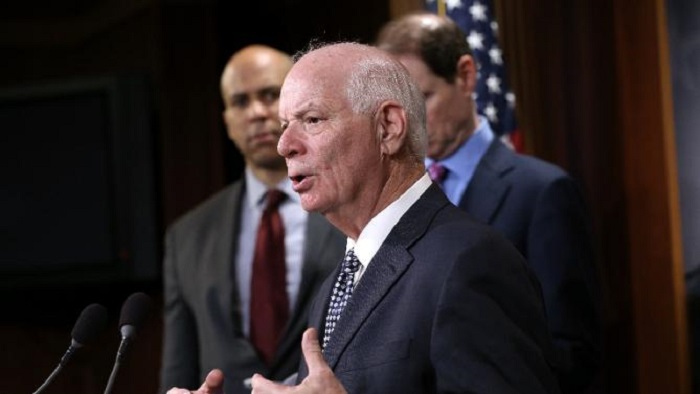
Sen Ben Cardin

Passage of the nuclear agreement between the Iran regime and the P5+1 group of nations was aided by a coalition of liberal Zionist groups, progressive organizations and the regime lobbying network, but in the aftermath the fault lines have cracked that coalition and broken it apart as the world struggles with the still unanswered fundamental problem with the Iran regime: How do you restrain its support for terror, proxy wars and sectarian conflict?

Philip Weiss, writing in Mondoweiss, takes note of efforts by Senate Democrats, most of whom supported the nuclear deal, to offer up legislation that the regime lobby has said contains potential “poison pills” liable to derail the agreement.

It’s understandable as many voters are appalled at the downward spiral of events in the Middle East, especially Iran’s newly formed alliance with Syria, Iraq and Russia.

Republicans have pounced on recently announced deals by the Iran regime to acquire $20 billion in new jet aircraft and satellite technology from the Russians as evidence the mullahs are more interested in upgrading their aerospace and defense capabilities than in jump starting a moribund economy driven to near bankruptcy by a corrupt government and siphoning of billions to fund three proxy wars.

This new “Axis of Terror” has greatly unsettled a world that naïvely thought the nuclear deal would usher in a period of greater stability and moderation. Instead, the world has seen Russia – almost overnight – launch an air campaign in Syria, coupled with a large build-up of Iranian and Hezbollah forces along the Syrian border, bolstered by a fresh influx of Afghan mercenaries paid for by the Iran regime’s Quds Force.

The list of acts by the Iran regime according to the Wall Street Journal since the nuclear deal was approved has forced the Iran lobby to work overtime to cover for it:

  • Despite a string of high-level talks with Western leaders, including two bilaterals between Iranian Foreign Minister Javad Zarif and U.S. Secretary of State John Kerry, Iran has displayed little interest in cooperation with the West;
  • Iranian officials publicly backed a Russian military campaign in Syria that is aimed at propping up President Bashar al-Assad, a leader Washington wants out;
  • Saudi Arabia said it seized a large shipment of Iranian arms headed toward Houthi rebels in Yemen who overthrew an allied government this year. Yemen President Abed Rabbo Mansour used his speech to the U.N.’s General Assembly last Tuesday to accuse Iran of seeking his country’s destruction;
  • Meanwhile, Iranian officials publicly demanded that the White House release Iranian prisoners held in U.S. jails in exchange for Americans detained by Tehran—a considerable hardening of the Iranian position; and
  • Western diplomats said regime officials consistently claim Tehran is open to ideas and discussion on Syria. But they add that Iran’s bottom line, like Russia’s, is that Assad is a guarantor of stability in Syria and they will accept no threats to his rule.

In a sign of how bad things have gotten for the region, “dozens of conservative Saudi Arabian clerics have called for Arab and Muslim countries to ‘give all moral, material, political and military’ support to what they term a jihad, or holy war, against Syria’s government and its Iranian and Russian backers,” according to Vice.com

But in spite of the sharp escalation in tensions with the Iran regime, the mullahs still seem intent on keeping their economy on a war footing. Agence France-Press disclosed warnings from Iran regime ministers overseeing the economy, industry, labor and defense who warned of an economic collapse.

Mohammad Gholi Yousefi, an economics professor at Allameh Tabatabai University in Tehran, said the letter had exposed tensions over the allocation of cash from Iran’s own banks.

“Almost half the banks’ resources is practically blocked by the government, special customers and banks themselves,” he told AFP, meaning it is not reaching businesses crucial to the economy and that much of the regime’s anticipated cash hoard is not accessible by middle class and poor Iranians who have seen their purchasing power plummet since 2012 and the local rial currency losing two-thirds of its value.

The recent aggressive moves by the Iran regime to acquire new military hardware and boost military forces involved in Syria has been fueled in part by the softening of sanctions even during nuclear talks as claimed by many critics of the nuclear deal.

According to  Reuters, “the U.S. government has pursued far fewer violations of a long-standing arms embargo against Iran in the past year compared to recent years, according to a review of court records and interviews with two senior officials involved in sanctions enforcement.”

“The sharp fall in new prosecutions did not reflect fewer attempts by Iran to break the embargo, the officials said. Rather, uncertainty among prosecutors and agents on how the terms of the deal would affect cases made them reluctant to commit already scarce resources with the same vigor as in previous years, the officials said.”

All of these accommodations and acts of appeasing the mullahs in Tehran in the hopes of creating a more moderate Iran regime have come home to roost and borne no fruit other than more war and chaos.
Filed Under: News Tagged With: #NuclearDeal, Appeasement policy, Congress bill on Iran, Iran, Iran deal, Iran Economy, Iran Lobby, Iran sanctions, NIAC, NIAC Action

Iran Lobby Fends Off More Attacks on Regime

October 5, 2015 by admin

Iranian RocketsAs Congress moves ahead with a flurry of new bills to stymie the Iran regime and hold the conduct of the mullahs in Tehran to some level of accountability, the Iran lobby, most notably the National Iranian American Council (NIAC), went into overdrive spitting out policy positions against any encroachment on Iran’s advances.

Specifically, the NIAC and its lobbying arm, NIAC Action, issued nearly identical denunciations of two pieces of legislation introduced last week. In the House, a Republican proposal entitled the “Justice for Victims of Iranian Terrorism Act” was passed out on a floor vote by a bipartisan majority of 251-173 and seeks to block sanctions relief granted under the nuclear deal until the Iran regime pays all legal judgements and fines levied against it by U.S. courts which found the regime liable for acts of terror totaling $43.5 billion.

This move follows a decision by the U.S. Supreme Court to agree on hearing an appeal of a lower court decision awarding $1.7 billion in damages from Iran’s central state bank in a similar case involving reparation payments to the victims and families of Iranian regime terror incidents.

“The consideration of the bill undermines U.S. national security interests and the perception that the U.S. can abide by its international commitments. It also risks opening the door to reciprocal action in Iran, which could threaten to link its concessions to the U.S. to outstanding claims in Iranian courts,” said Jamal Abdi, executive director of NIAC Action in response.

But Abdi misses the essential point of the move and subsequent decision by the Supreme Court which is the nuclear deal never addressed the most pressing issues, which is the conduct of the regime, specifically its long history of support for acts of terror aimed directly at Americans.

The fact that the regime still holds U.S. citizens in its prisons despite a negotiation that yielded billions of dollars for the mullahs and not one U.S. hostage returned in exchange is more telling about the inadequacy of the nuclear deal and subsequent drive by Congress to act more forcefully than the Obama administration in addressing the rising dissatisfaction of American voters over the deal and perception the mullahs pulled a fast one on the U.S.; which is why the NIAC and other Iran lobbyist allies are left to sputtering short statements which condemn the bills, but spoke nary a word about the ongoing harm Iranian regime is visiting on Syria, Iraq, Yemen and by holding American citizens.

Nowhere was that misleading of the American public on better display than in an editorial by Bardia Rahmani in The Georgetown Voice, a student-run magazine, which makes the argument that the $100 billion in frozen assets to be released back to the regime under the nuclear deal is erroneous and that most of the funds would not be used in supporting terror groups or in proxy wars.

It is a remarkably naïve opinion if genuine and a blatant obfuscation if deliberate. First of all, the estimate of frozen assets to be released is closer to $150 billion if you count assets held by central banks around the world as part of sanctions levied under the United Nations and European Union and include assets held not only by the Iranian government, but private Iranian entities.

The mistake the editorial makes is drawing a distinction between private and public ownership of assets and industries in Iran. Virtually all the national economic infrastructure is owned in part or in whole by institutions controlled by Iran religious government. For example, its telecommunications industry is owned through holding companies controlled by the Revolutionary Guard Corps. The same goes for construction, banking, petroleum, agriculture, trade and even entertainment and media.

Returning these assets to these “private” entities is the same as returning them to the checking account for Ali Khamenei.

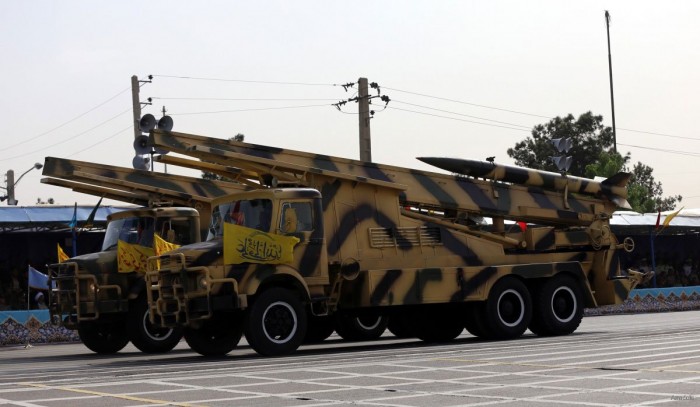
The editorial also makes no mention of the significant cash drain the regime has experienced in funding Hezbollah, the Syrian civil war to keep Assad afloat (that alone comes to the tune of $4 billion annually), Shiite militias in Iraq and Houthi rebel forces in Yemen as a shooting war with Saudi Arabia erupts. The threat of a wider conflict with Saudi Arabia was reinforced by remarks made by Iran regime brigadier general Morteza Qurbani who claimed over 2,000 rockets were awaiting orders from Khamenei to be fired at Saudi Arabia.

He explained that the lines of defense for the Iranian revolution are today in Yemen, Syria, Iraq and Lebanon. “We are ready to carry out the orders of Khamenei and move anywhere he wants,” Qurbani added.

The regime has diverted significant funds from its economy to fund these wars – an act Khamenei praises as a “war time economy” – and the regime shows no signs of slackening any of its funding priorities. This was evident in Hassan Rouhani’s decision to suspend social welfare payments to Iranian citizens, sparking large civil unrest as fiscal belt tightening took place throughout the regime.

All of which was supported by multiple news accounts of Iranian military forces being moved en masse to the Syrian border in preparation for large-scale direct military involvement coming on the heels of Russian air strikes against foes of the Assad regime.

Assad himself gave an interview to the regime’s Iran News Network in which he described a coalition between Syria, Russia, Iraq and Iran was the best hope for regional peace, which was an odd statement considering Assad’s brutal crackdown on democracy protestors originally started the civil war which led to his use of chemical weapons against his own people and caused a refugee crisis of four million Syrians fleeing the war zone and flooding into Europe.

All of this spin control was not just confined to Syria and Iran lobbyists, but reached all the way to Tehran as the regime’s parliament took up the issue of swift passage of the nuclear agreement, but the debate and parliamentary moves were revealing since the regime was already gaming the deal by making a distinction that the regime was only “suspending” its nuclear activities and not removing them, thereby allowing for the future swift restart of the program.

By Michael Tomlinson


Filed Under: Blog Tagged With: #NuclearDeal, Appeasement policy, Congress bill on Iran, Iran, Iran deal, Iran Lobby, Iran sanctions, Iran Talks, Irandeal

Iran Regime Actions Bolster Efforts to Halt Extremism

October 2, 2015 by admin

Iran Regime Actions Bolster Efforts to Halt Extremism

Iran Regime Actions Bolster Efforts to Halt Extremism

Reuters reported that hundreds of fresh Iran regime troops have flooded back into Syria over the past 10 days and will soon join their Hezbollah allies in a major ground offensive backed by Russian air strikes aimed at retaking territory lost by the Assad regime to rebels; contrary to Iranian and Russian claims they would be focusing their attacks against ISIS.

It seems clear the mullahs in Tehran are focused on securing the Assad regime by eliminating Western-backed moderate rebel units, rather than tackling their Islamic State rivals. The new offensive clearly points out the false propaganda the regime has been pumping out through its lobbyist allies such as the National Iranian American Council.

Peace is certainly the end goal for the Iran regime, but a peace that eradicates any opposition to Assad and leaves Iranian mullahs in control of a swath of territory stretching from the Mediterranean through Syria, Iraq, Iran, Yemen and the Indian Ocean. Their territorial ambitions have come fully to light and the bill for accommodating the regime with the nuclear deal is finally coming due.

“The vanguard of Iranian ground forces began arriving in Syria: soldiers and officers specifically to participate in this battle. They are not advisors … we mean hundreds with equipment and weapons. They will be followed by more,” said a Lebanese military source, adding that Iraqis would also take part in the operation.

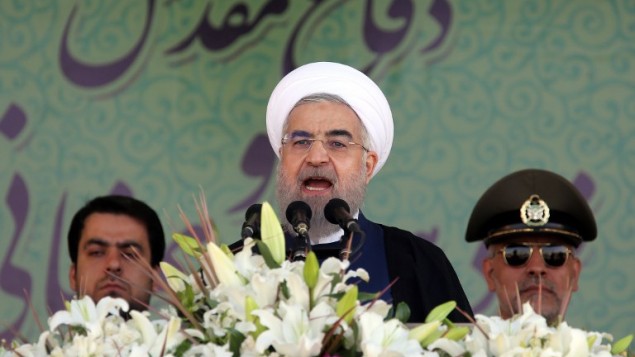
Interestingly, Hassan Rouhani, the handpicked puppet leader of the Iran regime, tipped the regime’s hand in his speech before the United Nations last week in which he firmly insisted that U.S. policy should be focused on common actions to defeat ISIS before any discussion takes place on the future of Assad. Rouhani laid out the narrative in which the regime justifies the placement of boots on the ground in Syria openly and blatantly instead of relying on proxies such as Hezbollah in what is sure to be a virtual takeover of Syria by the Iranian military.

As Gareth Porter, an appeaser of the mullahs points out in Middle East Eye, “Iran’s national security strategy has had two primary objectives ever since Khamenei became Iran’s leader: to integrate the Iranian economy into the global system of finance and technology and to deter the threats from the United States and Israel. And Rouhani had primary responsibility for achieving both tasks.”

We are now witnessing what the Iran regime’s future plans are now that they have secured these twin goals and it is causing renewed efforts in Congress to stymie the regime in spite of the nuclear deal.

The House voted Thursday by the hefty margin of 251 to 173 to stop the Obama administration from lifting sanctions against the Iran regime “until Tehran pays the $43.5 billion it still owes in damages to the families of terror victims in cases where responsibility can be linked back to Iran — such as the 1983 bombings of the U.S. Embassy and Marine barracks in Beirut and Hezbollah’s 1985 hijacking of TWA Flight 847,” said the Washington Post.

“Should Iran receive United States sanctions relief before it pays the victims of its terrorism all of what U.S. courts say those victims are owed?” said Rep. Patrick Meehan (R-Pa.), who introduced the measure. “I say no. Not one cent.”

If the survivors or victims’ relatives are not paid now, “it definitely won’t happen later,” House Foreign Affairs Committee Chairman Edward R. Royce (R-Calif.) said. He argued that Iran would spend the money freed up from sanctions relief on building up its military force and other nefarious activities, rather than paying the balance of restitution payments ordered by U.S. courts.

Those same voters may also be alarmed at news coming out of Tehran in which Saeed Abedini, the Iranian-American pastor serving an eight-year prison sentence on charges of undermining national security may face more trumped up charges by the regime, including links to antigovernment groups, said Naghbeh Abedini, his wife. Abedini is one of four Americans being held hostage in Iranian prisons including Washington Post reporter Jason Rezaian and former Marine Amir Hekmati.

The move by the regime to place new charges on Abedini flies in the face of the PR move made by Rouhani at the UN in which he floated the idea of a prisoner swap for 19 Iranian agents convicted on arms trading and smuggling of nuclear components.

All of which leads us full circle back to the question of how to check the ambitions of the mullahs in Iran and in what form? One answer was provided by Mrs. Maryam Rajavi, the president-elect of the National Council of Resistance of Iran, a coalition of Iranian opposition groups, who wrote an editorial in the New York Daily News.

“My message to the United States and the West is that the long-term solution to the Iranian threat lies neither in foreign military intervention nor in collaboration with a regime that is so oppressive at home and so destabilizing abroad,” she said.

“With the nuclear deal, however misguided it may be, in place, the right policy going forward is to encourage and support the Iranian people’s desire for democratic change and to speak out for human rights,” she added.

Sound advice the West would be wise to follow.

By Michael Tomlinson

Filed Under: News Tagged With: #NuclearDeal, Appeasement policy, hassan rouhani, Iran deal, Iran Lobby, Iran sanctions, NIAC, NIAC Action, Sanctions

As Syria Chaos Spreads, Iran Lobby Works Overtime

October 1, 2015 by admin

As Syria Chaos Spreads, Iran Lobby Works Overtime

As Syria Chaos Spreads, Iran Lobby Works Overtime

Events moved fast in Syria as Russian warplanes mounted air strikes at what they claimed were ISIS strongholds, but U.S. defense officials countered were instead Western-backed rebels opposed to the Assad regime. Coming on announcements by Russian officials of the creation of an intelligence-sharing unit with Iran regime and Iraq officials, the Russian action does not bode well for hopes to topple Assad.

The political calculation made by the Iran regime and its new Russian friends is that the U.S. lacks the political willpower and means to move forward on efforts to dislodge Assad, who has proven to be the mullahs in Tehran’s most stalwart ally and proxy.

Mohammed Alaa Ghanem of the Syrian American Council made the same analysis in Huffington Post as he looked at an editorial by Philip Gordon, the former Middle East chief in the Obama administration, in Politico.

Gordon argues that the goal of “displacing the Assad regime has proven unachievable,” and argues for a new U.S.-led contact group, different from the original one created in 2012, and instead include Russia and Iran in a new one.

Ghanem recites the failures in stemming Iranian backing of Assad at key points such as “when over 3,000 Iranian proxies first flooded into Syria, Secretary of State John Kerry provided no support to stop the assault and even strong-armed the Syrian rebels into attending peace talks. When Assad regime barrel bombs began raining down on Syrian cities, The U.S. again dragged the rebels into talks while blocking weapons transfers to stop the onslaught. U.N. Envoy Lakhdar Brahimi, who convened those later talks, has since blamed the regime for their failure.”

The Iran regime’s support of Assad and the unwillingness of the U.S. to halt that support – instead prioritizing approval of a nuclear agreement with Tehran – has led to an unimaginable refugees crisis of four million Syrians and civilian deaths numbering in the hundreds of thousands with another 600,000 Syrians opposed to Assad under virtual siege by Syria’s military and Iran regime mercenaries and Quds Forces.

But even with the rollout of the nuclear deal, there remain defiant voices in Congress still working to place restrictions on the Iran regime and connect the dots to the mullahs’ reign of human rights abuses. The fact that incidents of atrocities are sharply on the rise with increased news coverage, which has forced the Iran lobby to step up efforts to portray the regime as being a force for change.

Trita Parsi and Tyler Cullis of the National Iranian American Council, a leading Iran regime lobbying group, have been busy trying to convince news media that the rapid escalation in Syria is not the result of a new Russia-Iran-Iraq axis of terror, but rather the work of neocons bent on sending U.S. troops in.

Putting aside the fact that the only boots on the ground are now Russian and Iranian, the solution to Syria has always been centered in Tehran, not Washington. This point was driven home by protestors outside of the UN during Rouhani’s visit who represented a broad cross section of Iranian dissidents, Iranian-American community groups and Syrian activists opposed to the Assad regime.

Another advocate against the Iran regime is renowned author and Harvard Professor Emeritus Alan Dershowitz who published a new book, “The Case Against the Iran Deal: How Can We Stop Iran from Getting Nukes?.”

Dershowitz argues that policy makers have bit into a “bill of goods” which states that “any deal is better than no deal.” Historically, the objective of Iran to eliminate the barriers between it and a nuclear arsenal, and simple common sense proves that this deal makes the US and the rest of the world decidedly less safe.

The nuclear deal promises to release the Iran regime from the sanctions that have effectively isolated it for much of the past decade and held back the tidal wave of Islamic extremism that we are now seeing being unleashed.

More evidence of the spread of the Iran regime’s destabilizing influence came when Saudi-led coalition forces seized an Iranian fishing boat loaded with weapons on its way to deliver them to Iran regime-backed Houthi rebels in Yemen according to Reuters.

The announcement came a day after tribal fighters backed by the coalition won control of a strategic dam in central Yemen from Houthi forces following weeks of fighting east of the capital Sanaa.

The coalition, which also includes Bahrain, Qatar, Egypt and the United Arab Emirates, has been battling the Iranian-backed Houthis for more than six months.

A coalition statement said 14 Iranian sailors were detained on the boat, which was carrying 18 anti-armored Concourse shells, 54 anti-tank shells, shell-battery kits, firing guidance systems, launchers and batteries for binoculars.

I’m sure Parsi and Cullis would argue that the anti-tank shells and guidance systems were actually meant for an Iranian-sponsored fireworks display for children in Yemen.

By Michael Tomlinson

Filed Under: News Tagged With: #NuclearDeal, Appeasement policy, Iran deal, Iran Lobby, National Iranian American Council, NIAC, NIAC Action, Trita Parsi

Iran Regime Crafting New World Order

September 30, 2015 by admin

Iran Regime Crafting New World Order

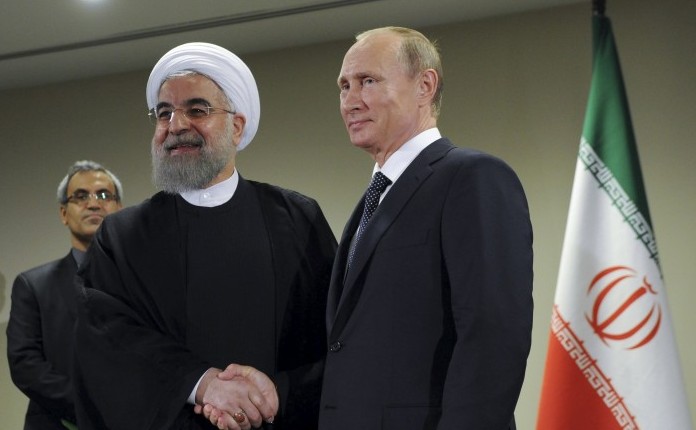
Russia’s President Vladimir Putin (R) meets with Iran’s President Hassan Rouhani on the sidelines of the United Nations General Assembly in New York, September 28, 2015. REUTERS/Mikhail Klimentyev/RIA Novosti/Kremlin ATTENTION EDITORS – THIS IMAGE HAS BEEN SUPPLIED BY A THIRD PARTY. IT IS DISTRIBUTED, EXACTLY AS RECEIVED BY REUTERS, AS A SERVICE TO CLIENTS. TPX IMAGES OF THE DAY

If Alice could fall through the Looking Glass and stumble into our world today, she would no doubt find it stranger than her own Wonderland. She could have watched Russian president Vladimir Putin’s address to the United Nations General Assembly where he proposed a new alignment of nations to fight terrorism which coincidentally includes state sponsors of terrorism such as Syria and the Iran regime.

Putin’s address, along with the speech given by Hassan Rouhani, Iran’s handpicked façade of moderation, reinforces the efforts to craft a new world order built on the foundations of regimes intent on using proxies, military force, kidnappings, executions and mass arrests to achieve its geopolitical gains.

The fact that Russia has openly and rapidly built up a military presence in Syria, has begun shipping advanced weaponry to Iran and agreed to share intelligence amongst Syria and the Iran regime should send shockwaves through the rest of the world at how rapidly we are witnessing the aftermaths of a bad nuclear deal.

According to the Daily Beast, Putin even hinted darkly that ISIS was a Western invention designed to weaken or overthrow “secular” autocratic regimes. In reality, his client Bashar al-Assad spent a decade underwriting al-Qaeda in Iraq, the predecessor of ISIS, including by dispatching into Iraq foreign jihadists freshly arrived in Damascus for the purpose of blowing up U.S. coalition and Iraqi forces.

Now add to this Putin’s fondness for Iran, the Iranian-controlled paramilitary Hezbollah, and the Iranian-influenced government of Iraq, all of which Russia is now sharing intelligence with and, in the case of the first two, coordinating joint military operations with in northern Syria, according to recent press reports. In other words, two of the world’s leading state sponsors of terrorism, and an actual terrorist organization, are what Putin is presenting to the West as its single best and last hope for combating terrorism, said James Miller in his Daily Beast piece.

This new “Axis of Terror” is going to be flush with $150 billion in cash as a result of the nuclear deal, while at the same time U.S. military power is undergoing a historic reduction and retrenchment; withdrawing from vast parts of the Middle East and Africa and leaving a power vacuum that extremist states such as Iran are rushing to fill.

Part of that expansion came in Rouhani’s media appearances and speech in which he stated that Assad’s removal was a virtual red line and he met with Afghanistan’s chief executive officer, Abdullah Abdullah, in which Rouhani emphasized the regime’s interest in Afghanistan and the need to consolidate security in Afghanistan; using language strikingly similar to that used before Iran flooded Iraq with Shiite militias.

That perception of returning to the international stage for Iran wasn’t limited to just military matters as European nations such as Italy began the dance of gearing up to take advantage of the opening of Iranian markets and oil industry as Rouhani met with Italian Prime Minister Matteo Renzi to discuss potential contracts for Italian firms.

But the plight of the oppressed in Iran continues to stand out in stark relief to the smiling image Rouhani and his lobbying allies such as Trita Parsi of the National Iranian American Council have sought to portray.

Ramin Ahmadi, writing in Quartz, detailed the descent human rights have made under Rouhani’s tenure as the regime has cracked down and becoming even more brutal than under the regime of Ahmadinejad which defies logic.

“Even a cursory look at the facts on the ground demonstrates that fundamental rights in Iran have deteriorated on his watch. Executions have jumped dramatically, including for juveniles and those convicted of less serious crimes, such as drug possession. Women have been the victims of a wave of acid attacks, to which lawmakers responded with a bill that would further empower officials to police Islamic dress,” Ahmadi said.

“The government continues to jail journalists, among them Washington Post reporter Jason Rezaian. And ethnic and religious minorities have faced increased persecution. In March of this year, Iran again went before the UN Human Rights Council, where Ahmed Shaheed, the Special Rapporteur on Iran, noted that conditions in Iran are deteriorating, despite Rouhani’s pledges to make improvements,” he added.

The ongoing brutality in Iran should come as no surprise as the regime’s mullahs and leadership are lock-step in sync in supporting an agenda of extremist Islam married to harsh defiance to the rest of the world. Even a handshake between President Obama and regime foreign minister Javad Zarif has become fodder for regime leaders who oppose any appearance of accommodating the West as decreed by top mullah Ali Khamenei.

But even as Alice might shake her head at the unfolding events happening now, she would have found the most recent media reports that the Iran regime’s women’s soccer team is not really made up of females, the absurdity of the regime putting men forward as women demonstrates how the Iran regime lives in its own fantasy land that even Alice would not believe.

By Michael Tomlinson


Filed Under: Blog

What is a Washington Post Hostage Worth to Iran Regime?

September 29, 2015 by admin

What is a Washington Post Hostage Worth to Iran Regime?

What is a Washington Post Hostage Worth to Iran Regime?

The world was treated to a third straight year of verbal nonsense from Hassan Rouhani, the handpicked leader of the Iran regime, who delivered his third speech to the United Nations General Assembly in what is fast becoming an exercise in linguistic firebombing as he lambasted the U.S., the West in general, Saudi Arabia and just about everyone else on the regime’s “Death to…” chant playlist.

Rouhani in his speech that managed to give implicit approval of the 9/11 attacks, called for the destruction of Israel, regime change in Saudi Arabia and permanent elevation of Iran as a global superpower all in one fell swoop.

It was noteworthy that Rouhani did not acknowledge Iran’s role in the spread of terrorism throughout the region through its support of Hezbollah in Lebanon and Syria, or its role in the death and maiming of thousands of Americans by training and equipping Shiite militias in Iraq and he failed to confront the truth of Iran’s facilitation of a global refugee crisis with over four million Syrians displaced because of the Syrian civil war.

Rouhani did spend much of his speech denouncing Saudi Arabia for the tragedy during the hajj stampede that killed a reported 167 Iranian pilgrims and calling for an international investigation. He neglected to mention Iran’s support of Houthi rebels who overthrew the Yemen government and sparked a shooting war with Saudi Arabia and other Gulf States that led to high seas showdowns in the Straits of Hormuz as Iran threatened international shipping lanes.

The Iran regime’s role in supporting the Syrian civil war and keeping Bashar al-Assad in office was of paramount importance to Rouhani as he went on CNN to make the blanket assertion that any hope for defeating ISIS and terrorism in general rested in keeping Assad in office.

“In Syria, when our first objective is to drive out terrorists and combatting terrorists to defeat them, we have no solution other than to strengthen the central authority and the central government of that country as a central seat of power,” Rouhani said.

It is a remarkable assertion since Assad has been found guilty of wantonly killing his own people with chemical weapons and using barrel bombs to wipe out entire civilian neighborhoods. At Iranian regime’s urging and through its military, Assad has specifically targeted moderate and Western-backed rebel forces, leaving ISIS and other extremist Islamic groups largely untouched in an effort to split the opposition.

Rouhani boosting Assad as a counter-weight to terrorism is like asking a candy manufacturer to promote weight loss programs.

Rouhani went a step further in his CNN interview where he compared opponents of the nuclear deal – specifically Republican presidential candidates who have vowed to tear it up if elected – to Saddam Hussein who launched the Iran-Iraq War.

Far from being the reform-minded advocate the Iran lobby has sought to portray, Rouhani has instead brought a vitriol, while subtle, every bit as incendiary as the much reviled Mahmoud Ahmadinejad.

The height of absurdity by Rouhani was reached when he again proposed the idea of a prisoner swap between the U.S. and regime; trading Iranian-American hostages such as Washington Post reporter Jason Rezaian, Christian pastor Saeed Abedini and former Marine Amir Hekmati for several Iranians convicted of arms trading and smuggling in nuclear components for Iran’s nuclear program – which Rouhani coincidentally denied ever existed.

“There are a number of Iranians in the United States who are imprisoned, who went to prison as a result of activities related to the nuclear industry in Iran,” Rouhani said. “Once these sanctions have been lifted, why keep those folks in American prisons? So they must be freed.”

So what are Jason Rezaian and other hostages worth to the Iran regime? Apparently at least 19 Iranian agents convicted of nuclear and weapons smuggling.

The proposed swap linked to convicted arms smugglers was condemned by the Washington Post and family members of the American hostages.

“Not until they’re on American soil can I trust what they say,” said Naghmeh Abedini, wife to Saeed Abedini. “My husband is not collateral. He’s a husband, a father, and he’s broken no law. They’re trying to barter his exchange for 19 criminals. It’s unbelievable. The Iranian government is no different than the government that held Americans hostage in the 1970s.”

Not surprisingly, Trita Parsi, head of the Iran lobby’s National Iranian American Council, tried to make the comparison U.S. airstrikes against ISIS in Syria were akin to bombing Oklahoma without approval of the U.S. government. He neglected to note that in Syria’s case, the government has been condemned as illegitimate and a mass killer by the world and embroiled in a civil war where Syria has invited in foreign governments such as Iran and Russia to kill its own people who are revolting.

Then again, lack of logic has never stopped Parsi from making ridiculous claims. He made the ultimate leap of fantasy when he authored an editorial claiming that the recent visit by Pope Francis to the U.S. could help defeat terror by persuading the U.S. to adopt a more accommodating tenor towards radicalized states such as Iran.

“What has fueled the Syrian crises more than anything else is the false illusion on all sides that a decisive military victory is around the corner,” Parsi said.

An appropriate sentiment if it was only applied to Iran’s military support of Assad, but in this case, Parsi only meant the rebel forces fighting to topple Assad and the rest of the world trying to get the tyrant out.

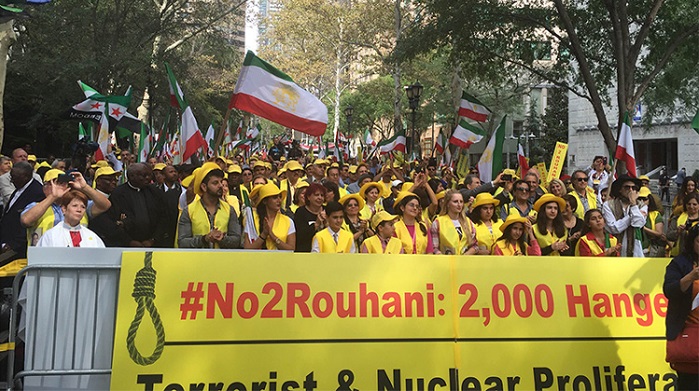
It was noteworthy that Rouhani’s appearance wasn’t all flowers and songbirds as thousands rallied outside of the UN to protest Rouhani’s speech; with delegations from Syria, Yemen, and Iranian dissidents talked about the abuses and injustices meted out since Rouhani took power.

By Michael Tomlinson


Filed Under: Blog Tagged With: Featured, hassan rouhani, NIAC, Rouhani CNN, Rouhani visit to New York, Trita Parsi

Iran Regime Struggles Against Youth Seeking Better Life

September 26, 2015 by admin

Iran Regime Struggles Against Youth Seeking Better Life

Iran Regime Struggles Against Youth Seeking Better Life

In a story in TIME magazine, the Iran regime ruled with an iron fist by the orthodox and radicalized mullahs since the Islamic revolution in 1979 is running head-on into the most stubborn of obstacles to their rule: the young people of Iran.

Just as the passing of the Baby Boom generation into senior citizen status in the U.S. has wrought significant and deep policy debates and demographic changes affecting the economy, culture and even technology, the Iran regime is now struggling with a population in which a whopping 60 percent of Iranians are under the age of 35 with no real tangible connection to the religious revolution that took over the country.

For this new generation of Iranians, their interests lie not in rigid religious ideology or foreign intervention in proxy wars, but rather in the more mundane goals of finding a meaningful career, saving up for a car or new washer and dryer made by Samsung or buying a iPhone 6 from Apple.

For Iran’s young people, the pathway to a better life is increasingly not going through the hands of their mullah masters, but rather through their own desires, hopes, dreams and aspirations.

It is a remarkable time for the Islamic state as it gains newfound economic windfalls resulting from the recently completed nuclear deal and these same, restless young Iranians eagerly look forward to the distribution of this new wealth to improve their lot in life which has grown stunted, moribund and depressing under the harsh rule of the mullahs.

Even though Iran’s population, high degree of education among its people and skilled labor force makes it an ideal economic engine for growth, the mullahs have wasted this prize in favor of cronyism, corruption and gross nepotism that has cut a deep schism through Iranian society between haves and have-nots with families and relatives of the mullahs and their Revolutionary Guards being the recipients of the nation’s wealth.

Iranian dissident groups and leaders such as Mrs. Maryam Rajavi of the National Council of Resistance of Iran have long pointed out that the economic and social disparities fostered by the mullahs are laying the seeds for their eventual ouster since Iran’s own history shows that the start of the 1979 revolution came not from religious fervor, but deep-seated resentment over the state of the economy under the Shah.

The corruption of the current regime runs deep within Iranian society and has caused significant unrest in the form of demonstrations and protests from young people, teachers and small business owners, which are often brutally put down by the regime’s paramilitary Basij militias who often inflict beatings on the street.

In another sign of the oppression from the mullahs, Al-Monitor reported on a move by the regime’s Ministry of Education to set a strict quota in the number of new jobs made available to Iranian women.

“The Ministry of Education held its nationwide exam for new job applicants on Sept. 18, with 178,000 people participating. The exact date for the announcement of the results is unclear. But what is clear is that no matter what score female applicants may obtain, they will make up only 10% of those who will be employed,” Al-Monitor reported.

“This disappointing development came to light in the registration guidelines for this year’s exam. Of the 3,703 educational posts up for grabs, it is stated that only 630 will go to women while the other 3,073 posts will go to men. Female applicants in the Iranian capital are perhaps the most exposed to this policy; of the 190 new employees that are to join the Ministry of Education in Tehran, only six are set to be women,” the story added.

The elevation of Hassan Rouhani as the handpicked president for the regime came with much fanfare over new regime policies towards gender equality and the vast gulf in educational and professional opportunities for Iran’s women. The evidence over the past two years that while Rouhani tries to project a more friendly and moderate image to the rest of the world, at home, the plight of Iran’s women has only gotten worse.

Against this backdrop, Rouhani prepares to come to New York to address the United Nations General Assembly as part of his annual PR push and with it comes a rising chorus of protest over the policies he and his master, Ali Khamenei, have pushed over the past two years.

Ken Blackwell, a contributing editor to Townhall.com and a senior fellow at the Family Research Council and the American Civil Rights Union and a board member of the Becket Fund for Religious Liberty, wrote an editorial urging that the UN welcome mat be pulled out from under Rouhani because of the regime’s horrendous human rights record.

“According to Amnesty International and other respected human rights organizations, the human rights situation in Iran is fast deteriorating under Rouhani. There have been some 2,000 executions in Iran in the two years that Rouhani has been in office, more than in any similar period in the past 25 years. Iran holds the record of having the most executions per capita in the world, and is the biggest executioner of juvenile offenders,” Blackwell said.

“So do not throw down the welcome mat for Hassan Rouhani in New York when he still represents a regime that sponsors terrorism and ruthlessly suppresses its population. Ignoring ongoing human rights violations in Iran as well as the growth of terrorism and meddling in the region will only embolden the regime and allow it to continue brutal crackdowns and escalating violence,” Blackwell added.

To that end, a broad coalition of Iranian-American groups will hold a “Voices of Iran” rally in front of the UN on September 28th to protest Rouhani’s appearance and denounce the deteriorating state of human rights in Iran.

Speakers at the rally are to include Bill Richardson, former U.S. ambassador to the UN and U.S. Energy Secretary; Tom Ridge, former U.S. Homeland Security Secretary and Governor of Pennsylvania; and Alan Dershowitz, former Harvard Law School professor.

We can only hope that the world will give these Iranian-Americans the benefit of the coverage they deserve.

BY Laura Carnahan


Filed Under: Blog, News Tagged With: Iranian Rally New York, Rouhani, Rouhani visit New York

Iran Regime Begins Spinning in Advance of UN Speech

September 24, 2015 by admin

Iran Regime Begins Spinning in Advance of UN Speech

Iran Regime Begins Spinning in Advance of UN Speech

In advance of Hassan Rouhani’s scheduled address to the United Nations General Assembly next week, the regime leader has been on a mission to push out as many absurd lines of logic as we have ever seen since his handpicked ascension by his mullah colleagues.

This past weekend saw him make his debut on the news program “60 Minutes” in which he tried to explain the weekly “Death to America” chants led by the regime’s top mullah Ali Khamenei.

Now according to the official state news agency, Rouhani spoke at a rally in Tehran to commemorate the anniversary of the start of the Iran-Iraq War in 1980, in which he claimed the regime’s military forces were the best defense against the spread of terrorist groups including ISIS.

“Today we tell the world that the biggest antiterrorism force is the armed forces of the Islamic Republic,” Rouhani said in what may be the biggest bald-faced lie uttered since British Prime Minister Neville Chamberlain claimed “peace in our time” after meeting with Adolf Hitler.

It is a well-documented fact that the Iran regime has been the largest state sponsor of terrorism on the planet with decades-long support given to Hezbollah in Lebanon and Syria that targeted American military personnel, Shiite militias that used IEDs to attack coalition forces in Iraq and Houthi rebels that overthrew the government in Yemen and took foreign hostages including Americans.

Rouhani’s statements would be laughable if they weren’t so dangerous as part of a broader PR narrative being pushed by the regime and its lobbyist allies such as the National Iranian American Council to perpetuate the myth that Iran is a moderating force for good in the world.

But the regime is not a force for good. It is a nation ruled with an iron fist by a cadre of mullahs practicing a perverted extremist version of Islam that it intends to export as aggressively as possible. The comparison and contrast to another leader of a world religion is stark and unmistakable as Pope Francis begins his tour of the U.S.

While Pope Francis leads over 1 billion Catholics worldwide and maintains no army, no air force, no industrial facilities, and no nuclear program, the Iran regime is a state run by religious radicals intent on using the full facilities of a nation state to advance their aims. The comparisons could not be more striking.

Nor could the heartfelt pleas made by Naghmeh Abedini to Pope Francis on behalf of her husband, imprisoned pastor Saeed Abedini, who languishes in an Iranian prison along with three other Americans be mistaken for anything other than pleas for compassion and leniency aimed at a regime that knows neither.

Scores of Iranian political activists and intellectuals have also launched an online campaign calling on the regime to end its support for Syrian President Bashar al-Assad and take in Syrian refugees fleeing violence there.

The more than 70 activists, who include several former political prisoners, blame Assad and his foreign supporters, including Tehran, for the exodus of tens of thousands of Syrian refugees to Europe.

They have launched a Facebook page called Sorry, Syria, where so far about two dozen users have expressed “shame” over Iran’s assistance for Assad’s “crimes” and warned that silence could be interpreted as consent.

The regime’s deep involvement in Syria has not only sparked the mass exodus of refugees, but laid deeper rifts in the region with consequences that will likely take decades to fully play out. The Guardian newspaper took an extensive look at the Iran regime’s growing role in Syria’s military command and control efforts.

“Iran has certainly provided a financial lifeline to Assad since the 2011 uprising, releasing billions of dollars of loans and credit for imports of oil and other commodities. Another important contribution was setting up the national defence forces (NDF), locally-based militia units outside the regular army, which have acquired a reputation for profiteering and brutality,” according to the Guardian.

So as Rouhani trolls news media pushing his messages of moderation and his PR allies tow the party line, the situation throughout the Middle East and now Europe grows more dire with escalating conflicts, mass refugee movements and now the involvement of Russia’s military to a significant degree.

As the International Atomic Energy Agency takes nuclear selfies of regime officials taking their own soil samples from the Parchin military site without international supervision as part of its secret side deal, it’s worth noting that not only is Rouhani towing the mullahs’ line, but IAEA chief Yukiya Amano is doing the same song and dance.

By Michael Tomlinson

Filed Under: Blog Tagged With: Iran deal

Iran Regime Begins Self Inspection Charade of Nuclear Sites

September 22, 2015 by admin


Iran Regime Begins Self Inspection Charade of Nuclear Sites

Iran Regime Begins Self Inspection Charade of Nuclear Sites

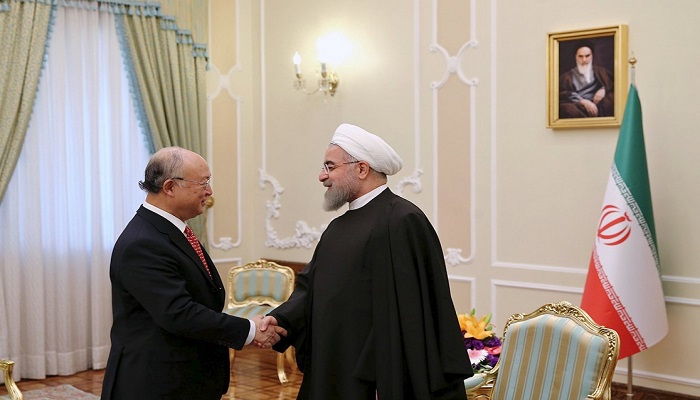
The Iran regime revealed it took its own samples at the Parchin military site as part of the secret side deal it made with the International Atomic Energy Agency as the head of that agency, Yukiya Amano, was in Iran to visit the site and give what appears to be his support of the regime’s handling of the self-inspection protocol.

The regime’s state-run IRNA news agency quoted a spokesman for the Iranian atomic energy agency, Behrouz Kamalvandi, as saying samples were taken at Parchin “only by the Iranian experts and without the presence of the agency’s inspectors.”

The fact that regime state media described Amano’s visit as “ceremonial” rather than an inspection tells you all you need to know of how the regime viewed the self-inspection process.

Sen. Tom Cotton (R-AK), a chief critic of the Iran nuclear deal, pointed to the regime’s latest disclosures as more evidence of the flaws in the nuclear agreement.

“The fact that Iran is taking its own soil samples shows that the verification scheme is an embarrassing charade, and yet another concession we can add to the pile of concessions that make up the dangerous Iran deal,” he said.

Even though the IAEA has had a long history of complaints lodged against the regime over the last decade for non-compliance, including not answering basic questions about the history of its nuclear program and its military dimensions, as well as the failure of the regime to make nuclear scientists and technical personnel available for interviews, the IAEA has seen fit to enter into a secret deal with the mullahs and not make it available to the rest of the world.

The fact that we even know about the self-inspection protocol and lack of international oversight of sampling from the Parchin site is due more to the intrepid reporting of journalists at the Associated Press than to any government disclosures from the United Nations or P5+1 group of nations that negotiated the deal.

The Obama administration, already duped into believing the regime will not cheat on an already badly flawed agreement, claimed that the self-inspections are a step in the right direction.

Breitbart.com reinforced the absurdity of self-inspection by reminding us the Congress was never shown the IAEA side deal, the regime was allowed to “sanitize” the Parchin site and hand-picked the areas to be sampled and handled the cameras taping the sampling that IAEA officials were watching.

You could not have asked for a more orchestrated act than if you paid a Hollywood studio to stage it.

The regime is certainly not wasting time flexing its new-found freedoms, not only by manipulating what will assuredly be a clean bill of health of Parchin, but also in busily acquiring new, advanced weapons and military hardware and arming its terrorist allies such as Hezbollah.

Al-Rai, a Kuwaiti newspaper, reported this weekend that Hezbollah received all of the advanced weaponry that the Syrian regime has obtained from Russia as the Russians have dramatically boosted their military operations with boots on the ground, tactical fighters flown to Syrian bases and new tanks being off-loaded.

The fact that all these military developments occurred since the nuclear deal was signed, demonstrates clearly the mullahs in Tehran feel extremely confident about their new-found status as international players and intend to flex their muscle visibly and without deception.

But the sales job for the Iran lobby never ends as Trita Parsi, the head of the National Iranian American Council, went on World Finance to laud the financial windfall the regime is due to receive because of the imminent lifting of sanctions. He continues to advance the absurd proposition that the regime’s newly emerging economic muscle could be used as a moderating influence in the region.

What he fails to discuss is the intent of the ruling mullahs. No one doubts that Iran can be a major economic player in the region; the only question was whether or not the mullahs primary mission was to improve the economic status of their people or push further their brand of fundamentalist Islamic faith? History demonstrates ably that the mullahs have no other concern than preserving and expanding their extremist views throughout the Muslim world.

Parsi’s statements about Iran’s economic potential are only one half of a joke, the real punchline comes with what the mullahs decide to do with all that newfound economic muscle. The unfortunate part is that the joke will be on those who supported and approved this deal based solely on the “hope” that Iran’s mullahs could be worthy of trust.

Nothing could be further from the truth.

By Michael Tomlinson

Filed Under: Blog Tagged With: Featured, Iran deal, NIAC, Nuclear Deal, Parchin, Trita Parsi

Iran Regime Continues “Moderate” Push

September 21, 2015 by admin

Iran Regime Continues “Moderate” Push

Iran Regime Continues “Moderate” Push

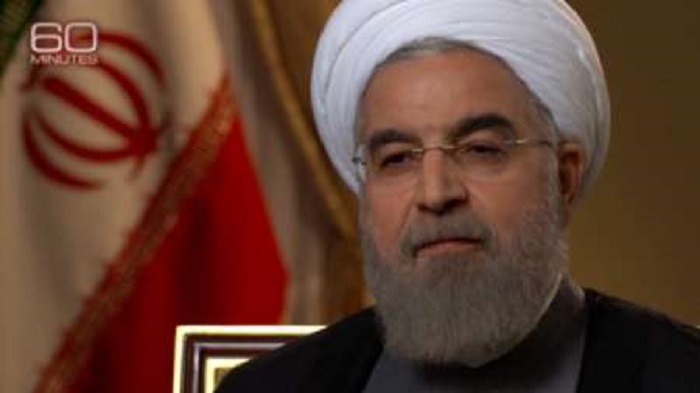
The Iran regime continues its campaign to push a moderate face for itself to news media and government officials through its lobbyists such as the National Iranian American Council and through its own media PR push as evidenced by Hassan Rouhani’s appearance on the venerable news show “60 Minutes;” his first interview with a Western news organization in over a year.

The interview of the regime’s handpicked “face of the regime” took place in Tehran and comes shortly before Rouhani’s scheduled appearance before the annual general assembly session of the United Nations in New York.

The interview was revealing because Rouhani continues to foist the misconception that there are factions within Iran between “moderate” and “hardline” groups and that the nuclear deal will empower these more “moderate” elements leading the heroic fight for Iran’s future. The fact that “60 Minutes” correspondent Steve Kroft falls for this deception is not entirely surprising given the ferocity of the Iran lobby’s efforts to push this fairy tale.

The reality is that within the Mullah’s regime, all power vests entirely within the ruling mullahs and their top leader Ali Khamenei who is empowered by the constitution with sole authority over the judiciary, foreign policy, religion and most military and economic decision making.

Kroft exposes his lack of understanding of how the regime operates when he asks Rouhani: “Some of the opponents are very powerful. The commander of the Revolutionary Guards, for example, has condemned the deal. How do you deal with that? That’s an important political force in this country.”

He assumes the Revolutionary Guard is similar to some U.S. federal agency that acts independently with its own politics when in fact the Guard serves solely to safeguard the mullah’s rule and does so not only through military muscle, but also through ownership of vast swatches of the Iranian economy, including the telecommunications industry and most heavy manufacturing.

But Rohani reveals the true nature of the regime when Kroft questions him about the use of “Death to America” chants and the labeling of the U.S. as the “Great Satan” in virtually every speech made by his boss Khamenei.

Rouhani claims the chant is not against the American people, but rather against the policies of the government; a subtlety that glosses over the fact that even after securing the nuclear deal, the regime still continues its traditions of death chants.

Most notably when the questioning turns to human rights abuses and Kroft raises the possibility of a prisoner exchange for the Iranian-Americans being held hostage, Rouhani is quick to point out the need for the U.S. to make the first move in a reference to Iranians being held for violations of economic sanctions in supplying nuclear components to the regime. The fact that Rouhani is suggesting a swap of nuclear arms merchants for a journalist, pastor and former Marine tells us much about the priorities of the regime.

Inside of the almost fawning “60 Minutes” interview, the Washington Beacon took note of a hilarious parody ad created by director David Zucker, the man behind the films Airplane! and the Naked Gun series, in which he characterized as efforts to sell the nuclear deal as an advertisement for an erectile dysfunction medication.

Zucker came up with the idea after watching the PR effort being waged by the Iran lobby’s presentation of the deal.

“Every prescription drug ad follows the same basic pattern—5 seconds of how amazing and wonderful the drug would be, and then 25 seconds of all the miserable side effects,” Zucker said.

But the Iran lobby continues its marketing efforts to rebrand the Iran regime as cute and cuddly with the disclosure coming out that The New York Times has opted to cohost an October 6-7 “Oil and Money” conference in London where attendees can have the opportunity to engage with “H.E. Seyed Mehdi Hosseini, chairman of the Oil Contract Restructuring Committee at the Iranian Ministry of Petroleum.”

The fact that the Times is offering up access to regime officials after championing passage of the nuclear agreement seems at best unsightly and at worst filled with appalling bad judgement.  This comes after an incident last year in which the Times offered 13-day tours of Iran guided by Times journalist Elaine Sciolino” at the bargain rate of $6,995 per person.

Among other things, it promised “excellent insights into … (the) life and accomplishments” of Ayatollah Khomeini, the ruthless extremist leader who posed as a liberator, but then imposed a fundamentalist Islamic state after taking control of that country in the late 1970s. Those tours are still active, and popular, according to Newsbusters.org.

All of which demonstrates the effort to cash in on the windfall associated with passage of the nuclear deal and the enormous profits many are anticipating in doing business with the regime regardless of the consequences in supporting a blood thirsty regime fueling virtually all of the turmoil in the Middle East right now.

By Michael Tomlinson

Filed Under: Blog, The Appeasers Tagged With: Featured, Iran deal, Iran Lobby, Moderate Mullahs, Moderate Rouhani

  • « Previous Page
  • 1
  • …
  • 50
  • 51
  • 52
  • 53
  • 54
  • …
  • 72
  • Next Page »

National Iranian-American Council (NIAC)

  • Bogus Memberships
  • Survey
  • Lobbying
  • Iranians for International Cooperation
  • Defamation Lawsuit
  • People’s Mojahedin
  • Trita Parsi Biography
  • Parsi/Namazi Lobbying Plan
  • Parsi Links to Namazi & Iranian Regime
  • Namazi, NIAC Ringleader
  • Collaborating with Iran’s Ambassador

Recent Posts

  • NIAC Trying to Gain Influence On U.S. Congress
  • While Iran Lobby Plays Blame Game Iran Goes Nuclear
  • Iran Lobby Jumps on Detention of Iranian Newscaster
  • Bad News for Iran Swamps Iran Lobby
  • Iran Starts Off Year by Banning Instagram

© Copyright 2026 IranLobby.net · All Rights Reserved.