Iran Lobby

Exposing the Activities of the lobbies and appeasers of the Mullah's Dictatorship ruling Iran

  • Home
  • About
  • Current Trend
  • National Iranian-American Council(NIAC)
    • Bogus Memberships
    • Survey
    • Lobbying
    • Iranians for International Cooperation
    • Defamation Lawsuit
    • People’s Mojahedin
    • Trita Parsi Biography
    • Parsi/Namazi Lobbying Plan
    • Parsi Links to Namazi& Iranian Regime
    • Namazi, NIAC Ringleader
    • Collaborating with Iran’s Ambassador
  • The Appeasers
    • Gary Sick
    • Flynt Leverett & Hillary Mann Leverett
    • Baroness Nicholson
  • Blog
  • Links
  • Media Reports

Iran Lobby Reduced to Picking at Crumbs with Trump Inauguration

January 21, 2017 by admin

Iran Lobby Reduced to Picking at Crumbs with Trump Inauguration

Iran Lobby Reduced to Picking at Crumbs with Trump Inauguration

Isaac Newton’s Third Law of Physics is that “for every action, there is an equal and opposite reaction.” For the Iran lobby, after enjoying rare support for a policy of appeasing the Iranian regime under the Obama administration culminating in the nuclear deal reached last year, the pendulum has swung full circle with the swearing in of Donald Trump as the president of the United States.

Just as the Iran lobby worked to support the “echo chamber” of fabrications, fake news and misleading analysis used to help push the nuclear agreement, it now is left picking up the few crumbs thrown about in the hopes of salvaging anything it had gained.

A perusal of the website for the National Iranian American Council, one of the mainstays of the Iran lobby, revealed just how feeble life has become in the wake of Trump’s ascension with the posting of news articles designed to give to the impression that the Trump administration was backing away from tearing up the nuclear deal or confronting the Iranian regime:

  • CIA Pick Pompeo Backtracks on Politicized Opposition to Iran Deal
  • Trump Pivots From Muslim Registry but Targeting of All Iranian Visitors Remains on the Table
  • Trump Nominees Oppose Tearing Up Iran Deal But Signal Harder Line

The headlines are a far cry from last year in which the NIAC was busy trumpeting the good news of the mullahs set to receive billions of dollars as economic sanctions were being lifted.

Now Trita Parsi and his colleagues are left hoping for the best and trying to read the tea leaves of confirmation hearings knowing that Trump and his cabinet have already established the biggest single departure from the Obama administration which is Iran must be held accountable for its behavior and no longer given a free hall pass for its many abuses.

This is the essential difference between Trump and Obama in that Trump sees everything through the lens of a business deal and negotiation, whereas Obama saw it through the political lens of historical achievement and publicity.

For Trump, the Iran nuclear deal is not really a question of tearing it up or not, but rather asking the most basic question that Obama did not ask which is “what do we want Iran to do or not do in exchange for this agreement?”

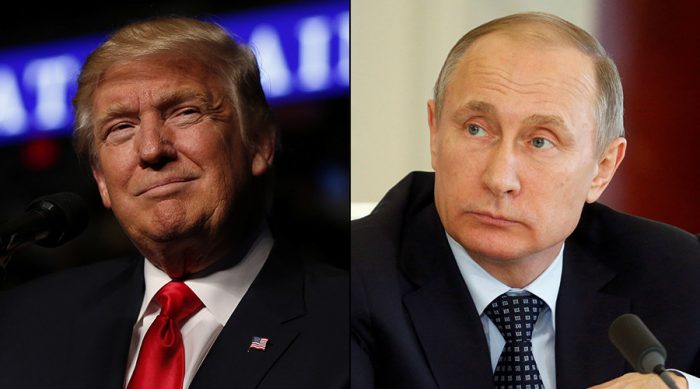
Obama too easily caved in to Iranian demands to separate key issues such as human rights and support for terrorism and the mullahs knew the pressure of time and politics were pushing Obama. Trump does not seem to have any of those concerns as he starts his presidency. Therefore one possible scenario is that if Trump and Putin can agree on settling Syria by pushing Iran out of the equation, overnight the prospects for the mullahs’ political future becomes as dim as a burned out light bulb.

This realignment in the Middle East would eliminate the Iranian regime’s leverage of playing one superpower off against the other and leave it increasingly isolated.

Sir David Amess, a member of the British House of Commons, wrote in Forbes that to resolve the situation in Syria, Iranian influence has to be removed.

“The siege of Aleppo should prove to the international community how destructive the role of Assad’s Tehran backers are. For all the crimes of the Syrian army, it seemed poised to let rebels and civilians evacuate the city in the immediate aftermath of the conquest. The Russian defense ministry offered guarantees that a humanitarian pathway would remain open, and hundreds of evacuees went on to pass through a Russian checkpoint on their way out,” Amess said.

“However on a Wednesday in mid-December, at least 1,000 of those same people were stopped along the evacuation route, at a checkpoint controlled by Iranian Revolutionary Guards (IRGC) and their militant proxies. This move came after the Iranians single-handedly altered the ceasefire that had been agreed upon the day before. Within a day of that move, the ceasefire appeared to have been violated, with ambulance drivers and rescue workers coming under sniper fire. The Iranian opposition, the People’s Mojahedin Organization of Iran (PMOI/MEK) even identified the command base of the IRGC for Aleppo operations,” he added.

Amess is correct when he says the international community must compel Iran through political and financial pressure to step away from the conflict in order to negotiate a lasting ceasefire agreement. If Trump and Putin can achieve common group, a clear pathway would then exist to structure a lasting solution in Syria that does not involve Iran.

That scenario terrifies the mullahs in Tehran and rightly so.

Michael Tomlinson
Filed Under: Blog, News Tagged With: #NuclearDeal, Appeasement policy, Featured, Iran Mullahs, Iran sanctions, Iran Terrorism, IRGC, NIAC, Trita Parsi

Iranian Regime Under Pressure Everywhere

January 20, 2017 by admin

Iranian Regime Under Pressure Everywhere

Iranian Regime Under Pressure Everywhere

Like some rodent prey being squeezed by a python, the Iranian regime’s mullahs are finding themselves under pressure from all quarters as they find themselves under scrutiny for human rights violations, its militant actions and the deeply flawed nuclear agreement.

The central and most consistent issue confronting the Iranian regime has been its abysmal human rights record which continually has drawn international condemnation for the oppression of dissidents, abuse of women and children, heinous public execution of prisoners and widespread use of torture on political prisoners.

Groups such as Amnesty International have consistently documented these abuses and tried to draw international attention to the suffering at the hands of the mullahs. In its most recent report, Amnesty International described the widespread of medieval punishments including some of the most barbaric practices.

Iran’s persistent use of cruel and inhuman punishments, including floggings, amputations and forced blinding over the past year, exposes the authorities’ utterly brutal sense of justice, said Amnesty International.

Hundreds are routinely flogged in Iran each year, sometimes in public. In the most recent flogging case recorded by Amnesty International, a journalist was lashed 40 times in Najaf Abad, Esfahan Province, on 5 January after a court found him guilty of inaccurately reporting the number of motorcycles confiscated by police in the city.

“The authorities’ prolific use of corporal punishment, including flogging, amputation and blinding, throughout 2016 highlights the inhumanity of a justice system that legalizes brutality. These cruel and inhuman punishments are a shocking assault on human dignity and violate the absolute international prohibition on torture and other ill-treatment,” said Randa Habib, Amnesty International’s Regional Director for the Middle East and North Africa.

“The latest flogging of a journalist raises alarms that the authorities intend to continue the spree of cruel punishments we have witnessed over the past year into 2017.”

According to Amnesty International, under Iranian regime law, more than 100 “offenses” are punishable by flogging. These cover a wide array of acts, ranging from theft, assault, vandalism, defamation and fraud to acts that should not be criminalized at all such as adultery, intimate relationships between unmarried men and women, “breach of public morals” and consensual same-sex sexual relations.

Many of those flogged in Iran are young people under the age of 35 who have been arrested for peaceful activities such as publicly eating during Ramadan, having relationships outside of marriage and attending mixed-gender parties.

The Amnesty International report goes on to document a long list of heinous punishments inflicted by the regime on its own people.

Besides pressure being brought Amnesty International, potential avenues of dialogue may finally be opening between an incoming U.S. administration and Iranian resistance groups that have helped shine a bright light on transgressions by the Iranian regime, not only human rights abuses, but also its then-secret nuclear weapons program.

With the Trump administration taking office, a ripple effect has been moving out affecting the Iranian regime in all sorts of ways, including concern coming from commercial aircraft leasing companies that may be having second thoughts about doing business with the Iranian regime in these uncertain times.

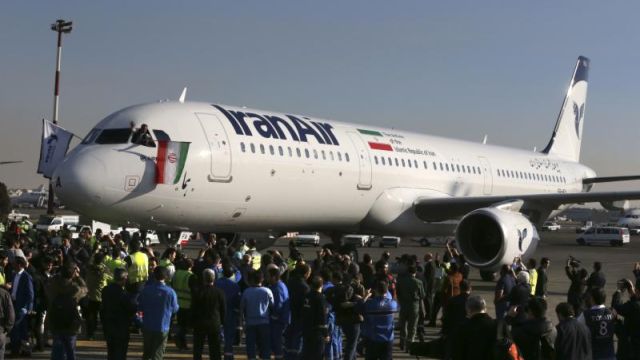
Even though Iran’s flag carrier, Iran Air, last week received the first new jetliner from Airbus, and last year finalized deals to buy 100 planes from the European plane maker and another 80 from Boeing, big aircraft lessors still are reluctant to do business in Iran. “We will remain cautious,” said John Plueger, chief executive of Air Lease Corp.

Trump has voiced skepticism about the Iran accord and “we have to be mindful of that,” Air Lease Corp.’s Plueger said Tuesday at an Airline Economics forum.

U.S. critics of the Iran deal have tried to block financing of the planes. Members of the House of Representatives this week introduced a bill to force the Trump administration’s director of national intelligence to investigate whether planes operated by Iran Air or other carriers are being used to support terrorism.

“We’re asking the intelligence community to provide a full accounting of Iran’s use of commercial airlines to support its global network of terror proxies” including in Syria, Rep. Peter J. Roskam (R-IL) said in a statement Tuesday.

Businesses are worried the U.S. may reimpose sanctions. “There is a substantial snap-back risk,” said Olaf Sachau, chief executive of Intrepid Aviation. Although he sees Iran as an attractive market for plane-leasing companies to do businesses, the U.S. election outcome means tapping the market isn’t on the agenda for now.

These uncertainties have taken the shine off of the anniversary of the nuclear agreement as Hassan Rouhani has tried to celebrate it. Rohani has been saddled by the high expectations he set, as Iran’s economy continues to struggle and the great boost in foreign investment and other benefits he envisioned has so far failed to materialize mostly as a result of the lack of capabilities within the ruling elite and for spending much of the cash in promoting the war in Syria, Iraq, Yemen, etc and on empowering the IRGC at home for domestic repression.

The Iranian currency, the rial, hit a record low against the dollar in recent weeks, prompting fears that efforts to boost the exports of industrial goods will suffer and anticipated foreign goods will be prohibitively costly. The unemployment rate is on the rise, reaching 11.3 percent in 2016 compared to 10.8 in 2015.

In a nutshell, the limited economic progress Rohani’s government has made has yet to trickle down to the average Iranian household in terms of jobs, salaries, and the prices of basic goods. This is something that none other than top mullah Ali Khamenei had to admit, saying in August that Iranians had yet to see a “tangible effect” in their daily lives.

Khamenei has sharpened his criticism. He has continued to emphasize a “resistance economy” aimed at boosting domestic production for export and warned against Western “infiltration” by way of the agreement, highlighting the fact that the mullah’s regime is incapable of making any radical change in country’s economy.

He may be recognizing that as the Iranian regime is getting squeezed again, he and his fellow mullahs will need to crack down harder to keep their tenuous hold on the Iranian people.

Laura Carnahan

Filed Under: Blog, News Tagged With: #NuclearDeal, Appeasement policy, Featured, hassan rouhani, Iran, Iran deal, Iran Lobby, Iran sanctions, IRGC

Trump Effect on Iran Already Seen in Syrian Talks

January 18, 2017 by admin

Trump Effect on Iran Already Seen in Syrian Talks

Trump Effect on Iran Already Seen in Syrian Talks

Donald Trump hasn’t even been inaugurated yet and his effect on U.S. foreign policy is already being felt throughout the Middle East:

  • Saudi Arabia is cautiously optimistic that the policy of trying to appease the Iranian regime under the Obama administration is at an end and that U.S. policy will once again shift back to traditional alliances in the regime that provided security for U.S. allies for the past 50 years;
  • After inserting itself into the Syrian civil war at the behest of the Iranian regime, Russia is now preparing to open new avenues of cooperation with the Trump administration even if Iran is vehemently opposed to them; and
  • The Iranian regime has reaped quick benefits from the Obama administration and the nuclear deal it negotiated including receiving $10 billion in cash and gold, but now is desperate to rake in as much cash as possible with the looming potential of the spigot being shut off by Trump.

A much ballyhooed summit is planned in the Kazakhstan capital of Astana this weekend to discuss a pathway for peaceful resolution of the Syrian conflict, involving Russia, Iran and Turkey, but now Iran is protesting Russia’s proposal to include the U.S. in these talks once Trump assumes office.

Iranian regime foreign minister Javad Zarif stated the regime’s opposition to the U.S. participating in what the regime hoped would be a photo opp moment in the diplomatic limelight for the mullahs in Tehran with these talks.

“We have not invited the U.S. and oppose their presence” at the talks, Zarif said, according to Iran’s Press TV.

Whether Iran would refuse to attend if the United States were invited was not immediately clear. The talks are part of a three-way process led by Russia and including Turkey and Iran — now the three most powerful international players on the ground in Syria. The process is aimed at forging a settlement in Syria after the failure of the Obama administration’s diplomacy, according to the Washington Post.

The opening round is expected to be a modest affair, with representatives of Syrian rebels meeting with members of the Syrian government to discuss the modalities of a shaky cease-fire that went into effect on Dec. 29, Russian Foreign Minister Sergei Lavrov told reporters in Moscow. Representatives of the invited countries will attend in the role of observers, rather than participants.

Although Iran is one of the three sponsors of the peace talks, it has not signed the agreement reached between Russia and Turkey that launched the cease-fire, suggesting that Tehran has reservations about an effort that could potentially erode its extensive influence in Syria.

Both Trump and Russian President Vladimir Putin have said they regard Syria as one of the areas in which the United States and Russia could cooperate more closely. Trump has said on a number of occasions that he hopes better relations with Moscow will help counterbalance Iran’s expanding regional role.

That expansion and deepening relationship between Russia and the U.S. could very well leave the Iranian regime out in the cold and without the ability to leverage the two superpowers against each other for its own gain.

Iran has been instrumental in providing the manpower and resources that have helped Assad’s government hold the rebellion at bay. Thousands of Iranian-trained Shiite militia fighters from Iraq and Afghanistan are on the front lines, the Iranian-backed Lebanese Shiite militia Hezbollah is at the forefront of most of the major battles, and Iranian military advisers and commanders are embedded with them in many locations around the country.

All of those gains could be erased should Trump and Putin see eye-to-eye on the necessity to rein in Islamic extremism and view Iran as the regional godfather of radicalized Islamic terror.

That prospect is frankly freaking out the Iranian regime and Hassan Rouhani took to state-owned airwaves to try and keep its attachment to Russia as close as Siamese twins.

“Iran, Russia and Turkey managed to bring a ceasefire to Syria … It shows these three powers have influence,” Rouhani said. “The (Syrian) armed groups have accepted the invitation of these three countries and are going to Astana.”

Asked why the United States and Saudi Arabia had no direct role in the talks, Rouhani said: “Some countries are not attending the talks, and their role was destructive. They were helping the terrorists.”

The prospect of a Trump presidency and realignment with Russia has caused the mullahs to issue pronouncements on a daily basis to try and spin the potential outcomes for the regime after January 20th; most of them bad for the mullahs.

Rouhani went on television to insist that any effort to “renegotiate” the nuclear agreement by Trump is “meaningless” and attributed it simply to Trump making campaign slogans, while his boss, Ali Khamenei, insisted that if the U.S. were to alter the agreement “we will light it on fire.”

Even European Union leaders are coming to the realization that the outcomes over the nuclear deal no longer rely on them, but rather now rest firmly on Trump’s decisions.

Federica Mogherini, the EU high representative for foreign affairs and security policy, who received withering criticism for trips to Iran while political prisoners were being executed, penned an editorial in the Guardian praising the nuclear deal in the hope of staving off its elimination.

It is worthy to note that Mogherini places her support squarely on the economic benefits towards European firms, but makes no mention of the year of terrorism and human rights abuses perpetrated by the Iranian regime and is silent on Syria and the absolute disaster for Europe from millions of refugees that has flooded in.

That kind of silence on important issues of terrorism and war are precisely why Europe has been blistered with multiple attacks in Brussels, Paris, Nice and Berlin and why solving the problem of Iran’s Islamic extremism is the surest path to peace.

Michael Tomlinson

Filed Under: Blog, News Tagged With: #NuclearDeal, Appeasement policy, Featured, hassan rouhani, Iran, Iran deal, Iran sanctions, Iran Terrorism, Khamenei, Rouhani, Syria

Iran Lobby Working Feverishly to Avoid Collapse

January 17, 2017 by admin

Iran Lobby Working Feverishly to Avoid Collapse

Iran Lobby Working Feverishly to Avoid Collapse

As the sun sets on the Obama administration and its flawed policy of appeasing the Iranian regime, the Iran lobby is working in overdrive to do anything and everything it can to preserve the few wins it managed to snag over the past eight years; most notably the Iran nuclear deal.

Trita Parsi, the head of the National Iranian American Council, has been trying to insert himself into any Iranian-related news story he can find; most recently the death of Hashem Rafsanjani. He has also weighed in president-elect Donald Trump’s potential scrapping of the nuclear agreement, banking restrictions on Iranians in the U.S., the Boeing deal and if he could manage it discussing the potential of Iranian films in the Oscar race this year.

For Parsi and the rest of the Iran lobby, the biggest potential disaster looming is the possible revocation or alteration of the nuclear agreement once the Trump administration takes office next week. Parsi and the mullahs in Tehran seem resigned to the fact that Trump will almost certainly act on his campaign promise to trash or redo it.

“The deal is in tremendous danger,” Parsi said in the Washington Post. “Iranians are building a case to make sure that once the deal falls apart they can point to a strong record of the U.S. causing it. It’s going to be part of the cost the administration will have to decide if it’s willing to pay.”

Parsi is already trying to frame the debate as the fault of the U.S. knowing that Tehran’s free ride is coming to an end. Similarly, the jockeying for rhetorical position illustrates the key flaw in the nuclear agreement in the first place which was that it did not address the motivations of the Iranian regime in supporting terrorism, oppressive human rights abuses or proxy wars.

Without correcting the underlying behavior of the mullahs, the agreement was doomed from the start, something the Trump team has already publicly acknowledged.

“There’s a recognition in the incoming team that the regime cheats incrementally, not egregiously, even though the sum total of cheating turns out to be egregious,” said Mark Dubowitz, executive director of the Foundation for Defense of Democracies and a prominent critic of the agreement. “Trump should show a zero-tolerance policy to cheating. Which means, at a minimum, using U.S. sanctions to respond. At a maximum, it means building up a case there’s a history of incremental violations, and move to snap back sanctions.”

For the Iranian regime though the deal has served its purposes. It has enabled the regime to:

  • Replenish its coffers with over $100 billion in badly needed cash that was redirected to support the Assad regime in Syria on the brink of collapse and pay for Hezbollah fighters and Afghan mercenaries to fight a holding action there until Russia was dragged into the conflict by Iran;
  • Allowed the regime to burnish the public image of “moderates” winning in Iran when in fact there are virtually no real moderates left in Tehran, only various factions differentiated only by their fight for control of state industries and their piece of the trough of cash, kickbacks and skimmed funds; and
  • Support the renewal of sectarian wars in Iraq and Yemen aimed at building a Shiite sphere of influence there Iraqi Shiite militias and Houthi rebels through the purchase and shipping of massive quantities of guns, ammunition, rockets, mortars and missiles.

The mullahs in Tehran are not stupid. They saw the gravy train coming to an end and have worked to gain as much advantage as they can to jump start a nuclear program that never really stopped as Jennifer Rubin points out in the Washington Post.

We saw just how lopsided the U.S.-Iran relationship has become. “The 2015 nuclear deal obligated Iran to keep no more than 130 metric tons of heavy water, a material used in the production of weapons-grade plutonium,” explains Iran analyst Omri Ceren. “But the Iranians have continued to produce heavy water, and they exceeded the cap in February and November. The violations [are] functionally blackmailing the Obama administration: Either someone would purchase the excess heavy water, allowing Iran to literally profit from violating the deal, or the Iranians would go into formal noncompliance, endangering the deal,” she writes.

Now the Associated Press has reported:

“Iran is to receive a huge shipment of natural uranium from Russia to compensate it for exporting tons of reactor coolant, diplomats say, in a move approved by the outgoing U.S. administration and other governments seeking to keep Tehran committed to a landmark nuclear pact.

“Two senior diplomats said the transfer recently approved by the U.S. and five other world powers that negotiated the nuclear deal with Iran foresees delivery of 116 metric tons (nearly 130 tons) of natural uranium.”

Rather than police the deal to ensure compliance, the Obama administration is assisting Iran in violating the JCPOA. Ceren remarks, “That’s enough for more than 10 nuclear bombs.”  We both allow the Iranians to exceed the heavy-water limits in the deal — and then richly compensate them with uranium that can be used for bombs. Our allies would be excused for thinking we are now promoting Iran’s interests, not the West’s,” Rubin adds.

She also noted that Reuters reported, “Iranian lawmakers approved plans on Monday to expand military spending to five percent of the budget, including developing the country’s long-range missile program which U.S. President-elect Donald Trump has pledged to halt. The vote is a boost to Iran’s military establishment –– the regular army, the elite Islamic Revolutionary Guard Corps (IRGC) and defense ministry — which was allocated almost 2 percent of the 2015-16 budget.” This, of course, refutes the notion peddled by Iran and echoed by the administration that the deal would empower “moderates” and without the deal “hard-liners” would get the upper hand. It seems that the deal has empowered the hard-liners (the IRGC), just as critics of the deal anticipated.

So while Parsi spins away like an Olympic cyclist, the reality of how to confront a double-talking Iranian regime will soon face the Trump team.

Laura Carnahan

Filed Under: Blog, News Tagged With: Featured, Iran deal, Iran Lobby, Iran Mullahs, Iran sanctions, Iran Terrorism, IRGC, National Iranian American Council, NIAC, Trita Parsi

Iran Lobby Pleading to Save Iran Nuclear Deal Despite Regime Militancy

January 17, 2017 by admin

Iran Lobby Pleading to Save Iran Nuclear Deal Despite Regime Militancy

Iran Lobby Pleading to Save Iran Nuclear Deal Despite Regime Militancy

With only a few days left until Donald Trump is sworn in as the next president of the United States, the Iran lobby and their Iranian regime leaders are in an absolute tizzy about the nuclear agreement and its future.

For the Iran lobby, especially the National Iranian American Council and the Ploughshares Fund, the nuclear deal with Iran represented a high water mark for their perceived effectiveness, but like a evaporating lake in a desert, their success was illusory since it was largely built on the decision by the Obama administration to try a policy of appeasing the Iranian regime.

With the ascension of the Trump administration with such noted critics of the Iranian deal in many of cabinet nominees now undergoing confirmation hearings, the Iran lobby is faced with rollback of all of their gains in one fell swoop.

Iran lobby supporters such as Trita Parsi have tried all sorts of tactics in an effort to save the deal in a shotgun approach of messages. First they openly criticized Trump during the presidential election, joining the tactics of his opponents with personal attacks.

When that failed and he won election, Parsi and his cohorts shifted to the threat of war if the Iran nuclear deal was scrapped by Trump. When that fell on deaf ears and gained almost no traction with the media and Trump announced his cabinet picks, the attacks shifted to the nominees.

Now that line of attack has essentially failed, the Iran lobby is now trying to float the idea that the Trump is actually in support of the nuclear deal and not likely to scrap it because the consequences would be so devastating.

Trying to keep track of all the misses by the Iran lobby is like trying to keep track of clanks off the rim by a worst shooting team in the NBA.

And now their worst fears are finally starting to come to fruition: the U.S. is finally beginning to realize that instead of appeasing the mullahs in Tehran, it is now time to hold them accountable for their actions.

The Iranian lobby fears that deeds and not words are likely to be the new currency of diplomacy in 2017.

But it isn’t just a Trump administration that is causing the Iran lobby to freak-out, it is the changeover in Congress and the potential for a whole raft of actions aimed at the mullahs ranging from the re-imposition of economic sanctions on the federal level to state-by-state sanctions means the Iran lobby is poised to be overwhelmed.

Congress has already begun offering up a series of bills taking aim at various aspects of the Iranian regime’s conduct including the near unanimous passage of the Iran Sanctions Act. Now comes a bill offered up last week to initiate an investigation into Iran Air and other regime airlines by the new Director of National Intelligence into whether or not they provide support to the Revolutionary Guard Corps or other terrorist groups.

The timing of this legislation is important to the Iranian regime as it takes delivery of new commercial airliners from Airbus and soon Boeing to replace aging aircraft in its fleet. Iran Air took delivery last week of the first of 100 jets it ordered from Airbus with Boeing scheduled to deliver in 2018.

Should the investigation of Iranian airlines lead to the discovery of a link between them and support for terrorist activities, the suspect airline could end up back on the U.S. sanctions list and be prevented from receiving any new aircraft or U.S.-made parts according to CNN News.

There has always been deep suspicion that the Iranian regime uses commercial airliners to ferry troops, ammunition and cash to hotspots such as Syria and Iraq. Should that link prove true, the Iran lobby could find itself fighting for the economic survival of the regime again.

Mahan Air, Iran’s second biggest carrier, is still on the sanctions list for aiding Iran’s military and is barred from buying Western planes and parts.

Iran Air was removed from the U.S. sanctions list in January 2016 as part of an agreement to convince Iran to restrain its nuclear program. It opened the path for multi-billion dollar sales by Boeing and Airbus. That prompted an outcry from some lawmakers who said the Obama administration offered no proof that Iran Air had stopped its support of the Iranian military or designated terrorist organizations.

The news for the Iran lobby got worse with the release of a letter from 23 former U.S. officials urging the Trump administration to open up a dialogue with Iranian dissident groups, specifically the National Council of Resistance, which counts as one of its members the People’s Mujahedin Organization of Iran; a dissident group the mullahs in Iran have made it their mission to pursue and destroy.

Trump transition officials did not immediately respond to a request for comment. An NCRI spokesman, Ali Safavi, said the group had no “role whatsoever” in the letter, but forwarded a statement from an NCRI official, Soona Samsami, welcoming the letter as an “appropriate and timely initiative.”

In spite of these changing political fortunes, the Iranian regime seems intent on maintaining the same militant attitude to the rest of the world as news came out of Iran of the mass execution of 20 prisoners over the past two days.

Amnesty International reports indicate that Iran executed at least 977 people in 2015, mainly for drug-related crimes.

The human rights activist NGO also blames Iran for continuing to execute juvenile offenders, those aged under 18 at the time of the crime, in violation of the international law.

For the mullahs, some things don’t change.

Michael Tomlinson

Filed Under: Blog, Current Trend, National Iranian-American Council, News Tagged With: #NuclearDeal, Appeasement policy, Featured, Iran, Iran Lobby, Iran Terrorism, IRGC, National Iranian American Council, NIAC, NIAC Action, Nuclear Deal, Ploughshares, Syria

Momentum Builds for Trump to Reach Out to Iranian Opposition

January 17, 2017 by admin

Momentum Builds for Trump to Reach Out to Iranian Opposition

Momentum Builds for Trump to Reach Out to Iranian Opposition

A letter signed by 23 former officeholders calls on president-elect Donald Trump to consult with the Paris-based National Council of Resistance of Iran (NCRI), an umbrella organization representing several Iranian dissident and opposition groups. The group has called for free elections and freedom of religion in Iran, as well as an end to what it calls Tehran’s “religious dictatorship.”

According to Fox News, while the Iranian regime called the group terrorists, the NCRI’s network of supporters in Iran helped expose Iran’s nascent nuclear weapons program by revealing secret sites that had escaped detection from Western intelligence agencies.

“Iran’s rulers have directly targeted US strategic interests, policies and principles, and those of our allies and friends in the Middle East,” the letter reads, in part. “To restore American influence and credibility in the world, the United States needs a revised policy.”

The letter’s signatories include former New York City mayor Rudolph Giuliani; former Sen. Joe Lieberman; and retired Army Gen. Hugh Shelton, a former chairman of the Joint Chiefs of Staff under President Bill Clinton.

Organized opposition to the mullahs in Tehran has always been thorn in the side of the religious theocracy holding power in Iran and the regime has spent considerable resources in targeting, attacking and defaming these dissidents.

Until recently, the Iranian regime used Iraqi intelligence forces to mount attacks on unarmed members of various dissident groups at refugee camps located in Iraq leading to scores killed over the years until the refugees were finally moved to countries granting them asylum and refugee status.

Even membership or affiliation with any of these groups is punishable with imprisonment and even execution, a policy stretching back to an infamous massacre in 1988 in which the Iranian regime’s leadership ordered the mass executions of thousands of dissidents.

Ironically, many of the current leaders of the Iranian regime, including Hassan Rouhani and the recently deceased Hashem Rafsanjani, participated in the conducting the arrests, imprisonments and trials of these dissidents.

The prospect of the Iranian dissident movement having a seat at the table in Washington, DC with a Trump administration is driving the mullahs into an apoplectic state; one evidenced by the mobilization of the Iran lobby to attack members of Trump’s cabinet who may be perceived to be receptive to these opposition groups.

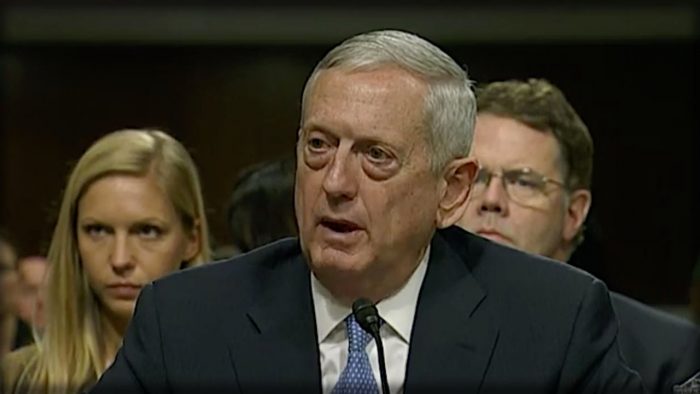
In Democracy Now, which aggressively supported the Iran nuclear deal, the blog characterized retired Gen. James Mattis’ confirmation hearings as being less about policy and more about a discussion of his personal wealth and the promise to preserve the military-industrial complex.

“It is interesting that this is among the many other issues that wasn’t really discussed during the hearing, that could have been discussed instead of the pork-barrel projects that you were talking about. And, you know, he could have been asked about these apparent conflicts of interest that might have developed as a result of his consulting work, and how he might deal with them,” said Aaron Glantz, a senior reporter at Reveal from The Center for Investigative Reporting.

Meanwhile, Iran lobby leader, Trita Parsi of the National Iranian American Council, took to doing more interviews, this time claiming that Mattis had promised to enforce the Iran nuclear deal in spite of Trump’s long criticism of it on the campaign trail, even though Mattis’ testimony was clearly not an endorsement of the deal.

The status of the nuclear deal is proving to be an important topic for the mullahs as they seek to position any break in it as the fault of the U.S. Iran’s deputy foreign minister says the nuclear deal between the Iranian regime and world powers “will not be renegotiated” ahead of U.S. President-elect Donald Trump taking office this week.

In a press conference Sunday marking the one-year anniversary of the agreement’s implementation, Abbas Araghchi told reporters that “the new U.S. administration cannot abandon the deal.”

Araghchi repeated an earlier warning by Iran’s Supreme Leader Ayatollah Ali Khamenei, who publicly stated, “If they tear it up, we will burn it,” without elaborating.

“There will be no renegotiation and the (agreement) will not be reopened,” said Araqchi, Iran’s top nuclear negotiator at the talks that led to the agreement in 2015, quoted by the state news agency IRNA.

“We and many analysts believe that the (agreement) is consolidated. The new U.S. administration will not be able to abandon it,” Araqchi told a news conference in Tehran, held a year after the deal took effect.

The potential for the Trump administration to scrap or renegotiate the nuclear deal, tied with the possibility of the incoming administration to build a rapport with Iranian dissident groups may prove to be a volatile mix of problems for the mullahs.

We can only hope that Trump extends to these Iranian dissidents the opportunity to talk and listen to their stories of the horror suffered by them and their loved ones at the hands of the mullahs and why ultimately any agreement with Iran must be based not on faith, but cold hard, verifiable facts.

Michael Tomlinson

Filed Under: Blog, News Tagged With: #NuclearDeal, Appeasement policy, Featured, Iran, Iran deal, Iran Lobby, Iran Talks, National Iranian American Council, NIAC Action, Nuclear Deal, Trita Parsi

Get it Right: Iran’s Rafsanjani Was Not a Moderate

January 10, 2017 by admin

Get it Right: Iran’s Rafsanjani Was Not a Moderate

Get it Right: Iran’s Rafsanjani Was Not a Moderate

Ali Akbar Hashemi Rafsanjani died and many Western media outlets breathlessly reported that his death would be a devastating blow to Iran’s “reformers” and how that moderate movement had lost one of its lions.

Let’s get something straight right off the bat: Rafsanjani was not a reformer or moderate. He was a staunch leader of the Iranian regime from the very beginning as a disciple of Ruhollah Khomeini and led Iran’s armed forces during its bloody war with Iraq and as president.

His long record is often overlooked by most journalists who are too enamored with the image of a pop-culture icon of change and reform and buy into the narrative that Rafsanjani was a man valiantly leading the fight against the obstructionist Islamists and hardcore neo-cons.

The headline from the New York Times was typical of this idiotic adoration for a man who oversaw the growth of the Iranian regime and committed various murders, assassinations and attacks against political opponents and dissidents to keep it firmly in his hands and his fellow mullahs.

“Death of Iran’s Rafsanjani Removes Influential Voice Against Hardliners” read the Times headline.

The distinction of calling Rafsanjani a moderate is like making a distinction between Hermann Goering and Henrich Himler in Nazi Germany. There is little difference and both collaborated to make the Nazi’s control of Europe a long and bloody one.

Over the past 38 years, both under Khomeini and in later years, Rafsanjani played a critical role in suppression at home and export of terrorism abroad as well as in the quest to acquire nuclear weapons. Though portrayed by some Western media outlets as a “pragmatist” or “moderate,” during his long career he was associated with some of the regime’s most egregious actions, including mass-casualty terror attacks and the assassinations of exiled dissidents.

Heshmat Alavi, an Iranian human rights activist, took the characterizations of Rafsanjani to task in an editorial in Forbes.

Recently Rafsanjani gained a reputation for his aggressive challenge against Iranian Supreme Leader Ali Khamenei, while playing the role model for Hassan Rouhani, Iran’s so-called “moderate” president,” Alavi said.

Of course, Rafsanjani was definitely considered part and parcel to the religious establishment in Iran, bearing in mind his special ties to regime founder Ruhollah Khomeini, who died back in 1989. However, appeasement advocates in the West dubbed him as a “pragmatic conservative” willing to work with the outside world, especially the “Great Satan,” he added.

While Rafsanjani’s power diminished noticeably in recent years, he continued to enjoy a final post as chief of the Expediency Council, assigned to seemingly resolve disputes between the Guardian Council and parliament. The former is an ultra-conservative body closely knitted to Khamenei and known to screen all electoral candidates according to their loyalty to the regime establishment.

Reuel Gerecht and Ray Takeyh detail Rafsanjani’s long and often bloody history in an editorial in the Washington Post pointing out that during his presidency (1989–1997), Rafsanjani revamped the Atomic Energy Organization, sought to lure Iranian scientists from abroad and went on a shopping spree for dual-use nuclear technologies.

Rafsanjani’s published daily journals, which cover his presidency, reveal tantalizing evidence of cooperation with North Korea on ballistic missiles and weapons of mass destruction. They also reveal Rafsanjani’s glee in outfoxing U.S. naval surveillance, Gerecht and Takeyh said.

Make no mistake, Rafsanjani was no egalitarian for the people. He accumulated a vast mountain of wealth for himself and his family amounting to billions.

“One brother headed the country’s largest copper mine; another took control of the state-owned TV network; a brother-in-law became governor of Kerman province, while a cousin runs an outfit that dominates Iran’s $400 million pistachio export business; a nephew and one of Rafsanjani’s sons took key positions in the Ministry of Oil; another son heads the Tehran Metro construction project (an estimated $700 million spent so far),” states a 2003 Forbes analysis.

The report also mentions billions stashed by the Rafsanjanis in overseas bank accounts.

“Some of the family’s wealth is out there for all to see. Rafsanjani’s youngest son, Yaser, owns a 30-acre horse farm in the super-fashionable Lavasan neighborhood of north Tehran, where land goes for over $4 million an acre. Just where did Yaser get his money? A Belgian-educated businessman, he runs a large export-import firm that includes baby food, bottled water and industrial machinery.”

More importantly, Rafsanjani represents one of the last leaders of the revolution and as such the power stemming from that iconic moment now falls to the oldest living leaders in the Islamic state such as Ali Khamenei and his handpicked leaders such as Hassan Rouhani.

Power in the Iranian regime does not flow down as much as it flows laterally among a small cadre of committed religious leaders who jealously guard their financial fortunes as much as the rigid Shiite ideology of the state.

So while media outlets are analyzing the impact this will have on Iran’s “moderates” the more important and appropriate question is how to reintroduce and empower true moderates back into Iranian politics and not simply settle for calling regime leaders “moderates” because they happen to be less brutal than others.

Is it a sign of moderation when one mullah advocates imprisonment for a dissident while another calls for a public hanging?

That is the mistake media outlets are making with Rafsanjani.

Laura Carnahan

Filed Under: Blog, News Tagged With: Appeasement policy, Featured, Iran Human rights, Rafsanjani

Iran Lobby Voice Becoming Lonelier With New Congress

January 7, 2017 by admin

Iran Lobby Voice Becoming Lonelier With New Congress

Iran Lobby Voice Becoming Lonelier With New Congress

A new Republican-controlled Congress took office on Tuesday and with it comes the promise of sweeping changes in American foreign policy versus the last eight years. Most notable will be an almost certain end to the policy of appeasing the Iranian regime followed by the Obama administration in the hopes of moderating Iran’s behavior.

What is also sure to happen as well is a greatly diminished role for the Iran lobby in this new administration, especially for supporters such as the National Iranian American Council. Evidence of that reduced stature and influence has come in the downward spiral in media opportunities members of the NIAC are receiving.

Trita Parsi for example has been relegated to providing analysis on Russia Today segments and the self-blogging forum TopTopic has become the go-to publisher of NIAC commentary. Gone are the heady days of placements in the New York Times and CBS News and now they face the uncomfortable truth that they are in danger of becoming irrelevant.

One of those TopTopic pieces was written by Ryan Costello from NIAC in which he lamented the tidal wave of bills being introduced aimed at punishing various aspects of the Iranian regime such as a bill by Rep. Alcee Hastings (D-FL) authorizing the Trump administration to use military force against Iran should it be necessary.

Costello characterizes Hasting’s move as representative of a “small minority” of Democrats opposed to the nuclear deal with Iran, but what he fails to acknowledge is the fact that there is actually a growing nucleus of Democrats that the American people want to stop giving Iran endless concessions.

Costello goes on to mention additional bills being offered up including one proposal by Sen. Dean Heller (R-NV) that would impose sanctions on Iran for its ballistic missile program. While Costello laments the flood of bills coming to the fore with the change in Congress, he—and the rest of the Iran lobby—ignore the reasons why these bills are being offered up now.

The mood in America and frankly through most of Europe has swung dramatically since the nuclear agreement was reached with Iran from one of hopeful optimism to uncertainty and fear. The rise of Islamic extremism rippling across the globe, striking in cities such as Boston, San Bernardino, Orlando, Paris, Brussels, Nice and Berlin, have all been harsh reminders to elected officials that wishing for moderation does not yield moderation from extremist groups and hostile nations such as Iran.

The question of how to confront Iranian extremism has never been answered by the Iran lobby other than to repeatedly call for more accommodation and more restraint. That position has now lost its status and consigned to the political junk heap of obscure blogs and media controlled by Iran and its few allies.

Now the major media have turned their attention to the specific pathways open to Trump to restrain the Iranian regime and that is a fundamentally different approach from what the Iran lobby has tried to champion over the past five years.

The Wall Street Journal looked at the possibility of re-imposing economic sanctions, which may be opposed by European allies, is certainly available to Trump as a leverage tool at the very least.

President Trump could, among other things, re-impose the “secondary” sanctions that bar foreign companies from doing business with those individuals or entities on sanctions lists, the Journal said.

“The Iran sanctions program will be the one with the quickest attempt by the administration to put their mark on,” said Adam Smith, an attorney at Gibson Dunn & Crutcher LLP who previously served as a senior adviser at the U.S. Treasury Department’s Office of Foreign Assets Control, the main enforcement body for sanctions.

Heshmat Alavi, a political and rights activist, authored a piece in The Hill tackling this notion of Iranian “moderation” and declaring it a myth solely designed to gain Western support for a deal that would allow the mullahs access to billions of dollars in desperately needed cash.

“If Tehran truly bore the intent to not only embrace the nuclear agreement but the spirit of the accord with the West, they would not have test-fired missiles in March or October of this year,” he said.

“If the mullahs are actually sensitive about the human rights of ordinary Iranian citizens, then this regime would not have executed over 3,000 people in the past four years alone and nearly 1,000 in 2015.

“This regime, if actually sensitive about its ‘moderate’ image, would not be executing women and minors, and would not be sending opposition supporters to the gallows. This certainly doesn’t sound anything similar to ‘moderate’ behavior, at least not in the democratic world,” Alavi added.

Alavi calls for greater outreach by the Trump administration to avowed opposition and dissident groups such as the National Council of Resistance of Iran, a broad coalition of Iranian dissident and human rights groups opposed to the mullahs rule.

By switching from listening to the propaganda of the Iran lobby to the sound policy recommendations of the Iranian opposition, Trump can advance the cause of peace and democracy in the Middle East faster than anyone could imagine.

Michael Tomlinson

Filed Under: Blog, National Iranian-American Council, News Tagged With: #NuclearDeal, Appeasement policy, Featured, hassan rouhani, Iran Human rights, Iran Lobby, NIAC, NIAC Action, Trita Parsi, Tyler Cullis

Iran Regime Operates Through Fear and Intimidation to Work

January 7, 2017 by admin

Iran Regime Operates Through Fear and Intimidation to Work

Iran Regime Operates Through Fear and Intimidation to Work

“I learned that courage was not the absence of fear, but the triumph over it. The brave man is not he who does not feel afraid, but he who conquers that fear,” said Nelson Mandela, the former president of South Africa and prisoner of conscience who led his nation out of apartheid rule.

He recognized during his long imprisonment for his political beliefs that to conquer a regime and policy of institutionalized oppression, one had to first conquer the fear that institution uses to control its people. It is through the tools of violence, fear and intimidation that a people can remain oppressed for generations.

For the Iranian regime, the mullahs learned early on the lessons of similar oppressive regimes throughout history. Whether you were a Roman tribune enslaving barbarians or a Nazi Stormtrooper kicking down doors in the Warsaw ghetto or a Boko Haram fighter kidnapping scores of girls to auction them as sex slaves, the tools of intimidation and fear were universal in your efforts to maintain control.

Throughout Iran, the mullahs impose the same practices through the use of religious courts that hand down brutal sentences almost on a whim with no accountability, to roving bands of Basji paramilitaries who are free to accost and beat women on the street for violating dress codes.

The mullahs use the same principles in exporting their extremist brand of Islam by supporting terrorist proxies such as Hezbollah or growing their own Shiite militia in Iraq which can be used to subjugate Sunni villages or be shipped off to fight in Syria.

The use of military power and violence is a tried and tested prescription for the Iranian regime to impose its will.

Unfortunately for the mullahs, history has proven those policies eventually fail. Although Rome stood for thousands of years, it eventually collapsed under its own corruption and inability to assimilate the regions it conquered into peaceful co-existence. Eventually all totalitarian regimes have fallen throughout human history; the only question has been how long has it taken?

For the Iranian regime, the clock is running and the mullahs recognize their time may very well run out on them as their economy remains stagnant, unemployment especially among young people remains sky-high and technology improvements in social media and mobility have made it almost impossible to keep a lid on dissenting voices.

Even a string of hunger strikes by political prisoners has resonance as their plight is carried throughout the world on Twitter, Facebook, WhatsApp and Snapchat and has led to noted people such as Nobel peace prize laureate Shirin Ebadi to openly call for the head of Iran’s judiciary to quit.

Sadeq Larijani was appointed by Ali Khamenei and cannot be summoned by MPs for questioning and is not directly accountable to the public. Under his watch the judiciary has made a number of high-profile arrests of dual nationals, according to the Guardian.

Ebadi, a human rights lawyer and women’s rights activist living in exile in the UK, said she considered Larijani to be “directly responsible for the injustices and corruption” in the system.

She said that “in the name of religion and with the excuse of national security”, the judiciary was “overseeing a miscarriage of justice”.

“Civil and social activists and thinkers who voice criticism or protest are put in jail and condemned to lengthy prison sentences and torture and persecution, while criminals, serial killers and those involved in embezzlement continue to abuse people under the shadows of a corrupted judicial system,” she said in a statement posted on the website of the Defenders of Human Rights Centre, of which she is president.

“A considerable number of prisoners are those held on political or religious grounds. In what part of the world and according to what history, you would call this judicial system fair?” she added.

An example of the harsh treatment by Iranian courts was put on display when a British-Iranian woman being held in Tehran’s notorious Evin prison has appeared in an appeals court, using the last legal opportunity to challenge her five-year jail sentence.

Nazanin Zaghari-Ratcliffe, a project manager with the Thomson Reuters Foundation, the news agency’s charitable arm, was found guilty in September on unspecific charges relating to national security.

On Wednesday, she attended a court session in the Iranian capital that lasted up to three hours, her husband told the Guardian. Few details have emerged about the hearing but a verdict is expected to be announced next week.

The exact reason why the 38-year-old has been convicted in Iran is still unclear, but the Revolutionary Guards, which arrested her at the airport in April while she was about to return to the UK after a family visit, have accused her of fomenting a “soft overthrow” of the Islamic republic.

“What I know is that the appeals happened and went on for three hours, the family weren’t able to go but Nazanin was there and her lawyer was there,” said Richard Ratcliffe. “There were lots of revolutionary guards there from both Kerman’s branch and the Tehran branch.”

According to Amnesty International, Iranian authorities have hinted that Zaghari-Ratcliffe’s arrest is connected to the 2014 imprisonment of several employees of an Iranian technology news website. They were given lengthy prison terms for participating in a BBC journalism training course. Zaghari-Ratcliffe was a project assistant at the BBC’s Media Action, the broadcaster’s international development charity, in 2008-09.

Ratcliffe said he last spoke to his wife on Christmas Day. Zaghari-Ratcliffe, who was previously described as being at breaking point, has recently been removed from solitary confinement and taken to Evin’s women’s wards alongside other political prisoners including journalist Reyhaneh Tabatabaei and leading activist Narges Mohammadi, and a number of Baha’i women held because of their faith.

Ultimately, the full force and weight of the Iranian judicial system is being used to focus on a British mother and charity worker and is emblematic of how fragile the mullahs control is if they are forced to have to imprison someone like her.

Michael Tomlinson

Filed Under: Blog, News Tagged With: #NuclearDeal, Appeasement policy, Featured, hassan rouhani, Iran, Iran deal, Iran Human rights, Iran Lobby, Iran Mullahs, Iran sanctions, Khamenei

Trump Can Fix Biggest Flaw in Iran Nuclear Deal

January 5, 2017 by admin

Trump Can Fix Biggest Flaw in Iran Nuclear Deal

Iran: Nuclear Force

A letter was delivered to incoming president Donald Trump signed by 37 people, most of them scientists who previously supported the Iran nuclear deal, urging him to maintain the agreement and refrain from dismantling it after he takes office. The signers included the cadre of academics who have previously joined with the Iran lobby in the debate over the flawed nuclear agreement.

As behooves a group of academics, their central argument was that the nuclear agreement was working effectively in preventing Iran from developing a nuclear weapon, saying that “as agreed, Iran has deactivated and put into storage under International Atomic Energy Agency (IAEA) seal about 2/3 of its centrifuges, and it has exported more than 95% of its stockpile of low-enriched uranium—a springboard to weapon-usable highly enriched uranium.”

The letter checks off the usual boxes mentioned by Iran supporters such as Trita Parsi of the National Iranian American Council and Joseph Cirincione of the Ploughshares Fund, who have consistently argued that the agreement would not only reduce the chance of Iran developing nuclear weapons, but would also help move it to become a moderating force in the Middle East and empower moderate elements in the Iranian government.

Therein lies the greatest failing in the scientists’ letter and the greatest opportunity Trump has been presented, which is that the Iran nuclear deal really had nothing to do with nuclear weapons, but rather about lifting sanctions in order for a reeling Iranian government to replenish its funds just as it was starting proxy wars in three different countries.

There was one absolute condition the Iranian regime had when it entered into negotiations with the P5+1 group of nations and that was for a clear separation of issues not-related directly to nuclear weapons. This included Iranian regime’s long history of support for terrorism, its harsh treatment of human rights, its crackdown on dissent at home and its eagerness to supply proxy military forces.

For the mullahs, there was nothing more important than in gaining relief from crippling economic sanctions that had pushed their iron grip to the edge with a population grown restless because of lowered wages, stagnant growth and diminished expectations for the future, including an unemployment rate among young Iranians that threatened to feed a revolt in a similar way it did in 1979 with the revolution.

And what was Tehran’s reward? According to the Wall Street Journal, over $10 billion in cash and gold was funneled to the mullahs since the deal passed in a variety of ways, some worthy of a spy novel including late night flights of jets stuffed with pallets of cash and transfers to small Iranian banks of currency converted into gold bullion.

This tallying of the sanctions relief to date includes payments previously announced and others that haven’t been. In one previously unreported payment, the U.S. authorized Iran to receive $1.4 billion in sanctions relief between when the final deal was struck in July 2015 and when it took effect, according to the U.S. officials,” the Journal said.

“Some U.S. lawmakers and Middle East allies contend that the shipments of cash and gold, a highly liquid form of money, can be used to fund Iran’s allies in the region, including the Assad regime in Syria, the Lebanese militia Hezbollah and the Houthi political movement in Yemen,” the Journal added.

This is precisely why the mullahs and their leaders Hassan Rouhani and Ali Khamenei were so desperate to complete a deal. The Iranian regime needed funds badly in order to provide Hezbollah with weapons to support the faltering Assad regime in Syria, as well as launch a civil war in Yemen with the Houthis to take on Saudi Arabia and support Shiite militias in Iraq as they launched a sectarian war against Sunni Muslims.

It also represents the greatest opportunity for Trump since the issue is not the dismantling of the nuclear agreement, but rather the threat of sanctions to link Iranian conduct back to the bargaining table.

This includes finally holding Iran accountable for items kept out of the nuclear agreement such as the development of long-range ballistic missiles capable of delivering nuclear payloads, as well as Iran’s support of three wars that have turned the Middle East into a bloodbath and large parts of Europe into refugee camps.

As part of the deal, Iran is entitled to a whopping $115 billion in sanctions relief over the past three years, but accessing those funds have been difficult since sanctions on currency transfers over the international financial network remain in place. This provides Trump with the greatest leverage possible over the mullahs.

Failure on the part of Tehran to halt its support of terrorism or lift the hammer of oppression at home is why the West should keep the firehose of funds from flowing to Tehran. This would make things problematic for the mullahs as they are facing a presidential election this spring.

Another round of broad discontent and protests again, as in 2009, could force the mullahs to once again engage in a bloody crackdown that turns international opinion firmly against them and away from the perception of moderation the Iran lobby has worked hard to try and preserve.

For the Iranian regime, the flow of cash is paramount to fulfilling its ambitions of extending its sphere of influence from the Mediterranean to Indian Ocean. A piece in Foreign Affairs examined the regime’s efforts to secure naval bases in Syria and Yemen to help its navy breakout of the Persian Gulf bubble it’s been locked in for decades.

This explains why supporting Assad in Syria and fomenting the civil war in Yemen were so crucial to the Iranian strategy for creating its own version of a Shiite Warsaw Pact.

“Bases in Syria and Yemen would be particularly important to Iran. Yemen sits on the strategic shipping route of the Bab el Mandeb Strait, one of the world’s most heavily trafficked waterways, and a naval outpost there would give Tehran unfettered access to the Red Sea and put it in a more advantageous position to threaten its main regional rival, Saudi Arabia,” Foreign Affairs said.

These are all facts the scientists who signed the letter to Trump failed to recognize or chose to ignore. It also underscores how incredibly wrong these people were in their original estimation of the success of the Iran nuclear deal.

Michael Tomlinson

Filed Under: Blog, News Tagged With: #NuclearDeal, Appeasement policy, Featured, hassan rouhani, Iran, Iran deal, Iran Human rights, Iran Lobby, NIAC, NIAC Action, Sanctions, Trita Parsi

  • « Previous Page
  • 1
  • …
  • 21
  • 22
  • 23
  • 24
  • 25
  • …
  • 64
  • Next Page »

National Iranian-American Council (NIAC)

  • Bogus Memberships
  • Survey
  • Lobbying
  • Iranians for International Cooperation
  • Defamation Lawsuit
  • People’s Mojahedin
  • Trita Parsi Biography
  • Parsi/Namazi Lobbying Plan
  • Parsi Links to Namazi & Iranian Regime
  • Namazi, NIAC Ringleader
  • Collaborating with Iran’s Ambassador

Recent Posts

  • NIAC Trying to Gain Influence On U.S. Congress
  • While Iran Lobby Plays Blame Game Iran Goes Nuclear
  • Iran Lobby Jumps on Detention of Iranian Newscaster
  • Bad News for Iran Swamps Iran Lobby
  • Iran Starts Off Year by Banning Instagram

© Copyright 2026 IranLobby.net · All Rights Reserved.