Iran Lobby

Exposing the Activities of the lobbies and appeasers of the Mullah's Dictatorship ruling Iran

  • Home
  • About
  • Current Trend
  • National Iranian-American Council(NIAC)
    • Bogus Memberships
    • Survey
    • Lobbying
    • Iranians for International Cooperation
    • Defamation Lawsuit
    • People’s Mojahedin
    • Trita Parsi Biography
    • Parsi/Namazi Lobbying Plan
    • Parsi Links to Namazi& Iranian Regime
    • Namazi, NIAC Ringleader
    • Collaborating with Iran’s Ambassador
  • The Appeasers
    • Gary Sick
    • Flynt Leverett & Hillary Mann Leverett
    • Baroness Nicholson
  • Blog
  • Links
  • Media Reports

Iran Regime Roadmap in Syria Includes Highway to Mediterranean

November 1, 2016 by admin

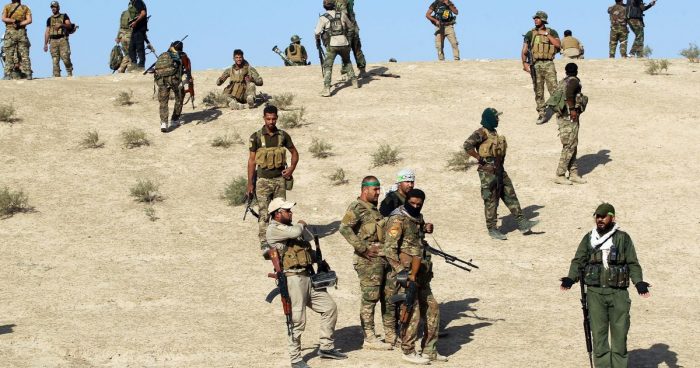
shiite-militiasSince the US-led invasion of Iraq, the Iranian regime has ratcheted up its military involvement in its neighbors. At first, the regime used the tried and true tactics of using terrorist groups and proxies to strike at coalition forces during the insurgency in Iraq, killing and wounding thousands of troops primarily through explosive devices its Quds Forces made and delivered to Shiite militias.

It’s a model Iranian regime used to great effect through two decades of civil war in Lebanon through its Hezbollah terror partners, which it then expanded to use in the Syrian civil war in support of the Assad regime.

Similarly, the Iranian regime used the Houthis to launch another civil war in Yemen, aimed at destabilizing Saudi Arabia, a major coalition partner opposed to the Assad regime.

But what is the master plan for the mullahs in Tehran? What are they trying to gain from all of the machinations and manipulations?

Leaders of the Iranian regime in the face of opposition among their own loyal forces due to the heavy loses they have had particularly in the Syrian invasion, have numerously said that Syria and Iraq are their battle field to keep the enemy from fighting at home. i.e. using the same tactic they have been using since the beginning of the 1979 revolution, to create and export crisis in the region in order to cover up the internal crisis and the lack of capabilities to resolve such crisis. Hence one way to legitimize repression inside Iran has always been to point to the external crisis and the outside enemy.

While some try to project the Iranian regime’s meddling in Syria, Iraq and Yemen as a sign of strength, it is in fact the same crippling situation that forced regime’s top leader, Ali Khamenei, cornered by the sanctions to put a more friendly face out to the world and as such, manipulated the next election ballot to clear the field for Hassan Rouhani, a long-time loyal servant of the regime and a genial actor. In him, Khamenei saw his opportunity to fool the West, hoping for a change in the equation with Iran.

The creation of the Iran lobby, including US-based groups such as the National Iranian American Council, helped pushed that narrative during the run up for nuclear negotiations. For the mullahs, the completion of a nuclear deal was the linchpin to their plans since it set into motion the lifting of economic sanctions and the flooding of fresh cash back into coffers depleted by war.

While the infusion of cash and lifting of sanctions has opened the door to foreign investment for the first time in decades, the support for three wars is aimed at a more practical consideration: the creation of a Shiite-sphere of influence that buffers Iran from its neighbors and allows it access vital trade routes, economic markets and the ability to move assets freely without observation or restriction, however the main issue for the regime is its fear of uprisings at home and therefore its need for continuing with its meddling in the region.

For the mullahs, they have created a house of cards, each balancing on the other precariously and should one fall, the whole house collapses. Such is the flimsy nature of the mullahs hold and yet the West fails to fully grasp the leverage it has over the regime; leverage it abdicated when it chose to approve a nuclear agreement without linking Iran’s support for terrorism or improvements in human rights to it.

Nothing illustrates the complex interconnections the Iranian regime is striving for than the battle for Mosul in Iraq and for Aleppo in Syria. In both cases, the lack of a clear and decisive US policy has allowed the mullahs to manipulate the situations where Iranian-backed Shiite militias that used to attack US forces in Iraq are now attacking Sunni insurgents under US air cover.

The manipulation of this chessboard has many layers. For example, the lifting of economic sanctions was important in order for the regime to enter into deals with Boeing and Airbus to acquire new passenger airliners to replace a decrepit fleet which has seen hard use ferrying troops and weapons via an air bridge from Iran and Lebanon into Iraq and Syria.

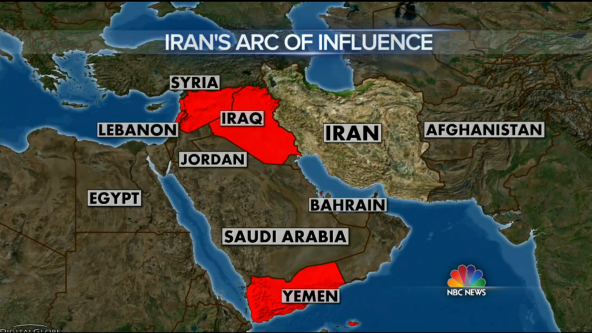
Of paramount importance though to the long-range plans of the Iranian regime is the consolidation of friendly territory. For Khamenei and Rouhani, they envision an unbroken land stretching from the Mediterranean with Lebanon and Syria, through Afghanistan and Iraq to Yemen and even the Gulf states on the Persian Gulf and Indian Ocean.

It is a grand vision, but one that can only come to fruition through war, terror, bloodshed and violence. After all this is perhaps the only way they know to come out of the deepening crisis back at home.

The Iranian resistance movement has fought this complicated game plan for decades, but the West has largely not caught on and similarly combatted it; seeing it more in terms of short term agreements. The fact that the nuclear agreement only buys less than a decade of nuclear-free time is incredibly short-sighted and indicative of why the mullahs think they can win this game by being patient.

What is handicapping Tehran though is the inability to generate much economic improvement in the lives of ordinary Iranians who chafe under the yoke of oppression. This is the area of greatest risk to the Iranian regime where the people themselves are capable of changing the regime.

If the West ever realized the true potential it holds to advance change in Iran, then the future of the Iranian people could be helped immensely.

Let’s hope it doesn’t take too long to figure out that holding Iran accountable instead of rushing forward with trade deals is the better way to block Iranian regime’s roadmap.

Michael Tomlinson
Filed Under: Blog, News Tagged With: Featured, Iran, Iran deal, Iran Human rights, Iran Lobby, Iran Mullahs, Iran sanctions, Iran Terrorism, Khamenei, National Iranian American Council, NIAC, NIAC Action, nuclear talks, Syria, Yemen

Iran Regime Executions During Dignitary Visits Become Routine

October 29, 2016 by admin


Iran Regime Executions During Dignitary Visits Become Routine

Iran Regime Executions During Dignitary Visits Become Routine

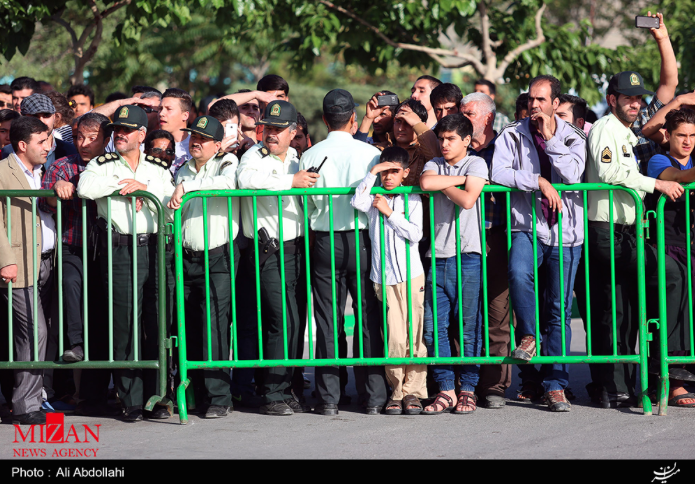
One of the more peculiar actions taken by the Iranian regime is the unusual habit of executing people during visits by foreign dignitaries. Typically, countries wrestling with intense international scrutiny due to perceived human rights violations have normally been more circumspect when hosting a visiting leader.

The accompanying media attention of a state visit usually has forced countries to hold off on high profile actions such as a crackdown or round up of dissidents or staying the executions of political prisoners.

The one glaring exception to that rule has been the Iranian regime, which seems to perversely revel in executing prisoners whenever someone comes calling.

The most recent example was the execution of three Turkish nationals accused of drug trafficking last year on the heels of a high-profile visit to Tehran by Turkish president Recep Tayyip Erdogan.

The Iranian regime – which executed nearly 1,000 people alone last year, more than any other country apart from China – usually refrains from sending foreign nationals to the gallows, especially in cases involving countries with which Tehran has maintained friendly relations, according to the Guardian.

The family of a 46-year-old man, Faruk Güner, a father of nine children, confirmed to the Guardian that he was executed. He was a lorry driver working between Afghanistan and Turkey who passed through Iran. “We tried for four years to save him. They didn’t tell us that he was going to be executed. They hanged him in the morning; we got the news in the afternoon,” Güner’s brother said.

The information about the executions was published by several human rights organizations. One of these organizations based in Norway, said two other Turkish nationals, identified as Mehmet Yilmaz and Matin, whose surname is not known, were executed at the same time.

The organization that monitors the human rights situation in Iran, said more than 450 people have been put to death in the country this year. It said at least 264 of them were executed for drug offences. Iran has also executed at least seven people who committed their crimes while they were under the age of 18.The execution of juveniles is prohibited under international law.

The regime has also taken the opportunity to commit executions during other high profile visits in a perverse move that defies logic, such as:

  • Matteo Renzi, Prime Minister of Italy, during April 12, 2016 visit, eight prisoners hanged;
  • Federica Mogherini, European Union foreign policy chief, during April 16-17, 2016 visit, three women executed by regime;
  • Christine Defraigne, president of the Senate of Belgium, during April 27, 2016 visit, 17 executions including three juveniles; and
  • Kolinda Grabar-Kitarovic, president of Croatia, during May 17, 2016 visit, 21 hangings in a stunning 48 hour window.

The willingness of the regime to execute people relentlessly during these high profiles—even when a dignitary pleads with the regime not to commit any executions—demonstrates the true nature of the mullahs in Tehran which is to signal to the world loudly and clearly that Iran will do as it sees fit regardless of what the world thinks.

What is even more disturbing is how the mullahs are working hard to indoctrinate Iran’s children into the same perverted mindset where violence and executions are a normal part of Iranian society.

Deutsche Welle looked at this trend and what it portends as a new generation of Iranians are taught at an early age that violence as a state tool is welcome.

Books in Iran, in general, are subjected to a strenuous approval process. But, the glorification of violence, even in children’s books, does not appear to be a problem.

“Children’s books have become much more religious. More stories involve mosques or religious ceremonies,” Iranian mother, Shohreh, (name changed) said. She isn’t surprised that books including hanged animals sell well. “People attend public executions and even bring their kids.”

“Society is being intentionally desensitized,” told DW, a human rights lawyer and children’s rights activist that specializes in cases regarding the execution of minors, which is allowed in Iran once they reach 18.

“Statistics show that violence particularly within families has strongly increased,” he said. “There are many causes for this. Violence in public is certainly one of them. People exposed to so much violence don’t shy away from using violence themselves. This must be countered, not celebrated everywhere.”

It is a deeply disturbing trend that harkens to similar indoctrination undertaken by totalitarian regimes such as the Khmer Rouge in Cambodia which employed children to select people for instant executions as part of the notorious killing fields.

Even Hitler’s Nazi Germany relied on the Hitler Youth to serve as a fanatical conduit for its armies; the Iranian regime is no less dedicated to the same tactics.

Ultimately, the fight for human rights in Iran is not just to preserve the people of Iran, but their future through their children.

Michael Tomlinson

Filed Under: Blog, News Tagged With: Featured, Iran Mullahs, Iran Terrorism, IRGC, Jason Rezaian, Rouhani, Sanctions, Syria

Why is the Iran Lobby Silent About Ransom Demands?

October 28, 2016 by admin

Why is the Iran Lobby Silent About Ransom Demands?

Why is the Iran Lobby Silent About Ransom Demands?

One of the curious side notes during the increasing concerns over news streaming out of Iran about harsh prison sentences being imposed on Iranian-Americans is that the Iran lobby has been relatively silent on the issue as a whole.

Leading Iranian regime supporter, the National Iranian American Council, felt compelled to issue a statement when Siamak Namazi and his father received 10-year prison sentences. Earlier news reports detailed a personal friendship between Namazi and NIAC founder Trita Parsi which may explain the latter’s willingness to criticize the Iranian regime on this one issue.

But for the rest of the Iran lobby, leading sympathetic journalists and bloggers such as Jim Lobe of Lobelog.com have been virtually silent on the issue of hostage taking of dual nationals by Iran.

Considering the goals and aims of the Iran lobby to preserve a badly flawed nuclear agreement and combat negative stories about the regime, it’s understandable why this practice hasn’t received much defense from them because it really is an indefensible action.

What compounds the problem for the Iran lobby has been the open statements being made by Iranian regime officials speculating on the amount of ransom they can extort from the US and other nations it has arrested, calling it many “billions of dollars.”

The issue of ransom and hostage-taking is deeply troubling and likely to only increase since the Obama administration has made it clear it will do nothing to jeopardize the nuclear agreement which it considers its signature foreign policy agreement.

But while the administration does not consider the shipment of $1.7 billion in pallets of cash to be a “ransom” for the release of five Americans last year, the mullahs in Tehran certainly and eagerly perceive it that way; all of which presents a problem for the arguments made by the Iran lobby of a newly moderate Iran.

If the US does not call this hostage taking and ransom payments, but Iran does, then in whose scenario should we be more worried about? The US government for acting as if these are part of the normal diplomatic process or a regime that views this as a new form of commerce?

For many lawmakers on Capitol Hill, the distinction is not difficult to discern. For many Republicans and Democrats, the practice of hostage taking, sham secret trials, lengthy prison sentences and demands for cash are to be taken seriously and dealt with strongly.
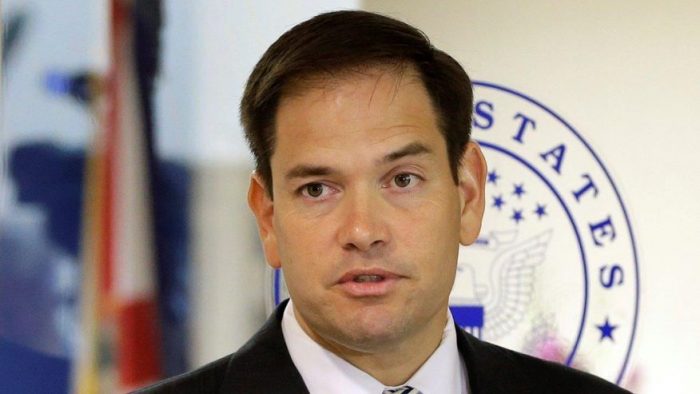
“President Obama’s cash ransom payment to Iran makes Americans more vulnerable and encourages unjustified prison sentences and blatant kidnapping like this,” Florida GOP Sen. Marco Rubio told FoxNews.com on Wednesday.
“Senior Justice Department officials warned the White House that Iran would view the pallets of cash as ransom, but the president didn’t listen, and now Iran is taking more hostages and demanding more money,” he added.
“Once again Iran has made a mockery of its own legal system in convicting wrongfully detained Iranian-Americans,” California GOP Rep. Ed Royce, chairman of House Foreign Affairs Committee, said after reports of the Namazis’ sentencing.
The State Department last week said the Namazis were “unjustly detained” and called for their immediate release.
The department also said U.S. officials are especially concerned by reports of the elder Namazi’s “declining health and well-being.”
Lawmakers also have suggested that Iran has been further empowered by the U.S.-led international pact signed in July 2015 in which Tehran agreed to curb its development of a nuclear weapon in exchange for countries lifting billions in sanctions.
Most distressing were reports from Nizar Zakka, a Lebanese citizen and permanent resident of the United States, who said through his attorney Tuesday that Iranian officials in April told him it would take as much as $2 billion to ensure his release from captivity.

In September, Iranian officials lowered that amount to $4 million, and told him that he was spared the death penalty but would remain in prison for 10 years until the payments are made.
“This is a grave breach of, among [other international laws and treaties], the Geneva Conventions against hostage-taking,” his lawyer, Jason Poblete, said in a statement Tuesday. “Iran is using Nizar, other Americans and dual nationals, as political chattel to exact concessions from the U.S. and other powers.”
“On behalf of Nizar, we request that all be done by the U.S. and other governments to secure his unconditional release from captivity on humanitarian grounds,” he added.
Zakka, an advocate for Internet freedom whose nonprofit group did work for the U.S. government, denies the spying charges. He believes the Iranian government, lured him to Tehran in order to seize and imprison him. He was arrested in Iran after traveling there to attend an International Conference and Exhibition on Women in Sustainable Development at the invitation of an Iranian office who asked him to serve as one of the events speakers.

If this is true, it is even more disturbing since it implies the regime is now actively targeting dual nationals and working to bring them back to Iran for arrest and imprisonment.

In the case, of Reza “Robin” Shahini, the San Diego, California resident just sentenced to 18 years in prison, regime officials indicated he was being sentenced based on posts he made on his Facebook page during the protests against the 2009 elections, which were widely considered fraudulent and condemned by international observers.

If so, that would indicate the regime’s active scouring of social media to pick up tidbits that could be used as justification to arresting any dual national, even though those just coming to Iran to visit relatives.

It is a disservice for the Iran lobby to remain mute on this subject. Every day the NIAC and other supporters stay silent, it only heightens the legitimate criticisms of them being tools and puppets of the mullahs.
Michael Tomlinson

Filed Under: Blog, News Tagged With: Appeasement policy, Featured, Iran deal, Iran Human rights, Iran Lobby, National Iranian American Council, NIAC, Nuclear Deal, Ploughshares, Trita Parsi

Is the Iran Regime Trying to Conquer the World?

October 27, 2016 by admin

Is the Iran Regime Trying to Conquer the World?

Is the Iran Regime Trying to Conquer the World?

Is the Iranian regime trying to conquer the world or does it simply want to carve out its own little protected niche in the world?

That seems to be the basic question confronting the rest of the world. For the Obama administration and many of the supporters of the Iranian regime, the focus was solely on the nuclear issue and ignored virtually every other aspect of the regime’s behavior that has troubled the world for the past three decades.

Dealing only with the nuclear issue is like negotiating with a serial killer to get rid of his use of handguns, but allowing him to keep his knives, flamethrowers and lock picks. Ultimately the behavior never changes and he is free and emboldened to do whatever he pleases. Such is the state we face with the Iranian regime today.

Now the world is witnessing a regime that is literally on a binge of dangerous behaviors, like someone with an eating disorder staring at a buffet table, the mullahs in Tehran are licking their lips at the banquet table being laid out before them.

A hallmark of that new militant behavior has been the arrests of dual national citizens and their subsequent sentencing to harsh prison terms without benefit of trial or even legal counsel. Three Americans were sentenced this way over the past week, with Reza “Robin” Shahini of San Diego, California receiving an absurd 18-year prison term.

“They’re bargaining people’s lives as if they’re trading Persian carpets,” said the Carnegie Endowment for International Peace. “Oftentimes, these almost comically harsh sentences are simply meant to increase the value of these prisoners in the event of any quid pro quo with the United States.”

For the mullahs, these hostages do have value. In the case of four Americans released last year with the nuclear agreement, they were worth $1.7 billion in cash.

Not a bad payday for Iran.

But what seems to be at work in the larger context of international affairs is the almost bipolar nature of how Iran is dealing with the world and vice versa.

On the one hand, the Iranian regime is taking hostages, ramping up its participation in three widening wars in Syria, Iraq and Yemen. It is smuggling arms, cash and men, which ironically end up getting used against other countries.

In Yemen, that means Iranian-purchased Chinese cruise missiles fired at US Navy warships.

In Syria, that means Iranian fighters and Afghan mercenaries and Iraqi Shiite militias being ferried in via Iranian airlines to fight against US-backed rebel forces.

In Iraq, it means Iranian-backed Shiite militias leading purges in Sunni villages liberated from ISIS and broad control over Iraq’s foreign policy with its Turkish neighbors.

  1. Todd Wood in the Washington Times also explains Iranian regimes avarice to secure a land corridor from the Iranian border to the Mediterranean to be able to have access to Arab lands, North Africa, and Europe in order to expand its terrorism through Iranian proxy forces and militias in Iraq and Syria.

“The operation seems to be headed by the Iranian Revolutionary Guards and their General Qassem Soleimani who has also visited Moscow multiple times in violation of United Nations sanctions. He is coordinating the actions of Iran proxy forces in Iraq and Syria,” he writes.

Iranian regime is feverishly working on these plans, while at the same time it is busy opening itself up to Western investment and partnerships commercially.

As Thomas Erdbrink writes in the New York Times, the disconnect between the two halves are actually part of a larger, carefully orchestrated plan; a plan that the Obama administration and sympathetic EU nations seem oblivious to.

“What would seem to be a puzzling contradiction is in fact a carefully thought-out, two-track policy being pursued by the supreme leader, Ayatollah Ali Khamenei, and the circle of leaders around him,” he writes.

“Iranian generals are directing the ground war in Syria. Iranian advisers are training Shiite militias fighting in Iraq and Syria. Iranian arms and other support help the Houthi rebels in Yemen.

“In addition to sanctioning the country’s more aggressive military footprint in the region, Ayatollah Khamenei regularly issues broadsides against the United States, promising there will be no softening of Tehran’s stance against the Great Satan, while quietly opening the door to Western capital and expertise,” he adds.

“In Mr. Khamenei’s view, we should be like China,” said Hamidreza Taraghi, an analyst with close ties to the hard-liners. “Have economic relations with the West, but without their political influence and neo-colonization.”

Thus, visa restrictions have been eased and foreign investment policies relaxed, while Iranian diplomats are spreading a message of Iran as the last major untapped market in the world.

But unlike China, Iran’s interests are not solely commercial and economic. It is more than willing to use military force to achieve its religious goals which stands in stark difference to China; essentially an atheist state.

For Khamenei and Rouhani, improvement in the economic status of the Iranian people is paramount to keeping their hold on power. Unless they can improve their quality of life, the street protests of 2009 are going to look like a picnic compared to March of 2017; Rouhani’s re-election bid.

Michael Tomlinson

Filed Under: Blog, News Tagged With: Featured, hassan rouhani, Iran, Iran Human rights, Iran Talks, Iran Terrorism, IRGC, Khamenei, Rouhani

Human Rights in Iran Spiraling Down the Drain

October 27, 2016 by admin

Human Rights in Iran Spiraling Down the Drain

Human Rights in Iran Spiraling Down the Drain

Reza “Robin” Shahini, 46, from San Diego, California, was visiting his ailing mother in Iran when he was snatched up by Iranian Revolutionary Guard Corps officials and thrown into prison. He joined a growing list of dual national citizens arrested, imprisoned and sentenced by the Iranian regime without so much as a reasonable facsimile of a legitimate trial.

“It was a terrifying moment, and they blindfolded me and they took me to the custody and I did not know where I was,” Shahini said, speaking to VICE News via phone from prison. “They were interrogating me every morning, every afternoon, and I was always by myself in my cell.”

During his interrogation, he said he asked to see the evidence against him. “They don’t answer such questions,” he said. “The thing is they are all brainwashed [to think] that the U.S. is a hostile government. Even the judge.”

Shahini joins several other dual nationals from the UK, Canada and fellow Americans in Iranian prisons with each being sentenced ever more harsher prison sentences. In Shahini’s case, he received a penalty of 18 years for “collaborating with a hostile government.”

Since September 2015, Iranian authorities appear to have been targeting citizens who they believe could upset the status quo, such as human rights activists, charity workers, or foreign journalists.

But it is the arresting of Americans, Canadians, Brits and other nationalities that has sent ripples around the world as governments who naively thought the Iranian nuclear agreement would bring about a more moderate regime are now being confronted by a newly aggressive one.

In the case of two British subjects being held by the Iranian regime, their families have allied with international human rights groups to try and put more pressure on the British government to force their loved ones release.

Richard Ratcliffe and Kamran Foroughi handed over a 72,000 signature petition from Amnesty International to Downing Street and the Foreign Office on behalf of Ratcliffe’s wife, Nazanin Zaghari-Ratcliffe, and Foroughi’s father, Kamal Foroughi.

Zaghari-Ratcliffe, a charity worker, was sentenced to five years in prison last month after a conviction on unspecified “national security-related” offences following another sham trial before a revolutionary court in the capital Tehran.

Amnesty International UK’s Individuals At Risk campaign manager, Kathy Voss, said: “There’s been a lot of talk recently about ‘thawing relations’ between the UK and Iran, but these two cases lend the lie to that. It looks very much like Nazanin and Kamal are being treated like pawns by the Iranian authorities and we’d like to see the UK seriously raising its game over securing proper justice for these British nationals. Boris Johnson needs to make sure these two cases are right near the top of his in-tray. We can’t let this drop.”

Voss is correct that all pretense of a new moderate Iran pushed by the Iran lobby have been proven false over and over again. The sheer volume of inhumane acts and criminal steps taken by the regime over the past year leave no doubts.

Even the most persistent supporters of the regime, including the National Iranian American Council, had to concede the obvious and issued a press statement critical of the 10 year prison sentences levied on Iranian-Americans Siamak Namazi and his father.

Meanwhile the regime continues on its brisk pace of executions with three more men hanged in Iran’s southern city of Shiraz. Although the regime ostensibly executes prisoners for crimes such as murder and drug trafficking, it broadly applies the death penalty to include political dissidents and crimes against the regime which serves as a catch-all definition suitable for any offense the mullahs see fit.

But death sentences are not the only way the regime muzzles its critics. Amnesty International reported on the arrest of writer and human rights activist Golrokh Ebrahimi Iraee who had recently written about the regime’s use of stoning as punishment.

Despite the fact that no official summons has been issued, Golrokh Ebrahimi Iraee’s home was raided this morning by officials, who violently broke through her front door before taking her to Evin Prison in Tehran. It appears that she has been taken to the women’s ward to begin serving her six-year sentence.

She has been convicted of charges including “insulting Islamic sanctities,” for writing an unpublished story about the horrific practice of stoning in Iran. Golrokh Ebrahimi Iraee’s husband, Arash Sadeghi, a human rights activist and prisoner of conscience, has since started a hunger strike in protest at her imprisonment.

“Golrokh Ebrahimi Iraee is the latest young writer and activist to be caught up in Iran’s relentless crackdown on artistic expression. Her imprisonment for peacefully voicing her opposition to stoning is a terrible injustice and an outrageous assault on freedom of expression. It is also a shocking and deeply disturbing display of support for the cruel and inhuman punishment of stoning,” said Magdalena Mughrabi, Deputy Director for the Middle East and North Africa at Amnesty International.

“The Iranian authorities must break this cycle of injustice and immediately and unconditionally release Golrokh Ebrahimi Iraee. We also urge them to ensure that her conviction is quashed.”

The unpublished fictional story, for which Golrokh Ebrahimi Iraee has been convicted of “insulting Islamic sanctities,” describes the emotional reaction of a young woman who watches the film The Stoning of Soraya M – which tells the true story of a young woman stoned to death for adultery – and becomes so enraged that she burns a copy of the Qur’an according to Amnesty.

In essence the regime arrested and sentenced her for writing something that wasn’t even published. If the mullahs could figure out a way to detect dissident brainwaves, they would probably start arresting anyone for thinking improperly, but such is the sad state of human rights in Iran today.

Michael Tomlinson

Filed Under: Blog, News Tagged With: Golrokh Ebrahimi Iraee, Iran Human rights, National Iranian American Council, siamak Namazi

Hassan Rouhani Comments on US Election Despite Troubles Ahead

October 24, 2016 by admin

Hassan Rouhani Comments on US Election Despite Troubles Ahead

Hassan Rouhani Comments on US Election Despite Troubles Ahead

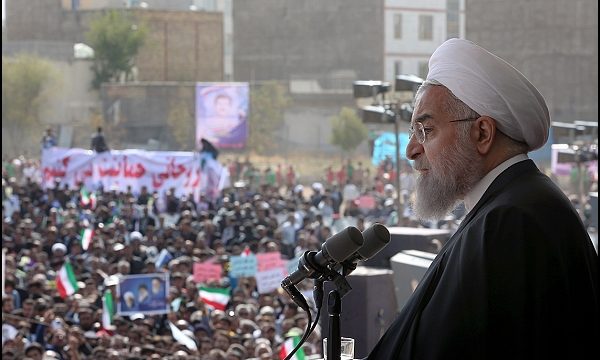
Hassan Rouhani addressed a crowd in the Iranian city of Arak and deplored what he called a “lack of morality” in the US presidential campaign and mocked the recent presidential debates in the his first public comments on a race to elect the next president who will have to decide to confront growing Iranian extremism.

“We have seen the way the (US presidential) candidates speak, accuse and mock (one another); and this is the American democracy and election,” Rouhani said.

Rouhani’s comments followed similar critical remarks made by top mullah Ali Khamenei who also lashed out at both Hillary Clinton and Donald Trump.

“The (ongoing) election campaigns in America and issues raised by the two candidates constitute a clear and evident example of the consequences of lack of spirituality and faith among those in power,” Khamenei said this weekend.

“During the coming weeks, one of these two candidates of America’s (presidential) election, whose remarks and condition you observe, will become the president of a country which has power and wealth and the biggest amount of nuclear weapons as well as the biggest media in the world,” he added in regime-controlled media.

The ramp up in comments by Khamenei and Rouhani indicate a new level of interest and worry by the Iranian regime as the sun sets on the Obama administration which has pursued a policy of appeasing the regime through the nuclear deal, lifting of economic sanctions and payment of ransom to gain the release of American hostages.

For the mullahs in Tehran the upcoming election is worrisome since both candidates have been especially harsh in condemning actions of the Iranian regime such as its long-running support for the Assad regime in Syria and the continued arrests of Iranian-American dual nationals.

The fact that Rouhani and Khamenei are wrestling with a stagnant economy, restless population, skyrocketing youth unemployment and the drain of maintaining three separate proxy wars in Syria, Iraq and Yemen, has threatened their hold over power, which has forced them to pursue an even harsher crackdown on human rights at home to prevent dissent.

The uncertainty of what a new US president will do in regards to Iranian policy has also trickled down to foreign banks and potential investor putting a hold on future investments until next year.

One can almost feel the sweat bead up on Rouhani’s forehead again.

It is ironic though to see Rouhani and Khamenei weigh in on the US election given the handling of their elections.  The Iranian regime historically has rigged its own elections as to make any outcome other than the one desired by the mullahs as moot.

The “stolen” election of 2009 that saw unpopular Mahmoud Ahmadinejad re-elected in a contest widely viewed as fraudulent is just one example. Another was the election of Rouhani himself in which all potential opponents were cleared off the ballot by a committee hand-picked by Khamenei.

The creation of the Iran lobby through organizations such as the National Iranian American Council helped facilitate the false perception that Rouhani was a “moderate.” Fortunately the world has had the benefit of seeing Rouhani in action—especially the year following the nuclear agreement—and has come to the realization that the Iranian regime is not interested in truly becoming a moderate nation.

Rouhani’s comments are even more ridiculous when you consider statements made by Ali Akbar Velayati, a key foreign policy advisor to Khamenei with Iran’s al-Alam television network, in which he claimed the regime opposed interference in the internal affairs of other countries.

“Iran opposes interference by any country, including Turkey or others, in the internal affairs of another country,” he said, adding that the domestic affairs of any country are its own concern.

The regime official rejected claims that Iran is interfering in the affairs of Iraq and said Tehran only provides Baghdad with military consultation at the request of the Arab country’s legitimate government, according to the regime’s PressTV.

The audacity for the regime to peddle such an obvious lie is amazing since the Iranian regime has almost gleefully inserted itself into the internal affairs of its neighbors in Syria and Iraq to a point where Syrians and Iraqis have openly complained of an Iranian takeover of their governments.

The regime’s use of terrorist proxies such as Hezbollah to carry out attacks and bombings in places such as Saudi Arabia, Lebanon, Afghanistan and even Argentina point out how far the mullahs are willing to go to meddle in other countries’ affairs.

Even the use of cyberhackers within the Revolutionary Guard Corps to attack US and European computer systems demonstrates the level of willingness to interfere in virtually all aspects of other nations’ affairs.

It’s now clear that the policy of appeasement of the mullahs to help “moderates” in Iran has failed, and the next president must define a firm policy towards the mullahs in Iran, if it wants to prevent the spread of terror and extremism in the region.

Michael Taylor

Filed Under: Blog, News Tagged With: #NuclearDeal, Appeasement policy, Featured, hassan rouhani, Iran, Iran deal, Iran Human rights, Iran Mullahs, NIAC

Iran Regime Taunts US for More Ransom Payments to Free Americans

October 21, 2016 by admin

Iran Regime Taunts US for More Ransom Payments to Free Americans

Iran Regime Taunts US for More Ransom Payments to Free Americans

Who actually runs Iran?

It’s not a silly question. It’s an important one because it goes to the heart of the central assertions made repeatedly by the Iran lobby that there is an internal struggle between “moderates” and “hardliners” for the future of Iran.

If you listened to people such as Trita Parsi of the National Iranian American Council or bloggers such as Jim Lobe or Ali Gharib, the struggle was a titanic war being waged between good and evil with Hassan Rouhani carrying the banner for all the true moderates in Iran seeking a better life for every Iranian.

What a load of fragrant cattle by-products to put it nicely.

The reality has been quite starkly different as the Iranian regime now controls conflicts in three countries, woos foreign nations and countries to invest and snatches up even more dual national citizens from around the world.

The latest provocation was the sentencing of several Americans to extended prison sentences in secret trials, which earned condemnation from almost every quarter of the political and diplomatic spectrum, but instead of offering any olive branches, the Iranian regime went deeper into its extremism.

According to the Washington Free Beacon, the Iranian regime is seeking “many billions of dollars” in payments from the US in exchange for the release of several American hostages still being detained in Iran, according to reports by Iran’s state-controlled press that are reigniting debate over the Obama administration’s decision earlier this year to pay Iran $1.7 billion in cash.

Senior Iranian officials, including the Rouhani, have been floating the possibility of further payments from the US for months. Since the White House agreed to pay Tehran $1.7 billion in cash earlier this year as part of a deal bound up in the release of American hostages, Iran has captured several more U.S. citizens.

Future payments to Iran could reach as much as $2 billion, according to sources familiar with the matter, who said that Iran is detaining U.S. citizens in Iran’s notorious Evin prison where inmates are routinely tortured and abused.

Iranian news sources close to the regime’s Revolutionary Guard Corps, or IRGC, which has been handling prisoner swaps with the United States, reported on Tuesday that Iran expects “many billions of dollars to release” those U.S. citizens still being detained.”

Which leads us to the question we started with: Who’s calling the shots in Iran? Rouhani, who previously has served as a regime cheerleader for moderation now openly admits in interviews with Western journalists that Iran does not recognize dual nationalities, even though he previously issued a call for ex-pat Iranians to return and help rebuild its shattered economy.

“We should wait and see, the U.S. will offer … many billions of dollars to release” American businessman Siamak Namazi and his father Baquer, who was abducted by Iran after the United States paid Iran the $1.7 billion, according to the country’s Mashregh News outlet, which has close ties to the IRGC’s intelligence apparatus.

The Persian language news report was independently translated for the Washington Free Beacon.

Six hostages have been sentenced to 10 years in prison by Iran in the past months, including the Namazis.

One senior congressional adviser familiar with the issue told the Free Beacon that Iranian officials have been pressing for another $2 billion from the United States for months.

“Iranian officials including Foreign Minister [Mohammad Javad] Zarif have been bragging for months that they’re going to force the U.S. to pay them several billion dollars more,” the source said. “Now officials across the spectrum in Iran—from IRGC hardliners to the ostensibly moderate President Rouhani—are talking about those billions, and maybe several more, alongside chatter about the U.S. hostages.”

The Washington Post editorial board acknowledged the true nature of the regime with the harsh sentences handed down.

“The government of Hassan Rouhani, which negotiated the nuclear deal with the Obama administration, is often portrayed as opposed to this de facto hostage-taking. If so, the government appears powerless to prevent it. Instead, officials complain about the relatively slow return of Western investment and trade following the lifting of United Nations sanctions, even as some of those who promote the opening are unjustly imprisoned,” the Post said.

“Though it was officially part of a separate claims settlement, the Obama administration’s delivery of $400 million in cash to the Iranian regime at the time of the release of (Washington Post reporter Jason) Rezaian and other prisoners may have whetted the appetites of Tehran’s jailers.”

Clearly now, everyone can see Rouhani is not a moderate. When it comes to main policies of the regime, he was and still is merely no different than the top mullah Ali Khamenei and his Revolutionary Guard Corps which controls Iran and its people as tightly as a hangman’s noose wraps around a condemned prisoner’s neck.

Michael Tomlinson

Filed Under: Blog, News Tagged With: Featured, Iran, Iran deal, National Iranian American Council, NIAC, NIAC Action, Nuclear Deal, Reza Marashi, Trita Parsi, Tyler Cullis

Why Hassan Rouhani’s Calls for Co-Existence Are Meaningless

October 21, 2016 by admin

Why Hassan Rouhani’s Calls for Co-Existence Are Meaningless

Why Hassan Rouhani’s Calls for Co-Existence Are Meaningless

Iranian regime controlled media loudly broadcast remarks made by Hassan Rouhani at a ceremony marking National Exports Day in Tehran in which he called for peaceful co-existence with the rest of the world and Iran’s neighbors.

No, this was not an April’s Fool joke come early, nor was it an attempt at early Halloween gallows humor.

Rouhani was making his appeal because the world has not reacted well to the regime’s militant and aggressive moves since a nuclear agreement was reach over 18 months ago. There has arisen significant uncertainty among foreign companies, institutional investors and many governments over entering into business agreements at a time when new sanctions may be coming.

Rouhani was making his appeal on a strictly commercial basis in which he hoped to see Iran enter the global marketplace as a significant consumer market, as well as an eventual exporter of goods.

According to Trend News Agency, “Iran has no choice other than forming a constructive interaction with the world in order to boost its export,” he said.

He further said that constructive interaction with the world means establishing suitable ties with global community for exports, and import of capital goods and raw materials as well as employment of youth.

There is good reason for Rouhani and his fellow mullahs to be worried. Iran’s economy remains stagnant, with little benefits trickling down to ordinary Iranians as promised by Rouhani. Youth unemployment remains staggeringly high and wages have not risen significantly in over a decade leading to widespread discontent and protests throughout Iran.

Scandals involving excessive compensation for high-placed executives at regime-controlled industries have rocked Rouhani’s term, as does a high-profile crackdown against journalists, students, artists, bloggers, dissidents, and religious and ethnic minorities.

The mullahs’ “morals” police squads are working overtime arresting and abusing everyone from Iranian women riding bicycles to Iranian youth congregating in coffee shops.

But what has most foreign companies and investors worried is the regime’s rapid escalation in its involvement in three widening proxy wars in Syria, Iraq and Yemen, in which US armed forces are increasingly being drawn into direct conflict with Iranian and Iranian-backed forces.

In Yemen, Iranian regime-backed Houthi rebels reportedly fired cruise missiles at US warships three times in one week; resulting a response from the US of three cruise missiles hitting radar installations in Yemen.

US Army Gen. Joseph Votel, commander of US forces in the Middle East, said on Wednesday that he believes Iran was behind the missile strikes on US Navy ships in Yemen.

“I do think that Iran is playing a role in some of this. They have a relationship with the Houthis, so I do suspect there is a role in that,” said Votel at the Center for American Progress, The Hill’s Kristina Wong reports.

Now news reports have surfaced detailing how the Iranian regime has stepped up weapons transfers to the Houthis threatening to widen and prolong the now 19-month-old war.

Much of the recent smuggling activity has been through Oman, which neighbors Yemen, including via overland routes that take advantage of porous borders between the two countries, the officials said.

U.S. and Western officials who spoke to Reuters about the recent trend in arms transfers said it was based on intelligence they had seen but did not elaborate on its nature. They said the frequency of transfers on known overland smuggling routes had increased notably, though the scale of the shipments was unclear.

A senior Iranian diplomat confirmed a “sharp surge in Iran’s help to the Houthis in Yemen” since May, referring to weapons, training and money.

“The nuclear deal gave Iran an upper hand in its rivalry with Saudi Arabia, but it needs to be preserved,” the diplomat said.

Ironically, the timing of the increased flow of cash and arms to the Houthis coincides with the ransom payments of $1.7 billion made to the Iranian regime by the US to free four American hostages.

Meanwhile in Syria, the growing failure of repeated cease-fires have placed US personnel dangerously close to being targeted by Russian and Syrian airstrikes, as well as facing Shiite militias imported from Iraq by Iranian airliners to fight alongside Syrian forces against US-backed rebels.

It is against this backdrop of global uncertainty that Rouhani is making one of the most absurd sales pitches anyone can recall since it is exactly because of the Iranian regime’s acts that have made many companies and investors skittish at risking billions of dollars.

That idea of co-existence draws little weight as Rouhani himself has admitted that the regime does not recognize dual national citizens and is in the midst of an unprecedented binge of hostage-taking of US, British, Canadian and other citizens.

Even more disturbing has been taunting statements made on regime-controlled websites demanding “billions in cash” as ransom payments for these new hostages.

Even Rouhani has taken a personal hand in tightening the figurative noose among his fellow Iranians by firing Minister of Culture and Islamic Guidance Ali Jannati, Education Minister Ali Asghar Fani and Minister of Youth Affairs and Sports Mahmoud Goudarzi all on the same day.

It’s interesting to note that all three ministers oversaw parts of Iranian society which enjoyed a bit more creative freedom during the run-up of the nuclear negotiations in an effort to present a more “open” society to the world. With the nuclear deal accomplished, their dismissals and subsequent crackdown on freedoms should not be a surprise.

Laura Caranahan

Filed Under: Blog, News Tagged With: Featured, Iran, Iran Mullahs, Iran sanctions, Iran Terrorism, IRGC, Nuclear Deal, nuclear talks, Sanctions, Syria, Yemen

Even Iran Lobby Is Not Immune From Regime Extremism

October 19, 2016 by admin

Even Iran Lobby Is Not Immune From Regime Extremism

Even Iran Lobby Is Not Immune From Regime Extremism

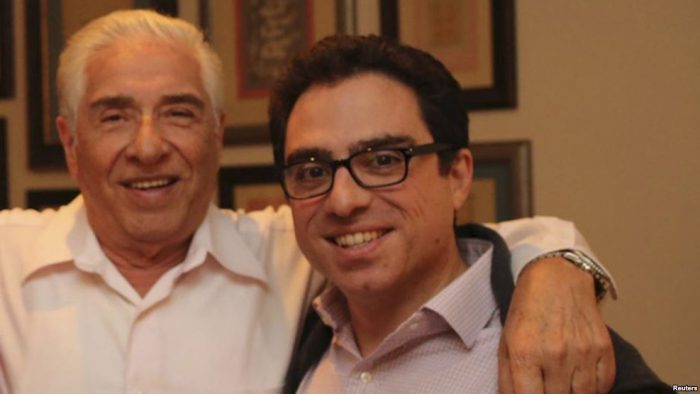
Siamak Namazi, a 45-year-old Iranian-American businessman who enjoyed close ties and access to one of the Iran lobby’s leading advocates in the National Iranian American Council, found himself on the wrong end of a 10-year prison sentence handed down by an Iranian court.

Sentenced alongside his 80-year-old father, Baquer Namazi, a former Iranian provincial governor and former UNICEF official who also has dual Iranian-American citizenship, Siamak has become another hostage pawn in the Iranian regime’s schemes to angle for more cash, more accommodation and more appeasement from the US.

Both men were sentenced to 10 years in prison for spying and cooperating with the U.S. government, said Tehran prosecutor Abbas Jafari Dolatabadi, according to the Fars news website, without specifying when exactly the sentences had been handed down.

The U.S. State Department’s deputy spokesman, Mark Toner, said the father and son had been “unjustly detained” in Iran, and called for their immediate release.

Babak Namazi, Siamak’s brother and Baquer’s son, called the sentences unjust.

“My father has been handed practically a death sentence,” Babak Namazi said in a statement.

Baquer Namazi has a serious heart condition and other medical issues requiring special medication, his wife wrote on Facebook in February. On Tuesday, UNICEF called for his release on “humanitarian grounds.”

The pleas for the Namazis echoed similar pleas made by desperate family members of previous regime hostages such as Washington Post reporter Jason Rezaian, Christian pastor Saeed Abedini, former US Marine Amir Hekmati and former FBI agent Robert Levinson, who still remains unaccounted for in Iran.

One significant difference though is that Siamak Namazi has been reported to have worked alongside long-time friend Trita Parsi in launching the NIAC with the idea of forming an advocate within the US to help push the Iranian agenda in the hopes of gaining a lifting of crippling economic sanctions.

For Parsi, the creation of NIAC and its companion lobbying arm, NIAC Action, has provided him and his colleagues with a comfortable living, access to influential power brokers and a platform to extol their support for the mullahs in Tehran.

Yet, Namazi was still snatched up by regime officials along with his father and sentenced to a long prison term without much disclosure as to why.

Mizan, the Iranian judiciary’s official news site, published on Sunday video images of Siamak, set to dramatic music and spliced together with images of President Barack Obama and Rezaian, who was released from an Iranian jail in January after more than 18 months in detention.

The video showed Siamak’s U.S. passport and identification card from the United Arab Emirates, where he previously lived. It then showed him standing and holding his arms outstretched, as if being searched, while being filmed by at least one other cameraman. The website said the video depicted “the first images of the moment of Siamak Namazi’s arrest.”

It is a stark and disturbing reminder to other supporters of the regime that their utility only goes so far and should be a sharp slap in the face for folks like Parsi who urged support for a more “moderate” Iran, but now find their associates as easily punished as anyone else; without any special status or immunity for their previous support for mullahs.

The arrests also expose the folly of regime president Hassan Rouhani’s much-touted visit to the United Nations in 2013 in which he famously urged Iranian ex-pats to come back to Iran and help their country; only to find virtually all dual national citizens are fair game for arrest.

In his most recent trip back to the UN last month, Rouhani remarked on CBS News’ “60 Minutes” program that the Iranian regime did not even recognize dual national status.

It’s an amazing turnaround in only two years and mirrors the sharp reversal of by the regime after getting its promised nuclear deal; leaving it free to deal harshly with its enemies both foreign and domestic in a broad and harsh crackdown.

The arrest and sentencing of such a close associate of Parsi and the NIAC, finally motivated Parsi to issue a press release with unusually tough language more in line with what his staunchest critics have said about the regime in the past.

“Both Siamak and Baquer Namazi have been denied basic due process and all indications are that the Iranian government has been using them as political pawns in violation of its own laws and basic human decency,” Parsi said.

“For the United States, the sentencing is a clear signal that more political capital and attention needs to be dedicated to securing the release of the Namazis and other Americans imprisoned in Iran. The United States should leave no stone unturned in utilizing diplomatic channels to press the Iranians to secure their release.”

If you didn’t know the statement came from Parsi, you might have mistaken it from a long-time Iranian regime critic from Congress or the pages of the Washington Examiner.

The irony should not be lost on anyone.

For all of its efforts to promote the regime and boost the lifting of economic sanctions and flood the regime with billions in cash that the mullahs are now using in three proxy wars in Syria, Iraq and Yemen, the NIAC and other Iran lobby members are faced with the inconvenient truth that supporting Iran is no guarantee of future safety or security from the same extremists actions against others.

Michael Tomlinson


Filed Under: Blog, News Tagged With: Featured, Iran Lobby, Iran Terrorism, IRGC, Moderate Mullahs, National Iranian American Council, NIAC, NIAC Action, Sanctions, Trita Parsi

Iran Regime Pushes Oil Contracts to Raise Cash for Wars

October 19, 2016 by admin

Iran Regime Pushes Oil Contracts to Raise Cash for Wars

Iran Regime Pushes Oil Contracts to Raise Cash for Wars

The Iranian regime’s Hassan Rouhani put out the invitation to a select group of high-powered investors to come visit the regime in the hopes of garnering new investments to help jump-start a stagnant economy that has only gotten worse after promises for improvements by Rouhani proved false after the nuclear agreement. Rouhani did not mention anything about the dual citizens who will end up in prison for a cash ransom.

Rouhani’s invite went to the 20-20 Investment Association, a group of influential investors overseeing $7 trillion of assets, much of it though is held within government-run pension funds which are prohibited by many state laws from investing in Iran because of its support of terrorism. This includes some of the biggest pension funds run by California, New York and Texas.

James Donald, head of emerging markets at Lazard Asset Management, the US fund company that oversees $174 billion of assets, and a board member of the 20-20 association, said the invitation reflected the Iranian regime’s desire to attract more foreign investors.

Donald said: “The group at this stage has not accepted the invitation. An awful lot of large government pension plans have restrictions on Iranian investments and [on] any company that does business in Iran. There is talk of [the remaining sanctions being removed]. I think there would have to be a federal law change [for banks and asset managers to move en masse into the Iranian market].”

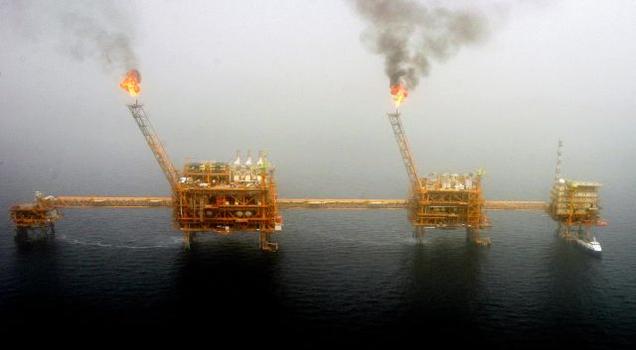
In addition Rouhani’s pleas, the regime-controlled National Iranian Oil Co. issued a request for bidders to invest in Iran’s slumping oil industry which powers much of the regime’s overseas and military activities.

The Iranian regime wants to attract more than $100 billion in investment to increase its oil production by 1 million barrels a day by the start of the next decade and raise its current oil output of 3.63 million barrels a day under a compromise agreement reached with other oil producing countries.

The mullahs in Tehran are anxious to try and diversify its investors because in the prior decade of sanctions imposed stemming from its illicit nuclear weapons program, the only dominant investor willing to ignore Western sanctions was China. In many cases, Iran’s oil, telecommunications, manufacturing and other heavy industries are run almost entirely by Chinese workers and managers.

According to the Chicago Tribune, Western investors have been slow to arrive. That’s especially true in the energy sector, where pressure to increase production is intense. Elsewhere, Western clearing banks still refuse to do business with Iran for fear of falling foul of non-nuclear U.S. sanctions that remain in effect, meaning Western companies can’t raise project finance.

This has created intense pressure on the mullahs to find some way to bring in foreign dollars to modernize its antiquated oil industry in order to get more oil out of the ground and sold to bring in hard dollars to fund three widespread wars Iran is now fighting in Syria, Iraq and Yemen.

The regrettable end game for the mullahs is to rip off Iran’s natural resources not for the benefit of the Iranian people, but rather fund the Islamic revolutionary expansion they are pushing abroad.

Recognizing the limitations of sanctions still in place, in spite of recent moves by the Obama administration to further accommodate a regime threatening to walk away from the nuclear deal in order to extort more concessions, the Central Bank of Iran announced it had informed banks throughout Iran that any failure by non-American banks to provide dollar-related services to Iranians would be “unacceptable” according to regime-controlled media.

“Providing dollar-related services [to Iranians] will no longer expose non-American banks to the risks of sanctions provided that they stay clear of US financial system,” the CBI said in its statement.

“Therefore, non-American banks cannot use US sanctions against Iran as an excuse for refusing to provide dollar-related services to Iranian individuals and entities.”

It is a desperate statement to make since Iran is not the final arbiter of what is and is not allowed under existing sanctions still in place, but the regime is so desperate for cash it is bullying financial institutions into handling US currency in order to get the flow of cash moving through Iran again.

It’s an explicit warning aimed especially at European and Asian banks who have been reluctant to engage in US currency exchanges with Iran for fear of running afoul of US officials, especially since there is significant uncertainty with the upcoming presidential election virtually guaranteeing a change in policy towards Iran come next January.

All of which highlights the futility of the promises and claims made by the Iran lobby following the nuclear deal in which leading supporters of the regime such as the National Iranian American Council promised a more moderate Iran willing to work to end the series of conflicts in the Middle East.

Instead, the world has amply seen the exact opposite with the breaking out of a shooting war between the US Navy and Iranian-backed Houthi forces in Yemen, the ferrying of thousands of Iranian-backed Shiite militias from Iraq into Syria via Iranian airlines to fight for the Assad regime.

The rapid escalation in fighting in these countries is draining the regime’s treasury in spite of the billions of dollars it received as part of the hostage exchange of Americans and the release of frozen assets back to the Iranian regime.

The mullahs squandered those funds and it seems that they are now rapidly trying to squander billions more in foreign investment.

By Michael Tomlinson

Filed Under: Blog, News Tagged With: #NuclearDeal, Featured, hassan rouhani, Iran, Iran Lobby, Iran Mullahs, Iran sanctions, Iran Terrorism

  • « Previous Page
  • 1
  • …
  • 25
  • 26
  • 27
  • 28
  • 29
  • …
  • 64
  • Next Page »

National Iranian-American Council (NIAC)

  • Bogus Memberships
  • Survey
  • Lobbying
  • Iranians for International Cooperation
  • Defamation Lawsuit
  • People’s Mojahedin
  • Trita Parsi Biography
  • Parsi/Namazi Lobbying Plan
  • Parsi Links to Namazi & Iranian Regime
  • Namazi, NIAC Ringleader
  • Collaborating with Iran’s Ambassador

Recent Posts

  • NIAC Trying to Gain Influence On U.S. Congress
  • While Iran Lobby Plays Blame Game Iran Goes Nuclear
  • Iran Lobby Jumps on Detention of Iranian Newscaster
  • Bad News for Iran Swamps Iran Lobby
  • Iran Starts Off Year by Banning Instagram

© Copyright 2026 IranLobby.net · All Rights Reserved.