Iran Lobby

Exposing the Activities of the lobbies and appeasers of the Mullah's Dictatorship ruling Iran

  • Home
  • About
  • Current Trend
  • National Iranian-American Council(NIAC)
    • Bogus Memberships
    • Survey
    • Lobbying
    • Iranians for International Cooperation
    • Defamation Lawsuit
    • People’s Mojahedin
    • Trita Parsi Biography
    • Parsi/Namazi Lobbying Plan
    • Parsi Links to Namazi& Iranian Regime
    • Namazi, NIAC Ringleader
    • Collaborating with Iran’s Ambassador
  • The Appeasers
    • Gary Sick
    • Flynt Leverett & Hillary Mann Leverett
    • Baroness Nicholson
  • Blog
  • Links
  • Media Reports

Iranian Regime Proves Again It Cannot Accept Dissent

August 12, 2016 by admin

Iranian Regime Proves Again It Cannot Accept Dissent

Iranian Regime Proves Again It Cannot Accept Dissent

Abraham Lincoln famously once said on the eve of the Civil War that “a house divided against itself cannot stand.” His sentiment was a prophetic one that has applied not only to the U.S., but to virtually every other country on the planet.

Nation’s split along political, cultural, religious, economic or even tribal lines have always struggled to hold themselves together and in the end must find ways to reconcile their differences if they are to move forward as a nation.

In the modern era, we have seen an unprecedented number of historic conflicts resolve themselves and eventually chose a path of peace, reconciliation and partnership. Nations such as Northern Ireland bridged a religious war between Catholics and Protestants that dated back to the time of Henry the VIII.

South Africa installed Nelson Mandela as its president after confining him to prison for much of his adult life. Even Myanmar eventually ended its military dictatorship to hold free elections and install longtime dissident Aung San Suu Kyi as leader of the new democratically elected government.

Of course there are still some nations that have stubbornly refused to relinquish their grasp of power including North Korea and the Iranian regime, but if history teaches us anything, it is that these kinds of nations are not long for the future. Oppressed people rebel, governments turn to violence to keep the people in line and eventually world opinion shifts to force democratic change.

That process can decade years, even decades, but it eventually does happen, which makes the desperate acts of regimes such as Iran even more interesting as it continues to go after foes from 30 years ago like a dog that can’t let go of an old bone.

In the case of the Iranian regime, its nemesis—in the minds of the mullahs at least—has historically been the U.S. (as the Great Satan) and Iranian opposition and resistance groups such as the Mujahedin-e Khalq (MEK).

The mullahs’ distaste of the MEK runs so deep that membership or association with the organization within Iran often carries long prison terms or even a death sentence. The regime also diverts enormous resources to continually attack MEK members both in a literal sense and political one.

A large number of MEK members, refugees since the Islamic revolution in Iran, live in precarious conditions at a former U.S. military base in Iraq known as Camp Liberty. Their former home at Camp Ashraf was attacked regularly by Iranian agents and Iranian regime-backed Shiite militia and Iraqi military units, and their new location has also been subject of several deadly missile attacks.

The reason being, their presence in close proximity to the Iranian border a constant reminder that a substantial part of the Iranian population vocally and actively oppose the rule of the mullahs.

That presence is so noxious to the mullahs that they periodically engage in propaganda efforts to discredit these dissidents on a regular basis through the Iran lobby, bloggers and social media efforts designed to blame them for everything including spying, sabotage and maybe even global warming.

The more inane claims to come from the Iranian regime included a press release issued through regime-controlled media that claimed the dissident groups were comparable in brutality to ISIS.

The release attempted to draw links between MEK and ISIS through alleged links with Saudi Arabia, which is interesting because of the geopolitical realities the Iranian regime now finds itself.

Saudi Arabia has been a historic opponent to Iran, but since the Iranian regime’s support of Houthi rebels in leading a revolt in Yemen on the Saudi border, the Kingdom has sought to aggressively confront the regime’s expansion, including joining the international coalition against the Assad regime in Syria, which is heavily supported by Iran.

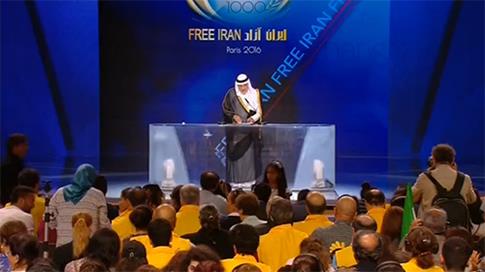
The fact that the Saudi Arabia’s Prince Turki al-Faisal, the former head of Saudi intelligence called for the overthrow of the Islamic Republic at a meeting of the Iranian opposition in Paris. His remarks coupled with recent diplomatic moves signal a new tougher policy toward Iran from Saudi Arabia. Though officially retired from government, no member of the royal family had ever so publicly embraced the Iranian opposition or called for regime change in Tehran.

Turki al-Faisal’s remarks on July 9 were followed on July 30 by a meeting between the head of the National Council of Resistance of Iran, an umbrella group of Iranian dissidents, including the MEK, and the President of the Palestine Authority Mahmoud Abbas in Paris.

Turki al-Faisal’s remarks and the meetings by the MEK with such high level leaders of the Arab world sent the Iranian regime into a mouth-frothing frenzy, which continues to this day.

Iranian regime officials went so far as to accuse Abbas as working together with the CIA, an interesting claim since Iran had previously lauded Abbas and the plight of the Palestinian people at the hands of Israel. Clearly, your utility to the Iranian regime only extends so far in the eyes of the mullahs.

The irony of the attacks the Iranian regime makes against MEK is that it accuses it of being a terrorist organization; a designation that was politically motivated at one point in getting it placed on the U.S. terror list, but corrected with its later removal; a distinction that the Iranian regime has failed to correct for itself.

In fact, the Iranian regime remains the world’s largest supporter of terrorism and continues on a path of proxy wars and harsh oppression at home. The mullahs understand the path of history for regimes like theirs, but they continue to struggle against it.

Eventually history will prove that Iran must succumb to regime change and reconciliation just as surely as Lincoln predicted.

By Michael Tomlinson
Filed Under: Blog, News Tagged With: Featured, Iran Human rights, Iran Mullahs, mek, Mujahedeen-e-Khalq, Mujahedin-e Khalq (MEK), Turki al-Faisal

The Disconnect Between Iran Lobby Priorities and Reality

August 9, 2016 by admin


The Disconnect Between Iran Lobby Priorities and Reality

The Disconnect Between Iran Lobby Priorities and Reality

Money makes the world go around

The world go around

The world go around

Money makes the world go around

It makes the world go ’round.


A mark, a yen, a buck, or a pound

A buck or a pound

A buck or a pound

Is all that makes the world go around,

That clinking clanking sound

Can make the world go ’round.


These are lyrics from the 1972 Academy Award-winning movie “Cabaret” which depicted the last final days of freedom in the Weimar Republic of Germany in 1931 during the rise of the Nazi Party.

The tune entitled “Money, Money” is sung by the cabaret’s emcee as a narrative about the pervasive influence of money and the desperate pursuit of it.

The movie was also noteworthy because of its depiction of issues such as homosexuality and hedonistic club life, as well as the virulence of anti-Semitism and even abortion. It was a movie widely considered to be one of the best 100 movies of all time.

The show tune is appropriate though for our world today and is still powerfully relevant as we consider the current priorities of the Iran lobby and its most conspicuous leaders such as the National Iranian American Council (NIAC).

It also helps illustrate the wide disparity between the priorities of the Iran lobby and the most pressing issues surrounding the Iranian regime today. If we examine the public statements and recent policy memos issued by the NIAC especially this week, we would assume that the most pressing issues confronting the U.S. and Iranian regime is how to get the mullahs more money.

At the top of NIAC’s legislative priorities is to prevent renewal of the Iran Sanctions Act of 1996 (ISA) which is up for consideration by Congress before the end of this year and along with it, the tacit lifting of all remaining restrictions and sanctions against the Iranian regime.

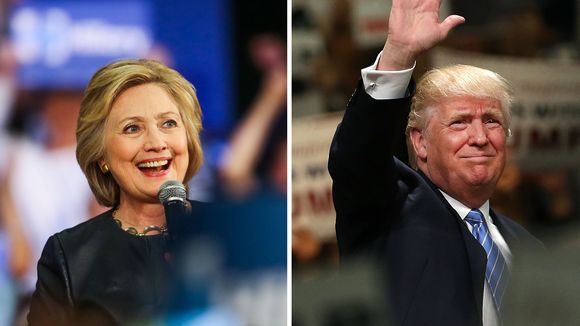
The impetus for the legislative push by NIAC and other Iran lobby allies is recognition that the upcoming presidential election is likely to bring significant changes in the U.S. foreign policy approach to the Iranian regime no matter who wins, be it Hillary Clinton or Donald Trump, because an incoming administration is likely to gain political capital by taking an aggressive stand against Iran, especially in light of the global deterioration of stability with terrorism and proxy wars on the rise.

To that end, the NIAC has been busy churning out policy papers arguing not only against renewing the ISA, but also the lifting of all remaining sanctions, especially prohibitions against the regime’s access to U.S. currency exchanges and the reluctance of foreign banks to handle Iranian regime transactions for fear of running afoul sanctions still in place pertaining to Iran’s human rights abuses and support for terrorism.

Interestingly, one policy paper authored by Ryan Costello of NIAC, argued that expiration of the ISA would still allow the president the ability to re-impose the same sanctions, but he neglects to mention the real reason the mullahs wish to shift authority away from Congressional legislation and onto the president: President Obama has demonstrated with his policies of appeasement the value to the mullahs of a president willing to accommodate their wishes and avoid the messy spectacle of a Congressional hearing and floor debate which would almost certainly go against them on almost any issue given the current climate.

More importantly, by trying to sell the idea that a new president could re-impose sanctions at will, ignores the most obvious flip side of that proposition, which is that the same president could choose to ignore Iran’s conduct and not impose sanctions that might otherwise be forced by a renewed ISA.

The NIAC and its allies in the Iran lobby are counting on their ability to duplicate last year’s “echo chamber” to apply political pressure on a new administration to keep the Iranian regime off the sanctions hit list.

Another policy memo authored by Tyler Cullis of NIAC, goes even further to make the explicit link between the need to lift all sanctions and the potential for the nuclear agreement with Iran—the  Joint Comprehensive Plan of Action (JCPOA)—to fail.

What Cullis and the NIAC fail to admit is that the limits of the JCPOA stop at the issue of human rights violations and support for terrorism; issues that the regime stridently wanted to be de-linked from the nuclear negotiations for fear that they would bring down any hope of a deal and the lifting of economic sanctions that had succeeded in crippling the Iranian economy and weakened the mullahs grip on power.

Cullis’ conclusion reveals the true goals of the Iran lobby when he writes:

“Despite the formal lifting of U.S. nuclear-related sanctions, implementation of U.S. obligations under the JCPOA has not proceeded altogether smoothly. In order to safeguard the decades-long restrictions on Iran’s nuclear program, the U.S. must faithfully observe its JCPOA sanctions-related obligations in full. To do so, though, there must be a common understanding as to the full scope of those U.S. sanctions-related commitments.”

It is a bizarre statement to make since it places the burden solely on U.S. actions and speaks of nothing in regards to growing Iranian regime’s recalcitrance and militant stances; nor takes into account the abysmal state of human rights in Iran.

That situation has grown appallingly worse as the regime has moved aggressively to execute citizens at a fast and monstrous clip, including the mass execution of 25 Sunni Muslims it accuses of “enmity against God,” which earned the regime a blistering condemnation from Human Rights Watch and other human rights groups.

“Iran’s mass execution of prisoners on August 2 at Rajai Shahr prison is a shameful low point in its human rights record,” said Middle East director at Human Rights Watch. “With at least 230 executions since January 1, Iran is yet again the regional leader in executions but a laggard in implementing the so far illusory penal code reforms meant to bridge the gap with international standards.”

Two lawyers who represented some of the men told Human Rights Watch that their clients did not get a fair trial and that their due process rights had been violated.

Ultimately, while the Iran lobby fights to fill the Iranian regime’s coffers, we have to ask why it doesn’t also fight to save Iranian lives.

Indeed, money does make the world go round.

By Michael Tomlinson

Filed Under: Blog, Current Trend, News Tagged With: #NuclearDeal, Appeasement policy, Featured, Iran deal, Iran Human rights, Iran Lobby, Iran Mullahs, Iran sanctions, National Iranian American Council, NIAC Action, Ryan Costello, Tyler Cullis

How Much Are Four Americans Worth to Iran? $400 Million

August 3, 2016 by admin

How Much Are Four Americans Worth to Iran? $400 Million

How Much Are Four Americans Worth to Iran? $400 Million

How much are four Americans worth to the Iranian regime? Apparently $400 million since news reports indicate the Obama administration secretly shipped $400 million worth of cash to Iran coinciding with the release of four Americans detained in Tehran and released as part of the nuclear agreement.

According to the Wall Street Journal, Wooden pallets stacked with euros, Swiss francs and other currencies were flown into Iran on an unmarked cargo plane, according to these officials. The U.S. procured the money from the central banks of the Netherlands and Switzerland, they said.

The money represented the first installment of a $1.7 billion settlement the Obama administration reached with Iran to resolve a decades-old dispute over a failed arms deal signed just before the 1979 fall of Iran’s last monarch, Shah Mohammad Reza Pahlavi.

While Obama officials denied any quid pro quo of cash for the prisoners, U.S. officials also acknowledged that Iranian regime negotiators on the prisoner exchange said they wanted the cash to show they had gained something tangible.

Sen. Tom Cotton, a Republican from Arkansas and a fierce foe of the Iran nuclear deal, accused the Obama administration of paying “a $1.7 billion ransom to the ayatollahs for U.S. hostages.”

“This break with longstanding U.S. policy put a price on the head of Americans, and has led Iran to continue its illegal seizures” of Americans, he said.

Since the cash shipment, the intelligence arm of the Revolutionary Guard has arrested two more Iranian-Americans. Tehran has also detained dual-nationals from France, Canada and the U.K. in recent months.

The Iranian regime’s news media quoted senior regime defense officials who described the cash as a ransom payment themselves putting into proper focus how they perceive the cash payment.

Ironically, the $400 million was paid in foreign currency because any transaction with Iran in U.S. dollars is still illegal under existing sanctions not related to the nuclear agreement for violations of human rights and sponsorship of terrorism.

A report by an Iranian news site close to the Revolutionary Guard, the Tasnim agency, said the cash arrived in Tehran’s Mehrabad airport on the same day the Americans departed.

Revolutionary Guard commanders boasted at the time that the Americans had succumbed to Iranian pressure. “Taking this much money back was in return for the release of the American spies,” said Gen. Mohammad Reza Naghdi, commander of the Guard’s Basij militia, on state media.

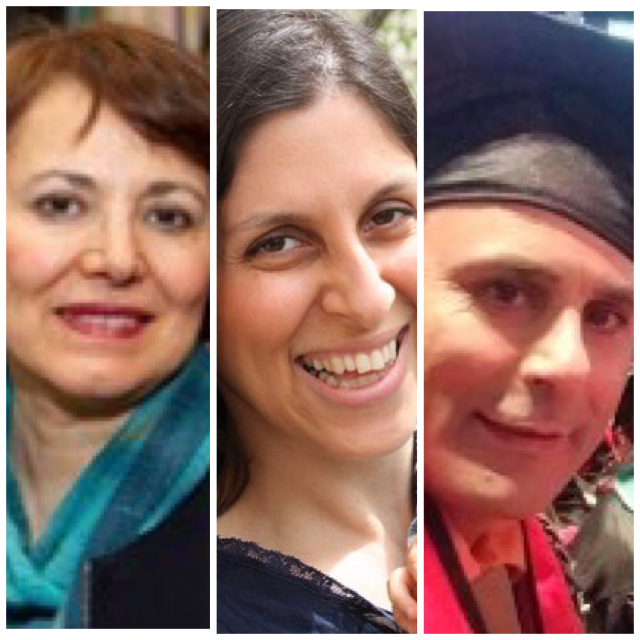
Among the Americans currently being held are an energy executive named Siamak Namazi and his 80-year old father, Baqer, according to U.S. and Iranian officials. Iran’s judiciary spokesman last month confirmed Tehran had arrested the third American, believed to be a San Diego resident named Reza “Robin” Shahini.

Friends and family of the Namazis believe the Iranians are seeking to increase their leverage to force another prisoner exchange or cash payment in the final six months of the Obama administration. Secretary of State John Kerry and other U.S. officials have been raising their case with Iranian diplomats, U.S. officials say.

Iranian officials have demanded in recent weeks the U.S. return $2 billion in Iranian funds that were frozen in New York in 2009. The Supreme Court recently ruled that the money should be given to victims of Iranian-sponsored terror attacks.

Clearly the Iranian regime expects to use the same tried and true tactics to squeeze more cash out of the Obama administration in its waning days as the three proxy wars it funds in Syria, Iraq and Yemen drain it of cash as fast as it can replenish it.

The $100 million value per American hostage is a stunning amount. As a point of comparison, the four highest paid professional athletes in the world make less money: Soccer stars Cristiano Ronaldo and Lionel Messi make $88 and $81.4 million respectively, basketball star LeBron James banks $77.2 million and tennis great Roger Federer brings in a paltry $67.8 million compared to what the Iranian regime received.

The fact that the last days of the Obama administration are coming and with both presidential candidates—Hillary Clinton and Donald Trump—promising to hold the Iranian regime more accountable, the regime’s leaders may be seeing the end of the road to the usefulness of the nuclear deal.

Top mullah Ali Khamenei harshly denounced the Iran nuclear deal Monday, referring to the negotiations as a “lethal poison” that will prevent his country from negotiating with the U.S. in the future.

“They [the U.S.] want us to negotiate with them on the regional issues but the nuclear deal experience tells us that this is a lethal poison and we cannot trust the Americans’ words in any issue,” Khamenei told a gathering of Iranian citizens Monday.

Various officials within the Islamic Republic have criticized the U.S. for implementing new sanctions against Iran since the JCPOA went into effect in January. They claim the deal prevents the U.S. from implementing any new sanctions against their country, however, the deal only pertains to nuclear related sanctions that existed before the accord was signed. Khamenei threatened to “set fire” to the deal in June should the West violate it, he did not elaborate on what exactly entailed a violation.

It’s a silly claim since the Iranians specifically demanded the deal be de-linked from non-nuclear issues such as human rights and terrorism. In essence, the mullahs have trapped themselves.

Khamenei cautioned against talks with the United States on other regional crises, presumably including the wars in Syria and Yemen and the Islamic State extremist group. The experience of the nuclear deal, he said, “tells us that taking this step would be a deadly poison and that the Americans’ remarks cannot be trusted on any issue.”

His remarks are a verbal backflip from the original promises made by the Iran lobby, especially the National Iranian American Council, that passage of the agreement would help in moderating the various conflicts going on in the region with Iran’s help.

Those claims, like most made in support of the Iranian regime, have proven false.

By  Michael Tomlinson

Filed Under: Blog, News Tagged With: #NuclearDeal, Appeasement policy, Featured, Iran Human rights, Iran Lobby, Iran sanctions, Iran Talks, Khamenei, National Iranian American Council

Iran Lobby Tries to Hold Off Iran Sanctions

August 2, 2016 by admin

Iran Lobby Tries to Hold Off Iran Sanctions

Iran Lobby Tries to Hold Off Iran Sanctions

The Iran lobby, led by the National Iranian American Council, has consistently raised the idea that Iran has not been rewarded with the full lifting of economic sanctions per the nuclear agreement reached last year.

It makes this case based on the continued shaky nature of the Iranian economy, and by the threatening statements of various regime officials such as top mullah Ali Khamenei and foreign minister Javad Zarif who maintain the U.S. is deliberately trying to sabotage the deal.

It is a profoundly ludicrous ideal given the fact that the Obama administration has broken with past U.S. policy over the past three decades in maneuvering to get this deal done in the first place. The Obama administration has set new standards for political gymnastics in trying to secure this policy win, including treating the agreement as a political framework and not a formal treaty in order to avoid an uncertain Senate vote.

It even de-linked Iranian regime’s notoriously bad human rights record and sponsorship of terrorism as conditions for doing the deal; an unheard of step in modern diplomacy.

It also ignored blatant tampering by the Iranian regime in sanitizing military sites where prior uranium enrichment had been ongoing and ignored copious mountains of evidence that Iran was still pursuing dual-use nuclear technology from Germany and ballistic missile designs from North Korea.

Even after all that, the Iran lobby and regime still blame the U.S. for not following through on its commitments.

With friends like these, who needs enemies?

A key goal for the regime remains the lifting of the remaining sanctions put in place by the U.S. in response to Iran’s abysmal human rights record and terror support. These items were ostensibly left out from the nuclear deal since—by the Iranians argument—they had nothing to do with nuclear production, but now the mullahs want these sanctions lifted even though Iranian regime has done nothing to improve its conduct in either area.

The fact that the Iran lobby and regime are now trying to link these sanctions—previously off the table—now back on the table and have threatened to walk away from a deal they have already walked away from, demonstrates how completely useless the nuclear exercise has become.

In a posting on its website, the NIAC, argued that the pending renewal of the Iran Sanctions Act could bring disastrous consequences if it was amended with so-called “poison pills” to impose new restrictions, sanctions or even lengthen its term.

“There is a danger that passage of new sanctions legislation, even if it is to renew sanctions already on the books, could exacerbate tensions over JCPOA sanctions relief. The prospect of Congress renewing ISA, especially extending them beyond the 2023 deadline for lifting sanctions, could send troubling signals regarding the U.S. commitment to the JCPOA at a time of ongoing political uncertainty. Iranian officials and many in the broader Iranian public say the sanctions relief promised under the deal has not been delivered,” the NIAC statement said.

It’s a perverse position to take since the gross mismanagement of the regime’s economy and the decision to support three ongoing wars in Syria, Iraq and Yemen have badly hobbled an economy already rife with public corruption and battered by plummeting oil prices that have nothing to do with the sanctions; especially since Iranian regime is now free to sell the country’s oil back on the open market.

The Iranian people are rightly angry and upset at the stagnant economy, but Tehran’s streets and the channels of social media are not being filled with vocal denunciations of the U.S., instead it is filled with harsh protests of inflated paychecks for regime officials and the pouring of thousands of young Iranian lives to die on the battlefields far from Iran’s borders.

The effort to misdirect attention away from the real failings of the regime and try to blame it on the U.S.—even after the U.S. has tried to do everything it can to appease the Iranian regime short of baking cookies—is a time-worn tactic of the mullahs and we should not fall for it.

Robert Spencer, noted author and director of Jihad Watch, wrote an editorial in the New York Post warning that the Iranian regime is the greatest threat the U.S. and West face right now and dwarfs ISIS in its threat.

“Iran is not as flashy as ISIS but is actively working now on numerous anti-American initiatives that could turn out to be even more lethal than anything ISIS has yet perpetrated,” he said. “The nation is a breeding ground for terrorist activity: funding and controlling a global network of jihad terror organizations with a truly global reach, ready to do Iran’s bidding up to and including the killing of its perceived enemies.”

“Iran’s Hezbollah doesn’t just operate in Lebanon. It continues to target the United States through Mexico, where it has teamed with drug cartels along the US border. This partnership is mutually beneficial: Hezbollah gets massive amounts of cash to finance its jihad operations, and the drug cartels receive extensive training in ways to strike terror into the hearts of their enemies. That is one principal reason why the Mexican drug cartels have adopted what up until recently had been two trademarks of jihad groups: kidnapping and beheading,” he added.

Bob Blackman, a member of the British Parliament, similarly warned of trusting the Iranian regime in a piece in The Hill after the United Nations released a report assessing the regime’s compliance with the nuclear agreement, which found it had failed to meet the higher standards for compliance.

“The critical report by the UN is only the latest in a long series of marks against the Rouhani administration’s supposedly moderate credentials. In order to believe in that moderation in the first place, Western policy-makers had to ignore Rouhani’s long history in the security apparatus of Iran’s clerical regime, including his former role as lead nuclear negotiator, about which he boasted of raising Tehran’s nuclear profile while keeping international scrutiny at bay. And in order to keep the moderation narrative alive to the current date, those same policy-makers have had to ignore various statistical indicators and warnings from the Iranian opposition,” he said.

“The U.S. gave up important leverage in hope of improved relations, but it remained the main object of Tehran’s wrath. The UN closed the file on Tehran’s nuclear weapons program and Iran has continued to accuse it of political bias. And the six major powers involved in the JCPOA, having given in to even last-minute demands by the Islamic Republic, received nothing in return but the most cursory and minimal compliance with the deal. As the Associated Press reported last week, secret side-agreements already outline the expanded nuclear activities that Iran plans to pursue at its earliest possible opportunity,” Blackman added in a warning we should all heed.

By Michael Tomlinson

Filed Under: Blog, News Tagged With: #NuclearDeal, Appeasement policy, Featured, Iran, Iran deal, Iran Human rights, Iran Lobby, Iran sanctions, Iran Terrorism, NIAC Action

Who is Really in Charge of the Iran Regime?

July 29, 2016 by admin

Who is Really in Charge of the Iran Regime?

Who is Really in Charge of the Iran Regime?

The Iranian regime has been busy snatching up citizens of other countries without charge, trial or contact with the outside world. They have been U.S., British, French and Canadian citizens; dual national Iranians. They have been professors, students and aid workers.

None were terrorists, criminals or even political. They all had the misfortune of being in Iran and possessing a passport of a foreign country. It seems that alone was sufficient for the Revolutionary Guards to pick them up, put them in prison and walk away.

The New York Post editorial board blasted the practice and blamed earlier acts of appeasement for sowing the seeds for this behavior.

“Iran is re-stocking its larder of American and other Western hostages, clearly convinced the Obama administration won’t dare make it an issue. Tehran this week arrested yet another US citizen and plans to place him on trial — though on what charges, it won’t say,” the Post said.

“The State Department says it’s ‘looking into’ the latest arrest, which is pretty much all it can do. Iran doesn’t recognize dual citizenship, so won’t even allow consular visits to those being held.

“Some analysts suggest the Revolutionary Guard is insisting on the arrests in order to deter Western businessmen from visiting Iran with investment cash. Funny: Getting such investment was supposedly Tehran’s major motive for accepting the deal’s supposedly tough restrictions on its nuclear-weapons program in the first place,” it added.

The arrests do raise an interesting question: Who is calling the shots in the Iranian regime?

The Iran lobby has long maintained that a rift and power struggle is going on within the regime between the forces of moderates versus hardliners. Loyalists such as Trita Parsi of the National Iranian American Council have used that talking point incessantly in pushing for approval of the nuclear deal with Iran last year.

They promised a nuclear deal would usher in a period of moderation and empower these so-called moderates in upcoming elections.

The opposite has happened as the region has literally gone up in flames with wars now raging from Syria to Yemen and terrorist attacks striking the U.S. and Europe with almost daily frequency.

In Iran, parliamentary elections were rigged with the removal of virtually all perceived dissenters or moderates removed from the ballot even before voting began. The only group of “moderates” elected was a small cadre in Tehran only and even they have turned out to be loyal to the regime and ruling mullahs as evidenced by elections to return the hardest core extremists to leadership positions in the parliament and supreme council.

Many media outlets have characterized the hostage taking as evidence of the internal power struggle within the regime.

The Christian Science Monitor described by saying “the targets of the most radical elements of Iran’s competing power blocs are increasingly Iranian-Americans and other dual nationals visiting Iran to see family or pursue academic interests. They are being ensnared in the upheaval and redistribution of power in the wake of last year’s nuclear deal, experts in United States-Iran relations say.”

“Iranian hardliners opposed to President Hassan Rouhani and his diplomatic opening to the US and the West are widely assumed to be behind the detentions – and would not appear to be easily persuaded to permit the detainees’ release. But at the same time, some Iran experts say they see a window of opportunity for some kind of prisoner deal before President Obama leaves office,” it added.

The fact that speculation centers on the Iranian regime snatching up Americans and Brits for the purpose of another round of prisoner swaps in exchange for more economic concessions says volumes about the intentions about the regime, but it says even more about who is calling the shots in the leadership of the regime.

The time-honored tradition of hostage taking by the mullahs in Tehran was even conceded by Iran lobbyists as being unlikely to die off.

“But the prospects for freeing Iran’s imprisoned dual nationals before Mr. Obama leaves office – not to mention ending the practice altogether – are not bright,” says Reza Marashi of the NIAC.

“You have to put the likelihood at 50-50 at best,” he says. “The ability to align timing and interests, that’s completely up in the air.”

The best the Iran lobby can offer these poor, innocent victims of the regime are 50-50 odds they will be joined by more hostages.

All the evidence points to the fact that Hassan Rouhani has never been a moderate and is rock-solid in step with Ali Khamenei and his fellow mullahs on these actions. Has Rouhani called for these prisoners’ release? Has he condemned them? Has he even so much as posted a tweet describing any regret over these actions?

The answer is a resounding no.

The hardline nature of the regime can be seen in the everyday cruelties and injustices visited on ordinary Iranians. Beyond the more gruesome aspects of the regime’s rule, including public executions, amputations and beatings of women on the street, everyday acts that seem perfectly normal to any Western citizen are viewed as subversive and dangerous.

A group of women were reportedly arrested for riding bicycles in Iran and made to sign pledges not to repeat the “violation”.

They were planning to participate in a cycling event in the north-western city of Marivan when police told them a new government directive had barred women riding bicycles in public.

The opposition National Council of Resistance of Iran said officers ordered them to sign written pledges vowing not to repeat the “unlawful violation” and took several women who protested into custody, according to the Independent.

In another incident, up to 150 people were detained by Iran’s morality police at a mixed-gender party in Tehran. In the sweltering heat of summer, as people spend more time outside, the authorities tighten their grip on social norms, cracking down on activities deemed un-Islamic.

Such restrictions have become a regular feature of Iranian life since the current theocracy has come to power after the 1979 revolution, as members of the morality police appear on the streets, or are deployed in vans at public places, to tackle women defying the compulsory hijab, men with non-approved hairstyles, or males and females partying together, according to the Media outlets.

But even with all these acts of suppressing free expression, defiance among the Iranian people still finds a way to surface as many men have posted photos of themselves wearing the hijab to social media, in solidarity with women in the country, who are forced to cover their heads in public, the Independent reported.

Many of the photos show a man wearing the hijab next to his wife or a female relative whose hair is uncovered.

It isn’t much in the way of defying the regime, but in a nation where simply holding a U.S. passport and being an Iranian can land you in prison, even these small acts can grow to become important changes to the regime.

By Laura Carnahan

Filed Under: Blog, News Tagged With: hassan rouhani, Iran, Iran deal, Iran Human rights, Iran Lobby, Trita Parsi

Why the Iran Regime Needs ISIS

July 28, 2016 by admin

Why the Iran Regime Needs ISIS

Why the Iran Regime Needs ISIS

Rev. Jacques Hamel was an 85-year old priest shepherding a flock in a small church in Normandy, France. He was celebrating Mass when two dedicated followers of the terrorist group ISIS stormed in, made him kneel at the altar and then slit his throat in front of two shocked parishioners and two nuns who then heard a sermon from the killers.

ISIS claimed responsibility for the attack and fulfilled its long-standing vow to bring a war against Christians and the Catholic Church by killing a priest in the sanctity of a church.

“They forced him to his knees and obviously he wanted to defend himself and that’s when the drama began,” said one nun, who identified herself as Sister Danielle, The Guardian reported. “They were filming themselves preaching in Arabic in front of the altar. It was a horror.”

The attack comes amid a spate of terror strikes in France, including Tunisian Mohamed Lahouaiej Bouhlel’s truck rampage in Nice on July 14, when he plowed into a crowd of Bastille Day revelers – killing 84 and wounded over 300.

For two years, the black-clad jihadist army has called for attacks on Christians in Rome, throughout Europe and across the world. It has even called for the assassination of Pope Francis. The attack — which the knife-wielding ISIS killers reportedly videotaped — in the northern French town of Saint-Etienne-du-Rouvray shows Islamist killers have heeded the call.

“The Islamic State is persistently demoralizing European unity by launching divisive attacks within its borders — the most recent attack on the Catholic Church aims directly at the French sense of identity,” said Veryan Khan, editorial director for the U.S.-based Terrorism Research & Analysis Consortium.

Over the weekend, ISIS Twitter accounts called for more operatives to take up arms in France and carry out additional deadly attacks, according to an analyst with the U.S. based company GiPEC.

ISIS warned that London and Washington DC are next on the list of target cities, with images threatening major world capitals being posted online.

With a secure base of operations extending from Syria to northern Iraq, ISIS can continue to recruit young extremists, engineer the return of fighters to their home countries and supply arms, cash and documents to move terrorists around the world.

The inability to crush ISIS in Syria and Iraq has been largely the result of the almost-never ending wars brought about by Iranian intervention in both countries. It has been well-known that Iran’s last minute support for the Assad regime kept it from falling during the Arab spring protests.

The decision by Iranian commanders to target not extremist Islamic groups, but instead go after Western-funded and backed rebels, was a key step towards freeing militants to expand their ranks. Iranian regime’s manipulation of the administration of former Iraqi prime minister Nouri al-Maliki was the defining blow though in driving out Sunnis from a coalition government straight into the arms of ISIS and leading to the downfall of Mosul, the most important victory for the terror group.

The cold calculation of the mullahs in Tehran explains why the regime did not go after ISIS and why ISIS has so far largely left Iranian interests and its citizens alone and untouched.

For the mullahs ruling Iran, the mere existence of ISIS and its sheer brutality provides a usual counterweight to attacks on its own human rights record and support for terrorism such as its long-standing partner Hezbollah. As ISIS ratchets up the severity, frequency and brutality of its attacks, Iranian regime’s conduct begins to pale in the opinions of media and governments.

Imagine a wife beating, rapist living on your block. You would be rightly worried about him, but instead a notorious serial killer moves into the neighborhood and starts slaughtering people. Who would you be more concerned about?

It’s a sleight of hand trick that gives the mullahs freedom to operate and gain some political cover for their abuses. If the world protests the arrests of dual-national citizens by Iran, don’t worry, there’s an ISIS attack on a church.

These efforts at deception have been part and parcel part of the tools the mullahs use to distract attention. They used it to great effect during the negotiations for the nuclear talks by pointing to the Syrian conflict’s start and how a more “moderate” Iran could help ease tensions there; never mind Iran started it all in the first place.

It is also why Iranian regime has done little to actually combat ISIS. Even with the enlistment of Russia to fight in Syria alongside Iran, the targeting list for Russian warplanes includes American-backed militias and not ISIS units.

Now that the regime has set the date for its next presidential election for May 2017, you can be assured the mullahs will use ISIS to demonstrate their commitment to helping combat terrorism, while continuing its own sponsorship of terror.

Predictably the media, with the help of the Iran lobby, was pedaling the notion that the election represents a battle between “moderates” vs. “hardliners.” If the past three years under Hassan Rouhani have taught us anything, it is that there are no real moderates within the Iranian regime.

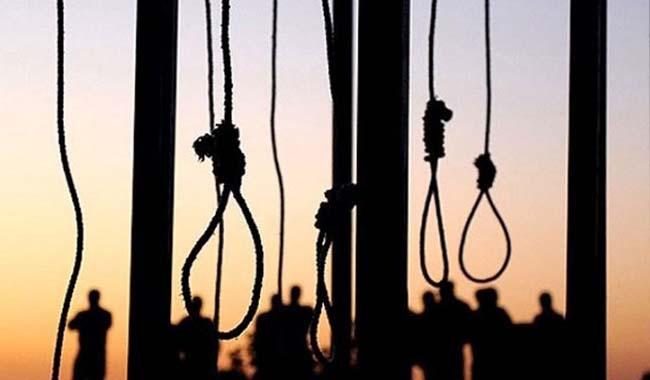
Anyone espousing a dissenting view has either been put in prison or sent to the gallows to be hung. It’s a tidy way to clear your ballot of any dissenting views.

By Michael Tomlinson

Filed Under: Blog, News Tagged With: Featured, hassan rouhani, Iran, Iran Lobby, Iran Mullahs, Iran Terrorism, IRGC

Iran Regime Hands Military Over to Extremist While Seeking Cash

July 28, 2016 by admin

Iran Regime Hands Military Over to Extremist While Seeking Cash

Iran Regime Hands Military Over to Extremist While Seeking Cash

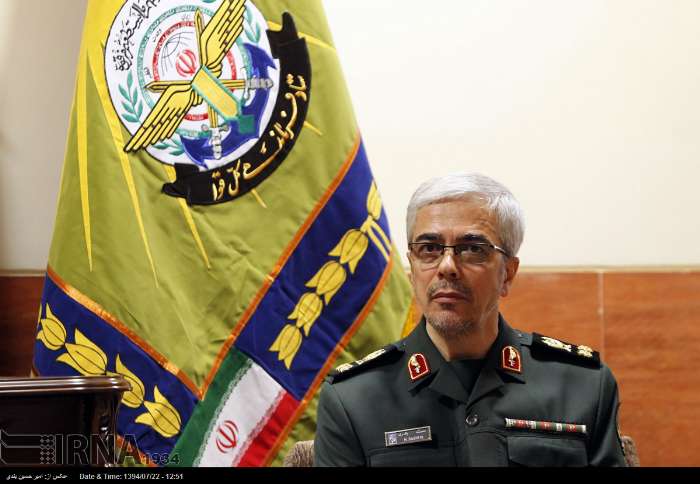
In an unexpected development late last month, the Iranian regime’s Supreme Leader Ali Khamenei announced the promotion of Maj. Gen. Mohammad Bagheri as chief of staff of Iran’s armed forces. A shadowy figure from the country’s vaunted Islamic Revolutionary Guards Corps (IRGC), Bagheri has been tasked with overseeing all branches of Iranian regime’s armed forces, including the IRGC, the regular military (Artesh), and the police.

Bagheri has an extensive military background, including serving as the IRGC’s chief of intelligence and information operations, which has put him at the forefront of coordinating the regime’s work with terrorist groups such as Hezbollah, as well as maintaining the network of proxies throughout the region including Shiite militias in Iraq and Houthi rebels in Yemen.

Importantly according to a piece in the National Interest, Bagheri belongs to a clique of IRGC officers who form the organization’s core leadership, sitting alongside the likes of Mohammad Ali Jafari, the current commander of the IRGC, and Qassem Soleimani, the famed general directing the IRGC’s expeditionary wing, the Quds Force.

Composed of just a few members, this clique shares deep ties dating back to the Iran-Iraq War, and is hugely influential in shaping the organization’s trajectory. Neither is it averse to intervening in domestic politics: members of this clique, including Mohammad Bagheri, signed a letter in 1999 to then president of the mullah’s regime, Mohammad Khatami, threatening a military coup if Khatami did not crush a growing student rebellion. Notably, Rouhani the current “reformist” president was the Iranian regime’s National Security Advisor at the time and was at the forefront of suppressing the student movement.

This appointment is not some simple bureaucratic reshuffling. It represents a significant change in regime policy to put the nation’s military and police services firmly in the hands of the IRGC and away from the regular army. It places the most politicized unit of the military, which already controls wide swathes of Iran’s economy, at the top of the pyramid in terms of raw power.

The sharp end of Iran’s interventions in the Middle East has been the IRGC, which to date has lost hundreds of fighters and tens of commanders across the region. In Iraq, the IRGC has overseen the establishment of the Popular Mobilization Forces (PMF), an umbrella organization spanning hundreds of predominantly Shia militias that fights alongside Iraq’s regular military and often commands its own operations.

The IRGC provides training, weapons and frontline commanders to assist the PMF, which is dominated by militias that have pledged personal fealty to Iran’s supreme leader and not the nation as a whole; an important distinction.

The moves includes the outlining of a modernization plan by Bagheri to upgrade the Islamic state’s military which has already begun with an expensive shopping list of Russian military hardware, including new fighter jets, anti-ship missiles and advanced anti-aircraft batteries.

The costs of that upgrade may also explain why the regime has been complaining loudly of the lack of access to U.S. currency exchanges and the reluctance of foreign banks to handle Iranian transactions due to the continued threat of economic sanctions put in place by the U.S. over human rights violations and support of terrorism and not tied to last year’s nuclear agreement.

The fact that the regime has opted to use the unfrozen funds it has access to as part of the nuclear agreement to help fund its proxy wars and not to help spur the Iranian economy says loads about the intentions of Khamenei and the other ruling mullahs.

Instead, the regime has sought to place blame on the still anemic economy on the U.S. and the inability to get fresh cash. This has helped whip the Iran lobby into a lather writing editorials calling the cash crunch a “new sanction” and a threat to the nuclear agreement, which is silly when we consider the agreement has been a failure in stemming the regime’s nuclear and regional ambitions.

One example has been the near constant drumbeat of posts on regime loyalist blog Lobelog.com which put out a Q&A with noted regime supporter retired Amb. Peter Jenkins of the British Diplomatic Service, who blamed the Obama administration for doing nothing to help Iran access its financial windfall.

He also raised the issue of presidential candidate Hillary Clinton’s past support for some of the toughest sanctions ever placed on Iran and whether or not she would continue on that path if elected.

“I am concerned by Ms Clinton’s uncritical liking for the current Prime Minister of Israel and his right-wing government. I am also concerned by the hawkish nature of her record on foreign policy issues, and I am unsure that she will feel any inclination, still less obligation to protect the legacy of President Obama, from some of whose policies she has sought to distance herself,” Jenkins said.

The realization is probably growing on the mullahs that no matter who gets elected in November, the U.S. policy of appeasing the regime may be coming to an end which is spurring their frantic efforts to unlock the billions in cash they so desperately need.

It is a point former president Bill Clinton reinforced in his speech during Tuesday’s nomination of his wife at the Democratic National Convention, where he emphasized her role as Secretary of State in getting the toughest sanctions placed on Iran during her tenure.

“As secretary of state, (Hillary Clinton) worked hard to get strong sanctions against Iran’s nuclear program” and “got Russia and China to support them,” Bill Clinton said.

We can only hope as president, should she prevail, she continue on that same path.

By Michale Tomlinson

Filed Under: Blog, News Tagged With: Featured, Iran, Iran Terrorism, IRGC, Mohammad Bagheri, Qassem Soleimani, Quds force

Iran Regime Goes After US Human Rights to Cover its Bad Record

July 26, 2016 by admin

Iran Regime Goes After US Human Rights to Cover its Bad Record

Iran Regime Goes After US Human Rights to Cover its Bad Record

One of the more ironic acts of desperation by the Iranian regime is to sponsor a conference in Tehran on the U.S. human rights record as it pertains to police killings of African-Americans; in an attempt to cover up Iran’s abysmal human rights record.

Regime-run television gave the event wide play as it sought to focus attention on the politically hot topic in the U.S. and right on cue, the Iran lobby obliged by raising its own profile on the Black Lives Matter movement and trying to link it to the concerns of the Iranian regime.

The National Iranian American Council, a staunch defender of the Iranian regime, spotlighted a letter being circulated in Farsi aimed at building ties between the BLM movement and the perceptions of how Iran is being treated as “terrorists” in the media.

It is ironic for NIAC to be sharing this letter and proclaim solidarity with the blacks who perceive being persecuted while back in Iran, Iranian-Americans are being arrested with alarming frequency lately and the NIAC issues no protest or demand for their release.

The latest being a San Diego-man who may have been arrested because of his frequent social media postings protesting human rights abuses in Iran. While it is commendable to hope for an improvement in the relations between blacks and law enforcement in the U.S., it might have been more productive if NIAC circulated a letter in Iran calling on the mullahs to improve the treatment of Iranians by the regime’s police and paramilitary units.

It is the treatment of ordinary Iranians at the hands of regime that makes the effort to blame the U.S. for human rights abuses so extraordinarily silly, but it is on par with recent efforts to try and blame Saudi Arabia for the creation of ISIS. Next the mullahs will blame global warming on Canada in order to deflect from the snatching of its citizens by Iran.

Most troubling though is the regime’s recent spate of arrests of dual national citizens with most not even charged with any specific crime. Their abductions bring up the specter of more prisoner swaps down the road similar to what followed after the nuclear deal was agreed to with the swap of several Americans including Washington Post reporter Jason Rezaian and Christian pastor Saeed Abedini.

The plight of religious minorities such as Christians, Iran has always been a precarious thing with several such as the Ba’hai being ruthlessly persecuted by the regime. One such example is a Christian woman being held and denied a medical release while she undertakes a hunger strike.

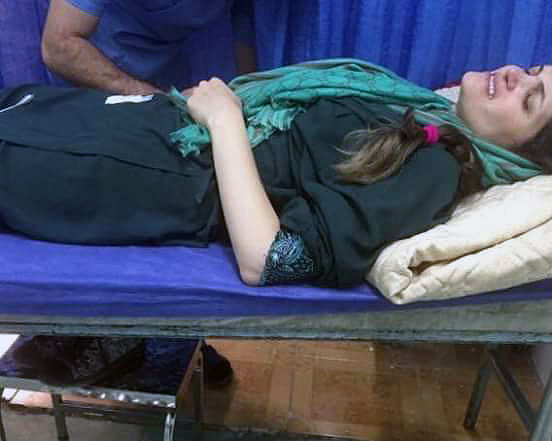
Mohabat News reported Monday that the Iranian Ministry of Intelligence has refused to grant Maryam Zargaran’s release despite signs that she is developing multiple sclerosis. The Christian woman began her second hunger strike on July 5 in protest against the treatment she has received in prison, and reports are saying that she has become very weak, with her long-term heart condition posing an increasing health risk.

Zargaran’s family were allowed to visit her in prison recently, but revealed that she refuses to receive treatment at the prison clinic because staff mistreat her there.

The Iranian Christian woman has been held inside Evin Prison’s Women’s Ward since July 15, 2013, for helping Abedini, who also spent three and a half years in prison in Iran before being released and returning to America.

Abedini has been speaking out against the persecution of Christians in Iran and against Zargaran’s treatment ever since, and on Saturday wrote on Facebook: “Today is day 20 of Nasim hunger strike and NO [response] from anyone.”

Abedini spoke before 100,000 people in Paris at the National Council of Resistance of Iran rally earlier in July, and vowed that through faith in Jesus Christ, the “resurrection of the Iranian people” is coming soon.

“We will soon see this rebellion in our country, in our hearts, and in our world, because Jesus Christ is bringing this message. The resurrection of the Iranian people shall arrive very soon,” the pastor said at the time.

But the Iranian regime’s malfeasance extends to its long-standing support for terrorism as was revealed when the Obama administration moved to slap sanctions on high-ranking Al-Qaeda officials being harbored in Iran by the regime.

This action follows similar acts targeting the Iran-al-Qaeda relationship with the Treasury and State Departments publicly accused the Iranian regime of allowing al Qaeda to operate inside Iran at least 10 times between July 2011 and August 2014.

Testifying before Congress in February 2012, Director of National Intelligence James Clapper described the relationship as a “marriage of convenience.” There is considerably more evidence of Iran’s support for al Qaeda in the collection of documents captured during the raid of Osama bin Laden’s compound on Abbottabad, Pakistan, in 2011.

Senior U.S. intelligence officials have told The Weekly Standard that the document collection includes letters describing the nature of the relationship between Iran and al Qaeda and specific ways in which Iran has aided al Qaeda’s network and operations.

The hypocrisy in the move to sanctions terrorists safely harbored in Iran, but not sanction Iran itself is self-evident and an example of the perverse logic the Iran lobby has sought to instill throughout the “echo chamber” of supporters of the regime.

By Laura Carnahan

Filed Under: Blog, News Tagged With: Abedini, Featured, hassan rouhani, Iran Human rights, Maryam Zargaran, National Iranian American Council

Iran Regime Cracks Down Again and Confirms American Prisoner

July 26, 2016 by admin

Iran Regime Cracks Down Again and Confirms American Prisoner

Iran Regime Cracks Down Again and Confirms American Prisoner

The Iranian regime has always followed a simple rule when it comes to the freedom of its own people: Never let the Iranian people have too much freedom.

Nothing personifies that rule than in the complete control the regime has tried to maintain over the nation’s communications. The mullahs know that allowing Iranians free and unfettered access to the internet, social media and video services makes their rule incredibly vulnerable to scrutiny.

If ordinary Iranians could share with the outside world what was going on inside the regime, the world would see the brutality and ruthlessness of the mullahs and the maltreatment of Iranian women.

They would see paramilitary Basij militia beating women on the street for dress code violations. They would see demonstrations broken up with clubs and truncheons. They would see daily executions taking place in public squares with hangings and punishment such as the amputation of limbs with power tools.

If ordinary Iranians had access to the internet, they could see the news unfiltered from around the world. They would see the proxy wars the regime has started in Syria, Iraq and Yemen. They would see young Iranians being sent to die on behalf of the mullahs to save a brutal regime in Syria that has resulted in the deaths of over 600,000 people and driven another four million into refugee status.

The mullahs have sought every advantage to keep the internet bottled up, including installing Iran’s version of China’s great wall to block unwanted sites, filter all internet traffic and monitor the online activities of all Iranians.

It has regularly tracked down and arrested bloggers who have posted controversial topics and it has yanked the myriad of satellite dishes that dot the rooftops of Iranian homes throughout the country. It has sought Iranians who have posted on banned social networks such as Instagram, Facebook, Twitter, Snapchat and others; even though it allows regime leaders to have their own social accounts to post propaganda.

Even with all these restrictions, Iranians have used their education, intellect and ingenuity in skirting around the mullahs’ walls. They have used routers to work around blockades. They have used illegally made mobile apps to install hacks and work arounds on certain IP addresses.

This underground access has helped Iranians, including those sympathetic with the organized Iranian resistance movement to smuggle out photos, videos and other information about what is really happening inside Iran and make the world aware of violations and abuses being committed by the regime.

That is how the world has been able to find out about Iran’s illegal and secret nuclear program in the first place and most recently that is how the world has known about the recent turmoil involving corruption among regime officials.

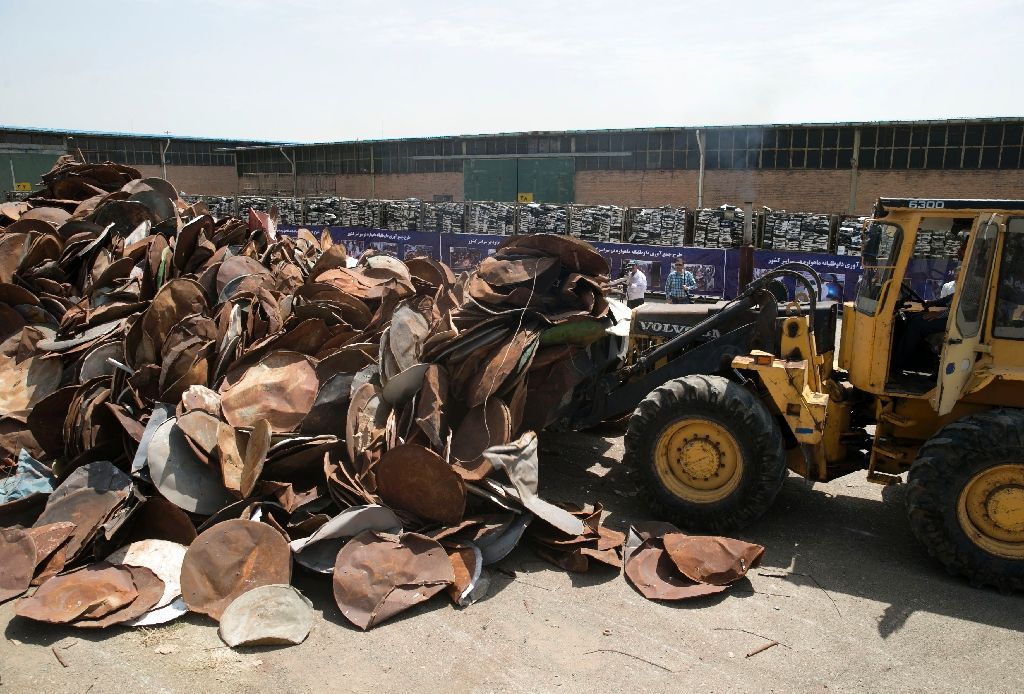
All of this doesn’t stop the regime from still trying to keep a stranglehold on the Iranian people’s access to communications as regime authorities have again destroyed a startling 100,000 satellite dishes and receivers as part of a widespread crackdown they say “deviate morality and culture.”

General Mohammad Reza Naghdi, the head of Iran’s Basij militia, oversaw the destruction ceremony in Tehran on Sunday and warned of the impact that satellite television was having in the country.

“The truth is that most satellite channels… deviate the society’s morality and culture,” AFP news agency reported him as saying.

“What these televisions really achieve is increased divorce, addiction and insecurity in society.”

While Naghdi said that a total of one million Iranians had already voluntarily handed over their satellite dishes to authorities, the vast majority were confiscated by regime police and militia.

Iranian police regularly raid neighborhoods and confiscate dishes from rooftops, and under Iranian law, satellite equipment is banned and those who distribute, use, or repair them can be fined up to $2,800, putting Naghdi’s explanation in a clearer light.

The effort to control communications points out the deeper actions of the regime as it confirmed the arrest of another American, but did not provide specifics even though family members have confirmed it is Robin Reza Shahini, an Iranian-American man from San Diego, California who was arrested.

Asked about reports of the arrest of a dual citizen on national security charges, the semi-official Fars news agency reported, judiciary spokesman Gholamhossein Mohseni Ejei told a weekly news conference: “The report on the arrest of an Iranian American dual national is correct.”

“But I don’t know what the charges are. The person was arrested in Gorgan … but the trial may be held in Tehran.”

In the past nine months, the Revolutionary Guards have arrested at least six dual-national Iranians, friends and family members say, the highest number of Iranians with dual nationality detained at one time in recent years to have been acknowledged.

The government has confirmed most of the detentions, without giving details of any charges. The Iranian government does not recognize dual nationality, which prevents relevant western embassies from seeing detainees.

Shahini was active on social media, running two Facebook accounts, and maintained a blog, but the blog and one of his Facebook accounts appear to have been disabled, his girlfriend said. His WhatsApp account shows someone used the account as recently as July 20th.

Predictably the Iran lobby was again silent on another American’s abduction, preferring instead to insert itself into the U.S. presidential election by denouncing presidential candidate Donald Trump’s speech at the Republican National Convention in which he denounced the nuclear deal made with the Iranian regime.

By Michael Tomlinson

Filed Under: Blog, News Tagged With: Featured, Iran Human rights, Iran Lobby

Clinton and Trump Must Face Dealing with Iran

July 23, 2016 by admin


Clinton and Trump Must Face Dealing with Iran

Clinton and Trump Must Face Dealing with Iran

The Republican National Convention is going on in Cleveland where Donald Trump will become the nominee for the Republican Party. Hillary Clinton will follow suit in Philadelphia and then another season of American politicking will launch into its usual fall fury.

This election year though is different from any other in that the U.S. and the rest of the world are confronted by a problem it has never seen before and that is the rise and spread of Islamic extremism and the terror being perpetuated by organizations such as Hezbollah and ISIS, but also aided by nation states such as the Iranian and Syrian regimes.

Through the use of the internet and social media, extremist groups are now able to preach their hatred around the world and manipulate individuals to commit heinous acts, as well as coordinate terror cells in a playbook that has already been proven time and again from Sydney and Ottawa to Boston and San Bernardino to Paris and Bangladesh.

That makes the problem of dealing with terror not so much a law enforcement exercise of going after specific individuals, but rather a geopolitical strategic exercise in battling an ideology. This makes the problem facing the next president all the more daunting because the battlefront is in trying to kill an idea instead of just using a Predator drone to fire a missile at a terrorist leader.

This also helps frame a better understanding of the role the Iranian regime plays in the spread of global terrorism.

Iran remains on the U.S. State Department list of nations that is a state-sponsor of terror; a list that has ironically shrunk over the years as the Cold War ended much of the friction that occurred between the U.S. versus the old Soviet empire and each respective client states.

Instead, we are left with a world of unaligned rogue nations such as Iran and North Korea, and nations that have fallen apart to such a degree that terrorist organizations operate essentially freely such as Somalia, Syria and to a lesser degree now Libya.

The rise of Al-Qaeda and ISIS into essentially nation-state status illustrates the fundamentally changed nature of the world we live in and it is a world that could not happen unless countries such as Iran under the mullahs have provided support, cash, expertise and political cover for those rogue entities.

When Al-Qaeda was driven from Afghanistan after the U.S. invasion, many of its key leaders were granted refuge in Iran by the mullahs in Tehran. The mullahs also provided support to Shiite militias backed by Iran fighting U.S. troops in Iraq, killing many with Iranian-manufactured explosive devices.

When Syria’s Assad regime was on the brink of collapse, the Iranian regime stepped in with Quds Force fighters, Hezbollah terrorists, Afghan mercenaries recruited from refugees in Iran, billions of dollars in cash support and arms and ammunition.

Staving off Syria’s governmental collapse allowed Islamic extremist groups to flourish in the carnage of that war as Iran targeted Western-backed moderate rebel groups and left terror groups such as ISIS to spring forth and take root.

Iran did as much as anyone to pump ISIS up with the collapse of the Iraqi government of Nouri al-Maliki which drive disaffected Sunni tribes into the arms of ISIS and opened the door for the fall of Mosul and the rich oilfields in the north which have sustained ISIS with millions of dollars in illicit oil revenues a day.

These are all facts that the Iran lobby have mightily sought to deflect and hide from scrutiny. Groups such as the National Iranian American Council have concocted straw man issues out of immigration visas and banking transactions while ignoring the much more significant problems of human rights violations and the incredible suffering being caused by Iranian regime’s policies.

Iranian regime itself has publicly and aggressive announced its intentions for the all the world to see, most notably in flouting a nuclear agreement which was dead on arrival a year ago.

Even the regime’s foreign minister, Javad Zarif, who pulled this pathetic deal from the arms of a compliant and submissive Obama administration, boasted yesterday of Iran’s ability to bring its nuclear program back on track to producing literally tons of enriched uranium quickly as the deal eases off more quickly than the advertised 15 years promised.

Zarif said a document, submitted by Iran to the International Atomic Energy Agency and outlining plans to expand Iran’s uranium enrichment program, is a “matter of pride.”

The absurdity of the contention that Iran is abiding by the nuclear deal was on display when the United Nations issued a 17-page report that pointed out Iran may be abiding by the letter of the agreement, but not the spirit of it.

No greater understatement in diplomacy has been uttered since Neville Chamberlain claimed “peace in our time” after meeting with Adolf Hitler in Munich.

The report did have the common sense to point out the destabilizing nature of Iran’s recent test launches of ballistic missiles capable of carrying nuclear warheads and its illicit supplying of arms to Yemen and Iraq in those proxy wars.

Those understated concerns were too little and too late to offset the deaths and violence escalating around the world as Islamic extremist terrorist acts are now becoming the norm rather than the exception.

The fuel for that extremism comes from an Iranian regime that commits such cruel acts of barbarism as to set a bar that ISIS seems compelled to match and exceed with each new act of bloodshed.

Amnesty International took Iran to task with a new report on the denial of medical care to Iran’s numerous political prisoners; a reprehensible situation revealed broadly by Americans taken prisoner by Iran such as Christian pastor Saeed Abedini and former U.S. Marine Amir Hekmati.

The report, Health taken hostage: Cruel denial of medical care in Iran’s prisons, provides a grim snapshot of health care in the country’s prisons. It presents strong evidence that the judiciary, in particular the Office of the Prosecutor, and prison administrations deliberately prevent access to adequate medical care, in many cases as an intentional act of cruelty intended to intimidate, punish or humiliate political prisoners, or to extract forced “confessions” or statements of “repentance” from them.

“In Iran a prisoner’s health is routinely taken hostage by the authorities, who recklessly ignore the medical needs of those in custody. Denying medical care to political prisoners is cruel and utterly indefensible,” said Philip Luther, Director of Amnesty International’s Middle East and North Africa Program.

“Prisoners’ access to health care is a right enshrined in both international and Iranian law. When depriving a prisoner of medical care causes severe pain or suffering and it is intentionally done for purposes such as punishment, intimidation or to extract a forced ‘confession’, it constitutes torture.”

Iran sets the template and ISIS follows and unless Donald Trump or Hillary Clinton deal first and foremost with the behavior of the Iranian regime, its actions will never to checked and altered.

By Michael Tomlinson

Filed Under: Blog, News Tagged With: Featured, Iran deal, Iran Human rights, Iran Lobby, Iran Mullahs, Iran Terrorism, zarif

  • « Previous Page
  • 1
  • …
  • 30
  • 31
  • 32
  • 33
  • 34
  • …
  • 64
  • Next Page »

National Iranian-American Council (NIAC)

  • Bogus Memberships
  • Survey
  • Lobbying
  • Iranians for International Cooperation
  • Defamation Lawsuit
  • People’s Mojahedin
  • Trita Parsi Biography
  • Parsi/Namazi Lobbying Plan
  • Parsi Links to Namazi & Iranian Regime
  • Namazi, NIAC Ringleader
  • Collaborating with Iran’s Ambassador

Recent Posts

  • NIAC Trying to Gain Influence On U.S. Congress
  • While Iran Lobby Plays Blame Game Iran Goes Nuclear
  • Iran Lobby Jumps on Detention of Iranian Newscaster
  • Bad News for Iran Swamps Iran Lobby
  • Iran Starts Off Year by Banning Instagram

© Copyright 2026 IranLobby.net · All Rights Reserved.