Iran Lobby

Exposing the Activities of the lobbies and appeasers of the Mullah's Dictatorship ruling Iran

  • Home
  • About
  • Current Trend
  • National Iranian-American Council(NIAC)
    • Bogus Memberships
    • Survey
    • Lobbying
    • Iranians for International Cooperation
    • Defamation Lawsuit
    • People’s Mojahedin
    • Trita Parsi Biography
    • Parsi/Namazi Lobbying Plan
    • Parsi Links to Namazi& Iranian Regime
    • Namazi, NIAC Ringleader
    • Collaborating with Iran’s Ambassador
  • The Appeasers
    • Gary Sick
    • Flynt Leverett & Hillary Mann Leverett
    • Baroness Nicholson
  • Blog
  • Links
  • Media Reports

Confrontations with Iran Regime Rise Sharply

March 24, 2016 by admin


Confrontations with Iran Regime Rise Sharply

Confrontations with Iran Regime Rise Sharply

The Obama administration is expected to blame Iranian hackers as soon as Thursday for a coordinated campaign of cyber attacks in 2012 and 2013 on several U.S. banks and a New York dam, sources familiar with the matter have told Reuters.

The Justice Department has prepared an indictment against about a half-dozen Iranians, said the sources, who spoke on condition of anonymity due to the sensitivity of the matter. It is one of the highest-profile U.S. indictments against a foreign nation on hacking charges.

The indictment follows a string of provocative acts the Iranian regime has undertaken ranging from illegal launches of new ballistic missiles to appalling human rights crackdowns to continued support of three proxy wars that have generated a massive refugee crisis.

The indictment was expected to directly link the hacking campaign to the Iranian government, one source said. The banks will not be identified in the indictment due to fear of retaliation, the source said.

Though a planned indictment for the breach of back-office computer systems at the Bowman Avenue Dam in Rye Brook, New York, has been reported, it was only part of a hacking campaign that was broader than previously known, as the indictment will show, the sources said.

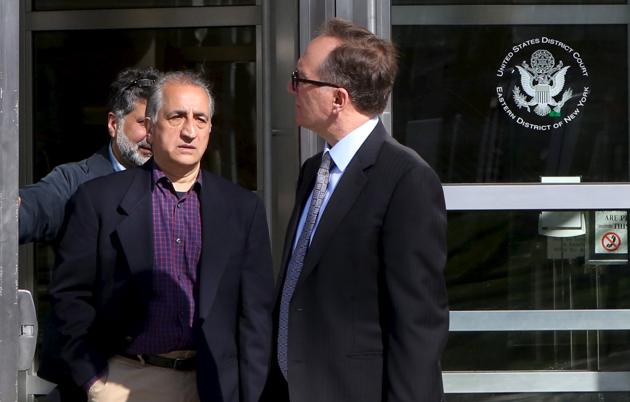
This follows the indictment of Ahmad Sheikhzadeh, 60, a consultant to the Iranian mission to the United Nations who is accused of charges related to sanctions violations, money laundering and tax matters, by the U.S. government in a Brooklyn, New York federal courthouse.

The string of legal actions signal an effort to respond to the new Iranian regime violations and incursions against the backdrop of rising terrorist attacks – namely in Brussels – and growing uncertainty over the nuclear deal reached with Iran and the much ballyhooed promise of moderation that is now evaporating quickly.

Calls to get tougher with the regime have become more common and include calls for the re-imposition of sanctions.

“The U.S. and our partners need to impose sanctions with real economic teeth. Some policymakers may be tempted to resolve the current situation by sending a symbolic message to Iran while avoiding antagonizing international partners, for example by imposing a narrow set of sanctions against individual Iranian military officials or small Iranian defense companies involved in the missile program,” said Peter Harrell, an adjunct senior fellow at the Center for a New American Security (CNAS) and the former deputy assistant secretary of State for Counter Threat Finance and Sanctions, in a piece in The Hill.

“But these kinds of sanctions rarely have meaningful economic bite, since most Iranian officials and defense companies have few economic ties to the U.S. or our allies. The Iranians would rightly perceive such sanctions as a largely symbolic message that refrained from imposing real costs on Tehran. Such sanctions would be unlikely to deter further Iranian aggression or prevent them from further testing the limits of the nuclear deal,” he added.

Some activists suggested that enthusiasm over the nuclear deal and prospects of future trade with Iran are causing the international community to turn a blind eye to Iran’s human rights violations. Since sanctions were lifted in January, foreign business delegations have flooded Iran and multibillion-dollar deals have been brokered.

Darya Safai, an Iranian women’s rights advocate who was invited to Geneva by the independent monitor U.N. Watch to address the Human Rights Council, said women’s rights are deteriorating by the year. Safai said the decline has been particularly dramatic since Rouhani, the architect of the nuclear deal, took office in 2013 on a platform of “moderation and prudence.”

Speaking from Geneva, Safai said that since Rouhani took office, a 50 percent quota had been imposed on the number of women studying at higher education institutions. Before Rouhani, 67 percent of students at universities were women, Safai said.

More worrisome were comments coming from the Revolutionary Guards who were supportive of calls by top mullah Ali Khamenei for a continuation of the regime’s “resistance economy” and called for a larger role for the Guards in Iran’s economy.

“The armed forces are ready to play a significant role in the resistance economy and implementing the supreme leader’s suggestions,” Brigadier General Masoud Jazayeri, deputy joint chief of staff of the armed forces was quoted as saying by Fars news agency.

Jazayeri added that Rouhani should see the Guards’ achievements in creating advanced ballistic missiles as an economic blueprint and evidence that Iran did not need foreign investment to succeed.

As the evidence mounts of growing confrontations with the Iranian regime on multiple fronts, the Iran lobby continues to remain silent on the rise in tensions since its claims of moderation in the wake of the nuclear have proven to be false.

By Michael Tomlinson
Filed Under: Blog, News Tagged With: Featured, Iran, Iran deal, Iran Terrorism

Iranian Regime Delivers Nowruz Message of Hostility

March 21, 2016 by admin

Iranian Regime Delivers Nowruz Message of Hostility

Iranian Regime Delivers Nowruz Message of Hostility

This weekend marks the start of Nowruz, the Persian New Year, which coincides with the spring equinox and includes many traditions such as a spring cleaning of one’s home, visiting with family and friends and feasting. It is regarded as the most important holiday in Iran and is always a prime opportunity for the Iranian regime to make a strategic and public point each year.

This year, top mullah Ali Khamenei did not disappoint in delivering a Nowruz message that could be considered an annual laundry list of grievances and perceived slights against the regime by the U.S. and was a reminder of just how ridiculous the Iran lobby’s contentions were of spurring a new “moderate” Iran after the nuclear deal.

Khamenei on Sunday said sanctions continue to bite the country’s economy, and again warned against trusting the U.S. — further indicating that the nuclear deal has not changed the mullah’s behavior towards West.

“They removed the sanctions in paper only,” Khamenei said in a televised address. “We don’t have any problem with the American people. What we are dealing with here is the politicians. They are the enemies.”

Khamenei’s remarks came after President Obama delivered his own Nowruz message to the Iranian people with his hopes for a more peaceful future. It obviously fell on the deaf ears of Khamenei.

“In Western countries and places which are under U.S. influence, our banking transactions and the repatriation of our funds from their banks face problems … because (banks) fear the Americans,” he said.

“The U.S. Treasury … acts in such a way that big corporations, big institutions and big banks do not dare to come and deal with Iran,” Khamenei added. The Central Bank of Iran has also said remaining U.S. sanctions have scared off European firms.

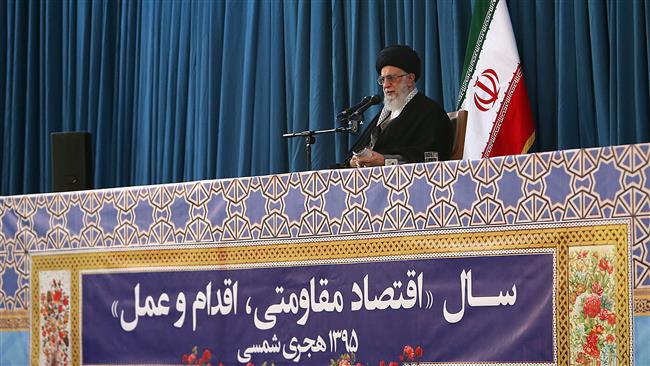
To drive the point home, the stage on which Khamenei sat carried a giant banner reading “the year of the Resistance Economy: Action and Implementation”, his chosen slogan for the Iranian year 1395 that began on Sunday. The banner was a not-too-subtle declaration of how the mullahs view the relationship the regime will have in the upcoming year with the rest of the world and it isn’t one of moderation.

“The candidates for the American presidency have competed to vilify Iran in their speeches, and this is a sign of hostility,” he added as he portrayed all of the candidates running for office as enemies of the regime.

Khamenei’s comments come also following an announcement that the regime’s Revolutionary Guard intends to build a statue commemorating the capture of ten U.S. sailors by the regime.

“There are very many photographs of the major incident of arresting US Marines in the Persian Gulf in the media and we intend to build a symbol out of them inside one of our naval monuments,” said Ali Fadavi, the head of the Guard’s naval forces in comments made to Iran’s Defense Press news agency.

It is expected the statue will built on Kharg, a small Iranian island in the Persian Gulf close to where the servicemen were captured, the Telegraph reported.

The regime never seems to miss an opportunity to publicly troll the U.S. and announce its antagonism and vitriol with almost child-like glee. It is a remarkable affirmation of how incredibly silly the Iran lobby’s positions on moderating Iran have been over the past several years.

Another example of that hypocrisy came in the form of an editorial published by the National Iranian American Council discussing Ahmed Shaheed, the UN special rapporteur for human rights in Iran, in which Shervin Vahedi lauded his most recent report criticizing the regime for brutal human rights abuses as somehow showing it was making clear progress towards improvements.

Vahedi bases those comments on a lone section discussing how the regime’s Supreme Court signaled it might take up the issue of executing citizens over drug-related offenses since the bulk of executions are said to be for similar offenses.

What Vahedi – and the most of the Iran lobby – ignore is how the regime uses trumped up drug offenses as a convenient means of executing and eliminating political dissidents, religious minorities and anyone else that opposes their rule.

Vahedi also reiterates much of what Shaheed has already cited in terms of the abuses and crackdowns aimed at journalists and artists, but does not make any comment condemning the abuses, nor calling for changes in Iran’s policies or in the regime’s leadership.

He only gives a limp and half-hearted endorsement from NIAC of continuing Shaheed’s mandate. You can almost imagine how difficult it was for the NIAC to utter even that small concession in the face of such overwhelming evidence.

For many languishing in the regime’s prisons, this is not a happy Nowruz for them or their families. The NIAC would do better to acknowledge their suffering and call for an end to it.

By Michael Tomlinson

Filed Under: Blog, News Tagged With: Featured, Iran, Iran deal, Iran sanctions, Khamenei, NIAC, Norooz, Norouz, Nowrouz, Nowruz

Iran Lobby Excuses Get Stranger and Stranger

March 17, 2016 by admin


Iran Lobby Excuses Get Stranger and Stranger

Iran Lobby Excuses Get Stranger and Stranger

The Iran lobby has offered up a variety of excuses for the actions and militant behavior of the Iranian regime ranging from pleas of peace-loving intent and political moderation to feigned ignorance and indignation over escalating human rights abuses and proxy wars throughout the Middle East.

One of the newest lines being trotted out by the Iran lobby is the absurd notion that Iran has never started a war.

A scholar at the American Enterprise Institute, took that claim to task in a column for Commentary Magazine.

He showcased comments made by Iranian regime apologists Juan Cole, a University of Michigan professor, and retired Congressman Ron Paul who said “There’s no history to show that Iran are aggressive people. When’s the last time they invaded a country? Over 200 years ago!”

“Iran has not launched an aggressive war in modern history (unlike the US or Israel), and its leaders have a doctrine of ‘no first strike.’ This is true of Supreme Leader Ali Khamenei, as well as of Revolutionary Guards commanders,” said Cole.

The Iranian regime knows when it has got a good thing going. Foreign Minister Mohammad Javad Zarif yesterday tweeted, “Iran hasn’t attacked any country in 250 years. But when Saddam rained missiles on us and gassed our people for 8 yrs, no one helped us.”

These are absurd comments when looked at in the context of what the mullahs have wrought since the Islamic revolution in 1979. The mullahs preferred method of aggression is to use proxies, either in the form of terrorist groups such as Hezbollah or local militias such as in Iraq and Yemen.

Hezbollah alone has served as a conduit of death and destruction for decades by carrying acts of terror either under the direction of or direct cooperation with Revolutionary Guards and Quds Forces personnel. In the most recent Syrian conflict, senior Iranian commanders have been in the field directing combat operations and even getting killed.

It’s noteworthy that Syria never posed a direct conflict with Iran, not even sharing borders, but the mullahs felt it necessary to engage in armed conflict there and even expanded it by calling for Russia to join in the bloodshed and widen the war.

Since the revolution, Iran has been involved in military campaigns in:

  • 1982-present: Lebanon
  • 2003-present: Iraq
  • 2006: Israel (via Hezbollah)
  • 2011-present: Syria
  • 2015-present: Yemen

Not exactly a record of pacifism, but certainly in line with the extremist nature of the regime and the duplicitous nature of the excuses made by the Iran lobby.

Another example of that stranger than fiction messaging came when regime-controlled media blasted the report issued by Ahmed Shaheed, the UN special rapporteur for human rights in Iran, which blistered the regime for appalling human rights abuses, including a near historic 1,000 executions in 2015 and a distressing willingness of the mullahs to kill children and women.

Iran Foreign Ministry Spokesman Hossein Jaber Ansari criticized the recent report as “biased,” “politically motivated” and “prejudicial, Tasnim news agency reported.

He said that the report is “imbalanced” and has been prepared based on “unreliable information.”

Those criticisms fell on deaf ears though as the Committee to Protect Journalists joined 34 other organizations in calling on the U.N. Human Rights Council to vote in favor of renewing the mandate Shaheed’s term as special rapporteur. The vote is scheduled to take place during the 31st session of the council, which ends March 24.

In the joint letter, the organizations drew attention to the range of “serious and systematic violations” of civil and political rights in Iran, as well as the need for the council to urge Iranian authorities to implement long overdue legal changes that would address the grievances of those who have borne the brunt of human rights abuses.

Journalists and other political and civic actors are “arbitrarily detained and given increasingly harsh prison sentences, often for trumped-up national security-related charges,” the letter said. Iran is one of the leading jailers of journalists, with 19 behind bars as of CPJ’s annual prison census on December 1. Ahead of last month’s legislative elections, journalists were arrested and at least one publication was banned, CPJ research shows.

In the meantime, even the modest “moderate” election wins hailed by the Iran lobby were under assault as several women who won seats were being verbally attacked for making comments deemed threatening to the regime, such as criticizing laws mandating women wear traditional veils and coverings.

All of which provides additional proof that any hope of moderation offered up by the Iran lobby is never really going to happen. This was put on bold display when Reza Marashi, research director for the National Iranian American Council, published a plaintive editorial in Huffington Post pleading for the release of his fellow regime supporter, Siamak Namazi, who was arrested and imprisoned by the regime and not part of the prisoner swap resulting from the nuclear deal.

“After finishing his graduate studies abroad, he again returned to Iran in 1999, this time as a consultant. Most people in his shoes returned to try and make a quick buck as a big fish in a small pond. Not Siamak. He helped run a world-renowned consulting firm – staffed predominantly with Iranian-born citizens – that facilitated badly-needed foreign investment from blue-chip multinational corporations,” Marashi said.

Unfortunately, Marashi neglects to mention how that firm, Atieh Consulting, become embroiled in regime politics since his family had deep connections to various parts of the regime’s leadership and actively cooked up the idea of creating an Iran lobby in the U.S. through the NIAC to help advocate for the lifting of international sanctions and far from being a selfless act, Namazi and others had hoped to position themselves to serve as middlemen to funnel foreign investment back into the regime and steer it towards their political allies as described in several investigative pieces.

It is also noteworthy how Marashi did not write similar heartfelt pieces on behalf of other Americans held captive in Iranian prisons such as Amir Hekmati or Saeed Abedini or endured years of torture in Iran.

It would certainly be interesting to see Marashi put his feet where his mouth is and go to Iran himself to plead with the mullahs and see if he can avoid a lengthy prison term as well as another political pawn for them.

By Michael Tomlinson

Filed Under: Blog, News Tagged With: Featured, Iran, Iran deal, Iran Human rights, Iran Lobby, Iran sanctions, National Iranian American Council, NIAC, NIAC Action, Reza Marashi

Iran Lobby Pushes Fiction of Moderate Win in Iran

March 15, 2016 by admin

Iran Lobby Pushes Fiction of Moderate Win in Iran

Iran Lobby Pushes Fiction of Moderate Win in Iran

That bastion of apologists for the Iranian regime’s abuses and extremists activity – the National Iranian American Council – has pushed vigorously the fiction that the recent parliamentary elections in Iran delivered a resounding win for the forces of moderation; all evidence to the contrary.

It’s a recognition by the NIAC and their fellow travelers that the rhetoric in the American presidential campaign has heated up against the recent actions of the mullahs with all the Republican candidates and now Democratic front runner Hillary Clinton all calling for new sanctions to be imposed in the wake of ballistic missile tests violating United Nations Security Council resolutions banning them.

For the NIAC, it’s a particularly thorny problem since the clock is now running on the end of the Obama presidency and what has been a policy of appeasement of the mullahs in Tehran. Coupled with that is growing public opinion that Iran has not shifted towards moderation in the wake of the nuclear deal, but in fact has grown more aggressive and hostile especially in human rights abuses and proxy wars with its neighbors.

The world has been subjected to the largest refugee crisis since World War II resulting from the Syrian civil war and has seen the Iranian regime go all in by begging Russia to intervene and target rebels to the regime of Bashar al-Assad and not ISIS as widely touted.

The Iranian elections were also a charade given the mass elimination of over half of the candidates submitted for approval. Even the most supportive news media have grudgingly admitted that the human rights situation in Iran and throughout the Middle East has grown more desperate.

Ahmad Shaheed, the UN special rapporteur for human rights in Iran, has issued yet another blistering report of human rights conditions within Iran following similar condemnations by Amnesty International and Iranian dissident and watchdog groups such as the National Council of Resistance of Iran (NCRI), all of whom have painted a bleak picture of the mass arrests, torture, imprisonment and execution of journalists, artists, bloggers, students, ethnic and religious minorities and political opponents and dissidents.

The picture of how bad things are in Iran has become so obvious it’s taken on the near-certainty of gospel. Ask any person on the street if things have improved in Iran, the answer will most likely be “No.”

And yet the NIAC and its allies cannot give up the fight and still try to push the fiction that things are better, even as their own allies such as Iranian-American businessman Siamak Namazi was arrested and tossed into prison without explanation by the same regime he was promoting in the ultimate irony.

With friends like these, who needs enemies?

But Jamal Abdi and Ryan Costello of the NIAC continued to push the party line with the publishing of a “policy memo” on the NIAC website cheerfully citing all the good news coming out of the Iranian elections such as:

  • Huge moderate wins in the parliament and Assembly of Experts, even go so far as saying Hassan Rouhani now has a plurality to enact his policies;
  • How Rouhani, newly empowered, will seek out new policies to open up bridges to the rest of the world; and
  • How so many notable hardliners were defeated as evidence of the mandate of the Iranian people for a new moderate future.

Unfortunately, none of that is true.

The dismissal of over 6,000 candidates left open the way for a field of candidates bulging with loyal supporters of the regime. If the Iranian people are only left with choices between bad and worse candidates, it stands to reason they would select the lesser of two evils.

What Abdi and Costello leave out is the simple fact that real power within the regime didn’t change at all. Supreme Leader Ali Khamenei still remains in charge, as does the Revolutionary Guards Corp (IRGC) which has been busy shooting missiles as fast as it can. The courts and police remain firmly in control and have been busy executing 2,300 people under Rouhani, as well as rounding up virtually any dissenter and locking them away.

Of course Abdi and Costello neglect to mention any of the extremist policies undertaken by Rouhani such as the level of executions than have surged higher than at any time in the history of the mullahs’ reign since 1989. Nor do they take up the lack of any progress on halting child executions, misogynist laws passed under Rouhani’s term or the continued use of Basiji paramilitaries to beat and arrest women for honor code violations such as driving alone or not wearing traditional hijabs.

Most galling of all are Abdi and Costello’s lack of any comment on the bloodshed caused by Rouhani’s policies in supporting three active wars in Syria, Iraq and Yemen and the complete lack of any momentum to halt the killing taking place at the hand of Iranian-backed Hezbollah fighters, Iranian-backed Shiite militia and Iranian-backed Houthi rebels.

Alireza Jafarzadeh, deputy director of the Washington office of the National Council of Resistance of Iran (NCRI), said in an editorial on Fox News:

“Rouhani has not been the only loyal servant of the theocracy throughout his career. The same can be said of all the well-known candidates from the supposedly moderate and reformist faction in the recent elections. They include men like former Chief Prosecutor of the Revolutionary Court Ali Razini and former Prosecutor General and Intelligence Minister Ghorbanali Dorri Najafabadi, both of whom oversaw the executions of political prisoners, the extrajudicial assassinations of dissidents and undesirables, and issued orders for shockingly inhumane punishments like stoning.

“Meanwhile, standing side-by-side with current president Hassan Rouhani is former president Ali Akbar Hashemi Rafsanjani, who has somehow come to be regarded as a leading reformist. This is a man for whom Interpol issued an arrest warrant due to his involvement in the 1994 bombing of the Jewish community center in Buenos Aires, which killed 85 people and wounded 300.”

The reality is that things have not changed in Iran and in fact are only getting worse.

By Michael Tomlinson

Filed Under: Blog, News Tagged With: Featured, Iran, Iran Human rights, Iran Lobby, Jamal Abdi, NIAC, NIAC Action, Ryan Costello

Holding Iran Accountable Starts by Not Believing Iran Lobby

March 11, 2016 by admin

Holding Iran Accountable Starts by Not Believing Iran Lobby

Holding Iran Accountable Starts by Not Believing Iran Lobby

The Iran lobby, consisting of lobbying groups such as the National Iranian American Council and media platforms like Lobelog.com, has long argued that agreement on a nuclear deal would bring about a new period of moderation within Iran and smooth the way for normalized relations.

Since the agreement was completed last summer, the Iranian regime has acted nothing like a moderate government engaging in a wide variety of foreign policy excesses such as going all-in on the Syrian civil war and stepping up support for Houthi rebels in Yemen, to instituting a harsh crackdown at home imprisoning dissidents and journalists and keeping the gallows busy by marching over 2,200 people to their deaths over the past two years.

Throughout it all, the Iran lobby has worked hard to maintain its charade and keep journalists believing in this false narrative no matter how incredible the proof has been otherwise. One example of this is a Q&A in the New York Times by Rick Gladstone in which he regurgitates many of the Iran lobby’s myths. For example, Gladstone asks:

  • Is Iran honoring the nuclear agreement? He writes it is according to the International Atomic Energy Agency, but neglects to mention admissions by the head of that agency that inspection protocols had been comprised at various points and full reporting may never be achievable;
  • Are recent missile tests prohibited under the nuclear agreement? He says no, such launchings are considered a separate issue, but neglects to mention that the regime pushed hard to unlink a host of issues such as ballistic missiles, human rights and support for terrorism from the deal, thereby allowing the regime a free hand to continue its illegal activities;
  • Iran’s parliamentary elections last month were supposed to have strengthened moderate supporters of Hassan Rouhani. So why is Iran provoking its critics by testing missiles? Gladstone explains that the launches are conducted by the Revolutionary Guard Corps which is outside of Rouhani’s control, but neglects to point out that Rouhani has been a willing supporter of these hardline tactics since his government has overseen one of the harshest crackdowns in 20 years against public dissent.

This militancy on the part of the Iranian regime was reinforced by boasts by senior military commanders that the tests would continue even though they are in violation of United Nations Security Council resolutions, which are being proven impotent by the lack of any consequences for these violations.

Brig. Gen. Amir Ali Hajizadeh, a senior commander for the Iranian Revolutionary Guard Corps that runs the regime’s missile program, told state television that it has more missiles ready to launch, and they are for defensive purposes.

“Iran’s missile program will not stop under any circumstances,” Hajizadeh said. “We are always ready to defend the country against any aggressor.”

The fact that the argument over the regime’s violations have shifted from calling for swift action to debates over whether or not imposition of sanctions might jeopardize a nuclear agreement that has already proven ineffectual in curbing the regime demonstrates how weak the international response has become.

This broad policy of appeasing the mullahs has already generated severe negative consequences as Iran seeks to aggressive upgrade its military and rearm in the wake of its deep involvement in three ongoing proxy wars in Syria, Iraq and Yemen as well as a potential new arms race with its chief regional rival, Saudi Arabia.

Hajizadeh also announced that Iran is calling its own version of a spy drone, “Simorgh,” which is Iranian for “Phoenix,” according to the country’s state controlled media.

Iran’s version of the drone “was manufactured through reverse engineering of the U.S. drone, which was tracked and hunted down in Iran late in 2011, and has been equipped by the IRGC with bombing capability,” according to Fars News Agency.

This comes on the heels of an $8 billion shopping spree in Moscow by the Iranian regime and the imminent delivery of an advanced S-300 anti-aircraft missile system.

Most disturbing of all was the announcement by Ahmed Shaheed, U.N. special rapporteur on human rights in Iran, that there had been a “staggering surge in the execution of at least 966 prisoners last year – the highest rate in over two decades,” Shaheed told a news briefing.

The number of executions are roughly double the number executed in 2010 and 10 times as many as were executed in 2005 and demonstrate how Rouhani’s promises of a more moderate government when he was elected were merely political window dressing.

“A large percentage of those executions are for drug offences and under Iran’s current drug laws, possession of 30 grams of heroin or cocaine would qualify for the death penalty. So there’s a number of draconian laws,” he said.

“Fundamental problems also exist with regard to the due process and fair trial rights of the accused,” Shaheed said.

“I continue to receive frequent and alarming reports about the use of prolonged solitary and incommunicado confinement, torture and ill-treatment, lack of access to lawyers and the use of confessions solicited under torture as evidence in trials – practices that clearly violate Iran’s own laws,” he said.

Hundreds of journalists, bloggers, activists and opposition figures “currently languish in Iran’s prisons and detention facilities,” he said.

None of which has stopped the Iran lobby from trying to divert attention to anything else as evidenced by an appearance by Jamal Abdi, of the NIAC, at a summit in Washington, DC aimed at criticizing the U.S. relationship with Saudi Arabia.

He spoke of how the Saudi regime tried to jeopardize the U.S. nuclear deal with Iran and criticized the visa restrictions the U.S. imposed on Iranians and Iranian dual nationals. He also spoke of how the U.S. is essentially “renting” the Saudi army to carry out the war in Yemen, and potentially even Syria, which is ironic considering that it was the Iranian regime’s support of the Assad regime in Syria and Houthi rebels in Yemen that started both conflicts in the first place.

All of which demonstrates how the Iran lobby will address any issue other than the current activities of the regime.

By Michael Tomlinson

Filed Under: Blog, News Tagged With: Featured, Iran Human rights, Iran Lobby, Iran sanctions, IRGC, Jamal Abdi, Lobelog, National Iranian American Council, NIAC, NIAC Action

Iranian Regime Launches More Missiles; Clinton Pushes for Sanctions

March 10, 2016 by admin

Iranian Regime Launches More Missiles; Clinton Pushes for Sanctions

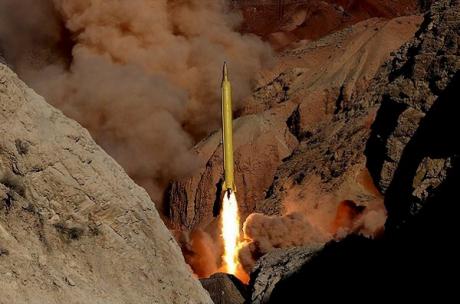
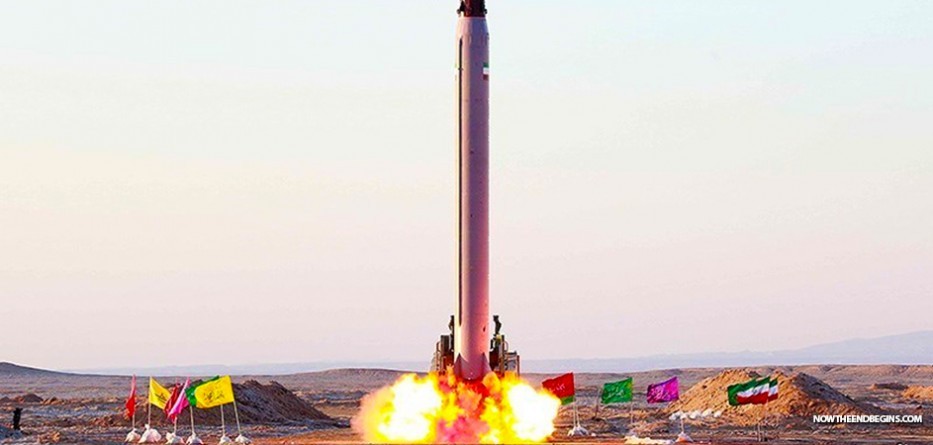
A ballistic missile is launched and tested in an undisclosed location, Iran, in this handout photo released by Farsnews on March 9, 2016. REUTERS/farsnews.com/Handout via Reuters

You have to wonder just how much of North Korea is rubbing off on the mullahs in Tehran as the Iranian regime launched ballistic missiles for the second straight day in violation of United Nations Security Council resolutions and boldly thumbed their collective noses at the U.S. as Vice President Joseph R. Biden Jr. was touring Israel.

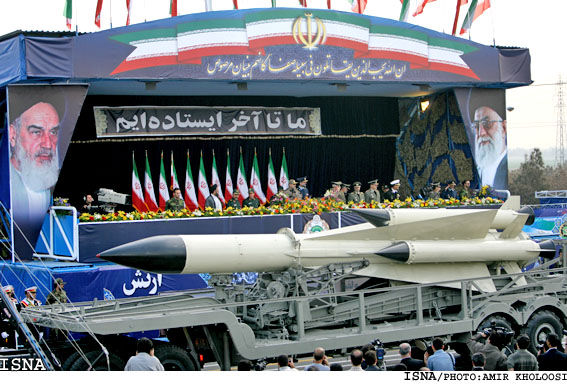
The Revolutionary Guards Corps, which oversees the Islamic state’s missile program, fired two missiles that it said hit targets over 850 miles away and pointedly declared that Israel was now within striking distance.

If they didn’t get their point across, the IRGC said the missiles bore inscriptions written in Hebrew on the side saying “Israel must be wiped off the face of the earth,” as reported by Fars, a regime news agency which also released video of the launches.

The head of the Revolutionary Guards’ missile program, Brig. Gen. Amir Ali Hajizadeh, said the rockets had a range of about 1,200 miles and were capable of hitting the “Zionist regime,” Iran’s name for its archenemy Israel, the semiofficial news agency Mehr reported.

As expected, the Iran lobby did not utter one tweet, statement or editorial condemning the provocative launches, nor the timing which seemed designed to send a pointed message to the U.S. The repeated launches does bring to mind the tactics used by North Korea in also aggressively firing missiles and rockets regardless of any international sanctions that exist. The fact that the two radical nations – which already share missile and nuclear technology – are now sharing the same political playbook should come as no surprise.

The lack of inclusion of the regime’s missile program in the nuclear agreement reached last year shows the glaring loopholes that exist for Iran to continue the development of destabilizing weapons systems that can deliver chemical, biological or conventional warheads – let alone nuclear ones developed in secret – anywhere in the Middle East and most of Europe, Asia and Africa.

The lack of response from the Obama administration was predictable and disheartening for those who have consistently warned of the threat the regime poses; even after a rigged parliamentary election was touted as producing a “moderate” shift in Iran’s domestic politics.

Laudably, Democratic presidential candidate Hillary Clinton entered the fray by calling for more sanctions against the Iranian regime in light of this most recent violation.

Clinton said on Wednesday she was “deeply concerned” by reports that Iran had tested multiple ballistic missiles and said the country should face sanctions for its actions.

“This demonstrates once again why we need to address Iran’s destabilizing activities across the region, while vigorously enforcing the nuclear deal,” Clinton said in a statement.

“Iran should face sanctions for these activities and the international community must demonstrate that Iran’s threats toward Israel will not be tolerated,” she said.

Her backing of sanctions comes as Democrats and Republicans on Capitol Hill joined together in a push to develop new sanctions against Iran in light of these new and repeated transgressions.

Senate Foreign Relations Committee Chair Bob Corker (R-Tenn.) and ranking member Ben Cardin (D-Md.) are preparing legislation to slap additional sanctions on Iran in response to a recent spate of ballistic missile launches. While the tests do not themselves violate the Iranian nuclear deal that took effect in January, officials believe they fly in the face of other international prohibitions and weaken the spirit of compliance needed to sustain the nuclear pact.

The senators are also negotiating a way to extend the current regime of sanctions under the Iran Sanctions Act past the end of the year, and possibly increase sanctions against Tehran for other conventional weapons and terrorist activities as well.

If the Senate can produce a package of sanctions, it stands a good chance of getting an audience in the House, where Speaker Paul Ryan (R-Wisc.) said Tuesday that Congress would “continue to press for new sanctions against Tehran” in light of the most recent ballistic missile tests.

Thus far, the Obama administration has only issued sanctions against 11 individuals involved in Iran’s ballistic missile program. Sen. Kelly Ayotte (R-N.H.) today said those sanctions are “proving to be anemic, given [Iran’s] continuing testing of ballistic missiles.”

The realization that the Iranian regime remains committed to a militarized pathway in the wake of the nuclear deal and recent elections was not lost on U.S. military commanders, as the top U.S. military commander overseeing the Middle East said Tuesday that despite the nuclear deal, Iran shows no signs of altering its destabilizing behavior.

“There are a number of things that lead me to personally believe that, you know, their behavior is not — they haven’t changed any course yet,” said Army Gen. Lloyd Austin, commander of U.S. Central Command, at a Senate hearing.

Austin said he was concerned about Iran’s continued testing of ballistic missiles, which the U.S. intelligence community believes is Iran’s preferred method for delivering a nuclear weapon.

“What I would say is that what we and the people in the region are concerned about is that they already have overmatch with the numbers of ballistic missiles,” Austin told the Senate Armed Services Committee.

“The people in the region, they remained concerned about [Iran’s] cyber capabilities, their ability to mine the straits,” he added. “And certainly the activity of their Quds forces … we see malign activity, not only throughout the region, but around the globe as well.”

Austin also expressed concern about an “emerging strategic partnership” between another U.S. adversary, Russia. The two nations are working together to bolster Syrian President Bashar Assad’s government.

“What I worry about is [if] that relationship between Syria, Russia and Iran develops further, that it will present a problem for the region,” he said.

That cooperation is expanding to include the sale of high-end weapons, Austin said.

“We’ve seen recently [the sale of] high-end air defense capability from Russia to Iran and that’s a problem for everyone in the region,” Austin said.

“And also coastal defense cruise missiles. As that type of technology is — migrates from Russia to Iran, it’ll eventually wind up in the hands of Lebanese Hezbollah.”

All in all, it hasn’t been a very good weak for the Iran lobby proponents of a new moderate Iran and puts to a lie what they have been advocating for so long.

By Laura Carnahan

Filed Under: Blog, News Tagged With: #NuclearDeal, Featured, Iran, Iran Lobby

Iranian Regime “Moderates” Get More Ballistic Missile Launches

March 9, 2016 by admin

Iranian Regime “Moderates” Get More Ballistic Missile Launches

Iranian Regime “Moderates” Get More Ballistic Missile Launches

Fulfilling vows the mullahs made to continue developing its ballistic missile program despite threats of new sanctions, the Iranian regime test-fired several ballistic missiles on Tuesday aimed at showing the regime’s “deterrent power” and “all-out readiness to counter any threat,” according to the official Islamic Republic News Agency.

The launches were carried out by the Revolutionary Guard Corps with surface-to-surface missiles fired from silos in central Iran and hit targets 435 miles away, according to the semiofficial Fars news agency.

These were the first tests since the U.S. Treasury Department imposed sanctions in January on 11 Iranian entities with alleged links to Tehran’s ballistic missile program, citing the “significant threat” the weapons posed to regional and global security. Iran last tested its missiles in October and November, according to the Wall Street Journal.

The Obama administration was understandably low-key in its response, taking pains to reiterate how it did not see that the test launches violated the recently approved nuclear agreement, but might be in violation of existing United Nations Security Council resolutions banning the development of nuclear-capable ballistic missiles.

“To be very clear, such tests are not a violation of the JCPOA,” a senior Obama administration official said. “That said, there are strong indications that the test is inconsistent with U.N. Security Council Resolution 2231. If confirmed, we intend to raise the matter in the U.N. Security Council. We will also encourage a serious review of the incident and press for an appropriate response.”

Iranian regime officials have said its recent tests don’t violate international accords, and that the weapons are merely for defense. Hassan Rouhani ordered the missiles’ development to be expedited in December, amid the prospect of new U.S. sanctions and in clear defiance of existing prohibitions.

The absurdity of the nuclear deal into stark relief when we now see the folly of unlinking various issues such as ballistic missile development, proxy wars and human rights violations from the principle agreement, in which the regime is now freed of any potential leverage that could be used against it.

In a move that eerily imitates how North Korea ignored international agreements and sanctions, the Iranian regime threatened its willingness to walk away from the nuclear deal it so desperately sought now that is has secured a lifting of economic and gained access to $150 billion in frozen assets around the world.

“If our interests are not met under the nuclear deal, there will be no reason for us to continue,” Abbas Araqchi, Iran’s deputy foreign minister, warned during remarks delivered to a group of Iranian officials in Tehran.

“If other parties decide, they could easily violate the deal,” Araqchi was quoted as saying by Iran’s state-controlled media. “However, they know this will come with costs.”

Araqchi appeared to allude to the United States possibly leveling new economic sanctions as a result of the missile test, according to the Washington Free Beacon.

The reaction from Capitol Hill was swift and urgent.

“The administration’s response to Iran’s new salvo of threatening missile tests in violation of international law cannot once again be, it’s ‘not supposed to be doing that,’” Sen. Mark Kirk (R., Ill.) said in a statement. “Now is the time for new crippling sanctions against Iran’s Islamic Revolutionary Guard Corps, Ministry of Defense, Aerospace Industries Organization, and other related entities driving the Iranian ballistic missile program.”

House Majority Leader Kevin McCarthy (R., Calif.) warned that the nuclear agreement has done little to moderate the regime’s rogue behavior.

“Far from pushing Iran to a more moderate engagement with its neighbors, this nuclear deal is enabling Iran’s aggression and terrorist activities,” McCarthy said in a statement. “Sanctions relief is fueling Iran’s proxies from Yemen to Iraq to Syria to Lebanon. Meanwhile, Khamenei and the Iranian regime are acting with impunity because they know President Obama will not hold them accountable and risk the public destruction of his nuclear deal, the cornerstone of the president’s foreign policy legacy.”

McCarthy went on to demand that the Obama administration step forward with new sanctions as punishment for the missile test.

House Speaker Paul Ryan said on Tuesday that lawmakers would continue to press for new sanctions against Tehran “until the regime ends its violent, provocative behavior against the U.S. and our allies.”

In another sign that the regime has no interest in real moderation in the government, in spite of how the Iran lobby characterized the election results, top mullah Ali Khamenei appointed close ally Ebrahim Raeisi, the 55-year-old national prosecutor-general, as the new chairman of Astan Quds Razavi, the foundation that manages the shrine of Imam Reza in Mashhad.

Raeisi is a close ally of Khamenei, and his appointment will strengthen links between the leader’s office and the shrine, whose annual turnover – based on endowments, property and companies – is many billions of dollars slated for Khamenei’s private coffers.

Raeisi, who holds the clerical rank of hojjatoleslam, is a different character, according to a story by The Guardian. At last year’s 36th anniversary of the taking of the embassy hostages, which featured criticism of the Rouhani administration as well as denunciations of the United States as the “Great Satan”, Raeisi announced that the intelligence and security forces had “identified and cracked down on a network of penetration in media and cyberspace, and detained spies and writers hired by Americans.”

Raeisi, reportedly defended the amputation of the hands of thieves, also at the time of the 1988 executions of 3,000-5,000 political prisoners and dissidents ordered by then leader Khomenei, Raeisi was deputy prosecutor in Tehran, a role he had held since 1984-5 where he played a key role in the massacre.

These are the faces controlling Iran and it does not bode well for future prospects for peace.

By Michael Tomlinson

Filed Under: Blog, News Tagged With: Featured, Iran, Iran deal, Iran Human rights, Khamenei, Rouhani

Being an Iranian Regime Friend Still Gets You Executed

March 9, 2016 by admin

Being an Iranian Regime Friend Still Gets You Executed

Being an Iranian Regime Friend Still Gets You Executed

You have to say this about the mullahs’ justice system in Iran; it sure hands out the death penalty swiftly.

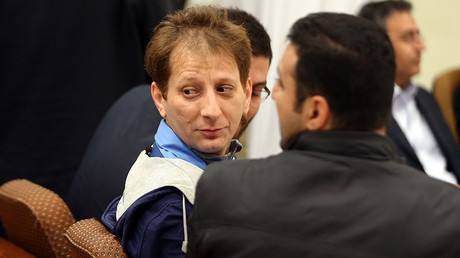
An Iranian court has sentenced a well-known tycoon to death for corruption linked to oil sales during the rule of former President Mahmoud Ahmadinejad, a judiciary spokesman said Sunday.

Babak Zanjani and two of his associates were sentenced to death for “money laundering,” among other charges, Gholamhossein Mohseni Ejehi said in brief remarks broadcast on regime TV. He did not identify the two associates. Previous state media reports have said the three were charged with forgery and fraud.

“The court has recognized the three defendants as ‘corruptors on earth’ and sentenced them to death,” said Ejehi. “Corruptors on earth” is an Islamic term referring to crimes that are punishable by death because they have a major impact on society. The verdict, which came after a nearly five-month trial, can be appealed.

Zanjani is one of Iran’s wealthiest businessmen, with a fortune worth an estimated $14 billion, much of made from the illicit sale of petroleum in violation of economic sanctions imposed over Iran’s nuclear program, which ironically has been lifted because of the agreement reached last year.

Zanjani’s plight mirrors one of the peculiar aspects of the Iranian regime which is you are kept alive as long as you are useful to the regime and when your utility ceases, you often meet an ignominious end.

In Zanjani’s case, it was useful to the mullahs to have middlemen who could evade and skirt international sanctions to sell black market oil and steer the profits back into the regime’s coffers and the bank accounts of regime families and members of the Revolutionary Guard, but Zanjani also built a vast personal fortune from these acts and with the lifting of the economic sanctions and the opening of relations with the rest of the world, he ceased to be useful as a smuggler.

Now Zanjani and his associates can serve a more useful purpose by being examples of regime justice in combatting corruption that has been allowed to run rampant throughout all sectors of Iran’s economy and government. His sentencing permits Hassan Rouhani to project an image of justice and provides a convenient scapegoat as ordinary Iranians have chafed under severe economic hardship under mullahs.

Authorities said the death sentence could be reversed if Zanjani repays the pilfered proceeds. Zanjani’s lawyer has protested that a bank has refused to accept Zanjani’s offer of payments, according to reports from Tehran.

Zanjani has 20 days to appeal the sentence, authorities said.

Authorities here have prosecuted other instances of corruption, but death sentences in such cases are relatively rare.

The severity of the punishment suggests that the case is viewed in part as a warning to other entrepreneurs as Iran’s economy opens up in the post-sanctions era. Many investors here are anticipating a bonanza as international funds pour into the country.

Zanjani’s death sentence is stern reminder to eager entrepreneurs not to get out in front of the regime’s interests and remember the mullahs are very much still in charge.

It is also a harsh reminder that even though Western media lauded the “moderate” wins in Iran’s parliamentary elections, the apparatus of government, including the judiciary, is still firmly in control of the mullahs in dispensing medieval punishment.

“The political system in Iran’s a joke,” said U.S. Sen. Lindsey Graham (R-S.C.), adding that the significance of the moderates’ sweep in Tehran and other apparent wins across the country counts for “zero, zip.”

“There are no moderates in Iran,” Graham added. “That’s a fiction I don’t buy.”

“As long as the Ayatollah Khamenei is in charge, it doesn’t matter, the elections,” said Senate Armed Services Committee Chairman John McCain (R-Ariz.), another vocal opponent of the nuclear deal.

“I wouldn’t call the people who swept ‘moderates,’” added Sen. James Risch (R-Idaho). “The election shows no change.”

Iran has hardly acted like a saint since the deal was signed last July. The pact’s opponents are quick to point to recent ballistic missile tests and the detention of U.S. soldiers as part of the deal’s legacy.

“In many ways, the list of regime-approved candidates told us more about Iran’s intentions than the election results,” said Sen. Chris Coons (D-Del.), who called himself “deeply skeptical” that the moderates’ wins would bring about any progress.

Those views were shared in a scathing editorial by the Boston Herald, which said:

“This is a mistake. There is nothing moderate or reforming about Rouhani — or his new troops.

“These terms do not apply to a man who vigorously backs the Islamic Republic created in the 1979 revolution. He does not oppose his country’s support for Syrian dictator Bashar Assad, both with Iranian troops and those of its client the Hezbollah terrorist group.

“Rouhani has done nothing to reform a regime that holds hundreds of political — and religious — prisoners. The death penalty can still be given to homosexuals and adulterers. Amnesty International said last year Iran executed 694 prisoners in the six months ending last August, a startling bloodthirstiness that makes the rate of executions, in proportion to population, about 200 times what it is in the United States (where executions have been generally declining for 16 years).

“The candidates Rouhani endorsed included two former intelligence officials who murdered dissidents and another who called for the execution of leaders of the 2009 protests against a rigged election, said Jonathan Tobin of Commentary magazine.”

The Herald has joined the growing chorus of news media growing skeptical of any real reform coming out of Iran’s elections and has grown wary of the false promises offered up by Iran lobby supporters such as the National Iranian American Council in defense of election results.

We can only hope that skepticism spreads to the remaining presidential candidates on both sides of the aisle.

By Michael Tomlinson

Filed Under: Blog, News Tagged With: Ejehi, Featured, Khamenei, Rouhani, Zanjani

Iran Lobby Priorities Do Not Include Human Rights Reforms

March 9, 2016 by admin

Iran Lobby Priorities Do Not Include Human Rights Reforms

Iran Lobby Priorities Do Not Include Human Rights Reforms

If there has been one consistent aspect to the Iran lobby’s efforts to humanize and moderate the perception of the mullahs in Tehran, it has been the complete lack of criticism over the perennially awful human rights violations committed by the Iranian regime, especially under the first term of Hassan Rouhani’s “moderate” government.

The Iran lobby’s marching orders since the creation of advocacy groups such as the National Iranian American Council, has been to blunt the forceful voices of long-time critics of the Iranian regime such as the National Council of Resistance of Iran (NCRI) and key members of Congress and the media and spin a counter-narrative of an Iran yearning to be moderate if only given the chance with a nuclear deal that freed it from crippling sanctions.

It’s a playbook that borrows heavily from how North Korea was able to develop nuclear weapons and advanced missile systems even after agreeing to restrict both under international agreements that it consistently violated. The mullahs calculated that the rest of the world, especially an incoming President Barack Obama, had little stomach for direct confrontation with the regime and took a gamble that it could muzzle dissent enough to reshape its image.

The NIAC, led by Trita Parsi and Reza Marashi, took on the challenge of spinning this new vision after the “election” of Hassan Rouhani and new warm and fuzzy kind of mullah who tweets and posts Instagram shots of him watching the World Cup sans clerical robes and turban.

While the Iranian regime was able to secure a nuclear deal and a lifting of sanctions, the “win” may prove illusory as the situation in the Middle East continues to deteriorate with a worsening situation in Syria, a full-blown proxy war is building with Saudi Arabia and an American presidential election that offers the remaining candidates with public policy positions that take a much harder line against Iran than the Obama administration.

To that end, the Iran lobby has begun to focus on two central goals in its PR push of late. One is to attack vocal opponents of the regime among the presidential candidates, especially candidates such as Donald Trump, Sen. Ted Cruz and Ben Carson, as well as take jabs at Hillary Clinton’s recent statements warning Iran to refrain from continued aggression against its neighbors.

Long-time regime supporter, Ali Gharib, has been especially prolific in hurling invective against the Trump campaign, his latest salvos coming on noted Iran lobby blog, Lobelog.com, as well as a sarcastic diatribe against Carson in The Guardian.

In both cases, Gharib does what he does best, use snark and sarcasm to deflect from any serious discussion of the shortcomings of the Iranian regime, specifically the horrific abuses meted out against journalists, women, ethnic minorities, dissidents and Christians. Gharib cannot be bothered with these facts since he’s having too much fun mocking candidates.

But his attacks and those of Parsi and Marashi hide the genuine concern and fear Iran lobby supporters have which is a new incoming president would not be beholden to the agreements made by the Obama administration and would be have a free hand to chart their own foreign policy which addresses the key problem in the Middle East today, which is that Iran is at the heart of three proxy wars and supporter of three terrorist organizations and a dictatorial regime that has caused the largest refugee crisis since World War II.

Parsi, Gharib and other Iran lobbyists refuse to discuss the impending mass execution of 100 prisoners, nor the inexcusable mass killings of every adult male from a village in southern Iran.

The Norway-based Iran Human Rights group revealed on Friday that sources inside and outside Ghezel Hessar prison, including a prosecutor attached to Iran’s Islamic Revolutionary Court, confirmed that the inmates were told that the country’s Supreme Court had upheld their sentences, and that they should prepare to be put to death.

The prospect of this mass execution for drug crimes comes just months after the United Nations Office on Drugs and Crime (UNODC) inked a new $20 million deal with Iran to assist in its counter-narcotic efforts. Advocates against the excesses of the drug war have pilloried the UN for its dealings with Iran, which kills hundreds of people every year, including foreign nationals, over drug-related charges. Iran Human Rights estimates that more than 1,800 people were executed for drug crimes in Iran between 2010 and 2014, most without due process or access to proper legal representation.

The sheer barbarism of the Iranian regime is appalling and yet, the Iran lobby never speaks of these issues. Its silence is damning.

The lobby also never mentions alarming new incidents of militant acts by the Iranian regime every day. Just this weekend, they included:

  • An Australian naval ship seized a large arms cache that may have come from Iran and headed to Yemen by way of Somalia for Iranian-backed Houthi rebels. On board was more than 2,000 pieces of weaponry — including 1,989 AK-47 assault rifles and 100 rocket-propelled grenades;
  • The U.S. Commerce Department announced export restrictions on Chinese telecoms equipment maker ZTE Corp for alleged violations of U.S. export controls on Iranian which the Chinese company sold U.S. made telecommunications products to Iran, which is banned;
  • Yukiya Amano, chief of the International Atomic Energy Agency, the international community’s nuclear watchdog organization, disclosed that certain agreements reached under the Iran nuclear deal limit inspectors from publicly reporting on potential violations by the regime. Amano’s remarks come on the heels of a February IAEA oversight report that omitted many details and figures related to Iran’s nuclear program. The report sparked questions from outside nuclear experts and accusations from critics that the IAEA was not being transparent with its findings; and
  • The FBI arrested the American head of a metallurgy company on charges of illegally exporting to Iran a half-ton of special powder that could, in theory, be used in the production of nuclear-tipped rockets. Agents nabbed 44-year-old Erdal Kuyumcu of Woodside, New York—the CEO of Global Metallurgy, a self-described “provider of specialty metal products, services and supply chain solutions” that lists phone numbers in New York City and Turkey. That Iranian government agencies or companies were allegedly trying to get their hands on cobalt-nickel powder might seem to indicate that Tehran, despite having agreed to suspend its nuclear program, is still trying to develop ballistic missiles optimized for carrying an atomic warhead.

Of course, the Iran lobby has chosen not to defend any of these actions, nor make mention of the continued aggressive moves by the regime, which makes it all too clear what their real motives are: protecting the new “moderate” image of the mullahs.

By Michael Tomlinson

Filed Under: Blog, News Tagged With: Featured, Iran Human rights, Iran Lobby, Lobelog, Moderate Mullahs

Pushback Grows Against Iran Lobby Claims of Moderate Win

March 4, 2016 by admin

Pushback Grows Against Iran Lobby Claims of Moderate Win

Pushback Grows Against Iran Lobby Claims of Moderate Win

Basking in the afterglow of the Iranian regime’s parliamentary election results, the Iran lobby predictably boasted of the massive wins by moderate and reformist forces within Iran, but now the pushback is coming from a wide variety of the political spectrum as the results and actual winning candidates are absorbed and evaluated.

The realization is settling in that far from the moderate tsunami described by regime supporters such as Trita Parsi and Reza Marashi of the National Iranian American Council, the truth is that very little has changed within the regime leadership and the Iranian people still remain firmly in the grip and thrall of the mullahs.

The parade of cold water on the moderate landslide theory was led by the editorial board of the Washington Post, which has intimate first-hand knowledge of the extremist nature of the regime through the hostage taking and eventual prisoner swap of its reporter, Jason Rezaian. It editorialized:

“Claims of a reformist triumph, however, are overblown. Before the elections, an Iranian liberal coalition said that 99 percent of 3,000 pro-reform candidates had been disqualified by a hard-line clerical council. Most of those in Mr. Rouhani’s coalition are, like him, moderate conservatives, meaning they favor economic reforms and greater Western investment, but not liberalization of the political system or a moderation of Iran’s aspiration to become the hegemon of the Middle East. True Iranian religious and political reformers, like those who joined the 2009 Green Movement, are in jail or exile, or were banned from the ballot.

“For now, Iran can be expected to continue the course it has been pursuing in the months since the nuclear deal was struck: waging proxy wars against the United States and its allies around the Middle East, using its unfrozen reserves to buy weapons, and defying non-nuclear limits — such as by testing long-range missiles. The elections won’t make the regime more pliable, and they won’t change the need for a U.S. counter to its aggressions. They shouldn’t provide an excuse for the Obama administration to tolerate Tehran’s provocations,” the Post said.

The Post is correct in its assertions and admits to the basic problem facing those nervously praising the “moderate” wins: they are left with hoping for the best outcome even though it will most likely come to pass since the alternative is to face the difficult choices of pushing for regime change against a regime firmly entrenched.

The Atlantic’s Kathy Gilsinan noted some of the difficulties in the tea leaf reading going on post-election in discerning who actually won.

“Institutions whose members aren’t popularly elected, including the office of the supreme leader, the Guardian Council, the judiciary, and the security services, are the most powerful in Iran’s government. And they remain in the hands of hardliners,” she writes.

“Another reason it’s difficult to know the significance of these elections—aside from the dueling claims of victory from each camp, and the fact that, as Thomas Erdbink of The New York Times reported Wednesday, ‘there has been no official comment on the affiliation of the winning candidates’—is that Iran does not have strong political parties. Knowing that Republicans have a majority in the U.S. Congress, for example, gives you a rough sense of that body’s legislative priorities and how they would differ from those of a Democratic Congress. As Majlis Monitor, a website devoted to Iranian politics, notes, ‘While political parties help us see a country’s political fault-lines, their absence in Iran makes it difficult to understand how politics are actually [organized] and work there.’”

This points out the fundamental problem with the claims being made by Parsi or Jim Lobe over at Lobelog that moderates won the election: the absence of political parties stems from the mullahs aim to eliminate all dissent and organize the government around homogenous support for the Islamic revolution. True dissident parties such as the Mojahedin Khalgh (MEK or PMOI) were outlawed and membership was classified as punishable by death.

There is no doubt that the Iranian people want real reform and a true turn towards democracy. They are tired of living in an oppressive regime where their every online move is monitored and their every economic move is stymied by widespread official corruption.

The New York Times’ Erdbink also explained how results of the election may never be publicly revealed.

“The Interior Ministry, which is overseeing the voting for the 290-seat Parliament and the clerical Assembly of Experts, announced on Tuesday the names of 222 parliamentary candidates who won nationwide. It also announced that there would be a second round of voting for 68 seats in several constituencies in April,” he said. “But there has been no official comment on the affiliation of the winning candidates, and there may never be, making it difficult to determine how many seats the various factions have won.”

The Interior Ministry also oversees the internal security for the regime and already has a checkered history with the hijacking of the 2009 elections. It wouldn’t be unreasonable to see some similar shenanigans with these results to ensure the right kinds of “moderates” eventually won seats.

Former UN ambassador John R. Bolton took a similar viewpoint in writing for the American Enterprise Institute:

“Efforts to distinguish Tehran’s moderates from hard-liners have a long historical record of failure, as have similar precedents in analyzing Moscow and Beijing. Today in Iran, while there are disagreements over economic, social and religious policies among the elite, there is no disagreement over the objective of mastering the difficult science and technology required to achieve nuclear weapons deliverable on ballistic missiles. There is simply no credible evidence that the ayatollahs and other key Iranian leaders have ever diverged on that goal. Moreover, the nuclear and ballistic missile programs are firmly controlled by the Revolutionary Guards, which is about as likely to cede responsibility to the elected Majlis as to America’s Congress,” he writes.

Ultimately the real test of real reform will come if Evin Prison is emptied, ballistic missiles are shelved and support is withdrawn from Syria, Iraq and Yemen.

I wouldn’t hold your breath for that.

By Michael Tomlinson

Filed Under: Blog, News Tagged With: Appeasement policy, Featured, Iran, Iran deal, Iran Lobby, Lobelog, National Iranian American Council, NIAC, Reza Marashi, Trita Parsi

  • « Previous Page
  • 1
  • …
  • 37
  • 38
  • 39
  • 40
  • 41
  • …
  • 64
  • Next Page »

National Iranian-American Council (NIAC)

  • Bogus Memberships
  • Survey
  • Lobbying
  • Iranians for International Cooperation
  • Defamation Lawsuit
  • People’s Mojahedin
  • Trita Parsi Biography
  • Parsi/Namazi Lobbying Plan
  • Parsi Links to Namazi & Iranian Regime
  • Namazi, NIAC Ringleader
  • Collaborating with Iran’s Ambassador

Recent Posts

  • NIAC Trying to Gain Influence On U.S. Congress
  • While Iran Lobby Plays Blame Game Iran Goes Nuclear
  • Iran Lobby Jumps on Detention of Iranian Newscaster
  • Bad News for Iran Swamps Iran Lobby
  • Iran Starts Off Year by Banning Instagram

© Copyright 2026 IranLobby.net · All Rights Reserved.