Iran Lobby

Exposing the Activities of the lobbies and appeasers of the Mullah's Dictatorship ruling Iran

  • Home
  • About
  • Current Trend
  • National Iranian-American Council(NIAC)
    • Bogus Memberships
    • Survey
    • Lobbying
    • Iranians for International Cooperation
    • Defamation Lawsuit
    • People’s Mojahedin
    • Trita Parsi Biography
    • Parsi/Namazi Lobbying Plan
    • Parsi Links to Namazi& Iranian Regime
    • Namazi, NIAC Ringleader
    • Collaborating with Iran’s Ambassador
  • The Appeasers
    • Gary Sick
    • Flynt Leverett & Hillary Mann Leverett
    • Baroness Nicholson
  • Blog
  • Links
  • Media Reports

Iran Regime Nuclear Stockpile Grows During Talks

June 3, 2015 by admin

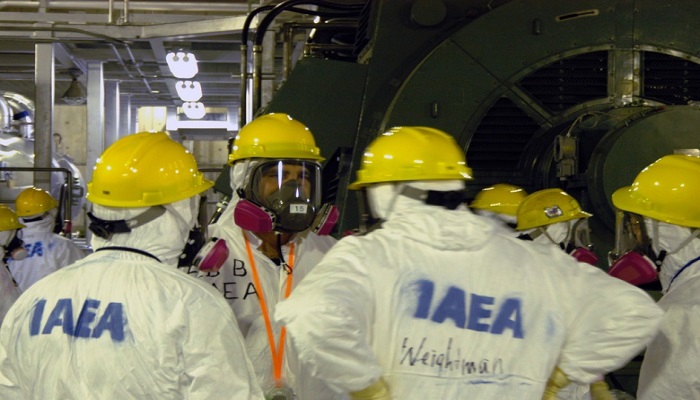
IAEA InspectorsIn a damning revelation, the New York Times revealed that with only one month left before a self-imposed June 30 deadline to complete a nuclear deal with the Iran regime, “international inspectors have reported that Tehran’s stockpile of nuclear fuel increased about 20 percent over the last 18 months of negotiations, partially undercutting the Obama administration’s contention that the Iranian program had been ‘frozen’ during that period.”

The findings were released by the International Atomic Energy Agency which poses a significant stumbling block to the hopes of the Obama administration. As the Times put it:

“In essence, the administration will have to convince Congress and America’s allies that Iran will shrink its stockpile by 96 percent in a matter of months after a deal is signed, even while it continues to produce new material and has demonstrated little success in reducing its current stockpile.”

The fact that Iran has continued building its stockpile of nuclear fuel even while it has consistently said it was not pursuing a nuclear expansion during three years of negotiations leads to the inescapable conclusion that Iranian regime cannot be trusted to comply with any deal reached.

Even while the regime’s chief negotiator Javad Zarif has played the role of charming, accommodating diplomat, his boss, Ali Khamenei, has just as consistently maintained an air of defiance in complying with the most basic of terms such as inspection of military sites.

Iran’s opposition to inspections presents a red line for France’s foreign minister, Laurent Fabius, who reiterated in an interview with the Wall Street Journal that a deal without inspections of military and secret facilities risked sparking a new nuclear arms race in the Middle East.

“The best agreement, if you cannot verify it, it’s useless,” said Mr. Fabius. “Several countries in the region would say, OK, a paper [has been signed] but we think it is not strong enough and therefore we ourselves have to become nuclear.”

But those were not the only disturbing news reports coming out of Iran. The state-run Fars News Agency reported on Monday that Russia’s Rosatom State Atomic Energy Corporation announced it would start construction this year of a second nuclear plant in Iran. The deal comes on the heels of an agreement between Russia and Iran to send the Islamic state an advanced anti-aircraft missile system.

The picture for meeting the June 30 deadline appeared even more muddled with reports from Reuters that Western negotiators appeared to be caving in on key Iranian demands such as shifting complaints about any alleged violations to a “dispute-resolution panel” that would come up with non-binding opinions in an absurd idea.

The proposal would direct complaints to the United Nations Security Council where the same Russia that is busy selling missile batteries and nuclear reactors to Iran would have a veto over any potential sanctions.

All of this would be happening at the same time the regime would be flooded with billions of dollars in oil sales proceeds, new foreign investment and the release of frozen assets at precisely the time Iran needs its coffers replenished after three years of proxy wars.

It does make any rational person wonder how Iran’s mullahs could be trusted when they’ve already added to their nuclear stockpile over the last 18 months while preaching its reduction at the negotiating table.

By Michael Tomlinson
Filed Under: Blog, News

Iran Lobby Silent as Religious Persecution Rises

June 3, 2015 by admin

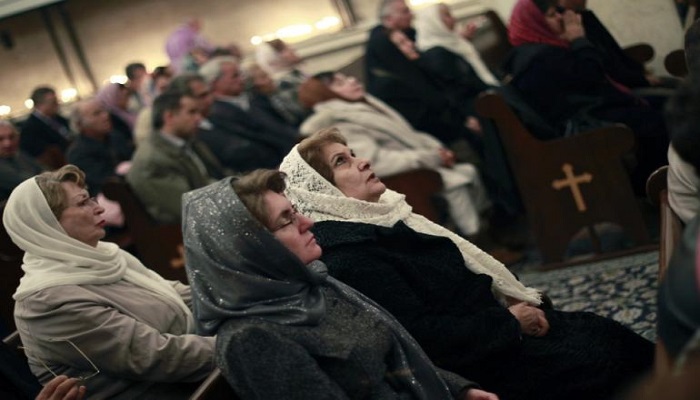
Christian Persecution (1)There are certain truisms in life. Not paying your taxes will get you into trouble. Eating high fat foods makes you gain weight and the paid lobbying machine for the Iran regime will always remain silent when it comes to the mistreatment of those living in Iran.

That was on display the other as Fox News reported that “Iran’s revolutionary court imposed harsh prison sentences on 18 Christian converts for charges including evangelism, propaganda against the regime, and creating house churches to practice their faith.”

The sentences totaled almost 24 years, but the lack of transparency in the regime’s infamous judicial system did not reveal how the sentences were dished out to each person. In addition to prison time, each defendant was barred from organizing home church meetings and given a two-year ban from leaving Iran.

The Christians, many of whom were arrested in 2013, were sentenced in accordance with Article 500 of the Islamic Penal Code, a vague law used as a catch-all criminal statute to penalize threats to Iran’s clerical rulers. According to the law, “Anyone who engages in any type of propaganda against the Islamic Republic of Iran or in support of opposition groups and associations, shall be sentenced to three months to one year of imprisonment.”

It’s a code that has been used widely against religious minority as well as political dissidents as a quick means of throwing them in prison before deciding on more serious charges such as espionage, treason or heresy.

The persecution doesn’t stop with Christians as Iran’s mullahs have also targeted Sunni Muslim sects and other religious minorities such as Baha’is for harassment. The number of Christians in Iran is estimated at between 200,000 and 500,000, out of an overall population of nearly 78 million.

Although the Islamic Republic’s constitution guarantees on paper that Christianity, Judaism, and Zoroastrianism are protected religions, the application of mullah’s constitution relegates the members of the minority religions to second class citizens.

Against that backdrop was testimony given on Capitol Hill yesterday by the families of Americans being held hostage in Iran, including Saeed Abedini, a Christian pastor imprisoned by the regime’s revolutionary court.

The family of Amir Hekmati, an Iranian-American Marine, taken prisoner in 2011, testified before the House Foreign Affairs Committee that he has been subjected to brutal torture both physical and psychological. “Amir’s feet were beaten with cables. His kidneys were shocked with a Taser. He was drugged by his interrogators, who then forced him to suffer through withdrawal. Amir was also kept in solitary confinement for months on end and held in a cell so small for the first year of his imprisonment that he could not fully extend his legs. He was allowed to walk outside his cell once a week,” said Sarah Hekmati, Amir’s sister.

Amir was also kept incommunicado for years. His jailers took advantage of this and falsely told him his mother had been killed in a car accident in a cruel example of the regime’s treatment of its prisoners.

Yet throughout all this mistreatment, Trita Parsi and other advocates for the regime have barely uttered a word of protest, even while Parsi hob nobs with Iranian delegates in Swiss hotel hallways and lounges. Their silence, while deafening, is not unexpected since the brutal treatment of Iranian-Americans could prove troublesome to the end goals of bailing out the Iran regime with a nuclear agreement that lifts all economic sanctions immediately.

It is unfortunate that this Iranian hostage crisis appears to have no end in sight.

By Laura Carnahan

Filed Under: Blog, National Iranian-American Council Tagged With: Baha'is, Human Rights, Iran, Iran Lobby, Iran Talks, Trita Parsi

Iran Regime Deepens Efforts for Nukes

May 29, 2015 by admin

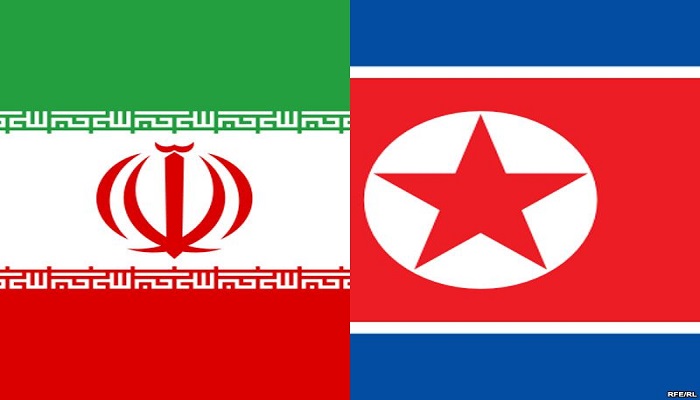
Iran North KoreaGlobal news media shifted their attention to new disclosures of a clandestine visit to Iran by a delegation of North Korean nuclear and missile experts to a military site near Tehran amid a third round of talks between the P5+1 group of nations and the Iran regime over its nuclear program.

As reported by Reuters, the National Council of Resistance of Iran, one of the leading dissident groups against the Iran regime which previously exposed the regime’s uranium enrichment plant at Natanz and a heavy water facility at Arak in 2002, cited information from sources inside Iran, including Iran’s Revolutionary Guards Corps, that a seven-person North Korean Defense Ministry team was in Iran during the last week of April.

The visit marked the third time in 2015 alone that North Koreans had been to Iran, with another nine-person team due to return in June shortly before the self-imposed deadline of June 30 for this current round of talks.

“The delegates included nuclear experts, nuclear warhead experts and experts in various elements of ballistic missiles including guidance systems,” the NCRI said.

The information obtained was based on dozens of reports from various sources inside of the clerical regime. Besides IRGC, sources included the Ministry of Defense (MoD), the Organization of Defensive Innovation and Research (SPND), which is in charge of working on the weaponization aspect of the nuclear program, and the Aerospace Industries Organization (AIO).

Breitbart.com sounded a cautionary note at the prospect of more integrated cooperation between the two totalitarian regimes.

“The North Koreans are growing more emboldened and hostile as they watch Iranian regime humiliate American negotiators. The claims of the NCRI should be vigorously vetted, as with all third-party intelligence, but it is quite plausible Kim Jong-Un would send technical experts to Iran to discuss mutually profitable strategies for getting the mullahs those atomic weapons they want so much,” Breitbart said.

Even Carol Giacomo, the editorial page editor for the New York Times, writing in her blog Taking Note that the optics of such a visit might prove problematic in efforts to keep Iran from gaining a nuclear capability.

“Such cooperation would belie Tehran’s insistence that it is not pursuing a nuclear weapon and would necessarily blow up any nuclear agreement. But even if a nuclear deal is reached, the major powers will need to watch vigilantly to make sure that Iran doesn’t switch from developing the technology that could enable it to produce a bomb to buying one from North Korea,” Giacomo said.

While many political analysts openly wonder why the regime would host such a delegation with the June 30 deadline looming for current talks, the regime has left no doubt that any agreement reached would be only on its terms, including demands from Iran’s top mullah, Ali Khamenei, to not allow international inspection of any military sites, to not allow interviews of Iranian nuclear scientists and an unconditional and immediate lifting of all economic sanctions imposed by the U.S., European Union and United Nations. All of which leaves the prospect of a deal in doubt, let alone meeting the June 30 deadline.

French foreign minister Laurent Fabius took a hard line in response to Khamenei’s demands, saying “France will not accept a deal if it is not clear that inspections can be done at all Iranian installations, including military sites.”

Fabius made his comments to the national assembly in Paris yesterday and urged other negotiating partners to adopt a similar position as talks resumed this week in Switzerland.

With Iran’s mullahs showing such defiance at such a critical time, we can only assume mullahs either don’t intend to honor any agreement reached or suspect they can string the West along or still develop their nuclear weapons just as their visitors, the North Koreans did.

By Michael Tomlinson

Filed Under: Blog, News

Iran Lobby Fails Imprisoned Iranian Americans

May 28, 2015 by admin

Hekmati Abedini RezaianThe National Iranian American Council touts itself as a champion for Iranian Americans. Its own mission statement trumpets the organization as “a non-profit educational organization dedicated to promoting Iranian-American participation in American civic life.”

One can only assume that its daily verbal assaults against anyone opposing a nuclear deal with the Iran regime is part of that educational process for promoting civic life in America. A casual tallying of public statements, press releases, news quotes and surveys released by NIAC would leave most observers wondering why American civic life happens to be tied so intimately to the foreign policy of the Islamic state.

But the NIAC claims an extended mission to help promote universal human rights in Iran saying on its website:

“NIAC works to ensure that human rights are upheld in Iran and that civil rights are protected in the US. NIAC believes that the principles of universal rights – dignity, due process and freedom from violence – are the cornerstones of a civil society.”

A rational person could then deduce that NIAC would be a vocal and outspoken proponent for the human rights of Iranian Americans who are being abused or mistreated in some fashion. In fact, if you scroll through NIAC’s Issues blog, you cannot find any denunciations, condemnations or calls for better treatment of people within Iran.

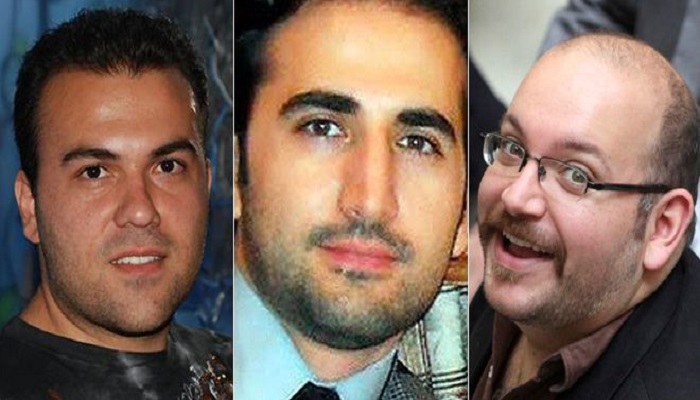
Indeed, if NIAC’s mission is to advocate on behalf of Iranian Americans, I can easily come up with three who desperately need its help. Languishing in Iranian prisons are:

  • Jason Rezaian, a Washington Post reporter and Iranian American born in California, who has been held by Iran and only this week has been charged with espionage for reporting Iran news and is not facing trial in the Revolutionary Court in a closed session without even his family allowed in attendance;
  • Amir Hekmati, a former U.S. Marine and the longest-held American prisoner in Iran, who has been sentenced in another sham trial and whose appellate hearing was denied yet again; and
  • Saeed Abedini, a Christian pastor from Idaho, who was convicted for holding religious services in private homes.

In response to the Rezaian closed session trial moving forward, NIAC’s president, Trita Parsi, was quoted in the New York Times saying “If there is a conviction in the Rezaian case and no leniency, it can create a crisis in the nuclear talks, yet another complication.”

It’s a wonder Parsi always seems to find a way to tie everything back to nuclear talks. You think he has a genetic sequence which compels him to burp the word “nuclear” whenever he is asked a question about Iran.

Wouldn’t it be refreshing if Parsi actually lived up to his own organization’s mission statement and said something like: “We think it is horrible that Iranian regime is holding these Iranian Americans in prison without proper due process or transparency. We urge Iran’s authorities to respect international law and all these Americans to come home to their families without any further delay.”

Now was that so hard?

But then again, the Iran regime does seems to share a playbook with other dictatorial regimes which use hostages as political bargaining chips. We can only assume Iran’s mullahs have seen the prisoner swaps and are holding on to these American hostages hoping to leverage them as part of the nuclear talks; talks that Parsi and NIAC seem pathologically tied to as well.

But the plight of these Iranian Americans should be blatant evidence of the true nature of the mission of the NIAC, which is not to help them, but help Iran gain a nuclear deal with the immediate lifting of all economic sanctions as a reward.

By Michael Tomlinson

Filed Under: Blog, National Iranian-American Council Tagged With: Iran, Iran Deals, Iran Lobby, Iran Talks

Iran Lobby Can’t Keep Facts Strai

May 27, 2015 by admin

Lies Truth (1)The National Iranian American Council has been unleashing verbal broadsides at Sen. Lindsey Graham (R-SC) alleging he had called all Iranians “liars” and demanded apologies for what it alleges as racist comments.

NIAC’s head, Trita Parsi, issued a statement condemning Sen. Graham, saying “Senator Graham owes the Iranian-American community – one of the most successful communities in the United States – an apology.”

Sen. Graham might very well owe Iranian-Americans an apology – if he was talking about Iranian Americans, but he wasn’t speaking of them, he instead was focusing his ire at the mullahs leading Iran today, especially as it related to ongoing nuclear talks.

You see, the NIAC again missed the mark in its eagerness to defend the mullahs that it got Sen. Graham’s quotes wrong.

Writing in the Slatest for Slate.com, Ben Mathis-Lilley clarified the error after reviewing the video of Sen. Graham’s remarks to the Southern Republican Leadership Conference in Oklahoma City:

“I met a lot of liars, and I know the Iranians are lying.” The last word is definitely not liars — you can tell by comparing it with when he actually does say liars earlier in the sentence. Moreover, “Iranians” is actually preceded by “the” both times he says the word, which makes a big difference given that referring to “the [name of national population]” is typical diplomatic shorthand for a particular country’s government. See President Obama referring to “the Iranians” here, for example.

Graham’s statement may or may not be correct. But in the context of current events, and with a more accurate transcription, it doesn’t seem to be the attack on an entire nationality that it’s being made out as, Mathis-Lilley wrote.

So if we take Parsi at his word and were feeling generous, we might assume he made an oversight in not checking the video of Sen. Graham’s words and simply relied on the number of liberal-leaning news outlets that mischaracterized the comments. Parsi might be guilty of nothing more than shoddy fact checking.

Considering Parsi’s past track record in losing a libel lawsuit largely on the grounds of shoddy record-keeping, making false statements and discovery abuses, it seems to be par for the course of how Parsi conducts his public business. It is worth noting that Parsi was ordered to pay the journalist he accused of libel for $184,000 to pay for the defendant’s legal expenses.

It does make you wonder how much Sen. Graham might collect from Parsi for making a similar false accusation of racial comments, when the video clearly shows otherwise.

By Michael Tomlinson

Filed Under: Blog, National Iranian-American Council Tagged With: Iran, Iran Lobby, Senator Lindsey Graham, Trita Parsi

Tensions Mount and Iran Lobby Stays Deaf and Mute

May 26, 2015 by admin

Def Blind MuteTo say relations between the U.S. and the Iran regime are growing testier by the day would be an understatement of classic proportions.

In swift moving developments, an Iranian judge overseeing the espionage trial of Washington Post reporter Jason Rezaian has barred everyone except the defendant and his lawyer from being present. Even Rezaian’s mother and wife would not be permitted to be in the courtroom in a glaring example of the opaque nature of the regime’s justice system.

The fact that mullah’s regime in Iran would move swiftly towards what appears to be a sham trial while at the same time negotiating with the P5+1 nations on a nuclear deal has led to rampant speculation about the regime’s endgame.

According to the New York Times: “Political analysts have said they believe that the outcome of the Rezaian case, as well as those of two other Americans imprisoned in Iran, are in some way dependent on the success or failure of the nuclear negotiations.”

In which case, the regime has opted to make Rezaian and other Americans held in Iranian prisons nothing more than bargaining chips.

In another verbal jab shot by Qasem Soleimani, commander of the Iran regime’s Revolutionary Guard’s Quds force, denounced U.S. efforts against ISIS in what appeared to be a sharp rebuke of comments made by U.S. Secretary of Defense Ashton Carter’s comments that Iraqi forces supported by Iranian-backed Shiite militia “showed no will to fight” as ISIS overran the Iraqi city of Ramadi.

It is ironic that Soleimani would be denouncing the U.S. for what he called a lax effort against ISIS when it was his Quds force units that provided instruction and training to Iraqi insurgents using improvised explosive devices against U.S. and coalition forces during the Iraq war.

Both of these incidents come on the heels of an ongoing dispute with Iran at the nuclear bargaining table in which the regime’s top mullah Ali Khamenei publicly denounced any access to military facilities.

This was followed by a statement from France’s foreign minister who reported a demand from the regime to not allow access to any military sites by international inspectors unless 24 days’ worth of advanced notice was given.

Iran reportedly altered that red line in the sand by calling for “managed access” of sites, whatever that means. Iranian Deputy Foreign Minister Abbas Araghchi’s televised comments appeared to contradict comments by the Khamenei. Since Khamenei is indeed the regime’s supreme leader, we’re willing to believe his version of policy rather than the deputy foreign minister.

Meanwhile, as things continue to go badly between the U.S. and Iran regime, the regime’s biggest cheerleader in chief, the National Iranian American Council, has been strangely silent on all of these developments.

It has not issued a denunciation of Rezaiain’s closed trial. It has not tweeted anything about the apparent contradictions in Iranian statements on international inspection access. NIAC and its leadership have not even raised a single word of encouragement for the U.S. not to overreact to what Khamenei has been ranting about lately.

Oddly, its only official statement the last week came as an attack against Sen. Lindsey Graham (R-SC) in which it demanded an apology from him for what it called a “racist” attack in calling Iranians “liars” in regards to the regime’s ability to be trusted on any nuclear agreement.

So while Sen. Graham’s analogy involved an unfortunate choice of imagery, it certainly was accurate in regards to the regime’s lack of abiding to previous international agreements, including breaking promises on allowing inspections of nuclear facilities and still stonewalling questions from the International Atomic Energy Agency.

Of course, the NIAC would never stoop to biting the hands of their masters from Tehran so we are left with the international news media to scrutinize and criticize Iran’s increasingly bizarre behavior.

By Michael Tomlinson

Filed Under: Blog Tagged With: Iran Lobby, Lindsey Graham, NIAC, Qassem Soleimani

The False Choices of the Iran Lobby

May 22, 2015 by admin

War and PeaceAs we enter the Memorial Day holiday weekend, families will gather for barbecues and picnics and others will gather to remember those who have fallen in past conflicts and made the ultimate sacrifice for their nation. But Memorial Day should also be a day to commemorate those who didn’t put on a uniform, but still had to make the same sacrifices and their families had to pay that ultimate price.

It is an unfortunate legacy of the world we live in today that innocent men, women and children often have to bear the same price as those who are trained and volunteer to fight. Throughout the Middle East, that scenario is being played out on countless battlefields, in numerous villages, towns and cities in places such as Iraq, Syria, Yemen, Nigeria and Afghanistan.

But even cities and nations unaccustomed to fighting have been places of terror and carnage such as an office in Paris, a store in Sydney or a government building in Canada. All at the hands of extremist Islamists who have copied their playbook of terror from the Iran regime which has had a 30 year head start on terror spectacles and continues to this day with almost daily public hangings in most city squares.

So this Memorial Day ought to serve as a sobering reminder not just of the sacrifices service personnel make, but for those innocents who have been caught in the escalating violence around the world.

All of which makes the choices offered by the Iran lobby in regards to ongoing nuclear talks with the Iran regime all the more odd since supporters such as the National Iranian American Council have consistently framed the choices in a nuclear agreement as stark ones between war and peace. Their hyperbole clouds the real issue driving the mullahs in Iran and for them the choices are not about war and peace.

It’s really about cash and lots of it. Iran’s economy is reeling under the triple blows of corrupt mismanagement by the ruling elites, spiraling oil prices and the heavy costs associated with funding proxy wars and terror groups in Yemen, Iraq and Syria. Not to mention the billions of dollars being spent by the regime in building and maintaining a far flung network of installations and research facilities dedicated to developing nuclear weapons and the ballistic missiles necessary to carry them.

That need for billions of dollars in unfrozen assets, proceeds from oil sales and renewed capital investment is what drives the mullahs. They hunger for cash in the same way an addict craves his next drug fix. It is also why Iran’s top mullah, Ali Khamenei, has consistently demanded a complete lifting of all economic sanctions at once, including those levied by the UN Security Council, European Union and the U.S. Congress and president.

And that is the quandary facing the NIAC and other regime lobbyists; how do we sell a nuclear deal driving by a need for a financial bailout of Tehran? In classic spin control, they opt to frame the debate as a choice between war and peace.

They recognize that America is war weary and that voters have little appetite for more American blood to be shed, but the choice for Americans and by extension for Congress and the Obama administration is that the choice really is not between war and peace. It’s about whether or not to let mullahs in Iran get the cash they want and so desperately need.

Economic sanctions work. They brought the mullahs to the negotiating table and they are still the most compelling non-violent tool available to the International community. To abandon them without a solid deal that not only cuts Iranian regime’s nuclear program off at the knees, but also modifies its behavior towards proxy wars, terror groups and human rights is dumb and a mistake of historic proportions.

For when we gather to commemorate and celebrate Memorial Day weekend, we should remember that the surest path to peace is not through appeasement, but through strength; strength of conviction, strength of commitment and strength of will.

I hope your Memorial Day is a peaceful one.

By Michael Tomlinson

Filed Under: Blog Tagged With: Iran deal, Iran Talks, Khamenei, Memorial Day, NIAC, peace, Sanctions, War

Iran-Nuclear Talks Going Nowhere Fast

May 21, 2015 by admin


Khamenei Military SpeechPity the supporters and cheerleaders of the Iran regime such as Trita Parsi of the National Iranian American Council. They have all but shouted themselves blue to the highest mountains that Iran’s mullahs were indeed ready for a sea change in their relationship with the world. They argued that Hassan Rouhani was a new kind of moderate Iranian politician. They urged President Obama to embrace dialogue as the surest path to peace.

Those claims have been undone in large part through Iran’s own actions including the overthrow of the Yemen government, provocative acts in international waters, the decision to move forward with spy trials of American journalists and the continued crackdown at home including stepped up public executions and packing its prisons like sardine cans.

But out of the mouth of the regime’s top leader, Ali Khamenei, comes the most damaging statements to the credibility of the Iran lobbying allies.

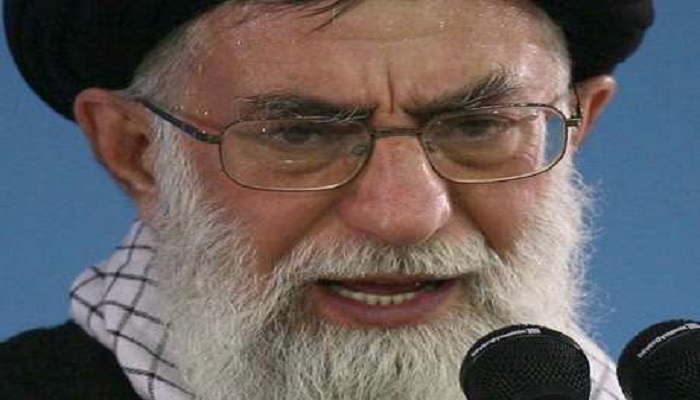
In a speech at the Imam Hussein Military University in Tehran yesterday, Khamenei again denounced what he said were escalating demands by the P5+1 negotiating group and flatly declared any interviews of Iranian nuclear scientists by international inspectors to be completely off the table, as well as not allowing inspections of any of Iran’s military sites.

This follows similar statements he made last summer when Khamenei vowed to greatly expand Iran’s uranium enrichment capacity, scaling up to industrial size with 190,000 centrifuges, 10 times the number currently installed.

Not surprisingly, the regime still has not responded to a dozen questions from the International Atomic Energy Agency on the scope and scale of the possible military dimensions of its current nuclear program, leading to the agency’s head declaring serious doubt about Iran’s ability to live up to any agreement.

As the New York Times described, the inability to interview Iranian nuclear scientists makes compliance a moot point.

“Central to that is the ability to interview nuclear scientists, starting with Mohsen Fakhrizadeh, the man considered by Western intelligence officials to be the closest thing Iran has to J. Robert Oppenheimer, who guided the Manhattan Project to develop the world’s first nuclear weapon,” the Times said.

“The scientists and engineers Fakhrizadeh has assembled over the past 15 years are best suited to explain, or rebut, documents suggesting that Iran has extensively researched warheads, nuclear ignition systems and related technologies. Fakhrizadeh has never been made available to inspectors for interviews, and his network of laboratories, some on university campuses, have not been part of inspections,” added the Times.

Even more surprising were statements made by France’s foreign minister, Laurent Fabius, who unveiled details about the current state of nuclear talks in advance of the June 30 deadline currently taking place in Switzerland, where the Iran regime demanded a 24-day period before international inspectors could visit any of its nuclear sites in the event of a suspected violation.

It is absurd that Iran regime could get over three weeks to cover up or clean out any suspected violation before allowing any inspectors in. It makes a mockery of the P5+1 promise of “anytime, anywhere” inspections as part of the framework agreement previously announced.

Unsurprisingly, Trita Parsi and the rest of the Iran lobby have been as silent as fence posts during all this, probably realizing any comments they make in the face of such explicit statements from the one man in the regime in Iran who has the final say over an agreement would be worthless.

By Michael Tomlinson

Filed Under: Blog Tagged With: Iran deal, Iran Talks, Khamenei, Trita Parsi

Iran Regime’s Role as Provocateur

May 20, 2015 by admin

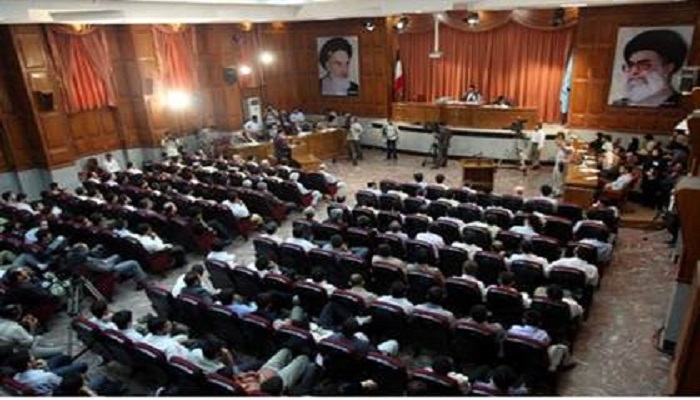
Revolutionary CourtIf there is one thing you can always bank on, it is the desire by Iran’s mullahs to always figure out a way to antagonize and terrify the rest of the world even as it says it only wants a nuclear and conflict-free relationship with the rest of the world.

It is an amazing stretch of creativity by Tehran that would rival anything Don Draper could come up with on “Mad Men,” but unlike that seminal cable show which ended its run this weekend with Draper dreaming up the “I Want to Teach the World to Sing” commercial for Coca-Cola, Iran’s mullahs have opted for a repertoire of brutality and provocation.

For example, the regime announced its intention to put Washington Post correspondent Jason Rezaian, imprisoned for the past 10 months, on trial on May 26 alongside his wife, Yeganeh Salehi, who is also a journalist, on charges of spying for the U.S.

What is unusual is Iran’s decision to try the case in the Revolutionary Court which typically handles cases of national security, drug smuggling and espionage. The Court was notorious for holding a series of show trials of more than 250 journalists, human rights advocates, dissidents and protestors after the disputed 2009 presidential election that involved forced confessions, stiff prison time and publicized executions.

To say the move by the regime is worrisome is an understatement. It is also even more mindboggling that while social media such as Twitter was flooded by statements of outrage from news organizations and human rights groups, Iran’s lobbying cohorts in the U.S. such as the National Iranian American Council was conspicuously silent. In fact, a casual perusal of Trita Parsi’s Twitter feed showed no condemnation or mention of Rezaian’s plight.

The regime certainly kept busy sending out aggressive messages including one by top mullah Ali Khamenei who in a speech in which he promised the regime’s support for the “oppressed” peoples of the Persian Gulf region, including Yemen and Bahrain. His comments were aimed squarely at Saudi Arabia and other Gulf States who are currently engaged in an air campaign against Iran-backed Houthi rebel forces in Yemen.

Those tensions were exacerbated when an Iranian ship headed to Yemen in violation of a coalition naval blockade was joined by Iranian warships as it headed into the Gulf of Aden.

This comes on top of Iran welcoming a delegation from the Taliban from Afghanistan, while Ramadi in Iraq fell to ISIS and Iranian-controlled Shiite militias prepared to move in what could be a sectarian bloodbath with 25,000 refugees caught in the middle.

But the discontent Iran that is brewing isn’t just abroad. In a move to bolster an economy bled dry from corruption, mismanagement and the diversion of billions of dollars into funding proxy wars in Syria, Iraq and Yemen, Hassan Rouhani announced the suspension of a program that provided financial handouts to Iranians which was itself a replacement for another broken promise for subsidized electricity, gas, water and bread.

Suspension of the payments is likely to fuel even greater discontent among ordinary Iranians whose economic situation worsens while the elites and families of the politically connected enjoy a luxurious lifestyle.

All of which adds up to what promises to be the beginning of a hot summer for Iran filled with domestic discontent.

By Laura Carnahan

Filed Under: Blog Tagged With: Gulf, Iran, Jason Rezaian, Spies, Trita Parsi, Yeganeh salehi, Yemen

Things To Know About the Iran Regime This Week

May 18, 2015 by admin

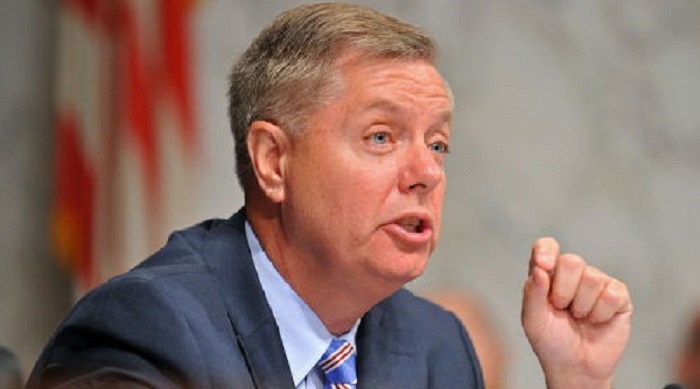
Sen. Lindsey Graham (R-SC) questions Supreme Court nominee Elena Kagan, President Obama's pick to replace retiring Justice John Paul Stevens, during during the second day of her confirmation hearing before the Senate Judiciary Committee on Capitol Hill in Washington on June 29, 2010. UPI/Kevin Dietsch

Sen. Lindsey Graham (R-SC) questions Supreme Court nominee Elena Kagan, President Obama’s pick to replace retiring Justice John Paul Stevens, during the second day of her confirmation hearing before the Senate Judiciary Committee on Capitol Hill in Washington on June 29, 2010. UPI/Kevin Dietsch

Sen. Lindsey Graham (R-SC) wrote in this weekend’s Wall Street Journal an editorial outlining eight conditions the Iran regime must meet before any nuclear agreement is reached. The points included common sense ideas such as closure of all hardened or formerly secret nuclear sites and allowing anytime, anywhere inspections of all Iranian military and nonmilitary facilities.

His points are valid and important in order to ensure any deal removes the threat of nuclear weapons from coming into the possession of the Islamic state., but the most important point he outlined as the conditioning of relief from economic sanctions on certification by the International Atomic Energy Agency that Iran was in full compliance and demonstrate that compliance over a sustained period of time.

The reason why this condition stands out above all others lies in the most pressing need Iran has right now which is cash. Iran’s mullahs have followed a policy of destabilizing the Middle East over the last three years including the funding of Shiite militias in Iraq and virtually taking over its government, supplying arms and support to the Syrian regime in its bloody civil war, and supporting a Houthi rebel army that has overthrown the government of Yemen and plunged the Arabian peninsula into a dangerous proxy war with Saudi Arabia and Sunni gulf states.

Iran’s mullahs have pressed hard for the lifting of all economic sanctions at once should a deal be completed because it needs the estimated $100 billion in frozen assets to help resupply its coffers depleted by proxy wars and plunging oil prices.

But even with this thirst for cash, Iran remains obstinate on even the most basic parts of an agreement. The regime’s top negotiator and Deputy Foreign Minister Abbas Araqchi opened talks with the IAEA recently which has been demanding access to Iranian military sites such as Parchin. “Iran, which is extremely reluctant to allow atomic inspectors access to military sites, has been stalling the investigation since last August,” reported Reuters.

This shows that mullahs’ desire for cash does have limits, namely they do not want to limit their ability to produce nuclear weapons. Iran’s mullahs believe that possession of nukes places Iran in a prime position to be the power in the region and weapons of mass destruction allow it to offset a nuclear-capable Israel, while also holding a hammer over the heads of Sunni states such as Saudi Arabia.

But this pursuit of weapons and funding of proxy wars have come at a steep price for ordinary Iranians. As Al Arabiya News Channel recently reported in a new series of stories focused on poverty in Iran:

“In 1979, shortly after the shah had been toppled, the new theocratic ruler Ruhollah Khomeini promised free electricity, water supplies and transportation services to all Iranians, to be paid for by oil revenues under a ‘just’ Islamic economic system.  Yet this promise – repeated by several regime presidents after him to make the poor feel the benefits of Iran’s oil wealth – was never delivered.”

Oddly enough though, U.S. Secretary of State John Kerry seems to think North Korea can somehow learn a positive lesson from any completed deal with Iran, which leaves objective observers dumbstruck since it was North Korea that provided the mullahs with the template for achieving nuclear capability by negotiating an agreement and then violating every aspect of it. In fact, North Korea has supplied Iran with much of its nuclear research and virtually all of its ballistic missile capability under manufacturing license.

Unfortunately while the rhetoric is starting to heat up on the near presidential campaign trail, the news media have all but ignored violent protests that have broken out in Iranian cities. The recent protests against the regime’s oppression began after a May 4 incident in which 27-year-old Farinaz Khosravani jumped to her death from a window when an Iranian intelligence officer allegedly tried to rape her at the hotel where she worked in the city of Mahabad according to the International Business Times.

The mass protests have been met harshly by Iranian regime’s security forces with the potential for even more deaths as a result.

All of which leads us to the most combustible issue coming to a head this week as an Iranian ship heads towards Yemen with what the regime calls a cargo of “humanitarian supplies,” but with no ability to independently verify it.

Iranian Gen. Masoud Jazayeri, the deputy chief of staff, warned that any attempt to interfere with the vessel would “spark a fire” in a clear warning to the U.S. Navy. The stakes rise higher as the Iran regime starts the weekend talking about a nuclear peace and ends it with warnings of war.

By Michael Tomlinson

Filed Under: Blog, News Tagged With: Iran, Iran sanctions, Iran Talks, Syria, Yemen

  • « Previous Page
  • 1
  • …
  • 53
  • 54
  • 55
  • 56
  • 57
  • …
  • 64
  • Next Page »

National Iranian-American Council (NIAC)

  • Bogus Memberships
  • Survey
  • Lobbying
  • Iranians for International Cooperation
  • Defamation Lawsuit
  • People’s Mojahedin
  • Trita Parsi Biography
  • Parsi/Namazi Lobbying Plan
  • Parsi Links to Namazi & Iranian Regime
  • Namazi, NIAC Ringleader
  • Collaborating with Iran’s Ambassador

Recent Posts

  • NIAC Trying to Gain Influence On U.S. Congress
  • While Iran Lobby Plays Blame Game Iran Goes Nuclear
  • Iran Lobby Jumps on Detention of Iranian Newscaster
  • Bad News for Iran Swamps Iran Lobby
  • Iran Starts Off Year by Banning Instagram

© Copyright 2026 IranLobby.net · All Rights Reserved.