Iran Lobby

Exposing the Activities of the lobbies and appeasers of the Mullah's Dictatorship ruling Iran

  • Home
  • About
  • Current Trend
  • National Iranian-American Council(NIAC)
    • Bogus Memberships
    • Survey
    • Lobbying
    • Iranians for International Cooperation
    • Defamation Lawsuit
    • People’s Mojahedin
    • Trita Parsi Biography
    • Parsi/Namazi Lobbying Plan
    • Parsi Links to Namazi& Iranian Regime
    • Namazi, NIAC Ringleader
    • Collaborating with Iran’s Ambassador
  • The Appeasers
    • Gary Sick
    • Flynt Leverett & Hillary Mann Leverett
    • Baroness Nicholson
  • Blog
  • Links
  • Media Reports

Bipartisan Consensus Forming on Dealing with Iran Regime

March 30, 2017 by admin

Bipartisan Consensus Forming on Dealing with Iran Regime

Bipartisan Consensus Forming on Dealing with Iran Regime

In today’s turbulent political environment there is not much anyone agrees on, except that maybe the New England Patriot comeback in the Super Bowl was astounding or that the Chicago Cubs win of the World Series was historic.

Other than that, most politicians can’t even seem to agree on the weather and what causes a shift in temperature day to day.

On one topic though there seems to be a growing bipartisan consensus, not just in the U.S. but around the world and that is more needs to be done to rein in the intransigence of the Iranian regime and the threat posed by its burgeoning military and ballistic missile program.

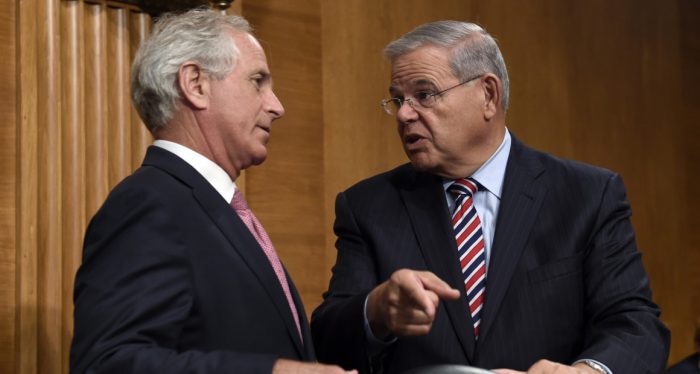
Monday’s Senate Foreign Relations Committee hearing on Iran was an example of a political environment with a rare and welcomed unanimity. Ranking member Sen. Benjamin L. Cardin (D-Md.) remarked that although he voted against the Joint Comprehensive Plan of Action on Iran, he doesn’t think it would be wise to withdraw, saying:

“Iran’s activities today are as bad as they have ever been and probably worse. They are certainly increasing their terrorist sponsorship in the Middle East as we see in so many different countries in that region. Their record on violating the ballistic missile obligations are well known and well understood. Their human rights violations against their own citizens are horrible, one of the worst countries in the world. They violate the arms embargo and the list goes on and on. So, it is appropriate to get this Committee to look at what we can do to make sure that first, the Iran nuclear agreement is honored so that Iran does not become a nuclear weapons state, but then secondly, look at those activities that were not covered under the JCPOA as to how we can play a stronger role.”

He was joined by his Republican colleague, Sen. Bob Corker (R-Tenn.), chairman of the committee who said:

“One of my criticisms of the JCPOA was that it would become our de facto Middle East policy and Iran would expand their destabilizing activities. I think we are seeing a lot of that today. Regionally, we’ve seen an escalation in Iranian intervention. Iran, along with its allies in Russia, has continued to prop up Assad at the cost of countless lives in Syria. Iran’s support to the Shia militias in Iraq threatens the interests of Sunnis and Kurds alike, not to mention the Shia in Iraq that don’t subscribe to the anti-American, zero-sum politics of the militias that are there.”

Jennifer Rubin in the Washington Post’s Right Turn blog opined that “given this shared assessment of Iran — the JCPOA is not going away but the United States needs to confront Iran in other arenas — it’s not surprising that a bipartisan bill, the Countering Iran’s Destabilizing Activities Act of 2017, with seven co-sponsors from each party, was introduced last week.”

“The act establishes new sanctions targeting Iran’s testing of ballistic missiles and its backing for terrorism, and also seeks to block the property of any entity involved in the sale of arms to or from Iran. It does not reintroduce sanctions lifted from Iran as part of the 2015 nuclear deal.”) In a summary released last week, senators described potentially far-reaching measures including mandatory sanctions on those involved with Iran’s ballistic missile program, new sanctions against the Islamic Revolutionary Guard Corps and a requirement for the president “to block the property of any person or entity involved in specific activities related to the supply, sale, or transfer of prohibited arms and related material to or from Iran,” Rubin added.

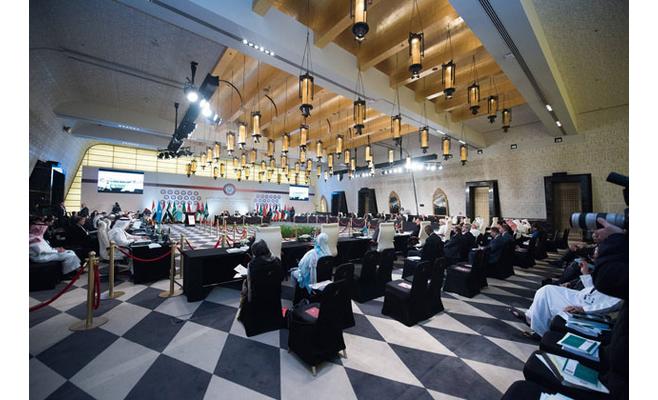
But it wasn’t just on Capitol Hill where there was unanimous consent as all 15 resolutions passed by the Arab summit which took place in Jordan Wednesday were devoted to an indictment of Iran, its Revolutionary Guards Corps and Lebanese surrogate, Hezbollah. They were a testament to the depth of Arab-Iranian animosity and exposed the extent of the rift between the Sunni and Shiite Muslim worlds.

Iran was accused of meddling in the internal affairs of Arab nations, inciting Shiites against Sunnis, and arming and training Shiite terrorist groups for operations against legitimate Arab governments. The Arab rulers combined to put Tehran in the dock for its interference in the Syrian civil war and assault on its sovereignty.

It was notable that at an Arab summit that has in the past concerned itself with issues related to Israel and the plight of the Palestinian people, the entire focus of the summit was on the Iranian regime; demonstrating how important the issue of confronting Tehran has become to the wider Arab world.

In the annual AIPAC conference a clearer united vision of the importance to oppose the Iranian regime was surfaced. American authorities and law makers used the opportunity to show their unanimous visions on the threat they feel from the Iranian regime and the need to take action to contain the growing destabilizing activities of the mullahs in the region.

The speaker of the US House of Representatives, Paul Ryan, called to designate the Revolutionary Guards as a terrorist group, describing it as a “terrorist army.” He said “Iran supports the terrorist dictator of Damascus and the militias in Yemen, Baghdad and Beirut.”

Furthermore, Nikki Hailey, the US ambassador to the United Nations asserted at the conference that “Iran’s nuclear deal is worrisome because it empowered Russian and Iran and encouraged the latter to act freely without fear of accountability.”

Mitch McConnell, the Republican majority leader in the Senate added: “Today we must adopt a different approach. We must combat Iran’s ability to finance, arm and train terrorists, such as Hezbollah, Hamas and its proxies in Syria.”

McConnell criticized Iranian regime’s nuclear deal, saying that it disabled the United States from taking more aggressive steps against Iran.

Meanwhile the Iran lobby was once again beating the war drum in an editorial in Huffington Post by Jamal Abdi of NIAC Action and Adam Weinstein of the National Iranian American Council, in which they claimed that this bipartisan consensus would only provide incentives for the U.S. to be plunged into a war with Iran at the behest of President Trump.

They go on to argue that if the proposed sanctions bill passes, Tehran would respond negatively and all the positive gains made by the nuclear deal would evaporate. What positive gains?

Since the deal was agreed to, the Iranian regime has broken every promise of moderation, stability, peace and partnership made by the NIAC and other Iran lobby supporters.

The harsh proof of Iranian regime’s track record over the past years has been so convincing that a bipartisan consensus is seen among both houses of congress to try to oppose the mullahs in Tehran.

All we can say is that it’s about time.

Michael Tomlinson
Filed Under: Blog, News Tagged With: #NuclearDeal, Adam Weinstein, Featured, Iran deal, Iran Lobby, Iran Mullahs, Iran sanctions, Iran Terrorism, IRGC, Jamal Abdi, National Iranian American Council, NIAC, NIAC Action, Syria, Yemen

Bipartisan Senators Move New Iran Sanctions Bill Forward

March 24, 2017 by admin

Bipartisan Senators Move New Iran Sanctions Bill Forward

Bipartisan Senators Move New Iran Sanctions Bill Forward

While the political divide between Democrats and Republicans may feel like the Grand Canyon, one at least one subject both sides seem to be able to agree: New sanctions need to be levied against the Iranian regime.

Senate Foreign Relations Chairman Bob Corker (R-Tenn.) on Thursday unveiled a bipartisan bill to slap the Iranian regime with new sanctions because of the country’s ballistic missile development, support for U.S.-designated terrorist groups and human rights violations, according to Politico.

Democratic co-sponsors, including Robert Menendez of New Jersey and Foreign Relations ranking member Ben Cardin of Maryland, emphasized that the measure was designed explicitly so as not to undermine the 2015 Iran nuclear deal.

The bill is supported by more than a dozen senators, according to a news release, including Marco Rubio (R-Fla.), Tom Cotton (R-Ark.), Bob Casey (D-Pa.) and Chris Coons (D-Del.) — giving it a strong chance of being taken up in the Senate.

“This legislation demonstrates the strong bipartisan support in Congress for a comprehensive approach to holding Iran accountable by targeting all aspects of the regime’s destabilizing actions,” Corker said in a statement. “These steps will allow us to regain the initiative on Iran and push back forcefully against this threat to our security and that of our allies.”

Menendez, who didn’t vote for the nuclear deal, said that the legislation was crafted to specifically avoid any sanctions lifted as part of the nuclear agreement, according to the Hill.

“This legislation was carefully crafted not to impede with the United States’ ability to live up to its commitments under the JCPOA, while still reaffirming and strengthening our resolve by imposing tough new sanctions,” he said.

Lawmakers were expected to roll out new sanctions on the Iranian regime ahead of a key foreign policy conference taking place early next week, Reuter reported.

The Senate legislation, according to an outline from Corker’s office, would include mandatory new sanctions on individuals tied to Iranian regime’s ballistic missile program and would expand terrorism-related sanctions to include the Islamic Revolutionary Guard Corps (IRGC).

It would also codify who is sanctioned over Iranian regime’s support for terrorism and force President Trump to enforce an arms embargo by blocking property for anyone tied to Iran’s sale or transfer of military arms.

In February, the Trump administration imposed sanctions on 25 individuals and entities in Iran, which it said were just “initial steps” in response to the regime’s repeated testing of ballistic missiles, which the United States maintains is in violation of UN resolutions.

Tehran has been supporting Yemen’s rebel Houthi movement, and Syrian President Bashar al-Assad in his country’s six-year-long civil war.

Menendez told Reuters the bill was intended to take a “regional” strategy because of the breadth of Iran’s activities in the Middle East.

“It calls for a regional strategy because Iran is obviously involved in the region in various ways, whether it be in Yemen or Syria and beyond,” he said.

The bipartisan action taken in the Senate is a response to the growing provocations coming from the Iranian regime as it prepares for its presidential election in May.

On Tuesday, the aircraft carrier USS George W. Bush entered the Strait of Hormuz from the Indian Ocean, a vital waterway that handles about 30 percent of the world’s oil shipping. As it has done so often over the past few years, Iran sent a swarm of speedboats to harass the carrier, according to Breitbart News.

“What reason were they to be in an international corridor, other than to harass us? Was today the day they were going to come out and potentially deploy kinetic actions against us?” asked Rear Admiral Kenneth Whitesell, commander of Carrier Strike Group 2, as reported by Japan Times.

Captain Will Pennington of the George W. Bush said the U.S. Navy changed its security procedures after a Saudi ship was attacked off the coast of Yemen by what some describe as a “drone” boat, roughly comparable in size to the Iranian Revolutionary Guard Corps patrol boats.

“It’s unprofessional behavior, it’s harassment behavior and it’s something you wouldn’t expect when you’ve got a hundred giant vessels per day going through the Strait of Hormuz, and – at least from the flow of oil – the most critical strait in the world,” Whitesell said. “This is their routine behavior, which in any other area of the world, any other maritime environment, this would be seen as a violation of international law.”

The allegations of Iranian-made drones extended to ones used by Houthi rebel forces to attack Saudi and UAE missile defense sites in Yemen, an arms research organization said in a report Wednesday, according to the Washington Post.

The report, put out by the group Conflict Armament Research, or CAR, looks at seven Houthi Qasef-1 drones and one drone engine recovered by forces from the United Arab Emirates. Six of the drones were captured in October on a known Iranian smuggling route that runs through Oman, while another was found after an attack by Houthi forces near Aden, Yemen, last month.

The Qasef-1 is “consistent with descriptions and imagery” of an Iranian drone called the Ababil-T, produced by Iran’s Aircraft Manufacturing Industrial Company, according to the report.

The identification of the Qasef-1 as a possible Iranian drone variant comes almost two months after Houthi forces used an explosive drone boat to attack a Saudi frigate. Vice Adm. Kevin M. Donegan, commander of the U.S. Fifth Fleet, told Defense News that the drone boat probably had been supplied by Iran. The attack killed one, and the frigate returned to port with minor damage.

On Tuesday, Reuters reported that Maj. Gen. Qasem Soleimani, the head of Iranian regime’s Quds Force, recently met with top military officials in the Iranian capital in a bid to explore ways to better assist the Houthis. The outcome of the meeting appears to be an influx of military equipment and advisers into the civil war, which has now been running for two years.

Michael Tomlinson


Filed Under: Blog, News Tagged With: Featured, Iran, Iran deal, Iran Human rights, Iran Mullahs, Iran sanctions, Sanctions

Iran Lobby Working Overtime Pushing Fake News

March 21, 2017 by admin

Iran Lobby Working Overtime Pushing Fake News

Iran Lobby Working Overtime Pushing Fake News

Merriam-Webster defines “hypocrisy” as “a feigning to be what one is not or to believe what one does not: behavior that contradicts what one claims to be believe or feel.”

In the case of the Iran lobby, hypocrisy runs deep within its press releases, background papers, editorials and blog entries, especially the National Iranian American Council. In the aftermath of the end of the Obama administration’s policies of trying to appease the Iranian regime, the NIAC has been working overtime to push narratives that have come to define this era of “fake news.”

The NIAC website was busy this weekend pumping out several storylines, including attempting to shift blame for global terrorism from the Iranian regime to Saudi Arabia; attempting to character assassinate a vocal critic of the regime in the Trump administration; and tried to claim that Yemen was an example of a failed U.S. policy.

The most hypocritical position taken by the NIAC was an opinion piece by Adam Weinstein in which he called Saudi Arabia the world’s “biggest state sponsor of terrorism.” He makes this claim largely on the basis that many terrorist groups such as ISIS are comprised of Sunni members, while largely ignoring the magnitude of death and destruction meted out by Iranian-backed Shiite terror groups such as Hezbollah.

Weinstein goes on to try and specifically link Wahhabism to the Saudi government, while ignoring the direct support Shiite terror groups receive directly from the Iranian regime through the Revolutionary Guard Corps and its Quds Force operations.

While the Saudi government has a myriad of its own problems, such as the status and role of women in Saudi society and the need to rein in rogue Saudis that have engaged in terror, such as Osama bin Laden, the Saudi government does not purse and enact a policy of global terror, nor a systematic effort to attack and kill its enemies and dissidents at home and abroad; all things the Iranian regime does.

Weinstein delves into the complexities of the Islamic religion and its various offshoots and varieties in an attempt to confuse readers when in fact the issue is not about religion, but national policy instead.

What makes the Iranian regime the center point of terrorist activities is that the regime relies heavily on terrorist proxies to conduct military operations, terrorist attacks and assassinations. Notable examples include the bombing of the U.S. Marine barracks in Beirut, the bombing of the Khobar Towers in Saudi Arabia and the flood of Iranian-built IEDs into Iraq targeting U.S. service personnel.

Iran also provided shelter and support for Al-Qaeda leaders fleeing the U.S. invasion in Afghanistan and then later provided passage for these same fighters to enter Syria and from there spawned ISIS and other radical militant groups who were originally turned loose to attack U.S.-backed rebel groups.

But the NIAC’s fake news didn’t end there as Ryan Costello issued a press release attacking Trump national security aide Sebastian Gorka, a vocal and harsh critic of past policies towards the Iranian regime, especially the deeply flawed nuclear agreement.

The irony of Costello’s statement was his attempt to blame Gorka for anti-Semitism, a crazy concept considering the Iranian regime’s naked hostility to Jews and Israel; advocating for its destruction about as often as it holds public “Death to America” chants.

The effort to attack Gorka is not about racism, but about dislodging a strong opponent of the Iranian regime from any position of influence within the administration. This is an especially important consideration when viewed in light of recent disclosures that former Obama administration staffers have managed to burrow their way into the State Department to maintain influence over Iran policy; including one who was a former NIAC staffer.

The strangest piece was another one written by Adam Weinstein in which he attempted to show a clash of policy views over the conflict in Yemen amongst American legislators at a Senate Foreign Relations Committee hearing.

“As is too often the case on Capitol Hill, the hearing – which was framed as an examination of U.S. interests and risks to U.S. policy in the war in Yemen – devolved into a conversation dominated by Iran hawks who inflated Iran’s influence and sought to play down Saudi Arabia’s role in the conflict,” Weinstein writes.

During the hearing, former Ambassador to Yemen (2010-2013) Gerald Feierstein testified that Iran is benefiting from the conflict in Yemen and even claimed Saudi Arabia’s image was suffering as a result.

Weinstein then goes on to make the extraordinary claim that the Iranian regime attempted to persuade Houthi rebels from moving on Sanaa, the capital and blamed a Saudi naval blockade in 2015 for escalating the conflict.

It’s another silly argument to make since Iran’s Quds Forces have been the primary supplier of arms to the Houthis, with several Iranian fishing vessels being intercepted on their way to Yemen carrying guns, ammunition, mortars, rockets and missiles, many bearing Iranian serial numbers.

What Weinstein characterizes as an “obsession” by Saudi Arabia over Iran in Yemen, belies a basic aspect of Iran’s strategy which is to foment a civil war in a country sharing a border with Saudi Arabia in an effort to place the kingdom under duress even as it opposes Iranian forces in the Syrian conflict.

It is a strategy Iranian regime has used for decades in neighboring countries such as Lebanon and Iraq.

Weinstein goes on to claim the Houthis are not proxies for the Iranian regime because they are “indigenous” to Yemen as if accident of birth defines one as a proxy or not for the Islamic state. The true definition of an Iranian proxy is not where they are from, but rather if you are supplied, controlled and commanded by the mullahs in Tehran.

On that score, the Houthis are identical twins to Hezbollah, Shiite militias in Iraq and recruited Afghan mercenaries, all fighting on behalf of the Iranian regime.

Michael Tomlinson


Filed Under: Blog, Latest from Lobbies & Appeasers, National Iranian-American Council, News Tagged With: Featured, Iran deal, Iran Lobby, Iran Mullahs, Iran sanctions, National Iranian American Council, NIAC, NIAC Action, Nuclear Deal, Reza Marashi, Ryan Costello, Sanctions

Nowruz Should Bring Hope to Iranian People

March 16, 2017 by admin

Nowruz Should Bring Hope to Iranian People

Nowrouz Should Bring Hope to Iranian People

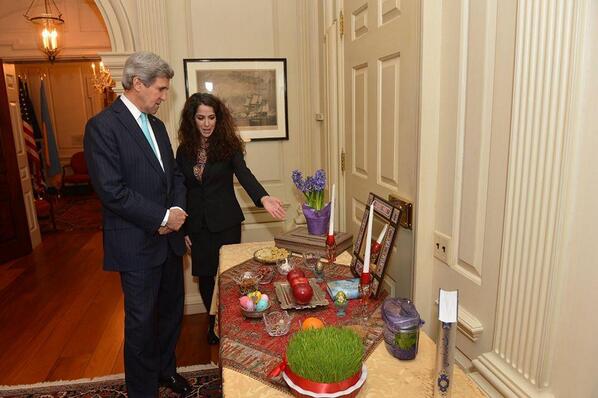
The Iranian New Year is marked with the feast of Nowrouz and falls on March 21. Translated, Nowrouz means “new day” and fittingly it should be a new day for the oppressed Iranian people as the effort begins to reverse the damage caused by years of efforts by the Obama administration to appease the mullahs in Tehran.

F.H. Buckley, a professor at the Scalia Law School, wrote an editorial in the New York Post about this need to provide the Iranian people with hope during this year’s Nowrouz observances.

“It would be a good opportunity for President Trump to mark a new day in US-Iran relations — one that corrects his predecessor’s poor treatment of the Iranian people,” Buckley writes.

“Last year at this time, the regime announced that an additional 7,000 undercover officers would patrol the streets to arrest women who had too much hair showing from under a headscarf or were out walking with a boyfriend,” he added.

“That’s why change will come to Iran, if at all, from the streets, from an Iranian Spring. And the Iranians who want to rid their country of its oppressive regime must be told that America shares their goals.” Buckley offered.

Buckley took to task the Obama administration for failing to support mass protests against the Iranian regime during the disputed presidential elections in 2009; a missed opportunity for the U.S. and urged the Trump administration to demonstrate its support for the Iranian people.

“I have a suggestion for Trump. After we ignored the street protests against the Iranian dictatorship, after we cut our disastrous Iran deal, after we abandoned Israel to the threat of medium-range missiles from the Iranian Revolutionary Guards, after American hostages were allowed to rot in Iranian jails, let the president welcome NowRuz with a message to the Iranian people,” Buckley said.

“Let him wish them a happy and prosperous new year, and the freedom that all men deserve from their cruel oppressors.”

It’s a noble sentiment and an important one since the Obama administration was quick to offer Iranians a traditional Nowrouz greeting, but never one directed specifically at the Iranian people’s desires for more freedom and democracy in their country. Such a message from the Trump administration would be an important symbol and one that would go a long way to putting the mullahs on notice that this administration will act in a much more conservative manner towards the regime.

Trump has already offered the political rhetoric chastising the regime and the much-maligned nuclear deal, but he needs to keep that momentum going in order to restore stability and balance in the Middle East; a process that Nathan Field, founder and former CEO of Industry Arabic, a translation company that provided services to over 300 high-profile customers throughout the Middle East, praised in a piece for The Hill.

“President Trump’s hardline but pragmatic approach to Iran is paving the way for the restoration of a semblance of order and regional stability. That’s a significant accomplishment for an administration still in its first 100 days,” Field writes.

“Effective foreign policy is not necessarily a matter of complicated treaties that take years to negotiate or opaque theories on international relations that only PhDs can understand. A simple message and tone set at the top is often all that’s needed.”

Field notes how President Trump has made Iranian adventurism throughout the Middle East an issue requiring a coordinated, but firm response, thereby correcting the errors made by the Obama administration.

The deal not only does not “guarantee that Iran will never obtain nuclear weapons, in the process of negotiating it, Iranian leaders, sensing that the U.S. wanted the deal more than they did, felt emboldened throughout the region in countries such as Syria, Lebanon and Yemen,” he said.

One telling example was the American non-response to a series of Iranian cyber-attacks on U.S. banks because, as one official noted, “If we had unleashed the fury in response to that DDoS attack, I don’t know if we would have gotten an Iran deal.”

“The Obama administration, by contrast, alienated nearly every traditional U.S. Middle East ally. Having thrown all of its prestige into a nuclear deal with Iran, opposed by most of the countries of the region, Washington had no leverage.”

The payoffs for the Trump administration’s tougher line against Iran has already yielded some benefits with Saudi Arabia’s willingness to send more troops to Syria and set up safe zones for refugees to stem the flood of a Syrian exodus from the war.

In many ways, Iran is slowly finding itself nudged back onto an island of isolation, even as the mullahs desperately reach out to Russia, China and Turkey in efforts to remain politically and diplomatically relevant.

We can only hope this Nowrouz brings a much better new year to the Iranian people; one that will eventually see them freed from the oppression of the mullahs.

Laura Carnahan

Filed Under: Blog, News Tagged With: #NuclearDeal, Featured, Iran, Iran deal, Iran Human rights, Iran Lobby, Iran Mullahs, Irandeal, Nowrouz, Sanctions

Former Iran Lobby Staffer Burrowing Deeper into State Department

March 15, 2017 by admin

Former Iran Lobby Staffer Burrowing Deeper into State Department

Former Iran Lobby Staffer Burrowing Deeper into State Department

Sahar Nowrouzzadeh, the Iran director for former President Obama’s National Security Council (NSC), has burrowed into the government under President Trump. She’s now in charge of Iran and the Persian Gulf region on the policy planning staff at the State Department, according to Conservative Review.

The reason why this is of concern is because of her previous employment at the National Iranian American Council, an organization with well-documented ties to the Iranian regime and a long-time supporter and advocate as part of the larger Iran lobby apparatus created to help support the loosening of sanctions on the regime.

In February, a group of over 100 prominent Iranian dissidents called for Congress to investigate NIAC’s ties to the Iranian regime.

“One of Nowrouzzadeh’s primary duties under President Obama was to promote initiatives that pushed the Iran deal. As President Obama’s NSC director for Iran, Nowrouzzadeh sat in on high-level briefings along with President Obama, former VP Joe Biden, and former Secretary of State John Kerry, as top White House staff crafted false narratives on the Iran deal to sell to the American public,” reported Jordan Schachtel.

According to the head of a state-run Iranian newspaper, Nowrouzzadeh was an essential element to pushing through the Iran deal. Editor-in-Chief Emad Abshenass said that she opened up a direct line of communication with the Iranian president’s brother. “She helped clear a number of contradictions and allowed the entire endeavor to succeed,” Abshenass said of her efforts.

Towards the end of President Obama’s tenure, Nowrouzzadeh was embedded into the State Department and for a brief time served as its Persian language spokesperson.

Breitbart News had earlier investigated Nowrouzzadeh’s prior employment with NIAC, finding that a person with the same name has previously written several publications on behalf of NIAC. According to what appears to be her LinkedIn account, Nowrouzzadeh became an analyst for the Department of Defense in 2005 before moving her way up to the National Security Council in 2014.

A NIAC profile from 2007 reveals that Sahar Nowrouzzadeh appears to be the same person as the one who is currently the NSC Director for Iran. The profiles indicate that she had the same double major and attended the same university (George Washington).

Critics have alleged that NIAC is a lobby for the current Iranian dictatorship under Ayatollah Khamenei. A dissident journalist revealed recently that NIAC’s president and founder, Trita Parsi, has maintained a years-long relationship with Iranian Foreign Minister, Javad Zarif.

The rise of this NIAC mole within the State Department is troubling since it allows a member of the Iran lobby to still maintain a position of significant influence in developing U.S. policy towards Iran.

The timing of her continued work within the State Department coincides with the upcoming Iranian election for president which is already shaping up to be another rigged cakewalk for Hassan Rouhani to continue as parliament speaker Ali Larijani publicly threw his support behind Rouhani.

Of further note, Rouhani has been selected as the only candidate of the so-called “Reformists” for the election by the Electoral Supreme Council of Reformists for Policymaking, headed by Mohammad-Reza Aref, who was the sole candidate of the Reformists in the 2013 presidential elections but in the final days ahead of that vote withdrew in favor of Rouhani.

The coronation of Rouhani comes as estimates of the Iranian regime’s military expenditures in Syria have risen a whopping $6 billion a year to $20 billion a year, including $4 billion in direct costs as well as subsidies for Hezbollah and other Iranian-controlled irregulars, according to an editorial by David P. Goldman in Asia Times.

“The Iranian regime is ready to sacrifice the most urgent needs of its internal economy in favor of its ambitions in Syria. Iran cut development spending to just one-third of the intended level as state income lagged forecasts during the three quarters ending last December, according to the country’s central bank. Iran sold $29 billion of crude during the period, up from $25 billion the comparable period last year,” Goldman added.

Goldman went on to describe Iran’s financial system as a “black hole,” and how the regime cannot refinance its arrears, recapitalize its bankrupt banks, and finance a substantial budget deficit at the same time. Its infrastructure requirements are not only urgent, but existential.  The country’s much-discussed water crisis threatens to empty whole cities and displace millions of Iranians, particularly the farmers who consume more than nine-tenths of its disappearing water supply. Despite what the Tehran Times called “a desperate call for action” by Iranian environmental scientists, the government slashed infrastructure spending by two-thirds during the last fiscal year.

This leaves American policy in a quandary. The Obama administration— as Lieutenant General Michael Flynn warned in this and numerous other statements — inadvertently stood godfather to the birth of ISIS by blundering into the milieu of Syrian Sunni rebels.

All of which places a greater emphasis on just who is developing U.S. policy moving forward and why a housecleaning of former Iran lobby associates is necessary.

Michael Tomlinson

Filed Under: Blog, News Tagged With: #NuclearDeal, Appeasement policy, Featured, hassan rouhani, Iran, Iran deal, Iran Lobby, Moderate Mullahs, National Iranian American Council, NIAC, nuclear talks, Sanctions

Fierce Debate on Iran Obscures Pain of Hostage Families

March 10, 2017 by admin

Fierce Debate on Iran Obscures Pain of Hostage Families

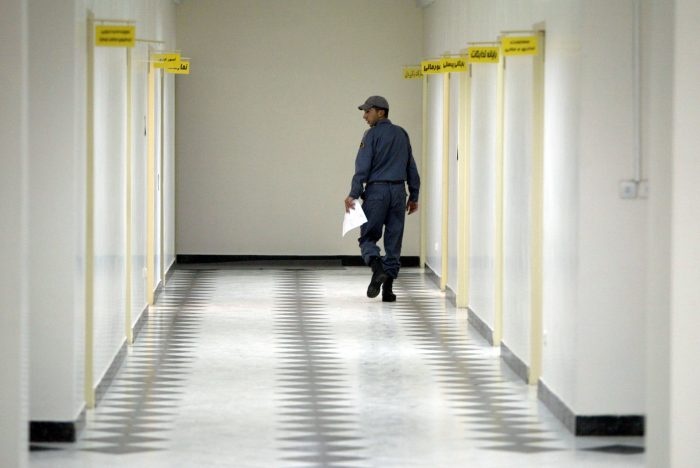
File photo shows an Iranian soldier walking in a corridor of Evin prison during a journalist’s visit to the prison in Tehran, Iran on June 13, 2006. Esha Momeni, 28, an Iranian-American student from Los Angeles is imprisoned in Tehran and is not being allowed to talk to her family, her attorney says. Momeni, described as a researcher looking into the status of women in Iran, was pulled over for a traffic infraction in Tehran on October 15 and is now being held at the notorious Evin prison. Momeni has been allowed one phone conversation since her arrest, which her attorney says may have been related to the One Million Signatures campaign, in which women in Iran are pressing for more rights. Several Iranian-Americans were held for months in Iran last year because the government suspected them of working for a “velvet revolution,” and were eventually released without being charged, the BBC reported. (UPI Photo/Mohammad Kheirkhah) (Newscom TagID: upiphotos893509.jpg) [Photo via Newscom]

The debate that rages over U.S. policy towards the Iranian regime under the Trump administration has been marked by a near-constant war of words on social media, editorial pages and blogs with the Iran lobby rising up to challenge every assertion made by Iran critics, as well as deflect from any horrific act committed by the mullahs in Tehran.

The rancor has obscured one important and painful reminder of personal suffering which is the plight of dual-nationals being held as hostages in Iranian prisons by the regime.

These citizens of other countries were arbitrarily snatched up by the regime’s Revolutionary Guard Corps, tossed into prison, and in some cases given secret trials without access to counsel, while others have simply been held without charge or trial.

Most have been subjected to physical, emotional and mental abuses that we would find appalling and even denied much needed medical care as their health has deteriorated as in the case of a British mother who works for a charity organization.

There are five Americans reportedly being held in Iran who were arrested almost immediately after another batch of American hostages were released shortly after the nuclear deal was agreed to and pallets of cold hard cash were flown to Tehran on Iranian jets in a blatant swap.

Iranian officials even boasted of not selling these new hostages for less than $1 billion.

The Iran lobby has been quick to gloss over their plight, only issuing the briefest of rebukes at the beginning and never raising the issue again. The National Iranian American Council has been the most ridiculous in playing this game even through its founder, Trita Parsi, claims one of these hostages, Siamak Namazi, as a close personal friend.

If this is how hard Parsi fights for a friend, I’d hate to see what he does for a relative.

But for the families of these hostages, their pain is real and the struggle to maintain hope is often elusive. They petition the world’s media and beg for the release of their family members from regime officials who ignore them.

This week though, attention has shifted back as family members press their cases again in the media and we observe the passing of the grim decade milestone of one missing American, Robert Levinson.

“I ask myself and my fellow American neighbors: Where is the justice I have come to associate with America?” Robin Shahini, 46, wrote to his family from an Iranian jail.

Shahini was convicted of collaborating with “a hostile government,” the U.S – an accusation his family denies. He was reportedly sentenced to 18 years in prison.

“This charge is unjust and the Iranian government intended to commit this wrong against me, an innocent American citizen, for political purposes. I ask of you, please to not let Iranian government use me,” Shahini wrote in his letter.

“I ask you beloved citizens and all human-loving individuals to not leave me alone and defend my rights, which is also the right of each and every one of you. Defending me is defending yourselves. Do not let me be alone.”

The number of arrests and detentions of visitors…especially dual-citizens… has spiked, warns Lisa Daftari, the editor of the website “The Foreign Desk,” who has followed Shahini’s case.

“In the aftermath of the nuclear deal with Iran, we would expect things to get better,” she said. “But we’ve seen an increase in executions, we’ve seen an increase in crackdowns against journalists, against dual-citizens, against academics, political dissidents, women’s human rights leaders. And this is not what we expected.”

Daftari also said the arrest and trial of Shahini, and other dual-U.S. citizens like him, serves as a broader propaganda purpose for Tehran, according to Fox News.

“The Iranian regime is delivering a stern message to Iranians living abroad, not to get involved in political activity, not to speak out against the regime, and they want Iranians to know that they are in fact being watched.”

Dan Levinson, the son of missing former FBI agent Robert Levinson, penned an editorial in the Washington Post, lamenting his father’s disappearance in Iran for the past 10 years.

“The United Nations Working Group on Arbitrary Detention, which investigates cases of arrest that may be in violation of international human rights law, did something in January that the previous two U.S. presidents failed to do: It announced a finding that my father, retired FBI agent Robert Levinson, was arrested by Iranian authorities without any legal grounds in March 2007 on Kish Island, and it called on the Iranian government to release him immediately,” he writes.

“In finding that Iran has violated international law — and fundamental human decency — by detaining a U.S. citizen and providing him no rights whatsoever, the U.N. working group is being far more aggressive than our own U.S. government has been in 10 years. This is shameful,” Levinson added.

Levinson went on to encourage the new president to pressure Iran for his father’s release.

“If Iran continues to deny holding him and fails to act, Trump can pressure it with tools such as sanctions — which he demonstrated his willingness to use already – or labeling Iran’s Islamic Revolutionary Guard Corps, which was very likely involved in my father’s detention, a terrorist organization. Trump can put my father at the center of every single discussion he has with or about Iran and finally make him a top priority — not just in words like the previous administration, but in action,” he said.

We hope these families can be reunited with their loved ones soon and believe that is only going to happen by applying heavy pressure on the Iranian regime and its leaders.

Laura Carnahan

Filed Under: Blog, News Tagged With: Featured, Iran, Iran deal, Iran Lobby, Iran sanctions, National Iranian American Council, NIAC, Trita Parsi, Tyler Cullis

Iranian Revolutionary Guard Corps Stands at Center of Terror

March 7, 2017 by admin

Iranian Revolutionary Guard Corps Stands at Center of Terror

Iranian Revolutionary Guard Corps Stands at Center of Terror

Like the beating heart of a wild animal, the Iranian regime’s Revolutionary Guard Corps stands at the center of almost every piece of chaos, violence and extremism happening in the Middle East today it seems.

The IRGC pumps the engine that powers all the arms of the Iranian war machine that results in terrible human rights abuses and proxy wars raging throughout the region. Its tentacles stretch into almost every part of Iranian society and have been well documented over the past three decades.

Its control of all aspects of Iran’s military and its leadership position in instigating almost every violent act militarily is impressive and deeply disturbing. Needless to say, its conducts warrants nary a word of protest from the Iran lobby. Not even the allegedly peace-loving Ploughshares Fund utters any protests over the IRGC’s worst military excesses.

Just recently, the Pentagon blasted the “unprofessional” behavior of the Iranian navy after two separate incidents in the Strait of Hormuz last week.

According to the Pentagon, an Iranian frigate on Thursday came within 150 yards of the civilian-crewed USNS Invincible.

Then on Saturday, a number of small assault craft came within 350 yards of the Invincible and other ships.

“This was assessed to be a combination of unsafe or unprofessional behavior,” Pentagon spokesman Navy Captain Jeff Davis said.

In both cases, the US ship had to change course to avoid any collision, he added.

According to Fox News, Iran test-fired a pair of ballistic missiles into the Gulf of Oman over the weekend as well. It was the first time Fateh-110 short-range ballistic missiles have been tested in two years. One of the missiles successfully destroyed a target barge at a range of 155 miles.

One of the missiles launched from the IRGC base in Bandar-e-Jask successfully destroyed a target barge at a range of 155 miles. The other missed its target. U.S. officials told Fox News the latest version of the Fateh-110 missile has an “active seeker” system that helps it target ships at sea.

The new Iranian short-range ballistic missile launches come a week after Iran successfully test-fired Russian surface-to-air missiles, part of the S-300 air defense system Russia sent to Iran recently.

According to the Foundation for Defense of Democracies, Iran has conducted as many as 14 ballistic missile launches since the landmark nuclear agreement in July 2015.

A senior U.S. military official told Fox News that Iran had made great advances in its ballistic missile program over the past decade.

Domestically, the IRGC also leads in the brutal crackdowns that have targeted political dissidents, journalists, artists, women and religious minorities.

The Center for Human Rights in Iran (CHRI) reported that two Iranian Catholic converts were arrested in their home by the IRGC in West Azerbaijan Province.

“At 7 a.m. on February 20 (2017), two plainclothes intelligence agents of the Islamic Revolutionary Guards Corps (IRGC) entered the home of Christian converts Anoohe Rezabakhsh and her son Sohail (Augustin) Zargarzadeh in Oroumiyeh (city) without prior notice and searched the premises and took away personal items such as religious and holy books,” Mansour Borji, the spokesperson for the Alliance of Iranian Churches known as Hamgam, told CHRI on March 3, 2017.

Despite President Hassan Rouhani’s pledges during his election campaign in 2013 that “all ethnicities, all religions, even religious minorities, must feel justice,” the targeting of Christian converts has continued unabated under his administration according to the CHRI.

The central role the IRGC plays in all of these actions means that its leaders are key players in the destabilization going on throughout the Middle East. As Dr. Majid Rafizadeh points out in an editorial in Arab News, the Quds Forces Qassem Soleimani could be called Iran’s “Osama Bin Laden” for his key role in directing much of this chaos.

“He is well-known as the Middle East’s deadliest and Iran’s most dangerous man. He prioritizes offensive tactics and operations over defensive ones, and rejoices in taking overconfident selfies with his troops and proxies in battlefields in many countries, including Iraq, Syria, Yemen and Lebanon,” Rafizadeh said. “When it comes to authority, he is Iran’s second man after Supreme Leader Ali Khamenei. Being a staunchly loyal confidante to Khamenei, Qassem Soleimani has great influence over foreign policy.”

“Soleimani commands at least 150,000 militants, many designated as terrorists and belonging to designated terrorist groups. This is why Iran has been repeatedly ranked as the top state sponsor of terrorism by the US State Department,” he added. “Based on my research, there are more than 250 terrorist groups worldwide, with different religious and sociopolitical backgrounds. Roughly 25 percent of them are funded, trained or supported by only one entity, the Quds Force.”

All of this is important as the Trump administration debates whether or not to designate the IRGC as a Foreign Terrorist Organization as a whole rather than simply designating individuals such as Soleimani.

No doubt the Iran lobby will raise its collective voices into another shrill call opposing any designation and warning of dire consequences, but this time the push back is coming strongly from many quarters.

Michael Tomlinson

Filed Under: Blog, News Tagged With: Featured, Iran, Iran deal, Iran Terrorism, IRGC, Khamenei, Sanctions

Iran Lobby Echo Chamber Banging Loudly for Iran Regime

March 5, 2017 by admin

Iran Lobby Echo Chamber Banging Loudly for Iran Regime

Iran Lobby Echo Chamber Banging Loudly for Iran Regime

It seems that the “echo chamber” created by members of the Obama administration and the Iran lobby is still alive and kicking and trying desperately to keep support flowing to the Iranian regime in light of increasing calls to get tough on Iranian regime because of its continued support for terrorism, brutal human rights abuses and flagrant violations of international sanctions with ballistic missile launches.

The Iran lobby, especially the National Iranian American Council, has been especially busy making excuses every time Iran hangs a dissident, puts down a protest or sentences a dual national to prison.

Many of those “experts” sympathetic to the regime and preserving the nuclear deal at all costs continue to push false narratives like a used car salesman pushing a clunker with a rolled back odometer.

One example is a piece authored by Jeffrey A. Sinclair in Foreign Affairs in which he argues that President Trump needs to strengthen Iran’s “moderates.”

“The goal should be to guard against any further escalation of hostilities. After all, unless the administration is willing to wage war with Iran, this confrontation won’t achieve anything useful for the United States. What it will do is further strengthen the hardliners in Tehran, a process that is already underway, and undermine moderates such as President Hassan Rouhani and Foreign Minister Mohammad Javad Zarif less than three months before Iran’s presidential election,” Sinclair writes.

Rarely has a paragraph been loaded with more inaccuracies than that one.

First of all, Trump has made it clear with his criticisms of the war in Iraq during the campaign that he is not in favor of nation-building by military force, but he has also made clear he was not going to offer a blank check to regimes such as Iran and Syria to do whatever they wanted since the end result of those kinds of actions has brought chaos to the Middle East.

Trump has laid out a belief that ignoring Iranian regimes’s militant actions does little to ensure regional stability and peace. Confronting the regime on issues such as human rights, proxy wars or provocative military acts are the right policy if Trump’s administration takes up that road, but saying that such a path only leads to war is one of the boldest falsehoods of the echo chamber.

Trump has at his disposal of plethora of tools, many used successfully by previous administrations, to force Iran to the bargaining table which is exactly what happened recently. The only problem was that the Obama administration fumbled the ball by caving in to every demand the Iranian mullahs had and getting little in return.

Contrary to Sinclair’s missives, confronting Iranian regime is exactly the right course of action since to do nothing except issue paper condemnations does nothing to rectify the situation. Using harsh language as Iran’s Quds Forces supply Houthi rebels in Yemen with arms so they can destabilize the country and risk a regional war between Saudi Arabia and Iran breaking out is not only bad foreign policy, it’s stupid.

Also, when Sinclair calls Rouhani and Zarif “moderates” the only polite thing to do is to keep from laughing hysterically out loud.

The only real moderates in Iran sit in Iranian prisons or have been driving out of the country as political refugees. As a religious theocracy, Iran’s mullahs maintain an iron grip on power. Rouhani did not become president to push a liberalizing agenda for reform. He was hand selected by Ali Khamenei to present the West with a more benign face in order to trigger negotiations to ease crippling sanctions.

The world is not going to see any competition during these upcoming presidential elections in Iran. Nothing is left to chance by the mullahs, which is why the vast majority of political dissidents, journalists, artists, filmmakers, students and anyone else stepping out of line has already been rounded up in advance of the elections.

“Because other U.S. and Western sanctions relating to Iran’s alleged terrorist activities remained in place, and because international banks remained highly skittish when it came to dealing with Iran, economic relief did not come quickly enough,” Sinclair said. “Overall, the administration made too few efforts to help Iran economically, as other terrorism-related sanctions were kept in place. The Obama team, it seemed, had taken its eye off the ball. U.S. Secretary of State John Kerry and others knew that Iranian moderates needed a post-deal economic boost to secure their position.”

This is another fallacious argument being made that the U.S. somehow was responsible for jumpstarting an Iranian economy that ranks almost dead last in the world in transparency and corruption. Also, since sanctions related to terrorism were not part of the nuclear deal, the U.S. and Trump are under no obligation to lift them, especially since Iranian regime regularly supports terrorist groups such as Hezbollah and Shiite militias responsible for wholesale slaughter of Sunni villages in Iraq.

Sinclair also criticizes discussions to designate Iran’s Revolutionary Guard Corps as a foreign terrorist organization and contends such a move would “escalate tensions.”

It’s hard to imagine how much worse tensions can get when Iranian regime’s navy detains American sailors, American citizens are being held in Iranian prisons and Iran’s proxies are causing the biggest refugee crisis since World War II.

Sinclair—and the rest of the Iran lobby—seems to place its collective hopes on the few wispy strands of less intensive anti-American actions than in the past as positive signs for change.

“For now, signs from Iran are somewhat positive. The yearly celebration of the founding of the Islamic Republic (expected to be a bonanza for the hardliners) turned out to be muted—excessively so, which was a clear sign of at least momentary moderation from the top leadership,” he writes. “In addition, a series of prominent hardliner clerics—including some of the leading clerics in Qom—have in recent days publicly expressed their support for keeping the nuclear deal in place.”

The claimed positive step is at a time that the Iranian regime test fired another Ballistic missile during this period and of course the mullahs are going to express support for the nuclear deal since its amounts to a giant ATM card the regime has been using to buy billions of dollars in new weapons from Russia.

These are not encouraging signs no matter what the echo chamber says and it’s about time we ignore it.

Michael Tomlinson

Filed Under: Blog, Current Trend, News, The Appeasers Tagged With: echo-chamber, Featured, Iran deal, Iran Human rights, Iran Lobby, Iran Terrorism, Jeffrey A. Sinclair, National Iranian American Council, nuclear talks, Rouhani, Sanctions, Sinclair

Academy Awards Shocker Came From Iran Regime Comments Not Best Picture Gaffe

February 28, 2017 by admin

Academy Awards Shocker Came From Iran Regime Comments Not Best Picture Gaffe

Academy Awards Shocker Came From Iran Regime Comments Not Best Picture Gaffe

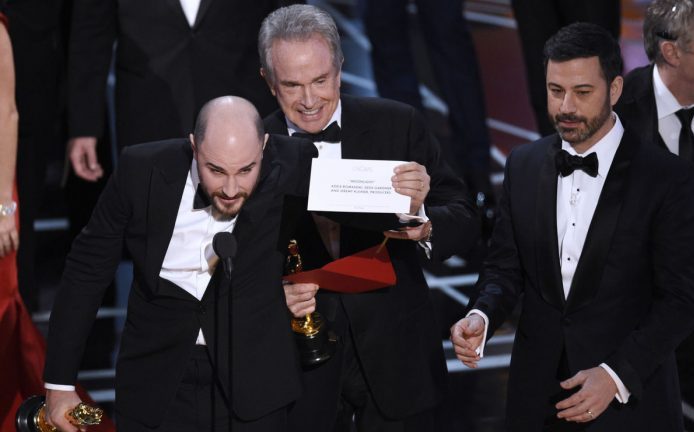
Pretty much the entire planet has seen or heard about the mistaken Best Picture announcement for “La La Land” only to find out that “Moonlight” had indeed won instead in a mistake that put Steve Harvey’s mistaken Miss Universe crowning to shame.

Aside from the stunned faces of the audience at the Dolby Theatre in Hollywood, the moment became an instant viral sensation as social media buzzed about the historic mistake, but the real shocker came a day later when the Iranian regime’s foreign minister Mohammad Javad Zarif lauded comments made by the cast and crew of the film “The Salesman” which won an Oscar for best foreign film critical of the Trump administration’s immigration visa moratorium.

Zarif tweeted out his own congratulations for the statement read for Iranian film director Asghar Farhadi who chose to stay away from the 89th Annual Academy Awards ceremony in protest over President Trump’s travel ban.

“Proud of cast & crew of ‘The Salesman’ for Oscar & stance against #MuslimBan. Iranians have represented culture & civilization for millennia,” said Zarif’s tweet.

Zarif’s tweet was met by a blistering series of responses from CNN anchor Jake Tapper who took Zarif to task for lauding an Iranian filmmaker while the regime regularly imprisons other dissident Iranian filmmakers.

On Monday, Tapper tweeted how Iran has treated filmmakers in the past, which included long jail sentences and not being permitted to leave the country for decades, according to the Daily Caller.

Tapper went on to list several prominent Iranian filmmakers who are languishing in regime prisons.

“2/Iran regularly jails its filmmakers. Such as Keywan Karimi guilty of ‘insulting sanctities’ in October 2015,” he tweeted.

“3/Jafar Panahi was sentenced to six years in prison for trying to make an ‘antiregime’ documentary,” he continued.

“4/Documentary filmmaker/women’s rights activist Mahnaz Mohammadi was jailed for collaborating with the BBC,” he added.

“5/ Musician Mehdi Rajabjan and filmmaker Hossein Rajabian were jailed for “insulting Islamic sanctities,” he tweeted.

“6/ So FM @JZarif? The traditions of your brilliant people are being oppressed by the tyranny of your government. Tweets notwithstanding,” Tapper concluded.

Tapper correctly points out the hypocrisy of the Iranian regime when it lauds comments that support its propaganda efforts, and yet deals harshly with anyone caught criticizing the regime of stepping outside of approved cultural or moral norms.

All of which makes comments made by top mullah Ali Khamenei earlier this month even more interesting when seen in the light of Zarif’s tweets.

In a speech in the East Azerbaijan region of Iran, Khamenei said that a war on Iran’s culture and economy is more dangerous to his Islamic regime than any military threat from the West, according to Breitbart News.

“A European official said to our officials that a war in Iran would have been inevitable if it had not been for the Bar-Jaam,” Khamenei said, referring to the nuclear agreement brokered by the Obama administration and Western allies. “That official said that if the Bar-Jaam had not been signed, the war would have been definite.”

“This is a blatant lie!” Khamenei said in the speech. “Why do they speak about war? They do so because they want to switch our minds to a military war, but the real war is something else.”

“The real war is an economic war, the real war is the war of sanctions, the real war is the arenas of work, activity, and technology inside the country,” Khamenei said. “This is the real war!”

“They draw our attention to a military war so that we ignore this war,” Khamenei said. “The real war is a cultural war.

“There are so many television and internet networks which are busy diverting the hearts and minds of our youth away from religion, our sacred beliefs, morality, modesty and the like,” Khamenei said.

In this regard Khamenei is correct since what the mullahs abhor more than anything else is free and independent thinking it seems. Free expression and divergent opinion is met with a fury from the mullahs akin to a full scale invasion; except for the ruling mullahs an invasion of ideas seems to be more dangerous than U.S. Marines landing on the beaches of Iran.

This also explains why the regime has always been especially brutal in its crackdowns of artists, journalists, bloggers and filmmakers as a means of controlling public discourse and the flow of creativity among the Iranian people.

It also explains why the regime has worked so hard at restricting access to social media platforms and web sites judged to have anti-regime materials on it.

Inevitably though, the slow creep of the arts have proven to be a strong antidote to totalitarian thinking and we can only hope that the Academy Awards will one day be celebrating the work of an Iranian filmmaker who know sits in prison.

Laura Carnahan

Filed Under: Blog, News Tagged With: #NuclearDeal, Featured, Iran deal, Iran Human rights, Iran Mullahs, Iran Terrorism, IRGC, Rouhani

Iran Regime Continues to Ramp up Tensions with Naval War Games

February 27, 2017 by admin

Iran Regime Continues to Ramp up Tensions with Naval War Games

Iran Regime Continues to Ramp up Tensions with Naval War Games

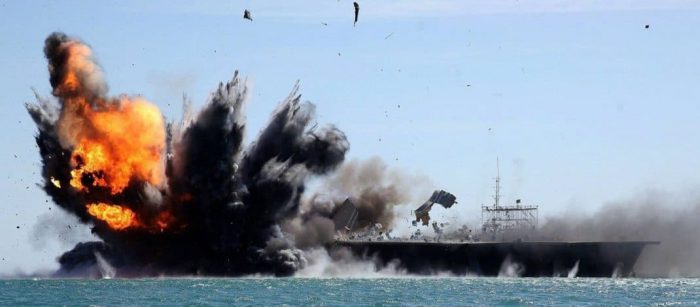
The Iranian regime has been busy lately playing at war games with the gusto of a 10-year-old boy with his new toys. After going on a multi-billion dollar shopping spree using cash provided courtesy of the U.S. for the release of American hostages and as a result of lifting economic sanctions with the nuclear agreement, the mullahs in Tehran have been busy showing off their new toys.

This has included test firing new ballistic missiles, launching new Russian-made anti-aircraft missiles, flying new aerial drones and sailing new ships designed to launch small ship raids against larger warships such as the U.S. Navy.

The Iranian regime has also been busy resupplying Houthi rebels in Yemen with smuggled shipments of rockets, mortar rounds, ammunition and guns. It has also been sending a steady stream of fighters culled from Afghan mercenaries, Shiite militias in Iraq and its own Quds Forces and Revolutionary Guard Corps to fight in Syria.

Meanwhile its navy has been busy flitting about the Persian Gulf and Red Sea to run aggressively at U.S. Navy warships in an attempt to intimidate and possibly cause an incident on the high seas.

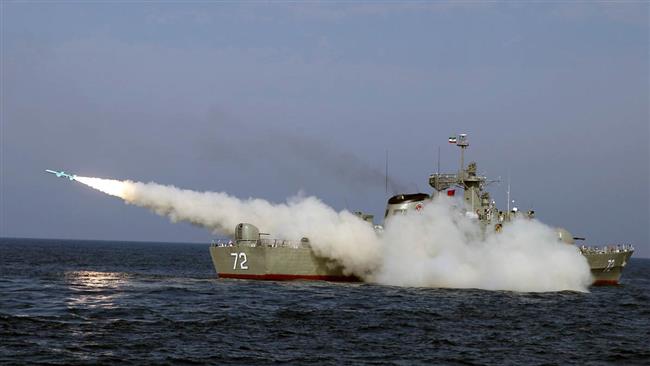
This sort of action continued with the launch of a series of war games both on the ground and at sea. The regime just completed three days of war games and launched another series of war games; these to be conducted in a massive area stretching 772,000 square miles from the Strait of Hormuz, the Sea of Oman, through the Indian Ocean and the Bab-el-Mandeb Strait.

Announcing the exercise on Sunday, regime Navy Commander Rear Admiral Habibollah Sayyari said: “The aim of the Velayat 95 drill is to upgrade the country’s defensive capabilities and send Iran’s message of peace and friendship to the regional countries.”

Millions of barrels of oil are transported daily to Europe, the US and Asia through the Bab el-Mandab and the Strait of Hormuz, waterways that run along the coasts of Yemen and Iran and has often been used by the Iranian regime as a threat to global trade.

The US Navy’s Fifth Fleet is based in the region and protects shipping lanes in the Gulf and nearby waters.

On top of the regime banging the war drum loudly, it announced its intentions to buy 950 tons of uranium ore from Kazakhstan over the next three years and is relying on Russia to help refining the uranium into nuclear fuel.

The deal would not technically violate the horrifically bad nuclear agreement between Iran and the U.S. and other nations because the deal did not set limits on the Iranian regime’s ability to produce supplies of uranium ore, which gives you an idea of how idiotic the deal was to begin with.

Ali Akbar Salehi, head of Iran’s Atomic Energy Organisation, told the ISNA news agency that the purchase was supposed to happen “within three years.”

“650 tons will enter the country in two consignments and 300 tons will enter Iran in the third year,” he said.

Salehi said the final shipment of concentrate, known as yellow cake, would be turned into uranium hexafluoride gas and sold back to Kazakhstan — its first international sale of the compound which is used in the uranium enrichment process, according to Breitbart News.

Salehi said Iran has already received around 382 tons of yellow cake, primarily from Russia, since the nuclear deal came into force in January last year.

Under the deal, Iran is allowed to run around 5,000 “IR-1” centrifuges and has been testing more advanced models that can produce greater quantities of enriched uranium.

Taken together, the order to buy tons of uranium along with an almost constant string of military actions set an unsettling stage for the world in 2017. Couple these developments with the upcoming Iranian presidential elections in which it is assured that no dissident candidate will be allowed on the ballot by the regime’s ultraconservative Guardian Council, Iran will remain firmly in the control of mullah Ali Khamenei.

Amidst all of these provocative moves, the Iran lobby has been completely silent, never raising any objections to the escalation in Iran’s military activities, nor its desire to ramp up a civilian nuclear program that could be easily converted to military purposes.

For example, the Ploughshares Fund, which partly funds the National Iranian American Council, has been aggressive in making the claims that it works to stop nuclear proliferation, but in the case of the Iranian regime expanding its nuclear capacity, it is as deaf and dumb as a door post.

The lack of objections from the Iran lobby demonstrates its complicity in supporting these aggressive acts by the mullahs.

Michael Tomlinson

Filed Under: Blog, News Tagged With: #NuclearDeal, Featured, Iran deal, Iran Lobby, Iran Mullahs

  • « Previous Page
  • 1
  • …
  • 6
  • 7
  • 8
  • 9
  • 10
  • …
  • 29
  • Next Page »

National Iranian-American Council (NIAC)

  • Bogus Memberships
  • Survey
  • Lobbying
  • Iranians for International Cooperation
  • Defamation Lawsuit
  • People’s Mojahedin
  • Trita Parsi Biography
  • Parsi/Namazi Lobbying Plan
  • Parsi Links to Namazi & Iranian Regime
  • Namazi, NIAC Ringleader
  • Collaborating with Iran’s Ambassador

Recent Posts

  • NIAC Trying to Gain Influence On U.S. Congress
  • While Iran Lobby Plays Blame Game Iran Goes Nuclear
  • Iran Lobby Jumps on Detention of Iranian Newscaster
  • Bad News for Iran Swamps Iran Lobby
  • Iran Starts Off Year by Banning Instagram

© Copyright 2026 IranLobby.net · All Rights Reserved.