Iran Lobby

Exposing the Activities of the lobbies and appeasers of the Mullah's Dictatorship ruling Iran

  • Home
  • About
  • Current Trend
  • National Iranian-American Council(NIAC)
    • Bogus Memberships
    • Survey
    • Lobbying
    • Iranians for International Cooperation
    • Defamation Lawsuit
    • People’s Mojahedin
    • Trita Parsi Biography
    • Parsi/Namazi Lobbying Plan
    • Parsi Links to Namazi& Iranian Regime
    • Namazi, NIAC Ringleader
    • Collaborating with Iran’s Ambassador
  • The Appeasers
    • Gary Sick
    • Flynt Leverett & Hillary Mann Leverett
    • Baroness Nicholson
  • Blog
  • Links
  • Media Reports

Iran Regime Suffering Setbacks on Multiple Fronts

January 24, 2017 by admin

Iran Regime Suffering Setbacks on Multiple Fronts

Iran Regime Suffering Setbacks on Multiple Fronts

The start of the Trump administration is coinciding with a tougher time for the Iranian regime as it begins to suffer setbacks large and small, causing anxiety amongst the mullahs in Tehran as they try to figure out how to deal with President Trump.

Their initial comments to the new president were cautious and low key as Iranian regime Foreign Ministry spokesman Bahram Ghasemi told reporters on Monday that the Islamic state had no immediate pronouncement on Trump.

Ghasemi says that it’s “too soon to assess him and analyze his remarks, stance and the framework of his viewpoints.”

Ghasemi’s remarks mark the first official comment from Iran on Trump since his inauguration as the 45th American president.

That lack of response may be calculated to minimize the risk of antagonizing Trump or be placed in the infamous target of his tweeting habits which have laid low his political opponents, but for Iran the news to start the week only looked worse.

In the Syrian peace talks that began in Astana, Kazakhstan, Syrian rebel groups have rejected a plan that allows the Iranian regime to play a role in monitoring the ceasefire.

The proposal for a trilateral ceasefire commission, overseen jointly by the talks’ sponsors, is the most specific new measure set out in a draft communique the Russians hope to release on Tuesday, the second and closing day of the talks.

The Syrian fighting groups believe militia linked to Iran, such as Lebanon’s Hezbollah, are – along with Bashar al-Assad’s government – systematically breaching the ceasefire agreed on 29 December. The Syrian fighters believe Iranian regime, as perpetrators of innumerable ceasefire breaches, cannot credibly monitor or enforce a ceasefire, according to the Guardian.

As well as the ceasefire commission proposal, the leaked draft communique also broadly supports the existing UN talks process and calls for joint action to defeat Islamic State and other terrorist groups in Syria.

The fact that Syrian rebel groups actively engaged in fighting Syrian and Iranian regime military units have a seat at the table at last marks a significant step forward in diminishing Iranian influence in the long conflict.

The Syrian civil war erupted over opposition to harsh crackdowns by the Assad regime on the Syrian people and gaining momentum when Iranian regime opted to back Assad with Hezbollah fighters and cash to prop up the regime. The conflict escalated when the Iranian regime recruited Afghan mercenaries, Iraqi Shiite militias and eventually brought Russia into the civil war.

The prospect of peace talks moving forward that pushes the Iranian regime out of the way must be causing severe handwringing in Tehran, but more bad news came for Iran as Ukrainian authorities have confirmed that they seized a shipment of missile system components bound for Iran, according to official statements that could put the Islamic state in violation of international bans on such behavior.

The State Border Guard Service of Ukraine, or DPSU, announced late last week that it had seized at least 17 boxes filled with missile components bound for Iran, according to IHS Jane’s.

“The DPSU said that, during an inspection of the aircraft on 19 January, its personnel had found 17 boxes with no accompanying documents, which the aircraft’s crew said contained an aircraft repair kit,” according to the report. “Three boxes contained components that were believed to be for a Fagot anti-tank guided missile system, the rest contained aircraft parts.”

Days after this finding, the DPSU said that it had confirmed the missile components were destined for Iran’s Fagot system.

Michael Rubin, a former Pentagon adviser and expert on rogue regimes, said that Iran has been illicitly moving such weapons for quite some time.

“This isn’t the first time Iran has gotten caught red handed smuggling weapons with false manifests, for example, in 2010 in Nigeria,” Rubin said. “The question is how often does Iran get away with such smuggling and for what purpose? After all, if the weaponry is legal, there’s no reason for lying. If it’s not, Iran is violating international agreements. Either way, only fools and secretaries of state would trust Iran to uphold its agreements.”

While many countries around the world listened with concern to Trump’s protectionist inaugural address, Gulf Arab officials appear optimistic. In Gulf Arab eyes, that involves above all checking what they see as a surge of Iranian support for paramilitary allies in Syria, Iraq, Yemen and Lebanon and for fellow Shi’ite Muslims in Bahrain and Saudi Arabia’s oil-producing Eastern Province.

There have been tensions over Syria, where Obama dismissed Gulf Arab urgings to give more aid to rebels fighting President Bashar al-Assad, who has survived thanks to Iranian backing.

“Perception is important: Trump does not look like the kind of guy who will bend towards Iran or anyone else,” said Abdulrahman al-Rashed, a veteran Saudi commentator.

“If he behaves as he says, then we will see another Ronald Reagan, someone all the forces in the region will take seriously. That’s what we have missed in the past eight years, unfortunately.”

We can only hope that the Gulf States are right about the new president.

Michael Tomlinson
Filed Under: Blog, News Tagged With: #NuclearDeal, Appeasement policy, Featured, Iran, Iran deal, Iran Terrorism, IRGC, Syria, Yemen

Iranian Regime Under Pressure Everywhere

January 20, 2017 by admin

Iranian Regime Under Pressure Everywhere

Iranian Regime Under Pressure Everywhere

Like some rodent prey being squeezed by a python, the Iranian regime’s mullahs are finding themselves under pressure from all quarters as they find themselves under scrutiny for human rights violations, its militant actions and the deeply flawed nuclear agreement.

The central and most consistent issue confronting the Iranian regime has been its abysmal human rights record which continually has drawn international condemnation for the oppression of dissidents, abuse of women and children, heinous public execution of prisoners and widespread use of torture on political prisoners.

Groups such as Amnesty International have consistently documented these abuses and tried to draw international attention to the suffering at the hands of the mullahs. In its most recent report, Amnesty International described the widespread of medieval punishments including some of the most barbaric practices.

Iran’s persistent use of cruel and inhuman punishments, including floggings, amputations and forced blinding over the past year, exposes the authorities’ utterly brutal sense of justice, said Amnesty International.

Hundreds are routinely flogged in Iran each year, sometimes in public. In the most recent flogging case recorded by Amnesty International, a journalist was lashed 40 times in Najaf Abad, Esfahan Province, on 5 January after a court found him guilty of inaccurately reporting the number of motorcycles confiscated by police in the city.

“The authorities’ prolific use of corporal punishment, including flogging, amputation and blinding, throughout 2016 highlights the inhumanity of a justice system that legalizes brutality. These cruel and inhuman punishments are a shocking assault on human dignity and violate the absolute international prohibition on torture and other ill-treatment,” said Randa Habib, Amnesty International’s Regional Director for the Middle East and North Africa.

“The latest flogging of a journalist raises alarms that the authorities intend to continue the spree of cruel punishments we have witnessed over the past year into 2017.”

According to Amnesty International, under Iranian regime law, more than 100 “offenses” are punishable by flogging. These cover a wide array of acts, ranging from theft, assault, vandalism, defamation and fraud to acts that should not be criminalized at all such as adultery, intimate relationships between unmarried men and women, “breach of public morals” and consensual same-sex sexual relations.

Many of those flogged in Iran are young people under the age of 35 who have been arrested for peaceful activities such as publicly eating during Ramadan, having relationships outside of marriage and attending mixed-gender parties.

The Amnesty International report goes on to document a long list of heinous punishments inflicted by the regime on its own people.

Besides pressure being brought Amnesty International, potential avenues of dialogue may finally be opening between an incoming U.S. administration and Iranian resistance groups that have helped shine a bright light on transgressions by the Iranian regime, not only human rights abuses, but also its then-secret nuclear weapons program.

With the Trump administration taking office, a ripple effect has been moving out affecting the Iranian regime in all sorts of ways, including concern coming from commercial aircraft leasing companies that may be having second thoughts about doing business with the Iranian regime in these uncertain times.

Even though Iran’s flag carrier, Iran Air, last week received the first new jetliner from Airbus, and last year finalized deals to buy 100 planes from the European plane maker and another 80 from Boeing, big aircraft lessors still are reluctant to do business in Iran. “We will remain cautious,” said John Plueger, chief executive of Air Lease Corp.

Trump has voiced skepticism about the Iran accord and “we have to be mindful of that,” Air Lease Corp.’s Plueger said Tuesday at an Airline Economics forum.

U.S. critics of the Iran deal have tried to block financing of the planes. Members of the House of Representatives this week introduced a bill to force the Trump administration’s director of national intelligence to investigate whether planes operated by Iran Air or other carriers are being used to support terrorism.

“We’re asking the intelligence community to provide a full accounting of Iran’s use of commercial airlines to support its global network of terror proxies” including in Syria, Rep. Peter J. Roskam (R-IL) said in a statement Tuesday.

Businesses are worried the U.S. may reimpose sanctions. “There is a substantial snap-back risk,” said Olaf Sachau, chief executive of Intrepid Aviation. Although he sees Iran as an attractive market for plane-leasing companies to do businesses, the U.S. election outcome means tapping the market isn’t on the agenda for now.

These uncertainties have taken the shine off of the anniversary of the nuclear agreement as Hassan Rouhani has tried to celebrate it. Rohani has been saddled by the high expectations he set, as Iran’s economy continues to struggle and the great boost in foreign investment and other benefits he envisioned has so far failed to materialize mostly as a result of the lack of capabilities within the ruling elite and for spending much of the cash in promoting the war in Syria, Iraq, Yemen, etc and on empowering the IRGC at home for domestic repression.

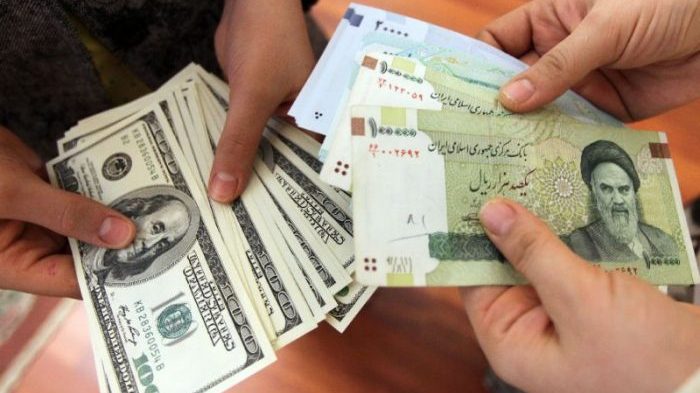
The Iranian currency, the rial, hit a record low against the dollar in recent weeks, prompting fears that efforts to boost the exports of industrial goods will suffer and anticipated foreign goods will be prohibitively costly. The unemployment rate is on the rise, reaching 11.3 percent in 2016 compared to 10.8 in 2015.

In a nutshell, the limited economic progress Rohani’s government has made has yet to trickle down to the average Iranian household in terms of jobs, salaries, and the prices of basic goods. This is something that none other than top mullah Ali Khamenei had to admit, saying in August that Iranians had yet to see a “tangible effect” in their daily lives.

Khamenei has sharpened his criticism. He has continued to emphasize a “resistance economy” aimed at boosting domestic production for export and warned against Western “infiltration” by way of the agreement, highlighting the fact that the mullah’s regime is incapable of making any radical change in country’s economy.

He may be recognizing that as the Iranian regime is getting squeezed again, he and his fellow mullahs will need to crack down harder to keep their tenuous hold on the Iranian people.

Laura Carnahan

Filed Under: Blog, News Tagged With: #NuclearDeal, Appeasement policy, Featured, hassan rouhani, Iran, Iran deal, Iran Lobby, Iran sanctions, IRGC

Trump Effect on Iran Already Seen in Syrian Talks

January 18, 2017 by admin

Trump Effect on Iran Already Seen in Syrian Talks

Trump Effect on Iran Already Seen in Syrian Talks

Donald Trump hasn’t even been inaugurated yet and his effect on U.S. foreign policy is already being felt throughout the Middle East:

  • Saudi Arabia is cautiously optimistic that the policy of trying to appease the Iranian regime under the Obama administration is at an end and that U.S. policy will once again shift back to traditional alliances in the regime that provided security for U.S. allies for the past 50 years;
  • After inserting itself into the Syrian civil war at the behest of the Iranian regime, Russia is now preparing to open new avenues of cooperation with the Trump administration even if Iran is vehemently opposed to them; and
  • The Iranian regime has reaped quick benefits from the Obama administration and the nuclear deal it negotiated including receiving $10 billion in cash and gold, but now is desperate to rake in as much cash as possible with the looming potential of the spigot being shut off by Trump.

A much ballyhooed summit is planned in the Kazakhstan capital of Astana this weekend to discuss a pathway for peaceful resolution of the Syrian conflict, involving Russia, Iran and Turkey, but now Iran is protesting Russia’s proposal to include the U.S. in these talks once Trump assumes office.

Iranian regime foreign minister Javad Zarif stated the regime’s opposition to the U.S. participating in what the regime hoped would be a photo opp moment in the diplomatic limelight for the mullahs in Tehran with these talks.

“We have not invited the U.S. and oppose their presence” at the talks, Zarif said, according to Iran’s Press TV.

Whether Iran would refuse to attend if the United States were invited was not immediately clear. The talks are part of a three-way process led by Russia and including Turkey and Iran — now the three most powerful international players on the ground in Syria. The process is aimed at forging a settlement in Syria after the failure of the Obama administration’s diplomacy, according to the Washington Post.

The opening round is expected to be a modest affair, with representatives of Syrian rebels meeting with members of the Syrian government to discuss the modalities of a shaky cease-fire that went into effect on Dec. 29, Russian Foreign Minister Sergei Lavrov told reporters in Moscow. Representatives of the invited countries will attend in the role of observers, rather than participants.

Although Iran is one of the three sponsors of the peace talks, it has not signed the agreement reached between Russia and Turkey that launched the cease-fire, suggesting that Tehran has reservations about an effort that could potentially erode its extensive influence in Syria.

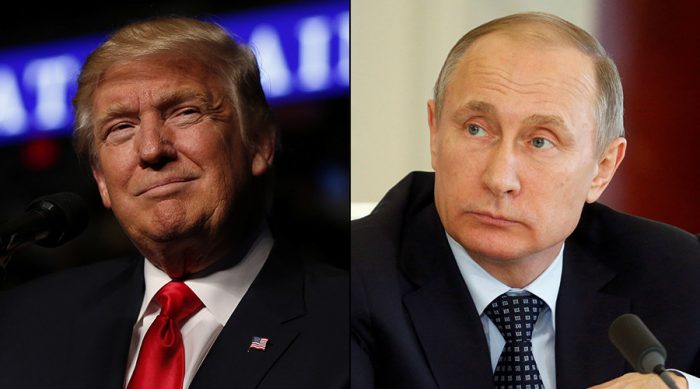
Both Trump and Russian President Vladimir Putin have said they regard Syria as one of the areas in which the United States and Russia could cooperate more closely. Trump has said on a number of occasions that he hopes better relations with Moscow will help counterbalance Iran’s expanding regional role.

That expansion and deepening relationship between Russia and the U.S. could very well leave the Iranian regime out in the cold and without the ability to leverage the two superpowers against each other for its own gain.

Iran has been instrumental in providing the manpower and resources that have helped Assad’s government hold the rebellion at bay. Thousands of Iranian-trained Shiite militia fighters from Iraq and Afghanistan are on the front lines, the Iranian-backed Lebanese Shiite militia Hezbollah is at the forefront of most of the major battles, and Iranian military advisers and commanders are embedded with them in many locations around the country.

All of those gains could be erased should Trump and Putin see eye-to-eye on the necessity to rein in Islamic extremism and view Iran as the regional godfather of radicalized Islamic terror.

That prospect is frankly freaking out the Iranian regime and Hassan Rouhani took to state-owned airwaves to try and keep its attachment to Russia as close as Siamese twins.

“Iran, Russia and Turkey managed to bring a ceasefire to Syria … It shows these three powers have influence,” Rouhani said. “The (Syrian) armed groups have accepted the invitation of these three countries and are going to Astana.”

Asked why the United States and Saudi Arabia had no direct role in the talks, Rouhani said: “Some countries are not attending the talks, and their role was destructive. They were helping the terrorists.”

The prospect of a Trump presidency and realignment with Russia has caused the mullahs to issue pronouncements on a daily basis to try and spin the potential outcomes for the regime after January 20th; most of them bad for the mullahs.

Rouhani went on television to insist that any effort to “renegotiate” the nuclear agreement by Trump is “meaningless” and attributed it simply to Trump making campaign slogans, while his boss, Ali Khamenei, insisted that if the U.S. were to alter the agreement “we will light it on fire.”

Even European Union leaders are coming to the realization that the outcomes over the nuclear deal no longer rely on them, but rather now rest firmly on Trump’s decisions.

Federica Mogherini, the EU high representative for foreign affairs and security policy, who received withering criticism for trips to Iran while political prisoners were being executed, penned an editorial in the Guardian praising the nuclear deal in the hope of staving off its elimination.

It is worthy to note that Mogherini places her support squarely on the economic benefits towards European firms, but makes no mention of the year of terrorism and human rights abuses perpetrated by the Iranian regime and is silent on Syria and the absolute disaster for Europe from millions of refugees that has flooded in.

That kind of silence on important issues of terrorism and war are precisely why Europe has been blistered with multiple attacks in Brussels, Paris, Nice and Berlin and why solving the problem of Iran’s Islamic extremism is the surest path to peace.

Michael Tomlinson

Filed Under: Blog, News Tagged With: #NuclearDeal, Appeasement policy, Featured, hassan rouhani, Iran, Iran deal, Iran sanctions, Iran Terrorism, Khamenei, Rouhani, Syria

Iran Lobby Working Feverishly to Avoid Collapse

January 17, 2017 by admin

Iran Lobby Working Feverishly to Avoid Collapse

Iran Lobby Working Feverishly to Avoid Collapse

As the sun sets on the Obama administration and its flawed policy of appeasing the Iranian regime, the Iran lobby is working in overdrive to do anything and everything it can to preserve the few wins it managed to snag over the past eight years; most notably the Iran nuclear deal.

Trita Parsi, the head of the National Iranian American Council, has been trying to insert himself into any Iranian-related news story he can find; most recently the death of Hashem Rafsanjani. He has also weighed in president-elect Donald Trump’s potential scrapping of the nuclear agreement, banking restrictions on Iranians in the U.S., the Boeing deal and if he could manage it discussing the potential of Iranian films in the Oscar race this year.

For Parsi and the rest of the Iran lobby, the biggest potential disaster looming is the possible revocation or alteration of the nuclear agreement once the Trump administration takes office next week. Parsi and the mullahs in Tehran seem resigned to the fact that Trump will almost certainly act on his campaign promise to trash or redo it.

“The deal is in tremendous danger,” Parsi said in the Washington Post. “Iranians are building a case to make sure that once the deal falls apart they can point to a strong record of the U.S. causing it. It’s going to be part of the cost the administration will have to decide if it’s willing to pay.”

Parsi is already trying to frame the debate as the fault of the U.S. knowing that Tehran’s free ride is coming to an end. Similarly, the jockeying for rhetorical position illustrates the key flaw in the nuclear agreement in the first place which was that it did not address the motivations of the Iranian regime in supporting terrorism, oppressive human rights abuses or proxy wars.

Without correcting the underlying behavior of the mullahs, the agreement was doomed from the start, something the Trump team has already publicly acknowledged.

“There’s a recognition in the incoming team that the regime cheats incrementally, not egregiously, even though the sum total of cheating turns out to be egregious,” said Mark Dubowitz, executive director of the Foundation for Defense of Democracies and a prominent critic of the agreement. “Trump should show a zero-tolerance policy to cheating. Which means, at a minimum, using U.S. sanctions to respond. At a maximum, it means building up a case there’s a history of incremental violations, and move to snap back sanctions.”

For the Iranian regime though the deal has served its purposes. It has enabled the regime to:

  • Replenish its coffers with over $100 billion in badly needed cash that was redirected to support the Assad regime in Syria on the brink of collapse and pay for Hezbollah fighters and Afghan mercenaries to fight a holding action there until Russia was dragged into the conflict by Iran;
  • Allowed the regime to burnish the public image of “moderates” winning in Iran when in fact there are virtually no real moderates left in Tehran, only various factions differentiated only by their fight for control of state industries and their piece of the trough of cash, kickbacks and skimmed funds; and
  • Support the renewal of sectarian wars in Iraq and Yemen aimed at building a Shiite sphere of influence there Iraqi Shiite militias and Houthi rebels through the purchase and shipping of massive quantities of guns, ammunition, rockets, mortars and missiles.

The mullahs in Tehran are not stupid. They saw the gravy train coming to an end and have worked to gain as much advantage as they can to jump start a nuclear program that never really stopped as Jennifer Rubin points out in the Washington Post.

We saw just how lopsided the U.S.-Iran relationship has become. “The 2015 nuclear deal obligated Iran to keep no more than 130 metric tons of heavy water, a material used in the production of weapons-grade plutonium,” explains Iran analyst Omri Ceren. “But the Iranians have continued to produce heavy water, and they exceeded the cap in February and November. The violations [are] functionally blackmailing the Obama administration: Either someone would purchase the excess heavy water, allowing Iran to literally profit from violating the deal, or the Iranians would go into formal noncompliance, endangering the deal,” she writes.

Now the Associated Press has reported:

“Iran is to receive a huge shipment of natural uranium from Russia to compensate it for exporting tons of reactor coolant, diplomats say, in a move approved by the outgoing U.S. administration and other governments seeking to keep Tehran committed to a landmark nuclear pact.

“Two senior diplomats said the transfer recently approved by the U.S. and five other world powers that negotiated the nuclear deal with Iran foresees delivery of 116 metric tons (nearly 130 tons) of natural uranium.”

Rather than police the deal to ensure compliance, the Obama administration is assisting Iran in violating the JCPOA. Ceren remarks, “That’s enough for more than 10 nuclear bombs.”  We both allow the Iranians to exceed the heavy-water limits in the deal — and then richly compensate them with uranium that can be used for bombs. Our allies would be excused for thinking we are now promoting Iran’s interests, not the West’s,” Rubin adds.

She also noted that Reuters reported, “Iranian lawmakers approved plans on Monday to expand military spending to five percent of the budget, including developing the country’s long-range missile program which U.S. President-elect Donald Trump has pledged to halt. The vote is a boost to Iran’s military establishment –– the regular army, the elite Islamic Revolutionary Guard Corps (IRGC) and defense ministry — which was allocated almost 2 percent of the 2015-16 budget.” This, of course, refutes the notion peddled by Iran and echoed by the administration that the deal would empower “moderates” and without the deal “hard-liners” would get the upper hand. It seems that the deal has empowered the hard-liners (the IRGC), just as critics of the deal anticipated.

So while Parsi spins away like an Olympic cyclist, the reality of how to confront a double-talking Iranian regime will soon face the Trump team.

Laura Carnahan

Filed Under: Blog, News Tagged With: Featured, Iran deal, Iran Lobby, Iran Mullahs, Iran sanctions, Iran Terrorism, IRGC, National Iranian American Council, NIAC, Trita Parsi

Momentum Builds for Trump to Reach Out to Iranian Opposition

January 17, 2017 by admin

Momentum Builds for Trump to Reach Out to Iranian Opposition

Momentum Builds for Trump to Reach Out to Iranian Opposition

A letter signed by 23 former officeholders calls on president-elect Donald Trump to consult with the Paris-based National Council of Resistance of Iran (NCRI), an umbrella organization representing several Iranian dissident and opposition groups. The group has called for free elections and freedom of religion in Iran, as well as an end to what it calls Tehran’s “religious dictatorship.”

According to Fox News, while the Iranian regime called the group terrorists, the NCRI’s network of supporters in Iran helped expose Iran’s nascent nuclear weapons program by revealing secret sites that had escaped detection from Western intelligence agencies.

“Iran’s rulers have directly targeted US strategic interests, policies and principles, and those of our allies and friends in the Middle East,” the letter reads, in part. “To restore American influence and credibility in the world, the United States needs a revised policy.”

The letter’s signatories include former New York City mayor Rudolph Giuliani; former Sen. Joe Lieberman; and retired Army Gen. Hugh Shelton, a former chairman of the Joint Chiefs of Staff under President Bill Clinton.

Organized opposition to the mullahs in Tehran has always been thorn in the side of the religious theocracy holding power in Iran and the regime has spent considerable resources in targeting, attacking and defaming these dissidents.

Until recently, the Iranian regime used Iraqi intelligence forces to mount attacks on unarmed members of various dissident groups at refugee camps located in Iraq leading to scores killed over the years until the refugees were finally moved to countries granting them asylum and refugee status.

Even membership or affiliation with any of these groups is punishable with imprisonment and even execution, a policy stretching back to an infamous massacre in 1988 in which the Iranian regime’s leadership ordered the mass executions of thousands of dissidents.

Ironically, many of the current leaders of the Iranian regime, including Hassan Rouhani and the recently deceased Hashem Rafsanjani, participated in the conducting the arrests, imprisonments and trials of these dissidents.

The prospect of the Iranian dissident movement having a seat at the table in Washington, DC with a Trump administration is driving the mullahs into an apoplectic state; one evidenced by the mobilization of the Iran lobby to attack members of Trump’s cabinet who may be perceived to be receptive to these opposition groups.

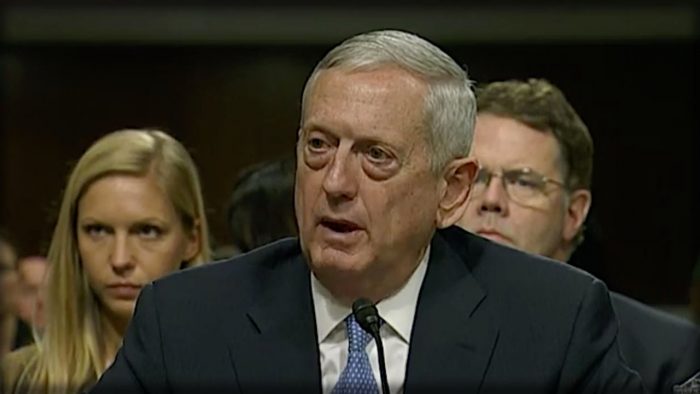
In Democracy Now, which aggressively supported the Iran nuclear deal, the blog characterized retired Gen. James Mattis’ confirmation hearings as being less about policy and more about a discussion of his personal wealth and the promise to preserve the military-industrial complex.

“It is interesting that this is among the many other issues that wasn’t really discussed during the hearing, that could have been discussed instead of the pork-barrel projects that you were talking about. And, you know, he could have been asked about these apparent conflicts of interest that might have developed as a result of his consulting work, and how he might deal with them,” said Aaron Glantz, a senior reporter at Reveal from The Center for Investigative Reporting.

Meanwhile, Iran lobby leader, Trita Parsi of the National Iranian American Council, took to doing more interviews, this time claiming that Mattis had promised to enforce the Iran nuclear deal in spite of Trump’s long criticism of it on the campaign trail, even though Mattis’ testimony was clearly not an endorsement of the deal.

The status of the nuclear deal is proving to be an important topic for the mullahs as they seek to position any break in it as the fault of the U.S. Iran’s deputy foreign minister says the nuclear deal between the Iranian regime and world powers “will not be renegotiated” ahead of U.S. President-elect Donald Trump taking office this week.

In a press conference Sunday marking the one-year anniversary of the agreement’s implementation, Abbas Araghchi told reporters that “the new U.S. administration cannot abandon the deal.”

Araghchi repeated an earlier warning by Iran’s Supreme Leader Ayatollah Ali Khamenei, who publicly stated, “If they tear it up, we will burn it,” without elaborating.

“There will be no renegotiation and the (agreement) will not be reopened,” said Araqchi, Iran’s top nuclear negotiator at the talks that led to the agreement in 2015, quoted by the state news agency IRNA.

“We and many analysts believe that the (agreement) is consolidated. The new U.S. administration will not be able to abandon it,” Araqchi told a news conference in Tehran, held a year after the deal took effect.

The potential for the Trump administration to scrap or renegotiate the nuclear deal, tied with the possibility of the incoming administration to build a rapport with Iranian dissident groups may prove to be a volatile mix of problems for the mullahs.

We can only hope that Trump extends to these Iranian dissidents the opportunity to talk and listen to their stories of the horror suffered by them and their loved ones at the hands of the mullahs and why ultimately any agreement with Iran must be based not on faith, but cold hard, verifiable facts.

Michael Tomlinson

Filed Under: Blog, News Tagged With: #NuclearDeal, Appeasement policy, Featured, Iran, Iran deal, Iran Lobby, Iran Talks, National Iranian American Council, NIAC Action, Nuclear Deal, Trita Parsi

Iran Regime Operates Through Fear and Intimidation to Work

January 7, 2017 by admin

Iran Regime Operates Through Fear and Intimidation to Work

Iran Regime Operates Through Fear and Intimidation to Work

“I learned that courage was not the absence of fear, but the triumph over it. The brave man is not he who does not feel afraid, but he who conquers that fear,” said Nelson Mandela, the former president of South Africa and prisoner of conscience who led his nation out of apartheid rule.

He recognized during his long imprisonment for his political beliefs that to conquer a regime and policy of institutionalized oppression, one had to first conquer the fear that institution uses to control its people. It is through the tools of violence, fear and intimidation that a people can remain oppressed for generations.

For the Iranian regime, the mullahs learned early on the lessons of similar oppressive regimes throughout history. Whether you were a Roman tribune enslaving barbarians or a Nazi Stormtrooper kicking down doors in the Warsaw ghetto or a Boko Haram fighter kidnapping scores of girls to auction them as sex slaves, the tools of intimidation and fear were universal in your efforts to maintain control.

Throughout Iran, the mullahs impose the same practices through the use of religious courts that hand down brutal sentences almost on a whim with no accountability, to roving bands of Basji paramilitaries who are free to accost and beat women on the street for violating dress codes.

The mullahs use the same principles in exporting their extremist brand of Islam by supporting terrorist proxies such as Hezbollah or growing their own Shiite militia in Iraq which can be used to subjugate Sunni villages or be shipped off to fight in Syria.

The use of military power and violence is a tried and tested prescription for the Iranian regime to impose its will.

Unfortunately for the mullahs, history has proven those policies eventually fail. Although Rome stood for thousands of years, it eventually collapsed under its own corruption and inability to assimilate the regions it conquered into peaceful co-existence. Eventually all totalitarian regimes have fallen throughout human history; the only question has been how long has it taken?

For the Iranian regime, the clock is running and the mullahs recognize their time may very well run out on them as their economy remains stagnant, unemployment especially among young people remains sky-high and technology improvements in social media and mobility have made it almost impossible to keep a lid on dissenting voices.

Even a string of hunger strikes by political prisoners has resonance as their plight is carried throughout the world on Twitter, Facebook, WhatsApp and Snapchat and has led to noted people such as Nobel peace prize laureate Shirin Ebadi to openly call for the head of Iran’s judiciary to quit.

Sadeq Larijani was appointed by Ali Khamenei and cannot be summoned by MPs for questioning and is not directly accountable to the public. Under his watch the judiciary has made a number of high-profile arrests of dual nationals, according to the Guardian.

Ebadi, a human rights lawyer and women’s rights activist living in exile in the UK, said she considered Larijani to be “directly responsible for the injustices and corruption” in the system.

She said that “in the name of religion and with the excuse of national security”, the judiciary was “overseeing a miscarriage of justice”.

“Civil and social activists and thinkers who voice criticism or protest are put in jail and condemned to lengthy prison sentences and torture and persecution, while criminals, serial killers and those involved in embezzlement continue to abuse people under the shadows of a corrupted judicial system,” she said in a statement posted on the website of the Defenders of Human Rights Centre, of which she is president.

“A considerable number of prisoners are those held on political or religious grounds. In what part of the world and according to what history, you would call this judicial system fair?” she added.

An example of the harsh treatment by Iranian courts was put on display when a British-Iranian woman being held in Tehran’s notorious Evin prison has appeared in an appeals court, using the last legal opportunity to challenge her five-year jail sentence.

Nazanin Zaghari-Ratcliffe, a project manager with the Thomson Reuters Foundation, the news agency’s charitable arm, was found guilty in September on unspecific charges relating to national security.

On Wednesday, she attended a court session in the Iranian capital that lasted up to three hours, her husband told the Guardian. Few details have emerged about the hearing but a verdict is expected to be announced next week.

The exact reason why the 38-year-old has been convicted in Iran is still unclear, but the Revolutionary Guards, which arrested her at the airport in April while she was about to return to the UK after a family visit, have accused her of fomenting a “soft overthrow” of the Islamic republic.

“What I know is that the appeals happened and went on for three hours, the family weren’t able to go but Nazanin was there and her lawyer was there,” said Richard Ratcliffe. “There were lots of revolutionary guards there from both Kerman’s branch and the Tehran branch.”

According to Amnesty International, Iranian authorities have hinted that Zaghari-Ratcliffe’s arrest is connected to the 2014 imprisonment of several employees of an Iranian technology news website. They were given lengthy prison terms for participating in a BBC journalism training course. Zaghari-Ratcliffe was a project assistant at the BBC’s Media Action, the broadcaster’s international development charity, in 2008-09.

Ratcliffe said he last spoke to his wife on Christmas Day. Zaghari-Ratcliffe, who was previously described as being at breaking point, has recently been removed from solitary confinement and taken to Evin’s women’s wards alongside other political prisoners including journalist Reyhaneh Tabatabaei and leading activist Narges Mohammadi, and a number of Baha’i women held because of their faith.

Ultimately, the full force and weight of the Iranian judicial system is being used to focus on a British mother and charity worker and is emblematic of how fragile the mullahs control is if they are forced to have to imprison someone like her.

Michael Tomlinson

Filed Under: Blog, News Tagged With: #NuclearDeal, Appeasement policy, Featured, hassan rouhani, Iran, Iran deal, Iran Human rights, Iran Lobby, Iran Mullahs, Iran sanctions, Khamenei

Trump Can Fix Biggest Flaw in Iran Nuclear Deal

January 5, 2017 by admin

Trump Can Fix Biggest Flaw in Iran Nuclear Deal

Iran: Nuclear Force

A letter was delivered to incoming president Donald Trump signed by 37 people, most of them scientists who previously supported the Iran nuclear deal, urging him to maintain the agreement and refrain from dismantling it after he takes office. The signers included the cadre of academics who have previously joined with the Iran lobby in the debate over the flawed nuclear agreement.

As behooves a group of academics, their central argument was that the nuclear agreement was working effectively in preventing Iran from developing a nuclear weapon, saying that “as agreed, Iran has deactivated and put into storage under International Atomic Energy Agency (IAEA) seal about 2/3 of its centrifuges, and it has exported more than 95% of its stockpile of low-enriched uranium—a springboard to weapon-usable highly enriched uranium.”

The letter checks off the usual boxes mentioned by Iran supporters such as Trita Parsi of the National Iranian American Council and Joseph Cirincione of the Ploughshares Fund, who have consistently argued that the agreement would not only reduce the chance of Iran developing nuclear weapons, but would also help move it to become a moderating force in the Middle East and empower moderate elements in the Iranian government.

Therein lies the greatest failing in the scientists’ letter and the greatest opportunity Trump has been presented, which is that the Iran nuclear deal really had nothing to do with nuclear weapons, but rather about lifting sanctions in order for a reeling Iranian government to replenish its funds just as it was starting proxy wars in three different countries.

There was one absolute condition the Iranian regime had when it entered into negotiations with the P5+1 group of nations and that was for a clear separation of issues not-related directly to nuclear weapons. This included Iranian regime’s long history of support for terrorism, its harsh treatment of human rights, its crackdown on dissent at home and its eagerness to supply proxy military forces.

For the mullahs, there was nothing more important than in gaining relief from crippling economic sanctions that had pushed their iron grip to the edge with a population grown restless because of lowered wages, stagnant growth and diminished expectations for the future, including an unemployment rate among young Iranians that threatened to feed a revolt in a similar way it did in 1979 with the revolution.

And what was Tehran’s reward? According to the Wall Street Journal, over $10 billion in cash and gold was funneled to the mullahs since the deal passed in a variety of ways, some worthy of a spy novel including late night flights of jets stuffed with pallets of cash and transfers to small Iranian banks of currency converted into gold bullion.

This tallying of the sanctions relief to date includes payments previously announced and others that haven’t been. In one previously unreported payment, the U.S. authorized Iran to receive $1.4 billion in sanctions relief between when the final deal was struck in July 2015 and when it took effect, according to the U.S. officials,” the Journal said.

“Some U.S. lawmakers and Middle East allies contend that the shipments of cash and gold, a highly liquid form of money, can be used to fund Iran’s allies in the region, including the Assad regime in Syria, the Lebanese militia Hezbollah and the Houthi political movement in Yemen,” the Journal added.

This is precisely why the mullahs and their leaders Hassan Rouhani and Ali Khamenei were so desperate to complete a deal. The Iranian regime needed funds badly in order to provide Hezbollah with weapons to support the faltering Assad regime in Syria, as well as launch a civil war in Yemen with the Houthis to take on Saudi Arabia and support Shiite militias in Iraq as they launched a sectarian war against Sunni Muslims.

It also represents the greatest opportunity for Trump since the issue is not the dismantling of the nuclear agreement, but rather the threat of sanctions to link Iranian conduct back to the bargaining table.

This includes finally holding Iran accountable for items kept out of the nuclear agreement such as the development of long-range ballistic missiles capable of delivering nuclear payloads, as well as Iran’s support of three wars that have turned the Middle East into a bloodbath and large parts of Europe into refugee camps.

As part of the deal, Iran is entitled to a whopping $115 billion in sanctions relief over the past three years, but accessing those funds have been difficult since sanctions on currency transfers over the international financial network remain in place. This provides Trump with the greatest leverage possible over the mullahs.

Failure on the part of Tehran to halt its support of terrorism or lift the hammer of oppression at home is why the West should keep the firehose of funds from flowing to Tehran. This would make things problematic for the mullahs as they are facing a presidential election this spring.

Another round of broad discontent and protests again, as in 2009, could force the mullahs to once again engage in a bloody crackdown that turns international opinion firmly against them and away from the perception of moderation the Iran lobby has worked hard to try and preserve.

For the Iranian regime, the flow of cash is paramount to fulfilling its ambitions of extending its sphere of influence from the Mediterranean to Indian Ocean. A piece in Foreign Affairs examined the regime’s efforts to secure naval bases in Syria and Yemen to help its navy breakout of the Persian Gulf bubble it’s been locked in for decades.

This explains why supporting Assad in Syria and fomenting the civil war in Yemen were so crucial to the Iranian strategy for creating its own version of a Shiite Warsaw Pact.

“Bases in Syria and Yemen would be particularly important to Iran. Yemen sits on the strategic shipping route of the Bab el Mandeb Strait, one of the world’s most heavily trafficked waterways, and a naval outpost there would give Tehran unfettered access to the Red Sea and put it in a more advantageous position to threaten its main regional rival, Saudi Arabia,” Foreign Affairs said.

These are all facts the scientists who signed the letter to Trump failed to recognize or chose to ignore. It also underscores how incredibly wrong these people were in their original estimation of the success of the Iran nuclear deal.

Michael Tomlinson

Filed Under: Blog, News Tagged With: #NuclearDeal, Appeasement policy, Featured, hassan rouhani, Iran, Iran deal, Iran Human rights, Iran Lobby, NIAC, NIAC Action, Sanctions, Trita Parsi

Trita Parsi Predicts a Worse 2017 But for the Wrong Reasons

December 29, 2016 by admin

Trita Parsi Predicts a Worse 2017 But for the Wrong Reasons

Trita Parsi Predicts a Worse 2017 But for the Wrong Reasons

Trita Parsi, the head of the National Iranian American Council and chief apologist for the Iranian regime, penned an editorial in Middle East Eye that curiously finally recognizes the complete and utter lack of stability in the Middle East. Unfortunately, he never assigns any blame to the Iranian regime.

He does however recognize that the split between Iran and its chief rival, Saudi Arabia, is likely to fuel and deepen even wider divisions and instability in the region.

“Indeed, while some point to Tehran celebrating its victory in Aleppo, success on the battlefield is coupled with even deeper divisions between Iran and some of its Arab or Sunni neighbors, paving a path towards greater conflict rather than reconciliation,” Parsi writes. “Ultimately, as all parties involved should know, true security only stems from the ability to live in peace with one’s neighbors, not one’s ability to outgun them.”

“Thus, the celebrations of today ring very hollow, as the region as a whole is likely heading towards greater instability in the year to come,” he adds.”

Parsi is correct in that the future is bleak in 2017, but his inability to focus on the constant push by Iran of its own extremist Shiite ideology is the fuel that has burned through Syria, Iraq and Yemen fueling new rounds of bloody sectarian violence that haven’t been seen since the decade-long civil war in Lebanon in the 1980s.

Parsi blames previous U.S. administrations for following a policy that was too reliant on supporting traditional U.S. regional allies such as Saudi Arabia, Israel and Egypt and isolated regional pariahs such as Iran and Iraq.

He goes on to blame the U.S.-led invasion of Iraq in 2003 the cause of the latest round of instability in the region; a curiously silly assumption since he blithely ignores Iran’s role in serving as the primary supporter, funder and guardian of the region’s most notorious terrorist groups in Hezbollah, Al-Qaeda and Shiite militias.

Parsi’s ignorance of the role terrorism plays in regional instability and the rise of trans-national groups such as ISIS in instigating the kind of horrific bloodshed that plunged virtually all of the Middle East into war and subjected cities as far flung as Sydney to San Bernardino to Boston to Ottawa to Paris to Brussels and Berlin to mass terror attacks.

Sectarian terrorism is the fuel that has convulsed the world, not the Cold War-era politics of superpowers such as the U.S. and its military might. As far back as the beginning of Christianity and the rise of Islam, religious fervor has sparked millennia of conflict and still does to this day.

This simple fact is why the Iranian regime stands squarely in the middle of virtually all of the conflicts going on today because it is the only religiously-controlled nation there and as such views its foreign and military policies through the colored lens of extremist religious ideology.

Since Iran’s leadership is personified in the religious supreme leader Ali Khamenei, whose wishes are akin to the absolute reign of medieval monarchs, the odds are the bloodshed and violence we are likely to see in 2017 is going to be firmly rooted in the same religious edicts that motivated violence in 2016.

Any child can trace the lines of Shiite fanaticism connecting Tehran to Damascus, Baghdad, Sana, Kabul, Beirut and countless other cities; any child it seems except Parsi. The one truth that Parsi does speak is the prospect of a grim 2017.

“Going forward, there are few signs that stability will return to the region in 2017. Even if the battle of Aleppo signals a turning point in the war in Syria, it is unlikely to signal the end of the war,” he writes. “Russia and Iran may be celebrating their victory, but true stability will only come to the region when all of the regional powers commit themselves to a diplomatic process of brokering a new order.”

“Currently, however, there is far more commitment to military rather than diplomatic strategies. Absent a reversal of this, 2017 will be even grimmer than 2016,” he adds.

Parsi is correct that stability is only going to come when regional powers finally recognize that diplomacy is a preferable path than a military one, but that is a conclusion that the mullahs in Tehran are not even close to reaching.

Tehran’s all-in support for a massive war in Syria, even to the point of dragging in Russia to save the Assad regime—one of Iran’s few reliable allies—demonstrate that diplomacy is not a priority for them. Indeed any solution that involves the mullahs in Iran will have the same faith, since they are the roots of the problem.

Tehran’s support of Houthi rebels in Yemen only broadened the conflict to drag in Saudi Arabia into a shooting war and the use of Shiite militias in Iraq to punish Sunni opponents only pushed the endless cycle of sectarian violence farther down the road.

Parsi’s inability to name Iran’s extremist Islamic policies and priorities as a motivating factor for a dreadful 2016 demonstrates clearly that even now, he cannot bring himself to criticize his Iranian masters in the slightest.

All of this shouldn’t be surprising since Parsi has been a loyal soldier for the Iranian regime and as Donald Trump assumes office in January, Parsi is devoting his time to trying to shape the narrative into painting Saudi Arabia as evil and Iran as good in an effort to drive a deeper wedge into the U.S. relationship with its traditional allies.

As 2016 has demonstrated, 2017 is likely to be just as disappointing for Parsi and his colleagues, but not for the reasons he thinks.

Michael Tomlinson

Filed Under: Blog, News Tagged With: Featured, Iran, Iran deal, Iran Human rights, Iran Lobby, Iran Terrorism, Khamenei, NIAC, NIAC Action, Trita Parsi

Fast-Sinking Iran Currency Demonstrates Weakness of Regime

December 27, 2016 by admin

Fast-Sinking Iran Currency Demonstrates Weakness of Regime

Fast-Sinking Iran Currency Demonstrates Weakness of Regime

Iran’s currency, the rial, took a nosedive in hitting a record low against the U.S. dollar as financial markets returned from the Christmas holiday and doubts crept up about the impact the incoming Trump administration would have on the struggling Iranian economy under the mullahs.

More importantly, the plunge in the rial was more proof of that the mullahs in Tehran were incompetent when it came to managing their economy and that supporting three large-scale wars in Syria, Iraq and Yemen and had drained the regime’s foreign currency reserves dry.

The much ballyhooed promises of the Iran lobby that the nuclear deal reached last year would yield economic benefits for the Iranian people fell as fast and as flat as the Iranian currency.

The rial was quoted in the free market at 41,500 to the dollar, weakening from around 41,250 on Sunday and 35,570 in mid-September. Before this month, the record low was about 40,000, hit in late 2012, traders said.

Economists said there were several reasons for the slide, including the dollar’s strength against many currencies in the last few weeks, and uncertainty before next year’s presidential elections in Iran, according to Reuters.

But they said Trump’s election in November was a major factor. He has said he will scrap the deal between Iran and world powers that imposed curbs on Tehran’s nuclear projects and lifted sanctions on the Iranian economy in January this year.

This would hinder Tehran’s efforts to attract tens of billions of dollars of foreign funds to help modernize its economy. Inflows since January have been smaller than the government expected, partly because big international banks fear running into U.S. legal trouble if they deal with Iran; this in spite of efforts by the outgoing Obama administration to grant waivers and exemptions to the regime in an effort to spur the flow of cash to Tehran.

Iranian officials have denied any link between the U.S. election result and the rial’s slide. Samad Karimi, head of the exports department at the central bank, blamed the slide on a temporary surge in demand for dollars for travel and trade at the end of the year, state news agency IRNA reported.

Regime spokesman Mohammad Baqer Nobakht said on Monday that the rial’s drop was due to “psychological issues” and that the government hoped it would rebound within days.

Nevertheless, traders at some exchange houses in Tehran told Reuters they had not seen a sudden rise of dollar demand in recent weeks – suggesting the reasons for the rial’s tumble might be deep-seated.

That assumption of deep-seated problems within the Iranian economy are true since Iran is notoriously corrupt with virtually of the nation’s industries controlled through a myriad of shell companies by the Revolutionary Guard Corps and personal family fiefdoms of regime leaders.

This arrangement restricts Iran’s ability to operate a true free market economy, but rather is run like a gangland-style criminal enterprise where nepotism, personal favorites and enrichment and slavish devotion to exporting its extremist Islamic ideology dominate economic and fiscal decisions.

How a President Trump will deal with the Iranian regime is fast becoming the dominant policy discussion in European and Middle Eastern capitals. The initial reaction to his announced cabinet choices shows the potential for a more hardline response to Iranian militancy and extremism with such avowed critics of the regime as Rep. Mike Pompeo and Sen. Jeff Sessions set to assume office.

The potential for a sea change from the policy of appeasement followed by the Obama administration has emboldened critics of the Iranian regime to speak out including Iranian dissident groups long shut out by Obama.

A group of leading Iranian human rights activists and former political prisoners published an open letter on Friday to President-elect Donald Trump asking for a wholesale change from President Obama’s rapprochement with Iran’s clerical regime.

“Unfortunately, Iranians have been among the main victims of the detrimental policies adopted by President Obama in the Middle East. A prime example of these detrimental policies was the secret delivery of hundreds of millions of dollars in cash to the Revolutionary Guards in exchange for the release of the hostages,” the dissidents’ letter said.

Fox News first published the document, the full text of which can be read on the Farsi-language website Taghato, which is run by the Iranian Liberal Students and Graduates group.

The signatories come from France, Germany, East Asia, Canada, the US and other countries.

“The ISIS and the Islamic Republic of Iran are two sides of the coin that is Islamic fundamentalist terrorism. To end this reign of terror, the Islamic caliphate (ISIS) and the Islamic regime in Iran must be replaced with elected pro-peace and prosperity governments.”

The letter called for fresh sanctions targeting “the Islamic Revolutionary Guard Corps (IRGC) and the supreme leader’s financial empire and direct the US Treasury to strongly enforce them” and stop Iran’s pursuit of long-range missiles.

Publication of the document electrified Iran’s social media and regime-controlled news outlets. The IRGC-controlled Fars News Agency called supporters of the letter traitors, while the subject was among the top hashtags on Twitter.

BBC Persian said the letter was re-tweeted more than 10,000 times.

The dissidents’ open letter is only one of many entreaties now being aimed at the Trump team in the hopes of reasserting America’s role as watchdog of the Iranian regime and curb on the mullahs.

For the Iranian people, renewing the push for democracy and accountability can only help improve their economic condition.

Michael Tomlinson

Filed Under: Blog, News Tagged With: #NuclearDeal, Appeasement policy, Featured, hassan rouhani, Iran, Iran deal, Iran Economy, Iran Mullahs, Iran sanctions, Rouhani

Iran Lobby Defends Iranian Regime Threats

December 16, 2016 by admin

Iran Lobby Defends Iranian Regime Threats

Iran Lobby Defends Iranian Regime Threats

In the wake of overwhelming votes by both houses of Congress to reauthorize the Iran Sanctions Act, the Iranian regime has been vocal in its threats and bravado, but Iran upped its aggression game when Hassan Rouhani announced that Iran would start developing systems for nuclear-powered marine vessels.

According to Reuters, nuclear experts said that Rouhani’s move, if carried out, would probably require Iran to enrich uranium to a fissile purity above the maximum level set in the nuclear deal. The announcement was the first declarative statement by the regime’s leadership of an action taken in direct response to the ISA vote.

Predictably, the Obama administration downplayed the comments in the hopes of maintaining the badly flawed deal in the face of mounting criticism from the foreign policy team being assembled by incoming president Donald Trump.

“The announcement from the Iranians today does not run counter to the international agreement to prevent Iran from obtaining a nuclear weapon,” White House spokesman Josh Earnest told a news briefing.

Rouhani also ordered planning for production of fuel for nuclear-powered marine vessels “in line with the development of a peaceful nuclear program of Iran.”

But under the nuclear settlement Iran reached with the United States, France, Germany, Britain, Russia and China, it is not allowed to enrich uranium above a 3.67 percent purity for 15 years, a level unlikely to be enough to run such vessels, according to Reuters.

“On the basis of international experience, were Iran to go ahead with such a (nuclear propulsion) project, it would have to increase its enrichment level,” said Mark Hibbs, nuclear expert and senior fellow at Carnegie Endowment for International Peace.

The threat to seek nuclear propulsion would give the Iranian regime a convenient way of circumventing the nuclear agreement and get back into the enrichment game quickly and still claim it was adhering to the deal.

It is ironic that Rouhani is citing the reauthorization of the ISA as the straw that broke the proverbial camel’s back in pushing this announcement since the ISA applied largely to Iran’s ballistic missile program and its sponsorship of terror groups, as well as its nuclear program. The ISA is crucial to fulfilling the Obama administration’s promise of “snapback” sanctions should Iran be found in violation.

Also, the president maintains the authority to waive sanctions under the ISA, which Obama has done. This can only mean Rouhani and his fellow mullahs are terrified of what Trump will do when he takes office.

But one possible motivation for Rouhani may be to goad President Obama into not signing the ISA bill before the deadline expires December 31, 2016, which would ultimately prove futile since the bill easily cleared with unanimous approval—enough to override any veto—but Tehran may be hoping for a symbolic act of defiance in support of them from Obama.

Predictably, the Iran lobby led by the National Iranian American Council voiced its support for the deal and warned of dire consequences with Rouhani’s announcement as proof of impending disaster.

“For months, we warned that ISA’s renewal would have real consequences. Today, those consequences have been realized. While Iran’s move to undertake studies related to nuclear-propelled ships is not in violation of the nuclear accord, it does undermine U.S. foreign policy objectives,” the NIAC statement said. “Iran is signaling that for every negative U.S. action, there will be an Iranian reaction anathema to U.S. interests.”

The NIAC statement is the height of absurdity because the logic to it is akin to having a police officer catch a burglar, only to have the thief produce a weapon and threaten the officer and the officer is held to blame for the escalation.

Iran has already received several waivers and exemptions for violating terms of the nuclear agreement and yet when Congress reauthorizes a bill that the Obama administration has already said does not violate the nuclear agreement, the Iranian regime’s first thought is to threat the U.S.

It is a reaction that is a perfect reflection of why the nuclear deal was doomed from the start and why the Iran lobby cannot be trusted in advancing it.

Instead of urging Iran to reach out diplomatically to the incoming Trump administration, the NIAC has from the beginning sought to characterize Trump as a war monger, Muslim hater, insane person and intellectual idiot. These are not the kinds of comments that would engender a positive reaction from the new president.

While the NIAC has gone all in on supporting Iran, even in the face of outrageous statements, it delegitimizes its stated role as an advocate for Iranian-American interests. How can Iranian-Americans be helped by an organization that does not urge Iran to refrain from making outlandish and dangerous threats?

Michael Tomlinson


Filed Under: Blog, News Tagged With: Featured, hassan rouhani, Iran, Iran deal, Iran Lobby, Iran Terrorism, IRGC, NIAC, Sanctions

  • « Previous Page
  • 1
  • …
  • 8
  • 9
  • 10
  • 11
  • 12
  • …
  • 29
  • Next Page »

National Iranian-American Council (NIAC)

  • Bogus Memberships
  • Survey
  • Lobbying
  • Iranians for International Cooperation
  • Defamation Lawsuit
  • People’s Mojahedin
  • Trita Parsi Biography
  • Parsi/Namazi Lobbying Plan
  • Parsi Links to Namazi & Iranian Regime
  • Namazi, NIAC Ringleader
  • Collaborating with Iran’s Ambassador

Recent Posts

  • NIAC Trying to Gain Influence On U.S. Congress
  • While Iran Lobby Plays Blame Game Iran Goes Nuclear
  • Iran Lobby Jumps on Detention of Iranian Newscaster
  • Bad News for Iran Swamps Iran Lobby
  • Iran Starts Off Year by Banning Instagram

© Copyright 2026 IranLobby.net · All Rights Reserved.