Iran Lobby

Exposing the Activities of the lobbies and appeasers of the Mullah's Dictatorship ruling Iran

  • Home
  • About
  • Current Trend
  • National Iranian-American Council(NIAC)
    • Bogus Memberships
    • Survey
    • Lobbying
    • Iranians for International Cooperation
    • Defamation Lawsuit
    • People’s Mojahedin
    • Trita Parsi Biography
    • Parsi/Namazi Lobbying Plan
    • Parsi Links to Namazi& Iranian Regime
    • Namazi, NIAC Ringleader
    • Collaborating with Iran’s Ambassador
  • The Appeasers
    • Gary Sick
    • Flynt Leverett & Hillary Mann Leverett
    • Baroness Nicholson
  • Blog
  • Links
  • Media Reports

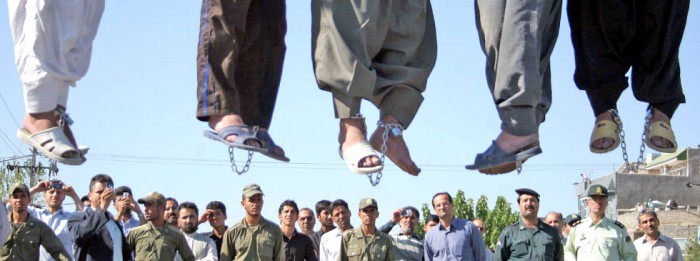
Looking Back at 2015: Iran Regime Human Rights Abuses

December 29, 2015 by admin

Looking Back at 2015: Iran Regime Human Rights Abuses

Looking Back at 2015: Iran Regime Human Rights Abuses

If 2015 has been the “Year of Terror” around the world, it has also been a year for abysmal human rights violations within the Iranian regime and those rights did not get off to an exceptionally strong start when nuclear negotiations between the regime and the P5+1 group of nations delinked improvements in human rights to an agreement.

It was an inauspicious start and things didn’t get much better after that.

In order to maintain a lid on what could be a contentious year domestically as ordinary Iranians chafed under increased economic repression and blatant corruption that benefitted the relatives of the ruling mullahs and commanders in the Revolutionary Guards Corps, the regime cracked down harder on limiting access to social media and internet browsing through its cyber wall and tracking by secret police.

Even though human rights were no longer a priority for the rest of the world, the U.S. did provide an early present to the mullahs when it made a $490 million transfer to Iran as part of the payment for the interim agreement between Iran and the Obama administration during an extension agreed to last November of 2014. Under that agreement, the Iranian regime received a total of $4.9 billion in unfrozen cash in 10 separate payments through June of 2015 in the hopes a final nuclear agreement could be reached.

This came on top of $4.2 billion the Iranian regime received as part of the 2013 interim agreement, which the Obama administration followed with another $2.8 billion in 2014 in a last ditch attempt by the Obama administration to entice the mullahs in Iran to stay at the bargaining table.

This cash helped prop up a regime struggling as it poured billions into a growing Syrian conflict to keep the Assad regime in power amid plummeting global oil prices.

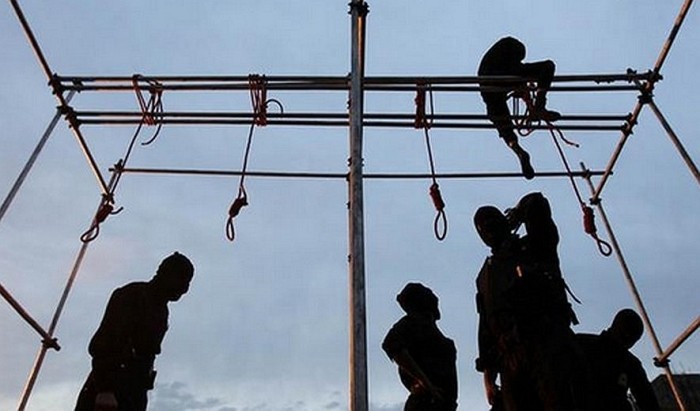
Iran’s religious and paramilitary police also continued to enforce religious law on the streets through abusive tactics including public beatings and assaults or arrest and imprisonment. In a further abomination of traditional Islamic values, Iran’s mullahs have allowed over 40,000 child brides to be wedded just in 2014 and adopted a new law in 2015 allowing men to marry their adopted children.

Added to that was the regime’s ongoing war against women in which it confiscated 40,000 cars driven by women who violated strict dress codes, not to mention the lack of enforcement against those who participated in acid attacks against women.

No one was safe against Iranian regime abuses, as The Observer newspaper chronicled the plight of homosexuals in Iran where an estimated 4,000-6,000 gays and lesbians have been executed by the regime since 1979 to today, which is odd considering that while Iran has liberal laws in regards to transgender individuals – helping to pay for such surgeries in fact – these same policies are used to coerce young gays to undergo conversion or face punishment.

Last May, According to report released by Iran Human Rights group, in the 18 months since the election of President Rouhani in June 2013, Iranian authorities executed more than 1,193 people. This is an average of more than two executions every day.

The number of executions in that period was 31 percent higher than the number in the 18 months before President Rouhani assumed power. The number of juvenile offenders executed in 2014 was the highest since 1990.

Meanwhile a new short video made the rounds on social media bringing to light the linkages between the Iran regime and ISIS and dubbed Iran the “Godfather of ISIS.” The moniker might smack of a certain hyperbole, but it is nonetheless accurate as to the true nature of Iran’s growing role as a template and model for sectarian violence and mayhem throughout the world.

The short 97-second video, produced for the non-profit, independent news site IranFocus.com, starts off with a narrator discussing the link between Iran’s mullahs and the terror group known as ISIS that sprang up out of the civil war in Syria, but now has tentacles in over a dozen countries in the Middle East, Africa and Asia, but the ISIS coming out party so-to-speak came in Iraq when Syrian forces, backed by the Iranian military, targeted moderate, Western-backed Syrian rebel forces, thereby empowering the radicalized ISIS militias.

Amnesty International’s annual report for 2015 went into extensive detail on the litany of human rights abuses flowing from the mullah’s mandates including restrictions on the freedom of expression, association and assembly, widespread use of torture, codified unfair trials, institutional mistreatment of ethnic and religious minorities, the broad denial of women’s rights, lack of privacy, denial of education, and frequent and indiscriminate use of the death penalty.

In another sign of the oppression from the mullahs, Al-Monitor reported on a move by the regime’s Ministry of Education to set a strict quota in the number of new jobs made available to Iranian women.

“The Ministry of Education held its nationwide exam for new job applicants on Sept. 18, with 178,000 people participating. The exact date for the announcement of the results is unclear. But what is clear is that no matter what score female applicants may obtain, they will make up only 10% of those who will be employed,” Al-Monitor reported.

“This disappointing development came to light in the registration guidelines for this year’s exam. Of the 3,703 educational posts up for grabs, it is stated that only 630 will go to women while the other 3,073 posts will go to men. Female applicants in the Iranian capital are perhaps the most exposed to this policy; of the 190 new employees that are to join the Ministry of Education in Tehran, only six are set to be women,” the story added.

Last year, Iran also had the second highest number of executions in the world after China and also killed the most juvenile offenders, according to Human Rights Watch.

Ahmed Shaheed, the United Nations Special Rapporteur for Human Rights in Iran issued a new report saying that the Iran regime was on track to execute more than 1,000 people in 2015 in an unrelenting campaign of brutal human rights suppression that continues unabated after agreeing to a nuclear agreement that proponents said would shift the regime to a more moderate stance.

Calling it an “unprecedented assault on the right to life in Iran,” Shaheed described a surge in executions over the past year. He said Iran hanged nearly 700 people since January.

Shaheed said the Islamic Republic violated international law by hanging two juvenile offenders. He added “there are dozens more waiting a similar fate on death row.”

The most recent UN condemnation came after 36 human rights organizations, led by Human Rights Watch, called on the regime to improve its human rights situation and for the international community to work together to promote human rights within Iran.

Lastly, according to the New York-based Committee to Protect Journalists, at the end of last year, at least 30 journalists were held in Iranian prisons, including Washington Post reporter Jason Rezaian. Others have been detained since, and in August state media accused a senior Wall Street Journal reporter who once served as a correspondent in Iran of conspiring against the government. The Journal called the claims “completely false, outlandish and irresponsible.”

It is ironic that three large Muslim nations, Indonesia, India and Malaysia, are largely free of violent extremism, which is due in no small part to the development of tolerant, multicultural societies where the secular rules the sectarian. They are a true template for Iran’s future, one where the religiously motivated whims of a few dozen old mullahs do not hold sway over the vastness of a region stretching from the Mediterranean to Indian Ocean.

We can only hope things improve in 2016, they can’t seem to get much worse.

By Laura Carnahan
Filed Under: Blog, News Tagged With: Featured, Iran Human rights

Iran Regime Promises More Missiles in Spite of UN Ban

December 17, 2015 by admin

Iran Regime Promises More Missiles in Spite of UN Ban

Iran Regime Promises More Missiles in Spite of UN Ban

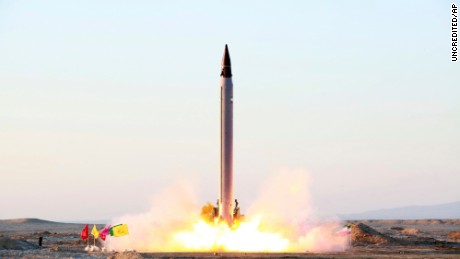
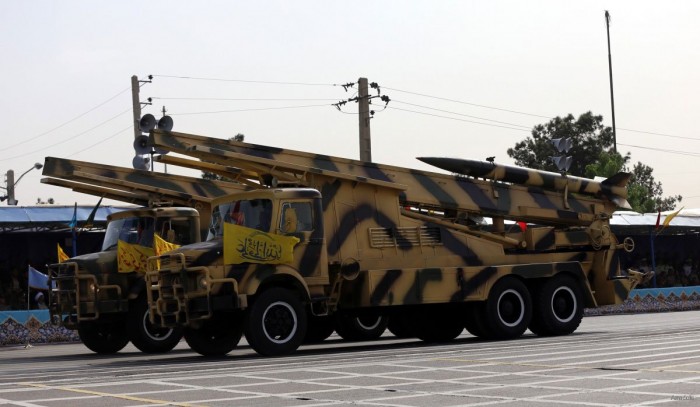
Sounding as defiant as ever, the Iranian regime announced it would not accept any restrictions over its ballistic missile program after the United Nations Security Council’s Panel of Experts concluded in a confidential report that last October’s test firings of a new ballistic missile violated UN restrictions banning development of nuclear-capable missiles by the Islamic state.

“We tested Emad to show the world that the Islamic Republic will only act based on its national interests and no country or power can impose its will on us,” Defense Minister Hossein Dehghan was quoted as saying by the state news agency, IRNA.

Ballistic missile tests by Iran are banned under Security Council resolution 1929, which dates from 2010 and remains valid until the July nuclear deal between Iran and world powers goes into effect, according to Reuters which first broke the news about the confidential UN report.

Once the deal takes effect, Iran will still be “called upon” according to Reuters not to undertake any ballistic missile work designed to deliver nuclear weapons for a period of up to eight years, according to a Security Council resolution adopted in July right after the nuclear deal.

The regime contends that the resolution would only ban missiles “designed” to carry a nuclear warhead, not “capable of”, so it would not affect its military program as Tehran does not pursues nuclear weapons. The distinction is akin to saying a gun that is not designed to kill humans expressly, but is capable of killing humans is somehow different.

It is that kind of linguistic gymnastics which has characterized the regime’s approach to nuclear negotiations and its support of terror groups and the Assad regime in Syria. Regime leaders such as top mullah Ali Khamenei have consistently issued statements inconsistent with public statements made by other regime officials such as Hassan Rouhani and foreign minister Javad Zarif. The contradictions coming out from the regime could give anyone fits trying to detangle the mess.

Therein lay the strategy of the mullahs in that they seek to create this confusion in order to provide the wiggle room necessary to justify any action they see fit. By declaring its missiles not expressly designed for nuclear weapons, they can ignore international bans. By declaring the lifting of any sanction under the nuclear deal tardy or slow, the regime could declare the agreement null and void at any time and build a nuclear weapon at will.

It is the false promises made during the nuclear talks that are now coming to haunt the rest of the world as they see the Iranian regime do whatever it pleases to fit the narrative it chooses to articulate.

Rouhani himself couldn’t stop from making a verbal slam dunk when he went on state television calling the vote by the International Atomic Energy Agency’s board of governors to close out its inquiry into the regime’s past military practices in its nuclear program in spite of highly critical findings by inspectors that the regime continued to develop nuclear weapons well into 2009 and still had not fully answered outstanding questions.

The Tehran regime has announced its intentions to bulk up on Russian military hardware in a buying binge that started with completion of the sale of S-300 advanced anti-aircraft missile batteries.

On the shopping list by the regime’s military are advanced, fifth-generation Russian T-90 battle tank, along with a range of other major defense items, according to Brig. Gen. Ahmad Reza Pourdastan, the regime’s top ground commander, during a defense conference in the Khorasan region of northern Iran.

With the regime due to receive an estimated $150 billion in frozen assets from the lifting of economic sanctions from the nuclear deal, it is clear now the intention of the regime is to spend heavily on military hardware, not in jumpstarting a moribund economy that is punishing Iran’s citizens contrary to the claims made by Iran lobby members such as Trita Parsi of the National Iranian American Council.

Pourdastan also said during the conference that the military needs helicopters, heavy weaponry and advanced combat equipment. While the new requests undermine Iran’s own defense industry, the ground forces commander said that the country’s military industrial complex will continue to develop, according to the International Business Times.

“The Iranian defense industry has strong potential. Nevertheless, we will constantly take care of modernizing it,” he said.

The new moves on the military front have many in Washington calling for new and increased sanctions on the Iranian regime to address all of the issues not addressed by the original nuclear agreement.

Jennifer Rubin writes in the Washington Post suggesting that “new pressure needs to be applied to Iran.”

She also quotes from Eliot A. Cohen, Ray Takeyh and Eric Edelman in a piece in Foreign Policy, suggesting:

“In addition to revising the nuclear agreement, the United States should punish Iran for its regional aggression, sponsorship of terrorism, or human rights abuses. To do so, it should segregate Iran from the global economy by restoring as much of the sanctions architecture as possible. . . . And it should launch a campaign of political warfare to intensify the Iranian public’s disenchantment with the regime and deepen dissension within the ruling circle.”

It would be wise for the world to recognize another race has begun on trying to restrain a newly militant Iranian regime.

By Michael Tomlinson

Filed Under: News Tagged With: #NuclearDeal, Featured, Iran Human rights, Iran's frozen assets, Sanctions, Trita Parsi

International Human Rights Day Everywhere Except Iran

December 10, 2015 by admin

International Human Rights Day Everywhere Except Iran

International Human Rights Day Everywhere Except Iran

December 10th marks International Human Rights Day which will be celebrated by the United Nations and nations around the world as recognition of fundamental importance of human rights in free and open societies. The day will be observed with speeches, conferences, panel discussions, protests and solemn observances.

This year’s Human Rights Day will be devoted to a year-long campaign for the 50th anniversary of the two landmark International Covenants on Human Rights: the International Covenant on Economic, Social and Cultural Rights and the International Covenant on Civil and Political Rights, which were adopted by the United Nations General Assembly on 16 December 1966.

According to the UN Human Rights Office, the year-long campaign revolves around the theme of rights and freedoms — freedom of speech, freedom of worship, freedom from want, and freedom from fear — which underpin the International Bill of Human Rights are as relevant today as they were when the Covenants were adopted 50 years ago.

But respect for human rights have been found conspicuously lacking in certain parts of the world; most notably within the Iranian regime where things have gotten so grim the UN High Commissioner appointed Ahmed Shaheed as the Special Rapporteur on human rights in Iran to monitor the dismal state of affairs in the Islamic state.

Over the past year, 2015 has been a dark stain on human rights progress in Iran as chronicled in the steady stream of press releases put out by the UN about abuses there:

  • January 2015: UN child rights body to investigate 12 countries including Iran for violations involving children;
  • February 2015: UN experts urge Iran regime to halt immediately the execution of a juvenile sentenced by regime courts;
  • March 2015: Human Rights Council adopts the Universal Periodic Review of Iran chronicling the litany of human rights lapses in the regime. The Council also discusses the annual report on human rights in Iran and extends mandates for further review of Iran;
  • May 2015: UN rights experts condemn recent upsurge in executions by the Iran regime, many of them unreported;
  • June 2015: UN experts warn that silencing journalists and activists weakens protections for human rights in Iran;
  • August 2015: UN experts call for an immediate moratorium on applying the death penalty after regime hands downs death sentences to a prisoner of conscience and alternative health practitioner;
  • October 2015: UN rights experts express outrage at the execution of two juvenile offenders; and
  • November 2015: UN experts call on Iran regime to stop intimidating journalists ahead of parliamentary elections.

The UN announcements only cover a tip of the proverbial iceberg as Iranian dissident groups and international human rights groups such as Amnesty International have chronicled an ever growing list of human rights abuses by the Iran regime.

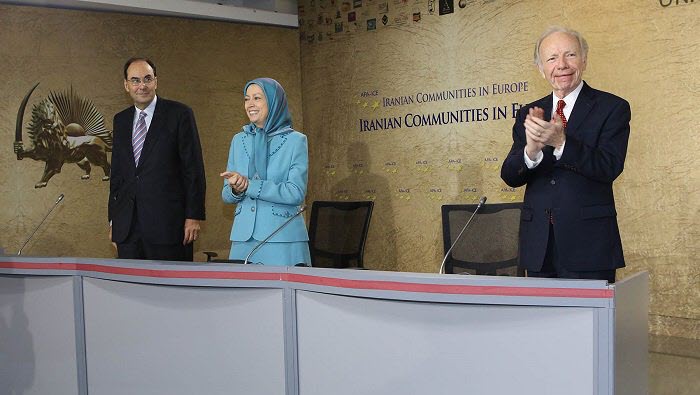
One observance was held in Paris by the Union of Iranian Associations in Europe and included former U.S. Democratic vice presidential nominee Sen. Joseph Lieberman and Mrs. Maryam Rajavi, leader of the National Council of Resistance of Iran who said at the gathering:

“We honor the International Human Rights Day by paying respect to all brave men and courageous women in Iran and around the world who sacrificed their lives or have risen up to bring human rights and democratic freedoms to oppressed nations,” she said.

“Iran’s clerical regime has been condemned 62 times so far by various United Nations agencies for its gross violation of human rights in Iran. In addition, the regime and Khamenei himself, are directly responsible for the massacre of 300,000 Syrians in the past four years and displacement of more than half of the population; they are also directly responsible for the genocide of Sunnis in Iraq by the Quds Force militias,” she added.

The most recent UN condemnation came after 36 human rights organizations, led by Human Rights Watch, called on the regime to improve its human rights situation and for the international community to work together to promote human rights within Iran.

To say the situation is grim in Iran is an understatement since the regime’s revolutionary courts mete out punishment often in closed, secret sessions and impose often medieval punishments proscribed by religious doctrine which include public hangings and amputations of limbs, while also handing out no punishment to those that engage in acid attacks on women or abuse of children.

In 2014 alone, Shaheed noted a reported 753 executions, the highest rate in over a decade. This year rights groups have tallied over 1,000 executions in a staggering display of merciless regime justice.

The butcher’s bill doesn’t even include the bloodshed caused by the regime’s intervention and support of proxy wars in Syria, Iraq and Yemen that have caused the largest refugee crisis since World War II and claimed hundreds of thousands of lives of men, women and children.

But it is in the private agony suffered by individual prisoners in Iran’s notorious prisons where the true evil of the mullahs is laid bare to world scrutiny. One such story comes from Rahim Hamid who as a then 22-year old student in 2008 was taken by regime police and endured torture and abuse as he detailed in an interview with the Telegraph newspaper.

“Day and night I could hear the screaming and weeping of fellow prisoners – men, women and children – who were incarcerated and tortured there. It was the norm for guards to inflict casual cruelty, such as forbidding prisoners access to a toilet so that they were forced to urinate in the cell, which stank to a nausea-inducing extent in the heat,” Hamid said.

“Among other forms of physical torture, I was tied to a metal bed frame by the wrists and ankles and savagely whipped. If I resisted or cursed the guards, they would prolong and intensify the torture. They raped me violently and repeatedly with the large whip handle; so brutally that the rape did permanent injury to my rectum, for which I still need medical treatment,” he added.

Hamid’s tale is only one of many that are repeated every day within Iran, immune to the entreaties and condemnations of the international community by mullahs who care nothing except the maintaining of their absolute status as masters over the Iranian people.

And where does the Iran lobby stand on all this? Does it issue condemnations? Does it commemorate the suffering of Iranians? Does it demand the release of American hostages such as Washington Post reporter Jason Rezaian, Christian pastor Saeed Abedini or former U.S. Marine Amir Hekmati?

No. The Iran lobby’s silence is deafening.

As the world observes Human Rights Day, Trita Parsi of the National Iranian American Council, the leading Iran lobby organization, published and editorial in Huffington Post condemning presidential candidate Donald Trump.

That is the Iran lobby’s contribution to observing human rights.

By Michael Tomlinson


Filed Under: News Tagged With: Featured, International Human Rights Day, Iran Human rights, Iran Lobby, Maryam Rajavi, Trita Parsi

Human Rights in Iran Matter to the World

December 9, 2015 by admin

Human Rights in Iran Matter to the World

Human Rights in Iran Matter to the World

This Thursday marks International Human Rights Day, which marks the day in 1948 when the United Nations General Assembly adopted the Universal Declaration of Human Rights which lays out a broad range of political, civil, social, cultural and economic rights that eventually formed the foundation of human rights principles binding the UN in its work and through the work of the High Commissioner for Human Rights.

In 1948, the world was still picking up the pieces from World War II and the early battle lines of the Cold War were being drawn in a world largely divided between old Soviet-era Warsaw Pact and U.S.-led NATO alliance.

That world is gone and today we are increasingly finding a world divided along secular and sectarian lines as terror has become a tool of statecraft for nations such as Iran and Syria, while other nations such as Afghanistan, Lebanon, Yemen and Iraq are being fought over in what they pretend to be a religious and ideological battle.

In this new world of global terror, human rights have all but vanished in these disputed regions, but whereas the fall of the Iron Curtain and Berlin Wall came after an arms race the Soviet Union could not win and the seeds of democracy flourished in places like Gdansk in Poland, the hegemony of Islamic extremists is growing and sinking deeper roots as the West struggles to formulate a coherent strategy to stem the growth of groups such as ISIS, Al-Qaeda and Boko Haram.

Central to that any successful strategy though will be how to address the crushing suppression of human rights by the Iran regime against its own people. As one of only three state sponsors of terror left on the U.S. State Department terrorism list, the Iran regime sits in the middle of most – if not all – of the crises occurring throughout the Middle East.

Rep. Eliot Engel (D-NY) pointed out during a House Foreign Affairs Committee hearing last week that Iran’s Islamic Revolutionary Guard Corps (IRGC) has been fueling turmoil throughout the Middle East even with strict economic sanctions in place.

“Iran is the leading state sponsor of terrorism, and in the past several years when Iran had no money, it still found money to be the leading state sponsor of terrorism,” Engel said.

“Under the [nuclear] deal negotiated with Iran, they will be awash in cash, they will have lots of money, and imagine how much destruction they can do in support of terrorist activities and terrorism. That is very deeply troubling for me.”

The mullahs support of Hezbollah and the Assad regime in Syria has fostered the birth of ISIS and other splintered Al-Qaeda groups, while its mishandling of Iraq’s government collapsed a coalition government driving Sunni tribes out and into the arms of ISIS which soon become a nation-state in its own right with the takeover of Mosul of most of northern Iraq.

Their support of Houthi rebels in Yemen, toppled the government and drove Saudi Arabia and other Gulf States into a shooting war that threatens the flow of oil from the Persian Gulf.

Beyond the foreign policy conundrums the mullahs in Tehran have fomented, it is their treatment of the Iranian people that has caused the most problems because the complete suppression of dissent has enabled the mullahs to keep their hands on power and accomplish their goals of exporting their extremist philosophy around the world.

Without dissent, without a free press and without due process and fair trials, the Iran regime has managed to turn Iran into a virtual police state that would give a Stalinist-era Soviet Union a run for its money in cruelty. That cruelty is not necessarily confined to just political dissent as the Iran regime seeks to impose its punishments on all facets of Iranian life.

Amnesty International noted this in a blistering statement condemning death sentences placed on two Iranian children.

“This ruling lays bare the Iranian authorities’ contempt for the human rights of children, coupled with their appetite for the death penalty – a toxic combination that leaves numerous juvenile offenders facing execution,” said Said Boumedouha, deputy director of Amnesty International’s Middle East and North Africa Program.

“Iran’s continued use of the death penalty against persons convicted of crimes committed while they were under 18 years of age is cruel, inhumane and blatantly unlawful. The death sentences of both these men, and all other juvenile offenders on death row in Iran, must be commuted immediately.”

As noted by Amnesty International, Iran is a state party to the Convention on the Rights of the Child and the International Covenant on Civil and Political Rights, both of which prohibit the imposition of the death penalty against persons who were below 18 years of age at the time of the crime, without exceptions. However, Iran continues to impose the death penalty against juvenile offenders and frequently defer the execution until after they pass the age of 18, which illustrates the regime’s approach to most international treaties and agreements it signs.

That same contempt has been applied to nuclear agreements the regime has signed, including the most recent one negotiated last July, which it violated through the test firing of new ballistic missiles.

But the regime is facing consequences of its crackdowns as evidenced by the rising tide of protests and demonstrations being mounted within Iran – often at personal risk to the protestors – such as a protest of students expressing frustration over the continuing repression in Iran and demanding for the release of political prisoners, at a ceremony marking Students Day (December 7) in Iran.

But criticism of government officials, and especially of the regime’s top mullah Ali Khomeini, comes at a high cost. Indeed the angry speeches and slogans at the Students Day event were partly sparked by the recent wave of arrests carried out by the Revolutionary Guards Intelligence Organization against journalists, reformists, poets, and artists. Last month four journalists, were among the latest detainees, while many other peaceful activists, such as Bahareh Hedayat, Narges Mohammadi, Atena Faraghdani, and Atena Daemi are still behind bars in Iran.

The protests come on the heels of an announcement that the regime’s revolutionary courts sentenced the managing editor of a state daily newspaper claiming he violated prohibitions on coverage of Mohammad Khatami, a former regime president now described as a seditionist.

The indictment was also notable because the editor, Mahmoud Doaei, of the Ettelaat, one of Iran’s oldest newspapers, was an early figure in the 1979 Revolution. He was a member of the inner circle around Ruhollah Khomeini, the regime’s previous supreme leader who gave birth to the deadly ideology of Islamic extremism, and was considered somewhat protected in the factional feuding that has increasingly marked Iran’s opaque political hierarchy.

All of which points to an almost bipolar exhibition of policy decisions by the regime that have left many Western observers baffled, but to experienced Iranian dissidents, the actions of the regime have been all too typical of past history.

At a meeting sponsored by the Union of Iranian Associations in Europe in Paris the other day, Mrs. Maryam Rajavi, leader of the National Council of Resistance of Iran, drew attention to the efforts of the Iran regime to save the Assad regime in Syria.

She called on Western governments to revise their policy which has so far reinforced the Iranian regime that causes instability in the region and is the main threat to global peace and security, and to make their relations with the Iranian regime contingent on end to executions and torture, and freedom of political prisoners.

“This calls for Western governments to adopt a policy that supports the desires of the innocent people of Syria for a speedy overthrow of Bashar Assad, gives substantial backing to the Free Army of Syria in its struggle against the regime, and insists on the eviction of foreign troops, specifically the Iranian Revolutionary Guards Corps from Syria and Iraq,” Mrs. Rajavi said.

Only by reforming Iran and bringing about a sectarian, democratic government can the Middle East ever hope to find peace and stability and the first step towards that goal is making human rights a top priority again in Iran.

By Michael Tomlinson

Filed Under: Blog, News Tagged With: Featured, Iran, Iran Human rights, Iran Mullahs, Joe Lieberman, Maryam Rajavi

Iran Regime Thumbs Nose at World with New Missile Launch

December 8, 2015 by admin

Iran Regime Thumbs Nose at World with New Missile Launch

Iran Regime Thumbs Nose at World with New Missile Launch

The old saying goes “The definition of insanity is doing the same thing over and over again and expecting a different outcome.”

If the world expects the Iranian regime to change its ways in the wake of a completed nuclear deal last July, the answer it is getting from the mullahs in Tehran is depressingly the same as evidenced by yet another test launch of a new ballistic missile design in violation of United Nations sanctions against the testing of ballistic missiles capable of carrying a nuclear warhead.

According to Fox News, western intelligence sources say the test was held Nov. 21 near Chabahar, a port city in southeast Iran’s Sistan and Baluchestan Province near the border with Pakistan. The launch took place from a known missile test site along the Gulf of Oman.

The missile, known as a Ghadr-110, has a range of 1,800 – 2000 km, or 1200 miles, and is capable of carrying a nuclear warhead. The missile fired in November is an improved version of the Shahab 3, and is similar to the precision guided missile tested by the regime on Oct. 10, which elicited strong condemnation from members of the U.N. Security Council.

“The United States is deeply concerned about Iran’s recent ballistic missile launch,” Samantha Power, U.S. Ambassador to the U.N., said in a statement after the last Iranian ballistic missile test in October.

The regime appears to be in a race against the clock to improve the accuracy of its ballistic missile arsenal in the wake of the nuclear agreement signed in July.

The Security Council is still debating how to respond to the regime’s last test in October and therein lays the problem. While the world debates what to do in responding to the regime’s provocations, the regime continues on blissfully uninterrupted in its preparations.

The same scenario plays out in regards to the regime’s new offensive in Syria and its crackdown at home in an alarming rise in human rights abuses; all of which has been met by mostly silence and hand wringing in the rest of the world.

The regime’s new-found militancy has included a buying binge with Russia for new arms as a top aide to Russian president Vladimir Putin confirmed.

“When all the restrictions are removed and all the sanctions are lifted we will have quite a serious development in the field of military-industrial cooperation. It is already taking place in fields that are not covered by sanctions, and in future we are expecting to enter very large projects,” Vladimir Kozhin, a top military-industrial cooperation aide said in an interview with Izvestia daily.

The official added that Iran has shown great interest in cooperation with Russian weapons companies because practically all of its military forces require a major overhaul.

“Considering the fact that this is a large country with large military forces, we are talking very big contracts, worth billions,” Kozhin noted.

And now that the regime is due to receive a $100 billion payout as early as January because of the nuclear deal and a rushed incomplete investigation by the International Atomic Energy Agency that rubberstamped the regime’s compliance, the mullahs are due to get a huge payday.

The continued lack of action in the face of regime’s actions covers the large-scale such as military weapons to the small issues affecting individuals and their families as Washington Post reporter Jason Rezaian continues to languish in a regime prison on trumped up espionage charges; his incarceration now passing 500 days in captivity.

Even more disturbing is a report from cybersecurity firm Symantec which claims that regime hackers are using malware to spy on individuals including Iranian dissidents and activists.

The attacks aren’t particularly sophisticated, but the hackers have had access to their targets’ computers for more than a year, Symantec said, which means they may have gained access to “an enormous amount of sensitive information.”

Two groups of hackers, named Cadelle and Chafer, distributed malware that steals information from PCs and servers, including from airlines and telcos in the region, Symantec said.

“Reports have shown that many Iranians avail of these services to access sites that are blocked by the government’s Internet censorship,” Symantec wrote. “Dissidents, activists, and researchers in the region may use these proxies in an attempt to keep their online activities private.”

All of which means the regime is stepping up its efforts to identify specific and individual activists and dissidents, especially those living within Iran who may be communicating with outside dissident groups, as a means of tracking them down and arresting them.

It is a bitter irony that International Human Rights Day is approaching this week in light of this increased activity by the Iranian regime and highlights that no matter how the international community might buy the propaganda being spewed by regime lobbyists such as the National Iranian American Council; the reality has been much different.

If the attacks in Paris and San Bernardino do not wake up those who still refuse to believe that the rising tide of Islamic extremism is flowing from radical safe havens such as Syria and Iran is an imminent threat, then the Iranian regime’s actions in firing another missile in direct violation of sanctions should be an urgent alarm bell

By Michael Tomlinson

Filed Under: Blog, News Tagged With: Appeasement policy, Featured, Iran deal, Iran Human rights, Iran Lobby, Nuclear Iran, nuclear talks, Syria

Iran Lobby Glosses Over IAEA Report on Iran Nuclear Work

December 3, 2015 by admin

Iran Lobby Glosses Over IAEA Report on Iran Nuclear Work

Iran Lobby Glosses Over IAEA Report on Iran Nuclear Work

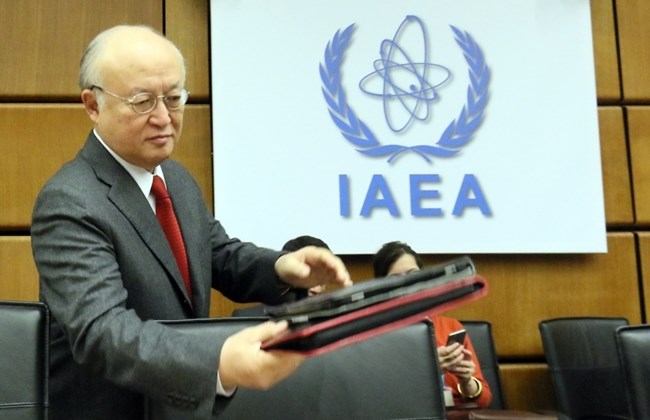
The International Atomic Energy Agency released its long-awaited report detailing the military dimensions of the Iranian regime’s nuclear program and unveiled disturbing new details that have left the Iran lobby, especially the National Iranian American Council, scrambling to cover up.

In the report, Iran was actively designing a nuclear weapon until at least 2009, far later than virtually all intelligence agencies had believed and proving the regime’s ability to conceal its design activities while under intense scrutiny and even spying from various nations.

The report, which according to the New York Times, was compiled largely based on partial answers provided by Iran after completing nuclear talks last July, concluded that the regime was “conducting computer modeling of a nuclear explosive device” before 2004 and continued those efforts right through President Obama’s first term in office.

The IAEA detailed a long list of experiments conducted by the regime “relevant to a nuclear explosive device” directly contradicting claims made by the Iran lobby and the mullahs that Iranian regime’s nuclear program was only for civilian and peaceful purposes.

We now know through Iranian regime’s own admission, it was trying to build nuclear weapons at a feverish pace.

But the IAEA concluded that substantial gaps existed because the regime refused to provide answers to several key questions, restricted the ability to interview key scientific personnel and limited sampling of sites and facilities only after they had been scrubbed.

The nuclear deal negotiated with the Iranian regime mandated limiting Iran’s ability to build a bomb for at least 15 years, but the inability to paint a complete picture and the revelation that Tehran had been conducting work unbeknownst to the rest of the world leaves significant doubt as even that goal is attainable.

According to the Times, Tehran gave no substantive answers to one quarter of the dozen specific questions or documents it was asked about, leaving open the question of how much progress it had made.

At Iran’s Parchin complex, where the agency thought there had been nuclear experimental work in 2000, “extensive activities undertaken by Iran” to alter the site “seriously undermined” the agency’s ability to come to conclusions about past activities, the report said.

The response from Capitol Hill was swift and bipartisan.

“I think we’re getting off to a very, very poor start,” Senate Foreign Relations Committee Chairman Bob Corker (R-Tenn.) told reporters after a roughly two-hour top-secret committee hearing.

“These are exactly the things that we talked about during the hearing process that raised concerns and they’re being validated right now,” he added.

“It just sets a very bad precedent that if Iran thinks it can violate the world’s will, as expressed by Security Council resolutions, and in essence face no consequence for it,” said Sen. Robert Menendez (N.J.), one of the four Democrats who voted against the deal in September.

The defense offered by the NIAC’s Trita Parsi through a press release was tepid and paper thin as he focused on the issue of complying with the terms of the agreement in releasing the report, but not in the report’s findings themselves, praising the IAEA’s “assessment of coordinated ‘activities relevant to the development of a nuclear explosive device,’ in Iran prior to 2003, and that there have been no credible indications of such relevant activities since 2009.”

Parsi of course does not mention the fact the work conducted through 2009 was denied by Tehran and by Parsi himself and that the refusal by the mullahs to answer specific questions left the report, at best incomplete, and at worst a whitewash.

The Iran lobby is now finding it harder and harder to cover for the regime because its own promises and arguments are now all coming to be uncovered as falsehoods and outright deceptions. The fortunate thing about the internet is you can always search and look back at the statements people like Parsi have made and in the context of what is happening now, realize just how really wrong they were.

With the IAEA report, it’s just another blow to any shred of credibility the Iran lobby had.

By Michael Tomlinson

Filed Under: Current Trend, News Tagged With: #NuclearDeal, Featured, Iran deal, Iran Human rights, Iran Lobby, Iran Mullahs, Iran sanctions, Iran Talks, National Iranian American Council, NIAC Action, Rouhani, Sanctions, Trita Parsi

Human Rights and Nuclear Issues Move to Forefront of Iran

November 21, 2015 by admin


Human Rights and Nuclear Issues Move to Forefront of Iran

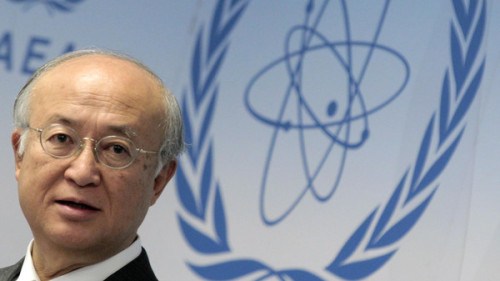
International Atomic Energy Agency (IAEA) Director General Yukiya Amano reacts as he attends a news conference during a board of governors meeting at the UN headquarters in Vienna November 29, 2012. The U.N. nuclear agency made no progress in a year-long push to find out if Iran worked on developing an atomic bomb, its chief said on Thursday, calling for urgent efforts to end Tehran’s standoff with the West. Amano said he would not give up seeking to end what Western diplomats describe as Iranian stonewalling of the agency’s investigation into possible military dimensions to the Islamic state’s nuclear programme. REUTERS/Herwig Prammer (AUSTRIA – Tags: POLITICS ENERGY HEADSHOT TPX IMAGES OF THE DAY) – RTR3B0LF

Like twin hammer blows, breaking news concerning the Iranian regime came out revealing that the two issues the Iran lobby have tried mightily to keep separate and growing more entwined; namely human rights and the nuclear agreement given to the regime last July.

The Iran lobby, led by the National Iranian American Council, rabidly argued that human rights issues – which the regime has an abysmal record on – needed to be decoupled from any nuclear agreement because it could jeopardize momentum for an accord and was outweighed by the perceived benefit of gaining an agreement with the regime.

The logic being, as advanced by regime stalwarts such as Trita Parsi, was that an agreement would empower “moderate” elements led by Hassan Rouhani and usher in a new period of cooperation with the West.

Unfortunately for Parsi, the opposite has come to happen. Reuters reported on a confidential International Atomic Energy Agency report it gained access to which describes that the regime’s stockpile of low-enriched uranium has actually increased instead of decreased under the terms of the agreement.

Iran’s stockpile of low-enriched uranium had increased by 460.2 kg in the past three months to 8,305.6 kg, the report said. Under the deal with major powers, that stockpile must be slashed to no more than 300 kg.

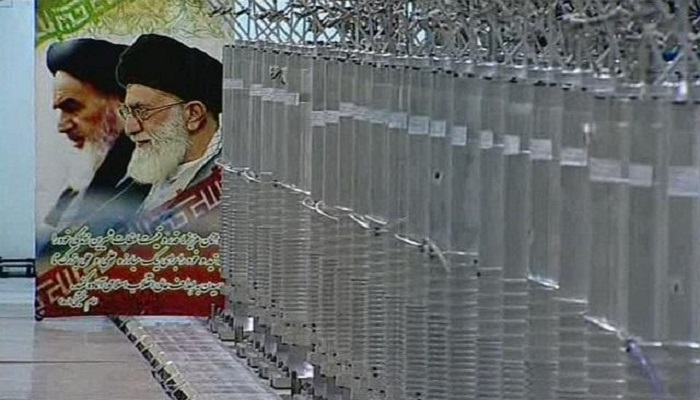
Additionally, the centrifuges being dismantled are only ones previously unused by the regime and those that have been dismantled are only being stored, not destroyed, allowing the regime the flexibility to quickly put them back into service whenever it wants.

That quick restart ability is being preserved also at the Arak nuclear reactor where a regime member of Parliament said it could be reactivated within as little as six months unless all sanctions against the regime were lifted quickly.

“If the Americans break the terms of the Joint Comprehensive Plan of Action (JCPOA) regarding lifting the sanctions, Iran will activate the Arak reactor within six months,” ISNA news agency quoted head of National Security and Foreign Policy Commission, Alaeddin Boroujerdi, as saying.

The threats have only increased as top mullah Ali Khamenei has voiced displeasure over the slow pace of lifting sanctions repeatedly warned the regime would restart its nuclear program unless all sanctions were lifted at once. This is of course at odds with what was actually agreed to last July under the Joint Comprehensive Plan of Action (JCPOA), but it fits with the regime’s pattern of rewriting international accords even before the ink dries to suit its needs.

This pattern of purposeful evasion by the regime also applies to its callous treatment of human rights of its own people, including religious minorities such as those who follow the Baha’i faith who recently have been subjected to mass arrests, Iranian women who have been threatened with arrest for driving cars without proper coverings, and even social media administrators getting rounded up.

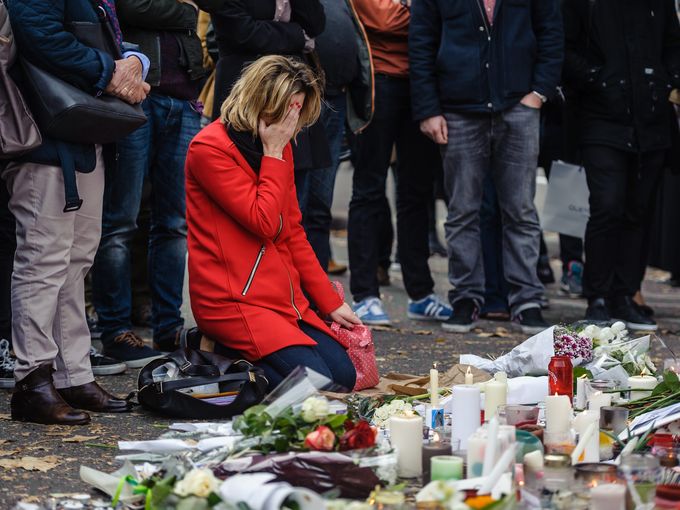
But the world is beginning to take notice and coming on the heels of the Friday the 13th massacres in Paris, showing a greater willingness to confront extremist views prevalent in the Iran regime and terror networks such as ISIS, as evidenced by a vote by the United Nations General Assembly’s human rights committee which approved a resolution expressing deep concern about rights violations in Iran by a 76 to 35 vote.

The resolution is the 62nd resolution the UN has adopted censuring the regime for its ongoing human rights violations. This resolution stemmed from the recent report issued by Ahmad Shaheed, the UN Special Rapporteur for human rights in Iran.

It calls on the Iranian regime “to abolish, in law and in practice, public executions… and executions carried out in violation of its international obligations” and “to ensure, in law and in practice, that no one is subjected to torture or other cruel, inhuman or degrading treatment or punishment.”

The victims of such treatment include political opponents, human rights defenders, women’s and minority rights activists, labor leaders, students’ rights activists and others, the resolution said.

The regime’s notorious Revolutionary Guards Corps has rounded up artists, journalists and U.S. citizens as part of a crackdown on what it has called Western infiltration.

The crackdown includes announcements this week of 170 people arrested in Qazvin Province in Iran, a number of others in Gilan Province, and five journalists in Tehran, all by Iran’s Revolutionary Guards, amounts to the largest crackdown since the violent state suppression of the protests that followed the disputed 2009 presidential election in Iran.

The 170 arrested were called “managers of groups active in mobile social networks,” which the regime claimed for acting “against moral security” and distributing “indecent and immoral” content in the form of text and images that “encouraged people to commit obscene acts” and “insult ethnic minorities, officials and distinguished national figures,” according to the Fars news service.

Even with the increased criticism over human rights, the mullahs in Tehran may believe they have an ace up their sleeve with the Paris attacks which they believe may aid the regime in keeping Assad in power and shifting attention away from its involvement in the civil war.

The Guardian in an interview with a MacArthur fellow at King’s College London, said:“I think Iran might think that the Paris attacks give it an upper hand over Syria because naturally it gives a little bit more credibility to the rhetoric that combating Isis is more important than combating Assad.

“Iran will think that its position will be strengthened as the result of the attack but I am not sure it necessarily will. The only thing that the Paris attacks will really change is rhetoric in the west but I’m not sure if it changes much on the ground. France is going to say that the focus is going to be on attacking Isis. To be fair, that’s always been the focus but that hasn’t detracted away [from] trying to get rid of Assad,” she said.

Ultimately, the West must focus on tying the Iranian regime’s human rights record back into judging its progress towards dismantling its nuclear infrastructure as well as its support for terrorism abroad. Without that linkage, the regime is as well shielded against any meaningful reforms as ISIS is from attack if it was using human shields.

By Michael Tomlinson

Filed Under: Blog, News Tagged With: #NuclearDeal, Appeasement policy, Featured, Iran deal, Iran Human rights, Iran sanctions, NIAC, Parchin, Trita Parsi

Iran Regime Crackdowns Continues as Paris Weeps

November 17, 2015 by admin

Iran Regime Crackdowns Continues as Paris Weeps

Iran Regime Crackdowns Continues as Paris Weeps

The contrasts in image and tone could not be more striking. On the streets of Paris, thousands gather to mourn those killed in ISIS terror attacks that shook Europe, while on the streets of Tehran, agents for the Revolutionary Guard are busy rounding up more journalists and dissidents in one of the fiercest crackdowns since the days of Mahmoud Ahmadinejad’s reign.

The latest victim of the Iran regime’s security crackdown was the arrest of a press cartoonist who was taken into custody while at work at The Shahrvand, a state daily newspaper in Tehran that is owned by Iran’s Red Crescent Society, or Red Cross according to New York Times.

The arrest had not been reported in the official news media as of Monday night. It came after the publication of a cartoon depicting tearful solidarity with the people of France over the attacks Friday that left at least 129 people dead. The cartoon was also posted on the Instagram.

The fact that a cartoonist is arrested by the regime for publishing a cartoon expressing sympathy for those slain by ISIS – the putative enemy of the Iranian regime – tells us all we need to know about what the mullahs in Tehran are thinking about the slaughter of French, German, American, British, Spanish and Swedish citizens.

The cartoonist’s arrest follows a nationwide crackdown in which several journalists and even two poets have been arrested as being subversive to the regime and serving as tools for Western influence as the regime seeks to stifle any voice of dissent in the wake of the nuclear deal it agreed to last July.

The “to-do” list for the mullahs have been busy lately as they have sought to win the civil war in Syria and secure the Assad regime, gone on a shopping spree for new weapon systems from the Russians, and send proxies to attack an Iranian dissident camp in Iraq in a brutal rocket barrage.

The mullahs have even instituted a new policy to impound the cars of any Iranian women caught driving a car without wearing a “proper” hijab or head covering. This follows past policies that forbade Iranian women from driving alone and allowed basij paramilitaries to beat women drivers and failed to prosecute others who threw acid at women while driving.

Senior mullahs have in recent weeks intensified their verbal attacks on “bad-hijab” women in Iran, with one likening them to “soliciting for sex.”

“The courageous decision by the commander of our police force to confront those women who defy and remove their hijab behind the wheel must be appreciated as it amounts to fighting prostitution on our streets,” said a mullah named Ahmed Alam Ulhoda in one of the more absurd comments ever published.

Another series of arrests targeted social media apps as the Revolutionary Guard also went after administrators on the popular Telegram messaging app for spreading “immoral content” according to the regime’s Fars news agency.

Telegram’s Chief Executive Pavel Durov said last month that Iranian regime authorities had demanded he hand over “spying and censorship tools”, and temporarily blocked the app when he refused.

The IRGC announced the Telegram users’ arrests last week, saying they had shared images and text “insulting to Iranian officials” as well as “satire and sexual advice”. At the time, the judiciary denied any such arrests had even occurred.

This comes after efforts by the regime to block access to popular social media platforms such as Whatsapp, Facebook, Twitter, Tango and Viber.

The crackdowns, especially the widespread nature and swiftness in their enforcement, underscore just how farcical the myth was that Hassan Rouhani’s elevation to president would represent some new “moderate” breakthrough for the regime. Indeed the violations of human rights in Iran has got worse during his tenure.

The alarming rise in human rights abuses moved Human Rights Watch to issue a joint letter signed by 36 human rights groups and other organizations urging support for United Nations General Assembly Resolution A/C.3/70/L.45 which seeks to promote human rights in Iran by calling on the regime to meet its domestic and international obligations to protect human rights.

The vote is scheduled on November 19, 2015 during the 70th session of the General Assembly.

“The Iranian authorities shouldn’t think they are getting a pass on human rights just because the nuclear accord has been signed,” said Sarah Leah Whitson, Human Rights Watch Middle East director. “Passing this resolution will send the message that the world has not forgotten about the country’s ongoing human rights abuses.”

More importantly, supporters of the regime have uttered not a word of criticism over the recent crackdowns. Groups such as the National Iranian American Council and The Ploughshares Fund and bloggers and commentators such as Jim Lobe and Ali Gharib have shifted their focus not on the tragedy suffered by the people of France, but rather in attempting to link the attacks and ISIS to Saudi Arabia in an effort to attack the Iran regime’s long-time rival.

Trita Parsi, head of the NIAC, has been busy on his social media feeds denouncing Saudi Arabia during the Paris attacks as much as he was busy denouncing Israel during the nuclear talks. In both cases, the real goal of his comments is to shift attention away from the bad acts of the Iranian regime.

Ultimately, the world is beginning to see past the facades put up by Iran lobby supporters and are recognizing that the true center of sectarian hate sits squarely in Tehran.

By Michael Tomlinson

Filed Under: Blog, News Tagged With: Featured, hassan rouhani, Iran, Iran deal, Iran Human rights, Iran Lobby, National Iranian American Council, NIAC, NIAC Action, Syria, Trita Parsi

What the Paris Attacks Tell Us About Terror Template

November 16, 2015 by admin

What the Paris Attacks Tell Us About Terror Template

What the Paris Attacks Tell Us About Terror Template

The tragedy of the Paris terrorist attacks this weekend are so startling in their scope, so appalling in the loss of life and so despicable in the choice of victims, that the world has once again been moved to commemorate with demands for stern action and condemnation of the breed of Islamic extremism flowing out of the war torn streets of Syria and now making its way to the wide boulevards of Paris.

With 132 dead as of the latest reporting with scores more in critical condition, the full scope of the killed may not be known for a little while longer, but what is known is that the attack was sophisticated in planning, meticulous in its execution and devastating in its results. It was also spawned and given life from early reports by the ISIS terror network that now dominates vast swaths of Syrian and Iraqi territory, while its influence and recruitment stretches from the Americas to Africa and Asia.

What is unmistakable is the “template of terror” that has come to be the calling card of terror groups such as Hezbollah, Al Qaeda, Boko Haram and ISIS, amongst scores of others. The names might be different, ethnicities varied, even religions at odds with each other, but all share the same fundamental belief in using violence, terror and fear to state their case, sow terror and achieve their aims.

Attacking and striking at these terror groups has de-evolved into a game of “Whack-a-Mole” as militaries strike at individual terrorist leaders like “Jihadi John,” the Briton who was identified as being one of the ringleaders of ISIS who came to the world’s attention decapitating Western hostages.

More astute analysts have pointed out that to curb the threat of global terror, you have to strike at the safe havens offered by sympathetic governments such as the invasion of Afghanistan after the 9/11 attacks to dislodge the Taliban’s support of Al-Qaeda. Others have pointed out the need to support unstable democracies as they struggle with the aftermath and chaos wrought by the changes from the Arab spring protests that toppled governments in Libya, Egypt and elsewhere so that they do not become safe havens for terrorists.

But the single largest supporter of terror in the world today, both financially and spiritually, has been and remains the Iranian regime.

The mullahs in Tehran have been the chief sponsors of Hezbollah and have used Hezbollah fighters in proxy wars in Syria, Afghanistan, Lebanon, Iraq and elsewhere. They have also supported Shiite militias in Iraq with arms, including explosive devices manufactured in Iran, used to kill hundreds of U.S. service personnel in Iraq.

The Iran regime has also provided a spiritual template for ISIS and others through the brutal warped application of sharia law to mete out punishment in often ghastly ways. Before ISIS ever decapitated a captive on video, Iranian regime was hanging prisoners in public squares in front of young relatives. Before ISIS ever machine gunned children, Iranian regime was arresting and executing them. Before ISIS ever imposed harsh religious law in the villages and towns it conquered, Iranian regime was flogging women, cutting off the hands of thieves with power saws and beating demonstrators in the street. The medieval measures that are still being practiced under Rouhani.

The visceral brutality of Iranian regime’s justice has long been used as the standard for invoking a twisted form of Islam to justify violence in the name of territorial gain. The mistake most countries make in dealing with Islamic extremism is in thinking it is a religious war.

It is not.

The violence that stems from the Iran regime and flows out to groups like ISIS and Hezbollah is used as a political tool to achieve practical goals such as toppling governments in Yemen, creating safe havens for forces to operate such as in Iraq and Lebanon and building integrated networks to carry out missions around the world such as Iranian-linked terror attacks in Latin America and the U.S.

What is most telling is the response to the Paris attacks by Iran and its lobbyist allies. In the first few hours of the attacks, while the world expressed, shock, outrage and revulsion, social media linked to Iran’s lobbyists did not offer condolences or sympathy, but rather opened up a full bore attack on Iran’s chief regional rival – Saudi Arabia – in an ongoing effort to destabilize that country.

Trita Parsi, head of the National Iranian American Council, offered up this insightful post on his Twitter feed as the streets of Paris ran thick with blood:

“If it turns out this horrible terror was done by ISIS or AlQaeda, will France rethink its cosy ties with Saudi and those funding Salafists?”

This is the first thing that comes to the mind of Parsi? His next seven posts sought to blame the attacks on Saudi Arabia before he got to his first tweet about Iranians expressing sympathy outside of the French embassy in Tehran.

He even managed to work in a dig at the U.S., tweeting:

“2014, U.S. intel found out that certain equipment sold to Saudi had ended up in ISIS hands. Not sure if they followed up… #ParisAttacks”

Since then, Parsi has continued the drumbeat of linking ISIS to Saudi Arabia, along with other Iran supporters who are marching to the same tune of deflecting blame away from Iranian mullahs.

The only certain thing is that the mullahs in Tehran set the tune and example for the terror industry and by their actions have long validated violence against civilians as a means to an end. It is a pathway that folks like Parsi have never apparently found objectionable judging by their social media accounts and public statements.

Parsi and his colleagues have never made human rights a centerpiece of their lobbying efforts as they have always sought to de-link the issue from any relevancy such as the nuclear talks. The hypocrisy of groups such as NIAC is easily apparent when you peruse their press releases and commentary. The lack of sympathy for the victims of Paris and the all-too-quick efforts to link them to traditional enemies of Iranian regime reveal the true purposes they have.

That true nature of the Iran regime was on front page display in regime newspapers where on its front page, Javan featured an illustration of a masked jihadist with a gun and a machete standing at the top of the Eiffel Tower, waving a mixed flag of the United States and ISIS.

“Return to home,” its headline said, quoting reports that some 200 French extremists had returned to the country after fighting with ISIS abroad.

In Kayhan – Iranian regime’s oldest and most-vocal paper — editor Hossein Shariatmadari, known as the mouth piece for regime’s supreme leader, repeated a conspiracy theory often cited in Iranian media that ISIS is a creation of the West and Israel under an operation dubbed “Hornet’s Nest”.

“Now the designers of the Hornet’s Nest must await the return of the wasps to the real nest — wasps that carry automatic rifles and grenades,” Shariatmadari wrote.

This shouldn’t come as a surprise to long-time observers of the regime or to Iranian dissidents who have long warned that ignoring Iranian mullah’s conduct in supporting terrorist groups has only allowed them to flourish.

Unfortunately, unless the world acts to focus on the source of the terrorism occurring in Iran, we will inevitably be faced with more Paris attacks elsewhere.

By Michael Tomlinson

Filed Under: Blog, Current Trend, News Tagged With: Featured, Iran, Iran Human rights, Iran Lobby, Iran Mullahs, Iran Talks, Khamenei, Moderate Mullahs, National Iranian American Council, NIAC, NIAC Action, Rouhani, Trita Parsi

Iran Regime Breaks Nuclear Agreement Already

November 11, 2015 by admin

Iran Regime Breaks Nuclear Agreement Already

Iran Regime Breaks Nuclear Agreement Already

The 159 pages in the nuclear agreement with the Iran regime is by the standards of most international agreements, pretty flimsy, but even its meager few pages specify clearly the expectations the rest of the world has for the regime’s centrifuges used to enrich uranium: dismantling them.

Reuters reported that the regime has halted work in dismantling centrifuges at the Natanz and Fordow nuclear enrichment plants. The nuclear agreement struck last July specified that initial dismantling work would begin on some 10,000 decommissioned centrifuges at the two facilities.

The halt in work was announced by Ali Shamkhani, secretary of the National Security Council for the regime, who was quoted as saying by the ISNA student news agency that “the (dismantling) process stopped with a warning.”

He did not specify what the warning was or who issued it, but the head of the regime parliament’s nuclear deal commission, Alireza Zakani, told Mehr news agency that the dismantling had stopped in Fordow because of a letter to Hassan Rouhani from a group of lawmakers complaining that the dismantling process was moving too swiftly and contradicted directives from top mullah Ali Khamenei.

Khamenei has publicly stated his opposition to several terms within the treaty, including refusal to allow regime military facilities to be inspected and the need for all Western sanctions to be lifted at once before the regime would comply fully with the agreement.

Khamenei has also said the deal should only be implemented once allegations of past military dimensions of the regime’s nuclear program had been settled.

The International Atomic Energy Agency is expected to announce its conclusions on PMD by Dec. 15, according to Reuters.

The 10,000 older, decommissioned centrifuges are only half of what the regime has available to it to enrich low-grade uranium into highly enriched weapons-grade fuel. The nuclear agreement only allows for the regime to actively use a few thousand centrifuges for medical and scientific research purposes.

As Rick Moran in American Thinker notes, “there’s very little difference between the so-called ‘hardliners’ and those the Western press has designated as ‘moderates.’ And Rouhani may try to use the hardliners as an excuse to not fully implement the deal.  Supreme Leader Khamenei has already redefined key elements of the deal to favor Iran’s nuclear program, which Rouhani will probably cite when he violates the terms of the agreement as we go along.”

It is clear now that the regime has no intention of complying with the nuclear agreement and in fact is doing everything it can to push the West with aggressive moves designed to take advantage of the Obama administration’s lame duck political status and lack of desire to force a confrontation on the eve of U.S. presidential elections.

This is why the mullahs in Tehran have doubled down on wiping out opposition to Assad in Syria with a new offensive alongside Russia, test fired a new ballistic missile that violates United Nations Security Council restrictions, attacked and killed Iranian resistance members in Iraq, smuggled new arms to Houthi rebels in Yemen, completed the sale of advanced anti-aircraft missiles from Russia, and cracked down at home by arresting and jailing dissidents and inflaming ethnic tensions with the Azeri minority group in northern Iran.

All of this has been done because the mullahs have already decided to break from the nuclear agreement and see the opportunity for significant gains in the absence of any real threat of retaliation from the U.S. and the rest of the world.

As the Iran lobby, led by the National Iranian American Council, put so eloquently during the debate over the nuclear agreement, the choice for Americans was between “war” and “peace.”

In fact, they were correct, but only in reverse. Approving the pact has surely put the world on a more dangerous path towards greater conflict, while rejecting it may very well have stopped Iranian aggression and brought about stability in the region.

By Michael Tomlinson

Filed Under: News Tagged With: #NuclearDeal, Appeasement policy, Featured, hassan rouhani, Iran, Iran deal, Iran Human rights, Iran Lobby, Iran sanctions, National Iranian American Council, NIAC, NIAC Action, nuclear talks, Parchin

  • « Previous Page
  • 1
  • …
  • 19
  • 20
  • 21
  • 22
  • Next Page »

National Iranian-American Council (NIAC)

  • Bogus Memberships
  • Survey
  • Lobbying
  • Iranians for International Cooperation
  • Defamation Lawsuit
  • People’s Mojahedin
  • Trita Parsi Biography
  • Parsi/Namazi Lobbying Plan
  • Parsi Links to Namazi & Iranian Regime
  • Namazi, NIAC Ringleader
  • Collaborating with Iran’s Ambassador

Recent Posts

  • NIAC Trying to Gain Influence On U.S. Congress
  • While Iran Lobby Plays Blame Game Iran Goes Nuclear
  • Iran Lobby Jumps on Detention of Iranian Newscaster
  • Bad News for Iran Swamps Iran Lobby
  • Iran Starts Off Year by Banning Instagram

© Copyright 2026 IranLobby.net · All Rights Reserved.