Iran Lobby

Exposing the Activities of the lobbies and appeasers of the Mullah's Dictatorship ruling Iran

  • Home
  • About
  • Current Trend
  • National Iranian-American Council(NIAC)
    • Bogus Memberships
    • Survey
    • Lobbying
    • Iranians for International Cooperation
    • Defamation Lawsuit
    • People’s Mojahedin
    • Trita Parsi Biography
    • Parsi/Namazi Lobbying Plan
    • Parsi Links to Namazi& Iranian Regime
    • Namazi, NIAC Ringleader
    • Collaborating with Iran’s Ambassador
  • The Appeasers
    • Gary Sick
    • Flynt Leverett & Hillary Mann Leverett
    • Baroness Nicholson
  • Blog
  • Links
  • Media Reports

Iran Regime Inks Oil Deal Benefiting Khamenei

October 5, 2016 by admin

Iran Regime Inks Oil Deal Benefiting Khamenei

Iran Regime Inks Oil Deal Benefiting Khamenei

The Iranian regime signed its first oil production deal under a new less restrictive model that it hopes will boost its production output in spite of a new agreement with other oil producing nations to curb production in an effort to boost sagging oil prices worldwide.

The clincher is that the Iranian oil ministry’s news agency Shana said the government had signed a $2.2 billion contract with a unit of Iranian company Tadbir Energy, which is controlled by a religious foundation overseen by top mullah Ali Khamenei, according to the Wall Street Journal.

The regime hopes its new Iran Petroleum Contracts (IPC), part of an effort to sweeten the terms it offers on oil development deals, will attract foreign investors and boost production after years of sanctions.

The National Iranian Oil Company also signed a contract with Persia Oil & Gas Industry Development Co., an Iranian firm, according to Reuters. The U.S. Treasury Department named Persia Oil & Gas in 2013 as part of Setad Ejraiye Farman-e Emam, or Setad, a secretive and powerful organization overseen by Khamenei.

With stakes in nearly every sector of Iran’s economy, Setad built its empire on the seizure of thousands of properties belonging to religious minorities, business people and Iranians living abroad, according to a 2013 Reuters investigation, which estimated the network’s holdings at about $95 billion. (reut.rs/1g1qkCg)

The U.S. Treasury in 2013 sanctioned Setad and 37 companies it said it oversees, calling it “a major network of front companies controlled by Iran’s leadership.” Those sanctions were lifted in January, as part of the historic nuclear deal reached between Iran and world powers in 2015.

The deal, the first to be clinched under new improved terms for oil companies, is aimed at increasing output from four fields located near the Iraqi border to 260,000 barrels a day, compared with 185,000 barrels a day previously.

The deals target an increase in overall output to 5.7 million barrels a day by the end of 2020, compared to only 3.6 million barrels a day reached just last August. The increase in production is being allowed under an exemption granted to the Iranian regime by the Organization of Petroleum Exporting Countries (OPEC), which may threaten the long-term prospects of the reduction deal.

Ali Kardor, the head of the National Iranian Oil Co., said Monday that Iran intended to return to the market share it held before international sanctions, implying a production level of over 4 million barrels a day.

The near-desperate desire by the regime to hit the increased production levels reflects the mullahs need to gain market share and sell aggressively in order to bring badly needed revenue back into the regime’s bank accounts, which have been largely drained dry through its support of the prolonged wars in Syria, Iraq and Yemen.

The United Nations special envoy for Syria previously estimated the Iranian regime’s support for the Assad regime in Syria topped a whopping $6 billion annually alone, with other analysts estimating the total Iranian support for Syria more than double that amount to $15 billion in military and economic aid in 2012 and 2013.

By signing the first deal under this new IPC structure, the regime hopes to entice foreign oil companies to return to Iran and invest in the development of these fields. Previously, foreign firms were reluctant because of buy-back contracts that only benefitted the regime and often left foreign operators with little to no profit.

The push to boost production is also seen as an attempt by Hassan Rouhani to boast of better economic news as he prepares to run for re-election in next year’s presidential election. Iran’s economy has remained stagnant even after the completion of the nuclear deal last year in which Rouhani promised significant economic benefits that have failed to materialize.

The lack of economic improvement for ordinary Iranians have led to renewed discontent in the form of protests by large sectors of the Iranian economy; from teachers protesting low wages to small business owners chafing under poor sales and workers angry over inflated salaries for high-ranking regime officials.

The inclusion of the first oil deal with a firm under the control of Khamenei also signals that the regime’s leadership is still in primary control over Iran’s future and alongside the Revolutionary Guard Corps, virtually every sector of the Iranian economy is controlled by the regime’s leadership.

That belief in the re-opening of the oil markets to Iranian oil may also be behind the recent snub of the German Economy Minister Sigmar Gabriel who was in Tehran on a high profile visit, but took the opportunity to urge the Iranian regime to pursue reforms at home and act more responsibly in Syria.

He also said Iran, which provides economic and military support to Syrian President Bashar al-Assad, should help push for a ceasefire in Syria’s civil war, adding: “I think Iran knows its responsibility there.”

His comments did not go over well with Iran’s parliament speaker, Ali Larijani, who opted to skip a meeting with the German cabinet member in a display of annoyance over the criticism.

Sadeq Larijani, brother of the parliament speaker and head of Iran’s judiciary, criticized Gabriel on Monday for his comments. “If I were in the government’s position or in the foreign minister’s shoes I would never let such a person come to Iran,” he said.

As Iran tries to re-enter the global markets, it should be ready for even more criticism as the world takes greater notice of the regime’s policies and practices.

Ultimately, Iranian mullah’s desire to regain a spot on the global stage may eventually make it once again even more vulnerable to new sanctions for its bad behavior.

By Michael Tomlinson
Filed Under: Blog, News Tagged With: Featured, hassan rouhani, Iran, Iran deal, Iran Mullahs, Iran sanctions, Iran Talks, Iran Terrorism, Khamenei

Iran Regime Killing Environment Like Its People

October 3, 2016 by admin


Iran Regime Killing Environment Like Its People

Iran Regime Killing Environment Like Its People

The Los Angeles Times ran a story examining the deteriorating plight of Iran’s agricultural industry and state of its environment in general; both of which are spiraling downward as dismally as human rights for the Iranian people.

The Islamic paradise promised by the mullahs when they hijacked the Iranian revolution three decades ago, has not come to pass and in its place is a land that has grown parched, where crops have died and entire communities are on the brink of collapse.

Iran’s worsening water crisis has spread desperation across this parched farm belt. Families watch sons leave the villages to hunt for scarce work in the cities. Crops are abandoned. The elderly and infirm forego medical care because they barely have enough money to survive, the Times said.

Iran’s farmers have struggled with several successive years of drought. But environmental mismanagement, water overuse, the pressures of population growth and a government more concerned with security and economic challenges have exacerbated Iran’s agricultural problems, the Times added.

In June, Iran’s Meteorological Organization said 72% the country’s 80 million people were living in “prolonged drought” conditions. Lakes are drying up and cities like Tehran have considered rationing water.

All of which points a devastating picture of how poorly the mullahs have managed the precious natural resources of the country for its people, but that insensitivity to the environment goes all the way back the founding of the Islamic Republic.

The late Ayatollah Ruhollah Khomeini, founder of the Islamic Republic, once told an aide who worried about inflation that Iran’s 1979 revolution “was not about the price of watermelons” — meaning it stood for loftier goals such as economic equality and redistribution, said the Times.

Khomeini’s successors, today’s leaders such as Hassan Rouhani and Ali Khamenei, have even less regard for the environment as they pour billions of dollars into three wars in Syria, Iraq and Yemen and steer the billions in unlocked assets resulting from the nuclear deal to go on a military shopping spree to buy fighters, missiles, ammunition and bombs.

The situation is so dire in many of Iran’s heartlands that many Iranians don’t know what to do next and the regime has been unresponsive to all of their entreaties for help.

In Qiyasabad, residents now must dig as deep as 500 feet to find water. The Hablehrood river, which flows down dun-colored hills to the north, is too salty to use for irrigation, they say. Most farmers still flood their fields to irrigate crops, which is terribly wasteful.

“Ten years ago, I swear, our water was fresh and plenty,” said Karim Baluchi, 54. “Ten years ago I had a decent life.”

He and half a dozen co-owners asked the government this year for a $6,000 loan for a new well and water pump. No one has responded, he said.

According to the Times article, last June, a senior cleric raised eyebrows when he said the drought was caused by women failing to wear appropriate Islamic dress; a clear example of how backwards the mullahs view their nation’s problems.

That lack of concern over Iran’s crumbling environment extends to some of its greatest treasures, including the Asiatic cheetah, otherwise known as the Iranian cheetah, a subspecies of the world’s fastest mammal that exists only within Iran and is on the verge of extinction.

According to the Los Angeles Times, Bahman Jokar, head of the cheetah desk at Iran’s environmental agency, said about 50 cheetahs are believed to remain in Iran’s central deserts – a population so small that to save it requires emergency measures.

“Unfortunately our government and parliament have other top priorities and saving the Asiatic cheetah is not the top one,” Jokar said in a rare bit of candor from an Iranian official over how dire the situation is for the big cats which are deeply rooted in Persian culture and the history of the country going back more than ten centuries.

It’s worth noting that the Caspian tiger and Persian lion, two other species of big cats native to Iran have already gone extinct under the Iranian regime.

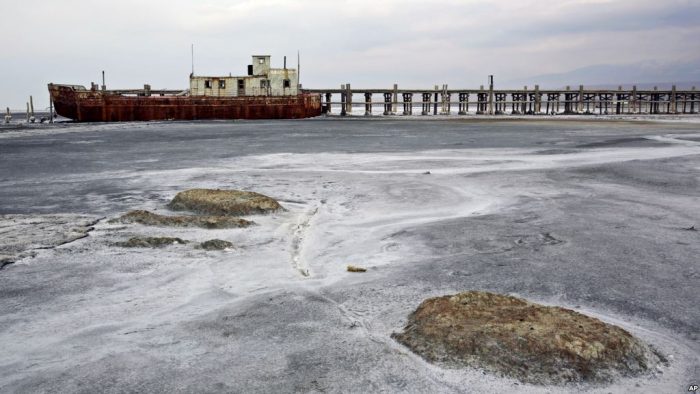
The gross mismanagement and disregard for Iran’s environment by the ruling mullahs extends to the perilous condition of Lake Urmia, the largest lake in the Middle East and sixth-largest saltwater lake in the world which has shrunk to 10 percent of its former size due to damning and overpumping of groundwater.

Even though Rouhani has made continued promises to save Lake Urmia for the cities in Iran that depend on its water, but little has been done and the damage may be irreversible according to environmentalists.

In an article in The Guardian, researcher Shirin Hakim and water management expert Kaveh Madani at the Centre for Environmental Policy of Imperial College, London, described Urmia’s surface as “an area facing a high risk of salt storms.”

The article pointed out that the shrinking of the lake has diminished a fragile ecosystem, with the gradual disappearance of native wildlife including the brine shrimp Artemia and migratory birds like flamingos and pelicans. Such degradation threatens dire economic consequences.

One of the main factors contributing to the state of Lake Urmia is the interference in the natural flow of water into the lake by over 50 dams. The damage has been compounded by unregulated withdrawal of water, water-intensive irrigation and the unsustainable use of fertilizers.

Even as Iran’s environment is destroyed and slowly turned into a wasteland, the mullahs and Rouhani are desperately working on an oil agreement with OPEC to allow it to pump even more oil to sell on the market in order to make up the enormous costs of fighting the Syrian war and keep the Assad regime afloat.

The irony is inescapable and so is the responsibility for this environmental catastrophe which rests on the mullahs in Tehran.

By Laura Carnahan

Filed Under: Blog, News Tagged With: Featured, hassan rouhani, Iran, Iran Human rights, Iran Mullahs, Khamenei, Syria

US Presidential Election Concerns Iran Regime

September 30, 2016 by admin

US Presidential Election Concerns Iran Regime

US Presidential Election Concerns Iran Regime

The sunset is fast approaching on the Obama administration, and with it will come significant changes in the US foreign policy approach to the Middle East and Iran in particular. The mullahs learned their lesson from the two disastrous terms of Mahmoud Ahmadinejad who made it easy to caricature the regime as slightly crazy and evil.

Their manipulation of the election ballot in 2013 assured Hassan Rouhani’s election and helped assist the Iran lobby in trying to project an image of moderation to the West; even though Rouhani’s first term has actually been bloodier than Ahmadinejad’s ever was.

Rouhani has outpaced Ahmadinejad with an unprecedented wave of executions and mass hangings that is approaching 3,000, including women and children according to Amnesty International. His crackdown on religious minorities, journalists, dissidents, artists and students has rivaled the abuses of the infamous 2009 protests.

With the upcoming election of a new US administration, the mullahs are intensely interested in the election outcome, as well as preparing the ground to keep the policies of appeasement rolling in exchange for the false hope that Iran will curb its nuclear ambitions.

The deployment of the Iran lobby has been largely aimed at helping Senators and candidates deemed favorable and supportive towards the nuclear deal, as well as continue coaxing journalists to view the Iranian regime with less than suspicion.

Meanwhile in Iran itself, regime news outlets have been giving considerable space and airtime to the presidential campaign, especially with the rhetoric rising sharply about the effects of the nuclear deal and the best approach needed by a new president to restrain and control the Islamic state.

There is no doubt that Americans and Europeans are anxious about the state of the Middle East, especially the three wars being waged with deep support from the Iranian regime in Syria, Iraq and Yemen, which have contributed to an unprecedented wave of refugees flooding into Europe and the US.

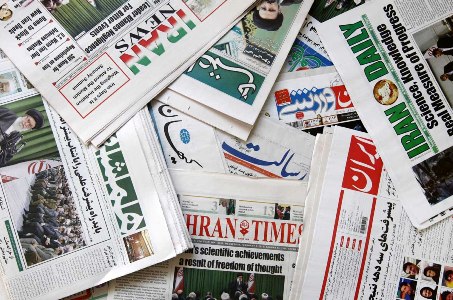
Javan Online, the daily newspaper close to Iran’s Revolutionary Guard Corps, ran an article Sept. 27 titled “The Iranophobia race.”

Kayhan daily, whose editor is appointed by the country’s supreme leader, called the debate “a contest in Iranophobia” in which “Trump threatened to attack Iran and Clinton continued to stress the political and economic pressures against Iran.” Though it didn’t mention Mrs. Clinton’s defense of the Joint Comprehensive Plan of Action’s diplomatic approach.

Hamid Reza Assefi, a former spokesman for the regime’s Foreign Ministry, commented in an op-ed for the Shargh Daily on the likely effect of the US election on Iran. He concluded, “Because of the special rules and the internal sensitivities surrounding the election in Iran … external issues will have no effect.”

He also wrote, “The truth is, both parties in the Unites States share the same opinion on the general aspects of the conflict with Iran.”

On that point he is correct. In spite of the round the clock efforts by the Iran lobby at trying to drive a wedge in the US electorate and attempting to peel off Democratic support, the truth is the vast majority of American voters remain deeply suspicious of the Iranian regime and both Democrats and Republicans are less inclined to accommodate Iran’s agenda after the bloody year since the nuclear deal was reached.

A senior international policy analyst for the RAND Corp., wrote in Fox News that with “the continuing climate of repression, the next Iranian presidential election, and (Ali) Khamenei’s eventual demise may provide some important opportunities for America’s next president.”

“The next U.S. president is likely to be met with multiple international crises after assuming office, and Iran may be one of the most challenging of them,” he writes. “In theory, Rouhani, often portrayed as a ‘moderate’ by the Western media, would have been strengthened by the agreement and able to pursue his agenda of liberalizing Iran both economically and politically. In reality, Rouhani’s presidency has failed to deliver on most of his promises.”

The laundry list of provocative actions by the Iranian regime over the past year has clouded any real building of support for the mullahs by the Iran lobby. The recent spate of arrests of dual national citizens and Rouhani’s reaffirmation that Iran does not recognize dual citizenship on NBC News only provides more fodder for critics of the regime.

The significance of Iran to US policy is becoming more apparent as more analysts and policymakers weigh Iran’s influence and threat level even above that of ISIS. In an editorial in the Los Angeles Times, writes that:

“US political leaders of both parties argue that destroying Islamic State is America’s top priority in the Middle East. In reality, that’s not nearly as important as confronting the challenge posed by Iran. The nuclear deal that went into effect a year ago may have postponed the danger of an Iranian nuclear bomb, but the multifaceted threat of a militaristic, messianic Iran — 80-million strong — is much more menacing to Western interests than the Sunni thugs and murderers of Raqqah and Mosul.”

“From Tehran’s perspective, it gained much more than it gave up. In exchange for postponing its military nuclear project, it achieved the lifting of many economic sanctions, an end to its political isolation and the loosening of restrictions on its ballistic missile program,” he added.

Truthfully, time is running out for the mullahs. We can only expect that the next president and administration will have a more skeptical eye towards the Iranian regime with the benefit of 20-20 hindsight.

By Michael Tomlinson


Filed Under: Blog, News Tagged With: Featured, hassan rouhani, Iran, Iran deal, Iran Human rights, Iran Lobby, Iran Mullahs, Khamenei, Moderate Mullahs, nuclear talks

Iran Regime Escalates War on Human Rights

September 29, 2016 by admin

Iran Regime Escalates War on Human Rights

Iran Regime Escalates War on Human Rights

There has been no doubt that the Iranian regime is one of the worst abusers of human rights in the world today. Its record of abuse has been well documented by human rights groups and Iranian dissident organizations.

Anyone sitting in front of a computer or using a smartphone can simply Google “Iran” and “executions” to get a taste of how badly the regime treats its own people. The regime tries mightily to hide its abuses from the world through its control of the Internet, prohibiting the use of social media and employing an army of cyberhackers to monitor communications, as well as attempt to crack the encryption on messaging apps such as WhatsApp and Telegram.

The Iranian regime is unique in one other regard which is that it pretty much doesn’t seem to care what the rest of the world thinks about its human rights record.

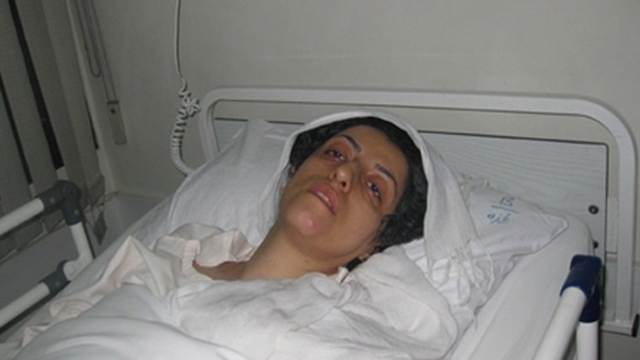
One example of that callous disregard for international condemnation was the regime’s decision to uphold a 16-year prison sentence against a prominent human rights advocate in Narges Mohammadi, which was widely protested by groups such as Amnesty International.

Mohammadi, who is critically ill, had been sentenced in May on charges of violating national security and acting against the Islamic regime through her support of an anti-death penalty campaign.

As vice president of the Defenders of Human Rights Center in Iran, Mohammadi gained attention in 2014 for defending women who had acid thrown on them in the city of Esfahan, purportedly for dressing immodestly.

While jailed this summer at Tehran’s Evin Prison, she staged a 20-day hunger strike in protest of authorities who barred her from speaking by phone with her family.

Mohammadi is mother to 9-year-old twins, who live in France with their father. Friends say she suffers from a chronic illness that causes partial paralysis, which has worsened due to her imprisonment, according to the Los Angeles Times.

“This verdict is yet another cruel and devastating blow to human rights in Iran, which demonstrates the authorities’ utter contempt for justice. Narges Mohammadi is a prominent advocate of human rights and a prisoner of conscience. She should be lauded for her courage not locked in a prison cell for 16 years,” said Philip Luther, Amnesty International’s Research and Advocacy Director for the Middle East and North Africa.

“By insisting that this harsh and appalling sentence is imposed for her peaceful human rights work, the authorities have laid bare their intent to silence human rights defenders at all costs,” he added.

Human rights activists and dual nationals continue to be imprisoned during the presidency of Hassan Rouhani, whose 2013 election had raised hopes of an easing of Iran’s harsh security laws, but has since come to be regarded as an instrument of the regime’s security apparatus.

Mohammadi is a supporter of the Campaign for Step by Step Abolition of the Death Penalty, known by its Persian acronym, Legam. Iran is one of the world’s leading practitioners of capital punishment, putting to death an estimated 1,000 people last year alone.

Last month, Iran put to death a teenager who was convicted of a crime when he was 17. Approximately 160 minors are on death row in Iran, according to Amnesty International.

“It is particularly shocking that this sentence comes as Iran’s authorities are preparing for renewed bilateral dialogue with the EU, given that Narges Mohammadi was convicted for her work campaigning against the death penalty and meeting with the former EU High Representative for Foreign Affairs. This casts serious doubts over Iran’s commitment to engage meaningfully with the EU on human rights issues,” Luther added.

And therein lay the quandary the world faces: Even as it seeks to open up trade relationships with Iran following the nuclear deal, the world turns a blind eye to the continuing, blatant abuses being committed by the regime.

The harsh sentence of Mohammadi for essentially representing women who had been brutalized by regime paramilitaries and police is an especially visible demonstration of how much the mullahs in Tehran simply don’t care what the world thinks.

Part of their disregard stems from their efforts to perpetuate the myth that the nuclear deal is so valuable to the world in keeping Iran from arming itself with nuclear weapons that the world is willing to look the other way on virtually any other issue in order to preserve the deal.

Forget the fact that the deal itself is a wreck and unenforceable and the regime already has taken advantage of it, but this attitude by the world’s leaders has enabled the regime to commit more atrocities, expand its military presence and rapidly rebuild its military without fear of punishment or reprisal.

Nothing epitomizes that more than the rapid development, testing and deployment of the Iranian regime’s ballistic missile program which has progressed from short-range conventional weapons, to now deploying intercontinental missiles capable of carrying nuclear, chemical or biological warheads.

The Foundation for the Defense of Democracies, wrote in US News and World Report, explaining the regime’s use of nuclear agreement to advance its own agenda.

“Tehran insists that foreign (implicitly, U.S.) machinations have undermined the sanctions relief that the deal should have brought. Iranian officials have claimed they have ‘no fear’ of the deal falling apart, and openly discuss how to snap back their remaining nuclear infrastructure if they believe the deal has been transgressed. These critiques form the core of Iran’s snapback-centric strategy, one aimed at upping the ante to pocket additional concessions,” they write.

The “snapback” mechanism included in the deal allows the countries involved to restore sanctions in the event of Iranian “significant non-performance.” But Iran retains a separate snapback capability that can nullify both nuclear and non-nuclear sanctions: the threat of ramping up its nuclear infrastructure. The fact that the Islamic Republic is able to credibly threaten such snapback means Western audiences will have to reckon with Tehran’s complaints,” they added.

By Laura Carnahan

Filed Under: Blog, News Tagged With: Featured, hassan rouhani, Iran, Iran deal, Iran Human rights, Iran Mullahs, Iran Talks, Iran Terrorism, Irandeal

There is More Than One Presidential Election to Keep an Eye on

September 28, 2016 by admin

There is More Than One Presidential Election to Keep an Eye on

There is More Than One Presidential Election to Keep an Eye on

While the US watches a slugfest of a presidential election between Hillary Clinton and Donald Trump, another presidential election scheduled to take place next year on the other side of the world bears watching because of how it potentially impacts not only every American, but also the entire Middle East and Europe.

The “election” will be in Iran for the next president, however unlike the US election, there is likely to be no doubt, no drama, no recounting of ballots or examination of hanging chads. There probably won’t even be very many people on the ballot as well because in the Iranian regime, elections are inconveniences that have to be tolerated for the international community.

They are by no means, free, fair, open or even compelling. The last time there was even any controversy was in 2009 when the election was widely seen as rigged and in the heat of the Arab Spring movement, ordinary Iranians decided to do something they had not done since the downfall of the Shah of Iran; they protested—massively.

In response, top mullah Ali Khamenei and his fellow clerics did what they normally do, they ordered a crushing suppression of protests that results in deaths, mass imprisonment and harsh crackdowns on news media, technology and foreign journalists.

After figuring out the regime couldn’t stomach another debacle like that, Khamenei and his fellow conspirators cooked up a scheme to wipe names off future ballots and allow a handpicked successor to be elected without any protest and be seen as a “moderate.”

That man was Hassan Rouhani in 2013 who cruised to victory against a field of straw men and was widely praised as a “fresh” face by the Iran lobby; an odd phrase since Rouhani has been at the heart of the regime’s military and intelligence services for the past three decades.

Calling Rouhani a moderate is like calling a neo-Nazi “open minded.”

Now his re-election is coming up next year and already the field is being cleared to allow him an uncontested run and eliminate any choice for the Iranian people who would dearly love to dump him into the unemployment line after debilitating economic news continued to pour out of Iran even after a nuclear deal that Rouhani and the mullahs promised would open the flood gates to an improved quality of life.

Things are so bad for Rouhani at home that even Mahmoud Ahmadinejad, the man Rouhani succeeded, has considered another run for the presidency until he was slapped down by Khamenei. The prospect of another term by Ahmadinejad has the mullahs scared out of their turbans since he is widely reviled in the West and at home.

His run would be akin to having Richard Nixon take a stab against Jimmy Carter in 1980 fresh off his resignation and threatened impeachment from the Watergate scandal.

“In carrying out the intentions of the leader of the revolution, I have no plans to take part in the elections next year,” Ahmadinejad said in a letter to Khamenei, published on his website dolatebahar.com.

You could almost hear the sigh of relief coming from Khamenei and Rouhani.

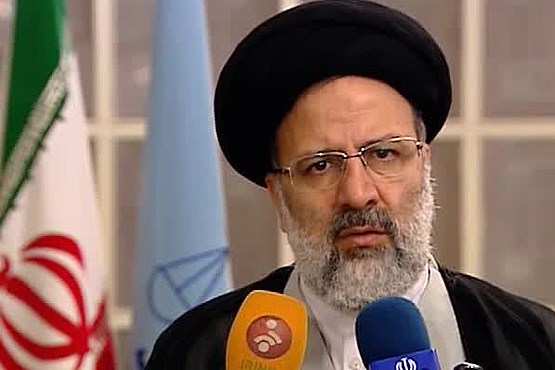
Besides Rouhani’s re-election, the looming prospect of who replaces an aging and ill Khamenei should have the US and its allies even more worried. Far from the prospect of getting a more moderate replacement, the name most often heard being bandied about as the next top mullah is Ibrahim Raisi.

As Ray Takeyh, a senior fellow at the Council of Foreign Relations, put it succinctly in an editorial in the Washington Post, Raisi “could be the only person in the Islamic Republic who could cause people to miss Khamenei.”

“Raisi is 56 years old and, like Khamenei, hails from the city of Mashhad. After a stint in the seminary, he has spent his entire career in the Islamic Republic’s enforcement arm, serving as prosecutor general, head of the General Inspection Office and lead prosecutor of the Special Court of the Clergy, which is responsible for disciplining mullahs who stray from the official line. In one of his most notorious acts, he served as a member of the ‘Death Commission’ that, in the summer of 1988, oversaw the massacre of thousands of political prisoners on trumped-up charges,” Takeyh writes.

“Raisi’s background fits nicely with the Revolutionary Guards’ mission of crushing dissent. In a recent interview, Revolutionary Guards commander Muhammad Jaffari conceded that since 2005, the regime has come to see domestic insurrection as an even greater challenge to its existence than external pressures. The ideal successor to Khamenei would have to not only share the Guards’ perspective but also have close ties to the security organs and the judiciary. The Guards seem to have found their man. Raisi is being increasingly touted by them as a vanguard of the regime and an enforcer of its will,” he added.

Khamenei’s clear preference for Raisi can be seen in his appointment of him to head one of the regime’s largest charitable foundations, Astan Quds Razavi, which gives Raisi access and control to vast land holdings and many other enterprises that funnel money to him, the IRGC and his allies.

With the endowment’s estimated value at $15 billion, Raisi is in prime position to buy votes and assemble his own network of loyal supporters and operatives.

All of which reinforces the central conceit of Khamenei, Rouhani and their ilk, which is to maintain the purity of the Islamic revolution and the ideological basis for it. Even with the opening of trade with the nuclear agreement, the mullahs have no intention of using these new funds to help the economy or Iranian people. Instead, they view these proceeds as necessary to continue the funding and expansion of the Islamic revolution.

Ultimately, while everyone is focused on if Rouhani will be re-elected, the more important question is whether or not Raisi will even allow Rouhani to speak without a script.

By Michael Tomlinson

Filed Under: Blog, News Tagged With: Featured, hassan rouhani, Iran, Iran deal, Iran Human rights, Iran Lobby, Iran Mullahs, Moderate Mullahs, Raisi

Why Does the Iran Lobby Want to Make Iran a Partisan Issue?

September 27, 2016 by admin

Why Does the Iran Lobby Want to Make Iran a Partisan Issue?

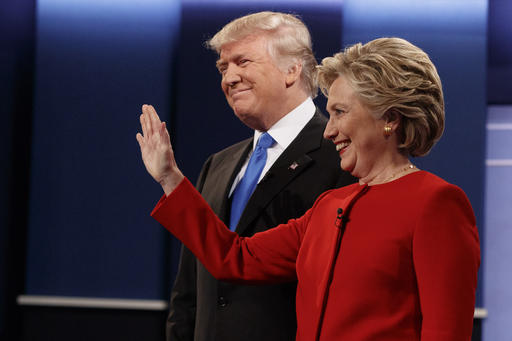
Republican presidential candidate Donald Trump, left, stands with Democratic presidential candidate Hillary Clinton before the first presidential debate at Hofstra University, Monday, Sept. 26, 2016, in Hempstead, N.Y. (AP Photo/ Evan Vucci)

The first debate between Hillary Clinton and Donald Trump was billed as literally the fight of the century; bigger than Ali vs. Frazier, bigger than Coke vs. Pepsi. While an innumerable number of columnists, analysts, lobbyists and anyone else with “-sts” at the end of their job description will critique this debate to death, we should be asking a question that didn’t come up in the debate.

Why does the Iran lobby want to make the issue of Iran a partisan political issue?

From the moment the Iran lobby was created, especially the launch of its principal leader—the National Iranian American Council—it has sought to wedge itself into the partisan political environment by trying to align itself with Democrats and attacking Republicans for the past several years.

At first it may have been because Republicans were the most visibly opposed to accommodating the mullahs in Tehran, but the NIAC even held its fire when it came to criticizing prominent Democrats opposed to Iran accommodation such as Sen. Robert Menendez (D-NJ), a prominent critic of the Iranian regime.

It was also no coincidence that many of NIAC’s staffers formerly worked for Democratic office holders and organizations, but that is a superficial reason for its efforts to politicize Iran issues.

The blueprint for this tactic comes from the mullahs themselves as displayed in their energetic efforts to tar and feather Saudi Arabia and portray its chief regional rival as the source of all terrorism and evil in the world. It’s a blatant effort at diverting attention away from Iran’s own failings and blunt criticism for its long support for terrorism and brutal human rights record.

If you treat any criticism of the Iranian regime as merely political point scoring, the NIAC and other supporters are hoping it diminishes the power and effectiveness of the criticism. The only problem with that argument is when both Democrats and Republicans both take aim at the regime anyway.

In stark contrast to that cynical tactic, Iranian dissident and opposition groups such as the National Council of Resistance of Iran have worked diligently to build bridges on both sides of the political aisle and worked on unifying themes such as human rights, support for women and opposition to sponsorship of terrorism.

Those efforts have won over many on both sides of the aisle with members such as Democratic House Leader Nancy Pelosi (D-CA), former Democratic Sen. Joe Lieberman, House Foreign Affairs Committee chair Ed Royce (R-CA), and former New York mayor Rudy Giuliani just to name a few.

Ultimately the Iran lobby must pursue this diversion strategy since its typical message points about Iranian cooperation and moderation have dissolved in a flurry of aggressive, militant and shocking moves by the mullahs since the nuclear deal was sealed and the “echo chamber” of support was revealed by the news media.

With the news coming out of Iran since the passage of the nuclear deal being mostly bad and only getting worse, the Iran lobby finds itself in a pickle with the upcoming presidential election promising a new president who plans to hold the Iranian regime much more accountable whoever wins.

For the Iranian regime, the pressure is on to grab as much as it can before that happens so the news coming out of Tehran is fast and furious. In the last day alone, we have seen:

  • The proposed cease-fire in Syria collapse as Russian and Syria aircraft have resumed massive bombing of primarily civilians in rebel-controlled areas, such as Aleppo as a major ground has been observed moving into the area with as many as 3,000 Iranian-backed fighters hoping to crush the rebellion against the Assad regime;
  • Iran will continue to test and improve the range and accuracy of its ballistic missiles to deter or coerce potential adversaries — the United States operating in the region, Gulf Arab states, Turkey and Israel – four Middle East experts said in a meeting of the Atlantic Council;
  • Hassan Rouhani and other regime leaders are under intense pressure back home from dissatisfied Iranians upset with the lack of benefits trickling down to them from the nuclear agreement and the perception that rampant corruption is siphoning off any economic improvement;
  • The head of Iran’s atomic energy agency warned that the landmark nuclear deal could be jeopardized by perceived foot-dragging on sanctions relief, promised in exchange for Tehran’s commitment to curb key atomic activities, even though US officials said those commitments were fulfilled but uncertainty over investing in Iran has been responsible for the delays; and
  • The regime’s top mullah, Ali Khamenei, tried to snuff out an insurgent return to the political stage by widely reviled past president Mahmoud Ahmadinejad who has hinted at a challenge to Khamenei’s handpicked minion, Rouhani.

The turmoil the Iranian regime is facing highlights the schisms that are running through Iranian society and the deepening split between the mullahs and the Iranian people. It also explains why the Iran lobby is so intent on trying to portray Iran policy issues as partisan political ones and not worthy of the attention of media.

Unfortunately for the Iran lobby, the American people, who have been subjected to near constant attacks inspired by extremist Islamists and worry about the growing carnage around the Middle East caused by Iranian regime’s active support of three proxy wars, have begun to suspect any supporter of the mullahs.

This may explain why the only people in America openly supporting the Iranian regime are those directly connected to the Iran lobby such as the NIAC, Ploughshares Fund and their cohorts.

By Michael Tomlinson

Filed Under: Blog, News Tagged With: Featured, Iran, Iran deal, Iran Human rights, Iran Lobby, Iran Mullahs, Iran sanctions, National Iranian American Council, NIAC, NIAC Action, Ploughshares

While Rouhani Speaks at UN Relatives of Hostages Plead for Their Freedom

September 21, 2016 by admin


While Rouhani Speaks at UN Relatives of Hostages Plead for Their Freedom

While Rouhani Speaks at UN Relatives of Hostages Plead for Their Freedom

Far from the pomp and pageantry of the United Nations General Assembly session opening and its parade of speeches from world leaders, small acts of defiance help shine a light on one leader in particular who will do his best to put a happy face of a skull and crossbones situation.

A mother and daughter have bravely filmed themselves cycling in an Iranian city in defiance of a fatwa that says it is a danger to women’s “chastity”.

The fatwa, which has been announced by Iran’s top mullah Ali Khamenei, prevents women from cycling because it “exposes society to corruption”.

The video shows two women wearing hijabs and face veils cycling on a road in what they say is Kish, an island territory belonging to Iran.

“My mum and I are from Tehran,” the woman holding the camera says.

“Bicycle riding is part of our lives. We heard Khamenei’s fatwa banning women from cycling,” the woman says. “We immediately rented two bicycles to say we’re not giving up cycling.”

“It’s our absolute right and we’re not going to give up,” she adds defiantly according to the Independent newspaper.

As protests go, this one is not likely to go down in history akin to Martin Luther King’s march in Selma or even the mass Arab Spring protests that rocked the Middle East, but in Iran, where almost any act of civil disobedience can lead to imprisonment, torture and even death, riding a bicycle if you’re a woman is a pretty brave act.

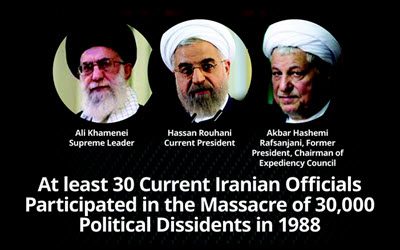
But for 30,000 Iranians in 1988, the penalty for their alleged act of disobedience—by being associated even remotely with the People’s Mojahedin Organization of Iran (PMOI/MEK)—earned execution at the hands of the leaders who now hold leadership positions in Iran.

The mass killings recently re-entered the international spotlight when audio recordings of former top cleric, Hossein-Ali Montazeri came to light last month. The late ayatollah had been the heir-apparent to the founder of the Islamic Republic in the 1980s, but was ousted from his position and from the regime itself as a result of the contents of the recording, in which he condemned the mass killings, calling them a stain on the memory of Iran’s honor.

Tom Ridge, the former secretary for homeland security, noted in an editorial in The Hill that Montazeri’s long-suppressed tirade specifically confirms some of the most shocking details of the proceedings sentencing these people to death, including the execution of teenage girls and pregnant women.

A large demonstration was held today in front of the UN protesting Rouhani’s scheduled appearance and the continued presence of so many regime leaders in power today who participated in those massacres.

As Ridge points out, one of the individuals heard on the 1988 recording is today the justice minister in the Rouhani administration, Mostafa Pourmohammadi, who was the Intelligence Ministry’s representative on the Tehran “death commission,” which held the minutes-long trials to determine which of the local political prisoners would be put to death. On the recording, Pourmohammadi eagerly defends the activities that Montazeri described as the “worst crime of the Islamic Republic.” And today he characterizes the massacre as the enactment of “God’s commandment” regarding the MEK.

Rouhani comes to the UN session though with more baggage as news comes out of Iran of more crackdowns and human rights violations, which clearly demonstrate that under his “moderate” reign, things have gone from bad to worse; a prospect that seemed unimaginable after the brutal terms of the former president Ahmadinejad.

According to Al-Monitor, reports surfaced of the arrest of Sadra Mohaghegh, the society editor of the Reformist Shargh Daily. His sudden detention has caused an outcry among journalists, activists and Iranian netizens, who have turned Mohaghegh’s name into a hashtag — especially after Mohaghegh’s Twitter account was taken down on Tuesday for unknown reasons.

According to Basij News, Mohaghegh was arrested “during an intelligence operation by security forces,” without specifying which agency was responsible for his arrest. Media reports accuse him of having collaborated with “counter-revolutionary” foreign media. The detention comes only days after the arrest of another Iranian journalist, Yashar Soltani, who is in charge of Memari News, a website that focuses on urban news and architecture.

Rouhani’s appearance in New York is also being met with heavy pressure from the family and relatives of Western hostages being held by the regime, including Kamran Foroughi who has flown from London to New York for the past three years to beg Rouhani for the release of his ailing father, Kamal Foroughi, 76, on humanitarian grounds. The British-Iranian dual national has cataracts, spent 18 months in solitary confinement, and is barely halfway through his 5-year sentence on espionage charges.

Foroughi came to New York with Richard Ratcliffe, whose wife, Nazanin, also a British-Iranian dual national, was sentenced last month to five years in prison on espionage charges while visiting her parents. Their 2-year-old daughter, Gabriella, has had her passport confiscated.

The same judge, Abolghassem Salavati, presided over the trials of Zakka, Foroughi and Ratcliffe. He is known for handing down harsh sentences in high-profile political cases. He also sentenced Washington Post reporter Jason Rezaian, who was released along with three other Iranian-Americans in a prisoner swap in January when the nuclear deal was implemented, according to the Washington Post.

Even newly-installed British Prime Minister Theresa May was under pressure to raise the plight of Ratcliffe in her meeting with Rouhani on the sidelines of the UN session.

It is hard to imagine how any objective observer can now claim that Rouhani’s term has been a moderate one. The human rights violations have been so prevalent, so brutal and so constant that it is a wonder why the world’s representatives simply don’t walk out on his speech.

By Laura Carnahan

Filed Under: Blog, News Tagged With: Featured, hassan rouhani, Iran, Iran Human rights, Iran Mullahs, Khamenei

Rouhani UN Appearance Protested as Terror Strikes Again

September 20, 2016 by admin

Rouhani UN Appearance Protested as Terror Strikes Again

Rouhani UN Appearance Protested as Terror Strikes Again

A coalition of Iranian dissident and human rights groups held a protest outside of the United Nations in advance of a speech by the Iranian regime’s president, Hassan Rouhani, who is currently wrapping up a tour of countries that have all been hostile to the U.S.

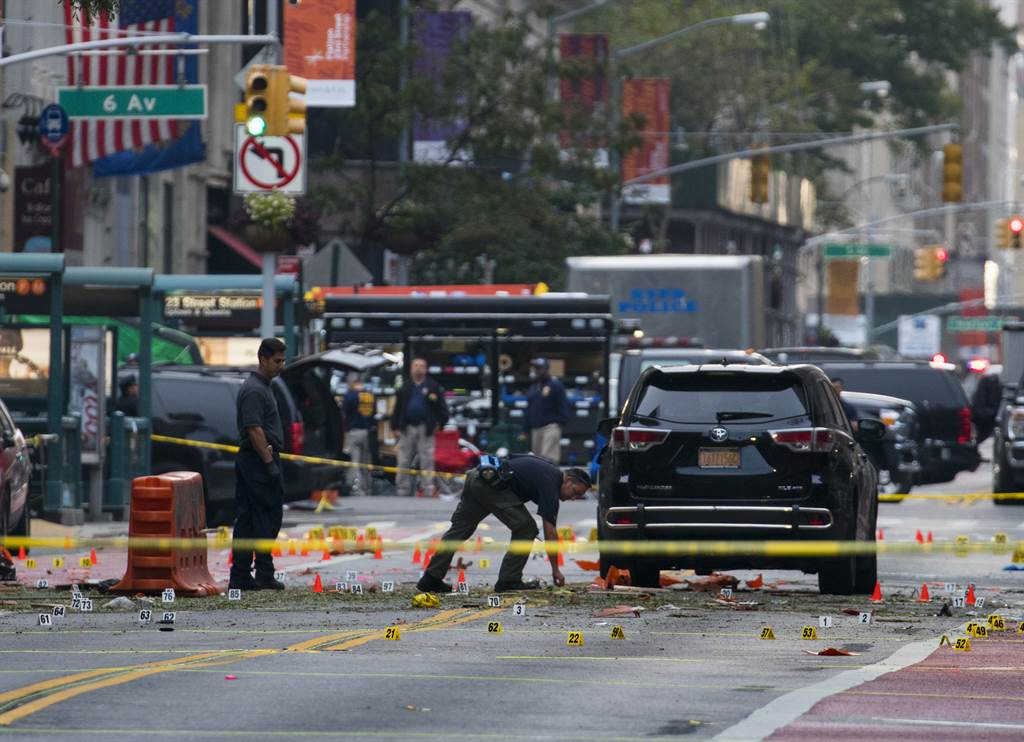
The anticipated speech by Rouhani comes at a precarious time in the tri-state area, which is recovering from bomb attacks in New York and New Jersey allegedly committed by Ahmad Khan Rahami, an Afghan immigrant who was captured after being wounded in a shootout with police.

Coupled with the stabbing attack at a Minnesota shopping mall by a man who was claimed by ISIS as a “soldier of the Islamic State,” these attacks have reminded the U.S. and the world of the ever present danger of radicalized individuals, lured by the seductive siren call of Islamic extremism.

These attacks have left nearly 40 people injured, fortunately none were killed, but in light of the growing list of terror-related attacks stretching from Boston to San Bernardino to Chattanooga to Dallas and to Orlando, it is clear that the U.S. is being subjected to the kind of waves of attacks that have become commonplace in the Middle East and increasingly in Europe.

What is becomingly increasingly clear is that radicalization of these new wave of would-be terrorists is coming rapidly through the easy access of materials online and the propaganda efforts of regimes such as ISIS and Iran to make their radical messages appealing to disaffected young people.

The protest takes a stand against the long running support of terrorism by the Iranian regime and its cruel indifference for human rights both at home and abroad. According to the Organization of Iranian American Communities (OIAC), the demonstrators called for a halt in Tehran’s extensive funding and sponsoring of terrorism in the region and demanded a halt in the executions in Iran, and urge the prosecution of the regime’s leaders.

According to the National Council of Resistance of Iran, the Iranian people have been the main domestic victims of the Iranian regime’s political violence. More than 2,500 have been hanged during Rouhani’s tenure, including dozens of dissidents, women, minors, ethnic and religious minorities.

Also new evidence implicates Rouhani’s cabinet ministers, in the 1988 massacre of 30,000 political prisoners in Iran. The demonstrators held a symbolic enactment of the mass execution of thousands of political prisoners in Iran.

The Hon. Joe Lieberman, former Senator from Connecticut, Pastor Saeed Abedini, recently released from prison in Iran, and Sir Geoffrey Robertson, QC, President of the UN Special Court for Sierra Leone, were among the speakers alongside young Iranian-Americans.

Rouhani has been on a tour of some countries prior to his arrival in New York this week, including a meeting with Raul Castro in Havana. His stopover in Cuba came after a meeting of only a dozen heads of state of the 120-nation Non-Aligned Movement on the Caribbean island of Margarita off Venezuela’s coast. The meeting was a who’s who of some of the world’s most unpopular leaders including Venezuela’s Nicolas Maduro, Zimbabwe’s Robert Mugabe and Rouhani.

Syria’s ambassador to the United Nations, Bashar Ja’afari, used the forum to denounce U.S.-led air strikes he said had killed 83 Syrian soldiers, saying they were aimed at sinking a fragile U.S.-Russia ceasefire plan.

About the only dictators missing were North Korea’s leader and Syria’s Assad himself.

Far from burnishing his foreign policy credentials, Rouhani’s trip only highlights the isolation of the Iranian regime and inability to build any kind of legitimate diplomatic support; especially in light of worsening human rights moves by the regime and increased confrontations in the Persian Gulf.

Sadra Mohaqeq, a journalist with Iran’s reformist Sharq daily, was arrested in Tehran this week with no explanation by regime officials. Mohaqeq was also arrested in 2013 in a crackdown on media.

The semi-official Mehr news agency reported that Mohaqeq was arrested by a “security body.”

In April, four journalists arrested in November 2015 were sentenced to between five and 10 years in prison for “colluding” with foreign governments and acting against “national security”.

Media watchdogs say journalists in Iran have to work in a climate of fear and censorship.

In another example of how the regime cares little about world opinion, it also announced the sentencing of Nizar Zakka, a Lebanese citizen and U.S. permanent resident, to 10 years in prison as part of a wide crackdown on those with any foreign ties. Zakka advocates for Internet freedom and whose nonprofit group did work for the U.S. government.

“There’s no regard for any international order, any international agreement or any international state of relations that they care about,” said David Ramadan, a former Virginia state legislator who co-founded a group called Friends of Nizar Zakka.

A statement early Tuesday from Jason Poblete, a U.S. lawyer representing Zakka, said a Revolutionary Court in Tehran handed down the sentence in a 60-page verdict that Zakka’s supporters have yet to see. Amnesty International has said Zakka had only two court hearings before the ruling and received only limited legal assistance before the court, a closed-door tribunal which handles cases involving alleged attempts to overthrow the government.

Other known to have been detained in Iran since the nuclear deal include:

— Homa Hoodfar , an Iranian-Canadian woman who is a retired professor at Montreal’s Concordia University;

— Siamak Namazi , an Iranian-American businessman who has advocated for closer ties between the two countries and whose father is also held in Tehran;

— Baquer Namazi, a former Iranian and U.N. official in his 80s who is the father of Siamak;

— Robin Shahini , an Iranian-American detained while visiting family who previously had made online comments criticizing Iran’s human rights record; and

— Nazanin Zaghari-Ratcliffe , a British-Iranian woman sentenced to five years in prison on allegations of planning the “soft toppling” of Iran’s government while traveling with her young daughter.

Obviously it is not a priority of Rouhani’s to release any of these people, but only to hob nob with dictators. The world should listen to his speech at the UN with a critical ear.

By Michael Tomlinson

Filed Under: Blog, News Tagged With: Featured, Iran, Iran deal, Iran Human rights, Iran Mullahs, Iran Terrorism, Khamenei, Rouhani

Iran Regime Threatens to Shoot Down American Planes as Tensions RiseIran Regime Threatens to Shoot Down American Planes as Tensions Rise

September 18, 2016 by admin

Iran Regime Threatens to Shoot Down American Planes as Tensions Rise

US Claims Iran Threatened to Shoot down US Military Planes near Iranian Airspace

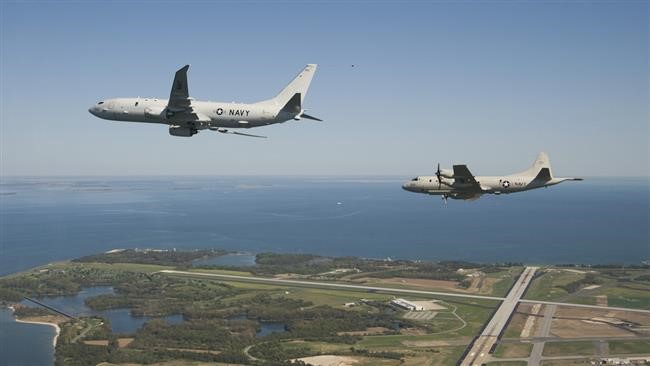
In a sign of the growing escalation in confrontations being manufactured by the Iranian regime, two U.S. Navy surveillance aircraft flying in international airspace near Iran were challenged and threatened by regime air defense stations over the weekend and told to change course or be shot down.

U.S. officials disclosed the aircraft were flying over the Strait of Hormuz on routine patrols, which the Iranian regime has used as a platform to intimidate commercial and naval ships with frequent run-ins with regime patrol and attack boats, often running courses directly at ships, ignoring warnings as severe as gunfire across their bows.

Using ground-to-air communications, officials at the Iranian air defense station told the crews they were flying near Iranian airspace and that if they didn’t change their course quickly they risked being fired upon, according to a spokesman for U.S. Naval Forces Central Command in Bahrain, Cmdr. Bill Urban.

“We will fire Iranian missile,” was one of the transmissions from the ground, he said. Both the American planes were threatened in three separate radio calls, Cmdr. Urban said in a statement.

U.S. State Department officials decried the incident, saying it showed Iran had yet to show signs of shifting from its aggressive stance in the region even after the international nuclear agreement reached last year.

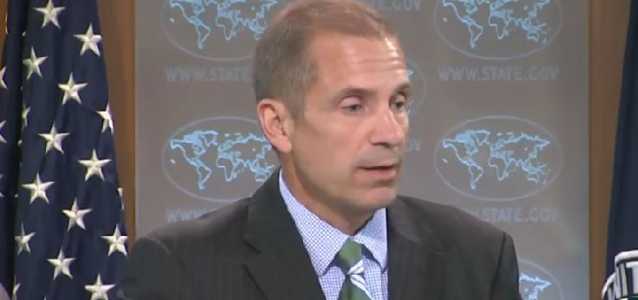
“Frankly, there’ve been previous incidents much like this, and they’re concerning, obviously. They escalate tensions,” said Mark Toner, a State Department spokesman. ”We have conveyed our concerns to Iran.”

The Navy P-8 Poseidon with a crew of nine and an EP-3 Eries with a crew of roughly 24, were flying a reconnaissance mission 13 miles off the coast of Iran, through the Persian Gulf, Strait of Hormuz and Gulf of Oman, according to officials who call the boundary Iran’s “black line.”

Iran’s territorial waters—like all nations–extend 12 miles into the sea, according to international maritime law, neither aircraft breached the boundary line.

The US military planes ignored the warning and continued flying in international airspace, although close to Iranian territory, the officials told Fox News.

“We wanted to test the Iranian reaction,” one US official told Fox News when asked why the US jets were flying close to Iran.

“It’s one thing to tell someone to get off your lawn, but we weren’t on their lawn,” the official continued.  “Anytime you threaten to shoot someone down, it’s not considered professional.”

“This been a continuing issue with respect to Iranian intercepts,” said Lt. Gen. Jeffrey Harrigian, who is the top U.S. commander of the coalition air war against the Islamic State in Iraq and Syria.

The increasing frequency of incidents raises the question of why the regime is acting in such a provocative manner. Many within the Iran lobby have argued these acts are being committed by a small segment of hardliners within the Revolutionary Guard Corps who object to the opening up of Iran to the West as signaled by the nuclear agreement reached 14 months ago.

The line of reasoning attempts to mask the growing militant nature of the regime and the almost earnest efforts by regime officials to spark a conflict. One could almost surmise the mullahs actually are trying to provoke a response from the U.S. military in order to claim the moral high ground against the Great Satan, but why? For what purpose?

Most analysts agree that the supposed benefits of the nuclear agreement with the lifting of economic sanctions have not benefitted ordinary Iranians at all. Their economic condition remains bleak and as a result, there has been significant restlessness amongst the population, with large demonstrations over stagnant wages and rampant corruption taking place.

The regime, especially top mullah Ali Khamenei, have been vocal and outspoken in blaming the U.S. for the struggling economy and the perceived lack of benefits flowing from the nuclear deal, but what the mullahs don’t want to talk about is how they have decided to use most of the financial windfall the regime received, including the “ransom” payments of $1.7 billion for American hostages, to continue funding proxy wars in Syria, Iraq and Yemen and not spend it to improve the lives of Iranians.

Also, while the U.S. did lift its nuclear related sanctions last January, other sanctions, including financial ones, related to Iran’s ballistic missile program, allegations of state sponsoring of terror groups and human rights abuse claims remain.

Major international banks are unwilling to risk losing access to the dollar market or huge fines out of fear of inadvertently falling afoul of what they say are ambiguous U.S. regulations.

It is an ironic turn of events since the regime was adamant during negotiations that issues not related to nuclear programs be de-linked. Now the mullahs are paying the price for that decision.

This may explain why the regime is acting so aggressively in order to divert attention from the economic turmoil and political unrest and create a false crisis internationally. It is an old tactic and one the mullahs are dusting off in the hopes of overcoming the domestic discontent they are facing in spite of a massive crackdown at home on journalists, students and dissidents.

Ultimately it should not come as any surprise to see the regime increase these confrontations and try to provoke a response. Otherwise, their own necks might be on the line.

By Michael Tomlinson

Filed Under: Blog, News Tagged With: #NuclearDeal, Featured, Iran, Iran Human rights, Iran Mullahs, Iran sanctions, Iran Talks, Irandeal

State Dept. Concedes Nuclear Deal May Have Fed Iran Regime Aggression

September 15, 2016 by admin

State Dept. Concedes Nuclear Deal May Have Fed Iran Regime Aggression

State Dept. Concedes Nuclear Deal May Have Fed Iran Regime Aggression

Ever since the U.S. and other nations entered into negotiations with the Iranian regime over a nuclear deal and completed it more than a year ago, critics including the Iranian resistance movement have been warning that a deal that did not also address the regime’s poor human rights record, oppressive government and support of terrorism would inevitably prove fruitless and only empower and embolden the mullahs in Tehran.

The Iran lobby also argued strongly that the nuclear deal would help “moderate” the regime and open the door for more liberal elements of the government to make gains. Notable regime supporters such as Trita Parsi of the National Iranian American Council and Ali Gharib pushed the idea that Iran could help stabilize the volatile Middle East once a deal had been passed.

Even sympathetic editorial pages and commentators were actively encouraged by the administration to support the deal on the basis that it would bring economic benefits to the Iranian people long beleaguered by crippling sanctions and gross corruption and mismanagement by regime officials.

Over the past year, reality has set in and the world has discovered that virtually none of those promises and assurances ever came true and in fact the litany of woe heaped on the world by the rising tide of radicalized extremism flowing from Iran since the nuclear deal has all but reshaped the landscape of the U.S., Europe, the Middle East, Africa and even touched Latin America.

The luxury of 20/20 hindsight has allowed the world to see the results of the nuclear deal and it is hard for even the most ardent member of the Iran lobby to put a positive spin that is remotely believable.

Things are so blatantly obvious that even the State Department has finally conceded that the nuclear deal may have in fact emboldened the Iranian regime to commit even more aggressive and militant acts; not diminish it.

Under questioning from Fox News reporter James Rosen, State Department spokesman Mark Toner could not rule out that the deal “has served as a cause for this more aggressive posture” by the regime.

Rosen noted, Iran had recently threatened to shoot down two US Navy surveillance planes in international airspace. This was just the latest in a growing list of provocations, including taking 10 US sailors hostage and abusing them in violation of international law.

The New York Post editorial board was flabbergasted by the admission since if the Obama administration had even an inkling of this aberrant behavior on the part of the mullahs, it made no sense to continue a policy of appeasing them, including bending over backwards to ship the regime $1.7 billion in hard cash in exchange for American hostages.

The Post said that of course, after citing incidents that “needlessly escalate tensions” Toner then said it all makes the deal even “more important, because the last thing anyone would want to see in the region is a nuclear-armed Iran.”

“Especially, we’d add, an Iran grown even more aggressive and hostile precisely because of that very deal.

“The logic here is just mind-boggling.

“Yes, Iran has been emboldened by a deal that gives it billions in cash now and an easy road to going nuclear in a few years — thanks to a president who won’t dare challenge Tehran’s behavior and risk undoing his dubious diplomatic legacy.

“Nice to see someone finally admitting as much,” the Post added.

The Iranian regime isn’t taking the potential for blowback lightly. Iran’s semi-official ISNA news agency reports that the country’s foreign minister and his international counterparts will meet this month to discuss “some differences” over the implementation of the landmark nuclear deal.

The Wednesday report says they will focus on banking sanctions, which Iran complains have not been fully lifted. The meeting will take place Sep. 22, on the sidelines of the United Nations General Assembly, where the regime’s Hassan Rouhani is scheduled to speak in what we can only assume will be a verbal tongue lashing blaming the U.S. for a wide range of problems resulting from a now failed nuclear deal.

It has been clear from statements made by regime officials such as Ali Khamenei and members of the Iran lobby that the regime has shifted focus now to condemning the U.S. for the inability of the regime to participate in U.S. currency exchanges because of sanctions put in place for its support of terrorism and not related to the original nuclear deal.

The Iranian regime also recognizes that since the deal was passed, its conflict with Saudi Arabia, especially in Syria and Yemen, is stalling its plans for regional hegemony under a radicalized Shiite banner. The influence of Saudi Arabia in standing up to Iran including its active fighting in Yemen and interception of Iranian boast trying to smuggle illicit weapons through the Persian Gulf to Houthi rebels in Yemen has been effective and annoying to the mullahs in Tehran.

This helps explain why the Iranian regime has turned its attention and that of the Iran lobby into a full-blown smear campaign aimed at Saudi Arabia, and by association the U.S.

This can be seen in an editorial appearing in the New York Times penned by Mohammad Javad Zarif, the regime’s foreign minister, blaming Wahhabism and Saudi Arabia in particular for literally every terrorist act being committed around the world and chastised the Kingdom’s large lobbying efforts.

It is a preposterous piece since it blames Saudi Arabia for exactly what the Iranian regime is doing itself with its own substantial investment in PR firms, lobbyists, paid analysts, bloggers and commentators, as well as spreading cash to a large number of so-called grassroots organizations such as the Ploughshares Fund which strongly advocated for the nuclear deal.

Danielle Pletka, senior vice president for foreign and defense policy studies at the American Enterprise Institute, took Zarif to task and ticked off the Iranian regime’s own bloody history of support for terrorism around the world in a piece appearing on AEI’s site.

“It was the Islamic Republic that created Hezbollah and sponsored the groups that kidnapped and murdered Americans through Lebanon’s long civil war,” Pletka writes. “It is Iran that props up the murderous Assad regime — you know, the guys that have repeatedly gassed their own people. It is Iran that has assassinated its enemies the world over, and it is Iran’s own Islamic Revolutionary Guard Corps (and its expeditionary Quds Force) that was responsible, during the Iraq war, for hundreds of US servicemen dying.”

The first step in recovery for any addict is to admit they have a problem. We can only hope this admission by the State Department will be the first step in confronting the Iranian regime forcefully, honestly and openly again.

By Michael Tomlinson

Filed Under: Blog, News Tagged With: #NuclearDeal, Appeasement policy, Featured, Iran, Iran deal, Iran Human rights, Iran Lobby, Iran Mullahs, National Iranian American Council, Ploughshares, Sanctions, Trita Parsi, Yemen

  • « Previous Page
  • 1
  • …
  • 11
  • 12
  • 13
  • 14
  • 15
  • 16
  • Next Page »

National Iranian-American Council (NIAC)

  • Bogus Memberships
  • Survey
  • Lobbying
  • Iranians for International Cooperation
  • Defamation Lawsuit
  • People’s Mojahedin
  • Trita Parsi Biography
  • Parsi/Namazi Lobbying Plan
  • Parsi Links to Namazi & Iranian Regime
  • Namazi, NIAC Ringleader
  • Collaborating with Iran’s Ambassador

Recent Posts

  • NIAC Trying to Gain Influence On U.S. Congress
  • While Iran Lobby Plays Blame Game Iran Goes Nuclear
  • Iran Lobby Jumps on Detention of Iranian Newscaster
  • Bad News for Iran Swamps Iran Lobby
  • Iran Starts Off Year by Banning Instagram

© Copyright 2026 IranLobby.net · All Rights Reserved.