Iran Lobby

Exposing the Activities of the lobbies and appeasers of the Mullah's Dictatorship ruling Iran

  • Home
  • About
  • Current Trend
  • National Iranian-American Council(NIAC)
    • Bogus Memberships
    • Survey
    • Lobbying
    • Iranians for International Cooperation
    • Defamation Lawsuit
    • People’s Mojahedin
    • Trita Parsi Biography
    • Parsi/Namazi Lobbying Plan
    • Parsi Links to Namazi& Iranian Regime
    • Namazi, NIAC Ringleader
    • Collaborating with Iran’s Ambassador
  • The Appeasers
    • Gary Sick
    • Flynt Leverett & Hillary Mann Leverett
    • Baroness Nicholson
  • Blog
  • Links
  • Media Reports

US Steps Up Sanctions Against Iran Prison Industry

April 19, 2017 by admin

US Steps Up Sanctions Against Iran Prison Industry

US Steps Up Sanctions Against Iran Prison Industry

Each passing day seems to bring more evidence that the Trump administration intends to chart a very different path than the Obama administration when it comes to dealing with the Iranian regime.

The first clue was the harsh rhetoric directed at the mullahs and the nuclear agreement, as well as the multi-billion dollar payment made by the Obama administration as part of the deal.

Then came the first series of sanctions in response to Iran’s launching of ballistic missiles; a move the Obama administration did not make for fear of upsetting the mullahs and threatening the nuclear deal.

Next came the cruise missile strike against a Syrian airbase in response to a chemical attack against civilians, including young children and infants.

In less than three months, President Trump has acted aggressively and swiftly against Iran and its interests in Syria in a bold departure from the feckless policies of trying to appease the mullahs in Tehran practiced by President Obama.

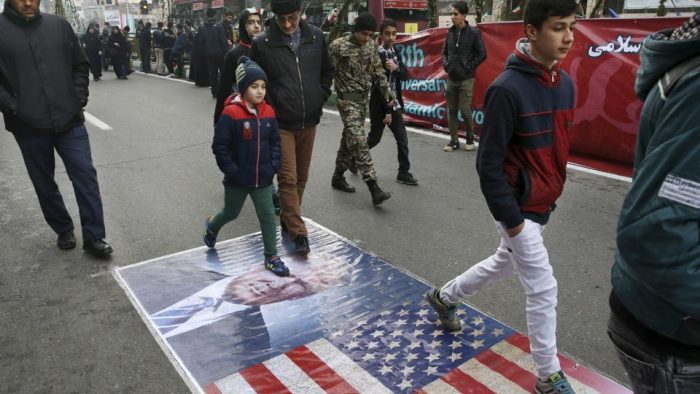
Now the Trump administration is leveling new economic sanctions against senior Iranian officials and its prison system for widespread human rights abuses, including the systematic torture of those being held in these facilities, according to White House officials familiar with the matter.

The latest sanctions target the Tehran Prisons Organization and Sohrab Suleimani, a senior official in the prison system and the brother of Qassem Soleimani, a senior Iranian military figure responsible for operating Iran’s rogue activities in Syria and elsewhere.

Sohrab Soleimani is responsible for overseeing Iran’s notorious Evin Prison, which is known for torturous interrogations, forced interrogations, and widespread mistreatment of inmates.

The latest sanctions are certain to rankle Tehran, already the subject of a range of new sanctions under the Trump administration, which is currently conducting a widespread review of all matters related to the landmark nuclear agreement.

A senior official on the White House National Security Council told the Washington Free Beacon that the Soleimani family has a history of fomenting violence and unrest both inside and outside Iran.

“It’s no coincidence that Sohrab Suleimani is the brother of the notorious Qasem Soleimani, the head of the IRGC’s Quds Forces, who has been responsible for so much of the violent disruption Iran has been spreading through the region,” said the official, who was not authorized to speak on record.

U.S. intelligence agencies believe Gen. Soleimani is overseeing Iran’s military operations in Syria, which are designed to prop up the regime of President Bashar al-Assad. The U.S. and its Middle East allies also said they have seen Gen. Soleimani’s hand in Revolutionary Guard military activities in Iraq, Yemen, Lebanon and the Palestinian territories.

Iranian human rights abuses have only grown under the leadership of so-called reformist President Hassan Rouhani, the official said. This includes the detention of U.S. citizens

“There has been a disturbing and significant increase in the number of detentions and executions of Iranian citizens under President Rouhani, and the infamous Evin Prison under Sohrab Suleimani’s control has been a key facility in this program of domestic repression,” the official said.

The Trump administration is holding meetings with the family members of American citizens still being detained in Iran and believed to be subjected to torture.

Soleimani’s role in Iran’s prison system makes him one of the foremost human rights abusers worldwide.

Soleimani oversaw an April 2014 incident at the Evin Prison in which dozens of security guards and prison officials beat a number of political prisoners. The attack is believed to have lasted several hours and impacted more than 30 prisoners. Many of these prisoners were later denied medical treatment.

Evin Prison is home to large number of Iranian political dissidents and other government opponents, who are routinely shut down and arrested by the Iranian regime for political activities targeting those in power.

The sanctioning of someone so central to the regime’s enforcement system against dissidents and a family member to a key figure in Iran’s military represent a significant escalation in attempts to push and contain the Iranian regime’s influence.

More importantly, the move once again highlights human rights as a central policy concern for the U.S. moving forward and redefines the need for the regime to improve its human rights practices.

U.S. lawmakers have been calling in recent week for the U.S. to further impose sanctions on Iran for its nonnuclear activities. They specifically cited Iran’s continued detention of four U.S. nationals and two U.S. green-card holders as justification for more penalties. Iran has accused most of these Americans of espionage, a charge they have denied.

A bipartisan group of U.S. lawmakers wrote Treasury Secretary Steven Mnuchin last week and noted that Iran hadn’t been sanctioned for any human-rights violations since the nuclear agreement was reached in July 2015.

“Failing to sanction individuals and entities committing flagrant abuses of human rights against the Iranian people not only goes against our most cherished values and principles but also undermines the credibility of our government,” they wrote.

This is an important step, but it’s only a step forward to finally bringing hope and democracy back to the Iranian people. We can only hope the pressure continues to build through next month’s presidential election in Iran.

Laura Carnahan

Filed Under: Blog, News Tagged With: Featured, hassan rouhani, Iran, Iran deal, Iran Human rights, Iran Lobby, Iran Mullahs, Iran sanctions, Iran Terrorism, IRGC, Khamenei, soleimani

Trump Administration Must Move to Sanction IRGC

April 18, 2017 by admin

Trump Administration Must Move to Sanction IRGC

Trump Administration Must Move to Sanction IRGC

With recent moves such as the launching of a cruise missile attack against a Syrian airfield, the dynamics of the how to confront the Iranian regime are inevitably changing in the transition from the Obama administration to the Trump administration.

The pressure on the Iranian regime can be seen in the stepped-up attacks by the Iran lobby to try and dissuade U.S. policymakers from shifting to a more aggressive stance against the mullahs in Tehran.

How and in what form that stance will be is taking shape internally within the administration and in the halls of Congress and the mullahs are desperate to influence that debate. Unfortunately the easy access Iran enjoyed through the open door policy at the Obama White House through multiple visits by Trita Parsi of the National Iranian American Council and other members of the Iran lobby is now shut off.

The Trump White House is poised to ratchet up existing sanctions against Iran and is weighing a much stricter interpretation of the nuclear agreement between Tehran and major world powers, according to Foreign Policy.

The administration is inclined to adopt a “more rigorous application of the tools at its disposal,” a senior White House official told Foreign Policy, referring to sanctions policy. Among the options under consideration: broadening U.S. sanctions to include much larger chunks of the Iranian economy linked to the Islamic Revolutionary Guard Corps (IRGC).

No final decision has been taken by the president or the cabinet. But officials said some decisions will need to be taken soon. On April 25, Iran and the six governments that negotiated the nuclear deal with Tehran, including the United States, are due to meet in Vienna for a quarterly review of the accord.

How President Donald Trump decides to proceed on sanctions and the nuclear deal more broadly carries high stakes for the United States, Iran, and the wider Middle East. A concerted U.S. effort to squeeze Iran would represent a gamble that Tehran’s regional push for power, particularly in Syria and Yemen, could be checked in part by increasing economic pressure.

Another major decision facing President Trump is whether or not to stick with the nuclear deal that he so roundly criticized on the campaign trail. The calculation of whether or not to keep it will have to rely on a central question which is are the mullahs abiding by it or simply using it as a smokescreen to rebuild their military as many suspect.

But the president doesn’t have to shred the deal to put pressure on the Iranian regime. As Foreign Policy pointed out, the agreement is not a binding treaty as such he has broad leeway to interpret its provisions. Under President Obama, that flexibility allowed him to grant Iran broad leniency in areas such as enriched fuel and heavy water. Trump could choose to close those loopholes.

Evidence of that tougher stance has cropped up as the Treasury Department announced new sanctions last week, including the brother of the powerful head of the special forces arm of the IRGC, Sohrab Soleimani, for his role in abuses at the country’s prisons. And in February, the Treasury Department blacklisted eight organizations linked to the Revolutionary Guards, as well as one of its officials based in Lebanon.

The focus on the IRGC and its Quds Forces signal a significant change that could hold the promise of increased effectiveness because of the deep roots the organizations have throughout Iran and its economy.

At the moment, any entity that has a 50 percent ownership stake or more held by the IRGC is subject to sanctions, but the administration is mulling a change that would drop the threshold to a lower percentage.

Such a move would break with long-standing policy at Treasury, which has traditionally defined ownership as above 50 percent for any category of sanctions. A lower threshold would mean blacklisting hundreds and possibly thousands of additional Iranian companies and organizations with links to the IRGC, experts said.

The mere threat of a lower threshold has helped stifle potential investments into the Iranian regime as banks and companies from Europe and Asia fret about possible sanctions being levied by the U.S. down the road should they invest.

That has had a ripple effect as the much-promised economic benefits from the nuclear deal have failed to materialize leading to speculation that top mullah Ali Khamenei may have decided to abandon the pretense of moderation in favor of a harder line as evidenced by who makes the presidential ballot for next month’s election in Iran.

Emanuele Ottolenghi, Ph.D., a senior fellow and expert on Iran at the Foundation for Defense of Democracies, wrote in The Hill of the need to close one loophole benefitting the regime now which the lifting of sanctions restricting the sale of commercial airliners to Iran.

The activities of Iran’s aviation sector have exposed the inadequacy of the nuclear agreement’s caveat that licensed items and services must be used “exclusively for commercial passenger aviation.” Currently, at least five Iranian and two Syrian commercial airlines are engaged in regular military airlifts to Syria, he writes.

These carriers have been crisscrossing Iraqi airspace since 2011, but have increased their tempo since the summer of 2015, when Iran and Russia coordinated their efforts to save Assad’s regime. Flight tracking data indicate that, from the nuclear deal’s implementation day on Jan. 16, 2016 to March 30, 2017, there were at least 696 flights from Iran to Syria, only six of which were carried out by Iran’s air force, she added.

She points out that it is extremely likely that Iran Air is still an active participant in the Syria airlifts. First, there is no justification for frequent commercial flights to Damascus: Syria is a war zone with little tourism or commerce, yet it is served almost twice daily by Iranian airlines. Iran Air, for example, flies to Damascus twice a week. It is doubtful Iranian tourists are posing for selfies in the ruins of bombed cities.

The flight cannot be purchased on Iran Air’s booking website or through travel agencies and the booking website does not include Damascus among its destinations from Tehran’s international airport, where the flights originate. Finally, Iran Air flights to Damascus occasionally make unscheduled stopovers in Abadan, an IRGC logistical hub for the Syria airlifts.

The next few months will show whether or not the Trump administration will follow through on its campaign promises and finally begin the hard work of stopping the mullahs.

Michael Tomlinson

Filed Under: Blog, News Tagged With: #NuclearDeal, Featured, hassan rouhani, Iran deal, Iran Mullahs, Iran sanctions, Iran Terrorism, IRGC, Khamenei

Bipartisan Consensus Forming on Dealing with Iran Regime

March 30, 2017 by admin

Bipartisan Consensus Forming on Dealing with Iran Regime

Bipartisan Consensus Forming on Dealing with Iran Regime

In today’s turbulent political environment there is not much anyone agrees on, except that maybe the New England Patriot comeback in the Super Bowl was astounding or that the Chicago Cubs win of the World Series was historic.

Other than that, most politicians can’t even seem to agree on the weather and what causes a shift in temperature day to day.

On one topic though there seems to be a growing bipartisan consensus, not just in the U.S. but around the world and that is more needs to be done to rein in the intransigence of the Iranian regime and the threat posed by its burgeoning military and ballistic missile program.

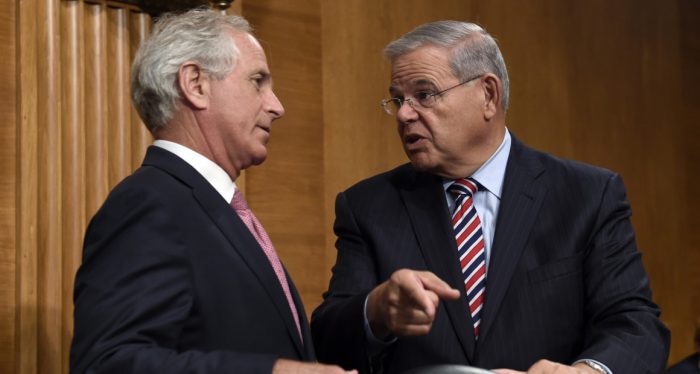
Monday’s Senate Foreign Relations Committee hearing on Iran was an example of a political environment with a rare and welcomed unanimity. Ranking member Sen. Benjamin L. Cardin (D-Md.) remarked that although he voted against the Joint Comprehensive Plan of Action on Iran, he doesn’t think it would be wise to withdraw, saying:

“Iran’s activities today are as bad as they have ever been and probably worse. They are certainly increasing their terrorist sponsorship in the Middle East as we see in so many different countries in that region. Their record on violating the ballistic missile obligations are well known and well understood. Their human rights violations against their own citizens are horrible, one of the worst countries in the world. They violate the arms embargo and the list goes on and on. So, it is appropriate to get this Committee to look at what we can do to make sure that first, the Iran nuclear agreement is honored so that Iran does not become a nuclear weapons state, but then secondly, look at those activities that were not covered under the JCPOA as to how we can play a stronger role.”

He was joined by his Republican colleague, Sen. Bob Corker (R-Tenn.), chairman of the committee who said:

“One of my criticisms of the JCPOA was that it would become our de facto Middle East policy and Iran would expand their destabilizing activities. I think we are seeing a lot of that today. Regionally, we’ve seen an escalation in Iranian intervention. Iran, along with its allies in Russia, has continued to prop up Assad at the cost of countless lives in Syria. Iran’s support to the Shia militias in Iraq threatens the interests of Sunnis and Kurds alike, not to mention the Shia in Iraq that don’t subscribe to the anti-American, zero-sum politics of the militias that are there.”

Jennifer Rubin in the Washington Post’s Right Turn blog opined that “given this shared assessment of Iran — the JCPOA is not going away but the United States needs to confront Iran in other arenas — it’s not surprising that a bipartisan bill, the Countering Iran’s Destabilizing Activities Act of 2017, with seven co-sponsors from each party, was introduced last week.”

“The act establishes new sanctions targeting Iran’s testing of ballistic missiles and its backing for terrorism, and also seeks to block the property of any entity involved in the sale of arms to or from Iran. It does not reintroduce sanctions lifted from Iran as part of the 2015 nuclear deal.”) In a summary released last week, senators described potentially far-reaching measures including mandatory sanctions on those involved with Iran’s ballistic missile program, new sanctions against the Islamic Revolutionary Guard Corps and a requirement for the president “to block the property of any person or entity involved in specific activities related to the supply, sale, or transfer of prohibited arms and related material to or from Iran,” Rubin added.

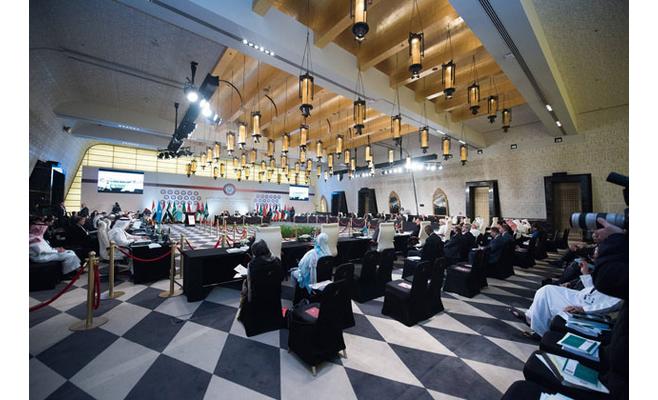
But it wasn’t just on Capitol Hill where there was unanimous consent as all 15 resolutions passed by the Arab summit which took place in Jordan Wednesday were devoted to an indictment of Iran, its Revolutionary Guards Corps and Lebanese surrogate, Hezbollah. They were a testament to the depth of Arab-Iranian animosity and exposed the extent of the rift between the Sunni and Shiite Muslim worlds.

Iran was accused of meddling in the internal affairs of Arab nations, inciting Shiites against Sunnis, and arming and training Shiite terrorist groups for operations against legitimate Arab governments. The Arab rulers combined to put Tehran in the dock for its interference in the Syrian civil war and assault on its sovereignty.

It was notable that at an Arab summit that has in the past concerned itself with issues related to Israel and the plight of the Palestinian people, the entire focus of the summit was on the Iranian regime; demonstrating how important the issue of confronting Tehran has become to the wider Arab world.

In the annual AIPAC conference a clearer united vision of the importance to oppose the Iranian regime was surfaced. American authorities and law makers used the opportunity to show their unanimous visions on the threat they feel from the Iranian regime and the need to take action to contain the growing destabilizing activities of the mullahs in the region.

The speaker of the US House of Representatives, Paul Ryan, called to designate the Revolutionary Guards as a terrorist group, describing it as a “terrorist army.” He said “Iran supports the terrorist dictator of Damascus and the militias in Yemen, Baghdad and Beirut.”

Furthermore, Nikki Hailey, the US ambassador to the United Nations asserted at the conference that “Iran’s nuclear deal is worrisome because it empowered Russian and Iran and encouraged the latter to act freely without fear of accountability.”

Mitch McConnell, the Republican majority leader in the Senate added: “Today we must adopt a different approach. We must combat Iran’s ability to finance, arm and train terrorists, such as Hezbollah, Hamas and its proxies in Syria.”

McConnell criticized Iranian regime’s nuclear deal, saying that it disabled the United States from taking more aggressive steps against Iran.

Meanwhile the Iran lobby was once again beating the war drum in an editorial in Huffington Post by Jamal Abdi of NIAC Action and Adam Weinstein of the National Iranian American Council, in which they claimed that this bipartisan consensus would only provide incentives for the U.S. to be plunged into a war with Iran at the behest of President Trump.

They go on to argue that if the proposed sanctions bill passes, Tehran would respond negatively and all the positive gains made by the nuclear deal would evaporate. What positive gains?

Since the deal was agreed to, the Iranian regime has broken every promise of moderation, stability, peace and partnership made by the NIAC and other Iran lobby supporters.

The harsh proof of Iranian regime’s track record over the past years has been so convincing that a bipartisan consensus is seen among both houses of congress to try to oppose the mullahs in Tehran.

All we can say is that it’s about time.

Michael Tomlinson

Filed Under: Blog, News Tagged With: #NuclearDeal, Adam Weinstein, Featured, Iran deal, Iran Lobby, Iran Mullahs, Iran sanctions, Iran Terrorism, IRGC, Jamal Abdi, National Iranian American Council, NIAC, NIAC Action, Syria, Yemen

Iran Regime Plays Absurd Sanctions Game

March 27, 2017 by admin

Iran Regime Plays Absurd Sanctions Game

Iran Regime Plays Absurd Sanctions Game

In what has to be considered one of the more absurd acts by the Iranian regime, the mullahs decided to impose their own sanctions on 15 U.S. companies for alleged human rights violations and cooperating with Israel, the state news agency IRNA reported on Sunday, in a tit-for-tat reaction to a move by Washington, according to Reuters.

The agency quoted Iran’s foreign ministry as saying the companies had “flagrantly violated human rights” and cooperated with Israel in its “terrorism” against the Palestinians and the expansion of Jewish settlements.

It was not immediately clear if any of the companies, which included defense technology firm Raytheon, had any dealings with Iran or whether they would be affected in any way by Tehran’s action, which IRNA said would include seizure of their assets and a ban on contacts with them.

The sanctioned companies also included ITT Corporation, United Technologies and specialty vehicles maker Oshkosh Corp. For a full list click on: bit.ly/2noZWNo

The Iranian move came two days after the United States imposed sanctions on 11 companies or individuals from China, North Korea or the United Arab Emirates for technology transfers that could boost Tehran’s ballistic missile program. This was on top of sanctions levied against 30 foreign companies or individuals for transferring sensitive technology to Iran for its missile program or for violating export controls on Iran, North Korea and Syria.

Iran could face tighter U.S. sanctions over ballistic missile launches and other non-nuclear activities under a bill announced on Thursday by a bipartisan group of senators, echoing a harder line on Tehran espoused by President Donald Trump.

While the move by the Iranian regime has practically no effect on the U.S. economy, nor on the companies being sanctioned since few have any assets or business dealings with the regime, who is not on the list is telling.

Boeing for example is not on the list of firms sanctioned, even though it is one of the largest military suppliers to Israel, but also happens to be selling Iran new commercial airliners to replace its aging fleet.

The hypocrisy of the Iranian regime doesn’t end there since it ostensibly is imposing these sanctions for human rights violations against the Palestinian people by Israel, but excuses its own blatant human rights violations against the Syrian people through its proxies and armed forces fighting on behalf of the Assad regime.

It is also hypocritical for the Iran lobby and the regime to consistently oppose any new sanctions and claim they threaten the nuclear agreement with Iran, but in this case the regime has no problem in engaging in the same behavior it condemns.

We have no doubt that if any of the U.S. companies on Iran’s list wanted to sell equipment or arms to Iran, the mullahs would be eager to do business with them.

As with the constant harassment of U.S. Navy ships throughout the Persian Gulf by Iranian speed boats, the net effect is akin to a gnat bothering a bear and these sanctions are typical of the real strength of the Iranian regime which is in propaganda and visuals and not in practical effect.

It is interesting though how the Iran lobby, especially the National Iranian American Council is silent on these new sanctions since it has been so vocal about the threat U.S. sanctions would have on the nuclear deal and the future of relations between the two countries.

In fact, a casual Google search would reveal a trove of apocalyptic warnings from Trita Parsi and his cohorts at the NIAC about the damage future sanctions could bring and yet when Iran engages in the same practice there is not a signal note of dissent from them.

It is damning proof once again that the Tehran can do no wrong in their eyes and how they are solely a mouthpiece for the mullahs in Tehran.

It is also interesting how U.S. sanctions were aimed specifically for effect at Iranian Revolutionary Guard Corps leaders directly involved in ballistic missile activities or control of terrorist activities, including past actions that killed American service personnel, while these Iranian sanctions are aimed at the Israeli-Palestinian conflict.

Iran has frequently trotted out the plight of the Palestinian people as a Trojan horse to try and galvanize support within the Arab world, but it has lost much of its morale standing since it now engages in wars in Syria and Yemen that are setting Muslims to kill Muslims on a wholesale basis.

Ultimately the mullahs in Tehran care not a whit about the Palestinian people and use them in the same way they have used Afghan refugees to serve as mercenaries in Syria or Shiite militias or Houthi rebels to serve their twisted purposes.

Michael Tomlinson


Filed Under: Blog, News Tagged With: Featured, Iran, Iran Human rights, Iran Mullahs, Iran sanctions, IRGC, National Iranian American Council, Nuclear Iran

Bipartisan Senators Move New Iran Sanctions Bill Forward

March 24, 2017 by admin

Bipartisan Senators Move New Iran Sanctions Bill Forward

Bipartisan Senators Move New Iran Sanctions Bill Forward

While the political divide between Democrats and Republicans may feel like the Grand Canyon, one at least one subject both sides seem to be able to agree: New sanctions need to be levied against the Iranian regime.

Senate Foreign Relations Chairman Bob Corker (R-Tenn.) on Thursday unveiled a bipartisan bill to slap the Iranian regime with new sanctions because of the country’s ballistic missile development, support for U.S.-designated terrorist groups and human rights violations, according to Politico.

Democratic co-sponsors, including Robert Menendez of New Jersey and Foreign Relations ranking member Ben Cardin of Maryland, emphasized that the measure was designed explicitly so as not to undermine the 2015 Iran nuclear deal.

The bill is supported by more than a dozen senators, according to a news release, including Marco Rubio (R-Fla.), Tom Cotton (R-Ark.), Bob Casey (D-Pa.) and Chris Coons (D-Del.) — giving it a strong chance of being taken up in the Senate.

“This legislation demonstrates the strong bipartisan support in Congress for a comprehensive approach to holding Iran accountable by targeting all aspects of the regime’s destabilizing actions,” Corker said in a statement. “These steps will allow us to regain the initiative on Iran and push back forcefully against this threat to our security and that of our allies.”

Menendez, who didn’t vote for the nuclear deal, said that the legislation was crafted to specifically avoid any sanctions lifted as part of the nuclear agreement, according to the Hill.

“This legislation was carefully crafted not to impede with the United States’ ability to live up to its commitments under the JCPOA, while still reaffirming and strengthening our resolve by imposing tough new sanctions,” he said.

Lawmakers were expected to roll out new sanctions on the Iranian regime ahead of a key foreign policy conference taking place early next week, Reuter reported.

The Senate legislation, according to an outline from Corker’s office, would include mandatory new sanctions on individuals tied to Iranian regime’s ballistic missile program and would expand terrorism-related sanctions to include the Islamic Revolutionary Guard Corps (IRGC).

It would also codify who is sanctioned over Iranian regime’s support for terrorism and force President Trump to enforce an arms embargo by blocking property for anyone tied to Iran’s sale or transfer of military arms.

In February, the Trump administration imposed sanctions on 25 individuals and entities in Iran, which it said were just “initial steps” in response to the regime’s repeated testing of ballistic missiles, which the United States maintains is in violation of UN resolutions.

Tehran has been supporting Yemen’s rebel Houthi movement, and Syrian President Bashar al-Assad in his country’s six-year-long civil war.

Menendez told Reuters the bill was intended to take a “regional” strategy because of the breadth of Iran’s activities in the Middle East.

“It calls for a regional strategy because Iran is obviously involved in the region in various ways, whether it be in Yemen or Syria and beyond,” he said.

The bipartisan action taken in the Senate is a response to the growing provocations coming from the Iranian regime as it prepares for its presidential election in May.

On Tuesday, the aircraft carrier USS George W. Bush entered the Strait of Hormuz from the Indian Ocean, a vital waterway that handles about 30 percent of the world’s oil shipping. As it has done so often over the past few years, Iran sent a swarm of speedboats to harass the carrier, according to Breitbart News.

“What reason were they to be in an international corridor, other than to harass us? Was today the day they were going to come out and potentially deploy kinetic actions against us?” asked Rear Admiral Kenneth Whitesell, commander of Carrier Strike Group 2, as reported by Japan Times.

Captain Will Pennington of the George W. Bush said the U.S. Navy changed its security procedures after a Saudi ship was attacked off the coast of Yemen by what some describe as a “drone” boat, roughly comparable in size to the Iranian Revolutionary Guard Corps patrol boats.

“It’s unprofessional behavior, it’s harassment behavior and it’s something you wouldn’t expect when you’ve got a hundred giant vessels per day going through the Strait of Hormuz, and – at least from the flow of oil – the most critical strait in the world,” Whitesell said. “This is their routine behavior, which in any other area of the world, any other maritime environment, this would be seen as a violation of international law.”

The allegations of Iranian-made drones extended to ones used by Houthi rebel forces to attack Saudi and UAE missile defense sites in Yemen, an arms research organization said in a report Wednesday, according to the Washington Post.

The report, put out by the group Conflict Armament Research, or CAR, looks at seven Houthi Qasef-1 drones and one drone engine recovered by forces from the United Arab Emirates. Six of the drones were captured in October on a known Iranian smuggling route that runs through Oman, while another was found after an attack by Houthi forces near Aden, Yemen, last month.

The Qasef-1 is “consistent with descriptions and imagery” of an Iranian drone called the Ababil-T, produced by Iran’s Aircraft Manufacturing Industrial Company, according to the report.

The identification of the Qasef-1 as a possible Iranian drone variant comes almost two months after Houthi forces used an explosive drone boat to attack a Saudi frigate. Vice Adm. Kevin M. Donegan, commander of the U.S. Fifth Fleet, told Defense News that the drone boat probably had been supplied by Iran. The attack killed one, and the frigate returned to port with minor damage.

On Tuesday, Reuters reported that Maj. Gen. Qasem Soleimani, the head of Iranian regime’s Quds Force, recently met with top military officials in the Iranian capital in a bid to explore ways to better assist the Houthis. The outcome of the meeting appears to be an influx of military equipment and advisers into the civil war, which has now been running for two years.

Michael Tomlinson


Filed Under: Blog, News Tagged With: Featured, Iran, Iran deal, Iran Human rights, Iran Mullahs, Iran sanctions, Sanctions

Iran Lobby Working Overtime Pushing Fake News

March 21, 2017 by admin

Iran Lobby Working Overtime Pushing Fake News

Iran Lobby Working Overtime Pushing Fake News

Merriam-Webster defines “hypocrisy” as “a feigning to be what one is not or to believe what one does not: behavior that contradicts what one claims to be believe or feel.”

In the case of the Iran lobby, hypocrisy runs deep within its press releases, background papers, editorials and blog entries, especially the National Iranian American Council. In the aftermath of the end of the Obama administration’s policies of trying to appease the Iranian regime, the NIAC has been working overtime to push narratives that have come to define this era of “fake news.”

The NIAC website was busy this weekend pumping out several storylines, including attempting to shift blame for global terrorism from the Iranian regime to Saudi Arabia; attempting to character assassinate a vocal critic of the regime in the Trump administration; and tried to claim that Yemen was an example of a failed U.S. policy.

The most hypocritical position taken by the NIAC was an opinion piece by Adam Weinstein in which he called Saudi Arabia the world’s “biggest state sponsor of terrorism.” He makes this claim largely on the basis that many terrorist groups such as ISIS are comprised of Sunni members, while largely ignoring the magnitude of death and destruction meted out by Iranian-backed Shiite terror groups such as Hezbollah.

Weinstein goes on to try and specifically link Wahhabism to the Saudi government, while ignoring the direct support Shiite terror groups receive directly from the Iranian regime through the Revolutionary Guard Corps and its Quds Force operations.

While the Saudi government has a myriad of its own problems, such as the status and role of women in Saudi society and the need to rein in rogue Saudis that have engaged in terror, such as Osama bin Laden, the Saudi government does not purse and enact a policy of global terror, nor a systematic effort to attack and kill its enemies and dissidents at home and abroad; all things the Iranian regime does.

Weinstein delves into the complexities of the Islamic religion and its various offshoots and varieties in an attempt to confuse readers when in fact the issue is not about religion, but national policy instead.

What makes the Iranian regime the center point of terrorist activities is that the regime relies heavily on terrorist proxies to conduct military operations, terrorist attacks and assassinations. Notable examples include the bombing of the U.S. Marine barracks in Beirut, the bombing of the Khobar Towers in Saudi Arabia and the flood of Iranian-built IEDs into Iraq targeting U.S. service personnel.

Iran also provided shelter and support for Al-Qaeda leaders fleeing the U.S. invasion in Afghanistan and then later provided passage for these same fighters to enter Syria and from there spawned ISIS and other radical militant groups who were originally turned loose to attack U.S.-backed rebel groups.

But the NIAC’s fake news didn’t end there as Ryan Costello issued a press release attacking Trump national security aide Sebastian Gorka, a vocal and harsh critic of past policies towards the Iranian regime, especially the deeply flawed nuclear agreement.

The irony of Costello’s statement was his attempt to blame Gorka for anti-Semitism, a crazy concept considering the Iranian regime’s naked hostility to Jews and Israel; advocating for its destruction about as often as it holds public “Death to America” chants.

The effort to attack Gorka is not about racism, but about dislodging a strong opponent of the Iranian regime from any position of influence within the administration. This is an especially important consideration when viewed in light of recent disclosures that former Obama administration staffers have managed to burrow their way into the State Department to maintain influence over Iran policy; including one who was a former NIAC staffer.

The strangest piece was another one written by Adam Weinstein in which he attempted to show a clash of policy views over the conflict in Yemen amongst American legislators at a Senate Foreign Relations Committee hearing.

“As is too often the case on Capitol Hill, the hearing – which was framed as an examination of U.S. interests and risks to U.S. policy in the war in Yemen – devolved into a conversation dominated by Iran hawks who inflated Iran’s influence and sought to play down Saudi Arabia’s role in the conflict,” Weinstein writes.

During the hearing, former Ambassador to Yemen (2010-2013) Gerald Feierstein testified that Iran is benefiting from the conflict in Yemen and even claimed Saudi Arabia’s image was suffering as a result.

Weinstein then goes on to make the extraordinary claim that the Iranian regime attempted to persuade Houthi rebels from moving on Sanaa, the capital and blamed a Saudi naval blockade in 2015 for escalating the conflict.

It’s another silly argument to make since Iran’s Quds Forces have been the primary supplier of arms to the Houthis, with several Iranian fishing vessels being intercepted on their way to Yemen carrying guns, ammunition, mortars, rockets and missiles, many bearing Iranian serial numbers.

What Weinstein characterizes as an “obsession” by Saudi Arabia over Iran in Yemen, belies a basic aspect of Iran’s strategy which is to foment a civil war in a country sharing a border with Saudi Arabia in an effort to place the kingdom under duress even as it opposes Iranian forces in the Syrian conflict.

It is a strategy Iranian regime has used for decades in neighboring countries such as Lebanon and Iraq.

Weinstein goes on to claim the Houthis are not proxies for the Iranian regime because they are “indigenous” to Yemen as if accident of birth defines one as a proxy or not for the Islamic state. The true definition of an Iranian proxy is not where they are from, but rather if you are supplied, controlled and commanded by the mullahs in Tehran.

On that score, the Houthis are identical twins to Hezbollah, Shiite militias in Iraq and recruited Afghan mercenaries, all fighting on behalf of the Iranian regime.

Michael Tomlinson


Filed Under: Blog, Latest from Lobbies & Appeasers, National Iranian-American Council, News Tagged With: Featured, Iran deal, Iran Lobby, Iran Mullahs, Iran sanctions, National Iranian American Council, NIAC, NIAC Action, Nuclear Deal, Reza Marashi, Ryan Costello, Sanctions

Fierce Debate on Iran Obscures Pain of Hostage Families

March 10, 2017 by admin

Fierce Debate on Iran Obscures Pain of Hostage Families

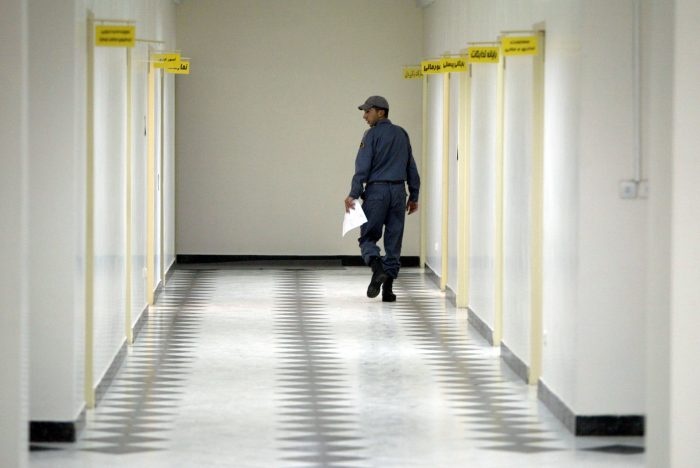
File photo shows an Iranian soldier walking in a corridor of Evin prison during a journalist’s visit to the prison in Tehran, Iran on June 13, 2006. Esha Momeni, 28, an Iranian-American student from Los Angeles is imprisoned in Tehran and is not being allowed to talk to her family, her attorney says. Momeni, described as a researcher looking into the status of women in Iran, was pulled over for a traffic infraction in Tehran on October 15 and is now being held at the notorious Evin prison. Momeni has been allowed one phone conversation since her arrest, which her attorney says may have been related to the One Million Signatures campaign, in which women in Iran are pressing for more rights. Several Iranian-Americans were held for months in Iran last year because the government suspected them of working for a “velvet revolution,” and were eventually released without being charged, the BBC reported. (UPI Photo/Mohammad Kheirkhah) (Newscom TagID: upiphotos893509.jpg) [Photo via Newscom]

The debate that rages over U.S. policy towards the Iranian regime under the Trump administration has been marked by a near-constant war of words on social media, editorial pages and blogs with the Iran lobby rising up to challenge every assertion made by Iran critics, as well as deflect from any horrific act committed by the mullahs in Tehran.

The rancor has obscured one important and painful reminder of personal suffering which is the plight of dual-nationals being held as hostages in Iranian prisons by the regime.

These citizens of other countries were arbitrarily snatched up by the regime’s Revolutionary Guard Corps, tossed into prison, and in some cases given secret trials without access to counsel, while others have simply been held without charge or trial.

Most have been subjected to physical, emotional and mental abuses that we would find appalling and even denied much needed medical care as their health has deteriorated as in the case of a British mother who works for a charity organization.

There are five Americans reportedly being held in Iran who were arrested almost immediately after another batch of American hostages were released shortly after the nuclear deal was agreed to and pallets of cold hard cash were flown to Tehran on Iranian jets in a blatant swap.

Iranian officials even boasted of not selling these new hostages for less than $1 billion.

The Iran lobby has been quick to gloss over their plight, only issuing the briefest of rebukes at the beginning and never raising the issue again. The National Iranian American Council has been the most ridiculous in playing this game even through its founder, Trita Parsi, claims one of these hostages, Siamak Namazi, as a close personal friend.

If this is how hard Parsi fights for a friend, I’d hate to see what he does for a relative.

But for the families of these hostages, their pain is real and the struggle to maintain hope is often elusive. They petition the world’s media and beg for the release of their family members from regime officials who ignore them.

This week though, attention has shifted back as family members press their cases again in the media and we observe the passing of the grim decade milestone of one missing American, Robert Levinson.

“I ask myself and my fellow American neighbors: Where is the justice I have come to associate with America?” Robin Shahini, 46, wrote to his family from an Iranian jail.

Shahini was convicted of collaborating with “a hostile government,” the U.S – an accusation his family denies. He was reportedly sentenced to 18 years in prison.

“This charge is unjust and the Iranian government intended to commit this wrong against me, an innocent American citizen, for political purposes. I ask of you, please to not let Iranian government use me,” Shahini wrote in his letter.

“I ask you beloved citizens and all human-loving individuals to not leave me alone and defend my rights, which is also the right of each and every one of you. Defending me is defending yourselves. Do not let me be alone.”

The number of arrests and detentions of visitors…especially dual-citizens… has spiked, warns Lisa Daftari, the editor of the website “The Foreign Desk,” who has followed Shahini’s case.

“In the aftermath of the nuclear deal with Iran, we would expect things to get better,” she said. “But we’ve seen an increase in executions, we’ve seen an increase in crackdowns against journalists, against dual-citizens, against academics, political dissidents, women’s human rights leaders. And this is not what we expected.”

Daftari also said the arrest and trial of Shahini, and other dual-U.S. citizens like him, serves as a broader propaganda purpose for Tehran, according to Fox News.

“The Iranian regime is delivering a stern message to Iranians living abroad, not to get involved in political activity, not to speak out against the regime, and they want Iranians to know that they are in fact being watched.”

Dan Levinson, the son of missing former FBI agent Robert Levinson, penned an editorial in the Washington Post, lamenting his father’s disappearance in Iran for the past 10 years.

“The United Nations Working Group on Arbitrary Detention, which investigates cases of arrest that may be in violation of international human rights law, did something in January that the previous two U.S. presidents failed to do: It announced a finding that my father, retired FBI agent Robert Levinson, was arrested by Iranian authorities without any legal grounds in March 2007 on Kish Island, and it called on the Iranian government to release him immediately,” he writes.

“In finding that Iran has violated international law — and fundamental human decency — by detaining a U.S. citizen and providing him no rights whatsoever, the U.N. working group is being far more aggressive than our own U.S. government has been in 10 years. This is shameful,” Levinson added.

Levinson went on to encourage the new president to pressure Iran for his father’s release.

“If Iran continues to deny holding him and fails to act, Trump can pressure it with tools such as sanctions — which he demonstrated his willingness to use already – or labeling Iran’s Islamic Revolutionary Guard Corps, which was very likely involved in my father’s detention, a terrorist organization. Trump can put my father at the center of every single discussion he has with or about Iran and finally make him a top priority — not just in words like the previous administration, but in action,” he said.

We hope these families can be reunited with their loved ones soon and believe that is only going to happen by applying heavy pressure on the Iranian regime and its leaders.

Laura Carnahan

Filed Under: Blog, News Tagged With: Featured, Iran, Iran deal, Iran Lobby, Iran sanctions, National Iranian American Council, NIAC, Trita Parsi, Tyler Cullis

Only Language Iran Regime Understands is Bullying

February 23, 2017 by admin

Only Language Iran Regime Understands is Bullying

Only Language Iran Regime Understands is Bullying

In some ways, the Trump administration may be as vexing to the mullahs in Tehran as the first British explorers glimpsing hieroglyphics in an Egyptian pyramid before discovering the Rosetta Stone.

In that regard, the mullahs are grappling with the same problem mystifying many journalists and members of both parties as they deal with a president who is undoubtedly one of the most unfiltered politicians since Winston Churchill.

For the mullahs, they have become accustomed to a string of U.S. leaders that have tried to engage the regime in the predictable language of diplomacy and through existing international structures such as the United Nations. Sometimes it has not worked to their advantage such as when Presidents Bill Clinton and George W. Bush imposed sanctions on the regime.

Other times it has as President Barack Obama sought to try and appease the mullahs in an effort to secure a nuclear agreement.

What has been clear from the start is that since the days of the Islamic revolution in 1979, the ruling clerics have operated by using a language of threats, coercion, bullying and invective and it has not changed since then.

For the Iranian regime, using bullying to make a splash in international media is akin to North Korea launching a missile or setting off a nuclear bomb test.

The latest example was at the conclusion of a new round of war games put on by the Revolutionary Guard Corps in which an IRGC commander said the U.S. should expect a “strong slap in the face” if it underestimated the regime’s military capabilities.

“The enemy should not be mistaken in its assessments, and it will receive a strong slap in the face if it does make such a mistake,” said General Mohammad Pakpour, head of the Guards’ ground forces, quoted by the Guards’ website Sepahnews.

On Wednesday, the Revolutionary Guards concluded three days of exercises with rockets, artillery, tanks and helicopters, weeks after Trump warned that he had put Tehran “on notice” over the missile launch.

“The message of these exercises … for world arrogance is not to do anything stupid,” said Pakpour, quoted by the semi-official news agency Tasnim.

“Everyone could see today what power we have on the ground.” The Guards said they test-fired “advanced rockets” and used drones in the three-day exercises which were held in central and eastern Iran, according to Reuters.

But the Iranian regime didn’t just take verbal potshots at the U.S., it also has been ratcheting tensions with its neighbor Turkey as it takes on a more important relationship with Russia and secured a seat at the table of Syrian peace talks; clearly a move that the mullahs seem to be threatened by.

“Iran is an important neighbor to us. We have always been in dialogue with Iran. But it does not mean we will ignore Iran’s efforts in penetrating the region,” said Turkish presidential spokesman Ibrahim Kalin in the latest thinly veiled threat between the countries during his weekly news conference.

Kalin was responding to comments by Ali Akbar Velayati, a key adviser to Iranian Supreme Leader Ayatollah Ali Khamenei, who told Turkish soldiers to leave Iraq and Syria, or the people would “kick them out.”

“They are very serious, I mean the competition between Iran and Turkey, everyone knows it, it’s like two elephants in a small room,” warns political consultant Atilla Yesilada of Global Source Partners. “Iran is clearly an expansionist country, their goal of building a Shia circle all the way from Tehran to Lebanon is no secret, at least from the Turkish perspective.”

Experts say religious sectarianism underscores the tensions between predominantly Shia Iran and mostly Sunni Turkey, according to Voice of America News.

The escalation in tensions and verbal fisticuffs with Turkey is nothing new for the Iranian regime as it has already threatened its other Sunni-dominant neighbors in Saudi Arabia and Gulf States. Its supply of Houthi rebels in Yemen has sparked a civil war that threatens to plunge the Persian Gulf region deeper into a shooting war.

The Iranian regime’s willingness to use military force to back up its verbal threats has not been lost on its nervous neighbors and explains why there is movement for a regional coalition aligned against Iran’s expansionism.

Turkish president Recep Tayyip Erdogan has been turning to other Sunni countries in the region for support. This month, he visited Saudi Arabia and the Gulf States for talks observers say focused on curtailing Iran’s influence. Analysts suggest Ankara’s assertive stance could be influenced by U.S. President Donald Trump.

“With Trump, flexing his muscles against Tehran, Ankara may have sensed an opportunity to bring this antagonism into the open and to finally resolve this longstanding low level conflict in Syria and Iraq space,” suggests consultant Yesilada.

None of which has stopped the Iranian regime from pushing aggressively on all fronts including news reports that the regime has started up a series of cyberattacks against Saudi Arabia after a four year hiatus.

Late last month, the Saudi government warned in a notice to telecommunications companies that an Iranian-origin malicious software called Shamoon had resurfaced in cyberattacks against some 15 Saudi organizations, including government networks, according to the Washington Free Beacon.

The Shamoon malware was last detected in the 2012 cyberattack against the major Saudi state oil producer Aramco. That cyberattack damaged or destroyed some 30,000 computers and was considered one of the more destructive state-linked cyberattacks to date.

A State Department security report issued Feb. 10 stated that the 2012 attack destroyed over three-fourths of Aramco’s computers, and that the damage took five months to mitigate at “an extreme cost.”

Shamoon also was used in Iranian cyberattacks against RasGas, a liquified natural gas company located in neighboring Qatar.

A new version of the malware, Shamoon 2, was linked to the recent cyberattack, which took place in November. Security officials linked that attack to a Middle East hacker group known as Greenbug that used fraudulent emails in phishing scams to acquire login credentials for Saudi networks.

The Iranian regime is clearly speaking the same language it has always used and it’s time for the rest of the world respond in kind.

Michael Tomlinson

Filed Under: Blog, News Tagged With: Featured, Iran Mullahs, Iran sanctions, Iran Terrorism, IRGC, Sanctions, Syria

The News Keeps Getting Worse for Iran Regime and Lobby

February 9, 2017 by admin

The News Keeps Getting Worse for Iran Regime and Lobby

The News Keeps Getting Worse for Iran Regime and Lobby

To say things aren’t looking so great for the Iranian regime would be stating the obvious at the moment. Even before Donald Trump was sworn in as president, the regime suffered setbacks in Syria requiring the intervention of Russia and at home where gross mismanagement of the economy and rampant corruption coupled with plunging prices for oil sank the Iranian economy further in the red.

Protests mounted at home requiring even more brutal crackdowns, sending another spiral of discontent against the mullahs spreading out like ripples in a pond with a stone tossed in it, but now the mullahs are facing the full brunt of the end of Obama’s appeasement era.

The discussion of designating the regime’s Revolutionary Guard Corps as a terrorist organization can be the most effective act if undertaken by the new administration so far and if true, would be a welcome boon to the Iranian dissident movement that have been fighting the IRGC for decades.

According to Reuters officials said several U.S. government agencies have been consulted about such a proposal, which if implemented would add to measures the United States has already imposed on individuals and entities linked to the IRGC.

The IRGC is by far Iran’s most powerful security entity, which also has control over large stakes in Iran’s economy and huge influence in its political system.

Reuters has not seen a copy of the proposal, which could come in the form of an executive order directing the State Department to consider designating the IRGC as a terrorist group. It is unclear whether Trump would sign such an order.

Some of Trump’s more hawkish advisors in the White House have been urging him to increase sanctions on Iran since his administration began to take shape. After tightening sanctions against Iran last week in response to a ballistic missile test, White House officials said the measures were an “initial” step.

The United States has already blacklisted dozens of entities and people for affiliations with the IRGC. In 2007, the U.S. Treasury designated the IRGC’s Quds Force, its elite unit in charge of its operations abroad, “for its support of terrorism,” and has said it is Iranian regime’s “primary arm for executing its policy of supporting terrorist and insurgent groups.”

A designation of the entire IRGC as a terrorist group would potentially have much broader implications, including for the 2015 nuclear deal negotiated between Iran and the United States and other major world powers.

Because the IRGC controls huge swathes of the Iranian economy through a complex web of shell companies, the designation as a terrorist organization could expose almost all of the Iranian economy to potential sanctions, separate and apart from the nuclear deal. This includes industries such as petroleum, telecommunications, healthcare, aviation and agriculture.

Officials said that rather than tearing up the nuclear agreement, the White House might turn instead toward punishing Iranian regime for its support for Lebanese militant group Hezbollah, the Houthi rebels in Yemen, and some Shiite forces in Iraq, as well as covert support for Shiites who oppose the Sunni regime in Bahrain, and cyberattacks on Saudi and other Gulf Arab targets.

Top mullahs Ali Khamenei took his turn to try and blast President Trump in remarks on Tuesday saying the U.S. leader had exposed his country’s “political, economic, ethical and social corruption.”

“We are grateful to this gentleman who has come, grateful because he made it easy for us and showed the U.S.’s real face,” Khamenei said referring to Trump.

On Tuesday White House spokesman Sean Spicer said Mr. Trump would take action “as he sees fit” and “will not take anything off the table.”

“Iran is kidding itself if they don’t realize that there’s a new president in town,” Spicer said.

Middle East security analyst Ilan Berman of the American Foreign Policy Council told VOA Persian’s NewsHour program on Tuesday that the Trump administration’s approach toward Iran was very different from that of its predecessor.

“Under the Obama administration, Iran had enormous latitude politically and economically in terms of reaping benefits from the nuclear deal,” said Berman, who serves as senior vice president of the Washington-based conservative research institute.”Under the Trump White House, it is not known whether the nuclear deal is off the table completely, but it is very clear that the new administration is going to pursue a more confrontational approach [toward implementing it].”

Berman based his assessment of the new U.S. policy on what he called the Trump national security team’s “remarkable … commonality of views” about Iran.

“From Defense Secretary Jim Mattis to national security adviser Michael Flynn, there is very deep skepticism about Iranian intentions and whether or not it’s a good idea to continue the nuclear deal, and there’s very deep apprehension about the destabilizing role that Iran can play in the Persian Gulf region,” Berman said. “So I think you see a much more realistic view of Iran beginning to take shape.”

The unpredictability of the new U.S. administration’s future plans may be the motivating factor in the decision by the Iranian regime to hastily scrap a planned missile launch of a longer-range ballistic missile.

The New York Post editorial board attributed the last-minute change to the regime blinking in the face of the tough talk coming from the White House.

“Fox News reports that new satellite imagery, verified by US officials, shows Iran has abruptly removed a new missile that was being prepared for launch as recently as Friday.

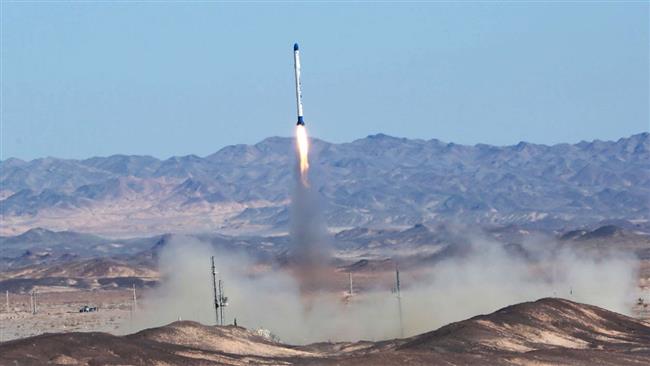
“It was a long-range Safir missile — a class that Tehran last launched into space two years ago, and that uses the same components as those needed for an intercontinental ballistic missile.

“The images showed a flurry of activity, including a host of visitors, on the launchpad Feb. 3, the day the missile was first spotted.

“Then, on Tuesday, the missile was gone,” the Post said.

The tough response from Trump was “unlike anything Tehran saw in eight years under President Barack Obama — whose State Department routinely issued reports critical of Iran, but turned a blind eye to the Islamic Republic’s nefarious behavior, not to mention its repeated violations of the sweetheart nuclear deal.”

“It’s a sign that for Iran, the days of wine and roses — and blind-eye treatment — are over. And perhaps an even more welcome sign that tough talk, combined with tough action, really does work,” the Post added.

We couldn’t agree more.

Michael Tomlinson

Filed Under: Blog, News Tagged With: #NuclearDeal, Appeasement policy, Featured, Iran Mullahs, Iran sanctions, Iran Talks, Iran Terrorism, IRGC, Nuclear Deal, Sanctions

Iranian Regime Keeps Pushing Extremism In Spite of Controversy

February 1, 2017 by admin

Iranian Regime Keeps Pushing Extremism In Spite of Controversy

Iranian Regime Keeps Pushing Extremism In Spite of Controversy

While fierce debate rages over President Trump’s executive orders on immigration from seven nations with ties to terrorism, including Iran and Syria, the Iranian regime is using this as a distraction while it continues its efforts to keep pushing its extremist actions across the region.

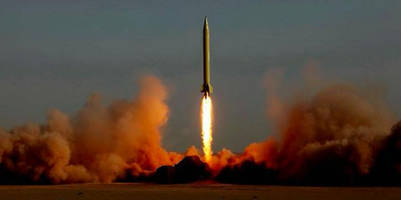
Chief among them was a resumption of ballistic missile test launches in violation of existing restrictions by the U.S. and United Nations. The launch, which took place at a site more than 130 miles east of Tehran, is Iran’s first real test of the Trump administration.

The missile was tracked flying southward 650 miles before exploding when its reentry vehicle failed, according to officials who weren’t authorized to speak publicly on intelligence.

The missile has been tested before, officials said, most recently in July 2016, according to the Los Angeles Times.

White House spokesman Sean Spicer told reporters Monday that the administration was aware the test took place, but wouldn’t provide additional information.

“We’re looking into that,” he said. “We’re aware that Iran fired that missile. We’re looking into the exact nature of it, and I’ll try to have more for you later.”

Christopher Harmer, a military analyst at the Institute for the Study of War, a nonpartisan public policy group in Washington, said that it’s impossible to know if Tehran conducted the test as a response to the president’s action, but that the test also serves as propaganda.

“Iran is always working on every aspect of its missile program: better guidance, more payload capacity, and better reliability,” he said. “They test often so it’s difficult to say for sure whether this is a response to the travel ban, but the timing is suspect.”

Trump, as a presidential candidate, was deeply critical of the landmark 2015 nuclear deal with Iran, calling it “the worst deal ever negotiated.”

U.N. Resolution 2231, passed shortly after the nuclear deal was signed, calls on Iran “not to undertake any activity related to ballistic missiles designed to be capable of delivering nuclear weapons, including launches using such ballistic missile technology.”

The U.N. will now determine whether the launch was a violation at an emergency meeting of the U.N. Security Council to be held Tuesday.

Sen. Bob Corker, chairman of the Senate Foreign Relations Committee, condemned Iran for the missile test.

“No longer will Iran be given a pass for its repeated ballistic missile violations, continued support of terrorism, human rights abuses and other hostile activities that threaten international peace and security,” Corker, a Republican from Tennessee, said in a written statement.

President Trump on Sunday spoke with King Salman of Saudi Arabia, a conversation in which the two “agreed on the importance of rigorously enforcing the Joint Comprehensive Plan of Action with Iran and of addressing Iran’s destabilizing regional activities,” the White House said in a statement.

A ballistic missile launch could potentially fall under “destabilizing regional activities.”

The launch also came a day before Jordan’s King Abdullah arrived in Washington for meetings with Vice President Pence and Defense Secretary Mattis as the administration ramped up meetings with Iran’s neighbors to forge a consensus on dealing with the Iranian regime.

The ballistic missile launch wasn’t the end of Iran’s aggressions as Iran-backed Houthi rebels attacked a Saudi warship in the Red Sea Monday killing two sailors and wounding two others according to Fox News.

The Saudi frigate, Al Madinah, was conducting routine operations in the southern Red Sea when the attack occurred.

In October, U.S. Navy warships came under missile attack by Iran-backed Houthi rebels in the same area of the southern Red Sea just north of the Bab al Mandab Strait.

For the first time in history, a U.S. destroyer successfully shot down incoming enemy missiles using SM-2 missiles in the October attack.

Days later Tomahawk cruise missile launched from the USS Nitze destroyed the Houthi radar installations responsible for firing on the U.S. warships.

The Iranian kept up its loud propaganda efforts by issuing official statements saying it would stop using the U.S. dollar in its official statements; an and ultimately futile gesture.

The decision was announced by Central Bank of Iran governor Valiollah Seif during a television interview on the evening of January 29 and, according to the paper, is due to take effect from the start of the new fiscal year on 21 March. It will affect all official financial and foreign exchange reports.

No doubt the move was aimed at making a response to the visa controversy, but if this was the extent of the Iranian regime’s response, it clearly demonstrates how feeble and weak it is in protesting the decision.

It also underscores the fact that the Iranian regime is already excluded from accessing U.S. currency exchanges as part of existing sanctions placed for the regime’s role in supporting terrorism.

Michael Tomlinson

Filed Under: Blog, News Tagged With: #NuclearDeal, Featured, hassan rouhani, Iran, Iran sanctions, Iran Terrorism, nuclear talks

  • « Previous Page
  • 1
  • …
  • 4
  • 5
  • 6
  • 7
  • 8
  • …
  • 15
  • Next Page »

National Iranian-American Council (NIAC)

  • Bogus Memberships
  • Survey
  • Lobbying
  • Iranians for International Cooperation
  • Defamation Lawsuit
  • People’s Mojahedin
  • Trita Parsi Biography
  • Parsi/Namazi Lobbying Plan
  • Parsi Links to Namazi & Iranian Regime
  • Namazi, NIAC Ringleader
  • Collaborating with Iran’s Ambassador

Recent Posts

  • NIAC Trying to Gain Influence On U.S. Congress
  • While Iran Lobby Plays Blame Game Iran Goes Nuclear
  • Iran Lobby Jumps on Detention of Iranian Newscaster
  • Bad News for Iran Swamps Iran Lobby
  • Iran Starts Off Year by Banning Instagram

© Copyright 2026 IranLobby.net · All Rights Reserved.