Iran Lobby

Exposing the Activities of the lobbies and appeasers of the Mullah's Dictatorship ruling Iran

  • Home
  • About
  • Current Trend
  • National Iranian-American Council(NIAC)
    • Bogus Memberships
    • Survey
    • Lobbying
    • Iranians for International Cooperation
    • Defamation Lawsuit
    • People’s Mojahedin
    • Trita Parsi Biography
    • Parsi/Namazi Lobbying Plan
    • Parsi Links to Namazi& Iranian Regime
    • Namazi, NIAC Ringleader
    • Collaborating with Iran’s Ambassador
  • The Appeasers
    • Gary Sick
    • Flynt Leverett & Hillary Mann Leverett
    • Baroness Nicholson
  • Blog
  • Links
  • Media Reports

Even Iran Lobby Is Not Immune From Regime Extremism

October 19, 2016 by admin

Even Iran Lobby Is Not Immune From Regime Extremism

Even Iran Lobby Is Not Immune From Regime Extremism

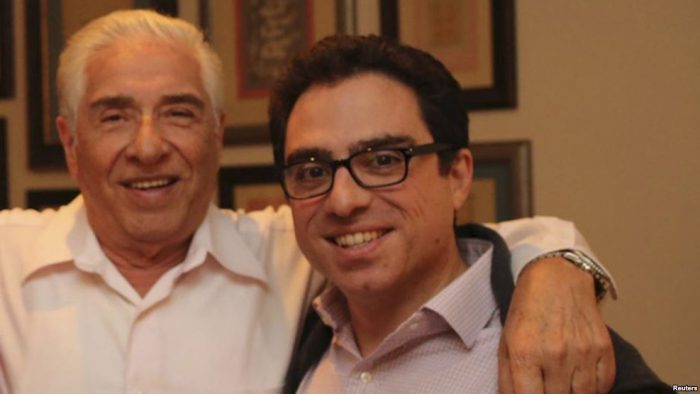
Siamak Namazi, a 45-year-old Iranian-American businessman who enjoyed close ties and access to one of the Iran lobby’s leading advocates in the National Iranian American Council, found himself on the wrong end of a 10-year prison sentence handed down by an Iranian court.

Sentenced alongside his 80-year-old father, Baquer Namazi, a former Iranian provincial governor and former UNICEF official who also has dual Iranian-American citizenship, Siamak has become another hostage pawn in the Iranian regime’s schemes to angle for more cash, more accommodation and more appeasement from the US.

Both men were sentenced to 10 years in prison for spying and cooperating with the U.S. government, said Tehran prosecutor Abbas Jafari Dolatabadi, according to the Fars news website, without specifying when exactly the sentences had been handed down.

The U.S. State Department’s deputy spokesman, Mark Toner, said the father and son had been “unjustly detained” in Iran, and called for their immediate release.

Babak Namazi, Siamak’s brother and Baquer’s son, called the sentences unjust.

“My father has been handed practically a death sentence,” Babak Namazi said in a statement.

Baquer Namazi has a serious heart condition and other medical issues requiring special medication, his wife wrote on Facebook in February. On Tuesday, UNICEF called for his release on “humanitarian grounds.”

The pleas for the Namazis echoed similar pleas made by desperate family members of previous regime hostages such as Washington Post reporter Jason Rezaian, Christian pastor Saeed Abedini, former US Marine Amir Hekmati and former FBI agent Robert Levinson, who still remains unaccounted for in Iran.

One significant difference though is that Siamak Namazi has been reported to have worked alongside long-time friend Trita Parsi in launching the NIAC with the idea of forming an advocate within the US to help push the Iranian agenda in the hopes of gaining a lifting of crippling economic sanctions.

For Parsi, the creation of NIAC and its companion lobbying arm, NIAC Action, has provided him and his colleagues with a comfortable living, access to influential power brokers and a platform to extol their support for the mullahs in Tehran.

Yet, Namazi was still snatched up by regime officials along with his father and sentenced to a long prison term without much disclosure as to why.

Mizan, the Iranian judiciary’s official news site, published on Sunday video images of Siamak, set to dramatic music and spliced together with images of President Barack Obama and Rezaian, who was released from an Iranian jail in January after more than 18 months in detention.

The video showed Siamak’s U.S. passport and identification card from the United Arab Emirates, where he previously lived. It then showed him standing and holding his arms outstretched, as if being searched, while being filmed by at least one other cameraman. The website said the video depicted “the first images of the moment of Siamak Namazi’s arrest.”

It is a stark and disturbing reminder to other supporters of the regime that their utility only goes so far and should be a sharp slap in the face for folks like Parsi who urged support for a more “moderate” Iran, but now find their associates as easily punished as anyone else; without any special status or immunity for their previous support for mullahs.

The arrests also expose the folly of regime president Hassan Rouhani’s much-touted visit to the United Nations in 2013 in which he famously urged Iranian ex-pats to come back to Iran and help their country; only to find virtually all dual national citizens are fair game for arrest.

In his most recent trip back to the UN last month, Rouhani remarked on CBS News’ “60 Minutes” program that the Iranian regime did not even recognize dual national status.

It’s an amazing turnaround in only two years and mirrors the sharp reversal of by the regime after getting its promised nuclear deal; leaving it free to deal harshly with its enemies both foreign and domestic in a broad and harsh crackdown.

The arrest and sentencing of such a close associate of Parsi and the NIAC, finally motivated Parsi to issue a press release with unusually tough language more in line with what his staunchest critics have said about the regime in the past.

“Both Siamak and Baquer Namazi have been denied basic due process and all indications are that the Iranian government has been using them as political pawns in violation of its own laws and basic human decency,” Parsi said.

“For the United States, the sentencing is a clear signal that more political capital and attention needs to be dedicated to securing the release of the Namazis and other Americans imprisoned in Iran. The United States should leave no stone unturned in utilizing diplomatic channels to press the Iranians to secure their release.”

If you didn’t know the statement came from Parsi, you might have mistaken it from a long-time Iranian regime critic from Congress or the pages of the Washington Examiner.

The irony should not be lost on anyone.

For all of its efforts to promote the regime and boost the lifting of economic sanctions and flood the regime with billions in cash that the mullahs are now using in three proxy wars in Syria, Iraq and Yemen, the NIAC and other Iran lobby members are faced with the inconvenient truth that supporting Iran is no guarantee of future safety or security from the same extremists actions against others.

Michael Tomlinson
 

Filed Under: Blog, News Tagged With: Featured, Iran Lobby, Iran Terrorism, IRGC, Moderate Mullahs, National Iranian American Council, NIAC, NIAC Action, Sanctions, Trita Parsi

Iran Regime Pushes Oil Contracts to Raise Cash for Wars

October 19, 2016 by admin

Iran Regime Pushes Oil Contracts to Raise Cash for Wars

Iran Regime Pushes Oil Contracts to Raise Cash for Wars

The Iranian regime’s Hassan Rouhani put out the invitation to a select group of high-powered investors to come visit the regime in the hopes of garnering new investments to help jump-start a stagnant economy that has only gotten worse after promises for improvements by Rouhani proved false after the nuclear agreement. Rouhani did not mention anything about the dual citizens who will end up in prison for a cash ransom.

Rouhani’s invite went to the 20-20 Investment Association, a group of influential investors overseeing $7 trillion of assets, much of it though is held within government-run pension funds which are prohibited by many state laws from investing in Iran because of its support of terrorism. This includes some of the biggest pension funds run by California, New York and Texas.

James Donald, head of emerging markets at Lazard Asset Management, the US fund company that oversees $174 billion of assets, and a board member of the 20-20 association, said the invitation reflected the Iranian regime’s desire to attract more foreign investors.

Donald said: “The group at this stage has not accepted the invitation. An awful lot of large government pension plans have restrictions on Iranian investments and [on] any company that does business in Iran. There is talk of [the remaining sanctions being removed]. I think there would have to be a federal law change [for banks and asset managers to move en masse into the Iranian market].”

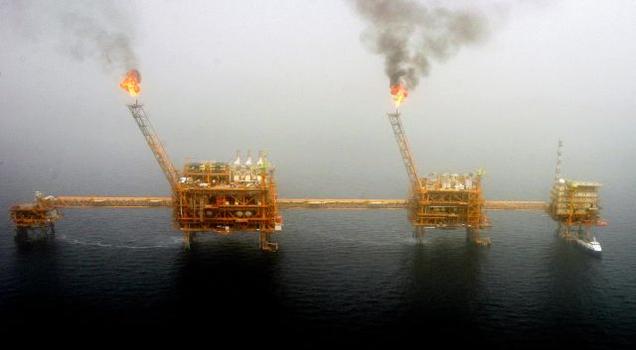
In addition Rouhani’s pleas, the regime-controlled National Iranian Oil Co. issued a request for bidders to invest in Iran’s slumping oil industry which powers much of the regime’s overseas and military activities.

The Iranian regime wants to attract more than $100 billion in investment to increase its oil production by 1 million barrels a day by the start of the next decade and raise its current oil output of 3.63 million barrels a day under a compromise agreement reached with other oil producing countries.

The mullahs in Tehran are anxious to try and diversify its investors because in the prior decade of sanctions imposed stemming from its illicit nuclear weapons program, the only dominant investor willing to ignore Western sanctions was China. In many cases, Iran’s oil, telecommunications, manufacturing and other heavy industries are run almost entirely by Chinese workers and managers.

According to the Chicago Tribune, Western investors have been slow to arrive. That’s especially true in the energy sector, where pressure to increase production is intense. Elsewhere, Western clearing banks still refuse to do business with Iran for fear of falling foul of non-nuclear U.S. sanctions that remain in effect, meaning Western companies can’t raise project finance.

This has created intense pressure on the mullahs to find some way to bring in foreign dollars to modernize its antiquated oil industry in order to get more oil out of the ground and sold to bring in hard dollars to fund three widespread wars Iran is now fighting in Syria, Iraq and Yemen.

The regrettable end game for the mullahs is to rip off Iran’s natural resources not for the benefit of the Iranian people, but rather fund the Islamic revolutionary expansion they are pushing abroad.

Recognizing the limitations of sanctions still in place, in spite of recent moves by the Obama administration to further accommodate a regime threatening to walk away from the nuclear deal in order to extort more concessions, the Central Bank of Iran announced it had informed banks throughout Iran that any failure by non-American banks to provide dollar-related services to Iranians would be “unacceptable” according to regime-controlled media.

“Providing dollar-related services [to Iranians] will no longer expose non-American banks to the risks of sanctions provided that they stay clear of US financial system,” the CBI said in its statement.

“Therefore, non-American banks cannot use US sanctions against Iran as an excuse for refusing to provide dollar-related services to Iranian individuals and entities.”

It is a desperate statement to make since Iran is not the final arbiter of what is and is not allowed under existing sanctions still in place, but the regime is so desperate for cash it is bullying financial institutions into handling US currency in order to get the flow of cash moving through Iran again.

It’s an explicit warning aimed especially at European and Asian banks who have been reluctant to engage in US currency exchanges with Iran for fear of running afoul of US officials, especially since there is significant uncertainty with the upcoming presidential election virtually guaranteeing a change in policy towards Iran come next January.

All of which highlights the futility of the promises and claims made by the Iran lobby following the nuclear deal in which leading supporters of the regime such as the National Iranian American Council promised a more moderate Iran willing to work to end the series of conflicts in the Middle East.

Instead, the world has amply seen the exact opposite with the breaking out of a shooting war between the US Navy and Iranian-backed Houthi forces in Yemen, the ferrying of thousands of Iranian-backed Shiite militias from Iraq into Syria via Iranian airlines to fight for the Assad regime.

The rapid escalation in fighting in these countries is draining the regime’s treasury in spite of the billions of dollars it received as part of the hostage exchange of Americans and the release of frozen assets back to the Iranian regime.

The mullahs squandered those funds and it seems that they are now rapidly trying to squander billions more in foreign investment.

By Michael Tomlinson

Filed Under: Blog, News Tagged With: #NuclearDeal, Featured, hassan rouhani, Iran, Iran Lobby, Iran Mullahs, Iran sanctions, Iran Terrorism

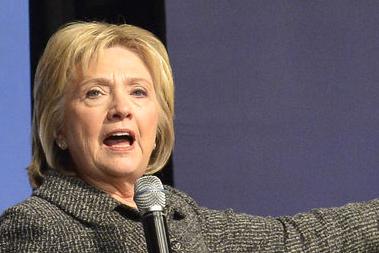
WikiLeaks Reveals a Much Tougher Hillary Clinton on Iran Regime

October 19, 2016 by admin

WikiLeaks Reveals a Much Tougher Hillary Clinton on Iran Regime

WikiLeaks Reveals a Much Tougher Hillary Clinton on Iran Regime

The Iran Lobby, led by the National Iranian American Council, have often publicly argued for a more moderate approach to the Iranian regime and encouraged efforts by the Obama administration to appease the mullahs in Tehran in the hopes of changing their historically extremist behavior and policies.

The past two years have shown how foolish it was to believe those promises as the Iranian regime is now the central player in three wars raging across Syria, Iraq and Yemen; all conflicts in which the world is increasingly being dragged into the crosshairs of a shooting war.

The Obama administration has called for another increase in US forces in Iraq to combat ISIS insurgents, yet now find that Iraqi militias it trained are now fighting in Syria against rebel forces the US supports.

Now in Yemen the US Navy is exchanging missile fire with Iranian-backed Houthi rebels. Not exactly a recipe for “moderation.”

The NIAC and other Iran lobbyist members have gone all in with the Democratic Party in backing their candidates for House and Senate races in the hopes of overturning a Republican majority that is skeptical of Iran’s professed moderate intentions, but that hope might prove just as illusory as the idea of Iranian moderation.

WikiLeaks has been dumping thousands of emails and documents from the Democratic National Committee, party officials and members of the Clinton campaign, including from Hillary Clinton itself.

What they reveal is a much different picture of the candidate’s opinions on Iran that what the NIAC would have everyone believe.

According to a speech transcript made public this weekend by WikiLeaks, Clinton on October 28, 2013, told the Jewish United Fund of Metropolitan Chicago: “I believe that Rouhani was allowed to be elected by the two major power sources in Iran, the supreme leader and the clerics and the Revolutionary Guard … in part because the sanctions were having a quite damaging effect on the economy.”

She continued: “I don’t think anyone should have any illusions as to the motives of the Iranian leadership. What they really want to do is get sanction relief and give as little as possible for that sanction relief.”

According to Eli Lake in Bloomberg, Clinton, in private at least, has taken a more realistic view since leaving the administration. In her Chicago speech, she called Rouhani’s outreach to the West a “charm offensive,” and argued that U.S. negotiations were important as a sign of good faith to the international community, but not as a way to influence Iranian internal politics.

In another speech sure to dismay NIAC and other Iranian supporters, Clinton even advocated privately for U.S.-led strikes against Iranian regime nuclear facilities and acknowledged regime’s ability to terrorize the United States through Iranian regime’s Revolutionary Guard Corps (IRGC) operatives and other proxies in Latin and North America.

Clinton expressed a willingness to bomb the Iranian regime facilities as an “option” to prevent the Shiite powerhouse from developing a nuclear weapon in a June 4, 2013 speech to Goldman Sachs and elaborated further about the threat Iranian regime, the IRGC, and its proxies pose to the United States in a separate speech on October 24, 2013.

She warned that there would be “consequences” carried out through the IRGC and Iranian regime’s other proxies if the United States took military action against it. Although she did not specifically mention Hezbollah by name, it is the most active Iranian mullah’s terror proxy across the world, including the Western Hemisphere.

In a bit of prescience, Clinton reiterated:  “So it’s a wicked problem, as we like to say, because Iran is not only troubling because of its nuclear program, although that’s the foremost threat, it’s the primary conductor and exporter of terrorism.”

“I mean, if you had a big map here behind us, literally from North America to Southeast Asia, there are so many thoughts, so many bombs, so many arrests that are all traced back to the Iranian regime’s revolutionary guard, and their constant efforts to sell (inaudible)….So even if a miracle were to happen and we came up with a verifiable nuclear deal, there would still be problems that Iran is projecting and causing around the world that had real consequences for our friends and ourselves.”

Her recognition of the Iranian regime’s true nature is a welcome boost to those that have opposed the entreaties of NIAC and other Iranian regime supporters. It is also understandable that her comments were private since they were at odds with her party’s leader in President Obama, but with her possible election as president, her core beliefs that the Iranian regime is not a huggable, fluffy teddy bear, but rather a central conduit for the exporting of death, destruction and terrorism is heartening to regime opponents and Iranian dissidents.

On another accout, the Iranian regime blasted comments made by Secretary of State John Kerry who blamed Iran’s provocative actions in Syria and Yemen as being the creator of uncertainty to the extent foreign banks and businesses are reluctant to invest in Iran and not US sanctions on currency exchanges.

In an interview published Friday, Kerry told Foreign Affairs magazine that Iranian regime’s support for Syrian President Bashar Al-Assad, Lebanon’s Hezbollah movement and Yemen’s Houthi rebels made it “very difficult” to help Iran improve its banking system and business practices.

“Mr. Kerry’s comments are totally unacceptable,” Iranian regime’s deputy foreign minister, Abbas Araghchi, told state television on Sunday night.

“We are surprised. During the nuclear negotiations, we clearly said that questions of security, defense, ballistic missiles and our regional policies were not negotiable and are not linked to the nuclear talks,” he said.

“It is unacceptable that Mr. Kerry is today talking of new conditions.”

No matter how the regime wants to spin it, these problems are problems of its own creation.

By Michael Tomlinson

Filed Under: Blog, News Tagged With: Featured, Iran, Iran deal, Iran Lobby, Iran Terrorism, IRGC, National Iranian American Council, NIAC, Sanctions

Iran Regime Escalating Tensions With US Navy

October 14, 2016 by admin

Iran Regime Escalating Tensions With US Navy

Iran Regime Escalating Tensions With US Navy

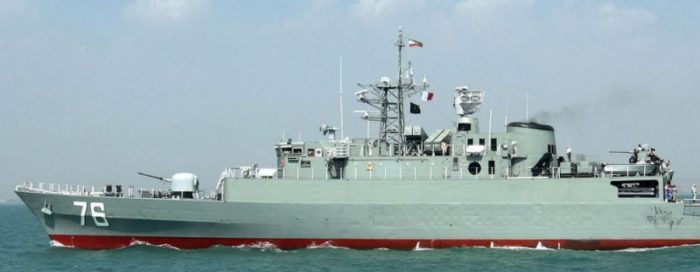
This week has seen tensions rise off the coast of Yemen to unheard of levels as Iranian-backed Houthi rebels twice fired cruise missiles at US Navy warships and in response, a US Navy destroyer fired Tomahawk cruise missiles destroying three coastal radar installations that were used to track the American ships.

Tensions rose even more when the Iranian regime announced it was sending two Iranian warships to the Gulf of Aden in close proximity to one of the world’s most important shipping routes.

“Iran’s Alvand and Bushehr warships have been dispatched to the Gulf of Aden to protect trade vessels from piracy,” regime-controlled Tasnim News Agency reported.

The move introduces Iranian warships far from their operating bases and coastline along the Persian Gulf and puts them adjacent to US warships at a time when threatening behavior is being met with salvos rather than radio warnings.

The Iranian regime has used its navy over the past year to engage in an escalating game of chicken in the Persian Gulf, including having ships make aggressive high speed runs at US warships and ignore radioed warnings and even shots fired across their bows.

Earlier, the Iranian regime detained two US patrol boats that had strayed into waters claimed by the regime and paraded captive US sailors on television and even built a monument to the episode.

The move was seen as the latest escalation in U.S.-Iran tension related to a proxy war in Yemen, where the two are backing opposing sides. The U.S. in March 2015 joined a Saudi-led military coalition to support the embattled Yemeni government against Iranian-backed Houthi rebels, according to The Hill.

Although the Tasnim News Agency reported that the Iran ship deployments were to “protect the country’s trade vessels against piracy in the unsafe zone,” it also noted that it “coincides with the US decision to directly get involved in a Saudi-led war against Yemen.”

For the Iranian regime and its mullahs, Yemen is rapidly rising in importance as it becomes a proxy war for the larger conflict it is pursuing in the region. The use of Houthi rebels as proxies is similar to the game plan used by the mullahs with Hezbollah in Syria and Shiite militias in Iraq, all of which are supplied by Iran’s Quds Forces and Revolutionary Guard Corps with weapons, ammunition and training.

The Houthi’s use of Chinese-made cruise missiles against the US Navy warships is a disturbing escalation since the weapons are not cheap and require a fairly high level of technical know-how to operate in coordination with radar tracking; technical expertise almost surely provided by the Iranian military.

Sen. Mark Kirk (R-Ill.), a leading advocate of a tough foreign policy toward Iran, said it was unacceptable that the Obama administration continues to relax financial sanctions on Iran while it supports the Houthi rebels in Yemen.

“I am relieved the crew of the USS Mason remain safe and unharmed in the Red Sea after Iran-backed Houthi rebels repeatedly launched missile attacks at them,” Kirk said in a statement.

“It’s counterproductive, absurd and unacceptable that the White House keeps unilaterally relaxing financial sanctions against the Iranian terror-sponsoring regime while Iran continues to actively support Houthi militants in Yemen that are trying to kill American servicemen and servicewomen in the Middle East,” he said.

The inconvenient truth for the White House is that after over a year of appeasing the Iranian regime, the US now finds itself on a brink of an actual shooting war with Iran; a fact that the Wall Street Journal editorial board warned about.

“The White House doesn’t want Americans to notice, but the tide of war is not receding in the Middle East. The Navy this week became part of the hot war in Yemen, with a U.S. warship launching missiles against radar targets after American vessels were fired on this week. Just when President Obama promised that American retreat would bring peace to the region, the region pulls him back in,” the Journal wrote.

“Don’t expect the White House to acknowledge this because the ironies here are something to behold. Mr. Obama is backing the Saudis in Yemen in part to reassure them of U.S. support after the U.S.-Iran nuclear deal that the Saudis opposed. Mr. Obama’s Iran deal was supposed to moderate Iran’s regional ambitions, so Mr. Obama could play a mediating role between Tehran and Riyadh. But the nuclear deal has emboldened Iran, and fortified it with more money, so now the U.S. is being drawn into what amounts to a proxy war against Iran. Genius,” the Journal added.

The increase in attacks against the US by Iran may be designed to weaken its support for Saudi Arabia and further fragment the coalition fighting Iranian adventures in Syria, Iraq and Yemen right now.

By Michael Tomlinson

Filed Under: Blog, News Tagged With: Featured, Iran, Iran sanctions, Iran Talks, Iran Terrorism, Irandeal, Nuclear Deal, Syria, Yemen

Iran Lobby Working Feverishly to Save Nuclear Deal

October 11, 2016 by admin

treasury-logo

Since talks began with the Iranian regime on a potential nuclear agreement, the Obama administration has redefined generously its interpretations of “sanctions” on the regime to the point where billions of dollars have flowed to Tehran in ways unthinkable just a year ago.

The justification for the broad easing of sanctions has been the mantra that the alternative would be worse for the world; that failure to do so would empower “hardline” elements in Iran to seize the opportunity to take control and force out “moderates” and abandon the deal and start a nuclear arms race.

The administration’s position echoes the positions pushed by the Iran lobby, including prominent supporters such as the National Iranian American Council, which repeatedly claimed that the deal was helping cement support for perceived moderates such as Hassan Rouhani.

In response, the Obama administration has ignored, overlooked and even enabled a long string of accommodations for the Iranian regime that has emboldened the mullahs in Tehran. While no one disputes the intentions of the president in wanting to make a world free from nuclear weapons, we respectfully judge his efforts to have been a monumental waste of time.

The misguided belief by the US that Rouhani is a moderate that needs to be supported and whose re-election should be a priority is dumbfounding given the year of bloodshed caused by Rouhani’s policies including the massive escalation in the Syrian war, severe domestic crackdowns on human rights and the unprecedented executions of almost 3,000 Iranians, including women and children ranking Iran second in the world in state-sanctioned killing.

The latest act of appeasing the regime comes in the form of new guidance from the Treasury Department that effectively lifts the last remaining sanctions on the regime’s access to US currency exchanges.

The New York Post editorial board issued a blistering response to the action:

“The latest betrayal: The Treasury Department just lifted key restrictions on Iran’s ability to do business in US dollars and access world financial markets — breaking Team Obama’s explicit vows as it lobbied Congress not to nix the deal.

“Iran’s banks weren’t even cut off from the US financial system over the nuclear issue — but over Tehran’s funding of terrorism, its regional aggression and so on.

“Which makes another Treasury move even more squalid: It will now also let foreign firms and branches of US firms do business with Iranian groups like the Revolutionary Guard.

“The Guard is the chief conduit for Tehran’s support of terrorism, tied to numerous plots, including one in DC aimed at a Saudi envoy. And it’s also a prime force helping Syria’s Bashar al-Assad massacre civilians in his bloody bid to keep power.”

The guidance offered by the Treasury Department was designed to provide reassurance to foreign banks which have been skittish about conducting business in US dollar transactions with Iran.

According to Reuters, the guidance comes after months of complaints from Tehran, which says that remaining US sanctions have frightened away trade partners and robbed Iran of the benefits it was promised under the nuclear deal it concluded with world powers last year.

The guidelines, issued by the US Treasury Department’s Office of Foreign Assets Control on Friday, clarify that non-U.S. banks can do dollar trades with Iran, provided those transactions don’t pass through financial institutions in the United States.

What is even more incredible was that Michael Mosier, the associate director at the Office of Sanctions Policy & Implementation of Foreign Assets Control, and Christopher Backemeyer, deputy coordinator of Sanctions Policy, both were featured speakers at the NIAC’s Leadership Conference in an appalling act of conflict of interest.

The timing of their appearance before the leading lobbying arm of the Iranian regime shortly before the release of guidelines that effectively encourages and shows foreign banks how to avoid existing US sanctions put in place to stem the flood of cash flowing to terrorist groups such as Hezbollah is mind boggling.

Ironically, in an effort to minimize the impact of the Treasury Department’s guidance, the NIAC quickly issued a press release in an attempt to explain that this was not an evasion of existing sanctions, as well as encouraged the expansion of even more channels to accommodate the regime.

“The administration should take steps consistent with the U.S.’s stated policy that it will not stand in the way of legitimate business involving Iran.  Such measures include licensing U.S. person employees of foreign companies to engage in transactions involving Iran and licensing U.S. persons in general to facilitate transactions between foreign persons and Iran,” read the NIAC’s statement from Tyler Cullis.

Of course, the NIAC neglected to mention that any dual-national Iranian-American that traveled to Iran on business was likely to be arrested and held for ransom or a future prisoner swap.

The guidelines earned a quick rebuke from Congressional critics who warned of dire consequences in allowing the Iranian regime easier access to US dollars.

“The new guidance overturns the long-running understanding that the U.S. dollar cannot be used to facilitate international trade with any Iranian entities, let alone sanctioned entities. And by allowing foreign subsidiaries of U.S. companies to transact business with Iranian entities, the president is ignoring the clear text of a law passed by Congress,” Sen. Tom Cotton (R., Ark.) said on Sunday.

Sen. Mark Kirk of Illinois, who chairs a Senate banking committee with oversight over Iran sanctions law, said the new guidelines amounted to the White House granting Tehran new concessions.

Meanwhile, Rep. Mike Pompeo (R., Kan.) said Treasury’s changes “green-light business with terrorists. The updated FAQs remove barriers for foreigners to engage with firms the Islamic Revolutionary Guard Corps controls.”

By Michael Tomlinson

Filed Under: Blog, News Tagged With: Appeasement policy, Featured, Iran Human rights, Iran Terrorism, IRGC, National Iranian American Council, NIAC, NIAC Action, Nuclear Deal, Rouhani, Sanctions, Tyler Cullis

Key to Syrian Solution Lies in Pushing Iran Out

October 10, 2016 by admin


Key to Syrian Solution Lies in Pushing Iran Out

Key to Syrian Solution Lies in Pushing Iran Out

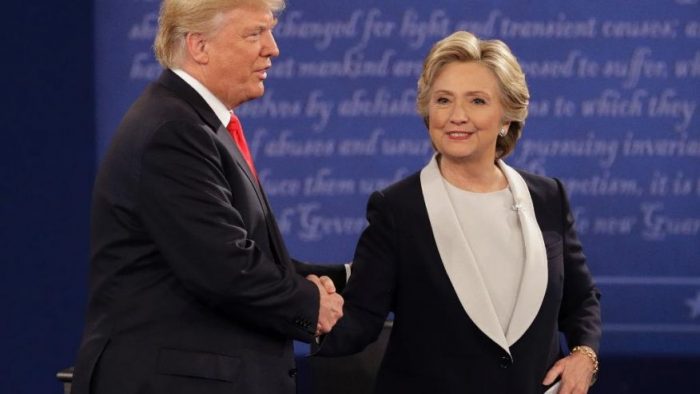
Sunday night’s presidential debate between Hillary Clinton and Donald Trump is sure to be analyzed, dissected and poured over for days, but while both candidates traded accusations on Syria and its effect to refugees, terrorism and geopolitics, neither candidate hit the mark when it came to highlighting the real solution to the Syrian civil war.

The real solution to stopping the bloodshed in Syria lies in getting the Iranian regime out of Syria.

The Syrian civil war has been raging since 2011 and it is easy to forget its beginnings and how it grew into the global conflagration it has become, but what has been indisputable has been the influence of the Iranian regime from the very beginning.

It is useful to recall that the source of the original unrest were protests by ordinary Syrians demanding democratic reforms in March of 2011 and the release of political prisoners. In many respects, the protests taking place on the streets of Damascus were eerily similar to protests on the streets of Tehran by Iranians protesting similar issues in the wake of a presidential election widely recognized as being fraudulent.

Within a month protests had spread throughout Syria and the Assad regime responded just as the mullahs in Tehran did two years earlier; with massive crackdowns by the military that included the indiscriminate shooting of civilians in the streets.

The images of dead and dying civilians in Tehran and Damascus are not the only things that connected the two regimes.

The Iranian regime acted quickly to funnel funds to the cash-strapped Assad regime after a series of punishing international sanctions were imposed for the regime’s use of chemical weapons and mass killing weapons such as barrel bombs on civilians, including hospitals; that support was estimated by the UN to be as high as $6 billion annually, with other human rights groups doubling that amount.

Additionally, the Iranian regime sent senior commanders from its Quds Forces to plan and lead operations involving Hezbollah terrorists to help repel the gains of Syrian rebels. This level of involvement increased with the forced recruitment of thousands of Afghan refugees as mercenaries, along with the shifting of Shiite militias from Iraq to fight in Syria.

The involvement of so much Iranian military capacity led to declarations from Syrian military officials that Syria might as well become a province of Iran.

Even with all of that Iranian regime interferences, the rebels were still making gains leading up to the actual shelling of Assad regime buildings in Damascus, which led to the now not-so-secret trip to Moscow by Quds Force commanders to beg for Russian intervention in Syria.

The increasing tempo of military actions collapsed a proposed cease-fire and led to claims and counter charges between the US and Russia reminiscent of the Cold War. Nothing illustrated that confusion more than the situation in the northern Syrian city of Aleppo.

The New York Times examined the zany alliances at work in Aleppo where there are Iraqi Shiite militiamen cheering for clerics who liken the enemy to foes from seventh-century battles. There are Iranian Revolutionary Guards fighting on behalf of a Shiite theocracy. There are Afghan refugees hoping to gain citizenship in Iran, and Hezbollah militants whose leaders have long vowed to fight “wherever needed.”

The messy mosaic of ground fighters on both sides has challenged Washington’s tangled allegiances. The United States is effectively allied with Iraqi Shiite militias to thwart the Islamic State in Iraq, but in Syria, some of those same militias are fighting on the side of the Assad government, which the United States opposes, and against a mix of rebel groups, some of them backed by the Obama administration.

The Daily Caller discussed the vast increases in Shiite militias in Syria.

“Most estimates of the total number of Shi’a militia fighters in all of Syria now exceed 60,000,” U.S. strategic advisory firm The Soufan Group notes. The Soufan Group highlights that this number may even exceed that of the actual Syrian Arab Army under command of Assad. These Shiite militias take orders only from Iran’s Revolutionary Guard Corps.

Alarmingly, even though the evidence is overwhelming that the only viable solution to Syria’s war lies in containing and ultimately removing Iran’s control of the Assad regime, the Washington Post reported efforts were underway by the Obama administration to actually weaken sanctions imposed on Syria.

According to lawmakers and staffers in both parties, the White House is secretly trying to water down the Caesar Syria Civilian Protection Act, a bipartisan bill that would sanction the Assad regime for mass torture, mass murder, war crimes and crimes against humanity. The bill, guided by House Foreign Affairs Committee ranking Democrat Eliot Engel (N.Y.), would also sanction entities that aid the Syrian government in these atrocities; that includes Russia and Iran.

The bill, named after a Syrian defector who presented the world with 55,000 pictures documenting Assad’s mass torture and murder of more than 11,000 civilians in custody, has 70 co-sponsors, a majority of whom are Democrats.

Now the White House has told members and staffers that the bill’s sanctions on Iran could violate the nuclear agreement the Obama administration struck with Tehran last year and the Russia sanctions could hurt any future efforts to work with Moscow diplomatically on Syria.

It is a stunning position to take and one disturbingly similar to arguments made by Iran lobby members such as the National Iranian American Council.

It seems that the similarities between Syria and Iran be beyond just murdered civilians in the street.

By Michael Tomlinson

Filed Under: Blog, News Tagged With: Featured, Iran, Iran deal, Iran Human rights, Iran Lobby, Iran Mullahs, Iran sanctions, Iran Talks, Iran Terrorism, IRGC, National Iranian American Council, NIAC, NIAC Action, Sanctions, Syria

How Did the Iran Nuclear Deal Become a Partisan Talking Point?

October 6, 2016 by admin


How Did the Iran Nuclear Deal Become a Partisan Talking Point?

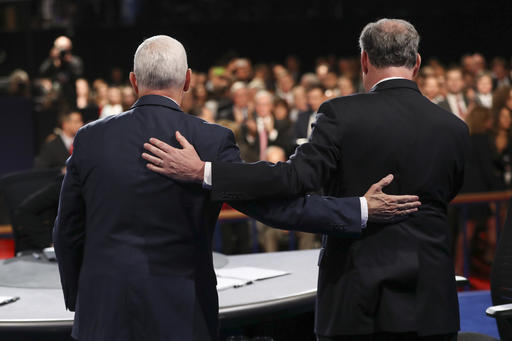
Republican vice-presidential nominee Gov. Mike Pence and Democratic vice-presidential nominee Sen. Tim Kaine stand after the vice-presidential debate at Longwood University in Farmville, Va., Tuesday, Oct. 4, 2016. (Joe Raedle/Pool via AP)

Last night’s vice presidential debate had its usual highs and lows, sprinkled with verbal fisticuffs and even some thoughtful answers, but the most interesting tidbit that came through was the sharp disparity over the Iran nuclear deal in which Democratic running mate, Sen. Tim Kaine (D-VA) all but gushed over the deal’s alleged stoppage of nuclear weapons versus Gov. Mike Pence’s (R-ID) blistering retorts against it.

Putting aside the relative merits of each side’s arguments, the larger question that needs addressing is “how did the nuclear deal ever become a partisan talking point?”

In many ways, it’s lamentable and regrettable that it has gotten to this point. For much of the past three decades both parties have been uniformly united over confronting Iran. That lock-step solidarity is what has driven the vast majority of successes against the Iranian regime such as the imposition of stiff sanctions following the crackdown on demonstrators to the stolen 2009 presidential elections.

Even top mullah Ali Khamenei recognized the terrible blows to the regime’s economy that resulted from those bipartisan sanctions when he summarily decided that the regime needed a new “moderate” face to win back international support after a deplorable eight years of Mahmoud Ahmadinejad.

The regime also recognized that in putting forth a “moderate” face, it had to cobble together a better lobbying effort to drive wedges in the united political front America and its allies had presented for much of the regime’s existence.

Those twin goals led to Hassan Rouhani’s selection and the creation of lobbying groups such as the National Iranian American Council and its offspring, NIAC Action.

Happily for the mullahs, the Obama administration was looking for a foreign policy win to close out its term having been unable to solve the puzzle of wars in Iraq and Afghanistan and the rising tide of Islamic extremism that sprang forth from the Syrian civil war and Iranian regime’s use of terror proxies throughout the region.

It was an unfortunate decision because it enabled the Iran lobby to begin driving that wedge between Democrats and Republicans and shaping a message that if you supported Iran deal you were for peace and if you were against Iran deal you had to be for war.

Most Democrats frankly didn’t buy it as leading members of Congress such as Sen. Robert Menendez (D-NJ), Sen. Ben Cardin (D-MD), Sen. Chuck Schumer (D-NY) and Rep. Eliot Engel (D-NY) opposed the Iran nuclear deal, but the Iran lobby worked furiously to try and shape the debate as a Democrat vs. Republican one when in fact it wasn’t.

For other Democrats, the choices were simpler in which they chose party loyalty in an election cycle, many privately hoping to impose additional sanctions after the presidential elections.

In fact, in the year since the Iran deal was approved, and the mullahs have showed their true nature with the widening of the wars in Syria, Iraq and Yemen, as well as the renewed crackdowns and human rights violations at home and escalation of its ballistic missile program, many of these same Democrats have offered up new proposals to impose new watchdogs or sanctions on Iranian regime.

Coupled with the fact that the mullahs have obliged by going on a binge of militant and aggressive acts including threatening US warships in the Persian Gulf and snatching up even more dual nationals for future hostage swapping, it is almost certain that after the November elections, the US will once again present a united front in confronting Iranian regime’s extremism.

But that prospect hasn’t stopped the Iran lobby from desperately trying to make Iran a partisan issue as NIAC head, Trita Parsi was busy tweeting out his enthusiastic support for Kaine’s comments in support of the nuclear deal, probably had to make many Clinton supporters cringe slightly.

In regards to the actual facts surrounding the nuclear deal, the media fact checkers waded through the statements and found some by Kaine to be slightly wanting of clarity.

From the Washington Post: “The deal, which has been sharply criticized by Republicans, did increase the amount of time that Iran would need to build a nuclear weapon by reducing its centrifuges for uranium enrichment and its stockpile of enriched uranium. But the deal expires in 15 years, and Iran’s nuclear infrastructure remains in place.

“While Iran has insisted it has no interest in building nuclear weapons, the deal does not eliminate the risk that it will obtain nuclear bombs.”

The New York Times called the claim that the Iran nuclear deal eliminated Iran’s nuclear weapons program an “exaggeration.”

A report released this September by the Institute for Science and International Security found that the deal will also allow, through an exemption, Iran to keep 50 tons of heavy water and “continue operating 19 ‘hot cell’ radiation containment chambers.”

Possessing materials such as enriched uranium and heavy water does not necessarily mean Iran will have the capacity to restore its nuclear program. The deal will not allow nuclear inspectors to confirm, however, whether or not Iran is complying with the deal. Iran got negotiators to agree that no U.S. nuclear inspectors will be allowed on Iranian soil, according to Breitbart News.

Ultimately, the issue of containing and confronting the Iranian regime has historically been a bipartisan effort. We hope that after November, it once again becomes bipartisan.

By Michael Tomlinson

Filed Under: Blog, News Tagged With: #NuclearDeal, Featured, hassan rouhani, Iran, Iran deal, Iran Human rights, Iran Lobby, Iran Mullahs, Iran sanctions, Iran Terrorism, National Iranian American Council, NIAC, Trita Parsi

Iran Regime Inks Oil Deal Benefiting Khamenei

October 5, 2016 by admin

Iran Regime Inks Oil Deal Benefiting Khamenei

Iran Regime Inks Oil Deal Benefiting Khamenei

The Iranian regime signed its first oil production deal under a new less restrictive model that it hopes will boost its production output in spite of a new agreement with other oil producing nations to curb production in an effort to boost sagging oil prices worldwide.

The clincher is that the Iranian oil ministry’s news agency Shana said the government had signed a $2.2 billion contract with a unit of Iranian company Tadbir Energy, which is controlled by a religious foundation overseen by top mullah Ali Khamenei, according to the Wall Street Journal.

The regime hopes its new Iran Petroleum Contracts (IPC), part of an effort to sweeten the terms it offers on oil development deals, will attract foreign investors and boost production after years of sanctions.

The National Iranian Oil Company also signed a contract with Persia Oil & Gas Industry Development Co., an Iranian firm, according to Reuters. The U.S. Treasury Department named Persia Oil & Gas in 2013 as part of Setad Ejraiye Farman-e Emam, or Setad, a secretive and powerful organization overseen by Khamenei.

With stakes in nearly every sector of Iran’s economy, Setad built its empire on the seizure of thousands of properties belonging to religious minorities, business people and Iranians living abroad, according to a 2013 Reuters investigation, which estimated the network’s holdings at about $95 billion. (reut.rs/1g1qkCg)

The U.S. Treasury in 2013 sanctioned Setad and 37 companies it said it oversees, calling it “a major network of front companies controlled by Iran’s leadership.” Those sanctions were lifted in January, as part of the historic nuclear deal reached between Iran and world powers in 2015.

The deal, the first to be clinched under new improved terms for oil companies, is aimed at increasing output from four fields located near the Iraqi border to 260,000 barrels a day, compared with 185,000 barrels a day previously.

The deals target an increase in overall output to 5.7 million barrels a day by the end of 2020, compared to only 3.6 million barrels a day reached just last August. The increase in production is being allowed under an exemption granted to the Iranian regime by the Organization of Petroleum Exporting Countries (OPEC), which may threaten the long-term prospects of the reduction deal.

Ali Kardor, the head of the National Iranian Oil Co., said Monday that Iran intended to return to the market share it held before international sanctions, implying a production level of over 4 million barrels a day.

The near-desperate desire by the regime to hit the increased production levels reflects the mullahs need to gain market share and sell aggressively in order to bring badly needed revenue back into the regime’s bank accounts, which have been largely drained dry through its support of the prolonged wars in Syria, Iraq and Yemen.

The United Nations special envoy for Syria previously estimated the Iranian regime’s support for the Assad regime in Syria topped a whopping $6 billion annually alone, with other analysts estimating the total Iranian support for Syria more than double that amount to $15 billion in military and economic aid in 2012 and 2013.

By signing the first deal under this new IPC structure, the regime hopes to entice foreign oil companies to return to Iran and invest in the development of these fields. Previously, foreign firms were reluctant because of buy-back contracts that only benefitted the regime and often left foreign operators with little to no profit.

The push to boost production is also seen as an attempt by Hassan Rouhani to boast of better economic news as he prepares to run for re-election in next year’s presidential election. Iran’s economy has remained stagnant even after the completion of the nuclear deal last year in which Rouhani promised significant economic benefits that have failed to materialize.

The lack of economic improvement for ordinary Iranians have led to renewed discontent in the form of protests by large sectors of the Iranian economy; from teachers protesting low wages to small business owners chafing under poor sales and workers angry over inflated salaries for high-ranking regime officials.

The inclusion of the first oil deal with a firm under the control of Khamenei also signals that the regime’s leadership is still in primary control over Iran’s future and alongside the Revolutionary Guard Corps, virtually every sector of the Iranian economy is controlled by the regime’s leadership.

That belief in the re-opening of the oil markets to Iranian oil may also be behind the recent snub of the German Economy Minister Sigmar Gabriel who was in Tehran on a high profile visit, but took the opportunity to urge the Iranian regime to pursue reforms at home and act more responsibly in Syria.

He also said Iran, which provides economic and military support to Syrian President Bashar al-Assad, should help push for a ceasefire in Syria’s civil war, adding: “I think Iran knows its responsibility there.”

His comments did not go over well with Iran’s parliament speaker, Ali Larijani, who opted to skip a meeting with the German cabinet member in a display of annoyance over the criticism.

Sadeq Larijani, brother of the parliament speaker and head of Iran’s judiciary, criticized Gabriel on Monday for his comments. “If I were in the government’s position or in the foreign minister’s shoes I would never let such a person come to Iran,” he said.

As Iran tries to re-enter the global markets, it should be ready for even more criticism as the world takes greater notice of the regime’s policies and practices.

Ultimately, Iranian mullah’s desire to regain a spot on the global stage may eventually make it once again even more vulnerable to new sanctions for its bad behavior.

By Michael Tomlinson

Filed Under: Blog, News Tagged With: Featured, hassan rouhani, Iran, Iran deal, Iran Mullahs, Iran sanctions, Iran Talks, Iran Terrorism, Khamenei

Iran Regime Escalates War on Human Rights

September 29, 2016 by admin

Iran Regime Escalates War on Human Rights

Iran Regime Escalates War on Human Rights

There has been no doubt that the Iranian regime is one of the worst abusers of human rights in the world today. Its record of abuse has been well documented by human rights groups and Iranian dissident organizations.

Anyone sitting in front of a computer or using a smartphone can simply Google “Iran” and “executions” to get a taste of how badly the regime treats its own people. The regime tries mightily to hide its abuses from the world through its control of the Internet, prohibiting the use of social media and employing an army of cyberhackers to monitor communications, as well as attempt to crack the encryption on messaging apps such as WhatsApp and Telegram.

The Iranian regime is unique in one other regard which is that it pretty much doesn’t seem to care what the rest of the world thinks about its human rights record.

One example of that callous disregard for international condemnation was the regime’s decision to uphold a 16-year prison sentence against a prominent human rights advocate in Narges Mohammadi, which was widely protested by groups such as Amnesty International.

Mohammadi, who is critically ill, had been sentenced in May on charges of violating national security and acting against the Islamic regime through her support of an anti-death penalty campaign.

As vice president of the Defenders of Human Rights Center in Iran, Mohammadi gained attention in 2014 for defending women who had acid thrown on them in the city of Esfahan, purportedly for dressing immodestly.

While jailed this summer at Tehran’s Evin Prison, she staged a 20-day hunger strike in protest of authorities who barred her from speaking by phone with her family.

Mohammadi is mother to 9-year-old twins, who live in France with their father. Friends say she suffers from a chronic illness that causes partial paralysis, which has worsened due to her imprisonment, according to the Los Angeles Times.

“This verdict is yet another cruel and devastating blow to human rights in Iran, which demonstrates the authorities’ utter contempt for justice. Narges Mohammadi is a prominent advocate of human rights and a prisoner of conscience. She should be lauded for her courage not locked in a prison cell for 16 years,” said Philip Luther, Amnesty International’s Research and Advocacy Director for the Middle East and North Africa.

“By insisting that this harsh and appalling sentence is imposed for her peaceful human rights work, the authorities have laid bare their intent to silence human rights defenders at all costs,” he added.

Human rights activists and dual nationals continue to be imprisoned during the presidency of Hassan Rouhani, whose 2013 election had raised hopes of an easing of Iran’s harsh security laws, but has since come to be regarded as an instrument of the regime’s security apparatus.

Mohammadi is a supporter of the Campaign for Step by Step Abolition of the Death Penalty, known by its Persian acronym, Legam. Iran is one of the world’s leading practitioners of capital punishment, putting to death an estimated 1,000 people last year alone.

Last month, Iran put to death a teenager who was convicted of a crime when he was 17. Approximately 160 minors are on death row in Iran, according to Amnesty International.

“It is particularly shocking that this sentence comes as Iran’s authorities are preparing for renewed bilateral dialogue with the EU, given that Narges Mohammadi was convicted for her work campaigning against the death penalty and meeting with the former EU High Representative for Foreign Affairs. This casts serious doubts over Iran’s commitment to engage meaningfully with the EU on human rights issues,” Luther added.

And therein lay the quandary the world faces: Even as it seeks to open up trade relationships with Iran following the nuclear deal, the world turns a blind eye to the continuing, blatant abuses being committed by the regime.

The harsh sentence of Mohammadi for essentially representing women who had been brutalized by regime paramilitaries and police is an especially visible demonstration of how much the mullahs in Tehran simply don’t care what the world thinks.

Part of their disregard stems from their efforts to perpetuate the myth that the nuclear deal is so valuable to the world in keeping Iran from arming itself with nuclear weapons that the world is willing to look the other way on virtually any other issue in order to preserve the deal.

Forget the fact that the deal itself is a wreck and unenforceable and the regime already has taken advantage of it, but this attitude by the world’s leaders has enabled the regime to commit more atrocities, expand its military presence and rapidly rebuild its military without fear of punishment or reprisal.

Nothing epitomizes that more than the rapid development, testing and deployment of the Iranian regime’s ballistic missile program which has progressed from short-range conventional weapons, to now deploying intercontinental missiles capable of carrying nuclear, chemical or biological warheads.

The Foundation for the Defense of Democracies, wrote in US News and World Report, explaining the regime’s use of nuclear agreement to advance its own agenda.

“Tehran insists that foreign (implicitly, U.S.) machinations have undermined the sanctions relief that the deal should have brought. Iranian officials have claimed they have ‘no fear’ of the deal falling apart, and openly discuss how to snap back their remaining nuclear infrastructure if they believe the deal has been transgressed. These critiques form the core of Iran’s snapback-centric strategy, one aimed at upping the ante to pocket additional concessions,” they write.

The “snapback” mechanism included in the deal allows the countries involved to restore sanctions in the event of Iranian “significant non-performance.” But Iran retains a separate snapback capability that can nullify both nuclear and non-nuclear sanctions: the threat of ramping up its nuclear infrastructure. The fact that the Islamic Republic is able to credibly threaten such snapback means Western audiences will have to reckon with Tehran’s complaints,” they added.

By Laura Carnahan

Filed Under: Blog, News Tagged With: Featured, hassan rouhani, Iran, Iran deal, Iran Human rights, Iran Mullahs, Iran Talks, Iran Terrorism, Irandeal

Rouhani UN Appearance Protested as Terror Strikes Again

September 20, 2016 by admin

Rouhani UN Appearance Protested as Terror Strikes Again

Rouhani UN Appearance Protested as Terror Strikes Again

A coalition of Iranian dissident and human rights groups held a protest outside of the United Nations in advance of a speech by the Iranian regime’s president, Hassan Rouhani, who is currently wrapping up a tour of countries that have all been hostile to the U.S.

The anticipated speech by Rouhani comes at a precarious time in the tri-state area, which is recovering from bomb attacks in New York and New Jersey allegedly committed by Ahmad Khan Rahami, an Afghan immigrant who was captured after being wounded in a shootout with police.

Coupled with the stabbing attack at a Minnesota shopping mall by a man who was claimed by ISIS as a “soldier of the Islamic State,” these attacks have reminded the U.S. and the world of the ever present danger of radicalized individuals, lured by the seductive siren call of Islamic extremism.

These attacks have left nearly 40 people injured, fortunately none were killed, but in light of the growing list of terror-related attacks stretching from Boston to San Bernardino to Chattanooga to Dallas and to Orlando, it is clear that the U.S. is being subjected to the kind of waves of attacks that have become commonplace in the Middle East and increasingly in Europe.

What is becomingly increasingly clear is that radicalization of these new wave of would-be terrorists is coming rapidly through the easy access of materials online and the propaganda efforts of regimes such as ISIS and Iran to make their radical messages appealing to disaffected young people.

The protest takes a stand against the long running support of terrorism by the Iranian regime and its cruel indifference for human rights both at home and abroad. According to the Organization of Iranian American Communities (OIAC), the demonstrators called for a halt in Tehran’s extensive funding and sponsoring of terrorism in the region and demanded a halt in the executions in Iran, and urge the prosecution of the regime’s leaders.

According to the National Council of Resistance of Iran, the Iranian people have been the main domestic victims of the Iranian regime’s political violence. More than 2,500 have been hanged during Rouhani’s tenure, including dozens of dissidents, women, minors, ethnic and religious minorities.

Also new evidence implicates Rouhani’s cabinet ministers, in the 1988 massacre of 30,000 political prisoners in Iran. The demonstrators held a symbolic enactment of the mass execution of thousands of political prisoners in Iran.

The Hon. Joe Lieberman, former Senator from Connecticut, Pastor Saeed Abedini, recently released from prison in Iran, and Sir Geoffrey Robertson, QC, President of the UN Special Court for Sierra Leone, were among the speakers alongside young Iranian-Americans.

Rouhani has been on a tour of some countries prior to his arrival in New York this week, including a meeting with Raul Castro in Havana. His stopover in Cuba came after a meeting of only a dozen heads of state of the 120-nation Non-Aligned Movement on the Caribbean island of Margarita off Venezuela’s coast. The meeting was a who’s who of some of the world’s most unpopular leaders including Venezuela’s Nicolas Maduro, Zimbabwe’s Robert Mugabe and Rouhani.

Syria’s ambassador to the United Nations, Bashar Ja’afari, used the forum to denounce U.S.-led air strikes he said had killed 83 Syrian soldiers, saying they were aimed at sinking a fragile U.S.-Russia ceasefire plan.

About the only dictators missing were North Korea’s leader and Syria’s Assad himself.

Far from burnishing his foreign policy credentials, Rouhani’s trip only highlights the isolation of the Iranian regime and inability to build any kind of legitimate diplomatic support; especially in light of worsening human rights moves by the regime and increased confrontations in the Persian Gulf.

Sadra Mohaqeq, a journalist with Iran’s reformist Sharq daily, was arrested in Tehran this week with no explanation by regime officials. Mohaqeq was also arrested in 2013 in a crackdown on media.

The semi-official Mehr news agency reported that Mohaqeq was arrested by a “security body.”

In April, four journalists arrested in November 2015 were sentenced to between five and 10 years in prison for “colluding” with foreign governments and acting against “national security”.

Media watchdogs say journalists in Iran have to work in a climate of fear and censorship.

In another example of how the regime cares little about world opinion, it also announced the sentencing of Nizar Zakka, a Lebanese citizen and U.S. permanent resident, to 10 years in prison as part of a wide crackdown on those with any foreign ties. Zakka advocates for Internet freedom and whose nonprofit group did work for the U.S. government.

“There’s no regard for any international order, any international agreement or any international state of relations that they care about,” said David Ramadan, a former Virginia state legislator who co-founded a group called Friends of Nizar Zakka.

A statement early Tuesday from Jason Poblete, a U.S. lawyer representing Zakka, said a Revolutionary Court in Tehran handed down the sentence in a 60-page verdict that Zakka’s supporters have yet to see. Amnesty International has said Zakka had only two court hearings before the ruling and received only limited legal assistance before the court, a closed-door tribunal which handles cases involving alleged attempts to overthrow the government.

Other known to have been detained in Iran since the nuclear deal include:

— Homa Hoodfar , an Iranian-Canadian woman who is a retired professor at Montreal’s Concordia University;

— Siamak Namazi , an Iranian-American businessman who has advocated for closer ties between the two countries and whose father is also held in Tehran;

— Baquer Namazi, a former Iranian and U.N. official in his 80s who is the father of Siamak;

— Robin Shahini , an Iranian-American detained while visiting family who previously had made online comments criticizing Iran’s human rights record; and

— Nazanin Zaghari-Ratcliffe , a British-Iranian woman sentenced to five years in prison on allegations of planning the “soft toppling” of Iran’s government while traveling with her young daughter.

Obviously it is not a priority of Rouhani’s to release any of these people, but only to hob nob with dictators. The world should listen to his speech at the UN with a critical ear.

By Michael Tomlinson

Filed Under: Blog, News Tagged With: Featured, Iran, Iran deal, Iran Human rights, Iran Mullahs, Iran Terrorism, Khamenei, Rouhani

  • « Previous Page
  • 1
  • …
  • 12
  • 13
  • 14
  • 15
  • 16
  • 17
  • Next Page »

National Iranian-American Council (NIAC)

  • Bogus Memberships
  • Survey
  • Lobbying
  • Iranians for International Cooperation
  • Defamation Lawsuit
  • People’s Mojahedin
  • Trita Parsi Biography
  • Parsi/Namazi Lobbying Plan
  • Parsi Links to Namazi & Iranian Regime
  • Namazi, NIAC Ringleader
  • Collaborating with Iran’s Ambassador

Recent Posts

  • NIAC Trying to Gain Influence On U.S. Congress
  • While Iran Lobby Plays Blame Game Iran Goes Nuclear
  • Iran Lobby Jumps on Detention of Iranian Newscaster
  • Bad News for Iran Swamps Iran Lobby
  • Iran Starts Off Year by Banning Instagram

© Copyright 2026 IranLobby.net · All Rights Reserved.