Iran Lobby

Exposing the Activities of the lobbies and appeasers of the Mullah's Dictatorship ruling Iran

  • Home
  • About
  • Current Trend
  • National Iranian-American Council(NIAC)
    • Bogus Memberships
    • Survey
    • Lobbying
    • Iranians for International Cooperation
    • Defamation Lawsuit
    • People’s Mojahedin
    • Trita Parsi Biography
    • Parsi/Namazi Lobbying Plan
    • Parsi Links to Namazi& Iranian Regime
    • Namazi, NIAC Ringleader
    • Collaborating with Iran’s Ambassador
  • The Appeasers
    • Gary Sick
    • Flynt Leverett & Hillary Mann Leverett
    • Baroness Nicholson
  • Blog
  • Links
  • Media Reports

Devastating Report Shows Obama Blocked Hezbollah Sting

December 20, 2017 by admin

Devastating Report Shows Obama Blocked Hezbollah Sting

Devastating Report Shows Obama Blocked Hezbollah Sting

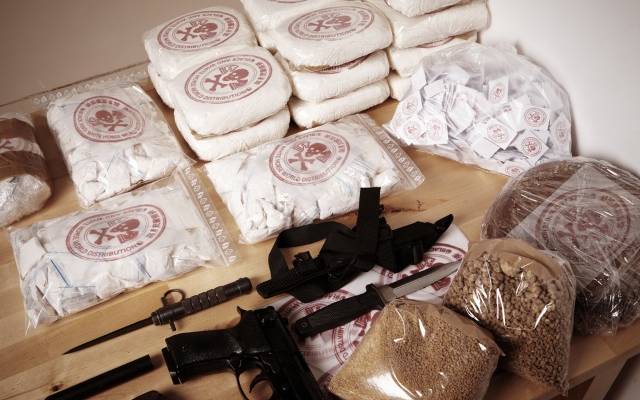
Politico published a devastating story of how the Obama administration derailed a Drug Enforcement Administration operation aimed at Hezbollah, a Lebanese-based, Iranian-backed terrorist group, which used trafficking in drugs and weapons to fund its operations, in order to prevent jeopardizing the Iran nuclear deal.

The blockbuster revelation came in an exhaustive three-part series by Politico’s Josh Meyer who delved deep into Hezbollah’s criminal and terrorist operations, its support from the Iranian regime and the Obama administration’s desperate moves to keep the DEA’s investigation from jeopardizing a flawed nuclear deal alive.

Known as Project Cassandra, the DEA’s extensive campaign was aimed at toppling the terrorist group’s elaborate network smuggling and selling narcotics and weapons around the world; whose profits were used to fund the terror network worldwide.

“This was a policy decision, it was a systematic decision,” David Asher, who helped establish Project Cassandra as a Defense Department illicit finance analyst in 2008, told Politico. “They serially ripped apart this entire effort that was very well supported and resourced, and it was done from the top down.”

When Project Cassandra leaders, who were working out of a DEA’s Counter facility in Chantilly, Virginia, sought an OK for some significant investigations, prosecutions, arrests and financial sanctions, Justice and Treasury Department officials delayed, hindered or rejected their requests, according to Politico.

Project Cassandra members said Obama officials blocked or undermined their efforts to chase down top Hezbollah operatives, including one of the world’s biggest cocaine traffickers who was also a top supplier of conventional and chemical weapons used by Syrian President Bashar Assad against his own citizens.

Former Obama administration officials told Politico their decisions were guided by improving relations with Iran, stalling its nuclear weapons program and freeing four American hostages held by the country.

According to Politico, the DEA followed cocaine shipments, some from Latin America to West Africa and on to Europe and the Middle East, and others through Venezuela and Mexico to the United States. They tracked the river of dirty cash as it was laundered by, among other tactics, buying American used cars and shipping them to Africa. And with the help of some key cooperating witnesses, the agents traced the conspiracy, they believed, to the innermost circle of Hezbollah and its state sponsors in Iran.

It is ironic that the other countries involved in the smuggling operation include countries such as Venezuela who is closely tied to the Iranian regime.

It is even more ironic that the Iran lobby has been deaf, dumb and mute on the disclosures since they fly directly in the face of the claims made by Iran advocates such as Trita Parsi of the National Iranian American Council who extolled the virtues of the nuclear deal as a moderating force within Iran and throughout the Middle East, but now we know that the promise of the deal in fact persuaded the Obama administration to give Hezbollah a free pass in shipping narcotics to Western nations and arms to proxies who later used them in conflicts stretching from Syria to Yemen to Nigeria.

The Obama-led Justice Department declined requests by Project Cassandra and other authorities to file criminal charges against major players such as Hezbollah’s high-profile envoy to Iran, a Lebanese bank that allegedly laundered billions in alleged drug profits, and a central player in a U.S.-based cell of the Iranian paramilitary Quds force. And the State Department rejected requests to lure high-value targets to countries where they could be arrested, according to Politico.

In hindsight, the Obama administration’s Pollyanna-ish view of the Iranian regime and Hezbollah since at best naive, and at worst deliberately obstructive.

Obama’s then CIA director, John Brennan, even recommended that Obama “has the opportunity to set a new course for relations between the two countries” through not only a direct dialogue, but “greater assimilation of Hezbollah into Lebanon’s political system.”

The logic that believed the mullahs in Tehran could be trusted to act in a civilized manner also seemed to guide the belief that Hezbollah could be assimilated into a normal political party in war-torn Lebanon.

The disclosure that Brennan actually believed that “moderate elements” within Hezbollah could be cultivated is a shocking echo of the same arguments made about empowering “moderate elements” within the Iranian regime through a negotiated nuclear agreement.

It is clear now that the pervasive idea of appeasement was hatched almost from the day President Obama was sworn into office and guided U.S. policy moving forward and eventually set the stage for the carnage and bloodshed Iran has unleashed over the past three years.

Politico cited the example of Lebanese arms dealer Ali Fayad, a suspected top Hezbollah operative whom agents believed reported to Russian President Vladimir Putin as a key supplier of weapons to Syria and Iraq, who was arrested in Prague in the spring of 2014.

But for the nearly two years Fayad was in custody, top Obama administration officials declined to apply serious pressure on the Czech government to extradite him to the United States, even as Putin was lobbying aggressively against it.

Fayad, who had been indicted in U.S. courts on charges of planning the murders of U.S. government employees, attempting to provide material support to a terrorist organization and attempting to acquire, transfer and use anti-aircraft missiles, was ultimately sent to Beirut. He is now believed by U.S. officials to be back in business, and helping to arm militants in Syria and elsewhere with Russian heavy weapons.

We know that the Obama administration’s policy of appeasement has been a complete failure in reining in Iranian extremism. It has made the world a much more dangerous place and resulted in the deaths of hundreds of thousands of people.

We can only hope that the Politico story revelations will serve as a harsh reminder for the Trump administration not to make the same mistakes.

Michael Tomlinson

Filed Under: Blog, News Tagged With: Featured, Hezbollah, Iran, Iran Terrorism, IRGC, Khamenei, National Iranian American Council, NIAC, Rouhani, Trita Parsi

Iran Budget Proposal Hides True Costs of Extremism

December 14, 2017 by admin

Iran Budget Proposal Hides True Costs of Extremism

Iran Budget Proposal Hides True Costs of Extremism

Iranian regime president Hassan Rouhani presented a $337 billion draft budget to parliament and earmarked roughly $100 billion of it for so-called “public service programs” ostensibly to create jobs, address a banking crisis and introduce a new social security program.

In his televised remarks, Rouhani said banks need to “withdraw from business dealings” and return to traditional lending services amidst a crisis in the sector drowning in bad loans and a shadow economy of money lenders forced to operate on the margins by government-controlled economy that has funneled badly needed capital away from the private sector to fund a variety of military programs and wars.

The proposed budget comes with a raft of significant tax hikes and increases in fees and duties including steeper car registration fees and departure taxes sure to hit ordinary Iranians even harder.

While Rouhani’s budget grew by six percent over last year’s budget, inflation has been running at almost 10 percent, wiping out the effects of any budget growth in terms of real services delivered to the Iranian people.

Rouhani added in his speech the customary and desultory promises to eliminate poverty, create social justice and push for full employment; all promises that have about as much chance of being fulfilled by the mullahs as the Cleveland Browns of making the Super Bowl this year.

Rouhani had promised the Iranian people significant economic relief in the wake of the Iranian nuclear deal two years ago and the lifting of economic sanctions. While the International Monetary Fund did report that Iranian gross domestic product growing a robust 12.5 percent last year, almost all of that growth was attributed to expanding oil exports with the lifting of sanctions.

The Iranian consumer economy remained stagnant and in areas such as agriculture, slid backwards. The IMF predicts growth to be a sluggish 3.5 percent this year now that oil exports have stabilized.

When coupled with Iran’s chrfgonic high unemployment (officially pegged at 12.5 percent, but likely higher), the economic outlook remains bleak for Iranian families.

Much of the blame lies squarely with Rouhani and his fellow mullahs who preside over an economy riddled with deep corruption, nepotism and cronyism. They also divert massive amounts of capital to military programs such as the crash development of ballistic missiles and foreign wars such as the Syrian civil war and Houthi uprising in Yemen.

Rouhani has frequently bragged of a whopping 145 percent increase in Iran’s military budget; largely resulting from the billions of dollars supplied by the Obama administration in payments for Iranian assets previously frozen during sanctions, including the now-infamous visual of pallets of cash being loaded onto a jetliner in exchange for a release of American hostages.

There is a certain irony in all of this since under the previous rule of the Shah, steep increases in military spending led to wide discontent among Iranians over the perceived lack of support for the consumer economy. A similar scenario is now developing under the mullahs in Tehran.

That heavy investment in military campaigns has paid dividends for the mullahs insomuch as it has helped drive conquests in several countries to help fulfill their ambitions of building an Shiite arc of influence stretching from the Mediterranean Sea to Indian Ocean in a radical Islamic version of the old Soviet Warsaw Pact.

For top mullah Ali Khamenei it fulfills a vision he has long nurtured to wipe out Iranian regime’s enemies and secure a ring of protection from any potential attacks. For Khamenei, the preservation of his extremist ideology and the power death grip he maintains seems to be his most driving passion.

Key to fulfilling those ambitions has been his conscious choice to make the Iranian people continue enduring a war economy and funnel massive hoards of cash to developing a network of proxies to fight his wars and consolidate his gains.

This includes Hezbollah terror groups in Lebanon who served as cannon fodder in Syria, as well as Shiite militias in Iraq, recruited Afghan mercenaries and the Houthis that toppled the government in Yemen and now mount raids along the Saudi Arabian border.

All of which makes Rouhani’s comments that Iran stood ready to restore ties with Saudi Arabia if it stopped bombing in Yemen all the more fanciful and mostly propaganda fodder.

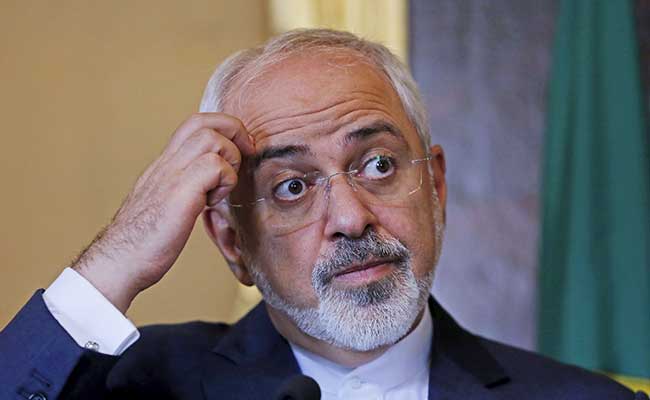
This also shows the duplicity of comments made by regime’s Foreign Minister Mohammad Javad Zarif in an editorial in the New York Times in which he urged Europe to continue working with Iran. He emphasized that the regime’s military capabilities were “entirely defensive” in nature.

It’s an absurd comment when seen in the context of Iran’s military actions are all occurring outside of its own borders! Zarif would be hard-pressed to prove that diving in the Syrian civil war and contributing to the deaths of half a million men, women and children is a “defensive” act.

In another disingenuous statement, Zarif defends Iran’s missile program by claiming it has only focused on precision targeting and not range as an example of developing conventional warheads and not nuclear ones.

He of course neglects the steady progress Iranian regime has made in building and test firing larger missiles with heavier payloads and longer ranges. The most recent missile tests earlier this summer showed off ranges that placed much of Europe, Asia and Africa within striking distance of Iran.

He goes on to claim credit for ending the bloodshed in Syria, but neglects to mention that Iranian regime’s intervention in the first place is what widened the war.

Overall, his editorial is a particularly adept example of fake news publishing.

Alongside Rouhani’s budget proposal, it’s no wonder the true costs of Iranian regime’s extremism remain hidden.

Michael Tomlinson

Filed Under: Blog, News Tagged With: Featured, hassan rouhani, Iran Terrorism, Khamenei, Moderate Mullahs, Rouhani

Fake News and False Promises of Iran Regime

December 14, 2017 by admin

Fake News and False Promises of Iran Regime

Fake News and False Promises of Iran Regime

The Iranian regime’s foreign minister, Mohammad Javad Zarif, authored an editorial that ran in the New York Times which has been receiving some play in social media circles and it is worthy of closer examination because of the litany of falsehoods it perpetuates.

Zarif’s editorial recounts the completion of the Iran nuclear accord and the benefits it has brought the region, specifically to Europe as it has opened Iranian markets to European Union companies.

He warns that all that demanding work has been put at risk by President Donald Trump’s assertive stance towards the regime, especially its ballistic missile program which the U.S. views as a strategic threat to its forces and allies in the region.

While Zarif waxes longingly about the crisp Vienna air two years ago, he neglects to mention what Iran has accomplished in that same span of time that might now make his list of accolades.

There is little surprise in his editorial running in the New York Times which has long been a staunch advocate of supporting policies easing the burden on Iran during the Obama administration and Zarif repays its support in literary license by equating President Trump’s opposition to the regime to the threat of climate change.

Ultimately though, Zarif’s editorial is aimed squarely at the capitals of EU nations that may be wavering in their wholehearted support of the opening economic channels with the Iranian regime; some have already made the shift such as France under incoming French President Emmanuel Macron’s strong denunciation of Iran’s ballistic missile program.

What Zarif and his mullah masters have recognized is that support throughout European capitals is thinner than they think. The past two years of Iranian involvement in several conflicts have had a detrimental effect on Europe, especially the Syrian civil war which widened only after Iran stepped in with cash, arms and troops to save the regime of Bashar al-Assad.

That conflict alone set in motion one of the largest migrations of refugees into Europe since the end of World War II and helped give rise to the radical extremism of ISIS which has plagued Europe of terrorist attacks in London, Paris, Brussels, Berlin and elsewhere.

European leaders, while attracted to the idea of accessing Iranian markets for investment, are realizing that doing a deal with the devil is no deal worth doing in the long run.

History may also be playing a role since the diplomatic history of Europe has been littered with many failed efforts to rein in extremism such as the Munich Accords which failed to bring Adolf Hitler to heel. Those reminders serve to pointedly give EU nations pause when considering what to do next with Iran.

Zarif didn’t help his cause when he attempted to push some silly false narratives in his editorial, especially extolling the defensive virtues of Iran’s ballistic missile program, insisting their pinpoint accuracy should not cause concern.

His claim that Iran’s desire for a vast military buildup is only fueled by history such as the Iran-Iraq War rings hollow when taken in the context of how the regime has invested so heavily in weapons that can strike well beyond its own borders and threatens Europe itself.

This may explain why leaders such as Macron are quick to push back against Iran now since they already have a model of ballistic futility to follow in the standoff with North Korea and the rest of Asia.

Macron can probably envision how France may end up in the same proverbial boat as Japan is now with North Korea lobbing missiles over its airspace and Iran demonstrating it will soon be able to achieve the same thing.

Zarif’s blaming of the revolt in Yemen on Saudi Arabia is even more outlandish since Iran was the one responsible for inciting the Houthis to revolt in the first place and arming them with weapons that include shooting missiles at targets within Saudi Arabia.

He also mentions Iranian regime’s “partners” but while he means to include Russia and Turkey in that description, the regime’s real partners are terrorist proxies that fight its wars, including Hezbollah in Syria, Shiite militias in Iraq and the Houthis in Yemen.

These are hardly the partners that “labor to put out fires.” If anything, the Iranian regime’s partners are more like the arsonists he decries, and they have thrown matches that have caused vast tracts of the Middle East to be consumed in bloodshed.

But if Zarif wants to talk about Turkish partners, he might want to mention Resit Tavan, a 40-year old Turkish businessman, being charged by U.S. prosecutors for illegally smuggling U.S.-made engines and boat generators to the Iranian navy in violation of sanctions.

Or possibly Mehmet Hakan Atilla, who is accused of using his position at Turkey’s state-run HalkBank to design a system of money transfers to help Iranian regime access cash.

Of course, Zarif also neglected to mention the fates of several European citizens currently languishing in regime prisons, including a British-Iranian aid worker which the Iranian regime will treat as an Iranian citizen and she will serve her sentence as determined by the judiciary, Iran’s foreign ministry spokesman said on Monday.

The fates of her and other European citizens, who have been treated as hostages to be used as political pawns by the mullahs, only reinforces the perception that is growing in Europe that the Iran nuclear deal was a bill of goods and Iranian regime used to gain much-needed cash to fund its military activities while strangling any hope of democratic reforms domestically.

This sentiment has been on display with the large numbers of European Parliament members now meeting with members of the Iranian resistance movement to decide on how best to confront the Iranian regime.

If Zarif’s editorial is any indication, the mullahs in Tehran are deeply worried that Europe may soon be following the lead of the Trump administration.

Michael Tomlinson

Filed Under: Blog, News Tagged With: Ballistic Missiles, Featured, Iran, Iran deal, Iran Terrorism, Syria

Iran Ups Ante with Warships Near the US

December 1, 2017 by admin

Iran Ups Ante with Warships Near the US

Iran Ups Ante with Warships Near the US

Back in the height of the Cold War, the saying “the Russians are coming!” often filled the political dialogue of the day with the kind of anxiety that came naturally at a time when everyone worried about building fallout shelters and conducting duck and cover drills at school as the old Soviet Union placed nuclear missiles 90 miles offshore in Cuba.

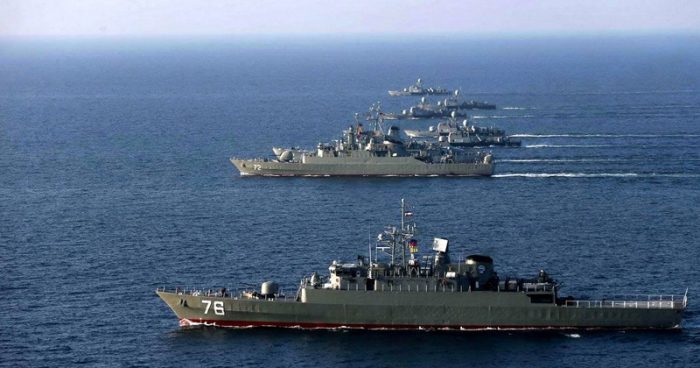
The Cuban missile crisis precipitated the closest episode to an all-out nuclear war the world had ever seen and hoped would never see again, but now the specter of confrontation along the U.S. coastline is again raising its ugly head as the Iranian regime announced plans this week to send a naval flotilla to the Gulf of Mexico in a show of power designed to thumb the mullahs’ collective noses at America and its allies.

Following orders from Iran’s top mullah, Ali Khamenei, the newly installed commander of its navy, Rear Adm. Hossein Khanzadi, announced a fleet of Iranian warships would soon be making their way into the Atlantic Ocean, despite what Iran claims is opposition by U.S. officials.

As Iran continues to deploy military assets to Syria, Yemen, Lebanon, and other Middle Eastern hotspots, its navy is placing a renewed focus on displaying force in international waters, according to the military leaders.

The latest military displays follow a series of provocative moves by Tehran aimed at rattling U.S. officials in the Trump administration, which has increasingly sought to confront Iran’s regional intransigence. Any Iranian presence in the Atlantic Ocean is certain to put U.S. military leaders in edge, according to the Washington Free Beacon.

The naval maneuver is designed to bolster Iranian influence with Latin American nations hostile to the U.S.; namely Venezuela and Bolivia.

More importantly, the exercise is designed to provide a propaganda boost at a time when the mullahs are clearly beleaguered back home; wracked with the devastation caused by massive earthquakes along the Iran-Iraq border and a moribund economy that continues to drag along in stark contrast to the promises made by Hassan Rouhani in the wake of the nuclear agreement which lifted economic sanctions.

Iranian efforts to sail its warships into the Atlantic Ocean coincide with a call by Khamenei to boost the regime’s military presence in international waters.

“The navy is in the frontline of defending the country with important regions, such as Makran, the Sea of Oman, and the international waters, in front of it,” Khamenei said in Tuesday remarks celebrating Iran’s Navy Day.

“Presence in free waters should continue similar to the past,” Khamenei added ahead of a meeting with Iranian military leaders.

Khamenei further disclosed that Iran is working to produce more advanced military equipment.

“The navy is more advanced and capable compared with 20 years ago, but this level of advance is not convincing; and a high-speed move should be pursued with determination, high morale, lots of efforts, innovation, and action,” he was quoted as saying.

The Iranian regime has often resorted to military displays as a means of diverting attention from disasters or setbacks at home; relying on jingoism to cover up inadequacies in the regime’s handling of the economy and widespread dissent at home.

The massive influx of cash the regime received as a result of the nuclear deal has helped solidify and steady its military at a time when intervention in the Syrian civil war nearly bankrupted the Iranian economy.

The diversion of fresh capital from the needs of the Iranian people and boosting the economy towards the regime’s ballistic missile program and its military adventures abroad—including this jaunt to the other side of the globe—no doubt bolsters the mullahs, but does little to improve the lives of ordinary Iranians.

But then again, the regime has announced the voyage which is a far cry from actually pulling it off with its limited resources. The Iranian navy has famously never been a blue-water navy, content to ply the shallow Persian Gulf and hug the coastlines around the Arabian Sea and Indian Ocean and play games of cat and mouse with U.S. Navy warships.

Back in 2014, the last Iranian navy commander, Rear Adm. Habibollah Sayyari, said that Iran planned to send ships near the U.S. to counter the American presence in the Persian Gulf.

Sayyari later said the sailings had been canceled “due to a change in schedule.” No other effort to send Iranian warships on such a voyage have ever been mounted until now.

Of course, that is not to say the regime cannot accomplish the task, but it does point out doubts as to the credibility of anything the mullahs announce.

What is clear though is that the regime is desperately casting about for anything to take attention away from its growing domestic problems at home.

The Iran lobby, led by the National Iranian American Council, has been busy focused on domestic U.S. policy such as the fight over immigration policies and even focusing on the shooting death of a local Iranian-American in a traffic stop; anything to avoid talking about what is happening in Iran today.

It is ironic, that during the negotiations for the nuclear deal, NIAC leaders such as Trita Parsi talked almost non-stop about conditions in Iran as a result of international sanctions, but since then have been largely silent—even as conditions worsen.

The disparity between reality and fiction under the Iranian regime and its allies is as wide as the Atlantic Ocean.

Michael Tomlinson

Filed Under: News Tagged With: #NuclearDeal, Featured, Iran Lobby, Iran sanctions, Iran Terrorism, IRGC, NIAC

Reasons for Comparing Iran Top Mullah to Hitler

November 27, 2017 by admin

Reasons for Comparing Iran Top Mullah to Hitler

Reasons for Comparing Iran Top Mullah to Hitler

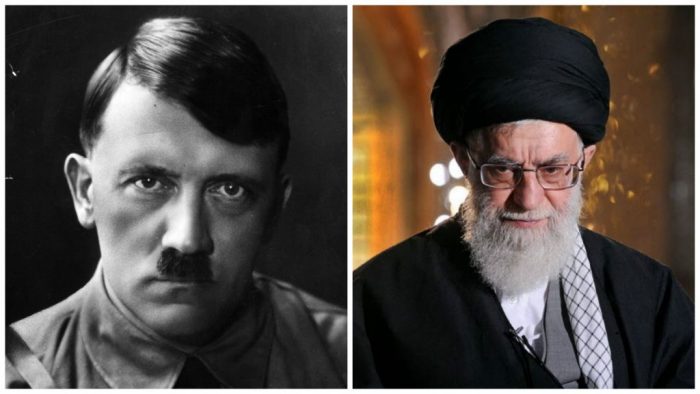
In an escalating verbal war of words, Saudi Arabia’s crown prince Mohammad bin Salman called the Iranian regime’s top mullah, Ali Khamenei, “the new Hitler of the Middle East” and warned that like the history of Europe, “appeasement doesn’t work.”

“We don’t want the new Hitler in Iran to repeat what happened in Europe in the Middle East,” bin Salman, told The New York Times in an interview published last week.

What is remarkable is not that the crown prince made those comments, but that news media treated it as earth-shattering. Human rights groups, Iranian dissidents, families of prisoners languishing in regime prisons have long called out Khamenei and his procession of handpicked presidents such as Mahmoud Ahmadinejad and Hassan Rouhani as tyrants long modelled on the bloody blueprint of Hitler’s Nazi Germany.

It is also remarkable that for once the Iran lobby was virtually silent on the crown prince’s remarks. Maybe Trita Parsi at the National Iranian American Council is finally getting the hint that shamelessly defending Khamenei is a useless exercise.

The comparison to Hitler is really neither extreme, nor shocking given the Iranian regime’s bloody history and the comparisons don’t start and stop with two megalomaniacal dictators who were power hungry for an apocalyptic vision for their countries.

No, the comparisons between the Iranian regime and Nazi Germany extend far into policies, military intervention and political propaganda.

The Nazi annexation of the Sudetenland and Austria is eerily like Iranian regime’s moves into Yemen and Syria, even using the pretext of fighting ISIS the same as the Nazi’s used the excuse of Bolsheviks to invade its neighbors.

But where the two regimes share the most is in their respective preferences for oppressing minorities and making liberal use of state courts to weed out less desirables from their societies.

For the Nazis, their policies of “racial purity” not only targeted Jews for extermination, but sent millions of Russians, Poles, gypsies, the mentally ill, gays and countless others to their deaths.

For the Iranian regime, its litmus test is religious where the mullahs view anyone not adhering to their branch of extremist belief an apostate and worthy of elimination. This explains why the regime has historically targeted minorities such as the Baha’i, Kurds, Christians and Sunnis for imprisonment and oppression.

Also, while the Nazis relied on the dreaded Gestapo and SS to enforce security at home and wage war abroad, the Iranian regime relies on its morality paramilitaries and zealous Revolutionary Guard Corps and Quds Force to achieve the same goals.

The resemblance between the two regimes is eerie and the crown prince does not make the comparison lightly.

Just as Nazi Germany gained appeasement with the West through the much-maligned Munich Agreement, Iranian regime did the same with the Iran nuclear deal; both documents weren’t worth the paper they were printed on and both launched a period of global unrest as the Nazis and mullahs took the opportunity to pursue their ambitions.

The Saudi crown prince has recognized that failure to act in defiance of the Iranian regime will only beg for another potential for war. The need for confronting the mullahs has long been a key talking point for Iranian dissidents who have warned repeatedly that failure to act to restrain the Iranian regime only emboldens the mullahs into acting more aggressively.

It is no coincidence that after Rouhani was elected to his first term and widely lauded as a “moderate” by news media that the regime undertook one of its most brutal crackdowns on dissent rounding up and imprisoning thousands of journalists, students, artists and activists.

Now the world is left to pick up the wrecked pieces of the Middle East that sees the Iranian regime now in control of Syria and Lebanon outright and having a pervasive influence over Iraq, Afghanistan and Yemen.

It’s almost like comparing Iran to Nazi Germany after the blitzkrieg of 1940 that saw it claim most of Western Europe.

But like Great Britain, Saudi Arabia has offered itself as a regional bulwark, opposing Iran in Syria, Yemen and the Gulf region and loudly calling on the rest of the world to recognize the danger the regime poses.

If the crown prince’s words are not enough, the Iranian regime added fuel to the fire when the regime’s deputy head of the IRGC warned Europe that the regime was increasing the range of its missiles to over 2,000 km, allowing it to strike at the heart of Europe.

The comments come as the French president has warned of the threat Iranian regime’s missile program poses and the Trump administration expands its sanctions list to include elements of the IRGC and those connected to its missile program.

The warning from Iran should not be considered superfluous, but rather a clear threat to the continent and an unmistakable shot across Europe’s bow.

The irony of Iran’s actions to Hitler’s speeches to blaming its enemies for driving Germany into the ground in the aftermath of World War I is striking and serves as a reminder that repeating the mistakes of the 1930s today will only lead down a path of regional conflict and even more suffering for the Iranian people.

Laura Carnahan

Filed Under: Blog, News Tagged With: #NuclearDeal, Featured, Iran, Iran Lobby, Iran Mullahs, Iran Terrorism, IRGC, Khamenei

Iran Regime Pushing Saudi Arabia to Brink of War

November 14, 2017 by admin

Iran Regime Pushing Saudi Arabia to Brink of War

Iran Regime Pushing Saudi Arabia to Brink of War

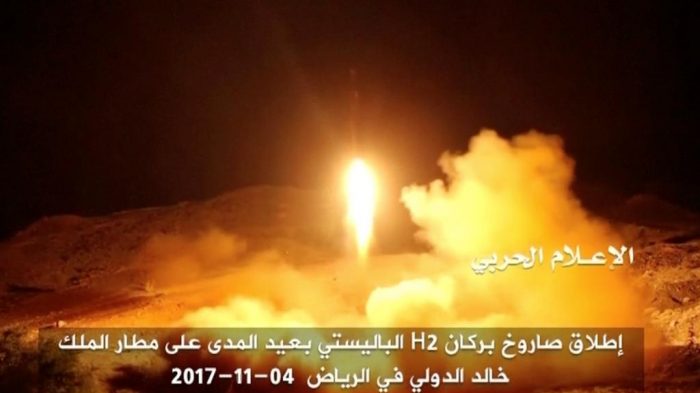
Over the weekend, Iranian regime-backed Houthi rebels lobbed a missile at the Saudi Arabian capital of Riyadh from Yemen in what is being described as an “act of war” by Saudi officials by the Iranian regime.

While tensions have long simmered between Saudi Arabia and Iran—rising to a boiling point with confrontations between the two in the Syrian civil war and Yemen—this is the marks the first-time theater-wide weapons have been introduced aimed at either countries’ capitals.

“We see this as an act of war,” said Adel Jubair, Saudi Arabia’s foreign minister, in a CNN interview. “Iran cannot lob missiles at Saudi cities and towns and expect us not to take steps.”

This latest provocation seems to be part of the larger chess game being played out between the two countries that includes clashes in Lebanon and Iraq as Saudi Arabia seems determined to step up to the plate and blunt the Iranian regime’s expansionist moves over the past several years as part of an effort to build a Shiite sphere of influence controlled by Tehran.

The two countries had only recently appeared to be working towards a rapprochement offered by the Iranians only to see the regime launch proxy military efforts in backing Houthi rebels in Yemen and using Hezbollah fighters from Lebanon in Syria; both moves seemingly aimed at isolating and diminishing Saudi influence.

The missile launched by the Houthis was intercepted before reaching the capital and while causing no damage, pushed the region dangerously closer to all-out war between the two countries.

The move by Iranian regime to allow such an act underlines how vastly stupefying promises were made earlier by Iran supporters and advocates such as the National Iranian American Council two years ago during negotiations over the Iran nuclear agreement that passage of the deal would embolden moderate forces within Iran and usher in a more moderate and stabilizing Iran.

It’s worth noting again how utterly wrong people such as Trita Parsi of the NIAC have been since then.

While it may be eminently satisfying to call out Parsi and his cohorts on how blatantly obvious it was to simply be shilling for the mullahs, the ramifications of the PR push to essentially grant Tehran a hall pass to sow terror and conflict throughout the Middle East are coming home to bear poisonous fruit.

Far from accepting the blame and pushing for moderation from the mullahs in Tehran, Parsi and the NIAC have only doubled down by aggressively going after the Saudi regime with a spate of editorials, social media posts and statements blasting Riyadh for everything from manipulating the Trump administration’s policies towards Iran to conspiring with conservative Republicans to start to eradicate Iran.

On the surface, the NIAC’s claims are ludicrous, but given the dark history of complicity by it and its allies within the Iran lobbying machine, it’s no wonder that Tehran feels emboldened enough to start lobbing missiles at Saudi Arabia.

Jubair detailed how the missile was smuggled into Yemen in parts and assembled by Hezbollah and Iran’s Revolutionary Guard Corps operatives and fired by Hezbollah from Yemen.

The fact that U.S., Saudi and other coalition naval warships have periodically caught Iranian fishing and commercial vessels smuggling weapons, ammunition and parts to Yemen from Iran have only strengthened these claims over the years of direct Iranian activity in the escalating war in Yemen.

Hezbollah’s participation is worrisome since the IRGC has often used the Lebanese-based terror group as its shock troops in conflicts such as Syria and in targeting U.S. service personnel over the past three decades around the world.

Earlier news disclosures of U.S. State Department cables published on WikiLeaks show that Yemen had acquired stockpiles of missiles from North Korea and that Iran may have shipped components of North Korean missiles to its Houthi allies who in 2015, with the support of Tehran, toppled the internationally-recognized government of President Abdu Rabbu Mansour Hadi and now control much of the countryside since then.

This new-found “Axis of Evil” between Iran, North Korea and terror groups such as Hezbollah, point out the highly volatile nature of Iranian regime’s expansion plans and how it has built a formula for conquest around using terror groups and insurgents to destabilize a country and then move in to consolidate its power and use it as a base of operations to stage even more actions.

It is a model used effectively in Lebanon, Syria and Yemen and has gained traction in Iraq, but was stymied in the Gulf states by swift action by Saudi Arabia.

Saudi Arabia has called for an urgent meeting of Arab League foreign ministers in Cairo next week to discuss Iran’s intervention in the region, an official league source told Egypt’s MENA state news agency.

The call came after the resignation of Lebanon’s prime minister pushed Beirut back into the center of a rivalry between Saudi Arabia and Iran and threatens to re-open that country to bloody conflict.

Even French President Emmanuel Macron is blaming Iran for the missile attack targeting Riyadh and said it illustrates the need for negotiations with Tehran over its missile development.

“The missile which was intercepted by Saudi Arabia launched from Yemen, which obviously is an Iranian missile, shows precisely the strength of their” program, Macron said late as he visited the United Arab Emirates and Saudi Arabia.

“There are extremely strong concerns about Iran” among its Arab neighbors in the Persian Gulf region over the missile launch, and “there are negotiations we need to start on Iran’s ballistic missiles,” he said.

All this flies in the face of the false promises made by Parsi and the NIAC and demonstrates clearly why any reputable news organization should think twice before providing air time or space for them to make such disreputable claims.

Clearly the Iran lobby has become one of the largest machines churning out “fake news” today.

Michael Tomlinson

Filed Under: Blog, News Tagged With: Ballistic Missiles, Featured, Hezbollah, Houthis, Iran, Iran Lobby, Iran Terrorism, IRGC, National Iranian American Council, NIAC, NIAC Action, Syria, Trita Parsi, Yemen

CIA Release of Osama bin Laden Files Shows Links to Iran

November 6, 2017 by admin

CIA Release of Osama bin Laden Files Shows Links to Iran

CIA Release of Osama bin Laden Files Shows Links to Iran

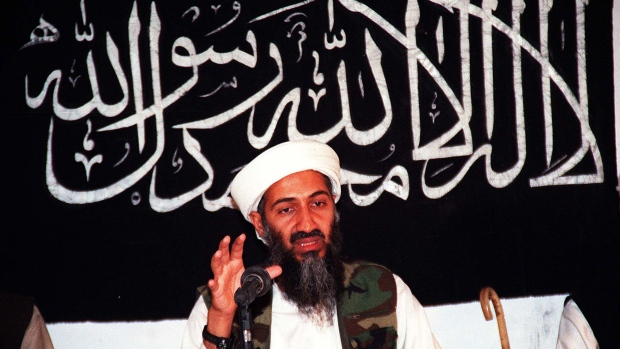
U.S. intelligence officials have long suspected ties existed between the Iranian regime and Osama bin Laden and his al-Qaeda terrorist network, even though Iran and its supporters in the Iran lobby have vigorously denied it.

Now the Central Intelligence Agency has released a trove of some 47,000 documents taken from bin Laden’s computer by U.S. special forces during the mission that killed the notorious terrorist leader in 2011 in his compound in Abbottabad, Pakistan.

Within that document dump was a 19-page al-Qaeda report in Arabic showing how bin Laden looked towards Iran in an alliance against the U.S.

“Anyone who wants to strike America, Iran is ready to support him and help him with their frank and clear rhetoric,” the report reads.

The Associated Press examined a copy of the report released by the Long War Journal, a publication backed by the Washington-based Foundation for Defense of Democracies, a think tank fiercely critical of Iran and skeptical of its nuclear deal with world powers. The CIA gave the Long War Journal early access to the material.

The material also included never-before-seen video of bin Laden’s son Hamza, who may be groomed to take over al-Qaida, getting married. It offers the first public look at Hamza bin Laden as an adult. Until now, the public has only seen childhood pictures of him.

Equally significant is the apparent location of the wedding: Iran. An analysis of the video from Long War Journal’s Thomas Joscelyn notes that Hamza bin Laden was technically in Iranian custody until 2010 but does not seem to regard himself as a prisoner in letters he wrote to his father. Furthermore, Hamza reported being mentored in the ways of jihad by several senior al-Qaeda men who were supposedly in detention in Iran.

Iranian regime officials have always vigorously denied any connection to al-Qaeda and consistently pointed to the alleged incarceration of al-Qaeda members as proof of the regime’s commitment against terrorism, but bin Laden’s own computer files shine a damning light on how false that narrative has been.

Among the most interesting revelations are details of Iran’s collusion with al-Qaeda and bin Laden’s citation of the Muslim Brotherhood as a formative influence on his political thought.

More clearly authentic are such items as bin Laden’s handwritten personal journal. The Long War Journal cites passages that indicate bin Laden hoped al-Qaeda could capitalize on the 2011 Arab Spring uprisings to expand its influence.

The document recovered from bin Laden’s system provides an extensive description of al-Qaeda’s collusion with Iran, as summarized by the Long War Journal:

The author explains that Iran offered some “Saudi brothers” in al Qaeda “everything they needed,” including “money, arms” and “training in Hezbollah camps in Lebanon, in exchange for striking American interests in Saudi Arabia and the Gulf.” Iranian intelligence facilitated the travel of some operatives with visas while sheltering others. Abu Hafs al-Mauritani, an influential ideologue prior to 9/11, helped negotiate a safe haven for his jihadi comrades inside Iran.

But the author of the file, who is clearly well-connected, indicates that al Qaeda’s men violated the terms of the agreement and Iran eventually cracked down on the Sunni jihadists’ network, detaining some personnel. Still, the author explains that al Qaeda is not at war with Iran and some of their “interests intersect,” especially when it comes to being an “enemy of America.”

Bin Laden was clear that Iran was a major covert supporter of al-Qaeda, providing funds, shelter for al-Qaeda operatives, and communications infrastructure. Two U.S. intelligence officials characterized the newly-released documents to NBC News as “evidence of Iran’s support for al-Qaeda’s war with the United States.”

Iranian regime Foreign Minister Mohammad Javad Zarif, chief Iranian architect of the nuclear deal with President Barack Obama, quickly denounced the documents as “fake news” selectively released by the CIA to “whitewash the role of U.S. allies in 9/11.”

Unfortunately for Zarif the documents are not a fabrication of the U.S. government, but rather come straight from the keyboard of one of Iranian regime’s terrorist partners.

This coincides with an account offered by the U.S. government’s 9/11 Commission, which said Iranian officials met with al-Qaeda leaders in Sudan in either 1991 or early 1992. The commission said al-Qaeda militants later received training in Lebanon from the Shiite militant group Hezbollah, which Iranian regime backs to this day and has used as its primary military forces in the Syrian civil war.

U.S. prosecutors also said al-Qaeda had the backing of Iran and Hezbollah in their 1998 indictment of bin Laden following the al-Qaeda truck bombings of the U.S. Embassies in Kenya and Tanzania that killed 224 people, including 12 Americans.

“The relationship between al-Qaeda and Iran demonstrated that the Sunni-Shiite divisions did not necessarily pose an insurmountable barrier to cooperation in terrorist operations,” the 9/11 Commission report would later say.

This is an important conclusion, made years ago, that drew the starkest line from al-Qaeda to the Iranian regime and discounted the messaging from the Iran lobby that Sunni and Shiite differences would keep Shiite Iran away from Sunni dominated al-Qaeda.

The reason why this now-proven fact is so important is because it is the exact same argument made to deny any connections between the Iranian regime and ISIS.

The unmistakable truth now with these disclosures is that the Iranian regime has been and remains the single largest supporter and partner of terror in the world and operates freely with any terrorist group aligned against the U.S.

Michael Tomlinson

Filed Under: Blog, News Tagged With: al Qaeda, Bin Laden, Featured, Iran Lobby, Iran Mullahs, Iran Terrorism, National Iranian American Council, Trita Parsi

The Importance of the Hate Machine to Iran

November 6, 2017 by admin

The Importance of the Hate Machine to Iran

The Importance of the Hate Machine to Iran

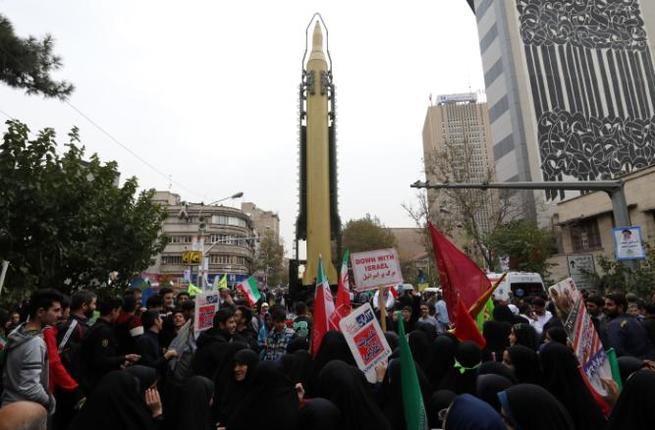
Ever since the Iranian revolution that deposed the Shah and installed an Islamic theocracy in Tehran, the ruling mullahs have invested heavily in a state-supported hate machine designed to gin up fierce hatred of the U.S., which typically reaches a crescendo on the anniversary of the 1979 U.S. Embassy takeover.

Last Saturday marked the latest iteration of a heavily choreographed spectacle designed to communicate Iranian hatred of the U.S., but also to divert the attention of the Iranian people away from the ever-growing mountain of problems they are struggling with under the mullahs’ rule and towards a perceived common enemy.

For the last nearly four decades, the mullahs have used the anniversary as the culmination of weekly and monthly demonstrations that include the now ritual “Death to America” chants and the parades across painted American flags and posters plastered on city walls mocking American political leaders.

The protests and observances have taken a different tone and edge over the years though; ceasing to be filled with vitriol by the Iranian people and carry more of a resigned air matched only by skies increasingly polluted by lack of regard by the mullahs for the environment or the health of the Iranian people.

For the mullahs these events commemorate a rare victory when hundreds of extremist regime related militant students (The very same militants that later formed the “Islamic Revolutionary Guards Corps”, IRGC) took 52 Americans hostage for 444 days in an event that helped cement the mullahs in power as they used the event for its propaganda value to legitimize the theocratic state they wanted to build; thereby stealing the promise of democracy ordinary Iranians had hoped for after the downfall of the Shah.

The mullahs learned from that singular event which is why they have carefully crafted a government built on a state-driven hate machine that attacks not only the U.S., but also other enemies such as the Sunni Arab nations such as Saudi Arabia, as well as perceived enemies from within like the Iranian resistance movement.

That machine is comprised of state-controlled media encompassing newspapers, television networks, bloggers, social media and pretty much every other avenue of communication within the regime.

It is backed by the thuggery of the Islamic Revolutionary Guard Corps and the paramilitaries that enforce the dreaded “morals codes” that oppress the Iranian people. Together with the Islamic religious courts and police, they work in concert to tightly orchestrate these observances and ensure obedience from the Iranian people.

In this aspect, the Iranian regime acts like a mirror image of the cultish North Korean dictatorship that forces citizens there to treat their leader as a deified entity.

While top mullah Ali Khamenei may not aspire to godhood, he certainly relishes having his wishes obeyed as if he was one.

To reinforce the militant aspects of this year’s anniversary celebrations, the Iranian regime’s military rolled out a surface-to-surface Sejjil ballistic missile with a range of 1,200 miles in a show of force. It marks the first time the regime has displayed this particular missile and comes shortly after President Donald Trump moved to decertify the Iranian regime under the current nuclear deal, partly because of the regime’s accelerated missile program.

The Fars news agency posted pictures of demonstrators burning an effigy of Trump and holding up signs saying “Death to America,” Reuters reported.

A statement read out at Saturday’s protest said Iranians “see the criminal America as their main enemy and condemn the denigrating remarks of the hated US president against the great Iranian people and the Revolutionary Guards.”

Khamenei speaking to the regime supporters urged them to never forget that “America is the enemy”. “To give in to the Americans makes them more aggressive and insolent. The only solution is to resist,” he said.

Ali Shamkhani, former chief commander of IRGC and current secretary of the regime’s Supreme National Security Council, addressed the crowd, saying Iran will make any sanctions imposed by the U.S. “ineffective” even as the U.S. targets Iran’s economic, nuclear and defensive power.

Shamkhani, alluding to Trump’s threats against North Korea, said even U.S. allies know that Trump “has no power to realize his bluffs, against Iran, too.” He called the U.S. the “eternal enemy” of Iran.

The regime needs to continually turn up the volume on the hate meter to continue using force and intimidation to keep the Iranian people in line and Iran in a perpetual state of conflict. The mullahs need to generate fear as a means of control as a way for justifying their increasingly punitive decisions.

Entry into the Syrian civil war? Necessary to save the Assad regime and preserve a Shiite ally.

Fostering of another civil war in Yemen? Necessary to counter Saudi expansion.

Fast tracking a ballistic missile program? Necessary to maintain a threat to the U.S. and Israel.

Ultimately though the deepest fears of the mullahs are that the Iranian people will see past these charades and choose a different path for their futures.

The Los Angeles Times quoted one such Iranian at the anniversary observances.

“I wish the hostility between the two countries would end as soon as possible because we are suffering from it,” said Hasan Mahmoudi, a shopkeeper near the embassy. “We want to have normal relations with America and foreign investment here to create jobs for our educated youth.”

For the mullahs, nothing would be more of a threat to their rule than the desire of the Iranian people for a normal life, devoid of fear, hate and conflict, where they could live in a democracy and focus on building a better life for their children.

It’s the one future that can defeat the Iranian regime’s hate machine.

Laura Carnahan

Filed Under: Blog, News Tagged With: Ballistic Missiles, Featured, Iran Human rights, Iran Mullahs, Iran sanctions, Iran Terrorism, IRGC, Khamenei, Syria, Yemen

Why Ballistic Missiles Matter to the World

November 1, 2017 by admin

Why Ballistic Missiles Matter to the World

Why Ballistic Missiles Matter to the World

Ever since German rocket scientists developed the world’s first ballistic missile in the V-2 rocket that rained down destruction on London during World War II, the world has grappled with the implications of the threat ballistic missiles pose to global security now since they can deliver nuclear warheads or biological and chemical agents.

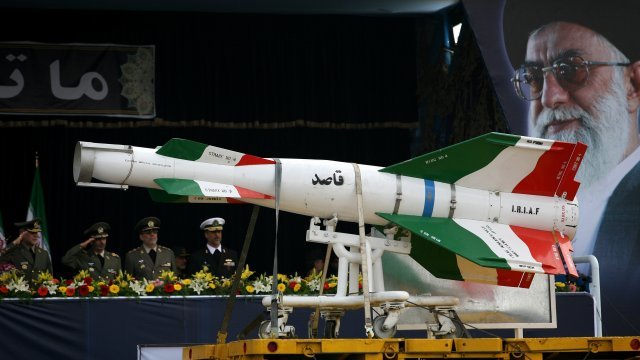
Today roughly 30 countries have operationally deployed ballistic missiles with the Iranian regime and North Korea leading the pack in missile test flights. Images of missiles racing skyward in massive flaming plumes have become standard programming on television channels beamed from Tehran and Pyongyang.

Beyond their propaganda value, ballistic missiles are a serious security threat to all nations because of their ability to leave the atmosphere, travel vast distances in a short amount of time and deliver their payload without a serious chance of being intercepted.

The threat North Korea poses to its Asian neighbors and the West Coast of the U.S. has pushed global instability to the brink over the past decade. A similar crash program by the Iranian regime to develop its own ballistic missile fleet based on North Korean designs has brought the Gulf region to a similar head.

The deeply flawed nuclear deal negotiated with the Iranian regime two years ago neglected to make ballistic missiles part of the restrictions sought by the U.S. and its allies. Many reasons have been given by negotiators and the Obama administration as to why such an allowance was given to the mullahs in Tehran.

The results have been disastrous since it essentially gave them a free pass to develop a missile capability that prior to the nuclear deal was nascent at best. The fact that the nuclear agreement also funneled billions of dollars in fresh capital to the regime to provide it with the funds necessary to scale up its missile construction on a national scale.

It is not coincidental that after the nuclear deal the world soon saw larger and more powerful missiles launch from sites throughout Iran in displays that the mullahs were not shy about using as threats against their Sunni neighbors such as Saudi Arabia, as well as to the U.S.

Ballistic missiles are also critical to any nuclear program since they are the only delivery system that can make good on any nation’s threats to strike at its enemies with near impunity. Now as the Trump administration has moved to decertify Iran’s participation in the nuclear agreement, the question of how to deal with the Iranian missile threat is moving front and center with policymakers.

The U.S. House of Representatives voted nearly unanimously recently for new sanctions on Iranian regime’s ballistic missile program, part of an effort to clamp down on Tehran.

The vote was 423 to two for the “Iran Ballistic Missiles and International Sanctions Enforcement Act.” Among other things, it calls on the U.S. president to report to Congress on the Iranian and international supply chain for Iran’s ballistic missile program and to impose sanctions on Iranian government or foreign entities that support it, according to Reuters.

The House passed three other Iran-related measures last week, including new sanctions on Lebanon’s Iranian regime-backed Hezbollah militia and a resolution urging the European Union to designate Hezbollah as a terrorist organization.

The moves underscore the U.S. resolve to confront the Iranian regime on a broader set of issues than the Obama administration addressed during nuclear talks.

It has become abundantly clear that by not addressing Iranian actions on a range of issues such as support of terrorism, ballistic missiles and human rights, the mullahs essentially acted with the assurance they would be free of any international repercussions.

They decision to wade into the Syrian civil war in support of the Assad regime is the centerpiece example of that calculus; even after Assad brutally used chemical weapons on his own people, there was no consequence for that heinous act, only emboldening the mullahs in Tehran.

But now the stage is set for confrontation with Iran as the regime’s leadership has planted a proverbial flag in the ground over its ballistic missile program.

Regime leader Hassan Rouhani said Sunday, after the House of Representatives approved its missile sanctions legislation in a speech carried on nationwide television, that no international agreements prohibit the development of non-nuclear weapons such as ballistic missiles, and that Iran has a right to produce them for its own defense.

“We will build, produce and store any weapon of any kind we need to defend ourselves, our territorial integrity and our nation, and we will not hesitate about it,” he said, according to a translation provided by the Iranian Students News Agency.

What is quickly shaping up is a test of wills between the Trump administration and the mullahs not only over the fate of ballistic missiles, but over the larger question of whether or not the U.S. will be able to rein in Iranian excesses moving forward.

For President Trump, the more strategic issue facing him is how to curb Iranian regime’s influence in places such as Syria, Iraq, Yemen and Afghanistan and hold the line against the spread of its radicalized Islamic religion.

In this regard, the battle over the nuclear deal and ballistic missiles are inextricably linked together and any future scenario of resolving them will most likely have to be done together.

This problem is precisely what experts had warned about two years ago when the ill-fated nuclear agreement was being negotiated in the first place. Iranian dissidents and groups such as the National Council of Resistance of Iran warned of the regime’s duplicity and actively countered the false promises made by Iran lobby supporters such as the National Iranian American Council.

Ultimately, the real tests facing the Trump administration and U.S. lawmakers are only now being confronted. We hope they choose a different path from the one charted earlier.

Laura Carnahan

Filed Under: Blog, News Tagged With: Appeasement policy, Ballistic Missiles, Featured, hassan rouhani, Iran, Iran Human rights, Iran Mullahs, Iran Terrorism, IRGC, National Iranian American Council

Tillerson Visit Carries Deeper Meaning for Iran Meddling

October 24, 2017 by admin

Tillerson Visit Carries Deeper Meaning for Iran Meddling

Tillerson Visit Carries Deeper Meaning for Iran Meddling

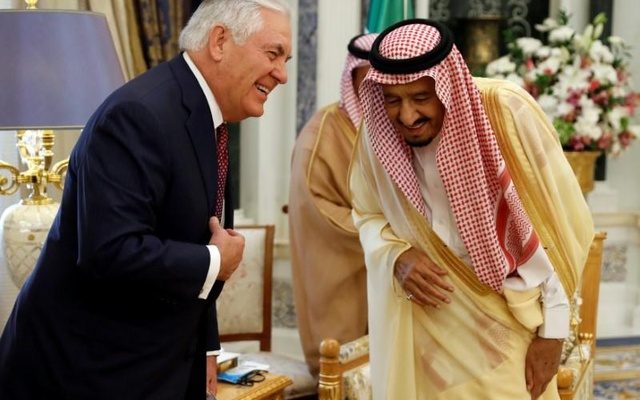
Secretary of State Rex Tillerson dived deep into Middle East politics at a time where the threat from ISIS was diminishing after battlefield victories against the Islamic extremists. His whirlwind stops in Saudi Arabia, Afghanistan and Iraq were designed to hold the line in a post-ISIS world against the encroaching influence of the Iranian regime.

In Saudi Arabia, Secretary Tillerson urged Saudi Arabia to counter Iran’s influence in Iraq by strengthening its ties with Baghdad in a meeting with King Salman of Saudi Arabia and Iraqi prime minister Haider al-Abadi.

His meeting included a call for Iranian-backed Shiite militias fighting in Iraq to leave and go back to their homes.

“Certainly Iranian militias that are in Iraq, now that the fight against Daesh and ISIS is coming to a close, those militias need to go home,” Tillerson said, using two other names for Islamic State. “Any foreign fighters in Iraq need to go home and allow the Iraqi people to regain control of areas that had been overtaken.”

Tillerson’s focus on these militias, known as Popular Mobilization Forces, he was taking aim at the growing influence of the Iranian regime’s Revolutionary Guard Corps and its Quds Force which has operated in Iraq in an increasingly visible way during the war against ISIS.

During the conflict, Tehran has sought to exert more influence in Iraq through participation in Iraq’s political process; a fraught process that nearly collapsed Iraq when former prime minister Nouri al-Maliki acted on Iranian wishes in expelling Sunni power sharing in his government, sparking a new round of sectarian conflict and empowering ISIS with the collapse of Mosul.

But Tillerson’s visit highlighted a new initiative to counter Iranian influence as Saudi Arabia has taken several steps to deepen ties between Riyadh and Baghdad.

Saudi Arabia has reopened its border with Iraq for the first time in decades and restarted direct flights between Riyadh and Baghdad. Washington is hoping the political and economic ties will deepen through the newly minted Saudi-Iraq Coordination Council, reported the Wall Street Journal.

“We believe this will in some ways counter some of the unproductive influences of Iran inside of Iraq,” Tillerson said during a news conference in Riyadh.

He urged Saudi Arabia’s involvement in Iraq’s reconstruction, as Baghdad looks to rebuild the country after a three-year war against Islamic State that destroyed cities across the nation, and called economic revitalization vital to keeping a hard-won peace.

The full-court press to normalize relations also goes a long way to counter persistent arguments made by the Iran lobby and other regime supporters that U.S. policy in the Middle East during the Trump administration was only reactionary and intent on starting a new conflict with Iran.

The diplomatic efforts led by Tillerson represent another watershed moment for President Trump in the Middle East.

His earlier announcement to not certify the Iranian regime in compliance with the Iran nuclear deal to trigger Congressional review more correctly puts the question of how to address Iran’s larger militant actions such as development of ballistic missiles in the arena of public debate where President Barack Obama had previously sought to steer clear of when negotiating the agreement originally.

Iranian regime advocates such as the National Iranian American Council had laboriously tried to shield the mullahs in Tehran from facing questions about Iran’s dismal human rights record or support for terrorist groups during the original talks two years ago, but in the intervening time the mullahs have stepped up their efforts in swinging the Syrian civil war over to the Assad regime, as well as rapidly build and deploy powerful new ballistic missiles.

The wreckage left behind by Iranian regime has solidified the decision-making process in the Trump administration to focus on containment and rolling back Iranian regime’s advances more aggressively than the policy of appeasement the Obama administration followed.

The decertification of the Iran nuclear deal is only one of several other initiatives being made by the Trump administration to roll back Iranian regime’s influence including:

  • Step up international efforts to garner international support to condemn and halt the Iranian regime’s ballistic missile program and prevent another North Korea scenario from taking root in the Middle East;
  • Encourage building stronger ties among U.S. allies such as Saudi Arabia and Iraq and the Gulf states to redraw lines of influence away from Iran and repair decades-long schisms;
  • Offer more military and intelligence support for U.S. allies in confrontations with Iranian regime forces and their proxies in hot spots such as Syria, Iraq, Afghanistan, Yemen, Qatar and Saudi Arabia.

More importantly, the U.S. is again openly warning companies from doing business with Iranian regime’s “Revolutionary Guard Corps” (IRGC) as it considers broader terrorist designations against the main tool of the mullahs.

The U.S. last week announced tough new sanctions against the IRGC because of its support for terrorism, effectively excluding it from the US financial system. Companies doing business with the group also risk penalties.

The push for expanded sanctions against the IRGC recalled the effectiveness of broad economic sanctions placed by the former administrations of presidents Bill Clinton and George W. Bush that put a stranglehold on the Iranian regime’s economy and brought the mullahs to the bargaining table in the first place.

Unlike the Obama administration, President Trump seems intent on not replaying the mistake of appeasement made by his predecessor and instead forge a new deal that finally brings Iranian regime’s extremism to heel.

Filed Under: Blog, News Tagged With: #NuclearDeal, Appeasement policy, Featured, Iran, Iran deal, Iran Human rights, Iran Lobby, Iran Mullahs, Iran Terrorism, IRGC, National Iranian American Council, NIAC, Nuclear Deal, nuclear talks, Sanctions, Syria

  • « Previous Page
  • 1
  • 2
  • 3
  • 4
  • 5
  • …
  • 17
  • Next Page »

National Iranian-American Council (NIAC)

  • Bogus Memberships
  • Survey
  • Lobbying
  • Iranians for International Cooperation
  • Defamation Lawsuit
  • People’s Mojahedin
  • Trita Parsi Biography
  • Parsi/Namazi Lobbying Plan
  • Parsi Links to Namazi & Iranian Regime
  • Namazi, NIAC Ringleader
  • Collaborating with Iran’s Ambassador

Recent Posts

  • NIAC Trying to Gain Influence On U.S. Congress
  • While Iran Lobby Plays Blame Game Iran Goes Nuclear
  • Iran Lobby Jumps on Detention of Iranian Newscaster
  • Bad News for Iran Swamps Iran Lobby
  • Iran Starts Off Year by Banning Instagram

© Copyright 2026 IranLobby.net · All Rights Reserved.