Iran Lobby

Exposing the Activities of the lobbies and appeasers of the Mullah's Dictatorship ruling Iran

  • Home
  • About
  • Current Trend
  • National Iranian-American Council(NIAC)
    • Bogus Memberships
    • Survey
    • Lobbying
    • Iranians for International Cooperation
    • Defamation Lawsuit
    • People’s Mojahedin
    • Trita Parsi Biography
    • Parsi/Namazi Lobbying Plan
    • Parsi Links to Namazi& Iranian Regime
    • Namazi, NIAC Ringleader
    • Collaborating with Iran’s Ambassador
  • The Appeasers
    • Gary Sick
    • Flynt Leverett & Hillary Mann Leverett
    • Baroness Nicholson
  • Blog
  • Links
  • Media Reports

Threat of Iran Sanctions Drives Iran Lobby and Regime Crazy

July 28, 2017 by admin

Threat of Iran Sanctions Drives Iran Lobby and Regime Crazy

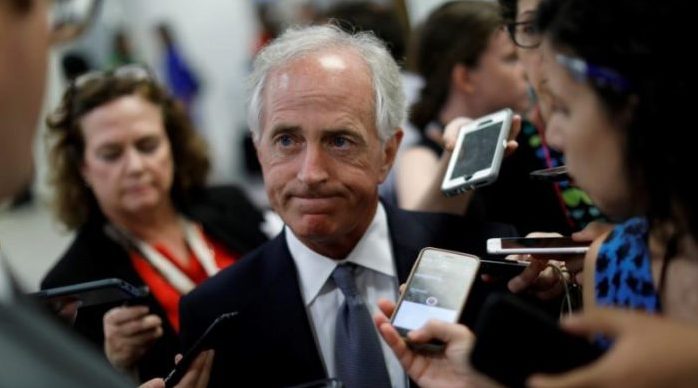
Senator Bob Corker (R-TN) speaks with reporters about the withdrawn Republican health care bill on Capitol Hill in Washington, U.S., July 18, 2017. REUTERS/Aaron P. Bernstein

It’s all but a done deal. House and Senate negotiators reached agreement according to news reports on Wednesday to get sanctions legislation against Iran, Russia and North Korea through the Senate without further amendments; avoiding needing another House vote.

“Following very productive discussions with [House Majority Leader Kevin McCarthy], I am glad to announce that we have reached an agreement that will allow us to send sanctions legislation to the president’s desk,” said Sen. Bob Corker (R-Tenn.), chair of the Senate Foreign Relations Committee. “The Senate will move to approve the Iran and Russia sanctions it originally passed six weeks ago, as well as the North Korea sanctions developed by the House.”

Votes in both houses of Congress up to this point have been lopsided, bipartisan affairs as Democrats joined with Republicans in a rare show of unity on confronting the three nations in question.

Both sides agreed on the need to take further action against North Korea even as the rogue nation has ramped up launches of ballistic missiles with ranges reaching the continental U.S.

The speed with which the sanctions legislation is moving through Congress demonstrates sharply how the landscape has changed over the last two years since the Iran nuclear deal went into effect.

The Iranian regime’s provocative actions in Iraq, Syria, Yemen, Pakistan, Bahrain and Kuwait have aptly shown the world how an unrestrained regime will act. It has also proven false the narrative used by the Iran lobby that by approving the nuclear deal, moderate elements in Iran would be empowered to take a leading role there.

Clearly, the truth has been shown that there are no moderate elements in Iran’s government.

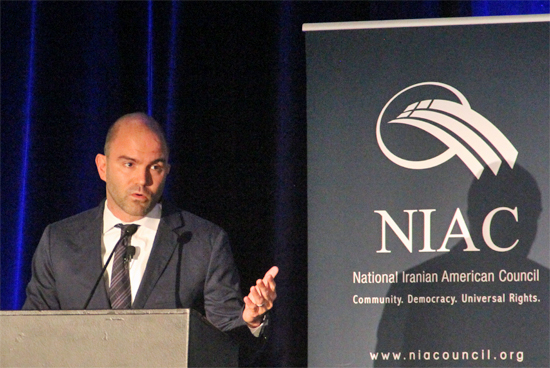
But that hasn’t stopped the Iran lobby from trying to stop this speeding train from running over the mullahs in Tehran as evidenced by the latest editorial by Jamal Abdi of NIAC Action in The Hill.

Abdi tries to make the argument that in their rush to punish Russia, Democrats are allowing President Trump to dismantle the Iran nuclear deal.

“While Democrats may score a victory on Russia, they may be setting the stage for turning Trump into a wartime president. And if that happens, few will remember the Democrats as the party that sanctioned Russia. Instead they will remember when Democrats acquiesced to, and even encouraged, Trump’s push towards war with Iran,” Abdi said.

There is little doubt that Abdi’s words are not only ineffectual, but largely being ignored on Capitol Hill; demonstrating how far the Iran lobby has fallen in its effectiveness and ability to set the national debate.

Long gone are the days of the vaunted “echo chamber” banging the PR drum loudly in support of the mullahs; only replaced by vivid images of multiple missile launches, Iranian navy ships speeding at American warships, and wide swathes of destruction in Syria and Yemen at the hands of Iranian troops.

The inability of the Iran lobby to offer any policy whatsoever calling for any reform or restrictions to the Iranian regime’s behavior is fueling the belief that the Iran lobby can offer no more solutions.

The most recent hostage-taking by Iran of a Chinese-American researcher from Princeton University and the 10-year anniversary of the arrest of former FBI agent Robert Levinson who is still being held in Iran only reinforced the perception that the regime was lawless and recalcitrant.

The recent death of North Korean-hostage Otto Warmbier only reinforced the urgent necessity of getting American captives out of Iran and has become a focal point for President Trump as he demanded the release of several other Americans being held in Iran.

Typically, Reza Marashi of the National Iranian American Council, proposed another hostage swap, taking a page from the Obama administrations appeasement policies, and echoing demands from Iran’s leadership for the U.S. to release Iranians convicted of smuggling nuclear technology to Iran.

For President Trump, his ultimate leverage may be the very nuclear deal the Iran lobby is trying desperately to save. Even though the flawed deal served up all of the freebies and goodies for the Iranian regime in the beginning, it does represent the last fig leaf covering up the ugliness of the Iranian regime’s actions under the guise of “compliance.”

Without it, the regime would have no political cover and would become a pariah nation again so the president’s warnings in a recent interview with the Wall Street Journal that he may ultimately find the Iranian regime “noncompliant” with the deal could prove a key turning point for his administration.

The regime’s leadership responded with characteristic bravado as Hassan Rouhani vowed a “reciprocal” response should U.S. sanctions pass.

Rouhani said his country would “take any action that is necessary for the country’s expedience and interests” should the sanctions go into effect, according to The Associated Press.

“If the enemy breaches parts of the deal, we will breach parts of it,” the Iranian president added. “If they breach the entire deal, we will breach it in its entirety.”

The threats seem pointless at this time since whatever restrictive effects the deal purportedly had have been largely bypassed with Iran’s ability to keep its entire nuclear refining capacity and aggressive expansion of its ballistic missile program.

For the mullahs, they have already milked that deal dry and walking away from it would probably cause them little to no discomfort.
Filed Under: Blog, News Tagged With: Featured, Iran, Iran deal, Iran Human rights, Iran Lobby, Iran sanctions, Iran Terrorism, IRGC, Jamal Abdi, National Iranian American Council

Fight Over American Hostages in Iran Escalates

July 25, 2017 by admin

Fight Over American Hostages in Iran Escalates

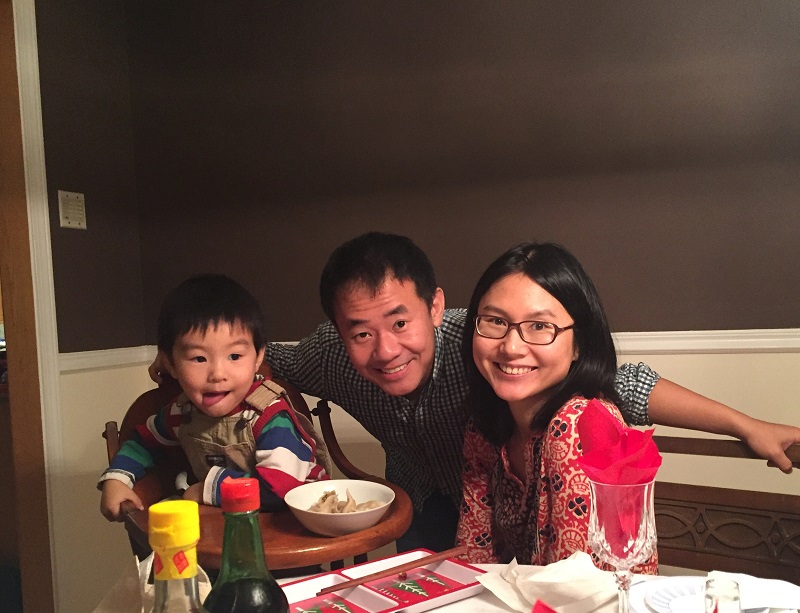
Xiyue Wang, a naturalized American citizen from China, arrested in Iran last August while researching Persian history for his doctoral thesis at Princeton University, is shown with his wife and son in this family photo released in Princeton, New Jersey, U.S. on July 18, 2017. Courtesy Wang Family photo via Princeton University/Handout via REUTERS ATTENTION EDITORS – THIS IMAGE WAS PROVIDED BY A THIRD PARTY.

Ever since Otto Warmbier was brought back from his imprisonment and torture in North Korea only to suffer from severe brain damage and eventually succumbing to his injuries, President Donald Trump has become more personally involved in the plight of Americans being held hostage in Iranian prisons.

Though there is a large partisan divide that separates the president from Democrats and Republicans, on the issue of American prisoners he has become quietly, but forcefully involved in sending unmistakable messages to the mullahs in Tehran that he wants them freed.

While there is plenty of speculation as to why the president takes a personal interest in this issue, there is none regarding the correctness of his position. Even the Iran lobby’s most ardent supporters, the National Iranian American Council, could not hide from the cruelty in the regime’s latest hostage taking, Xiyue Wang, a Chinese-American graduate student from Princeton University, who was sentenced to 10 years in prison.

Trita Parsi, the head of the NIAC, put out a statement condemning Wang’s “unjust detention and sentencing.” Of course, Parsi couldn’t help but tie the case back to old message of the sentencing as an effort by hardline elements in Iran seeking to “undermine Iran’s economic reintegration into the world.”

His statement underscores the ever-shrinking island for the Iran lobby when it comes to supporting the Iranian regime. The past two years since the nuclear deal was agreed to have fully demonstrated how incapable Iran has become to living up to the false promises of moderation made by people such as Parsi.

The Iranian regime has never made it a secret that it views hostage-taking as an essential tool of statecraft and not just American citizens either. It has detained and imprisoned Canadians and European citizens and used them as pawns in negotiations with their nations in trying to wring out concessions.

The fact that the Obama administration essentially rewarded the regime by paying pallets stacked with cash for the return of Americans including Washington Post reporter Jason Rezaian, only incentivized the mullahs to take more hostages.

But for now, the Trump administration has openly called for the release of three Americans currently still in Iran, including former FBI agent Robert Levinson and Siamak and Baquer Namazi, son and father who are Iranian-American businessmen.

In Levinson’s case, he has been held in Iran for over 10 years and Iranian officials refused to make him part of the deal that released Rezaian and other hostages.

“The United States condemns hostage takers and nations that continue to take hostages and detain our citizens without just cause or due process. For nearly forty years, Iran has used detentions and hostage taking as a tool of state policy, a practice that continues to this day with the recent sentencing of Xiyue Wang to ten years in prison,” the White House statement read.

The statement urged that Iran is responsible for the care and well being of all US citizens it has in its custody. It added that Trump is willing to impose new consequence unless all “unjustly imprisoned’ American citizens are released by Iran.

The White House announcement comes at the heels of a new administration policy — banning Americans from visiting another country known for imprisoning Americans — North Korea.

In addition, Congress has moved forward with legislation imposing new sanctions on Iran, North Korea and Russia, adding to the pressure now coming from a U.S. government freed from the previous policies of trying to appease Iran.

Of course, none of this stopped the Iranian regime from making its own demands and accusing the U.S. of holding Iranian citizens in “gruesome prisons.”

“You are keeping our innocent citizens in gruesome prisons. This is against the law and international norms and regulations,” said Sadegh Larijani, head of the regime’s judiciary, quoted by Iran’s state broadcaster.

“We tell them that you must immediately release Iranian citizens locked up in US prisons.”

Foreign Minister Mohammad Javad Zarif accused Washington of holding Iranians on “charges of sanction violations that are not applicable today… for bogus and purely political reasons”, at a meeting of the Council on Foreign Relations think-tank in New York last week.

Larijani also criticized the seizure of Iranian assets in the United States, such as a recent ruling to seize a Manhattan skyscraper to compensate victims of terrorism.

“They confiscate the assets of the Islamic republic. This is a blatant robbery. Americans behave as a bully and they want to oppress people of other countries,” he said.

Larijani’s comments deserve a good chuckle or at least a shocked gasp considering how abysmal Iranian regime’s prisons are, including the notorious Evin prison, as well as the regime’s reliance on medieval punishments such as public hanging and amputations.

Of course, given the regime’s past history of using hostages as pawns, the Larijani’s rhetoric may just be an opening prelude to another offer by the regime to swap Iranians convicted of smuggling material out of the U.S. for Wang and other Americans.

Remember, Iranian regime already has a taste of a quiescent U.S. in the prisoner swap from 2016, and may be lining up to orchestrate a similar move.

Even Reza Marashi of NIAC, acknowledged a similar move was afoot.

“I think it’s pretty clear that the Iranians are looking for another prisoner swap,” Marashi told Newsweek Monday.

The larger policy question for President Trump will be, if the regime offers a repeat of 2016, will he take the deal?

We would caution that doing so only encourages the Iranian regime to take even more hostages in 2018.

Michael Tomlinson

Filed Under: Blog, News Tagged With: #NuclearDeal, Featured, Iran, Iran deal, Iran Human rights, Iran Lobby, Iran Mullahs, Iran sanctions, Iran Terrorism, IRGC, National Iranian American Council, NIAC, NIAC Action, Reza Marashi

US Sanctions Set to Begin as Iran Threatens Hostages

July 24, 2017 by admin

US Sanctions Set to Begin as Iran Threatens Hostages

US Sanctions Set to Begin as Iran Threatens Hostages

In a sign of not-so surprising bipartisan agreement in the highly charged partisan atmosphere of Washington, DC, Republican and Democratic lawmakers announced an agreement on legislation that will impose new sanctions on the Iranian regime, North Korea and Russia.

To say that there is very little Republicans and Democrats agree on today would be a colossal understatement, but it is clear dealing with Iran and North Korea has moved to the forefront because of their respective ballistic missile programs and Russia for alleged interference in U.S. elections.

The decision of how best to deal with Iran and North Korea seems to be about the only issues that draws popular and wide-ranging support from both sides of the political aisle; much to the consternation of the Iran lobby.

One of the most consistent arguments made by Iran supporters such as Trita Parsi of the National Iranian American Council has been the idea that the issues such as Iran’s nuclear program should be addressed separate and apart from ballistic missiles, human rights or sponsorship of terrorism.

The Obama administration followed through on that idea by not conditioning the nuclear agreement on those “side issues,” but all that did was enable the Iranian regime to act on all of those issues with impunity and a sense of invulnerability seeing how the U.S. would be unwilling to jeopardize the agreement no matter how egregious the actions by the regime.

It was a similar scenario that followed North Korea and sanctions were ramped up with each North Korean aggressive action only to be traded for concessions which enabled yet another round of militancy.

Tyrannical regimes soon figured out that if you wanted to get something from the Obama administration, you just had to act a little crazy and you would get it or have the U.S. back down; i.e. never crossing that “red line in the sand.”

Not coincidentally, that separation of issues doesn’t work both ways according to the Iran lobby. If the U.S. could not criticize or act against the regime for its conduct on ballistic missiles or human rights, then the U.S. could also be criticized for acting on its own against Iran for any of those issues.

Parsi and his colleagues have also chimed in that imposing sanctions on Iran for human rights violations is a separate issue and would only jeopardize the nuclear agreement. Its collapse would only force an arms race and speed up Iran’s path to the bomb.

Unfortunately for them and other supporters of the Iran regime, that is exactly what the U.S. Congress has done with this bill. It has finally acted on imposing sanctions separate and apart from the conditions of the nuclear deal—just as the Iran lobby demanded before.

Even the Los Angeles Times editorial board, long an advocate of the nuclear deal, agreed that issues such as ballistic missiles and support for terror groups such as Hezbollah ought to be addresses separately and so they have at last.

The House is set to vote on Tuesday on a package of bills on sanctions covering Russia, Iran and North Korea, according to House Majority Leader Kevin McCarthy’s office. The measure will “hold them accountable for their [alleged] dangerous actions,” McCarthy claimed in a statement on Saturday, Reuters reported.

The legislation would also impose sanctions on Iran over its ballistic missile development program and its activities in the region, especially the support provided by Iran’s Revolutionary Guard Corps for Tehran’s allies in their campaigns to fight in Syria.

Senate Democratic leader Chuck Schumer said a strong sanctions bill is “essential”, and said in a statement that he expects “the house and senate will act on this legislation promptly, on a broad bipartisan basis.”

The bills are now shaping up as only the opening chess move between President Trump and the mullahs in Tehran as he has demanded the release of imprisoned Americans in Iranian jails, which received a similar demand from Tehran for the release of Iranians convicted on charges related to the attempted export of nuclear materials.

In the arena of prisoners and hostage taking, Iran and North Korea are again joined at the hip in terms of tactics since North Korea imprisoned and then released American Otto Warmbier who was released and died as a result of severe injuries suffered in what was described by medical officials as torture or savage beatings.

Iran has similarly detained Americans, Canadian and European citizens and subjected then to torture that has been widely documented and condemned by human rights and Iranian opposition groups such as Amnesty International.

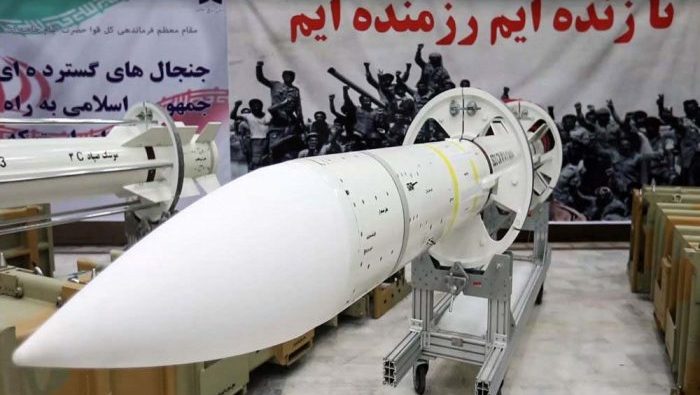
In the face of the American action, the Iranian regime predictably announced the launch of a new production line to mass manufacture a new version of its Sayyad-3 air defense missile in a photo opportunity moment to shake the spear so-to-speak and warn against any efforts to attack Iran.

The Sayyad 3 missile can reach an altitude of 16 mile and travel up to 74 miles, Iranian defense minister Hossein Dehghan said at a ceremony, as reported by Reuters. The missile is copied after similar Russian designs.

The missile can target fighter planes, unmanned aerial vehicles, cruise missiles and helicopters, Dehghan said.

The implied threat by Iran was again the tired old line that the only inevitable outcome of the dispute between itself and the U.S. had to lead to war. For the Iran lobby and Iranian regime, rattling the saber and banging war drums seems to be about their only response to the issue of increasing sanctions aimed at the threat posed by Iran’s missile fleet.

But as Harry J. Kazianis, director of defense studies at the Center for the National Interest, pointed out in a Fox News editorial, the close working relationship between North Korea and Iran only means Iran will be able to deploy nuclear weapons on its missiles even more quickly in spite of the nuclear deal.

“Many experts have been warning for years now that Tehran and Pyongyang have been trading missile technology. If the Trump administration doesn’t act fast it won’t be just the hermit kingdom that has nukes that can strike at targets thousands of miles away” Kazianis writes.

It is clear that the best possible solution is to continue moving forward with sanctions against Iran and North Korea and reverse the damage done by President Obama’s eight years of appeasing the Iranian regime.

Michael Tomlinson

Filed Under: Blog, Latest from Lobbies & Appeasers, News Tagged With: #NuclearDeal, Featured, Iran, Iran deal, Iran Human rights, Iran Lobby, Iran Mullahs, Iran sanctions, Iran Terrorism, IRGC, National Iranian American Council, NIAC, Trita Parsi

Trump Administration on Verge of Junking Iran Nuclear Deal

July 20, 2017 by admin

Trump Administration on Verge of Junking Iran Nuclear Deal

The announcement came just hours before the midnight deadline for US President Donald Trump to inform congress whether Iran had met the terms of the 2015 nuclear deal. | Nicholas Kaam/AFP

The Trump administration once again announced the Iranian regime was following the two-year old nuclear deal, but barely.

In several revealing and extraordinary news stories, including one from Bloomberg which disclosed how President Trump was ready at the last minute to pull the trigger and find the Iranian regime was no longer in compliance with the agreement.

“So just as (Secretary of State Rex) Tillerson was preparing to inform Congress on Monday that Iran remained in compliance with what is known as the Joint Comprehensive Plan of Action, Trump called it off, according to administration officials. He wanted to know his options and what would happen if Tillerson didn’t make the announcement,” Bloomberg wrote.

“And for a few hours on Monday afternoon, it looked like the White House was going to tell Congress it could not certify Iran was complying, without saying Iran was in breach of the pact. This would have triggered a 60-day period in which Congress could vote to re-impose the secondary sanctions lifted as a condition of the deal, or to strike it down altogether,” Bloomberg added.

The fact that Trump was serious about getting tough on the Iranian regime was a welcome departure from the last eight years under the Obama administration, but also points to the tight spaces he must navigate to restrain the mullahs in Tehran.

The central driving force behind decertifying Iran lies with the regime’s behavior since the deal was signed. The president recognizes, as do most Americans, that in the past years Tehran has operated as if there wasn’t any agreement in the first place.

Its’ nuclear program was never halted, only briefly delayed, and it received vast economic benefits from the lifting of sanctions that essentially saved the regime from collapse and allowed it ramp up its proxy wars in Syria and Yemen.

Most importantly, the deal allowed Iranian regime the funding and breathing room to develop its ballistic missile program. Nuclear warheads aren’t much use unless you can deliver them to their targets and missiles make for an excellent Sword of Damocles to hang over Iran’s enemies.

The fact that the regime, along with the Iran lobby, fought hard to keep issues such as its ballistic missile program, separate and apart from the nuclear deal demonstrated its desire to have its cake and eat it too.

This is the quandary that President Trump finds himself in since confronting the Iranian regime isn’t just about the nuclear deal, but includes a whole host of issues including the wars it is fomenting in Syria and Yemen and the crises it created in Qatar, Pakistan and Qatar; not to mention the escalating tensions in international waters in the Persian Gulf and Suez Canal.

The president also needs to find ways to empower the Iranian resistance movement in order to foster the kind of internal regime change most likely to produce a peaceful transition in government without the specter of starting another war in the Middle East.

The potential key to making all this happen may be the potential of closing Iran off to further foreign investment and business as Lake makes clear in his article.

“All of this is also a lesson to Western businesses hoping Iran will be a safe place to invest in the aftermath of the nuclear bargain. Administration officials on Monday said the Treasury Department was still reviewing a proposed sale of civilian airliners from Boeing to Iran’s largest airline. That deal is under scrutiny because Iran uses its civilian air fleet to send supplies, personnel and weapons to the war in Syria,” Lake said.

The administration also moved forward in slapping additional sanctions on Iran not related to nuclear issues the other day in a demonstration of its willingness to hold the regime accountable, while at the same time certifying the nuclear deal in compliance. For President Trump, it is his way of having his own cake and eating it too.

The Treasury Department blacklisted 18 people and entities for supporting Iran’s military and Islamic Revolutionary Guard, which it said harassed U.S. naval vessels and tried to build ballistic missiles and steal U.S. computer software.

The sanctions mean it is illegal for U.S. citizens or companies to do business with those on the list, and any assets they have in the U.S. can be seized. It’s unclear whether the 18 have such assets or businesses.

Predictably the Iranian regime responded to the sanctions with what it called its own “reciprocal actions,” but it pointed out an uncomfortable truth for the mullahs which is that President Trump was moving closer to potentially designating the IRGC as a foreign terrorist organization, which could potentially cripple the regime’s flow of illicit funds.

The Iran lobby also weighed in with the National Iranian American Council’s Trita Parsi issuing a press release criticizing the moves by the administration.

“Under Trump, diplomacy has been traded for threats, placing the US and Iran at risk of war once more. Rather than pursuing dialogue with Tehran to resolve remaining disputes, as every one of our European allies have done, the Trump administration has chosen to escalate tensions and eschew opportunities to come to a mutual understanding,” Parsi said.

Parsi continues to try and split the difference in separating the nuclear deal from other issues such as Iran’s ballistic missiles and support for terror or poor human rights record. While that strategy worked with the previous administration, President Trump seems to have determined that all of these issues are interconnected.

This will no doubt cause Parsi to be dismayed and the mullahs to be frightened, but it’s the correct pathway to follow and one that President Obama should have done four years ago when negotiations opened on a deal.

If he had connected the dots of Iran’s bad behavior with the leverage he possessed in negotiating the deal, things might have been very different these past two years.

Unfortunately, it is now up to President Trump to clean up the mess.

Laura Carnahan

Filed Under: Blog, News Tagged With: #NuclearDeal, Featured, Iran, Iran Human rights, Iran Mullahs, Iran sanctions, Iran Terrorism, National Iranian American Council, Trita Parsi

Arrest of American and Brother of Rouhani Signals Chaos Inside Iran

July 17, 2017 by admin

Arrest of American and Brother of Rouhani Signals Chaos Inside Iran

Arrest of American and Brother of Rouhani Signals Chaos Inside Iran

Just when you think things can’t get crazier inside the Iranian regime, the mullahs fooled us again by announcing a pair of actions this weekend including the arrest of the brother of regime president Hassan Rouhani on corruption charges and the sentencing of a Chinese-American college student to a shocking 10-year prison term for espionage.

Both incidents point to what has clearly become a struggle for power amongst the various factions inside the regime, but unlike what the Iran lobby has characterized a battle between “hardline” and “moderate” factions, the fight is between groups seeking to preserve their slice of the ill-gotten gains being milked from the economy.

It is important to remember that the Iranian regime is one of the most corrupt and least transparent on the planet. It has virtually no independent news media—having jailed almost all dissenting journalists in the run-up to last year’s parliamentary elections—and the bulk of its economy is controlled by the Revolutionary Guard Corps and the families of the ruling mullahs through a series of shell companies.

Together, these elements stifle dissent and criticism, especially focusing on brutally putting down any economic protests such as over low wages, lack of jobs or corporate corruption. None of that has stopped the near constant occurrence of demonstrations that take place on an almost daily basis throughout Iran from disgruntled small business owners, coal miners, unemployed women and unhappy students with few job prospects.

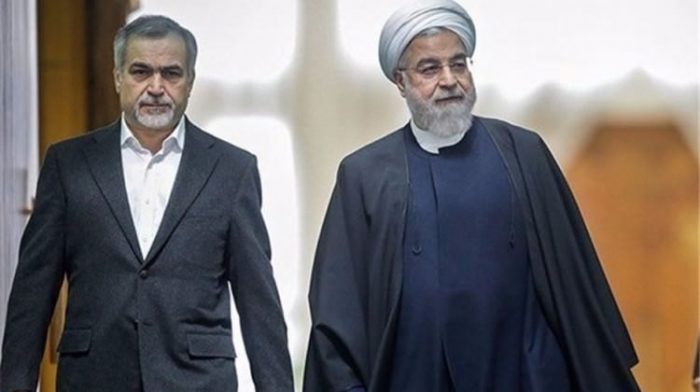
Rouhani’s brother, Hossein Fereydoun, was taken into custody and is eligible for bail, Tasnim news agency cited regime judiciary spokesman Gholamhossein Mohseni-Ejei as telling reporters on Sunday. Mohseni-Ejedi did not elaborate on why Fereydoun, who served as an aide to the president during nuclear talks that led to the 2015 agreement between Iran and world powers, was arrested.

In the recent presidential election where Rouhani was re-elected, the results were seen as a sharp rebuke of top mullah Ali Khamenei’s choice in Ebrahim Raisi, who’s candidacy was hurt by revelations of his participation as a member of a “death commission” that ordered the execution of over 30,000 Iranian men and women perceived as dissidents and political opponents in 1988.

The irony of Fereydoun’s arrest coming on the second anniversary of the Iran nuclear deal was apparent since many within the IRGC feel Rouhani has not been able to deliver on all of the promised ill-gotten financial windfall promised with the deal; even though the billions that were delivered were squandered by the regime in fueling proxy wars in Syria, Iraq and Yemen and lining the pockets of prominent IRGC commanders and their families.

All of which points to the dog-eat-dog nature of the current fight as regime leaders fight for cash the way starving dogs fight over a bone or scraps from the dinner table.

The fact that Iran’s economy remains stagnant is not a reflection on the nuclear deal since it did indeed deliver billions in cash to the regime, but rather to the incompetence and corruption rooted deeply within the regime leadership.

Fereydoun’s arrest on corruption charges is then the ultimate irony since if the claims being made of using his influence to place colleagues in high-paying positions such as being the heads of banks are true, the accusers within the regime have committed the exact same crimes over and over again.

Meanwhile, Mizan news agency, the mouthpiece of Iran’s judiciary, identified the American as Xiyue Wang, a 37-year-old researcher at Princeton University. Wang, who was born in China, was arrested in August 2016 while trying to leave Iran, the report said.

Mizan reported that Wang had “digitally archived” 4,500 pages of Iranian documents for foreign research institutions, including Princeton and the British Institute of Persian Studies.

The news agency published screenshots of Wang’s Princeton web page and an excerpt of a March 2016 report from the British institute that quoted Wang as saying he had been in contact with “senior scholars” at Iranian government archives in Tehran and Mashhad.

Mizan cited the statement as evidence that Wang was on a covert mission, even though the institute’s report was publicly available.

His case is reminiscent of the case of at least three Americans who are still imprisoned in Iran. Baquer Namazi, 80, and his son Siamak are serving 10-year sentences in Tehran’s notorious Evin prison and are believed to be in ill health. Karan Vafadari, who owns an art gallery in Tehran, was arrested last July with his wife, a U.S. green card holder.

A fourth American, Gholamrez Reza Shahini of San Diego, was sentenced to 18 years in prison on national security crimes but has appealed the judgment and is free on bond.

The U.S. government has repeatedly called for the Americans’ release. An unknown number of Iranians holding European passports are also believed to be jailed, according to the Los Angeles Times.

“We call for the immediate release of all US citizens unjustly detained in Iran so they can return to their families,” the State Department said on Sunday.

The arrest of the Princeton student is similar to North Korea’s arrest of university faculty and academics, making them targets of convenience.

The recent turmoil within the Iran regime and the continued arrest of American citizens will undoubtedly provide even more fuel for a Congressional push for new economic sanctions on the Iranian regime.

We only hope it comes before more Americans are tossed into Evin prison.

Laura Carnanhan

Filed Under: Blog, News Tagged With: Featured, hassan rouhani, Iran deal, Iran Mullahs, Iran Terrorism, IRGC

Warnings Not to Soften on Iran Regime Mount

July 14, 2017 by admin

Warnings Not to Soften on Iran Regime Mount

Warnings Not to Soften on Iran Regime Mount

One of the more interesting aspects of the transition in the White House has been the lack of support the Iran lobby receives. During the Obama administration, key Iran lobbyists such as Trita Parsi of the National Iranian American Council had almost unfettered access to the White House; visiting as often as insurance lobbyists during the Obamacare debate.

Key administration staffers helped construct the much-debated “echo chamber” to lend support for the debate about the Iran nuclear deal and help influence the news media with so-called strategic analysts to place editorials and appear on newscasts promoting the agreement.

Even former NIAC staffers were hired to fill key positions in the State Department and National Security Council much to the consternation of long-time critics of the Iranian regime who warned of the conflicts of interest stemming from having staffers with close ties to the Iranian regime overseeing U.S. policy on Iran.

The changeover in administrations not only significantly reduced the influence and clout of the Iran lobby, it also encouraged closer scrutiny and questioning of not only the Iran lobby’s positions, but also the thinking that went into the appeasement policies of the Obama administration.

The world has had the benefit of hindsight after two years since the nuclear deal was signed and has clearly seen that the Iranian regime is now the most destabilizing force in the Middle East with the eruption of proxy wars, terror incidents and deployments of new weapons on a large scale.

The laundry list of Iranian actions reads like a butcher’s bill for chaos, including:

  • Deepening the Syrian civil war the past two years by sending thousands of fighters to support Assad and drawing Russia into the conflict, as well as supporting the use of chemical weapons used on civilians;
  • Provoking open war with Saudi Arabia by starting the Houthi rebellion in Yemen and supporting additional efforts to destabilize Bahrain;
  • Igniting a border conflict with Pakistan that recently escalated to lobbing rockets and mortar shells at each other;
  • Spark the collapse of the Sunni-Shia coalition government in Iraq, thereby driving disenfranchised Sunni tribes to support ISIS leading to the fall of Mosul and giving ISIS its first stronghold to build on; and
  • Launch a massive development program to build a ballistic missile fleet with heavier payloads and intercontinental range, as well as use them for the first time in firing at targets in Syria; and
  • Deploy its military aggressively, including its navy to threaten international shipping lanes in the Persian Gulf, Indian Ocean, Gulf of Aden and Suez Canal.

The proof of how false the Iran lobby’s arguments were has been on display the past two years and there is little debate about Iran being at the center of the woes besetting the region. This has led to an emboldened Iranian resistance movement, as well as open criticism of Iran with little defense of the regime from the Iran lobby.

The wave of social media posts, editorial commentary and press releases by groups such as NIAC have fallen precipitously as Iran’s actions have clearly blown them out of the water, though are now trying to prevent policy changes against the regime, namely the black listing of the Islamic Revolutionary Guards Corps, the main vehicle behind its terrorist activities and its interferences in Iraq, Syria, Yemen, etc.

That criticism is now coming from all quarters as the Iranian opposition movement has gathered steam—culminating in the massive rally in Paris of the leading Iranian dissident groups totaling over 100,000 people with a global parade of nations all criticizing the mullahs in Tehran earlier this month.

In the U.S. Congress, the bipartisan support for the imposition of new economic sanctions on Iranian regime for its ballistic missile program grows each day, alongside calls by Senators on the Trump administration and Secretary of State Rex Tillerson not to certify the Iranian regime being in compliance with the nuclear agreement.

“We believe that a change in that policy is long overdue,” Arkansas Republican Sen. Tom Cotton and three colleagues wrote to Tillerson in a letter Tuesday.

“In light of Iran’s malign actions since the signing of the [nuclear deal], the only reasonable conclusion is that the full suspension of U.S. sanctions is not in the vital national security interests of the United States and that Iran has consistently violated the terms of the [nuclear deal].”

Under federal law, a finding that Iran is not complying with the deal — the certification must take place every 90 days — would set the stage for “an expedited process for Congress to rapidly restore its sanctions.” Cotton and the other senators said that time has come.

They cited several violations, including Iran’s refusal to allow international inspectors to access their research and military facilities, and exceeding limits on water stocks needed to create a plutonium pathway for nuclear weapons.

Several news organizations similarly reported violations by the Iranian regime, especially in its ongoing efforts to acquire illicit nuclear technology.

Weekly Standard reporter Benjamin Weinthal revealed Friday that recent reports by German intelligence agencies show that Iran is still attempting to procure illicit nuclear technology, such as specialized valves that can be used in the heavy water reactor in Arak.

Weinthal cited a report by the state of Hamburg in northern Germany which said “there is no evidence of a complete about-face in Iran’s atomic policies in 2016” after the announcement of the U.S.-brokered nuclear deal.

Iran is still seeking “products and scientific know-how for the field of developing weapons of mass destruction as well (as) missile technology,” the report claimed.

The Hamburg report also listed “49 separate instances of Iran engaging in illegal procurement and terrorist activities, such as cyberwarfare, espionage, and support for the terrorist group Hezbollah,” according to The Tower.

Another intelligence report by the state of Baden-Württemberg described Iran’s use of foreign import-export firms to obtain equipment that can be used for illicit nuclear activities.

Additional reporting recently indicated that Iran was building additional missile manufacturing facilities in Syria which raises the ugly specter that Iran could marry its ballistic missiles with Syria’s chemical weapons stocks that were never destroyed as part of the much-maligned compromise brokered by Russia that persuaded President Obama not to cross his infamous “red line.”

The only good thing coming out of this summer may be the fact that the Iran lobby is shrinking in influence and importance and that is a positive development.

Michael Tomlinson

Filed Under: Blog, News Tagged With: Featured, Iran deal, Iran Human rights, Iran Lobby, Iran Mullahs, Iran Talks, Iran Terrorism, IRGC, National Iranian American Council, NIAC, NIAC Action, Sanctions, Trita Parsi

Is the Open for Business Sign for Iran Now Closed?

July 11, 2017 by admin

Is the Open for Business Sign for Iran Now Closed?

Is the Open for Business Sign for Iran Now Closed?

One of the primary reasons why the Iran lobby was conceived and brought to life was a recognition by the mullahs in Tehran that they lacked all credibility when it came to the Western news media and needed surrogates to help shape the world’s perception of them as more open, accommodating and moderate than they really were.

This was especially important in light of the crippling economic sanctions that were bringing the Iranian regime’s economy to its knees, which was part of the discontent that was on display in the aftermath of the scandalous 2009 presidential election.

The massive street protests came at the height of the Arab Spring protests toppling governments throughout the Middle East and threatened to take down the mullahs in Tehran.

After brutally putting down the protests, the mullahs figured out they needed help to keep their grip on power which led to the election of “moderate” Hassan Rouhani in 2013 and a massive PR push aimed at the Obama administration to craft a nuclear deal that would lift the economic sanctions on Iran.

Much has already been written about the launching of Iran lobby advocates such as the National Iranian American Council and its prominent role in pushing for the nuclear deal by working in coordination with the Obama administration in creating the much-discussed “echo chamber” of supporters.

The aftermath of the nuclear deal and hasty implementation by the outgoing Obama administration created a narrow window of opportunity for the Iranian regime to get what it needed most at that time: cash and lots of it.

The regime was bleeding cash in its support of wars in Syria, Iraq and Yemen so accessing frozen assets, as well as the planeloads of cash paid as part of ransom payments for American hostages, helped stave off imminent collapse.

The next aim for the regime and Iran lobby was the lifting of economic sanctions so that business and investment deals could be struck to provide steady future sources of revenue.

After an initial rush by some European companies, later followed by Russian and Chinese military sales, the proverbial land rush slowed to a crawl amid uncertainty that the Trump administration and U.S. Congress might reinstitute sanctions because of Iranian regime’s support for terrorism and an alarming increase in ballistic missile launches.

It didn’t help the mullahs that their technological partner, North Korea, was busy flinging ballistic missiles into orbit faster than reruns of Real Housewives of Orange County, and alarming most of the nations in the Pacific.

The prospect that the U.S. might levy new sanctions slowed investment to a crawl, aside from a few high-profile sales of commercial jetliners, there has been few business deals announced.

That drought of new investment once again stirred ordinary Iranians to anger in the most recent presidential election a few months ago which saw mass protests throughout Iran; even including harsh demonstrations aimed at Rouhani himself.

The poor condition of the Iranian economy was also a contributing factor to the implosion of the candidacy of Ebrahim Raisi, the handpicked would-be successor by top mullah Ali Khamenei, leading to broad speculation that the mullahs’ grip on power was slipping.

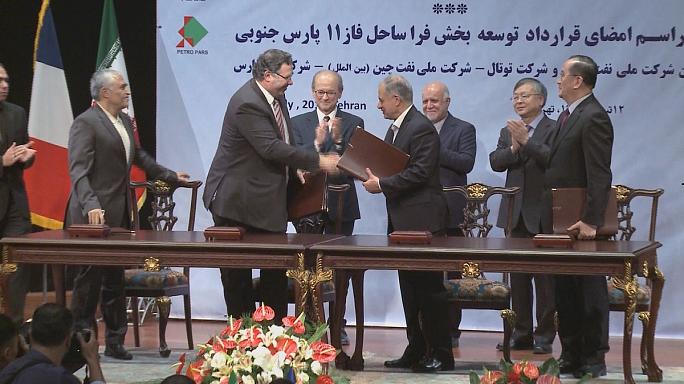
The most recent high-profile deal announced by Iran was with French petroleum giant Total, which agreed to a deal to jointly develop Iran’s massive South Pars gas field. Total was the first, and so far, only major oil player to commit to returning to Iran, while other firms, especially U.S. and British ones remain on the sidelines uncertain of the potential of the re-imposition of economic sanctions.

The risks for Total, and for that matter any other foreign company, doing business with Iran are substantial, as outlined in an insightful editorial by Dr. Majid Rafizadeh, president of the International American Council, in Arab News.

“U.S. pressure and sanctions on Tehran will likely continue to escalate, affecting American and non-American companies. The US may re-impose its sanctions bill that targets non-American companies doing business with Iran. If a company does business with both countries, its investments could be in peril. Quitting Iran’s market would not be easy for those with long-term investments,” Rafizadeh said.

He also alludes to the increasing political instability within Iran, as well as the tightening grip on the Iranian economy by Khamenei and the Revolutionary Guard Corps. That grip exists because of the rising need by the IRGC to funnel even more funds for its foreign adventures which have expanded in various fronts.

Also, as Iranian regime ramps up its ballistic missile program, the United Nations may feel compelled to act and sanction Iran lest it has to deal with both an Iran and North Korea crisscrossing the sky with ballistic missiles.

Recognizing the threat of possibly having its economy shutdown once again, the mullahs are moving rapidly to take advantage of the Total deal to ready an additional 14 oil and gas exploration for tender offers to foreign companies.

Sitting on some of the world’s biggest energy reserves, Iran has already been working on deals to develop fields such as South Pars, South Azadegan, Yadavaran, West Karoun, Mansouri and Abteymour, Reuters reported.

France’s Total last week became the first major to sign a post-sanctions development deal with Iran. Russia’s Lukoil and Denmark’s Maersk are also potential investors.

“Next on the horizon is the search for new oil, with the National Iranian Oil Company planning to tender 14 oil and gas blocks for exploration in the next two to three months,” NIOC’s deputy director for exploration blocks, Rahim Nematollahi, said in Istanbul.

But these deals may become moot should either the U.S. or UN act to impose new sanctions, especially any sanctions once again removing Iran from accessing the international wire transfer network or currency exchanges.

All of which places any foreign entity in a precarious position should it decide to invest in Iran. A company also runs the risk being labelled a supporter of terrorism since the vast majority of revenue Iran generates from one of these deals would inevitably be used to fund its proxy wars and support its terrorist allies.

This may mean that for the short-term at least, the “open for business” sign for Iran may be just another example of fake news.

Laura Carnahan

Filed Under: Blog, Current Trend, News Tagged With: #NuclearDeal, Appeasement policy, Featured, hassan rouhani, Iran, Iran deal, Iran Economy, Iran Lobby, Iran Mullahs, Iran sanctions, Iran Talks, Iran Terrorism, IRGC, Khamenei, National Iranian American Council

Iran Regime Efforts to Control Middle East Gets Pushback

July 10, 2017 by admin

Iran Regime Efforts to Control Middle East Gets Pushback

Iran Regime Efforts to Control Middle East Gets Pushback

The mullahs in Tehran have never made a secret of their lust for controlling the Middle East, especially the countries surrounding Iran. Part of the reasoning has been to create a buffer protecting the Islamic state from its perceived enemies, including regional rival Saudi Arabia, but it also was designed to provide the mullahs with a steady supply of proxies that could be used as cannon fodder for conflicts.

The Iranian regime, through its Revolutionary Guard Corps and its Quds Forces, have historically relied on third parties to do its dirty work be it Hezbollah in Lebanon, Shiite militias in Iraq, Houthi rebels in Yemen or Afghan mercenaries in Syria.

The willingness of the Iranian regime to use these proxies demonstrates its callous disregard for human life and take no prisoners attitude in achieving its goals. It also ably demonstrates why any agreement reached with the mullahs is essentially worthless since they will always seek to circumvent any accord should it suit their purposes.

Which is why any effort to resolve the civil war in Syria must first and foremost force the expulsion of Iranian forces from that war-torn country. Similarly, as ISIS is defeated in Iraq with the liberation of Mosul, a similar kicking out of Iranian forces would be a positive first step to returning that beleaguered country to normality.

None of this will be easy though since the mullahs are loath to give up their hard-fought gains in securing a so-called “land bridge” linking Tehran to Damascus through Baghdad, which fulfills the long sought-after vision of Shia control from the Mediterranean to the Indian Ocean.

The strategic vision of the Iranian regime includes the establishment of permanent naval bases along the Syrian and Yemen coastlines, giving its navy unfettered access to the crowded international shipping lanes in the Mediterranean and through the Persian Gulf and Suze Canal.

The mullahs see themselves being able to keep a loaded pistol pointed at the economic lifeblood of Europe through its use of its military and navy. It also explains why Iran has invested so heavily and fought hard to protect its ballistic missile program from the threat of economic sanctions.

Just as the control of territory and sea lanes are crucial to the mullahs’ vision of maintaining control, its ballistic missile fleet is the hammer necessary to enforce that control by placing Eastern Europe, North Africa and Southeast Asia under threat of attack.

The firing of ballistic missiles for the first time at purported ISIS targets in Syria was less about actually striking at ISIS forces, as much as it was a practical demonstration and testing of its missiles by Iran.

In many ways, the opening salvos are eerily similar to Nazi Germany’s involvement in the Spanish Civil War in 1936, not to support the rule of General Francisco Franco in as much the ability to test new German tactics and weapons that would later be employed in the blitzkrieg of World War II.

The civil war was also notable for the bombing of Guernica in 1937 in which Germany tested out new warplanes in killing hundreds of civilians; a prelude to the mass slaughters to follow. Famed artist Pablo Picasso immortalized the attack with his eponymous painting, but if he were alive today, he could have painted similar works memorializing places such as Mosul, Raqqa or Ramadi where Iranian-backed forces have left swathes of destruction that made Guernica look paltry by comparison.

But all of these efforts by the Iranian regime to exert its control over its neighbors may have finally forced pushback among many of these former perceived allies of Iran.

In Pakistan, tensions have sharply escalated with a serious of border conflicts that got another dose of violence in the form of rocket attacks by Iranian border guards aimed at Pakistan.

“The incident took place in the wee hours of Saturday,” Panjgur’s Deputy Commissioner Jabbar Baloch told The Nation. He confirmed no loss of life or property was caused by the Iranian shelling. The rockets exploded with powerful bang after landing in the area, prompting fear and panic among the residents.

The adjacent areas of Panjgur and Chagai close to Pak-Iran border have repeatedly witnessed rocket shells fired by the Iranian security forces followed by strong protest from the Pakistani side. The regular violation of Pakistani territory by Iranian guards and allegations of cross-border infiltration by Pakistani side has strained ties between the two neighboring countries which share a 900-km long porous border.

This was followed by news from Iraq of threats being made by one of the largest tribes in Karbala against Iranian forces after one of its prominent leaders,  Sheikh Nema Hadi al-Issawi, was killed in the Iranian city of Mashhad.

In order to calm the tribe, Hadi al-Amiri, the leader of Al- Badr militia and who is close to the Iranian regime and the commander of Al- Quds Force, asked to attend the funeral of the killed Sheikh but the al-Issa tribe refused the request and prevented Amiri from entering its houses in Karbala, according to Al-Arabiya.

This comes after massed protests in southern Afghanistan by locals denouncing Iranian regime president Hassan Rouhani over disparaging comments he made in criticizing Afghan water management and dam projects, according to the Voice of America.

Hundreds of demonstrators peacefully marched through the streets of Lashkargah, capital of Helmand province near the Iranian border. They chanted, “Death to Hassan Rouhani” and “Death to enemies of Afghanistan.”

These actions don’t even include the active losses being suffered by Iranian-backed forces in Syria and Yemen at the hands of U.S. and Saudi-backed forces.

All of which points to a turning of fortune for the mullahs that may see their hopes for a Shiite sphere of influence go up like puffs of smoke.

Michael Tomlinson

Filed Under: Blog, News Tagged With: Featured, hassan rouhani, Iran, Iran Human rights, Iran Mullahs, Iran Terrorism, Moderate Mullahs, Syria, Yemen

Iran Regime Continues to Suffer Setbacks at Home and Abroad

July 4, 2017 by admin

Iran Regime Continues to Suffer Setbacks at Home and Abroad

Iran Regime Continues to Suffer Setbacks at Home and Abroad

It must be tough to be a ruling mullah within the Iranian regime these days. Only a few months ago you must have been feeling on top of the world.

Syria was a carnal house of chaos that was diverting global attention away from all of your schemes and plots.

ISIS was busy destroying everything and everyone in its path and you got plaudits for claiming to fight them.

You had a nuclear deal in hand that flooded your depleted bank accounts with billions in cash enabling you to go on personal shopping sprees for new weapons and upgrade your ballistic missiles and you didn’t have to give anything away for it!

Your lobbying and PR machine were running an echo chamber braying loudly in support of your causes and portraying your handpicked puppet president as a paragon of moderation.

What a difference a few months make.

ISIS is being pushed back by determined Iraqi troops and Syrian rebel groups backed by U.S. forces who have now shown a willingness to shoot Iranian drones, convoys and troops if threatened.

The incoming Trump administration has openly called for and getting a legislation imposing new economic sanctions for Iran’s support for terrorism and its development of ballistic missiles.

The cash flow may soon run dry as European countries, eager to invest in Iran, are now confronted with the stark possibility of running afoul of U.S. Treasury officials.

Your latest presidential campaign where your boss, Ali Khamenei, tried to engineer the election of his hardline successor fell flat on its face.

Worst of all, the longest-running Iranian dissident group is experiencing a resurgence in support not only in many world capitals, but more distressingly on the streets of Iranian cities.

It’s enough to make a mullah want to cry, except the mullahs that control Iran and its people aren’t likely to get sentimental or panic. If anything, they will do what they have always done which is crack down on its people, engineer more attacks abroad and use its overseas lobbyists to threaten global leaders.

But that same old recipe may no longer find much traction as the ground has shifted considerably on the regime.

One big blow came when U.S. federal prosecutors won a courtroom victory in their nine-year effort to seize a midtown Manhattan office tower owned by an Iranian charity.

A jury on Wednesday found that the charity, the Alavi Foundation, was controlled by the Iranian government. It also agreed with prosecutors that the charity’s management of the Fifth Avenue office building, which has generated millions of dollars in rental income annually, constituted a violation of U.S. sanctions against Iran, according to Bloomberg.

The verdict, which came after a day of deliberations, means that Manhattan prosecutors can move ahead with their attempt to seize the building at 650 Fifth Avenue, a prime location. The government plans to sell the property, which is valued at more than $500 million, and distribute much of the proceeds to victims of Iranian regime-sponsored terrorist attacks.

The finding “represents the largest civil forfeiture jury verdict and the largest terrorism-related civil forfeiture in U.S. history,” Joon H. Kim, the acting U.S. Attorney in Manhattan, said in a statement.

In 2014, U.S. District Judge Katherine Forrest granted summary judgment to prosecutors’ forfeiture request, agreeing that the government had established that the building’s primary owners — the Alavi Foundation and a shell company controlled by the government of Iran — had been violating Iran sanctions laws since 1995.

The blow is especially big for the Iran lobby since the Alavi Foundation was a prime financial supporter of noted lobbying groups such as the National Iranian American Council and the Ploughshares Fund, both of which are likely to be crippled by the loss of cash.

This comes in contrast to the strong growth of the Iranian resistance movement within Iran, which has fought hard to stifle any news of protests from getting out, but lately those acts of defiance have grown bolder and been more publicized thanks to social media.

The National Council of Resistance of Iran (NCRI)/People’s Mujahedeen Organization of Iran (MEK) says hundreds of videos and photos of the incidents have been taken in dozens of towns and cities, and compiled a sample in a video clip.

Photos of NCRI leaders Maryam and Massoud Rajavi feature prominently, along with slogans which the NCRI translated as saying, among other things, “My vote regime change, down with Khamenei, our choice Maryam Rajavi.”

Such demonstrations are highly risky in Iran, a repressive state that has outlawed the NCRI/MEK as a “terrorist” group and executes hundreds of people each year for crimes including political and security offenses.

Shabnam Madadzadeh, a young Iranian woman and former political prisoner who just recently was able to exit Iran, has written articles and delivered remarks in different events shedding light on Iran’s dungeons atrocious conditions and gave a powerful interview to Forbes describing conditions in Iran’s prisons.

“I was a college student in Iran and like my brother I spent five years in the regime’s jails as a political prisoner. Long interrogations, solitary confinement, forced to witness my brother being beaten, deprived of any contact with my family, death threats and mock executions were the tortures I was placed through,” she said.

“During my time behind bars I was deprived of any furlough. I witnessed many crimes by the regime authorities, many executions and tortures inflicted not only on political prisoners, but also ordinary inmates arrested on other charges,” she added.

It may be time for the mullahs to pull out the tissue and have a good cry.

Laura Carnahan

Filed Under: Blog, National Iranian-American Council, News Tagged With: Alavi Foundation, Featured, Iran, Iran Human rights, Iran Lobby, Iran Mullahs, Iran Terrorism, National Iranian American Council, NIAC, NIAC Action, Ploughshares

The Iranian Resistance Movement is Stronger than Ever

July 4, 2017 by admin

The Iranian Resistance Movement is Stronger than Ever

The Iranian Resistance Movement is Stronger than Ever

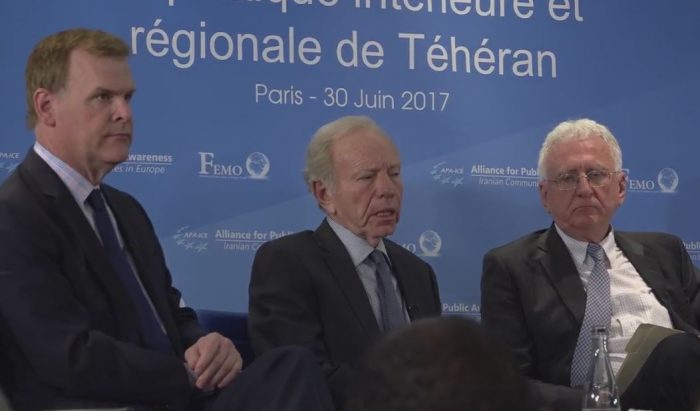
In a crowded hotel ballroom near Charles de Gaulle airport in France, speakers on three separate panels discussed the conundrum of Iran and the problems the regime poses for the region and the world.

While speakers came from different countries, from political and academic backgrounds, the message was the same: the Iranian regime was the key source of the region’s problems and that the Iranian resistance movement was the most viable pathway for regime change within Iran to a secular, democratic and pluralistic society.

The panel discussion, entitled: “Where is Iran Heading? Tehran’s Domestic and Regional Politics” was sponsored by The Foundation for Middle Eastern Studies (La Fondation d’Etudes pour le Moyen- Orient FEMO), an independent organization providing analysis on the Middle East to European institutions, international organizations and individuals, and the Alliance for Public Awareness, Iranian Communities in Europe (APA), comprised of various associations and individual expatriate Iranians living in Europe including a large number of second generation of Iranian expatriates.

The line up was a who’s-who is policy wonks, politicians and global influencers who weighed in on Iran’s influence in the Middle East and the role of the Iranian opposition (MEK) movement, especially the best pathway to regime change.

Regime change in Iran no longer seems to be a taboo word as U.S. Secretary of State Rex Tillerson cited it in recent testimony; a verbal leap forward from the reluctance of the Obama administration to utter anything that might offend Tehran.

Panelists all cited that the environment has shifted so dramatically over the last few months that the prospect no longer seems a fantasy, but now part of concrete policy discussions in capitals around the world.

Linda Chavez, founder and chairwoman of the Center for Equal Opportunity and a former White House staffer, cited a need for a “critical mass” of support for a burgeoning resistance movement being led by the National Council of Resistance of Iran, an umbrella group of several Iranian dissident and human rights groups.

It was a sentiment echoed by former Democratic Sen. Robert Torricelli who discussed his own experience in seeing the evolution of Iranian resistance groups such as the Mojahedin-e Khalq (MEK) from being ostracized unjustly as part of the appeasement policy towards Iran’s mullahs, to now being welcomed by world leaders seeking a strong partner in dealing with Iran.

The speakers reminded audience members that meaningful change was only going to happen from within Iran itself and not through any external manipulation which would only serve the interests of the mullahs in deflecting any efforts from outside as being meddling by foreign governments.

Former vice presidential candidate and Sen. Joe Lieberman expounded on the need for the Trump administration to hold the Iranian regime accountable for its actions and end the free hall pass the Obama administration gave in order to facilitate the nuclear agreement.

That realization lent a sense of focus and urgency on the day’s discussions on galvanizing the energy created by protests in the recent presidential election in Iran in which outsized banners and posters of NCRI leader Mrs. Maryam Rajavi where seen hanging from freeway overpasses in Tehran; an almost unthinkable act just a few months ago that would have earned any perpetrator a quick sentence to the gallows.

Struan Stevenson, president of the European Iraqi Freedom Association and former president of the European Parliament’s Delegation for Relations with Iraq, hit a key note when he called Iran the “godfather” of Islamic extremist groups likened Tehran’s influence among them.

With the rise of ISIS enabled by Tehran’s interference in the Syrian civil war and political meddling in Iraq, coupled with the use of terrorist proxies such as Hezbollah and Houthi rebels in Yemen, the Iranian regime manipulated the global stage to create a map for itself of Shiite control ranging from the Mediterranean to the Indian Ocean.

Michael Pregent, a fellow at the Hudson Institute and foreign policy analyst and former intelligence officer, described how the Iranian regime’s goals were to hold a navy base along Yemen’s coastline to control the flow of international commerce through the Suez Canal, and the creation of a land bridge running from Tehran, Baghdad and Damascus to move troops, goods, arms and supplies effortlessly.

The military muscle flexing by Iran was cited also by former Gen. Jack Keane, former vice chief of staff of the U.S. Army, who discussed how President Donald Trump’s election has set the stage for regime change with a halt to the concessions granted the mullahs by the Obama administration and an increased willingness to confront Tehran in Syria, Yemen and other fronts.

The panel discussion came in advance of a massive annual gathering held on July 1st by the NCRI and other groups to demonstrate the breadth and depth of the opposition movement and the broad international coalition supporting democratic change in Iran.

Part of the current policy discussion in Trump’s administration will have to take into account that there is no single, simple solution to the Iran problem as pointed out by the panelists, but instead would take a comprehensive approach including:

  • Re-imposing economic sanctions tying the regime’s support for terrorism and its ballistic missile program to improved relations;
  • Designating the Iranian Revolutionary Guard Corps (IRGC) as a Foreign Terrorist Organization and put the supply of easy cash for the regime’s activities at risk; and
  • Opening up greater support and recognition of the Iranian opposition movement to spur its growth within Iran similar to U.S. support of key dissidents such as Lech Walesa in Poland and Aung San Suu Kyi in Burma.

The NCRI has listed a more complete 10-point plan for a peaceful democratic future in Iran and with the changing political landscape around the world, we may be as close to seeing it happen as ever before.

Michael Tomlinson

Filed Under: Blog, News Tagged With: Featured, Free Iran Rally, Iran, Iran Human rights, Iran Mullahs, Iran Terrorism, IRGC, Joe Lieberman, Khamenei, mek, Struan Stevenson

  • « Previous Page
  • 1
  • …
  • 3
  • 4
  • 5
  • 6
  • 7
  • …
  • 17
  • Next Page »

National Iranian-American Council (NIAC)

  • Bogus Memberships
  • Survey
  • Lobbying
  • Iranians for International Cooperation
  • Defamation Lawsuit
  • People’s Mojahedin
  • Trita Parsi Biography
  • Parsi/Namazi Lobbying Plan
  • Parsi Links to Namazi & Iranian Regime
  • Namazi, NIAC Ringleader
  • Collaborating with Iran’s Ambassador

Recent Posts

  • NIAC Trying to Gain Influence On U.S. Congress
  • While Iran Lobby Plays Blame Game Iran Goes Nuclear
  • Iran Lobby Jumps on Detention of Iranian Newscaster
  • Bad News for Iran Swamps Iran Lobby
  • Iran Starts Off Year by Banning Instagram

© Copyright 2026 IranLobby.net · All Rights Reserved.