Iran Lobby

Exposing the Activities of the lobbies and appeasers of the Mullah's Dictatorship ruling Iran

  • Home
  • About
  • Current Trend
  • National Iranian-American Council(NIAC)
    • Bogus Memberships
    • Survey
    • Lobbying
    • Iranians for International Cooperation
    • Defamation Lawsuit
    • People’s Mojahedin
    • Trita Parsi Biography
    • Parsi/Namazi Lobbying Plan
    • Parsi Links to Namazi& Iranian Regime
    • Namazi, NIAC Ringleader
    • Collaborating with Iran’s Ambassador
  • The Appeasers
    • Gary Sick
    • Flynt Leverett & Hillary Mann Leverett
    • Baroness Nicholson
  • Blog
  • Links
  • Media Reports

Iran Regime Tries Claiming Victory Where There is None

November 3, 2016 by admin

Iran Regime Tries Claiming Victory Where There is None

Iran Regime Tries Claiming Victory Where There is None

It has been interesting watching the reaction of Iranian regime leaders to Michael Aoun’s election to the largely ceremonial post of president of Lebanon. From the statements and self-congratulations coming out of Tehran, you would have thought the head of Hezbollah, Hassan Nasrallah was the one elected.

For the people of Lebanon, the results are more akin to a yawner. For Lebanese, who are used to the historical game of musical chairs, the election of Aoun is not so much ground breaking as much as it simply puts a warm body in the chair of the presidency after a two year vacancy.

Antoun Issa, senior editor at the Middle East Institute and a former Beirut-based journalist, appropriately captured the sentiments of most Lebanese when he coined the phrase “Kullun haramiyyeh” which means “they’re all thieves” in describing the most common sentiment on Lebanon’s streets from its vendors and waiters to students and doctors.

“So when Michel Aoun, the maverick general-turned-politician, achieved his long-held ambition of becoming president on Monday, most ordinary Lebanese reacted with indifference. The new president is just another name, another title, and another episode in the country’s endless — and ultimately meaningless — political drama,” Issa writes in Foreign Policy.

“To become president, Aoun, the country’s main Christian leader, struck a deal with his longtime opponent, Saad Hariri, head of the rival Sunni Future Movement. As part of the deal, Hariri will now become prime minister. But for the deal to work, it also needed (and duly received) the approval of arguably the most powerful man in Lebanon — Hassan Nasrallah, the head of Hezbollah,” he added.

“For ordinary people, this is all a game of musical chairs. Such is the disconnect between the country’s political class and the people that the average Lebanese can’t tell the difference between having a president and not having one. Prior to Monday, Lebanon had, in fact, been without a president for two years — but this fact could not be discerned on the streets of Beirut. President or no, Lebanon has had no effective governance for decades,” Issa said.

More importantly, the long-term strategy of Hezbollah is to so weaken the Lebanese government that it cannot provide basic government services such as education, food, healthcare and security and thus remain the dominant political and military power by dispensing these services to the country’s large Shiite population.

It’s a recipe that the mullahs in Tehran have practiced well by keeping the Iranian people dependent on the largesse of the Iranian regime and not allowing the full economic benefits of what should be a powerhouse economy trickle down to the people.

This Iranian regime game plan of claiming victory where there is none is a tried and true tactic. Even as the Iranian people march, protest and demonstrate against rigged elections, government corruption or shortages of food and job opportunities, the mullahs continue to flog the idea of victories to keep the perception alive they know what they are doing.

The problem with maintaining control with essentially a lie is that it is a fragile form of control subject to toppling even by small acts of defiance. For the Iranian regime this means it cannot tolerate even the smallest inklings of dissent, which is why the mullahs so ruthlessly pursue members of the Iranian resistance movement and arrest Iranians on the slightest provocations.

It is why even dress code violations such as women failing to wear a hijab or students posting selfies on Instagram are met with beatings and arrests.

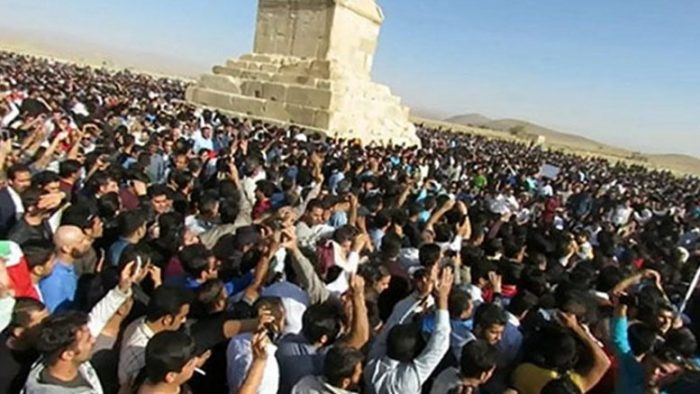
This past Friday saw another of these instances when regime authorities arrested organizers of a rally held at the tomb of the ancient Persian King Cyrus the Great in Pasargadae, Iran.

Breitbart News previously reported that protesters chanted slogans like, “Iran is our country, Cyrus is our father,” “clerical rule is synonymous with only tyranny, only war,” and “freedom of thought cannot take place with beards,” a reference to the theocratic leaders currently in power.

According to Reuters, there was no indication as to how many of the event’s organizers had been arrested. However, a judiciary official reportedly said on Monday Iran’s intelligence and security forces have placed the organizers of the event under close surveillance and that they will face prosecution.

Prior to the October 28 protest, members of the regime’s Revolutionary Guard Corps (IRGC) and other Iranian authorities attempted to thwart the impending rallies by spreading rumors that officials had completely shut down the city, canceling tours to the site, sealing roads to Pasargadae, and shutting down the Internet.

Those actions did not deter the protesters, which consisted mostly of youth and individuals under the age of 35, from carrying out their rally.

The mere existence of such protests are dangerous for the regime, but also provide ample evidence for the rest of the world of the fragility of the mullahs’ rule which is why the international community needs to confront their extremism more forcefully.

Alex Carlile, a Liberal Democrat member of the United Kingdom’s House of Lords and co-chairman of the British Parliamentary Committee for Iran Freedom, challenged the United Nations to hold the regime accountable in an editorial in the Washington Times.

“The Iranian regime has imprisoned a British charity worker and sentenced her to five years’ imprisonment on bogus national security charges,” he writes. “The case of Nazanin Ratcliffe has shocked the British public as it has unfolded over the past six months, since she was arrested by regime officials when she attempted to fly back to England after taking her daughter, Gabriella, to visit her parents.”

“However, this is only the latest in a long line of human rights abuses by Tehran. Earlier this year, a leaked audio file provided further proof of the complicity of top-level regime members in a 1988 massacre, which killed 30,000 political prisoners, including juveniles and pregnant women,” Lord Carlile added.

Lord Carlile writes the main targets of these murders were members of the opposition movement People’s Mojahedin Organization of Iran (PMOI, or MEK), although the regime also executed relatives of members or casual supporters as well as other dissidents.

Nothing so incenses the regime than the continued efforts of the Iranian resistance to educate the world about these massacres and other human rights violations because they ultimately point out the hollow and empty “victories” the regime trumpets.

Michael Tomlinson
Filed Under: Blog, News Tagged With: Featured, hassan rouhani, Hezbollah, Iran, Iran Economy, Iran Human rights, Iran Mullahs, IRGC, Lebanon, Saad Hariri

Iran Regime Executions During Dignitary Visits Become Routine

October 29, 2016 by admin


Iran Regime Executions During Dignitary Visits Become Routine

Iran Regime Executions During Dignitary Visits Become Routine

One of the more peculiar actions taken by the Iranian regime is the unusual habit of executing people during visits by foreign dignitaries. Typically, countries wrestling with intense international scrutiny due to perceived human rights violations have normally been more circumspect when hosting a visiting leader.

The accompanying media attention of a state visit usually has forced countries to hold off on high profile actions such as a crackdown or round up of dissidents or staying the executions of political prisoners.

The one glaring exception to that rule has been the Iranian regime, which seems to perversely revel in executing prisoners whenever someone comes calling.

The most recent example was the execution of three Turkish nationals accused of drug trafficking last year on the heels of a high-profile visit to Tehran by Turkish president Recep Tayyip Erdogan.

The Iranian regime – which executed nearly 1,000 people alone last year, more than any other country apart from China – usually refrains from sending foreign nationals to the gallows, especially in cases involving countries with which Tehran has maintained friendly relations, according to the Guardian.

The family of a 46-year-old man, Faruk Güner, a father of nine children, confirmed to the Guardian that he was executed. He was a lorry driver working between Afghanistan and Turkey who passed through Iran. “We tried for four years to save him. They didn’t tell us that he was going to be executed. They hanged him in the morning; we got the news in the afternoon,” Güner’s brother said.

The information about the executions was published by several human rights organizations. One of these organizations based in Norway, said two other Turkish nationals, identified as Mehmet Yilmaz and Matin, whose surname is not known, were executed at the same time.

The organization that monitors the human rights situation in Iran, said more than 450 people have been put to death in the country this year. It said at least 264 of them were executed for drug offences. Iran has also executed at least seven people who committed their crimes while they were under the age of 18.The execution of juveniles is prohibited under international law.

The regime has also taken the opportunity to commit executions during other high profile visits in a perverse move that defies logic, such as:

  • Matteo Renzi, Prime Minister of Italy, during April 12, 2016 visit, eight prisoners hanged;
  • Federica Mogherini, European Union foreign policy chief, during April 16-17, 2016 visit, three women executed by regime;
  • Christine Defraigne, president of the Senate of Belgium, during April 27, 2016 visit, 17 executions including three juveniles; and
  • Kolinda Grabar-Kitarovic, president of Croatia, during May 17, 2016 visit, 21 hangings in a stunning 48 hour window.

The willingness of the regime to execute people relentlessly during these high profiles—even when a dignitary pleads with the regime not to commit any executions—demonstrates the true nature of the mullahs in Tehran which is to signal to the world loudly and clearly that Iran will do as it sees fit regardless of what the world thinks.

What is even more disturbing is how the mullahs are working hard to indoctrinate Iran’s children into the same perverted mindset where violence and executions are a normal part of Iranian society.

Deutsche Welle looked at this trend and what it portends as a new generation of Iranians are taught at an early age that violence as a state tool is welcome.

Books in Iran, in general, are subjected to a strenuous approval process. But, the glorification of violence, even in children’s books, does not appear to be a problem.

“Children’s books have become much more religious. More stories involve mosques or religious ceremonies,” Iranian mother, Shohreh, (name changed) said. She isn’t surprised that books including hanged animals sell well. “People attend public executions and even bring their kids.”

“Society is being intentionally desensitized,” told DW, a human rights lawyer and children’s rights activist that specializes in cases regarding the execution of minors, which is allowed in Iran once they reach 18.

“Statistics show that violence particularly within families has strongly increased,” he said. “There are many causes for this. Violence in public is certainly one of them. People exposed to so much violence don’t shy away from using violence themselves. This must be countered, not celebrated everywhere.”

It is a deeply disturbing trend that harkens to similar indoctrination undertaken by totalitarian regimes such as the Khmer Rouge in Cambodia which employed children to select people for instant executions as part of the notorious killing fields.

Even Hitler’s Nazi Germany relied on the Hitler Youth to serve as a fanatical conduit for its armies; the Iranian regime is no less dedicated to the same tactics.

Ultimately, the fight for human rights in Iran is not just to preserve the people of Iran, but their future through their children.

Michael Tomlinson

Filed Under: Blog, News Tagged With: Featured, Iran Mullahs, Iran Terrorism, IRGC, Jason Rezaian, Rouhani, Sanctions, Syria

Is the Iran Regime Trying to Conquer the World?

October 27, 2016 by admin

Is the Iran Regime Trying to Conquer the World?

Is the Iran Regime Trying to Conquer the World?

Is the Iranian regime trying to conquer the world or does it simply want to carve out its own little protected niche in the world?

That seems to be the basic question confronting the rest of the world. For the Obama administration and many of the supporters of the Iranian regime, the focus was solely on the nuclear issue and ignored virtually every other aspect of the regime’s behavior that has troubled the world for the past three decades.

Dealing only with the nuclear issue is like negotiating with a serial killer to get rid of his use of handguns, but allowing him to keep his knives, flamethrowers and lock picks. Ultimately the behavior never changes and he is free and emboldened to do whatever he pleases. Such is the state we face with the Iranian regime today.

Now the world is witnessing a regime that is literally on a binge of dangerous behaviors, like someone with an eating disorder staring at a buffet table, the mullahs in Tehran are licking their lips at the banquet table being laid out before them.

A hallmark of that new militant behavior has been the arrests of dual national citizens and their subsequent sentencing to harsh prison terms without benefit of trial or even legal counsel. Three Americans were sentenced this way over the past week, with Reza “Robin” Shahini of San Diego, California receiving an absurd 18-year prison term.

“They’re bargaining people’s lives as if they’re trading Persian carpets,” said the Carnegie Endowment for International Peace. “Oftentimes, these almost comically harsh sentences are simply meant to increase the value of these prisoners in the event of any quid pro quo with the United States.”

For the mullahs, these hostages do have value. In the case of four Americans released last year with the nuclear agreement, they were worth $1.7 billion in cash.

Not a bad payday for Iran.

But what seems to be at work in the larger context of international affairs is the almost bipolar nature of how Iran is dealing with the world and vice versa.

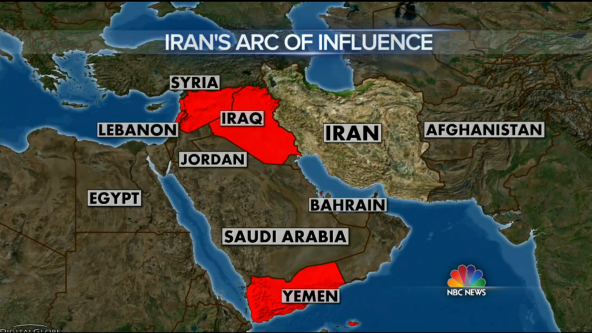
On the one hand, the Iranian regime is taking hostages, ramping up its participation in three widening wars in Syria, Iraq and Yemen. It is smuggling arms, cash and men, which ironically end up getting used against other countries.

In Yemen, that means Iranian-purchased Chinese cruise missiles fired at US Navy warships.

In Syria, that means Iranian fighters and Afghan mercenaries and Iraqi Shiite militias being ferried in via Iranian airlines to fight against US-backed rebel forces.

In Iraq, it means Iranian-backed Shiite militias leading purges in Sunni villages liberated from ISIS and broad control over Iraq’s foreign policy with its Turkish neighbors.

  1. Todd Wood in the Washington Times also explains Iranian regimes avarice to secure a land corridor from the Iranian border to the Mediterranean to be able to have access to Arab lands, North Africa, and Europe in order to expand its terrorism through Iranian proxy forces and militias in Iraq and Syria.

“The operation seems to be headed by the Iranian Revolutionary Guards and their General Qassem Soleimani who has also visited Moscow multiple times in violation of United Nations sanctions. He is coordinating the actions of Iran proxy forces in Iraq and Syria,” he writes.

Iranian regime is feverishly working on these plans, while at the same time it is busy opening itself up to Western investment and partnerships commercially.

As Thomas Erdbrink writes in the New York Times, the disconnect between the two halves are actually part of a larger, carefully orchestrated plan; a plan that the Obama administration and sympathetic EU nations seem oblivious to.

“What would seem to be a puzzling contradiction is in fact a carefully thought-out, two-track policy being pursued by the supreme leader, Ayatollah Ali Khamenei, and the circle of leaders around him,” he writes.

“Iranian generals are directing the ground war in Syria. Iranian advisers are training Shiite militias fighting in Iraq and Syria. Iranian arms and other support help the Houthi rebels in Yemen.

“In addition to sanctioning the country’s more aggressive military footprint in the region, Ayatollah Khamenei regularly issues broadsides against the United States, promising there will be no softening of Tehran’s stance against the Great Satan, while quietly opening the door to Western capital and expertise,” he adds.

“In Mr. Khamenei’s view, we should be like China,” said Hamidreza Taraghi, an analyst with close ties to the hard-liners. “Have economic relations with the West, but without their political influence and neo-colonization.”

Thus, visa restrictions have been eased and foreign investment policies relaxed, while Iranian diplomats are spreading a message of Iran as the last major untapped market in the world.

But unlike China, Iran’s interests are not solely commercial and economic. It is more than willing to use military force to achieve its religious goals which stands in stark difference to China; essentially an atheist state.

For Khamenei and Rouhani, improvement in the economic status of the Iranian people is paramount to keeping their hold on power. Unless they can improve their quality of life, the street protests of 2009 are going to look like a picnic compared to March of 2017; Rouhani’s re-election bid.

Michael Tomlinson

Filed Under: Blog, News Tagged With: Featured, hassan rouhani, Iran, Iran Human rights, Iran Talks, Iran Terrorism, IRGC, Khamenei, Rouhani

Why Hassan Rouhani’s Calls for Co-Existence Are Meaningless

October 21, 2016 by admin

Why Hassan Rouhani’s Calls for Co-Existence Are Meaningless

Why Hassan Rouhani’s Calls for Co-Existence Are Meaningless

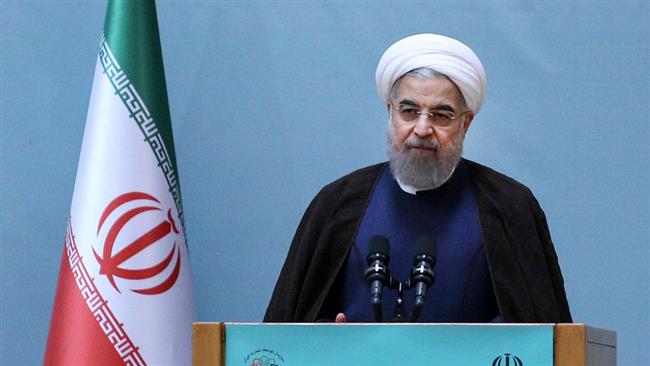
Iranian regime controlled media loudly broadcast remarks made by Hassan Rouhani at a ceremony marking National Exports Day in Tehran in which he called for peaceful co-existence with the rest of the world and Iran’s neighbors.

No, this was not an April’s Fool joke come early, nor was it an attempt at early Halloween gallows humor.

Rouhani was making his appeal because the world has not reacted well to the regime’s militant and aggressive moves since a nuclear agreement was reach over 18 months ago. There has arisen significant uncertainty among foreign companies, institutional investors and many governments over entering into business agreements at a time when new sanctions may be coming.

Rouhani was making his appeal on a strictly commercial basis in which he hoped to see Iran enter the global marketplace as a significant consumer market, as well as an eventual exporter of goods.

According to Trend News Agency, “Iran has no choice other than forming a constructive interaction with the world in order to boost its export,” he said.

He further said that constructive interaction with the world means establishing suitable ties with global community for exports, and import of capital goods and raw materials as well as employment of youth.

There is good reason for Rouhani and his fellow mullahs to be worried. Iran’s economy remains stagnant, with little benefits trickling down to ordinary Iranians as promised by Rouhani. Youth unemployment remains staggeringly high and wages have not risen significantly in over a decade leading to widespread discontent and protests throughout Iran.

Scandals involving excessive compensation for high-placed executives at regime-controlled industries have rocked Rouhani’s term, as does a high-profile crackdown against journalists, students, artists, bloggers, dissidents, and religious and ethnic minorities.

The mullahs’ “morals” police squads are working overtime arresting and abusing everyone from Iranian women riding bicycles to Iranian youth congregating in coffee shops.

But what has most foreign companies and investors worried is the regime’s rapid escalation in its involvement in three widening proxy wars in Syria, Iraq and Yemen, in which US armed forces are increasingly being drawn into direct conflict with Iranian and Iranian-backed forces.

In Yemen, Iranian regime-backed Houthi rebels reportedly fired cruise missiles at US warships three times in one week; resulting a response from the US of three cruise missiles hitting radar installations in Yemen.

US Army Gen. Joseph Votel, commander of US forces in the Middle East, said on Wednesday that he believes Iran was behind the missile strikes on US Navy ships in Yemen.

“I do think that Iran is playing a role in some of this. They have a relationship with the Houthis, so I do suspect there is a role in that,” said Votel at the Center for American Progress, The Hill’s Kristina Wong reports.

Now news reports have surfaced detailing how the Iranian regime has stepped up weapons transfers to the Houthis threatening to widen and prolong the now 19-month-old war.

Much of the recent smuggling activity has been through Oman, which neighbors Yemen, including via overland routes that take advantage of porous borders between the two countries, the officials said.

U.S. and Western officials who spoke to Reuters about the recent trend in arms transfers said it was based on intelligence they had seen but did not elaborate on its nature. They said the frequency of transfers on known overland smuggling routes had increased notably, though the scale of the shipments was unclear.

A senior Iranian diplomat confirmed a “sharp surge in Iran’s help to the Houthis in Yemen” since May, referring to weapons, training and money.

“The nuclear deal gave Iran an upper hand in its rivalry with Saudi Arabia, but it needs to be preserved,” the diplomat said.

Ironically, the timing of the increased flow of cash and arms to the Houthis coincides with the ransom payments of $1.7 billion made to the Iranian regime by the US to free four American hostages.

Meanwhile in Syria, the growing failure of repeated cease-fires have placed US personnel dangerously close to being targeted by Russian and Syrian airstrikes, as well as facing Shiite militias imported from Iraq by Iranian airliners to fight alongside Syrian forces against US-backed rebels.

It is against this backdrop of global uncertainty that Rouhani is making one of the most absurd sales pitches anyone can recall since it is exactly because of the Iranian regime’s acts that have made many companies and investors skittish at risking billions of dollars.

That idea of co-existence draws little weight as Rouhani himself has admitted that the regime does not recognize dual national citizens and is in the midst of an unprecedented binge of hostage-taking of US, British, Canadian and other citizens.

Even more disturbing has been taunting statements made on regime-controlled websites demanding “billions in cash” as ransom payments for these new hostages.

Even Rouhani has taken a personal hand in tightening the figurative noose among his fellow Iranians by firing Minister of Culture and Islamic Guidance Ali Jannati, Education Minister Ali Asghar Fani and Minister of Youth Affairs and Sports Mahmoud Goudarzi all on the same day.

It’s interesting to note that all three ministers oversaw parts of Iranian society which enjoyed a bit more creative freedom during the run-up of the nuclear negotiations in an effort to present a more “open” society to the world. With the nuclear deal accomplished, their dismissals and subsequent crackdown on freedoms should not be a surprise.

Laura Caranahan

Filed Under: Blog, News Tagged With: Featured, Iran, Iran Mullahs, Iran sanctions, Iran Terrorism, IRGC, Nuclear Deal, nuclear talks, Sanctions, Syria, Yemen

Even Iran Lobby Is Not Immune From Regime Extremism

October 19, 2016 by admin

Even Iran Lobby Is Not Immune From Regime Extremism

Even Iran Lobby Is Not Immune From Regime Extremism

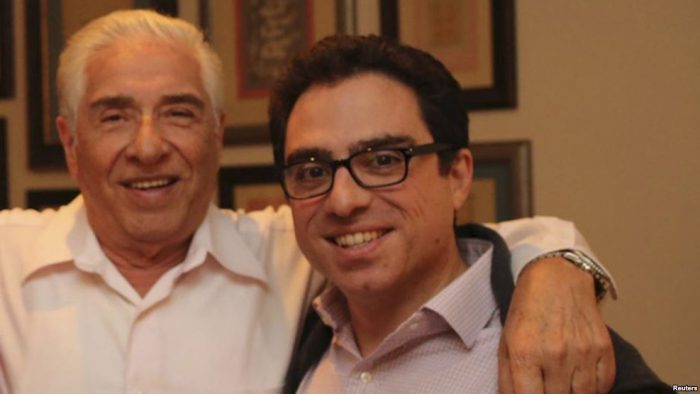
Siamak Namazi, a 45-year-old Iranian-American businessman who enjoyed close ties and access to one of the Iran lobby’s leading advocates in the National Iranian American Council, found himself on the wrong end of a 10-year prison sentence handed down by an Iranian court.

Sentenced alongside his 80-year-old father, Baquer Namazi, a former Iranian provincial governor and former UNICEF official who also has dual Iranian-American citizenship, Siamak has become another hostage pawn in the Iranian regime’s schemes to angle for more cash, more accommodation and more appeasement from the US.

Both men were sentenced to 10 years in prison for spying and cooperating with the U.S. government, said Tehran prosecutor Abbas Jafari Dolatabadi, according to the Fars news website, without specifying when exactly the sentences had been handed down.

The U.S. State Department’s deputy spokesman, Mark Toner, said the father and son had been “unjustly detained” in Iran, and called for their immediate release.

Babak Namazi, Siamak’s brother and Baquer’s son, called the sentences unjust.

“My father has been handed practically a death sentence,” Babak Namazi said in a statement.

Baquer Namazi has a serious heart condition and other medical issues requiring special medication, his wife wrote on Facebook in February. On Tuesday, UNICEF called for his release on “humanitarian grounds.”

The pleas for the Namazis echoed similar pleas made by desperate family members of previous regime hostages such as Washington Post reporter Jason Rezaian, Christian pastor Saeed Abedini, former US Marine Amir Hekmati and former FBI agent Robert Levinson, who still remains unaccounted for in Iran.

One significant difference though is that Siamak Namazi has been reported to have worked alongside long-time friend Trita Parsi in launching the NIAC with the idea of forming an advocate within the US to help push the Iranian agenda in the hopes of gaining a lifting of crippling economic sanctions.

For Parsi, the creation of NIAC and its companion lobbying arm, NIAC Action, has provided him and his colleagues with a comfortable living, access to influential power brokers and a platform to extol their support for the mullahs in Tehran.

Yet, Namazi was still snatched up by regime officials along with his father and sentenced to a long prison term without much disclosure as to why.

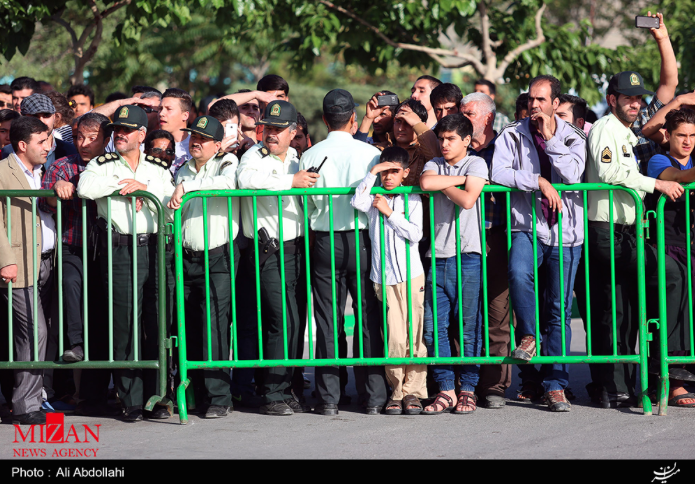
Mizan, the Iranian judiciary’s official news site, published on Sunday video images of Siamak, set to dramatic music and spliced together with images of President Barack Obama and Rezaian, who was released from an Iranian jail in January after more than 18 months in detention.

The video showed Siamak’s U.S. passport and identification card from the United Arab Emirates, where he previously lived. It then showed him standing and holding his arms outstretched, as if being searched, while being filmed by at least one other cameraman. The website said the video depicted “the first images of the moment of Siamak Namazi’s arrest.”

It is a stark and disturbing reminder to other supporters of the regime that their utility only goes so far and should be a sharp slap in the face for folks like Parsi who urged support for a more “moderate” Iran, but now find their associates as easily punished as anyone else; without any special status or immunity for their previous support for mullahs.

The arrests also expose the folly of regime president Hassan Rouhani’s much-touted visit to the United Nations in 2013 in which he famously urged Iranian ex-pats to come back to Iran and help their country; only to find virtually all dual national citizens are fair game for arrest.

In his most recent trip back to the UN last month, Rouhani remarked on CBS News’ “60 Minutes” program that the Iranian regime did not even recognize dual national status.

It’s an amazing turnaround in only two years and mirrors the sharp reversal of by the regime after getting its promised nuclear deal; leaving it free to deal harshly with its enemies both foreign and domestic in a broad and harsh crackdown.

The arrest and sentencing of such a close associate of Parsi and the NIAC, finally motivated Parsi to issue a press release with unusually tough language more in line with what his staunchest critics have said about the regime in the past.

“Both Siamak and Baquer Namazi have been denied basic due process and all indications are that the Iranian government has been using them as political pawns in violation of its own laws and basic human decency,” Parsi said.

“For the United States, the sentencing is a clear signal that more political capital and attention needs to be dedicated to securing the release of the Namazis and other Americans imprisoned in Iran. The United States should leave no stone unturned in utilizing diplomatic channels to press the Iranians to secure their release.”

If you didn’t know the statement came from Parsi, you might have mistaken it from a long-time Iranian regime critic from Congress or the pages of the Washington Examiner.

The irony should not be lost on anyone.

For all of its efforts to promote the regime and boost the lifting of economic sanctions and flood the regime with billions in cash that the mullahs are now using in three proxy wars in Syria, Iraq and Yemen, the NIAC and other Iran lobby members are faced with the inconvenient truth that supporting Iran is no guarantee of future safety or security from the same extremists actions against others.

Michael Tomlinson


Filed Under: Blog, News Tagged With: Featured, Iran Lobby, Iran Terrorism, IRGC, Moderate Mullahs, National Iranian American Council, NIAC, NIAC Action, Sanctions, Trita Parsi

WikiLeaks Reveals a Much Tougher Hillary Clinton on Iran Regime

October 19, 2016 by admin

WikiLeaks Reveals a Much Tougher Hillary Clinton on Iran Regime

WikiLeaks Reveals a Much Tougher Hillary Clinton on Iran Regime

The Iran Lobby, led by the National Iranian American Council, have often publicly argued for a more moderate approach to the Iranian regime and encouraged efforts by the Obama administration to appease the mullahs in Tehran in the hopes of changing their historically extremist behavior and policies.

The past two years have shown how foolish it was to believe those promises as the Iranian regime is now the central player in three wars raging across Syria, Iraq and Yemen; all conflicts in which the world is increasingly being dragged into the crosshairs of a shooting war.

The Obama administration has called for another increase in US forces in Iraq to combat ISIS insurgents, yet now find that Iraqi militias it trained are now fighting in Syria against rebel forces the US supports.

Now in Yemen the US Navy is exchanging missile fire with Iranian-backed Houthi rebels. Not exactly a recipe for “moderation.”

The NIAC and other Iran lobbyist members have gone all in with the Democratic Party in backing their candidates for House and Senate races in the hopes of overturning a Republican majority that is skeptical of Iran’s professed moderate intentions, but that hope might prove just as illusory as the idea of Iranian moderation.

WikiLeaks has been dumping thousands of emails and documents from the Democratic National Committee, party officials and members of the Clinton campaign, including from Hillary Clinton itself.

What they reveal is a much different picture of the candidate’s opinions on Iran that what the NIAC would have everyone believe.

According to a speech transcript made public this weekend by WikiLeaks, Clinton on October 28, 2013, told the Jewish United Fund of Metropolitan Chicago: “I believe that Rouhani was allowed to be elected by the two major power sources in Iran, the supreme leader and the clerics and the Revolutionary Guard … in part because the sanctions were having a quite damaging effect on the economy.”

She continued: “I don’t think anyone should have any illusions as to the motives of the Iranian leadership. What they really want to do is get sanction relief and give as little as possible for that sanction relief.”

According to Eli Lake in Bloomberg, Clinton, in private at least, has taken a more realistic view since leaving the administration. In her Chicago speech, she called Rouhani’s outreach to the West a “charm offensive,” and argued that U.S. negotiations were important as a sign of good faith to the international community, but not as a way to influence Iranian internal politics.

In another speech sure to dismay NIAC and other Iranian supporters, Clinton even advocated privately for U.S.-led strikes against Iranian regime nuclear facilities and acknowledged regime’s ability to terrorize the United States through Iranian regime’s Revolutionary Guard Corps (IRGC) operatives and other proxies in Latin and North America.

Clinton expressed a willingness to bomb the Iranian regime facilities as an “option” to prevent the Shiite powerhouse from developing a nuclear weapon in a June 4, 2013 speech to Goldman Sachs and elaborated further about the threat Iranian regime, the IRGC, and its proxies pose to the United States in a separate speech on October 24, 2013.

She warned that there would be “consequences” carried out through the IRGC and Iranian regime’s other proxies if the United States took military action against it. Although she did not specifically mention Hezbollah by name, it is the most active Iranian mullah’s terror proxy across the world, including the Western Hemisphere.

In a bit of prescience, Clinton reiterated:  “So it’s a wicked problem, as we like to say, because Iran is not only troubling because of its nuclear program, although that’s the foremost threat, it’s the primary conductor and exporter of terrorism.”

“I mean, if you had a big map here behind us, literally from North America to Southeast Asia, there are so many thoughts, so many bombs, so many arrests that are all traced back to the Iranian regime’s revolutionary guard, and their constant efforts to sell (inaudible)….So even if a miracle were to happen and we came up with a verifiable nuclear deal, there would still be problems that Iran is projecting and causing around the world that had real consequences for our friends and ourselves.”

Her recognition of the Iranian regime’s true nature is a welcome boost to those that have opposed the entreaties of NIAC and other Iranian regime supporters. It is also understandable that her comments were private since they were at odds with her party’s leader in President Obama, but with her possible election as president, her core beliefs that the Iranian regime is not a huggable, fluffy teddy bear, but rather a central conduit for the exporting of death, destruction and terrorism is heartening to regime opponents and Iranian dissidents.

On another accout, the Iranian regime blasted comments made by Secretary of State John Kerry who blamed Iran’s provocative actions in Syria and Yemen as being the creator of uncertainty to the extent foreign banks and businesses are reluctant to invest in Iran and not US sanctions on currency exchanges.

In an interview published Friday, Kerry told Foreign Affairs magazine that Iranian regime’s support for Syrian President Bashar Al-Assad, Lebanon’s Hezbollah movement and Yemen’s Houthi rebels made it “very difficult” to help Iran improve its banking system and business practices.

“Mr. Kerry’s comments are totally unacceptable,” Iranian regime’s deputy foreign minister, Abbas Araghchi, told state television on Sunday night.

“We are surprised. During the nuclear negotiations, we clearly said that questions of security, defense, ballistic missiles and our regional policies were not negotiable and are not linked to the nuclear talks,” he said.

“It is unacceptable that Mr. Kerry is today talking of new conditions.”

No matter how the regime wants to spin it, these problems are problems of its own creation.

By Michael Tomlinson

Filed Under: Blog, News Tagged With: Featured, Iran, Iran deal, Iran Lobby, Iran Terrorism, IRGC, National Iranian American Council, NIAC, Sanctions

Iran Regime Trying to Execute 22-Year Old Woman

October 12, 2016 by admin

Iran Regime Trying to Execute 22-Year Old Woman

Iran Regime Trying to Execute 22-Year Old Woman

The Iranian regime is not a nameless, faceless bureaucracy. Its leadership is made up of men, virtually all of whom are deeply indoctrinated and adhering to an extremist form of Islamic belief that is at odds with the rest of the modern world.

These men are handpicked, have lifelong associations and cover for one another to ensure the continuation of their rule. Their families profit handsomely from the control these men exert over virtually all of the industries within Iran, while they are protected from prosecution and accusations of corruption by a system of religious courts that answer to no one except the ruling class.

The Iranian people are kept in check by a paramilitary force that enforces not only legal codes, but also morality codes of conduct, all of which are designed to keep free expression and even outside-the-box thinking firmly suppressed.

Elections are essentially rigged where these rulers decide who can run for office and routinely clear the field of any potential reformists or would-be moderates.

Their rule and effectiveness at ruling are put on display almost every day with public executions held in open squares throughout the country, usually from construction cranes and sometimes involving scores of prisoners.

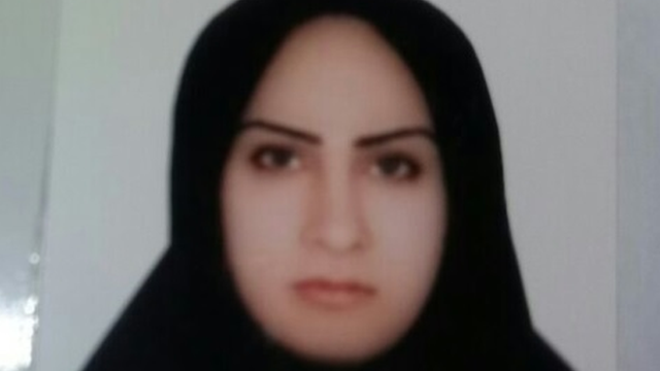
It is within this ruling class, dominated by religious mullahs, that has seen fit to imprison thousands of ordinary Iranians for crimes that would be anathema in the West. No case illustrates this disparity more than the case of Zeinab Sekaanvand, a 22-year-old Iranian-Kurdish woman who was arrested when she was just 17-years-old and convicted of murdering her husband after a grossly unfair trial according to Amnesty International.

The Iranian regime plans to execute her as early as October 13th, despite an international outcry for her release.

“This is an extremely disturbing case. Not only was Zeinab Sekaanvand under 18 years of age at the time of the crime, she was also denied access to a lawyer and says she was tortured after her arrest by male police officers through beatings all over her body,” said Philip Luther, Research and Advocacy Director for the Middle East and North Africa at Amnesty International.

“Iran’s continued use of the death penalty against juvenile offenders displays the authorities’ contempt even for commitments they themselves have signed up to. The Iranian authorities must immediately quash Zeinab Sekaanvand’s conviction and grant her a fair retrial without recourse to the death penalty, and in accordance with principles of juvenile justice,” he said.

Sekaanvand was 17-years-old when she was arrested in February 2012 for the murder of her husband, whom she had married at the age of 15. She was held in the police station for the next 20 days where she has said she was beaten by male police officers. She “confessed” to them that she stabbed her husband after he had subjected her to months of physical and verbal abuse and had repeatedly refused her requests for divorce, according to Amnesty International.

Her trial was grossly unfair. She was denied access to a lawyer during her entire pre-trial detention period and only met her state-appointed lawyer for the first time at her final trial session on October 18, 2014, the human rights group said.

The Iranian regime’s parliament has passed laws allowing marriage for girls as young as 13-years-old, including even a man marrying his own stepdaughter, in examples of the misogynist tendencies of these ruling men.

“Child marriage isn’t just a form of discrimination, it’s a form of violence,” Save the Children CEO Kevin Watkins told the New York Post.

“Forcing girls to marry much older men robs them of their freedom and amounts to sexual slavery. Instead of being in school, married girls face domestic violence, abuse and rape,” he said.

Human rights groups have long criticized Iran’s Penal Code which falls woefully short of safeguards required for juvenile offenders under international human rights law, and even those limited safeguards that do exist, such as informing juvenile offenders of their right to apply for a retrial, are often not implemented by the authorities.

While in prison, Sekaanvand become pregnant from a relationship with another prisoner, stalling her planned execution by the regime until she delivered a stillborn child on September 30th.

Doctors said the young woman’s baby died in her womb two days before she gave birth as a result of the shock she suffered after her friend and cellmate was executed.

According to Human Rights Watch, another 49 people who were children when they committed an offense are currently on the regime’s death row. In the past decade, Iran has executed at least 73 juvenile offenders, according to a January Amnesty report.

It is noteworthy that while the Iranian regime’s leadership pursues this binge of killing children, the Iran Lobby has been stunningly silent on the issue, offering almost no criticism of the practices.

A perusal of the social media feeds for notable Iran lobby members such as Trita Parsi, Reza Marashi and Tyler Cullis of the National Iranian American Council reflect a shocking lack of commentary of the regime’s willingness to incarcerate, torture and execute children, especially battered women who are victims of appalling domestic violence.

We can only assume the higher priorities for the NIAC is urging the lifting of more restrictions on the regime’s access to US currency so the mullahs can get more cash to line their pockets.

By Laura Carnahan

Filed Under: Blog, News Tagged With: Iran, Iran Human rights, Iran Lobby, IRGC, NIAC, NIAC Action, Trita Parsi, Tyler Cullis

Iran Lobby Working Feverishly to Save Nuclear Deal

October 11, 2016 by admin

treasury-logo

Since talks began with the Iranian regime on a potential nuclear agreement, the Obama administration has redefined generously its interpretations of “sanctions” on the regime to the point where billions of dollars have flowed to Tehran in ways unthinkable just a year ago.

The justification for the broad easing of sanctions has been the mantra that the alternative would be worse for the world; that failure to do so would empower “hardline” elements in Iran to seize the opportunity to take control and force out “moderates” and abandon the deal and start a nuclear arms race.

The administration’s position echoes the positions pushed by the Iran lobby, including prominent supporters such as the National Iranian American Council, which repeatedly claimed that the deal was helping cement support for perceived moderates such as Hassan Rouhani.

In response, the Obama administration has ignored, overlooked and even enabled a long string of accommodations for the Iranian regime that has emboldened the mullahs in Tehran. While no one disputes the intentions of the president in wanting to make a world free from nuclear weapons, we respectfully judge his efforts to have been a monumental waste of time.

The misguided belief by the US that Rouhani is a moderate that needs to be supported and whose re-election should be a priority is dumbfounding given the year of bloodshed caused by Rouhani’s policies including the massive escalation in the Syrian war, severe domestic crackdowns on human rights and the unprecedented executions of almost 3,000 Iranians, including women and children ranking Iran second in the world in state-sanctioned killing.

The latest act of appeasing the regime comes in the form of new guidance from the Treasury Department that effectively lifts the last remaining sanctions on the regime’s access to US currency exchanges.

The New York Post editorial board issued a blistering response to the action:

“The latest betrayal: The Treasury Department just lifted key restrictions on Iran’s ability to do business in US dollars and access world financial markets — breaking Team Obama’s explicit vows as it lobbied Congress not to nix the deal.

“Iran’s banks weren’t even cut off from the US financial system over the nuclear issue — but over Tehran’s funding of terrorism, its regional aggression and so on.

“Which makes another Treasury move even more squalid: It will now also let foreign firms and branches of US firms do business with Iranian groups like the Revolutionary Guard.

“The Guard is the chief conduit for Tehran’s support of terrorism, tied to numerous plots, including one in DC aimed at a Saudi envoy. And it’s also a prime force helping Syria’s Bashar al-Assad massacre civilians in his bloody bid to keep power.”

The guidance offered by the Treasury Department was designed to provide reassurance to foreign banks which have been skittish about conducting business in US dollar transactions with Iran.

According to Reuters, the guidance comes after months of complaints from Tehran, which says that remaining US sanctions have frightened away trade partners and robbed Iran of the benefits it was promised under the nuclear deal it concluded with world powers last year.

The guidelines, issued by the US Treasury Department’s Office of Foreign Assets Control on Friday, clarify that non-U.S. banks can do dollar trades with Iran, provided those transactions don’t pass through financial institutions in the United States.

What is even more incredible was that Michael Mosier, the associate director at the Office of Sanctions Policy & Implementation of Foreign Assets Control, and Christopher Backemeyer, deputy coordinator of Sanctions Policy, both were featured speakers at the NIAC’s Leadership Conference in an appalling act of conflict of interest.

The timing of their appearance before the leading lobbying arm of the Iranian regime shortly before the release of guidelines that effectively encourages and shows foreign banks how to avoid existing US sanctions put in place to stem the flood of cash flowing to terrorist groups such as Hezbollah is mind boggling.

Ironically, in an effort to minimize the impact of the Treasury Department’s guidance, the NIAC quickly issued a press release in an attempt to explain that this was not an evasion of existing sanctions, as well as encouraged the expansion of even more channels to accommodate the regime.

“The administration should take steps consistent with the U.S.’s stated policy that it will not stand in the way of legitimate business involving Iran.  Such measures include licensing U.S. person employees of foreign companies to engage in transactions involving Iran and licensing U.S. persons in general to facilitate transactions between foreign persons and Iran,” read the NIAC’s statement from Tyler Cullis.

Of course, the NIAC neglected to mention that any dual-national Iranian-American that traveled to Iran on business was likely to be arrested and held for ransom or a future prisoner swap.

The guidelines earned a quick rebuke from Congressional critics who warned of dire consequences in allowing the Iranian regime easier access to US dollars.

“The new guidance overturns the long-running understanding that the U.S. dollar cannot be used to facilitate international trade with any Iranian entities, let alone sanctioned entities. And by allowing foreign subsidiaries of U.S. companies to transact business with Iranian entities, the president is ignoring the clear text of a law passed by Congress,” Sen. Tom Cotton (R., Ark.) said on Sunday.

Sen. Mark Kirk of Illinois, who chairs a Senate banking committee with oversight over Iran sanctions law, said the new guidelines amounted to the White House granting Tehran new concessions.

Meanwhile, Rep. Mike Pompeo (R., Kan.) said Treasury’s changes “green-light business with terrorists. The updated FAQs remove barriers for foreigners to engage with firms the Islamic Revolutionary Guard Corps controls.”

By Michael Tomlinson

Filed Under: Blog, News Tagged With: Appeasement policy, Featured, Iran Human rights, Iran Terrorism, IRGC, National Iranian American Council, NIAC, NIAC Action, Nuclear Deal, Rouhani, Sanctions, Tyler Cullis

Key to Syrian Solution Lies in Pushing Iran Out

October 10, 2016 by admin


Key to Syrian Solution Lies in Pushing Iran Out

Key to Syrian Solution Lies in Pushing Iran Out

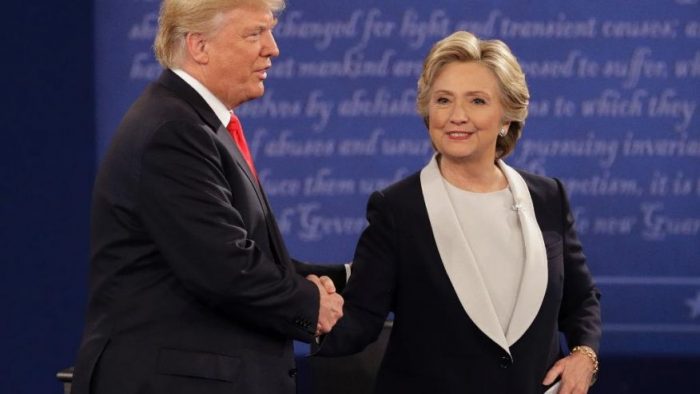
Sunday night’s presidential debate between Hillary Clinton and Donald Trump is sure to be analyzed, dissected and poured over for days, but while both candidates traded accusations on Syria and its effect to refugees, terrorism and geopolitics, neither candidate hit the mark when it came to highlighting the real solution to the Syrian civil war.

The real solution to stopping the bloodshed in Syria lies in getting the Iranian regime out of Syria.

The Syrian civil war has been raging since 2011 and it is easy to forget its beginnings and how it grew into the global conflagration it has become, but what has been indisputable has been the influence of the Iranian regime from the very beginning.

It is useful to recall that the source of the original unrest were protests by ordinary Syrians demanding democratic reforms in March of 2011 and the release of political prisoners. In many respects, the protests taking place on the streets of Damascus were eerily similar to protests on the streets of Tehran by Iranians protesting similar issues in the wake of a presidential election widely recognized as being fraudulent.

Within a month protests had spread throughout Syria and the Assad regime responded just as the mullahs in Tehran did two years earlier; with massive crackdowns by the military that included the indiscriminate shooting of civilians in the streets.

The images of dead and dying civilians in Tehran and Damascus are not the only things that connected the two regimes.

The Iranian regime acted quickly to funnel funds to the cash-strapped Assad regime after a series of punishing international sanctions were imposed for the regime’s use of chemical weapons and mass killing weapons such as barrel bombs on civilians, including hospitals; that support was estimated by the UN to be as high as $6 billion annually, with other human rights groups doubling that amount.

Additionally, the Iranian regime sent senior commanders from its Quds Forces to plan and lead operations involving Hezbollah terrorists to help repel the gains of Syrian rebels. This level of involvement increased with the forced recruitment of thousands of Afghan refugees as mercenaries, along with the shifting of Shiite militias from Iraq to fight in Syria.

The involvement of so much Iranian military capacity led to declarations from Syrian military officials that Syria might as well become a province of Iran.

Even with all of that Iranian regime interferences, the rebels were still making gains leading up to the actual shelling of Assad regime buildings in Damascus, which led to the now not-so-secret trip to Moscow by Quds Force commanders to beg for Russian intervention in Syria.

The increasing tempo of military actions collapsed a proposed cease-fire and led to claims and counter charges between the US and Russia reminiscent of the Cold War. Nothing illustrated that confusion more than the situation in the northern Syrian city of Aleppo.

The New York Times examined the zany alliances at work in Aleppo where there are Iraqi Shiite militiamen cheering for clerics who liken the enemy to foes from seventh-century battles. There are Iranian Revolutionary Guards fighting on behalf of a Shiite theocracy. There are Afghan refugees hoping to gain citizenship in Iran, and Hezbollah militants whose leaders have long vowed to fight “wherever needed.”

The messy mosaic of ground fighters on both sides has challenged Washington’s tangled allegiances. The United States is effectively allied with Iraqi Shiite militias to thwart the Islamic State in Iraq, but in Syria, some of those same militias are fighting on the side of the Assad government, which the United States opposes, and against a mix of rebel groups, some of them backed by the Obama administration.

The Daily Caller discussed the vast increases in Shiite militias in Syria.

“Most estimates of the total number of Shi’a militia fighters in all of Syria now exceed 60,000,” U.S. strategic advisory firm The Soufan Group notes. The Soufan Group highlights that this number may even exceed that of the actual Syrian Arab Army under command of Assad. These Shiite militias take orders only from Iran’s Revolutionary Guard Corps.

Alarmingly, even though the evidence is overwhelming that the only viable solution to Syria’s war lies in containing and ultimately removing Iran’s control of the Assad regime, the Washington Post reported efforts were underway by the Obama administration to actually weaken sanctions imposed on Syria.

According to lawmakers and staffers in both parties, the White House is secretly trying to water down the Caesar Syria Civilian Protection Act, a bipartisan bill that would sanction the Assad regime for mass torture, mass murder, war crimes and crimes against humanity. The bill, guided by House Foreign Affairs Committee ranking Democrat Eliot Engel (N.Y.), would also sanction entities that aid the Syrian government in these atrocities; that includes Russia and Iran.

The bill, named after a Syrian defector who presented the world with 55,000 pictures documenting Assad’s mass torture and murder of more than 11,000 civilians in custody, has 70 co-sponsors, a majority of whom are Democrats.

Now the White House has told members and staffers that the bill’s sanctions on Iran could violate the nuclear agreement the Obama administration struck with Tehran last year and the Russia sanctions could hurt any future efforts to work with Moscow diplomatically on Syria.

It is a stunning position to take and one disturbingly similar to arguments made by Iran lobby members such as the National Iranian American Council.

It seems that the similarities between Syria and Iran be beyond just murdered civilians in the street.

By Michael Tomlinson

Filed Under: Blog, News Tagged With: Featured, Iran, Iran deal, Iran Human rights, Iran Lobby, Iran Mullahs, Iran sanctions, Iran Talks, Iran Terrorism, IRGC, National Iranian American Council, NIAC, NIAC Action, Sanctions, Syria

Study Points to Iran Regime Funding of Terror from US Payment

September 16, 2016 by admin

Study Points to Iran Regime Funding of Terror from US Payment

Study Points to Iran Regime Funding of Terror from US Payment

Last year the US stacked bundles of euros and Swiss francs on pallets and loaded them onto a transport aircraft bound for Tehran. The $400 million was destined to be used as leverage in securing the release of American hostages being held illegally by the Iranian regime as part of the nuclear deal.

That $400 million would later swell to a total of $1.7 billion in cash paid out to the mullahs as part of a settlement agreement over a longstanding dispute regarding payment made by the deposed Shah of Iran’s government for US military hardware prior to the Islamic revolution.

What has caused concern among elected officials and policymakers is the doubt surrounding what the regime would do with the cash windfall. A recent study by the American Action Forum, a non-profit research organization, estimated that as much as $37.4 million of this $1.7 billion were funneled directly to fund operations of the Iranian Revolutionary Guard Corps.

These operations have stretched from supporting the Assad regime in Syria to Shiite militias and death squads in Iraq to Houthi rebel forces in Yemen, according to the Washington Free Beacon.

Leading US lawmakers now suspect that the IRGC played a key role in assuming control of this cash, which the White House has admitted to putting directly in Iranian hands, the Free Beacon disclosed Monday evening.

“Applying the official spending levels to the U.S. payment to Iran, the $1.7 billion would mean $37.4 million for the IRGC,” according to research published by Rachel Hoff, AAF’s director of defense analysis. “Paying ransoms in exchange for Americans held abroad is one bad policy—indirectly funding terrorism is another.”

AAF has determined based on public reports by Iran that the country spends 3.4 percent of its total budget on defense needs, though some experts, including Iranian dissident groups, estimate the number is much higher.

At least “65 percent of that funding [goes] to the Islamic Revolutionary Guard Corps (IRGC), the Iranian elite paramilitary force,” according to AAF. “That works out to 2.2 percent of Iran’s total budget for the IRGC, which actively supports terrorist organizations throughout the Middle East. It is unlikely that Iran accurately reports its military or paramilitary spending, but the reported budget figures are useful as a baseline.”

Most disturbing is the very real possibility that the US exchanged the cash payments directly to IRGC agents and members of its military intelligence units which have been at the forefront attacks against US personnel in Lebanon, Saudi Arabia, Afghanistan and Iraq over the past three decades.

The Iranian regime’s long support for terrorism has included more recent revelations about the mullahs links to Al-Qaeda; a fact that regime and Iran lobby have worked frantically to cover up by trying point blame on Saudi Arabia instead.

Thomas Joscelyn, a senior fellow at the Foundation for the Defense of Dmeocracies, recently took regime foreign minister Javad Zarif to task in a series of tweets lambasting an editorial Zarif penned in the New York Times.

“Where is Abu Hamzah al Khalidi, the head of al Qaeda’s military commission, currently? He’s in #Iran:http://www.longwarjournal.org/archives/2016/07/treasury-designates-three-senior-al-qaeda-members-in-iran.php …” read one of his tweets, correctly pointing out how the Iran regime provides safe havens for Al-Qaeda leaders.

Joscelyn reminds us that the State Department’s original sanction against Iran in 2011 was because of the revelations of a “secret deal” between Iran and Al-Qaeda to provide the terror group behind the 9/11 attacks support.

That burgeoning conflict between Saudi Arabia and the Iranian regime drew a strong rebuke a warning from Mecca province governor Prince Khaled al-Faisal who urged Iran to end what he called wrong attitudes toward Arabs and warned it against any use of force in its rivalry with the kingdom.

The Saudi Press Agency quoted Prince Khaled as telling journalists his message to the Iranian leadership was “I pray to God Almighty to guide them and to deter them from their transgression and their wrong attitudes toward their fellow Muslim among the Arabs in Iraq, Syria, Yemen and around the world”.

“But if they are preparing an army to invade us, we are not easily taken by someone who would make war on us.”

Alarmingly, it now seems in addition to the $1.7 billion in cash the regime received from the US, the total amount of cash released back to Iran as part of the nuclear deal could have reached as high as $34 billion, with no tracking of how that money is being used by the mullahs.

The Associated Press reports Iran brought home roughly $20 billion dollars from this deal. But nearly $12 billion dollars in previously frozen U.S. sanctions were given to Tehran as nuclear talks progressed. Add to that the $1.7-billion-dollar cash payout the White House gave Tehran before the release of several U.S. hostages this year and the sum total soars to nearly $34 billion dollars.

“So every dollar that goes to Iran you have to assume is going to go to Hezbollah,” said Senator Marco Rubio (R) FL. “Or it’s going to go to their missile program, or their nuclear ambition or their military.”

Unlike digital transfers of money, cash is untraceable. Some experts say we likely will never know how Iran will take advantage of this windfall.

By Laura Carnahan

Filed Under: Blog, News Tagged With: #NuclearDeal, Appeasement policy, Featured, Iran, Iran deal, Iran sanctions, IRGC, zarif

  • « Previous Page
  • 1
  • …
  • 8
  • 9
  • 10
  • 11
  • 12
  • Next Page »

National Iranian-American Council (NIAC)

  • Bogus Memberships
  • Survey
  • Lobbying
  • Iranians for International Cooperation
  • Defamation Lawsuit
  • People’s Mojahedin
  • Trita Parsi Biography
  • Parsi/Namazi Lobbying Plan
  • Parsi Links to Namazi & Iranian Regime
  • Namazi, NIAC Ringleader
  • Collaborating with Iran’s Ambassador

Recent Posts

  • NIAC Trying to Gain Influence On U.S. Congress
  • While Iran Lobby Plays Blame Game Iran Goes Nuclear
  • Iran Lobby Jumps on Detention of Iranian Newscaster
  • Bad News for Iran Swamps Iran Lobby
  • Iran Starts Off Year by Banning Instagram

© Copyright 2026 IranLobby.net · All Rights Reserved.