Iran Lobby

Exposing the Activities of the lobbies and appeasers of the Mullah's Dictatorship ruling Iran

  • Home
  • About
  • Current Trend
  • National Iranian-American Council(NIAC)
    • Bogus Memberships
    • Survey
    • Lobbying
    • Iranians for International Cooperation
    • Defamation Lawsuit
    • People’s Mojahedin
    • Trita Parsi Biography
    • Parsi/Namazi Lobbying Plan
    • Parsi Links to Namazi& Iranian Regime
    • Namazi, NIAC Ringleader
    • Collaborating with Iran’s Ambassador
  • The Appeasers
    • Gary Sick
    • Flynt Leverett & Hillary Mann Leverett
    • Baroness Nicholson
  • Blog
  • Links
  • Media Reports

There is More Than One Presidential Election to Keep an Eye on

September 28, 2016 by admin

There is More Than One Presidential Election to Keep an Eye on

There is More Than One Presidential Election to Keep an Eye on

While the US watches a slugfest of a presidential election between Hillary Clinton and Donald Trump, another presidential election scheduled to take place next year on the other side of the world bears watching because of how it potentially impacts not only every American, but also the entire Middle East and Europe.

The “election” will be in Iran for the next president, however unlike the US election, there is likely to be no doubt, no drama, no recounting of ballots or examination of hanging chads. There probably won’t even be very many people on the ballot as well because in the Iranian regime, elections are inconveniences that have to be tolerated for the international community.

They are by no means, free, fair, open or even compelling. The last time there was even any controversy was in 2009 when the election was widely seen as rigged and in the heat of the Arab Spring movement, ordinary Iranians decided to do something they had not done since the downfall of the Shah of Iran; they protested—massively.

In response, top mullah Ali Khamenei and his fellow clerics did what they normally do, they ordered a crushing suppression of protests that results in deaths, mass imprisonment and harsh crackdowns on news media, technology and foreign journalists.

After figuring out the regime couldn’t stomach another debacle like that, Khamenei and his fellow conspirators cooked up a scheme to wipe names off future ballots and allow a handpicked successor to be elected without any protest and be seen as a “moderate.”

That man was Hassan Rouhani in 2013 who cruised to victory against a field of straw men and was widely praised as a “fresh” face by the Iran lobby; an odd phrase since Rouhani has been at the heart of the regime’s military and intelligence services for the past three decades.

Calling Rouhani a moderate is like calling a neo-Nazi “open minded.”

Now his re-election is coming up next year and already the field is being cleared to allow him an uncontested run and eliminate any choice for the Iranian people who would dearly love to dump him into the unemployment line after debilitating economic news continued to pour out of Iran even after a nuclear deal that Rouhani and the mullahs promised would open the flood gates to an improved quality of life.

Things are so bad for Rouhani at home that even Mahmoud Ahmadinejad, the man Rouhani succeeded, has considered another run for the presidency until he was slapped down by Khamenei. The prospect of another term by Ahmadinejad has the mullahs scared out of their turbans since he is widely reviled in the West and at home.

His run would be akin to having Richard Nixon take a stab against Jimmy Carter in 1980 fresh off his resignation and threatened impeachment from the Watergate scandal.

“In carrying out the intentions of the leader of the revolution, I have no plans to take part in the elections next year,” Ahmadinejad said in a letter to Khamenei, published on his website dolatebahar.com.

You could almost hear the sigh of relief coming from Khamenei and Rouhani.

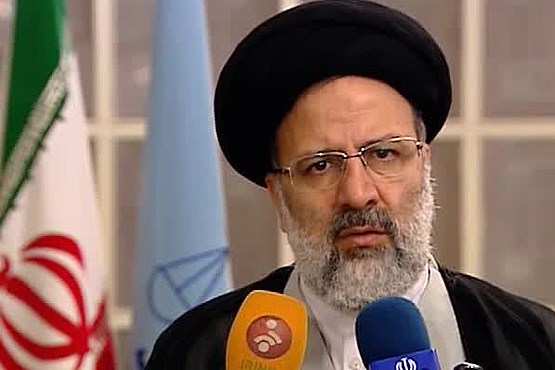
Besides Rouhani’s re-election, the looming prospect of who replaces an aging and ill Khamenei should have the US and its allies even more worried. Far from the prospect of getting a more moderate replacement, the name most often heard being bandied about as the next top mullah is Ibrahim Raisi.

As Ray Takeyh, a senior fellow at the Council of Foreign Relations, put it succinctly in an editorial in the Washington Post, Raisi “could be the only person in the Islamic Republic who could cause people to miss Khamenei.”

“Raisi is 56 years old and, like Khamenei, hails from the city of Mashhad. After a stint in the seminary, he has spent his entire career in the Islamic Republic’s enforcement arm, serving as prosecutor general, head of the General Inspection Office and lead prosecutor of the Special Court of the Clergy, which is responsible for disciplining mullahs who stray from the official line. In one of his most notorious acts, he served as a member of the ‘Death Commission’ that, in the summer of 1988, oversaw the massacre of thousands of political prisoners on trumped-up charges,” Takeyh writes.

“Raisi’s background fits nicely with the Revolutionary Guards’ mission of crushing dissent. In a recent interview, Revolutionary Guards commander Muhammad Jaffari conceded that since 2005, the regime has come to see domestic insurrection as an even greater challenge to its existence than external pressures. The ideal successor to Khamenei would have to not only share the Guards’ perspective but also have close ties to the security organs and the judiciary. The Guards seem to have found their man. Raisi is being increasingly touted by them as a vanguard of the regime and an enforcer of its will,” he added.

Khamenei’s clear preference for Raisi can be seen in his appointment of him to head one of the regime’s largest charitable foundations, Astan Quds Razavi, which gives Raisi access and control to vast land holdings and many other enterprises that funnel money to him, the IRGC and his allies.

With the endowment’s estimated value at $15 billion, Raisi is in prime position to buy votes and assemble his own network of loyal supporters and operatives.

All of which reinforces the central conceit of Khamenei, Rouhani and their ilk, which is to maintain the purity of the Islamic revolution and the ideological basis for it. Even with the opening of trade with the nuclear agreement, the mullahs have no intention of using these new funds to help the economy or Iranian people. Instead, they view these proceeds as necessary to continue the funding and expansion of the Islamic revolution.

Ultimately, while everyone is focused on if Rouhani will be re-elected, the more important question is whether or not Raisi will even allow Rouhani to speak without a script.

By Michael Tomlinson
Filed Under: Blog, News Tagged With: Featured, hassan rouhani, Iran, Iran deal, Iran Human rights, Iran Lobby, Iran Mullahs, Moderate Mullahs, Raisi

Holding Mullahs Accountable Should be Human Rights Priority

September 7, 2016 by admin

Holding Mullahs Accountable Should be Human Rights Priority

Holding Mullahs Accountable Should be Human Rights Priority

Whistleblowing is—by its very nature—a risky and sometimes hazardous activity to engage in, but it also is vital if any society is to be expected to be free and democratic. The U.S. has struggled with whistleblowers going back to the Pentagon Papers case with Daniel Ellsberg exposing the Vietnam War to the modern era with Edward Snowden and Julian Assange of WikiLeaks.

On the one hand we applaud people like them for exposing corruption or threats to democracy, but on the other hand we worry about national security or exposure of agents who might be caught and killed.

The strength of any free and open society though has been that exposing wrong doing, even if done for a worthy cause, eventually makes that society stronger. An informed public can hold its leaders accountable and for better or worse, the decisions they make are ones the public is responsible for eventually.

In dictatorial regimes though, whistleblowing is regarded with anathema, akin to treason and often prosecuted with the vigor of hunting down spies and traitors. In the case of the Iranian regime speaking out about any transgressions by the regime often gets you killed.

One case of Iranian whistleblowing involved Dr. Ramin Pourandarjani, who was an Iranian physician that examined prisoners who had been wounded or killed during the mass demonstrations against the stolen 2009 election.

He had worked at the Kahrizak detention center and was responsible for the medical care of several prisoners believed to have been tortured by regime officials. One of his patients was Mohsen Ruholamini, a government scientist’s son, arrested following his participation in the post-election protests.

Ruholamini, who was 25 years old, died in prison in July 2009. The death certificate originally identified Ruholamini’s cause of death as multiple blows to the head. A report given to judicial authorities stated that Ruholamini had died of “physical stress, the effects of being held in bad conditions, multiple blows and severe injuries to the body.”

Pourandarjani publicly testified about conditions at the center and following his testimony he was arrested by regime police. During his own imprisonment, Pourandarjani was repeatedly interrogated by an escalating range of regime agencies, after which he was released on bail, but was told to remain silent and received a stream of death threats.

He died under mysterious circumstances at the age of 26. Tehran’s public prosecutor’s office said he died of poisoning from a delivery salad laced with an overdose of blood pressure medication, but regime officials claimed at various points that Pourandarjani had been injured in a car accident, committed suicide, or died of a heart attack in his sleep at the health center at the police headquarters in Tehran where he worked.

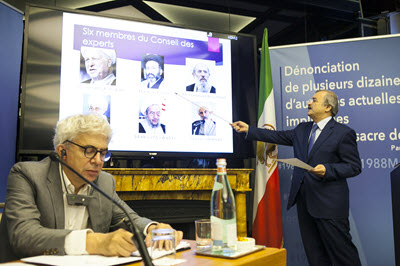
That tradition of abusing whistleblowers was giving new life when the son of an Iranian cleric once in line to be supreme leader has reportedly been charged with acting against national security interests by releasing material from his late father that denounces senior Iranian figures for the mass killings of 30,000 dissidents almost 30 years ago.

After interrogation at a religious court in Qom, Ahmad Montazeri was released on bail of almost $23,000, and told to reappear on Wednesday, according to a report by the Iranian opposition group, National Council of Resistance of Iran/People’s Mujahedeen Organization of Iran, which claimed the vast majority of those massacred were affiliated with their groups.

Last month, Montazeri released an audio recording of a 1988 meeting between his father, Grand Ayatollah Hossein Ali Montazeri, and members of a so-called “death panel” charged with carrying out supreme leader Ayatollah Ruhollah Khomeini’s mass execution decree.

One of those on the “death panel” – and at the meeting featured on the audio file – was Mostafa Pourmohammadi, an official who has served in several cabinet positions over the years and was controversially appointed Minister of Justice by “moderate” Hassan Rouhani in 2013. In 1988 he was the intelligence and security ministry’s representative at Tehran’s notorious Evin prison.

“Standing up to the violations of human rights in Iran is also the responsibility of Western governments, because its consequences do not remain within Iran. The terrorism and fundamentalism emanating from it, have been hurting defenseless people in Nice, Paris, and Brussels,” said Maryam Rajavi, the leader of the NCRI at an event in Paris which included friends and relatives of those slain.

Bernard Kouchner, former French Foreign Minister and co-founder of Doctors without Borders (MSF) said: “I ask myself what were the human rights defenders doing at that time?” He called for a “special tribunal to prosecute the mullahs for their crimes.”

“The massacres did not take place only in 1988. Iran continues to have the highest execution rate per capita. The executions have even increased after the nuclear deal,” Kouchner added.

According to Mrs. Rajavi, since Rouhani took office over 2,700 executions have taken place Iran, including the latest, a mass execution of 25 Sunnis prisoners from Iranian Kurdistan.

The fact that the Iranian regime has willfully sought to suppress any dissent and execute those who publicly denounce its actions, means the regime acts with the impunity of a serial murderer that isn’t being hunted by law enforcement. The mullahs feel they can get away with the violence they dole out because the West has failed to hold them accountable.

The revelations by the NCRI of the composition of the infamous death panel in 1988 and how many of those same members have risen to hold important positions within the current regime shows how the promises of the Iran lobby of a new “moderate” regime in the wake of the nuclear agreement were all false.

Ultimately, the U.S. and its allies must no longer ignore the truth of these massacres, nor the willing participation of the mullahs now in power in Tehran to hide the truth from the world.

By Michael Tomlinson

Filed Under: Blog, News Tagged With: Featured, Iran, Iran deal, Iran Human rights, Iran Lobby, Maryam Rajavi, Moderate Mullahs

Iran Regime Goes For Broke to Save Assad in Syria

August 17, 2016 by admin

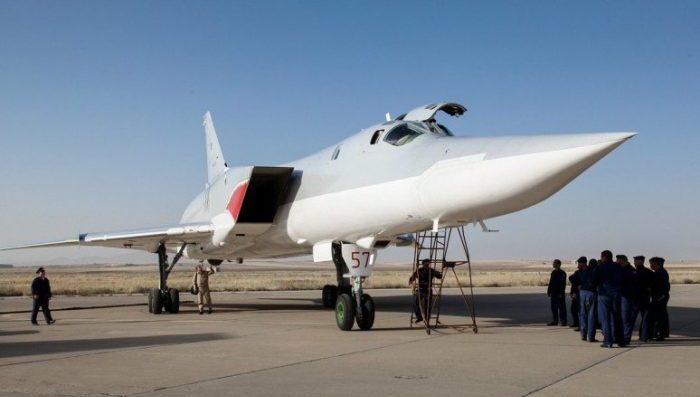
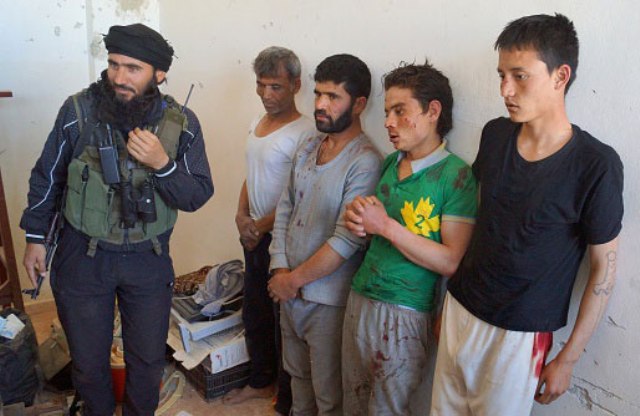
Russian bombersFor the first time in the five year long Syrian civil war, Russian bombers took off from Iranian airfields to carry out strikes in Syria against ISIS; opening up a new and potentially disturbing new dimension to the widening war.

While the Russian military alerted U.S. military commanders in advance—a welcome break from past episodes that almost resulting in strikes against U.S. personnel—the attacks can be debated as to whether or not ISIS was truly the target or moderate rebel forces opposed to Assad were targeted instead.

The complications arising out of Syria grow even more intertwined as the mullahs in Tehran ratchet up the stakes to keep Assad in power and maintain their own foothold on that important region of the Middle East.

That commitment of going all in to save the Assad regime as well as their Shiite sphere of influence was confirmed by U.S. military officials who now estimate as many as 100,000 Iranian-backed Shiite militia are fighting on the ground in Iraq, raising legitimate concerns that if ISIS is defeated in Iraq and Syria, the U.S. would now be stuck facing a hostile force in three unified countries.

Whether the force size is 80,000 or 100,000, the figures are the first-known estimates of the Iranian-backed fighters. The figure first surfaced in a recent Tampa Bay Times article and marks the latest evidence of Tehran’s deepening involvement in the war against ISIS. The growth also could create greater risk for Americans operating in the country, as at least one Iran-backed group vowed earlier this year to attack U.S. forces supporting the Iraqis.

Last August, Fox News first reported Qassem Soleimani, head of the regime’s Quds Forces, visited to Moscow 10 days after the landmark nuclear agreement in July to meet with Russian President Vladimir Putin and top Russian officials to plan Russia’s upcoming deployment to Syria in late September.

That was followed by a massive arms purchase of Russian weapons by Iranian mullahs, following the nuclear agreement and now comes the staging of air strikes from Iranian airfields.

The strikes in Syria and Iraq mirror and heightened intensity within Iran to suppress dissent as well as gather more pieces to be used on the hostage chessboard as the regime confirmed the arrest of yet another dual-national citizen, this one reportedly a British subject.

The person faces espionage charges after being taken into custody, prosecutor general Abbas Jafari Dowlatabadi told the official Islamic Republic News Agency. He didn’t disclose the person’s name or second nationality, or elaborate further on the case according to the Wall Street Journal.

At least six other Iranian dual nationals have been arrested this year, many of whom stand accused of spying or attempting to undermine the Iranian system. The pickup in arrests follows a rare prisoner swap agreed to in January under which Iran released four prominent American prisoners—including Washington Post reporter Jason Rezaian—and the U.S. freed seven Iranians, along with a widely ridiculed payment of $400 million in cash the regime has claimed as ransom.

Recent arrests in Iran include Nazanin Zaghari-Ratcliffe, a British-Iranian employee of the Thomson Reuters Foundation, the charitable arm of media giant Thomson Reuters, who was picked up in April and later accused of being a spy. Others include three Iranian-Americans and an Iranian-Canadian professor.

The latest American to be arrested, San Diego-resident Robin (Reza) Shahini was formally charged with “acting against national security,” “participating in protest gatherings in 2009,” “collaborating with Voice of America (VOA) television” and “insulting the sacred on Facebook,” but his lawyer has not been granted access to the evidence being used against Shahini, an informed source who requested anonymity told the media.

Interestingly, the Iran lobby has been particularly silent on the new wave of hostage taking, as well as the expansion of the Syrian and Iraqi conflicts and news came out today of how one of the ardent supporters of the regime’s receipt of the $400 million ransom payment was on the payroll of a prominent Iran lobby group without disclosing it.

A Washington Post writer who recently claimed that a $400 million cash payment to Iran was “American diplomacy at its finest” failed to disclose that he has been on the payroll of an organization that emerged as a chief architect of the White House’s self-described campaign to build a pro-Iran “echo chamber,” according to information obtained by the Washington Free Beacon.

Allen S. Weiner, a Stanford law professor and contributor to the Post’s opinions section, co-authored a piece arguing in favor of the Obama administration’s decision to pay Iran $400 million in hard currency in what many described as a “ransom payment” for the release of several U.S. hostages.

Weiner and the Post failed to disclose that the writer has long been on the payroll of the Ploughshares Fund, an organization recently exposed as a key cog in a White House-orchestrated campaign to build what it called a pro-Iran “echo chamber.”

Ploughshares provided millions of dollars to writers and experts who publicly pushed for last summer’s nuclear deal with Iran. Senior White House officials subsequently cited the group as its top pro-Iran ally.

The disclosure paints an even more disturbing picture of the efforts the Iran lobby and supporters of the regime will go to in order to paper over the bloody conflicts the Iranian regime is now waging around the world.

By Michael Tomlinson

Filed Under: Blog, News Tagged With: Featured, Iran, Iran deal, Iran Human rights, Iran Lobby, Moderate Mullahs, Qassem Soleimani, Syria

#FreeIran Gathering is Biggest Human Rights Event of 2016

July 14, 2016 by admin

#FreeIran Gathering is Biggest Human Rights Event of 2016

#FreeIran Gathering is Biggest Human Rights Event of 2016

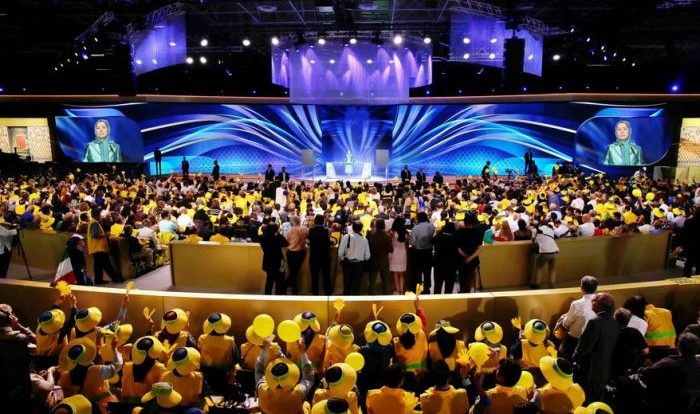
Near the airfield where 90 years ago Charles Lindbergh ended his historic solo flight across the Atlantic Ocean, gathering took place at the cavernous convention halls near Le Bourget Airfield on a similar historic occasion last Saturday.

It is here an estimated 100,000 friends and supporters of over 300 human rights and Iranian dissident groups joined dignitaries and elected officials from around the world in what has become the largest annual gathering opposed to the rule of the mullahs in Tehran.

This gathering has deep roots in the struggle for freedom and democracy in Iran and represents the largest thorn in the side of the ruling religious leaders of the Iranian regime. These groups included the People’s Mujahedin Organization of Iran (PMOI) for which mere association constitutes treason as far as the mullahs are concerned and punishable by death.

While the polarization in American politics as personified by the supporters of Donald Trump and Hillary Clinton are often contentious and biting, it’s hardly conceivable that being a registered Democrat or Republican would warrant a death sentence, yet in Iran, membership in an outlawed political movement is, which makes this event more admirable for the determination of the participants to literally put themselves and their families at risk by merely attending an event that is viewed with such intense hatred by the leaders of the Iranian regime.

Why then did they come?

The overwhelming majority are ex-pats caught outside of Iran during the Islamic revolution in 1979 which saw the promise of a democratic overthrow of the Shah’s reign instead saw it usurped by the fanatical followers of the religious clerics that essentially stole the revolution and installed an Islamic state that far preceded the ISIS the world is grappling with today.

What was most impressive though to those unfamiliar with the Iranian resistance movement was the generational shift occurring with the large participation of young people; the children and grandchildren of the Iranian diaspora.

This Snapchatting, Instagramming, Reddit-loving generation energized a movement that was centered on the long struggle through the ‘80s and ‘90s and has given way to the connections being made on social media within and outside of Iran. Connections and sharing that has earned the wrath of the mullahs who have sought to crack down on these social channels by building their own version of the Great Cyber Wall of Iran to track and block the use of social media platforms.

Since the original Arab Spring protests were violently put down after being shared socially for the first time through mobile phones and apps, the regime’s intelligence services have relentlessly gone after bloggers and high profile social media stars in Iran; tossing many into prison and threatening them with even worse unless they became willing advocates for the regime.

This certainly hasn’t stopped many ordinary Iranians from creating their own forms of private protest; be it posting selfies of women without wearing mandatory hijabs on Instagram or spreading copies of bloated and inflated paycheck stubs of Iranian officials caught in the center of corruption scandals.

Most importantly of all, last week’s gathering provided an opportunity for the governments of the world to unite in supporting the opposition movement with representatives that read like a roll call at the United Nations General Assembly. It was an inspiring scene repeated each year to see a cavalcade of members of parliaments, Congressmen, military officers and even a former U.S. presidential candidate of two lead a packed convention hall in advocating for a free and democratic Iran.

The names of the speakers are well known to those who follow current events, including former Democratic presidential candidate Gov. Howard Dean, former Republican Speaker of the House Newt Gingrich, former UN ambassador John Bolton, former FBI Director Louis Freeh and inaugural Secretary of Homeland Security Tom Ridge.

Most notably, for the first time a high-ranking member of the Saudi royal family came to endorse the movement’s efforts in Prince Turki bin Faisal Al Saud.

All of which points out a significant issue for the rest of the world. The resistance movement’s leader, Maryam Rajavi, is one of the most unique and influential political leaders today.

She is a moderate Muslim woman, leading one of the largest moderate Muslim movements in the world, who warned almost 20 years ago of the dangers posed by the rise of radicalized Islam, only to see her warnings come true during 9/11 and now with the chaotic civil war in Syria and the spread of ISIS and Iranian regime influence around the world.

To say the world is a more dangerous place now would be an understatement as we have seen with brutal and eye-opening terrorist attacks in Sydney, Boston, Ottawa, Paris, Brussels, Orlando, San Bernardino, Istanbul, Baghdad and Bangladesh. The litany of places struck could fill a Fodor’s travel guide around the world.

Yet the National Council of Resistance of Iran, which Rajavi leads, has been at the forefront in laying out a plan to combat this rise in radicalization and offering a roadmap for regime change in Iran that leads back to a democratic, non-nuclear, multicultural and pluralistic society.

One that does not hang political opponents. One that does not condone eye gouging, acid attacks, amputation and other medieval punishments as law enforcement. One that recognizes the value and rights of women, gays and the young people.

What last week’s landmark events also accomplished was refute the endless stream of false accusations and straw men perpetuated by the Iran lobby, which is supported by the Iranian regime. This collection of bloggers, journalists, lobbyists and false front organizations such as the National Iranian American Council, act in concert with agents of regime intelligence services to push out a false narrative that seeks to discredit the resistance movement.

More importantly, the Iran lobby seeks to preserve the few gains it has made in securing a fatally flawed nuclear deal and now pushes to open the lines of commerce to fund the regime’s badly depleted bank accounts, drained after years or proxy wars in Syria, Yemen and Iraq.

Ultimately, the success of this gathering will not be in the headcount of attendees, glowing press reports or posted selfies of attendees, but rather in the stark reminder to the mullahs that an energized, optimistic alternative to their nihilistic rule exists and it’s made up of Iranians.

Michael Tomlinson

Filed Under: Blog, News Tagged With: Featured, Iran, Iran Human rights, Iran Lobby, Iran Terrorism, Khamenei, Moderate Mullahs

Iran Regime Sets Sights on Canada and Cash

June 10, 2016 by admin

Iran Regime Sets Sights on Canada and Cash

Iran Regime Sets Sights on Canada and Cash

Incoming Canadian Prime Minister Justin Trudeau had expressed the hopes of improving relations with the Iranian regime, but those hopes are quickly running into the reality of the brutal policies and actions of the mullahs in Tehran.

Trudeau and Canada are learning the lessons from the Iranian regime playbook, much as the U.S. has had to learn the hard way, including the illegal abduction of its citizens. In this case, the plight of 65-year old Homa Hoodfar has placed Canada in the gun sights of the regime.

The university anthropologist was arrested by the regime this past weekend and thrown into Evin prison without charge. It was the second time she was arrested since arriving in Iran several months ago to do research work.

The regime accused Hoodfar, who holds both Canadian and Iranian passports, of “co-operating with a foreign state against the Islamic Republic of Iran.” A generic catch-all phrase the regime uses whenever it scoops up a dual-citizen like fish in a net. More often than not, the arrest is aimed at another agenda item for the mullahs.

In the case of several Americans held by Iran, Jason Rezaian, Amir Hekmati and Saeed Abedini, it was to serve as pawns to swap in a prisoner exchange in order to gain the release of suspected and convicted Iranian regime arms smugglers.

Shortly after Hoodfar’s family went public with her arrest and expressed concerns over health, the Iranian regime officials called out the Canadian government for failing to extradite an Iranian banker who settled in Toronto for what they call was his involvement in an embezzlement scheme.

The regime’s justice minister, Mostafa Pourmohammadi, was reported in a semi-official news agency report as saying that Canada was ignoring Iranian demands to extradite Mahmmoud Reza Khavari.

The report, which appeared Wednesday from the Fars News Agency, says Pourmohammadi told reporters in Tehran that Canada “is not committed and has not rendered any co-operation” with its extradition request.

The Canadian branch of human rights group Amnesty International announced Thursday it would take up Hoodfar’s case and called on Ottawa to pressure Iran for her release.

“The arrest of respected and accomplished scholar, Dr. Homa Hoodfar, is the latest attempt by the Iranian authorities at targeting individuals, including academics, for the peaceful exercise of their rights to freedom of expression and association.” said Alex Neve, secretary general of Amnesty International Canada.

“It is deeply troubling that someone whose research focuses on addressing women’s inequality can find herself arbitrarily arrested and held, possibly in solitary confinement, without access to a lawyer and her family.”

The family said it was unclear why Hoodfar had been arrested and that she had been “conducting historical and ethnographic research on women’s public role.”

Analysts say the recent arrest of Hoodfar and others seems to be part of a concentrated effort by the regime to pressure dual citizens. In recent months, the unit that arrested Hoodfar has questioned dozens of people with two nationalities and arrested several.

Among the current prisoners of the regime include:

  • Nazanin Zaghari-Ratcliffe, a British-Iranian employee of Thomson Reuters, was separated from her young daughter in April and taken to a prison in Kerman, in southern Iran. Another British-Iranian citizen, a businessman named Kamal Foroughi, was also arrested; and
  • Nizar Zakka, Lebanese information technology expert who has legal permanent residency in the United States.

But the turbulence between Iran and Canada also extended into a contentious court case in which the regime lost a key battle when an Ontario judge ordered the regime’s non-diplomatic assets in Canada to be handed over to the victims of terrorist attacks by groups sponsored and supported by the Iranian regime.

“As Canada seeks to re-engage Iran it is critical that Iran continue to be held to account in Canadian courts for its terrorism and human rights abuses,” said Danny Eisen of the Canadian Coalition Against Terror, which represents victims and lobbied for a 2012 law allowing victims to collect damages from state sponsors of terrorism.

The only states designated sponsors of terror by Canada are Iran and Syria.

What Canada is experiencing though is par for the course for how the regime acts and intimidates nations. Just like the Iran lobby, the regime pushes out a message of moderation when in reality it is gearing up for policies of extortion, political blackmail and terrorist actions.

Policies of appeasing the regime have done little to actually effect change and only encourage the regime to be more aggressive. The classic example of that is the regime’s continued test firing of illegal ballistic missiles and the tepid response by the world community.

Alireza Jafarzadeh, Deputy Director of the Washington office of the National Council of Resistance of Iran, made a persuasive argument in an editorial in The Hill.

“The current U.S. policy toward Iran threatens to enable the regime’s behavior by channeling money into the hands of the individuals and institutions associated with the Iranian Revolutionary Guard Corps and the unaccountable foundations, who still exert the greatest influence on Iranian foreign policy,” he writes.

“With U.S. presidential elections just around the corner, there is good reason to hope that this policy will come to an end. But every influential person in Washington who recognizes the danger posed by Iran’s ballistic missile program must help to make sure not only that change is guaranteed, but also that it will lead to an alternative policy that specifically constrains the power of the IRGC and similar entities,” he adds.

The experience Canada is having is another reminder that the world should not be trusting the messages of moderation coming out of Iran and its lobby, but rather should only be judged on its actions.

By Laura Carnahan

Filed Under: Blog, News Tagged With: Featured, Iran, Iran deal, Iran Human rights, Iran Lobby, Iran Mullahs, Irandeal, Moderate Mullahs, Rouhani

Iranian Regime Presses Harder Human Rights Crackdowns

March 28, 2016 by admin

Iranian Regime Presses Harder Human Rights Crackdowns

Iranian Regime Presses Harder Human Rights Crackdowns

While Christians celebrated Easter this weekend with prayers and hopes for peace, love and redemption, the Iranian regime stood alone in its wide ranging efforts to crackdown on human rights, stir up confrontation and foment strife around the world.

In spite of promises made by regime officials such as Hassan Rouhani and loyal supporters such as the National Iranian American Council that Iran was a model of moderation and accommodation for religious and ethnic minorities, the opposite has been the case as the regime showed little tolerance for anyone outside of its own narrow ideology that fuels an extremist fervor.

Take for example the plight of Christian converts in Iran who risk prison or death by secretly worshipping as Christians in Iran’s house church movement. According to watchdog groups, the number of Christians in Iran worshipping in secret has surpassed one million people.

The London-based Pars Theological Center is training at least 200 Iranian Christians to become the next generation of Iran’s church leaders, the Christian Post reported.

The persecution of Christians has persisted in Iran since the 1979 rise of the country’s theocratic government — with Christians facing the threat of death, lashing and torture. About 100 Christians currently remain imprisoned under Rouhani’s rule.

In 2010, top mullah Ali Khamenei said the country’s underground house churches “threaten the Islamic faith and deceive young Muslims.”

Sources describe Iranian house churches as consisting only of about four to five members — due to the threat of detection — and that they are forced to their place of gathering every time they meet.

“If they want to sing, they have to sing very quietly or not sing at all,” the source told the Post.

While Iran has released high-profile Christian pastors from captivity — most notably Iranian American Saeed Abedini — other Christian ministers still languish in the country’s prisons.

Regime punishment and torture of religious minorities has included brutal treatment of Sunni Muslims and those who follow the Baha’i faith, in which details of torture inflicted upon twelve Baha’is by interrogators three years ago at Amir Abad prison and detention centers in Iran’s Golestan Province—and the Iranian Judiciary’s complete lack of any response to the formal letter of complaint that was sent in 2012 by the victims of that torture to the head of the Judiciary of Golestan Province, were recently revealed in the media.

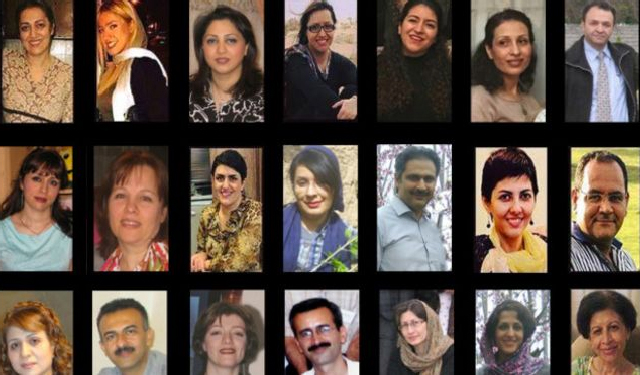
Twelve Baha’i citizens described harrowing instances of torture by their interrogators at the Amir Abad Prison, in the city of Gorgan, and other unnamed detention centers in Golestan province, northeast of Tehran.

“On the first day of his interrogation, Mr. Behnam Hassani’s wrist was tied very tightly with a rope and attached to a metal ring. The ring was raised to a nail above his head such that only his toes could touch the ground. He was in so much pain that he started to scream and shout,” said the letter.

“Then they brought him down and dragged him into a room and beat him. They pressed a pen between his fingers and hit him behind the head and on his mouth… Then they kept him under the rain for several hours on a cold night,” continued the letter.

These twelve Baha’is were among the 24 Baha’is (the other 12 were arrested in February and March 2013, also in Golestan Province), who recently received long prison sentences in January 2016.

Meanwhile, Ellie Silverman reporting for McClatchy News Service, detailed some of the brutal treatment regime prisoners received and how many were threatened before being released not to reveal any details of their mistreatment.

“A detailed picture of life inside Evin can be put together from interviews with former prisoners” Silverman writes. “Solitary confinement was one aspect they all had in common. All were blindfolded whenever they were taken from their cells, according to the Canadian, American and Iranian prisoners who spoke about their experiences,” Silverman continues.

“Another key aspect: Each prisoner was assigned to one principal interrogator who exercised authority over virtually every aspect of a prisoner’s life and served as that prisoner’s only contact with the outside world,” she added.

The former prisoners all recounted a difficult time adjusting to normal life after their release, including nightmares, flashbacks and other symptoms of post-traumatic stress. The prisoners released in January likely are enduring a similar adjustment period, said J. Wesley Boyd, associate professor of psychiatry at Harvard Medical School.

The scars and pain inflicted by the regime’s mistreatment of prisoners lingers long after their confinement ends and serves as a warning to others of what could happen to any other dissidents who dare oppose the mullahs.

The regime’s attacks and systemic marginalization of Sunni Muslims is also another example of how widespread the regime’s human rights crackdown is and how it is not limited to those outside of the Islamic faith.

According to Dr. Majid Rafizadeh, president of the International American Council writing in Huffington Post, Iran’s Sunni are the largest minority in the country. Some of the discrimination that the Sunnis have suffered, according the UN report, are that the Sunni communities in Iran “have long complained that Iranian authorities do not appoint or employ them in high ranking government positions such as cabinet-level ministers or governors. They have also raised concerns regarding reported restrictions on the construction of Sunni mosques in Shia-majority areas, including the capital Tehran, and the execution or imminent execution of Sunni activists the government alleges were involved in terrorist-related activities.”

The regime’s abuses are aimed at virtually anyone not subscribing to its own extremist view of Islam and serves to remind us that the claims made by the Iran lobby about the regime’s moderate intentions are simply a smokescreen to hide the brutality it metes out on a daily basis.

By Michael Tomlinson

Filed Under: Blog, News Tagged With: Baha'is, Featured, Iran, Iran Human rights, Moderate Mullahs

Iran Lobby Priorities Do Not Include Human Rights Reforms

March 9, 2016 by admin

Iran Lobby Priorities Do Not Include Human Rights Reforms

Iran Lobby Priorities Do Not Include Human Rights Reforms

If there has been one consistent aspect to the Iran lobby’s efforts to humanize and moderate the perception of the mullahs in Tehran, it has been the complete lack of criticism over the perennially awful human rights violations committed by the Iranian regime, especially under the first term of Hassan Rouhani’s “moderate” government.

The Iran lobby’s marching orders since the creation of advocacy groups such as the National Iranian American Council, has been to blunt the forceful voices of long-time critics of the Iranian regime such as the National Council of Resistance of Iran (NCRI) and key members of Congress and the media and spin a counter-narrative of an Iran yearning to be moderate if only given the chance with a nuclear deal that freed it from crippling sanctions.

It’s a playbook that borrows heavily from how North Korea was able to develop nuclear weapons and advanced missile systems even after agreeing to restrict both under international agreements that it consistently violated. The mullahs calculated that the rest of the world, especially an incoming President Barack Obama, had little stomach for direct confrontation with the regime and took a gamble that it could muzzle dissent enough to reshape its image.

The NIAC, led by Trita Parsi and Reza Marashi, took on the challenge of spinning this new vision after the “election” of Hassan Rouhani and new warm and fuzzy kind of mullah who tweets and posts Instagram shots of him watching the World Cup sans clerical robes and turban.

While the Iranian regime was able to secure a nuclear deal and a lifting of sanctions, the “win” may prove illusory as the situation in the Middle East continues to deteriorate with a worsening situation in Syria, a full-blown proxy war is building with Saudi Arabia and an American presidential election that offers the remaining candidates with public policy positions that take a much harder line against Iran than the Obama administration.

To that end, the Iran lobby has begun to focus on two central goals in its PR push of late. One is to attack vocal opponents of the regime among the presidential candidates, especially candidates such as Donald Trump, Sen. Ted Cruz and Ben Carson, as well as take jabs at Hillary Clinton’s recent statements warning Iran to refrain from continued aggression against its neighbors.

Long-time regime supporter, Ali Gharib, has been especially prolific in hurling invective against the Trump campaign, his latest salvos coming on noted Iran lobby blog, Lobelog.com, as well as a sarcastic diatribe against Carson in The Guardian.

In both cases, Gharib does what he does best, use snark and sarcasm to deflect from any serious discussion of the shortcomings of the Iranian regime, specifically the horrific abuses meted out against journalists, women, ethnic minorities, dissidents and Christians. Gharib cannot be bothered with these facts since he’s having too much fun mocking candidates.

But his attacks and those of Parsi and Marashi hide the genuine concern and fear Iran lobby supporters have which is a new incoming president would not be beholden to the agreements made by the Obama administration and would be have a free hand to chart their own foreign policy which addresses the key problem in the Middle East today, which is that Iran is at the heart of three proxy wars and supporter of three terrorist organizations and a dictatorial regime that has caused the largest refugee crisis since World War II.

Parsi, Gharib and other Iran lobbyists refuse to discuss the impending mass execution of 100 prisoners, nor the inexcusable mass killings of every adult male from a village in southern Iran.

The Norway-based Iran Human Rights group revealed on Friday that sources inside and outside Ghezel Hessar prison, including a prosecutor attached to Iran’s Islamic Revolutionary Court, confirmed that the inmates were told that the country’s Supreme Court had upheld their sentences, and that they should prepare to be put to death.

The prospect of this mass execution for drug crimes comes just months after the United Nations Office on Drugs and Crime (UNODC) inked a new $20 million deal with Iran to assist in its counter-narcotic efforts. Advocates against the excesses of the drug war have pilloried the UN for its dealings with Iran, which kills hundreds of people every year, including foreign nationals, over drug-related charges. Iran Human Rights estimates that more than 1,800 people were executed for drug crimes in Iran between 2010 and 2014, most without due process or access to proper legal representation.

The sheer barbarism of the Iranian regime is appalling and yet, the Iran lobby never speaks of these issues. Its silence is damning.

The lobby also never mentions alarming new incidents of militant acts by the Iranian regime every day. Just this weekend, they included:

  • An Australian naval ship seized a large arms cache that may have come from Iran and headed to Yemen by way of Somalia for Iranian-backed Houthi rebels. On board was more than 2,000 pieces of weaponry — including 1,989 AK-47 assault rifles and 100 rocket-propelled grenades;
  • The U.S. Commerce Department announced export restrictions on Chinese telecoms equipment maker ZTE Corp for alleged violations of U.S. export controls on Iranian which the Chinese company sold U.S. made telecommunications products to Iran, which is banned;
  • Yukiya Amano, chief of the International Atomic Energy Agency, the international community’s nuclear watchdog organization, disclosed that certain agreements reached under the Iran nuclear deal limit inspectors from publicly reporting on potential violations by the regime. Amano’s remarks come on the heels of a February IAEA oversight report that omitted many details and figures related to Iran’s nuclear program. The report sparked questions from outside nuclear experts and accusations from critics that the IAEA was not being transparent with its findings; and
  • The FBI arrested the American head of a metallurgy company on charges of illegally exporting to Iran a half-ton of special powder that could, in theory, be used in the production of nuclear-tipped rockets. Agents nabbed 44-year-old Erdal Kuyumcu of Woodside, New York—the CEO of Global Metallurgy, a self-described “provider of specialty metal products, services and supply chain solutions” that lists phone numbers in New York City and Turkey. That Iranian government agencies or companies were allegedly trying to get their hands on cobalt-nickel powder might seem to indicate that Tehran, despite having agreed to suspend its nuclear program, is still trying to develop ballistic missiles optimized for carrying an atomic warhead.

Of course, the Iran lobby has chosen not to defend any of these actions, nor make mention of the continued aggressive moves by the regime, which makes it all too clear what their real motives are: protecting the new “moderate” image of the mullahs.

By Michael Tomlinson

Filed Under: Blog, News Tagged With: Featured, Iran Human rights, Iran Lobby, Lobelog, Moderate Mullahs

Iran Lobby Ignores Continued Human Rights Violations by Iran Regime

February 4, 2016 by admin

Iran Lobby Ignores Continued Human Rights Violations by Iran Regime

Iran Lobby Ignores Continued Human Rights Violations by Iran Regime

As the world convenes in Geneva to discuss the chaos that is the civil war in Syria, the Iranian regime continues to recruit and export thousands of undocumented Afghans to fight in Syria on behalf of the regime of Bashar al-Assad in a continuation of the unconditional support the mullahs in Tehran have given the Syrian dictator according to Human Rights Watch and the ongoing genocide.

Human Rights Watch in late 2015 interviewed more than two dozen Afghans who had lived in Iran about recruitment by Iranian officials of Afghans to fight in Syria. Some said they or their relatives had been coerced to fight in Syria and either had later fled and reached Greece, or had been deported to Afghanistan for refusing. One 17-year-old said he had been forced to fight without being given the opportunity to refuse. Others said they had volunteered to fight in Syria in Iranian-organized militias, either out of religious conviction or to regularize their residence status in Iran.

“Iran has not just offered Afghan refugees and migrants incentives to fight in Syria, but several said they were threatened with deportation back to Afghanistan unless they did,” said Peter Bouckaert, emergencies director at Human Rights Watch. “Faced with this bleak choice, some of these Afghan men and boys fled Iran for Europe.”

The Iranian regime hosts an estimated 3 million Afghans, most fleeing violence and persecution in Afghanistan; only 950,000 have formal legal status in Iran as refugees. The regime excludes the remainder from accessing asylum procedures, leaving many who may want to seek asylum undocumented or dependent on temporary visas and at the tender mercies of the mullahs.

HRW went on to document several instances of minor children being coerced into service and fight in Iranian-controlled and led militias in Syria. The Iranian regime, already cited by Amnesty International for executing juveniles in Iran, has adopted a similar attitude when it comes to using children as cannon fodder.

These practices by the Iranian regime have drawn broader attention in the wake of Hassan Rouhani’s European tour which was met by large demonstrations by thousands of Iranian dissidents and human rights groups in Paris.

Many Iranian expatriates and former victims of the regime participated in elaborate street performances and exhibitions to portray the human rights violations that are still running rampant in the country to this day. 2,200 people have been put to death during his tenure, most of them for non-violent offenses, and many for vague, political crimes like “insulting the Prophet” or “enmity against God”. Western diplomacy to solve this problem is missing- in what can only be called criminal negligence, according to the National Council of Resistance of Iran, a leading dissident group.

Even against the backdrop of business deals being announced and praise from the Iran lobby about the “moderate” turn by the regime, the mullahs continued to crackdown in advance of upcoming parliamentary elections, but are not satisfied with just arresting Iranians as they arrested a former BBC journalist on the eve of visit by regime foreign minister Javad Zarif to London.

Washington Post reporter Jason Rezaian must be feeling a case of déjà vu hearing this news.

Bahman Daroshafaei was taken to jail on Wednesday after facing a series of interrogations, according to sources in Tehran. Daroshafaei is of dual Iranian-British nationality and is a former employee of the BBC’s Persian service according to the Guardian.

Zarif is due to participate at a high-profile summit on Syria in London on Thursday, in the first visit to the UK by an Iranian foreign minister in 12 years. It comes after Britain and Iran reopened embassies in their respective capitals last August following the landmark nuclear deal.

The Iranian regime appears to have an active campaign that involves harassing BBC Persian journalists directly or indirectly by summoning their family members who live in Iran. A number of staff members at the BBC’s Persian service have been victims of false allegations of sexual misconduct, duplicated Facebook accounts, fake blogs and online identity theft designed to discredit them, this is while BBC Persian service is considered a program that mainly advocates an appeasement policy towards Iran and is actually referred to by most Iranian’s as “Ayatollah BBC” for its pro mullah’s programs.

The Guardian took the regime to task in an editorial in which it condemned the regime’s human rights violations, saying:

“Iran may have a president with a “moderate” profile – one whose smooth approach comes as a relief after the Ahmadinejad years – but that does not mean the authoritarian nature of the regime or the objectives of its foreign policy have changed. Iran still ranks as one of the most repressive states in the world, and there has been no improvement.

“The government was probably looking for a public relations bonus in the west when it recently released a number of journalists, but the statistics tell another story: in 2015 Iran executed at least 830 people, including juveniles, many for non-violent crimes. The security services continue to harass and detain activists, writers and journalists.

“Nor has Iran become in any way more “moderate” in its behaviour in the Middle East. In Syria, Iran’s militias and Republican Guards are direct participants in the war crimes that the Assad regime inflicts on its own population. Iran’s close ally Hezbollah played a key role in the siege of Madaya, where children died of hunger as a result, and it is part of similar operations elsewhere.”

It is encouraging to see more international media seeing past the charades offered by the Iran lobby and exposing the horrors that are still continuing in Iran.

By Michael Tomlinson

Filed Under: Blog, News Tagged With: Featured, Iran Talks, Irantalks, Moderate Mullahs

Iran Lobby Attacks Saudi Arabia to Aid Iran Regime

January 8, 2016 by admin

Iran Lobby Attacks Saudi Arabia to Aid Iran Regime

Iran Lobby Attacks Saudi Arabia to Aid Iran Regime

The Iran lobby, led by the National Iranian American Council, has ratcheted up the propaganda machine to take direct aim at Saudi Arabia in the growing escalation in tensions between it and the Iranian regime.

This was highlighted in back-to-back editorials by Trita Parsi and Reza Marashi of NIAC as well as a steady parade of attack pieces by Eli Clifton and Paul Pillar on Lobelog.com, all attempting to portray the Iran regime as the picked on softie and Saudi Arabia as the menacing bully.

It’s a curious, but not unsurprising, direction for the Iran lobby since the rise in tensions with Saudi Arabia and other neighboring Arab states have brought to the forefront one unmistakable point the rest of the world cannot ignore; the Iranian regime is always at the center of the world’s most dangerous conflicts.

Be it in Syria by its support of the Assad regime, or in Yemen through its support of Houthis rebels or in Iraq through Shiite militias, the mullahs in Tehran have manipulated events to create disorder in order to gain footholds in neighboring nations to establish the Shiite version of the Warsaw Pact as a buffer from its adversaries.

But the delusional arguments being pedaled by the Iran lobby to cover for Iran’s aggressive expansions have ranged all over the map as it has tried anything to explain away the sectarian violence and bloodshed coming at the behest of the Iranian regime.

Take for example Parsi’s editorial appearing in Al Jazeera in which he attempts to portray Saudi Arabia as a “declining state” and Iran as a “rising state” by way of explaining why Saudi Arabia is resisting Iran so strenuously.

It’s the kind of argument a high school student reading Cliff Note’s versions of history might make. Parsi says that “history teaches us that it is not rising states that tend to be reckless, but declining powers.”

Most historians would disagree with Parsi and most political and military analysts would find his comment nonsensical since the defining parameters for nations to act “recklessly” often form around issues of resources, economy, wealth and even faith. The “decline” of a nation can be defined in a similarly wide variety of methods, none of which would apply to Parsi’s reasoning.

Empires and nations can decline through environmental degradation such as the Harappan Civilization in the 22nd century BC in what is now called Pakistan or the Minoans centered on the island of Crete which met its demise in 1450 BC when a volcano erupted.

They can also decline through war such as the ancient Roman Empire or the Ottoman Empire at the end of World War I. In all these cases, nations and empires in decline were not cited for “reckless” action as a reason for their declines. If anything, history teaches us that declining empires are often the victims of aggressive neighbors who sense weakness and an opportunity to acquire more territory, more wealth or more slaves.

Modern history has taught us that lesson especially well as in the growth of totalitarian states such as Nazi Germany or now the Iranian regime in which aggression is more often the hallmark of these nations’ leadership. Accommodation is viewed as weakness, negotiation is a tactic to hold off retaliation and military action is a tool of statecraft.

Parsi typically confuses political weakness with practical weakness. It’s a viewpoint common among dictatorships which only see the world through the lens of strength and domination. Parsi’s conceit and obsession with the strongman view of the world is illustrated when he writes:

“Their prospects of success in any confrontation will diminish the longer they wait, and second, because of the illusion that a crisis may be their last chance to change the trajectory of their regional influence and their prospects vis-à-vis rivals. When their rivals — who have the opposite relationship with time — seek to deescalate and avoid any confrontation, declining states feel they are left with no choice but to instigate a crisis.”

Parsi believes then that in the modern world the only options open for nations that feel threatened is to seek out confrontation and create crisis.

Going by that standard, the nations in the greatest decline would seem to be China, North Korea, Russia and Iran given the recent track records of confrontation in the South China Sea, Ukraine, nuclear bomb tests and – in the case of the Iranian regime – aggressive actions in Syria, Iraq and Yemen. On that basis alone, Iran would seem to be the nation in steepest decline using Parsi’s logic.

Parsi neglects to also mention the near Hail Mary-like request of the mullahs in Tehran to bring in Russian intervention in Syria to save the Assad regime.

If anything, the recent actions by the Saudis and other nations to sever relations with Iran including Bahrain, Sudan, United Arab Emirates and Kuwait, all reflect a newfound strength and resolve from nations that have typically come to rely on U.S. power to protect them. If anything, these nations have opted to poke the Iranian beast in the eye and finally stand up to the largest supplier of terrorist groups in the world.

These nations have sought to halt the flow of arms into their nations with crackdowns on Islamic extremists receiving weapons and explosives from Iran’s Revolutionary Guards Corps and even acted militarily to in Syria and Yemen and break from the historical patterns of only supplying cash to U.S. or European allies.

The recent acts by the Iranian regime to violate UN sanctions with ballistic missile launches and threaten to walk away from the nuclear deal it agreed to last July smack more of the desperation Parsi writes about than anything Saudi Arabia has done.

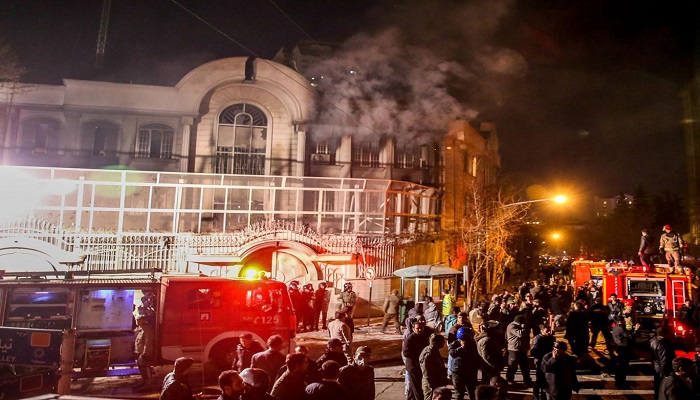
Parsi largely blames these acts and the recent burning of the Saudi embassy in Tehran as the result of a small “hardliner” segment at odds with the “moderate” leadership of Hassan Rouhani. It’s a common canard offered by the Iran lobby and one that fails to seriously discuss the true nature of the regime, which is as a theocracy, Iran is firmly and fully in the control of Ali Khamenei and the other mullahs. Any other interpretation is either naïve or deliberately obtuse.

It’s worth noting that the mullahs have a penchant for burning down foreign embassies having done so to the Americans in 1979, the British in 2011 and now the Saudis in 2016. One might wonder who’s next for an encore.

By Michael Tomlinson

Filed Under: Blog, National Iranian-American Council, The Appeasers Tagged With: Featured, Iran Lobby, Iran Saudi Arabia, Iran Saudi Arabia crisis, Moderate Mullahs, National Iranian American Council, NIAC, Reza Marashi, Rouhani, Trita Parsi

What the Paris Attacks Tell Us About Terror Template

November 16, 2015 by admin

What the Paris Attacks Tell Us About Terror Template

What the Paris Attacks Tell Us About Terror Template

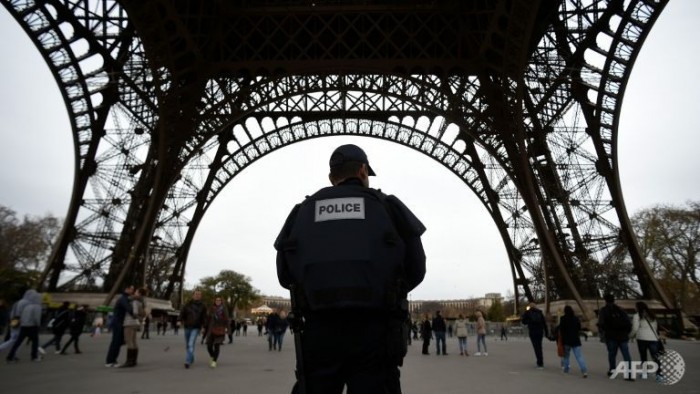
The tragedy of the Paris terrorist attacks this weekend are so startling in their scope, so appalling in the loss of life and so despicable in the choice of victims, that the world has once again been moved to commemorate with demands for stern action and condemnation of the breed of Islamic extremism flowing out of the war torn streets of Syria and now making its way to the wide boulevards of Paris.

With 132 dead as of the latest reporting with scores more in critical condition, the full scope of the killed may not be known for a little while longer, but what is known is that the attack was sophisticated in planning, meticulous in its execution and devastating in its results. It was also spawned and given life from early reports by the ISIS terror network that now dominates vast swaths of Syrian and Iraqi territory, while its influence and recruitment stretches from the Americas to Africa and Asia.

What is unmistakable is the “template of terror” that has come to be the calling card of terror groups such as Hezbollah, Al Qaeda, Boko Haram and ISIS, amongst scores of others. The names might be different, ethnicities varied, even religions at odds with each other, but all share the same fundamental belief in using violence, terror and fear to state their case, sow terror and achieve their aims.

Attacking and striking at these terror groups has de-evolved into a game of “Whack-a-Mole” as militaries strike at individual terrorist leaders like “Jihadi John,” the Briton who was identified as being one of the ringleaders of ISIS who came to the world’s attention decapitating Western hostages.

More astute analysts have pointed out that to curb the threat of global terror, you have to strike at the safe havens offered by sympathetic governments such as the invasion of Afghanistan after the 9/11 attacks to dislodge the Taliban’s support of Al-Qaeda. Others have pointed out the need to support unstable democracies as they struggle with the aftermath and chaos wrought by the changes from the Arab spring protests that toppled governments in Libya, Egypt and elsewhere so that they do not become safe havens for terrorists.

But the single largest supporter of terror in the world today, both financially and spiritually, has been and remains the Iranian regime.

The mullahs in Tehran have been the chief sponsors of Hezbollah and have used Hezbollah fighters in proxy wars in Syria, Afghanistan, Lebanon, Iraq and elsewhere. They have also supported Shiite militias in Iraq with arms, including explosive devices manufactured in Iran, used to kill hundreds of U.S. service personnel in Iraq.

The Iran regime has also provided a spiritual template for ISIS and others through the brutal warped application of sharia law to mete out punishment in often ghastly ways. Before ISIS ever decapitated a captive on video, Iranian regime was hanging prisoners in public squares in front of young relatives. Before ISIS ever machine gunned children, Iranian regime was arresting and executing them. Before ISIS ever imposed harsh religious law in the villages and towns it conquered, Iranian regime was flogging women, cutting off the hands of thieves with power saws and beating demonstrators in the street. The medieval measures that are still being practiced under Rouhani.

The visceral brutality of Iranian regime’s justice has long been used as the standard for invoking a twisted form of Islam to justify violence in the name of territorial gain. The mistake most countries make in dealing with Islamic extremism is in thinking it is a religious war.

It is not.

The violence that stems from the Iran regime and flows out to groups like ISIS and Hezbollah is used as a political tool to achieve practical goals such as toppling governments in Yemen, creating safe havens for forces to operate such as in Iraq and Lebanon and building integrated networks to carry out missions around the world such as Iranian-linked terror attacks in Latin America and the U.S.

What is most telling is the response to the Paris attacks by Iran and its lobbyist allies. In the first few hours of the attacks, while the world expressed, shock, outrage and revulsion, social media linked to Iran’s lobbyists did not offer condolences or sympathy, but rather opened up a full bore attack on Iran’s chief regional rival – Saudi Arabia – in an ongoing effort to destabilize that country.

Trita Parsi, head of the National Iranian American Council, offered up this insightful post on his Twitter feed as the streets of Paris ran thick with blood:

“If it turns out this horrible terror was done by ISIS or AlQaeda, will France rethink its cosy ties with Saudi and those funding Salafists?”

This is the first thing that comes to the mind of Parsi? His next seven posts sought to blame the attacks on Saudi Arabia before he got to his first tweet about Iranians expressing sympathy outside of the French embassy in Tehran.

He even managed to work in a dig at the U.S., tweeting:

“2014, U.S. intel found out that certain equipment sold to Saudi had ended up in ISIS hands. Not sure if they followed up… #ParisAttacks”

Since then, Parsi has continued the drumbeat of linking ISIS to Saudi Arabia, along with other Iran supporters who are marching to the same tune of deflecting blame away from Iranian mullahs.

The only certain thing is that the mullahs in Tehran set the tune and example for the terror industry and by their actions have long validated violence against civilians as a means to an end. It is a pathway that folks like Parsi have never apparently found objectionable judging by their social media accounts and public statements.

Parsi and his colleagues have never made human rights a centerpiece of their lobbying efforts as they have always sought to de-link the issue from any relevancy such as the nuclear talks. The hypocrisy of groups such as NIAC is easily apparent when you peruse their press releases and commentary. The lack of sympathy for the victims of Paris and the all-too-quick efforts to link them to traditional enemies of Iranian regime reveal the true purposes they have.

That true nature of the Iran regime was on front page display in regime newspapers where on its front page, Javan featured an illustration of a masked jihadist with a gun and a machete standing at the top of the Eiffel Tower, waving a mixed flag of the United States and ISIS.

“Return to home,” its headline said, quoting reports that some 200 French extremists had returned to the country after fighting with ISIS abroad.

In Kayhan – Iranian regime’s oldest and most-vocal paper — editor Hossein Shariatmadari, known as the mouth piece for regime’s supreme leader, repeated a conspiracy theory often cited in Iranian media that ISIS is a creation of the West and Israel under an operation dubbed “Hornet’s Nest”.

“Now the designers of the Hornet’s Nest must await the return of the wasps to the real nest — wasps that carry automatic rifles and grenades,” Shariatmadari wrote.

This shouldn’t come as a surprise to long-time observers of the regime or to Iranian dissidents who have long warned that ignoring Iranian mullah’s conduct in supporting terrorist groups has only allowed them to flourish.

Unfortunately, unless the world acts to focus on the source of the terrorism occurring in Iran, we will inevitably be faced with more Paris attacks elsewhere.

By Michael Tomlinson

Filed Under: Blog, Current Trend, News Tagged With: Featured, Iran, Iran Human rights, Iran Lobby, Iran Mullahs, Iran Talks, Khamenei, Moderate Mullahs, National Iranian American Council, NIAC, NIAC Action, Rouhani, Trita Parsi

  • « Previous Page
  • 1
  • 2
  • 3
  • 4
  • Next Page »

National Iranian-American Council (NIAC)

  • Bogus Memberships
  • Survey
  • Lobbying
  • Iranians for International Cooperation
  • Defamation Lawsuit
  • People’s Mojahedin
  • Trita Parsi Biography
  • Parsi/Namazi Lobbying Plan
  • Parsi Links to Namazi & Iranian Regime
  • Namazi, NIAC Ringleader
  • Collaborating with Iran’s Ambassador

Recent Posts

  • NIAC Trying to Gain Influence On U.S. Congress
  • While Iran Lobby Plays Blame Game Iran Goes Nuclear
  • Iran Lobby Jumps on Detention of Iranian Newscaster
  • Bad News for Iran Swamps Iran Lobby
  • Iran Starts Off Year by Banning Instagram

© Copyright 2026 IranLobby.net · All Rights Reserved.