Iran Lobby

Exposing the Activities of the lobbies and appeasers of the Mullah's Dictatorship ruling Iran

  • Home
  • About
  • Current Trend
  • National Iranian-American Council(NIAC)
    • Bogus Memberships
    • Survey
    • Lobbying
    • Iranians for International Cooperation
    • Defamation Lawsuit
    • People’s Mojahedin
    • Trita Parsi Biography
    • Parsi/Namazi Lobbying Plan
    • Parsi Links to Namazi& Iranian Regime
    • Namazi, NIAC Ringleader
    • Collaborating with Iran’s Ambassador
  • The Appeasers
    • Gary Sick
    • Flynt Leverett & Hillary Mann Leverett
    • Baroness Nicholson
  • Blog
  • Links
  • Media Reports

Iran Lobby Ignores Money Trail from Iranian Regime

February 18, 2016 by admin

Iran Lobby Ignores Money Trail from Iranian Regime

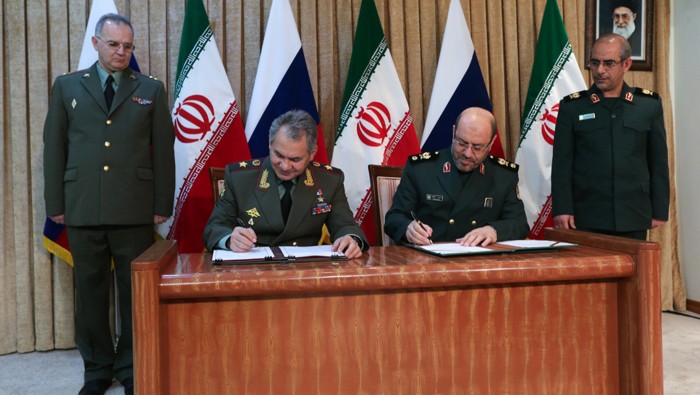
In this Tuesday, Jan. 20, 2015 photo Russia’s Defense Minister Sergei Shoigu, second left, and Iran’s Defense Minister Hossein Dehghan, second right, sign an agreement to expand military ties in Tehran Iran. Sergei Shoigu, in remarks carried by Russian news agencies, said Moscow wants to develop a “long-term and multifaceted” military relationship with Iran. He said that the new agreement includes expanded counter-terrorism cooperation, exchanges of military personnel for training purposes and an understanding for each country’s navy to more frequently use the other’s ports. (AP Photo/ Vadim Savitsky, Russian Defense Ministry Press Service)

While the Iran lobby argued strenuously that a nuclear deal with the Iranian regime would facilitate a moderation in its outlook, it also suggested that the financial windfall coming from the release of sanctions would help bolster the Iranian economy, benefitting the Iranian people and helping turn the Islamic state into an economic engine in the region.

Regime advocates such as the National Iranian American Council (NIAC) and The Ploughshares Fund were outspoken in their conviction that ultimately the Iranian people – hurt after years of international sanctions – would be the ones lifted up by the rising tide of new capital flooding into the country.

Predictably those claims have turned out to be just another in the truckloads of false promises made by the Iran lobby. The reality has been harsh and unforgiving.

In the months following completion of the deal, the regime has turned all of its attention to just two issues: the crackdown on dissidents at home in advance of parliamentary elections and upgrading as quickly as possible its military forces.

This was evidenced on Hassan Rouhani’s recent European tour in which he signed a flurry of business deals with foreign companies aimed at rebuilding the country’s infrastructure and funnel billions of dollars toward companies controlled by the Islamic Revolutionary Guards Corps (IRGC).

It is no surprise that the IRGC is the first institution in Iran to benefit from the largess. Rouhani’s government made the decision to keep the bulk of the $100 billion in their overseas accounts in order to pay for foreign military purchases in euros or dollars and they have wasted no time buying.

The first deal to be completed was the sale of S-300 anti-aircraft missile batteries that are a significant upgrade to the regime’s defenses and could be used to protect any nuclear facilities the regime chose to restart.

In addition, the regime announced another round of purchases of Russian arms totaling $8 billion. According to news reports, Iran wants to purchase more sophisticated anti-aircraft missile systems and also a new cadre of warplanes. The new deals will be in addition to several outstanding arms and military contracts that have already been signed between Iran and Russia.

Iran will “seriously focus on its air force and fighter jets,” according to comments by regime defense minister Hossein Dehghan while in Moscow to sign the defense agreements. “We are moving toward a contract. We told them that we need to be involved in the production [of the fighter planes] as well.”

A Russian source who spoke to the media said Iran is also interested in the latest anti-aircraft technology.

“Iran would like to buy Russia’s latest S-400 Triumph anti-aircraft missile system, developed by Almaz-Antey. And they make no secret of it,” the source was quoted as telling the Russian press. “On the eve of his visit to Moscow, Dehghan openly said to Iranian media they want to purchase the S-400s.”

Iran also is seeking to buy and possibly license for domestic production Russia’s new Sukhoi Su-30SM fighter jet, which is used for air-to-air and air-to-surface combat.

“Iran is also interested in Russia’s Bastion mobile coastal defense missile system, equipped with supersonic Yakhont anti-ship missiles, along with Mi-8/17 helicopters and other arms,” according to the regime-controlled media.

The military purchases represent one of the largest investments in state-of-the-art military hardware anywhere in the Middle East. The addition of supersonic fighter jets, anti-ship missiles and even more sophisticated anti-aircraft systems poses a grave threat to international shipping lanes through the Strait of Hormuz.

News reports also indicated the regime would seek to diversify its military suppliers by seeking arms purchases from China as it dips heavily into its newfound wealth. The rapid buying binge indicates the mullahs’ strong desire to rearm Iran into the region’s most powerful military.

To give the expenditures perspective, the entire publicly reported budget for the Iranian regime’s military was $10.2 billion, supporting over half a million active duty regime personnel. The Russian agreement nearly equaled the entire budget last year and more buying is on the way.

The inevitable question that needs to be asked of the Iran lobby is where is the money to help the Iranian people? Little of the money has been brought back to Iran and even less has been disbursed to help ordinary Iranians with healthcare, education, or even food. Why does the Iran lobby ignore all these actions? Probably the same reason it is ignoring the carnage in Syria being wrought by the Iranian regime as well.

In fact, the civil war in Syria is at the heart of the Iranian regime military buildup and an example of why the regime cannot be trusted.

As the Independent newspaper detailed the obvious contradiction in supporting a nuclear deal that only served to supply the regime with fresh resources to wage an even bloodier war in support of keeping Syrian dictator Bashar al-Assad in power.

Kyle Orton cites the brutal battle over the Syrian city of Aleppo as the case in point, writing:

“The Geneva III peace process is the most immediate cause for this latest offensive against Aleppo, led on the ground by Iran’s Islamic Revolutionary Guard Corps (IRGC) and its proxies, as well as Russian airstrikes. The regime and Russia have used it as a cover to gain ground. The US took the process seriously so sought to de-escalate, taking steps to weaken its own side. This included restricting the rebels’ access to anti-tank missiles”.

“Russia, on the other hand, enabled the IRGC-run forces that control the Bashar al-Assad regime’s security sector to cut the rebels’ final Aleppo supply line into Turkey and move to impose a starvation-siege on the city like the ones they have imposed on forty-nine other areas in Syria. The regime coalition can then either bring the city to its knees and complete the reconquest, or quarantine the rebels in the city, freeing up resources to deploy against rebels on other fronts,” he added.

The Iranian regime’s intentions in Syria are simple: 1) Keep Assad in power; and 2) Do it anyway it can.

“Assad, Iran, and Russia have worked tirelessly to eliminate the moderate opposition so that there will be nobody for the international community to interface with, and Assad’s reign will have to be accepted—and perhaps even supported to reconquer the Isis-held areas in the east,” Orton said.

The brutal evidence of that ruthless strategy can be seen in the deliberate targeting of civilians and the use of barrel bombs and now starvation as a tactic to weaken the opposition.

The mullahs are well acquainted with using death, destruction and executions as a tactic for winning its conflicts. The diplomacy the Iran lobby publicizes with great fanfare cannot be found on the battlefields of Syria, Yemen or Iraq where the Iranian regime’s policies are killing tens of thousands.

By Michael Tomlinson
Filed Under: Blog, News Tagged With: #NuclearDeal, IRGC, National Iranian American Council, NIAC, NIAC Action, Trita Parsi

Hassan Rouhani Begins European Tour Under Cloud of Executions

January 25, 2016 by admin

Hassan Rouhani Begins European Tour Under Cloud of Executions

Hassan Rouhani Begins European Tour Under Cloud of Executions

Iran regime leader Hassan Rouhani begins a European tour previously postponed because of the terrorist attacks in Paris with stops in France and Italy which has been highlighted by the regime as a goodwill tour as well as a shopping spree to use some of the $100 billion in frozen assets being returned to Iran as part of the nuclear agreement.

Both in France and Italy there are companies with long established business relationships in Iran but they remain hesitant given the regime’s actions in the months immediately following signing of the deal including the test launching of ballistic missiles violating United Nations sanctions against development of nuclear-capable missiles and the continued escalation of the Syrian conflict and support for proxy militias in Iraq and Yemen leading to broad sectarian violence.

More recently the regime engaged in a prisoner swap, releasing several Americans being held by the regime including Washington Post reporter Jason Rezaian and Christian pastor Saeed Abedini, in exchange for a large number of Iranians who had been charged and convicted of arms smuggling and trading in illegal nuclear and military components.

Additionally, both Democrats and Republicans in Congress and on the presidential campaign trail have expressed doubts over the regime’s ability and willingness to give up its militant ways, as well as what the mullahs plan do with all of the billions of dollars they are about to receive. Several pieces of legislation have been put forward addressing the levying of additional sanctions on Iran should the regime prove recalcitrant moving forward.

This has caused the Iran lobby to push back and attempt to make the issue of new sanctions a partisan issue by placing blame on Republicans, even though support for a tough approach to Iran has come from both sides of the aisle.

“From the European side, there is a concern that if they enter Iranian market they will be subjected to American sanctions. Because there are conflicts in the U.S.,” said Trita Parsi, head of National Iranian American Council, the regime’s chief lobbyist. “Congress is very skeptical about the deal and republicans are still pushing for new sanctions and this is sending a conflicting message making Europeans concerned.”

Parsi made his comments to regime-controlled media in an attempt to convince European companies on the eve of Rouhani’s visit to open wide the doors of trade and investment to the regime even with growing doubts over the corrupt nature of the economy and high level of censorship, human rights abuses and control of most industries by the Revolutionary Guard Corps.

Those doubts were only reinforced this weekend by comments made by top mullah Ali Khamenei who commended the actions taken by Revolutionary Guard Corps members in detaining American sailors, calling their actions “courageous.”

“You did a brilliant, interesting and timely job. In fact, this event should be considered God’s work. He drew them towards our waters so that with your timely measure, they would be arrested in that manner – with their hands on their heads,” Khamenei said on his official website.

The statements being made by Khameneni, Rouhani and other regime officials over all the incidents are often conflicting; adding to the confusion over what the regime’s true goals and aims are. Doyle McManus examined this almost bipolar quality within the Iran regime in an editorial in the Los Angeles Times.

“The underlying problem is that Iran still hasn’t made the choice Henry Kissinger described several years ago: whether it is a country or a cause — a normal state, or a revolutionary one,” McManus writes. “On the other hand, the Iranians have repeatedly rejected proposals for normal diplomatic relations with the U.S. (an offer floated by George W. Bush before Barack Obama). They even rejected a U.S. proposal for a hotline between the two countries’ armed forces, even though that could avert unnecessary clashes.”

“This resistance to formal normalization is partly about preserving Iran’s revolutionary self-image,” he added. “So even as he has authorized a de facto rapprochement with the United States, Khamenei has released an uninterrupted flow of statements denouncing the Great Satan and warning against Western subversion.”

This explains much of what is confounding to outside observers about the regime and why the arguments made by the Iran lobby about regime “moderation” is so much hot air. As Michael Rubin, a resident scholar at American Enterprise Institute, pointed out in a recent editorial:

“So what to make of President Hassan Rouhani’s election? Rouhani might have embraced a softer rhetorical style than Mahmoud Ahmadinejad, his predecessor, but he is no more reformist. True, he purged a lot of the Islamic Revolutionary Guard Corps officers from the cabinet, but he replaced them with Ministry of Intelligence veterans. Public executions have skyrocketed under Rouhani.”

“Khamenei is not only supreme leader, but he’s also master marionette, playing factions off each other in order to maintain his own power. The seeming rotation between hardline and less hardline factions has less to do with liberalization and more to do with simply cleaning house before any alternative power can consolidate.” Rubin added. “Obama may believe change in Iran to be inevitable. Unfortunately, it is not the change he imagines. That the Iran deal as constructed provides the cash to Iran’s most hardline elements will only catalyze the slow decline of Iranian reformism.”

It is against this backdrop that Rouhani’s European tour comes soaked in the blood of over 2,000 men, women, children, political opponents, dissidents, activists and others who have been executed since Rouhani took power; a large number of them in grisly public hangings.

According to human rights groups, Iranian dissidents and even United Nations officials, the pace of executions have been stunning even for Iran’s bloody history and are likely to continue unabated. According to the National Council of Resistance of Iran, the first two weeks in January have already seen over 52 executions.

The prospects for the future remain bleak as the regime’s Guardian Council, comprised of 12 Islamic jurists appointed by Khamenei, disqualified more than 6,500 candidates from upcoming parliamentary elections, with opposition groups claiming upwards of 90 percent of “reformist” candidates had been eliminated.

For Europeans meeting with Rouhani this week, it is best to think twice before making a big risk in trading with the regime in Iran, particularly since in the eyes of the Iranians inside and outside the country trading with the mullahs is the equivalent to neglecting the gross violations of human rights in Iran.

By Michael Tomlinson

Filed Under: Blog, News Tagged With: Featured, hassan rouhani, Iran deal, Iran Human rights, Iran sanctions, National Iranian American Council, NIAC Action

Iran Lobby Worries Gains Will Be Lost With New President

January 21, 2016 by admin

Iran Lobby Worries Gains Will Be Lost With New President

Iran Lobby Worries Gains Will Be Lost With New President

The Iran lobby continues to exhibit the delusional nature that has marked much of its public lobbying efforts on behalf of the Iranian regime. The newest effort was put on display in an editorial posted to the Huffington Post by Trita Parsi and Tyler Cullis of the National Iranian American Council.

The piece offered up helpful suggestions for the next U.S. president to maintain the same policy of appeasing the mullahs in Tehran that the Obama administration has followed the past three years leading up to the fateful decision to lift economic sanctions as part of a deeply flawed nuclear agreement.

Parsi and Cullis offer the suggestions because they realize the clock is ticking down with the incoming presidential election, and the new president, be it either a Republican or Democrat, is likely to forge their own path in dealing with Iran, especially considering much of the Obama administration’s legacy towards the regime has been built largely around executive orders and not full-fledged treaties.

They do ask an important question though which is “Since this new budding relationship with Iran has not been institutionalized, what will be left of it when the Obama administration leaves office?”

Unfortunately, Parsi and Cullis seem to think that international relations is more akin to developing a teenage crush and keeping the love notes going through Snapchats and emojis.

They offer up three steps in their recipe for true love between the U.S. and a theocratic Iranian regime controlled by mullahs who fully support the use of terror as a tool of statecraft, including:

  • The need for the U.S. and Iran to establish a strategic dialogue thought regular meetings;
  • Establishing a dialogue between both countries legislatures; and
  • The need for increased contact and communications between the two societies.

On the surface these seem like worthy, even laudable goals, but like all the bright ideas and sunny promises made by the NIAC, they are not rooted in the reality of the here and now.

Take for example the first idea they offer which is to build a dialogue through regular meetings. It is worth noting that the U.S., even when it did not have formal diplomatic relations, never stopped meeting with Iranian representatives on a whole host of issues, most notably negotiations on the regime’s burgeoning nuclear program through both the Bush and Obama presidencies.

Parsi and Cullis neglect to mention that dialogue between the two countries has always been present, the difference though has been in the general unwillingness to give the mullahs a blank check until the last year in which the Obama administration essentially caved in nuclear talks – first by delinking support for terrorism and human rights abuses from talks – then allowing the Iranian regime to support the Assad regime in Syria even after the use of chemical weapons without repercussions.

The notion that the Middle East would be a remarkably different place if the Bush administration had capitulated earlier is ridiculous when you consider such an act would not have deterred mullahs in Iran from supporting terror groups, would not have deterred them from doing what it could to keep Assad in power and would certainly not have deterred them from continuing the practice of public hangings and mass crackdowns on journalists, dissidents, women and religious minorities.

Most important, the idea that ISIS could have been stymied is absurd since it was Iranian regime’s support of Assad in the first place that spawned ISIS, as well as offering safe haven for Al-Qaeda leaders driven out of Afghanistan by the U.S. invasion who later left to build ISIS out of the carnage of Syria.

The second idea that Parsi and Cullis offer about a dialogue between legislative bodies is even – to borrow a phrase from the Trump lexicon – more stupid than the first idea since the Iranian regime has a long practice of winnowing the field of candidates eligible to run for parliamentary seats, especially in the Assembly of Experts in order to ensure an ironclad control over the government.

Take for example parliamentary elections next month in which out of a field of 12,000 candidates who applied to run, almost two-thirds were disqualified by the Guardian Council. The 12-member council vets political candidates and all legislation passed by parliament. It is made up of six judges elected by parliament and six clerics appointed by top mullah Ali Khamenei, who has the final word on virtually all important state matters.

So-called reformists—those favoring more political and economic freedom and improved relations with the outside world, who have been involved in all previous terrorist activities and domestic repression—say their camp was overwhelmingly targeted, with one saying barely 1% had been approved in a sign that the practical political realities of how the regime is run are completely at odds with the rosy picture painted by Parsi and Cullis.

Considering how the two houses of parliament in the regime are under the thumb of a single man in Khamenei, the notion of a dialogue developing between them and the U.S. Congress is a silly one and unlikely to ever develop.

This brings us to the last ridiculous idea Parsi and Cullis hoist up which is the idea of communications and contact between the Iranian and American people. Again, a nice notion if it was true, but almost impossible to succeed considering how the mullahs have imposed a cyberwall blocking internet access and use of social media platforms for the Iranian people to communicate with the outside world.

From a practical standpoint, the regime’s Revolutionary Guard Corps, which owns the virtually all of the major telecommunications companies, monitors the nation’s communications and often uses those channels to identify dissidents and suppress contrary political activities.

Considering how American culture is largely built around mass media entertainment and consumer marketing, it is highly unlikely that any of that will ever find unrestricted audiences in Iran, where mullahs already impose strict censorship rules on all foreign media content and ban many iconic American brands for fear of cultural “contamination.”

Indeed, what Parsi and Cullis are really worried about is that the broad public perception in America that Iran’s mullah leadership is focused on terror and military expansion at the cost of domestic oppression of its people is true and will become the focus on a new president’s foreign policy. For the Iranian people and the rest of the world, the best hope for a truly new relationship with the regime lies not in following the plan laid out by Parsi and Cullis, but in fact doing the exact opposite.

By Michael Tomlinson


Filed Under: Blog, News Tagged With: #NuclearDeal, Appeasement policy, Featured, Iran Lobby, Iran sanctions, IranLobby, National Iranian American Council, NIAC Action, Trita Parsi, Tyler Cullis

Iran Lobby Puts Saudi Arabia in its Sights

January 7, 2016 by admin

Gun SightThat stalwart of Iranian regime apologists, the National Iranian American Council, put out a whopper of an editorial in Foreign Policy written by Reza Marashi that attempts to portray Saudi Arabia as the new “George W. Bush” of the Middle East and as a provocateur of the rising tensions there.

It’s a funny piece, worthy of reading on TMZ, Buzzfeed or a reddit blog, but it misses the mark in its facts.

First off, it’s important to acknowledge one fact we do agree on and that is Saudi Arabia went ahead with the execution of a Shiite cleric who had previously led an attempted revolt in the country and was connected with the mullahs in Tehran knowing that it would cause a furious reaction from the Iranian regime.

It’s also important to acknowledge that this blog has widely condemned the use of capital punishment no matter where it is applied, but especially in regimes such as Iran where due process is an iffy proposition. Consequently, for outside observers like us, the executions in Saudi Arabia similarly fall into that category of opposing using capital punishment.

Where we differ from NIAC, is in the silly proposition that Saudi Arabia has been the military aggressor in the region, citing its war in Yemen and support for the Syrian opposition as clear signs of its willingness to fight.

What’s remarkable is that you could swap out the words “Saudi Arabia” from Marashi’s editorial and substitute “Iranian regime” instead and without changing a word, the editorial would be a perfect retort to the aggressive policies of Iran.

Take for example this passage from his editorial and if we simply do the swap, it now reads:

“What’s worse is that the Iran regime chooses to address its geopolitical fears by promoting anti-Sunni and anti-Saudi sectarianism. The Iranian government’s analyses of the situations in Bahrain, Syria, and Yemen have been identical and disturbingly unsophisticated: Sunni Muslims are the bad guys, and Sunni Saudi Arabia is interfering in Shiite affairs. This message empowers the Middle East’s worst ideologues — the kind who think the Islamic State is admirable and the 9/11 attacks might not have been such a bad thing.”

It’s really remarkable how correct and accurate Marashi’s own words become if we simply substitute Iran for Saudi Arabia.

Marashi also calls wars in Syria and Yemen “self-inflicted wounds” but he neglects to mention that it was the Iranian regime that kept the Assad regime alive in the first place with fighters, weapons and cash and it was Iran that initially stirred the Houthis to rebel in Yemen and supplied them with rockets, ammunition and cash in an attempt to overthrow a government of a nation sharing a border with Saudi Arabia.

In a similar vein, it is akin to the Taliban helping Al-Qaeda launch an attack against the U.S., in which case Marashi’s George W. Bush comparison is wholly appropriate.

But where Marashi fails in his analysis is in turning a blind eye to the Iranian role in all of this. One cannot accuse Saudi Arabia of being provocative when you are busy fomenting a rebellion on its border. One cannot condemn executions, when you are busy hanging people in public squares by the score each day.

It is the height of hypocrisy for Marashi to attack Saudi Arabia’s policies, while failing to admit the blame in actions and policies the Iranian regime undertakes. That makes Marashi’s argument intellectually dishonest and more akin to propaganda than serious analysis.

Of course, it’s already been well documented that the NIAC serves primarily as the lobbying advocate and voice for the Iranian regime so his piece is not surprising. It’s only surprising he had the temerity to actually submit with a straight face.

It’s even more interesting that Marashi cites the Saudi “spin machine” in Washington in a similar fashion to his portrayal of the Israeli spin machine during the nuclear debate. It’s probably one of the few times that Saudi Arabia and Israel have both been portrayed in the same manner.

While Saudi Arabia and Israel are certainly not BFFs, it is telling how the NIAC has similarly attacked both nations as opponents to the Iranian regime.

And if indeed Saudi Arabia is the George W. Bush of the Middle East, it’s also true that Iran has now become the new Afghanistan in this metaphor providing safe haven and support to those who would attack Saudi Arabia.

At the end of the day, Marashi’s editorial may end up be prophetic, but just not in the way he hoped for.

By Michael Tomlinson


Filed Under: Blog, News Tagged With: Featured, Iran Lobby, NIAC, NIAC Action, Reza Marashi

Looking Back at 2015: Iran Lobby Pushes Falsehoods

December 30, 2015 by admin

Looking Back at 2015: Iran Lobby Pushes Falsehoods

Looking Back at 2015: Iran Lobby Pushes Falsehoods

Our last Look Back at 2015 concerns the Iran lobby itself and the complete lack of moral fiber within them. As 2015 saw a world engulfed in violence and bloodshed borne out of Islamic extremism which sprang forth from the teachings and policies of the Iranian regime, the Iran lobby remained deafeningly silent.

Chief among the leaders of the Iran lobby has been the National Iranian American Council, which has come to symbolize all of the oddities and corruption within supporters of the mullahs.

The NIAC claims an extended mission to help promote universal human rights in Iran saying on its website:

“NIAC works to ensure that human rights are upheld in Iran and that civil rights are protected in the US. NIAC believes that the principles of universal rights – dignity, due process and freedom from violence – are the cornerstones of a civil society.”

Lofty goals, but the record of NIAC’s living up to that mission is pitiful, especially given the plight of Iranian-Americans who have languished in Iranian prisons. These Iranian-Americans seem to be outside the good graces of the NIAC and are rarely mentioned in official public statements, or even social media posts by leading NIAC staffers including Trita Parsi, Reza Marashi and Tyler Cullis.

It is on social media we often see the true nature of the Iran lobby and the allegiances these supporters of the mullahs bear; the most prolific Twitterer is Parsi himself and his political goals are often thinly veiled in his tweets.

Throughout the year, Parsi would again and again go to this basic impulse he has to ridicule American institutions and mock all things even remotely offensive to the mullahs in Tehran.

This includes his tweets through the spring and summer in support of nuclear talks between the P5+1 and the Iranian regime. Parsi often framed the debate about what the U.S. is willing to give up and not the other way around, especially as it applied to delinking contentious issues such as human rights abuses and support of terrorism.

Even after the Charlie Hebdo attacks in Paris in January, the NIAC was silent. For the NIAC, there was no #jesuischarlie hashtag.

Even when Jordanian pilot Moaz al-Kassasbeth was burned alive in a cage on video by ISIS, NIAC made no statement condemning the hideous. Nor did the NIAC ever bother to delve into the roots of Islamic extremism, other than to attempt to make the connection in some manner to Saudi Arabia; Iran’s longtime regional rival. Again, it’s all about politics.

But considering Parsi’s past track record in losing a libel lawsuit largely on the grounds of shoddy record-keeping, making false statements and discovery abuses, it seems to be par for the course of how Parsi conducts his public business in the same slipshod manner. It is worth noting that Parsi was ordered to pay the journalist he accused of libel $184,000 to pay for the defendant’s legal expenses.

A closer look at the judge’s ruling in that case exposes many of the falsehoods the NIAC engages in when handling reality and facts, such as:

  • NIAC really didn’t produce calendar records it was ordered to;
  • NIAC initially hid the existence of four of its computers from the court and was not honest about what they were used for;
  • NIAC misrepresented how its computer system was configured;
  • NIAC didn’t explain why it withheld 5,500 emails from its co-founder and former outreach director;
  • NIAC was not truthful about the nature of its record-keeping system;
  • NIAC took two and a half years to produce its membership lists under court order; and
  • NIAC did not turn over mountains of relevant documents and even altered an important document after the lawsuit was brought.

With that much effort devoted to hiding the truth of what the NIAC engages, is it any wonder the plight of imprisoned Iranian-Americans such as Washington Post reporter Jason Rezaian is often just the tools for the regime?

Parsi, in an interview with Loyola Marymount University’s Asia Pacific Media Center, claimed the charges against Rezaian were all part of a plot to undermine nuclear negotiations with Iran and the P5+1, which is an odd statement to make. One would think Iran’s provocative attempt to ship arms to Houthi rebels in Yemen via armed convoy was enough to undermine talks, or Iran’s seizure of an unarmed cargo vessel might be enough to trouble negotiators, both acts that Parsi failed to criticize.

By August, protests held in favor of the deal resulted in crowds just as small as the staged regime protests in Tehran with Los Angeles – home to over 800,000 Iranian Americans – protests yielding a paltry 200 participants, most not even of Iranian descent; while rallies in Washington, DC and San Diego were even smaller, barely cracking 100 people.

In contrast, over 10,000 rallied in New York’s Times Square against the deal and another 1,000 gathered in Los Angeles, most of them Iranian Americans demonstrating not only their opposition to the regime, but also for the various resistance movements around the world.

While NIAC staffers such as Parsi, Marashi, Cullis and Jamal Abdi shout until veins bulge out of their collective necks that the mullahs deserve a break, they continued to blatantly ignore the incalculable human suffering being inflicted by those same mullahs on women, children, Christians, Iranian-Americans, Sunnis in Iraq, moderates in Syria or refugees in Yemen. The swatch of human suffering and misery caused by the mullahs has earned neither reproach nor condemnation by the NIAC and its allies.

And those allies pop up in some unusual places as Breitbart News discovered when it looked into the hiring of Sahar Nowrouzzadeh, a former NIAC staffer, as the National Security Director for Iran who sat in on several high level meetings with President Obama while discussing negotiations with the Iran regime on the nuclear deal.

The NIAC attempted to dismiss Nowrouzzadeh’s position as a mere intern, but a 2004 document uncovered by Breitbart News described her as a former “staff member” at NIAC.

But the truth about Parsi came out in a serious of journalistic pieces this year as he came under greater scrutiny, including Jeffrey Goldberg of The Atlantic who referred to Parsi as someone who “does a lot of the leg-work for the Iranian regime.”

The crowning hypocrisy came when Parsi denounced comparisons of the Iran nuclear deal to the infamous Munich deal with Nazi Germany and labeled it “fear propaganda” when he himself has been one of the chief merchants of fear mongering by pushing the “war vs. peace” scenario for passage of the deal.

While the passage of the nuclear agreement might be making Parsi and his colleagues feeling good about themselves, the handwriting is on the wall as the presidential election cycle heats up and the rhetoric amongst virtually all of the candidates on both sides of the aisle has turned towards fighting the rise in Islamic extremism and holding the mullahs fully accountable.

In 2016, Parsi and the rest of the Iran lobby might be feeling left out in the cold come November.

By Michael Tomlinson

Filed Under: Blog, National Iranian-American Council, News Tagged With: Featured, Iran deal, Iran Human rights, Iran Lobby, Jason Rezaian, Marashi, National Iranian American Council, NIAC, NIAC Action, Reza Marashi, Trita Parsi, Tyler Cullis

With Rising Extremism Hillary Clinton Hardens Iran Regime Stand

December 7, 2015 by admin


With Rising Extremism Hillary Clinton Hardens Iran Regime Stand

With Rising Extremism Hillary Clinton Hardens Iran Regime Stand

In the wake of the Paris and San Bernardino attacks, the world is coming to grips with the new face of terror on so-called “soft” targets of opportunity by native-born residents who become radicalized under the siren call of extremists emanating from terror groups such as ISIS and Al-Qaeda and sponsors of terror such Syria and the Iranian regime.

As the federal investigation uncovers more about the history and background of the husband and wife terrorist team in San Bernardino, facts about how they were radicalized and where they learned their deadly skills in bomb making and planning will undoubtedly emerge.

But what these attacks do point to is an unmistakable strain of extremist belief snaking its way around the world through social media, blogs and videos perpetuating a mythology that has its roots in the apocalyptic beliefs formed out of the Iranian revolution taken over by extremist mullahs who have since controlled Iran and turned it into an perpetual terror factory.

The fact that since the negotiations that yield a nuclear agreement last July purportedly helping support “moderate” elements in the regime’s government, the evidence to the contrary has flooded out of Iran as the mullahs in Tehran launched a massive offensive in Syria, cracked down with broad arrests of journalists and dissidents, went on a military hardware buying binge and doubled down on incendiary and extremist messages broadcast through a sophisticated online and PR effort.

The reaction of the regime since the nuclear deal was completed has alarmed virtually everyone in the U.S. and Europe and led to a broad hardening of stump speeches and policy positions from virtually all the main contenders in the U.S. presidential campaign.

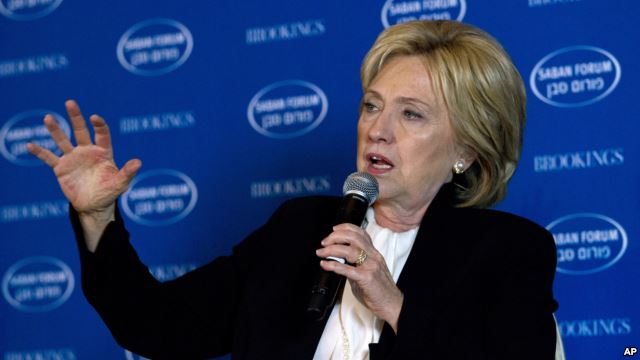
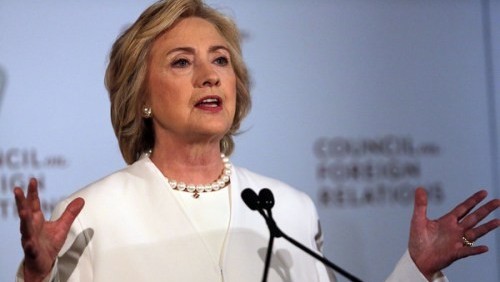
Most notable has been the former Secretary of State Hillary Clinton who promised the U.S. would “act decisively” if the regime sought to violate the nuclear agreement in a speech at the Saban Forum, a conference on Middle East policy at the Brookings Institute think tank.

“Iran will test our resolve. They have already started to do so with a ballistic missile test and other provocative behavior. We have to respond to these provocations including with further sanction designations as necessary,” Clinton said.

She threatened to use military force for incursions on the deal. “Our approach must be distrust and verify. There can be no doubt in Tehran that if we see any indication that Iran’s leaders are violating their commitments in the deal not to seek, develop or acquire any nuclear weapons, we will stop them. And we will make sure the Iranians and the world understand that the United States will act decisively if necessary, including taking military action,” Clinton said.

The tougher stance was reflective of the national mood in the U.S. turned fearful by the San Bernardino attacks, but also the seeming spread of extremism by the simple preaching of it from strongholds and bully pulpits such as Syria and Iran.

Just as Al-Qaeda was able to plan and mount the 9/11 attacks from the relative safety and comfort of a Taliban-controlled Afghanistan, there is a growing sense that the security of Syria and Iran offer extremists a safe haven to recruit and cultivate potential jihadists around the world.

As FBI Director James Comey has warned, the “outsourcing” of terrorism represents an alarming and hard to control new threat the world has not seen before.

It is also a logical explanation as to why the Iran lobby has not voiced any criticism not only of the Iranian regime, but the rise in terror attacks themselves, which is frankly inexplicable given the chorus of voices coming out of the American-Muslim community calling on a new frank and open dialogue about combatting the rise of extremism.

One such forum was sponsored by the Heritage Foundation in Washington, DC where a collection of Muslim groups denounced extremism and called for an unfiltered national discussion to combat the propaganda being offered by terror groups and nations such as the Iranian regime.

The leaders announced the formation of a new initiative called the Muslim Reform Movement, focusing on confronting extremist segments of the religion. According to the Washington Examiner, the group quickly released:

“…a declaration of principles calling on Muslims to reject violent jihad and endorse religious freedom for all and secular government, and saying they will call out those who reject it.”

It’s a similar call previously made by leading Iranian dissident leaders such as Mrs. Maryam Rajavi of the National Council of Resistance of Iran who has long advocated for a return to secular, democratic government in Iran.

Notably, Iran lobby group, the National Iranian American Council, was absent and silent on the topic.

While the PC crowd may dither with the terminology of calling these extremists plain old “terrorists” or “Islamic extremists,” what is not in dispute is the threat they pose and the encouragement and support they receive from places like Tehran where mullahs lay out a theological justification for violence and murder. What they actually practice unabated on their own Muslim population.

The world will soon have to make the hard, but necessary choice of whether or not to put a finger in the dike of the rising tide of extremism, or address the source of it in places like Syria and Iran.

By Michael Tomlinson

Filed Under: Blog, News Tagged With: #NuclearDeal, Featured, Iran Lobby, Iran Terrorism, NIAC, NIAC Action, Nuclear Deal, Rouhani, San Bernardino

Iran Lobby Glosses Over IAEA Report on Iran Nuclear Work

December 3, 2015 by admin

Iran Lobby Glosses Over IAEA Report on Iran Nuclear Work

Iran Lobby Glosses Over IAEA Report on Iran Nuclear Work

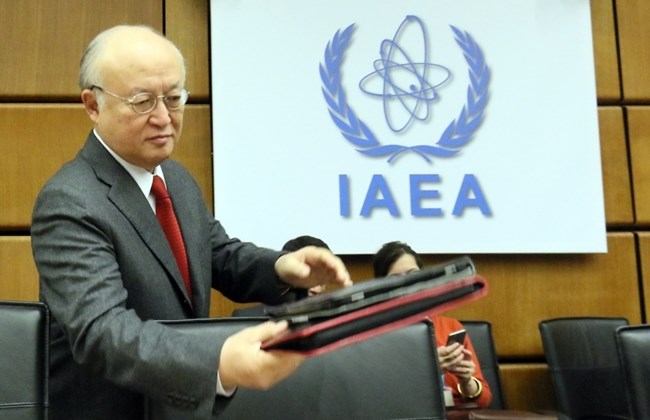
The International Atomic Energy Agency released its long-awaited report detailing the military dimensions of the Iranian regime’s nuclear program and unveiled disturbing new details that have left the Iran lobby, especially the National Iranian American Council, scrambling to cover up.

In the report, Iran was actively designing a nuclear weapon until at least 2009, far later than virtually all intelligence agencies had believed and proving the regime’s ability to conceal its design activities while under intense scrutiny and even spying from various nations.

The report, which according to the New York Times, was compiled largely based on partial answers provided by Iran after completing nuclear talks last July, concluded that the regime was “conducting computer modeling of a nuclear explosive device” before 2004 and continued those efforts right through President Obama’s first term in office.

The IAEA detailed a long list of experiments conducted by the regime “relevant to a nuclear explosive device” directly contradicting claims made by the Iran lobby and the mullahs that Iranian regime’s nuclear program was only for civilian and peaceful purposes.

We now know through Iranian regime’s own admission, it was trying to build nuclear weapons at a feverish pace.

But the IAEA concluded that substantial gaps existed because the regime refused to provide answers to several key questions, restricted the ability to interview key scientific personnel and limited sampling of sites and facilities only after they had been scrubbed.

The nuclear deal negotiated with the Iranian regime mandated limiting Iran’s ability to build a bomb for at least 15 years, but the inability to paint a complete picture and the revelation that Tehran had been conducting work unbeknownst to the rest of the world leaves significant doubt as even that goal is attainable.

According to the Times, Tehran gave no substantive answers to one quarter of the dozen specific questions or documents it was asked about, leaving open the question of how much progress it had made.

At Iran’s Parchin complex, where the agency thought there had been nuclear experimental work in 2000, “extensive activities undertaken by Iran” to alter the site “seriously undermined” the agency’s ability to come to conclusions about past activities, the report said.

The response from Capitol Hill was swift and bipartisan.

“I think we’re getting off to a very, very poor start,” Senate Foreign Relations Committee Chairman Bob Corker (R-Tenn.) told reporters after a roughly two-hour top-secret committee hearing.

“These are exactly the things that we talked about during the hearing process that raised concerns and they’re being validated right now,” he added.

“It just sets a very bad precedent that if Iran thinks it can violate the world’s will, as expressed by Security Council resolutions, and in essence face no consequence for it,” said Sen. Robert Menendez (N.J.), one of the four Democrats who voted against the deal in September.

The defense offered by the NIAC’s Trita Parsi through a press release was tepid and paper thin as he focused on the issue of complying with the terms of the agreement in releasing the report, but not in the report’s findings themselves, praising the IAEA’s “assessment of coordinated ‘activities relevant to the development of a nuclear explosive device,’ in Iran prior to 2003, and that there have been no credible indications of such relevant activities since 2009.”

Parsi of course does not mention the fact the work conducted through 2009 was denied by Tehran and by Parsi himself and that the refusal by the mullahs to answer specific questions left the report, at best incomplete, and at worst a whitewash.

The Iran lobby is now finding it harder and harder to cover for the regime because its own promises and arguments are now all coming to be uncovered as falsehoods and outright deceptions. The fortunate thing about the internet is you can always search and look back at the statements people like Parsi have made and in the context of what is happening now, realize just how really wrong they were.

With the IAEA report, it’s just another blow to any shred of credibility the Iran lobby had.

By Michael Tomlinson

Filed Under: Current Trend, News Tagged With: #NuclearDeal, Featured, Iran deal, Iran Human rights, Iran Lobby, Iran Mullahs, Iran sanctions, Iran Talks, National Iranian American Council, NIAC Action, Rouhani, Sanctions, Trita Parsi

Iran Lobby Weighs in On Hillary Clinton as Nuclear Agreement Draws Scrutiny

December 1, 2015 by admin


Iran Lobby Weighs in On Hillary Clinton as Nuclear Agreement Draws Scrutiny

Iran Lobby Weighs in On Hillary Clinton as Nuclear Agreement Draws Scrutiny

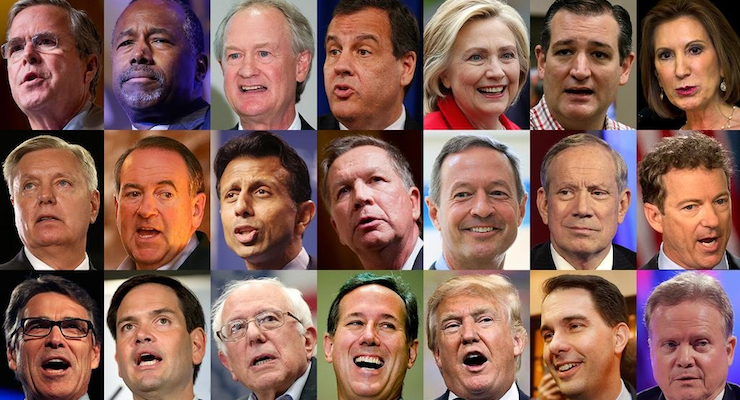
If there is any silver lining in the wave of terrorist attacks, sectarian wars being waged and ominous threats and provocative actions coming out of the Iranian regime, it is that virtually all of the candidates running for president in 2016 are united in their collective wariness of the mullahs in Tehran.

That lack of desire among the presidential candidates ranges from outright hostility to the regime to a recognition that the mullahs are committed to an agenda that does not support moderation or regional peace hopes, but that certainly has not stopped the Iran lobby from attempting to influence those campaigns or the American voting public.

The lobby’s chief advocate has long been the National Iranian American Council and its newly created lobbying arm, NIAC Action, which has been urging its supporters to sign and send in petitions and letters to the various campaigns urging them to support the nuclear deal and a broadened dialogue with the regime should they win the White House.

Judging by the lack of enthusiasm from the various campaigns, we can assume that the petition drive by NIAC is being received with less than stellar applause, which might explain by Reza Marashi of NIAC took to Huffington Post with an editorial criticizing Hillary Clinton for taking a harder line against the Iran regime and Islamic extremism in some of her stump speeches.

Marashi took exception to a speech Clinton delivered the Council of Foreign Relations where she said:

“We cannot view Iran and ISIS as separate challenges. Regional politics are too interwoven,” she said. “Raising the confidence of our Arab partners and raising the cost to Iran for bad behavior will contribute more effectively to the fight against ISIS.”

Her views that Iran’s Arab neighbors could become more effective partners in the fight against rising Islamic extremism only if the Iranian regime was held accountable for its actions, such as the recent attempt to overthrow the government in Yemen and the effort to take over the Iraqi government, is both a prudent and smart foreign policy declaration for someone who could very well be sitting in the Oval Office in 2017.

The fact that Marashi takes the well-worn Iranian regime talking point blaming its Arab neighbors for the supporting these terror groups is evidence of how paltry and bereft of substance the arguments are from the Iran lobby. The NIAC and other regime supporters have opted to try and shift blame for the rise in terror, including the bloody attacks in Paris on anyone else but the Iranian regime.

But Secretary Clinton recognizes a key point that Marashi and his ilk are desperate to cover up, which is Iran, as a theocratic state, uses its status as a country to support and prop up many terror groups around the world and engage actively in proxy wars that have threaten to draw the rest of the world into bloody conflict. While the flow of funds to some terror groups may be traced back to donations from individual donors, Iranian regime is the only nation-state that has devoted its treasury, military, economy and political influence in supporting groups such as Hezbollah and the Houthis, as well as provided safe harbor and shelter for members of Al-Qaeda and ISIS in the past.

The one true statement Marashi makes is when he says “the more options America has, the greater its leverage becomes.”

In this he is correct, but not in the way he intended because in agreeing to the nuclear deal with Iranian mullahs, the U.S. has unwittingly hampered itself by taking a whole host of tools off the table ranging from continued sanctions to restrictions on the flow of cash coming from the Iranian regime and into the coffers of various terror groups.

But what is even more surprising are the revelations in a recent National Review story that pointed out that the nuclear agreement had not even been signed by the regime and in effect has no legal standing.

“The Joint Comprehensive Plan of Action (JCPOA) is not a treaty or an executive agreement, and is not a signed document,” wrote Julia Frifield, the State Department assistant secretary for legislative affairs, in a November 19 letter written in response to an inquiry sent to Secretary of State John Kerry by Rep. Mike Pompeo (R-Kan.).

Regime leader Hassan Rouhani discouraged his nation’s parliament from voting on the nuclear deal in order to avoid placing legal burdens on the regime, saying “If the Joint Comprehensive Plan of Action is sent to [and passed by] parliament, it will create an obligation for the government. It will mean the president, who has not signed it so far, will have to sign it,” Rouhani said in August. “Why should we place an unnecessary legal restriction on the Iranian people?”

That statement has led to rampant speculation on Capitol Hill that the nuclear deal is already null and void, which explains why most of the presidential candidates have already staked out policy positions visibly diverging from what the Obama administration negotiated with regime.

As more journalists point out this inconvenient truth, such as Michael Ledeen writing of the lack of any signatures in Forbes, we can expect an even more desperate attempt by the Iran lobby and Marashi to try and shift more attention away and onto another false canard. Maybe they can blame El Nino on too much methane coming from cows next.

By Michael Tomlinson


Filed Under: Blog, News Tagged With: #NuclearDeal, Featured, Hilary Clinton, NIAC, NIAC Action, Nuclear Deal, Reza Marashi

Iran Regime Sympathizers Downplay Paris Attacks

November 24, 2015 by admin


Iran Regime Sympathizers Downplay Paris Attacks

Iran Regime Sympathizers Downplay Paris Attacks

In what has to be one of more astounding editorials written about the Paris attacks, Paul R. Pillar, a frequent supporter of the Iranian regime, penned a piece in the National Interest in which he actually tried to make the argument that the attacks were an example of “amateurish” tactics and that the outsized response from governments and media bordered on hysteria and ISIS did not warrant much respect.

“It is a mistake to regard the ISIS entity as a font of critical skills needed to kill people,” Pillar writes.

Let’s think about that statement for a moment. Pillar actually makes the claim that ISIS lacks the skills to kill people. That absurd statement ranks right up there with his previous editorials arguing vociferously for the nuclear agreement with the Iranian regime and his claims that doing so would usher in a new and peaceful phase in Middle East tensions.

Well, we certainly know how that worked out.

Pillar’s piece was reprinted faithfully in Lobelog.com, another loyal member of the Iran lobbying effort alongside the National Iranian American Council and Ploughshares Fund just to name a few; all of whom have recently made efforts to divert attention away from the bloody carnage in Paris and now Mali, and instead try to shift the discussion onto discrimination of Syrian refugees or warning of an overreaction in cracking down on civil liberties.

All of the members of the Iran lobby neglect to mention that the center and source of all of these problems starts and ends with the Iranian regime’s fanatical support of the Assad regime in Syria which started the conflict in the first place and helped spawn ISIS in the sectarian fight that sprang up when the mullahs in Tehran sent in thousands of Hezbollah fighters from Lebanon, Shiite Militias from Iraq and mercenaries from Afghanistan added to milliards of dollars to help keep its proxy in power in Syria.

The fact that Pillar attempts to gloss over the planning and execution necessary for the Paris attacks is unfathomable, other than he is trying hard to minimize the import of what the attacks mean for the West. He argues:

“Some organizational aptitude was needed to put together an operation that involved simultaneous dispatch of multiple attack teams, but this did not require organizing any more people than would be needed to put together a neighborhood soccer team,” Pillar said.

Most rational people would not think their local neighborhood soccer team could build eight suicide bomb vests, acquire and equip three teams with automatic weapons, arrange timetables, scout locations, determine how to funnel panicked people fleeing a bombed sports stadium into a kill zone and communicate via text messaging on disposable cell phones while arranging the attack via encrypted communications evading virtually all national intelligence agencies.

But Pillar exhibits the singular trait that afflicts all supporters of the Iranian regime; the desire to absolve it of any responsibility for spreading and fostering the kind of extremist Islamic belief that is now shaking the world with widespread, multiple and frequent attacks.

Pillar also neglects to mention another key facet of these attacks that is significantly more disturbing than the actual loss of human life; it’s the fact these attacks are not supported with any public demands.

There are no calls to release political prisoners or comrades. No demands for ransom or payments. No negotiations over territorial claims or grievances.

These attacks are based solely on the nihilistic extremist beliefs that also power and drive the mullahs in Tehran.

“The death toll for all of the Paris attacks, as shocking as it understandably was, nonetheless was much less than a more skillfully conducted operation involving a comparable number of attackers would have inflicted,” Pillar writes. “The attack team that went after the most target-rich location—a sports arena with tens of thousands of people—managed to kill only one other person besides themselves.”

I’m sure the families of those slain would disagree with Pillar on the skill level involved in murdering their loved ones, but his comments reflect the almost callous disregard the Iran lobby has for human suffering. Very similar to the Iranian regime’s initial condemnation of the attack but its consequent show of happiness by shamefully putting the blame on the French authorities in its state wide papers and media.

At key points in the travesty that is the human rights record of the Iranian regime, Pillar and his cohorts including Trita Parsi and Reza Marashi of NIAC, Jim Lobe of Lobelog.com and others have been struck deaf and mute when it comes to protesting the abhorrent human rights abuses of the mullahs in Tehran either in their comments to news media or in their own social media posts.

Americans held hostage, journalists rounded up, religious minorities imprisoned, social media administrators tossed in jail, dissidents executed, all these actions and more and warranted hardly a murmur of protest and yet Pillar deigns to call terror attacks in Paris as “amateurish.”

The only real amateurish act in this tragedy is the effort by the Iran lobby to whitewash the blood off the streets of Paris.

By Michael Tomlinson

Filed Under: News Tagged With: Featured, Iran, Iran Lobby, Lobelog, National Iranian American Council, NIAC, NIAC Action, Paul Pillar, Ploughshares, Reza Marashi, Syria, Trita Parsi

Iran Lobby Ramps Up Efforts to Influence US Presidential Campaign

November 19, 2015 by admin

Iran Lobby Ramps Up Efforts to Influence US Presidential Campaign

Iran Lobby Ramps Up Efforts to Influence US Presidential Campaign

The silly season is upon us and we don’t mean the College Football Playoff selection process. We mean the quadrennial presidential election season and with it, what promises to be a year filled with debates, poll results, gaffes, blizzard of television advertising and a healthy barrage of social media postings.

But the stakes for this election cycle are enormous and carry with it a sense of gravity we have not seen since during the height of the Cold War when Lyndon B. Johnson famously aired the “Daisy” ad against Barry Goldwater hinting that electing the Arizona conservative would start World War III.

Even though the ad only aired once, it has become one of the most controversial political ads ever aired used in American politics, but it did show what some political candidates are willing to entertain in terms of tackling controversial topics and issues.

Every campaign season has its own rhythms and rollercoaster swings in emotions and momentum. This season has been no different starting with a Republican field of candidates that has been dominated by two total outsiders in Donald Trump and Ben Carson, while the Democratic side was stuck in relative limbo while Vice President Joe Biden was deciding if he was in or out of the race and Hillary Clinton waded through her email controversy as Sen. Bernie Sanders rallied huge numbers of supporters.

But with the recent nuclear deal with the Iranian regime and the bloody Friday the 13th massacre in Paris, terrorism and what to do with Syria has moved front and center in the consciousness of American voters.

According to a new Reuters/lpsos poll done after the Paris attacks, showed that terrorism had moved to the front of all topics of concern to voters (20.5%), ahead of the economy (15.9%) and healthcare (8.8%) and unemployment (8.6%).

The five-day tracking showed concern over terror effectively doubled over the weekend of the Paris attacks and shows only signs of increasing as France battles additional terror cells in its suburbs while French warplanes bomb targets in Syria.

“What is almost certain is that the demands on the candidates will grow more exacting. As previous presidential campaigns jarred by outside events have demonstrated, how a candidate responds can be as important to a campaign as the event itself,” speculated Jonathan Martin in the New York Times.

What is certain has been the tepid response from the Iran lobby which has gone virtually mute and deaf over the Paris attacks. Iranian regime loyalists such as Trita Parsi and Reza Marashi of the National Iranian American Council, Jim Lobe of Lobelog, The Ploughshares Fund, just to name a few, have offered little in the way of sympathy over the victims, nor condemnation of the terrorists themselves.

If anything, their social media feeds and public statements have been largely focused on centering blame for the attacks and creation of ISIS on the doorstep of Saudi Arabia as the primary regional rival to the mullahs in Tehran.

It’s a curious stand to make since clearly sectarian violence is at the heart of most of what ails the Middle East both historically and moving forward. In fact, Iran’s all-in support for Assad in Syria help spawn ISIS in the first place as Al-Qaeda fighters pushed out of Afghanistan and Iraq by the U.S. surge flocked to Syria and splintered off to form their own groups, eventually coalescing into the ISIS we know today.

The fact that the Iranian regime has also served as a terror blueprint of sorts through its longtime sponsorship of Hezbollah in Lebanon and Shiite militias in Iraq has given ISIS a roadmap for exploiting the shock value of its attacks and dominate the news cycle; gives it the dubious honor of being a “godfather” to ISIS.

This in turn has placed a burden on the Iranian lobby to step up to the proverbial plate to try and influence the presidential elections since a new president – especially if it’s a Republican – will feel no obligation to stay the course President Obama has set with the nuclear deal with Iranian regime and the hands-off policy he has largely taken in Syria and Iraq.

To that end, NIAC Action, the official lobbying arm of NIAC, launched a petition drive directed at all presidential candidates to refrain from using rhetoric that would be deemed “hostile” at the Iranian regime.

The letter it is circulating reads in part:

“That is why we urge you and everyone running for the White House to retire the hostile rhetoric of the past. This hostile rhetoric often makes no distinction between the Iranian government and the Iranian people. It empowers hardliners, undermines those working to resolve challenges, and promotes conflict.

“Instead, we urge you to articulate how you will seize the opportunity created by the diplomatic breakthrough with Iran to build a more peaceful future.”

To say it is a shameful misdirection of the truth would be generous, because the mullahs in Iran have been very open and specific since the nuclear agreement was secured last July in venting their vitriol about the U.S., let alone keeping up the ritual “Death to America” chants at Friday prayers.

As we move deeper into the election cycle, we can be assured of increased action by the Iran lobby as it seeks to keep a lid on American voters’ concerns over terrorism and it combats any damaging news coming out of the Middle East such as more terror attacks or the Iranian regime’s complicity in some new human rights atrocity.

But from the early signs, it seems that Republican candidates have firmly chosen to not swallow the Kool-Aid on a “moderate” Iran and the Democrats will hedge their bets and set terms for Iran that only aid in ensuring a more stable and cooperative Middle East – both goals that the mullahs are opposed to.

By Laura Carnahan

Filed Under: Blog, News Tagged With: #NuclearDeal, Appeasement policy, Featured, Iran deal, Iran Lobby, National Iranian American Council, NIAC, NIAC Action, Reza Marashi, Trita Parsi

  • « Previous Page
  • 1
  • …
  • 12
  • 13
  • 14
  • 15
  • 16
  • 17
  • Next Page »

National Iranian-American Council (NIAC)

  • Bogus Memberships
  • Survey
  • Lobbying
  • Iranians for International Cooperation
  • Defamation Lawsuit
  • People’s Mojahedin
  • Trita Parsi Biography
  • Parsi/Namazi Lobbying Plan
  • Parsi Links to Namazi & Iranian Regime
  • Namazi, NIAC Ringleader
  • Collaborating with Iran’s Ambassador

Recent Posts

  • NIAC Trying to Gain Influence On U.S. Congress
  • While Iran Lobby Plays Blame Game Iran Goes Nuclear
  • Iran Lobby Jumps on Detention of Iranian Newscaster
  • Bad News for Iran Swamps Iran Lobby
  • Iran Starts Off Year by Banning Instagram

© Copyright 2026 IranLobby.net · All Rights Reserved.