Iran Lobby

Exposing the Activities of the lobbies and appeasers of the Mullah's Dictatorship ruling Iran

  • Home
  • About
  • Current Trend
  • National Iranian-American Council(NIAC)
    • Bogus Memberships
    • Survey
    • Lobbying
    • Iranians for International Cooperation
    • Defamation Lawsuit
    • People’s Mojahedin
    • Trita Parsi Biography
    • Parsi/Namazi Lobbying Plan
    • Parsi Links to Namazi& Iranian Regime
    • Namazi, NIAC Ringleader
    • Collaborating with Iran’s Ambassador
  • The Appeasers
    • Gary Sick
    • Flynt Leverett & Hillary Mann Leverett
    • Baroness Nicholson
  • Blog
  • Links
  • Media Reports

NIAC Gets It Wrong About President Trump and Hassan Rouhani Again

October 26, 2017 by admin

NIAC Gets It Wrong About President Trump and Hassan Rouhani Again

NIAC Gets It Wrong About President Trump and Hassan Rouhani Again

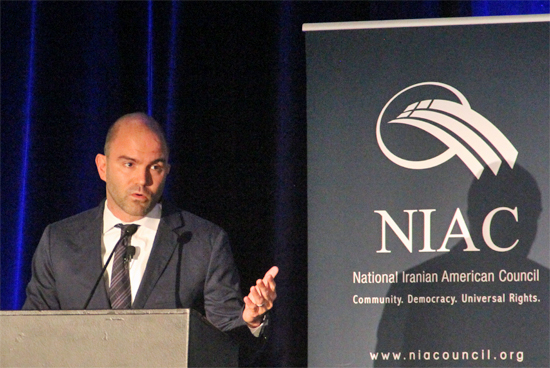
The National Iranian American Council has become one of the most vocal and ardent purveyors of shameless cheerleading for the mullahs in Tehran and has established itself with a solid track record of making statements and promises about future behavior from the Iranian regime only to see virtually all of them proven false over time.

Yet, the NIAC’s continued churning of so-called “fake news” still finds a home in some publications and blogs—albeit a shrinking circle from the heady heydays enjoyed during the Obama administration’s policy of appeasing the regime.

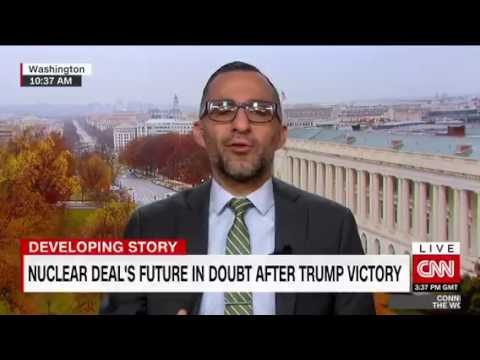
The latest missive comes from Reza Marashi, NIAC’s research director, who has built an uncanny ability to publish “researched” editorials that are consistently wrong, in Al-Monitor in which he makes the claim that recent actions by President Donald Trump against Iran may have helped Hassan Rouhani.

Marashi bases his claim that President Trump’s decision not to recertify Iran in compliance with the nuclear deal, known as the Joint Comprehensive Plan of Action (JCPOA), and sending the matter for Congressional review, has helped fortify Rouhani’s troubled administration because it has rallied Iranian stakeholders against the U.S.

Let’s be very clear on a very important point Marashi ignores: There are no factions within the Iranian regime’s government that are even remotely favorably disposed towards the U.S.

This is an Islamic theological state run by clerics that mandate weekly “Death to America” observances, openly and actively fund terrorist groups that target and kill American service personnel in Iraq and Afghanistan, have taken American citizens hostage and held them for ransom, and have built a ballistic missile capability designed to deliver nuclear payloads as far away as Europe and Asia.

Marashi also claims that Rouhani and top mullah Ali Khamenei are united in a strategic vision to maintain a unified policy towards the U.S. regardless of whatever the outcome of nuclear deal negotiations.

On this point, he is partially correct since Rouhani is the handpicked front man for Khamenei to offer the West a kinder, gentler face of the regime that also tweets in order to build a perception that Iran was a moderate state when in fact it was plotting to massively expand its military operations in Syria, Iraq and Yemen.

“Whatever their differences, Khamenei needs Rouhani and his technocrats to repair the damage wrought by former President Mahmoud Ahmadinejad, and Rouhani needs Khamenei to provide political protection while he does so,” Marashi writes.

It’s a silly statement to make, especially for someone who purports to be a “research director” since it doesn’t take much research to know that the damage Khamenei needed for Rouhani to repair was an Iranian economy crippled by sanctions aimed at its secret nuclear program and the enormous drain on its treasury by bankrolling the Assad regime’s desperate war to hold onto power in Syria.

Marashi makes it sound that Rouhani is merely trying to rebuild an economy hurt by the mismanagement of the Ahmadinejad administration, when in fact Khamenei was desperate to gain an injection of billions of dollars in fresh capital to stave off a total collapse of the economy and consequently the Islamic state.

“Since entering office four years ago, Rouhani has maintained arguably the most diverse and inclusive political coalition in the 38-year history of the Islamic Republic,” Marashi adds.

This is one of the more astounding claims he makes since the Iranian regime allows no dissident political activities, and openly and aggressively rounds up dissenting voices and tosses them into prison, as noted by the harsh crackdown of journalists, artists, students and others by the Rouhani administration prior to parliamentary elections.

The contention Marashi makes that Rouhani was somehow in jeopardy has never been real in fact since Rouhani serves only at the pleasure of Khamenei and it is up to the supreme leader to decide when his usefulness is at an end. For as long as Khamenei perceives Rouhani can maintain the fiction of a more moderate Iran then Rouhani and his allies in the Iran lobby will continue to push their false messages.

The strategy Rouhani employs that Marashi defends in outlining support for the JCPOA had little to do with nuclear power and more with lifting economic sanctions to save the regime with a fresh infusion of capital.

The fact that the Obama administration were eager to do a deal with little consequences attached to its support for terrorism, abysmal human rights and the build out of ballistic missiles only served to reinforce the perception among the mullahs that Rouhani was useful in keeping up the perception that Iran was genuinely interested in becoming a “moderate” player when in fact it was only seeking massive piles of cash.

Marashi does not credit the Obama administration’s unsavory willingness to kowtow to the regime and even arrange for a midnight flight of pallets stuffed with cash sent to Tehran on the eve of the agreement as evidence not of Rouhani’s acumen, but rather American miscalculation that has been borne out over the last two years.

What Rouhani “sold” to Khamenei was a vision that Iran could have its cake and eat it too by negotiating a nuclear agreement that never eliminated its nuclear development—only delayed it—and freed it to move aggressively forward with its missile program to someday threaten its neighbors with ballistic missiles armed with nuclear warheads,

The only kernel of truth Marashi does offer is the idea that Iranians would not blame Rouhani for the nuclear agreement’s failure. The Iranian people would certainly not blame him since they live under a repressive government that punishes contrary thinking with stiff prison sentences and quick trips to the gallows mandated by clerical courts.

Marashi also failed to note how under Rouhani, Iran’s pace of public executions set a record-breaking pace pushing it far beyond almost every nation on Earth. It’s no wonder no Iranian would openly blame Rouhani since to do so almost guarantees a prison sentence.

Michael Tomlinson
Filed Under: Blog, News Tagged With: Appeasement policy, Featured, hassan rouhani, Iran, Iran deal, Iran Lobby, Iran sanctions, Khamenei, Moderate Mullahs, National Iranian American Council, NIAC, NIAC Action, Reza Marashi, Rouhani, Sanctions

Tillerson Visit Carries Deeper Meaning for Iran Meddling

October 24, 2017 by admin

Tillerson Visit Carries Deeper Meaning for Iran Meddling

Tillerson Visit Carries Deeper Meaning for Iran Meddling

Secretary of State Rex Tillerson dived deep into Middle East politics at a time where the threat from ISIS was diminishing after battlefield victories against the Islamic extremists. His whirlwind stops in Saudi Arabia, Afghanistan and Iraq were designed to hold the line in a post-ISIS world against the encroaching influence of the Iranian regime.

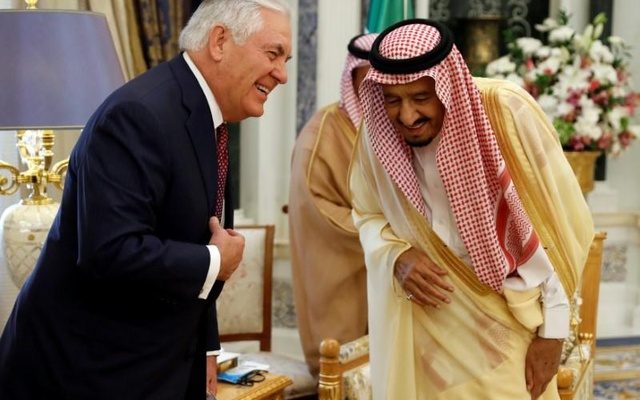
In Saudi Arabia, Secretary Tillerson urged Saudi Arabia to counter Iran’s influence in Iraq by strengthening its ties with Baghdad in a meeting with King Salman of Saudi Arabia and Iraqi prime minister Haider al-Abadi.

His meeting included a call for Iranian-backed Shiite militias fighting in Iraq to leave and go back to their homes.

“Certainly Iranian militias that are in Iraq, now that the fight against Daesh and ISIS is coming to a close, those militias need to go home,” Tillerson said, using two other names for Islamic State. “Any foreign fighters in Iraq need to go home and allow the Iraqi people to regain control of areas that had been overtaken.”

Tillerson’s focus on these militias, known as Popular Mobilization Forces, he was taking aim at the growing influence of the Iranian regime’s Revolutionary Guard Corps and its Quds Force which has operated in Iraq in an increasingly visible way during the war against ISIS.

During the conflict, Tehran has sought to exert more influence in Iraq through participation in Iraq’s political process; a fraught process that nearly collapsed Iraq when former prime minister Nouri al-Maliki acted on Iranian wishes in expelling Sunni power sharing in his government, sparking a new round of sectarian conflict and empowering ISIS with the collapse of Mosul.

But Tillerson’s visit highlighted a new initiative to counter Iranian influence as Saudi Arabia has taken several steps to deepen ties between Riyadh and Baghdad.

Saudi Arabia has reopened its border with Iraq for the first time in decades and restarted direct flights between Riyadh and Baghdad. Washington is hoping the political and economic ties will deepen through the newly minted Saudi-Iraq Coordination Council, reported the Wall Street Journal.

“We believe this will in some ways counter some of the unproductive influences of Iran inside of Iraq,” Tillerson said during a news conference in Riyadh.

He urged Saudi Arabia’s involvement in Iraq’s reconstruction, as Baghdad looks to rebuild the country after a three-year war against Islamic State that destroyed cities across the nation, and called economic revitalization vital to keeping a hard-won peace.

The full-court press to normalize relations also goes a long way to counter persistent arguments made by the Iran lobby and other regime supporters that U.S. policy in the Middle East during the Trump administration was only reactionary and intent on starting a new conflict with Iran.

The diplomatic efforts led by Tillerson represent another watershed moment for President Trump in the Middle East.

His earlier announcement to not certify the Iranian regime in compliance with the Iran nuclear deal to trigger Congressional review more correctly puts the question of how to address Iran’s larger militant actions such as development of ballistic missiles in the arena of public debate where President Barack Obama had previously sought to steer clear of when negotiating the agreement originally.

Iranian regime advocates such as the National Iranian American Council had laboriously tried to shield the mullahs in Tehran from facing questions about Iran’s dismal human rights record or support for terrorist groups during the original talks two years ago, but in the intervening time the mullahs have stepped up their efforts in swinging the Syrian civil war over to the Assad regime, as well as rapidly build and deploy powerful new ballistic missiles.

The wreckage left behind by Iranian regime has solidified the decision-making process in the Trump administration to focus on containment and rolling back Iranian regime’s advances more aggressively than the policy of appeasement the Obama administration followed.

The decertification of the Iran nuclear deal is only one of several other initiatives being made by the Trump administration to roll back Iranian regime’s influence including:

  • Step up international efforts to garner international support to condemn and halt the Iranian regime’s ballistic missile program and prevent another North Korea scenario from taking root in the Middle East;
  • Encourage building stronger ties among U.S. allies such as Saudi Arabia and Iraq and the Gulf states to redraw lines of influence away from Iran and repair decades-long schisms;
  • Offer more military and intelligence support for U.S. allies in confrontations with Iranian regime forces and their proxies in hot spots such as Syria, Iraq, Afghanistan, Yemen, Qatar and Saudi Arabia.

More importantly, the U.S. is again openly warning companies from doing business with Iranian regime’s “Revolutionary Guard Corps” (IRGC) as it considers broader terrorist designations against the main tool of the mullahs.

The U.S. last week announced tough new sanctions against the IRGC because of its support for terrorism, effectively excluding it from the US financial system. Companies doing business with the group also risk penalties.

The push for expanded sanctions against the IRGC recalled the effectiveness of broad economic sanctions placed by the former administrations of presidents Bill Clinton and George W. Bush that put a stranglehold on the Iranian regime’s economy and brought the mullahs to the bargaining table in the first place.

Unlike the Obama administration, President Trump seems intent on not replaying the mistake of appeasement made by his predecessor and instead forge a new deal that finally brings Iranian regime’s extremism to heel.

Filed Under: Blog, News Tagged With: #NuclearDeal, Appeasement policy, Featured, Iran, Iran deal, Iran Human rights, Iran Lobby, Iran Mullahs, Iran Terrorism, IRGC, National Iranian American Council, NIAC, Nuclear Deal, nuclear talks, Sanctions, Syria

Iran Regime Provokes Confrontation with US

August 16, 2017 by admin

Iran Regime Provokes Confrontation with US

Iran Regime Provokes Confrontation with US

Trita Parsi of the National Iranian American Council has been a consistent and vocal supporter of the Iranian regime and its claims to want a pathway to peace. The lunacy of his comments has been laid bare repeatedly over the last two years since the Iran nuclear deal was signed and Iran plunged deeper into wars in Syria and Yemen.

Over the past two years the mullahs in Tehran have focused their efforts at saving the Assad regime in Syria and putting enormous pressure on Saudi Arabia through the Houthi rebellion in Yemen and attempting to destabilize the Gulf states with the smuggling of weapons and explosives.

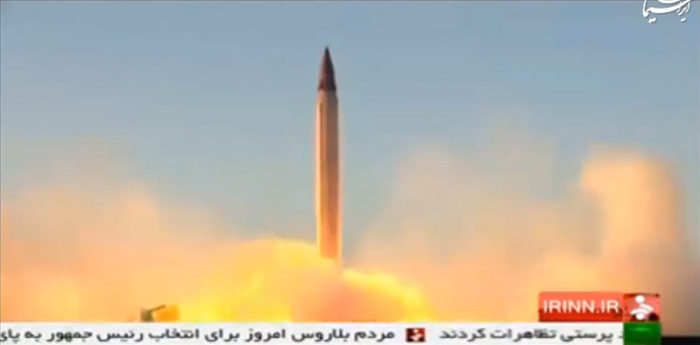
They have also sought to expand Iran’s power through a rapid development of its ballistic missile program to increase the range and payload capacity to send an unmistakable threat to Europe, Asia and throughout the Middle East.

So far, the Iranian regime has been careful to focus its efforts and its most militant actions against traditional rivals such as Saudi Arabia or to keep allies in place such as Assad or continue cracking down on internal political dissent, but a new trend has emerged lately as Iran directs its provocations directly at the U.S.

Over the past few months, Iran has steadily been ratcheting up the pace and frequency of actions aimed directly at the U.S. and its forces, including running its warships at U.S. Navy ships and using drone aircraft to buzz U.S. forces. It has also loosened the reins on its militias in Syria to provoke U.S. forces there.

In the past, Iran’s Quds Force arm of its Revolutionary Guard Corps took a direct role in supplying IEDs to Shiite militia fighting in Iraq and targeting U.S. personnel. Estimates of over 1,000 American casualties were blamed on explosive devices manufactured by Quds Force personnel in Iran and Iraq, 500 Americans killed alone during Operation Iraqi Freedom.

Iran most recently has been flying its drone aircraft dangerously close to U.S. ships in international waters, including close calls during flight operations by the USS Nimitz battle carrier.

There have now been 14 circumstances in 2017 in which unsafe interactions between the U.S. and Iranian maritime forces have occurred, the Navy said.

The increase in direct confrontations with the U.S. mirror the same tactics used by North Korea in its own ramp up in its missile program; leading many analysts to believe both rogue regimes are sharing the same playbook.

What is clear though is that these actions are not the type of actions a state interested in peace undertake as the NIAC has consistently claimed. The mullahs have essentially shed all pretense at showing the world a moderate veil and instead are flexing their muscle in a blatant attempt to trying to bully and strongarm their neighbors.

Coupled with the increase in missile testing comes news that Iranian mullahs are preparing send a naval flotilla to the Atlantic Ocean. This follows a move by the Iranian parliament to allocate an additional $609 million for its missile program and support of increased terror and proxy operations through the Quds Force.

“No military official in the world thought that we can go round Africa to the Atlantic Ocean through the Suez Canal but we did it as we had declared that we would go to the Atlantic and its Western waters,” Iranian Navy Commander Rear Admiral Habibollah Sayyari was quoted as saying over the weekend.

“We moved into the Atlantic and will go to its Western waters in the near future,” Sayyari said.

Iranian regime’s increasingly hostile behavior also follows a little-noticed United Nations report disclosing that Iran has repeatedly violated international accords banning ballistic missile work. Lawmakers in the U.S. Congress and some policy experts also believe that Iranian regime has been violating some provisions in the nuclear agreement governing nuclear-related materials, according to the Washington Free Beacon.

“Little-noticed biannual reporting by the UN Secretary General alleges that Iran is repeatedly violating these non-nuclear provisions,” Iran Watch, a nuclear watchdog group, reported on Monday.

“Thus far, the United States has responded to such violations with sanctions and designations of Iranian and foreign entities supporting Tehran’s ballistic missile development,” the organization found. “However, the U.N. and its member states have not responded. More must be done to investigate allegations of noncompliance and to punish violations of the resolution.”

Washington Free Beacon wrote that Iranian regime’s recent behavior shows the regime has not moderated since the nuclear deal was implemented. The Obama administration sold the deal in part on promises that it could help bring Tehran into the community of nations.

“Every time the Islamic Republic has cash, it chooses guns over butter,” told the Washington Free Beacon. “What the [nuclear deal] and subsequent hostage ransom did was fill Iran’s coffers, and now we see the result of that.”

“What [former President Barack] Obama and [former Secretary of State John] Kerry essentially did was gamble that if they funded a mad scientist’s lab, the scientist would rather make unicorns rather than nukes,” Washington Free Beacon continued. “News flash for the echo chamber: Iranian reformist are just hardliners who smile more. Neither their basic philosophy nor their commitment to terrorism have changed.”

Washington Free Beacon is right about how wrong the promises were made by the Iran lobby and Obama administration. We only hope it’s not too late to stop the mullahs and eventually start the process of regime change.

Laura Carnahan

Filed Under: Blog, News Tagged With: Featured, Iran Human rights, Iran Lobby, Iran Mullahs, National Iranian American Council, NIAC, NIAC Action, Sanctions, Syria, Trita Parsi, Yemen

Iran Tries Blackmail in Threatening Failed Nuclear Deal

August 16, 2017 by admin

Iran Tries Blackmail in Threatening Failed Nuclear Deal

Iran Tries Blackmail in Threatening Failed Nuclear Deal

One of the key provisions of the Iran nuclear deal was an agreement to not include so-called “side issues” into the agreement such as the regime’s sponsorship of terrorism or any improvement in its human rights record.

The mullahs in Tehran knew they would instantly fail any of those litmus tests and fought hard to keep them out of the agreement, but in doing so they set themselves up for failure down the road when continued abuses would force the U.S. to act in levying new sanctions for terrorism support and Iran’s burgeoning ballistic missile program.

The mullahs found themselves stuck between a rock and a hard place. The nuclear agreement did not contain any language prohibiting economic sanctions on non-core nuclear issues per the mullahs’ demands so as the Trump administration and U.S. Congress imposed new sanctions the mullahs were left to cry foul without any basis to stand on.

The Iran lobby then went to work trying to stave off sanctions by pushing the message that these additional sanctions would threaten the “essence” of the agreement and cause its collapse leading to Iran building a nuclear arsenal.

Trita Parsi of the National Iranian American Council tried to blame President Donald Trump for the potential collapse of the deal and issued a statement that reeked of falsehoods commonly trotted out by the Iran lobby.

“It should now be clear that Donald Trump’s moves to violate and hold certification of the Iran nuclear deal in doubt are actively destabilizing the accord. Unfortunately, in response to Trump’s increasingly hostile rhetoric, as well as Congress’ moves to escalate sanctions, Iran is now warning that it has its own options to back out of the deal if the U.S. continues to undermine it,” Parsi said.

Let’s be clear: Iranian regime, not the U.S., is responsible for destabilizing the nuclear deal with their bloody war in Syria, efforts to sow insurrection in the Gulf states, and start launching ballistic missiles at a clip rivaling North Korea. The U.S. did nothing to inspire those acts and all those acts began actually years ago and under the Obama administration.

Also, the U.S. Congress and American electorate has had the luxury to see how the nuclear deal has turned out after two years and their answer has been overwhelmingly negative. While Parsi may try to affix blame on President Trump, the real culprits are in Tehran.

But Parsi didn’t stop there.

“We have repeatedly warned that President Trump’s beating of the war drum with Iran, even if confined to rhetoric, in addition to new Congressional sanctions and zero diplomatic outreach, could only produce negative consequences. Iran’s parliament has now voted to increase spending on its ballistic missile program and the IRGC in direct response to new sanctions on the country,” Parsi added.

Incredibly, Parsi tries to also blame the U.S. President for Iranian regime’s decision to ramp up its missile program; ignoring the fact the regime’s missile program was begun a decade ago with technology licensing agreements with North Korea and fully funded by illicit oil sales.

It is a blatant example of how the Iran lobby tries to rewrite history to protect the Iranian regime after it acts to toss away the international agreements it signs.

Regime president Hassan Rouhani did his part in warning the regime could quickly ramp up its nuclear program and achieve an advanced level if the U.S. continued its “threats and sanctions.”

Rouhani’s remarks to Iranian regime lawmakers were his most direct warning that the deal could fall apart and risked ratcheting up tensions with the United States.

While most media focused on Rouhani’s threats, virtually no one picked up on the key inconsistency he made which is that Iran could “quickly” build nuclear weapons. This simple declaration proves the biggest lie offered by the regime and Iran lobby supporters such as Parsi: the nuclear deal did not push back the much-debated “breakout” period for Iran to build a nuclear device.

“In an hour and a day, Iran could return to a more advanced (nuclear) level than at the beginning of the negotiations” that preceded the 2015 deal, Rouhani said.

The nuclear deal has been a complete and utter failure.

United Nations ambassador Nikki Haley issued a stern and forceful rebuke to Rouhani’s comments and accurately pointed out the problem with the arguments being made by the Iran lobby about saving the nuclear deal at all costs.

Haley said on Tuesday Iran must be held responsible for “its missile launches, support for terrorism, disregard for human rights, and violations of U.N. Security Council resolutions.”

“Iran cannot be allowed to use the nuclear deal to hold the world hostage … The nuclear deal must not become ‘too big to fail’,” Haley said in a statement, adding that new U.S. sanctions were unrelated to the Iran nuclear deal.

What is ironic in all this debating about Iran is how North Korea is widely reviled, heavily sanctioned and appropriately feared by the rest of the world over its ballistic missile program, but in the case of Iran’s missile program, the European Union has struggled to stay mute and not offend the mullahs.

Why does North Korea’s missile program drive the world to the brink of striking back, but in the case of Iran, many American partners refuse to criticize Iran?

Part of the answer lies in the Iranian regime’s aggressive efforts to open its markets to European firms to make investment and economic hamstring themselves from taking future action against Iran. Another explanation comes from EU policy makers who naively believe in the lies of the Iran lobby and hope for the best while ignoring the evidence of Iranian regime’s extremism.

Europe’s reaction is eerily similar to the reaction their predecessors had to the rise of Adolf Hitler’s Nazi Germany in the 1930s.

We can only hope the world doesn’t pay again for that same policy of appeasement.

Michael Tomlinson

Filed Under: Blog, Current Trend, National Iranian-American Council, News Tagged With: #NuclearDeal, Appeasement policy, Featured, Iran, Iran deal, Iran Human rights, Iran Lobby, Iran Missile program, Iran Mullahs, Iran sanctions, Iran Talks, Iran Terrorism, National Iranian American Council, NIAC, NIAC Action, Rouhani, Sanctions, Trita Parsi

Iran Remains Top Global Sponsor of Terrorism

July 28, 2017 by admin

Iran Remains Top Global Sponsor of Terrorism

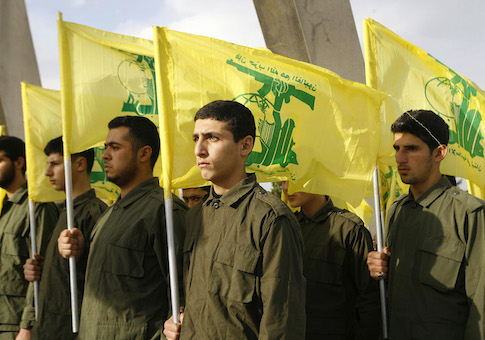
In this picture taken on Friday Feb. 14, 2014, Hezbollah fighters hold flags as they attend the memorial of their slain leader Sheik Abbas al-Mousawi, who was killed by an Israeli airstrike in 1992, in Tefahta village, south Lebanon. Hezbollah says Israel carried out an airstrike targeting its positions in Lebanon near the border with Syria earlier this week, claiming it caused damage but no casualties. Hezbollah said the attack was near the eastern Lebanese village of Janta. It vowed to retaliate but said it will “choose the appropriate time and place.” (AP Photo/Mohammed Zaatari)

Unsurprisingly, the U.S. State Department once again listed the Iranian regime in its annual Country Reports on Terrorism; keeping it atop a dubious list of countries involved in the sponsorship and support of terrorism.

The report based the designation on the regime’s continued support for terrorist proxies such as Hezbollah and its overall efforts to destabilize the Middle East as a whole as evidenced by its spurring of the Houthi rebellion in Yemen and its long support for the Assad regime in Syria, as well as the rapid growth of Shiite militias in Iraq involved in new rounds of sectarian warfare with Sunni tribes.

Iranian regime has been designated as a state sponsor of terrorism by the U.S. since 1984, making it one of the longest-running state sponsors of terror in the world. Iranian regime sits alone only next to Sudan and Syria as officially designated state sponsors in the annual report.

The report cited a wide range of activities the Iranian regime has undertaken to foster the spread of terror and violence:

“Iran used the Islamic Revolutionary Guard Corps‑Quds Force (IRGC-QF) to implement foreign policy goals, provide cover for intelligence operations, and create instability in the Middle East. Iran has acknowledged the involvement of the IRGC-QF in the conflicts in Iraq and Syria and the IRGC-QF is Iran’s primary mechanism for cultivating and supporting terrorists abroad,” the report said.

“In 2016, Iran supported various Iraqi Shia terrorist groups, including Kata’ib Hezbollah, as part of an effort to fight ISIS in Iraq and bolster the Assad regime in Syria. Iran views the Assad regime in Syria as a crucial ally and Syria and Iraq as crucial routes to supply weapons to Hezbollah, Iran’s primary terrorist partner. Iran has facilitated and coerced, through financial or residency enticements, primarily Shia fighters from Afghanistan and Pakistan to participate in the Assad regime’s brutal crackdown in Syria. Iranian-supported Shia militias in Iraq have committed serious human rights abuses against primarily Sunni civilians and Iranian forces have directly backed militia operations in Syria with armored vehicles, artillery, and drones,” the State Department added.

In another nod to the Iranian regime expanding its actions to destabilize the Gulf states, the report also detailed how “Iran has provided weapons, funding, and training to Bahraini militant Shia groups that have conducted attacks on the Bahraini security forces. On January 6, 2016, Bahraini security officials dismantled a terrorist cell, linked to IRGC-QF, planning to carry out a series of bombings throughout the country.”

And contrary to the repeated denials of regime officials and the Iran lobby, Iran has “remained unwilling to bring to justice senior al-Qa’ida (AQ) members it continued to detain and has refused to publicly identify the members in its custody. Since at least 2009, Iran has allowed AQ facilitators to operate a core facilitation pipeline through the country, enabling AQ to move funds and fighters to South Asia and Syria.”

The facilitation of terrorism from within its own Quds Forces and through external terror groups directly under Iran’s control such as Hezbollah, as well as others it has shielded such as Al-Qaeda and helped facilitate such as ISIS, points out the consistent lies perpetuated by the Iran lobby and regime supporters in maintaining that Iran’s government was locked in a power struggle with “moderate” elements.

There are no moderate elements within the regime’s government.

Supporting terror is a tool of statecraft for the Iranian regime and an important lever the mullahs in Tehran use frequently to advance their foreign policy goals.

This is also the reason why the Iran nuclear deal was never going to work in the first place since it did nothing to change the behavior of the mullahs. They remain as intent as ever on spreading their extremism, known as “Shia sphere” of influence and using violence to achieve it, which is why the Trump administration has moved on imposing additional sanctions even as it certifies the regime in compliance with the nuclear agreement.

The Iran lobby, especially advocates such as Trita Parsi of the National Iranian American Council, have shouted to the rooftops that Iran mullahs are acting in a moderate and open manner with respect to the nuclear agreement, but refuse to acknowledge the near-homicidal behavior of mullahs regarding terrorism and war.

There can be no clear approach to Iranian regime without recognizing the linkages that exist between the regime’s behavior on terror and human rights, as well as its approach to nuclear weapons development. The great flaw in the Obama administration’s approach to Iran was to treat these issues as separate and apart.

It’s a silly notion since one can no more divorce a substance abuser from one drug than he starts using another. For the Iranian regime, violence is its narcotic of choice and it is addicted to it in all facets of its society.

This explains why the Iranian regime reacted so violently to the continued run of new sanctions by the Trump administration which led its leaders to make some outrageous boasts and demands this week.

Iran’s president, Hassan Rouhani, said on Wednesday that Iran would stand up to the U.S. and hit back with its own sanctions.

Meanwhile his foreign minister, Javad Zarif, took to CBS News to warn that the sanctions could jeopardize the nuclear deal; a curious position to take since President Trump seems intent on scrapping it in the first place.

Also on Wednesday, Gen. Mohammad Ali Jafari, head of Iranian regime’s Revolutionary Guard, warned the U.S. against imposing sanctions on the paramilitary group. He said the Guard’s missile program is not negotiable and hinted that new sanctions could put U.S. military bases in the region in danger.

“If the U.S. intends to pursue sanctions on the Guard, it should first disassemble its military bases within 1,000 kilometers, or 620 miles,” Jafari was quoted as saying by state TV, apparently referring to the range of Iranian missiles.

It was a not-too subtle threat against U.S. bases in Qatar, Kuwait and Bahrain all of which ties back to the original point made in the State Department’s annual report: the Iranian regime can never be trusted.

Michael Tomlinson

Filed Under: Blog, News Tagged With: Featured, Iran deal, Iran Human rights, Iran Lobby, Iran Mullahs, Iran Terrorism, IRGC, National Iranian American Council, NIAC Action, Nuclear Deal, Rouhani, Sanctions, Trita Parsi

Two Years of Appeasing Iran Regime Officially Ends

July 28, 2017 by admin

Two Years of Appeasing Iran Regime Officially Ends

Two Years of Appeasing Iran Regime Officially Ends

Two years have passed since the Iran nuclear deal was agreed to by the U.S. and other nations and during that time virtually every promise made by the Iran lobby and the Obama administration about moderating the Iranian regime and improving the stability of the Middle East have fallen faster than Twitter’s stock price lately.

The practice of trying to appease the Iranian regime by conceding just about anything the mullahs wanted bought neither stability nor moderation. In fact, the opposite has occurred and places the Joint Comprehensive Plan of Action (JCPOA), as it is more formally known, on par with the Munich Agreement with Adolf Hitler or the Treaty of Versailles in terms of effectiveness.

History has demonstrated over again that rewarding tyranny only invites more tyranny and in the case of the Iranian regime, it has been a textbook case of that lesson.

Thankfully that period of appeasement is finally at an end with passage of a sanctions bill approved by a 97-2 margin targeting Iran, North Korea and Russia and headed to President Donald Trump’s desk for signature.

The U.S. House passed the sanctions package Tuesday in a 419-3 vote, sending the legislation to the Senate. The White House has not definitively said that President Trump will sign the bill, but the measure won a veto-proof majority in both the House and Senate, which makes his approval moot.

At its core is the imposition of economic sanctions on Iran for its ballistic missile program which violates a United Nations Security Council resolution, as well as the JCPOA which prohibited Iran’s development of a ballistic launch system with intercontinental range.

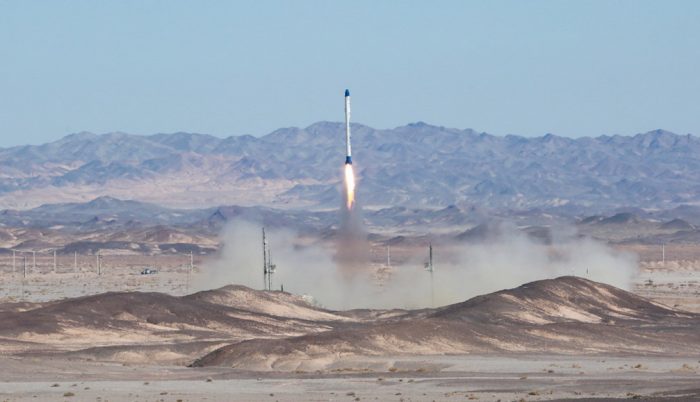
That fact was put on display with the announcement by the Iranian regime of its launching of a satellite into orbit on a ballistic missile.

Iranian state media confirmed the launch of a Simorgh rocket which the Trump administration considers a violation of the JCPOA.

State Department spokeswoman Heather Nauert said the launch appeared to be related to Iran’s attempts to develop ballistic missiles, which is not covered under the nuclear deal but is a subject of protest and sanctioning by the U.S.

“We would consider that a violation of UNSCR 2231,” Nauert said at a briefing with reporters when asked about the launch. “We consider that to be continued ballistic missile development. … We believe that what happened overnight, in the early morning hours here in Washington, is inconsistent with the Security Council resolutions.”

The Simorgh is a two-stage rocket first revealed in 2010. It is larger than an earlier model known as the Safir that Iran has used to launch satellites on previous occasions.

The U.S. National Air and Space Intelligence Center said in a report released last month that the Simorgh could act as a test bed for developing the technologies needed to produce an intercontinental ballistic missile, or ICBM.

“Tehran’s desire to have a strategic counter to the United States could drive it to field an ICBM. Progress in Iran’s space program could shorten a pathway to an ICBM because space launch vehicles (SLV) use inherently similar technologies,” the report said.

Iran’s satellite-launch program falls under the responsibility of the defense ministry, which has denied that the space program is a cover for weapons development, but such denials are silly on its surface since Iran has no civilian space agency.

Clearly the regime is using the guise of “scientific development” to advance its ballistic missile capability, especially now that the mullahs see their advantages disappear under an energized Congress and president intent on rolling back gains made by Iran.

For the mullahs, it is clearly a race now for the regime to develop additional technologies necessary to complete a nuclear delivery system such as heat shields and targeting systems designed to allow a payload to re-enter the Earth’s atmosphere to strike at targets thousands of miles away.

The table is now set for President Trump to walk away from the nuclear deal and news media have reported that he has instructed aides to closely re-examine the deal and evaluate against the regime’s actions over the past two years.

While the Iran lobby was nearly apoplectic over the news, it could not ignore the real possibility that all its hard work in securing the deal is about to be erased like tracks across sand dunes swept away by wind.

Trita Parsi of the National Iranian American Council issued a typically hysterical statement claiming that the president’s call for expanded inspections of Iran’s military installations for nuclear violations was a pretext to war.

“Clearly, facts don’t matter to the Trump administration – their desire to start a war trumps everything. Now, his team appears to be putting his desires into action,” Parsi said.

We advise Parsi to take a Xanax and calm down since his protestations have always been proven false in the past and this latest one is no different.

The fact that the JCPOA excluded large segments of Iran’s military-industrial complex allowed the regime ample room to hide its nuclear activities and the fact that international inspectors are restricted from accessing sites and many sites they were allowed to visit were scrubbed clean of any evidence months in advance shows how wrong Parsi is and how correct the president is in seeking additional inspections.

The Iranian regime predictably reacted with false anger and vitriol at the developments, but could not ignore the fact that the JCPOA is not a treaty and President Trump has wide latitude to simply walk away from the agreement.

Laura Carnahan

Filed Under: Blog, News Tagged With: #NuclearDeal, Featured, Iran, Iran Human rights, Iran Lobby, Iran sanctions, Iran Terrorism, IRGC, National Iranian American Council, NIAC Action, Sanctions, Syria, Trita Parsi

Warnings Not to Soften on Iran Regime Mount

July 14, 2017 by admin

Warnings Not to Soften on Iran Regime Mount

Warnings Not to Soften on Iran Regime Mount

One of the more interesting aspects of the transition in the White House has been the lack of support the Iran lobby receives. During the Obama administration, key Iran lobbyists such as Trita Parsi of the National Iranian American Council had almost unfettered access to the White House; visiting as often as insurance lobbyists during the Obamacare debate.

Key administration staffers helped construct the much-debated “echo chamber” to lend support for the debate about the Iran nuclear deal and help influence the news media with so-called strategic analysts to place editorials and appear on newscasts promoting the agreement.

Even former NIAC staffers were hired to fill key positions in the State Department and National Security Council much to the consternation of long-time critics of the Iranian regime who warned of the conflicts of interest stemming from having staffers with close ties to the Iranian regime overseeing U.S. policy on Iran.

The changeover in administrations not only significantly reduced the influence and clout of the Iran lobby, it also encouraged closer scrutiny and questioning of not only the Iran lobby’s positions, but also the thinking that went into the appeasement policies of the Obama administration.

The world has had the benefit of hindsight after two years since the nuclear deal was signed and has clearly seen that the Iranian regime is now the most destabilizing force in the Middle East with the eruption of proxy wars, terror incidents and deployments of new weapons on a large scale.

The laundry list of Iranian actions reads like a butcher’s bill for chaos, including:

  • Deepening the Syrian civil war the past two years by sending thousands of fighters to support Assad and drawing Russia into the conflict, as well as supporting the use of chemical weapons used on civilians;
  • Provoking open war with Saudi Arabia by starting the Houthi rebellion in Yemen and supporting additional efforts to destabilize Bahrain;
  • Igniting a border conflict with Pakistan that recently escalated to lobbing rockets and mortar shells at each other;
  • Spark the collapse of the Sunni-Shia coalition government in Iraq, thereby driving disenfranchised Sunni tribes to support ISIS leading to the fall of Mosul and giving ISIS its first stronghold to build on; and
  • Launch a massive development program to build a ballistic missile fleet with heavier payloads and intercontinental range, as well as use them for the first time in firing at targets in Syria; and
  • Deploy its military aggressively, including its navy to threaten international shipping lanes in the Persian Gulf, Indian Ocean, Gulf of Aden and Suez Canal.

The proof of how false the Iran lobby’s arguments were has been on display the past two years and there is little debate about Iran being at the center of the woes besetting the region. This has led to an emboldened Iranian resistance movement, as well as open criticism of Iran with little defense of the regime from the Iran lobby.

The wave of social media posts, editorial commentary and press releases by groups such as NIAC have fallen precipitously as Iran’s actions have clearly blown them out of the water, though are now trying to prevent policy changes against the regime, namely the black listing of the Islamic Revolutionary Guards Corps, the main vehicle behind its terrorist activities and its interferences in Iraq, Syria, Yemen, etc.

That criticism is now coming from all quarters as the Iranian opposition movement has gathered steam—culminating in the massive rally in Paris of the leading Iranian dissident groups totaling over 100,000 people with a global parade of nations all criticizing the mullahs in Tehran earlier this month.

In the U.S. Congress, the bipartisan support for the imposition of new economic sanctions on Iranian regime for its ballistic missile program grows each day, alongside calls by Senators on the Trump administration and Secretary of State Rex Tillerson not to certify the Iranian regime being in compliance with the nuclear agreement.

“We believe that a change in that policy is long overdue,” Arkansas Republican Sen. Tom Cotton and three colleagues wrote to Tillerson in a letter Tuesday.

“In light of Iran’s malign actions since the signing of the [nuclear deal], the only reasonable conclusion is that the full suspension of U.S. sanctions is not in the vital national security interests of the United States and that Iran has consistently violated the terms of the [nuclear deal].”

Under federal law, a finding that Iran is not complying with the deal — the certification must take place every 90 days — would set the stage for “an expedited process for Congress to rapidly restore its sanctions.” Cotton and the other senators said that time has come.

They cited several violations, including Iran’s refusal to allow international inspectors to access their research and military facilities, and exceeding limits on water stocks needed to create a plutonium pathway for nuclear weapons.

Several news organizations similarly reported violations by the Iranian regime, especially in its ongoing efforts to acquire illicit nuclear technology.

Weekly Standard reporter Benjamin Weinthal revealed Friday that recent reports by German intelligence agencies show that Iran is still attempting to procure illicit nuclear technology, such as specialized valves that can be used in the heavy water reactor in Arak.

Weinthal cited a report by the state of Hamburg in northern Germany which said “there is no evidence of a complete about-face in Iran’s atomic policies in 2016” after the announcement of the U.S.-brokered nuclear deal.

Iran is still seeking “products and scientific know-how for the field of developing weapons of mass destruction as well (as) missile technology,” the report claimed.

The Hamburg report also listed “49 separate instances of Iran engaging in illegal procurement and terrorist activities, such as cyberwarfare, espionage, and support for the terrorist group Hezbollah,” according to The Tower.

Another intelligence report by the state of Baden-Württemberg described Iran’s use of foreign import-export firms to obtain equipment that can be used for illicit nuclear activities.

Additional reporting recently indicated that Iran was building additional missile manufacturing facilities in Syria which raises the ugly specter that Iran could marry its ballistic missiles with Syria’s chemical weapons stocks that were never destroyed as part of the much-maligned compromise brokered by Russia that persuaded President Obama not to cross his infamous “red line.”

The only good thing coming out of this summer may be the fact that the Iran lobby is shrinking in influence and importance and that is a positive development.

Michael Tomlinson

Filed Under: Blog, News Tagged With: Featured, Iran deal, Iran Human rights, Iran Lobby, Iran Mullahs, Iran Talks, Iran Terrorism, IRGC, National Iranian American Council, NIAC, NIAC Action, Sanctions, Trita Parsi

Iranian Drones and Missiles Increase Tensions and Risk of US Conflict

June 23, 2017 by admin

Iranian Drones and Missiles Increase Tensions and Risk of US Conflict

Iranian Drones and Missiles Increase Tensions and Risk of US Conflict

The Iranian regime continues to invent innovative ways to destabilize the Middle East. First it relied on supporting terrorist groups such as Hezbollah and proxies such as Shiite militias in Iraq and Houthi rebels in Yemen.

Then it turned to technology to build a nuclear program in secret, then construct ballistic missiles using North Korean designs initially, but then adapted updated designs to increase their range, payload capacity and targeting.

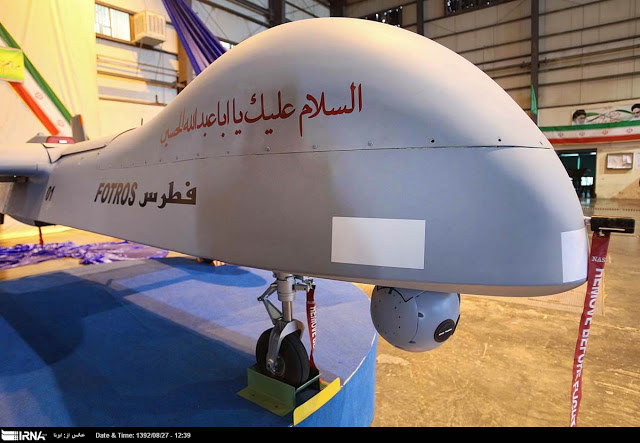
Now the Iranian regime has turned to drones to widen the scope of its military and strike capabilities. In Syria, U.S. forces have already shot down Iranian drones being used in attacks against U.S.-backed forces.

In Pakistan, the Pakistan Air Force shot down an Iranian spy drone in its airspace. The incident is first of its kind in the history of two Islamic countries, which share a porous border.

Wajahat Khan, a journalist and security expert, tweeted: “Confirmed: Iranian spy drone shot down by PAF JF-17 over Panjgur, Balochistan, 45Km inside Pak territory. Unprecedented. New front opening?”

The drone’s downing was reported amid an emergency flag meeting between Pakistani and Iranian officials following the unprovoked firing of several mortar shells into Pakistani territory over the weekend.

On Sunday, Iranian border forces fired several shells near Prom, an area of Panjgur. No casualty was reported though. On May 27, a mortar shell fired from Iranian side in Panjgur district had killed one person. On May 21, at least five mortar shells were fired into Taftan from across the border.

Pakistan has accused Iranians of violating its territorial integrity and lodged protests several times in the last few years.

The increase in incidents ranging from Pakistan to Syria to the Persian Gulf to Yemen paints a disturbing picture of Iranian regime’s aggression on a wide front and threatens to trigger conflicts with and between the U.S., Russia, Saudi Arabia, Turkey, Pakistan and Iraq.

That heightened struggle was highlighted in a piece in USA Today as the Trump administration showed a willingness to confront Iranian regime’s aggression rather than the policies of appeasement by the previous Obama administration.

“The underlying problem is Iranian expansionism,” said James Jeffrey, a former U.S. ambassador to Iraq with extensive experience in the region. The Iranians are worried about who will fill the power vacuum after the defeat of the Islamic State, which is steadily losing territory, he said.

Jeffrey said the Trump administration is now grappling with developing a new strategy that takes into account efforts to blunt Iran’s actions to expand its influence at the same time the U.S. military is focused on defeating the Islamic State, also known as ISIS.

“They believe Iran must be contained, but what they haven’t worked out is the implications of that,” Jeffrey said.

Iranian-backed forces likely will continue to challenge the Syrian Democratic Forces (SDF), an alliance of about 50,000 local troops that the U.S.-led coalition has trained and equipped to combat ISIS.

The Iranians want to hold “an arc of influence” that runs from Iran through Iraq and Syria into Lebanon, said Jack Keane, a retired four-star Army general. “If that ground ends up held by U.S.-backed forces, that interferes with their strategic plans.”

In recent weeks, the United States shot down two Iranian-built armed drones and a Syrian aircraft over Syria. U.S. aircraft have also attacked ground forces around a coalition outpost in southeastern Syria.

Analysts say Iranian mullahs are directly challenging U.S. forces because controlling territory between Iran and Lebanon is critical to their strategic objectives.

That prize of controlling Syrian territory liberated from ISIS is also driving Iranian regime supporters to attack U.S. policy in order to build political pressure on the Trump administration to cave in to Iranian moves.

An editorial in MarketWatch by Faysal Itani, a senior fellow with the Atlantic Council’s Rafik Hariri Center for the Middle East and Ali Marhoon, a policy intern there, warns of the potential for confusion as all of these elements converge and collide and Iran’s willingness to test U.S. resolve in Syria.

“The (Assad) regime itself seems too weak and preoccupied to threaten the U.S.-led coalition in al-Tanf. However, Iran is far more capable, with large reserves of (proxy) manpower and little tolerance for a U.S.-backed de facto statelet in its Syrian client’s territory. It is more likely that Iran, acting through its local proxies, would test the coalition’s resolve through increasing provocations. If so, it would calculate that the United States would back down to avoid serious escalation, thereby curtailing its territorial advances,” they write.

They warn that U.S. policy remains muddled other than eliminating ISIS, which leaves open the potential for the mullahs in Tehran to test the limits of U.S. policy and essentially see what they can get away with.

This testing can be seen in Iraq as forces move to retake Mosul from ISIS, but at the same time Iranian-backed Shiite militias have begun moving into liberated territory to stake their claim to the villages and towns under their banner instead of ISIS.

“It is not clear what the Baghdad government can do about this territorial grab for power in Ba’aj. It has not had the military or security reach to enforce its authority in this region of Nineveh province for many years, and has relied on the goodwill of local tribal forces. It was those forces that were persuaded to take part in former United States president George W. Bush’s famous ‘Awakening’ that defeated the insurgency during the American occupation, but it was also those forces that were eventually betrayed by the sectarian policies of the Nouri Al Maliki government, which led them to acquiesce in (if not actively support) the Daesh takeover in 2014,” writes Francis Matthew in GulfNews.

As Iranian regimes’ drones continue to fly and be shot down, the question inevitably arises as to whether or not the mullahs will back down.

Laura Carnahan

Filed Under: Blog, News Tagged With: #NuclearDeal, Appeasement policy, Featured, Iran Mullahs, Iran sanctions, Iran Terrorism, Khamenei, Sanctions, Syria

Iran Takes Fake Action Against ISIS

June 20, 2017 by admin

Iran Takes Fake Action Against ISIS

Iran Takes Fake Action Against ISIS

The Iranian regime publicized a missile strike against purported ISIS targets in eastern Syria over the weekend. It proclaimed the attack was in response to the terror attacks in Tehran at the mullah’s regime’s Parliament building and the shrine of the founder of the mullah’s regime in Iran, which left 18 dead.

Reuters reported that Iranian Revolutionary Guard Corps units launched mid-range ground-to-ground missiles from western Iran into the Deir al Zour region of eastern Syria, killing a “large number” of terrorists and destroying their equipment and weapons, it said.

The missiles targeted the “headquarters and gathering centers of Takfiri terrorists supporting and building car bombs”, it said.

Reuters could not independently verify the report.

The attack, if true, would be one of the few times the Iranian regime has publicized a direct action against ISIS military units in the Syrian conflict. In past military actions, Iran had deliberately targeted non-ISIS targets such as Syrian rebel units backed by the U.S. or civilian targets in rebel-controlled areas.

Many analysts and news organizations have noted how Iranian regime forces and Shiite militias backed by mullahs in Iran have often fought rebel forces trying to overthrow the Assad regime and not specifically gone after ISIS groups.

A recent National Geographic documentary examined how ISIS rose to power and it noted Iranian regime’s deliberate efforts to avoid fighting ISIS early on in favor of preserving Assad’s grip on power.

Only after ISIS served its larger purpose in diverting the attention of the rest of the world from the bloody Syrian conflict was Iran prepared to engage ISIS on a broader scale; namely to gain territory to secure its foothold in Syria and Iraq.

As Shiite militias, working in concert with Iranian troops, begin to take over key border crossings between Iraq, Syria and Iran, the Iranian regime’s long-range plans of building a Shiite-controlled sphere of influence around it are beginning to take shape.

The growing influence of these Shiite militias aiming to stay permanently in Syria are increasingly being scrutinized by news media and what their impact may mean for future instability in the region.

The Guardian’s Martin Chulov looked at the Syrian town of Ba’aj which was formerly held by ISIS, but was recently liberated by Iranian-backed Shiite militias that now appear to be bunkering down for good.

Ba’aj is now a foundation point of an Iranian plan to secure ground routes across Iraq and Syria and into Lebanon, cementing its influence over lands its proxies have conquered, Chulov wrote.

“From Mosul to Ba’aj, thank you Suleimani,” read one message painted on the town roundabout in tribute to the Iranian general Qassem Suleimani, who helped lead units of the Popular Mobilization Front (PMF) as they swept through Ba’aj toward the Syrian border. Flags of various Shia units were planted like poppies.

“We are not leaving Ba’aj,” said one senior PMF member. “This will be our main base in the area.”

That afternoon, semi-trailers carrying blast walls trundled through the town toward a government building in the center.

The transformation of Ba’aj, from an out-of-bounds haven for Isis leaders to a focal point for Iranian regime’s efforts to change the regional dynamic, is taking place rapidly, even before hundreds of booby-trapped homes have been cleared.

Since then, Iranian backed forces, led by Suleimani, have massed on both sides of the border near the Damascus-Baghdad highway, leading to at least three clashes with US forces and their Syrian opposition proxies near the town of Tanf.

The overarching plans of the mullahs remains consolidating its hold throughout the Middle East and that means keeping crucial allies such as Assad in place and maintaining control over friendly governments such as Iraq and Lebanon.

It also means continuing to deflect attention away from its regional ambitions by pointing the finger at the U.S. and Saudi Arabia and even ISIS to blame them for regional instability instead of focusing on the Iranian regime.

Top mullah Ali Khamenei in an act to try to cover up its regime’s fear of recent economic sanctions, kept up the verbal barrage aiming his ire at the Trump administration as the U.S. Senate passed legislation implementing new economic sanctions on the Iranian regime for its support of terrorism and its ballistic missile program.

Khamenei and other senior Iranian officials have ramped up their criticism of the United States in recent weeks after Trump went on an official visit last month to Saudi Arabia, Iran’s main regional rival, according to Reuters.

During that visit, Trump singled out Iran as a key source of funding and support for militant groups. He has also criticized the nuclear deal between Iran and six major powers, including the United States, that led to the lifting of most sanctions against Iran, in return for curbs on its nuclear program. Trump has said Washington would review the deal but stopped short of pledging to scrap it.

Khamenei in an attempt to give morals to its forces, said in his speech on Sunday that any efforts to destabilize the Islamic Republic would not succeed.

“In the past 38 years, when has there been a time when you haven’t wanted to change the Islamic system?” Khamenei said, according to Fars News. “Your head has hit the rock each time and always will.”

Khamenei’s attacks also hint at renewed efforts by the mullahs regime to target and go after Iranian dissidents using the excuse of the ISIS attacks as cover; claiming that suspected militants being arrested or killed as being part of ISIS may in fact just be part of long-standing Iranian opposition groups the regime has tried to diminish.

The largest gathering of Iranian dissident groups is scheduled to hold its annual meeting in Paris later this month and should prove to be a powerful show of support for the ongoing dissident movement.

Laura Carnahan

Filed Under: Blog, News Tagged With: Featured, Iran Terrorism, IRGC, Khamenei, Sanctions

Iran Lobby Covers for Chemical Attacks on Innocents in Syria

April 14, 2017 by admin

Iran Lobby Covers for Chemical Attacks on Innocents in Syria

Iran Lobby Covers for Chemical Attacks on Innocents in Syria

True to form, the Iran lobby—in this case the National Iranian American Council—dutifully stepped up to the plate to defend the Assad regime’s continued existence by bashing the Trump administration decision to attack a Syrian regime airbase that flew the strikes.

Trita Parsi, the NIAC’s founder and president, offered up some gems of disingenuousness in Huffington Post claiming that the decision to finally cross the red line that President Obama balked at would have serious consequences.

“By now, it is clear that the missile strike has not impeded Assad from using his air force to strike rebel strongholds. In fact, Syrian warplanes reportedly carried out strikes yesterday against rebels near the city of Homs — taking off from the very air base hit by U.S. missiles. Trump even gave Assad advanced notice via Russian President Vladimir Putin, which enabled the Syrian dictator to move his troops and bunker his planes. Moreover, Trump left one of the airstrips at the targeted base untouched, which is why Assad could quickly use the base to launch further attacks,” Parsi said.

To be blunt, that’s a pretty stupid observation, even for someone claiming to be as learned as Parsi.

President Trump’s decision to strike was not a military one, but a strategic political one. In the old parlance of diplomacy, the Syrian chemical attack was a “Casus Belli;” an act so egregious and reprehensible to the sensibilities of international community and American values that the U.S. had no choice but to act.

In the history of U.S. diplomacy, this kind of retaliation is a no-brainer until President Obama decided he wanted to test out his quaint theory of appeasement in modern diplomacy; much to the shame of human rights history as over 500,000 people have lost their lives now and over four million have flooded out as refugees.

Parsi is quick to point out the lack of military effectiveness of the strikes since he skips over the most obvious benefit, which is to put Bashar al-Assad, and his allies on notice that the U.S. is perfectly willing and able to blow the Syrian military back into the Stone Age and outside interference would be grounds to include their forces in the fracas.

In one fell swoop, President Trump has neatly turned the tables on the Syria-Allies axis and forced them to calculate their own response without setting off another violent U.S. response.

Referring to consequent assault on the rebel’s strong hold and the civilians living in those areas, Parsi concludes: “The end result will be a more intensified civil war with more civilian casualties and even greater difficulty for diplomatic efforts to bear fruit,”.

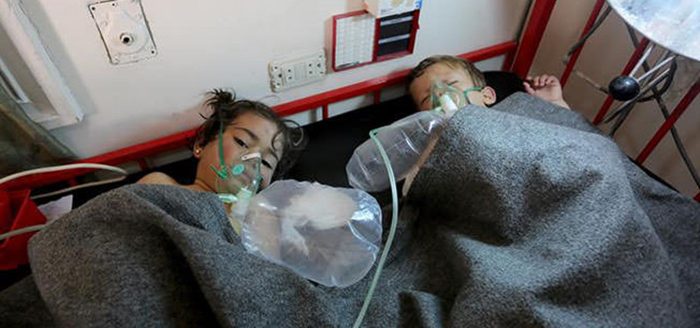
For the people of Syria, no one will claim that the Syria and Iranian bombardments, assaults and revenge killings against Sunni Muslims can “intensify” as Parsi claims. How do you step up from massive aerial bombardments and the pervasive use of sarin and chlorine gas attacks?

About the only thing the Iranians have not tried against Syrian rebels is using biological agents and we don’t put it past Tehran to go that far as the mullahs have already decided to militarize hospitals and health clinics in this fight by targeting them specifically for attack.

The key to solving the Syrian crisis has always been pushing out foreign elements and leaving the Syrian people to resolve their own dilemma and achieve a political solution. If Iran had not intervened in the first few months of the popular revolt against Assad’s rule, we would find ourselves in a very different situation.

But the fact that Iran has poured billions in cash, sent thousands of soldiers and terrorist fighters, along with planeloads of advanced weapons to keep Assad in power has been the principle reason why Syria is such a mess in the first place; a fact that Parsi never admits to.

“Helping ensure that children and civilians aren’t trapped in Syria should be the first and most obvious thing the U.S. can do to help,” Parsi said in what has to be one of his all-time inane comments.

Trying to find a way to export more Syrian refugees while allowing Syria to descend into more chaos is the recipe the mullahs in Tehran have followed and Parsi has preached. It has not been a recipe for success for the Syrian people though.

Of course, no Parsi editorial would be complete without a defense of the idiotic Iran nuclear deal.

With the revelation that the accord on Syrian chemical weapons turned out to be a complete falsehood, the obvious question everyone is asking—and Parsi never answers—is how can you expect the Iran nuclear deal to be working if the same people are guaranteeing it as guaranteed the Syrian chemical weapons deal?

David French in the National Review asks the same important question as he takes up Glenn Kessler’s fact-checking piece in the Washington Post which gave former National Security Advisor a whopping four Pinocchios for her assertion that the chemical weapons deal worked.

“Media accountability is worthwhile, but we don’t need fact-checkers to tell us that the Obama administration’s Syria policy was a miserable failure. We saw the evidence in the bodies of the children slain by sarin gas. However, we do need to remember the sorry recent track record for WMD deals with hostile countries… The Obama administration was supposed to have stripped Syria of chemical weapons. Syria gassed its citizens,” French writes.

“Vicious liars like the North Koreans, Syrians, and Iranians tend to be vicious liars no matter the documents they sign. That’s a truth worth remembering as another WMD deal collapses and further destabilizes and already-dangerous world,” he adds.

French is correct and Parsi is dead wrong—which isn’t a first for him.

Michael Tomlinson

Filed Under: Blog, News Tagged With: #NuclearDeal, Appeasement policy, Featured, Iran deal, Iran Lobby, NIAC, NIAC Action, Rouhani, Sanctions, Trita Parsi

  • « Previous Page
  • 1
  • 2
  • 3
  • 4
  • …
  • 9
  • Next Page »

National Iranian-American Council (NIAC)

  • Bogus Memberships
  • Survey
  • Lobbying
  • Iranians for International Cooperation
  • Defamation Lawsuit
  • People’s Mojahedin
  • Trita Parsi Biography
  • Parsi/Namazi Lobbying Plan
  • Parsi Links to Namazi & Iranian Regime
  • Namazi, NIAC Ringleader
  • Collaborating with Iran’s Ambassador

Recent Posts

  • NIAC Trying to Gain Influence On U.S. Congress
  • While Iran Lobby Plays Blame Game Iran Goes Nuclear
  • Iran Lobby Jumps on Detention of Iranian Newscaster
  • Bad News for Iran Swamps Iran Lobby
  • Iran Starts Off Year by Banning Instagram

© Copyright 2026 IranLobby.net · All Rights Reserved.