Iran Lobby

Exposing the Activities of the lobbies and appeasers of the Mullah's Dictatorship ruling Iran

  • Home
  • About
  • Current Trend
  • National Iranian-American Council(NIAC)
    • Bogus Memberships
    • Survey
    • Lobbying
    • Iranians for International Cooperation
    • Defamation Lawsuit
    • People’s Mojahedin
    • Trita Parsi Biography
    • Parsi/Namazi Lobbying Plan
    • Parsi Links to Namazi& Iranian Regime
    • Namazi, NIAC Ringleader
    • Collaborating with Iran’s Ambassador
  • The Appeasers
    • Gary Sick
    • Flynt Leverett & Hillary Mann Leverett
    • Baroness Nicholson
  • Blog
  • Links
  • Media Reports

Iran Regime Picks and Chooses What It Wants

November 3, 2015 by admin

Iran Regime Picks and Chooses What It Wants

Iran Regime Picks and Chooses What It Wants

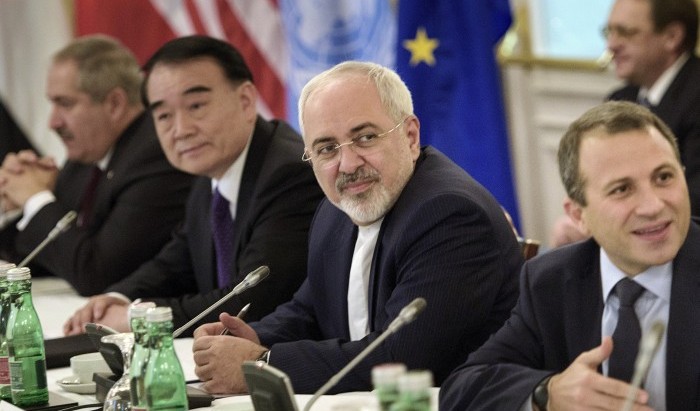
There are many aspects to the collective decision-making of the mullahs in Tehran. On the one hand, they support opening up negotiations on a nuclear deal to help unlock the bank vaults to billions in frozen assets. Then on the other hand, they denounce the terms of the deal and claim it doesn’t apply to them unless all sanctions are lifted at once.

The same double standard applies to what is happening in Syria. The Iran regime has fought endlessly to keep Assad in power there to the extent it even begged the Russians for military support to save him from being overthrown as rebels made serious inroads. The mullahs sought to legitimize the idea of Assad staying in power and seemed to reach a breakthrough by finally being invited to multilateral talks on finding a political solution to the crisis.

But now the regime has threatened to walk away from talks if it found them unconstructive, specifically citing Saudi Arabia’s role in the talks as the bitter rivals escalate their growing conflicts that now stretch from Yemen to Syria.

“In the first round of talks, some countries, especially Saudi Arabia, played a negative and unconstructive role … Iran will not participate if the talks are not fruitful,” regime media cited deputy Foreign Minister Hossein Amir Abdollahian as saying.

Delivering unusually personal criticism, regime president Hassan Rouhani appeared to reprimand Saudi Foreign Minister Adel al-Jubeir, who, on Saturday, lashed out at Tehran for what he termed its interference in regional countries.

“An inexperienced young man in a regional country will not reach anywhere by rudeness in front of elders,” Rouhani was quoted as saying by state news agency IRNA on Monday. He did not name the ‘young man’ but Jubeir was assumed to be his target according to Reuters.

It’s this kind of “I’ll take my ball and play elsewhere” response that has come to typify Iranian regime’s reactions in foreign affairs now. It pushed for a nuclear agreement and then complained about it and threatened to walk away. It pushed for a role for Assad and a seat at the table and now that it has it, it threatens to walk away.

While some psychologists might label this bipolar behavior, long-time regime watchers within the Iranian dissident community have long warned this was how the mullahs do business by pushing a false façade and then changing the rules at the last minute.

It was behavior that typified nearly two years of nuclear talks in which Iran refused to commit to the fine print in order to avoid being boxed in; resulting in a 159-page agreement that is dwarfed by the thousands of pages in similar nuclear agreements with the old Soviet Union and North Korea.

That split behavior has been most explicit in Ali Khamenei, the regime’s top mullah, who has persistently and publicly undercut Rouhani following the nuclear agreement in order to demonstrate his firm control over regime matters and relegate Rouhani to the figurehead status many have claimed he remains.

According to Dr. Majid Rafizadeh, head of the International American Council, writing in Huffington Post, Khamenei has ruled out any “snap-back” option with regards to the sanctions.

“First, he wants sanctions to be lifted at the outset, then he wants to make sure that the international community will not have any mechanism through which it can re-impose sanctions in the very likely scenario that Iran decides to pull out of the nuclear agreement and go full speed ahead on uranium enrichment,” he writes.

“But wait, that’s not all, there is another condition to be met as well. After Khamenei had his president and nuclear team add the condition of the removal of an arms embargo to the nuclear agreement in the eleventh hour, he is now adding the removal of all sanctions (including the ones linked to Iran’s terrorism and human rights violations) to the already-done nuclear deal,” he added.

Another sign of the growing tightening of control by Khamenei was discussed by Gerald F. Seib in the Wall Street Journal.

“Iran also has arrested Nizar Zakka, a Lebanese information-technology specialist who lives in Washington and has permanent-resident status in the U.S. At the same time, Iranian businessmen with ties to foreign firms are being harassed by Iran’s state-security apparatus,” Seib writes. “These detentions are likely the work of Iran’s Revolutionary Guards, who function as a kind of parallel government operating alongside—and apparently beyond the influence of—the official government of President Hassan Rouhani and Foreign Minister Javad Zarif, with whom the U.S. and other world powers negotiated the nuclear deal.”

The broad range of actions by the regime over the last few months leaves very little doubt about the intentions of the mullahs and Khamenei in particular.

He is not interested in accommodation. He has no time for negotiations. He has no belief in moderation.

The regime has even stepped up arrests domestically, including two journalists, one a former deputy culture minister who was jailed in the 2009 crackdown that followed the disputed reelection of then-President Mahmoud Ahmadinejad.

The son of ex-official Issa Saharkhiz told news media his father was arrested this week at his residence in Tehran on charges that include “insulting the supreme leader” and “propaganda against the regime.” The arrests are likely to have a chilling effect on journalists and activists ahead of major elections early next year in Iran.

Meanwhile, a relative of Ehsan Mazandarani, editor in chief of the Iranian regime’s daily Farhikhtegan, said that Mazandarani was detained the same day, also in the capital by agents of the Revolutionary Guards Corps.

Even as these crackdowns increase – and in spite of criticism from human rights and dissident groups – in a vote held Monday, regime lawmakers opted overwhelmingly to continue pushing the “Death to America” slogan chanted across the country on Fridays, after regime ally’s Friday prayer services, and with special zeal every November 4th – the day Iranian mullahs commemorates the beginning of the 1977 siege on the U.S. Embassy in Tehran.

Khamenei picks and chooses his fights and he clearly intends on fighting any notion of moderation.

By Michael Tomlinson
Filed Under: Blog, News Tagged With: #NuclearDeal, Appeasement policy, Featured, hassan rouhani, Iran sanctions, Irantalks, Nuclear Deal, Rouhani, Sanctions

As Iran Regime Approves Nuke Deal, It Bulks Up Militarily

October 23, 2015 by admin

As Iran Regime Approves Nuke Deal, It Bulks Up Militarily

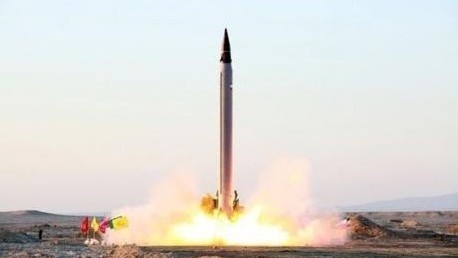
A new Iranian precision-guided ballistic missile is launched as it is tested at an undisclosed location October 11, 2015. REUTERS/farsnews.com/Handout via ReutersThe Iran regime’s top mullah, Ali Khamenei, added his tepid support to the nuclear deal that the regime’s Parliament also approved, clearing the pathway for the regime to get its payday of $150 billion plus billions more in foreign investment and economic activity.

But nothing is ever simple with the inscrutable mullahs of Tehran as Khamenei added the caveat that all sanctions had to be lifted or Iran would walk away from the deal. This reinforces the key stumbling block he placed in front of negotiators when he maintained that the regime had to first receive the benefits of lifted sanctions before it would begin any dismantling of its nuclear infrastructure.

The chicken and egg argument he poses is deliberately cloaked in the obscurity it needs to allow both sides proof of his adherence to the terms of the deal from both sides perspective, while allowing the wiggle room Khamenei wants to set the implementation of the agreement any way he sees fit.

This is readily apparent in the deluge of provocative acts the regime has undertaken since the agreement was signed, including:

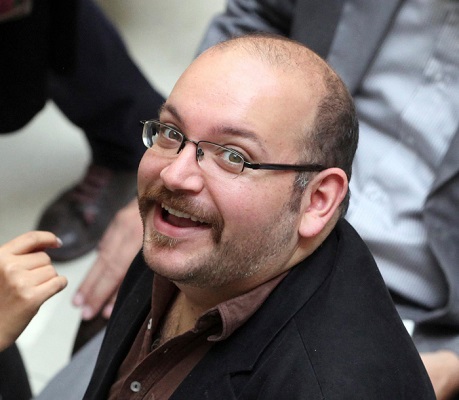
  • The conviction of Washington Post reporter Jason Rezaian on trumped up spying charges and then offering to swap him for convicted Iranian arms smugglers;
  • The test firing of a new ballistic missile violating United Nations Security Council resolutions prohibiting development of new nuclear-capable missiles;
  • Coordination of a military alliance with Russia through a mission to Moscow by Quds Force commander Qassem Soleimani in violation of UN travel restrictions; and
  • Launching of a new offensive in Syria against forces opposing the Assad regime including the use of thousands of Iranian fighters and proxies from Hezbollah in Lebanon, Shiite militias from Iraq and Afghan mercenaries.

These acts put to a lie the claims long made by the Iran lobby during the nuclear negotiations that the regime was only interested in becoming a moderating force within the region. Led by the National Iranian American Council, those same supportive voices for the regime have been struck deaf and dumb in the face of these new violations by the regime.

The test firing of the new ballistic missile was especially provocative and so concerning that the U.S., Great Britain, France and Germany called on the UN Security Council’s Iran sanctions committee to take action over the violation.

In a letter obtained by Reuters containing details on the launch, the nations said the ballistic missile was “inherently capable of delivering a nuclear weapon.”

Is it too late to say “We told you so?”

Even now, news media that once editorialized in support of the nuclear deal have reversed course in noting the worrisome developments by the Iran regime.

“But the Syrian offensive is certainly more than message-sending. If successful, it could eliminate the chance to construct a moderate, secular alternative to the Assad regime, and send hundreds of thousands more refugees across Syria’s borders. It was just such aggression that Mr. Obama acknowledged might be a byproduct of the nuclear deal — and that he vowed to resist. If he remains passive as Maj. Gen. Soleimani’s forces press forward, both Iranian and U.S. allies across the Middle East will conclude that there will be no U.S. check on an Iranian push for regional hegemony,” said the Washington Post in an editorial.

There was also a move by 11 Senate Democrats to push the Obama administration to respond forcefully to the regime’s missile test, pressing the case that a response would set a precedent for how the U.S. would react to any future violations of the nuclear deal.

“We are concerned about the military significance of this test, which is part of a long-term Iranian program that seeks to improve the range and capabilities of its ballistic missiles,” the senators wrote. “We are also convinced that the launch is an attempt to test the world’s will to respond to Iranian violations of its international commitments.”

It is worth noting that several of these same Senators had voted in favor of the deal.

Joshua Keating at Slate raised a similar concern about the fallout from the nuclear deal saying “it certainly doesn’t bode well for the optimistic notion that the deal could lead to U.S.-Iranian security cooperation beyond the narrow areas laid out in the agreement and it certainly doesn’t look good for the administration. Iranian leaders were presumably well aware of this.”

This understanding of the regime’s intentions puts into perspective the potential use of the billions of dollars about to be released into the control of the mullahs and as the International Business Times puts it:

“Pushed by a combination of its own outdated military equipment and the formidable military buying power of its oil-rich Middle East rivals, analysts said Tehran is urgently plotting to upgrade and replace its own antiquated defense technology in favor of Russian- and Chinese-made military equipment by spending oil revenue that’s been trapped in an assortment of banks worldwide for the last three years.”

“Those options range from providing Hezbollah fighters, who are supporting Syrian President Bashar Assad in the Syrian civil war, to boosting aerospace efforts, including space-based platforms such as satellites, to advance its military into the 21st century,” according to Ariel Cohen, senior fellow at the Atlantic Council, an international affairs think tank based in Washington, D.C.

It is clear that the foxes let loose by the nuclear deal are now coming home to hunt.

By Michael Tomlinson


Filed Under: News Tagged With: Appeasement policy, Featured, Iran, Iran deal, Iran Lobby, Iran Mullahs, Iraq, Sanctions, Syria, Yemen

Iran Regime Unveils Missile Base to Cover Weakness

October 16, 2015 by admin

Iran Regime Unveils Missile Base to Cover Weakness

Iran Regime Unveils Missile Base to Cover Weakness

Mother Nature provides us excellent examples of weaker insects or animals using the art of disguise to shield themselves from predators. The katydid tries to look like a leaf, while the elephant hawkmoth caterpillar looks like a snake head. Both use deception to keep from becoming someone else’s lunch.

In a case of man imitating nature, the Iran regime’s Revolutionary Guard Corps released video footage of secret missile base in an underground tunnel deep in a mountain side.

“The video, aired on semi-official Fars TV and set to rousing music, shows an extensive tunnel packed with medium- and long-range missiles and launcher units. The Guard said the missiles were on their launch pads, ready to be fired in the event of an attack on the country,” according to Fox News.

The video of the missile base, so far unconfirmed by independent sources, follows the recent test firing of a new ballistic missile that the U.S. claims violates terms of a United Nations Security Council sanction prohibiting the regime from developing new missiles. The video’s airing raises some basic questions such as: Why?

Dominic Waghorn, reporting for Sky News, said the video’s release was designed for domestic consumption as leaders within the Revolutionary Guards Corps worry about appearing weak to the rivals such as Saudi Arabia, especially at a time when its Syria campaign all but collapsed until the last-minute intervention by the Russians.

“But an attempt to project strength is in itself a sign of weakness. Neither Russia nor Iran would be in Syria were their ally Bashar al Assad not in trouble,” Waghorn said. “Their forces are there because his have been crumbling and that has threatened their interests there. Their presence invites a response from his enemies and their backers, and is not therefore without considerable peril.”

But the Iran regime’s effort to project a more assertive posture as it has seen a rolling series of setbacks didn’t stop with the missile video and test launch. It included grainy video released through Twitter showing the regime’s Quds Force commander Qassem Soleimani, purportedly addressing Iranian and Syrian troops in Syria on the eve of launching a new offensive to attack rebel militias.

Showing Soleimani taking direct command of ground forces following the deaths of two other senior IRGC commanders strongly shows the mullahs near-desperation to pull out a victory in Syria after so much blood and treasure has been spent with little to show for it as Assad’s forces have been pushed nearly all the way back to the sea.

But with the looming deadline for certification by the International Atomic Energy Agency to complete its investigation of Iran’s past nuclear activities, the regime – which had been slow in responding to the inquiry – stepped up at the last minute to be responsive to the UN probe.

In the past two weeks, after Iran had largely brushed off serious questions about its past nuclear activities, the IAEA and some Western governments directly warned Tehran that it must increase cooperation if it wanted IAEA board members to conclude it had sufficiently addressed their concerns, according to the Wall Street Journal.

The board must decide in mid-December, based on a report by Director General Yukiya Amano, whether Tehran has done enough for the nuclear agreement it signed in July with six world powers to proceed.

As the regime is confronted with the costs of a massive new offensive in Syria, it may very well have concluded that it needs the scheduled $150 billion in frozen assets as quickly as possible to replenish its coffers as part of the nuclear deal, as well as keep its economy afloat.

That became painfully apparent as the engine from an Iranian Mahan Air 747 fell off shortly after takeoff from Tehran. The regime badly needs new aircraft to replace a fleet hampered by economic sanctions.

Ultimately, many of the regime’s most recent moves can be seen as desperate acts by a leadership of mullahs being pressed in on all sides.

By Michael Tomlinson

Filed Under: Blog, News Tagged With: #NuclearDeal, Featured, Iran, Iran Economy, Iran Mullahs, Nuclear, Nuclear Deal, Sanctions

What the Conviction of Jason Rezaian Tells Us About Iran Regime

October 13, 2015 by admin

What the Conviction of Jason Rezaian Tells Us About Iran Regime

What the Conviction of Jason Rezaian Tells Us About Iran Regime

News media and journalists around the world have reacted strongly to the announcement that Washington Post reporter Jason Rezaian had been convicted in an espionage trial after 14 months of imprisonment. The verdict from the Revolutionary Court was reported through regime state television, but not the specific decision even though the trial ended in August.

According to the Washington Post, “Rezaian faced four charges — the most serious of which was espionage — and it was not immediately clear whether he was convicted of all charges. Rezaian and The Post have strongly denied the accusations, and his case has drawn wide-ranging denunciations including statements from the White House and media freedom groups.”

Depending on which charges he was convicted on, Rezaian could face upwards of 20 more years in prison.

“Iran has behaved unconscionably throughout this case, but never more so than with this indefensible decision by a Revolutionary Court to convict an innocent journalist of serious crimes after a proceeding that unfolded in secret, with no evidence whatsoever of any wrongdoing,” said Martin Baron, executive editor of the Post, in a statement.

“The contemptible end to this ‘judicial process’ leaves Iran’s senior leaders with an obligation to right this grievous wrong,” Baron said. “Jason is a victim — arrested without cause, held for months in isolation, without access to a lawyer, subjected to physical mistreatment and psychological abuse, and now convicted without basis. He has spent nearly 15 months locked up in Iran’s notorious Evin Prison, more than three times as long than any other Western journalists.”

Ironically, on October 10, Rezaian passed the dubious milestone of having been locked up in Iran longer than the original 52 American embassy hostages three decades ago.

Rezaian’s case, as well as the plight of other Americans being held in Iranian regime’s prisons; including Amir Hekmati, a former U.S. Marine, and Saeed Abedini, a Christian pastor, are defining signposts of how the Iran regime’s leadership acts, plans, thinks and executes its national policy. They have become unfortunate pawns in a much larger game the mullahs have been playing at for the past three decades.

Abedini of Boise, Idaho, was imprisoned for organizing home churches. Hekmati of Flint, Mich., has spent four years in prison since his arrest during a visit to see his grandmother. Rezaian was accused by the regime of providing information on Iranian companies and individuals violating economic sanctions and thereby providing intelligence to regime foes.

These higher profile victims share a similar fate as countless thousands of other Iranians who have been arrested, tortured, falsely imprisoned and often publicly executed as the regime seeks to stamp out dissent, curb free speech and hang onto people to be used as bargaining chips should it need them.

In the case of the Americans, Hassan Rouhani, the regime’s handpicked leader, openly floated the idea of prisoner swaps with the Americans exchanged for up to 19 Iranian agents convicted of trafficking in arms and smuggling nuclear components for the regime’s nuclear program.

In many ways though, approval the nuclear agreement may have inadvertently sunk hopes of getting these Americans released since the mullahs perceive they got what they originally wanted in the potential lifting of economic sanctions, which raises the question of why would the regime double down and sentence Rezaian when there would be no clear political reason to?

The conviction certainly disproves the idea – long floated by Iran lobbyists such as the National Iranian American Council – that supporting the nuclear deal would empower so-called “moderates” within the Iranian government. If anything, this conviction demonstrates that Ali Khamenei, to whom the courts answer to, is still firmly in charge of the regime’s policies.

What all of this tells us is that the Iran regime leadership does not value human life, other than to use it as a commodity. It tells us the judicial system is controlled and used for political and religious purposes. It tells us there is always linkage in the mullahs’ mindset and willingness to traffic in human life.

The regime shows us every day examples that it views international law and norms with contempt, be it the brutal treatment of its people or the almost daily threats its generals and leaders make against the U.S. and other nations and neighbors.

Alireza Tangsiri, a Revolutionary Guard Corps lieutenant commander, said that suicide bombers are on stand by and ready to “blow up themselves” to “destroy the U.S. warships,” according to remarks made Monday in Iran’s state-controlled Fars News Agency.

“They [the U.S.] have tested us once and if necessary, there are people who will blow up themselves with ammunitions to destroy the U.S. warships,” Tangsiri was quoted as saying.

He added that if the United States takes any hostile action against Iran, the country’s military forces would pursue the Americans into the Gulf of Mexico.

“I declare now that if the enemy wants to spark a war against Iran, we will chase them even to the Gulf of Mexico and we will (certainly) do it,” he said.

The threats come a day after Iran test fired ballistic missiles in the region, in a potential violation of international agreements barring such activity.

That missile, the Emad or “Pillar,” is designed to evade missile defenses and is supposedly much more accurate than previous missile designs, putting neighbors such as Saudi Arabia, Turkey, Egypt and even Southern Europe within range.

While execution of Iranians under Rouhani’s watch is surging, it is more obvious now that despite the Iran Lobby’s pitch, mullahs ruling Iran, emboldened by the concessions received as a result of the flawed Iran deal, are now more of a threat to the international community than ever before.

By Michael Tomlinson

Filed Under: News Tagged With: #NuclearDeal, Appeasement policy, Featured, Iran, Iran deal, Iran Lobby, Iran Mullahs, Iran sanctions, National Iranian American Council, NIAC, NIAC Action, Rouhani, Sanctions

Iran Lobby Tries Clearing Economic Pathway for Regime

October 10, 2015 by admin

Iran Lobby Tries Clearing Economic Pathway for Regime

Iran Lobby Tries Clearing Economic Pathway for Regime

The Iran lobby, led by the National Iranian American Council, has been busy working to clear the economic runway for the Iran regime now that it has its nuclear deal because now that it has the opportunity to operate more freely in the world, the mullahs have opted to significantly increase the regime’s military operations in Syria, Yemen and Iraq; all of which requires cash and mountains of it.

As part of that NIAC propaganda push, Tyler Cullis and Amir Handjani, posted an editorial in The Hill arguing that the U.S. should open greater economic ties with the Islamic regime; the reason being that European and Asian nations are already quickly seeking to exploit these new markets.

Cullis and Handjani are correct that there are some companies and nations seeking to rush into this economic void. We know that China has a deep interest in securing contracts for cheap Iranian oil, while Russia has already begun selling weapons to the regime despite the fact that embargos on advanced ballistic missiles and weapons remains in effect.

They note however that the Obama administration has put the brakes on the rush to re-open economic ties with the regime. Part of delay comes from the huge groundswell of negative reaction from American voters to the nuclear deal which has forced many representatives who supported the deal to backtracked and offer up new pieces of legislation to address the perception that the Iran regime received a sweetheart deal and the U.S. got nothing in return; most notably Sen. Ben Cardin’s (D-MD) move to introduce to track compliance by the regime.

Most anti-regime critics called the effort too little, too late and still does not address the central and most critical issue surrounding the Iran regime: the delinking of human rights and sponsorship of terror from the deal and thus making no effort to reform or modify the regime’s bloodthirsty policies.

There has also been discussions and disagreements over the conflict between the nuclear deal and the Iran Threat Reduction and Syria Human Rights Act (ITRA) which was signed into law in August 2012 by President Obama which closes the foreign subsidiary loophole that the an annex in the nuclear deal makes open.

According to Fox News, “ITRA contains language, in Section 605, requiring that the terms spelled out in Section 218 shall remain in effect until the president of the United States certifies two things to Congress: first, that Iran has been removed from the State Department’s list of nations that sponsor terrorism, and second, that Iran has ceased the pursuit, acquisition, and development of weapons of mass destruction.

“Additional executive orders and statutes signed by President Obama, such as the Iran Nuclear Agreement Review Act, have reaffirmed that all prior federal statutes relating to sanctions on Iran shall remain in full effect.”

All of which drives a stake through the arguments made by Cullis and Handjani who by using the flawed tactic of supporting “moderates” against “hardliner” mullahs, argue that continued economic isolation of Iran only strengthens the “hardliners” and leaves American companies out in the cold versus their European and Asian competitors.

First of all, it is refreshing Cullis and Handjani are so interested in the economic well-being of American firms, but the reality is they recognize failure to fully open Iran to international trade and commerce will not bring in the cash and investment necessary for the regime to generate the revenue necessary to fund its expansionist policies.

The regime has spent upwards of $15 billion in direct financial aid and military support just to prop up the Assad regime in Syria alone. This doesn’t include the billions being spent to arm Houthis in Yemen and outfit Shiite militias in Iraq, not to mention the regime’s old terrorist partners in Hezbollah. With slumping oil prices, the mullahs desperately need that foreign investment to help keep them in power as ordinary Iranians have staged protests against the “war economy” top mullah Ali Khamenei has mandated for the past decade.

Oddly, Cullis and Handjani use the analogy of President Nixon opening up relations with China in the early ‘70s as an example of opening up to a closed society the U.S. was in conflict with, but what they don’t mention is the fact that coming out of the Vietnam War, China recognized the need to end its sponsorship of armed conflict and instead turn to embracing capitalism.

The fact that a deeply Communist nation that inflicted the Cultural Revolution on its people in brutal repression, recognized it needed to do a complete policy turnaround and embrace the very thing it denounced as part of its founding represents why the Nixon overtures were even possible in the first place; China’s leaders made that opening available by being receptive to change.

Iran’s mullahs have exhibited no such inclination. In fact since the nuclear deal was agreed to, Iran has partnered with Russia to step up an air and ground campaign in Syria, was caught smuggling weapons into Yemen and has turned Iraq into a virtual client state.

So while the Iran lobby may be hard at work trying to rewrite history, the Iran regime is busy trying to shape the future to its own perverted vision.

By Laura Carnahan

Filed Under: Blog, Latest from Lobbies & Appeasers, News Tagged With: Amir Handjani, Appeasement policy, Featured, Iran, Iran deal, Iran Economy, Iran Lobby, Iran Nuclear, Iran sanctions, Iran Talks, Jamal Abdi, National Iranian American Council, NIAC, NIAC Action, Sanctions, Tyler Cullis, Yemen

Iran Regime Actions Bolster Efforts to Halt Extremism

October 2, 2015 by admin

Iran Regime Actions Bolster Efforts to Halt Extremism

Iran Regime Actions Bolster Efforts to Halt Extremism

Reuters reported that hundreds of fresh Iran regime troops have flooded back into Syria over the past 10 days and will soon join their Hezbollah allies in a major ground offensive backed by Russian air strikes aimed at retaking territory lost by the Assad regime to rebels; contrary to Iranian and Russian claims they would be focusing their attacks against ISIS.

It seems clear the mullahs in Tehran are focused on securing the Assad regime by eliminating Western-backed moderate rebel units, rather than tackling their Islamic State rivals. The new offensive clearly points out the false propaganda the regime has been pumping out through its lobbyist allies such as the National Iranian American Council.

Peace is certainly the end goal for the Iran regime, but a peace that eradicates any opposition to Assad and leaves Iranian mullahs in control of a swath of territory stretching from the Mediterranean through Syria, Iraq, Iran, Yemen and the Indian Ocean. Their territorial ambitions have come fully to light and the bill for accommodating the regime with the nuclear deal is finally coming due.

“The vanguard of Iranian ground forces began arriving in Syria: soldiers and officers specifically to participate in this battle. They are not advisors … we mean hundreds with equipment and weapons. They will be followed by more,” said a Lebanese military source, adding that Iraqis would also take part in the operation.

Interestingly, Hassan Rouhani, the handpicked puppet leader of the Iran regime, tipped the regime’s hand in his speech before the United Nations last week in which he firmly insisted that U.S. policy should be focused on common actions to defeat ISIS before any discussion takes place on the future of Assad. Rouhani laid out the narrative in which the regime justifies the placement of boots on the ground in Syria openly and blatantly instead of relying on proxies such as Hezbollah in what is sure to be a virtual takeover of Syria by the Iranian military.

As Gareth Porter, an appeaser of the mullahs points out in Middle East Eye, “Iran’s national security strategy has had two primary objectives ever since Khamenei became Iran’s leader: to integrate the Iranian economy into the global system of finance and technology and to deter the threats from the United States and Israel. And Rouhani had primary responsibility for achieving both tasks.”

We are now witnessing what the Iran regime’s future plans are now that they have secured these twin goals and it is causing renewed efforts in Congress to stymie the regime in spite of the nuclear deal.

The House voted Thursday by the hefty margin of 251 to 173 to stop the Obama administration from lifting sanctions against the Iran regime “until Tehran pays the $43.5 billion it still owes in damages to the families of terror victims in cases where responsibility can be linked back to Iran — such as the 1983 bombings of the U.S. Embassy and Marine barracks in Beirut and Hezbollah’s 1985 hijacking of TWA Flight 847,” said the Washington Post.

“Should Iran receive United States sanctions relief before it pays the victims of its terrorism all of what U.S. courts say those victims are owed?” said Rep. Patrick Meehan (R-Pa.), who introduced the measure. “I say no. Not one cent.”

If the survivors or victims’ relatives are not paid now, “it definitely won’t happen later,” House Foreign Affairs Committee Chairman Edward R. Royce (R-Calif.) said. He argued that Iran would spend the money freed up from sanctions relief on building up its military force and other nefarious activities, rather than paying the balance of restitution payments ordered by U.S. courts.

Those same voters may also be alarmed at news coming out of Tehran in which Saeed Abedini, the Iranian-American pastor serving an eight-year prison sentence on charges of undermining national security may face more trumped up charges by the regime, including links to antigovernment groups, said Naghbeh Abedini, his wife. Abedini is one of four Americans being held hostage in Iranian prisons including Washington Post reporter Jason Rezaian and former Marine Amir Hekmati.

The move by the regime to place new charges on Abedini flies in the face of the PR move made by Rouhani at the UN in which he floated the idea of a prisoner swap for 19 Iranian agents convicted on arms trading and smuggling of nuclear components.

All of which leads us full circle back to the question of how to check the ambitions of the mullahs in Iran and in what form? One answer was provided by Mrs. Maryam Rajavi, the president-elect of the National Council of Resistance of Iran, a coalition of Iranian opposition groups, who wrote an editorial in the New York Daily News.

“My message to the United States and the West is that the long-term solution to the Iranian threat lies neither in foreign military intervention nor in collaboration with a regime that is so oppressive at home and so destabilizing abroad,” she said.

“With the nuclear deal, however misguided it may be, in place, the right policy going forward is to encourage and support the Iranian people’s desire for democratic change and to speak out for human rights,” she added.

Sound advice the West would be wise to follow.

By Michael Tomlinson

Filed Under: News Tagged With: #NuclearDeal, Appeasement policy, hassan rouhani, Iran deal, Iran Lobby, Iran sanctions, NIAC, NIAC Action, Sanctions

NIAC Leads Charge for Great Iran Giveaway

June 25, 2015 by admin

GiveawayReza Marashi, another one of the National Iranian American Council’s regime cheerleaders, offered an editorial on the final hurdles facing nuclear negotiators in Switzerland. It is an impressive piece of fiction, worthy of a Hugo Award for fantasy writing.

His ignoring the televised rants by top mullah Ali Khamenei in denouncing any freeze on Iran’s nuclear program and opposition to any inspections of military or secret sites and demand for an immediate lifting of economic sanctions by the entire world even before ink is dry on an agreement is proof that Marashi is attempting that unique political high wire act; covering for a boss who suffers foot-in-mouth disease.

But I sympathize with Marashi. It can’t be easy to spin a line when your top guy goes on national television to basically undermine everything you’re saying. Marashi might find better luck defending the Confederate battle flag these days.

In another flight of fancy, Marashi claims that “Iran gave more than it received in the interim nuclear deal, and is looking to collect on that investment.” We certainly agree on the second part of that statement, Iran’s mullahs are certainly looking to collect – about $140 billion in frozen assets in what would be a gigantic payday, but the first part of the statement is disingenuous.

The Wall Street Journal, amongst scores of other news media, has documented the avalanche of concessions granted to the Iran regime by P5+1 negotiators without any comparable concessions from the mullahs. Those concessions began with the most important and earliest concession which was to move away from dismantling Iran’s nuclear program to complex Rube Goldberg structure of stretching out the “breakout” time for creating a nuclear weapon.

Marashi, his colleague at the NIAC Trita Parsi and other regime sympathizers, have created a new vocabulary of deceit with newly invented terms such as “snapback sanctions” and “breakout times” to replace conditions such as “dismantling centrifuges” and “eliminating fuel stockpiles.” It amounts to a shell game any tourist on the sidewalks of New York city would recognize with Iran’s mullahs hiding their nuclear program under a walnut and moving it rapidly around.

But what Iran’s mullahs truly want – and badly – is the cash. The $140 billion at the end of their nuclear rainbow is desperately needed – not by the ordinary Iranian citizen strangled by a corrupted economy – but a religious theocracy bled dry from three costly proxy wars in Syria, Iraq and Yemen and crashing oil prices. The mullahs need that money to prop their floundering regime afloat and keep their extremists allies well-equipped with guns, rockets and cash to pay mercenaries recruited from Afghanistan, Lebanon, Somalia and Nigeria.

To put it into perspective, according to the International Monetary Fund, Iran’s total foreign currency reserves amounts to only $110 billion, ranking it 21st in the world. The U.S. only has currency reserves of $121.5 billion, ranking it 19th. A $140 billion cash infusion into Iran would vault it to 11th place, ahead of Mexico, Germany, the U.K., France and Italy and just behind powerhouses Russia, Saudi Arabia, Japan and China.

That, more than anything else, is what the mullahs are craving like heroin to an addict. They need that cash to pay for their military adventures, to support terror groups and to maintain the massive expenditures required to continue building its nuclear infrastructure including new equipment it intends to buy from Russia and North Korea.

And if that wasn’t enough, Marashi also proposes that UN sanctions be rewritten to exclude tying sanctions to non-nuclear issues “such as arms procurement and export, human rights, and terrorism.” In effect, giving Iran a free pass to acquire arms, export them to its proxies, continue hanging people at a breakneck pace and lavish terror groups with more support.

Clearly Marashi has given up all pretense of finding common ground with negotiating countries and instead is all-in with the mullahs in trying to get everything they can before the June 30th deadline. The “throw everything in the basket” approach is reminiscent of looters sweeping through a CVS store grabbing everything they can before burning it down.

The end result will leave a deeply destabilized world with a nuclear-capable and flush with cash Iran still controlled by a small cadre of extremist mullahs.

By Michael Tomlinson

Filed Under: Blog, National Iranian-American Council Tagged With: Iran, Iran deal, Iran Lobby, Iran Talks, Irantalks, NIAC, Reza Marashi, Sanctions, Trita Parsi

The Importance of Linking Iran Sanctions and Human Rights

June 9, 2015 by admin

Bijan Khajehpour

Bijan Khajehpour

Sens. Mark Kirk (R-IL) and Bob Menendez (D-NJ) have put forward an amendment to the defense budget that would extend congressional sanctions against the Iran regime for 10 additional years. The amendment is aimed at extending the Iran Sanctions Act of 1996, currently set to expire at the end of 2016, to the end of 2026.

The amendment is an important step in resetting the expectations associated with the Iran regime’s nuclear weapons program because it links it to the development of intercontinental ballistic missiles and human rights abuses; a significant step towards properly addressing the central issues with the regime’s conduct towards the world.

The regime’s chief cheerleaders, the National Iranian American Council, predictably were quick to denounce the legislation, warning that passage of the bill would derail ongoing negotiations. The NIAC’s statement was noteworthy for a few things, namely that it placed the burden of completion of a deal on the U.S. and not the regime.

“There are legitimate questions about whether the U.S. will be able to deliver on the terms for sanctions relief under a nuclear deal, and the passage of this amendment would give credence to those concerns,” the NIAC statement said.

It is a remarkable sentence because it firmly ignores the chief obstacle to any agreement between the West and Iran, which is Iran’s historic inability to live up to any of its international agreements. As recently as last month, Iran has steadfastly refused to answer outstanding questions from the International Atomic Energy Agency about the “possible military dimensions” of its nuclear program.

On top of that omission are repeated comments by Iran’s top mullah, Ali Khamenei, who has reiterated publicly his opposition to allowing access to any Iranian military facility or Iranian nuclear scientists by international inspectors.

This follows continued denials by Iran that it is involved in proxy wars being waged in Syria and Yemen, not to mention its control of Shiite militias in Iraq that are now being accused of reprisal sectarian killings against Sunni Muslim villagers, all of which points to a disturbing and repeated pattern of deception, denial and distrust.

The action by Senators Kirk and Menendez comes after passage of legislation signed by President Obama and over the vigorous objections of NIAC authorizing congressional review of any nuclear agreement reached with Iran.

This latest bill from Kirk and Menendez addresses a glaring hole in current negotiations, which is the failure of negotiators to hold Iran’s human rights conduct accountable, as well as including the regime’s capacity to deliver a nuclear weapon well outside their neighborhood and threaten Europe and Asia.

The NIAC and the rest of the Iran lobby have fought hard to keep these things out of negotiations because they know full well their inclusion would almost certainly doom Iran’s hopes of securing a deal and lift economic sanctions and flood the regime with billions in new cash and investment.

The proposed amendment is not a deal breaker for the West as much as it is a safety clause assuring the West does not deliver a bad deal that could come back to haunt them.

By Michael Tomlinson


Filed Under: American-Iranian Council, Latest from Lobbies & Appeasers, National Iranian-American Council, The Appeasers Tagged With: Congress bill on Iran, Iran, Iran appeasers, Iran deal, Iran Human rights, Iran Lobby, Iran sanctions, Iran Talks, Irandeal, NIAC, Sanctions

The False Choices of the Iran Lobby

May 22, 2015 by admin

War and PeaceAs we enter the Memorial Day holiday weekend, families will gather for barbecues and picnics and others will gather to remember those who have fallen in past conflicts and made the ultimate sacrifice for their nation. But Memorial Day should also be a day to commemorate those who didn’t put on a uniform, but still had to make the same sacrifices and their families had to pay that ultimate price.

It is an unfortunate legacy of the world we live in today that innocent men, women and children often have to bear the same price as those who are trained and volunteer to fight. Throughout the Middle East, that scenario is being played out on countless battlefields, in numerous villages, towns and cities in places such as Iraq, Syria, Yemen, Nigeria and Afghanistan.

But even cities and nations unaccustomed to fighting have been places of terror and carnage such as an office in Paris, a store in Sydney or a government building in Canada. All at the hands of extremist Islamists who have copied their playbook of terror from the Iran regime which has had a 30 year head start on terror spectacles and continues to this day with almost daily public hangings in most city squares.

So this Memorial Day ought to serve as a sobering reminder not just of the sacrifices service personnel make, but for those innocents who have been caught in the escalating violence around the world.

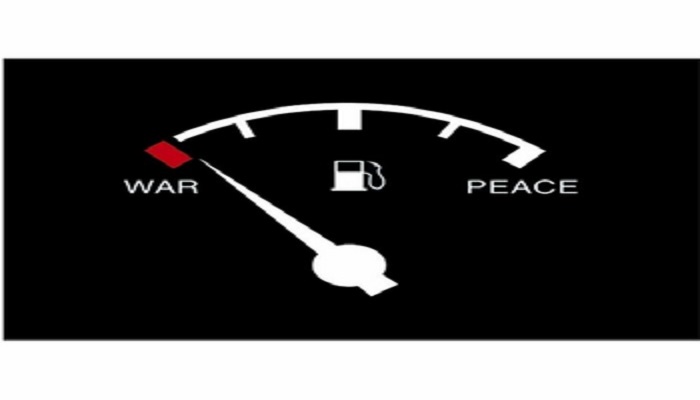
All of which makes the choices offered by the Iran lobby in regards to ongoing nuclear talks with the Iran regime all the more odd since supporters such as the National Iranian American Council have consistently framed the choices in a nuclear agreement as stark ones between war and peace. Their hyperbole clouds the real issue driving the mullahs in Iran and for them the choices are not about war and peace.

It’s really about cash and lots of it. Iran’s economy is reeling under the triple blows of corrupt mismanagement by the ruling elites, spiraling oil prices and the heavy costs associated with funding proxy wars and terror groups in Yemen, Iraq and Syria. Not to mention the billions of dollars being spent by the regime in building and maintaining a far flung network of installations and research facilities dedicated to developing nuclear weapons and the ballistic missiles necessary to carry them.

That need for billions of dollars in unfrozen assets, proceeds from oil sales and renewed capital investment is what drives the mullahs. They hunger for cash in the same way an addict craves his next drug fix. It is also why Iran’s top mullah, Ali Khamenei, has consistently demanded a complete lifting of all economic sanctions at once, including those levied by the UN Security Council, European Union and the U.S. Congress and president.

And that is the quandary facing the NIAC and other regime lobbyists; how do we sell a nuclear deal driving by a need for a financial bailout of Tehran? In classic spin control, they opt to frame the debate as a choice between war and peace.

They recognize that America is war weary and that voters have little appetite for more American blood to be shed, but the choice for Americans and by extension for Congress and the Obama administration is that the choice really is not between war and peace. It’s about whether or not to let mullahs in Iran get the cash they want and so desperately need.

Economic sanctions work. They brought the mullahs to the negotiating table and they are still the most compelling non-violent tool available to the International community. To abandon them without a solid deal that not only cuts Iranian regime’s nuclear program off at the knees, but also modifies its behavior towards proxy wars, terror groups and human rights is dumb and a mistake of historic proportions.

For when we gather to commemorate and celebrate Memorial Day weekend, we should remember that the surest path to peace is not through appeasement, but through strength; strength of conviction, strength of commitment and strength of will.

I hope your Memorial Day is a peaceful one.

By Michael Tomlinson

Filed Under: Blog Tagged With: Iran deal, Iran Talks, Khamenei, Memorial Day, NIAC, peace, Sanctions, War

Shrinking Hopes of the Iran Regime

May 12, 2015 by admin

Shrinking Man (1)The Iran regime continues to suffer reversals on several fronts as it becomes increasingly clear it has overreached in supporting proxy wars and acting as an international rogue state, alarming its neighbors, as well as members of Congress even as it seeks to close a favorable nuclear deal.

Even while the third round of nuclear talks to move the April framework forward begins shortly, Iran’s mullahs have exhibited a callous disregard for international opinion as it engages in an ever brutal human rights crackdown which was highlighted by the arrest of noted human rights lawyer and death penalty opponent Narges Mohammadi without warning or explanation.

According to report released by Iran Human Rights group, in the 18 months since the election of President Rouhani in June 2013, Iranian authorities executed more than 1,193 people. This is an average of more than two executions every day.

The number of executions in that period was 31 percent higher than the number in the 18 months before President Rouhani assumed power. The number of juvenile offenders executed in 2014 was the highest since 1990.

Other human rights and Iranian resistance groups have pegged the number of executed by the regime even higher at 1,500 men, women and children.

But the prospect of a nuclear agreement is being met with growing skepticism with unexpected signs of trouble emerging including the potential for Iran to vastly increase its cyber warfare capabilities.

In a piece in The Hill, Fred Kagan, a national security scholar at the American Enterprise Institute (AEI) and co-author of a recent report on the Iranian cyber threat, said “We’re in a lose-lose situation from that standpoint. Would you rather have them do that with more resources or fewer?”

Rep. John Ratcliffe (R-Texas), recalled a speech last year in which Iran’s top mullah Ali Khamenei reminded university students they were “cyberwar agents.”

“I do not expect Iran’s quest for power to decrease if an agreement is reached, and cyber warfare is clearly part of its strategy,” he said.

In another clear signal about the threat the Iran regime poses to the region, a summit organized by the Obama administration in Washington invited the leaders of the six Arab Gulf states involved in the military campaign in Yemen against Iran-backed Houthi rebels, but only two monarchs confirmed their attendance with Saudi Arabia’s King Hamad bin Isaa Al Khalifa conspicuously declining the invitation.

The decision amounts to a public vote of no confidence in the U.S.-led response to Iranian aggression and proxy wars in Yemen, Syria and Iraq fueled by Iranian cash, weapons and fighters.

All of which served as a backdrop to a vote in the U.S. Senate yesterday by an unanimous zhi90-0 margin calling for the Iran regime to release three Americans – Saeed Abedini, Amir Hekmati and Jason Rezaian – that it holds in its prisons and assist in locating still-missing former FBI agent Robert Levinson.

Sen. James Risch (R-Idaho), who introduced the measure, argued the four should have been released before the U.S. started negotiating a nuclear agreement with Iran.

“Iran thinks it elevates its position in the world because it does these kinds of things. It does not,” Risch said. “Certainly it shows toughness, but a barbarian type of toughness that the world is not impressed with at all.”

The contradictions in these nuclear talks were described by Jennifer Rubin writing in the Washington Post’s Right Turn blog:

“In short, not only can we not trust the Iranians to comply with whatever is in a final deal but we also cannot trust the administration to call them on it when Iran again cheats, as we know it will. In big ways and small, the administration has already signaled it will have a high tolerance for violations so as not to upset its diplomatic goals. Imagine how much more tolerant the Obama administration will be when cheating would spell the demolition of the president’s ‘legacy.’”

As the scrutiny deepens and expands on the Iran regime, more of the world’s news media are beginning to ask the kinds of hard questions the mullahs do not want to answer as they see their hopes for pulling a fast one on the world quickly shrinking.

By Michael Tomlinson

Filed Under: Blog Tagged With: Iran, Iran deal, Iran executions, Iran Human rights, Iran Rouhani, Iran Talks, Nuclear Deal, Sanctions

  • « Previous Page
  • 1
  • …
  • 6
  • 7
  • 8
  • 9
  • Next Page »

National Iranian-American Council (NIAC)

  • Bogus Memberships
  • Survey
  • Lobbying
  • Iranians for International Cooperation
  • Defamation Lawsuit
  • People’s Mojahedin
  • Trita Parsi Biography
  • Parsi/Namazi Lobbying Plan
  • Parsi Links to Namazi & Iranian Regime
  • Namazi, NIAC Ringleader
  • Collaborating with Iran’s Ambassador

Recent Posts

  • NIAC Trying to Gain Influence On U.S. Congress
  • While Iran Lobby Plays Blame Game Iran Goes Nuclear
  • Iran Lobby Jumps on Detention of Iranian Newscaster
  • Bad News for Iran Swamps Iran Lobby
  • Iran Starts Off Year by Banning Instagram

© Copyright 2026 IranLobby.net · All Rights Reserved.