Iran Lobby

Exposing the Activities of the lobbies and appeasers of the Mullah's Dictatorship ruling Iran

  • Home
  • About
  • Current Trend
  • National Iranian-American Council(NIAC)
    • Bogus Memberships
    • Survey
    • Lobbying
    • Iranians for International Cooperation
    • Defamation Lawsuit
    • People’s Mojahedin
    • Trita Parsi Biography
    • Parsi/Namazi Lobbying Plan
    • Parsi Links to Namazi& Iranian Regime
    • Namazi, NIAC Ringleader
    • Collaborating with Iran’s Ambassador
  • The Appeasers
    • Gary Sick
    • Flynt Leverett & Hillary Mann Leverett
    • Baroness Nicholson
  • Blog
  • Links
  • Media Reports

State Dept. Concedes Nuclear Deal May Have Fed Iran Regime Aggression

September 15, 2016 by admin

State Dept. Concedes Nuclear Deal May Have Fed Iran Regime Aggression

State Dept. Concedes Nuclear Deal May Have Fed Iran Regime Aggression

Ever since the U.S. and other nations entered into negotiations with the Iranian regime over a nuclear deal and completed it more than a year ago, critics including the Iranian resistance movement have been warning that a deal that did not also address the regime’s poor human rights record, oppressive government and support of terrorism would inevitably prove fruitless and only empower and embolden the mullahs in Tehran.

The Iran lobby also argued strongly that the nuclear deal would help “moderate” the regime and open the door for more liberal elements of the government to make gains. Notable regime supporters such as Trita Parsi of the National Iranian American Council and Ali Gharib pushed the idea that Iran could help stabilize the volatile Middle East once a deal had been passed.

Even sympathetic editorial pages and commentators were actively encouraged by the administration to support the deal on the basis that it would bring economic benefits to the Iranian people long beleaguered by crippling sanctions and gross corruption and mismanagement by regime officials.

Over the past year, reality has set in and the world has discovered that virtually none of those promises and assurances ever came true and in fact the litany of woe heaped on the world by the rising tide of radicalized extremism flowing from Iran since the nuclear deal has all but reshaped the landscape of the U.S., Europe, the Middle East, Africa and even touched Latin America.

The luxury of 20/20 hindsight has allowed the world to see the results of the nuclear deal and it is hard for even the most ardent member of the Iran lobby to put a positive spin that is remotely believable.

Things are so blatantly obvious that even the State Department has finally conceded that the nuclear deal may have in fact emboldened the Iranian regime to commit even more aggressive and militant acts; not diminish it.

Under questioning from Fox News reporter James Rosen, State Department spokesman Mark Toner could not rule out that the deal “has served as a cause for this more aggressive posture” by the regime.

Rosen noted, Iran had recently threatened to shoot down two US Navy surveillance planes in international airspace. This was just the latest in a growing list of provocations, including taking 10 US sailors hostage and abusing them in violation of international law.

The New York Post editorial board was flabbergasted by the admission since if the Obama administration had even an inkling of this aberrant behavior on the part of the mullahs, it made no sense to continue a policy of appeasing them, including bending over backwards to ship the regime $1.7 billion in hard cash in exchange for American hostages.

The Post said that of course, after citing incidents that “needlessly escalate tensions” Toner then said it all makes the deal even “more important, because the last thing anyone would want to see in the region is a nuclear-armed Iran.”

“Especially, we’d add, an Iran grown even more aggressive and hostile precisely because of that very deal.

“The logic here is just mind-boggling.

“Yes, Iran has been emboldened by a deal that gives it billions in cash now and an easy road to going nuclear in a few years — thanks to a president who won’t dare challenge Tehran’s behavior and risk undoing his dubious diplomatic legacy.

“Nice to see someone finally admitting as much,” the Post added.

The Iranian regime isn’t taking the potential for blowback lightly. Iran’s semi-official ISNA news agency reports that the country’s foreign minister and his international counterparts will meet this month to discuss “some differences” over the implementation of the landmark nuclear deal.

The Wednesday report says they will focus on banking sanctions, which Iran complains have not been fully lifted. The meeting will take place Sep. 22, on the sidelines of the United Nations General Assembly, where the regime’s Hassan Rouhani is scheduled to speak in what we can only assume will be a verbal tongue lashing blaming the U.S. for a wide range of problems resulting from a now failed nuclear deal.

It has been clear from statements made by regime officials such as Ali Khamenei and members of the Iran lobby that the regime has shifted focus now to condemning the U.S. for the inability of the regime to participate in U.S. currency exchanges because of sanctions put in place for its support of terrorism and not related to the original nuclear deal.

The Iranian regime also recognizes that since the deal was passed, its conflict with Saudi Arabia, especially in Syria and Yemen, is stalling its plans for regional hegemony under a radicalized Shiite banner. The influence of Saudi Arabia in standing up to Iran including its active fighting in Yemen and interception of Iranian boast trying to smuggle illicit weapons through the Persian Gulf to Houthi rebels in Yemen has been effective and annoying to the mullahs in Tehran.

This helps explain why the Iranian regime has turned its attention and that of the Iran lobby into a full-blown smear campaign aimed at Saudi Arabia, and by association the U.S.

This can be seen in an editorial appearing in the New York Times penned by Mohammad Javad Zarif, the regime’s foreign minister, blaming Wahhabism and Saudi Arabia in particular for literally every terrorist act being committed around the world and chastised the Kingdom’s large lobbying efforts.

It is a preposterous piece since it blames Saudi Arabia for exactly what the Iranian regime is doing itself with its own substantial investment in PR firms, lobbyists, paid analysts, bloggers and commentators, as well as spreading cash to a large number of so-called grassroots organizations such as the Ploughshares Fund which strongly advocated for the nuclear deal.

Danielle Pletka, senior vice president for foreign and defense policy studies at the American Enterprise Institute, took Zarif to task and ticked off the Iranian regime’s own bloody history of support for terrorism around the world in a piece appearing on AEI’s site.

“It was the Islamic Republic that created Hezbollah and sponsored the groups that kidnapped and murdered Americans through Lebanon’s long civil war,” Pletka writes. “It is Iran that props up the murderous Assad regime — you know, the guys that have repeatedly gassed their own people. It is Iran that has assassinated its enemies the world over, and it is Iran’s own Islamic Revolutionary Guard Corps (and its expeditionary Quds Force) that was responsible, during the Iraq war, for hundreds of US servicemen dying.”

The first step in recovery for any addict is to admit they have a problem. We can only hope this admission by the State Department will be the first step in confronting the Iranian regime forcefully, honestly and openly again.

By Michael Tomlinson

Filed Under: Blog, News Tagged With: #NuclearDeal, Appeasement policy, Featured, Iran, Iran deal, Iran Human rights, Iran Lobby, Iran Mullahs, National Iranian American Council, Ploughshares, Sanctions, Trita Parsi, Yemen

Parsi vs Daioleslam: Correcting the Record

August 24, 2016 by admin

Hassan Daioleslam (left) beat back and won $183,000 from Trita Parsi and NIAC

Hassan Daioleslam (left) beat back and won $183,000 from Trita Parsi and NIAC

Source: Middle East Forum

Al-Monitor’s congressional correspondent, Julian Pecquet, wrote an article in Al-Monitor about the divided Iranian community in the United States, showing the Mujahideen-e Khalq (MeK or NCRI) against the regime in Tehran on one side, and the National Iranian American Council (NIAC) with the regime.

In the course of the article, he paraphrases the head of NIAC, Trita Parsi:

Today’s critics, Parsi said, are the same Iran hawks – and their allies in the NCRI – who urged a tougher stance against Tehran at the time.

In particular, Parsi points to the fact that the legal defense of Seyyed Hassan Daioleslam, the man NIAC sued for defamation, was organized by Daniel Pipes, a hawkish critic of radical Islam. The firm chosen to represent Daioleslam? Legal giant Sidley Austin, which just so happens to have been the US lawyer for arch-Iran foe Israel since 1992. NIAC failed to prove Daioleslam was acting out of malice and lost the case, even though the veracity of his claims was not established.

This passage contains multiple errors that could have been avoided had Mr. Pecquet done what a journalist should do and check with both sides of a dispute (rather than just with NIAC). As he did not, I’ll help him by presenting a few facts:

1) I did not “organize” the defense of Daioleslam. This was done entirely independently by Brooke Goldstein, the head of the Legal Project (the Middle East Forum initiative protecting the free discussion of Islam and related topics) at the time. I only learned about Parsi vs Daioleslam and Sidley Austin’s willingness to defend Mr. Daioleslam after she had arranged it.

2) Parsi states that Sidley Austin “just so happens to have been the US lawyer” for Israel since 1992. I looked into this and I see no evidence that Sidley Austin represents the Government of Israel, let alone since 1992. I challenge him to document this. As a large international law firm, Sidley Austin has “represented numerous Israeli clients in connection with transactional activity, as well as litigation, throughout the U.S. since the late 1980s,” but that’s not what Parsi said.

3) In characterizing Sidley Austin, Parsi ignores two important facts: that Sidley Austin was the law firm where both Michelle and Barack Obama started their legal careers; and FEC records show the firm’s lawyers collectively to be one of the very largest donors to the Obama campaigns of both 2008 and 2012.

4) Once we’re talking about who hired whom, let’s note that NIAC hired the PR firm Brown Lloyd James to help its case against Daioleslam and BLJ just happened also to work on behalf of Middle East dictators like Bashar al-Assad of Syria and Muammar al-Qaddafi of Libya.

5) Yes, NIAC lost the case concerning Daioleslam’s malice, but that’s not the whole story. After dismissing the lawsuit against Daioleslam, the court issued a second ruling in which it sanctioned NIAC and Trita Parsi for discovery abuses (including false declarations to the court) and ordered them to pay $183,000 to Daioleslam for his legal expenses.

6) The veracity of Daioleslam’s claims were indeed “established,” as the court obliged NIAC to release internal documents revealing the organization’s extensive ties to Tehran, including a lobby effort coordinated with Iran’s ambassador to the United Nations and collaboration with two individuals named in a Congressional report as agents of Iranian intelligence.

Daniel Pipes (DanielPipes.org, @DanielPipes) is president of the Middle East Forum.

by Daniel Pipes • Aug 23, 2016
Cross-posted from Danielpipes.org

Filed Under: Media Reports, National Iranian-American Council Tagged With: Featured, Iran Lobby, National Iranian American Council, NIAC, NIAC Action, Trita Parsi

Who is Really in Charge of the Iran Regime?

July 29, 2016 by admin

Who is Really in Charge of the Iran Regime?

Who is Really in Charge of the Iran Regime?

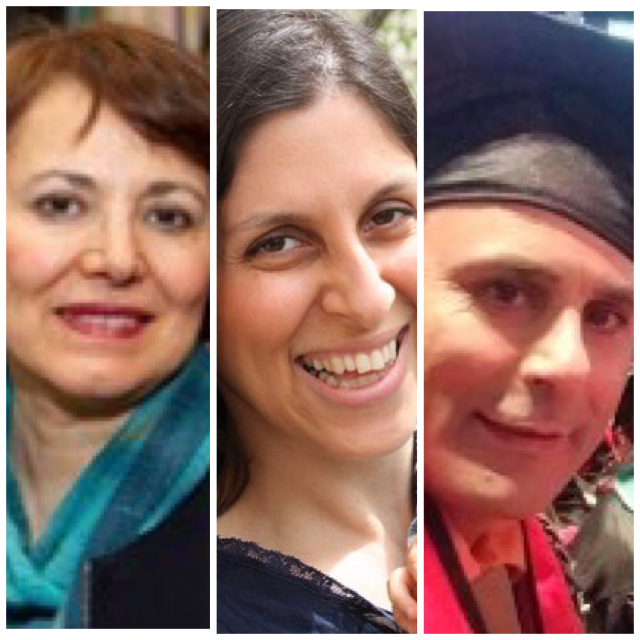
The Iranian regime has been busy snatching up citizens of other countries without charge, trial or contact with the outside world. They have been U.S., British, French and Canadian citizens; dual national Iranians. They have been professors, students and aid workers.

None were terrorists, criminals or even political. They all had the misfortune of being in Iran and possessing a passport of a foreign country. It seems that alone was sufficient for the Revolutionary Guards to pick them up, put them in prison and walk away.

The New York Post editorial board blasted the practice and blamed earlier acts of appeasement for sowing the seeds for this behavior.

“Iran is re-stocking its larder of American and other Western hostages, clearly convinced the Obama administration won’t dare make it an issue. Tehran this week arrested yet another US citizen and plans to place him on trial — though on what charges, it won’t say,” the Post said.

“The State Department says it’s ‘looking into’ the latest arrest, which is pretty much all it can do. Iran doesn’t recognize dual citizenship, so won’t even allow consular visits to those being held.

“Some analysts suggest the Revolutionary Guard is insisting on the arrests in order to deter Western businessmen from visiting Iran with investment cash. Funny: Getting such investment was supposedly Tehran’s major motive for accepting the deal’s supposedly tough restrictions on its nuclear-weapons program in the first place,” it added.

The arrests do raise an interesting question: Who is calling the shots in the Iranian regime?

The Iran lobby has long maintained that a rift and power struggle is going on within the regime between the forces of moderates versus hardliners. Loyalists such as Trita Parsi of the National Iranian American Council have used that talking point incessantly in pushing for approval of the nuclear deal with Iran last year.

They promised a nuclear deal would usher in a period of moderation and empower these so-called moderates in upcoming elections.

The opposite has happened as the region has literally gone up in flames with wars now raging from Syria to Yemen and terrorist attacks striking the U.S. and Europe with almost daily frequency.

In Iran, parliamentary elections were rigged with the removal of virtually all perceived dissenters or moderates removed from the ballot even before voting began. The only group of “moderates” elected was a small cadre in Tehran only and even they have turned out to be loyal to the regime and ruling mullahs as evidenced by elections to return the hardest core extremists to leadership positions in the parliament and supreme council.

Many media outlets have characterized the hostage taking as evidence of the internal power struggle within the regime.

The Christian Science Monitor described by saying “the targets of the most radical elements of Iran’s competing power blocs are increasingly Iranian-Americans and other dual nationals visiting Iran to see family or pursue academic interests. They are being ensnared in the upheaval and redistribution of power in the wake of last year’s nuclear deal, experts in United States-Iran relations say.”

“Iranian hardliners opposed to President Hassan Rouhani and his diplomatic opening to the US and the West are widely assumed to be behind the detentions – and would not appear to be easily persuaded to permit the detainees’ release. But at the same time, some Iran experts say they see a window of opportunity for some kind of prisoner deal before President Obama leaves office,” it added.

The fact that speculation centers on the Iranian regime snatching up Americans and Brits for the purpose of another round of prisoner swaps in exchange for more economic concessions says volumes about the intentions about the regime, but it says even more about who is calling the shots in the leadership of the regime.

The time-honored tradition of hostage taking by the mullahs in Tehran was even conceded by Iran lobbyists as being unlikely to die off.

“But the prospects for freeing Iran’s imprisoned dual nationals before Mr. Obama leaves office – not to mention ending the practice altogether – are not bright,” says Reza Marashi of the NIAC.

“You have to put the likelihood at 50-50 at best,” he says. “The ability to align timing and interests, that’s completely up in the air.”

The best the Iran lobby can offer these poor, innocent victims of the regime are 50-50 odds they will be joined by more hostages.

All the evidence points to the fact that Hassan Rouhani has never been a moderate and is rock-solid in step with Ali Khamenei and his fellow mullahs on these actions. Has Rouhani called for these prisoners’ release? Has he condemned them? Has he even so much as posted a tweet describing any regret over these actions?

The answer is a resounding no.

The hardline nature of the regime can be seen in the everyday cruelties and injustices visited on ordinary Iranians. Beyond the more gruesome aspects of the regime’s rule, including public executions, amputations and beatings of women on the street, everyday acts that seem perfectly normal to any Western citizen are viewed as subversive and dangerous.

A group of women were reportedly arrested for riding bicycles in Iran and made to sign pledges not to repeat the “violation”.

They were planning to participate in a cycling event in the north-western city of Marivan when police told them a new government directive had barred women riding bicycles in public.

The opposition National Council of Resistance of Iran said officers ordered them to sign written pledges vowing not to repeat the “unlawful violation” and took several women who protested into custody, according to the Independent.

In another incident, up to 150 people were detained by Iran’s morality police at a mixed-gender party in Tehran. In the sweltering heat of summer, as people spend more time outside, the authorities tighten their grip on social norms, cracking down on activities deemed un-Islamic.

Such restrictions have become a regular feature of Iranian life since the current theocracy has come to power after the 1979 revolution, as members of the morality police appear on the streets, or are deployed in vans at public places, to tackle women defying the compulsory hijab, men with non-approved hairstyles, or males and females partying together, according to the Media outlets.

But even with all these acts of suppressing free expression, defiance among the Iranian people still finds a way to surface as many men have posted photos of themselves wearing the hijab to social media, in solidarity with women in the country, who are forced to cover their heads in public, the Independent reported.

Many of the photos show a man wearing the hijab next to his wife or a female relative whose hair is uncovered.

It isn’t much in the way of defying the regime, but in a nation where simply holding a U.S. passport and being an Iranian can land you in prison, even these small acts can grow to become important changes to the regime.

By Laura Carnahan

Filed Under: Blog, News Tagged With: hassan rouhani, Iran, Iran deal, Iran Human rights, Iran Lobby, Trita Parsi

Iran Lobby Working Hard to Preserve Flawed Nuclear Deal

July 19, 2016 by admin

Iran Lobby Working Hard to Preserve Flawed Nuclear Deal

Iran Lobby Working Hard to Preserve Flawed Nuclear Deal

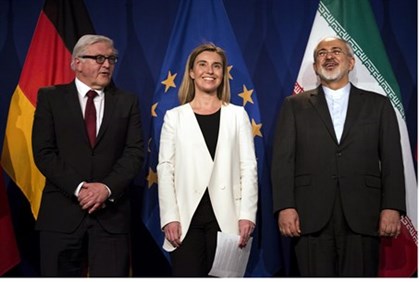
It has been one year since the Iran nuclear deal was agreed approved and freed the Iranian regime from a host of economic sanctions, as well as gave itself truckloads of political and diplomatic capital it has spread around the world in support of three proxy wars it is now waging.

By any objective standard, the Iranian nuclear deal has been a failure because it never was tied to modifying the behavior of the mullahs in Tehran. If the mullahs suffer no consequences for actions to support terror, commit cruel human rights violations and continue to build the infrastructure necessary to deliver a nuclear warhead to a target, then they are going to continue with that abhorrent behavior.

Nowhere was that point made more clear than in revelations by the Associated Press that in a secret side deal with the Iranian regime granted by the Obama administration, key restrictions on Iran’s nuclear program will start to ease years before the publicly-stated 15 year accord’s expiration, thus allowing the regime to pursue full development of a nuclear bomb well before the end of the pact.

The confidential document is the only text linked to last year’s deal between Iran and six foreign powers that hasn’t been made public, although U.S. officials say members of Congress who expressed interest were briefed on its substance. It was given to the AP by a diplomat whose work has focused on Iran’s nuclear program for more than a decade, and its authenticity was confirmed by another diplomat who possesses the same document.

although some of the constraints extend for 15 years, documents in the public domain are short on details of what happens with Iran’s most proliferation-prone nuclear activity — its uranium enrichment — beyond the first 10 years of the agreement.

The document obtained by the AP fills in the gap. It says that as of January 2027 — 11 years after the deal was implemented — Iran will start replacing its mainstay centrifuges with thousands of advanced machines.

Continue reading the main story

Centrifuges churn out uranium to levels that can range from use as reactor fuel and for medical and research purposes to much higher levels for the core of a nuclear warhead. From year 11 to 13, says the document, Iran will install centrifuges up to five times as efficient as the 5,060 machines it is now restricted to using.

Those new models will number less than those being used now, ranging between 2,500 and 3,500, depending on their efficiency, according to the document. But because they are more effective, they will allow Iran to enrich at more than twice the rate it is doing now, according to the New York Times.

The blockbuster revelations mean that Iran can massively expand its uranium enrichment capacity to produce several nuclear warheads within a time frame as little as 10 years, which contradicts virtually every public reassurance uttered by Iran lobby proponents such as the National Iranian American Council and Ploughshares Fund.

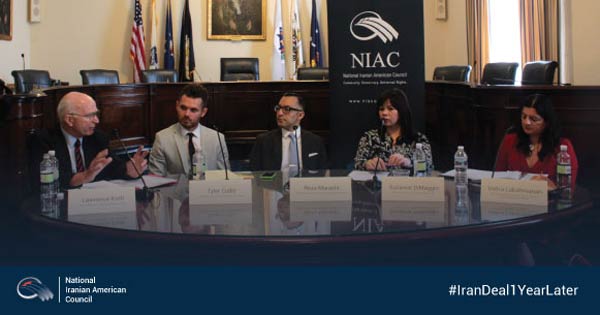
The NIAC’s deliberate misleading of the public continued during a briefing on Capitol Hill in which the NIAC was represented by noted regime apologists Reza Marashi and Tyler Cullis. Also attending were Suzanne DiMaggio of New America and Lawrence Korb of the Center for American Progress.

DiMaggio was especially adept at turning verbal gymnastics in trying to pound home the idea that the nuclear agreement should not be tied to other issues such as Iran’s consistent support for the Assad regime as it busily wipes out virtually the entire civilian population of Syria.

It is funny DiMaggio also mentioned the heightened state of crisis in the Strait of Hormuz and thought it would be a good idea for the U.S. and the regime to negotiate an agreement government interactions at sea. That would be nice since Iran has been busy continually threatening U.S. and foreign vessels, capturing and parading U.S. sailors and threatening to blow up commercial shipping repeatedly, as well as use its own vessels to smuggle illicit weapons and arms to Houthi rebels in Yemen, threatening Saudi Arabia and opening a new war front.

Yeah, that would be a nice idea. So would hitting the lottery three times in a row, but you shouldn’t count on it.

Most remarkable of all was the complete absence of any discussions about human rights in the presentations. Only during questioning did Marashi mention human rights in the context of having a dialogue, which is cold comfort to the thousands of Iranians and dual-nationality citizens currently being held in Evin prison.

The fact that the Iran lobby never discusses human rights reveals the Achilles heel of its position in trying to defend the nuclear deal. Regime apologists such as Trita Parsi of NIAC understand the threat that discussing human rights poses to the nuclear deal since the topic is deadly radioactive to them. They have no defense for the barbaric actions of the regime and no deflection of the human misery being suffered by Iranians at the hands of their own leaders.

In a lengthy piece in Politico, Indira A.R. Lakshmanan, a Boston Globe columnist, wrote extensively about efforts to derail the nuclear deal, taking special effort to go after Mark Dubowitz of the Foundation for Defense of Democracies, and staunch opponent of the nuclear deal.

She also ironically only mentions human rights once in her piece and only in terms of what Dubowitz is focusing on in working against the flawed deal. She quotes Parsi in his efforts to portray the potential consequences of the nuclear deal failing and blaming it on the U.S. exclusively, even though the Iranian regime has moved aggressively to exceed the limits of the agreement with a huge increase in testing of ballistic missiles outlawed by United Nations sanctions.

Iran is barred from conducting ballistic missile tests for eight years under UN Resolution 2231, which went effect July 20, 2015, days after the nuclear accord was signed.

Iran is “called upon not to undertake any activity related to ballistic missiles designed to be capable of delivering nuclear weapons, including launches using such ballistic missile technology,” according to the text of the resolution.

Yet, only two days before the anniversary of the agreement, Iran conducted its fourth missile test since the deal was signed in clear violation of the sanction and has boldly proclaimed it would accelerate its missile program; choosing the same path that pariah state North Korea has taken in missile development.

With the looming end of the Obama administration and the very real possibility of a Trump or Clinton administration seeking to redo the deal to address these concerns, the Iran lobby is working feverishly to buy the mullahs more time to accelerate its nuclear infrastructure work before the start of 2017.

By Michael Tomlinson

Filed Under: Blog, News Tagged With: #NuclearDeal, Featured, Indira A.R. Lakshmanan, Iran, Iran Human rights, Iran Lobby, National Iranian American Council, NIAC, NIAC Action, Reza Marashi, Suzanne DiMaggi, Trita Parsi, Tyler Cullis

July 14th Proves Infamous in More Ways Than One

July 16, 2016 by admin

July 14th Proves Infamous in More Ways Than One

July 14th Proves Infamous in More Ways Than One

July 14 is traditionally celebrated throughout France as Bastille Day, the national day of independence for the French republic. The nation marks it with parades, family outings, fireworks and all the trappings of a national holiday; not dissimilar to the 4th of July in the U.S.

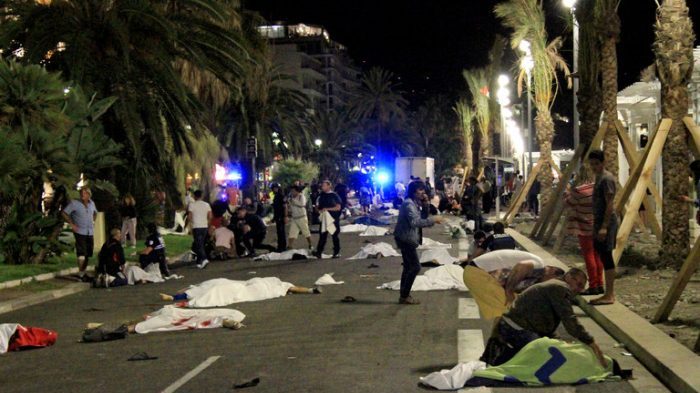
July 14, 2016 also marks the one year point since the Iran nuclear deal was reached by the P5+1 group of nations. Both milestones were joined by a more dubious one last night in which a purported terrorist attack struck the tony waterfront promenade of the French seaside resort of Nice where a man drive a large panel truck down a street packed with thousands of revelers watching a fireworks display.

As the large white truck veered widely left and right—appearing to aim at hapless bystanders—scores of people were flung like rag dolls or dragged and crushed underneath. Initial reports by French officials cited 80 killed, including two Americans, and another 20 critically injured with many more wounded.

French President Francois Hollande declared it a terrorist attack after a cache of grenades and weapons were also found in the struck after the driver engaged with police in a firefight before being killed.

This attack follows the Charlie Hebdo killings and the massive Paris attacks, bringing the specter of terrorism to the people of France three times now in only 18 months. The sheer brutality of this attack was captured throughout social media as people recorded the carnage, which was celebrated and welcomed on the social media profiles of Islamic extremists and their sympathizers.

Nice now joins the long list of cities victimized by the rapid spread of Islamic extremism including Boston, Sydney, Ottawa, Brussels, San Bernardino, Orlando, Bangladesh and Istanbul.

Those cities now join the wars raging in Syria, Iraq and Afghanistan. The reach of Islamic terror now cuts across all religions, continents, ethnicities and governments. It respects no boundaries; murdering Muslims next to Christians, Hindus and Jews.

It is a world much different than the one promised by supporters of the Iran nuclear deal. Iran lobby participants such as Trita Parsi of the National Iranian American Council pushed a pile of lies, the foremost amongst them was the promise of a newly-empowered moderate Iran to help stabilize the region and aid in the fight against Islamic extremists and terrorism.

It is noteworthy though that the one year anniversary statement issued by Parsi neglected mention anything about terrorism and its global impact.

“There are a whole host of opportunities that can strengthen U.S.-Iran diplomatic channels and insulate the deal from political opposition – including via efforts to fix sanctions relief complications; pursue sustainable diplomatic solutions in Syria and Yemen; enabling enhanced U.S.-Iran academic exchanges; establishing a permanent diplomatic channel; and by securing the freedom of imprisoned dual nationals like Siamak and Baquer Namazi,” Parsi said.

To say the opposite has happened would be an understatement of monumental proportions. Iran’s intervention in Syria to save the Assad regime from falling set the stage for the rise of ISIS and the expansion of a war that now includes Iraq and Yemen and helped build a terror network that stretches from Lebanon to Nigeria to Libya to Bangladesh.

It is also interesting that Parsi has mentioned the plight of father and son team Siamak and Baquer Namazi; since Siamak is a close personal friend of Parsi and helped found the basis of the Iran lobby and NIAC, without mentioning the despicable practice of the Iran regime to illegal arrest and hold dual nationals such as several Canadians and British citizens now.

The greatest failing of the nuclear deal was the complete separation of holding Iran’s conduct accountable in a whole host of related issues such as missile testing, human rights violations and the sponsorship of terrorism. These issues have fed into the Iranian regime policy of provocation and export of its extremist Islamic theology which has helped set the template for much of the global terrorism we are now experiencing.

Iran does not actively combat ISIS in Syria or anywhere else. Its forces have largely targeted Western-backed rebel groups in Syria, while its Shiite militias in Iraq have greatly aided ISIS by driving Sunni tribes to join its ranks as the result of sectarian conflict and tribal score settling.

Let’s also not forget that the nuclear deal fails at what it is purported to do in the first place which is prevent Iran from getting a nuclear weapon.

In the year since its approval, international monitoring agencies have detected uranium particles at Iran’s Parchin facility even after it was thoroughly scrubbed clean by Iran. Its nuclear infrastructure such as centrifuges remain intact in storage and ready to be reactivated, while the regime continues testing new, improved nuclear-capable ballistic missiles.

Rep. Mike Pompeo (R-KS) put it succinctly in a Fox News editorial saying that “one year on, the region is far less stable as well.  Iran increasingly controls Baghdad, Damascus, Sanaa, and Beirut.  Terror attacks have increased.  While the deal itself is problematic, also devastating is the fact that America is no longer viewed as a reliable partner to our traditional regional allies.”

Robert Spencer, director of Jihad Watch, writing for Breitbart, made the case that Iran is an even greater threat that ISIS noting that Iran already possesses a nuclear program which ISIS does not that be easily restarted.

While ISIS has significant reach especially in its ability to spread extremism among locals through social media, Iranian regime possesses and funds a global network of terror groups it supplies with its own intelligence, fighters, weapons and cash; something that ISIS only aspires to build.

Lastly, while ISIS has called upon its followers to strike at foreigners, the Iran regime has pursued that policy as a military objective for decades from orchestrating the attack on the U.S. Marine barracks in Lebanon in 1983 to the bombing of the Khobar Towers in Saudi Arabia to the killing of U.S. service personnel in Iraq. Iran has been at the center of instituting policies directly leading to the death of Americans.

Ultimately, the attacks in Nice is just another bloody reminder of how Iran’s full-fledged support for Islamic terrorism has set the stage for even more bloodshed and death unless the West acts to support regime change through the Iranian people.

By Michael Tomlinson

Filed Under: News Tagged With: Featured, Iran Lobby, Iran Terrorism, IRGC, Khamenei, Trita Parsi

Behind the Deals and Photos Lies a Troubled Iranian Economy

June 28, 2016 by admin

Behind the Deals and Photos Lies a Troubled Iranian Economy

Behind the Deals and Photos Lies a Troubled Iranian Economy

Ever since the Iranian nuclear deal was agreed to last year, the Iranian regime has been busy staging elaborate photo opportunities announcing business deals and hosting trade delegations from a wide range of European, Asian and African nations looking to re-enter the Iranian marketplace.

For the regime, it has been a vital source of propaganda to show the world that Iran was indeed flourishing under the nuclear deal, which helped to reinforce the false messages and perception that the deal was helping to bring economic benefits to the Iranian people.

Of course, many trade delegations were faced with the inconvenient truth of the regime continuing its bloody policies of executing large numbers of Iranians during these visits, including juveniles that were publicly hanged during visits by European Union officials.

The reality though is much more dismal than the mullahs would like the world to know, although news media reports have begun to focus more closely and with greater scrutiny on the economic woes and mismanagement besetting Iran.

Chief among the many benefits the Iran lobby crowed about was the ability for Iranian oil to enter the open market with the lifting of economic sanctions. Regime advocates such as Trita Parsi of the National Iranian American Council contended that lifting these sanctions would bring Iran into the global marketplace, thereby moderating its behavior and bringing economic relief to hard-pressed Iranians.

The opposite has happened instead.

Bloomberg’s Julian Lee discussed the slide in Iran’s oil fortunes, noting that five months after sanctions on Iran were eased, the rapid rise in the country’s oil production and exports appears to be ending as quickly as it began.

Iran’s observed crude oil exports, which exceeded 2 million barrels a day in both April and May, slipped by almost 20 percent in the first three weeks of June, said Lee.

One of the country’s primary aims after restrictions on oil sales were eased was to regain its markets in Europe. Before the latest sanctions were imposed in 2012, Iran was exporting about 600,000 barrels a day of crude to countries in the European Union, with Italy, Spain and Greece its biggest buyers.

But more worrying for Iran is the difficulty that it seems to have had in persuading its biggest pre-sanctions buyers to resume purchases. Italy, previously Iran’s best customer in Europe, loaded its first cargo in mid-June, five months after the restrictions were lifted. Purchases by Spain and Greece are also well below pre-sanctions levels.

Outside Europe, Iran has also struggled to regain customers it lost to sanctions. A delivery to the Tanzanian port of Dar Es Salaam in March remains its only post-sanctions sale to Africa, while purchases by U.S. companies are still banned.

The steep decline in oil sales spells trouble for the regime, which counted on the influx of cash to help bolster a treasury wrung dry from the financing of three separate proxy wars in Syria, Yemen and Iraq.

Adding to the bad financial news for Hassan Rouhani and the mullahs in Tehran is word that the ballyhooed announcement of sales of Airbus commercial airliners to Iran was also in trouble with Iran thinking of cancelling some of the planes in the order, including the flagship mammoth A380 super jumbo jets.

Part of the difficulty, which the recently announced Boeing deal is facing, is the restrictions in place keeping most banks from financing the deals because of sanctions still in place against Iran for human rights violations and sponsorship of terrorism.

It certainly did not help the regime to have an international watchdog agency vote to keep Iran on its blacklist of nations still supporting money laundering and terrorism.

The economic difficulties Iran is experiencing underscore the inherent weakness of the religious leadership of the regime, especially in running an efficient economy. Virtually all of Iran’s major industries are run by or controlled by shell companies under the thumb of the Revolutionary Guard Corps and the various power factions of mullahs all enriching themselves at the expense of the Iranian people.

The level of corruption has erupted into protests and demonstrations that have rocked the regime for the better part of three years and have ranged from schoolteachers protesting low wages to small business owners demanding reforms to halt graft to mass demonstrations over sky high salaries paid to regime executives and state-controlled businesses.

In a sign of the growing desperation being felt by the regime, deputy chief of staff of the armed forces Brig. Gen. Masoud Jazayeri was the first Iranian official to offer a comment on the Brexit results in trying to tie the “Leave” to a rejection of American policies.

“The desire by the people of England to leave the EU is in reality a ‘No’ by the majority of the people for the continuation of the compliance of the British government with respect the imposition of America’s will on this country,” Jazayeri said.

It’s a ridiculous comment since virtually every exit poll showed Britons were alarmed at the sharp rise in Islamic extremist attacks and the mass influx of refugees fleeing the Syrian conflict aggravated by Iran’s support of the Assad regime there.

More importantly Brexit poses a significant threat to the mullahs since the United Kingdom is now free to pursue a foreign policy independent of the European Union which has sought to normalize relations with Iran since the nuclear deal.

What doesn’t help improve British perceptions of the Iranian regime is the recent illegal arrest of a British woman on charges she fomented insurrection by helping design a charity website years ago.

The reality is that the chaos created by Iranian regime in Syria is now coming back to haunt the mullahs and underscore how incompetent they are not only in managing the economy, but in foreign affairs.

By Michael Tomlinson

Filed Under: Blog, News Tagged With: Featured, Iran, Iran deal, Iran Lobby, Iran oil market, Trita Parsi

Iran Lobby Tries to Pivot to Immigration to Hide Abuses

June 27, 2016 by admin


Iran Lobby Tries to Pivot to Immigration to Hide Abuses

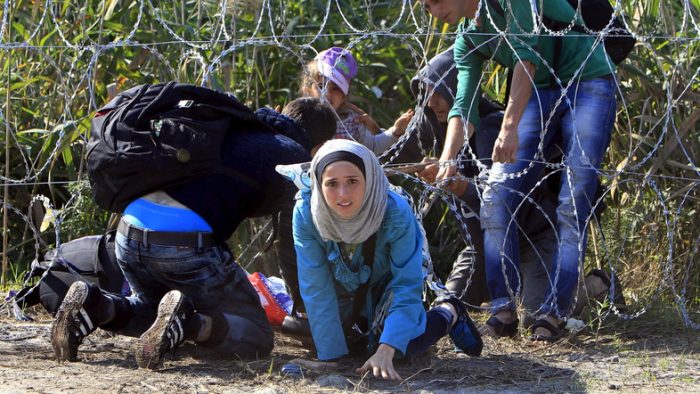
A Syrian migrant family enters Hungary at the border with Serbia near Roszke, Hungary August 28, 2015. REUTERS/Bernadett Szabo

Political events in Europe and the U.S. have pushed immigration issues to the forefront of talk shows and government agendas, but many of the most pressing immigration have their roots not in an escape from economic poverty, but rather the specter of terrorism and war, especially as a result of the Iranian regime’s involvement in the three largest wars going on right now in Syria, Iraq and Yemen.

It was not an accident that in the wake of World Refugee Day, there was broad acknowledgement that the source of most of the world’s refugee problem comes from the instability sweeping across the Middle East.

While the political discussion of immigration in the U.S. presidential election and the controversial Brexit vote has revolved around the impact mass immigration is posing to countries, the real underlying discussion is only now starting to focus on the roots causes of these mass movements of people fleeing violence in their own lands.

Also, in the wake of numerous terrorist attacks ranging from San Bernardino, California to Sydney, Australia and Paris, France to Ottawa, Canada, the infectious and noxious influence of spreading Islamic extremism is being felt; much of it flowing from the mullahs in Tehran and through their agents in the Revolutionary Guards and Quds Forces who organize, recruit, train, arm and fund extremists.

Predictably though, the Iran lobby has sought to capitalize on the immigration debate by focusing the discussion not on the root causes of these mass displacements. It’s a necessary gambit and typical of the Iran lobby to deflect attention from the real core issue of bloody sectarian conflict fueled by the mullahs.

The National Iranian American Council took the lead with several editorials and statements it has issued attempting to blame everyone else but the Iranian regime for the misery being inflicted on the millions of refugees fleeing these conflict zones.

Sarah Sakha offered up the idea on NIAC’s website that Americans opposed any bans on Muslims and refugees based on a Brookings Institute poll, but failed to address the core concern these same Americans have which is how to stop the spread of Islamic-inspired terrorism washing across the U.S. through Boston, Fort Hood, Chattanooga, San Bernardino and now Orlando.

She also fails to discuss the increase in terrorism and the harshness of the treatment of men, women and children in Iran by the regime is disingenuous and ignores the root causes of these problems. Likewise it lays bare how transparent the Iran lobby is in defending the regime from any criticism of its policies.

Similarly, the NIAC gave space to cover a recent meeting by the Atlantic Council and Iran Project with national security staffer Ben Rhodes who was famously revealed to have crafted the “echo chamber” supporting the Iran nuclear deal on a foundation of lies. The symposium was designed to defend the faltering nuclear deal from blistering criticism that it has failed to moderate Iran and instead has led to the great instability and bloodshed we see now.

Rhodes even used the examples of the openings made to Cuba and Burma as templates for why Iran should be treated in of those countries agreed to renounce terrorism h of those countries agreed to renounce terrorism and in Burma’s case actually held free elections that installed long-time dissidents in control of the government for the first time.

The Iran regime has done none of those things.

The NIAC even took on the recently unveiled the House Republican’s policy paper listing its priorities in the upcoming election including the re-imposition of sanctions on Iran for continued violations of human rights and sponsorship of terrorism, as well as its deliberate efforts to violate the nuclear agreement with ballistic missile tests and the clandestine sanitizing of sites of any evidence of prior testing of nuclear materials.

Ironically, while the NIAC attacks the idea that imposing new sanctions for continued human rights violations, it never denies that severe human rights violations are taking place in Iran. Instead, it attributes the suffering and misery being inflicted on the Iranian people with mass arrests and executions not to the actions of the mullahs, but rather the lack of U.S. currency flowing to the regime as a result of the nuclear deal.

It is the height of stupidity to equate torture in Iran to a lack of cash.

That seems to be the mantra being repeated most often by the Iran lobby these days as it pushes to get cash into the hands of the regime as quickly as possible, but not for the benefit of ordinary Iranians it seems as the regime is being rocked by protests over disclosures that high-ranking executives at state-owned businesses are being paid obscene salaries while Iranians are being exhorted by the mullahs to continue a “resistance economy” of deprivation.

The Daily Beast also disclosed that a former Clinton administration official has been on the payroll of Boeing as it strived to close a deal with Iran to sell $25 billion worth of commercial airliners.

Thomas Pickering, one of the country’s most famous diplomats and a former ambassador to Israel and the United Nations, has been quietly taking money from Boeing while vocally supporting the Iran nuclear deal—testifying before Congress, writing letters to high-level officials, and penning op-eds for outlets like The Washington Post.

Pickering confirmed via email—from his Boeing corporate email address—that he was on staff at the company from 2001 to 2006 and has been a paid consultant for them ever since.

Neil Gordon—an investigator for the Project on Government Oversight, a Washington watchdog organization—said Pickering should have been upfront about his work for Boeing when testifying before Congress on the Iran nuclear deal and making the case for it in op-eds for major publications.

“In Pickering’s case, he has a direct connection to Boeing, which I think should be disclosed,” he said.

Over the past few years, Pickering has been one of the most vocal and visible advocates for the nuclear agreement with Iran. On June 19, 2014, he testified before the House Armed Services Committee about his views on the need for a comprehensive agreement with Iran. He did not mention Boeing in the disclosure form he provided to the committee prior to his testimony. Boeing also isn’t mentioned in his bio that the House kept on file.

The lack of disclosure of his work in support of the nuclear deal and his participation in Rhodes’ “echo chamber” is disturbing and shows the complicated and extraordinary efforts made by the Iran lobby to secure the nuclear deal for Iran.

Most disturbing, his bio on the NIAC website where he serves as an advisory board member, notes that he worked at Boeing until 2006 but does not note that he still consults for the company. Same for his bio at the anti-nuclear weapon group Global Zero. His bio at The Iran Project doesn’t mention Boeing at all.

The lack of disclosure and his active work with leading members of the Iran lobby while also collecting fees from Boeing which the Obama administration is doing all it can to facilitate business with the regime raises alarm bells everywhere of conflicts of interest and outright deception.

Trita Parsi of the NIAC also using the same scape goat, blamed the suffering of Iranians on the lack of business deals with Iran following the nuclear deal.

“If the Iranians end up de facto not getting sanctions relief, the deal will collapse,” he said. “That’s right now the biggest threat to the sustainability of the deal.”

He is right, but the threat isn’t coming from foreign companies, but rather the mullahs themselves as they pursue policies turning most of Europe into a massive refugee center.

By Michael Tomblinson

Filed Under: Blog, Current Trend, News Tagged With: #NuclearDeal, Ben Rhodes, Featured, Iran, Iran deal, Iran Human rights, Iran Lobby, Iran sanctions, National Iranian American Council, NIAC, Sarah Sakha, Thomas Pickering, Trita Parsi

Rush to do Business with Iranian Regime Carries High Cost

June 16, 2016 by admin

Rush to do Business with Iranian Regime Carries High Cost

Rush to do Business with Iranian Regime Carries High Cost

Since the Iranian nuclear accord was brokered last April, the Iran lobby has been breathlessly pushing the idea of the doors to Iran being thrown open to commerce empowering the moderates in the government to a position of strength.

Hassan Rouhani quickly embarked on a European tour to enhance that perception and announce several high profile deals with European companies in a carefully orchestrated show of economic success and many companies have followed that message with dreams of riches to be made in the Iranian marketplace.

The reality has not lived up to the hype though. Even though the nuclear deal lifted sanctions related to Iran’s nuclear program, it did not touch sanctions imposed on Iran related to violations of human rights or its sponsorship and support for terrorism, including groups such as Hezbollah.

The disconnect has thrown the proverbial monkey wrench into the regime’s plans to quickly profit off the nuclear deal. In their haste to secure a nuclear agreement, the mullahs in Tehran pressed for a deal that was not linked to any issue other than the nuclear infrastructure itself. The regime did not want to face scrutiny over its human rights record and the growth of terrorism it sponsored.

The Iran lobby, including leading advocates such as the National Iranian American Council and Ploughshares Fund, was happy to oblige in pushing that narrative. The inconvenient truth for them though was that even though they got a nuclear deal, Iran was still restricted from accessing U.S. currency exchanges which crippled its ability to conduct international business since virtually all European, U.S. and Asian financial institutions resisted handling transactions for the regime out of fear of being sanctioned later for enabling terrorism.

The issue has become such an obstacle, the regime has taken the unusual step of attempting to set an offshore bank on a small island Iran controls in the Persian Gulf in an effort to skate around the financial sanctions.

This is why most of the business deals announced by the regime with foreign companies involve investments in the regime, but sales outside of it and even then most companies are approaching this process cautiously since Iran is a notoriously corrupt government and economy, ranking in the top ten in most transparency indexes.

The mullahs realize their perceived windfall could evaporate just as quickly as the sharp rise in Islamic extremist attacks in Paris, Orlando, San Bernardino and other cities around the world have made world capitals skittish about appearing to funnel cash to countries that support terrorism. Add to that the backdrop of a highly contentious U.S. presidential election in which both leading candidates in Hillary Clinton and Donald Trump have talked tough about radical Islam and its spread from Iran, then the outlook for the mullahs in Tehran appears even bleaker.

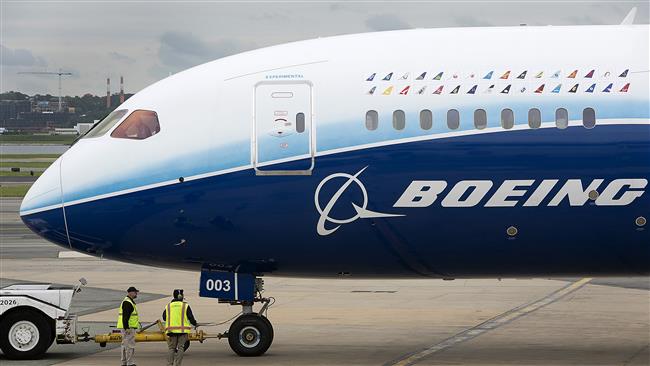
All of which makes the rush to announce a preliminary deal by the Iranian regime to purchase passenger aircraft from U.S. manufacturer Boeing all the more perplexing. Could it be the Iranian regime is worried Congress would intervene to block the sale in the wake of the Orlando mass killings and needed to jump the gun so to speak?

Details of the agreement were left vague, but Western and Middle East sources said that once approved, it would involve flag carrier Iranair acquiring more than 100 Boeing jets, both directly from Boeing and from leasing companies, according to Reuters.

“In coming days details of the deal with this company will be announced,” Roads and Urban Development Minister Abbas Akhoundi said, according to the semi-official Mehr news agency.

The sources said the agreement was so far only a broad outline of what a formal deal would look like once Boeing has the necessary U.S. government approvals to sell planes to Iran, which has been banned from buying U.S. jets for almost 40 years.

The concern over the sale to Iran not includes potential technology transfers to the regime, but the potential for the regime to use these commercial aircraft for military or illicit purposes as in previous cases in which state airliners have been used to ferry troops and weapons to Syria as part of the civil war effort there.

Rep. Peter Roskam (R., Ill.), who has criticized Boeing and others for pursuing business with Iran, told the Washington Free Beacon that Congress could take action to stop the sale.

“We’ve heard reports of a pending deal between an iconic American company and terrorism’s central bank,” Roskam said. “To say we have national security concerns would be an understatement. Boeing and the Islamic Republic should know the U.S. Congress will not look favorably upon any deal that jeopardizes the safety and security of the American people.”

Several GOP lawmakers recently summoned the heads of Boeing and French air manufacturer Airbus for a meeting about their dealings with Iran.

Three House members from Washington state, a major base for Boeing operations, wrote to the company in May to request a meeting.

“We write to express our serious concerns over the sale of airplanes, parts, and other aircraft-related services to the Islamic Republic of Iran,” wrote Republican Reps. Cathy McMorris Rodgers, the GOP conference chair, Dave Reichert, chair of the House committee that regulates trade, and Dan Newhouse.

Predictably, Trita Parsi of the NIAC hailed the Boeing deal and ignored the past use of Iranian commercial airliners for illicit purposes.

“The Iranian-American community not only has had to fear for the safety of loved ones flying in Iran, but has also flown on many of the outdated craft when visiting friends and family in the country,” Parsi said.

It’s notable that the most significant threat to Iranian-Americans traveling to Iran is not the safety of their aircraft, but rather the high probability they would be arrested and imprisoned without charge or trial or explanation by the regime as it has already done to a large number of dual citizen Iranians, such as Americans Jason Rezaian, Saeed Abedini and Amir Hekmati.

By Michael Tomlinson

Filed Under: Blog, News Tagged With: Featured, Iran, Iran deal, Iran Lobby, Iran sanctions, NIAC, Trita Parsi

Why the Iran Lobby Avoids Discussing Human Rights and Terrorism

June 8, 2016 by admin

Why the Iran Lobby Avoids Discussing Human Rights and Terrorism

Why the Iran Lobby Avoids Discussing Human Rights and Terrorism

In a world where it is common place knowledge that the Iranian regime is a state sponsor of terrorism, with a long and bloody history, it always seems that the Iran lobby operates in a different plane of existence.

For regime supporters such as Trita Parsi of the National Iranian American Council and Joseph Cirincione of the Ploughshares Fund, issues such as human rights violations and terrorism are less than inconvenient truths about Iran; they are things never meant to be spoken of in public or on social media.

The Iran lobby consistently seems to operate on the premise that if you never mention either of these topics, then they must not be real.

This is obvious by simply perusing the blogs and social media feeds for these Iran support groups periodically. Reading them within the context of what is happening in real time in the Middle East and Iran provides a surreal view that is totally disconnected from reality.

It’s also pretty darn funny to read.

Take for example Trita Parsi’s Twitter feed (@tparsi) which can’t help but be viewed as comedy material or pure ignorance. More likely it resonates as part of the famed “echo chamber” that national security staffer Ben Rhodes boasted about in a recent New York Times Magazine article.

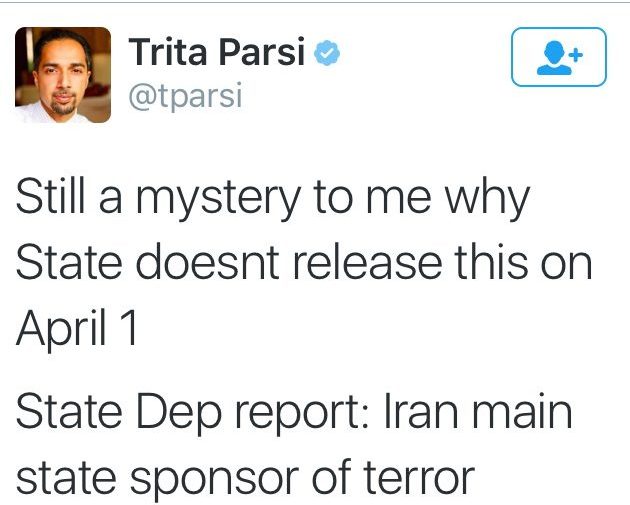
Take for example this nugget in which Parsi derides the U.S. State Department’s annual terrorism report in which it identifies Iran as a leading state sponsor of terrorism:

“Still a mystery to me why State doesnt release this on April 1,” he tweets, implying that the report is a joke better left for an April Fools prank.

Unfortunately for Parsi and the rest of the Iran lobby, mockery and ridicule can’t hide the facts laid out in the report in which the State Department spells out the Iranian regime’s longstanding support for Hezbollah, a key cog in the regime’s long-running involvement in the Syrian civil war, and its support for Shiite militias in Iraq that have roamed throughout Sunni areas as death squads and Houthi rebels in Yemen that have displaced nearly half of the country’s population as part of a civil war.

Parsi’s Twitter feed is absent any mentions of those Iran-backed wars and the role the mullahs and the regime’s Quds Forces and Revolutionary Guard Corps play in them. He does make mention of the plight of Syrian refugees fleeing the war and the high price they pay in trying to cross the Mediterranean, but never urges Iran to seek a peaceful resolution of the conflict or even open its borders to those refugees it is forcing out.

Parsi does however spend considerable social media time attacking Saudi Arabia, the Iranian regime’s biggest rival, accusing it of “terrorism” and acts more readily identified with the mullahs in Tehran.

He even goes to the absurd level of defending top mullah Ali Khamenei’s incendiary speech over the weekend in which he denounced the U.S. and called Great Britain “evil” and blamed his country’s continued economic woes on existing U.S. sanctions on Iran’s access to U.S. currency markets tied to human rights violations and not the nuclear deal from last year.

“Khamenei said today what Iran’s been signaling the US for a while: Anti-ISIS cooperation on hold due to sanctions relief problems,” Parsi tweets.

The implication Parsi tries to make is that continued sanctions against Iran for the mass executions of over 2,500 Iranian men, women and children, as well as its sponsorship of three major wars is somehow halting the war against ISIS.

He conveniently ignores the bulk of Khamenei speech which is filled with vitriol and hate and the usual threats to wipe Iran’s enemies off the face of the Earth.

The more appropriate evaluation to make of Parsi social media postings and those his colleagues at NIAC is that they spend more time posting about Donald Trump than they do about the misery being suffered by Iranians at the hands of their own government.

They spend more time posting about the Cannes Film Festival than they do about the threats being made by the creation of a new morality police force designed to enforce strict Islamic codes against Iranian women.

They spend more time discussing the plight of Siamak Namazi, an Iranian-American arrested and imprisoned in Iran who is a long-time supporter of the NIAC, than the thousands of Iranian dissidents, journalists, artists, bloggers and activists that were rounded up, imprisoned and tortured leading up to parliamentary elections.

The priorities of the Iran lobby are always on display to anyone who wishes to scan through the social feeds of supporters such as Parsi. What is telling is what is NOT in those feeds, such as any criticism of the mullahs, any calls for a Syrian cease fire, any demands for a release of all Iranian journalists or dissidents, any urging for the end of the barbaric practice of public hangings of prisoners, or any hopes for a cessation of the practice of beating women who do not wear hijabs.

Parsi and his cohorts do not do any of these things because they are – above all else – committed to supporting the Iranian regime and keeping it safe from any threats.

By Michael Tomlinson

Filed Under: Blog, Current Trend, News Tagged With: Featured, Iran, Iran Human rights, Iran Lobby, National Iranian American Council, NIAC, NIAC Action, Reza Marashi, Ryan Costello, Trita Parsi

Iran Demands Social Media Sites Store Data Only In Iran

June 1, 2016 by admin

Iran Demands Social Media Sites Store Data Only In Iran

Iran Demands Social Media Sites Store Data Only In Iran

The Iranian regime issues ultimatums with the regularity of a cuckoo clock. Whether it’s an indictment of perceived transgressions by human rights groups to blustery pronouncements threatening devastation on its enemies, the mullahs in Tehran are frequently making demands, threats and promises.

The latest demand came this weekend courtesy of the regime’s Supreme Council of Cyberspace, which said:

“Foreign messaging companies active in the country are required to transfer all data and activity linked to Iranian citizens into the country in order to ensure their continued activity,” in new regulations carried by state news agency IRNA on Sunday.

Putting aside the fact that the regime has a group dedicated to cyberspace with a name straight out of bad James Bond villain list, the regime has put a public face to one of the more sinister efforts it pushes in using the internet to track down dissenters, activists and others that oppose the rule of the mullahs.

Iran has some of the strictest controls on internet access in the world and blocks access to social media platforms such as Facebook and Twitter, although many users are able to access them through widely available software; notably the regime’s leadership has free access to those same platforms to push out its propaganda such as social feeds for Hassan Rouhani and even Ali Khamenei.

The council, whose members are selected by Khamenei, gave social media companies a year to comply, IRNA said, adding that the measures were based on the “guidelines and concerns of the supreme leader.”

The new requirements could affect messaging app Telegram in particular. The cloud-based instant messaging service has gained popularity because of its high level of security and is estimated to have about 20 million users in Iran, which has a total population of about 80 million, placing it at the forefront of most of the digital communications taking place among ordinary Iranians the regime cannot spy on.

Iranians have proven adept at using technology to circumvent strict government rules in the past. The Gershad app, launched in February, helps Iranian women track the morality police in large cities, so they can avoid being stopped for dress code violations.

The technology community, especially social media companies based in Silicon Valley such as Facebook and Twitter and in Silicon Beach such as Snapchat, reacted negatively to the mullahs’ demands.

The tech blog TechCrunch noted how the “Iranian government wants to be able to track private and semi-private conversations on messaging apps. Many social networks are already blocked in Iran, but it looks like the government wants even more control.”

But TechCrunch explained the devil was in the details since moving servers to Iran might not be enough, as WhatsApp recently completed its rollout of end-to-end encryption. With end-to-end encryption, WhatsApp can’t even read the content of communications, as they are encrypted, and only WhatsApp users involved in these conversations can decrypt them.

Apple’s iMessage is another example of an encrypted messaging protocol. Apple isn’t able to hand out messages to a government.

Earlier this month Iranian authorities placed eight women under arrest for posting Instagram photos of themselves without a headscarf on as part of a larger crackdown on social media usage that began before the most recent parliamentary elections.

The regime had previously arrested the entire staff of an Iranian tech blog and actively seeks out Iranian citizens posting on social media anything that could be construed as defying the Iranian regime’s extremist rule and authority or posing a threat to the regime leaders.

Even in the face of tough web censorship, Iranians are still using the internet in droves. A government report last year showed that 67.4 per cent of the country’s youth are online, with 19.1 percent claiming that they use messaging apps, and 15.3 per cent on social media. It is also widely believed that Iran’s tech-savvy citizens are utilizing VPNs to access sites blocked by the government.

This poses a significant problem for the regime since news often is smuggled out electronically of the atrocities and human rights abuses within Iran by dissident and human rights activists, including shocking photos and videos of public executions, amputations and other medieval punishments enforced by the regime.

Unsurprisingly, the Iran lobby has remained silent on this issue and the threat to free speech and freedom it poses. For groups such as the National Iranian American Council, whose members such as Trita Parsi, Ryan Costello and Tyler Cullis make ample and aggressive use of social media, the attempt to electronically spy on and muzzle Iranians, including those living in places such as the U.S. with relatives in Iran, have been met with silence.

This move by the Iranian regime only adds to the mountains of evidence proving the mullahs are neither moderate, nor peaceful.

By Laura Carnahan

Filed Under: Blog, News Tagged With: Featured, Iran Human rights, Iran Lobby, National Iranian American Council, NIAC, Reza Marashi, Ryan Costello, Trita Parsi, Tyler Cullis

  • « Previous Page
  • 1
  • …
  • 9
  • 10
  • 11
  • 12
  • 13
  • …
  • 21
  • Next Page »

National Iranian-American Council (NIAC)

  • Bogus Memberships
  • Survey
  • Lobbying
  • Iranians for International Cooperation
  • Defamation Lawsuit
  • People’s Mojahedin
  • Trita Parsi Biography
  • Parsi/Namazi Lobbying Plan
  • Parsi Links to Namazi & Iranian Regime
  • Namazi, NIAC Ringleader
  • Collaborating with Iran’s Ambassador

Recent Posts

  • NIAC Trying to Gain Influence On U.S. Congress
  • While Iran Lobby Plays Blame Game Iran Goes Nuclear
  • Iran Lobby Jumps on Detention of Iranian Newscaster
  • Bad News for Iran Swamps Iran Lobby
  • Iran Starts Off Year by Banning Instagram

© Copyright 2026 IranLobby.net · All Rights Reserved.