Iran Lobby

Exposing the Activities of the lobbies and appeasers of the Mullah's Dictatorship ruling Iran

  • Home
  • About
  • Current Trend
  • National Iranian-American Council(NIAC)
    • Bogus Memberships
    • Survey
    • Lobbying
    • Iranians for International Cooperation
    • Defamation Lawsuit
    • People’s Mojahedin
    • Trita Parsi Biography
    • Parsi/Namazi Lobbying Plan
    • Parsi Links to Namazi& Iranian Regime
    • Namazi, NIAC Ringleader
    • Collaborating with Iran’s Ambassador
  • The Appeasers
    • Gary Sick
    • Flynt Leverett & Hillary Mann Leverett
    • Baroness Nicholson
  • Blog
  • Links
  • Media Reports

Iran Lobby Damaged by Revelations of Funding for Nuclear Deal Campaign

May 24, 2016 by admin

Iran Lobby Damaged by Revelations of Funding for Nuclear Deal Campaign

Iran Lobby Damaged by Revelations of Funding for Nuclear Deal Campaign

The expose of national security staffer Ben Rhodes admission in the New York Times Magazine concocting a string of false messages to sell the Iran nuclear deal sent shock-waves through American politics and around the world as the revelations began to sink in that the entire basis of the agreement with the Iranian regime may have been built on lies.

Even more disturbing news reports has come out now that one of the principal advocates for the deal and a central pillar of the Iran lobbying effort had paid cash directly to news organizations in a brash effort to influence favorable coverage of the agreement.

The Associated Press reported that the Ploughshares Fund gave National Public Radio $100,000 last year to help it report on the nuclear deal according to the group’s own annual report, while also funding reporters and partnerships with a wide array of other news outlets.

In the Times article, Rhodes explained how he  worked with nongovernmental organizations, proliferation experts and even friendly reporters to build support for the seven-nation accord that curtailed Iran’s nuclear activity and softened international financial penalties on Tehran.

“We created an echo chamber,” said Rhodes, a deputy national security adviser, adding that “outside groups like Ploughshares” helped carry out the administration’s message effectively.

Most news organizations, including The Associated Press, have strict rules governing whom they can accept money from and how to protect journalistic independence.

Ploughshares’ backing is more unusual, given its prominent role in the rancorous, partisan debate over the Iran deal.

The Ploughshares grant to NPR supported “national security reporting that emphasizes the themes of U.S. nuclear weapons policy and budgets, Iran’s nuclear program, international nuclear security topics and U.S. policy toward nuclear security,” according to Ploughshares’ 2015 annual report, recently published online.

Ploughshares Fund provided over 90 grants to various organizations in 2015 in order to engage in reporting, research and analysis on Iranian nuclear issues. The over 90 grants given out in 2015 nearly doubles those the organization provided in 2014, and triples the amount given in 2013. Ploughshares’ increases in grant funding directly coincides with the time period during which the Iran nuclear deal was being finalized and presented to Congress.

Also receiving grants were think tanks such as the RAND Institute which was given $40,000 to write “a series of articles that analyze specific elements of the diplomatic agreement with Iran on its nuclear program.”

Ploughshares Fund President Joseph Cirincione spoke about the Iran deal on NPR twice last year. He was identified as a donor to the radio station on only one of the two occasions.

Ploughshares also provided over $280,000 to the Iran lobby leader National Iranian American Council (NIAC) for its work supporting the Iran deal, some of which went directly towards sending NIAC staff to the nuclear negotiations in Vienna. NIAC was accused of engaging in lobbying efforts on behalf of the Iranian regime around 2007, which led to the organization’s president Trita Parsi bringing suit against journalist Hassan Daioleslam for defamation. Parsi eventually lost the protracted legal battle.

The New York Post joined in the mounting criticism of the massive lobbying and PR effort with an editorial casting doubt on Ploughshares’ claims:

“And though Ploughshares claims to be working against nuclear proliferation, it backed a soft line toward Iran and worked to enable a deal that at best will only delay Tehran from acquiring nuclear weapons,” the Post said.

Meanwhile the Washington Free Beacon examined claims by NPR that it did not deliberately deny airtime for anti-Iran deal advocates such as Rep. Mike Pompeo (R-KS) who claimed to have scheduled interviews with NPR cancelled at the last time and spots given instead to Iran deal support Rep. Adam Schiff (D-CA).

While NPR executives claimed to have no records of such bookings, emails reviewed by the Free Beacon between NPR and Pompeo’s office show otherwise, casting more doubt on the validity of NPR’s claims of journalistic integrity on the Iran nuclear deal while it was being funded by the Ploughshares Fund.

These revelations expose the tangled connections between the Iranian lobby, its financial backers and its efforts to manipulate news media and manage directly the so-called “hundreds of often-clueless reporters” as characterized by Robert Malley, senior director at the National Security Council, as quoted in the Times article.

As to where Ploughshares gets its money? Ploughshares is financed by billionaire George Soros’ Open Society Institute, the Buffett Foundation, the Carnegie Corporation of New York, the Ford Foundation, the Rockefeller Brothers Fund and the Rockefeller Foundation, among others including several notable Hollywood celebrities such as actor Michael Douglas and entertainer Barbra Streisand.

Joseph Cirincione, the president of Ploughshares, went on the offensive in an effort to blunt the growing embarrassment of these revelations with an editorial on Huffington Post in which he blamed all the attacks on a right-wing, neo-con conspiracy.

While Cirincione took aim at the writers of the Times and AP stories, he neglected to mention the central characters in this entire episode and it wasn’t Ploughshares.

It was the mullahs in Tehran for which Ploughshares and others of the Iran lobby do their bidding.

The core issue is not about donations, coverage and lobbying. It is very much about how a despotic, extremist, religiously fanatical regime is escaping notice as it executes a record 2,500 people, brutalizes the women of Iran and fights three wars in Syria, Yemen and Iraq which has turned much of the Middle East and Europe into the largest refugee center in history since World War II.

Nowhere does Cirincione defend the recent conduct of the mullahs. Nowhere does he mention the rapid development and launching of illegal ballistic missiles designed to carry nuclear warheads. Nowhere does he mention the blatant violations of even the flimsiest provisions of the Iran nuclear deal such as the inability to inspect Iranian military facilities.

The money Ploughshares has spread around like so much horse manure was never intended to expose the Iranian regime, but only to cover it up.

By Michael Tomlinson
Filed Under: Blog, News Tagged With: Appeasement policy, Featured, Iran, Iran appeasers, Iran deal, Iran Lobby, Iran sanctions, Iran Talks, Irandeal, Joseph Cirincione, National Iranian American Council, NIAC, NIAC Action, Nuclear Deal, nuclear talks, Ploughshares, Trita Parsi

Obama Adviser on Iran Worked for Pro-Regime Lobby

May 21, 2016 by admin

White House Doubles Down in Defense of Obama Adviser with Pro-Tehran Ties

White House Doubles Down in Defense of Obama Adviser with Pro-Tehran Ties

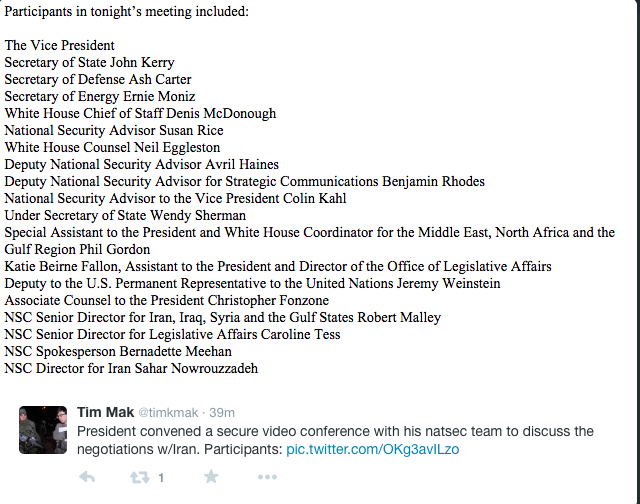
The White House released a list of its high-ranking officials who took part in a video conference with President Obama late Tuesday. Among them appears Sahar Nowrouzzadeh, who apparently has formerly worked for the National Iranian-American Council.

The White House brief, which was disclosed by The Daily Beast, listed Sahar Nowrouzzadeh as the National Security Council Director for Iran. Nowrouzzadeh appears to be a former employee of the alleged pro-Tehran regime lobbying group, NIAC (National Iranian-American Council).

Screen Shot 2015-03-31 at 8.48.17 PM.png

Breitbart News has found that a person with the same name has previously written severalpublications on behalf of NIAC. According to what appears to be her LinkedIn account, Nowrouzzadeh became an analyst for the Department of Defense in 2005 before moving her way up to the National Security Council in 2014.
A NIAC profile from 2007 reveals that Sahar Nowrouzzadeh appears to be the same person as the one who is currently the NSC Director for Iran. The profiles indicate that she had the same double major and attended the same university (George Washington).


Critics have alleged that NIAC is a lobby for the current Iranian dictatorship under Ayatollah Khamenei. A dissident journalist revealed recently that NIAC’s president and founder, Trita Parsi, has maintained a years-long relationship with Iranian Foreign Minister, Javad Zarif.

NIAC was established in 1999, when founder Trita Parsi attended a conference in Cyprus that was held under the auspices of the Iranian regime. During the conference, Parsi reportedly laid out his plan to introduce a pro-regime lobbying group to allegedly counteract the influence of America’s pro-Israel and anti-Tehran regime advocacy groups.

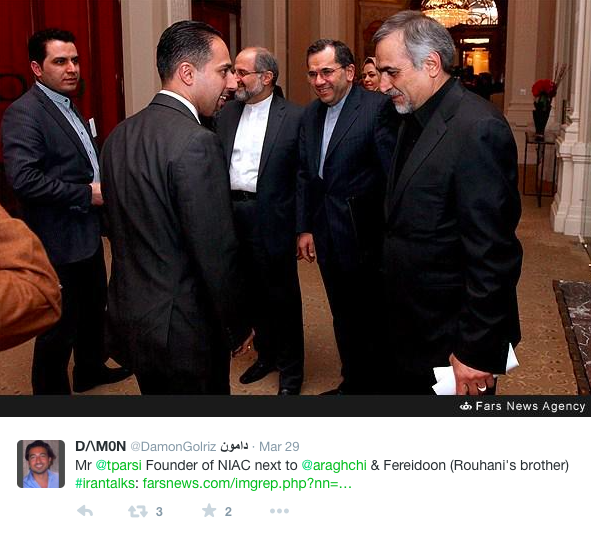
NIAC has been investing heavily in attempts to influence the talks in favor of an agreement with the state sponsor of terror. In recent days, its director, Trita Parsi, has been spotted having amiable conversation with Iranian President Hassan Rouhani’s brother.

Screen Shot 2015-03-31 at 2.22.52 PM.png

The revelations about the NSC Director’s apparent past with the alleged pro-regime group come as the U.S. has reportedly struck an agreement with Iran and the rest of the P5+1 world powers on Tehran’s nuclear weapons program.

Read More Stories About:

Middle East, National Security, Iran, Iranian Nuclear Program, National Iranian American Council, national security council, NIAC, Sahar Nowrouzzadeh, Trita Parsi

http://www.breitbart.com/national-security/2015/03/31/obama-adviser-on-iran-worked-for-pro-regime-lobby/

Filed Under: Media Reports Tagged With: Iran, Iran Lobby, Iranian Nuclear Program, Middle East, National Iranian American Council, National Security, national security council, NIAC, Sahar Nowrouzzadeh, Trita Parsi

Iranian Regime Increases US Tensions Despite Promises by Iran Lobby

May 5, 2016 by admin

Iranian Regime Increases US Tensions Despite Promises by Iran Lobby

Iranian Regime Increases US Tensions Despite Promises by Iran Lobby

The Strait of Hormuz connects the Persian Gulf to the rest of the world and through it flows about 20 percent of the world’s petroleum supplies making it one of the most important trading routes in the world.

According to the U.S. Energy Information Administration, an average of 14 tankers per day transit the Strait carrying 17 million barrels of crude oil, representing a hefty 35 percent of the world’s seaborne shipments of oil. The vast majority of that oil, over 85 percent, goes to Asian markets such as Japan, China, India and South Korea.

It is a chokepoint that the Iranian regime has used as a threat to the rest of the world repeatedly since 1988 when it first laid mines in the Strait contrary to all international agreements. Iranian regime has been involved in a series of confrontations there, including:

  • 2008 with a series of stand-offs with the U.S. Navy and threats to close the Strait;
  • 2011-12 Iranian regime again threatened to close the gulf forcing a coalition of navies to send ships to confront regime vessels;
  • 2015 Iran seized the Maersk Tigris container ship; and
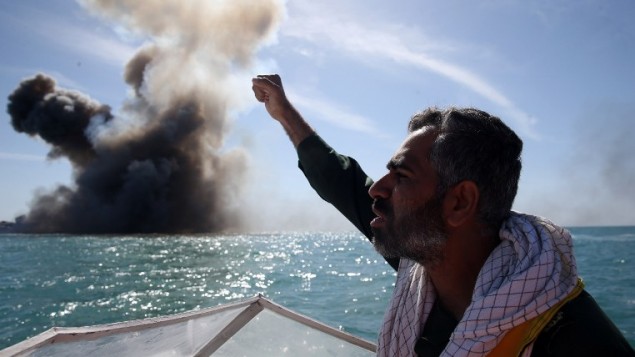
  • Earlier this year, Iranian vessels seized a U.S. Navy patrol boat with its 10 sailors and detained them.

The Iranian regime has used the threat of war and violence in the Strait as a form of diplomacy and regards such aggression as a tool of statecraft.

According to the New York Times, tensions between Iran and the United States, never far from the surface, showed signs of worsening on Wednesday, with the Iranians threatening to block a vital Persian Gulf access route and protesting what they called the American “meddling approach and tone.”

The Iranian regime messages, conveyed in statements by a commander of the Revolutionary Guards Corps and by the Foreign Ministry, came a few days after top mullah Ali Khamenei expressed exasperation with the U.S., questioning the longstanding deployment of the Navy’s Fifth Fleet in the Persian Gulf.

“It is Americans who should explain why they have come here from the other side of the world and stage war games,” Khamenei said in remarks widely reported in Iran’s state news media.

Together, the messages appeared to reflect a steady buildup of anti-American sentiment in Iran recently despite the nuclear agreement that took effect in January, which, on paper at least, eased the country’s economic isolation and was hailed by the Iran lobby as a force for moderation, which seems to have been a false promise so far.

The warning from the Revolutionary Guards about blocking American access to the Persian Gulf waterway appeared to be partly a response to a congressional resolution introduced April 28 by Representative J. Randy Forbes, Republican of Virginia.

The resolution condemned what it called Iran’s illegal detention of American sailors patrolling near Iran in January and said Iran had “undermined stability in the Arabian Gulf.”

On Wednesday, Iran’s Fars News Agency, which has links to the Revolutionary Guards, said Lt. Cmdr. Brig. Gen. Hossein Salami had issued a warning to the United States to avoid escalation.

“Iran will decisively confront any menacing passage through the Strait of Hormuz,” Fars quoted him as saying. “We warn the Americans not to repeat their past mistakes, and they should learn from historical realities.”

The aggressive statements made by regime officials underscore the de facto methodology employed by the mullahs in Tehran to state their case which is always by way of threat and coercion. The siren song promises made by Iran lobby supporters

By Michael Tomlinson

Filed Under: Blog, News Tagged With: Featured, Iran, Iran Human rights, NIAC Action, Reza Marashi, Strait of Hormuz, Trita Parsi

Iraq Looms Large in Iranian Regime Plans for Control

May 5, 2016 by admin

Iraq Looms Large in Iranian Regime Plans for Control

Iraq Looms Large in Iranian Regime Plans for Control

It has been well documented how the Iranian regime has gone all-in supporting the Assad regime in Syria with all resources at its disposal, including cash, weapons, fighters, and even diplomacy in recruiting the Russians to fight in support as well.

For the mullahs in Tehran, Syria is a key linchpin in their grand plan to build a Shia arc of influence across the Middle East and they have fought tooth and nail to preserve the Assad regime since its collapse could lead to the type of regime change within Iran they have long feared.

But now Iraq is looming just as large for them as a prize worth defending and the mullahs see an opportunity in the turmoil that is now roiling Iraq.

Remember that under the maligned tenure of former Iraqi prime minister Nouri al-Maliki the Iranian regime had literally run the Iraqi government, forcing the ouster of Sunni partners from the coalition government which then provided the ground for ISIS spreading out of Syria and into Iraq’s western provinces and setting the stage for the quick takeover of Mosul.

This weekend however saw a new threat to Iraq’s stability, as followers of radical Shiite cleric Moqtada al-Sadr staged a protest by storming and taking over the Iraqi parliament in Baghdad’s fortified International Zone; ostensibly over government corruption. The protesters were angry of the government’s failure to fight corruption within the institutions and particularly to oust Maliki and his men from various security and government apparatus.

But the takeover may portend a power struggle between Iraqi and Iranian Shiite factions over who controls Iraq as the Iranian regime has armed, trained and supported Shiite militias that are on par with the Iraqi army in terms of capabilities, spurring many Iraqis to resent Iranian influence over their country.

During the takeover Sadr departed for Iran in a meeting that many analysts suspected was an effort to broker a power-sharing arrangement with the mullahs in Tehran. His departure came as a spokesman for Iran’s foreign ministry, Hossein Jaberi Ansari, “expressed Iran’s readiness to use all its links in line with paving the way for Iraqi talks,” according to an official statement carried by Iran’s state-controlled news agency.

Though Sadr is considered by some in Iran’s political establishment as an unpredictable partner, he is unlikely to buck the wishes of a key patron, said Kenneth Pollack, a Middle East expert at the Washington-based Brookings Institution.

“I can’t remember him ever going against the Iranians,” said Pollack in the Wall Street Journal. “Whatever he has done has tended to be quite consistent with Iranian interests.”

A more practical suggestion for Sadr’s actions being made is that he may simply be applying pressure on his Iranian patrons in order to elevate his own standing within Iraq and make clear his militias and followers deserve the lion’s share of political patronage within the country.

Sadr’s history of close coordination with Iran brings back memories of the bloody battles his forces fought against U.S. and coalition forces during the sectarian uprising in Iraq from 2005-06, which caused scores of American deaths, especially with explosive devices built by Iran’s Quds Forces.

Retired U.S. Air Force Lt. Gen. Tom McInerney explained his view of how Sadr may be actually working to strengthen the Iranian hold over Iraq.

“What you’re seeing right now is that (radical Shiite cleric) Moqtada al-Sadr is responsible for creating a greater wedge when the current Iraq prime minister wanted to make Iraq more independent from Iran,” McInerney told WND and Radio America.

“You have a combination of Iranian Shiite and Iraqi Shiite competing as to who controls the government and who controls Iraq. That’s the bottom line of what’s going on over there right now,” he added.

Many critics of the Obama administration’s policies in Iraq, including the withdrawal of U.S. forces, point out the similarities of how the U.S. has created power vacuums the Iranian regime has been eager to fill and expand its influence in an effort to build a perception throughout the region that Iran was a powerful force, when in fact its holds over Iraq, Syria and Yemen have become more precarious.

That policy of appeasing the Iranian regime has been contrasted during the presidential campaign Donald Trump and Hillary Clinton’s more hawkish views on Iran, especially holding the regime accountable for its behavior in the areas of human rights and sponsorship of terrorism.

The fact that both candidates may end up being the presumptive nominees this fall has forced the Iran lobby to step up its campaign to influence the election debate, especially aiming key messages at the Clinton campaign in the hopes of convincing it to follow through on Obama administration policies that have grown lenient on the Iranian regime.

Proponents of U.S.-Iran diplomacy have voiced concern in the past over the fate of relations between the two countries if (Clinton) succeeds Obama. “I am worried about her instinct,” Trita Parsi the head of the National Iranian American Council, told The Huffington Post in January. “She is far too inclined to think that only pressure works.”

Clinton vowed in a speech in September 2015:

“I will build a coalition to counter Iran’s proxies, particularly Hezbollah.  . . . Beyond Hezbollah, I’ll crack down the shipment of weapons to Hamas and push Turkey and Qatar to end their financial support. I’ll press our partners in the region to prevent aircraft and ships owned by companies linked to Iran’s Revolutionary Guard from entering their territories and urge our partners to block Iranian planes from entering their airspace on their way to Yemen and Syria. Across the board, I will vigorously enforce and strengthen if necessary the American sanctions on Iran and its Revolutionary Guard for its sponsorship of terrorism, its ballistic missile program, and other destabilizing activities. I’ll enforce and strengthen if necessary our restrictions on sending arms to Iran and from Iran, to bad actors like Syria. And I’ll impose these sanctions on everyone involved in these activities, whether they’re in Iran or overseas. This will be a special imperative as some of the U.N. sanctions lapse, so the U.S. and our partners have to step up. . . .”

We can hope she continues on that track and ignores the entreaties of Parsi and his ilk from the Iran lobby.

By Michael Tomlinson

Filed Under: Blog, News Tagged With: Featured, Iran, Iran Lobby, Iran sanctions, NIAC Action, Trita Parsi

Iran Lobby Pressing for More Appeasement

April 13, 2016 by admin

Iran Lobby Pressing for More Appeasement

Iran Lobby Pressing for More Appeasement

A year after completion of the nuclear deal with the Iranian regime, the U.S. and its allies are confronted increasingly with acts by the regime demonstrating the mullahs complete lack of interest in engaging in peaceful and moderate ways.

The fact that the nuclear deal was not tied to corresponding improvements in Iran’s human rights record, support for terrorism and involvement in proxy wars made the situation even more muddled for the rest of the world. Even as the U.S. and European Union sought to lift sanctions against the regime as part of the deal, they were forced to deliberate imposing new ones to address growing problems such as the launch of illegal ballistic missiles.

As a result, the full impact of loosened economic sanctions has been lessened by the uncertainty being created by the regime’s actions and has prompted the Iran lobby to rally to the defense of the Iranian regime and push harder for full implementation of the nuclear deal irrespective of the militant acts being undertaken.

A key objective of the Iran lobby is to lift the last of the financial restrictions remaining on the regime, specifically the prohibitions in place preventing Iran to access U.S. currency markets and conduct business in U.S. dollars.

A lifting of those prohibitions would effectively lift the last dam holding back the floodwaters of Islamic extremism streaming out of Iran. It would also clear a pathway for the regime to jump feet first back into the waters of high finance where it could launder black market dollars, shift funds to supply and back terrorism groups and utilize foreign banks to make payments with almost complete anonymity.

Iranian regime’s past history of engaging in illegal financial transactions, most of it not related to nuclear weapons development, has persistently ranked it as a “high-risk, non-cooperative” jurisdiction by the Financial Action Task Force, an inter-governmental body that sets and promotes standards aimed at curbing money laundering and terrorist financing.

The FATF statement read in part:

“The FATF remains particularly and exceptionally concerned about Iran’s failure to address the risk of terrorist financing and the serious threat this poses to the integrity of the international financial system.

“The FATF reaffirms its call on members and urges all jurisdictions to advise their financial institutions to give special attention to business relationships and transactions with Iran, including Iranian companies and financial institutions.”

In this way, the Iran lobby’s insistence that the nuclear deal not be linked to issues not related to nuclear weapons has left it open to the problem of having certain sanctions kept in place that were not affected by the agreement.

Tyler Cullis of the National Iranian American Council took to the Atlantic Council to publish an editorial that reads as a press release for the regime’s finance ministry.

“Currently, Iran is taking unilateral steps to beef up its AML/CFT laws.  Last month, Iran’s Deputy Foreign Minister Majid Takht Ravanchi noted that legislation aimed at addressing Iran’s AML/CFT deficiencies was awaiting approval before the Guardian Council and would soon take effect.  Moreover, Ravanchi pointed to recent amendments made to Iran’s current laws to resolve issues with existing legislation,” Cullis writes.

Cullis recognizes the irony of attempting to provide Iran greater access to financial systems while still designated a state sponsor of terrorism and supporter of terrorism financing, but he does not acknowledge that Iran’s mullahs must first change those policies before being allowed to have these restrictions lifted.

He only argues that the regime’s “good intentions” are sufficient for the lifting of these sanctions without any movement by Iran to withdraw support for Hezbollah, without any effort to cut off the black market dealings of the regime’s elites and Revolutionary Guard or to halt the corruption that runs rampant through the government of Hassan Rouhani.

“It is time to take advantage of new channels opened by the nuclear agreement and move towards a more constructive US relationship with Iran,” Cullis adds.

The fact that Cullis is still pushing the line that the relationship between Iran and the U.S. has to improve even after the significant efforts of the Obama administration to appease the regime in order to gain a foreign policy “win” demonstrates how the mullahs are committed to getting everything for nothing.

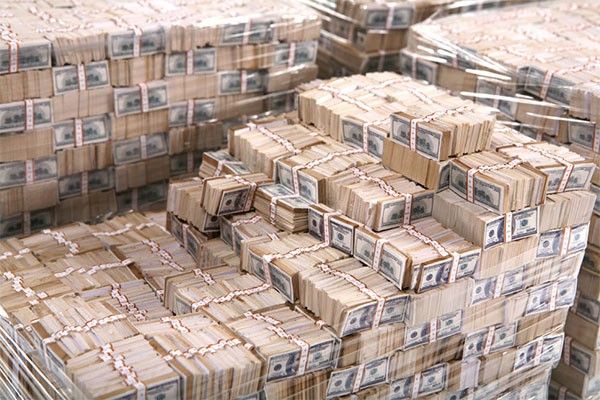
The Iranian regime’s efforts to regain its old market share in global oil markets with the lifting of sanctions on its petroleum industry illustrate that take no-prisoners approach by the mullahs. Iran is driving down prices in order to secure long-term supply contracts and bring badly needed cash reserves into the country because even though it got as $100 billion windfall as a result of the nuclear deal, Iran is quickly burning through that cash to buy new weapon systems and deepen its support of Hezbollah in Syria and Houthi rebels in Yemen.

Thus despite the terms to which U.S.-led global negotiators and Iran supposedly agreed in July, the deal is less a firm agreement than a continuing drama with one storyline: Tehran demands a concession, the administration proposes a response, Iran-watchers in Congress and elsewhere voice concerns and U.S. officials offer a middle ground to satisfy Tehran without igniting a revolt in Washington.

As Lawrence Haas, a senior fellow at the American Foreign Policy Council, writes in U.S. News and World Report “the concessions – the most recent of which involve Iran’s ballistic missiles program and its access to the U.S. financial system – are not just rewriting the previous consensus among government officials, diplomats, nuclear experts and Iran-watchers in the United States, Europe and the Middle East over how the deal would work. They’re also serving to expand Iran’s military capability, strengthen its economy and leave U.S. allies in the region feeling more abandoned.”

By Michael Tomlinson


Filed Under: Blog, News Tagged With: Featured, Iran, Iran deal, Iran Lobby, Trita Parsi, Tyler Cullis

The Lie That Is Iranian Moderation

April 11, 2016 by admin

The Lie That Is Iranian Moderation

EDITORS’ NOTE: Reuters and other foreign media are subject to Iranian restrictions on their ability to report, film or take pictures in Tehran.
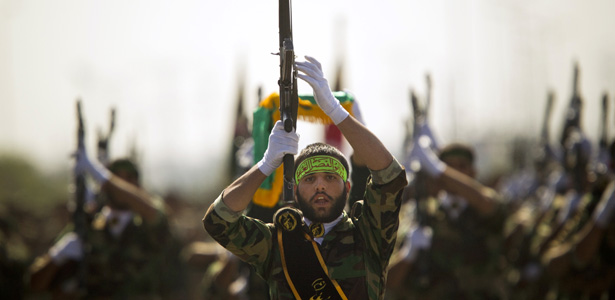
Members of Iran’s Basij militia march during a parade to commemorate the anniversary of the Iran-Iraq war (1980-88), in Tehran September 22, 2010. REUTERS/Morteza Nikoubazl (IRAN – Tags: ANNIVERSARY MILITARY POLITICS)

Nothing illustrates the confusion over the nuclear deal with the Iranian regime than one simple fact: Even as the Obama administration is encouraging new trade and investment opportunities with the regime as a reward for the deal, it is also at the same time seeking to impose new economic sanctions for violating prohibitions against developing nuclear-capable ballistic missiles.

The flip-flopping is emblematic of what makes diplomacy towards the mullahs in Tehran an exercise in frustration and futility because the truth of the matter is that they are not committed to a path towards true peace and civility. Rather Iranian leaders such as Ali Khamenei and Hassan Rouhani are playing the long game of chess moves designed to break down barriers; allowing the regime to access resources while playing off the desires of the West for peace vs. pushing the envelope of newly aggressive acts.

The mullahs and their allies in the Iran lobby recognize that time is running out to play this game since virtually all of the leading contenders to replace President Obama this fall have denounced the regime and have publicly staked out territory to hold the mullahs accountable.

Consequently, regime allies such as Trita Parsi and Reza Marashi of the National Iranian American Council have been usually quiet in their public statements and social media posts about what is happening with Iran such as the missile launchings, the smuggling of weapons to Yemen, the escalation in sending fighters to Syria and the continued incarceration of dissidents and journalists in Iran.

The strategy for them is to be as deaf and dumb as a lamp post and not provide fodder for the foes of Iran to tee off against them and expose the hypocrisy of their support for a regime which has ably shown itself to have intentions or desires for moderation.

Matthew Lee, the Associated Press’ diplomatic writer, examined this conundrum for the Obama administration over the weekend.

“Eager that a successful deal and a new era in the U.S.-Iran relationship be part of President Barack Obama’s legacy, his administration finds itself encouraging foreign trade with Iran even as it forbids most American commerce with the Islamic Republic. Those efforts are complicated by the fact that the United States continues to condemn and try to punish Iranian actions in non-nuclear arenas such as Tehran’s support of terrorist groups and belligerence toward Israel,” Lee writes.

“Asian and European government and companies, primarily banks, are balking at doing now-legal business with Iran, because of uncertainty over those remaining sanctions. They want written clarification about what current U.S. laws and financial regulations allow them to do. Essentially, they want a promise that the U.S. will not prosecute or punish them for transactions that involve Iran,” he added.

The fact that the Obama administration is trying to navigate a path for the Iranian regime to receive benefits from the nuclear deal even as it violates other international agreements demonstrates how ineffective U.S. policy has become in reigning in the mullahs and the Revolutionary Guard Corps.

What has not been focused on by most Western media is the intricate network of Iranian companies owned and operated by the Revolutionary Guard Corps and regime leaders and their families such as Khamenei.

In 2013, Reuters published a three-part investigation into what it called Ayatollah Assets. Now, Khamenei wants certain companies to be the main beneficiaries from lifting the sanctions, mainly the economic arm of the Revolutionary Guard — stamped by many around the globe as a terrorist organization.

The fact that Khamenei has been on a verbal rampage over the slow drip of funds into companies he controls is not so much a desire to help ordinary Iranians as much as it represents his frustration over not getting his payday and like a petulant child, Khamenei has ordered a paramilitary force comprised of zealot students loyal to him to fight in Syria.

A media group close to the Iranian government, Mehr News Agency, reported Tuesday at least 30 members of the regime’s Basij Resistance Force have been killed fighting in Syria and Iraq. Iran’s military influence in both countries is significant, with around 212 killed in both countries, according to a report by Al-Jazeera. Analysts conservatively estimate there are around 7,000 Iranian forces operating in Iraq and Syria.

While the Iranian regime escalates its military involvement in Syria, the Obama administration held its second Nowruz celebration observing the Persian New Year with First Lady Michelle Obama. It is worth noting the flood of social media messages coming in from activists and Iranian dissidents urging the First Lady not to forget about the terrible human rights abuses going on in Iran.

Protests over the regime’s policies though come in all sizes and shapes and its latest request comes in response to the plight of a group of female crew members at a French airline.

When it was announced that Air France would begin flying into Tehran after an eight year hiatus, a number of the female crew demanded the right to opt-out of working on the new route. Many objected to an internal memo asking them to wear a hijab when disembarking the plane in the Iranian capital.

The crew members have now won the battle. On Monday Air France announced it would allow its female staff to be reassigned to other flights, should they not wish to fly to Iran.

We can only hope that more acts of “soft power” defiance take place in support of those shackled by the regime.

By Michael Tomlinson

Filed Under: Blog, News Tagged With: Featured, Iran, Iran Lobby, NIAC, Reza Marashi, Trita Parsi

Meeting of Arab States Shows Challenge of Confronting Iran

April 8, 2016 by admin

Meeting of Arab States Shows Challenge of Confronting Iran

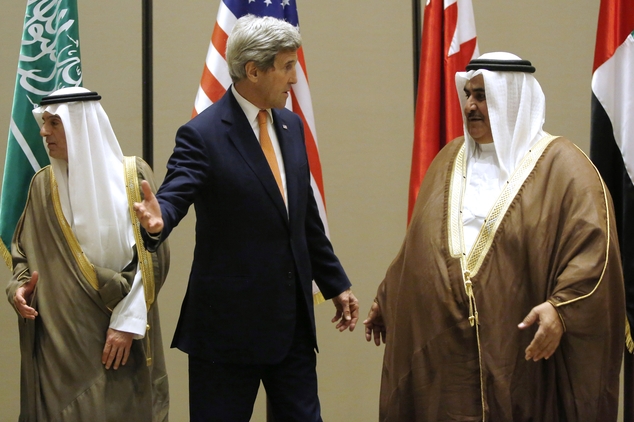
Secretary of State John Kerry talks with Bahrain Foreign Minister Khalid bin Ahmed Al Khalifa, right, after they and Saudi Arabia Foreign Minister Adel al-Jubeir, left, gathered for a family photo at the start of the Gulf Cooperation Council (GCC) Ministerial meetings in Manama, Bahrain, Thursday, April 7, 2016. (Jonathan Ernst/Pool Photo via AP)

The Gulf Cooperation Council (GCC) is a regional political and economic union of Arab States within the Persian Gulf and includes Bahrain, Kuwait, Oman, Qatar, Saudi Arabia and the United Arab Emirates. Since 1981 when it was founded, it has come to form a cohesive union of Arab states that share in the massive oil wealth of the Persian Gulf and within the last few years has created military alliances to combat the rise of ISIS and the increased militant forays of the Iranian regime.

These states have found themselves at the forefront of various Iranian provocations ranging from Bahrain battling insurgents armed by Iranian agents to Saudi Arabia which is trying to stem a full-scale insurrection on its border with neighboring Yemen fueled by Houthi rebels armed, trained and advised by Iran’s Revolutionary Guard Corps.

These Arab states have also intercepted considerable amounts of arms being smuggled by Iran to various proxies and terrorists to fuel insurrection and strikes at the various states in a stark reminder of how committed the mullahs in Tehran are in destabilizing their Arab neighbors.

All of this highlights one of the untruths uttered by the Iran lobby during the run up to the nuclear deal last year which was securing a deal would empower moderate forces within Iran to take greater control over Iran’s government and temper its more extreme elements.

We now know since the deal was agreed to last July, the Iranian regime has taken every opportunity to step up its military activities throughout the region; from Syria on the Mediterranean to Yemen on the Indian Ocean.

It is against this backdrop that U.S. Secretary of State John Kerry travels to Bahrain for a meeting of the GCC whose members are intent on reading Kerry the riot act about the rise of Iranian extremism.

Part of that process included statements from Kerry and Bahrain’s foreign minister on Thursday urging Iran to stop escalating its provocative behavior and pursue a more constructive foreign policy.

Kerry is in Bahrain to consult with officials from Bahrain and other Gulf Arab countries frustrated by Tehran’s policies and lay the groundwork for meetings between President Barack Obama and Gulf Arab leaders in Riyadh later this month. The president held a meeting in Washington last year with Gulf Arab leaders and senior officials to pledge military aid and calm allies’ nerves about Tehran as the nuclear deal neared completion.

“Today we are noticing two things that we kind have expected,” Sheik Khalid bin Ahmed Al Khalifa, Bahrain’s foreign minister, said, outlining the views of Bahrain and the GCC. “The missile program is moving forward with full support of the leadership of the Islamic Republic and we are seeing the hegemonic interventions through proxies in several parts of our region continuing unabated.”

While Kerry once again stressed the positive virtues of the nuclear agreement, the reality is that the almost slavish dedication to keeping afloat a nuclear deal that is already – for all intents and purposes – dead from the Iranian point of view has allowed the Iranian regime to move forward aggressively on several other fronts now that sanctions have been lifted and it can access a new credit line of $100 billion to replenish its military losses at a critical time for the mullahs.

That reality has forced Kerry to make a complex argument here to the ministers of the GCC, where he repeated that the U.S. would continue to lift the economic sanctions against Iran that it agreed to as part of the nuclear accord, even while imposing new ones to counter Tehran’s missile launches, an effort now underway in the United Nations Security Council.

The bipolar nature of American diplomacy has caused consternation and confusion among America’s allies such as the Gulf states and what can only be construed as unbridled joy amongst the mullahs who are taking advantage of the mixed messages.

But sentiment was hardening against Iran and the weak administration position as the editorial board for the Washington Post decried the ramp up in missile testing by Iran and the need to sanction the regime.

“Tehran’s behavior comes as no surprise to the many observers who predicted the deal would not alter its hostility to the West or its defiance of international norms. Unfortunately, the Obama administration’s response has also been much as critics predicted: It has done its best to play down Iran’s violations and avoid any conflict out of fear that the regime might walk away from a centerpiece of President Obama’s legacy,” the Post wrote.

In reference to a push by Iran to lift restrictions on accessing U.S. currency markets, the Post said “Secretary of State John F. Kerry, the accord’s architect, said Tuesday that the regime ‘deserves the benefits of the deal they struck.’ There’s logic to that. But there’s also a problem of reciprocity: Should the United States take steps not strictly mandated by the text of the nuclear accord at a time when Iran is testing nuclear-capable missiles?”

What has all this wrought? Not the peace and moderation promised by Iran lobby supporters such as Trita Parsi of the National Iranian American Council, but instead the world has witnessed a global military spending boost of nearly $1.7 trillion in 2015, the first increase in several years as a result of Iranian regime’s rise and increase in global terrorism and proxy wars fueled by Iran according to a new report.

Tiny Qatar has signed a deal for $7.6 billion to buy 24 Dassault Rafal fighter jets from France. Kuwait on Tuesday finalized a deal to purchase 28 Eurofighter Typhoons, a deal estimated to be worth around $8 billion; all in response to the uncertainty the Iranian regime is sowing.

By Laura Carnahan


Filed Under: Blog, News Tagged With: Featured, Iran, Iran deal, Iran Lobby, Iran Mullahs, Iran sanctions, National Iranian American Council, NIAC, Trita Parsi

One Year after Nuclear Agreement Iran Is Worse

April 6, 2016 by admin

One Year after Nuclear Agreement Iran Is Worse

One Year after Nuclear Agreement Iran Is Worse

This weekend marked one year since the nuclear agreement with the Iranian regime – known as the Joint Comprehensive Plan of Action – was reached between Iran and the group of nations known as the P5+1 and subsequently adopted by the United Nations Security Council and European Union.

The Iran lobby made it a life or death struggle between forces of good and moderation versus dark and hardliners. The Iran lobby promised a new era of rising moderate political influence and an opening to the West. The Iran lobby warned that failure to approve the agreement would plunge the region into chaos and open the door for decades of unremitting violence and turmoil.

The Iran lobby promised that failure to approve a deal would lead to a cataclysmic war with Iran that could unleash nuclear weapons. It warned of a war-mongering hunger within the U.S. government intent on eradicating the poor, peaceful mullahs.

“War against Iran has been on the agenda in Washington since at least 2005. The 2007 National Intelligence Estimate is credited with thwarting the George W. Bush administration’s plans — confirmed to me by administration officials — to attack Iran by revealing that the U.S. intelligence community had concluded that Iran did not have an active nuclear weapons program,” wrote Trita Parsi of the National Iranian American Council last June 2015 in Foreign Policy.

His warnings were part of the “good cop, bad cop” playbook the Iran lobby used in praising Iran’s intentions and denouncing the threat of war from those opposed to the deal.

Unfortunately for the rest of the world, they were spectacularly wrong in their promises and warnings. One year later the Middle East is in chaos with three full blown wars raging across Syria, Iraq and Yemen, causing the largest refugee crisis the world has seen since Adolf Hitler went goose-steeping across Europe.

Yousef al-Otaiba, the ambassador of the United Arab Emirates to the U.S., wrote in this weekend’s Wall Street Journal of the uncertainty and angst being felt throughout the region with a newly empowered and aggressive Iranian regime since the nuclear deal.

“Since the nuclear deal, however, Iran has only doubled down on its posturing and provocations. In October, November and again in early March, Iran conducted ballistic-missile tests in violation of United Nations Security Council resolutions.

“In December, Iran fired rockets dangerously close to a U.S. aircraft carrier in the Strait of Hormuz, just weeks before it detained a group of American sailors. In February, Iranian Defense Minister Hossein Dehghan visited Moscow for talks to purchase more than $8 billion in Russian fighter jets, planes and helicopters.

“In Yemen, where peace talks now hold some real promise, Iran’s disruptive interference only grows worse. Last week, the French navy seized a large cache of weapons on its way from Iran to support the Houthis in their rebellion against the U.N.-backed legitimate Yemeni government. In late February, the Australian navy intercepted a ship off the coast of Oman with thousands of AK-47s and rocket-propelled grenades. And last month, a senior Iranian military official said Tehran was ready to send military ‘advisers’ to assist the Houthis,” Otaiba writes.

The laundry list of militant acts by the Iranian regime grows longer each day to include smuggling warheads and arms to Shiite cells in Bahrain and Saudi Arabia, widespread crackdowns at home aimed at political dissidents and religious minorities, large-scale human rights violations including historic levels of executions of women and children, and rigging of parliamentary elections to remove over half of the candidates from even appearing on the ballot, including the most loyal agents and officials of the same regime in the past few decades.

The swiftness of the transformation of the Iranian regime since the nuclear deal was approved last year has been stunning. The mullahs are flush with cash, they’ve invited foreign companies to invest billions, not suffered any repercussions from human rights violations or involvement in proxy wars, kept their nuclear enrichment infrastructure intact and elevated development of their ballistic missiles to reach Europe, Africa and American military bases from the Indian Ocean to the Mediterranean.

And the regime has no intentions of taking its foot off the gas, especially in the area of boosting its missile capability.

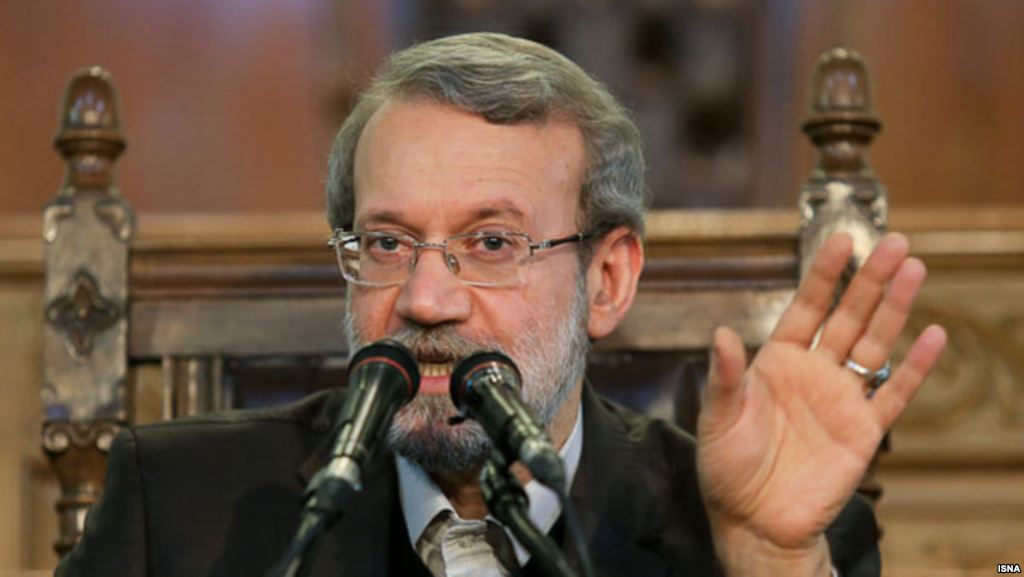
Ali Larijani, the regime’s parliamentary speaker and someone lauded by the Iran lobby as a “born-again moderate” said that Iran should continue to develop its missile capabilities despite opposition from western countries.

“Although some excuses recently raised by a number of Western countries about Iran’s missile [tests] are flimsy and legally worthless, they are indicative of their long-term policy which [shows] that they do not want the Islamic Republic to be powerful enough to ensure regional security,” he said according to Tasnim News on Saturday.

“For this reason,” he added, “we should insist on strengthening the country’s defense capability, especially in the field of missiles.”

There is a certain irony that last year the world was worried about nuclear warheads and now it has to worry about missiles to carry those warheads and battlefields across the region, as well as a sharp rise in terror attacks striking at cities around the world killing hundreds.

The ultimate irony came in President Obama’s remarks at the so-called National Security Summit this weekend in Washington in which he criticized the regime for undermining the “spirit” of the agreement even as they stick to the “letter” of the deal.

“Iran so far has followed the letter of the agreement, but the spirit of the agreement involves Iran also sending signals to the world community and businesses that it is not going to be engaging in a range of provocative actions that are going to scare businesses off,” Obama said at a press conference.

“When they launch ballistic missiles with slogans calling for the destruction of Israel, that makes businesses nervous.”

“Iran has to understand what every country in the world understands, which is businesses want to go where they feel safe, where they don’t see massive controversy, where they can be confident that transactions are going to operate normally,” he added. “And that’s an adjustment that Iran’s going to have to make as well.”

I can’t tell if the president is naïve or just-plain dumb when he equates a burgeoning missile program and threat of nuclear annihilation to a need to improve Iran’s business climate. The problem the world is dealing with in Iran is not that businesses are skittish of investing, but rather that the mullahs are intent on remaking the world in their own image.

We can only hope that come November, a new administration will be more intent on reigning in Iranian extremism rather than the opening of a new McDonalds or Starbucks in Tehran.

By Michael Tomlinson

Filed Under: Blog, News Tagged With: #NuclearDeal, Featured, Iran deal, Iran Human rights, Iran Lobby, National Iranian American Council, NIAC Action, Trita Parsi

Pushback Grows Against Iran Lobby Claims of Moderate Win

March 4, 2016 by admin

Pushback Grows Against Iran Lobby Claims of Moderate Win

Pushback Grows Against Iran Lobby Claims of Moderate Win

Basking in the afterglow of the Iranian regime’s parliamentary election results, the Iran lobby predictably boasted of the massive wins by moderate and reformist forces within Iran, but now the pushback is coming from a wide variety of the political spectrum as the results and actual winning candidates are absorbed and evaluated.

The realization is settling in that far from the moderate tsunami described by regime supporters such as Trita Parsi and Reza Marashi of the National Iranian American Council, the truth is that very little has changed within the regime leadership and the Iranian people still remain firmly in the grip and thrall of the mullahs.

The parade of cold water on the moderate landslide theory was led by the editorial board of the Washington Post, which has intimate first-hand knowledge of the extremist nature of the regime through the hostage taking and eventual prisoner swap of its reporter, Jason Rezaian. It editorialized:

“Claims of a reformist triumph, however, are overblown. Before the elections, an Iranian liberal coalition said that 99 percent of 3,000 pro-reform candidates had been disqualified by a hard-line clerical council. Most of those in Mr. Rouhani’s coalition are, like him, moderate conservatives, meaning they favor economic reforms and greater Western investment, but not liberalization of the political system or a moderation of Iran’s aspiration to become the hegemon of the Middle East. True Iranian religious and political reformers, like those who joined the 2009 Green Movement, are in jail or exile, or were banned from the ballot.

“For now, Iran can be expected to continue the course it has been pursuing in the months since the nuclear deal was struck: waging proxy wars against the United States and its allies around the Middle East, using its unfrozen reserves to buy weapons, and defying non-nuclear limits — such as by testing long-range missiles. The elections won’t make the regime more pliable, and they won’t change the need for a U.S. counter to its aggressions. They shouldn’t provide an excuse for the Obama administration to tolerate Tehran’s provocations,” the Post said.

The Post is correct in its assertions and admits to the basic problem facing those nervously praising the “moderate” wins: they are left with hoping for the best outcome even though it will most likely come to pass since the alternative is to face the difficult choices of pushing for regime change against a regime firmly entrenched.

The Atlantic’s Kathy Gilsinan noted some of the difficulties in the tea leaf reading going on post-election in discerning who actually won.

“Institutions whose members aren’t popularly elected, including the office of the supreme leader, the Guardian Council, the judiciary, and the security services, are the most powerful in Iran’s government. And they remain in the hands of hardliners,” she writes.

“Another reason it’s difficult to know the significance of these elections—aside from the dueling claims of victory from each camp, and the fact that, as Thomas Erdbink of The New York Times reported Wednesday, ‘there has been no official comment on the affiliation of the winning candidates’—is that Iran does not have strong political parties. Knowing that Republicans have a majority in the U.S. Congress, for example, gives you a rough sense of that body’s legislative priorities and how they would differ from those of a Democratic Congress. As Majlis Monitor, a website devoted to Iranian politics, notes, ‘While political parties help us see a country’s political fault-lines, their absence in Iran makes it difficult to understand how politics are actually [organized] and work there.’”

This points out the fundamental problem with the claims being made by Parsi or Jim Lobe over at Lobelog that moderates won the election: the absence of political parties stems from the mullahs aim to eliminate all dissent and organize the government around homogenous support for the Islamic revolution. True dissident parties such as the Mojahedin Khalgh (MEK or PMOI) were outlawed and membership was classified as punishable by death.

There is no doubt that the Iranian people want real reform and a true turn towards democracy. They are tired of living in an oppressive regime where their every online move is monitored and their every economic move is stymied by widespread official corruption.

The New York Times’ Erdbink also explained how results of the election may never be publicly revealed.

“The Interior Ministry, which is overseeing the voting for the 290-seat Parliament and the clerical Assembly of Experts, announced on Tuesday the names of 222 parliamentary candidates who won nationwide. It also announced that there would be a second round of voting for 68 seats in several constituencies in April,” he said. “But there has been no official comment on the affiliation of the winning candidates, and there may never be, making it difficult to determine how many seats the various factions have won.”

The Interior Ministry also oversees the internal security for the regime and already has a checkered history with the hijacking of the 2009 elections. It wouldn’t be unreasonable to see some similar shenanigans with these results to ensure the right kinds of “moderates” eventually won seats.

Former UN ambassador John R. Bolton took a similar viewpoint in writing for the American Enterprise Institute:

“Efforts to distinguish Tehran’s moderates from hard-liners have a long historical record of failure, as have similar precedents in analyzing Moscow and Beijing. Today in Iran, while there are disagreements over economic, social and religious policies among the elite, there is no disagreement over the objective of mastering the difficult science and technology required to achieve nuclear weapons deliverable on ballistic missiles. There is simply no credible evidence that the ayatollahs and other key Iranian leaders have ever diverged on that goal. Moreover, the nuclear and ballistic missile programs are firmly controlled by the Revolutionary Guards, which is about as likely to cede responsibility to the elected Majlis as to America’s Congress,” he writes.

Ultimately the real test of real reform will come if Evin Prison is emptied, ballistic missiles are shelved and support is withdrawn from Syria, Iraq and Yemen.

I wouldn’t hold your breath for that.

By Michael Tomlinson

Filed Under: Blog, News Tagged With: Appeasement policy, Featured, Iran, Iran deal, Iran Lobby, Lobelog, National Iranian American Council, NIAC, Reza Marashi, Trita Parsi

Iran Lobby Working Hard to Spin Iran Elections

March 3, 2016 by admin

Iran Lobby Working Hard to Spin Iran Elections

Iran Lobby Working Hard to Spin Iran Elections

With the recent parliamentary elections in Iran, the regime and its allies are working hard to project the image of a moderate landslide setting the stage for a new era of peace, prosperity and happiness. Somewhere in there are probably also promises that eating ice cream doesn’t make you fat and pots of gold lie at the end of rainbows.

At the center of that spin control exercise stands the National Iranian American Council, the chief lobbyist and public advocate for the mullahs in Tehran, which sent its leaders out to talk to virtually any journalist that would listen to them about how great things turned out in Iran.

“The stunning setback of the hardliners in the elections is precisely why they opposed the Iran nuclear deal,” said Trita Parsi, president of the NIAC. “They knew that if successful, the Rouhani faction would benefit electorally from the significant achievement of resolving the nuclear issue and reducing tensions with United States.”

Parsi’s comments are the key message for regime supporters: that approval of the nuclear deal was the key for the moderate wins. It makes for a nice fiction, but it is also as blatantly wrong.

First, Parsi’s contention of a moderate win is beguilingly false since he ignores the months-long vetting process in which the handpicked members of the Guardian Council bounced over half of the 12,000 candidates that submitted for approval to appear on the ballot. Those that survived were largely approved based on their allegiance to the Supreme leader of the mullahs and adherence to the supporting the policies of the ruling mullahs, backed by the Revolutionary Guard.

Anyone who deviated from those goals was arrested and thrown in jail during a massive crackdown across Iran that saw journalists, dissidents and potential opposition politicians rounded up. Of course, Parsi and his colleagues did not utter a word of protest during these arrests.

In another quote given in an editorial in the Washington Post, Parsi added that hardliners “knew that if successful, the Rouhani faction would benefit electorally from the significant achievement of resolving the nuclear issue and reducing tensions with United States. These benefits would not just be limited to the parliamentary elections, but could establish a new balance of power in Iran’s internal politics with significant long-term repercussions.”

It’s the second falsehood Parsi preaches in claiming there are indeed factions splitting the Iranian regime, including a bloc of moderates aligned with Hassan Rouhani.

Where Parsi is wrong is his claim that the differences separating these so-called “faction” are political, when they are in fact more about power and greed.

The Iranian regime ranks as one of the most corrupt economies in the world with the Revolutionary Guard and the families of the mullahs running the regime deeply involved and controlling of virtually all the major industries in Iran, including petroleum, aviation, telecommunications, mining, shipping and manufacturing.

With the cash infusion of $100 billion in hard currency being made available, the mullahs and military are loathe to give up control of those assets, or the billions in foreign investment that will flow as a result of the nuclear deal. The fight over parliamentary seats is less about opening up Iranian society and broadening human rights and more about securing enough seats to control how that spoils of the nuclear deal get divided up.

The mullahs have long made clear their political strategy in crafting a regime modeled after China in which the economy is liberalized while maintaining tight political control over the people. In that manner, the parliamentary elections and claims of moderation by the Iran lobby make perfect sense. As Parsi and others proclaim moderation, the government is still left firmly in the hands of those intent on enriching themselves and not improving the lot of the Iranian people.

The deception by Parsi does go to some absurd lengths as he claims in an interview on The Real News that Ali Larijani, the current head of the parliament and overseer of the judiciary, is actually in favor of moderate policies.

“Ali Larijani, who is the current head of the parliament, is a conservative. And he’s been a conservative for a very long time, belongs to a very conservative and well-established family. But he has aligned himself with Rouhani most of the time on most issues. And he’s not considered right now to be in the anti-Rouhani camp,” Parsi claims.

It’s a silly claim when you consider that the regime’s judicial and police functions are firmly in control of hardliners that enforced the vetting process in the first place and removed all the opponents to Rouhani’s slate of “moderate” allies. This is also the same judiciary that has consistently imprisoned Americans, Christians and sentences children to death, and most recently snatched up Parsi’s friend and ally, Siamak Namazi, and threw him in prison without legal representation or charge.

The fact that Parsi called these “the most consequential non-presidential elections in Iran at least for the last two decades” in an interview with the Cato Institute, is even more absurd given that many would claim that the disputed 2009 presidential elections that were stolen and protested with mass demonstrations that were brutally put down violently by the mullahs were the most consequential elections in Iran since that was the last time the Iranian people actually took a stab at real regime change.

The last false argument being put forth by the Iran lobby is the contention that real change is possible down the road with the possibility of a new supreme leader being elected following the inevitable death of the 76-year old Ali Khamenei.

“In the short term the parliamentary elections will impact Iran’s economic policies. But for the long term, this assembly could elect the next supreme leader, which has greater long-term implications for Iran and its people,” said Reza Marashi, also of the NIAC.

It is laughable to think there will be any real possibility of installing a new top mullah that would deviate from the path the Islamic revolution has taken, or loosen the control the mullahs and Revolutionary Guard have over the country. For Marashi to think there would be any change over a long, incremental pathway ignores the abject suffering and brutality being meted out against the Iranian people every day.

When the Rouhani regime has overseen a record number of executions, far exceeding the high water mark set by Mahmoud Ahmadinejad, the idea of a loosening of the regime is merely a smokescreen.

Already Rouhani has seen fit to keep the vast majority of the billions in released funds in overseas accounts to help pay for the new military hardware Iran is busy buying from Russia and soon China. The Iranian people are unlikely to see any of it and ultimately their hopes for an improving economy will remain only an unfilled dream so long as the mullahs are in Power.

By Michael Tomlinson

Filed Under: Blog, News Tagged With: Featured, Iran deal, Iran Human rights, Iran Lobby, NIAC, Reza Marashi, Rouhani, Trita Parsi

  • « Previous Page
  • 1
  • …
  • 10
  • 11
  • 12
  • 13
  • 14
  • …
  • 21
  • Next Page »

National Iranian-American Council (NIAC)

  • Bogus Memberships
  • Survey
  • Lobbying
  • Iranians for International Cooperation
  • Defamation Lawsuit
  • People’s Mojahedin
  • Trita Parsi Biography
  • Parsi/Namazi Lobbying Plan
  • Parsi Links to Namazi & Iranian Regime
  • Namazi, NIAC Ringleader
  • Collaborating with Iran’s Ambassador

Recent Posts

  • NIAC Trying to Gain Influence On U.S. Congress
  • While Iran Lobby Plays Blame Game Iran Goes Nuclear
  • Iran Lobby Jumps on Detention of Iranian Newscaster
  • Bad News for Iran Swamps Iran Lobby
  • Iran Starts Off Year by Banning Instagram

© Copyright 2026 IranLobby.net · All Rights Reserved.