Iran Lobby

Exposing the Activities of the lobbies and appeasers of the Mullah's Dictatorship ruling Iran

  • Home
  • About
  • Current Trend
  • National Iranian-American Council(NIAC)
    • Bogus Memberships
    • Survey
    • Lobbying
    • Iranians for International Cooperation
    • Defamation Lawsuit
    • People’s Mojahedin
    • Trita Parsi Biography
    • Parsi/Namazi Lobbying Plan
    • Parsi Links to Namazi& Iranian Regime
    • Namazi, NIAC Ringleader
    • Collaborating with Iran’s Ambassador
  • The Appeasers
    • Gary Sick
    • Flynt Leverett & Hillary Mann Leverett
    • Baroness Nicholson
  • Blog
  • Links
  • Media Reports

Iran Regime Unveils More Missiles as World Hardens Stance

January 6, 2016 by admin

Iran Regime Unveils More Missiles as World Hardens Stance

Iran Regime Unveils More Missiles as World Hardens Stance

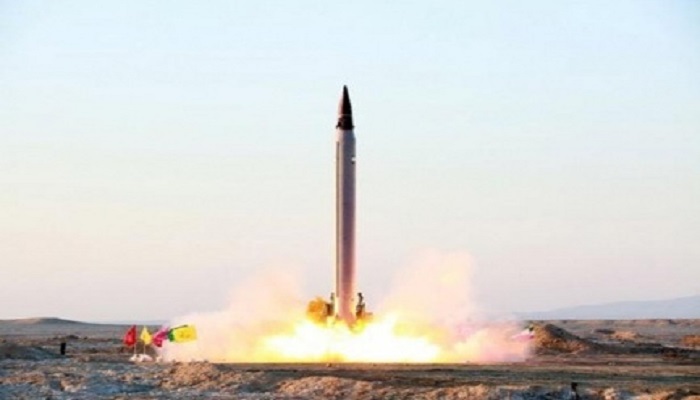
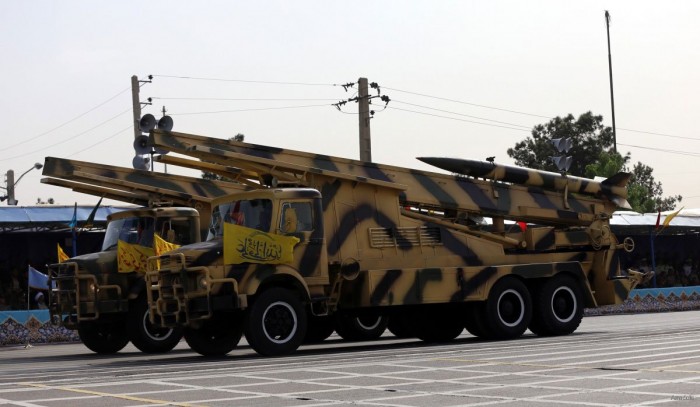
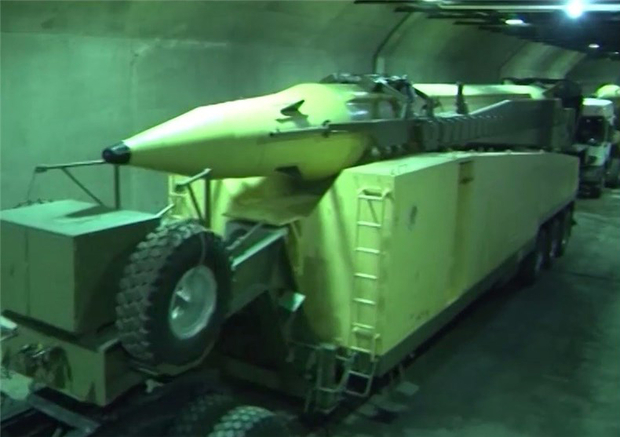
In the wake of the flip flop by the Obama administration to halt the imposition of new sanctions on the Iranian regime for its test firings of Emad ballistic missiles violating a United Nations Security Council resolution last week, the regime unveiled a new underground missile depot prominently featuring the same Emad missile in a blatant thumbing of its nose to the rest of the world.

Regime news agencies and state television video said the underground facility, situated in mountains and run by its Revolutionary Guards Corps, was inaugurated by the speaker of parliament, Ali Larijani. Release of the one-minute video followed footage of another underground missile depot released last October.

U.S. officials say the Emad, which Iran tested fired in October, would be capable of carrying a nuclear warhead and they say Washington will respond to the Emad tests with fresh sanctions against Iranian individuals and businesses linked to the program, but the administration reversed course at the last minute, first announcing a press conference and then canceling it.

The Iranian regime’s boasting about its missile capabilities is a direct challenge for the Obama administration as the U.S. and European Union plan to dismantle nearly all international sanctions against Tehran under the nuclear deal reached in July.

The regime’s provocations undermine all of the reassurances given by supporters of the nuclear deal who claimed it would pave the way for a more moderate and engaged Iranian regime.

After Iran tested the Emad missile in October, the UN Security Council’s panel of experts declared Iran in violation of resolution 1929, adopted in 2010. It prohibits the launching of any missile capable of carrying a nuclear warhead, and remains valid until the July nuclear deal between Iran and the five permanent members of the UN Security Council — the US, UK, Russia, China, and France — plus Germany goes into full effect. That won’t happen until Iran has fulfilled all of its obligations to scale back its program under the agreement, at which point Iran will be “called upon” by the Security Council to cease any missile testing for a period of eight years.

As the Chicago Tribune editorialized yesterday: “As the U.S. backpedaled, the Iranians pressed their advantage: Iranian President Hassan Rouhani proclaimed on Thursday that he was so incensed by proposed U.S. sanctions that he had instructed the military to expand Tehran’s missile program ‘in terms of range and accuracy.’ You don’t like two missile launches? How about 20?

“Days later, the Iranian Navy launched rockets within 1,500 feet of an American aircraft carrier and a French frigate in the Strait of Hormuz.”

“The U.S. and its partners have only one chance to establish that strict compliance from Iran will be expected through the course of this nuclear deal. That chance comes right now, before sanctions are lifted, before millions of dollars flow into Tehran’s economy,” the Tribune went on to say. “The U.S. should impose those sanctions for the missile tests. Iran won’t walk from the deal. It desperately needs that sanctions relief. And if it does walk away, that will serve notice that Iran never did intend to comply.”

The Tribune was not alone in its skepticism of the Iranian regime. Daniel W. Drezner, a professor of international politics at the Fletcher School of Law and Diplomacy at Tufts University, writing in the Washington Post said:

“It is possible that no amount of Obama administration hand-holding and backstopping was going to placate the anxiety of the Sunni states in the wake of the Iran deal. Still, if you look at the past year, the administration seems to have devoted very little time to gardening in the Gulf region. Which guarantees continued bloodshed in Syria, Yemen, Iraq, and . . . I’ve lost count of the sectarian conflicts at this point,” Drezner says.

“It is still likely that the Iran deal will continue to be implemented. But it also seems increasingly likely that the negative externalities of negotiating the deal are rendering it far less significant in advancing the oxymoron that is ‘Middle East stability,’” he added.

All of which goes a long way in explaining the recent escalation in tensions between the Iranian regime and its Arab Gulf state neighbors as Saudi Arabia, Kuwait, Bahrain, Sudan and the United Arab Emirates have all severed ties to the Iranian regime.

For those states which lie only a few hundred miles away from Iran, the threat of the Emad missile is much more real and practical than for the U.S., but no less worrisome is the retreat of U.S. willpower in the face of Iranian aggression under this administration. The message has been unmistakable for many of U.S.’s long-time allies in the region:

You’re on your own.

The Iran lobby was particularly humorous in its most recent statements of support for the mullahs in Tehran as Trita Parsi from the National Iranian American Council actually advocated the idea that Saudi Arabia was pushing for an armed conflict with Iran in order to gain back U.S. support against its long-time foe.

Predictably, Parsi raised the potential of the U.S. cutting loose Saudi Arabia as part of its strategic “realignment” towards Iran with a certain amount of glee.

He offers up the most ironic statement of all when he writes:

“If Washington’s priority is the defeat of IS and other jihadist movements, then a balancing act between an Iran that ferociously opposes IS and a Saudi Arabia that has played an undeniable role in promoting jihadi extremism may not be the right answer.”

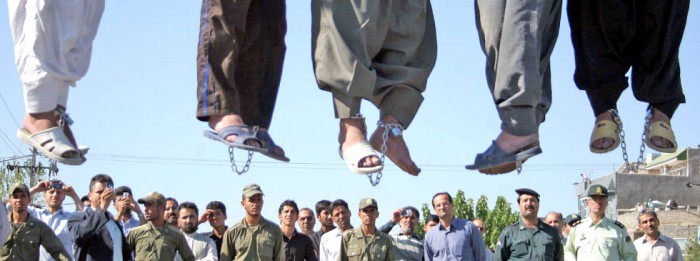
The fact that Parsi actually tries to portray the Iranian regime as a standard bearer against Islamic extremism is the height of hypocrisy. It’s like saying the Nazi Party are sponsors of Jewish festivals. We would suggest Parsi reacquaint himself with Iranian regime justice by Googling “Iran executions” and watching some video of the mullahs’ “moderation.”

By Michael Tomlinson

Filed Under: Blog, News Tagged With: #NuclearDeal, Featured, Iran Lobby, Sanctions, Trita Parsi

NIAC List of Accomplishments Misses on Human Rights

January 5, 2016 by admin


NIAC List of Accomplishments Misses on Human Rights

NIAC List of Accomplishments Misses on Human Rights

The National Iranian American Council, the leading advocate and lobbyist for the Iranian regime, published its list of accomplishments for 2015. It was a revealing list giving insight into the top priorities for the NIAC.

For an organization that claims as its mission the “strengthening the voice of Iranian Americans and promoting greater understanding between the American and Iranian people” one would think some of its top priorities would include:

  • Lifting of restrictions within Iran in the use of social media and access to the internet;
  • Halting censorship of news media and a stop to the arrest and imprisonment of journalists;
  • Freeing of Iranian-Americans currently being held in Iranian prisons, including Washington Post reporter Jason Rezaian, Christian pastor Saeed Abedini and former U.S. Marine Amir Hekmati;
  • Withdrawing support for terrorist organizations such as Hezbollah and a halt to proxy wars in Syria, Lebanon, Iraq and Yemen;
  • Releasing over 90 Christians currently imprisoned in regime prisons for practicing their faith;
  • Stopping all executions and imposition of punishments such as public amputations, stoning and beatings; and
  • Restoring basic rights to Iranian women to be free from abuse, spousal murder and misogyny laws.

On the surface, that would seem like an eminently reasonable list of goals for any organization interested in advancing humanitarians causes, but in the case of the NIAC, none of those goals are in its list of accomplishments, nor are they in its 2016 resolutions for future action.

That’s right, zero, zilch, nada.

So what exactly were the NIAC’s best accomplishments for the year? According to its website, the NIAC lays proud claim to nine achievements in its list, of which seven were related to the nuclear agreement with the Iranian regime.

The single most important achievement for the NIAC in 2015 according to its own boasts was securing a nuclear deal already dead on arrival with the test firing of ballistic missiles in violation of United Nations Security Council sanctions and threats by the mullahs to walk away from the deal if there are any threats to impose new sanctions for its missile violations.

Not exactly a recipe for “promoting greater understanding.”

Unsurprisingly, among its four stated “resolutions” for 2016, half relate to the nuclear deal.

Nowhere does NIAC mention the Iranian-Americans being held in Iran.

Nowhere does NIAC mention the brutal human rights situation in Iran.

Nowhere does NIAC mention the growing sectarian rift being fueled by extremist statements being made by top mullah Ali Khamenei who has been calling for the destruction of Sunni Arab states.

Nowhere does NIAC give any mention to the need to ratchet down tensions by calling on the Iranian regime to withdrawal support for proxy wars that have turned the Middle East into a battlefield stretching from the Mediterranean to Indian Oceans.

Instead, the NIAC’s sole focus is to keep the nuclear agreement alive long enough for $100 billion in cash to be wire transferred into regime bank accounts.

Trita Parsi must be looking to buy a new house.

It is a sad situation when the NIAC spells out in its own words its top priorities and none of them address the concerns of Iranian-Americans who yearn for a return to a homeland free from religious control, free from harsh brutality and open to all forms of religious worship and freedoms.

Far from serving Iranian-Americans, the NIAC serves only the mullahs in Tehran and has no other agenda than to take its orders from them.

One would think just for the sake of appearances the NIAC would throw a bone to human rights advocates and mention or cite as a goal the release of these Iranian-American hostages as a priority. It doesn’t even have to be the top priority, maybe number five or six on its list, but the NIAC can’t even bring itself to do that.

It should be apparent to any member of Congress, to any Congressional candidate, to any presidential campaign, who looks at this list, the NIAC is nothing more than a lobbying arm of the Iranian regime and does not accurately reflect the concerns of Iranian-Americans.

In this new year of 2016, we can only hope everyone wakes up to the charade the NIAC has been playing in 2015.

By Michael Tomlinson

Filed Under: Blog, National Iranian-American Council Tagged With: #NuclearDeal, Featured, Iran, Iran deal, Iran Human rights, Iran Lobby, Iran Terrorism, National Iranian American Council, NIAC, Trita Parsi

New Year Starts Off With Predictable Iran Regime Bullying

January 5, 2016 by admin

New Year Starts Off With Predictable Iran Regime Bullying

New Year Starts Off With Predictable Iran Regime Bullying

As 2015 rolled into 2016, the world celebrated with fireworks, parties, countdowns and even offered prayers for a peaceful new year, but the Iran regime dashed those hopes and threw cold water on the festivities by once again flexing its ideological muscle in regards to its illegal ballistic missile program.

Regime president Hassan Rouhani kicked off the New Year by delivering an order to his defense minister to expedite development of the regime’s ballistic missile program in response to threatened new U.S. sanctions set to be imposed on Iranian defense companies.

Rouhani made his comments on his official Twitter account throwing into confusion the nuclear agreement completed last July. It was a confusing situation being created since the Obama administration had been moving aggressively to begin dismantling economic sanctions under the agreement as early as this month, while at the same time it was set to impose new sanctions for the illegal test firing of two new ballistic missiles in violation of United Nations Security Council sanctions.

The schizophrenic nature of the situation illustrates perfectly the almost comical nature of the nuclear agreement where on the one hand the Obama administration is almost tripping over itself to grants relief to the Iran regime, while at the same time rattling its sword over illegal missile development; development it allowed to happen in the first place by removing them as a condition of the same nuclear agreement.

It also brings into sharp focus the essential nature of the Iranian regime which is to push the proverbial envelope as far as it can in taking advantage of its adversaries’ disarray.

“If U.S. continues its illegitimate interference with Iran’s right to defend itself, a new program will be devised to enhance missile capabilities,” Rouhani said in his tweet. “We have never negotiated regarding our defense capabilities including our missile program and will not accept any restrictions in this regard.”

Regime defense minister Hossein Dehghan spoke on state television saying he intended to make the regime’s missiles more powerful.

“Given the current circumstances in the region and the world, we believe peace and security can only be achieved through strength,” he said. “Therefore, we are going to expand our missiles in terms of range and accuracy.”

But in a contest of who might blink first, the Obama administration opted to delay implementation of the proposed sanctions amid threats by the mullahs in Tehran that any fresh U.S. sanctions might force the regime to pull out of the deal; a deal promising to deliver over $100 billion in badly needed cash to the regime.

While Obama officials offered no definitive timeline as to when these sanctions might be imposed, the announcement to impose them was originally scheduled for last Wednesday. By Thursday, members of Congress criticized the administration’s decision to pull back as another capitulation and appeasement to the mullahs.

Top U.S. lawmakers, including White House allies, said they believed failing to respond to Tehran’s two recent ballistic missile tests would diminish the West’s ability to enforce the nuclear agreement reached between global powers and Tehran in July.

“I believe in the power of vigorous enforcement that pushes back on Iran’s bad behavior,” Democratic Sen. Chris Coons of Delaware, a supporter of the nuclear deal, said Friday. “If we don’t do that, we invite Iran to cheat.”

Critics of the White House accused President Obama of backing down on his promises to take action in the face of Iranian provocations such as missile launches. They drew parallels to Mr. Obama’s failure to follow through on threats to launch military strikes on Syrian President Bashar al-Assad’s regime in 2013 in response to its use of chemical weapons against civilians.

“I fear that pressure from our ‘partners’—or threats from the Iranian government that it will walk away from the deal or threaten the U.S. in other ways—have caused the administration to rethink imposing sanctions for Iran’s violations of the testing ban,” said Sen. Bob Corker (R., Tenn.), chairman of the Senate Foreign Relations Committee.

The on-again, off-again nature of these new sanctions does little to strike fear in the hearts of the mullahs and if anything, emboldens them into believing nothing they do will earn a rebuke from Washington.

The United States has also accused Iran’s Revolutionary Guards of recklessly and provocatively firing rockets this week in the vicinity of American warships in the heavily trafficked Strait of Hormuz, a vital international waterway bordering southern Iran that connects with the Persian Gulf, in another sign of belligerent activity from the mullahs.

The confrontation over ballistic missiles and increased level of animosity between the regime and the U.S. in the wake of the nuclear deal points out the incredible pile of falsehoods pushed by the Iran lobby – most notably the National Iranian American Council – which promised a new era of moderation and cooperation and instead has seen fresh terror attacks in Paris and San Bernardino inspired by Islamic extremism, launches of new ballistic missiles and the near state of war between the Iran regime and Saudi Arabia.

Hardly a recipe for peace and stability in 2016 regime supporters such Trita Parsi of NIAC and Jim Lobe at Lobelog promised.

By Michael Tomlinson

Filed Under: Blog, The Appeasers Tagged With: Appeasement policy, Featured, Iran, Iran deal, Iran Lobby, Trita Parsi

Looking Back at 2015: Iran Lobby Pushes Falsehoods

December 30, 2015 by admin

Looking Back at 2015: Iran Lobby Pushes Falsehoods

Looking Back at 2015: Iran Lobby Pushes Falsehoods

Our last Look Back at 2015 concerns the Iran lobby itself and the complete lack of moral fiber within them. As 2015 saw a world engulfed in violence and bloodshed borne out of Islamic extremism which sprang forth from the teachings and policies of the Iranian regime, the Iran lobby remained deafeningly silent.

Chief among the leaders of the Iran lobby has been the National Iranian American Council, which has come to symbolize all of the oddities and corruption within supporters of the mullahs.

The NIAC claims an extended mission to help promote universal human rights in Iran saying on its website:

“NIAC works to ensure that human rights are upheld in Iran and that civil rights are protected in the US. NIAC believes that the principles of universal rights – dignity, due process and freedom from violence – are the cornerstones of a civil society.”

Lofty goals, but the record of NIAC’s living up to that mission is pitiful, especially given the plight of Iranian-Americans who have languished in Iranian prisons. These Iranian-Americans seem to be outside the good graces of the NIAC and are rarely mentioned in official public statements, or even social media posts by leading NIAC staffers including Trita Parsi, Reza Marashi and Tyler Cullis.

It is on social media we often see the true nature of the Iran lobby and the allegiances these supporters of the mullahs bear; the most prolific Twitterer is Parsi himself and his political goals are often thinly veiled in his tweets.

Throughout the year, Parsi would again and again go to this basic impulse he has to ridicule American institutions and mock all things even remotely offensive to the mullahs in Tehran.

This includes his tweets through the spring and summer in support of nuclear talks between the P5+1 and the Iranian regime. Parsi often framed the debate about what the U.S. is willing to give up and not the other way around, especially as it applied to delinking contentious issues such as human rights abuses and support of terrorism.

Even after the Charlie Hebdo attacks in Paris in January, the NIAC was silent. For the NIAC, there was no #jesuischarlie hashtag.

Even when Jordanian pilot Moaz al-Kassasbeth was burned alive in a cage on video by ISIS, NIAC made no statement condemning the hideous. Nor did the NIAC ever bother to delve into the roots of Islamic extremism, other than to attempt to make the connection in some manner to Saudi Arabia; Iran’s longtime regional rival. Again, it’s all about politics.

But considering Parsi’s past track record in losing a libel lawsuit largely on the grounds of shoddy record-keeping, making false statements and discovery abuses, it seems to be par for the course of how Parsi conducts his public business in the same slipshod manner. It is worth noting that Parsi was ordered to pay the journalist he accused of libel $184,000 to pay for the defendant’s legal expenses.

A closer look at the judge’s ruling in that case exposes many of the falsehoods the NIAC engages in when handling reality and facts, such as:

  • NIAC really didn’t produce calendar records it was ordered to;
  • NIAC initially hid the existence of four of its computers from the court and was not honest about what they were used for;
  • NIAC misrepresented how its computer system was configured;
  • NIAC didn’t explain why it withheld 5,500 emails from its co-founder and former outreach director;
  • NIAC was not truthful about the nature of its record-keeping system;
  • NIAC took two and a half years to produce its membership lists under court order; and
  • NIAC did not turn over mountains of relevant documents and even altered an important document after the lawsuit was brought.

With that much effort devoted to hiding the truth of what the NIAC engages, is it any wonder the plight of imprisoned Iranian-Americans such as Washington Post reporter Jason Rezaian is often just the tools for the regime?

Parsi, in an interview with Loyola Marymount University’s Asia Pacific Media Center, claimed the charges against Rezaian were all part of a plot to undermine nuclear negotiations with Iran and the P5+1, which is an odd statement to make. One would think Iran’s provocative attempt to ship arms to Houthi rebels in Yemen via armed convoy was enough to undermine talks, or Iran’s seizure of an unarmed cargo vessel might be enough to trouble negotiators, both acts that Parsi failed to criticize.

By August, protests held in favor of the deal resulted in crowds just as small as the staged regime protests in Tehran with Los Angeles – home to over 800,000 Iranian Americans – protests yielding a paltry 200 participants, most not even of Iranian descent; while rallies in Washington, DC and San Diego were even smaller, barely cracking 100 people.

In contrast, over 10,000 rallied in New York’s Times Square against the deal and another 1,000 gathered in Los Angeles, most of them Iranian Americans demonstrating not only their opposition to the regime, but also for the various resistance movements around the world.

While NIAC staffers such as Parsi, Marashi, Cullis and Jamal Abdi shout until veins bulge out of their collective necks that the mullahs deserve a break, they continued to blatantly ignore the incalculable human suffering being inflicted by those same mullahs on women, children, Christians, Iranian-Americans, Sunnis in Iraq, moderates in Syria or refugees in Yemen. The swatch of human suffering and misery caused by the mullahs has earned neither reproach nor condemnation by the NIAC and its allies.

And those allies pop up in some unusual places as Breitbart News discovered when it looked into the hiring of Sahar Nowrouzzadeh, a former NIAC staffer, as the National Security Director for Iran who sat in on several high level meetings with President Obama while discussing negotiations with the Iran regime on the nuclear deal.

The NIAC attempted to dismiss Nowrouzzadeh’s position as a mere intern, but a 2004 document uncovered by Breitbart News described her as a former “staff member” at NIAC.

But the truth about Parsi came out in a serious of journalistic pieces this year as he came under greater scrutiny, including Jeffrey Goldberg of The Atlantic who referred to Parsi as someone who “does a lot of the leg-work for the Iranian regime.”

The crowning hypocrisy came when Parsi denounced comparisons of the Iran nuclear deal to the infamous Munich deal with Nazi Germany and labeled it “fear propaganda” when he himself has been one of the chief merchants of fear mongering by pushing the “war vs. peace” scenario for passage of the deal.

While the passage of the nuclear agreement might be making Parsi and his colleagues feeling good about themselves, the handwriting is on the wall as the presidential election cycle heats up and the rhetoric amongst virtually all of the candidates on both sides of the aisle has turned towards fighting the rise in Islamic extremism and holding the mullahs fully accountable.

In 2016, Parsi and the rest of the Iran lobby might be feeling left out in the cold come November.

By Michael Tomlinson

Filed Under: Blog, National Iranian-American Council, News Tagged With: Featured, Iran deal, Iran Human rights, Iran Lobby, Jason Rezaian, Marashi, National Iranian American Council, NIAC, NIAC Action, Reza Marashi, Trita Parsi, Tyler Cullis

Iran Regime Promises More Missiles in Spite of UN Ban

December 17, 2015 by admin

Iran Regime Promises More Missiles in Spite of UN Ban

Iran Regime Promises More Missiles in Spite of UN Ban

Sounding as defiant as ever, the Iranian regime announced it would not accept any restrictions over its ballistic missile program after the United Nations Security Council’s Panel of Experts concluded in a confidential report that last October’s test firings of a new ballistic missile violated UN restrictions banning development of nuclear-capable missiles by the Islamic state.

“We tested Emad to show the world that the Islamic Republic will only act based on its national interests and no country or power can impose its will on us,” Defense Minister Hossein Dehghan was quoted as saying by the state news agency, IRNA.

Ballistic missile tests by Iran are banned under Security Council resolution 1929, which dates from 2010 and remains valid until the July nuclear deal between Iran and world powers goes into effect, according to Reuters which first broke the news about the confidential UN report.

Once the deal takes effect, Iran will still be “called upon” according to Reuters not to undertake any ballistic missile work designed to deliver nuclear weapons for a period of up to eight years, according to a Security Council resolution adopted in July right after the nuclear deal.

The regime contends that the resolution would only ban missiles “designed” to carry a nuclear warhead, not “capable of”, so it would not affect its military program as Tehran does not pursues nuclear weapons. The distinction is akin to saying a gun that is not designed to kill humans expressly, but is capable of killing humans is somehow different.

It is that kind of linguistic gymnastics which has characterized the regime’s approach to nuclear negotiations and its support of terror groups and the Assad regime in Syria. Regime leaders such as top mullah Ali Khamenei have consistently issued statements inconsistent with public statements made by other regime officials such as Hassan Rouhani and foreign minister Javad Zarif. The contradictions coming out from the regime could give anyone fits trying to detangle the mess.

Therein lay the strategy of the mullahs in that they seek to create this confusion in order to provide the wiggle room necessary to justify any action they see fit. By declaring its missiles not expressly designed for nuclear weapons, they can ignore international bans. By declaring the lifting of any sanction under the nuclear deal tardy or slow, the regime could declare the agreement null and void at any time and build a nuclear weapon at will.

It is the false promises made during the nuclear talks that are now coming to haunt the rest of the world as they see the Iranian regime do whatever it pleases to fit the narrative it chooses to articulate.

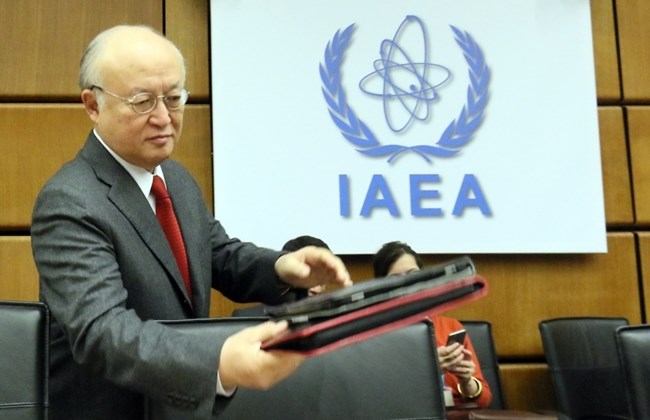
Rouhani himself couldn’t stop from making a verbal slam dunk when he went on state television calling the vote by the International Atomic Energy Agency’s board of governors to close out its inquiry into the regime’s past military practices in its nuclear program in spite of highly critical findings by inspectors that the regime continued to develop nuclear weapons well into 2009 and still had not fully answered outstanding questions.

The Tehran regime has announced its intentions to bulk up on Russian military hardware in a buying binge that started with completion of the sale of S-300 advanced anti-aircraft missile batteries.

On the shopping list by the regime’s military are advanced, fifth-generation Russian T-90 battle tank, along with a range of other major defense items, according to Brig. Gen. Ahmad Reza Pourdastan, the regime’s top ground commander, during a defense conference in the Khorasan region of northern Iran.

With the regime due to receive an estimated $150 billion in frozen assets from the lifting of economic sanctions from the nuclear deal, it is clear now the intention of the regime is to spend heavily on military hardware, not in jumpstarting a moribund economy that is punishing Iran’s citizens contrary to the claims made by Iran lobby members such as Trita Parsi of the National Iranian American Council.

Pourdastan also said during the conference that the military needs helicopters, heavy weaponry and advanced combat equipment. While the new requests undermine Iran’s own defense industry, the ground forces commander said that the country’s military industrial complex will continue to develop, according to the International Business Times.

“The Iranian defense industry has strong potential. Nevertheless, we will constantly take care of modernizing it,” he said.

The new moves on the military front have many in Washington calling for new and increased sanctions on the Iranian regime to address all of the issues not addressed by the original nuclear agreement.

Jennifer Rubin writes in the Washington Post suggesting that “new pressure needs to be applied to Iran.”

She also quotes from Eliot A. Cohen, Ray Takeyh and Eric Edelman in a piece in Foreign Policy, suggesting:

“In addition to revising the nuclear agreement, the United States should punish Iran for its regional aggression, sponsorship of terrorism, or human rights abuses. To do so, it should segregate Iran from the global economy by restoring as much of the sanctions architecture as possible. . . . And it should launch a campaign of political warfare to intensify the Iranian public’s disenchantment with the regime and deepen dissension within the ruling circle.”

It would be wise for the world to recognize another race has begun on trying to restrain a newly militant Iranian regime.

By Michael Tomlinson

Filed Under: News Tagged With: #NuclearDeal, Featured, Iran Human rights, Iran's frozen assets, Sanctions, Trita Parsi

International Human Rights Day Everywhere Except Iran

December 10, 2015 by admin

International Human Rights Day Everywhere Except Iran

International Human Rights Day Everywhere Except Iran

December 10th marks International Human Rights Day which will be celebrated by the United Nations and nations around the world as recognition of fundamental importance of human rights in free and open societies. The day will be observed with speeches, conferences, panel discussions, protests and solemn observances.

This year’s Human Rights Day will be devoted to a year-long campaign for the 50th anniversary of the two landmark International Covenants on Human Rights: the International Covenant on Economic, Social and Cultural Rights and the International Covenant on Civil and Political Rights, which were adopted by the United Nations General Assembly on 16 December 1966.

According to the UN Human Rights Office, the year-long campaign revolves around the theme of rights and freedoms — freedom of speech, freedom of worship, freedom from want, and freedom from fear — which underpin the International Bill of Human Rights are as relevant today as they were when the Covenants were adopted 50 years ago.

But respect for human rights have been found conspicuously lacking in certain parts of the world; most notably within the Iranian regime where things have gotten so grim the UN High Commissioner appointed Ahmed Shaheed as the Special Rapporteur on human rights in Iran to monitor the dismal state of affairs in the Islamic state.

Over the past year, 2015 has been a dark stain on human rights progress in Iran as chronicled in the steady stream of press releases put out by the UN about abuses there:

  • January 2015: UN child rights body to investigate 12 countries including Iran for violations involving children;
  • February 2015: UN experts urge Iran regime to halt immediately the execution of a juvenile sentenced by regime courts;
  • March 2015: Human Rights Council adopts the Universal Periodic Review of Iran chronicling the litany of human rights lapses in the regime. The Council also discusses the annual report on human rights in Iran and extends mandates for further review of Iran;
  • May 2015: UN rights experts condemn recent upsurge in executions by the Iran regime, many of them unreported;
  • June 2015: UN experts warn that silencing journalists and activists weakens protections for human rights in Iran;
  • August 2015: UN experts call for an immediate moratorium on applying the death penalty after regime hands downs death sentences to a prisoner of conscience and alternative health practitioner;
  • October 2015: UN rights experts express outrage at the execution of two juvenile offenders; and
  • November 2015: UN experts call on Iran regime to stop intimidating journalists ahead of parliamentary elections.

The UN announcements only cover a tip of the proverbial iceberg as Iranian dissident groups and international human rights groups such as Amnesty International have chronicled an ever growing list of human rights abuses by the Iran regime.

One observance was held in Paris by the Union of Iranian Associations in Europe and included former U.S. Democratic vice presidential nominee Sen. Joseph Lieberman and Mrs. Maryam Rajavi, leader of the National Council of Resistance of Iran who said at the gathering:

“We honor the International Human Rights Day by paying respect to all brave men and courageous women in Iran and around the world who sacrificed their lives or have risen up to bring human rights and democratic freedoms to oppressed nations,” she said.

“Iran’s clerical regime has been condemned 62 times so far by various United Nations agencies for its gross violation of human rights in Iran. In addition, the regime and Khamenei himself, are directly responsible for the massacre of 300,000 Syrians in the past four years and displacement of more than half of the population; they are also directly responsible for the genocide of Sunnis in Iraq by the Quds Force militias,” she added.

The most recent UN condemnation came after 36 human rights organizations, led by Human Rights Watch, called on the regime to improve its human rights situation and for the international community to work together to promote human rights within Iran.

To say the situation is grim in Iran is an understatement since the regime’s revolutionary courts mete out punishment often in closed, secret sessions and impose often medieval punishments proscribed by religious doctrine which include public hangings and amputations of limbs, while also handing out no punishment to those that engage in acid attacks on women or abuse of children.

In 2014 alone, Shaheed noted a reported 753 executions, the highest rate in over a decade. This year rights groups have tallied over 1,000 executions in a staggering display of merciless regime justice.

The butcher’s bill doesn’t even include the bloodshed caused by the regime’s intervention and support of proxy wars in Syria, Iraq and Yemen that have caused the largest refugee crisis since World War II and claimed hundreds of thousands of lives of men, women and children.

But it is in the private agony suffered by individual prisoners in Iran’s notorious prisons where the true evil of the mullahs is laid bare to world scrutiny. One such story comes from Rahim Hamid who as a then 22-year old student in 2008 was taken by regime police and endured torture and abuse as he detailed in an interview with the Telegraph newspaper.

“Day and night I could hear the screaming and weeping of fellow prisoners – men, women and children – who were incarcerated and tortured there. It was the norm for guards to inflict casual cruelty, such as forbidding prisoners access to a toilet so that they were forced to urinate in the cell, which stank to a nausea-inducing extent in the heat,” Hamid said.

“Among other forms of physical torture, I was tied to a metal bed frame by the wrists and ankles and savagely whipped. If I resisted or cursed the guards, they would prolong and intensify the torture. They raped me violently and repeatedly with the large whip handle; so brutally that the rape did permanent injury to my rectum, for which I still need medical treatment,” he added.

Hamid’s tale is only one of many that are repeated every day within Iran, immune to the entreaties and condemnations of the international community by mullahs who care nothing except the maintaining of their absolute status as masters over the Iranian people.

And where does the Iran lobby stand on all this? Does it issue condemnations? Does it commemorate the suffering of Iranians? Does it demand the release of American hostages such as Washington Post reporter Jason Rezaian, Christian pastor Saeed Abedini or former U.S. Marine Amir Hekmati?

No. The Iran lobby’s silence is deafening.

As the world observes Human Rights Day, Trita Parsi of the National Iranian American Council, the leading Iran lobby organization, published and editorial in Huffington Post condemning presidential candidate Donald Trump.

That is the Iran lobby’s contribution to observing human rights.

By Michael Tomlinson


Filed Under: News Tagged With: Featured, International Human Rights Day, Iran Human rights, Iran Lobby, Maryam Rajavi, Trita Parsi

Iranian Exile’s Life Cut Short in San Bernardino by Extremism

December 4, 2015 by admin

Iranian Exile’s Life Cut Short in San Bernardino by Extremism

Iranian Exile’s Life Cut Short in San Bernardino by Extremism

Bennetta Betbadal was born in Iran in 1969 and fled to the U.S. when she was a young 18-year-old to “escape Islamic extremism and the persecution of Christians that followed the Iranian Revolution,” her family said in a statement.

She settled in New York City and eventually moved to California where she married and eventually settled in Rialto to raise her family of three boys and a girl now aged 10, 12 and 15 years old.

Her husband worked as a police officer at local community college and she went to school to earn a degree in chemistry, eventually taking a job as an inspector with the San Bernardino County Health Department in 2006.

She went to work Wednesday morning filled with optimism about a presentation she was due to give to co-workers and had just finished decorating the family Christmas tree.

Shortly after 11 am that day, she, and 13 of other people, was killed at the Inland Regional Center in San Bernardino in what is quickly becoming a case of terrorism by a couple that may have been radicalized and had links to Islamic extremist groups.

The morning massacre apparently carried out by a Syed Farook, 28, and his 27-year-old Pakistani wife Tashfeen Malik had many of the same hallmarks of the recent terror attacks in Paris. Both attacks appeared to be well-planned, involving more than a lone gunman, and included significant technical skills in creating explosive devices.

Both attacks involved native-born young men who appeared to have been radicalized by similar extremist Islamic messages that power most of the world’s terror groups such as ISIS, Hezbollah, Boko Haram, Al-Qaeda and Shiite militias.

In the statement issued to the news media, the family said: “It is the ultimate irony that her life would be stolen from her that day by what appears to be the same type of extremism that she fled so many years ago.”

The tragedy of Betbadal is a reminder to the world that Islamic extremism is a real, prevalent and growing threat to the civilized world and the first battle in confronting comes by calling it for what it is and naming the sources of it.

It’s a necessity that the Iran lobby has fought hard to prevent from happening because in the world today, there is only one nation state that is a theocratic exporter of terror and extremism and that is the Iranian regime. In fact, the regime is just one of three nations on the planet still on the U.S. State Department’s list of state sponsors of terror.

In the weeks and months to follow there will be more details revealed from the shooters’ lives and we’ll know more conclusively of the links they may have had to terror groups, but the intial evidence is worrisome and damning.

It has also been well documented that the regime has served as the “spiritual godfather” of Islamic extremism as its leaders, especially its current top mullah Ali Khamenei, have preached a hardened vision of Islam that is both apocalyptic and nihilistic. It’s specific brand of Shia sectarian belief has been used to justify everything from public executions and brutal torture to suppression of women’s rights and the virtual destruction of Iran’s environment and rape of natural resources.

The attacks in Paris and San Bernardino and previously in Sydney, the Charlie Hebdo attacks and others all can be traced back to a view point that violence in the name of religion is justified to achieve goals, which was given birth to by the mullahs after the 1979 revolution.

It’s also no surprise that regime supporters such as the National Iranian American Council have again been reduced to mute silence in the face of another act of Islamic extremism. In fact, the Twitter feed for NIAC head Trita Parsi spit out more tweets about gun control and denouncing Saudi Arabia than in expressing any sympathy for the 14 people killed and 21 people wounded in the attacks.

Ironically enough, Parsi did send out one tweet making fun of the fear people have about the rise of terror attacks, saying “Scary map of all Islamic terror attacks in the U.S. Just kidding, its just all mass shootings since Sandy Hook #gunsense”

Parsi might have instead tweeted out this time-lapse mapping of all terror attacks worldwide over last 15 years. He would find that the number of killings, bombings, shootings and attacks dwarf what Parsi points too.

But that may be asking too much of Parsi and his colleagues at NIAC who have devoted themselves to serving as political cover for the regime whenever Islamic extremism rears its ugly head, even all the way to a quiet suburb in Southern California.

By Michael Tomlinson

Filed Under: Blog, News Tagged With: Featured, Iran Lobby, NIAC, San Bernardino, Trita Parsi

Iran Lobby Glosses Over IAEA Report on Iran Nuclear Work

December 3, 2015 by admin

Iran Lobby Glosses Over IAEA Report on Iran Nuclear Work

Iran Lobby Glosses Over IAEA Report on Iran Nuclear Work

The International Atomic Energy Agency released its long-awaited report detailing the military dimensions of the Iranian regime’s nuclear program and unveiled disturbing new details that have left the Iran lobby, especially the National Iranian American Council, scrambling to cover up.

In the report, Iran was actively designing a nuclear weapon until at least 2009, far later than virtually all intelligence agencies had believed and proving the regime’s ability to conceal its design activities while under intense scrutiny and even spying from various nations.

The report, which according to the New York Times, was compiled largely based on partial answers provided by Iran after completing nuclear talks last July, concluded that the regime was “conducting computer modeling of a nuclear explosive device” before 2004 and continued those efforts right through President Obama’s first term in office.

The IAEA detailed a long list of experiments conducted by the regime “relevant to a nuclear explosive device” directly contradicting claims made by the Iran lobby and the mullahs that Iranian regime’s nuclear program was only for civilian and peaceful purposes.

We now know through Iranian regime’s own admission, it was trying to build nuclear weapons at a feverish pace.

But the IAEA concluded that substantial gaps existed because the regime refused to provide answers to several key questions, restricted the ability to interview key scientific personnel and limited sampling of sites and facilities only after they had been scrubbed.

The nuclear deal negotiated with the Iranian regime mandated limiting Iran’s ability to build a bomb for at least 15 years, but the inability to paint a complete picture and the revelation that Tehran had been conducting work unbeknownst to the rest of the world leaves significant doubt as even that goal is attainable.

According to the Times, Tehran gave no substantive answers to one quarter of the dozen specific questions or documents it was asked about, leaving open the question of how much progress it had made.

At Iran’s Parchin complex, where the agency thought there had been nuclear experimental work in 2000, “extensive activities undertaken by Iran” to alter the site “seriously undermined” the agency’s ability to come to conclusions about past activities, the report said.

The response from Capitol Hill was swift and bipartisan.

“I think we’re getting off to a very, very poor start,” Senate Foreign Relations Committee Chairman Bob Corker (R-Tenn.) told reporters after a roughly two-hour top-secret committee hearing.

“These are exactly the things that we talked about during the hearing process that raised concerns and they’re being validated right now,” he added.

“It just sets a very bad precedent that if Iran thinks it can violate the world’s will, as expressed by Security Council resolutions, and in essence face no consequence for it,” said Sen. Robert Menendez (N.J.), one of the four Democrats who voted against the deal in September.

The defense offered by the NIAC’s Trita Parsi through a press release was tepid and paper thin as he focused on the issue of complying with the terms of the agreement in releasing the report, but not in the report’s findings themselves, praising the IAEA’s “assessment of coordinated ‘activities relevant to the development of a nuclear explosive device,’ in Iran prior to 2003, and that there have been no credible indications of such relevant activities since 2009.”

Parsi of course does not mention the fact the work conducted through 2009 was denied by Tehran and by Parsi himself and that the refusal by the mullahs to answer specific questions left the report, at best incomplete, and at worst a whitewash.

The Iran lobby is now finding it harder and harder to cover for the regime because its own promises and arguments are now all coming to be uncovered as falsehoods and outright deceptions. The fortunate thing about the internet is you can always search and look back at the statements people like Parsi have made and in the context of what is happening now, realize just how really wrong they were.

With the IAEA report, it’s just another blow to any shred of credibility the Iran lobby had.

By Michael Tomlinson

Filed Under: Current Trend, News Tagged With: #NuclearDeal, Featured, Iran deal, Iran Human rights, Iran Lobby, Iran Mullahs, Iran sanctions, Iran Talks, National Iranian American Council, NIAC Action, Rouhani, Sanctions, Trita Parsi

Reasons To Be Thankful This Past Weekend

December 1, 2015 by admin

Reasons To Be Thankful This Past Weekend

Reasons To Be Thankful This Past Weekend

This past weekend, across the U.S., families sat down together to celebrate family and give thanks for all what they have, including secularism in government, freedom of speech and the practice of religion, support for the rights of women and minorities, protection for a free and active press and the guarantee of due process and a presumption of innocence in criminal cases.

All those things and more have formed the bedrock of American civil society for 239 years, but are virtually non-existent in the one country that has steadily called for the destruction of the American way of life since 1979: the Iranian regime.

The past few months of 2015 have certainly caused significant concern and alarm among Americans and throughout most parts of the world. We have seen terror attacks spring up literally around the world, most recently in the horrific attacks in Paris – first with the Charlie Hebdo attacks and then the bombings – and in the wave of atrocities perpetuated by Al-Qaeda, Boko Haram, Hezbollah and Shiite militias.

Couple that with the spread of sectarian conflicts – most fueled by the Iranian regime – in Syria, Iraq and Yemen, and you begin to get a pretty good idea of how chaotic the year has become in spite of the promises made by the Iran lobby that things would settle down after a deal was struck with the mullahs in Tehran over a new nuclear deal.

How wrong people like Trita Parsi of the National Iranian American Council were.

But for most Americans, their Thanksgiving wishes and victories were much smaller and personal. For them, most Americans could be thankful that this past weekend:

  • No more Americans were arrested and held hostage in Iran, except for the five currently held captive by the Iranian regime;
  • No new terror attacks were launched against Americans at home or abroad; and
  • The Iranian regime didn’t launch any new ballistic missiles like it did last month violating United Nations arms embargoes.

But for the Iranian regime, this past weekend wasn’t nearly a peaceful or good one for the mullahs as setbacks continue to dog the regime and stymie each of its efforts to expand its vision for a greater Islamic sphere of influence controlled from Tehran.

Among the news coming from media sources this weekend include:

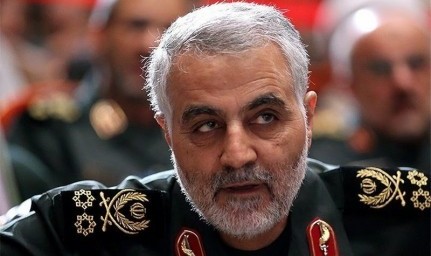
  • Reports that Quds Force commander Qassem Soleimani was seriously injured in Syria while supervising Iranian regime forces fighting rebels on behalf of the Assad regime. This follows previous news of deaths of other top Iranian military commanders in Syria;
  • The Washington Post reported that findings by the International Atomic Energy Agency can be expected to spark another round of intense scrutiny over the Iran regime’s claims its previously undisclosed nuclear program did not have any military components to it;
  • In anticipation of the IAEA report, the regime denounced the ongoing investigation and warned that Iran would not follow through on the nuclear deal unless the IAEA closed its investigation no later than Dec. 15;
  • Kenyan security forces have arrested two Kenyan men with links to the Iranian regime’s Quds Forces on suspicion of planning attacks in the East African nation, the Interior Ministry said on Saturday. It said their targets included “hotels in Nairobi frequented by Western tourists and diplomats;”
  • A flurry of reports in the Iran regime’s official and semi­official news outlets that have flooded out about more combat deaths suffered by Iranian forces in Syria have surprised analysts who monitor the country’s tightly controlled media. The reports, they say, indicate that at least 67 Iranians have been killed in Syria since the beginning of October, in a move some have described as an attempt by the mullahs to grab headlines back from Russia in an effort to burnish the image of regime forces fighting in Syria.

And to top off the weekend, top mullah Ali Khamenei went on his usual Sunday rant denouncing the U.S. and promising to keep the regime’s policies aimed squarely at preserving the Islamic revolution and spreading it throughout the region.

As reported in the Washington Times, Khamenei’s message was the subject of an analysis in a report by the U.S. Army Foreign Military Studies Office at Fort Leavenworth, Kansas.

“To encourage perpetual revolution might mean to foment continuous crisis,” the report said. “This, in turn, suggests greater regional instability and Iranian Revolutionary Guards Corps provocations toward U.S. forces and others.”

In other words, the Joint Comprehensive Plan of Action, the nuclear deal on which the Obama administration gambled for a more moderate Iran, has not tempered Khamenei’s fiery outcry.

“Khamenei’s endorsement of an expansive and perhaps even growing IRGC role confirms the group’s position as the chief obstacle to any political and economic reform in the Islamic Republic, and also suggests that the IRGC may win disproportionate advantage from any unfrozen assets or foreign direct investment entering the Iranian economy,” the report added.

All of which points out that while Americans celebrated values of family, peace, forgiveness and charity on Thanksgiving, the Iranian regime was busy deepening a conflict that has displaced half of Syria’s population, creating the largest refugee crisis in Europe since the end of World War II and spreading a radicalized form of extremist Islam manifesting itself in various terrorist groups around the world.

We can only hope the mullahs don’t get their holiday wishes granted next month.

By Michael Tomlinson

Filed Under: Blog, News Tagged With: Featured, Iran, Iran deal, Iran Terrorism, IRGC, Khamenei, Quds force, Syria, Trita Parsi, Yemen

Iran Regime Sympathizers Downplay Paris Attacks

November 24, 2015 by admin


Iran Regime Sympathizers Downplay Paris Attacks

Iran Regime Sympathizers Downplay Paris Attacks

In what has to be one of more astounding editorials written about the Paris attacks, Paul R. Pillar, a frequent supporter of the Iranian regime, penned a piece in the National Interest in which he actually tried to make the argument that the attacks were an example of “amateurish” tactics and that the outsized response from governments and media bordered on hysteria and ISIS did not warrant much respect.

“It is a mistake to regard the ISIS entity as a font of critical skills needed to kill people,” Pillar writes.

Let’s think about that statement for a moment. Pillar actually makes the claim that ISIS lacks the skills to kill people. That absurd statement ranks right up there with his previous editorials arguing vociferously for the nuclear agreement with the Iranian regime and his claims that doing so would usher in a new and peaceful phase in Middle East tensions.

Well, we certainly know how that worked out.

Pillar’s piece was reprinted faithfully in Lobelog.com, another loyal member of the Iran lobbying effort alongside the National Iranian American Council and Ploughshares Fund just to name a few; all of whom have recently made efforts to divert attention away from the bloody carnage in Paris and now Mali, and instead try to shift the discussion onto discrimination of Syrian refugees or warning of an overreaction in cracking down on civil liberties.

All of the members of the Iran lobby neglect to mention that the center and source of all of these problems starts and ends with the Iranian regime’s fanatical support of the Assad regime in Syria which started the conflict in the first place and helped spawn ISIS in the sectarian fight that sprang up when the mullahs in Tehran sent in thousands of Hezbollah fighters from Lebanon, Shiite Militias from Iraq and mercenaries from Afghanistan added to milliards of dollars to help keep its proxy in power in Syria.

The fact that Pillar attempts to gloss over the planning and execution necessary for the Paris attacks is unfathomable, other than he is trying hard to minimize the import of what the attacks mean for the West. He argues:

“Some organizational aptitude was needed to put together an operation that involved simultaneous dispatch of multiple attack teams, but this did not require organizing any more people than would be needed to put together a neighborhood soccer team,” Pillar said.

Most rational people would not think their local neighborhood soccer team could build eight suicide bomb vests, acquire and equip three teams with automatic weapons, arrange timetables, scout locations, determine how to funnel panicked people fleeing a bombed sports stadium into a kill zone and communicate via text messaging on disposable cell phones while arranging the attack via encrypted communications evading virtually all national intelligence agencies.

But Pillar exhibits the singular trait that afflicts all supporters of the Iranian regime; the desire to absolve it of any responsibility for spreading and fostering the kind of extremist Islamic belief that is now shaking the world with widespread, multiple and frequent attacks.

Pillar also neglects to mention another key facet of these attacks that is significantly more disturbing than the actual loss of human life; it’s the fact these attacks are not supported with any public demands.

There are no calls to release political prisoners or comrades. No demands for ransom or payments. No negotiations over territorial claims or grievances.

These attacks are based solely on the nihilistic extremist beliefs that also power and drive the mullahs in Tehran.

“The death toll for all of the Paris attacks, as shocking as it understandably was, nonetheless was much less than a more skillfully conducted operation involving a comparable number of attackers would have inflicted,” Pillar writes. “The attack team that went after the most target-rich location—a sports arena with tens of thousands of people—managed to kill only one other person besides themselves.”

I’m sure the families of those slain would disagree with Pillar on the skill level involved in murdering their loved ones, but his comments reflect the almost callous disregard the Iran lobby has for human suffering. Very similar to the Iranian regime’s initial condemnation of the attack but its consequent show of happiness by shamefully putting the blame on the French authorities in its state wide papers and media.

At key points in the travesty that is the human rights record of the Iranian regime, Pillar and his cohorts including Trita Parsi and Reza Marashi of NIAC, Jim Lobe of Lobelog.com and others have been struck deaf and mute when it comes to protesting the abhorrent human rights abuses of the mullahs in Tehran either in their comments to news media or in their own social media posts.

Americans held hostage, journalists rounded up, religious minorities imprisoned, social media administrators tossed in jail, dissidents executed, all these actions and more and warranted hardly a murmur of protest and yet Pillar deigns to call terror attacks in Paris as “amateurish.”

The only real amateurish act in this tragedy is the effort by the Iran lobby to whitewash the blood off the streets of Paris.

By Michael Tomlinson

Filed Under: News Tagged With: Featured, Iran, Iran Lobby, Lobelog, National Iranian American Council, NIAC, NIAC Action, Paul Pillar, Ploughshares, Reza Marashi, Syria, Trita Parsi

  • « Previous Page
  • 1
  • …
  • 12
  • 13
  • 14
  • 15
  • 16
  • …
  • 21
  • Next Page »

National Iranian-American Council (NIAC)

  • Bogus Memberships
  • Survey
  • Lobbying
  • Iranians for International Cooperation
  • Defamation Lawsuit
  • People’s Mojahedin
  • Trita Parsi Biography
  • Parsi/Namazi Lobbying Plan
  • Parsi Links to Namazi & Iranian Regime
  • Namazi, NIAC Ringleader
  • Collaborating with Iran’s Ambassador

Recent Posts

  • NIAC Trying to Gain Influence On U.S. Congress
  • While Iran Lobby Plays Blame Game Iran Goes Nuclear
  • Iran Lobby Jumps on Detention of Iranian Newscaster
  • Bad News for Iran Swamps Iran Lobby
  • Iran Starts Off Year by Banning Instagram

© Copyright 2026 IranLobby.net · All Rights Reserved.