Iran Lobby

Exposing the Activities of the lobbies and appeasers of the Mullah's Dictatorship ruling Iran

  • Home
  • About
  • Current Trend
  • National Iranian-American Council(NIAC)
    • Bogus Memberships
    • Survey
    • Lobbying
    • Iranians for International Cooperation
    • Defamation Lawsuit
    • People’s Mojahedin
    • Trita Parsi Biography
    • Parsi/Namazi Lobbying Plan
    • Parsi Links to Namazi& Iranian Regime
    • Namazi, NIAC Ringleader
    • Collaborating with Iran’s Ambassador
  • The Appeasers
    • Gary Sick
    • Flynt Leverett & Hillary Mann Leverett
    • Baroness Nicholson
  • Blog
  • Links
  • Media Reports

Halloween Comes Early for Iran Lobby

October 27, 2015 by admin


Halloween Comes Early for Iran Lobby

Halloween Comes Early for Iran Lobby

Halloween involves kids (and adults) firing up their imaginations to come up with costumes and then go knocking door to door seeking treats and getting the odd trick played on them maybe in a haunted house. For the Iran lobby, Halloween came a week early as the chief advocate, the National Iranian American Council, held its annual leadership conference this weekend.

It’s worth noting that the NIAC bills its event as a premier conference for the nation’s Iranian-American community, but its agenda and participants hardly represent the views and beliefs of the estimated one million Iranian-Americans living in the U.S.

In fact, the line-up of speakers at this year’s conference reads more like a line-up card of Iran regime boosters and potential business partners than any group seriously examining the daunting challenges remaining between the U.S. and Iran. What is even more amazing are the lack of any speakers who have first-hand experience with the abysmal human rights situation in Iran, nor were there any speakers offering views on the sizable opposition worldwide to the regime amongst the Iranian diaspora.

Among the highlights of this gallery of apologists and appeasers includes:

  • Bijan Khajehpour, who founded Atieh International and the related Atieh Bahar which employed NIAC staffers to serve as a conduit for directing foreign companies to invest into the regime through the access it provided to top regime officials who controlled most of Iran’s economy through a complex web of shadow companies. Atieh was the subject of an in-depth piece in The Daily Beast on its start and close relationship with leading supporters of the regime and how it profited from those ties and in advocating for a lifting of sanctions against Iran;
  • Joseph Cirincione, president of Ploughshares Fund which was the largest funder of the lobbying campaign in support of the nuclear deal and the lifting of sanctions against the regime. It alone provided NIAC with at $150,000 for its advocacy work on behalf of the nuclear deal; not including money given by its staff. Commentary Magazine poured through tax records to glean the wide scope of Ploughshares giving to groups working on behalf of the regime’s cause; and
  • Alan Eyre, the U.S. State Department’s Persian-language spokesman who came under fire recently for promoting anti-Semitic conspiracy sites demonizing American Jewish groups, as well as postings on his personal social media praising the regime’s controversial Quds Force commander Qassem Soleimani according to the Washington Free Beacon. Eyre also posted links to Lobelog, a well-known blog dedicated to supporting the regime’s key messages.

The conference also featured several speakers who are actively seeking business deals within the regime including: Ned Lamont, chairman of Lamont Digital Systems; Jay Pelosky, a self-described advisor on emerging markets who recently visited Iran; and Amir Handjani, president of PG International Commodity Trading Services, a leading importer of agricultural commodities in the Iranian market.

We can’t resist one dig at Reza Marashi of NIAC who called the gathering the “world cup of Iranian-Americans.”

One interesting tidbit were comments made by Dr. Farideh Farhi who lamented the fact the nuclear deal had not led to substantial changes in U.S. policy towards the regime, but failed to note the swift shifts in Iranian policy towards the rest of the world in the rapid buildup of its military in Syria and launching of a new ballistic missile in violation of United Nations Security Council sanctions; both provocative acts.

This was followed by a tweet by Trita Parsi, NIAC’s head honcho, who described comments made by Shadi Hamid, a senior fellow at the Brookings Institution, and Mehdi Hasan, a commentator for Al Jazeera’s English broadcast, as saying about the panic from neighboring Arab nations about the nuclear deal: “If someone panics, you slap them in the face, you don’t indulge them.”

An appropriate comment since it neatly encapsulates the Iran lobby’s response to concerns over what the Iran regime will do now in the wake of the nuclear agreement. The recent rise in belligerent military action, coordination with Russia in blasting Syrian rebels back to the Stone Age and the conviction of Washington Post reporter Jason Rezaian all point to a slide into anarchy which has even alarmed Democratic lawmakers who initially supported the nuclear deal, but now have begun offering up new legislation designed to keep the regime in check.

The NIAC conference was predictable in celebrating its perceived win with the nuclear deal and the effort now to safeguard potential foreign investment after “Implementation Day” on December 15 when the U.S. will pave the way by lifting economic sanctions and allow Iran to rejoin the world of international commerce.

But the conference also revealed the biggest weaknesses of the lobby which was its inability or unwillingness to meet the most troublesome aspects of the Iran regime head-on; namely it horrific human rights record which leaves a deep and wide trail for the world’s media to follow.

With every arrest, every beating, every public hanging and every denunciation of a minority religious or ethnic group, the regime weakens any argument the lobby can make and increases the pressure on groups such as the NIAC to answer basic questions of “why aren’t you speaking out against the killing of X group?”

Which is why the NIAC conference was so focused on economic issues since the regime is desperate to not only get its hands on the estimated $150 billion in frozen assets to help pay off its military obligations in Syria, Lebanon, Afghanistan, Iraq and Yemen, but is equally anxious to bring in foreign investment to help prop up an economy devastated by gross mismanagement and corruption by regime officials.

By Laura Carnahan
 

Filed Under: Blog, National Iranian-American Council, News Tagged With: #NuclearDeal, Bijan Khajehpour, Farideh Farhi, Featured, Iran, Iran deal, Iran Lobby, Jason Rezaian, Joseph Cirincione, National Iranian American Council, NIAC, NIAC Action, Nuclear Deal, Reza Marashi, Trita Parsi

The Ongoing Appeasement of the Iran Regime

October 23, 2015 by admin

The Ongoing Appeasement of the Iran Regime

The Ongoing Appeasement of the Iran Regime

During the run up towards the completion of negotiations over the nuclear agreement with the Iran regime, the Obama administration and the Iran lobby likened it to the most significant foreign policy issue of our time. The words used by proponents in advocating the deal included “historic,” “transformational,” “ground breaking,” “momentous,” “consequential” and “important.”

You almost thought Trita Parsi, head of the National Iranian American Council and chief cheerleader for the regime, had a word-a-day calendar on his desk with new synonyms for “historic.”

The fact that proponents of the deal characterized the choices as being between “war” and “peace” helped to get the agreement passed, but it also gave the Iran regime the opening to hold the West linguistic hostages since by framing the agreement in that manner, supporters found themselves beholden to the mullahs in Tehran to the extent no matter what they did, supporters of the deal were going to have to cover for them in order to keep the agreement alive.

This leverage cleared the way for the continuing acts of appeasement being afforded to the mullahs in the run up towards implementing the agreement. The perception of needing to keep this deal alive quickly became more important than addressing how much the Iran regime might cheat and what to do in response if the mullahs did cheat.

Two recent developments made that appeasement abundantly clear.

The first was the completion of a secret side agreement between the Iran regime and the International Atomic Energy Agency, the arm of the United Nations Security Council responsible for inspections and compliance of nuclear issues.

The IAEA has worked for the past decade to gain access to regime nuclear facilities, its scientists and technicians, as well as documentation to ascertain the full scope and nature of Iran’s nuclear program. It has been stymied and stonewalled at every turn by the regime.

Beyond the obfuscation by the regime, it is imperative to any future compliance to the nuclear agreement that the IAEA establish a baseline of where Iran’s nuclear program stands. Without it, there is no way to make comparisons to see if the regime is indeed cheating.

The IAEA “is committed under the deal to release a report by year-end about the status of Iran’s alleged weaponization work. U.S. officials over the weekend said the IAEA report would have no bearing on moves by the international community to lift sanctions,” according to the Wall Street Journal.

“That final assessment, which the IAEA is aiming to complete by December 15th, is not a prerequisite for implementation day,” a senior U.S. official said Saturday. “We are not in a position to evaluate the quality…of the data. That is between Iran and the IAEA.”

The irony here is that the U.S. is basing its decision to move ahead with implementing the agreement with the regime on the findings of the IAEA inquiry, but at the same time is not going to evaluate the veracity of those findings. In essence, the U.S. and other nations will simply shrug and say “we believe you” even if Iran provides no information or complete access as per the agreement.

So on December 15th, if the IAEA certifies Iran as being in compliance even though it has no tangible proof the regime is in compliance, the political pressure will be such that the IAEA will rubberstamp the report and allow implementation to move forward.

As Armin Rosen writes in Business Insider: “In the process, the US has essentially decided that the investigation of past nuclear-weapons work, and the state of current Iranian weaponization expertise, is nonbinding on a treaty specifically meant to prevent Iran from obtaining a nuclear weapon.”

If it wasn’t such a serious issue, it would be Orwellian in nature.

The second issue was the recent test firing of a new ballistic missile by the regime which violated a UN ban on development of nuclear-capable ballistic missiles. The ban is tied to the nuclear agreement and sets an eight year ban on ballistic missiles after the agreement is implemented.

The U.S., Britain, France and Germany called on UN Security Council’s Iran sanctions committee to take action over the missile test by Tehran. Diplomats have said it was possible for the sanctions committee to blacklist additional Iranian individuals or entities if it determined that the missile launch had breached the U.N. ban. However, they said Russia and China, which have opposed the sanctions on Iran’s missile program, might block any such moves.

All of which sets up the most obvious question facing everyone. What if Iran cheats? What should the response be?

Even though the U.S. asked the Security Council to take action over the missile test, U.S. officials said in the next breath that the missile test itself didn’t violate the nuclear deal.

Let that sink in for a second. We sent a letter calling for action for a violation of the UN ban, but in the same moment said the launch did not violate the nuclear agreement. So we are scolding the mullahs, but also letting them off the hook.

It’s a bipolar approach to foreign policy worthy of analysis by a psychiatrist.

In both cases, the Iran regime is clearly acting to breach terms of not only the nuclear agreement, but existing sanctions that will remain in effect after the nuclear deal goes into effect and the repercussions of those violations appear to be non-existent or minimal. This does nothing to deter the mullahs and only empowers them into believing they can continue to press their advantage.

By Michael Tomlinson

Filed Under: News Tagged With: #NuclearDeal, Appeasement policy, Featured, Iran, Iran deal, Iran Lobby, Iran Talks, Irandeal, NIAC, NIAC Action, Nuclear Deal, Trita Parsi

Why the Iran Lobby is Silent on Syria

October 22, 2015 by admin

Why the Iran Lobby is Silent on Syria

Why the Iran Lobby is Silent on Syria

During the long and contentious negotiations for a nuclear deal between the Iran regime and the P5+1 group of nations, the Iran lobby – led by the National Iranian American Council – was loud and boisterous in its efforts to prop up the regime’s arguments, denounce opponents and defend it as an instrument for positive change.

Trita Parsi, head of the NIAC, led the way with a steady stream of media interviews, editorials and even becoming a near permanent fixture in the hotel bars and lobbies in Austria and Switzerland during negotiations.

Parsi argued that the nuclear agreement would open the door to new solutions in Syria, writing that “the Iranians can help first to secure local cease-fires, and then later to begin a political process.”

“Once the nuclear deal has been sorted out, the door will be open for greater U.S.-Iran engagement,” he added.

Facts on the ground in Syria have proven Parsi to be wrong, if not an outright dissembler of the truth since in the wake of the nuclear agreement, the Iran regime launched a series of new offensives using thousands of fresh troops and forged an alliance with Russia to launch an air campaign that has targeted rebels to the Assad regime, not the ISIS strongholds it claims are its targets.

Ironically, last September, when Hassan Rouhani addressed the United Nations General Assembly, Parsi “compared the U.S. airstrikes in Syria to another country identifying terrorists in Oklahoma and bombing them without approval from the American government.”

We can only assume that Russian bombardment of Syrian civilians at the behest of Iran’s mullahs is more akin to being bombed by your own government with its blessing according to Parsi’s twisted logic.

The closest Parsi has come to biting the hand that feeds him was in a Huffington Post piece on Pope Francis’ visit to America where he writes “there are few signs that Tehran is decisively scaling back its support for the Syrian government and the Russians have recently moved in militarily to boost the Assad side. The end result of this inevitably will be more deaths and more stalemate. No side can escape responsibility for these dire consequences.”

“What has fueled the Syrian crises more than anything else is the false illusion on all sides that a decisive military victory is around the corner,” he added.

Parsi fails to cite that the reason why the Assad regime has been able to stay in power in the face of a peaceful and popular revolt against his rule which later turned bloody and brutal at his hands was the unquestioned and loyal support of the Iran regime.

Rather than advocate for the peaceful regime change in Syria that other nations embraced as part of the Arab Spring – most notably Tunisia which earned the Nobel Peace Prize this year for its peaceful transition to democracy – Parsi has opted to be an unabashed supporter and apologist for Tehran’s military support of Assad and excuses such support as “understandable.”

The example set by the Tunisian National Dialogue Quartet’s Nobel win has recharged democracy activists around the region and bolsters hope for the long-suffering members of the Iranian resistance who have peacefully opposed the mullahs in Tehran only to be arrested, imprisoned, tortured and often executed by the regime for simply protesting for basic human rights.

It is tragic, but altogether understandable that Parsi and the rest of the NIAC staff have never raised their voices in protest over the brutal suppression aimed at the members of the Iranian resistance, which is viewed harshly by the mullahs because of the simple fact the ordinary Iranians are living examples of the opposition to their rule and proof that their government is illegitimate.

Parsi’s contention of a more moderate pathway to regional stability through Tehran has been increasingly taken to task as more commentators see the proof in Iran’s recent actions and increased militarism.

“If the past is any guide, highly ideological regimes — see China, Vietnam, the former Soviet Union and Cuba — have proven adept at opening up economically but still retaining authoritarian and repressive control,” said Aaron David Miller, vice president at the Woodrow Wilson Center for Scholars in an editorial in the Wall Street Journal.

“Anyone who thinks Iran is on a linear course to moderation ought to lay down until the feeling passes,” Miller said.

Similarly, Jennifer Rubin writing in the Washington Post echoed the same thoughts as she praised Sen. Bob Menendez (D-NJ) for being right on Iran’s post-agreement rise in aggression.

“Sen. Robert Menendez, stalwart critic of the Iran deal, deserves to say ‘I told you so.’ He had suggested that sanctions would be lifted even without revealing the possible military dimensions of Iran’s program, that the inspection process (including self-selected samples) was nonsensical and that we would embolden Iran in the region to, among other things, further boost characters like Bashar al-Assad. Right on all counts,” Rubin writes.

As more thoughtful people recognize the folly of the arguments used by the Iran lobby in defending an indefensible agreement, the people of Syrian are reaping the punishment for allowing the mullahs of Iran a free hand in prosecuting their religious war.

Michael Tomlinson

Filed Under: Blog, News Tagged With: #NuclearDeal, Featured, hassan rouhani, Iran Lobby, NIAC, Trita Parsi

Iran Regime About to Go All Out in Syria

October 15, 2015 by admin

Iran Regime About to Go All Out in Syria

Iran Regime About to Go All Out in Syria

“This agreement could be the key that unlocks solutions to some of the most intractable conflicts in the Middle East. The region suffers from a diplomacy deficit and the nuclear deal paves the way for an increase in dialogue and diplomacy on a whole set of issues – which is critical for stability in the Middle East,” said Trita Parsi, head of the National Iranian American Council, August 27, 2015.

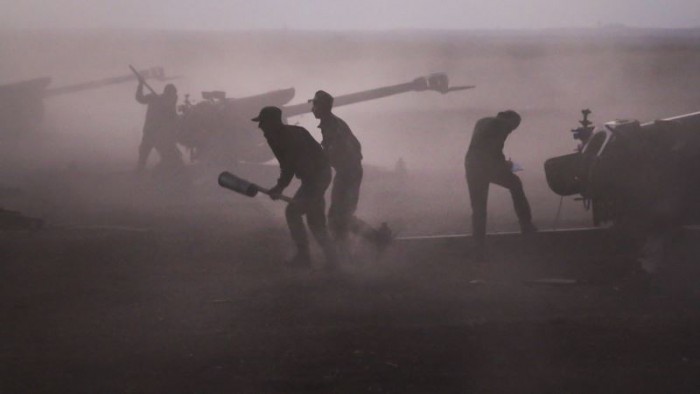
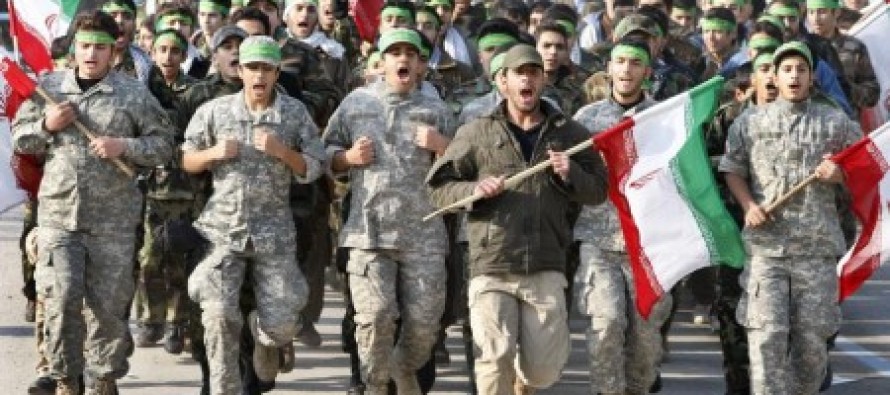
“Iran has sent hundreds of troops into northern and central Syria in the first such open deployment in the country’s civil war, joining fighters from its Lebanese ally Hezbollah in an offensive against rebels and taking advantage of cover from Russia’s air campaign, a regional official and Syrian activists said Wednesday.

“Their arrival is almost certain to fuel a civil war in Syria which has already claimed the lives of more than 250,000 people and displaced half of the country’s population. It also highlights the far-reaching goals of Russia’s military involvement in Syria,” from the Associated Press, October 14, 2015.

You have to admire the chutzpah of Trita Parsi to shovel the kind of fragrant stuff he does only to be proven wrong time and time again, which begs the question of why anyone ever listens to him.

As the AP reports that upwards of 1,500 Iranian regime fighters begin arriving in Damascus, the picture in Syria is becoming increasingly bleak as combatants from Iran, Syria, Russia, Turkey, Iraq, Afghanistan, Lebanon, Jordan, Egypt, U.S. and pretty much from every country in the European Union now rush in for what promises to be the start of a new phase of bloody sectarian conflict.

What is even more impressive about Parsi’s comment only two months ago was that he held out the promise of diplomacy when the Iran regime in fact had absolutely no interest in diplomacy. Instead, the mullahs are committed to a path of military conquest in an all-or-nothing scenario.

Whether intentionally or not, Syria has quickly shaped up to becomes the ultimate bellwether of the ability of the Iran regime to stay alive because of Assad falls, Russia is likely to take a dim view of Iranian promises since Syria contains the only naval base Russia has in the Mediterranean. The loss of Syria would also prove conclusively the mullahs have no ability to expand their dominion beyond using the kinds of terror tactics it has relied on for the past three decades.

The buildup comes as Iranian Deputy Foreign Minister, Hossein Amir Abdollahian said on Tuesday that Tehran was working with Russia on drafting a peace plan for Syria. But Western powers, and many countries in the Middle East, say Assad must go as a precondition for peace.

Some peace plan, it just requires thousands of Iranian troops to make it work.

But the pending offensive in Syria also serves the Iran regime’s purposes by diverting attention from its other activities throughout the region as Tom Watson points out in The Independent:

“Events in Syria have, however, distracted attention away from Iran’s activities elsewhere in the region. Recently the Iranians were caught supplying weapons to Houthis rebels in Yemen, something Iran has long denied doing. Meanwhile, as a new report for The Henry Jackson Society: ‘Tehran’s Servants’ by Jonathan Spyer demonstrates, Iran has taken control of a vast force of Shia militias in Iraq that are now dominating much of the country. Western leaders may welcome these activities for helping to drive back IS, but no one should be under any illusions about just how extreme these Iranian-backed militias really are,” Watson writes.

“A glance across what is already a very troubled region endlessly turns up signs of Iranian involvement. Tehran has exploited the turmoil to advance its own hegemonic ambitions. It is doing exactly the same with the void left by Obama’s retreat from the world stage. Even as the Iranians look set to adopt the nuclear agreement, the Islamic Republic’s actual conduct rather suggests that the regime in Iran remains far from being a friendly or benign force in the world,” he added.

But why the rush by the regime in so many places around the world at once? The answer is simple: time is the enemy of the mullahs.

A presidential race in the U.S. will usher in what will most likely be a new president un-beholden to the nuclear agreement, and a new Congress eager to pass more sanction legislation against the regime on the wave of American public opinion polls showing vast dissatisfaction with Iran.

Military moves made by the regime have backfired in Syria, Iraq and Yemen and seen their allies in Hezbollah, Houthis and Shiite militias stall and even retreat from gains made earlier this year.

Ali Khamenei’s advanced age and recent health problems add to the uncertainty as does the surge in anti-regime protests that have now stretched into their third year and reveal a vast amount of discontent within the Iranian people.

The mullahs are on the clock and the big push in Syria is their wild last attempt to push all their chips on the table in a desperate bid to hang on.

Now if only Trita Parsi would tell us the offensive is just a new form of diplomacy then the cha  rade would be complete.

Michael Tomlinson

Filed Under: Blog Tagged With: #NuclearDeal, Appeasement policy, Featured, Iran, Iran deal, Iran Lobby, Iran sanctions, National Iranian American Council, NIAC, NIAC Action, Trita Parsi, Yemen

As Syria Chaos Spreads, Iran Lobby Works Overtime

October 1, 2015 by admin

As Syria Chaos Spreads, Iran Lobby Works Overtime

As Syria Chaos Spreads, Iran Lobby Works Overtime

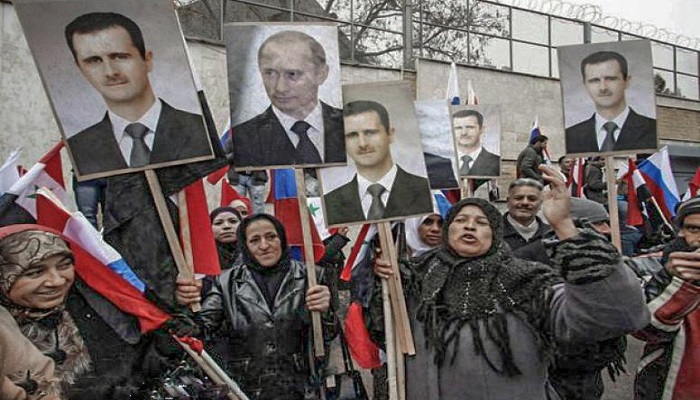
Events moved fast in Syria as Russian warplanes mounted air strikes at what they claimed were ISIS strongholds, but U.S. defense officials countered were instead Western-backed rebels opposed to the Assad regime. Coming on announcements by Russian officials of the creation of an intelligence-sharing unit with Iran regime and Iraq officials, the Russian action does not bode well for hopes to topple Assad.

The political calculation made by the Iran regime and its new Russian friends is that the U.S. lacks the political willpower and means to move forward on efforts to dislodge Assad, who has proven to be the mullahs in Tehran’s most stalwart ally and proxy.

Mohammed Alaa Ghanem of the Syrian American Council made the same analysis in Huffington Post as he looked at an editorial by Philip Gordon, the former Middle East chief in the Obama administration, in Politico.

Gordon argues that the goal of “displacing the Assad regime has proven unachievable,” and argues for a new U.S.-led contact group, different from the original one created in 2012, and instead include Russia and Iran in a new one.

Ghanem recites the failures in stemming Iranian backing of Assad at key points such as “when over 3,000 Iranian proxies first flooded into Syria, Secretary of State John Kerry provided no support to stop the assault and even strong-armed the Syrian rebels into attending peace talks. When Assad regime barrel bombs began raining down on Syrian cities, The U.S. again dragged the rebels into talks while blocking weapons transfers to stop the onslaught. U.N. Envoy Lakhdar Brahimi, who convened those later talks, has since blamed the regime for their failure.”

The Iran regime’s support of Assad and the unwillingness of the U.S. to halt that support – instead prioritizing approval of a nuclear agreement with Tehran – has led to an unimaginable refugees crisis of four million Syrians and civilian deaths numbering in the hundreds of thousands with another 600,000 Syrians opposed to Assad under virtual siege by Syria’s military and Iran regime mercenaries and Quds Forces.

But even with the rollout of the nuclear deal, there remain defiant voices in Congress still working to place restrictions on the Iran regime and connect the dots to the mullahs’ reign of human rights abuses. The fact that incidents of atrocities are sharply on the rise with increased news coverage, which has forced the Iran lobby to step up efforts to portray the regime as being a force for change.

Trita Parsi and Tyler Cullis of the National Iranian American Council, a leading Iran regime lobbying group, have been busy trying to convince news media that the rapid escalation in Syria is not the result of a new Russia-Iran-Iraq axis of terror, but rather the work of neocons bent on sending U.S. troops in.

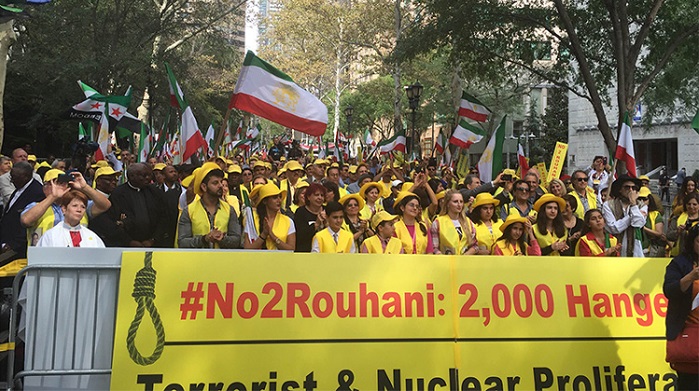
Putting aside the fact that the only boots on the ground are now Russian and Iranian, the solution to Syria has always been centered in Tehran, not Washington. This point was driven home by protestors outside of the UN during Rouhani’s visit who represented a broad cross section of Iranian dissidents, Iranian-American community groups and Syrian activists opposed to the Assad regime.

Another advocate against the Iran regime is renowned author and Harvard Professor Emeritus Alan Dershowitz who published a new book, “The Case Against the Iran Deal: How Can We Stop Iran from Getting Nukes?.”

Dershowitz argues that policy makers have bit into a “bill of goods” which states that “any deal is better than no deal.” Historically, the objective of Iran to eliminate the barriers between it and a nuclear arsenal, and simple common sense proves that this deal makes the US and the rest of the world decidedly less safe.

The nuclear deal promises to release the Iran regime from the sanctions that have effectively isolated it for much of the past decade and held back the tidal wave of Islamic extremism that we are now seeing being unleashed.

More evidence of the spread of the Iran regime’s destabilizing influence came when Saudi-led coalition forces seized an Iranian fishing boat loaded with weapons on its way to deliver them to Iran regime-backed Houthi rebels in Yemen according to Reuters.

The announcement came a day after tribal fighters backed by the coalition won control of a strategic dam in central Yemen from Houthi forces following weeks of fighting east of the capital Sanaa.

The coalition, which also includes Bahrain, Qatar, Egypt and the United Arab Emirates, has been battling the Iranian-backed Houthis for more than six months.

A coalition statement said 14 Iranian sailors were detained on the boat, which was carrying 18 anti-armored Concourse shells, 54 anti-tank shells, shell-battery kits, firing guidance systems, launchers and batteries for binoculars.

I’m sure Parsi and Cullis would argue that the anti-tank shells and guidance systems were actually meant for an Iranian-sponsored fireworks display for children in Yemen.

By Michael Tomlinson

Filed Under: News Tagged With: #NuclearDeal, Appeasement policy, Iran deal, Iran Lobby, National Iranian American Council, NIAC, NIAC Action, Trita Parsi

What is a Washington Post Hostage Worth to Iran Regime?

September 29, 2015 by admin

What is a Washington Post Hostage Worth to Iran Regime?

What is a Washington Post Hostage Worth to Iran Regime?

The world was treated to a third straight year of verbal nonsense from Hassan Rouhani, the handpicked leader of the Iran regime, who delivered his third speech to the United Nations General Assembly in what is fast becoming an exercise in linguistic firebombing as he lambasted the U.S., the West in general, Saudi Arabia and just about everyone else on the regime’s “Death to…” chant playlist.

Rouhani in his speech that managed to give implicit approval of the 9/11 attacks, called for the destruction of Israel, regime change in Saudi Arabia and permanent elevation of Iran as a global superpower all in one fell swoop.

It was noteworthy that Rouhani did not acknowledge Iran’s role in the spread of terrorism throughout the region through its support of Hezbollah in Lebanon and Syria, or its role in the death and maiming of thousands of Americans by training and equipping Shiite militias in Iraq and he failed to confront the truth of Iran’s facilitation of a global refugee crisis with over four million Syrians displaced because of the Syrian civil war.

Rouhani did spend much of his speech denouncing Saudi Arabia for the tragedy during the hajj stampede that killed a reported 167 Iranian pilgrims and calling for an international investigation. He neglected to mention Iran’s support of Houthi rebels who overthrew the Yemen government and sparked a shooting war with Saudi Arabia and other Gulf States that led to high seas showdowns in the Straits of Hormuz as Iran threatened international shipping lanes.

The Iran regime’s role in supporting the Syrian civil war and keeping Bashar al-Assad in office was of paramount importance to Rouhani as he went on CNN to make the blanket assertion that any hope for defeating ISIS and terrorism in general rested in keeping Assad in office.

“In Syria, when our first objective is to drive out terrorists and combatting terrorists to defeat them, we have no solution other than to strengthen the central authority and the central government of that country as a central seat of power,” Rouhani said.

It is a remarkable assertion since Assad has been found guilty of wantonly killing his own people with chemical weapons and using barrel bombs to wipe out entire civilian neighborhoods. At Iranian regime’s urging and through its military, Assad has specifically targeted moderate and Western-backed rebel forces, leaving ISIS and other extremist Islamic groups largely untouched in an effort to split the opposition.

Rouhani boosting Assad as a counter-weight to terrorism is like asking a candy manufacturer to promote weight loss programs.

Rouhani went a step further in his CNN interview where he compared opponents of the nuclear deal – specifically Republican presidential candidates who have vowed to tear it up if elected – to Saddam Hussein who launched the Iran-Iraq War.

Far from being the reform-minded advocate the Iran lobby has sought to portray, Rouhani has instead brought a vitriol, while subtle, every bit as incendiary as the much reviled Mahmoud Ahmadinejad.

The height of absurdity by Rouhani was reached when he again proposed the idea of a prisoner swap between the U.S. and regime; trading Iranian-American hostages such as Washington Post reporter Jason Rezaian, Christian pastor Saeed Abedini and former Marine Amir Hekmati for several Iranians convicted of arms trading and smuggling in nuclear components for Iran’s nuclear program – which Rouhani coincidentally denied ever existed.

“There are a number of Iranians in the United States who are imprisoned, who went to prison as a result of activities related to the nuclear industry in Iran,” Rouhani said. “Once these sanctions have been lifted, why keep those folks in American prisons? So they must be freed.”

So what are Jason Rezaian and other hostages worth to the Iran regime? Apparently at least 19 Iranian agents convicted of nuclear and weapons smuggling.

The proposed swap linked to convicted arms smugglers was condemned by the Washington Post and family members of the American hostages.

“Not until they’re on American soil can I trust what they say,” said Naghmeh Abedini, wife to Saeed Abedini. “My husband is not collateral. He’s a husband, a father, and he’s broken no law. They’re trying to barter his exchange for 19 criminals. It’s unbelievable. The Iranian government is no different than the government that held Americans hostage in the 1970s.”

Not surprisingly, Trita Parsi, head of the Iran lobby’s National Iranian American Council, tried to make the comparison U.S. airstrikes against ISIS in Syria were akin to bombing Oklahoma without approval of the U.S. government. He neglected to note that in Syria’s case, the government has been condemned as illegitimate and a mass killer by the world and embroiled in a civil war where Syria has invited in foreign governments such as Iran and Russia to kill its own people who are revolting.

Then again, lack of logic has never stopped Parsi from making ridiculous claims. He made the ultimate leap of fantasy when he authored an editorial claiming that the recent visit by Pope Francis to the U.S. could help defeat terror by persuading the U.S. to adopt a more accommodating tenor towards radicalized states such as Iran.

“What has fueled the Syrian crises more than anything else is the false illusion on all sides that a decisive military victory is around the corner,” Parsi said.

An appropriate sentiment if it was only applied to Iran’s military support of Assad, but in this case, Parsi only meant the rebel forces fighting to topple Assad and the rest of the world trying to get the tyrant out.

It was noteworthy that Rouhani’s appearance wasn’t all flowers and songbirds as thousands rallied outside of the UN to protest Rouhani’s speech; with delegations from Syria, Yemen, and Iranian dissidents talked about the abuses and injustices meted out since Rouhani took power.

By Michael Tomlinson


Filed Under: Blog Tagged With: Featured, hassan rouhani, NIAC, Rouhani CNN, Rouhani visit to New York, Trita Parsi

Iran Regime Begins Self Inspection Charade of Nuclear Sites

September 22, 2015 by admin


Iran Regime Begins Self Inspection Charade of Nuclear Sites

Iran Regime Begins Self Inspection Charade of Nuclear Sites

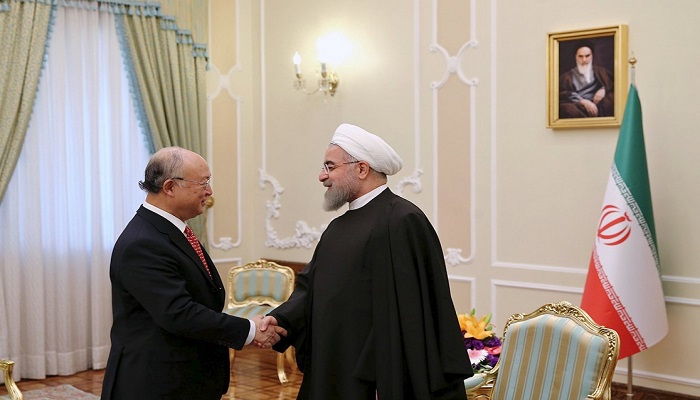
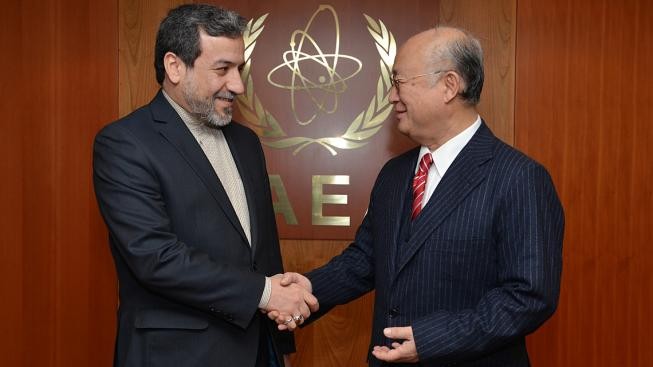
The Iran regime revealed it took its own samples at the Parchin military site as part of the secret side deal it made with the International Atomic Energy Agency as the head of that agency, Yukiya Amano, was in Iran to visit the site and give what appears to be his support of the regime’s handling of the self-inspection protocol.

The regime’s state-run IRNA news agency quoted a spokesman for the Iranian atomic energy agency, Behrouz Kamalvandi, as saying samples were taken at Parchin “only by the Iranian experts and without the presence of the agency’s inspectors.”

The fact that regime state media described Amano’s visit as “ceremonial” rather than an inspection tells you all you need to know of how the regime viewed the self-inspection process.

Sen. Tom Cotton (R-AK), a chief critic of the Iran nuclear deal, pointed to the regime’s latest disclosures as more evidence of the flaws in the nuclear agreement.

“The fact that Iran is taking its own soil samples shows that the verification scheme is an embarrassing charade, and yet another concession we can add to the pile of concessions that make up the dangerous Iran deal,” he said.

Even though the IAEA has had a long history of complaints lodged against the regime over the last decade for non-compliance, including not answering basic questions about the history of its nuclear program and its military dimensions, as well as the failure of the regime to make nuclear scientists and technical personnel available for interviews, the IAEA has seen fit to enter into a secret deal with the mullahs and not make it available to the rest of the world.

The fact that we even know about the self-inspection protocol and lack of international oversight of sampling from the Parchin site is due more to the intrepid reporting of journalists at the Associated Press than to any government disclosures from the United Nations or P5+1 group of nations that negotiated the deal.

The Obama administration, already duped into believing the regime will not cheat on an already badly flawed agreement, claimed that the self-inspections are a step in the right direction.

Breitbart.com reinforced the absurdity of self-inspection by reminding us the Congress was never shown the IAEA side deal, the regime was allowed to “sanitize” the Parchin site and hand-picked the areas to be sampled and handled the cameras taping the sampling that IAEA officials were watching.

You could not have asked for a more orchestrated act than if you paid a Hollywood studio to stage it.

The regime is certainly not wasting time flexing its new-found freedoms, not only by manipulating what will assuredly be a clean bill of health of Parchin, but also in busily acquiring new, advanced weapons and military hardware and arming its terrorist allies such as Hezbollah.

Al-Rai, a Kuwaiti newspaper, reported this weekend that Hezbollah received all of the advanced weaponry that the Syrian regime has obtained from Russia as the Russians have dramatically boosted their military operations with boots on the ground, tactical fighters flown to Syrian bases and new tanks being off-loaded.

The fact that all these military developments occurred since the nuclear deal was signed, demonstrates clearly the mullahs in Tehran feel extremely confident about their new-found status as international players and intend to flex their muscle visibly and without deception.

But the sales job for the Iran lobby never ends as Trita Parsi, the head of the National Iranian American Council, went on World Finance to laud the financial windfall the regime is due to receive because of the imminent lifting of sanctions. He continues to advance the absurd proposition that the regime’s newly emerging economic muscle could be used as a moderating influence in the region.

What he fails to discuss is the intent of the ruling mullahs. No one doubts that Iran can be a major economic player in the region; the only question was whether or not the mullahs primary mission was to improve the economic status of their people or push further their brand of fundamentalist Islamic faith? History demonstrates ably that the mullahs have no other concern than preserving and expanding their extremist views throughout the Muslim world.

Parsi’s statements about Iran’s economic potential are only one half of a joke, the real punchline comes with what the mullahs decide to do with all that newfound economic muscle. The unfortunate part is that the joke will be on those who supported and approved this deal based solely on the “hope” that Iran’s mullahs could be worthy of trust.

Nothing could be further from the truth.

By Michael Tomlinson

Filed Under: Blog Tagged With: Featured, Iran deal, NIAC, Nuclear Deal, Parchin, Trita Parsi

  Iran Lobby Shifts Focus, Now Demanding More Dialogue With Iran

September 18, 2015 by admin

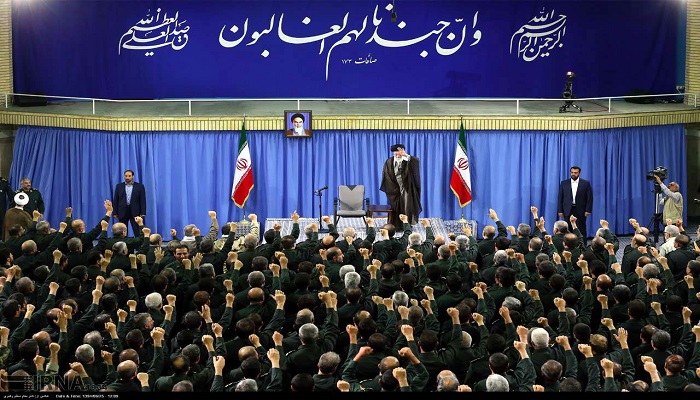
Khamenei-with-IRGC-The main force behind Terror in Iran, Iraq, Syria, Yemen, Lebanon, etc.

Khamenei-with-IRGC-The main force behind terror in Iran, Iraq, Syria, Yemen, Lebanon, etc.

The failure of Congress to halt the implementation of the nuclear deal with the Iran regime opens the floodgates for the regime to reap financial, military, economic and political rewards, but those gains may prove tenuous and illusory since in order to win passage of the agreement, the Obama administration took the unusual route of proposing it not as a full-fledged treaty, but as an administrative action that an incoming administration could conceivably reverse.

Since the Iran regime was adamant on delinking anything not related to the nuclear issue including human rights violations, support of terrorism, development of ballistic missiles and proxy wars, the reality is sinking in for supporters of the regime that they need to pay lip service to these other issues in order to stave off renewed calls to punish Iran for its transgressions.

This was evident by the issuance of a press release by lead regime lobbyist, Trita Parsi of the National Iranian American Council, who even acknowledged that the deal’s passage would not cause significant shifts in regime policy:

“While dialogue does not guarantee that Iran’s foreign policy conduct will shift to Washington’s liking, the absence of engagement all but guarantees that there will be either no change or a change in the wrong direction,” Parsi said.

While Parsi is showing its true face by advocating more dialogue with the criminal mullahs, his call for greater dialogue were again undermined by the statements of the regime’s top mullah, Ali Khamenei.

In his weekly televised speech, Khamenei warned commanders of the regime’s Revolutionary Guards to be on alert for “political and cultural” infiltration by the U.S. according to Agence France-Press.

“The main purpose of the enemies is for Iranians to give up on their revolutionary mentality,” Khamenei told a gathering of Guards commanders and personnel in Tehran.

“Enemy means global arrogance, the ultimate symbol of which is the United States,” he said, calling on the powerful branch of the military to protect the revolution.

“Economic and security breaches are definitely dangerous, and have dire consequences,” he said.

“But political and cultural intrusion by the enemy is a more serious danger that everyone should be vigilant about,” he added.

Parsi of course did not call for Khamenei to moderate his language or stop the continued depiction of the U.S. as Iran’s greatest “enemy.” Parsi saves his rhetorical fire – not to his mullah taskmasters – but for the U.S. leadership that he actively lobbies.

Khamenei threw more cold water on Parsi’s press release and his call for greater dialogue by saying last week that Iran would not hold any negotiations with the U.S. beyond the nuclear issue. Short of calling Parsi a liar, Khamenei certainly refutes most of what Parsi has to say.

It’s no surprise that Khamenei made his appeal directly to the leaders of the Revolutionary Guards which was created by the mullahs to preserve the mullah’s rule and maintain the stranglehold the leadership holds over Iran’s economy and its people.

The passage of the deadline to sink the nuclear deal also marked a celebration of sorts by supporters of the regime as evidenced by Ben Wikler, Washington director of Moveon.org, piece in Huffington Post which gleefully recounted how the regime’s supporters marshalled their forces to prevent the agreement’s demise.

The only thing missing was a photo of Wikler and Parsi holding hands in front of a “Mission Accomplished” banner over an Iranian missile battery.

But while Wikler breathlessly recounts the campaign to support the deal, this moment may prove Pyrrhic for supporters as the next year reveals the true nature of the regime as it no doubt continues to support conflicts in Syria, Iraq and Yemen and Americans grow increasingly uneasy about the deteriorating situation in the Middle East along with the rise of extremist groups and a full-blown refugee crisis.

Broad public disapproval of the nuclear deal has already been registered in virtually every public opinion poll and the fact the deal was passed with no bipartisan support and only through a minority vote of 42 Democratic senators may condemn any member running for re-election not only in 2016, but also 2018.

In essence, the regime lobby is praying mightily the American people will have a short memory and that the mullahs don’t blow it for them; neither scenario seems likely.

Already we’ve seen the veneer being peeled off of the Iran lobby with a flood of news articles examining the lobby, especially the NIAC and its financial backers. Ben Cohen, senior editor of TheTower.org, joined in this review by posting a story on JNS.org recounting the various investigative news stories recently published about the NIAC including The Daily Beast and others and smartly asks the inevitable question that should be on the lips of every Capitol Hill staffer:

“Now that the truth about NIAC is emerging, one has to ask why anyone who seeks respectability in Washington would have anything to do with Parsi and his cohorts,” Cohen said.

“The Islamist regime in Iran is the root of the problem, not its cure: as long as it remains in place, there should be no talk of normalization. Second, that there shouldn’t even be an Iran lobby in America, if by ‘Iran lobby’ we mean individuals and groups like NIAC, whose mission is to sell this vicious regime as an attractive partner for Western democracies,” Cohen added.

Cohen is correct when he assesses only regime change in Iran will force changes in policy away from sponsorship of terror and human rights abuses. The real hope and future lies not in the nuclear deal Parsi has championed, but in a new presidential administration that can tear it up.

By Michael Tomlinson

Filed Under: Blog, National Iranian-American Council, The Appeasers Tagged With: Dialogue with Iran, Featured, IRGC, Khamenei's speech, NIAC, Trita Parsi

Controversy Over Iran Lobby Connections Grows

September 17, 2015 by admin

Controversy Over Iran Lobby Connections Grows

Controversy Over Iran Lobby Connections Grows

The fallout from recent revelations about the nature and reach of the Iran lobby continues as more news media pick up various threads that are unraveling from Iran regime supporters such as the National Iranian American Council, which made an effort to pay former president Bill Clinton to deliver a speech to one of its fundraising galas.

“As we’ve said before, as a matter of course, all requests were run by the State Department,” said an official in the former president’s office. “And most importantly, ultimately, the president did not give this speech.”

It says a lot about associating with NIAC when you are relieved you didn’t take its money for a speech. For all of NIAC’s organizing, lobbying and fundraising, the disclosure of the paid speech forced a rapid backpedal away from the NIAC as it became clear no one wanted to be associated with a group so blatantly tied to Tehran’s mullahs. It also demonstrated that close association with the NIAC is not a recipe for long-term political health.

The struggle by the NIAC to overcome the Iran lobby label was taken up by liberal group Media Matters in a piece slamming original Daily Beast article by an Iranian dissident that examined the close ties NIAC and its staffers had with an influential Iranian family, the Namazis, who profit from consulting businesses helping to steer Western companies into partnerships with Iranian ventures, most owned or controlled by Iranian government entities such as the Revolutionary Guards Corps.

Conspicuously, the Media Matters piece, which included statements by Trita Parsi of NIAC, failed to address the most basic facts in the Daily Beast article which was the past employment of NIAC staffers by the Namazis-controlled Atieh consulting firm, several of whom later went on to work in positions at the U.S. State Department and National Security Council.

The Media Matters piece also did not address Parsi’s own damning emails and documents that came out of failed defamation lawsuit against Hassan Dai who at the time was a journalist for the Voice of America reporting critically on the NIAC. Parsi and the NIAC not only lost that suit and the subsequent appeal, but were excoriated by the three-judge appeals panel and ordered to pay for Dai’s legal fees for destroying and altering calendars and emails to hide their relationship with regime officials.

Media Matters contention that the Namazis would not materially benefit from the lifting of economic sanctions and that benefits would flow to the Iranian people instead was one of the boldest distortions played out. Iran has consistently been ranked as one of the most corrupt regimes on the planet with vast swaths of the economy such as telecommunications, energy and commodities controlled through shell companies owned by the Revolutionary Guards Corps or regime leaders such as Hassan Rouhani and Ali Khamenei.

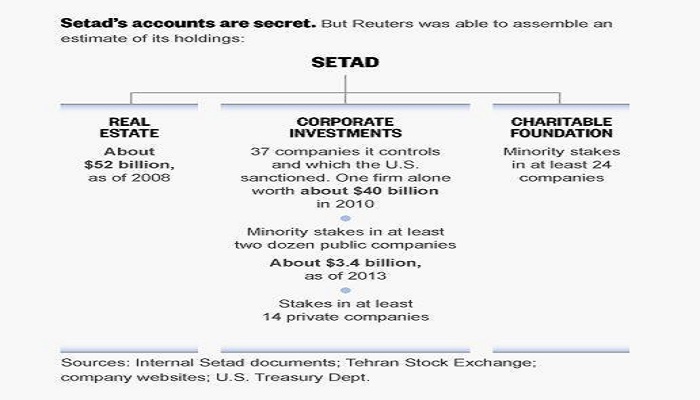
Reuters reported on one such arrangement controlled by Khamenei, one of the most powerful and secretive organizations in Iran – “Setad Ejraiye Farmane Hazrate Emam,” or Setad.

“The deal, which is likely to go into effect after clearing a major Congressional hurdle last week, lifts U.S. secondary sanctions on Setad and about 40 firms it owns or has a stake in, according to a Reuters tally based on annexes to the deal.

“The delisting of Setad — which has little connection to Iran’s nuclear program but is close to Iran’s ruling elite — feeds into U.S. Republicans’ criticism that the deal will empower Iran’s hardliners and help fund its regional ambitions.”

Reuters went on to report that with stakes in nearly every sector of Iran’s economy, Setad built its empire on the systematic seizure of thousands of properties belonging to religious minorities, business people, and Iranians living abroad, according to a 2013 Reuters investigation, which estimated the network’s holdings at about $95 billion.

Iranians who said their family properties were seized by Setad described in interviews in 2013 how men showed up and threatened to use violence if the owners didn’t leave the premises at once, said Reuters.

Already, one Setad firm appears to be moving to take advantage of the deal. Ghadir Investment Company, which the U.S. Treasury identified as a Setad-linked firm, signed a 500 million euro ($565 million) contract with the engineering unit of Finmeccanica, a spokesman for the Italian defense group said in August, according to Reuters.

Not only will the regime directly benefit economically from the nuclear deal, Parsi and his allies are now trying to spin the argument that things will improve in places such as Syria where nearly four million Syrian refugees have fled in the face of Afghan mercenaries hired by Iran, Hezbollah fighters armed by Iran and Syrian army troops loyal to the Assad regime funded by Iran.

Parsi went so far as to tell BuzzFeed that the deal would at the least help the conflict from escalating, but he neglected to mention the rapid escalation and destabilizing presence of Russian military troops and hardware now landing with regularity in Syria in support of Assad and working in cooperation with the Iran regime.

He also neglected to mention the regime’s Quds Force commander Qassem Soleimani’s secret visit to Moscow in violation of United Nations sanctions to discuss the acquisition of new military hardware and coordinate operations in Syria where his Quds Forces has been in the vanguard of fighting there.

Now as the news media see the deep ties the NIAC has to the regime and with all of the Republican presidential candidates vowing to ditch the nuclear deal on the day they take office, the fire sale is on for the regime to swipe, take and steal as much as it can before the door is finally closed on them.

By Michael Tomlinson

Filed Under: Blog, National Iranian-American Council Tagged With: Namazi, National Iranian American Council, NIAC, Trita Parsi

Iran Lobby Stands to Reap Rewards of Nuclear Deal

September 16, 2015 by admin

Iran Lobby Stands to Reap Rewards of Nuclear Deal

Iran Lobby Stands to Reap Rewards of Nuclear Deal

An in-depth piece of reporting by Alex Shirazi (a pseudonym of an Iranian dissident) in The Daily Beast examined the financial windfall key members of the Iran lobby are due to inherit through passage of the nuclear agreement with the Iran regime; specifically the involvement of an Iranian family called the Namazis which played a key role in the creation of the National Iranian American Council, the lead lobbying force for the regime.

Shirazi examines the family’s history coming out the Iranian revolution and the opportunity it saw to turn a thawing in relations between the U.S. and the Iran regime into serious business opportunities, including Pari Namazi and her husband, Bijan Khajehpour, who returned to Tehran in 1993 to launch a company called Atieh Bahar Counsulting, offering services to foreign companies interested in doing business in Iran.

That company provided a pipeline of communication directly into the leadership of the regime and after more family members joined the enterprise, Atieh’s client list rapidly grew to include global brands such as “German engineering giant Siemens; major oil companies BP, Statoil, and Shell; car companies Toyota, BMW, Daimler, Chrysler, and Honda; telecom giants MTN, Nokia, Alcatel; and international banks such as HSBC,” according to Shirazi.

But that success was marred by their close relationship with leaders of regime who were revealed to be hip deep in corruption schemes including Mehdi Hashemi, the son of then regime president Hashemi Rafsanjani, who was later imprisoned on bribery charges.

Coupled with revelations that the regime was in violation of the Nuclear Non-Proliferation Treaty in 2002 by disclosures from the National Council of Resistance of Iran, a leading Iranian dissident group, the Namazis’ saw their fortunes wan until Bijan Khajehpour began a relationship with Hassan Rouhani who would later be the handpicked president and sold to the world as the “moderate” face of the Iran regime.

With this new relationship, Shirazi describes the creation of the strategy that gave birth to the NIAC and the Iran lobby as Siamak Namazi met with Trita Parsi and together issued the document that laid the groundwork for the Iran lobby’s work:

  1. Hold “seminars in lobbying for Iranian-American youth and intern opportunities in Washington DC.”
  1. Increase “awareness amongst Iranian-Americans and Americans about the effects of sanctions, both at home and in Iran.”
  1. End “the taboo of working for a new approach on Iran”—i.e., end the then-two-decade-old U.S. policy of containment.

Soon after the NIAC was created which Parsi heads and gave birth to an official lobbying arm, NIAC Action, both of which led the vanguard action pushing for the Iran nuclear deal.

Most interestingly, Shirazi describes how while serving as president of NIAC, Parsi wrote intelligence briefings as an “affiliate analyst in Washington, D.C.” for Atieh, focusing on such topics as whether or not the American Israel Public Affairs Committee (AIPAC) would revive its anti-Iran campaigning on the eve of the Iraq war, or on the efforts by the Mujahideen-e Khalq (MeK), an Iranian opposition group to oppose the regime.

Parsi became a strong booster of Khajehpour to American media while being paid by for his work and not disclosing that financial arrangement with Atieh.

With almost half a million Iranian Americans living in the U.S., NIAC only boasts 5,000 dues paying members, but claims a vast network of supporters for the regime’s causes. NIAC has also served as a proving ground for staffers who are funneled into U.S. government positions and other non-governmental organizations supportive of the regime.

Shirazi describes the background of Reza Marashi, who works for NIAC after coming to from a stint at Atieh and with the U.S. State Department as an Iran desk officer, a similar position that has other NIAC staffers, most notably Sahar Nowrouzzadeh who is now National Security Council director for Iran in the Obama administration and therefore the top U.S. official for Iran policy, have occupied.

Interestingly enough, Nowrouzzadeh does not list her employment as NIAC and Marashi refuses to acknowledge his time at Atieh.

Shirazi points out, as we did on this blog previously, how Parsi and the NIAC public and social media statements have hardly mentioned any criticism of regime policy, nor condemned the most notorious actions of the regime such as the three proxy wars in Syria, Iraq and Yemen it is fighting, nor the continued imprisonment of Iranian Americans such as Amir Hekmati and Saeed Abedini.

What the NIAC does focus on specifically is the lifting of sanctions against the regime and opposing any efforts within and outside the U.S. government to support regime change within Iran, both of which would have serious consequences on the prospects of the Namazi family.

Shirazi also recounts the failure of Parsi’s defamation lawsuit in 2008 against Hassan Dai, an Iranian exile working as an investigative journalist with the Voice of America. That lawsuit revealed a trove of documents substantiating much of the relationship Parsi and NIAC had with the regime leadership.

The reach and ambition of the NIAC was revealed this week by Fox News’ Ed Henry who disclosed that emails released from Hillary Clinton’s personal server included a request from former president Bill Clinton to State Department staff about the possibility of delivering a paid speech to a gathering hosted by NIAC. President Clinton eventually declined the speech, but the incident demonstrated Parsi’s desire to push into the highest levels of American policy making.

By Michael Tomlinson

Filed Under: Blog, National Iranian-American Council Tagged With: Marashi, Namazi Family, Nowrouzzadeh, Shirazi, Trita Parsi

  • « Previous Page
  • 1
  • …
  • 14
  • 15
  • 16
  • 17
  • 18
  • …
  • 21
  • Next Page »

National Iranian-American Council (NIAC)

  • Bogus Memberships
  • Survey
  • Lobbying
  • Iranians for International Cooperation
  • Defamation Lawsuit
  • People’s Mojahedin
  • Trita Parsi Biography
  • Parsi/Namazi Lobbying Plan
  • Parsi Links to Namazi & Iranian Regime
  • Namazi, NIAC Ringleader
  • Collaborating with Iran’s Ambassador

Recent Posts

  • NIAC Trying to Gain Influence On U.S. Congress
  • While Iran Lobby Plays Blame Game Iran Goes Nuclear
  • Iran Lobby Jumps on Detention of Iranian Newscaster
  • Bad News for Iran Swamps Iran Lobby
  • Iran Starts Off Year by Banning Instagram

© Copyright 2026 IranLobby.net · All Rights Reserved.