Iran Lobby

Exposing the Activities of the lobbies and appeasers of the Mullah's Dictatorship ruling Iran

  • Home
  • About
  • Current Trend
  • National Iranian-American Council(NIAC)
    • Bogus Memberships
    • Survey
    • Lobbying
    • Iranians for International Cooperation
    • Defamation Lawsuit
    • People’s Mojahedin
    • Trita Parsi Biography
    • Parsi/Namazi Lobbying Plan
    • Parsi Links to Namazi& Iranian Regime
    • Namazi, NIAC Ringleader
    • Collaborating with Iran’s Ambassador
  • The Appeasers
    • Gary Sick
    • Flynt Leverett & Hillary Mann Leverett
    • Baroness Nicholson
  • Blog
  • Links
  • Media Reports

The Big Lie About Human Rights and the Iran Nuclear Deal

August 7, 2015 by admin


The Big Lie About Human Rights and the Iran Nuclear Deal

The Big Lie About Human Rights and the Iran Nuclear Deal

One of the more incredible stretches of imagination surrounding the proposed nuclear deal between the Iran regime and the rest of the world is the notion that the agreement with Tehran’s mullahs might somehow spur improvements in the regime’s bleak human rights record.

One of the strongest proponents of that lie has been the regime’s paid lobbyists, the National Iranian American Council, which put out a policy memo on its website attempting to reinforce the misconception.

The memo essentially consists of quotes taken from various people and groups identified with human rights issues in Iran, but notably does not include any quotes or comments from groups who have traditionally monitored regime human rights abuses, such as Amnesty International, nor does it include any comments from relatives or families of loved ones who languish in regime prisons or been subject to torture and executions.

It is also notable how many of the quotes are taken from purported human rights activists who in reality serve the regime such as Akbar Ganji, a self-described Iranian journalist who was previously a commander in the regime’s Revolutionary Guard and still has deep ties to the regime’s leadership.

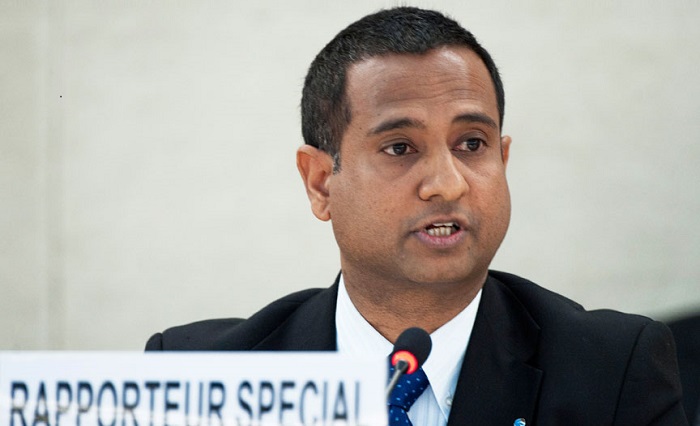
The fact that NIAC also used a quote from Ahmed Shaheed, the United Nations Special Rapporteur for human rights in Iran is laughable considering revelations that the Iran regime launched a sophisticated smear campaign against him through the use of a fabricated WikiLeaks cable purporting to show bribes from Saudi Arabia that never existed.

“The apparently orchestrated campaign against Shaheed seems to fit into a familiar pattern of Iran smearing activists, dissidents, or even journalists by propagating misinformation about them.

Iran has repeatedly condemned Shaheed’s reports as unsubstantiated, biased and collated from anti-Iranian outlets. Shaheed has never been allowed to travel to Iran since his initial mandate was approved by the UN in 2011.

One could go through practically the entire list of quotes provided by the NIAC and simply use Google searches to reveal how factually incorrect and in error they are. It is an admirable show of deception on the NIAC’s part that rivals many of their past efforts to distort the regime’s true record.

The real record on the regime’s abysmal human rights record has been well documented not only by Shaheed and Amnesty International, but also by opposition groups such as the National Council of Resistance of Iran, news media and through the statements and actions made by ordinary Iranians demonstrating and protesting against the regime and those imprisoned such as Americans Jason Rezaian, Saeed Abedini and Amir Hekmati who still languish despite the nuclear agreement.

But everything the NIAC says seems to be constantly undercut by their masters in Tehran. Another glaring example was the complaint filed by the regime against White House press secretary Josh Earnest who has taken to insisting the U.S. retained the right to “use military force in the long run and the use of nuclear inspections to gain intelligence about Iran’s nuclear facilities”; calling Earnest’s statements a “material breach” of the nuclear deal itself.

The outlandish complaint was lodged with the International Atomic Energy Agency which has come under heavy criticism for negotiating two secret side deals with the regime and not making either available to the public or members of Congress currently reviewing the agreement.

The irony of the Iran regime’s complaint is that it exposes both provisions as being completely false and unenforceable since the regime has already clearly considered both to be invalid, even though deal supporters such as Trita Parsi and Reza Marashi of the NIAC have gone to great lengths to champion those same provisions of key examples of why the deal works.

One has to wonder who the American public should believe on this issue: the Iranian government or those lobbyists being paid by that same government and its allies?

By Michael Tomlinson
Filed Under: Blog, News, The Appeasers Tagged With: Ahmad Shaheed, Iran, Iran deal, Iran Lobby, Iran sanctions, Nuclear Deal, Trita Parsi

Khamenei Tweet Gets No Defense from Iran Lobby

July 27, 2015 by admin

Khamenei Tweet Gets No Defense from Iran Lobby

Iranian leader tweets graphic of Obama with gun to head From: http://www.usatoday.com/story/news/world/2015/07/25/iranian-leader-tweets-graphic-obama-gun-head/30667081/

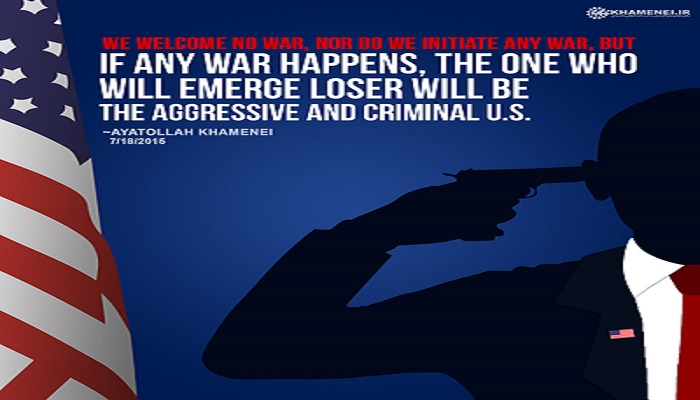
Iran’s top mullah Ali Khamenei sent an explosive tweet from his official English-language account at @khameneni_ir. It read:

“US president has said he could knock out Iran’s military. We welcome no war, nor do we initiate any war, but…”

The tweet appeared underneath a graphic depicting an image appearing to be President Obama holding a gun to his head. The quote in the image attributed to Khamenei said:

“If any war happens, the one who will emerge loser will be the aggressive and criminal U.S.”

Khamenei has been as regular as clockwork in his periodic rants against the U.S. generally and the proposed nuclear deal specifically, using his Twitter feed to send out his own version of “red lines” the regime would not cross in any nuclear deal, while only last week delivering a speech claiming America’s aims in the region were “180 degrees” opposite of Iran’s.

Supporters of the regime ignored the tweet and its implications. For example, Trita Parsi, head of the National Iranian American Council and the regime’s lead lobbying organization, did not even mention the offensive tweet in his own Twitter account, preferring instead taking shots at those opposing the deal.

But what could he and other regime apologists really say? Khamenei is just venting? Khamenei is just dispensing vitriol for domestic consumption?

The fact is Khamenei is Iranian regime’s supreme leader. There is no other chief executive above him. His decisions on foreign policy, going to war, executing political prisoners, issuing a new religious law affecting all of Iran’s citizens or deciding what flavor of ice cream to outlaw are absolute and undisputed.

Consequently his comments are not trivial, nor should they be taken lightly or ignored. In most ways his comments, even nuances, are as important to understanding his intentions as during the Cold War when the West tried to divine the intentions of Soviet leaders by who was standing next to whom during May Day parades of military hardware.

But aside from Khamenei’s comments and tweets, the regime took steps to ensure there was no domestic disputes over the proposed nuclear deal in order to ensure its passage so that the regime could gain access to the estimated $160 billion in frozen assets and military hardware it desperately needs after waging three proxy wars in Syria, Iraq and Yemen.

A top secret document sent to newspaper editors has surfaced on the internet.

Issued by the ministry in charge of the press, the two-page document faxed to media organizations relays directives from Iran’s Supreme National Security Council. It says editors should praise the deal and the negotiating team.

It stresses the need “to safeguard the achievements of the talks”; avoid sowing “doubt and disappointment among the public”; and avoid giving the impression of “a rift” at the highest levels of government.

The irony is unmistakable as it clamps down on any domestic dissent, while the regime’s leadership is allowed to freely express its disdain for the U.S. and the conditions laid out in the agreement such as inspection of Iranian military facilities.

Interestingly, the regime directive asked Iranian news media to “note the big achievements in our nuclear program as a result of the agreement”; a candid reassurance of the wins for the regime under the deal.

In contrast the criticism of the deal in the U.S. continued to grow as former U.S. ambassador to the United Nations John Bolton issued a scathing critique in the Los Angeles Times, declaring:

“Assuming Iran scrupulously complies with every provision agreed to in Vienna — an absurdly unlikely scenario given the ayatollahs’ objectives and history — its ambitions for nuclear weapons will simply have been delayed eight to 10 years.

“In all likelihood, the ayatollahs are already at work violating the accords. After all, Iran has systematically breached its voluntarily-assumed obligations under the Nuclear Non-Proliferation Treaty for more than 30 years,” Bolton writes.

“Moreover, Iran’s ballistic missile efforts — its development of the means to deliver nuclear weapons all over the world — will barely be touched. Nor does the deal in any way address Iran’s clandestine weaponization efforts, which it has denied and hidden from the International Atomic Energy Agency with great skill,” he added.

Also, a previously undisclosed report by the Obama administration led several lawmakers in Congress to conclude world powers will never be able to get to the bottom of Iran’s efforts to build a nuclear weapon and that the regime would never be fully pressed to explain its past nuclear program efforts.

“Details of the report, which haven’t been previously disclosed, indicate the deal reached this month could go ahead even if United Nations inspectors never ascertain conclusively whether Iran pursued a nuclear weapons program—something Tehran has repeatedly denied,” according to the Wall Street Journal.

“Some senators complained last week that they were told by administration officials that Iran would be allowed to manage some of the IAEA’s investigation. They said they were told Tehran would conduct its own soil sampling at a military site called Parchin, where, allegedly, explosive devices were tested,” the Journal reported.

The entire process is rightly ridiculed by lawmakers and critics of the deal. It is akin to asking a suspected criminal to gather evidence at his own crime scene and hand it over to investigators.

It is provisions such as this and many others in the 159 page agreement, as well as in two secret side deals made with the International Atomic Energy Agency and the regime which has yet to be made public that has made many in Congress highly skeptical.

By Michael Tomlinson


Filed Under: Blog Tagged With: Iran, Iran deal, Iran Lobby, Trita Parsi

Public Opinion not trusting Iran Regime Nuclear Deal

July 22, 2015 by admin

Public Opinion not trusting Iran Regime Nuclear Deal

Public Opinion not trusting Iran Regime Nuclear Deal

As news media begin to digest the 159 pages of the proposed nuclear agreement between the Iran regime and the P5+1 group of nations, a consensus is beginning to form on many editorial pages and within the public consciousness that the deal may indeed be a bad one.

The remarkable thing about social media, Google searches and blogs is that every citizen has the ability to read the same documents, examine the same talking points and debate the same conclusions as the diplomats who sat at the bargaining table over the past three years and what they are finding is beginning to disturb them.

The latest national survey from the Pew Research Center conducted from July 14-20, found more Americans disapprove than approve of the deal. Among the findings, of the 79 percent of Americans who have heard about the deal, just 38 percent approve, while 48 percent disapprove of it with only 14 percent offering no opinion.

Unsurprisingly, among those familiar with the agreement, 35 percent had not too much confidence and 38 percent had no confidence that Iran’s mullahs would uphold their side of the bargain for a whopping 73 percent of Americans not trusting the regime to keep its word.

That kind of decisive margin ranks up there with beliefs about death and taxes and is problematic for supporters of the deal, including regime lobbyists such as the National Iranian American Council.

Also a majority of Americans (54 percent) do not have much or any confidence in the ability of international monitors to keep track of Iran’s compliance or of any cheating by the regime.

The split along partisan lines was even deeper, but in a troubling sign for regime supporters, the margin of support amongst conservative or moderate Democrats was considerably narrower at 48 percent approve and 33 percent disapprove; combined with the overwhelming Republican and independent disapproval and it adds up for a bad demographic mix for House and Senate Democrats weighing whether or not to back the deal.

In another blow to claims being made by Trita Parsi, Reza Marashi and Tyler Cullis of the NIAC, 42 percent of Americans expect little change in U.S.-Iran relations as a result of the deal and another 28 percent expect relations to actually worsen. Americans don’t buy what the NIAC has been trying to sell about this deal being “transformational.”

Strikingly, how the deal is described to Americans was found to be an important factor in how they perceived and rated the deal as the Pew survey and a Washington Post/ABC News survey done at the same time reflected differing results, largely because of how the deal was described in the first place, which means as debate heats up in Congress, precise language will have a significant impact.

But in more troubling signs for Iran regime supporters, even Secretary of State John Kerry weighed in on statements from regime leader Ali Khamenei “vowing to defy American policies in the region,” commenting he found those remarks “very disturbing” and “very troubling.”

That seems like quite an understatement.

Jennifer Rubin in the Washington Post’s Right Turn blog goes on to detail flaws coming to light now that the deal is being dissected including warnings from Olli Heinonen, the former deputy director general of the International Atomic Energy Agency that the proposed 24-day inspection delay is a recipe for cheating.

She also writes that translations of statements made by regime foreign minister Javad Zarif from inside Iran trumpeted the regime’s win in denying access to any of its military facilities to outside inspection, in direct contradiction to what supporters of the deal have promised.

Rubin also cites Max Boot’s editorial in which he details the similar nature of the Iran deal with the one negotiated with North Korea that eventually was evaded easily by the rogue nation, allowing it to construct a nuclear arsenal and ballistic missile capability that now threatens South Korea, Japan, Canada and the western United States.

“The larger problem is that, like North Korea, Iran is a big country: If the government wants to hide something, it will likely succeed. Compliance depends on voluntary cooperation. Perhaps Iran will cooperate, but so far, it has not come clean with the IAEA about 12 existing ‘areas of concern’ regarding the ‘possible military dimensions’ of its nuclear program,” Boots writes.

“That is not a good sign. It suggests that Iran, like North Korea (or, for that matter, Iraq during the 1990s), is likely to play a game of cat-and-mouse with inspectors — and that if it does cheat, as North Korea did, the world will again discover it is too late to do anything about it,” he added.

Also, the Obama administration found itself on the defensive after letting the United Nations Security Council vote on the deal even before submitting it to Congress for approval, angering many members of the president’s own party, including Rep. Elliot Engel (D-NY), the top Democrat of the House Foreign Affairs Committee who joined the Republican chair, Ed Royce (R-CA) expressing “disappointment” in the move.

All of which augers a difficult two months for regime supporters who need to keep 13 Democratic Senators from supporting a certain veto override by the president. Most head counts have shown anywhere from 12-14 Democrats expressing dissatisfaction with aspects of the deal which means the race will come down to the wire just as the presidential campaign heats up.

By Laura Carnahan

Filed Under: Blog Tagged With: Iran, Iran deal, Iran Lobby, Reza Marashi, Trita Parsi

Khamenei Reassures World Iran Regime Committed to Terror

July 20, 2015 by admin

Khamenei Reassures World Iran Regime Committed to TerrorThere is something uncanny in the ability of Iran’s top mullah, Ali Khamenei, to speak his mind clearly and openly without hesitation or evasion. It’s a quality that his top U.S. lobbyist, Trita Parsi of the National Iranian American Council, would be well-served in adopting, but unfortunately that would defeat the cause of giving the mullahs in Tehran a $160 billion payday and a new supply of weapons to go along with two million barrels of oil sold every day on the open market.
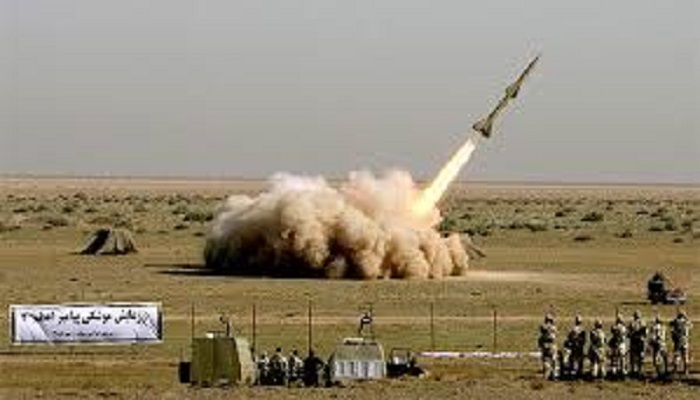
All of these things are part of the agreement reached between the Iran regime and the P5+1 group of nations last week. While the deal was being hailed by supporters as a significant advancement for peace and regional stability, Khamenei, the sole leader of Iran’s foreign and military policies, once again vented his vitriolic hatred of the U.S. and his stubborn support for spreading religious terror and extremism.

“Our policy regarding the arrogant U.S. government will not change,” Khamenei said in a televised address to mark Eid al-Fitr, the Muslim feast day at the end of the holy month of Ramadan. “We don’t have any negotiations or deal with the U.S. on different issues in the world or the region.”

“Whether [the deal is] ratified or not, we will not give up on our friends in the region,” Khamenei added.

Iran provides vital support for the Syrian regime, Hezbollah in Lebanon and Shiite militias in Iraq, among other groups engaged in proxy wars such as the Houthi rebels who overthrew the Yemen government earlier this year.

He went on to hail the deal as a win for Iran in its decade-long struggle to preserve its nuclear achievements, including thousands of centrifuges that enrich uranium and the preservation of hardened sites protected against the possibility of air strikes.

But Khamenei’s comments, coming on the heels of fervent comments by Parsi and other regime supporters that Iran had indeed changed its tune, provide ample proof from the regime’s top leader that Iran has absolutely no intention of changing any of its policies, which frankly should not come as a surprise to anyone since Khamenei has been nothing if not consistent in his attitudes towards the West.

It should also give Democrats in Congress pause when they consider the only supporters and endorsers of this deal are Syrian regime head Bashar al-Assad, Russia which stands to become Iran’s biggest military hardware supplier and China which wants to lock up long-term sales of Iranian oil.

Virtually all of other Arab nations including Saudi Arabia and Egypt opposing this deal.

If undecided Congressmen really want to understand what is motivating the Iran regime and how this proposed agreement only emboldens and re-energizes a beleaguered regime, it’s worth reading Wall Street Journal’s deep dive into Khamenei’s speech and the deep-rooted hatred of the U.S. the regime’s leaders have and will always embrace.

Supporters of the deal such as Parsi who claim normalized relations would bring about an attitude change in the mullahs’ worldview are just blowing smoke. Such predictions are premature at best and dead wrong at worst.

“They overlook how central the hatred of the U.S. has been” to the mullah’s regime’s identity and ideology. WSJ article concludes that anti-Americanism allows mullahs to claim leadership among all extremists, even Sunnis, and it is the core of their policies in places like Afghanistan, Iraq and Syria.

And that is the crux of the argument that Parsi and his colleagues are afraid of ever getting a public airing. The ruling elite in Iran, led by Khamenei and his fellow mullahs, are deeply committed to a shared religious worldview that places any nation, people or religion not in their specific extremist Shiite camp as being an apostate and suitable for elimination.

It is the same religious dogma and approach that ISIS practices with great brutality and regularity and it shouldn’t come as any surprise since Iran under the mullahs, is truly the role model for ISIS.

All of which means this deal in Congress will probably be a very hard sell.

By Michael Tomlinson

Khamenei Reassures World Iran Regime Committed to Terror

Filed Under: Blog Tagged With: Congress on Iran Deal, Iran deal, Iran Lobby, Trita Parsi

Iran Lobbies Falsififying of Choices on Iran Deal as War or Peace

July 18, 2015 by admin

Containment Is the Third Choice In Dealing With Iran Regime

Containment Is the Third Choice In Dealing With Iran Regime

Yesterday we examined the histrionics of Trita Parsi, the head of the National Iranian American Council and lobbyist-in-chief for the Iran regime’s policies, including his principle argument that the only two choices facing us when it comes to Iran is peace through a nuclear deal or war through attacking Iran.

While Parsi harps on semantics of discussions being the basis of a change in Iran’s approach to the world, the track record of the mullahs hardly merits that. In fact, it’s worthwhile remembering why sanctions were imposed in the first place:

  • In 1995, President Clinton imposes an executive order banning all trade with Iran in response to the conduct of regime leader Akbar Hashemi Rafsanjani and the bloody Iran-Iraq war. Congress soon follows with the Iran=Libya Sanctions Act denying Iran access to loans and financial assistance for its oil industry;
  • In 2005, Iran begins enriching uranium in violation of international agreements with the UN Security Council. This starts a string of sanctions from the UN and U.S. under President George W. Bush freezing assets of those regime individuals connected to the nuclear program;
  • In 2010, Congress passes and President Obama signs into law the Comprehensive Iran Sanctions, Accountability, and Divestment Act which greatly enhanced sanctions on the regime in response to brutal crackdowns of protests over fixed elections;
  • In 2012, the European Union imposes a ban on sales of Iranian oil and blocks to financial markets and transactions in response to the growth of the regime’s nuclear program.

These sanctions did not come out of the blue or on a whim. They came as a direct response to provocative regime behavior and actions. Iran’s mullahs were the ones that brought these responses onto themselves and contrary to what Parsi would have people believe those sanctions were self-inflicted by Iran.

Nowhere is that more evident than in how Iran sought to keep its nuclear program secret and only with Iranian dissident and resistance groups and the work of International Agencies were many of Iran’s secret nuclear sites revealed, including:

  • Arak: Site of a heavy water production plant, nuclear reactor and high-explosive test chamber uncovered by the People’s Mujahedin of Iran resistance group;
  • Ardakan: First reported in 2003 by the National Council of Resistance of Iran, this site was an acknowledged uranium mill capable of producing 50 metric tons of uranium annually;
  • Fordow: Secret facility uncovered by intelligence agencies in 2009 containing 3,000 centrifuges to enrich uranium;
  • Natanz: Hardened fuel enrichment plant built deep underground and reinforced with barriers to withstand direct bombing and home to 7,000 centrifuges enriching uranium, revealed in 2002 by Alireza Jafarzadeh, noted author and dissident figure now working with the National Council of Resistance of Iran;
  • Parchin: Revealed by the International Atomic Energy Agency as having been used for implosion testing necessary for modeling nuclear warhead detonation.

Again, Parsi never explains why Iran has maintained secret nuclear facilities. He has never explained why Iran needs to test implosion devices and highly enriched processing facilities for medical isotopes. Parsi has never explained why each U.S., UN and EU sanction was placed in direct response to a regime action.

The facts are that containment of the Iran regime had been working. The regime was cut off from financing and was bleeding mountains of cash because of its expenditure of arms and men in supporting religious wars in Syria, Yemen and Iraq.

Discontentment ran deep within the Iranian people who rose up in protests over presidential elections in 2009 and most recently in mass demonstrations by teachers, ethnic minorities and young people over a plummeting economy and harsh human rights repression.

The time was ripe for regime change and under the pressure an effective containment strategy brought to bear on the mullahs, real change was within the grasp of the P5+1 group of nations and they let it slip away.

As Mrs. Maryam Rajavi, leader of the National Council of Resistance of Iran, said in response to the lost opportunity:

“Had the P5+1 been more decisive, the Iranian regime would have had no choice but to fully retreat from and permanently abandon its efforts to acquire nuclear weapons. Specifically, it would have been compelled to halt all uranium enrichment and completely shut down its bomb-making projects,” Mrs. Rajavi said.

But nothing better illustrates Parsi’s snarky view of the concerns over Iran’s brutal suppression of women, young people, Christians, Kurds and many others than this tweet he sent out:

“1/2 If America ends up getting delicious Iranian pistachios, and Iran ends up getting shitty McDonalds, then yes, US won #NoWinWin #IranDeal”

While Iranians languish in prison, Americans are held without trial, Iranian militia fight in three wars and millions of refugees are displaced by them, Parsi tweets about pistachios. It is ample proof of the fool he has become and the lackey he is.

By Michael Tomlinson

Filed Under: Blog Tagged With: Iran, Iran deal, Iran Lobby, NIAC, Trita Parsi

The Restocking of Iran Regime Bank Accounts and Weapons

July 15, 2015 by admin

The Restocking of Iran Regime Bank Accounts and WeaponsThe announcement of an agreement between the Iran regime and the P5+1 group of nations sets the stage for a protracted fight over the next 60 days in Congress where the deal must be approved and failing that, an override of a certain veto from President Obama has to occur in order to prevent the mullahs from cashing in on what looks to be one of the most generous paydays since Rome was sacked by the Visigoths in the year 410.

There will be an intensive amount of examination and dissection of the agreement’s provisions, but for today it’s worth looking at what some of the reaction has been and what it tells us about the real ambitions and aims of the Iranian regime.

“All Democrats, all Republicans should be looking at this deal very skeptically,” said Harvard University law professor Alan Dershowitz in an interview on Newsmax TV. “This should not break down into liberal, conservative, Republican, Democrat. It should be all Americans concerned about the possibility that Iran will develop a nuclear weapon in 10 years.”

“We have given Iran the path it has been seeking for almost 35 years. The other states in the region are not going to sit idly by, which is why in effect the nuclear arms race is already underway,” former U.N. Ambassador and Fox News contributor John Bolton said, adding that Iran and other nations have used civilian nuclear energy programs as cover for covert enrichment programs.

And from critics who know the intentions of the Iranian regime best came a strong statement from the National Council of Resistance of Iran’s leader, Mrs. Maryam Rajavi.

“There needs to be strict United Nations monitoring of the ‘cash poured into the regime’s pockets so that they would be spent on the Iranian people’s urgent needs,” said Iranian opposition leader Mrs. Rajavi. “Otherwise, Khamenei would continue to fund the IRGC (the Iranian regime’s Guards Corps) to export terrorism and fundamentalism to Iraq, Syria, Yemen and Lebanon.”

Ironically enough, Trita Parsi and Tyler Cullis of the National Iranian American Council, chief cheerleaders and lobbyists for Iran’s mullahs, offered an absurd argument in Foreign Policy describing a scenario where a lifting of the arms embargo against the regime would not alter the military balance in the region.

They cite the size of the military budget for Saudi Arabia and other Gulf states versus what the Islamic republic spends, but their arguments are not only incorrect, but deliberately false since Iran has not publicly reported its military spending since 2012 and does not include the vast expenditures it makes in military exports for proxies such as Hezbollah, Houthis and Shiite militias fighting in Syria, Yemen and Iraq.

They also ignore the centerpiece of Iranian military policy for the past five years which has been to rely heavily on paid mercenaries such as Afghan fighters, Shiite terror groups and paramilitaries to fight on behalf of the regime. In Syria’s case, Iran’s military dispatched 15,000 new fighters primarily made up of paid mercs alone.

When all of these other secret expenditures are taken into consideration, along with the size of the Iranian regime’s army, the mullahs’ firepower ranks 23rd in the world, exceeding the military capabilities of Saudi Arabia (ranked 28th), Mexico (31st), North Korea (36th), United Arab Emirates (50th) and Yemen (79th).

Which is why the arguments Parsi and Cullis posed strike at the heart of the needs of the Iranian regime; namely to get their hands on the $160 billion in frozen assets and foreign investment available to them, as well as the ability to sell two million barrels of oil on the open market each day again. The fact the Iran lobby has argued so passionately for lifting of the arms embargo shows the desperate need for the mullahs to restock their military hardware.

Over the next two months we will hear much debate over the specifics of the agreement, but what cannot be overlooked are the motivations of the mullahs in Tehran and the central flaw with this deal; which is it rests solely on the premise that the mullahs can be trusted.

It’s a deeply flawed premise given their actions over the past decade leading up to today which has never changed or deviated from the path of regional hegemony.

Congress would be well served to reject this deal because the choice is indeed between peace and war, unfortunately approving this deal will start a nuclear arms race, allow billions in new arms to flow to battlegrounds and spark a spiral into more wars.

By Michael Tomlinson


Filed Under: Blog Tagged With: Iran deal, Iran Lobby, Iran Talks Vienna, NIAC, Taylor cullis, Trita Parsi

Iran Lobby Playing Blame Game

July 10, 2015 by admin

Iran Lobby Playing Blame GameJuly 9 has come and gone and yet another deadline has blown by in excruciating nuclear talks between the Iran regime and the P5+1 group of nations; totaling now six missed deadlines in the past two years.
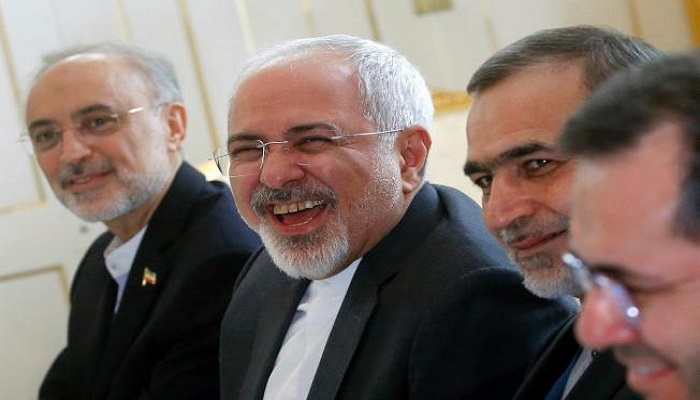
But with talks collapsing again, a fresh round of finger pointing continues to break out as U.S. and Iranian negotiating teams took to competing news leaks to start the blame game as to which side was at fault for the impasse.

Regime foreign minister Javad Zarif took to Twitter to float the accusation that it was the other side that had changed demands in the middle of negotiations. It is an absurd claim since it has been the mullahs in Tehran who have dropped several verbal bombs that have blown up talks including an extraordinary demand to lift United Nations embargoes on the arms trade.

Given the fact that the regime is hip deep in supplying three major wars now in Syria, Iraq and Yemen, the prospect of the regime being flooded with new arms it could redirect to its forces in these conflicts has effectively killed talks.  With this last minute demand, Iran’s mullahs may have overreached as evidenced by the sudden stiffening in the U.S. position and the threat by Secretary of State John Kerry to walk away from talks.

Both Russia and China have supported a lifting of the embargo since they stand to be the biggest sellers of weapons to the regime. The behind the scenes rift amongst the P5+1 members may very well have been a calculated move by the mullahs in order to sow discord right at the deadline and apply maximum leverage in order to extract the best deal possible.

Some news media and analysts have speculated that significant concessions granted to the regime over the past two years may have emboldened the regime into thinking it was winning and encouraged the mullahs to overreach with their latest demands, only to see the golden opportunity to gain sanctions relief be dealt a setback with the missing of this week’s deadlines.

More broadly though, these sudden demands by Iran and finger pointing have laid bare the absurdity of the regime lobbying forces that have been deployed to help manage the media during talks. Chief among them have been the National Iranian American Council which has sent two of its staffers, Trita Parsi and Reza Marashi, to camp out in Vienna and offer soundbites to any journalist willing to listen.

Parsi especially has been active on his Twitter trying to shore up the regime position and jumped into the blame game as well once word came down from the Iranian delegation that the Americans had finally seemed to wise up to the regime’s games.

“Iranian view is that US withdrew today a proposal it had put forward yesterday, WANTING to pass the Corker deadline #IranTalksVienna,” Parsi said in a tweet.

Parsi has tried to put lipstick on a pig in tweeting out pithy little attacks on the U.S. as talks broke down, as well as supporting Russian foreign minister Lavrov’s tweets as he took exception to the stiffening in U.S. resolve.

All of which amounted to squat for Parsi and his lobbying partners as world financial markets took notice of the regime blunder and global oil prices stabilized as belief spread that the window for a nuclear had closed.

At the end of this week, the mullahs seriously miscalculated about demanding immediate sanctions relief so they could gain access to the estimated $140 billion in frozen assets as well as resume trade in arms and missiles to restock inventories drained dry through its proxy wars.

The demands came at such bad times so close to deadlines as to raise the specter of desperation on the part of Iran’s leadership. The past several months have seen mass protests and disruptions throughout Iran as ordinary citizens, teachers and young people have demanded improved economic conditions and relief from oppressing human rights restrictions.

The mullahs may have been feeling the pinch and made these demands not out of some strategic negotiating position, but simply out of desperation to save themselves, in which case the West would be well-served to walk away from these talks and call the regime’s bluff and find out just how bad off the mullahs really are.

At the end of the day, do we really need a nuclear deal if the only option is a bad one?

By Laura Carnahan

Iran Lobby Playing Blame Game

Filed Under: Blog Tagged With: Iran Lobby, Iran Talks Vienna, Trita Parsi, zarif

“Deadline Schmedline” Trita Parsi Not Worried for Regime

July 10, 2015 by admin

“Deadline Schmedline” Trita Parsi Not Worried for Regime

Trita Parsi has had close working relationship with Javad Zarif, when he was Iran’s Ambassador to the United Nations. In a deposition, Parsi stated he only communicated in 2006 with Zarif in order to “interview him.” But this is not true.
Emails made public demonstrate that Parsi and Zarif collaborated on numerous political issues. Parsi publicly distributed an Iranian regime document to influence US policy. He made arrangements for the ambassador to participate in a conference on Capitol Hill and to meet members of Congress, and sought the ambassador’s council regarding the feasibility of a new Persian Gulf security arrangement.
About the collusion between Parsi and Zarif, a former Associate Deputy Director of the FBI said Parsi should have been registered as a foreign agent of Iran. Arizona Senator Jon Kyl contacted the US Justice Department, urging an investigation of Parsi.

Noun: dead·line


  • a date or time when something must be finished : the last day, hour, or minute that something will be accepted

“Deadline schmedline, I’m still not worried.”

  • Trita Parsi, head of the National Iranian American Council, in tweet from Vienna

Apparently Parsi, chief cheerleader and lobbyist for the Iran regime, has a slightly different view of deadlines than the foreign ministers of six countries negotiating with regime, but not so different from his mullah masters in Tehran since Iran has now blown past five self-imposed deadlines to reach a nuclear deal over the past two years.

The new, new deadline is today to meet a deadline set in legislation granting Congress 30 days to review any deal instead of a 60 day period; the logic being having a longer review period would allow opposition to a Iranian nuclear more time to lobby Congress.

In fact, Iran’s mullahs care little about deadlines since what they seem most interested in is taking verbal potshots at their opposite numbers, especially the U.S. as evidenced by heated exchanges from regime foreign minister Javad Zarif who chastised P5+1 negotiators for taking exception to regime’s latest demand to lift embargoes against the conventional arms trade.

Parsi was almost crowing about Zarif’s verbal explosion by tweeting out how well received it would be back in Iran by the mullahs.  All of which makes it plain Parsi could really care less about a deal as long as the regime gets to play the rest of the world as fools.

In each case as a new deadline approached, the regime has sabotaged the hope of any agreement by issuing new, aggressive demands; typically through a public rant by top mullah Ali Khamenei or more recently by issuing his very own infographic of “red lines” the regime would not cross in concessions.

And Parsi has faithfully sought to provide cover for the mullahs in his media interviews and social media tweets even though he probably knows what he is saying is either false or contradicted by the very mullahs he’s trying to make excuses for.

Take for example his tweet the other day chastising the amount of money spent by Saudi Arabia and other Gulf states as part of their overall military budgets. He lists Iran’s military spending at only $10.6 billion which is patently false since the regime halted public reporting of its military expenditures since 2009 when the mullahs stole the presidential election and spurred massive protests by the Iranian people which were brutally put down.

The Stockholm International Peace Research Institute tracks global military spending but has no data for Iran past 2009 and the data it did have before then did not include regime spending for paramilitary forces such as the Revolutionary Guards Corps and Quds Force, nor did it take into account aid given to terror groups such as Hezbollah or proxies such as Shiite militias in Iraq or Houthi rebels in Yemen.

But Parsi is by no means the only apologist for the regime. His colleague Reza Marashi has been just as busy in trying to explain why the mullahs keep heaping on demand after demand even after a so-called interim agreement was reached and only “technical” details had to be worked out.

His contention in the Los Angeles Times was that the mullahs worry the “White House will use administrative authority to temporarily lift U.S. sanctions on Iran but that Congress won’t follow through to permanently remove sanctions that were enacted into law.”

It is an odd position to take since the lifting of sanctions was agreed upon in the interim agreement only after verifying the regime had lived up to the conditions of a deal, including verification and reductions in enriched uranium stockpiles; both conditions repudiated by the regime since last April’s agreement.

But the truth doesn’t seem to faze Parsi and his cohorts and neither it seem do deadlines.

By Michael Tomlinson

Filed Under: Blog Tagged With: Iran, Iran deal, Iran Lobby, Iran Talks, Reza Marashi, Trita Parsi

Iran Lobby Pulling Out All the Stops

July 7, 2015 by admin

Iran Lobby Pulling Out All the Stops

Iran Lobby Pulling Out All the Stops

The 4th of July weekend was filled with more than fireworks and celebration. It had more than BBQs and hot dog eating contests or mesmerizing Women’s World Cup finale. The holiday weekend also a blizzard of last minute lobbying by supporters of the Iran regime in a desperate attempt to push for a final key concessions including some new disturbing demands by the mullahs in Tehran.

In the vanguard were staffers from the regime’s chief lobbying group, the National Iranian American Council, which sent its representatives anywhere they could find a microphone, camera, notebook or warm body willing to listen to them.

There was no limit to what they were willing to comment about, even if it had no real tie in with ongoing nuclear negotiations or for that matter, anything of relevance to Iranian-Americans, the purported audience they were founded to help.

Reza Marashi of the NIAC spent his weekend being quoted in Voice of America about an online campaign to foster love for the Iran regime. I’m still trying to figure out just how that movement halts Iran’s funding of three proxy wars in Syria, Iraq and Yemen.

He also attempted to persuade the BBC in the Viennese hotel lobby where negotiations were taking place that talks had moved from the “expert” level and now was in the hands of “ministers.” An interesting observation since he said the exact same thing last year and in April when the interim framework agreement was announced with much fanfare and 24 hours later each side disputed what was agreed to.

But give Marashi credit for attempting wild spin control such as when he told Bloomberg News that “both sides have more maneuvering ability in their negotiating position than they are willing to let on.”

An interesting contention when regime leader Ali Khamenei laid down several red lines in the sand in the form of a detailed infographic repudiating almost everything regime negotiators had hinted at in terms of compromises.

Public lobbying for the regime’s positions wasn’t limited to the NIAC though. Long-time regime business associate Bijan Khajehpour of Atieh International has made the argument that the immediate lifting of sanctions would benefit the Iranian people with the injection of fresh capital into the economy. While everyone knows that the estimated $140 billion in frozen assets and nearly $100 billion in direct foreign investment was being eagerly awaited by the regime’s ruling mullahs who desperately need the cash to replenish coffers drained dry by three proxy wars, plunging oil prices and deep-seated corruption resulted from regime elites and their families skimming off the economy.

The most impressive linguistic gymnastics have come from Trita Parsi, the leader-for-life of the NIAC, who has given full-throated support for all of the demands laid out by Khamenei. Ironically, Parsi’s own book has been used to explain how during the Bush administration, the opportunity arose for a deal with Iran to be struck only to fail because of the “unreasonable” demands by the U.S. for regime change.

History has demonstrated though that Iran’s mullahs have never been serious about delivering a deal that undercuts their power, ability to control their neighbors, nor reduce their ongoing sectarian warfare against other religions. While Parsi contends the mullahs were perfectly willing to give up supporting terror groups like Hezbollah and cooperate with nuclear inspectors, the opposite has been the truth.

Parsi has never explained why a regime he himself has portrayed as being committed to a path of peace has instead turned into the single source of bloodshed, war, sectarian violence, terrorism and practitioner of unrivaled human rights abuses on the planet right now.

Indeed, Iran is appropriately enough the “godfather” of much of what troubles the world now. About the only thing Iran’s mullahs are not responsible for are the Greek Eurozone vote and the collapse of the Japanese women’s soccer team in the Women’s World Cup championship game.

But Parsi deserves our final attention since it has been his championing of the mullahs that has turned the once promising idea of a voice for Iranian-Americans into a propaganda megaphone for the mullahs.

In a question and answer session with Deutsche Welle, Parsi was asked if “a deal only helps Iran’s elite, the hardliners, or do you think a deal could actually help to unleash Iran’s moderate society?”

“It is the moderates in Iran who are pushing for this deal. It is the pro-democracy movement that is overwhelmingly in favor of this deal,” Parsi said.

That statement, more than any other he has made over the past few weeks, sheds the brightest light on the rank hypocrisy Parsi spouts. He attempts to convince us moderate forces are in control in Iran; the same moderate forces that:

  • Instituting brutal put downs of any street demonstration or protests over the past four years;
  • Proclaiming a “moderate” president in Hassan Rouhani who has overseen 1,800 executions in the past 2 years at a clip almost double that of his deranged predecessor, Ahmadinejad;
  • Plunged the Middle East into three massive wars in Syria, Iraq and Yemen with the full military, economic and political backing of the regime, including committing thousands of Iranian soldiers and paramilitary militias;
  • Oversaw the most massive crackdown on communications in Iran, essentially blacking out the entire country through installation of a cyberwall, confiscation of satellite dishes and banning of access to social media.

These things and more are the proof that puts to lies what Parsi, Marashi and all other regime supporters’ contend are the true nature of the mullahs’ intentions.

By Michael Tomlinson

Filed Under: Blog, National Iranian-American Council Tagged With: Iran, Iran Lobby, Reza Marashi, Trita Parsi

Trita Parsi Tries to Dignify Terror

July 3, 2015 by admin

Trita Parsi- Iran Lobby

Trita Parsi- Iran Lobby

With the 4th of July upon us, it’s appropriate for us to reflect back on some words from one of the Founding Fathers; in this case Thomas Jefferson who wrote in 1774:

“A free people claim their rights as derived from the laws of nature, and not as the gift of their chief magistrate.”

It’s an appropriate thought as we look at negotiations between the Iran regime and the P5+1 group of nations wrestling with how to keep Iran from possessing nuclear weapons, but if that issue is really just a tangent of an ever greater problem facing the world today which is the recalcitrant and predatory nature of the regime’s mullah leadership.

Jefferson was right thought in 1774 and his words apply today because the claim of authority assumed by Iran’s mullahs was forcibly wrested away from the Iranian people in the 1979 revolution and subverted into the perverse extremist theocracy it has become now.

All of which makes what Trita Parsi, leader of the regime’s chief lobbying group, the National Iranian American Council, wrote in National Interest patently absurd and indicative of how craven Parsi has become in shilling for the mullahs.

“But the necessity to uphold dignity is at the very center of both the problems and the solutions in the ongoing nuclear negotiations,” Parsi said.

Parsi’s contention that affording Iran’s mullahs “dignity” is the clear path an agreement. He equates this by using the example of the demands by the P5+1 to allow inspections of regime military sites in order to ascertain if Iran has militarized its nuclear development and whether or not the U.S. would allow similar inspections of its military bases under similar circumstances.

It’s an absurd proposition on Parsi’s part for two significant reasons: 1) Mullahs in Iran and not the U.S. was violating international agreements it had signed to not develop nuclear weapons; and 2) Under nuclear treaties with the Soviet Union and later Russia, the U.S. allowed access to its nuclear bases and facilities for international monitors and Soviet and Russian personnel to witness the dismantling of warheads and missiles.

Parsi also takes exception to the idea of “anytime, anywhere” inspections, blaming that condition for offending Iranian dignity and precipitating a crisis in talks. He further suggests that Iran has always given inspectors access and has no problem with it if it was delivered in a manner preserving of Iranian dignity.

I give Parsi credit for his imagination. He might make a good fantasy writer some day with these fairy tales he concocts, but the truth of the situation is that the regime has repeatedly halted inspections, cutting locks off of monitoring lockers and removing inspection cameras. In fact, the regime still to this day has refused answering questions in a dozen areas raised by the International Atomic Energy Agency over the military dimensions of Iran’s nuclear program.

Far from preserving Iranian dignity, Ali Khamenei and his fellow mullahs have refused these questions and concessions not out some sense of national pride, but rather from the very real fear their military secrets would be discovered and the entire false façade they had constructed of a peaceful nuclear program would come crashing down.

Remember, the regime had hidden even the existence of secret nuclear facilities at Parchin, Natanz and Arak.

The fact that Khamenei himself has posted his own definitive red lines where he will brook no compromise renders Parsi’s arguments moot since the regime’s top mullah has taken upon himself to repudiate Parsi’s claims over and over again.

Why does Parsi discuss Iranian dignity when he never deals with the primary factor which is the regime is the violator of international law and agreements in the first place? Does the dignity of a murderer become important as part of his trial? Do a war criminal’s actions deserve dignity when being examined by prosecutors?

The fact that Iran has been caught in criminal activities effectively negates its right to be treated as an equal amongst nations who abide by international law. China does not fund Hezbollah. France does not supply Houthi rebels with arms. The United Kingdom does not recruit Afghan mercenaries and send 15,000 of them to support the Assad regime in Syria, but the Iran regime does all these things and more.

Instead of writing about the dignity of the regime’s mullahs, Parsi would do better about writing of the indignities being suffered by American hostages such as Jason Rezaian of the Washington Post, or the Iranian families whose loved ones have been hanged by the thousands by the mullahs. Parsi might consider the plight of the millions of Syrians, Iraqis, Yemens and Lebanonese who have been displaced as refugees fleeing the proxy wars Iran has started.

By Laura Carnahan

Filed Under: Blog, National Iranian-American Council Tagged With: Iran, Iran Lobby, Iran Talks, Trita Parsi

  • « Previous Page
  • 1
  • …
  • 16
  • 17
  • 18
  • 19
  • 20
  • 21
  • Next Page »

National Iranian-American Council (NIAC)

  • Bogus Memberships
  • Survey
  • Lobbying
  • Iranians for International Cooperation
  • Defamation Lawsuit
  • People’s Mojahedin
  • Trita Parsi Biography
  • Parsi/Namazi Lobbying Plan
  • Parsi Links to Namazi & Iranian Regime
  • Namazi, NIAC Ringleader
  • Collaborating with Iran’s Ambassador

Recent Posts

  • NIAC Trying to Gain Influence On U.S. Congress
  • While Iran Lobby Plays Blame Game Iran Goes Nuclear
  • Iran Lobby Jumps on Detention of Iranian Newscaster
  • Bad News for Iran Swamps Iran Lobby
  • Iran Starts Off Year by Banning Instagram

© Copyright 2026 IranLobby.net · All Rights Reserved.