Iran Lobby

Exposing the Activities of the lobbies and appeasers of the Mullah's Dictatorship ruling Iran

  • Home
  • About
  • Current Trend
  • National Iranian-American Council(NIAC)
    • Bogus Memberships
    • Survey
    • Lobbying
    • Iranians for International Cooperation
    • Defamation Lawsuit
    • People’s Mojahedin
    • Trita Parsi Biography
    • Parsi/Namazi Lobbying Plan
    • Parsi Links to Namazi& Iranian Regime
    • Namazi, NIAC Ringleader
    • Collaborating with Iran’s Ambassador
  • The Appeasers
    • Gary Sick
    • Flynt Leverett & Hillary Mann Leverett
    • Baroness Nicholson
  • Blog
  • Links
  • Media Reports

The Cruelty of the Iranian Regime at the Holidays

December 23, 2016 by admin

The Cruelty of the Iranian Regime at the Holidays

The Cruelty of the Iranian Regime at the Holidays

Amidst the horror of World War I over a century ago, a remarkable event occurred that has almost never been seen again in the history of human conflict.

During Christmas in 1914, the Western Front of World War I in France was a devastated moonscape of trenches filled with mud, dead bodies, snow and men filled with despair and lost hope amidst the first modern war of the Industrial Age.

The First World War introduced machine guns, aerial bombardment and poison gas and chemical attacks. It was brutal, unforgiving and merciless. Yet that Christmas saw what was to become known as “the Christmas Truce” where French, German and British soldiers got out of their trenches to walk across no man’s land and exchange seasonal greetings with their enemy.

They exchanged food and souvenirs, held prisoner swaps and even ended up singing holiday carols together. Some units even played football games together. It was a remarkable sight and one that some hoped might portend a pathway to ending the bloody conflict.

Unfortunately, war, as in all human conflict, resumed its proceedings with brisk abandon and there would be no further repeats of this holiday miracle.

This episode is instructive since it shows us that even the most bitter of enemies can pause and allow the good nature of the holiday period seep in and allow a few moments of grace to settle over a bloody battlefield.

One hundred and two years later, a different kind of uneasy peace has settled over the city of Aleppo in Syria, but unlike the battlefields of Europe, this silence has been brought about by the utter destruction of a city and its residents by the round-the-clock merciless attacks and bombings by the Syrian regime and its allies, especially Iran.

The wreckage of Aleppo mirrors old black and white photos of cities blasted to bits in that long ago war in France, but today there is no hope for truce, no compassion and no hearkening to a holiday message of peace and forgiveness.

For the mullahs in Tehran, a cold blackness rules their collective Islamic extremist hearts and their judgment is swayed by the needs of the moment which almost always revolves around their struggle to keep their shaky grip on power.

While the rest of the world takes a break this weekend to celebrate the holidays with family gatherings and goodwill towards one another, the Iranian regime continues to find new ways to demonstrate its depravity.

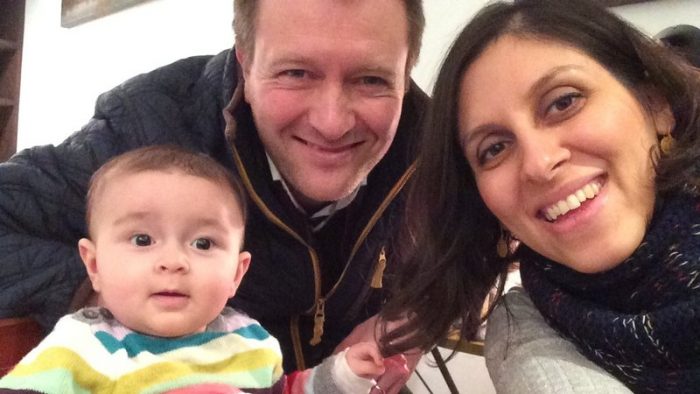
Nazanin Zaghari-Ratcliffe, 37, has been told that she must choose between taking her two-year old daughter, Gabriella, into a Tehran’s notorious Evin prison or sign away her rights to be with her daughters, her husband Richard Ratcliffe told the Telegraph.

“The ultimatum is that Gabriella lives with her three days a week in prison or she signs a paper waiving her rights of custody,” he said.

“She is deeply wary of having Gabriella move into prison partly because prison is horrible, and partly because after a hunger strike she does not have the strength to look after her three days a week,” he said.

Zaghari-Ratcliffe, a project manager with the Thomson Reuters Foundation, was sentenced to five years in prison in September following a conviction on unspecified “national security-related” offences following a trial before a Revolutionary Court in the capital Tehran.

The 37-year old charity worker has been in custody – much of it solitary confinement – since being detained by the Revolutionary Guard Corps on April 3.

Ratcliffe, who has dual British-Iranian nationality, was on holiday visiting her parents in Tehran. She was arrested at the check-in desks of Khomeini International Airport.

Gabriella was left in the care of her grandparents after the arrest, but her passport was confiscated meaning the child was trapped in Iran.

Hassan Rouhani earlier articulated the regime policy that it did not recognize dual-national citizens, arresting several Canadians, Americans, French and British subjects following the nuclear agreement reached last year.

The arrests, coupled with a broad crackdown domestically against Iranian dissidents, journalists, students and artists, highlight the chief motivation for the mullahs in Tehran which is fear. The mullahs are afraid of dissent. They are afraid of Iranians living abroad coming home and spreading dangerous ideas such as freedom, democracy and peace with their friends and family.

The mullahs fear an open and free press and they fear young people and artists who have utilized social media to show their objections to the mullahs by simple acts of defiance.

For the Iranian regime, the only thing the mullahs understand is power and violence and how to apply brute force to advance their goals. It’s the recipe the regime has followed since its founding in using violence in Lebanon, Syria, Iraq, Afghanistan and Yemen.

While Aleppo stands empty and Iranian commanders take public tours of the destruction they have wrought, the most telling indictment of the Iranian regime may not be bombed out buildings, but in the message that the mullahs are forcing a mother to decide between losing her child or bringing her into one of the darkest and most brutal hellholes on Earth.

The next time the Iran lobby advocates for accommodating Iran, you may want to ask why there is not accommodation for a mother and her child at Christmas?

Laura Carnahan
 

Filed Under: Blog, News Tagged With: Featured, hassan rouhani, Iran, Iran Human rights, Iran Lobby, Iran Mullahs, Nazanin Zaghari-Ratcliffe

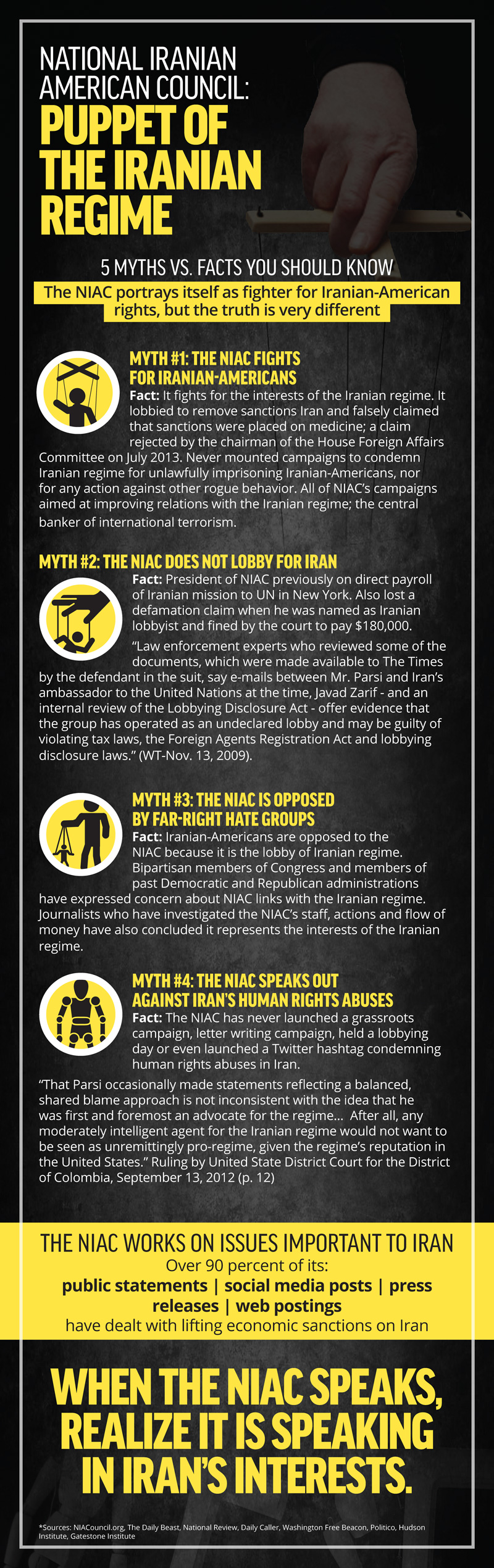
When the NIAC speaks, realize it is speaking on Iran’s interests.

December 21, 2016 by admin

Myths and Facts about National Iranian-American Council-NIAC

Myths and Facts about the National Iranian-American Council-NIAC

Filed Under: Latest from Lobbies & Appeasers, National Iranian-American Council, News Tagged With: Featured, Iran Lobby, National Iranian American Council, NIAC, NIAC Action, Trita Parsi

Why Do Sanctions Not Apply to Qasem Soleimani?

December 20, 2016 by admin

Why Do Sanctions Not Apply to Qasem Soleimani?

Why Do Sanctions Not Apply to Qasem Soleimani?

What is the purpose of a sanction? According to the dictionary, a sanction is “a threatened penalty for disobeying a law or rule.” Sanctions come in all forms ranging from your mother grounding you for painting the family dog to imposing economic sanctions on your nation because you’re trying to build nuclear weapons.

In either case, the basic premise is still the same: you do something wrong, you suffer the consequences. It’s not a complex idea and one as basic as human nature, except in the case of the Iranian regime, sanctions don’t seem to apply.

Take for instance the case of Qasem Soleimani who is the commander of the regime’s Quds Force, the arm of the Iranian military often engaged in irregular operations and is the primary contact for terrorist groups and militias around the world.

If Wal-Mart is the world’s largest retailer, the Quds Force is the bazaar for militants, terrorists, mercenaries and rebels.

The Quds Force is unique because it directly and solely reports to the regime’s top mullah, Ali Khamenei. That would be like if the Navy SEALS only reported to the president and were accountable to no one else. As the Quds Force commander, Soleimani wields enormous influence which he has used in carving out a personal theater of operations ranging from Lebanon and Syria to Iraq and Yemen.

Since 2007, the Quds Force has been a supporter of terrorism by the U.S. and Soleimani was singled out and sanctioned by the United Nations as well. He was also cited by the European Union in 2011 for his role in supporting the violent suppression of protests in Syria which sparked that civil war.

Since then, Soleimani has been at the heart of the Syrian conflict and the faceless man standing behind Syrian dictator Bashar al-Assad in a war that has claimed over 800,000 lives and turned large swathes of Syria into desolate wreckage.

Soleimani was also the principle player in flying to Moscow to plead with Russia to intervene militarily in Syria just as rebels had gained the upper hand and Assad was pushed to the brink.

The fact that Soleimani has been able to fly to Russia and travel throughout the Mideast has been amazing considering he is under an international travel ban as part of the sanctions imposed on him and yet he travels as freely and frequently as any reputable businessman.

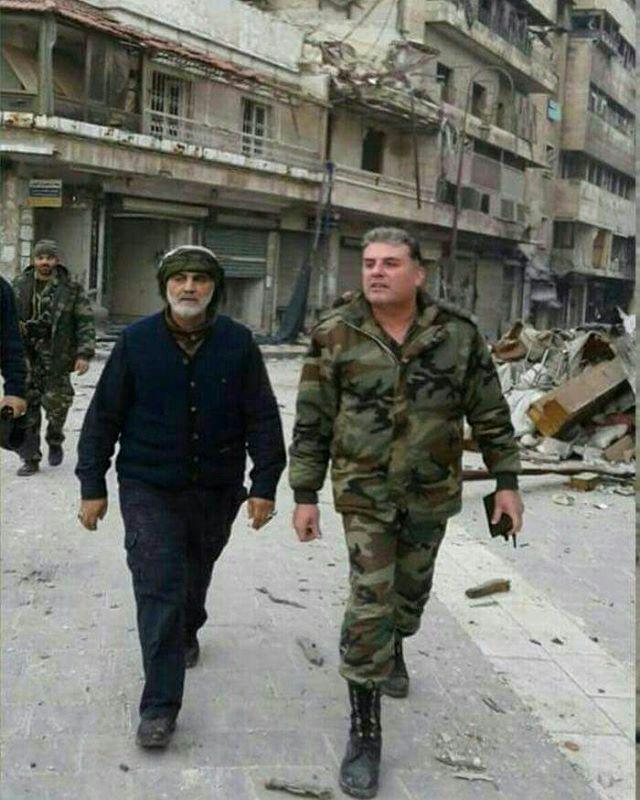
Now we have recent photos and social media posts of him touring the ruins of Aleppo in the wake of that city’s surrender this weekend. Soleimani tour of Aleppo was a demonstration of Iran’s waxing influence in Syria and disregard for international resolutions barring such behavior. Soleimani’s presence in Syria is a direct violation of the United Nations resolution governing the nuclear deal, according to the Washington Free Beacon.

Soleimani’s visit coincided with moves by the terror group Hezbollah, which is controlled by Iran, to establish its own claim in Syria, according to regional reports and footage.

Iran’s public presence in Syria has not been met with action by the Obama administration, which has come under increasing pressure in recent weeks to explain why it is not enforcing current sanctions against Iran. Soleimani continues to direct Iranian forces in both Iraq and Syria and has long been sanctioned for the murder of U.S. citizens.

Mutliple sources who spoke with the Washington Free Beacon about the matter disclosed that the Obama administration is taking a soft approach with Iran, including not enforcing sanctions, in order to preserve the nuclear deal and diplomacy with Tehran, which has threatened repercussions for any new sanctions.

Sanctions imposed by the international community to prevent the flow of arms and foreign fighters to Syria have proven just as impotent as Soleimani has used the Quds Force to recruit Afghan mercenaries from the ranks of refugees living in Iran, as well as shipped in Shiite militias from Iraq to fight for Assad.

He has also orchestrated the dramatic escalation in the use of air power first through Syria and later through Russia resulting in the use of barrel bombs and similar weapons of mass destruction on civilian targets.

Most disturbing, the Quds Force supported Shiite militias in Iraq with IEDs that were responsible for killing hundreds of American service personnel there and Soleimani has never been called to account for those American deaths.

In 2011, Soleimani and other members of the Qods Force were implicated in the failed Iranian plot to assassinate the Saudi Arabian ambassador to the U.S. at a popular restaurant in Washington, D.C. As part of the nuclear deal reached with Iran, the UN travel ban on Soleimani will be lifted either in October 2020 or when the International Atomic Energy Agency determines that all nuclear material in Iran is for peaceful purposes.

That lack of accountability and enforcement of sanctions points the greatest weakness in the argument made by the Iran lobby and other supporters of the nuclear which was that Iran wouldn’t be able to evade it.

Soleimani and the Quds Force are proof that Iran can not only evade international sanctions, but do so freely and without consequences.

Ultimately, the challenge for the incoming Trump administration and the rest of the world will be not in forging new agreements with Iran, but just enforcing the myriad of sanctions already in place.

Michael Tomlinson

Filed Under: Blog, News Tagged With: Featured, Iran Mullahs, Iran sanctions, Iran Terrorism, IRGC, Sanctions, Syria

Complications and Conflicts Are Coming with Iran in 2017

December 19, 2016 by admin

Complications and Conflicts Are Coming with Iran in 2017

Complications and Conflicts Are Coming with Iran in 2017

Sir Isaac Newton’s Third Law of Physics states that for every action there is an opposite and equal reaction. The same could be said for geopolitics as it relates to the Middle East where every act of terror seems to be met with a corresponding act of retribution and every scheme is met with another scheme by a competing entity or enemy.

For the Iranian regime, its actions throughout the Mideast has wrought suffering and destruction on a level not seen since World War II as the fall of Aleppo demonstrated with pictures and images reminiscent of bombed out cities such as Dresden or Tokyo.

Iran’s intervention at the start of the Syrian civil war to prop up the Assad regime set into motion a conflict that has claimed over 800,000 men, women and children and turned into refugees a whopping eight million people who have overwhelmed nations from Greece to Sweden.

Iranian regime sits at the center of most of the foreign policy challenges facing it in 2017, including:

Hezbollah

Long a loyal military proxy for the Iranian regime, the terrorist group Hezbollah has risen in prominence with its long campaign in Syria culminating in the fall of the rebel stronghold Aleppo. Iran has supplied Hezbollah with arms, cash and advanced weaponry for its campaigns, but the terror group’s bank account got a huge influx in cash coincidentally when the Obama administration secretly transferred $1.7 billion to Iran as part of the nuclear deal and hostage swap.

“While we cannot establish whether the money transferred from the U.S. went directly into the expanded defense budget, it, at a minimum, enabled the government to release an equal amount of money for defense purposes,” said Nimrod Raphaeli, a senior analyst at the Middle East Media Research Institute.

“It is noteworthy that the increase in the proposed defense budget for 2017 is approximately equal to the amount transferred by the U.S.,” he continued.

Raphaeli explained the government of Rohani “has submitted to the Majlis (parliament) a draft budget for the fiscal year March 2017-March 2018 for a total of $99.7 billion equivalent.”

That, he said, is up 13.9 percent, with a “sharp increase of 39 percent … in funds earmarked for defense, including a big increase in the budget of Iran’s Islamic Revolutionary Guards.”

The report described the IRGC as “a potent military force accountable to the supreme leader, in regional politics, and particularly in Syria and Iraq.”

“A branch of the IRGC, the Qods Force Brigade, commanded by Gen. Qasem Soleimani, is responsible for spreading Iran’s subversive and, often, terrorist activities across the Middle East and beyond.”

Soleimani was seen in eastern Aleppo this weekend surveying the remains of the city as residents, long trapped by the fighting, struggled to evacuate.

Syria

Syrian rebel leaders blamed Iran for halting the evacuation of civilians from Aleppo, leaving an uncertain fate for residents as Iranian forces backed Syrian government troops entering the beleaguered city.

The operation to evacuate fighters and civilians from the last opposition-held area of Aleppo was suspended on Friday, its second day, after pro-government militias demanded that wounded people also be brought out of al-Foua and Kefraya, and protesters blocked the road out of Aleppo.

Munir al Sayal, the head of the political wing of the Ahrar al Sham rebel group involved in negotiations over the deal said Iranian-backed Shi’ite fighters led by Hezbollah militia and other Iraqi Shi’ite groups were behind the detention of hundreds of people trying to leave on Friday, leading to some deaths before they were turned back, in an effort to disrupt the evacuation.

Iran Nuclear Deal

The success or failure of the Iran nuclear deal (depending on your affiliation with the Iran lobby) hinges not so much on whether or not Iranian regime adheres to the deal (since it already has broken several sections of it) but rather whether or not the U.S. finally holds Iran accountable for specific violations instead of trying to paper them over with waivers and exemptions.

The process of appeasing of the Iranian regime in order to support an illusory “moderate” movement within the Iranian government has yielded nothing of tangible worth and has only emboldened and empowered the regime and strengthened the hold the Revolutionary Guards Corp has on virtually every aspect of Iran.

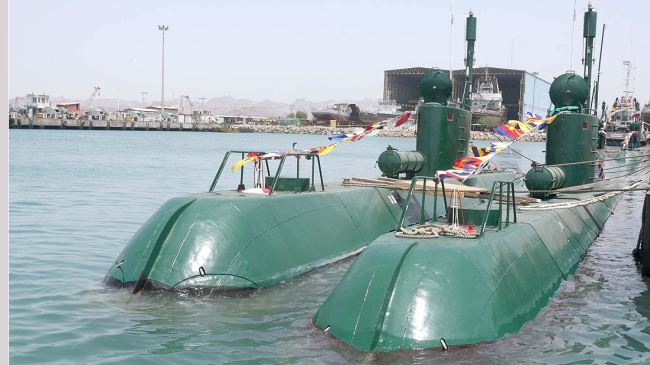
In many ways, the UN’s international nuclear watchdog agency has already been compromised by politics by looking the other way with violations by Iran in heavy water limits, enrichment levels and amounts of enriched uranium. Hassan Rouhani’s recent pledges to launch a crash program to develop nuclear-power naval vessels would require fuel far in excess of the agreement’s levels; thereby putting the UN’s watchdog again on the spot.

Economic Sanctions

Unfortunately, the Obama administration’s insistence on paying $1.7 billion in cash to Iran and opening up the doors to foreign investment weakened the usefulness of future of economic sanctions by providing the Iranian regime with an economic cushion.

The mullahs recognize their vulnerability on this score and are in a mad dash to complete as many business deals as possible even threatening Trump with harsh repercussions should he interfere in the recently announced deal by Boeing to sell $16.6 billion worth of jet airliners to Iran.

For the mullahs, the airliners are vital since a nation cannot operate in a global economy without a strong and viable air network, but in Iran’s case airliners also serve as the vital air bridge to move arms, cash, supplies and fighters to their proxies in far flung battlefields. Emanuele Ottolenghi wrote in the Hill of Iran’s use of its airlines to support its wars.

“It is well known that Iranian passenger planes ferry Iranian-backed militias to Damascus from Iran’s airports such as Abadan, Yazd and Tehran. The aircraft also carry weaponry in their cargo compartment. Weapons flown to Damascus supply Lebanon’s Hezbollah, the regime forces of the Syrian army, Iran’s Islamic Revolutionary Guard Corps (IRGC), and their Afghan, Iraqi and Pakistani Shiite militias,” Ottolenghi wrote.

“Conclusive evidence that Iran’s aircraft is the principal conduit for Tehran’s weapons and military personnel airlift in support of Assad’s war of extermination against his own people emerged recently, as Boeing representatives were in Tehran to finalize a $16.6 billion aircraft deal with Iran Air. Airbus will soon follow suit with an even larger deal,” he said.

While the outlook for the Mideast remains murky to say the least, there is no doubt that Iranian regime’s role and how it can be confronted will dominant much of 2017.

Michael Tomlinson

Filed Under: Blog, News Tagged With: #NuclearDeal, Appeasement policy, Featured, hassan rouhani, Iran, Iran Lobby, Khamenei, Nuclear Deal, nuclear talks, Rouhani, Sanctions, Syria

Iran Lobby Tries Best Spin on Bad Day for Iran Regime

December 17, 2016 by admin

Iran Lobby Tries Best Spin on Bad Day for Iran Regime

Iran Lobby Tries Best Spin on Bad Day for Iran Regime

In what can be considered a symbolic show of disapproval, the Iran Sanctions Act reauthorization became law without President Obama’s signature. The near unanimous margins in Congress made Obama’s signature superfluous; providing a veto-proof margin.

The act was a last measure of defiance from Obama as he leaves office and the new president-elect has built a cabinet and national security team made up of critics of the nuclear agreement with the Iranian. It’s a childish and petulant act that reinforces how out of step the administration was from an American electorate unnerved by numerous terrorists attacks in the U.S., Asia, Africa and Europe motivated by Islamic extremism.

Clearly the Obama administration intends to provide as much running room for the mullahs in Tehran before it leaves office as Secretary of State John Kerry said that even though he considers it unnecessary to renew the existing waivers, he had done so anyway “to ensure maximum clarity” that the United States will meet its obligations under the deal, according to the Washington Post.

All of these efforts might be intended to reassure the Iranian regime, but they are largely meaningless actions since Trump can overturn all of the waivers granted for Iranian violations of the agreement, as well as impose economic sanctions, obliterating the nearly eight year effort to appease the mullahs in Tehran.

“President Obama doesn’t want to provide an excuse in the waning days of his administration for the Iranians to walk away from the deal,” said Mark Dubowitz, head of the Foundation for the Defense of Democracies and a prominent critic of the Iran deal.

“But at this point, he’s a lame-duck president, and what he does or does not do is completely irrelevant to the incoming administration and completely irrelevant to the Iranians.”

The irony of all these machinations is that the Iran lobby is left with so little leverage anymore within the U.S. government to influence any positive changes for the benefit of the regime that all it can do is whine and complain.

One example of that was a short statement put out by the National Iranian American Council, the regime’s chief lobbying force, lauding a modification to a list of Frequently Asked Questions (FAQ) issued by the U.S. Treasury Department’s Office of Foreign Asset Control (OFAC).

“We applaud OFAC for taking a significant step towards fully realizing the U.S.’s JCPOA commitments and providing guidance intended to reduce the risk for non-U.S. banks and companies interested in lawfully engaging the Iranian market. OFAC clarified that it would permit foreign companies to receive payment for goods or services rendered in the case of a U.S. sanctions snapback,” the statement said.

The FAQs do not carry the force of law and are simply administrative answers to common questions, but the fact that the NIAC is left to applaud a modest change demonstrates how low it has sunk in trying to find good news about Iran.

There is a significant irony in the NIAC’s statement since it criticized attacks on those same OFAC FAQs back in October when Iran critics attacked them for “easing” sanctions. The NIAC issued a statement saying the revised FAQs are a simple restatement and clarification of existing U.S. sanctions laws – not an “easing” of U.S. sanctions as some reports have erroneously claimed.

“There is a simple reason for this: Regulatory guidelines – like these FAQs – cannot change the operative law, but can merely explain and interpret that law,” the NIAC said.

So in one case, the FAQs should be judged as merely clarification, but in another case the FAQs are necessary as clear mandates to adhere to the nuclear agreement.

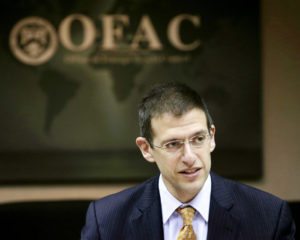
The NIAC cannot have it both ways, but the confusion from the OFAC is understandable since its officers have made steady pilgrimages to NIAC functions, including Adam Szubin, currently the acting undersecretary for terrorism and financial intelligence and former director of OFAC from 2006-2015, who recently spoke at a NIAC-sponsored conference and has often been quoted in NIAC publications and press announcements.

We can only assume how the cozy relationship between members of the OFAC and the NIAC might have produced these changes to the FAQ.

Even as the NIAC is busy flogging these tiny wins for the regime, the mullahs are moving as quickly as possible to consolidate their military advantages with final bloody battle to retake Aleppo in Syria that has resulted in the slaughter of countless men, women and children.

Freelance writer Heshmat Alavi wrote in the Daily Caller a sad recounting of the regime’s use of extremism to gain political leverage and how it must be confronted by the rest of the world.

“Syria is the 35th province [of Iran] and a strategic one for us. If the enemy attacks us and wants to appropriate either Syria or Khuzestan [in southern Iran], our priority is to keep Syria.”

These are the words of Mehdi Taeb, former chief of Revolutionary Guards intelligence. This provides a very vivid incite of the importance of Syria, specifically, for Iran, and the necessity to continue meddling outside its borders, in general.

Being a flashpoint region of sectarian quarrels, continuously fueled by Iran’s mullahs, the Middle East has been witnessing a slow dragging into a new wave of sectarianism. Iran has been applying sectarian policies against others in the region, centralizing its efforts in provoking extremist and fundamentalist viewpoints, Alavi writes.

The mounting criticism of the Iranian regime continued to pour in as Gen. Michael Hayden, the former director of the CIA, blasted the Obama administration’s handling of Iran.

“We have held our response to a whole bunch of egregious Iranian activity … hostage to the preservation of the near-term nuclear deal,” Hayden said Wednesday during the Jamestown Foundation’s tenth annual terrorism conference.

“What they’re doing in Syria, what they’re doing in Iraq, what they’re doing with Hezbollah, what they’re doing in Lebanon, what they’re doing in Yemen, what they’re doing in the Gulf,” Hayden said. “I would push back and push back hard.”

“The fear is if you did that, if you pushed back, they’d walk from the deal,” he continued. “My response is, that’s their decision.”

On a day when the regime was taking punches left and right, the NIAC was left applauding a FAQ.

Laura Carnahan

Filed Under: Blog, News Tagged With: #NuclearDeal, Appeasement policy, Featured, hassan rouhani, Iran, Iran Lobby, Iran sanctions, NIAC, Nuclear Deal, Rouhani, Sanctions

Iran Lobby Defends Iranian Regime Threats

December 16, 2016 by admin

Iran Lobby Defends Iranian Regime Threats

Iran Lobby Defends Iranian Regime Threats

In the wake of overwhelming votes by both houses of Congress to reauthorize the Iran Sanctions Act, the Iranian regime has been vocal in its threats and bravado, but Iran upped its aggression game when Hassan Rouhani announced that Iran would start developing systems for nuclear-powered marine vessels.

According to Reuters, nuclear experts said that Rouhani’s move, if carried out, would probably require Iran to enrich uranium to a fissile purity above the maximum level set in the nuclear deal. The announcement was the first declarative statement by the regime’s leadership of an action taken in direct response to the ISA vote.

Predictably, the Obama administration downplayed the comments in the hopes of maintaining the badly flawed deal in the face of mounting criticism from the foreign policy team being assembled by incoming president Donald Trump.

“The announcement from the Iranians today does not run counter to the international agreement to prevent Iran from obtaining a nuclear weapon,” White House spokesman Josh Earnest told a news briefing.

Rouhani also ordered planning for production of fuel for nuclear-powered marine vessels “in line with the development of a peaceful nuclear program of Iran.”

But under the nuclear settlement Iran reached with the United States, France, Germany, Britain, Russia and China, it is not allowed to enrich uranium above a 3.67 percent purity for 15 years, a level unlikely to be enough to run such vessels, according to Reuters.

“On the basis of international experience, were Iran to go ahead with such a (nuclear propulsion) project, it would have to increase its enrichment level,” said Mark Hibbs, nuclear expert and senior fellow at Carnegie Endowment for International Peace.

The threat to seek nuclear propulsion would give the Iranian regime a convenient way of circumventing the nuclear agreement and get back into the enrichment game quickly and still claim it was adhering to the deal.

It is ironic that Rouhani is citing the reauthorization of the ISA as the straw that broke the proverbial camel’s back in pushing this announcement since the ISA applied largely to Iran’s ballistic missile program and its sponsorship of terror groups, as well as its nuclear program. The ISA is crucial to fulfilling the Obama administration’s promise of “snapback” sanctions should Iran be found in violation.

Also, the president maintains the authority to waive sanctions under the ISA, which Obama has done. This can only mean Rouhani and his fellow mullahs are terrified of what Trump will do when he takes office.

But one possible motivation for Rouhani may be to goad President Obama into not signing the ISA bill before the deadline expires December 31, 2016, which would ultimately prove futile since the bill easily cleared with unanimous approval—enough to override any veto—but Tehran may be hoping for a symbolic act of defiance in support of them from Obama.

Predictably, the Iran lobby led by the National Iranian American Council voiced its support for the deal and warned of dire consequences with Rouhani’s announcement as proof of impending disaster.

“For months, we warned that ISA’s renewal would have real consequences. Today, those consequences have been realized. While Iran’s move to undertake studies related to nuclear-propelled ships is not in violation of the nuclear accord, it does undermine U.S. foreign policy objectives,” the NIAC statement said. “Iran is signaling that for every negative U.S. action, there will be an Iranian reaction anathema to U.S. interests.”

The NIAC statement is the height of absurdity because the logic to it is akin to having a police officer catch a burglar, only to have the thief produce a weapon and threaten the officer and the officer is held to blame for the escalation.

Iran has already received several waivers and exemptions for violating terms of the nuclear agreement and yet when Congress reauthorizes a bill that the Obama administration has already said does not violate the nuclear agreement, the Iranian regime’s first thought is to threat the U.S.

It is a reaction that is a perfect reflection of why the nuclear deal was doomed from the start and why the Iran lobby cannot be trusted in advancing it.

Instead of urging Iran to reach out diplomatically to the incoming Trump administration, the NIAC has from the beginning sought to characterize Trump as a war monger, Muslim hater, insane person and intellectual idiot. These are not the kinds of comments that would engender a positive reaction from the new president.

While the NIAC has gone all in on supporting Iran, even in the face of outrageous statements, it delegitimizes its stated role as an advocate for Iranian-American interests. How can Iranian-Americans be helped by an organization that does not urge Iran to refrain from making outlandish and dangerous threats?

Michael Tomlinson


Filed Under: Blog, News Tagged With: Featured, hassan rouhani, Iran, Iran deal, Iran Lobby, Iran Terrorism, IRGC, NIAC, Sanctions

Iran Regime Rolls Out Threats of Global Destruction

December 14, 2016 by admin

Iran Regime Rolls Out Threats of Global Destruction

Iran Regime Rolls Out Threats of Global Destruction

Most of the public pronouncements made by leaders of the Iranian regime are meant to incite strong reactions be it threats to destroy its enemies or bury large swathes of the world under a barrage of Islamic missiles and rockets.

Targets for the verbal histrionics typically includs the U.S., Israel, Saudi Arabia, the Gulf states, Canada, the U.K., France, Sunnis, Christians, women, Iranian dissidents, Instagram users and just about anyone else that seems to offend the mullahs; which seems to be about everyone on the planet not aligned with them.

Often the threats are hollow and empty and indicative of the weakness inherent in a regime that has to resort to verbal threats to get its point across, but every so often the regime makes itself known and to more discerning ears, therein lays nuggets of truth.

When top mullah Ali Khamenei called a resistance economy of sacrifice and deprivation from the Iranian people in order to keep the supply pipeline filled to prop up the Assad regime in Syria, he was telling the truth.

When Hassan Rouhani said in an interview that Iran does not recognize dual national citizens and that any Iranian, regardless of their passport was fair game for arrest, he wasn’t kidding.

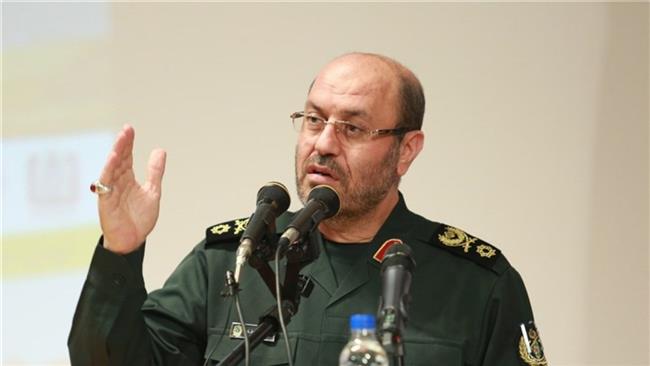
Now we have the latest example of regime bloviating in the form of comments made by regime defense minister Hossein Dehghan, a well-known regime blowhard, who claimed that Donald Trump’s election could lead to a “world war” if the president-elect fulfilled his promise of altering the nuclear agreement with Iran.

Dehghan promised that Israel and all of Iran’s enemies in the region, including the Gulf states, would be destroyed. He further claimed that Trump’s previous statements had caused “unease” among America’s allies in the region, according to the regime’s Mehr’s news agency.

Dehghan’s singling out of the Gulf states of Bahrain, United Arab Emirates and Qatar was not by coincidence. They, along with Saudi Arabia, have proven to be the biggest thorn in Iranian regime’s side, especially in the Syrian civil war and uprising in Yemen, both fomented by Iran.

Dehghan’s bluster also includes the truth that the Iranian regime is pretty concerned over what Trump and his new cabinet will do as it relates to future relations with Iran. It is unlikely Trump will seek out confrontations with Iran as the Iran lobby has maintained since the election last month.

Given Trump’s penchant for hammering out deals and extracting concessions, he is likely to view the Iranian regime as an untrustworthy partner in any deal that requires close monitoring and specific punishment for any violation.

The difficulty Trump faces are the result of the failed policies of trying to appease the Iranian regime in order to change it by the Obama administration. Fortunately for Trump, he has a history of blunders to learn from over the past two years, which makes Dehghan’s comments noteworthy—not for the bluster—but for the real anxiety that seems to be gripping a Tehran that doesn’t quite know what to expect from Trump and how to deal with him.

Consequently, the default setting for the regime is to threaten first and then threaten again.

For Tehran, the operating manual for diplomacy now seems to be consist of making threats over and over again.

In order to back up those threats, the Iranian military has launched into a series of massive war drills to showcase it supposed muscle and fend off any potential attacks against it. The fact that Iran has to hold military drills because it fears an actual attack clearly shows how the attitude of the mullahs in Tehran has shifted rapidly from smugness to fear.

“The Islamic Republic of Iran’s military forces enjoy supremacy over the Persian Gulf region more than any other time,” Brigadier General Massoud Jazzayeri, the deputy chief of staff of the regime’s armed forces, was quoted as saying over the weekend. “The military and security conditions of the Persian Gulf are in a way that the enemy’s forces and equipment are fully within the range of the Iranian military men.”

As part of these drills, the regime’s military was busy unveiling almost every piece of new hardware it claimed to have developed including a new drone in a ritual of show-and-tell designed to mollify Iranian leaders more than dissuade the U.S.

What probably concerns Tehran more is not the threat of war, as much as the possibility that Trump will use the subtle levers of power to nudge the regime back on a course of real diplomacy and meaningful reforms at home. Bloomberg editorialized that Trump has ample tools at his disposal to crack down on Iran without necessarily tearing up the nuclear agreement on day one of his administration.

“At least Trump’s job will be made easier by Congress, which just extended the Iran Sanctions Act, allowing the U.S. to punish Iranian entities involved with terrorism, illegal weapons and human-rights violations. Trump can and should also end the de facto policy of looking the other way at Iran’s early infringements of the pact, such as the recent revelation that it had exceeded the deal’s cap on how much heavy water it is allowed to stockpile,” the Bloomberg editorial board said.

“In the long term, the six nations should try to negotiate changes in both the nuclear pact itself and the related side agreements (all of which the U.S. should make public). Iran may well be willing to come to the table. It complains that it has seen very little of the estimated $100 billion of its assets that had been frozen in foreign banks, due to other U.S. sanctions and rules making it hard to “dollarize” the funds for transfer. In addition, the hoped-for rush of investment by European energy companies — and the banks that accompany them — has been slow to materialize,” Bloomberg added.

That economic hammer remains the biggest one the U.S. possesses and one Trump understands intimately. For Trump, this new “art of the Iran deal” may very well prove to be right up his alley and that has the mullahs terrified.

Michael Tomlinson

Filed Under: Blog, News Tagged With: Featured, Iran, Iran deal, Iran Human rights, Khamenei, Nuclear Deal

The Race is On for Iran to Close All Deals

December 12, 2016 by admin

hourglass-running-out-1January is not only the start of the New Year and 2017, it also marks a race against the clock for the Iranian regime as it struggles to close as many business deals as it can before Donald Trump is sworn into office as the new president.

There also seems to be a fever gripping the mullahs in Tehran beyond the normal insanity of religious fervor that grips them. In this case, it is a fever for cash.

With the nuclear agreement reached with Iran and the P5+1 group of nations came a lifting of economic sanctions. The Iran lobby argued that the removal of these sanctions would empower moderate elements in the Iranian government and usher in a new period of cooperation and diplomacy.

Unfortunately none of that has come to pass as Iran’s government became even more rigidly dominated by the mullahs and their cohorts in the military and Revolutionary Guards and Iran’s military activities through its terrorist proxies have plunged it into fighting wars in three countries at once.

The drain on the regime’s coffers have been enormous and led to a stagnation of the economy that has caused the Iranian people to become restless to a point where the regime instituted a large-scale crackdown aimed at journalists, students, artists and other dissidents.

The election of Trump poses a new risk for the regime as he selects cabinet picks that have a long and critical history of U.S.-Iran relations under the Obama administration. The comprehensive nature of his cabinet choices has clearly shown the mullahs that the free ride of appeasement they have enjoyed the past several years is coming to an end.

All of which leads to an astonishing effort by the Iranian regime to close as many investment and business deals as possible before the potential re-imposition of economic sanctions since Iran has done little to conform to the spirit, let alone letter of the nuclear agreement.

Hassan Rouhani and his master, Ali Khamenei, know the necessity of securing as many business deals as possible since the regime is badly in need of cash. It is also why the Iran lobby, especially the National Iranian American Council, have been fixated with preserving the commercial aspects of the agreement.

The New York Times described the race by Rouhani to close these deals, especially bolstering its oil industry in regaining its international status as a top oil producer.

Iran’s oil industry, the lifeblood of its economy, was devastated by the cumulative impact of the nuclear sanctions, which halved petroleum exports and left the country ostracized economically, the Times wrote.

The international nuclear agreement that lifted those sanctions nearly a year ago, one of the Obama administration’s signature foreign policy initiatives, has enabled Iran to partly recover. But Mr. Trump has warned that he may dismantle the deal, a threat that has injected new urgency into Iran’s push to build up its oil industry before Mr. Trump takes power next month,” the Times added.

Over the last four weeks, Tehran has negotiated agreements with the oil field services giant Schlumberger and companies from China, Norway, Thailand and Poland, including a deal just announced with Royal Dutch Shell.

“They are signing before Trump does something,” said Dragan Vuckovic, president of Mediterranean International, a Texas-based oil services company that works in North Africa and the Middle East. “The Iranians will give the Europeans favorable terms because of Trump. They want to send a message to Trump that if you try to cancel this agreement, we will just go to the Europeans.”

It’s a strategy that carries significant risk since the combative election demonstrated how the incoming president reacts to threats from opponents.

The Iranian regime also announced the completion of its $16.6 billion deal to buy 80 jetliners from Boeing. Planned aircraft sales by Boeing and European plane maker Airbus Group SE have been among the most high-profile transactions pursued by Iranian regime after Western powers in January removed sanctions in return for its agreeing to constrain its nuclear program. U.S. officials cleared the way in September for Airbus and Boeing to start contract talks.

The plane deals have been staunchly opposed by critics of the nuclear accord with Iran, which has come under fire from Trump and his emerging national-security team. Some U.S. lawmakers have also tried to block any financing for the planned sales, the Wall Street Journal reported.

What troubles the mullahs and Iran lobby is that the members of Trump’s team include ex-military officers who have been battle-tested in combat against Islamic extremist groups and terror proxies. For them, their world view has been shaped by actual experience with terror and Islamic extremism and the horrors they bring.

According to the Washington Post, the three generals making up the core of Trump’s foreign policy team have views cutting against the grain of U.S. policies seeking to empower moderates in Iran and of U.S. intelligence assessments that terrorism no longer stands alone atop the rankings of global security threats now crowded by concerns about cyberattacks and renewed aggression by China and Russia.

Their views, though far from uniform, have been heavily influenced over the past 15 years by intensely personal battlefield losses, the country’s waning attention to the wars and an up-close view of a ruthless enemy, said the Post.

“I think it’s likely there will be terrorist attacks in the coming years, and I think Trump will feel tremendous pressure to be seen as acting very decisively,” said Dan Byman, a former Middle East analyst at the CIA and a professor at Georgetown University.

Byman cited the example of the Iranian seizure of American sailors shortly before the Iran nuclear deal was signed as an example of an overseas provocation that had the potential to derail broader U.S. policy goals.

Trump’s advisers “have a lot of personal experience and might be more inclined to see Iranian hostility as deeply planned,” rather than the act of a rogue faction or a function of chaos, Byman said. “They’re more likely to read things negatively than the Obama administration would have.”

While the Iran lobby may believe that is a pathway to armed conflict, the growing consensus is that Trump’s team is more likely to avoid that option by simply finally holding the Iranian accountable diplomatically and through a rigorous sanctions process that does now reward Iranian regime for belligerent behavior.

For Tehran, the clock is running out on them.

Michael Tomlinson

Filed Under: Blog, News Tagged With: Featured, Iran, Iran deal, Iran Human rights, Iran Lobby, Iran Mullahs, Iran sanctions, Khamenei, Nuclear Deal, nuclear talks, Sanctions

Iran Lobby Launches Media Blitz to Save Iran Nuclear Deal

December 9, 2016 by admin

Iran Lobby Launches Media Blitz to Save Iran Nuclear Deal

Iran Lobby Launches Media Blitz to Save Iran Nuclear Deal

We’ve already chronicled recent efforts by the National Iranian American Council to try and save the flawed Iran nuclear agreement with a flurry of press releases, editorials and social media posts in an attempt to attack everything from President-elect Donald Trump’s tweets to his Cabinet selections.

Not to be outdone, the other leader in the Iran lobby stepped up the plate with another media blitz by the Ploughshares Fund, which sent out its own editorials in an effort to dredge up the same old arguments similar to the arguments used by the Iran lobby during the run up to the nuclear agreement last year in which groups such as Ploughshares and NIAC tried to portray anyone opposed to the deal as a militaristic hawk hell bent on carpet bombing Iran.

In the year since the deal was approved, it is ironic to see the Iranian regime being the one to carpet bomb cities in Syria and funnel arms to terrorist proxies and militias in Iraq and Yemen. Of course Ploughshares offers no editorials condemning the cycle of war and violence the Iranian regime feeds and nurtures.

Paul Pillar, a former intelligence officer that has been penning on behalf of the Iranian mullahs in various occasions, joined at the hip to the Ploughshares Fund, offered up one such editorial in the National Interest in which he pedaled the same old idea that anyone critical of the Iran nuclear deal was a neo-con war hawk.

Pillar again raises the specter of the Iraq war as a harbinger of war with Iran in order to try and scare readers as he bangs the drum against President-elect Trump.

“None of this is a prediction that there will be such a war.  But the danger of one is greater now than it was before November 8th and the appointments that followed.  Vigilance is required to avoid further steps that would increase the chance of a war,” Pillar adds. “Also to be watched for are any moves, such as aggressive U.S. military operations in the Persian Gulf, that could become steps down a slippery slope to conflagration.”

That last statement by Pillar really demonstrates how bought in he is for Iranian regime, when he makes no mention of the devastation Iranian regime’s military actions in the region have caused.

Unlike what Pillar says, the aggression is coming from Iran.

But Pillar wasn’t the only Iran lobbying ally to get in on the act, Tytti Erästo, a fellow at Ploughshares, also offered up her own editorial at the National Interest as well trying to sell the idea that Trump needs the Iran nuclear deal to engage with Russia and North Korea.

She tries to make the case that North Korea would somehow view an intact nuclear deal as the appropriate pathway since it would demonstrate the benefits of diplomacy.

Let’s think about that idea carefully for a moment:

  • North Korea supplied Iranian regime with information and designs for its nuclear program, as well as licensed its ballistic missile designs to jumpstart the regime’s missile program;
  • North Korea has consistently been the most sanctioned nation on the planet over its nuclear program as it developed the capability, actually built warheads and then exploded them in tests; and
  • North Korea is widely regarded as the world’s most notorious rogue state after it consistently broke every international agreement negotiated with it.

Yes, that sounds like a wonderful template of how Iran can positively influence North Korea!

And how could nuclear deal influence anyone, particularly since we are talking about a flowed agreement with no teeth that provides ample exemptions and waivers for violations and lift all economic sanctions without the need for compliance monitoring?

In fact, her statement reflects a key component of all the Iran lobby’s positions which is that the International community bears the burden for compliance and any failure in the agreement must stem from the U.S. and others not from anything the Iranian regime did.

It is the same frivolous thinking that paved the way for a badly flawed deal which led us to the crises the world currently faces.

While such efforts by the Iran lobby reveals the weak position and the fear the mullahs have, it also proves that the right policy towards Iran is and has always been a firm policy that should hold the Iranian regime finally accountable for its actions and not the other way around.

Michael Tomlinson

Filed Under: Blog, News Tagged With: #NuclearDeal, Appeasement policy, Featured, Iran deal, Paul Pillar, Ploughshares, Syria, Trita Parsi, Yemen

Iran Lobby Working Hard to Protect Regime Allies

December 8, 2016 by admin

Iran Lobby Working Hard to Protect Regime Allies

Iran Lobby Working Hard to Protect Regime Allies

Trita Parsi, the founder and leader of the Iran lobby’s chief support group—The National Iranian American Council—has been busy on editorial pages variously condemning picks by President-elect Donald Trump for his national security and foreign policy team and boosting and defending the Iranian regime in light of the wave of administration appointees skeptical and critical of the regime.

The latest example was Parsi’s attacks on Rep. Mike Pompeo (R-Kan.) Trump’s pick to head the CIA, on BBC, where he said “it is not the job of the CIA director to formulate policy.”

Parsi added that the criticisms made of the Iran deal by Pompeo, who is a graduate of West Point and Harvard Law School, are “a clear indication that [his] understanding of the functions of the U.S. government and the different parts of the U.S. government is somewhat limited.”

That statement itself demonstrates how desperate Parsi must be to throw dirt at anything and everything related to Trump as his selections clearly show the clock is running out on the policy of appeasing the mullahs in Tehran that have dominated U.S. foreign policy the past several years.

Saying that Pompeo doesn’t understand how the government works only shows Parsi is willing to say anything, even outrageous untruths to demean and degrade American policy makers.

In Pompeo’s case, the CIA director nominee has an extensive history as a military officer, including serving in the Gulf War, and being elected to the House in 2010, where he served on the Select Committee on Intelligence and the Committee on Energy and Commerce.

In spite of attacking Pompeo, Parsi was magnanimous enough to offer his own advice saying “It is going to be very, very difficult for them to be able to roll back the deal or get rid of the deal or even renegotiate the deal.”

At the end of the day, preserving the Iran nuclear agreement has quickly become Parsi’s mission as he seeks to stave off efforts by Trump to hold the Iranian regime accountable for its militant actions in the year following passage of the deal.

Parsi has been busy trying out an almost daily message against Trump in an effort to find any excuse to keep the nuclear deal intact. This includes Parsi’s latest whine, which is that should the deal fall through, there would be no way Trump could reassemble the coalition of sanctions against the regime.

This line of reasoning is even dumber than Parsi’s claim that Pompeo doesn’t know anything about government since deep cracks are already appearing in the countries that agreed to the nuclear deal.

Most of Europe has reeled from the exodus of millions of refugees from conflicts in Syria and Iraq and the wave of terrorist attacks that have rattled Paris and Brussels. Recent votes in the U.K. and decisions by current leaders in France and Italy to decline re-election all point towards electorate that have been badly rattled over the rise of Islamic extremism and the growing proxy wars in the Middle East fomented by Iranian regime.

Even allies of Parsi are starting to get the microscopic once-over that Parsi is trying to give opponents of the Iranian regime.

One example is a piece by Armin Rosen, a New York-based writer who has written for The Atlantic, City Journal and World Affairs Journal, who wrote a piece in Tablet Magazine detailing the close relationship Parsi has with Rep. Keith Ellison (D-Minn.) who has announced his candidacy as chair of the Democratic National Committee.

Rosen points out that in 2009, then freshman Ellison urged a radically different approach to U.S.-Iran relations when he echoed positions offered by Parsi as he launched the NIAC. In fact, Ellison submitted an editorial into the House Foreign Affairs Committee hearing record on Iran sanctions by Parsi opposing sanctions.

Ellison went on to deliver a speech in 2011 at a NIAC event in which he thanked Parsi for being an “an indispensable partner” in helping to develop a 2009 bill that would have sanctioned individual human abusers in Iran while lifting U.S. restrictions on NGO work in the country, and refers to the NIAC founder as a “friend.”

Ellison’s selection as DNC chair might prove to be a political albatross on Democrats moving forward, especially in the 2018 midterm elections in which the bulk of Senate seats up for election then would be occupied by Democrats.

Extensive exit polling in the presidential election showed that American voters cited terrorism as their chief concern only after the state of the economy. Any office holder who had a previous association with Parsi and the NIAC might be well served to begin distancing themselves from the Iran lobby since the political price to be paid might be severe.

Those ties to Parsi and the detrimental effects of being seen to support the Iranian regime can only grow as the regime engages in more and more radical and frankly bizarre behavior.

One example of that comes from the woman who leads female volunteers in Iran’s hardline conservative militia, the Basij, who has identified a new foe.

Minu Aslani has reportedly called the promotion of gender equality illegal and demanded that the country’s powerful judiciary take action against people who speak out against such state-sponsored discrimination.

“These activities are in fact against our laws and the judiciary should take action,” the semiofficial Mehr news agency quoted Aslani as telling reporters on December 2.

In the past, Aslani has condemned efforts to increase the number of women in parliament and opposed campaigns to curb domestic violence as perceived assaults on Iranian society and traditional family values. Pushing for greater female participation threatens to “distort” the identity of Iran’s women, she has said.

Aslani also criticized United Nations Secretary-General Ban Ki-moon’s eight-year-old UNiTE To End Violence Against Women campaign, which is aimed at raising awareness about violence against women and girls.

Also, the Congress began to take a new look at the Iranian regime’s extensive use of proxies to wage war and commit acts of terror as both Democratic and Republican senators took aim at the regime.

“Iranian proxies remain a direct threat to the United States and our allies today,” said the chairman of the Senate Foreign Relations Committee, Republican Bob Corker of Tennessee, pointing to Lebanese Hezbollah, Shia militias in Iraq, and Houthi insurgents operating from Yemen, as well as Tehran’s influence in Syria.

“American citizens, uniformed and civilian, have been victims of Iranian terror. Iranian regime-sponsored [entities], directed, trained and equipped are a threat to U.S. forces and American citizens today,” said the committee’s top Democrat, Senator Ben Cardin of Maryland.

At the committee hearing, experts warned that unless there were ideological changes to the Iranian regime, the mullahs’ basis for supporting these proxies would not change.

Michael Tomlinson

Filed Under: Blog, News Tagged With: #NuclearDeal, Appeasement policy, Featured, Iran Lobby, Iran Terrorism, National Iranian American Council, NIAC, NIAC Action, Sanctions, Trita Parsi

  • « Previous Page
  • 1
  • …
  • 23
  • 24
  • 25
  • 26
  • 27
  • …
  • 72
  • Next Page »

National Iranian-American Council (NIAC)

  • Bogus Memberships
  • Survey
  • Lobbying
  • Iranians for International Cooperation
  • Defamation Lawsuit
  • People’s Mojahedin
  • Trita Parsi Biography
  • Parsi/Namazi Lobbying Plan
  • Parsi Links to Namazi & Iranian Regime
  • Namazi, NIAC Ringleader
  • Collaborating with Iran’s Ambassador

Recent Posts

  • NIAC Trying to Gain Influence On U.S. Congress
  • While Iran Lobby Plays Blame Game Iran Goes Nuclear
  • Iran Lobby Jumps on Detention of Iranian Newscaster
  • Bad News for Iran Swamps Iran Lobby
  • Iran Starts Off Year by Banning Instagram

© Copyright 2026 IranLobby.net · All Rights Reserved.