Iran Lobby

Exposing the Activities of the lobbies and appeasers of the Mullah's Dictatorship ruling Iran

  • Home
  • About
  • Current Trend
  • National Iranian-American Council(NIAC)
    • Bogus Memberships
    • Survey
    • Lobbying
    • Iranians for International Cooperation
    • Defamation Lawsuit
    • People’s Mojahedin
    • Trita Parsi Biography
    • Parsi/Namazi Lobbying Plan
    • Parsi Links to Namazi& Iranian Regime
    • Namazi, NIAC Ringleader
    • Collaborating with Iran’s Ambassador
  • The Appeasers
    • Gary Sick
    • Flynt Leverett & Hillary Mann Leverett
    • Baroness Nicholson
  • Blog
  • Links
  • Media Reports

Clinton and Trump Must Face Dealing with Iran

July 23, 2016 by admin


Clinton and Trump Must Face Dealing with Iran

Clinton and Trump Must Face Dealing with Iran

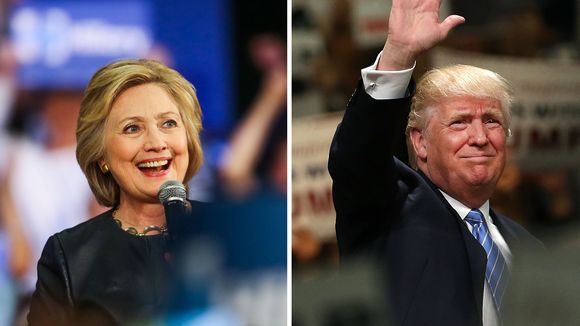
The Republican National Convention is going on in Cleveland where Donald Trump will become the nominee for the Republican Party. Hillary Clinton will follow suit in Philadelphia and then another season of American politicking will launch into its usual fall fury.

This election year though is different from any other in that the U.S. and the rest of the world are confronted by a problem it has never seen before and that is the rise and spread of Islamic extremism and the terror being perpetuated by organizations such as Hezbollah and ISIS, but also aided by nation states such as the Iranian and Syrian regimes.

Through the use of the internet and social media, extremist groups are now able to preach their hatred around the world and manipulate individuals to commit heinous acts, as well as coordinate terror cells in a playbook that has already been proven time and again from Sydney and Ottawa to Boston and San Bernardino to Paris and Bangladesh.

That makes the problem of dealing with terror not so much a law enforcement exercise of going after specific individuals, but rather a geopolitical strategic exercise in battling an ideology. This makes the problem facing the next president all the more daunting because the battlefront is in trying to kill an idea instead of just using a Predator drone to fire a missile at a terrorist leader.

This also helps frame a better understanding of the role the Iranian regime plays in the spread of global terrorism.

Iran remains on the U.S. State Department list of nations that is a state-sponsor of terror; a list that has ironically shrunk over the years as the Cold War ended much of the friction that occurred between the U.S. versus the old Soviet empire and each respective client states.

Instead, we are left with a world of unaligned rogue nations such as Iran and North Korea, and nations that have fallen apart to such a degree that terrorist organizations operate essentially freely such as Somalia, Syria and to a lesser degree now Libya.

The rise of Al-Qaeda and ISIS into essentially nation-state status illustrates the fundamentally changed nature of the world we live in and it is a world that could not happen unless countries such as Iran under the mullahs have provided support, cash, expertise and political cover for those rogue entities.

When Al-Qaeda was driven from Afghanistan after the U.S. invasion, many of its key leaders were granted refuge in Iran by the mullahs in Tehran. The mullahs also provided support to Shiite militias backed by Iran fighting U.S. troops in Iraq, killing many with Iranian-manufactured explosive devices.

When Syria’s Assad regime was on the brink of collapse, the Iranian regime stepped in with Quds Force fighters, Hezbollah terrorists, Afghan mercenaries recruited from refugees in Iran, billions of dollars in cash support and arms and ammunition.

Staving off Syria’s governmental collapse allowed Islamic extremist groups to flourish in the carnage of that war as Iran targeted Western-backed moderate rebel groups and left terror groups such as ISIS to spring forth and take root.

Iran did as much as anyone to pump ISIS up with the collapse of the Iraqi government of Nouri al-Maliki which drive disaffected Sunni tribes into the arms of ISIS and opened the door for the fall of Mosul and the rich oilfields in the north which have sustained ISIS with millions of dollars in illicit oil revenues a day.

These are all facts that the Iran lobby have mightily sought to deflect and hide from scrutiny. Groups such as the National Iranian American Council have concocted straw man issues out of immigration visas and banking transactions while ignoring the much more significant problems of human rights violations and the incredible suffering being caused by Iranian regime’s policies.

Iranian regime itself has publicly and aggressive announced its intentions for the all the world to see, most notably in flouting a nuclear agreement which was dead on arrival a year ago.

Even the regime’s foreign minister, Javad Zarif, who pulled this pathetic deal from the arms of a compliant and submissive Obama administration, boasted yesterday of Iran’s ability to bring its nuclear program back on track to producing literally tons of enriched uranium quickly as the deal eases off more quickly than the advertised 15 years promised.

Zarif said a document, submitted by Iran to the International Atomic Energy Agency and outlining plans to expand Iran’s uranium enrichment program, is a “matter of pride.”

The absurdity of the contention that Iran is abiding by the nuclear deal was on display when the United Nations issued a 17-page report that pointed out Iran may be abiding by the letter of the agreement, but not the spirit of it.

No greater understatement in diplomacy has been uttered since Neville Chamberlain claimed “peace in our time” after meeting with Adolf Hitler in Munich.

The report did have the common sense to point out the destabilizing nature of Iran’s recent test launches of ballistic missiles capable of carrying nuclear warheads and its illicit supplying of arms to Yemen and Iraq in those proxy wars.

Those understated concerns were too little and too late to offset the deaths and violence escalating around the world as Islamic extremist terrorist acts are now becoming the norm rather than the exception.

The fuel for that extremism comes from an Iranian regime that commits such cruel acts of barbarism as to set a bar that ISIS seems compelled to match and exceed with each new act of bloodshed.

Amnesty International took Iran to task with a new report on the denial of medical care to Iran’s numerous political prisoners; a reprehensible situation revealed broadly by Americans taken prisoner by Iran such as Christian pastor Saeed Abedini and former U.S. Marine Amir Hekmati.

The report, Health taken hostage: Cruel denial of medical care in Iran’s prisons, provides a grim snapshot of health care in the country’s prisons. It presents strong evidence that the judiciary, in particular the Office of the Prosecutor, and prison administrations deliberately prevent access to adequate medical care, in many cases as an intentional act of cruelty intended to intimidate, punish or humiliate political prisoners, or to extract forced “confessions” or statements of “repentance” from them.

“In Iran a prisoner’s health is routinely taken hostage by the authorities, who recklessly ignore the medical needs of those in custody. Denying medical care to political prisoners is cruel and utterly indefensible,” said Philip Luther, Director of Amnesty International’s Middle East and North Africa Program.

“Prisoners’ access to health care is a right enshrined in both international and Iranian law. When depriving a prisoner of medical care causes severe pain or suffering and it is intentionally done for purposes such as punishment, intimidation or to extract a forced ‘confession’, it constitutes torture.”

Iran sets the template and ISIS follows and unless Donald Trump or Hillary Clinton deal first and foremost with the behavior of the Iranian regime, its actions will never to checked and altered.

By Michael Tomlinson
Filed Under: Blog, News Tagged With: Featured, Iran deal, Iran Human rights, Iran Lobby, Iran Mullahs, Iran Terrorism, zarif

Different Day Same Outcome as Iran Arrests Another American

July 22, 2016 by admin

Different Day Same Outcome as Iran Arrests Another American

Different Day Same Outcome as Iran Arrests Another American

It feels like the summer version of Groundhog Day as the U.S. State Department said it was looking into reports that another American has been detained by the Iranian regime.

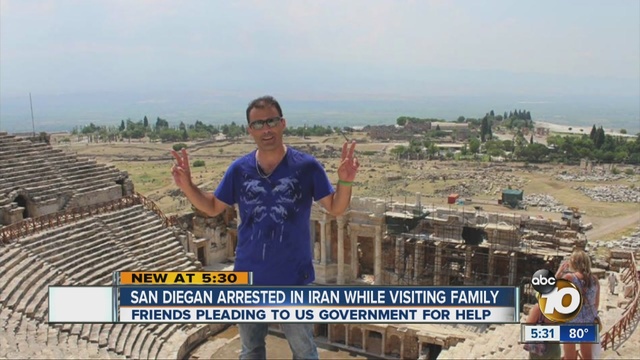
According to the San Francisco Chronicle, State Department spokesman John Kirby would not comment further Thursday on the detention of Robin Shahini. The girlfriend of the San Diego man said Shahini’s sister told her Iranian authorities took him into custody July 11 while he was visiting family in his native Iran and he has not been heard from since.

The girlfriend asked not to be identified because she has family in Iran and fears for their safety. She said she worries Shahini was detained because of his online comments criticizing Iran’s human rights record.

It’s getting to the point that if you want to get arrested all you have to do is post a tweet criticizing Iran’s human rights record and then wait for the knock on the door by the Revolutionary Guards.

The Chronicle noted that the Revolutionary Guard has increasingly targeted those with Western ties since the nuclear deal in which Iran agreed to limit its uranium enrichment in exchange for the lifting of sanctions.

Shahini, 46, graduated in May from San Diego State University with a degree in International Security and Conflict Resolution. He had been accepted to SDSU’s graduate program in Homeland Security.

The Chronicle said His girlfriend said he left for Iran on May 25 to see his mother who was diagnosed with Alzheimer’s. The girlfriend said she communicated with Shahini on July 10 and was expecting to hear back the next day to help him get his paperwork into the university. She grew concerned after not hearing from him.

She eventually reached his family who told him Iranian intelligence officials came to their home in Gordon, Iran, and took him away. Authorities searched the home and took his personal belongings, she said. The family has not talked or seen him since. He had a plane ticket to return to San Diego on July 25 and had planned to start classes on Aug. 22, the girlfriend said.

The day Shahini’s family says he was detained on July 11, Iran announced the indictments of a Lebanese man and three dual nationals. The four were arrested in connection with separate cases over the past year. Family members and representatives of the four say they did nothing wrong. All four have ties to Britain, Canada and the United States. The charges they face remain unclear.

The recipe for getting these prisoners of other nations released from Iranian prison often relies more on public pressure than diplomacy according to human rights groups.

“Fortunately, all the cases of Americans we’ve worked on were eventually resolved, but only after a great deal of public pressure was put on Iranian authorities,” said Elise Auerbach, Amnesty International USA’s Iran specialist.  “Very often the authorities will tell prisoners and their families to just be quiet and not go public and all will go well, but the opposite is true.”

The much-ballyhooed prisoner swap of five Americans in the wake of the Iran nuclear deal set the stage for the mullahs in Tehran to believe they can snatch up innocent citizens and hold them as bargaining chips later.

That policy of appeasing the regime has led to a veritable avalanche of arrests of foreigners who hold dual citizenship, which the regime has proclaimed not to recognize. Once a regime subject, always a regime subject no matter what passport you hold it seems the mullahs are saying.

The practice is getting so out of hand that the British Foreign Office issued a travel advisory for Iran warning its citizens, especially any with dual Iranian nationality, of the risk of being scooped up and arrested.

According to the Guardian, the British government relaxed its advice against all but essential travel to Iran in July 2015 after the landmark nuclear agreement. But a stalemate over the fate of at least two British-Iranians currently detained in Tehran appears to have led the FCO to amend its instructions, although it has not raised concerns to the same level as before the nuclear deal.

“British nationals – including dual British/Iranian nationals – face greater risks than nationals of many other countries,” reads the new advice, which was updated on Friday. “The security forces may be suspicious of people with British connections. The risks are likely to be higher for independent travellers or students than for people travelling as part of an organised tour or business people invited by the Iranian authorities or companies.”

The warning will be bad news for Iran as it struggles to strengthen economic ties with the UK and attract more foreign tourists. The ongoing detentions of Nazanin Zaghari-Ratcliffe, a British-Iranian woman held since April, and 76-year-old businessman Kamal Foroughi, a dual national in prison since May 2011, have undermined efforts by London and Tehran to improve relations.

In Why Does Iran Keep Taking American Hostages?, published in the September 2015 issue of The Tower Magazine, Iran expert Ali Alfoneh described the regime’s detainment of foreign and dual-nationals as “a perfectly normal procedure and political practice in the Islamic Republic. That has been the case since the first day of the revolution and continues until today.”

The public outcry over the regime’s hostage taking erupted into Canada as Lawyers Without Borders Canada and Quebec’s Bar association called on Iran’s government to make public its case against Homa Hoodfar, the Iranian-Canadian academic currently imprisoned in Tehran’s notorious Evin Prison on unknown charges.

Hoodfar was first arrested in March by the counter-intelligence unit of the Iranian Revolutionary Guards. They told her she could not leave Iran to return to Canada.

Over the next two months, relatives say she was interrogated without a lawyer and then summoned to the prosecutor’s office at Evin prison where she was allowed to post bond and was released on bail.

She was then re-arrested on June 6 and charges against her have now been filed, but Tehran prosecutor Abbas Jafari Dowlatabadi has not detailed the charges she faces.

“The failure to reveal the charges against professor Hoodfar, the limits and constraints that seem to be imposed on her attorney, the lack of clarity surrounding the case, and the treatment professor Hoodfar has received to date bring back dark memories for Canadians and raise serious questions regarding compliance with Iranian law and international law applicable to Iran,” Pascal Paradis, executive director of Lawyers Without Borders Canada, said in a statement.

“Like any other Iranian citizen, professor Hoodfar has the right to full answer and defense under the International Covenant on Civil and Political Rights, to which Iran has been a party since 1975”, he added.

Predictably, the Iran lobby, most notably the National Iranian American Council and other regime apologists, were silent on this latest round of hostage taking.

Hopefully public pressure and growing awareness that the Iranian regime hasn’t changed one bit since the nuclear deal agreement will prevent this Groundhog Day from repeating itself anymore.

By Michael Tomlinson

Filed Under: Blog, News Tagged With: Featured, Iran, Iran deal, Iran Human rights, Iran Lobby, Iran Mullahs, National Iranian American Council

World Will be Paying for Flawed Iran Nuclear Deal for Years

July 21, 2016 by admin


World Will be Paying for Flawed Iran Nuclear Deal for Years

World Will be Paying for Flawed Iran Nuclear Deal for Years

The Iran nuclear deal has moved front and center in the attention of the media and among policymakers since it has been a year now since the agreement was hailed as a ground breaking exercise in diplomacy.

The Iran lobby has predictably cheered its perceived successes in keeping the Iranian regime in check, with regime apologists such as the National Iranian American Council in the vanguard of that cheerleading squad.

For the mullahs in Tehran, the past year has yielded some fruit as a result of the deal; namely the release of badly needed cash reserves they have been able to tap for a massive shopping expedition to Russia to replenish arms used up in fighting three proxy wars in Syria, Yemen and Iraq.

The deal has also helped the regime upgrade the technical sophistication of its military with the purchase of state-of-the-art anti-aircraft missile batteries from Russia, alongside new fighter jets, battle tanks and anti-ship missiles.

Most importantly for the regime is the political cover the deal has provided in allowing Iran to continue its brutal crackdown on human rights at home while receiving a free pass from the U.S. and other nations since linking the deal to improvements in human rights was left out.

The most recent revelation of the deal in hindsight has been the disclosure by the Associated Press of a secret side deal that grants Iran an accelerated pathway to enriching uranium back to full capacity well before the 15-year time frame outlined in the deal.

The damning disclosure has wrecked the Iran lobby’s carefully laid arguments and brought on a wave of negative media coverage pointing out the irregularity in the promise of nuclear containment. The disclosure also undercuts the central conceit of the nuclear deal, which was that it could buy time to push Iran’s ability to build a nuclear weapon back over a decade and half.

The reality is that Iranian regime has been freed of adequate international inspection and monitoring and can legally accelerate its enrichment program to produce enough nuclear material to produce several warheads in short order.

When you tie in that fact with the accelerated development of Iran’s ballistic missile program, you can see the blueprint laid out by North Korea a decade earlier that enabled it to join the ranks of nuclear weaponized nations.

James Phillips, a senior research fellow for Middle Eastern Affairs at the Heritage Foundation, outlined this key failing in the nuclear deal in a piece in the Daily Signal.

“The published text of the nuclear agreement was vague on the exact timing of what happens to Iran’s uranium enrichment program after ten years,” he writes. ““But the new document indicates that after ten years, Iran plans to start replacing its current centrifuges with thousands of more advanced models that would be up to five times more efficient than the 5,060 centrifuges that it is allowed to operate currently under the agreement.”

“This concession could allow Tehran to enrich at more than twice the rate that it is now doing, even if the total number of operating centrifuges are reduced. This is a major concern because if the enrichment rate doubles, the time Tehran would need to stage a nuclear breakout would be reduced from the 12 months promised by the Obama administration to six months or less, much earlier than the administration had advertised when it was trying to sell the nuclear deal,” he added.

The fact that the side deal was part of an add-on document prepared and submitted by the Iranian regime to the United Nations as part of its report on Iran’s compliance essentially codifies the regime’s ability to accelerate its enrichment program.

This poses a monumental problem for the future of the world in any new nuclear negotiations—not just with Iran, but any rogue nation—since a country such as Saudi Arabia or even Egypt might be tempted to develop a nuclear capability in response to the Iranian regime and point out, correctly, it is deserving of the same concessions.

A Non-Resident Iran Research Fellow at the Foundation for Defense of Democracies, pointed out this dangerous pathway for the future of nuclear agreements in a piece in the National Interest.

FDD report points out that by appeasing the Iranian regime, the U.S. has set the precedents that “intransigence can lead the international community to accept domestic enrichment” and “that being a Western ally does not guarantee more flexible treatment when accessing nuclear technology.”

“Key American allies that have previously limited their nuclear activities—like South Korea or the United Arab Emirates—have already noted that Iran, which has been repeatedly sanctioned for its nuclear noncompliance, has been permitted to sign a deal allowing it to develop industrial-scale nuclear capacity,” he writes.

The report also correctly points that creating an artificial divide between fissile material and development of warhead delivery systems is useless since Iran has already moved quickly to possess the ability to lob a nuclear warhead across continents. This “de-linking” process sets the precedent for any other nation to demand similar concessions.

The final lesson he writes about is that just because an agreement is lengthy (159 pages) does not mean it is always specific. The JCPOA contains a vague condition called “significant non-performance” under which parties can walk away from the deal. Such legalese incentivizes a devious negotiator like the Islamic State to define violations on its own terms.

Jed Babbin, former deputy undersecretary of defense in the George H.W. Bush administration and a senior fellow of the London Center for Policy Research, also noted in a piece in the Washington Times how the nuclear deal has actually prevented international monitoring of Iran’s nuclear activities.

“Parts of the side deals evidently bar Americans from participating in the inspection of Iranian nuclear sites. The side deals also allow Iran to inspect some of its own sites, preventing U.N. inspectors any access. To no one’s surprise, the Iranians have reported they are complying with the deal even in the uninspected sites,” he said.

“In 2003 Iraq, mistaken intelligence led to war. In 2016 Iran, the lack of intelligence is leading to a false peace” he adds.

The warning is explicit here. Because of the failures of the Iran nuclear deal, the world will have to suffer the consequences of a militant, extremist Iranian regime armed with nuclear weapons in the very near future and that prospect is one that the next incoming U.S. president must prevent.

By Michael Tomlinson

Filed Under: Blog, News Tagged With: Featured, Iran deal, Iran Lobby, Iran sanctions, National Iranian American Council, NIAC Action

Iran Lobby Working Hard to Preserve Flawed Nuclear Deal

July 19, 2016 by admin

Iran Lobby Working Hard to Preserve Flawed Nuclear Deal

Iran Lobby Working Hard to Preserve Flawed Nuclear Deal

It has been one year since the Iran nuclear deal was agreed approved and freed the Iranian regime from a host of economic sanctions, as well as gave itself truckloads of political and diplomatic capital it has spread around the world in support of three proxy wars it is now waging.

By any objective standard, the Iranian nuclear deal has been a failure because it never was tied to modifying the behavior of the mullahs in Tehran. If the mullahs suffer no consequences for actions to support terror, commit cruel human rights violations and continue to build the infrastructure necessary to deliver a nuclear warhead to a target, then they are going to continue with that abhorrent behavior.

Nowhere was that point made more clear than in revelations by the Associated Press that in a secret side deal with the Iranian regime granted by the Obama administration, key restrictions on Iran’s nuclear program will start to ease years before the publicly-stated 15 year accord’s expiration, thus allowing the regime to pursue full development of a nuclear bomb well before the end of the pact.

The confidential document is the only text linked to last year’s deal between Iran and six foreign powers that hasn’t been made public, although U.S. officials say members of Congress who expressed interest were briefed on its substance. It was given to the AP by a diplomat whose work has focused on Iran’s nuclear program for more than a decade, and its authenticity was confirmed by another diplomat who possesses the same document.

although some of the constraints extend for 15 years, documents in the public domain are short on details of what happens with Iran’s most proliferation-prone nuclear activity — its uranium enrichment — beyond the first 10 years of the agreement.

The document obtained by the AP fills in the gap. It says that as of January 2027 — 11 years after the deal was implemented — Iran will start replacing its mainstay centrifuges with thousands of advanced machines.

Continue reading the main story

Centrifuges churn out uranium to levels that can range from use as reactor fuel and for medical and research purposes to much higher levels for the core of a nuclear warhead. From year 11 to 13, says the document, Iran will install centrifuges up to five times as efficient as the 5,060 machines it is now restricted to using.

Those new models will number less than those being used now, ranging between 2,500 and 3,500, depending on their efficiency, according to the document. But because they are more effective, they will allow Iran to enrich at more than twice the rate it is doing now, according to the New York Times.

The blockbuster revelations mean that Iran can massively expand its uranium enrichment capacity to produce several nuclear warheads within a time frame as little as 10 years, which contradicts virtually every public reassurance uttered by Iran lobby proponents such as the National Iranian American Council and Ploughshares Fund.

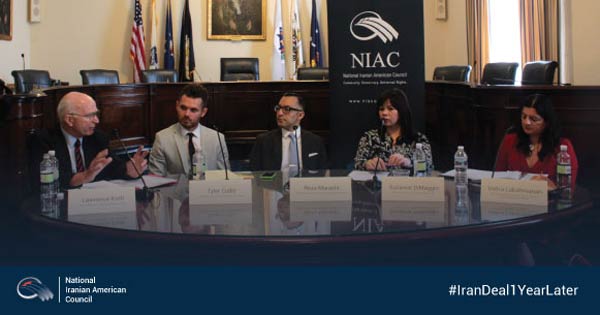
The NIAC’s deliberate misleading of the public continued during a briefing on Capitol Hill in which the NIAC was represented by noted regime apologists Reza Marashi and Tyler Cullis. Also attending were Suzanne DiMaggio of New America and Lawrence Korb of the Center for American Progress.

DiMaggio was especially adept at turning verbal gymnastics in trying to pound home the idea that the nuclear agreement should not be tied to other issues such as Iran’s consistent support for the Assad regime as it busily wipes out virtually the entire civilian population of Syria.

It is funny DiMaggio also mentioned the heightened state of crisis in the Strait of Hormuz and thought it would be a good idea for the U.S. and the regime to negotiate an agreement government interactions at sea. That would be nice since Iran has been busy continually threatening U.S. and foreign vessels, capturing and parading U.S. sailors and threatening to blow up commercial shipping repeatedly, as well as use its own vessels to smuggle illicit weapons and arms to Houthi rebels in Yemen, threatening Saudi Arabia and opening a new war front.

Yeah, that would be a nice idea. So would hitting the lottery three times in a row, but you shouldn’t count on it.

Most remarkable of all was the complete absence of any discussions about human rights in the presentations. Only during questioning did Marashi mention human rights in the context of having a dialogue, which is cold comfort to the thousands of Iranians and dual-nationality citizens currently being held in Evin prison.

The fact that the Iran lobby never discusses human rights reveals the Achilles heel of its position in trying to defend the nuclear deal. Regime apologists such as Trita Parsi of NIAC understand the threat that discussing human rights poses to the nuclear deal since the topic is deadly radioactive to them. They have no defense for the barbaric actions of the regime and no deflection of the human misery being suffered by Iranians at the hands of their own leaders.

In a lengthy piece in Politico, Indira A.R. Lakshmanan, a Boston Globe columnist, wrote extensively about efforts to derail the nuclear deal, taking special effort to go after Mark Dubowitz of the Foundation for Defense of Democracies, and staunch opponent of the nuclear deal.

She also ironically only mentions human rights once in her piece and only in terms of what Dubowitz is focusing on in working against the flawed deal. She quotes Parsi in his efforts to portray the potential consequences of the nuclear deal failing and blaming it on the U.S. exclusively, even though the Iranian regime has moved aggressively to exceed the limits of the agreement with a huge increase in testing of ballistic missiles outlawed by United Nations sanctions.

Iran is barred from conducting ballistic missile tests for eight years under UN Resolution 2231, which went effect July 20, 2015, days after the nuclear accord was signed.

Iran is “called upon not to undertake any activity related to ballistic missiles designed to be capable of delivering nuclear weapons, including launches using such ballistic missile technology,” according to the text of the resolution.

Yet, only two days before the anniversary of the agreement, Iran conducted its fourth missile test since the deal was signed in clear violation of the sanction and has boldly proclaimed it would accelerate its missile program; choosing the same path that pariah state North Korea has taken in missile development.

With the looming end of the Obama administration and the very real possibility of a Trump or Clinton administration seeking to redo the deal to address these concerns, the Iran lobby is working feverishly to buy the mullahs more time to accelerate its nuclear infrastructure work before the start of 2017.

By Michael Tomlinson

Filed Under: Blog, News Tagged With: #NuclearDeal, Featured, Indira A.R. Lakshmanan, Iran, Iran Human rights, Iran Lobby, National Iranian American Council, NIAC, NIAC Action, Reza Marashi, Suzanne DiMaggi, Trita Parsi, Tyler Cullis

July 14th Proves Infamous in More Ways Than One

July 16, 2016 by admin

July 14th Proves Infamous in More Ways Than One

July 14th Proves Infamous in More Ways Than One

July 14 is traditionally celebrated throughout France as Bastille Day, the national day of independence for the French republic. The nation marks it with parades, family outings, fireworks and all the trappings of a national holiday; not dissimilar to the 4th of July in the U.S.

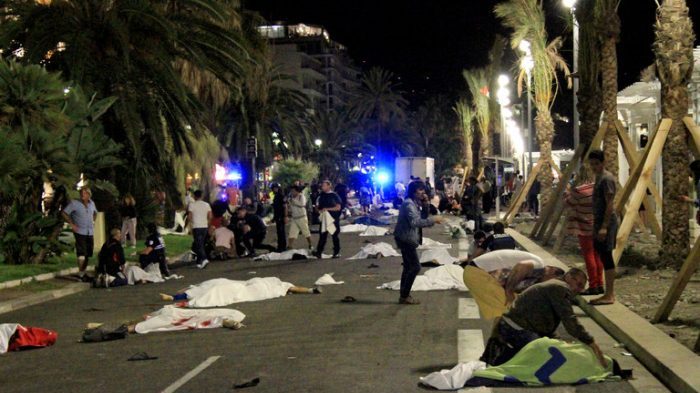
July 14, 2016 also marks the one year point since the Iran nuclear deal was reached by the P5+1 group of nations. Both milestones were joined by a more dubious one last night in which a purported terrorist attack struck the tony waterfront promenade of the French seaside resort of Nice where a man drive a large panel truck down a street packed with thousands of revelers watching a fireworks display.

As the large white truck veered widely left and right—appearing to aim at hapless bystanders—scores of people were flung like rag dolls or dragged and crushed underneath. Initial reports by French officials cited 80 killed, including two Americans, and another 20 critically injured with many more wounded.

French President Francois Hollande declared it a terrorist attack after a cache of grenades and weapons were also found in the struck after the driver engaged with police in a firefight before being killed.

This attack follows the Charlie Hebdo killings and the massive Paris attacks, bringing the specter of terrorism to the people of France three times now in only 18 months. The sheer brutality of this attack was captured throughout social media as people recorded the carnage, which was celebrated and welcomed on the social media profiles of Islamic extremists and their sympathizers.

Nice now joins the long list of cities victimized by the rapid spread of Islamic extremism including Boston, Sydney, Ottawa, Brussels, San Bernardino, Orlando, Bangladesh and Istanbul.

Those cities now join the wars raging in Syria, Iraq and Afghanistan. The reach of Islamic terror now cuts across all religions, continents, ethnicities and governments. It respects no boundaries; murdering Muslims next to Christians, Hindus and Jews.

It is a world much different than the one promised by supporters of the Iran nuclear deal. Iran lobby participants such as Trita Parsi of the National Iranian American Council pushed a pile of lies, the foremost amongst them was the promise of a newly-empowered moderate Iran to help stabilize the region and aid in the fight against Islamic extremists and terrorism.

It is noteworthy though that the one year anniversary statement issued by Parsi neglected mention anything about terrorism and its global impact.

“There are a whole host of opportunities that can strengthen U.S.-Iran diplomatic channels and insulate the deal from political opposition – including via efforts to fix sanctions relief complications; pursue sustainable diplomatic solutions in Syria and Yemen; enabling enhanced U.S.-Iran academic exchanges; establishing a permanent diplomatic channel; and by securing the freedom of imprisoned dual nationals like Siamak and Baquer Namazi,” Parsi said.

To say the opposite has happened would be an understatement of monumental proportions. Iran’s intervention in Syria to save the Assad regime from falling set the stage for the rise of ISIS and the expansion of a war that now includes Iraq and Yemen and helped build a terror network that stretches from Lebanon to Nigeria to Libya to Bangladesh.

It is also interesting that Parsi has mentioned the plight of father and son team Siamak and Baquer Namazi; since Siamak is a close personal friend of Parsi and helped found the basis of the Iran lobby and NIAC, without mentioning the despicable practice of the Iran regime to illegal arrest and hold dual nationals such as several Canadians and British citizens now.

The greatest failing of the nuclear deal was the complete separation of holding Iran’s conduct accountable in a whole host of related issues such as missile testing, human rights violations and the sponsorship of terrorism. These issues have fed into the Iranian regime policy of provocation and export of its extremist Islamic theology which has helped set the template for much of the global terrorism we are now experiencing.

Iran does not actively combat ISIS in Syria or anywhere else. Its forces have largely targeted Western-backed rebel groups in Syria, while its Shiite militias in Iraq have greatly aided ISIS by driving Sunni tribes to join its ranks as the result of sectarian conflict and tribal score settling.

Let’s also not forget that the nuclear deal fails at what it is purported to do in the first place which is prevent Iran from getting a nuclear weapon.

In the year since its approval, international monitoring agencies have detected uranium particles at Iran’s Parchin facility even after it was thoroughly scrubbed clean by Iran. Its nuclear infrastructure such as centrifuges remain intact in storage and ready to be reactivated, while the regime continues testing new, improved nuclear-capable ballistic missiles.

Rep. Mike Pompeo (R-KS) put it succinctly in a Fox News editorial saying that “one year on, the region is far less stable as well.  Iran increasingly controls Baghdad, Damascus, Sanaa, and Beirut.  Terror attacks have increased.  While the deal itself is problematic, also devastating is the fact that America is no longer viewed as a reliable partner to our traditional regional allies.”

Robert Spencer, director of Jihad Watch, writing for Breitbart, made the case that Iran is an even greater threat that ISIS noting that Iran already possesses a nuclear program which ISIS does not that be easily restarted.

While ISIS has significant reach especially in its ability to spread extremism among locals through social media, Iranian regime possesses and funds a global network of terror groups it supplies with its own intelligence, fighters, weapons and cash; something that ISIS only aspires to build.

Lastly, while ISIS has called upon its followers to strike at foreigners, the Iran regime has pursued that policy as a military objective for decades from orchestrating the attack on the U.S. Marine barracks in Lebanon in 1983 to the bombing of the Khobar Towers in Saudi Arabia to the killing of U.S. service personnel in Iraq. Iran has been at the center of instituting policies directly leading to the death of Americans.

Ultimately, the attacks in Nice is just another bloody reminder of how Iran’s full-fledged support for Islamic terrorism has set the stage for even more bloodshed and death unless the West acts to support regime change through the Iranian people.

By Michael Tomlinson

Filed Under: News Tagged With: Featured, Iran Lobby, Iran Terrorism, IRGC, Khamenei, Trita Parsi

Resistance to the Iran Regime is Not Futile

July 14, 2016 by admin

Resistance to the Iran Regime is Not Futile

Resistance to the Iran Regime is Not Futile

For any Star Trek fan, one of the more infamous villains on the Next Generation series was the Borg; collective evil that utters the hostile demand “Resistance is futile.”

Of course the courageous crew of the starship Enterprise successfully resists the Borg and keeps humanity face from a perilous future of being absorbed by the Borg and losing all free will.

In the real world of today, the Iranian regime is strangely like the Borg. The mullahs in Tehran act as a collective mind, all lockstep in sync with their vision of creating a Shia sphere of influence and bringing all of their neighbors under the sway of their particular ideology.

And like the Borg, the Iranian regime has no humanity, is only concerned with achieving its objectives and sees the use of others—such as Afghan refugees enlisted to serve as cannon fodder in the Syrian civil war—as simply a means to an end; mere tools of statecraft.

The Guardian took a closer look at how Iran recruits these Afghans, often taking advantage of them as they face poverty or the threat of being denied entry into Iran from war-torn Afghanistan.

The newspaper found Iran is covertly recruiting hundreds of Afghan Shias in Afghanistan to fight for Syrian president Bashar al-Assad, drawing them out of their own conflict-ridden country and into another war in which Afghanistan plays no official part.

The Afghan fighters are often impoverished, religiously devout or ostracized from society, looking for money, social acceptance and a sense of purpose that they are unable to find at home, the newspaper said.

In return for fighting, Afghans are offered a residence permit in Iran and about $500 monthly salary. With no available official figures, estimates of how many Afghans are fighting in Syria vary wildly. Iranian state media, while not acknowledging direct Iranian involvement, say 20,000 Afghans are fighting in Syria.

For the Iranian regime, having a loyal Afghan militia may serve a longer-term purpose beyond Syria. “It clearly serves the interests of the IRGC to train Shia Afghans who later can fight the Taliban or other Sunni groups on Afghan soil after United States military withdrawal from that country,” said Ali Alfoneh, an independent Iran analyst based in Washington, DC.

This is part of the mullahs’ long-term plan; to develop assets that can be used to deepen and strengthen its power outside its borders.

Protecting the regime’s plans is the Iran lobby which serves as dutiful drones spouting the same messages over and over again and nauseum portraying the regime as a bunch of moderates struggling against the anti-Muslim rhetoric coming from regime opponents.

The Iran lobby, such as the National Iranian American Council, labels opponents as racists, war mongers, neocons, rebels and just about any other term you can come up with; all designed to cast doubts and aspersions on anyone daring to oppose the regime.

But the remarkable truth is the opposition to the Iranian regime is wider, more diverse, more inclusive and stronger than it has ever been since the Islamic revolution in 1979.

The broad coalition opposing the Iranian regime ranges from Iranian dissident groups such as the People’s Mojahedin Organization of Iran (PMOI) and the umbrella National Council of Resistance of Iran, to human rights groups such as Amnesty International and Human Rights Watch, to government agencies and organizations such as the Special Rapporteur for Human Rights in Iran for the United Nations and members of the European Parliament, U.S. Congress and other elected officials.

The opposition is also made up of ordinary Iranian citizens who protest and demonstrate in their own ways and pay a high price for those acts, including the imprisonment, torture and the ultimate sacrifice of martyrdom.

These include Iranian students, teachers, artists, journalists, musicians, bloggers, businessmen, women, writers and filmmakers. They represent the entire width and breadth of Iran and while their actions are often covered up and obscured by a regime intent on not letting the outside world know of their discontent, social media channels have helped get the word out on their suffering and defiance.

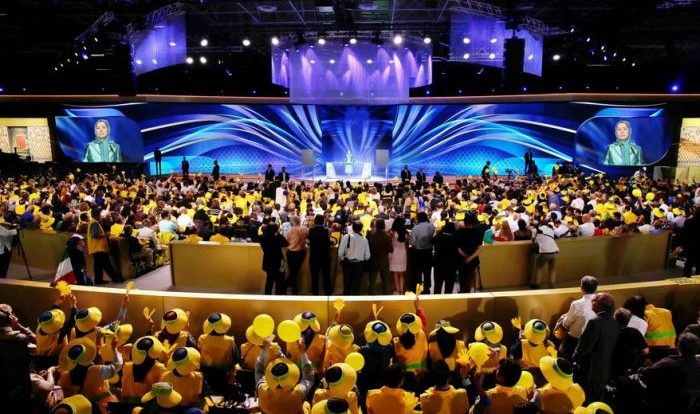
The symbol of that resistance projected itself on July 9th just outside of Paris in a cavernous convention hall filled with tens of thousands of people from around the world who convened as part of the annual gathering of resistance groups to the Iranian regime.

While this annual event has faithfully documented the injustices and abuses meted out by the regime during the year, this year’s event was significant and special because of the sharp and dramatic rise in terrorist acts committed by Islamic extremists around the world including most notably Paris, Brussels and Istanbul.

Coupled with a pivotal American presidential election and the recent Brexit vote, the political landscape will change dramatically over the next year, which is why the Iranian regime and its lobby allies have sought to influence the politics of these elections to safeguard a badly flawed nuclear deal that is delivering vast sums of cash to the mullahs.

The regime’s top mullah Ali Khamenei has repeatedly stated that the policies of Democrats and Republicans regarding Iran are not different, because the United States is opposed to the very existence of the Islamic Republic, which will not change through diplomatic negotiations.

Hence, in Khamenei’s view, the United States is pursuing no goal other than regime change in Iran and in this respect he is not incorrect because regime change is truly the only legitimate pathway to restoring democracy and freedom to the Iranian people.

This is why these opposition groups pledged for “Regime Change” when they convened on July 9th in La Bourget- Paris.

By Laura Carnahan


Filed Under: News Tagged With: Featured, Iran, Iran deal, Iran Human rights, Iran Lobby, National Iranian American Council, NIAC

#FreeIran Gathering is Biggest Human Rights Event of 2016

July 14, 2016 by admin

#FreeIran Gathering is Biggest Human Rights Event of 2016

#FreeIran Gathering is Biggest Human Rights Event of 2016

Near the airfield where 90 years ago Charles Lindbergh ended his historic solo flight across the Atlantic Ocean, gathering took place at the cavernous convention halls near Le Bourget Airfield on a similar historic occasion last Saturday.

It is here an estimated 100,000 friends and supporters of over 300 human rights and Iranian dissident groups joined dignitaries and elected officials from around the world in what has become the largest annual gathering opposed to the rule of the mullahs in Tehran.

This gathering has deep roots in the struggle for freedom and democracy in Iran and represents the largest thorn in the side of the ruling religious leaders of the Iranian regime. These groups included the People’s Mujahedin Organization of Iran (PMOI) for which mere association constitutes treason as far as the mullahs are concerned and punishable by death.

While the polarization in American politics as personified by the supporters of Donald Trump and Hillary Clinton are often contentious and biting, it’s hardly conceivable that being a registered Democrat or Republican would warrant a death sentence, yet in Iran, membership in an outlawed political movement is, which makes this event more admirable for the determination of the participants to literally put themselves and their families at risk by merely attending an event that is viewed with such intense hatred by the leaders of the Iranian regime.

Why then did they come?

The overwhelming majority are ex-pats caught outside of Iran during the Islamic revolution in 1979 which saw the promise of a democratic overthrow of the Shah’s reign instead saw it usurped by the fanatical followers of the religious clerics that essentially stole the revolution and installed an Islamic state that far preceded the ISIS the world is grappling with today.

What was most impressive though to those unfamiliar with the Iranian resistance movement was the generational shift occurring with the large participation of young people; the children and grandchildren of the Iranian diaspora.

This Snapchatting, Instagramming, Reddit-loving generation energized a movement that was centered on the long struggle through the ‘80s and ‘90s and has given way to the connections being made on social media within and outside of Iran. Connections and sharing that has earned the wrath of the mullahs who have sought to crack down on these social channels by building their own version of the Great Cyber Wall of Iran to track and block the use of social media platforms.

Since the original Arab Spring protests were violently put down after being shared socially for the first time through mobile phones and apps, the regime’s intelligence services have relentlessly gone after bloggers and high profile social media stars in Iran; tossing many into prison and threatening them with even worse unless they became willing advocates for the regime.

This certainly hasn’t stopped many ordinary Iranians from creating their own forms of private protest; be it posting selfies of women without wearing mandatory hijabs on Instagram or spreading copies of bloated and inflated paycheck stubs of Iranian officials caught in the center of corruption scandals.

Most importantly of all, last week’s gathering provided an opportunity for the governments of the world to unite in supporting the opposition movement with representatives that read like a roll call at the United Nations General Assembly. It was an inspiring scene repeated each year to see a cavalcade of members of parliaments, Congressmen, military officers and even a former U.S. presidential candidate of two lead a packed convention hall in advocating for a free and democratic Iran.

The names of the speakers are well known to those who follow current events, including former Democratic presidential candidate Gov. Howard Dean, former Republican Speaker of the House Newt Gingrich, former UN ambassador John Bolton, former FBI Director Louis Freeh and inaugural Secretary of Homeland Security Tom Ridge.

Most notably, for the first time a high-ranking member of the Saudi royal family came to endorse the movement’s efforts in Prince Turki bin Faisal Al Saud.

All of which points out a significant issue for the rest of the world. The resistance movement’s leader, Maryam Rajavi, is one of the most unique and influential political leaders today.

She is a moderate Muslim woman, leading one of the largest moderate Muslim movements in the world, who warned almost 20 years ago of the dangers posed by the rise of radicalized Islam, only to see her warnings come true during 9/11 and now with the chaotic civil war in Syria and the spread of ISIS and Iranian regime influence around the world.

To say the world is a more dangerous place now would be an understatement as we have seen with brutal and eye-opening terrorist attacks in Sydney, Boston, Ottawa, Paris, Brussels, Orlando, San Bernardino, Istanbul, Baghdad and Bangladesh. The litany of places struck could fill a Fodor’s travel guide around the world.

Yet the National Council of Resistance of Iran, which Rajavi leads, has been at the forefront in laying out a plan to combat this rise in radicalization and offering a roadmap for regime change in Iran that leads back to a democratic, non-nuclear, multicultural and pluralistic society.

One that does not hang political opponents. One that does not condone eye gouging, acid attacks, amputation and other medieval punishments as law enforcement. One that recognizes the value and rights of women, gays and the young people.

What last week’s landmark events also accomplished was refute the endless stream of false accusations and straw men perpetuated by the Iran lobby, which is supported by the Iranian regime. This collection of bloggers, journalists, lobbyists and false front organizations such as the National Iranian American Council, act in concert with agents of regime intelligence services to push out a false narrative that seeks to discredit the resistance movement.

More importantly, the Iran lobby seeks to preserve the few gains it has made in securing a fatally flawed nuclear deal and now pushes to open the lines of commerce to fund the regime’s badly depleted bank accounts, drained after years or proxy wars in Syria, Yemen and Iraq.

Ultimately, the success of this gathering will not be in the headcount of attendees, glowing press reports or posted selfies of attendees, but rather in the stark reminder to the mullahs that an energized, optimistic alternative to their nihilistic rule exists and it’s made up of Iranians.

Michael Tomlinson

Filed Under: Blog, News Tagged With: Featured, Iran, Iran Human rights, Iran Lobby, Iran Terrorism, Khamenei, Moderate Mullahs

Why Oppression Leads to Terrorism by Iranian Regime

July 12, 2016 by admin

Why Oppression Leads to Terrorism by Iranian Regime

Why Oppression Leads to Terrorism by Iranian Regime

The saying goes there is a thin line between love and hate. The same could be said for the space dividing oppression and terrorism. One usually begets the other. In the case of the Iranian regime, the widespread oppression of the Iranian people is treated in an almost cavalier manner by the mullahs and sets the stage for even worse atrocities to be committed.

Psychologists call escalating behavior patterns “gateways” that enable someone to move from one point of view to another and see them in the same light. Just as a drug abuser might start off with alcohol before moving onto prescription drugs and eventually heroin addiction, the mullahs operate in the same pattern.

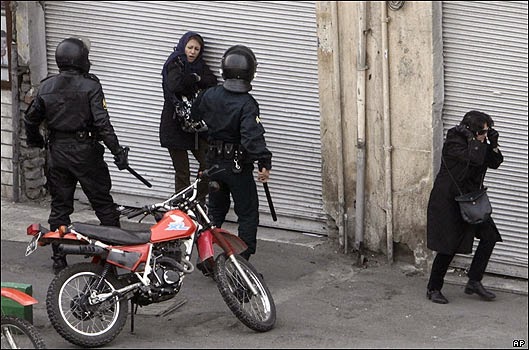
When the regime deems it “morally” necessary to beat a woman in the street for violating dress codes, it is not a stretch to imprison that same woman for spreading sedition by posting selfies on Instagram. From that point, it’s a pretty simple leap to executing her for high treason for liking a post by a protestor on Twitter.

This goes a long way to explaining why the mullahs see any opposition to their rule as a catastrophic threat to their power. The mullahs—backed by the muscle of the Revolutionary Guard Corps—operate essentially on a fear basis.

The existence of any organized opposition that survives outside of the mullahs’ control is dangerous to them because it plants the seeds in the minds of Iranians that they can pursue a life outside of fear, in peace, democracy and freedom.

The creative freedom artists express or the veracity that journalists employ are just examples of the threats posed to the mullahs’ rule, which explains why they are often the most heavily targeted individuals for oppression. The mullahs often make no distinction either if you are even a citizen of Iran, arresting and imprisoning notable foreign journalists such as Jason Rezaian of the Washington Post to silence what they perceive as negative opinion.

The core of the Iranian resistance movement resides in long time dissident groups such as the People’s Mujahedin Organization of Iran and its umbrella group, the National Council of Resistance of Iran.

For the mullahs, the mere existence of these groups is a bitter pill and they have worked to dismiss, discount and even eradicate their existence.

The regime’s intelligence services engage in a cyber war that includes the creation of outlandish fake websites branding opponents as evil doers. They regularly flood the news media and social media channels with disparaging commentary. They supply and direct the Iran lobby and affiliated groups to attack and demean opposition groups.

And in the case of Camp Liberty in Iraq which houses thousands of these dissidents, the Iranian regime regularly directs Shiite militias to attack it with rockets, mortars and gun battles as recently as this week.

Here is where the regime makes the transition to terrorism when it sees violence as its only means of statecraft and diplomacy. The maximum example of that is the Syrian civil war in which over 600,000 Syrians have been killed and half of the nation’s population has been displaced and become refugees.

The use of outright warfare in supplying Quds Force fighters, IRGC soldiers, regular Iranian army, recruited Afghan mercenaries and Hezbollah terrorists showcases the mullahs complete disregard for peace and negotiation.

As Shahriar Kia, a press spokesman for residents of Camp Liberty, put it in The Hill:

“Iraq is yet another canvas where Iran’s fingerprints are witnessed ever more as the international community continues to unfortunately neglect this very dangerous flashpoint corner of the globe. Iran-crafted and sponsored Shiite militia groups are once again accused by international human rights organizations of pursuing systematic and sectarian killings and human rights violations targeting the minority Sunni community in the recent campaign to retake the city of Fallujah, west of Baghdad, from Daesh (the Arabic acronym for the self-proclaimed Islamic State, ISIS or ISIL),” he said. “This ultimately further marginalizes and alienates the Sunnis, and further pushes them into adopting extremist methods and welcoming radical groups.”

The weekend, the NCRI held its annual gathering outside of Paris and made the case for a peaceful, democratic transition in Iran away from the rule of the mullahs.

The NCRI and opposition groups such as the PMOI offer a viable alternative for the Iranian people to make a choice. Unfortunately the mullahs have consistently rigged the elections to never even allow a true opposition candidate to appear on the ballot for fear if they let one in, it will become a flood demanding change.

Sir David Arness, a member of the British Parliament, said in a recent edition of Forbes:

“The NCRI had advocated for real-world solutions in order for the international community to help the Iranian people achieve this goal, solutions that include heightened economic sanctions on the theocratic leaders and those responsible for human rights abuses in Iran, a recognition of Iran’s human rights record and violent foreign policy, along with approaches vis-à-vis the nuclear program that are more well adapted to an Iran that has time and again deceived the international community,” he said.

It is high time the international community recognize the link between oppression and terrorism and hold Iran accountable for both.

Michael Tomlinson

Filed Under: Blog, News Tagged With: Featured, Iran, Iran deal, Iran Human rights, NCRI

Why the Boeing Sale Matters to Iran Regime

July 12, 2016 by admin

Why the Boeing Sale Matters to Iran Regime

Why the Boeing Sale Matters to Iran Regime

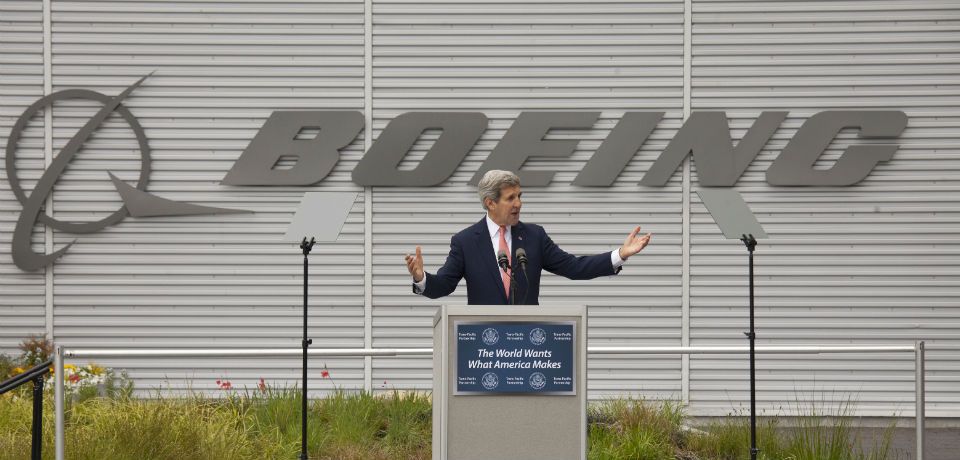
The Iranian regime trumpeted with much fanfare an agreement to buy 80 commercial airliners from Boeing, as well as lease another 29 airliners for a total value estimated upwards of a whopping $25 billion for Iran Air. Far from being a simple transaction for new aircraft any national airline might make, this deal represents far more for both the Iranian regime and the hopes of the mullahs in Tehran to gaining unrestricted access to currency exchanges.

The deal is the linchpin to a larger effort by the regime to lift restrictions put in place limiting the regime’s access to U.S. currency exchanges, as well as access to sensitive technology that could be used by Iran for illegal or military purposes.

While the nuclear deal reached with Iran last year lifted a number of economic sanctions, it did not lift sanctions still in place related to Iran’s abysmal human rights record, support of terrorism and the illegal test launches of nuclear-capable ballistic missiles, but that has not stopped some in the U.S. administration from trying an end-run in supporting the Boeing deal and using loopholes such as the creation of a new Iranian bank located literally offshore its coast on an island to get around currency restrictions.

An effort was mounted in Congress to block the sale with the House approving two amendments by Rep. Peter Roskam (R-Ill.) to block sales by Boeing and Airbus aircraft to Iran to the Financial Services and General Government Appropriations Act 239-185.

The amendments both passed by voice vote, which a statement from Roskam’s office said indicates “overwhelming, bipartisan support.”

One amendment prohibits the Office of Foreign Assets Control (OFAC) from using funds to authorize a license necessary to allow aircraft to be sold to Iran.

The other amendment ensures Iran will not receive loans from U.S. financial institutions to purchase militarily-fungible aircraft, by prohibiting OFAC from using funds to authorize the financing of such transactions.

Democratic Representative Denny Heck of Washington state, where Boeing has major operations, said that if proposed bills to restrict the deal became law they would also affect other companies’ sales to Iran. Because virtually all modern jets have more than 10 percent U.S. content, including those Airbus plans to sell, they already require export licenses from the U.S.

This is precisely the reason why the Boeing deal needs to be blocked because its passage would open the proverbial floodgates for the Iranian regime to pursue unrestricted deals with virtually any business without fear of sanctions or consequences. The deal would also essentially make null and void all sanctions in place for human rights and terrorism violations.

It would be hard to contemplate a more universal dismissal of the importance of human rights than the explicit approval to resume business with the regime and ignore all of the vile acts it commits against its own people and the rest of Middle East.

Can we imagine past “business as usual” deals with the Pol Pot regime in Cambodia during the killing fields or with Serbia or Rwanda as genocides were being committed? When does conscience give way to financial gain?

Republican and Democratic critics of the deal expressed concern that the aircraft would be used by Iran for illicit activities, such as ferrying weapons to Syria in support of Syrian President Bashar Assad.

Rep. Brad Sherman (D-Calif.) wrote a letter to the Obama administration in June saying it is “virtually certain” the aircraft would be used for nefarious purposes, since Iran Air is aligned with the Iranian Revolutionary Guard Corps, which remains under sanction.

Iran Air was removed from a sanctions list as part of the nuclear deal with Iran, which rolled back sanctions in exchange for limits to Iran’s nuclear program.

“Iran Air’s aircraft will undoubtedly be used in the future to continue to funnel lethal assistance to Assad, to Hezbollah, and to other terrorist entities,” Sherman wrote to Secretary of State John Kerry, Treasury Secretary Jacob Lew and Secretary of Commerce Penny Pritzker on June 30.

Opponents of the Boeing deal pointed out that the Treasury imposed sanctions on Iran Air in 2011 for using passenger and cargo planes to transport rockets and missiles to places such as Syria, sometimes disguised as medicine or spare parts. At other times, members of Iran’s Revolutionary Guards took control of flights carrying sensitive cargo. Those sanctions were lifted in July 2015 after the nuclear deal was signed.

“Boeing is signing a deal with an Iranian aviation company and an industry complicit in the regime’s weapons proliferation and destabilizing adventurism,” Mark Dubowitz, executive director of the Foundation for Defense of Democracies, a Washington-based public policy group, testified at the hearing.

Dubowitz said that Iran Air made three trips to Syria just last month carrying weapons and supplies for Bashar al-Assad’s regime in Syria that’s opposed by the U.S.

“The deal between Boeing and Iran risks implicating major U.S. companies in the Islamic Republic’s support for terrorism and regional adventurism,” said Dubowitz, who has advocated tough sanctions against Iran and helped lawmakers craft them.

Predictably, the Iran lobby voiced its displeasure over the efforts to kill the deal.

“By attempting to block Boeing’s pending sale of commercial passenger aircraft to Iran, opponents of the Iran nuclear accord are also seeking to undermine significant U.S. commercial interests and to impose humanitarian suffering on the Iranian people by denying them access to safe air travel,” said Tyler Cullis of the National Iranian American Council in a press release.

It’s a noteworthy sentiment since not many ordinary Iranians are likely to be flying Iran Air flights loaded with military hardware and ammunition bound for Syria, Iraq or Yemen, but naturally Cullis and the rest of the Iran lobby ignore the illicit uses the Iranian regime has used commercial aircraft for previously.

It’s also important to remember that Cullis and the NIAC make no promises or guarantees that the aircraft would not be used for military purposes, which lies at the heart of why this deal frankly stinks. Without any reasonable guarantees or enforcement or monitoring mechanism, the U.S. and Europe through Boeing and Airbus would essentially be providing the Iranian government and military with a massive upgrade in its airlift and cargo capabilities at a time when its’ military is deeply involved in three proxy wars straining the regime’s ability to move supplies, hardware and troops.

While the first step was taken by the House to stop this bad deal, the Senate needs to take the matter up quickly and pass similar legislation.

By Michael Tomlinson

Filed Under: Blog, News Tagged With: #NuclearDeal, Appeasement policy, Featured, Iran, Iran deal, Iran Lobby, Tyler Cullis

When Will Iran Regime Be Held Accountable for Terrorism?

June 30, 2016 by admin

When Will Iran Regime Be Held Accountable for Terrorism?

When Will Iran Regime Be Held Accountable for Terrorism?

One of the earliest lessons any child learns from a parent is that their actions have consequences. You scream, you’re told to be quiet. You hit your sibling; you get a time out in the corner.

These life lessons form the foundation of our behavior into adult life and help us conform to the restrictions and expectations of living in a civilized world. Even as an adult, we are constantly told our actions have consequences.

You show up drunk at work, you get fired. You rob a bank, you go to jail. You murder a person; you get sentenced to life in prison.

These are not hard lessons to follow and we all take to them fairly naturally.

Only in the arena of foreign affairs and politics do things tend to get more muddled and deviate from what we consider to be acceptable norms. In the case of the Iranian regime, those deviations tend to take on galactic-sized proportions.

Take for example Iran’s involvement in the Syrian civil war. It utilizes a proxy in the form of the terror group Hezbollah to fight on the side of the Assad regime. It uses its own Revolutionary Guard and Quds Forces to attack and target Syrian civilians. It recruited Russia to enter the war and used its fighters to target facilities such as Doctors Without Borders hospitals.

Throughout this bloody conflict, Iran has been selling the war to its own people like a variety show of television, using celebrities, actors and rich kids to justify its involvement.

As Varujean Avanessian writes in the National Interest, “Iranian officials rarely mention bolstering Syria’s Bashar al-Assad or maintaining access to Hezbollah in Lebanon as reasons for Iran’s intervention in Syria. Instead, defending the Shiite shrines and keeping ISIS away from Iran’s borders are the official theme vindicating Iran’s presence in Syria.”

“And a rather peculiar method is employed to peddle Iran’s message: formerly or currently banned celebrities now receive coverage from Iran’s conservative outlets, in exchange for offering favorable views on Iranian policies in Syria,” he writes.

Formerly banned TV host Reza Rashidpour—well known for his tough interviews with Iranian politicians and entertainers—was also enthusiastically covered by conservative outlets for trying to dampen the perception in the society that financial incentives are the main motive for Iranian fighters to go to Syria.

What goes unsaid is the regime’s use of financial inducements and pressure to recruit tens of thousands of Afghan refugees to fight in Syria. For the regime, the perception that paying fighters to go to Syria is the only effective tool it has to get the soldiers it needs is troublesome and worrisome to the mullahs in Tehran. It also underscores the inherent weakness of their position as the conflict drags on for years with no appreciable end in sight.

And yet the Iranian regime pays no penalty or suffers any harsh consequences from the international community for its actions in Syria.

The same can also be said with its almost daily threats to tear up an already broken nuclear agreement and restart its nuclear program—a program it historically denied ever existed.

Alaeddin Boroujerdi, chair of the Iranian regime parliament’s national security and foreign policy commission, warned that the Islamic Republic would “resume large-scale uranium enrichment” if leaders feel the international community is not doing enough for Iran under the nuclear deal.

“The Islamic Republic of Iran’s response to the other side’s non-compliance with the implementation of the nuclear deal will be uranium enrichment,” Boroujerdi was quoted as saying in Iran’s state-controlled press.

His bluster follows similar statements made by top mullah Ali Khamenei last month and have come to take on a certain “boy who cried wolf” tenor as regime leaders start focusing their ire on Western nations for the inept handling of their own economy and the rampant corruption running through regime-controlled industries.

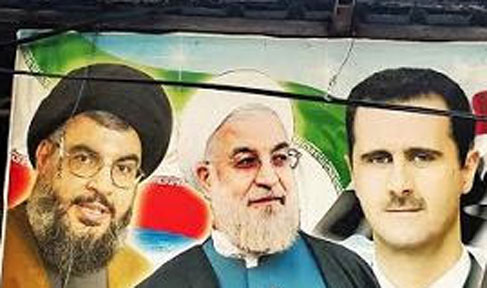
Even more alarming were statements made by Hezbollah’s leader Sayyed Hassan Nasrallah were he openly thanked the Iranian regime for its financial and material support over the years to his terror group.

The admission comes on the heels of Financial Action Task Force (FATF), the intergovernmental organization that sets global standards to combat money laundering and finance for terrorism and proliferation, once again placing Iran on its blacklist for supporting terrorism, yet granting the regime a reprieve from any additional sanctions in the hopes the nuclear deal might eventually pan out.

On what planet do you need to be from to connect the dots of Hezbollah’s own admission of support from Iran for terrorist activities and yet no consequences come from it?

Mark Dubowitz and Toby Dershowitz noted in a Forbes editorial that Tehran’s efforts to pass laws that purport to address international counter-terrorism financing standards are hollow and don’t conform to FATF standards. Iran’s definition of terrorism, for example, excludes groups “attempting to end foreign occupation, colonialism and racism,” and has other language used to justify terrorism against America and its allies. Iran’s leaders are telling the world “we will arm and bankroll whomever we want but won’t call them terrorists.”

The White House itself urged Iran on Monday to stop giving financial support to Hezbollah, warning of such continued backing won’t seep into “its interest.”

“We know that Iranian regime supports terrorism,” the White House deputy press secretary Eric Schultz told reporters aboard Air Force One. “And we know that Iran supports Hezbollah. And that is why we’ve issued the most serious and most severe sanctions ever on Iran for doing so. So it’s important for them to recognize their own behavior in enabling this.”

Yet, the same administration is trying to convince foreign banks to bankroll the Iranian regime and ignore the inconvenient truth of its support for terrorism.

It is arguably the most obtuse argument ever made in foreign policy since Neville Chamberlain came back from Munich claiming “peace in our time” from Adolf Hitler.

All of which goes to show that unless the Iranian regime finally understands the consequences of its actions, nothing will ever change there.

By Michael Tomlinson

Filed Under: Blog, News Tagged With: #NuclearDeal, Appeasement policy, Featured, Iran deal, Iran sanctions, Iran Terrorism, IRGC, Sanctions, Syria

  • « Previous Page
  • 1
  • …
  • 32
  • 33
  • 34
  • 35
  • 36
  • …
  • 72
  • Next Page »

National Iranian-American Council (NIAC)

  • Bogus Memberships
  • Survey
  • Lobbying
  • Iranians for International Cooperation
  • Defamation Lawsuit
  • People’s Mojahedin
  • Trita Parsi Biography
  • Parsi/Namazi Lobbying Plan
  • Parsi Links to Namazi & Iranian Regime
  • Namazi, NIAC Ringleader
  • Collaborating with Iran’s Ambassador

Recent Posts

  • NIAC Trying to Gain Influence On U.S. Congress
  • While Iran Lobby Plays Blame Game Iran Goes Nuclear
  • Iran Lobby Jumps on Detention of Iranian Newscaster
  • Bad News for Iran Swamps Iran Lobby
  • Iran Starts Off Year by Banning Instagram

© Copyright 2026 IranLobby.net · All Rights Reserved.