Iran Lobby

Exposing the Activities of the lobbies and appeasers of the Mullah's Dictatorship ruling Iran

  • Home
  • About
  • Current Trend
  • National Iranian-American Council(NIAC)
    • Bogus Memberships
    • Survey
    • Lobbying
    • Iranians for International Cooperation
    • Defamation Lawsuit
    • People’s Mojahedin
    • Trita Parsi Biography
    • Parsi/Namazi Lobbying Plan
    • Parsi Links to Namazi& Iranian Regime
    • Namazi, NIAC Ringleader
    • Collaborating with Iran’s Ambassador
  • The Appeasers
    • Gary Sick
    • Flynt Leverett & Hillary Mann Leverett
    • Baroness Nicholson
  • Blog
  • Links
  • Media Reports

Iranian Exile’s Life Cut Short in San Bernardino by Extremism

December 4, 2015 by admin

Iranian Exile’s Life Cut Short in San Bernardino by Extremism

Iranian Exile’s Life Cut Short in San Bernardino by Extremism

Bennetta Betbadal was born in Iran in 1969 and fled to the U.S. when she was a young 18-year-old to “escape Islamic extremism and the persecution of Christians that followed the Iranian Revolution,” her family said in a statement.

She settled in New York City and eventually moved to California where she married and eventually settled in Rialto to raise her family of three boys and a girl now aged 10, 12 and 15 years old.

Her husband worked as a police officer at local community college and she went to school to earn a degree in chemistry, eventually taking a job as an inspector with the San Bernardino County Health Department in 2006.

She went to work Wednesday morning filled with optimism about a presentation she was due to give to co-workers and had just finished decorating the family Christmas tree.

Shortly after 11 am that day, she, and 13 of other people, was killed at the Inland Regional Center in San Bernardino in what is quickly becoming a case of terrorism by a couple that may have been radicalized and had links to Islamic extremist groups.

The morning massacre apparently carried out by a Syed Farook, 28, and his 27-year-old Pakistani wife Tashfeen Malik had many of the same hallmarks of the recent terror attacks in Paris. Both attacks appeared to be well-planned, involving more than a lone gunman, and included significant technical skills in creating explosive devices.

Both attacks involved native-born young men who appeared to have been radicalized by similar extremist Islamic messages that power most of the world’s terror groups such as ISIS, Hezbollah, Boko Haram, Al-Qaeda and Shiite militias.

In the statement issued to the news media, the family said: “It is the ultimate irony that her life would be stolen from her that day by what appears to be the same type of extremism that she fled so many years ago.”

The tragedy of Betbadal is a reminder to the world that Islamic extremism is a real, prevalent and growing threat to the civilized world and the first battle in confronting comes by calling it for what it is and naming the sources of it.

It’s a necessity that the Iran lobby has fought hard to prevent from happening because in the world today, there is only one nation state that is a theocratic exporter of terror and extremism and that is the Iranian regime. In fact, the regime is just one of three nations on the planet still on the U.S. State Department’s list of state sponsors of terror.

In the weeks and months to follow there will be more details revealed from the shooters’ lives and we’ll know more conclusively of the links they may have had to terror groups, but the intial evidence is worrisome and damning.

It has also been well documented that the regime has served as the “spiritual godfather” of Islamic extremism as its leaders, especially its current top mullah Ali Khamenei, have preached a hardened vision of Islam that is both apocalyptic and nihilistic. It’s specific brand of Shia sectarian belief has been used to justify everything from public executions and brutal torture to suppression of women’s rights and the virtual destruction of Iran’s environment and rape of natural resources.

The attacks in Paris and San Bernardino and previously in Sydney, the Charlie Hebdo attacks and others all can be traced back to a view point that violence in the name of religion is justified to achieve goals, which was given birth to by the mullahs after the 1979 revolution.

It’s also no surprise that regime supporters such as the National Iranian American Council have again been reduced to mute silence in the face of another act of Islamic extremism. In fact, the Twitter feed for NIAC head Trita Parsi spit out more tweets about gun control and denouncing Saudi Arabia than in expressing any sympathy for the 14 people killed and 21 people wounded in the attacks.

Ironically enough, Parsi did send out one tweet making fun of the fear people have about the rise of terror attacks, saying “Scary map of all Islamic terror attacks in the U.S. Just kidding, its just all mass shootings since Sandy Hook #gunsense”

Parsi might have instead tweeted out this time-lapse mapping of all terror attacks worldwide over last 15 years. He would find that the number of killings, bombings, shootings and attacks dwarf what Parsi points too.

But that may be asking too much of Parsi and his colleagues at NIAC who have devoted themselves to serving as political cover for the regime whenever Islamic extremism rears its ugly head, even all the way to a quiet suburb in Southern California.

By Michael Tomlinson
Filed Under: Blog, News Tagged With: Featured, Iran Lobby, NIAC, San Bernardino, Trita Parsi

Iran Lobby Glosses Over IAEA Report on Iran Nuclear Work

December 3, 2015 by admin

Iran Lobby Glosses Over IAEA Report on Iran Nuclear Work

Iran Lobby Glosses Over IAEA Report on Iran Nuclear Work

The International Atomic Energy Agency released its long-awaited report detailing the military dimensions of the Iranian regime’s nuclear program and unveiled disturbing new details that have left the Iran lobby, especially the National Iranian American Council, scrambling to cover up.

In the report, Iran was actively designing a nuclear weapon until at least 2009, far later than virtually all intelligence agencies had believed and proving the regime’s ability to conceal its design activities while under intense scrutiny and even spying from various nations.

The report, which according to the New York Times, was compiled largely based on partial answers provided by Iran after completing nuclear talks last July, concluded that the regime was “conducting computer modeling of a nuclear explosive device” before 2004 and continued those efforts right through President Obama’s first term in office.

The IAEA detailed a long list of experiments conducted by the regime “relevant to a nuclear explosive device” directly contradicting claims made by the Iran lobby and the mullahs that Iranian regime’s nuclear program was only for civilian and peaceful purposes.

We now know through Iranian regime’s own admission, it was trying to build nuclear weapons at a feverish pace.

But the IAEA concluded that substantial gaps existed because the regime refused to provide answers to several key questions, restricted the ability to interview key scientific personnel and limited sampling of sites and facilities only after they had been scrubbed.

The nuclear deal negotiated with the Iranian regime mandated limiting Iran’s ability to build a bomb for at least 15 years, but the inability to paint a complete picture and the revelation that Tehran had been conducting work unbeknownst to the rest of the world leaves significant doubt as even that goal is attainable.

According to the Times, Tehran gave no substantive answers to one quarter of the dozen specific questions or documents it was asked about, leaving open the question of how much progress it had made.

At Iran’s Parchin complex, where the agency thought there had been nuclear experimental work in 2000, “extensive activities undertaken by Iran” to alter the site “seriously undermined” the agency’s ability to come to conclusions about past activities, the report said.

The response from Capitol Hill was swift and bipartisan.

“I think we’re getting off to a very, very poor start,” Senate Foreign Relations Committee Chairman Bob Corker (R-Tenn.) told reporters after a roughly two-hour top-secret committee hearing.

“These are exactly the things that we talked about during the hearing process that raised concerns and they’re being validated right now,” he added.

“It just sets a very bad precedent that if Iran thinks it can violate the world’s will, as expressed by Security Council resolutions, and in essence face no consequence for it,” said Sen. Robert Menendez (N.J.), one of the four Democrats who voted against the deal in September.

The defense offered by the NIAC’s Trita Parsi through a press release was tepid and paper thin as he focused on the issue of complying with the terms of the agreement in releasing the report, but not in the report’s findings themselves, praising the IAEA’s “assessment of coordinated ‘activities relevant to the development of a nuclear explosive device,’ in Iran prior to 2003, and that there have been no credible indications of such relevant activities since 2009.”

Parsi of course does not mention the fact the work conducted through 2009 was denied by Tehran and by Parsi himself and that the refusal by the mullahs to answer specific questions left the report, at best incomplete, and at worst a whitewash.

The Iran lobby is now finding it harder and harder to cover for the regime because its own promises and arguments are now all coming to be uncovered as falsehoods and outright deceptions. The fortunate thing about the internet is you can always search and look back at the statements people like Parsi have made and in the context of what is happening now, realize just how really wrong they were.

With the IAEA report, it’s just another blow to any shred of credibility the Iran lobby had.

By Michael Tomlinson

Filed Under: Current Trend, News Tagged With: #NuclearDeal, Featured, Iran deal, Iran Human rights, Iran Lobby, Iran Mullahs, Iran sanctions, Iran Talks, National Iranian American Council, NIAC Action, Rouhani, Sanctions, Trita Parsi

Tying Terrorism to the Environment Doesn’t Excuse Iran Regime

December 2, 2015 by admin

Tying Terrorism to the Environment Doesn’t Excuse Iran Regime

Tying Terrorism to the Environment Doesn’t Excuse Iran Regime

As world leaders gathered this week in a Paris still suffering from the after effects on a series of bloody terrorist attacks for a global summit on climate change, one of the more controversial side topics to erupt from it was the claim of a linkage between the planet’s extreme weather changes and the rise in extremist terror around the world.

The world’s news media have been filled with analysis and debate, which has filtered over into the U.S. presidential campaign as well. Evan Halper in the Los Angeles Times recaps some of that debate as the issue has been promoted by luminaries such as Britain’s Prince Charles and denounced by Rupert Murdoch’s Sun newspaper.

The linkage from proponents comes from the idea that global warming has shifted weather patterns to such an extent that crop failures and long-term drought have led to deprivation of impacted regions of the globe that have lent themselves to the spawning of extremist groups initially intent on acquiring limited resources such as food, water and arable land to curry the favor and recruitment of desperate people.

One case in point has been the building debate over root causes of the Syrian civil war, which some climate activists have claimed had its start in a decade-long drought that caused the mass migration of some 1.5 million people out of farming areas and into refugee status and provided a fertile recruiting group for extremist groups.

The complexity of such a debate must also take into account issues of religion, politics, economics and even personal graft and greed; all issues of pressing relevance throughout the Middle East and developing world.

But the Iran lobby and the Iran regime have been quick to latch onto this theory as an alternative rise in Islamic extremism and put some distance between the mullahs in Tehran to terror groups and terrorist activities they have historically supported such as Hezbollah in Lebanon and Syria and the Houthis in Yemen.

The regime was so intent on fostering this idea that it sent Masoumeh Ebtekar, head of its Department of Environment, to Paris to speak on the sidelines of the global climate summit and gave her remarks broad play in state-run media.

But even when the topic is rising temperatures, the mullahs could not miss out on any opportunity to voice their time worn demand for the immediate lifting of all sanctions against it by having Ebtekar make the promise that the regime would cut its greenhouse emissions by 4 percent and increase those cuts to 12 percent if sanctions are fully lifted.

“I wish to urge the UN system to initiate an assessment on the carbon footprints of war, conflicts, security and terrorism,” Ebtekar said. “Those perpetuating conflicts are in fact accomplices of the global warming process.”

It’s an interesting statement to make from the regime’s leadership considering that their gross mismanagement has turned what was once called the cradle of civilization into what is arguably now one of the greatest environmental disasters on the planet.

Tehran has been rated one of the most polluted cities in the world with cars and buses using mostly leaded gasoline, which is heavily subsidized by the regime in order to quell a restive population, but which has the unfortunate side effect at negating any effort to conserve and leads to profligate and highly inefficient traffic patterns.

Its traffic management systems are virtually non-existent with little to no vehicle inspection, mobile emission testing or controls and a government bureaucracy so corrupted by the mullahs nepotism and favoritism that the wealthy children of mullahs and those aligned with the Revolutionary Guards Corps are often seen tooling around in gas guzzling Lamborghinis and Ferraris.

The rural parts of Iran suffer from large-scale overgrazing and growing desertification and deforestation turning large swathes of the country into desert dunes, while industrial and urban wastewater runoff has contaminated most rivers, coastal areas and underground aquifers.

The World Bank estimates that losses inflicted on the regime economy as a result of deaths coming from air pollution alone reach $640 million or 0.57 of total gross domestic product for the entire nation, while the UN Environment Program ranked Iran 117th among 133 countries in terms of environmental indexes.

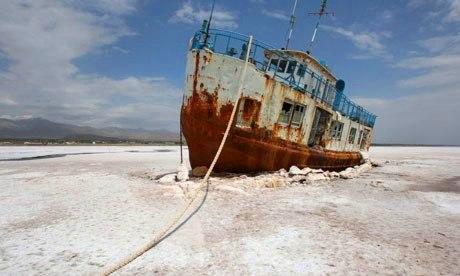
One example of the environmental mismanagement of the regime is the drying up of Lake Urmia in the northwest of Iran, which has shrunk a stunning 70 percent and is in danger of permanently disappearing after being the sixth largest saltwater lake in the world.

Things are so bad that Iran generates an estimated 50,000 tons of trash every day with only 70 percent of it disposed of safely and an even smaller amount redirected into reuse and recycling. The rest of the garbage finds its way into the country’s waterways and forests. Iran ranked worst in the world for soil erosion as well in 2011.

The degradation of Iran’s environment has led to mass discontent throughout the nation as the country’s environmental activists have taken to protesting the mullahs’ mismanagement much in the same way Iranian dissidents protested human rights violations.

The failure of Hassan Rouhani to live up to campaign promises to clean up the environment have led to top mullah Ali Khamenei to issue his own 15-point list of policy directives to staunch some of these problems. In reading the policy directive, one could almost envision it being a verbatim policy paper written by the Obama administration’s Environmental Protection Agency as it calls for lofty goals such as “bilateral, multilateral, regional and international partnerships and targeted cooperation in the environmental field.”

But no matter how many “laterals” the regime undertakes, what is abundantly apparent is that the regime is more concerned about practical political and military matters than environmental ones as it spends much of its treasury on supporting terror groups and the proxy wars in Syria, Iraq and Yemen.

If President Obama is correct and extremist terrorism is given its birthplace out of the degraded environments of regions plagued by drought and famine, then Iranian regime’s dismal environmental management has certainly produced bumper harvests of terrorists and violence.

By Laura Carnahan


Filed Under: Blog, News Tagged With: Featured, Iran, Rouhani, Sanctions

Reasons To Be Thankful This Past Weekend

December 1, 2015 by admin

Reasons To Be Thankful This Past Weekend

Reasons To Be Thankful This Past Weekend

This past weekend, across the U.S., families sat down together to celebrate family and give thanks for all what they have, including secularism in government, freedom of speech and the practice of religion, support for the rights of women and minorities, protection for a free and active press and the guarantee of due process and a presumption of innocence in criminal cases.

All those things and more have formed the bedrock of American civil society for 239 years, but are virtually non-existent in the one country that has steadily called for the destruction of the American way of life since 1979: the Iranian regime.

The past few months of 2015 have certainly caused significant concern and alarm among Americans and throughout most parts of the world. We have seen terror attacks spring up literally around the world, most recently in the horrific attacks in Paris – first with the Charlie Hebdo attacks and then the bombings – and in the wave of atrocities perpetuated by Al-Qaeda, Boko Haram, Hezbollah and Shiite militias.

Couple that with the spread of sectarian conflicts – most fueled by the Iranian regime – in Syria, Iraq and Yemen, and you begin to get a pretty good idea of how chaotic the year has become in spite of the promises made by the Iran lobby that things would settle down after a deal was struck with the mullahs in Tehran over a new nuclear deal.

How wrong people like Trita Parsi of the National Iranian American Council were.

But for most Americans, their Thanksgiving wishes and victories were much smaller and personal. For them, most Americans could be thankful that this past weekend:

  • No more Americans were arrested and held hostage in Iran, except for the five currently held captive by the Iranian regime;
  • No new terror attacks were launched against Americans at home or abroad; and
  • The Iranian regime didn’t launch any new ballistic missiles like it did last month violating United Nations arms embargoes.

But for the Iranian regime, this past weekend wasn’t nearly a peaceful or good one for the mullahs as setbacks continue to dog the regime and stymie each of its efforts to expand its vision for a greater Islamic sphere of influence controlled from Tehran.

Among the news coming from media sources this weekend include:

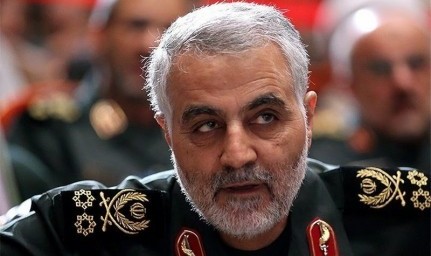
  • Reports that Quds Force commander Qassem Soleimani was seriously injured in Syria while supervising Iranian regime forces fighting rebels on behalf of the Assad regime. This follows previous news of deaths of other top Iranian military commanders in Syria;
  • The Washington Post reported that findings by the International Atomic Energy Agency can be expected to spark another round of intense scrutiny over the Iran regime’s claims its previously undisclosed nuclear program did not have any military components to it;
  • In anticipation of the IAEA report, the regime denounced the ongoing investigation and warned that Iran would not follow through on the nuclear deal unless the IAEA closed its investigation no later than Dec. 15;
  • Kenyan security forces have arrested two Kenyan men with links to the Iranian regime’s Quds Forces on suspicion of planning attacks in the East African nation, the Interior Ministry said on Saturday. It said their targets included “hotels in Nairobi frequented by Western tourists and diplomats;”
  • A flurry of reports in the Iran regime’s official and semi­official news outlets that have flooded out about more combat deaths suffered by Iranian forces in Syria have surprised analysts who monitor the country’s tightly controlled media. The reports, they say, indicate that at least 67 Iranians have been killed in Syria since the beginning of October, in a move some have described as an attempt by the mullahs to grab headlines back from Russia in an effort to burnish the image of regime forces fighting in Syria.

And to top off the weekend, top mullah Ali Khamenei went on his usual Sunday rant denouncing the U.S. and promising to keep the regime’s policies aimed squarely at preserving the Islamic revolution and spreading it throughout the region.

As reported in the Washington Times, Khamenei’s message was the subject of an analysis in a report by the U.S. Army Foreign Military Studies Office at Fort Leavenworth, Kansas.

“To encourage perpetual revolution might mean to foment continuous crisis,” the report said. “This, in turn, suggests greater regional instability and Iranian Revolutionary Guards Corps provocations toward U.S. forces and others.”

In other words, the Joint Comprehensive Plan of Action, the nuclear deal on which the Obama administration gambled for a more moderate Iran, has not tempered Khamenei’s fiery outcry.

“Khamenei’s endorsement of an expansive and perhaps even growing IRGC role confirms the group’s position as the chief obstacle to any political and economic reform in the Islamic Republic, and also suggests that the IRGC may win disproportionate advantage from any unfrozen assets or foreign direct investment entering the Iranian economy,” the report added.

All of which points out that while Americans celebrated values of family, peace, forgiveness and charity on Thanksgiving, the Iranian regime was busy deepening a conflict that has displaced half of Syria’s population, creating the largest refugee crisis in Europe since the end of World War II and spreading a radicalized form of extremist Islam manifesting itself in various terrorist groups around the world.

We can only hope the mullahs don’t get their holiday wishes granted next month.

By Michael Tomlinson

Filed Under: Blog, News Tagged With: Featured, Iran, Iran deal, Iran Terrorism, IRGC, Khamenei, Quds force, Syria, Trita Parsi, Yemen

Iran Lobby Weighs in On Hillary Clinton as Nuclear Agreement Draws Scrutiny

December 1, 2015 by admin


Iran Lobby Weighs in On Hillary Clinton as Nuclear Agreement Draws Scrutiny

Iran Lobby Weighs in On Hillary Clinton as Nuclear Agreement Draws Scrutiny

If there is any silver lining in the wave of terrorist attacks, sectarian wars being waged and ominous threats and provocative actions coming out of the Iranian regime, it is that virtually all of the candidates running for president in 2016 are united in their collective wariness of the mullahs in Tehran.

That lack of desire among the presidential candidates ranges from outright hostility to the regime to a recognition that the mullahs are committed to an agenda that does not support moderation or regional peace hopes, but that certainly has not stopped the Iran lobby from attempting to influence those campaigns or the American voting public.

The lobby’s chief advocate has long been the National Iranian American Council and its newly created lobbying arm, NIAC Action, which has been urging its supporters to sign and send in petitions and letters to the various campaigns urging them to support the nuclear deal and a broadened dialogue with the regime should they win the White House.

Judging by the lack of enthusiasm from the various campaigns, we can assume that the petition drive by NIAC is being received with less than stellar applause, which might explain by Reza Marashi of NIAC took to Huffington Post with an editorial criticizing Hillary Clinton for taking a harder line against the Iran regime and Islamic extremism in some of her stump speeches.

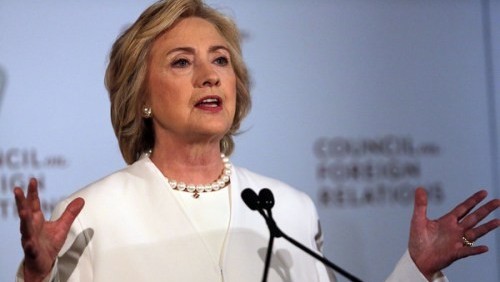
Marashi took exception to a speech Clinton delivered the Council of Foreign Relations where she said:

“We cannot view Iran and ISIS as separate challenges. Regional politics are too interwoven,” she said. “Raising the confidence of our Arab partners and raising the cost to Iran for bad behavior will contribute more effectively to the fight against ISIS.”

Her views that Iran’s Arab neighbors could become more effective partners in the fight against rising Islamic extremism only if the Iranian regime was held accountable for its actions, such as the recent attempt to overthrow the government in Yemen and the effort to take over the Iraqi government, is both a prudent and smart foreign policy declaration for someone who could very well be sitting in the Oval Office in 2017.

The fact that Marashi takes the well-worn Iranian regime talking point blaming its Arab neighbors for the supporting these terror groups is evidence of how paltry and bereft of substance the arguments are from the Iran lobby. The NIAC and other regime supporters have opted to try and shift blame for the rise in terror, including the bloody attacks in Paris on anyone else but the Iranian regime.

But Secretary Clinton recognizes a key point that Marashi and his ilk are desperate to cover up, which is Iran, as a theocratic state, uses its status as a country to support and prop up many terror groups around the world and engage actively in proxy wars that have threaten to draw the rest of the world into bloody conflict. While the flow of funds to some terror groups may be traced back to donations from individual donors, Iranian regime is the only nation-state that has devoted its treasury, military, economy and political influence in supporting groups such as Hezbollah and the Houthis, as well as provided safe harbor and shelter for members of Al-Qaeda and ISIS in the past.

The one true statement Marashi makes is when he says “the more options America has, the greater its leverage becomes.”

In this he is correct, but not in the way he intended because in agreeing to the nuclear deal with Iranian mullahs, the U.S. has unwittingly hampered itself by taking a whole host of tools off the table ranging from continued sanctions to restrictions on the flow of cash coming from the Iranian regime and into the coffers of various terror groups.

But what is even more surprising are the revelations in a recent National Review story that pointed out that the nuclear agreement had not even been signed by the regime and in effect has no legal standing.

“The Joint Comprehensive Plan of Action (JCPOA) is not a treaty or an executive agreement, and is not a signed document,” wrote Julia Frifield, the State Department assistant secretary for legislative affairs, in a November 19 letter written in response to an inquiry sent to Secretary of State John Kerry by Rep. Mike Pompeo (R-Kan.).

Regime leader Hassan Rouhani discouraged his nation’s parliament from voting on the nuclear deal in order to avoid placing legal burdens on the regime, saying “If the Joint Comprehensive Plan of Action is sent to [and passed by] parliament, it will create an obligation for the government. It will mean the president, who has not signed it so far, will have to sign it,” Rouhani said in August. “Why should we place an unnecessary legal restriction on the Iranian people?”

That statement has led to rampant speculation on Capitol Hill that the nuclear deal is already null and void, which explains why most of the presidential candidates have already staked out policy positions visibly diverging from what the Obama administration negotiated with regime.

As more journalists point out this inconvenient truth, such as Michael Ledeen writing of the lack of any signatures in Forbes, we can expect an even more desperate attempt by the Iran lobby and Marashi to try and shift more attention away and onto another false canard. Maybe they can blame El Nino on too much methane coming from cows next.

By Michael Tomlinson


Filed Under: Blog, News Tagged With: #NuclearDeal, Featured, Hilary Clinton, NIAC, NIAC Action, Nuclear Deal, Reza Marashi

Iran Regime Serves as Center of Terrorism Now

November 25, 2015 by admin


Iran Regime Serves as Center of Terrorism Now

Iran Regime Serves as Center of Terrorism Now

There are 196 countries on the planet and they all have their issues with their neighbors. They squabble, they fight, they complain, they protest, they even spy on one another and in a few cases they openly make war.

Some of those countries are vast and powerful such as the U.S., Russia or China, while others are small to the point of being insignificant on the world stage such as Monaco, Tuvalu or San Marino.

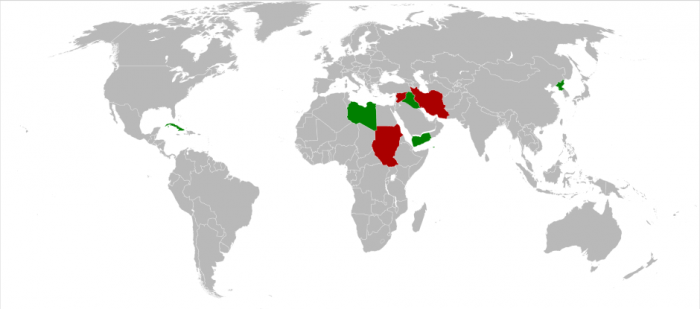
But there are only three countries that share a unique and disturbing distinction. There are only three countries remaining on the U.S. State Department’s list of state sponsors of terrorism:

  • Syria
  • Iran
  • Sudan

It’s a pretty exclusive club, one that used to have as its members Libya, Iraq, South Yemen, Cuba and North Korea.

To be placed on this list, countries are alleged to have “repeatedly provided support for acts of international terrorism.”

In order to get off the list, countries have to demonstrate:

  • Fundamental change in the leadership and policies of the government of the country concerned;
  • Not supporting acts of international terrorism, and
  • The government has provided assurances that it will not support acts of international terrorism in the future.

It doesn’t seem like an unreasonable set of criteria to follow, especially if a country wants to be part of the international community. But in Syria and Sudan’s cases, it’s understandable considering the civil wars they are embroiled in and inability of any central government to eliminate any safe havens for terrorist groups to operate in.

The Iranian regime stands out as the only government not undergoing any turmoil that actively and aggressively supports terrorism around the world; and does so with religious fervor.

The State Department terrorism report describes the Iranian regime polices this way:

“While its main effort focused on supporting goals in the Middle East, particularly in Syria, Iran and its proxies also continued subtle efforts at growing influence elsewhere including in Africa, Asia, and, to a lesser extent, Latin America. Iran used the Islamic Revolutionary Guard Corps-Qods Force (IRGC-QF) to implement foreign policy goals, provide cover for intelligence operations, and create instability in the Middle East. The IRGC-QF is the regime’s primary mechanism for cultivating and supporting terrorists abroad.”

The mullahs in Tehran are using all of the available levers of state power to further their support of terrorism whether it is providing safe havens for terrorist leaders, financing of operations, supplying fighters and manpower, equipping them with arms and ammunition, providing transportation and intelligence or actively directing them in attacks.

In many ways, the Iran regime resembles the fictional Hydra organization in the Marvel Cinematic Universe as its tentacles stretch across the world seeking influence in Asia, Africa, Europe and the Americas. Unfortunately, in our universe, we don’t have Captain America or Iron Man to rely on.

That propagation of terrorism has served as a template for extremist groups such as ISIS and affiliated Al-Qaeda groups to spring up everywhere and launch attacks to the extent that the U.S. State Department issued a global travel advisory for only the fourth time in history and most ominously the alert extends through the busy holiday travel season through February 2016.

The general degeneration of global peace and stability can be traced in many ways back to the Iranian regime, including its support of the Assad regime in Syria’s civil war, the collapse of the Sunni-Shiite coalition government of Nouri al-Maliki in Iraq, the overthrow of the Yemen government by Iran-backed Houthi rebels and the recruitment of Hezbollah and Afghan fighters across Syria and Iraq.

All of which puts a harsh spotlight on the rosy claims made by the Iran lobby and backers of the regime by a variety of groups and analysts such as the National Iranian American Council and Paul R. Pillar and Ali Gharib that approval of a landmark nuclear deal would usher in a new era of moderation and cooperation.

That naïve sentiment was again proven wrong as news reports came out revealing a surge in sophisticated computer espionage by the Iran regime resulting in serious cyberattacks against State Department officials over the past month.

According to the New York Times, “over the past month, Iranian hackers identified individual State Department officials who focus on Iran and the Middle East, and broke into their email and social media accounts, according to diplomatic and law enforcement officials familiar with the investigation. The State Department became aware of the compromises only after Facebook told the victims that state-sponsored hackers had compromised their accounts.”

“It was very carefully designed and showed the degree to which they understood which of our staff was working on Iran issues now that the nuclear deal is done,” said one senior American official who oversees much of that operation and who requested anonymity to discuss a continuing investigation. “It was subtle.”

It is clear now that the Iranian regime is not only the center of state-sponsored terrorism in the world, it is its living heart.

By Michael Tomlinson

Filed Under: News Tagged With: ALi Gharib, Featured, Iran, Iran deal, Iran Lobby, Paul Pillar, Reza Marashi

Iran Regime Sympathizers Downplay Paris Attacks

November 24, 2015 by admin


Iran Regime Sympathizers Downplay Paris Attacks

Iran Regime Sympathizers Downplay Paris Attacks

In what has to be one of more astounding editorials written about the Paris attacks, Paul R. Pillar, a frequent supporter of the Iranian regime, penned a piece in the National Interest in which he actually tried to make the argument that the attacks were an example of “amateurish” tactics and that the outsized response from governments and media bordered on hysteria and ISIS did not warrant much respect.

“It is a mistake to regard the ISIS entity as a font of critical skills needed to kill people,” Pillar writes.

Let’s think about that statement for a moment. Pillar actually makes the claim that ISIS lacks the skills to kill people. That absurd statement ranks right up there with his previous editorials arguing vociferously for the nuclear agreement with the Iranian regime and his claims that doing so would usher in a new and peaceful phase in Middle East tensions.

Well, we certainly know how that worked out.

Pillar’s piece was reprinted faithfully in Lobelog.com, another loyal member of the Iran lobbying effort alongside the National Iranian American Council and Ploughshares Fund just to name a few; all of whom have recently made efforts to divert attention away from the bloody carnage in Paris and now Mali, and instead try to shift the discussion onto discrimination of Syrian refugees or warning of an overreaction in cracking down on civil liberties.

All of the members of the Iran lobby neglect to mention that the center and source of all of these problems starts and ends with the Iranian regime’s fanatical support of the Assad regime in Syria which started the conflict in the first place and helped spawn ISIS in the sectarian fight that sprang up when the mullahs in Tehran sent in thousands of Hezbollah fighters from Lebanon, Shiite Militias from Iraq and mercenaries from Afghanistan added to milliards of dollars to help keep its proxy in power in Syria.

The fact that Pillar attempts to gloss over the planning and execution necessary for the Paris attacks is unfathomable, other than he is trying hard to minimize the import of what the attacks mean for the West. He argues:

“Some organizational aptitude was needed to put together an operation that involved simultaneous dispatch of multiple attack teams, but this did not require organizing any more people than would be needed to put together a neighborhood soccer team,” Pillar said.

Most rational people would not think their local neighborhood soccer team could build eight suicide bomb vests, acquire and equip three teams with automatic weapons, arrange timetables, scout locations, determine how to funnel panicked people fleeing a bombed sports stadium into a kill zone and communicate via text messaging on disposable cell phones while arranging the attack via encrypted communications evading virtually all national intelligence agencies.

But Pillar exhibits the singular trait that afflicts all supporters of the Iranian regime; the desire to absolve it of any responsibility for spreading and fostering the kind of extremist Islamic belief that is now shaking the world with widespread, multiple and frequent attacks.

Pillar also neglects to mention another key facet of these attacks that is significantly more disturbing than the actual loss of human life; it’s the fact these attacks are not supported with any public demands.

There are no calls to release political prisoners or comrades. No demands for ransom or payments. No negotiations over territorial claims or grievances.

These attacks are based solely on the nihilistic extremist beliefs that also power and drive the mullahs in Tehran.

“The death toll for all of the Paris attacks, as shocking as it understandably was, nonetheless was much less than a more skillfully conducted operation involving a comparable number of attackers would have inflicted,” Pillar writes. “The attack team that went after the most target-rich location—a sports arena with tens of thousands of people—managed to kill only one other person besides themselves.”

I’m sure the families of those slain would disagree with Pillar on the skill level involved in murdering their loved ones, but his comments reflect the almost callous disregard the Iran lobby has for human suffering. Very similar to the Iranian regime’s initial condemnation of the attack but its consequent show of happiness by shamefully putting the blame on the French authorities in its state wide papers and media.

At key points in the travesty that is the human rights record of the Iranian regime, Pillar and his cohorts including Trita Parsi and Reza Marashi of NIAC, Jim Lobe of Lobelog.com and others have been struck deaf and mute when it comes to protesting the abhorrent human rights abuses of the mullahs in Tehran either in their comments to news media or in their own social media posts.

Americans held hostage, journalists rounded up, religious minorities imprisoned, social media administrators tossed in jail, dissidents executed, all these actions and more and warranted hardly a murmur of protest and yet Pillar deigns to call terror attacks in Paris as “amateurish.”

The only real amateurish act in this tragedy is the effort by the Iran lobby to whitewash the blood off the streets of Paris.

By Michael Tomlinson

Filed Under: News Tagged With: Featured, Iran, Iran Lobby, Lobelog, National Iranian American Council, NIAC, NIAC Action, Paul Pillar, Ploughshares, Reza Marashi, Syria, Trita Parsi

Iran Lobby Prefers the World Ignores Terror Threats

November 23, 2015 by admin

Iran Lobby Prefers the World Ignores Terror Threats

Iran Lobby Prefers the World Ignores Terror Threats

Trita Parsi, the head of the National Iranian American Council and one of the chief supporters and defenders of the Iranian regime, retweeted a cartoon on his Twitter feed which may have been a Freudian slip on his part since, we can deduce it reflects his desperate desire to see the world’s news media and American voters focus on anything else besides the recent spate of terror attacks and the regime’s rampage of human rights violations.

In the cartoon, a man watches television as a reporter yells out “What can we do to lessen the grip of fear from terrorism?” The man hits the remote to turn the TV off with a knowing smirk on his face.

You can almost see Parsi’s face substituted in there as he wishes the world could just turn off their TVs or switch to playing Angry Birds on their smartphones instead of watching photos and videos showing the gruesome aftermath of Paris and Mali as scores of innocent people are killed and injured.

Unfortunately for Parsi and the rest of the Iran lobby, the flow of images won’t stop as terror groups such as ISIS, Boko Harem, Al-Qaeda and others step up their attacks in a sick game of upping the ante on each other. All of these attacks are a constant reminder that the world is not going to be moderate wonderland after the Iran nuclear deal and that the Iranian regime is not a force for stabilizing the Middle East.

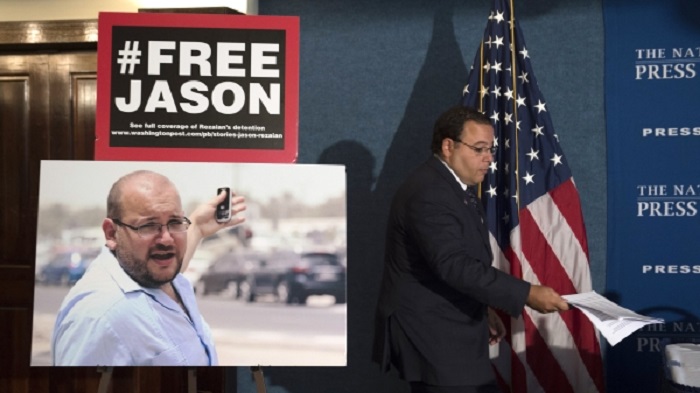
Since last July when the agreement was signed, the mullahs in Tehran have engaged in an avalanche of misdeeds that have culminated with the announcement this weekend that the regime formally sentenced imprisoned Washington Post reporter Jason Rezaian to an indeterminate sentence for spying.

“We’re aware of the reports in the Iranian media but have no further information at this time,” Washington Post foreign editor Douglas Jehl said. “Every day that Jason is in prison is an injustice. He has done nothing wrong.

“Even after keeping Jason in prison 488 days so far, Iran has produced no evidence of wrongdoing,” Jehl added. “His trial and sentence are a sham, and he should be released immediately.”

Parsi was able to break away from his normal tweeting defending the regime to comment how sad it was that Rezaian had been sentenced. Of course, Parsi could not be bothered to openly criticize Hassan Rouhani or Ali Khamenei or the mullahs running the revolutionary courts or demand for Rezaian’s release or even mention the scores of other journalists recently rounded up by the Revolutionary Guards in a widespread crackdown on dissent. No, that might have taxed his tweeting duties to criticize opposition for calling for a pause in the influx of Syrian refugees.

It is worth noting the debate over the fate of Syrian refugees is misplaced and efforts by Parsi and others in the Iran lobby to politicize the issue are disingenuous because the more fundamental question is not what to do with Syria’s four million refugees, but why are they leaving and not going back in the first place?

The answer to that is even simpler: the Iranian regime’s unquestioned support of the Assad regime has created the very crisis Parsi and his colleagues are now attacking. It’s an absurd scenario since Parsi and the NIAC have never opposed Iran’s military intervention, nor use of Hezbollah as a terrorist proxy in the bloody civil war.

The plight of Syria’s refugees will not be resolved by policy debates over verification, but rather by cutting the Assad regime from Tehran’s coffers and getting rid of the thousands of Hezbollah, Quds Force, Revolutionary Guards, afghan mercenary and Shiite militia fighters the Iranian regime has put into Syria.

There can be no solution to the dilemma of ISIS, without first resolving how we can get Iran out of Syria and create a long-term peaceful solution that allows the Syrian people to go back home, which could only be possible when Assad is put aside.

Part of that solution will come when Russia determines to what extent it wants to keep its interests aligned with the Iranian regime, especially as President Putin travels to Tehran this week for his first visit in eight years and first since Rouhani was elevated. Already there are signs that Russia’s long-term views of how to fix Syria are diverging from the Iranian regime’s plans.

Christopher Phillips, a Syria expert at Chatham House international affairs think-tank in London, describes Iran and Russia as “frenemies” in Syria, fighting in lock-step for a common short-term interest but maintaining divergent long-term goals.

“Iran was happy to say [to Moscow]: send some planes or [President Bashar al-] Assad is in trouble,” said Mr Phillips. “But longer term, Iran will naturally be uncomfortable. Syria was becoming their fiefdom. They invested a lot and now a bigger fish has come along.”

Views differ on the balance of interests between Moscow and Tehran — including over their respective fidelity to the Assad regime. But one European diplomat said the “complex, sometimes unfathomable” relationship was crucial to untying the knotty international politics over Syria’s conflict.

The very fact that the Iranian regime is a religious theocracy, guided by its devotion to an extremist and warped view of Islam makes any kind of stable relationship with the mullahs virtually impossible as the actions taken by the regime since July can attest to.

How does convicting an American journalist serve the regime’s goals? How does supplying thousands of new fighters to prolong a civil war that has spilled over onto the streets of Paris help reduce tensions? How does ignoring a nuclear agreement by test launching banned ballistic missiles help reassure jittery Arab neighbors to Iran?

In all these cases, the answer remains that Iran’s mullahs are the source of these tensions and Parsi’s vocal support for them and lack of criticism only reinforces the growing perception is nothing more than a paid mouthpiece.

By Michael Tomlinson

Filed Under: Blog, News Tagged With: Featured, Iran, Iran Lobby, Jason Rezaian, National Iranian American Council, NIAC, Trita Parsi

Human Rights and Nuclear Issues Move to Forefront of Iran

November 21, 2015 by admin


Human Rights and Nuclear Issues Move to Forefront of Iran

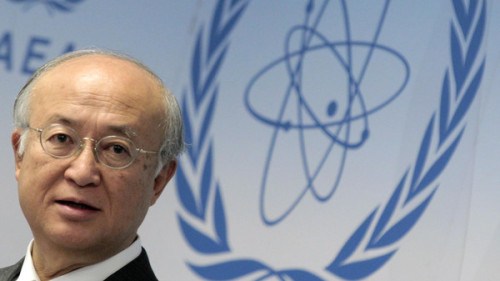
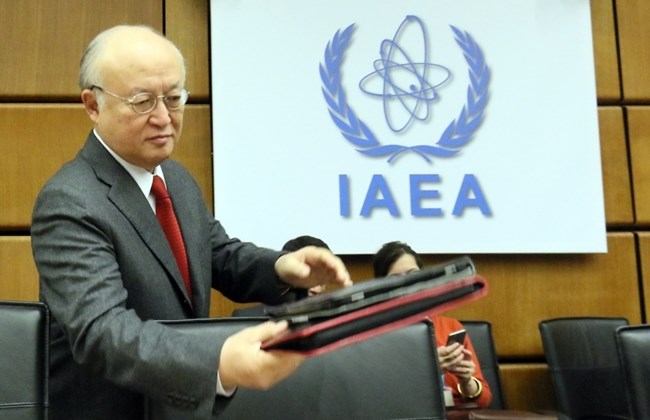
International Atomic Energy Agency (IAEA) Director General Yukiya Amano reacts as he attends a news conference during a board of governors meeting at the UN headquarters in Vienna November 29, 2012. The U.N. nuclear agency made no progress in a year-long push to find out if Iran worked on developing an atomic bomb, its chief said on Thursday, calling for urgent efforts to end Tehran’s standoff with the West. Amano said he would not give up seeking to end what Western diplomats describe as Iranian stonewalling of the agency’s investigation into possible military dimensions to the Islamic state’s nuclear programme. REUTERS/Herwig Prammer (AUSTRIA – Tags: POLITICS ENERGY HEADSHOT TPX IMAGES OF THE DAY) – RTR3B0LF

Like twin hammer blows, breaking news concerning the Iranian regime came out revealing that the two issues the Iran lobby have tried mightily to keep separate and growing more entwined; namely human rights and the nuclear agreement given to the regime last July.

The Iran lobby, led by the National Iranian American Council, rabidly argued that human rights issues – which the regime has an abysmal record on – needed to be decoupled from any nuclear agreement because it could jeopardize momentum for an accord and was outweighed by the perceived benefit of gaining an agreement with the regime.

The logic being, as advanced by regime stalwarts such as Trita Parsi, was that an agreement would empower “moderate” elements led by Hassan Rouhani and usher in a new period of cooperation with the West.

Unfortunately for Parsi, the opposite has come to happen. Reuters reported on a confidential International Atomic Energy Agency report it gained access to which describes that the regime’s stockpile of low-enriched uranium has actually increased instead of decreased under the terms of the agreement.

Iran’s stockpile of low-enriched uranium had increased by 460.2 kg in the past three months to 8,305.6 kg, the report said. Under the deal with major powers, that stockpile must be slashed to no more than 300 kg.

Additionally, the centrifuges being dismantled are only ones previously unused by the regime and those that have been dismantled are only being stored, not destroyed, allowing the regime the flexibility to quickly put them back into service whenever it wants.

That quick restart ability is being preserved also at the Arak nuclear reactor where a regime member of Parliament said it could be reactivated within as little as six months unless all sanctions against the regime were lifted quickly.

“If the Americans break the terms of the Joint Comprehensive Plan of Action (JCPOA) regarding lifting the sanctions, Iran will activate the Arak reactor within six months,” ISNA news agency quoted head of National Security and Foreign Policy Commission, Alaeddin Boroujerdi, as saying.

The threats have only increased as top mullah Ali Khamenei has voiced displeasure over the slow pace of lifting sanctions repeatedly warned the regime would restart its nuclear program unless all sanctions were lifted at once. This is of course at odds with what was actually agreed to last July under the Joint Comprehensive Plan of Action (JCPOA), but it fits with the regime’s pattern of rewriting international accords even before the ink dries to suit its needs.

This pattern of purposeful evasion by the regime also applies to its callous treatment of human rights of its own people, including religious minorities such as those who follow the Baha’i faith who recently have been subjected to mass arrests, Iranian women who have been threatened with arrest for driving cars without proper coverings, and even social media administrators getting rounded up.

But the world is beginning to take notice and coming on the heels of the Friday the 13th massacres in Paris, showing a greater willingness to confront extremist views prevalent in the Iran regime and terror networks such as ISIS, as evidenced by a vote by the United Nations General Assembly’s human rights committee which approved a resolution expressing deep concern about rights violations in Iran by a 76 to 35 vote.

The resolution is the 62nd resolution the UN has adopted censuring the regime for its ongoing human rights violations. This resolution stemmed from the recent report issued by Ahmad Shaheed, the UN Special Rapporteur for human rights in Iran.

It calls on the Iranian regime “to abolish, in law and in practice, public executions… and executions carried out in violation of its international obligations” and “to ensure, in law and in practice, that no one is subjected to torture or other cruel, inhuman or degrading treatment or punishment.”

The victims of such treatment include political opponents, human rights defenders, women’s and minority rights activists, labor leaders, students’ rights activists and others, the resolution said.

The regime’s notorious Revolutionary Guards Corps has rounded up artists, journalists and U.S. citizens as part of a crackdown on what it has called Western infiltration.

The crackdown includes announcements this week of 170 people arrested in Qazvin Province in Iran, a number of others in Gilan Province, and five journalists in Tehran, all by Iran’s Revolutionary Guards, amounts to the largest crackdown since the violent state suppression of the protests that followed the disputed 2009 presidential election in Iran.

The 170 arrested were called “managers of groups active in mobile social networks,” which the regime claimed for acting “against moral security” and distributing “indecent and immoral” content in the form of text and images that “encouraged people to commit obscene acts” and “insult ethnic minorities, officials and distinguished national figures,” according to the Fars news service.

Even with the increased criticism over human rights, the mullahs in Tehran may believe they have an ace up their sleeve with the Paris attacks which they believe may aid the regime in keeping Assad in power and shifting attention away from its involvement in the civil war.

The Guardian in an interview with a MacArthur fellow at King’s College London, said:“I think Iran might think that the Paris attacks give it an upper hand over Syria because naturally it gives a little bit more credibility to the rhetoric that combating Isis is more important than combating Assad.

“Iran will think that its position will be strengthened as the result of the attack but I am not sure it necessarily will. The only thing that the Paris attacks will really change is rhetoric in the west but I’m not sure if it changes much on the ground. France is going to say that the focus is going to be on attacking Isis. To be fair, that’s always been the focus but that hasn’t detracted away [from] trying to get rid of Assad,” she said.

Ultimately, the West must focus on tying the Iranian regime’s human rights record back into judging its progress towards dismantling its nuclear infrastructure as well as its support for terrorism abroad. Without that linkage, the regime is as well shielded against any meaningful reforms as ISIS is from attack if it was using human shields.

By Michael Tomlinson

Filed Under: Blog, News Tagged With: #NuclearDeal, Appeasement policy, Featured, Iran deal, Iran Human rights, Iran sanctions, NIAC, Parchin, Trita Parsi

Iran Lobby Ramps Up Efforts to Influence US Presidential Campaign

November 19, 2015 by admin

Iran Lobby Ramps Up Efforts to Influence US Presidential Campaign

Iran Lobby Ramps Up Efforts to Influence US Presidential Campaign

The silly season is upon us and we don’t mean the College Football Playoff selection process. We mean the quadrennial presidential election season and with it, what promises to be a year filled with debates, poll results, gaffes, blizzard of television advertising and a healthy barrage of social media postings.

But the stakes for this election cycle are enormous and carry with it a sense of gravity we have not seen since during the height of the Cold War when Lyndon B. Johnson famously aired the “Daisy” ad against Barry Goldwater hinting that electing the Arizona conservative would start World War III.

Even though the ad only aired once, it has become one of the most controversial political ads ever aired used in American politics, but it did show what some political candidates are willing to entertain in terms of tackling controversial topics and issues.

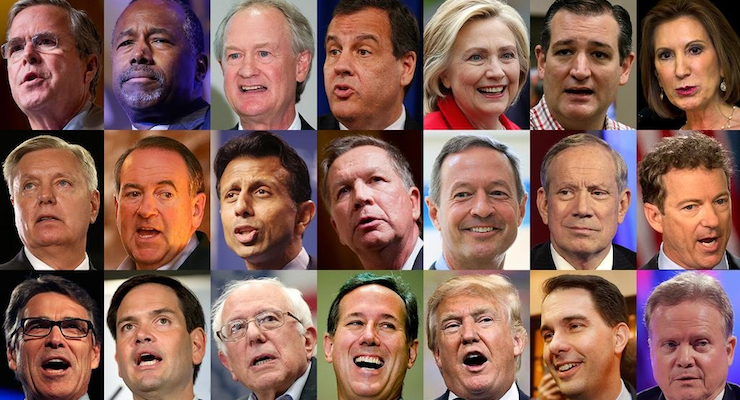
Every campaign season has its own rhythms and rollercoaster swings in emotions and momentum. This season has been no different starting with a Republican field of candidates that has been dominated by two total outsiders in Donald Trump and Ben Carson, while the Democratic side was stuck in relative limbo while Vice President Joe Biden was deciding if he was in or out of the race and Hillary Clinton waded through her email controversy as Sen. Bernie Sanders rallied huge numbers of supporters.

But with the recent nuclear deal with the Iranian regime and the bloody Friday the 13th massacre in Paris, terrorism and what to do with Syria has moved front and center in the consciousness of American voters.

According to a new Reuters/lpsos poll done after the Paris attacks, showed that terrorism had moved to the front of all topics of concern to voters (20.5%), ahead of the economy (15.9%) and healthcare (8.8%) and unemployment (8.6%).

The five-day tracking showed concern over terror effectively doubled over the weekend of the Paris attacks and shows only signs of increasing as France battles additional terror cells in its suburbs while French warplanes bomb targets in Syria.

“What is almost certain is that the demands on the candidates will grow more exacting. As previous presidential campaigns jarred by outside events have demonstrated, how a candidate responds can be as important to a campaign as the event itself,” speculated Jonathan Martin in the New York Times.

What is certain has been the tepid response from the Iran lobby which has gone virtually mute and deaf over the Paris attacks. Iranian regime loyalists such as Trita Parsi and Reza Marashi of the National Iranian American Council, Jim Lobe of Lobelog, The Ploughshares Fund, just to name a few, have offered little in the way of sympathy over the victims, nor condemnation of the terrorists themselves.

If anything, their social media feeds and public statements have been largely focused on centering blame for the attacks and creation of ISIS on the doorstep of Saudi Arabia as the primary regional rival to the mullahs in Tehran.

It’s a curious stand to make since clearly sectarian violence is at the heart of most of what ails the Middle East both historically and moving forward. In fact, Iran’s all-in support for Assad in Syria help spawn ISIS in the first place as Al-Qaeda fighters pushed out of Afghanistan and Iraq by the U.S. surge flocked to Syria and splintered off to form their own groups, eventually coalescing into the ISIS we know today.

The fact that the Iranian regime has also served as a terror blueprint of sorts through its longtime sponsorship of Hezbollah in Lebanon and Shiite militias in Iraq has given ISIS a roadmap for exploiting the shock value of its attacks and dominate the news cycle; gives it the dubious honor of being a “godfather” to ISIS.

This in turn has placed a burden on the Iranian lobby to step up to the proverbial plate to try and influence the presidential elections since a new president – especially if it’s a Republican – will feel no obligation to stay the course President Obama has set with the nuclear deal with Iranian regime and the hands-off policy he has largely taken in Syria and Iraq.

To that end, NIAC Action, the official lobbying arm of NIAC, launched a petition drive directed at all presidential candidates to refrain from using rhetoric that would be deemed “hostile” at the Iranian regime.

The letter it is circulating reads in part:

“That is why we urge you and everyone running for the White House to retire the hostile rhetoric of the past. This hostile rhetoric often makes no distinction between the Iranian government and the Iranian people. It empowers hardliners, undermines those working to resolve challenges, and promotes conflict.

“Instead, we urge you to articulate how you will seize the opportunity created by the diplomatic breakthrough with Iran to build a more peaceful future.”

To say it is a shameful misdirection of the truth would be generous, because the mullahs in Iran have been very open and specific since the nuclear agreement was secured last July in venting their vitriol about the U.S., let alone keeping up the ritual “Death to America” chants at Friday prayers.

As we move deeper into the election cycle, we can be assured of increased action by the Iran lobby as it seeks to keep a lid on American voters’ concerns over terrorism and it combats any damaging news coming out of the Middle East such as more terror attacks or the Iranian regime’s complicity in some new human rights atrocity.

But from the early signs, it seems that Republican candidates have firmly chosen to not swallow the Kool-Aid on a “moderate” Iran and the Democrats will hedge their bets and set terms for Iran that only aid in ensuring a more stable and cooperative Middle East – both goals that the mullahs are opposed to.

By Laura Carnahan

Filed Under: Blog, News Tagged With: #NuclearDeal, Appeasement policy, Featured, Iran deal, Iran Lobby, National Iranian American Council, NIAC, NIAC Action, Reza Marashi, Trita Parsi

  • « Previous Page
  • 1
  • …
  • 46
  • 47
  • 48
  • 49
  • 50
  • …
  • 72
  • Next Page »

National Iranian-American Council (NIAC)

  • Bogus Memberships
  • Survey
  • Lobbying
  • Iranians for International Cooperation
  • Defamation Lawsuit
  • People’s Mojahedin
  • Trita Parsi Biography
  • Parsi/Namazi Lobbying Plan
  • Parsi Links to Namazi & Iranian Regime
  • Namazi, NIAC Ringleader
  • Collaborating with Iran’s Ambassador

Recent Posts

  • NIAC Trying to Gain Influence On U.S. Congress
  • While Iran Lobby Plays Blame Game Iran Goes Nuclear
  • Iran Lobby Jumps on Detention of Iranian Newscaster
  • Bad News for Iran Swamps Iran Lobby
  • Iran Starts Off Year by Banning Instagram

© Copyright 2026 IranLobby.net · All Rights Reserved.