Iran Lobby

Exposing the Activities of the lobbies and appeasers of the Mullah's Dictatorship ruling Iran

  • Home
  • About
  • Current Trend
  • National Iranian-American Council(NIAC)
    • Bogus Memberships
    • Survey
    • Lobbying
    • Iranians for International Cooperation
    • Defamation Lawsuit
    • People’s Mojahedin
    • Trita Parsi Biography
    • Parsi/Namazi Lobbying Plan
    • Parsi Links to Namazi& Iranian Regime
    • Namazi, NIAC Ringleader
    • Collaborating with Iran’s Ambassador
  • The Appeasers
    • Gary Sick
    • Flynt Leverett & Hillary Mann Leverett
    • Baroness Nicholson
  • Blog
  • Links
  • Media Reports

NIAC Tries to Fool the Public on Iran Again

November 19, 2016 by admin

NIAC Tries to Fool the Public on Iran Again

NIAC Tries to Fool the Public on Iran Again

The National Iranian American Council is in overdrive using the proverbial firehouse to blanket websites, blogs and comment forums in the hope that the incoming Trump administration doesn’t undo the past three years of achievements on behalf of the Iranian regime.

It’s latest contribution was a piece appearing on CNN authored by Trita Parsi and Reza Marashi who again attempt to portray the choices facing the new administration in regards to the nuclear agreement reached with Iran as an either or proposition of leaving it alone or ripping it up and risking grave consequences.

It’s a Hobson’s choice that the NIAC has become adept at: Follow our suggestion and everything will be fine, but dare threaten Iran and risk cataclysm.

The 800,000 people killed in the Syrian conflict so far at the hands of the Assad regime, Hezbollah and Iranian fighters would be hard pressed to agree with those choices.

The Iranian regime has established itself clearly as uninterested in peaceful conflict resolution and instead has doubled down and gone all in using military force and violence in an effort to impose its religious will on its neighbors in Syria, Iraq and Yemen.

Parsi and Marashi argue that Trump should take the “political risk necessary to broaden the opening to Iran precisely to avoid replicating recent US policy failures in the Middle East.”

This may be the stupidest statement made yet by Parsi and Marashi.

Why on Earth would Donald Trump want to take a political risk on behalf of Iran, especially as he is already being assailed by the mainstream press and the political elites that turned their noses up at his candidacy (Parsi and Marashi included)?

Parsi and Marashi attempt to force the focus on the survival of the nuclear agreement with Iran when the issue has never been the agreement itself, but rather the behavior of the mullahs in Tehran.

No agreement is worth the paper it’s printed on if one of the participants in the agreement willfully ignores it right from the beginning. The fact that the Obama administration and European Union granted several waivers and exemptions right at the start made the agreement ineffectual and impotent.

During the campaign, Trump correctly focused not on the agreement itself, but the conduct of the mullahs after the agreement was reached. His criticism of the billions of dollars in cash released to Iran and its use in funding conflicts in Syria, Iraq and Yemen demonstrates he looked at the optics correctly, optics that Parsi and Marashi are trying hard to change now with their desperate lobbying campaign.

Parsi and Marashi attempt to frame the discussion around one of Trump’s biggest pledges which was to destroy ISIS and argue that “he cannot walk away or renegotiate the nuclear deal without undermining the coalition against the terror group.”

Unfortunately, Parsi and Marashi never acknowledge that Iranian regime itself is part of the axis of terrorist sponsors with its long-running support for Hezbollah and its sheltering of Al-Qaeda leaders in Iran after the U.S. invasion of Afghanistan drove them out.

They also incorrectly state that the Iran nuclear deal cannot be re-negotiated when in fact any agreement can be re-negotiated; a simple fact that the businessman in Trump knows full well. When you have a rotten deal on the table, it’s the idiot that accepts it as gospel. Trump is no idiot, much as Parsi and Marashi have claimed in the past.

Parsi and Marashi are correct when they characterize Iran as having “substantial latent power – population size and potential for wealth generation,” but miss the most crucial aspect of that power, which is “how will Iran’s leaders choose to apply it?”

Will clerical leaders such as Ali Khamenei and Hassan Rouhani seek to use that potential to improve the lives of ordinary Iranians? Of course not.

Iran’s economy has spiraled downward generating massive protests from small businessmen to school teachers, only to engender a broad and punishing crackdown on dissenters that have filled Iran’s prisons to capacity.

Will the Iranian regime seek to stabilize the Middle East and seek to reduce tensions and conflict? Absolutely not.

Iranian regime deepened the Syrian conflict and broadened it, while bringing Russia into the fight and setting the stage for a return to Cold War confrontations between the U.S. and Russian armed forces. Iran mullahs ignited the Yemen civil war with its clandestine military support for Houthi rebels and plunged Iraq back into sectarian conflict by raising Shiite militias in fighting Sunni insurgents tossed out of the power-sharing government of former president Nouri al-Maliki.

What is even more astonishing is Parsi and Marashi’s suggestion that the solution to the Middle East’s problems is to solve the “Saudi-Iran cold war”; an observation that is ludicrous given the fact that any solution to the current crop of problems in the Middle East starts and stops in Tehran.

Until Parsi and Marashi actually admit that Iran needs to curb its military adventures and support for insurgency and terrorism in order to advance the prospects for peace, nothing they say or write should be considered legitimate policy discussions and instead simply be viewed as propaganda for the mullahs in Tehran.

The quest for peace begins only when Tehran stops trying to rule its neighbors.

Laura Carnahan
Filed Under: Blog, News Tagged With: #NuclearDeal, Featured, hassan rouhani, Iran, Iran Mullahs, Khamenei, National Iranian American Council, NIAC, NIAC Action, Reza Marashi, Rouhani, Trita Parsi, Yemen

Why the NIAC Has Lost All Credibility

November 17, 2016 by admin

Why the NIAC Has Lost All Credibility

Why the NIAC Has Lost All Credibility

The National Iranian American Council has gotten virtually nothing correct over the last three years when it comes to predicting the behavior and actions of the Iranian regime.

That in and of itself should not be too surprising since in its role as a chief advocate and lobbying force for the Iranian regime, its responsibility is not to journalistic fact, but to lobbyist advocacy. That fact alone should make any journalist talking to them or reading their publications slightly skeptical from the outset.

Also, it is erroneous to consider the NIAC a “human rights” organization when its stated mission goal of helping Iranian-Americans is plainly shown to be ignored at best and duplicitous at worst since the NIAC does not mount media or grassroots efforts on behalf of imprisoned Iranian-Americans in Iran. Nor does the NIAC ever join with mainstream human rights groups such as Amnesty International in pressing the Iranian government to release these American hostages.

While the NIAC takes out full page ads in the New York Times touting the moderation of the Iranian regime, it does not similarly take out full page ads critical of Hassan Rouhani’s public statements in which he reaffirms the regime’s policy of not recognizing dual citizenship; the only nation on the planet to do so.

The NIAC promised Iranian moderation in light of a new nuclear agreement, but in the 18 months since, Iran has embarked on what is arguably the widest range of war, insurrection and human rights abuses spanning four countries including Syria, Iraq and Yemen.

At home it has defeated, removed and imprisoned virtually all political opponents. It has resorted to mass arrests of students, journalists, artists, bloggers and anyone else showing any inkling of rebellion to the mullahs.

It has conscripted Afghan refugees to fight and die as mercenaries in Syria, while it brought Russia into the conflict resulting in the mass bombing of civilians, hospitals and reduced Aleppo to a pile of dust.

All of these things NIAC promised would not happen, yet it has all come to pass.

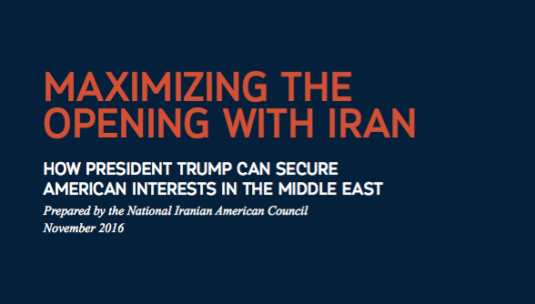
Now the NIAC has issued a 45 page “report” of recommendations to the incoming Trump administration on how to secure American interests in the Middle East.

While mildly entertaining as a work of fiction, the Trump transition team would be wise to consider using this report to wrap up food leftovers since that is all it is good for.

This document is nothing more than a retread of the same tired and now proven false assumptions the NIAC has been peddling now for the past decade. It loses all credibility for one basic omission: It never acknowledges nor criticizes Iran’s role in the escalation of tensions and bloodshed in the Middle East.

That’s like blaming the weather for a mass murderer on the loose.

If one understands that the NIAC is an Iranian regime advocate and not a human rights organization, it is easy to understand the priorities it places on its discussion topics in the document.

It places the nuclear agreement and the U.S. alliance with Saudi Arabia as its two more important topics, which coincidentally are the two most pressing concerns for the Iranian regime.

It then dives into Iraq and Syria, the two principle battlefields Iran is involved with in creating its Shiite sphere of influence. Oddly, the report does not mention Yemen or the rise of Islamic militants in sub-Saharan Africa which are now responsible for instability stretching from Egypt to Nigeria to Yemen.

Lastly, the report devotes a scant three pages to human rights and only from the perspective that Washington can only improve human rights by essentially trusting the Iranian regime to do the right thing if Washington caves in and appeases the mullahs fully.

The one thing the report does say is that the Trump administration “should heed the advice of Iranians themselves.” On this point, NIAC is correct, but not in whom it believes are the right Iranians to listen to.

The Trump administration needs to part ways from failed policies of the Obama administration and muzzle the “echo chamber” of Iranian lobbying it created. It needs to chart its own pathway and listen to the concerns, thoughts and advice of Iranian dissidents and opponents both within Iran and outside.

Let the Iranian people counsel on what are the best approaches to bringing back a secular, democratic government in Iran. That kind of advice is not likely to come from the NIAC, Ploughshares Fund or similar Iranian lobbyists.

It will come from opponents such as the National Council of Resistance of Iran, Amnesty International and outspoken leaders on the human rights situation in Iran such as Rudy Giuliani and Sen. Robert Menendez (D-NJ).

The most amusing part of the NIAC report is the claim that was signed by 76 “national security experts” but a closer review of those names and titles reveals that:

  • 3 are staff members of NIAC
  • 47 are professors, mostly from history, linguistics and anthropology disciplines
  • 1 has a military background
  • Zero are human rights activists

The overwhelming number of these so-called “experts” is in reality advocates and lobbyists for the Iranian regime or commercial interests tied to the Iranian regime such as Bijan Khajehpour, managing partner of Atieh International which works to line up foreign businesses with Iranian-state industries.

Mainstream media outlets would do well to finally stop quoting these sources that are as accurate as pollsters on election night.

Michael Tomlinson

Filed Under: Blog, News Tagged With: #NuclearDeal, Appeasement policy, Featured, Iran, Iran deal, Iran Human rights, Iran Lobby, Iran sanctions, Khamenei, Moderate Mullahs, National Iranian American Council, NIAC, NIAC Action, Ploughshares, Rouhani, Trita Parsi

Near Unanimous Vote to Extend Iran Sanctions Act Shows Weakness of Iran Lobby

November 16, 2016 by admin

Near Unanimous Vote to Extend Iran Sanctions Act Shows Weakness of Iran Lobby

Near Unanimous Vote to Extend Iran Sanctions Act Shows Weakness of Iran Lobby

The decision by the House to renew the Iran Sanctions Act is noteworthy for two things: One is the margin, an overwhelming 419-1 vote that clearly demonstrates on this one issue, both Democrats and Republicans universally agreed on the outcome.

The second is that the age of appeasing the Iranian regime and giving credence to the Iran lobby’s echo chamber on “moderation” has finally died in the wake of an unrelenting year of war, carnage and bloodshed by Iranian regime and its terrorist proxies following approval of the nuclear deal.

It is universally agreed to even among the most ardent supporters of the mullahs in Tehran that Iran could have done more to demonstrate its commitment to being a reliable international partner.

The fact that a lame duck session of the House voted these sanctions through says lots about how members truly feel. While there is no disagreement about wanting to compel Iran mullahs to not build nuclear weapons, the methodology of how to get there is clearly and appropriately back up for debate.

The ISA itself, extended for another decade by this vote, is not even connected to the nuclear deal since it deals with sanctions imposed for Iran’s support for terrorism and development of ballistic missiles; items that Iran lobby supporters such as the National Iranian American Council famously argued should be disconnected from the nuclear deal. They are now paying for that disconnect.

The other sanction, which was passed on a unanimous voice vote no less, imposes sanctions on anyone assisting the Syrian regime in the wholesale slaughter of civilians and contributing to the largest refugee crisis since World War II. Given that Iran is Syria’s biggest sponsor and supporter, the message to Tehran is clear: Get out of Syria and stop supporting the mass murder of men, women and children.

Ultimately the best thing to come out of these moves will be to refocus the debate on human rights and the barbaric practices of the Iranian regime and Syria.

The renewal and extension of the ISA and the sanctions connected to Syria provides the incoming Trump enormous flexibility and tools as it takes up the thorny question of how to roll back Iranian aggressions.

The Iran lobby has been busy trying to make the case that the status quo needs to continue and in fact grant Iranian regime even more concessions with the further lifting of restrictions preventing the regime from tapping into U.S. currency exchanges to finance its activities, but even a blind man can recognize the American voter was in no mood to accommodate Iranian regime during a time when fears over terrorism was ranked as the second-highest concern they had in exit polling right after the state of the economy.

Both Democrats and Republicans realize their political careers might be cut short if they followed through with President Obama’s desire to maintain the status quo. It is clear from the dramatic results from the election that Americans want change and they are willing to decimate the political class to get it.

For the Iran lobby, especially long-time advocates such the NIAC and Ploughshares Fund, their options have narrowed dramatically to have any leverage with the new Congress and the Trump administration, which is why they have shifted their focus to a shotgun approach of trying out any number of message points and see if any of them stick.

One of the stranger rationalizations offered by Trita Parsi of NIAC, is that trying to isolate the Iranian regime may prove difficult for Trump since the Obama administration first made the case that Iran had failed to cooperate and thus was able to assemble an international coalition.

But Parsi must be nuts to think the international community doesn’t recognize that Iran has been at the very center of three of the worst raging wars on the planet today in Syria, Iraq and Yemen.

Parsi even pins his hopes on Iran’s fight with ISIS as a saving grace for Trump that may spare Iran from retaliatory sanctions for sponsoring other terrorist groups such as Hezbollah. By his logic, giving Iran a hall pass for fighting one murderous group of thugs while supporting another murderous group of thugs is somehow a good thing.

In another example of how the Iranian regime axis of Shiite influence is trying to recalibrate to the new reality of a Trump administration, even Syrian strongman Bashar al-Assad said in an interview on Tuesday that Trump was a “natural ally” if he was committed to fighting “terrorists.”

Of course Assad’s definition of “terrorist” might be very different from the American definition given his military’s targeting of civilian neighborhoods and hospitals with airstrikes, barrel bombs and chemical weapons.

What Parsi, Assad and even the mullahs in Tehran do not understand is that Trump is far from the knee-jerk, knuckle dragger they tried to portray him as during the presidential campaign. Far from it, Trump has focused his policies on the idea of restraining Iranian regime influence and resetting the power balance in the Middle East away from Iran and back towards global powers.

His openness towards working with Russia and Vladimir Putin presents a more subtle and unique threat to Iran since Putin might even make the calculation that forging a partnership with the U.S. negates the need for supporting Iran’s interests so long as preservation of a warm water port in the Mediterranean from Russian ships is guaranteed.

For Iranian mullahs, the field is narrowing in terms of their ability to affect outcomes, which is why the Iran lobby has been campaigning hard to influence who will be sitting on key positions of the upcoming administration.

Laura Carnahan

Filed Under: Blog, News Tagged With: #NuclearDeal, Appeasement policy, Featured, Iran, Iran deal, Iran Human rights, Iran sanctions, National Iranian American Council, NIAC, NIAC Action, Ploughshares, Trita Parsi

Iran Lobby Takes Aim at Iranian Regime Critics

November 15, 2016 by admin

Iran Lobby Takes Aim at Iranian Regime Critics

Iran Lobby Takes Aim at Iranian Regime Critics

The election of Donald Trump as the next president of the United States presents a thorny dilemma for the Iranian regime and its core of lobbyists and supporters in the U.S. and Europe; not the least of which the gravy train of concessions and naïve thoughts of Iranian “moderation” are finally coming to an end with the change in administrations.

This explains why the regime’s leadership and members of the Iran lobby are busy issuing press statements and making stern speeches warning the incoming president and the next Congress not to abandon the Iran nuclear deal or re-impose sanctions.

There is an unmistakable air of bluster as well as fear that permeates much of what top leaders such as Hassan Rouhani and key advocates such as Trita Parsi of the National Iranian American Council have had to say about the U.S. election results.

But there is a nuance here that is being largely ignored by much of the media in which while the Iranian leadership is claiming dire consequences should the U.S. back out of the nuclear deal, Trump’s own statements and those of opponents of the nuclear deal provide a better insight as to what the real goals are for the U.S.

Namely, no one has ever said they opposed a nuclear deal that restricted the regime’s ability to build weapons of mass destruction. The intentions of such a deal are laudable and important and deserving of support from the global community.

What is in dispute is whether or not this deal actually accomplishes that goal and the answer is a resounding “NO.”

The world has had the luxury of a year’s worth of hindsight to see how badly constructed the agreement was, which was undermined every step of the way by concessions, exemptions and waivers that were granted for everything from the ability to inspect suspected nuclear sites in Iran to the amount of heavy water produced and kept illegally by the regime.

It is this consistent practice of exempting Iran from the provisions of the deal, as well as agreeing to not tie other aspects of the Iranian regime’s conduct such as support for terrorism and human rights abuses, that have rendered the deal ineffective at best and enabling at worst.

Of course, Trump and long-time critics of the regime including current and former US officials don’t want to start a shooting war, but the Iran lobby is certainly not letting up in its rhetorical histrionics, even going so far as starting to assail Trump campaign supporters for their prior support for Iranian resistance groups such as the People’s Mojahedin Organization of Iran (PMOI), which opposed the mullahs’ rule in Tehran in support of the restoration of a democratic, secular government.

A who’s who of fringe blogs have started regurgitating the same propaganda and lies told by Iranian intelligence services almost word for word in a two-pronged effort to try and discredit any association with Iranian dissident groups from having any kind of input with the organization of a new Trump administration and also start up a new “echo chamber” promoting the continuation of the same policies of accommodation and appeasement to the regime.

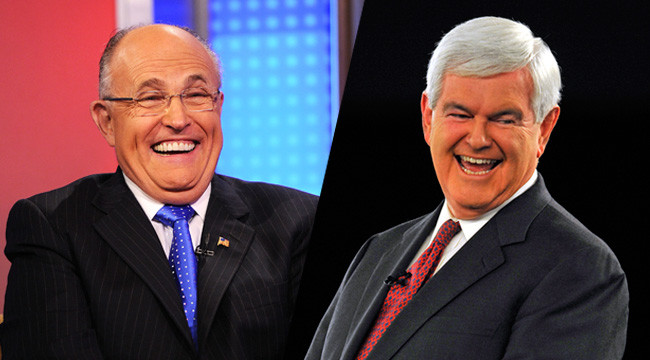
Examples of such renewed efforts include posts attempting to portray Trump loyalists such as former New York mayor Rudy Giuliani and former House Speaker Newt Gingrich as being in the “control” of groups such as PMOI and this past association should preclude their ability to work in a future Trump administration on Iranian issues.

It is no secret that they and other prominent European and U.S. officials have appeared at forums, rallies and demonstrations held by a wide range of human rights groups such as Amnesty International and Iranian dissident groups such as PMOI and the National Council of Resistance of Iran to voice support for democratic reforms in Iran and denounce human rights violations and the regime’s long support of terrorism.

It is also important to note that support for the Iranian resistance movement globally isn’t limited just to those who supported Trump’s candidacy, but includes prominent Democrats such as Sen. Richard Menendez (D-NJ) and Robert Torricelli.

A senior Iran analyst at the Foundation for Defense of Democracies, said that Iran is likely to test the future Trump administration as part of this new effort to shape U.S. foreign policy next year.

“Despite much of the attention being paid to what President-Elect Trump’s Iran policy has to do with the [Iran] nuclear deal, another domain the next administration will have to contend with Iranian belligerence in is in the Persian Gulf and Strait of Hormuz,” the analyst said. “Trump’s statements about having Iran’s IRGC speedboats—which have been overtly harassing the U.S. Navy in international waters—’shot out of the water,’ appears to indicate a desire to respond more aggressively to Iranian provocations.”

An aggressive U.S. response may send a message to Iran, the senior analyst at Foundation for Defense of Democracies said.

The potential for a Trump administration to scrap the nuclear deal as one of its first foreign policy items has the full attention of the Iranian regime.

Department of State Spokesman Mark Toner confirmed to reporters “the agreement is valid only as long as all parties uphold it.”

Since the nuclear deal was signed by Russia, Britain, France, China, the U.S. and Germany, the withdrawal from the agreement by the U.S. would make it null and void. With the American and several other European companies beginning to re-engage economically with Iran, such as Boeing signing a multi-million dollar deal with Iran Air, to provide a brand new fleet of planes, the very real threat of the deal’s collapse looms large.

While Trump has ample reasons to tear up the deal as he has promised to do, he should also recognize the golden opportunity afforded to him to put the mullahs to the test and gauge how badly they want economic improvements given the deep dissatisfaction among the Iranian people.

The sanctions relief provided to Iran as part of the deal needs to be renewed every 120 to 180 days, which means Trump will need to actively enforce the agreement within his first few months in office, wrote Richard Nephew in a paper published by the Columbia Center for Global Energy Policy. It’s possible, said Nephew, who coordinated Iran sanctions policy when he was at the State Department, that Trump would withhold sanctions relief and use the leverage as part of his push to renegotiate the deal.

All of which means Trump is holding all the cards and the mullahs are left essentially powerless as evidenced by their desperate attempts to smear the long-standing Iranian resistance movement and attack its supporters.

Michael Tomlinson


Filed Under: Blog, Current Trend, News Tagged With: #NuclearDeal, Appeasement policy, Featured, Iran, Iran deal, Iran Human rights, Iran Lobby, Iran sanctions, Iran Talks, Iran Terrorism, National Iranian American Council, NIAC, NIAC Action, Nuclear Deal, PMOI/MEK, Trita Parsi

Next President Must Address Iran Regime Comprehensively

November 8, 2016 by admin

Next President Must Address Iran Regime Comprehensively

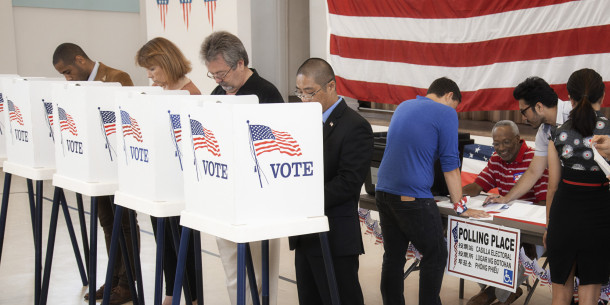
People voting in polling place

One of the great fundamental flaws in the negotiations over the Iran nuclear agreement was the concession to the mullahs in Tehran to unlink non-nuclear activities such as support for terrorism and human rights violations from the deal in an act of appeasement in the vain hope of moderating their behavior.

In the year since the agreement, the Iranian regime’s actions have proven those hopes to be false and the appeasement merely a reward for continued Iranian aggression. While that policy turned out to be a failure, the next president—be it Hillary Clinton or Donald Trump—will need to face the challenge of Iran with a more comprehensive approach.

The challenges facing the new president will be numerous and complicated. The current policies of trying to appease the Iranian regime have only made matters worse not only in the Middle East, but around the world.

It has also fractured what once was a globally united front against the Iranian regime which placed uniform and complete economic sanctions so effective that it threatened the mullahs hold on their regime and drove them finally to the bargaining table for the first time since this regime has been in power.

Unfortunately the nuclear agreement gave them a free hall pass and they have taken it to exploit it. The new president will find on his or her plate an Iran that:

  • Is at the center of the regions three major conflicts by supplying weapons, cash and fighters in Syria, Iraq and Yemen;
  • Those same conflicts have caused the greatest refugee crisis since World War II and radically reshaped the global flow of refugees and migrants and caused internal chaos throughout Europe, Africa and even the Americas;
  • Iranian regime is committed to expanding its extremism and made no attempts to conceal its agenda and willingness to use force to achieve it, including creating a Shia sphere of influence stretching from the Mediterranean to the Indian Ocean;
  • Is actively arresting and imprisoning dual-national citizens from the US and Europe for no reason other than to acquire new bargaining chips to exchange for even more concessions or ransom payments;
  • Forcing changes in alliances and partnerships that have created deep rifts for the US among traditional partners and allies such as Egypt, Israel, Saudi Arabia, Turkey, Jordan and the Gulf states; and
  • Imposed new and brutal crackdowns on human rights on the Iranian people, leaving a negative sentiment about the West, that continues to ignore that in its dealing with the regime.

The new president will also have to rebuild and forge a new consensus on to effective deal with Iranian extremism in the face of a rush by European, Asian and American firms to try and cash in on the perceived riches available in the Iranian marketplace; a perception that may prove just as illusory as the hopes for moderation.

At least one former hostage is working to remind whoever is elected to take a harder line against the Iranian regime. Barry Rosen, a survivor of the 1979 hostage crisis, serves as an advisory board member for United Against Nuclear Iran and penned an editorial for Time magazine.

“In this unusual presidential campaign cycle, we have seen a lack of substantive discussion about Iran and foreign policy from the candidates. This oversight comes at the most critical time in decades, with the nuclear deal well underway despite continued hostile behavior from the Iranian regime. It is imperative that the Presidential candidates and our policymakers in Congress understand that the Iranian regime that held my colleagues and me hostage has not reformed its ways,” Rosen writes.

“It’s likely that the next U.S. President will not be through the first 100 days of the administration before Iran is once again a problem that cannot be ignored. The nuclear deal has done nothing to bring about crucial change in Iran. And there is no more clear an example of this than Iran’s involvement in the Syrian crisis. The American government is foolish to ignore the growing threat that is Iran,” he added.

“The next President must acknowledge the realities of inner turmoil in Iran, and be prepared to take a hard line against Khamenei and his regime as they push the envelope. Regardless of who wins the Iranian elections in March, we already know the regime holds the power and has no intention of working diplomatically with the West. The fanciful notion that the nuclear deal would bring about better relations between our two countries has been dispelled; a new administration will have the chance to cast a spotlight on Iran for the bad global actor it is,” Rosen said.

Rosen’s admonitions for the next president are prescient and valid. He also raises the uncomfortable truth for many of those that originally supported the Iranian nuclear which is that the deal has become almost toxic to publicly support anymore.

Too many Americans recall the videos and photos showing American sailors forced to kneel at gunpoint from Iranian Revolutionary Guard Corps members, while anyone on Google can simply type in “Iran” and “executions” and see the regime’s justice system on gruesome display.

So for a new president the complexities of the Iranian problem will require stern action, as well as a deft hand in reassembling the global consensus that has been damaged over the past year as foreign companies look for dollars instead of relief for the long-suffering Iranian people.

No matter who is elected, we can only hope that dealing with Iran with more than hope and sentiment is on their agenda.

Michael Tomlinson

Filed Under: Blog, News Tagged With: #NuclearDeal, Appeasement policy, Featured, hassan rouhani, Iran, Iran Human rights, Iran Mullahs, Iran sanctions, Rouhani, Sanctions

Trita Parsi Mounts Defense of Iran Nuclear on Eve of Election

November 7, 2016 by admin

Trita Parsi Mounts Defense of Iran Nuclear on Eve of Election

Trita Parsi Mounts Defense of Iran Nuclear on Eve of Election

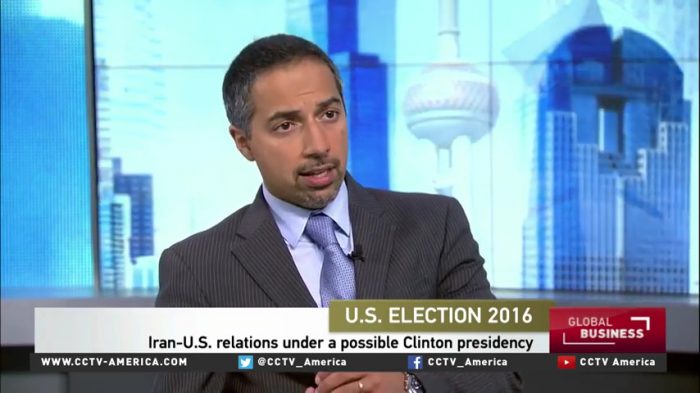
Tirta Parsi, the founder of the National Iranian American Council and one of the Iranian regime’s most ardent supporters, took to the airwaves in a final effort to shape impressions about an Iranian nuclear deal that is getting widely panned in the wake of a year of Iranian aggression and human rights violations.

Oddly though he appeared on CCTV, the Chinese-produced news channel, which doesn’t have a high Iranian-American viewership, but then again, Parsi isn’t trying to reach the constituency his organization is ostensibly supposed to be helping; rather he is trying to make the case to overseas governments to stay on board with the Iranian regime in spite of its involvement in three raging wars now in Iraq, Syria and Yemen.

His appearance amounts to another PR push to try and allay fears that the nuclear deal is going to be trashed by either Hillary Clinton or Donald Trump. He voiced his greatest optimism for saving the deal with Clinton’s election, but even tempered his language slightly from the normal dumping on Trump in light of the candidate’s closing in these last days in most polls.

For Parsi, the effort must be akin to gritting your teeth while getting a root canal since it seems every time he goes out there to be a loyal supporter of the mullahs’ agenda, they go ahead and do something to prove his statements wrong.

His famous claims that the nuclear deal would moderate Iran and empower more liberal elements in the regime to make gains in parliamentary elections fell flat as the ruling leadership wiped thousands of candidates off the ballots to ensure solid majorities for their supporters.

Parsi’s belief in Iran’s future role as a “stabilizing” influence in the Middle East’s conflicts evaporated like water on a hot plate when Iranian regime brought Russia into the Syrian conflict and escalated wars in Iraq and Yemen. Mass killings of civilians, bombed out villages, fleeing refugees, all have become staples of the post-nuclear deal era.

Most appalling of all has been Parsi’s complete silence on the Iranian practice of grabbing dual-national citizens, especially Iranian-Americans? Even the sentencing of his supposed friend Siamak Namazi to an extended prison term earned only minimal statements and none of the grassroots campaigns that have marked previous NIAC efforts to win support for the nuclear deal.

The irony is overwhelming when an organization supporting Iranian-Americans, abandons them to Iranian prisons.

For Parsi, the Iranian regime continually makes him out to be a false prophet and for the mullahs in Tehran, this year’s US presidential election is just another example—in their minds of the Great Satan’s decline—but in fact, they shined a bright light on of the great achievements of the US political system in comparison to theirs.

As the New York Times wrote, “In the past, Iranians looking to mock the United States would burn cardboard effigies of Uncle Sam or Lady Liberty. But in recent months, as the American presidential election took a series of bizarre turns, Iranians seeking to make fun of the ‘Great Satan’ have ditched the arts and crafts and simply switched on their TV sets.”

“Iran’s state television, a bastion of conservative ideologues, for once interrupted its regular programing about the ‘murders and crimes committed’ by the United States and broadcast all three debates between Hillary Clinton and Donald J. Trump — live,” the Times added.

In a country that tightly controls information about the United States and depictions of Western democracy generally, the decision to show the debates was unprecedented but by no means inexplicable: The presidential campaign shows the United States political system in such a poor light, hard-liners evidently want it to speak for itself.

And therein lays their weakness. While the mullahs look to make fun of the American political process they gave Iranians a glimpse of something they cannot have and only dream about; the ability to openly denounce, debate, disagree and even vote out their leaders.

In a regime where the top post of “Supreme Leader” is invested by the Iranian constitution with undisputed powers literally for life, the thought of openly disagreeing, even making fun of the regime’s leaders would be met with knocked down doors, secret trials and public hangings.

While the mullahs may think they are mocking the US, in reality they may have uncorked subtle questioning by their own people who may be asking “Why can’t we do this to our leaders?”

The Iranian people are deeply dissatisfied with the course of their nation, fed up with rampant corruption by regime officials, long wars claiming the lives of the young future of the country and tired of lacking even the most basic freedoms to post selfies, dress as they want or even ride a bicycle.

As Parsi even admits in his CCTV interview, the Iranian people are chafing under the lack of progress and improvements, but while he blames the lack of full implementation of the nuclear agreement, what he doesn’t admit is that the source of that discontent is within the regime’s policies itself.

Michael Tomlinson

Filed Under: Blog, Current Trend, Latest from Lobbies & Appeasers, National Iranian-American Council, News Tagged With: #NuclearDeal, Clinton presidency, Featured, Moderate Mullahs, National Iranian American Council, NIAC, NIAC Action, Nuclear Iran, nuclear talks, Rouhani, Sanctions, Trita Parsi, US election

What Would Make the Iran Lobby Stop Supporting the Iran Regime?

November 4, 2016 by admin

What Would Make the Iran Lobby Stop Supporting the Iran Regime?

What Would Make the Iran Lobby Stop Supporting the Iran Regime?

One of the more interesting questions making the cocktail circuit in the Beltway is what would actually make the Iran lobby’s members, including the National Iranian American Council, Ploughshares Fund and others, stop supporting the Iranian regime?

While said mainly in jest and incredulity at the near slavish devotion maintained by the Iran lobby towards the regime, it does raise a legitimate question worth examination. Where would the NIAC for example draw a red line in the sand?

If we take the NIAC at its word in its own explanations and denials, we have to first start with the assumption that the NIAC’s very existence is not dependent on financial support from the regime or affiliated groups. That in of itself would make the question moot since you could not expect Trita Parsi, Reza Marashi or Tyler Cullis to kiss away their paychecks no matter how odious the source of the funding.

So assuming the NIAC is indeed funded through the generosity of independent-minded people who similarly are willing to overlook the excesses of the Iranian regime, what would make them change their minds?

It’s an important question since the mission statement of the NIAC reads that it supports Iranian-Americans and seeks to build bridges. We did not read anything about eliminating nuclear weapons in the mission statement, but we’ll let that slide.

From the NIAC’s own statements during the nuclear negotiations, it tried to sell the idea that reaching a nuclear agreement would usher in a new “moderate” Iran and this in turn would help Iranian-Americans. Indeed, one of the most compelling arguments used by the Iran lobby and echoed by Hassan Rouhani was the idea that Iranian-Americans and others in the Iranian diaspora could come home to help rebuild and revitalize their homeland.

How did that work out? The Iranian regime began arrested and sentencing dual national Iranians at a fast clip. In fact, Rouhani himself gave an interview in New York before his annual address to the United Nations General Assembly in which he emphatically pointed out that Iran did not recognize dual nationalities.

So for all of the Iranians yearning to come back home, the simple truth was that you were rolling the dice as to whether or not the Revolutionary Guard Corps was going to arrest you for visiting an ailing relative, toss you in prison, rush through a sham, secret trial and then sentence you to 18 years in prison as in the case of San Diegan, Reza “Robin” Shahini.

Obviously the arrest of Iranian-Americans and the statements made by regime officials to hold them hostage for a “few billion” dollars more isn’t enough to get NIAC off the regime wagon.

How about support for terrorism and proxy wars?

It has been well documented how the Iranian regime is now the primary supporter, sponsor and even combatant in three wars in Syria, Iraq and Yemen. Its use of terrorist allies in Hezbollah, recruited Afghan mercenaries, Shiite militias and Houthi rebels has caused a refugee crisis, brought Russia and the US into conflict, threatened the stability of Turkey and pushed Saudi Arabia to the brink of war.

So even though groups such as Ploughshares Fund ostensibly fight against nuclear proliferation for fear of killing people on a global scale, apparently it’s okay to massacre people on a regional scale.

The hypocrisy is rank, but let us be generous and say that “low-intensity” conflicts do not rise to the level of nuclear war. Fine. How about the much talked about moderation from the Iranian regime?

Well, on the anniversary of the US embassy takeover in Tehran in 1979, top mullah Ali Khamenei offered a few pointed comments about the regime’s opinion of the US.

“Negotiations with the US will not resolve our problems, because firstly, it is a liar, disloyal, cheater and stabber in the back, and secondly, the US itself is crisis-stricken – and how can a crisis-hit country resolve another country’s problems?” he said at a gathering of school students and teachers.

It’s nice to see how the Iranian regime’s highest official preaches the children of Iran on the regime’s viewpoint on the US.

Since the NIAC has never condemned any of these or endlessly similar volatile statements we can only assume that Parsi et al operate under the childhood motto of “sticks and stones” when it comes to calling for the destruction of the US.

How about the misery being caused by the regime at home during a ruthless crackdown on human rights including the mass arrests of students and young people using the social media, beating of women for violating dress codes and the execution of nearly 3,000 people (most by grisly public hangings in which children are encouraged to watch) since Rouhani came to power?

Not a peep from the Iran lobby, probably because these were only “Iranians” and not “Iranian-Americans” so we can only assume their human rights are less valuable according to the NIAC.

About the only Iranian-American that has warranted anything resembling ongoing support has been Siamak Namazi, a long-time friend and associate of Parsi and Marashi, who was snatched up by the IRGC along with his father.

Ironically his association with the NIAC was cited by revolutionary courts as the reason he was arrested!

No, it seems there are no real red lines in the sand the NIAC and other members of the Iran lobby would not cross.

It’s a shame really. We were hoping there might be a spark of defiance somewhere there against the injustices being wrought by the regime.

Michael Tomlinson

Filed Under: Blog, News Tagged With: Iran Lobby, Iran Terrorism, IRGC, Khamenei, National Iranian American Council, NIAC, NIAC Action, Reza Marashi, Trita Parsi, Tyler Cullis, Yemen

Why is the Iran Lobby Obsessed with Sanctions?

November 3, 2016 by admin

Why is the Iran Lobby Obsessed with Sanctions?

Why is the Iran Lobby Obsessed with Sanctions?

For an organization that considers itself an activist group fighting for the rights of Iranian-Americans, you would think the National Iranian American Council would be hard at work trying to build grassroots support for the release of Iranian-American hostages.

Maybe Trita Parsi, head of the NIAC, might offer a blistering editorial attacking the regime’s policies of not recognizing dual nationalities?

Maybe Reza Marashi or Tyler Cullis could take a break from giving interviews demanding a lifting of economic sanctions and instead question what else could be done to help get these Iranian-Americans released?

The stark reality is that the NIAC and its members cannot even be bothered to send out tweets, let alone press releases in support of these captive Iranian-Americans, nor try to persuade the Iranian regime to let go of such a damaging and harmful policy that puts countless Iranian-Americans at risk who travel back to Iran to visit relatives.

Instead, the most pressing priority for the Iran lobby—judging by the volume of press releases, statements, editorials, tweets, interviews and speeches—is the lifting of all economic sanctions against the Iranian regime, including all of those not included in the nuclear agreement and were originally imposed because of Iranian regime’s support of terrorism and abysmal human rights record.

The arguments being made by the Iran lobby, especially the NIAC, for lifting of economic sanctions still in place, such as restrictions on Iran’s use of US currency exchanges, resemble the kind of twisted pretzel logic you might find from an extremist that claims to be helping people as he beats them with a club.

One recent example is an editorial by Marashi on the self-publishing blog TopTopic (probably because no self-respecting mainstream publication could print it with a straight face), in which he makes the silly argument that the US is not in compliance with the noxious nuclear deal and is purposely dragging its feet because:

  • It is intentionally squeezing Iran because it has nothing better to do;
  • President Obama wants to protect Hillary Clinton from having to bear an unpleasant political cost of appearing friendly to a bloodthirsty regime widely untrusted by American voters; and
  • The US government is still fighting an internal battle between those committed to punishing Iran and those wanting to set it free.

It is an utterly inane position to advocate since it ignores the most basic and unavoidable truth about the Iranian regime which is compelling most Americans and their leaders to be remain wary of the mullahs in Tehran: the Iranian regime is simultaneously engaged in three wars, while grabbing dual citizens and trying them in secret courts, all during a human rights crackdown that abuses women, religious minorities, children and even gays.

About the only thing most Americans can agree on in this divided political season is that Iran should be restrained, not encouraged.

The sight of pallets full of cash delivered on midnight flights to buy the release of Americans left a sour taste that is hard to forget. The sight of American sailors made to kneel under the guns of Iranian Revolutionary Guard Corps soldiers was unforgettable.

The sight of Iranians hanged publicly almost on a daily basis, including women and children as young as 15 when convicted horrifies most Americans.

And yet, the Iran lobby does not tackle any of these issues. Instead, it focuses on trying to get the mullahs more cash. One might think NIAC’s fundraising budget is dependent on earning commissions for every billion raised for Iran’s coffers.

The fact that the Iran lobby ignores the almost daily pronouncements proving the regime’s true intentions demonstrates clearly it has no regard for the enormous human suffering being caused by the Iranian regime.

Take for example statements made by Salar Abnoush, deputy coordinator of Iran’s Khatam-al-Anbia Garrison, an IRGC command front, who was quoted as saying in an Iranian state-controlled publication closely tied to the IRGC that is sending assets to infiltrate the United States and Europe at the direction of Iran’s top mullah Ali Khamenei.

The IRGC “will be in the U.S. and Europe very soon,” according to Abnoush, who said that these forces would operate with the goal of bolstering Iran’s hardline regime and thwarting potential plots against the Islamic Republic.

“The whole world should know that the IRGC will be in the U.S. and Europe very soon,” he said.

According to Fox News, the military leader’s comments come as Iran is spending great amounts of money to upgrade its military hardware and bolster its presence throughout the Middle East and beyond. Iran intends to spend billions to purchase U.S.-made planes that are likely to be converted for use in its air force.

Given these developments, it’s easier to understand the rationale for NIAC’s emphasis on lifting sanctions and it’s not about the poor Americans being held in Iranian prisons.

It’s about cash for Iran, plain and simple.

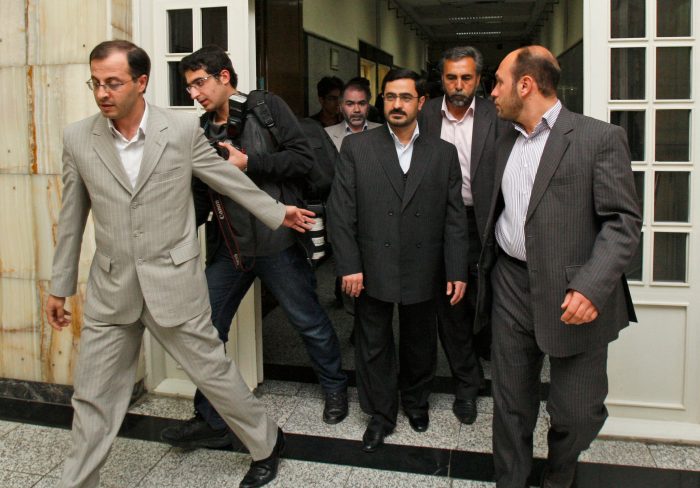
Not even the sham punishment of 135 lashes given to Saeed Mortazavi, former head of the regime’s Social Security, because of accusations of widespread financial violations and irregularities could cover from his past record as a former prosecutor who was responsible for the mass killings of detainees and political dissidents following the infamous 2009 protests over the stolen presidential election.

It seems in Tehran, you get punished for ripping off your fellow regime leaders, but not for killing innocent protestors.

Too bad the NIAC didn’t have anything to say about it.

Michael Tomlinson

Filed Under: Blog, News Tagged With: Featured, Iran, Iran deal, Iran Terrorism, IRGC, Khamenei, Marashi, Moderate Mullahs, National Iranian American Council, NIAC, NIAC Action, Nuclear Deal, nuclear talks, Reza Marashi, Sanctions, Trita Parsi, Tyler Cullis

Iran Regime Tries Claiming Victory Where There is None

November 3, 2016 by admin

Iran Regime Tries Claiming Victory Where There is None

Iran Regime Tries Claiming Victory Where There is None

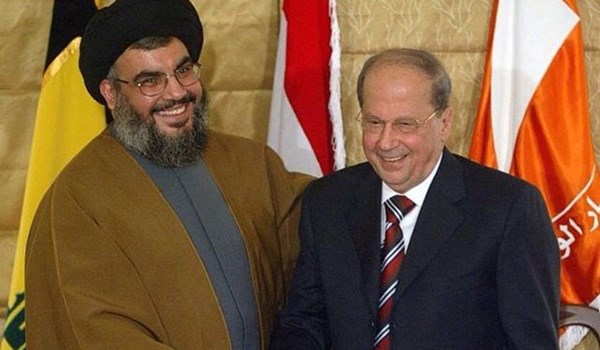
It has been interesting watching the reaction of Iranian regime leaders to Michael Aoun’s election to the largely ceremonial post of president of Lebanon. From the statements and self-congratulations coming out of Tehran, you would have thought the head of Hezbollah, Hassan Nasrallah was the one elected.

For the people of Lebanon, the results are more akin to a yawner. For Lebanese, who are used to the historical game of musical chairs, the election of Aoun is not so much ground breaking as much as it simply puts a warm body in the chair of the presidency after a two year vacancy.

Antoun Issa, senior editor at the Middle East Institute and a former Beirut-based journalist, appropriately captured the sentiments of most Lebanese when he coined the phrase “Kullun haramiyyeh” which means “they’re all thieves” in describing the most common sentiment on Lebanon’s streets from its vendors and waiters to students and doctors.

“So when Michel Aoun, the maverick general-turned-politician, achieved his long-held ambition of becoming president on Monday, most ordinary Lebanese reacted with indifference. The new president is just another name, another title, and another episode in the country’s endless — and ultimately meaningless — political drama,” Issa writes in Foreign Policy.

“To become president, Aoun, the country’s main Christian leader, struck a deal with his longtime opponent, Saad Hariri, head of the rival Sunni Future Movement. As part of the deal, Hariri will now become prime minister. But for the deal to work, it also needed (and duly received) the approval of arguably the most powerful man in Lebanon — Hassan Nasrallah, the head of Hezbollah,” he added.

“For ordinary people, this is all a game of musical chairs. Such is the disconnect between the country’s political class and the people that the average Lebanese can’t tell the difference between having a president and not having one. Prior to Monday, Lebanon had, in fact, been without a president for two years — but this fact could not be discerned on the streets of Beirut. President or no, Lebanon has had no effective governance for decades,” Issa said.

More importantly, the long-term strategy of Hezbollah is to so weaken the Lebanese government that it cannot provide basic government services such as education, food, healthcare and security and thus remain the dominant political and military power by dispensing these services to the country’s large Shiite population.

It’s a recipe that the mullahs in Tehran have practiced well by keeping the Iranian people dependent on the largesse of the Iranian regime and not allowing the full economic benefits of what should be a powerhouse economy trickle down to the people.

This Iranian regime game plan of claiming victory where there is none is a tried and true tactic. Even as the Iranian people march, protest and demonstrate against rigged elections, government corruption or shortages of food and job opportunities, the mullahs continue to flog the idea of victories to keep the perception alive they know what they are doing.

The problem with maintaining control with essentially a lie is that it is a fragile form of control subject to toppling even by small acts of defiance. For the Iranian regime this means it cannot tolerate even the smallest inklings of dissent, which is why the mullahs so ruthlessly pursue members of the Iranian resistance movement and arrest Iranians on the slightest provocations.

It is why even dress code violations such as women failing to wear a hijab or students posting selfies on Instagram are met with beatings and arrests.

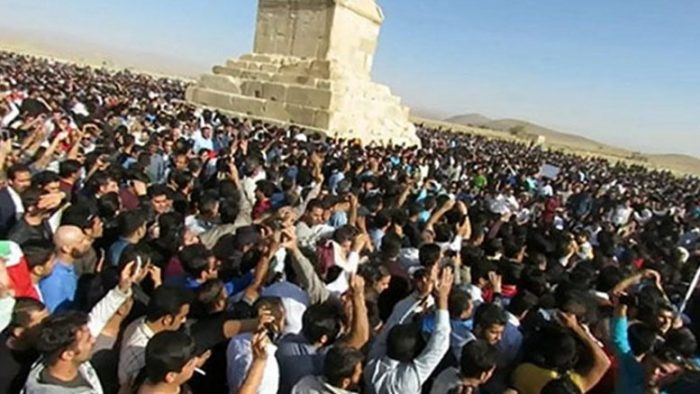
This past Friday saw another of these instances when regime authorities arrested organizers of a rally held at the tomb of the ancient Persian King Cyrus the Great in Pasargadae, Iran.

Breitbart News previously reported that protesters chanted slogans like, “Iran is our country, Cyrus is our father,” “clerical rule is synonymous with only tyranny, only war,” and “freedom of thought cannot take place with beards,” a reference to the theocratic leaders currently in power.

According to Reuters, there was no indication as to how many of the event’s organizers had been arrested. However, a judiciary official reportedly said on Monday Iran’s intelligence and security forces have placed the organizers of the event under close surveillance and that they will face prosecution.

Prior to the October 28 protest, members of the regime’s Revolutionary Guard Corps (IRGC) and other Iranian authorities attempted to thwart the impending rallies by spreading rumors that officials had completely shut down the city, canceling tours to the site, sealing roads to Pasargadae, and shutting down the Internet.

Those actions did not deter the protesters, which consisted mostly of youth and individuals under the age of 35, from carrying out their rally.

The mere existence of such protests are dangerous for the regime, but also provide ample evidence for the rest of the world of the fragility of the mullahs’ rule which is why the international community needs to confront their extremism more forcefully.

Alex Carlile, a Liberal Democrat member of the United Kingdom’s House of Lords and co-chairman of the British Parliamentary Committee for Iran Freedom, challenged the United Nations to hold the regime accountable in an editorial in the Washington Times.

“The Iranian regime has imprisoned a British charity worker and sentenced her to five years’ imprisonment on bogus national security charges,” he writes. “The case of Nazanin Ratcliffe has shocked the British public as it has unfolded over the past six months, since she was arrested by regime officials when she attempted to fly back to England after taking her daughter, Gabriella, to visit her parents.”

“However, this is only the latest in a long line of human rights abuses by Tehran. Earlier this year, a leaked audio file provided further proof of the complicity of top-level regime members in a 1988 massacre, which killed 30,000 political prisoners, including juveniles and pregnant women,” Lord Carlile added.

Lord Carlile writes the main targets of these murders were members of the opposition movement People’s Mojahedin Organization of Iran (PMOI, or MEK), although the regime also executed relatives of members or casual supporters as well as other dissidents.

Nothing so incenses the regime than the continued efforts of the Iranian resistance to educate the world about these massacres and other human rights violations because they ultimately point out the hollow and empty “victories” the regime trumpets.

Michael Tomlinson

Filed Under: Blog, News Tagged With: Featured, hassan rouhani, Hezbollah, Iran, Iran Economy, Iran Human rights, Iran Mullahs, IRGC, Lebanon, Saad Hariri

Iranian Regime Tries Its Own Regime Building

November 2, 2016 by admin

Iranian Regime Tries Its Own Regime Building

Iranian Regime Tries Its Own Regime Building

The Iranian regime has been busy building its own Islamic version of the old Soviet Union’s Warsaw Pact through the use of proxies and terror groups to fight civil wars in Syria, Iraq and Yemen. The template for such a tactic began in Lebanon where Iran’s chief partner, Hezbollah, has become the dominant political force after three decades of bloody sectarian conflict.

Lebanon took another step in aligning itself more closely with Iran when Lebanon’s lawmakers elected Michel Aoun, an Iran-backed politician and former general, as president Monday, ending more than two years the country has gone without a leader.

Aoun, 81, is an ally of Hezbollah, the Shiite militia and political party backed by Iran that has helped Syrian President Bashar Assad survive a five-year civil war on Lebanon’s border.

According to USA Today, the vote for Aoun, by 83 of parliament’s 127 members, shows Iran-backed political factions shouldered past those aligned with Saudi Arabia, replacing Syria as Lebanon’s chief foreign power broker.

It’s an important development since it adds to the growing sphere of influence the Iranian regime is trying to build in the Middle East as it tries to set itself apart as the dominant power in the area; overtaking Saudi Arabia.

It is also an attempt by the mullahs in Tehran to send a message to other countries in the region to either cozy up to Iran or face possible repercussions. But far from being a clear-cut victory for Iran, Lebanon sought to navigate a narrow path and not serve a pawn solely for Iran.

Saad Hariri, a pro-Western and Saudi-oriented politician, formally endorsed Aoun last week after failing to garner enough support for the presidency. In return, Aoun is expected to appoint Hariri prime minister in a power-sharing move aimed at keeping both Saudi Arabia and Iran from gaining total leverage within Lebanon.

Of course, Iran tried to portray the election as a vindication for its policies. Aoun’s election drew immediate praise from a top adviser to Iran’s top mullah Ali Khamenei.

The adviser, Ali Akbar Velayati, described the choice as a victory for Iran and its allies in Lebanon, because the Lebanese president is “a very significant ring in the chain of the Islamic resistance,” according to Iran’s government-owned Tasnim News Agency.

The election of Aoun to the presidency, instead of the much more political powerful prime minister post also makes Iran’s claims of victory ring slightly hollow, but the mullahs are willing to trumpet any positive news when so little good news is coming across right now as a stagnant economy at home stirs unrest and the colossal drain of supporting three wars has Iran clamoring for lifting more sanctions and even nabbing a few more American hostages in the blind hope of shaking down more ransom money.

The efforts by Iran to influence its neighbors fly in the face of warnings issued by regime leaders against foreign nations from intervening in the region.

In a meeting with Cypriot Parliament speaker Demetris Syllouris, Iranian regime parliamentary speaker Ali Larijani censured foreign countries for “meddling” in the fate of nations in the Middle East in what could be classified as one of the bigger lies uttered by the mullahs recently.

In an usual twist of irony for the regime, while Larijani was warning against foreign intervention, Hossein Salami, the deputy commander of Iran’s Revolutionary Guard Corps, told a crowd of Basij paramilitaries that regime forces recently demonstrated “its capability of not recognizing the red lines in pursuing and punishing the regime adversaries.”

He bragged on the expansion of the Islamic state’s boundaries from the Red Sea to the Mediterranean, vowing that the “defenders of the holy shrines” forces would crash Tehran opponents anywhere in the world in a definitive statement on the regime’s territorial ambitions.

“You can see how our borders expanded reaching the Red Sea and the eastern Mediterranean, due to the sacrifice of our martyrs,” he added according to Tasnim news agency.

So even while the regime complains about foreign intervention, it sees for itself a blank check to meddle in the affairs of its neighbors and even recognizes its own mandate to push forward its own boundaries in pursuit of a larger swath of territory.

All the while the administration of Hassan Rouhani is making changes to Iran’s media laws to further muzzle journalists from any possible dissent and tighten the screws on criticism.

His administration reportedly plans to do this through two bills: one designed to ultimately replace the current Press Law and the other to create a state media commission. While the new Press Law may appear relatively similar to the current one, it leaves more room for interpretation when determining if someone has committed an offence. This could make it easier for prosecutors or judges with political motivations to silence journalists or newspapers through arbitrary charges, according to Global Voices.

The proposed Media Affairs Commission bill to “oversee the journalism profession” would make journalists and media agencies more directly accountable to the government. The Commission will be responsible for issuing permits to journalists, draft a Journalism Ethics Code and ensure “high moral standards” in the media. At present, local Iranian journalists do not need permits to work for publications, in contrast to foreign journalists who go through a rigorous accreditation process through the Ministry of Culture and Islamic Guidance’s foreign press department. Only special accreditation is applied for journalists through their new agencies to attend official settings such as Parliament, or speeches by the President and Ministers.

Hardline politician Hossein Entezami, well known for repressing media freedoms, reportedly will take a leading role in the Commission. His appointment to this post, by the Rouhani administration, is leading to feelings of disquiet for freedom of the press in Iran.

Laura Caranahn

Filed Under: Blog, News Tagged With: Featured, Hezbollah, Iran, Michel Aoun, Syria

  • « Previous Page
  • 1
  • …
  • 24
  • 25
  • 26
  • 27
  • 28
  • …
  • 64
  • Next Page »

National Iranian-American Council (NIAC)

  • Bogus Memberships
  • Survey
  • Lobbying
  • Iranians for International Cooperation
  • Defamation Lawsuit
  • People’s Mojahedin
  • Trita Parsi Biography
  • Parsi/Namazi Lobbying Plan
  • Parsi Links to Namazi & Iranian Regime
  • Namazi, NIAC Ringleader
  • Collaborating with Iran’s Ambassador

Recent Posts

  • NIAC Trying to Gain Influence On U.S. Congress
  • While Iran Lobby Plays Blame Game Iran Goes Nuclear
  • Iran Lobby Jumps on Detention of Iranian Newscaster
  • Bad News for Iran Swamps Iran Lobby
  • Iran Starts Off Year by Banning Instagram

© Copyright 2026 IranLobby.net · All Rights Reserved.