Iran Lobby

Exposing the Activities of the lobbies and appeasers of the Mullah's Dictatorship ruling Iran

  • Home
  • About
  • Current Trend
  • National Iranian-American Council(NIAC)
    • Bogus Memberships
    • Survey
    • Lobbying
    • Iranians for International Cooperation
    • Defamation Lawsuit
    • People’s Mojahedin
    • Trita Parsi Biography
    • Parsi/Namazi Lobbying Plan
    • Parsi Links to Namazi& Iranian Regime
    • Namazi, NIAC Ringleader
    • Collaborating with Iran’s Ambassador
  • The Appeasers
    • Gary Sick
    • Flynt Leverett & Hillary Mann Leverett
    • Baroness Nicholson
  • Blog
  • Links
  • Media Reports

Iran Lobby Keeps Pedaling Same Distortions

August 26, 2015 by admin

Iran Lobby Keeps Pedaling Same Distortions

Iran Lobby Keeps Pedaling Same Distortions

The Iran lobby, especially the National Iranian American Council, is in full-speed-ahead mode as it churns out editorials and press releases quicker than Donald Trump quips, with virtually all of them rehashing the same themes designed to mislead and misdirect Americans from the damning facts surrounding the Iran regime and the proposed nuclear agreement.

One example is an editorial authored by Reza Marashi, NIAC’s research director who apparently doesn’t do much research, but instead parrots what runs on Iranian state media it seems, which ran on Quartz, a blog dedicated to supporting the regime.

In it, Marashi claims President Obama’s “all in” push on the nuclear deal proves his commitment to choose peace over war, but in fact what it does represent is the administration’s desire to leave with a foreign policy win at all costs on the president’s resume.

The world will likely be paying the butcher’s bill for P5+1 decision to appease the mullahs in Tehran with generous terms in the decade to come since at the end of the deal’s time limit (and yes there is a finite time limit) mullahs will be free to scale up industrial-scale production of uranium without any consequences.

Marashi goes on to pedal another fallacy and that is Iranian-Americans wholeheartedly endorse the deal. He offers up as proof polling done on behalf of the Public Affairs Alliance of Iranian Americans, another front supporting the mullahs. The poll conducted by Zogby Research Services is flawed – as are other polls purported to show support for the Iran deal – because it asks questions related to the desires of Iranian Americans for peace, not on their beliefs on whether or not the Iran regime can be trusted to comply with any deal.

The one question PAAIA did ask (but probably wish it hadn’t) was what were the top issues affecting U.S.-Iran relations and a majority 55% said the promotion of human rights and democracy with a minority of 40% citing the nuclear deal.

Polling done for CNN, NBC, Wall Street Journal and others all show when the question of supporting a nuclear deal is tied to the idea of “trusting” the Iran regime, support plummets below the Mendoza Line and that is the misdirection employed by the NIAC and other regime supporters. This whole thing works only if they never discuss trusting the mullahs.

But Marashi goes one step further, he actually tries to portray Hassan Rouhani as a staunch moderate, even pointing out his tenure as secretary for the Supreme National Security Council as evidence of the support he enjoys from top mullah Ali Khamenei.

The claim is deliciously insipid because Marashi neglects to mention during his 16 year tenure, Rouhani oversaw some of the most brutal crackdowns on political dissent in Iran, as well as being the chief negotiator with the International Atomic Energy Agency when the first disclosures came of Iranian cheating in developing its nuclear infrastructure. Rouhani, far from being a moderate role-model, was in fact the model Iranian hardliner in carrying out the regime’s initiatives without public dissent or comment.

But the ridiculous claims keep on rolling as NIAC Action, the new lobbying arm of the NIAC, issued a press release in which it claimed growing momentum for the deal citing several Democratic Senators who had publicly endorsed the deal. It notes that 18 Democratic Senators are still undecided, placing approval in jeopardy, but what Jamal Abdi, NIAC Action’s executive director, fails to mention is the key item holding uncertain Democrats back, which is the doubts they have in placing their political futures in the hands of the mullahs.

That fact poses the most significant obstacle since undecided lawmakers have to basically choose to throw their lot in with the mullahs and “trust” that the mullahs will not end up killing their political careers by cheating on the agreement or engaging in more sectarian wars in the years to come.

The biggest leap in logic by the Iran lobby came courtesy of Trita Parsi, NIAC’s cheerleader-in-chief, who posted a piece on Huffington Post reiterating the same theme that Abdi and Marashi made of overwhelming momentum for the deal, but Parsi goes further by trotting out the concept that human rights activists support the deal.

He cites several Iranians who have been or are currently imprisoned by the regime voicing their support for the deal. The entire exercise by Parsi has a distinct Orwellian tinge to it as the regime picks prisoners for Parsi to quote in the same way the old Soviet Union would trot out prisoners from its gulags for appearance to Western media to talk about how their confinement is filled with gardening and cooking classes.

It is incredibly noteworthy that Parsi does not mention any of the Iranian Americans currently held in Iranian prisons, including Jason Rezaian, Saeed Abedini and Amir Hekmati. We can be assured that none of them would be endorsing the deal, nor their treatment at the hands of the mullahs.

By Michael Tomlinson


Filed Under: Blog, National Iranian-American Council, The Appeasers

Iran Lobby Stuck in Absurd Parchin “Truther” Role

August 25, 2015 by admin

Iran Lobby Stuck in Absurd Parchin “Truther” Role

Iran Lobby Stuck in Absurd Parchin “Truther” Role

A funny thing happened this weekend. The Associated Press reported last week the contents of a secret side deal between the Iran regime and the International Atomic Energy Agency over the issue of Iran finally allowing inspection of its Parchin military facility, long suspected of being used in research in its nuclear weapons program.

That story and side agreement set off a social media firestorm as regime supporters such as the National Iranian American Council, Ploughshares Fund and J-Street went all-in denouncing not only the story, but the very existence of the purported side deal agreement.

Tom Nichols wrote in the Daily Beast a compelling blow-by-blow review of what the mudslinging that went on as supporters of the mullahs in Tehran pulled out every tactic they could think of to contain the damage wrought by the AP story in which Iran was seemingly granted significant concessions in self-inspecting and reporting soil samples from the Parchin site without international oversight.

Nichols compared the attacks and arguments of the Parchin truthers to the much-mocked 9-11 truthers who spun up elaborate fantasy theories about the 9-11 attacks being organized by the U.S. government and Israel. Nichols wrote:

The Huffington Post made the strongest play by noting that former IAEA official Tariq Rauf said that in his view it was “not an authentic document” and represented an attempt to “hinder” the Iran Deal. Because the AP’s draft referred to Iran as the “Islamic State of Iran” – its official name is the Islamic Republic of Iran, which also appears in the draft – some seized on this as evidence of involvement of…well, You Know Who: “The only one who refers to Iran,” Trita Parsi of the National Iranian American Council tweeted, “as ‘Islamic State of Iran’ is [Israeli Prime Minister] Netanyahu. And strangely, AP’s dubious ‘draft’ of the IAEA-Iran agreement…”

AP writer Matt Lee upbraided Parsi, saying: “You know better than this.” Parsi, in classic truther fashion, replied: “I am pointing out the language similarity and calling it strange. That’s it.” Max Fisher of Vox, for his part, called the AP story “troubling” and backed off when Lee also directly challenged him to take a position on the forgery charge. Lewis eventually said he thought “Islamic State” was transcription error, but he spent the rest of the day in a snarky pissing match with Lee and the AP on Twitter.

Nichols also noted how all of the charges about the forged IAEA side agreement hit Internet and social media all at the same time on Friday morning, calling the timing more than coincidental. Most interestingly though was the fact Nichols noted the new tactical change in the Iran lobby’s attacks, especially on journalists who published an unfavorable piece on the Iran regime or deal.

“The Iran Deal supporters knew there was no point in trying to rebut the substance of the claim: the story was out, people had already read it, and politicians had already reacted. A careful analysis of whether the document said what the AP headline said it did would take too long, and most people wouldn’t bother with it,” Nichols said. “Instead, the story had to be discredited and flushed, as soon as possible. There wasn’t time to explain that ‘monitor’ might mean different things to a lay reader and to an expert. Better simply to throw an array of charges at the Associated Press and its reporters and see what sticks.”

“The warning shot to other journalists is clear, however. Reporters with one of the most reputable news organizations in the world had to fight off odious charges for doing their job. This is apparently the price to be paid for reporting anything that challenges support for a deal that has reached, among its adherents, the status of a dogma that tolerates no heresy,” he added.

But these attacks by the Iran lobby point out the most significant issue surrounding these secret side deals; the fact that they are still secret.

William Tobey and Judith Miller writing in Real Clear Politics took the Obama administration to task in keeping these deals secret and outlined three compelling reasons why they should be made public:

“First, Iran’s commercial and industrial secrets—or even military secrets—are unlikely to be revealed by publishing the IAEA’s side agreements. Confidentiality regarding safeguards mainly covers proprietary and economic information, not approaches, said Olli Heinonen, the IAEA’s former chief inspector.

“Second, while such side deals are normally secret, the Iran agreement is far from a normal case. Both the IAEA Board of Governors and the United Nations Security Council concluded that Tehran violated its earlier Safeguards obligations on numerous occasions over an extended period of time. Moreover, Iran, under its earlier commitments, was supposed to let the IAEA visit Parchin with 24 hours’ notice. Yet the agency has been waiting years for access, while Iran has conducted a massive cleanup at the location.

“Third, the overarching deal removing sanctions on Iran was struck by seven nations and the European Union—not just by Iran and the IAEA.”

State Department spokesman John Kirby, in his regular press briefing on Monday, did not build confidence either when he said the government believes the IAEA will give it all the “access and information” it needs in regards to inspections at Parchin.

Pete Kasperowicz of the Washington Examiner explained how Kirby’s subtle addition of the phrase “access and information” reinforced the perception that the IAEA side deals surrendered control of the testing and inspection process to the Iran regime.

New York Times correspondents David R. Sanger and Michael R. Gordon took a deeper dive in the future risks posed by the Iran deal and concluded “that after 15 years, Iran would be allowed to produce reactor-grade fuel on an industrial scale using far more advanced centrifuges. That may mean that the warning time if Iran decided to race for a bomb would shrink to weeks, according to a recent Brookings Institution analysis by Robert J. Einhorn, a former member of the American negotiating team.”

“Critics say that by that time, Iran’s economy would be stronger, as would its ability to withstand economic sanctions, and its nuclear installations probably would be better protected by air defense systems, which Iran is expected to buy from Russia,” they added.

All of which points out that the real truth behind the Iran lobby’s arguments is that the mullahs in Tehran cannot be trusted.

By Laura Carnahan

Filed Under: Blog Tagged With: AP Nuclear side Agreement with IAEA, Iran, Iran Lobby, NIAC, NIAC Action, Parchin, secret side deal between the Iran regime and the International Atomic Energy Agency, Trita Parsi

Iran Regime Unveils New Missile; Iran Lobby Goes Nuts over Parchin

August 24, 2015 by admin

Iran Regime Unveils New Missile; Iran Lobby Goes Nuts over Parchin

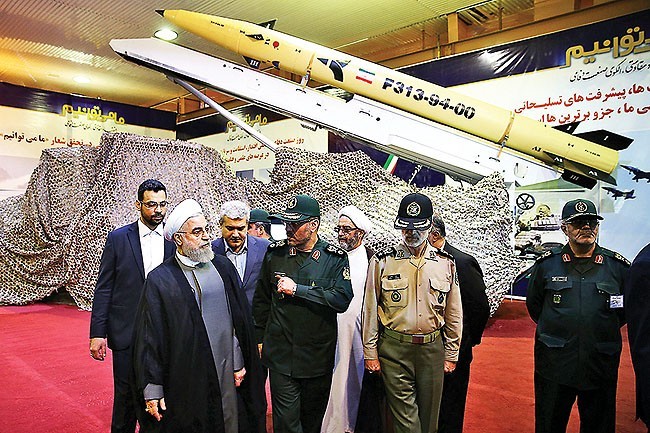
In this photo released by the official website of the office of the Iranian Presidency on Saturday, Aug. 22, 2015, Iran’s President Hassan Rouhani, left, listens to Defense Minister Hossein Dehghan after unveiling the surface-to-surface Fateh-313, or Conqueror, missile in a ceremony marking Defense Industry Day, Iran. Iran unveiled a short-range solid fuel ballistic missile Saturday, an upgraded version that the government says can more accurately pinpoint targets. (Iranian Presidency Office via AP)

The Iran regime unveiled a new short-range, solid fuel ballistic missile over the weekend that promises quicker launch capability, longer lifespan and accurate striking capability within its 310 mile range.

The United Nations Security Council Resolution 2231, which endorsed the proposed agreement with the regime on its nuclear weapons program, called on the regime not to undertake any activity related to ballistic missiles capable of delivering nuclear weapons.

It also contained an arms embargo against Iran for the next eight years, but since it is not part of the deal, the regime has said it won’t abide by with it.

“We will buy weapons from anywhere we deem necessary. We won’t wait for anybody’s permission or approval and won’t look at any resolution. And we will sell weapons to anywhere we deem necessary,” Hassan Rouhani, regime president, said in comments broadcast live on state television Saturday.

“Can we be indifferent…when there are special circumstances on our eastern, western, northern and southern borders,” Rouhani said, apparently referring to fighting in Afghanistan, Iraq and elsewhere in the region. “How can a weak country unable to stand up to the military power of neighbors, rivals and enemies achieve peace?”

Of course Rouhani neglects to mention that Iran itself is responsible for the fighting going on around it with its support of the Syrian regime, Shiite militias in Iraq and Houthi rebels in Yemen, all of which have drawn in Turkey, Saudi Arabia, Gulf states, Jordan and Egypt into a much broader series of wars all started by Iran.

But the fact that Iran unveiled this new ballistic missile and ignored the UN resolution and recently completed the sale of S-300 advance anti-aircraft missile systems from the Russians, as well as violated travel sanctions in sending Quds Force commander Ghasem Soleimani on a secret mission to Moscow to shop for more arms, gives the world a rock-solid view of what the regime’s true intentions are; which is to rearm, reload and stock up on weapons as quickly as possible.

These actions, although deeply disturbing, are not what has the Iran lobby up in arms, which is the disclosure by the Associated Press and verified by Fox News of the contents of a secret side deal between the Iran regime and the International Atomic Energy Agency which purports to allow Iran to use its own inspectors at the contested Parchin military site to collect soil samples for testing without international monitors on site.

The agreement is startling and contemptuous of all of the previous “red lines” proposed by the P5+1 group of nations that negotiated with Iran and an example of the dramatic concessions granted to the regime in an attempt to appease the mullahs. The fact that the mullahs aren’t content with these windfalls and chose to unveil a new missile during the contentious debate over the deal in Congress gives us a strong idea of just what they think of the deal.

Which is why the Iran lobby is almost apoplectic about the disclosures since it represents a damning confirmation of how bad the deal is and how the mullahs have duped the Obama administration.

Joel B. Pollak writing in Breitbart discusses how these “Parchin truthers” have concocted some pretty ridiculous claims to try and hide the obvious in these Parchin disclosures.

The “Parchin truthers” include Trita Parsi, who heads the National Iranian-American Council (NIAC), a group often described as a pro-regime lobby. Parsi retweeted an accusation that the AP text may have been “personally forged by Benjamin Netanyahu,” and added his own comment,” Pollak said.

Tyler Cullis, also of the NIAC, went so far as to tweet that use of the phrase “Islamic State of Iran” had to be evidence of Netanyahu forging the statement since he’s the only one what uses that phrase. With all due respect to Cullis’ ham-handed efforts, there are plenty of us who refer to Iran as the “Islamic state”though they are really not Islamic and

The exposure of the Parchin lies of the Iran lobby have pushed the NIAC, Ploughshares Fund, J-Street and other regime supporters to attack not only the article itself, written by AP Vienna bureau chief George Jahn, but the global news organization itself in a desperate bid to deflect attention from the crippling revelations.

Joseph Cirincione, head of Ploughshares Fund which provides substantial funding for the NIAC and other Iran lobbying groups, took to the Los Angeles Times to trot out the well-worn and discredited idea that rejecting the proposed deal would inevitably lead to war.

He argues that U.S. partners would abandon the U.S. should the deal be rejected and the sanctions in place would fall apart as well. It is clear that what Cirincione is warning about has already happened because of the deal, not because of its defeat.

The mullahs are ignoring the arms embargo, acquiring weapons. They are hosting trade delegations from European nations and buying arms from the Russians, while lining up deals to sell oil to the Chinese in spite of the promise to keep sanctions in place unless and until Iranian regime demonstrates it has abided by the terms of the agreement to dismantle its nuclear program.

All of which proves how feckless the claims being made by Parsi, Cirincione and other regime sympathizers are and why the ballistic missiles Iran unveiled are only the start of a much more dangerous period in the Middle East and the world.

By Michael Tomlinson

Filed Under: Blog Tagged With: Iran, Iran Lobby, Iran sanctions, NIAC, NIAC Action, Tritaparsi

Side Agreement with IAEA and Iran Regime Shows Deceptive Practices

August 21, 2015 by admin

Side Agreement with IAEA and Iran Regime Shows Deceptive Practices

Side Agreement with IAEA and Iran Regime Shows Deceptive Practices

Recent disclosures by the Associated Press of the secret side deal negotiated between the International Atomic Energy Agency and the Iran regime over inspection of the Parchin military complex have caused quite a stir in the debate over the proposed nuclear agreement with the regime, but what is not being discussed is the deeper meaning of the agreement which is how the regime expects to handle inspections moving forward.

Parchin is just a sneak peek into the much larger preview of how the regime acts and conducts itself in double dealing with the international community and monitoring agencies. The text of the secret deal as transcribed by the AP reveals how the Iran regime intends to maintain total control over any inspection regimen.

The most important phrase, repeated throughout the agreement, is “Iran will provide…” At no point does the agreement grant international inspectors unfettered access of their own to the facility to take photos, inspect areas or take environmental samples without it passing through regime hands.

Supporters of the mullahs in Tehran argue the inspection is a one-time only affair at a site that has been closed down for a decade, but what gets overlooked is that Parchin’s importance to the regime was not in handling radioactive material, but rather handling high explosives which are necessary in detonating a nuclear warhead. The fact that the regime has pre-determined where soil samples are to be taken and has had plenty of time to scrub the facility clean, the usefulness of any inspection is moot.

“The notion that this means it is not the IAEA but Iran who is conducting the investigation is a laughable distortion,” said Jamal Abdi of the National Iranian American Council, the regime’s chief lobbying arm.

But the importance of Parchin is not in actual inspection, but in understanding how the regime reacts to inspections in general and looks into its military program specifically. The mullahs, led by Ali Khamenei, have consistently opposed any interviews of its scientists and technicians over the military dimensions of its program by IAEA personnel. Nearly a dozen questions from the IAEA remain unanswered by the regime for over a decade.

According to the Wall Street Journal in an interview this month, Yukiya Amano, IAEA director general, acknowledged Tehran has so far refused to agree to provide access to many of the individuals believed to have been involved in the suspected testing at Parchin.

Parchin is just a small part of those questions. The fact that the regime has managed to wear down the IAEA by stonewalling it and then negotiating secret side deals it has warned the IAEA should not be revealed to the U.S. clearly show the regime’s priorities in taking advantage of the situation to basically set into stone its rights to lie to the rest of the world. It’s a blatant act of appeasement and one that has never been granted to before to any other nation subject to international monitoring such as North Korea or South Africa.

The National Council of Resistance of Iran, the leading Iranian dissident group, has long complained of the regime’s steadfast refusal to allow inspections not only of Parchin, but similar facilities at Fordow, Arak and Natanz, most of which were only revealed after being exposed by the NCRI and other resistance groups.

The fact that the IAEA capitulated in such dramatic fashion is worrisome because it underlines the strong move towards appeasing the mullahs as a way of currying favor with them in a mistaken belief that would somehow bring about regional stability.

But this new disclosure only reinforces the growing and pervasive belief that the regime simply cannot be trusted. A new CNN/ORC poll released this week showed 56% of Americans now think Congress should reject the deal; up from 52% just less than a month ago.

Even as public opinion mounts against the regime, the leaders of the Islamic state continue to operate in a fashion immune from any criticism from overseas as evidence by the new campaign to discredit Wall Street Journal reporter as being an intermediary for the Iranian opposition. Forget the fact that the claims are based on a misuse of the English language, but the treatment follows similar actions against media critics of the regime such as Washington Post reporter Jason Rezaian who languishes in an Iranian prison.

This is just par for the course for a regime openly hostile to news media, contemptuous of international authority and blatantly ignorant of basic human rights.

By Michael Tomlinson


Filed Under: Blog Tagged With: Action NiAC, Iran, Iran deal, Iran Lobby, Jamal Abdi

Why the Iran Regime is Rushing for a Nuclear Deal

August 20, 2015 by admin

Why the Iran Regime is Rushing for a Nuclear Deal

Why the Iran Regime is Rushing for a Nuclear Deal

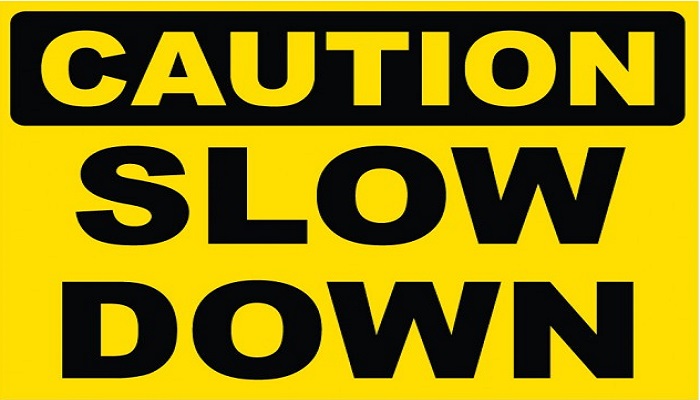
When most of us took our first driver’s training class, we were admonished with the warning “speed kills” and for most of us, it’s a saying that has served us well. In the case of the proposed nuclear deal with the Iran regime, speed is the operative word as the regime and its lobbyists push hard to get the deal approved as quickly as possible.

The need to get the deal done quickly became self-evident when it was taken to the United Nations Security Council for a vote even before the U.S. Congress and the reward for the mullahs in Tehran were quick delegations from France and the European Union to explore trade ties even though the proposed agreement ostensibly does not allow for economic sanctions to be lifted for years.

On top of which the regime is quickly completing its deal to acquire state-of-the-art anti-aircraft missile batteries from Russia and has sent its Quds Force commander to a secret mission to Moscow to discuss the acquisition of even more weapons to replenish stores depleted from supporting three proxy wars in Syria, Iraq and Yemen.

All of which goes to show the true nature of the regime as it seeks to rearm, rebuild and expand its military and dominion over its neighbors, but why is the Obama administration in such a rush to complete what is becoming more evident as a bad deal?

Jennifer Rubin, writing in the Washington Post, explains that this deal is not a take it or leave it proposition and in fact the best remaining option to go back to the mullahs and re-open negotiations for a better deal.

“Doing the deal, then, is the risky proposition — by increasing violence in the region in the short term and practically ensuring major military conflict down the road (sanctions won’t be available) with a stronger and more confident Iran,” Rubin writes.

Mark Dubowitz, head of the Foundation for Defense of Democracies, echoes the same point in Foreign Policy, writing:

“There is ample precedent to amend the deal. Congress has required amendments to more than 200 treaties before receiving Senate consent, including significant bilateral Cold War arms control agreements with the Soviets like the Threshold Test Ban Treaty and the Peaceful Nuclear Explosions Treaty, as well as multilateral agreements like the Chemical Weapons Convention negotiated with 87 participating countries, including Iran, by President Bill Clinton,” Dubowitz said.

Iran’s mullahs understand the danger posed by an amended deal or any delay in approving the deal. The mullahs need the $100 billion in unfrozen assets to jumpstart the economy they have driven into the ground and forestall the growing dissatisfaction from ordinary Iranians protesting abysmal living standards and working wages.

The regime is doing everything it can to hide anything that can negatively impact the public perception of the deal, even if it means threatening the head of the nuclear agency responsible for inspecting Iran’s facilities.

As reported in the Washington Free Beacon, “Yukiya Amano, IAEA director general, purportedly remained silent about the nature of certain side deals during briefings with top U.S. officials because he feared such disclosures would lead to retaliation by Iran, according to the spokesman for Iran’s Atomic Energy Organization (AEOI).”

“In a letter to Yukiya Amano, we underlined that if the secrets of the agreement (roadmap between Iranian regime and the IAEA) are revealed, we will lose our trust in the Agency; and despite the US Congress’s pressures, he didn’t give any information to them,” said regime’s AEOI spokesman Behrouz Kamalvandi during a meeting with Iranian regime’s lawmakers, according to Tehran’s state-controlled Fars News Agency.

“Had he done so, he himself would have been harmed,” Kamalvandi added.

The blatant nature of the threat only reinforces the perception that the regime simply cannot be trusted, a point reinforced by Sen. Bob Menendez (D-NJ) who joined Sen. Chuck Schumer (D-NY) in announcing his opposition to the proposed agreement. Writing in the New York Post, Menendez reinforces the idea that we need to slow down.

“I believe we could still get a better deal and here’s how: We can disapprove this agreement, without rejecting the entire agreement,” Menendez said.

“We should direct the administration to re-negotiate by authorizing the continuation of negotiations and the Joint Plan of Action — including Iran’s $700 million-a-month lifeline, which to date have accrued to Iran’s benefit to the tune of $10 billion, and pausing further reductions of purchases of Iranian oil and other sanctions pursuant to the original JPOA,” he added.

He then goes on to lay out six conditions the regime must meet in order for a new deal to be acceptable; conditions the Obama administration previously declared as “red lines” in the negotiation sand, but then subsequently abandoned after being outmaneuvered by the regime.

The regime is hoping that speed does kill and in this case, kills any hopes of slowing down the regime’s plans for domination and expansion.

By Laura Carnahan

Filed Under: Blog Tagged With: Chuck Schumer, Iran, Iran deal, Menendez

The Downside of Trusting the Iran Regime

August 18, 2015 by admin

The Downside of Trusting the Iran Regime

The Downside of Trusting the Iran Regime

One of the consequences of doing a deal with the Iran regime is that you have to actually live with the consequences of that decision; something the U.S. is only beginning to figure out in unpleasant detail.

The New York Times recounted an incident in which a helicopter from the U.S. aircraft carrier Theodore Roosevelt encountered an Iranian Navy frigate in the Gulf of Aden that aimed its weapons and tracked the Americans in a game of high seas chicken. The incident is similar to others in which Iranian military units have acted aggressively at U.S. forces, which is curious considering all of this comes during the sensitive debate over the recently proposed Iran nuclear agreement.

Why would the mullahs in Tehran continue to act in such a provocative manner at such a crucial time? To coin a phrase: Because a leopard can’t change its spots and the regime can’t change what it is.

The fact that the Obama administration is moving American carrier battle groups around the Persian Gulf and Gulf of Aden like so many chess pieces is a clear demonstration of the need to reassure regional allies such as Saudi Arabia, Kuwait, United Arab Emirates and others suddenly nervous about an aggressive and militaristic Iran. Even as the administration tries to project reassurance about the deal forging a new path of peace with the Iran regime, the region is witnessing a rapid build of U.S. military forces in response to the same regime.

The irony would be funny if it wasn’t so deadly serious.

But the fight over the nuclear deal has cast a harsh spotlight on the regime’s tactics and political lobbying network here in the U.S. The New York Times described some of the intense lobbying going on right now and illustrated how the Ploughshares Fund has been a key player for supporters of the deal; serving as a central financier and hub for cash (upwards of $11 million so far) and support out to the broad array of groups favoring the deal, including substantial donations made to the National Iranian American Council, the regime’s chief lobby.

All that support for the regime though cannot hide those leopard spots as the regime’s top mullah Ali Khamenei announced on Monday in another one of his patented rants that the regime would continue to oppose U.S. policies and reiterated Iran’s right to still refuse the nuclear deal.

“The Americans want to gain influence in the region and reach their goals. We will not let them,” said Khamenei, who has previously said US regional policies are “180 degrees” opposed to those of the Islamic state.

The one thing Khamenei fears is the potential for the nuclear deal to open up not only the floodgates of foreign investment, but also the kind of market liberalization that American companies typically force as evidenced in places such as China and Russia, only to see those governments crack down to halt the spread of democratic principles. In many ways, such a scenario could threaten the regime itself in Iran.

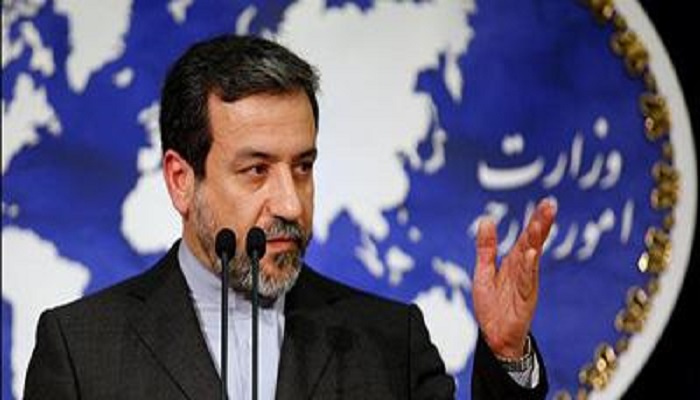
Not only was Khamenei doubling down on Iranian recalcitrance, but Sayyed Abbas Araqchi, the regime’s deputy foreign minister and one of the top negotiators in talks that led to the recently inked nuclear deal, told the country’s state-controlled press that Iran’s intelligence apparatus must approve of any inspector who is issued a visa to enter Iran.

This new wrinkle shows the regime’s efforts to backtrack on the agreement and preserve its ability to maintain its nuclear program in secret.

“Then we learned that no Americans are allowed on the inspection teams and that Iran will do its own soil sampling,” said Michael Rubin, a former Pentagon advisor and expert on rogue regimes. “Now the Iranians claim that all IAEA inspectors have to be vetted by Iranian intelligence? It really can’t get any worse than this.”

But Rubin may be wrong as outlined in a piece running in the Weekly Standard by Emanuelle Ottolenghi and Saeed Ghasseminejad from the Foundation for Defense of Democracies who detailed how even seemingly harmless investments made in the Iranian economy will be directly benefitting the Revolutionary Guards Corps and the regime’s military.

They write that the Obama administration is adamant that the IRGC “hates the deal,” because it supposedly opens up market previously cornered by the Guards to competition. The truth is rather different: the deal delists many companies that aided the IRGC in its proliferation efforts, its support for terrorism, and its involvement in the Syrian civil war. Though the deal keeps in place U.S. sanctions against the IRGC, it removes sectoral bans against areas of Iran’s economy that the IRGC dominates. The Guards, as Iran’s economic “gatekeeper,” will have ultimate say on how the country’s post-deal windfall will be spent.

In a final display of deception by the regime, Roy Gutman writing for McClatchy News Services explains how the regime continues to blame the U.S. for the rise of ISIS when Iran’s own policies in propping up Bashar Assad’s regime in Syria and strategic blunders in backing Nouri al-Maliki in Iraq led to the birth and rapid growth of ISIS.

The evidence is overwhelming that the price of trusting the mullahs in Tehran may eventually too high of a price for anyone to pay.

By Michael Tomlinson

Filed Under: Blog Tagged With: Araghchi, Iran, Iran deal, IranLobby

The Use of False Dissidents by Iran Lobby

August 17, 2015 by admin

Throughout history the use of deception has been an integral part of statecraft. Governments have used double agents, false document releases, propaganda and all sorts of other tricks to deceive enemies or even their own people. Names such as Kim Philby, Eddie Chapman, Ashraf Marwan and even Mata Hari have claimed a special place in history for their duplicitous roles during wartime.

But in the social media age, knowing what is and isn’t true can prove difficult to near impossible with the flood of blogs, columnists and self-styled journalists posting, tweeting, sharing, pinning and linking. Edward Snowden showed us a peek under the tent with what was possible in terms of monitoring electronic communications. The Iran regime has refined the art with its own version of China’s great cyber wall which shuts out the outside world from the Iranian people and allows the mullahs to monitor virtually all the electronic activity happening there.

Control of all communications also has a certain side effect as well, it gives rise to the one of the current tactics used by the regime in trying to project a more moderate image to the outside world. You see, if the Iran regime controls all forms of outbound and inbound communications, how can anyone really trust what is being said or more precisely what the mullahs are allowing to be said.

One of the regime’s favored tactics is to project the image of a divided Islamic state; a struggle between moderates and hardliners, especially as it relates to the current debate over approval of the proposed nuclear agreement. The regime’s official news agency, IRNA, and other news media churn out a steady stream of stories about “hardliners” within the regime clamoring to the kill the deal and how “moderates” such as Hassan Rouhani are struggling mightily for peace.

It all has the tinge of some bad B-movie thriller from the 1950s with a cartoonish lampooning of favored tropes, no different than Cold War-era imagery of spies going to battle between the West and Soviet Bloc.

But these “protests” are largely staged for the benefit of Western media consumption in order to help the regime’s lobbyists here in the U.S. such as the National Iranian American Council in its efforts to bolster the image, such as one reported this weekend involving 50 “hardline “students.”

These same efforts to dissemble include public statements of endorsement being made by so-called “dissident” Iranians who are in fact still connected to the regime, not unlike the double agents of past campaigns. A recent open letter in Huffington Post was signed by former members of the Islamic Parliament who claimed to support the nuclear agreement, but scrutiny of the signers would reveal for each a past not spent on changing Iran’s policies, as much as securing a political future for their return to power.

In a historical context, many of these same ex-regime officials willingly took part in brutal repressive acts of their own until they fell out of favor for various and assorted reasons be it voting for laws oppressing the Iranian people or giving their support for the mullahs’ policies. The definition of their actions would be more commonly known as “appeasers” which carries historical connotations itself with visions of Neville Chamberlain clutching a piece of paper with Adolf Hitler’s signature on it proclaiming “peace in our time.”

But there is a certain delicious irony with all of the huffing and puffing of the regime and its loyal allies such as the NIAC and that is the almost insignificant impact it’s having on the Iranian American community itself.

The NIAC has led the public charge to mobilize Iranian Americans to support the deal, calling on mass protests and rallies and participation at congressional town hall meetings during the summer recess. Instead their appeals have fallen on largely deaf ears.

Protests held in favor of the deal have resulted in crowds just as small as the staged regime protests in Tehran with Los Angeles – home to over 800,000 Iranian Americans – protests yielding a paltry 200 participants, most not even of Iranian descent. Weekend rallies in Washington, DC and San Diego were even smaller, barely cracking 100 people.

In contrast, over 10,000 rallied in New York’s Times Square against the deal and another 1,000 gathered in Los Angeles, most of them Iranian Americans demonstrating not only their opposition to the regime, but also for the various resistance movements around the world.

The efforts by NIAC Action, the direct lobbying arm of NIAC, had even worse results with no-shows in at least one California district and another one in New York being outnumbered by opponents to the deal.

All of which raises an interesting question: Knowing how weak the regime and its lobby are, just why is anyone even listening to them?

By Michael Tomlinson

The Use of False Dissidents by Iran Lobby

The Use of False Dissidents by Iran Lobby

Filed Under: Blog Tagged With: Iran, Iran deal, Iran Lobby, Iranian- American, NIAC, NIAC Action

The Iran Lobby’s Guide to Distorting the Truth

August 14, 2015 by admin

The Iran Lobby’s Guide to Distorting the Truth

The Iran Lobby’s Guide to Distorting the Truth

The Iran regime’s leading lobby, the National Iranian American Council, launched an official lobbying arm in the form of NIAC Action since it was coming under greater scrutiny for engaging in lobbying activities in violation of federal law. Also, Trita Parsi, the head of the NIAC, recently lost a defamation lawsuit he brought against an Iranian American journalist who wrote on the same topic.

NIAC Action was launched ostensibly to help advocate for Iranian American issues, but anyone looking at its site will quickly realize its sole purpose for existence is to push for the proposed nuclear deal and enable the mullahs in Tehran to get their hands on $100 billion in frozen assets and relief from economic sanctions that had threatened their hold over the Iranian people.

Interestingly enough, NIAC Action provides its followers a tool kit to help them at local town hall meetings being held by members of Congress over the summer recess who will hear from their constituents about their feelings on the nuclear deal. The tool kit is classic tactical programming to help feed and stoke the narrative the Iran lobby has been pushing from day one; namely that the deal is a choice between war and peace.

NIAC Action has taken that absurd one step further by trying to align a vote on the nuclear deal to the vote on going to war in Iraq. One of their talking points to supporters reads:

“The President has said that Congress’ vote on the Iran deal is the most important foreign policy vote lawmakers will take since the vote to authorize the war with Iraq. Many lawmakers have come to regret that they did not stand up to vote against the war with Iraq. Will you stand up and vote in support of the nuclear deal to prevent a war with Iran?”

The message point is an excellent example of the desperation regime supporters must feel and their willingness to troll the depths of fear mongering to get their point across. In many ways, the NIAC Action talking points are revealing for what they don’t say.

They make no mention of the need to carefully watch the behavior of Iran’s mullahs going forward. They make no mention of the need to reassure Americans that the mullahs can be trusted. They make no mention of how the mullahs will use the $100 billion windfall they are about to receive. They make no mention of the mullahs’ commitment to improve human rights and release Iranian American hostages being held in Iranian prisons.

Why? Simply put, they know it would be lying.

So absent the ability to tell the truth in order to reassure highly skeptical Americans as evidenced by a string of recent public opinion polls, NIAC Action has chosen to double down on fear tactics in an effort to cow the American people. It’s a tactic being shared in recent comments by Secretary of State John Kerry who warned that the value of America’s currency would take a hit on the global market should the deal fail to pass.

He warned of the potential for “the American dollar to cease to be the reserve currency of the world, which is already bubbling out there.”

If we give them another week, I’m sure the administration and Trita Parsi will also tell us global warming will increase and polar bears will become extinct if the nuclear deal is not approved.

The histrionics coming from NIAC Action are the strongest indication yet of how weak its position is and how blatant a tool for the mullahs it has become.

Rest assured the inventive and fanciful minds at the NIAC will probably include the eventual downfall of Western civilization as a result of a failed nuclear deal next.

By Michael Tomlinson

Filed Under: Blog, National Iranian-American Council Tagged With: Iran deal, NIAC, NIAC Action, Trita Parsi

Myths from Iran Lobby about Support for Nuclear Deal

August 13, 2015 by admin

Myths from Iran Lobby about Support for Nuclear Deal

Myths from Iran Lobby about Support for Nuclear Deal

According to Trita Parsi, the head of the National Iranian American Council and chief cheerleader and lobbyist for the Iran regime, in an editorial on Huffington Post proposed that an overwhelming majority of Iranian Americans support the proposed nuclear agreement with the mullahs in Tehran.

Is there a scientific, statistically valid poll he cites as evidence? No. Is there some comprehensive survey or focus group sampling he discusses? No. Does he quote any academic, independent think tank, researcher or university for his assertion? No. Does he name any study, poll, survey or report supporting his claim? No.

All we have to go with is Parsi’s words and imagination, but that is not unusual and par for the course for this man who claims the mantle of Iranian American leadership, but does nothing by shill for the Iranian government.

Parsi has made no efforts to bridge the divides within the Iranian American community, routinely denouncing opponents and dissidents to the regime and praising the mullahs even when they commit gross violations of human rights perpetrated against Iranian Americans such as Saeed Abedini, Jason Rezaian and Amir Hekmati who all languish in Iranian prisons.

Parsi’s extensive social media postings on Twitter for example hardly mention the plight of these Iranian American men and he has never directed a single tweet at official Twitter accounts for high-ranking regime officials such as Hassan Rouhani or Ali Khamenei asking for mercy on behalf of these men unjustly imprisoned and tortured.

But that is the heart of Parsi’s lobbying tactics; to claim leadership and yet do nothing on behalf of the very people you claim to represent. Oddly enough, NIAC has spent almost all of its public pronouncements on issues directly related to the Iran regime and its citizens (to the extent it benefits the government’s policies) and nothing to the plight of Iranian Americans.

For example, Parsi has lobbied on behalf of Iranian students studying here from Iran who are subject to greater scrutiny when they study fields related to nuclear weapons development, but does not address broad social topics afflicting and dividing the Iranian American community such as addressing the generational gap in ex-pats who fled Iran during the Islamic revolution and younger Iranian Americans struggling to come to terms with the bloody legacy of their nation’s heritage.

Heck, he might help the cause of Iranian Americans and their image by even devoting himself to trying to correct stereotypes arising from the “Shahs of Sunset” reality show, but then again that doesn’t help further the cause of the mullahs does it?

It’s also unfortunate that Parsi in his editorial has to fall back on using the old “silent majority” phrase to justify his position. He probably forgot that the term originated with President Richard Nixon who coined the phrase in a televised address to talk about those Americans who did not join mass protests against the Vietnam War in 1969. An oversight, but all-too appropriate one for a guy who seems to have a penchant for dissembling the truth to suit his political needs.

Who knew Parsi was such as Nixon fan?

But more importantly, the central premise of Parsi’s piece – that popular support for the nuclear deal is growing – has been thoroughly blown out of the water with the release of several national and reputable polls which show steep and increasing declines in support for the deal, trust in the Iran regime to comply with the deal, lack of belief the U.S. got what it wanted, strong belief the U.S. gave away too much to the mullahs, and strong sentiment Iran is going to cheat anyway.

Those polls have come from places such as the Pew Research Center, Monmouth University, Quinnipiac University, WSJ, NBC, CNN, Washington Post etc.

As much as Parsi would have everyone believe him on his word, he has yet to offer up any proof of his assertions.

By Michael Tomlinson

Filed Under: Blog Tagged With: Iran deal, NIAC, NIAC Action, Trita Parsi

Supporting the Iran Deal Enables the Iran Regime

August 11, 2015 by admin

Supporting the Iran Deal Enables the Iran Regime

Supporting the Iran Deal Enables the Iran Regime

Cause and effect. It’s a simple concept, but one that affects nearly everything in our lives. You text while driving, you get into an accident. You don’t pay your taxes, you get into trouble with the IRS. You give $100 billion in cash to a regime that sponsors terrorism, you will get more terrorism. Cause and effect.

The proposed Iran nuclear deal is a living embodiment of that concept since approval of the deal will inevitably lead to a significant increase in the already bad behavior the regime already engages in. If a criminal gets away with his crimes and the police reward him with a limitless credit card, it stands to reason the criminal is not likely to change his ways. Its basic human psychology and Iran’s mullahs are no different in behaving the same way.

Since the deal was announced, the behavior of Iran’s leaders has lived up to all of our worst expectations.

Iran continues to hold Americans hostage and has made no efforts to free them or loosen the policies that imprison thousands of political dissidents, religious and ethnic minorities and scores of others languishing in Iran’s prisons.

Iran’s leaders, including its top leader Ali Khamenei, continue a relentless and even more hate-filled diatribe against the West, the U.S. in particular and regularly denounce the very deal they signed.

Iran still funds and supports its proxies engaged in brutal sectarian wars in Syria, Iraq and Yemen, going so far as to recruit Afghan mercenaries to fight in Syria.

Iranian mullahs hosts trade delegations from Europe and Russia in anticipation of opening up the floodgates to foreign investment once the deal is approved and has already sent its notorious head of its Quds Forces on an illegal trip to Russia to begin a shopping spree of new military hardware which already began with the shipment of a previously embargoed advanced anti-aircraft missile system.

It’s Iranian regime’s behavior that has more and more Americans worried that mullahs got more than they even hoped for in negotiations and is ready to reap the benefits without any changes to its behavior. A new Monmouth University poll showed a deepening concern by Americans about the deal and misgivings over the agreement’s ability to curb any of the regime’s abhorrent behavior.

Oddly President Obama continues to discount the public statements and diatribes of Khamenei and other Iranian leaders and refuses to give them any credence, even though the public statements of any foreign leader are usually taken at face value and in this case, more Congressional representatives are taking statements seriously.

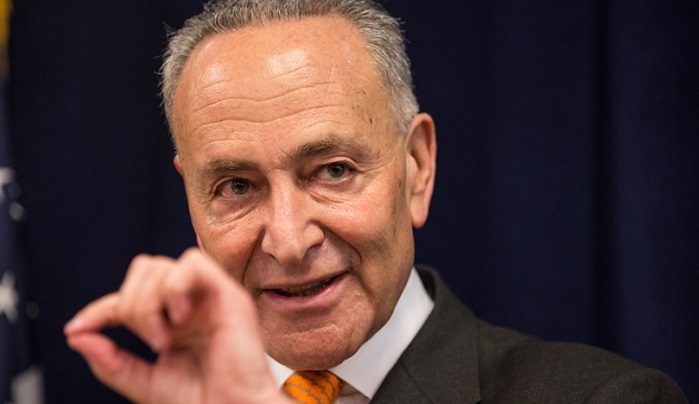
Sen. Chuck Schumer (D-NY), the third-ranking Democrat in the Senate and in line to be the new Senate Minority Leader, publicly broke with the president in opposing the deal after weighing all the arguments carefully, saying “I believe we should go back and try to get a better deal. The nations of the world should join us in that.”

Schumer is correct that the U.S. can do better; certainly at the very least in getting a deal that correctly links the regime’s conduct in areas such as human rights and support for terror as conditions for getting any kind of economic relief. Quid pro quos are an integral part of international diplomacy and the U.S. ought to demand something, anything from the mullahs in return for the windfall they so hungrily desire.

But without any linkage, the mullahs in Tehran are simply enabled and emboldened to act as they always have – with impunity.

But American veterans of the Iraq war have announced their intention to join the campaign against the deal and remind Americans that thousands of Americans were killed and wounded directly at the hands of Iranian regime agents, Quds Force and Revolutionary Guard members who equipped, trained and led Iraqi militias in attacking Americans and now involved in a sectarian war against Sunnis in Iraq.

The first of the group’s videos features retired staff sergeant Robert Bartlett, who was badly injured by one of those bombs while serving in Iraq in 2005. “Every politician who is involved in this will be held accountable, they will have blood on their hands,” he says in the ad. “A vote for this deal means more money for Iranian terrorism. What do you think they are going to do when they get more money?”

Therein lays the central question we face. How does the behavior of Iran’s mullahs make anyone believe things will be different once the agreement is in place; especially when it has more holes in it than Swiss cheese?

But profiting from death is not a new trick for the mullahs. Iran’s Environment Protection Agency issues about 500 licenses to foreign visitors to hunt rare and protected animal breeds, including the Transcaspian Urial, a rare breed of sheep that is only legally available to hunt in Iran.

If people get upset over Cecil the Lion meeting his demise at the hands of a hunter looking for a trophy, maybe animal rights activists should add Iran as well and try to save Sally the Sheep.

By Michael Tomlinson

Filed Under: Blog Tagged With: Iran deal, Iran nuclear deal, Sen. Chuck Schumer

  • « Previous Page
  • 1
  • …
  • 48
  • 49
  • 50
  • 51
  • 52
  • …
  • 64
  • Next Page »

National Iranian-American Council (NIAC)

  • Bogus Memberships
  • Survey
  • Lobbying
  • Iranians for International Cooperation
  • Defamation Lawsuit
  • People’s Mojahedin
  • Trita Parsi Biography
  • Parsi/Namazi Lobbying Plan
  • Parsi Links to Namazi & Iranian Regime
  • Namazi, NIAC Ringleader
  • Collaborating with Iran’s Ambassador

Recent Posts

  • NIAC Trying to Gain Influence On U.S. Congress
  • While Iran Lobby Plays Blame Game Iran Goes Nuclear
  • Iran Lobby Jumps on Detention of Iranian Newscaster
  • Bad News for Iran Swamps Iran Lobby
  • Iran Starts Off Year by Banning Instagram

© Copyright 2026 IranLobby.net · All Rights Reserved.