Iran Lobby

Exposing the Activities of the lobbies and appeasers of the Mullah's Dictatorship ruling Iran

  • Home
  • About
  • Current Trend
  • National Iranian-American Council(NIAC)
    • Bogus Memberships
    • Survey
    • Lobbying
    • Iranians for International Cooperation
    • Defamation Lawsuit
    • People’s Mojahedin
    • Trita Parsi Biography
    • Parsi/Namazi Lobbying Plan
    • Parsi Links to Namazi& Iranian Regime
    • Namazi, NIAC Ringleader
    • Collaborating with Iran’s Ambassador
  • The Appeasers
    • Gary Sick
    • Flynt Leverett & Hillary Mann Leverett
    • Baroness Nicholson
  • Blog
  • Links
  • Media Reports

Important Day for Voice of Opposition to Iran Regime

April 30, 2015 by admin

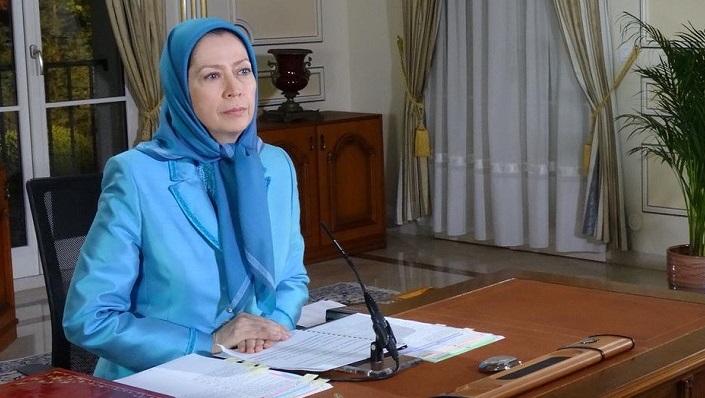
Maryam Rajavi, leader of the Iranian opposition, testifying before the US Congress via video conference

Maryam Rajavi, leader of the Iranian opposition, testifying before the US Congress via video conference

The House Foreign Affairs Committee’s Subcommittee on Terrorism, Nonproliferation and Trade held a hearing on Capitol Hill on the rise and threat posed by ISIS. That in and of itself is not earthshattering news since elected officials have debated heatedly how to address the growing pandemic that is extremist Islamic groups such as ISIS, Boko Haram and the Houthis.

hat was significant was the witness list of speakers because on it was Mrs. Maryam Rajavi, the president-elect of the National Council of Resistance of Iran, a leading Iranian dissident group, who made an appearance via videoconference. It was an important appearance because it represented a key opportunity for the strongest voice of the largest grassroots dissident group to the regime to address Congress on the links between ISIS and Iran.

As Rep. Brad Sherman (D-CA) noted in his comments, the NCRI has proven instrumental in the past in revealing secrets the Iran regime has sought to keep hidden from the outside world such as the secret Natanz nuclear research facility.

Mrs. Rajavi was given the opportunity by the subcommittee because NCRI members have been on the ground in Iran and Iraq having vast knowledge of the situation as the main opposition to the regime in Iran and given the role of the Iranian regime in all crisis in the region. Because there are literally hundreds of thousands of people displaced or brutalized by ISIS and militia forces controlled and directed by Iran’s mullahs, the NCRI has shown itself to be very knowledgeable regarding the regime’s activities in the region.

In her comments to the subcommittee, Mrs. Rajavi explained the origins of ISIS, such as the funding and training of ISIS leader Abu Bakr al-Baghdadi in Iran, including even a doctorate degree in Islamic jurisprudence from Baghdad Islamic University, along with Iranian support for other key ISIS founders who arose out of the war fought against U.S. and coalition forces during the invasion of Iraq and the sectarian civil war in Syria that Iran was backing.

Mrs. Rajavi dubbed the Iran regime as the “godfather” of the Islamic State militant group and noted that “the ultimate solution to this problem is regime change.”

She went on to explain the core issue linking the Iran regime and the Islamic State was the perpetuation of violent and extremist Islamic teachings which provided a template of terror, brutality and abuse for terror groups to follow.

And in a clear warning to Representatives in attendance, she urged caution in approving any nuclear deal that rewarded Iran with economic relief without concrete proof of dismantling of its nuclear program.

“None of the sanctions should be lifted before an agreement has been signed that effectively and definitively denies the mullahs the bomb,” Mrs. Rajavi said. “Otherwise, the regime will spend billions of unfrozen assets to buy weapons, including advanced missiles from Russia.”

Rep. Sheila Jackson Lee (D-TX) praised Ms. Rajavi’s appearance as well and called the session “a historic hearing,” notable for bringing Iran’s opposition into official discourse.

That, more than anything else, was what the Iran regime’s lobbying and PR machine feared the most. The idea that a moderate, Muslim woman, leading a group of dissidents to Iran’s mullahs, would actually be able to speak before the greatest legislative body in the world and tell simply and matter-of-factly of the horrors and abuses being visited on thousands of her fellow Iranian citizens.

It is even more laughable when you hear of some of the complaints voiced by these regime apologists who apply one standard to the NCRI in denouncing it, yet in another breath argue for open and honest dialogue and trust with the Iran regime that has a three decade history of kidnapping, targeting, attacking and killing thousands of American military and civilian personnel in places such as Lebanon, Afghanistan, Syria, Iraq and elsewhere.

The fact that Mrs. Rajavi was able to speak represents a small, but historic step in allowing the voices of those most oppressed to finally have a voice and a forum.

By Laura Carnahan
Filed Under: Blog, News Tagged With: Brad Sherman, Congress, house foreign affairs committee, House foreign affairs hearing, Iran, Iran Lobby, Maryam Rajavi, Sheila Jackson Lee, Ted Poe

Iran Lobby Attempts to Silence the Truth

April 28, 2015 by admin

ISIS and IranOn Wednesday, the House Foreign Affairs Committee’s Subcommittee on Terrorism, Nonproliferation and Trade will hold a hearing on the rising threat of ISIS and the need to define the enemy which has caused such havoc and terror across large swathes of the Middle East and Africa.

There will be two panels, the first with Robert Ford, a senior fellow at the Middle East Institute and former U.S. ambassador to Syria, and Walid Phares, co-secretary general of the Transatlantic Parliamentary Group on Counterterrorism. The second panel will feature Mrs. Maryam Rajavi, president-elect of the National Council of Resistance of Iran, one of the largest Iranian dissident groups in the world.

But in true fashion, the Iran regime PR machine is ramping up to denounce Mrs. Rajavi’s appearance before she utters a single word, beginning with the typical nasty comments on websites controlled by Iranian state media and blogs controlled by contractors and PR flaks.

The most interesting question not being asked is why? Why are Iran regime loyalists having apoplectic convulsions over Mrs. Rajavi’s appearance, but utter nary a word about the other panelists? Could it be they fear what she will say? Could it be they worry the truth will be revealed about the connections between ISIS and Iran?

There are two powerful trends at play in the world concerning ISIS and the spreading influence of the Iran regime.

ISIS was born out of the chaos of the Syrian civil war which began when Iran’s top mullah, Ali Khamenei, decided to intervene and save the regime of Bashar al-Assad who was on the brink of being ousted after using chemical weapons on his own people. The Iranian intervention of arms, cash and fighters, alongside US and other allies in action helped turn the tide and allowed extremist groups within the Syrian opposition to rise as Iranian Quds Force fighters concentrated on the moderate, Syrian rebels.

At the same time, Iran’s intervention in the government of Iraqi Prime Minister Nouri al-Maliki led to a schism ruling coalition when Sunnis were effectively tossed out at the urging of Khamenei’s government. The split provided ISIS with much needed manpower as it spread into Iraq drove deep into the south, but this provided Iran with the perfect excuse to step up its backing of Shiite militias it controlled and move military units into Iraq on the pretext of fighting ISIS, but in reality gaining control over Iraq’s military and security apparatus.

Meanwhile, Iran’s mullahs stepped up their spread of their own peculiar brand of extremist Islam which had long validated the use of terror tactics and brutality to advance its own agenda. Hezbollah offered today’s terror groups such as ISIS and Boko Haram with the template by which they added their own technological flair with social media.

All of this is what Mrs. Rajavi is uniquely positioned to discuss as a moderate voice in the Muslim world that also has information available to her because of the NCRI’s presence on the ground in Iran through dissidents who work for regime change at great personal risk.

It is precisely because she can shed light on the relationship between Iran’s religious extremism and the fueling of the ISIS threat that Mrs. Rajavi has been called upon to testify before Congress and why the Iran lobby is working hard in attempt to belittle these truths before they are ever uttered.

As Daniel Greenfield wrote in FrontPage Magazine: “When Western governments embrace the ‘lesser evil’ doctrine, they ally with terrorists who are not fundamentally any different than the terrorists they are fighting. When ISIS broke through into the media, multiple stories emphasized that it was more extreme than Al Qaeda (despite having once identified as Al Qaeda.) But is a terrorist group that flies planes full of civilians into buildings full of civilians more moderate than a sister group that chops off heads on television? Is ISIS’s sex slavery more extreme than Iranian mullah’s practice of raping girls sentenced to death so that they don’t die as virgins?”

“The distinction between one evil and another is insignificant compared to their overall evil. The search for the lesser evil is really a search for ways to exonerate evil,” Greenfield adds.

And so if the need for Mrs. Rajavi’s testimony as a reminder that while ISIS atrocities garner the higher shock value, the real underlying truth is that the group’s ideology is powered by the same hate-machine working overtime in Tehran.

By Michael Tomlinson

Filed Under: Blog, News Tagged With: Iran Lobby

The Weakening Arguments of the Iran Lobby

April 27, 2015 by admin

A new Fox News poll showed a new record low of the administration’s handling of the Iran regime. By a 51-34 percent margin, American voters think President Obama is “being too soft” rather than “striking the right balance” in nuclear talks with Iran. The sizable 17-point margin reflects negative opinion among Democrats, Republicans and independents, with a paltry two percent thinking the administration was “being too tough” on Iran. Untitled-1

The poll also reflected growing opinion among Americans that any deal made with the regime would not work with half believing negotiating itself was the wrong thing to do since Iran’s mullahs could not be trusted to honor any agreement.

Overall, 65 percent of voters think the Iran regime poses a real national security threat to the U.S., representing a slight increase from the 62 percent who felt that way in 2006; a remarkable statistic after nearly a decade of effort by the regime’s allies and lobbyists who have worked tirelessly in an attempt to change the regime’s image with American voters.

The poll also indicated strong support for congressional approval of any deal with a whopping 76 percent supporting it; a troubling sign for the efforts by regime allies such as the National Iranian American Council who have launched several grassroots efforts to bypass Congress and failing at each point. The effectiveness of the NIAC efforts is akin to a weakling trying to lift weights and failing.

But even once staunch allies of the administration’s policies have voiced real concerns over the future direction Iran’s leaders might take should a nuclear agreement come to fruition. Writing in MSNBC, Suzanne Maloney, a senior fellow at the Saban Center for Middle East Policy at the Brookings Institution, said “a nuclear deal won’t alter the fundamental drivers of Iran’s efforts to extend its influence across the Middle East and it won’t sever Tehran’s relationships with the violent, often destabilizing proxy groups it supports and directs in Yemen, Iraq, Syria and beyond.”

“Nor, for that matter, would a nuclear deal have much immediate positive effect on the Iranian government’s treatment of its own people or its handling of judicial cases against Iranian-Americans, several of whom are currently held in Iranian prisons on trumped up charges,” Maloney adds.

Maloney correctly recognizes that the regime’s aims are not resource-driven, but ideological in nature, and the prize of lifting economic sanctions could flood Iran with over $100 billion in frozen assets in a windfall energizing the regime’s proxy wars and efforts to spread its influence far abroad. This deluge of cash is precisely what the mullahs are aiming for and what troubles American voters and allies who recognize what that kind of money could do for Iran’s leaders.

The argument posed by Iran’s lobbying machine that the assets would help ordinary Iranians is so much balderdash as Maloney notes “in fact, (Iran’s) most destabilizing policies have persisted and even worsened during times of economic pressure.” Ironically while the economy is at the verge of bankruptcy, Rouhani’s government has dedicated a bigger budget to the security forces this year in comparison to his “hardliner” predecessor that clearly washes away the illusion of moderation within mullah’s government

All of this serves as backdrop to Secretary of State John Kerry beginning another round of talks by meeting with Iranian foreign minister Javad Zarif in New York on Monday on the sidelines of the 2015 nuclear Non-Proliferation Treaty Conference with pressure mounting on the administration to hold firm for a deal that can pass congressional muster.

The point of maximum leverage for the P5+1 group of nations appears to be now with Iran’s leadership straining to keep its commitments in four major proxy wars going on at the same time in Lebanon, Iraq, Syria and Yemen straining its economy and budget to the breaking point.

With the backing of the American people, the U.S. should hold out only for a deal that does not reward Iran’s mullahs, but instead reins them in.

By Michael Tomlinson

Filed Under: Blog, National Iranian-American Council Tagged With: Appeasement policy, Iran, Iran Talks, Suzanne Maloney

The Delusional Trita Parsi

April 23, 2015 by admin

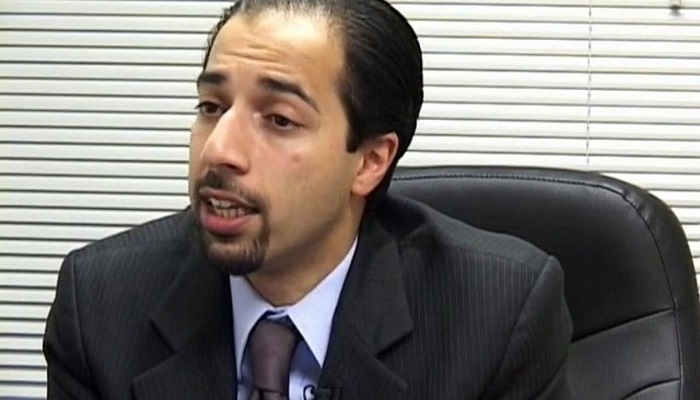
Delusional Trita ParsiTrita Parsi, head of the National Iranian American Council and apologist-in-chief for the Iran regime, published an opinion piece that may very well be regarded as one of the most delusional pieces of editorial copy written since British Prime Minister Neville Chamberlain brought back the Munich Agreement after meeting with Adolf Hitler in 1938.

The Munich Agreement permitted Nazi Germany to effectively annex large portions of then Czechoslovakia and is widely regarded as the most significant example of failed appeasement in modern times. Paris’ editorial rivals that infamous document because he seeks to rationalize the regime’s actions and portrays a post-nuclear Iran as living in peace and harmony with its neighbors.

The most glaring failed piece of logic he attempts to push is the idea that regime top mullah Ali Khamenei is ideologically flexible and committed to the idea of not wanting conflict with the West.

Let’s think about that statement for a minute. Parsi says Khamenei does not want conflict with the West?

The same Khamenei that has led annual “Death to America” chants on national television? The same Khamenei who authorized the incursion of Iranian military forces into Syria, Iraq and Yemen? The same Khamenei who supported the use of Revolutionary Guard troops and Quds Force operatives to target and kill American and coalition personnel during the Iraq war?

Obviously Parsi also believes in the Tooth Fairy, Bigfoot and aliens. It is amusing though when Parsi characterizes Khamenei as offering “heroic flexibility,” especially when considering less than 24 hours after the framework deal was announced in Geneva, Khamenei went on TV to denounce its terms and accuse the U.S. of lying. Sounds pretty flexible to me.

Parsi then charts a torturous path of logic from revolutionary Iran to 9/11 terror attacks trying to portray the regime as a helpful and willing ally to the U.S. He again conveniently leaves out facts such as Iran’s funding of terror groups such as Hezbollah involved in kidnapping and bombing attacks of Americans, including the infamous Marine barracks attack in Beirut.

Parsi also leaves out that Tehran’s race to the bomb really didn’t take off until the beginning of the rapprochement offered by the Obama administration and the subsequent quadrupling of centrifuges for enriching uranium, maybe in a heretofore secret bunker at Fordo that was not known to Western intelligence agencies until disclosed by the National Council of Resistance of Iran, the leading dissident groups to the regime.

Even more incredible is Parsi’s framing of this period as a “truce” between the U.S. and Iran post-framework announcement, serving as a calm period for the careful finalization of a nuclear accord. What makes this statement frankly insipid are recent events in Yemen where Iran’s overthrow of the government there has led to a proxy war with Saudi Arabia and other Arab nations in an unheard of before Arab coalition and the movement of massive U.S. naval assets, including the nuclear aircraft carrier Theodore Roosevelt, into the Gulf of Aden to interdict Iranian vessels carrying suspected arms to the Houthis.

How Parsi can claim this period as a “truce” while a confrontation brews on the high seas between the U.S. and Iran is beyond imagination.

The real “truce” the mullahs want from the U.S. is not so much a stop in the adversarial relationship against the West they have nurtured for the past three decades, but rather a truce in the crushing economic sanctions placing their hold over the Iranian people in jeopardy. The mullahs would much rather divert their resources to solidifying their hold over their newly acquired territory and expanding their military rather than constantly having to evade the West.

This global strategy is explained away by Parsi when he claims Iran has no ambitions in Syria and that removal of Syrian president Bashar al-Assad would be devastating for peace options. It is the same rhetoric the mullahs use in Iraq when describing the necessity of intervention against ISIS.

The mullahs have created these shadow terrors as a way of engineering access for their military to intervene in wars they helped initiate in the first place. It’s like asking an arsonist to come put out the fires he started.

The one thing Parsi does get right is that “the diplomacy deficit the whole region suffers from exacerbates each of these more localized problems.”

He just neglects to mention that Iran is the one that lacks diplomacy, instead relying on military force, terrorist proxies and militias to exert its will and shape its foreign policy. It bears the question for Parsi; if Tehran was so interested in diplomacy, why not join in the global call to condemn the use of chemical weapons in Syria? Why not urge the Houthis to negotiate with the Yemen government? Why not urge a joint Sunni-Shia coalition government in Baghdad to build a common future for all Iraqis?

A nuclear deal with Iran, without connecting agreements to restrain Iran’s most troublesome actions throughout the region makes any future problematic. Unless Iran’s mullahs are brought to heel, no agreement will ensure a future of peace, only one of Iranian hegemony.

By Michael Tomlinson


Filed Under: American-Iranian Council, Blog Tagged With: Iran deal, Iran Lobby, Trita Parsi

Why Boots on the Ground in Iran Make a Difference

April 22, 2015 by admin

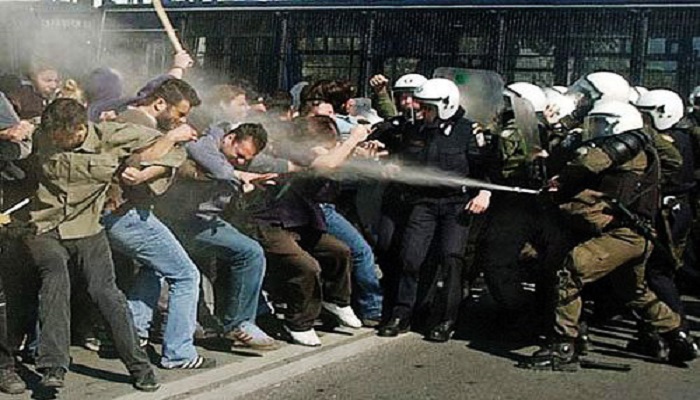
Street ProtestsIt is an old maxim in military tactics that control of the air or sea are vital in modern warfare because at the end of the day a common foot soldier needs to put their boots on the ground to claim ownership of any territory.


The first use of the phrase extends back to a news article about the Iranian hostage crisis when a U.S. Army general coined it, but it has taken on much more significant meaning 35 years later as it has become a euphemism for the general need to have people in place to exert control over a given situation, be it a marketing stunt, law enforcement or even a public protest.


In the case of the Iran regime, the phrase applies to the tens of thousands of ordinary Iranians working both inside and outside of Iran to change the tyrannous regime of the mullahs who rule Iran with an iron grip; most at great personal risk.


Iran is a regime where public dissent is punishable by arrest. It is a regime where active demonstrations are met with clubs and beatings. It is a regime where surfing or posting on the Internet can earn a kicked in door and sentence in prison. It is a regime where working to disclose secret nuclear facilities earns a quick trip to the gallows.


In many ways, Iran is a wartime regime where Basij militia roams the streets looking for dissidents and even women not complying with dress codes; often meting out punishments involving beatings on the street or acid thrown in the faces of women.


Iran invests heavily in cyber warfare capabilities that it turns onto its own citizens snooping on their surfing habits and directing militia to arrest those involved in frowned upon activities. Its’ monitoring and control of all media hearkens back to the template some of the most dictatorial regimes in history have used to control their populations.


But unlike most other nation states, Iran is not a cult of personality or even a political system. It is a religious theocracy dominated by a select few elite mullahs who work tirelessly to preserve their power and enrich themselves and their families through the skimming off the economy through black market sales of oil otherwise embargoed by international economic sanctions.


It is a regime terrified of the one thing that could bring down its carefully constructed house of cards: ordinary Iranians who have turned their backs on the Islamic state and work towards a democratic, multicultural and pluralistic society.


Nowhere is that fear more clearly on display than the relentless pursuit of anyone connected to the National Council of Resistance of Iran, one of the largest Iranian dissident groups in the world. It was the NCRI which has previously revealed the existence of secret nuclear facilities the regime was hiding, even as it publicly professed it had no such facilities. But more irksome to Iran’s mullahs is the fact that Iranians would be willing to publicly criticize their society as brutal and repressive even as they work feverishly to try and portray themselves as moderate and loving.


That fear of NCRI has manifested itself into orchestrating blatant attacks on Camp Ashraf and Camp Liberty in Iraq where NCRI supporters have lived in refugee camps. These attacks by Iraqi security forces under the direction of Iranian military and intelligence services have resulted in the brutal murders of scores of unarmed men and women, with several others kidnapped whose whereabouts still remain a mystery somewhere amongst Iran’s string of prisons.


Iran’s mullahs know and understand that one of their greatest weaknesses has been the inability to silence these critics who shine a light on their secrets. It is also why they have empowered their lobbying machine, most notably the National Iranian American Council and scores of blogs it controls, to continually attacks NCRI in an attempt to discredit its work.


But the tide has changed significantly the last few years as scores of U.S. elected officials and representatives from European Union nations have joined with non-governmental groups in recognizing the valuable work being done by the NCRI, as well as the importance and value of having people on the ground in Iran who can expose the regime and help continue building the network of resistance from within.


While not as publicized as an Army division landing on a beach, their work has been just as vital in laying the ground work for freedom and democracy in Iran.

By Michael Tomlinson

Filed Under: Blog

Extremist Islam is All the Same to the Iran Regime

April 21, 2015 by admin

Iran MullahsMuch has been made of the fighting going all between various extremist groups such as ISIS, Al-Qaeda, Houthis, Boko Haram and Shiite militias, but what is not being discussed is the truth underlying all these groups; which is they share a bloody vision of regional and global domination fueled by a fanatical adherence to an extremist version of Islam.

While there may be superficial differences in their viewpoints, there is no difference in the methodology of expressing that religious view. It often involves mass kidnappings, beheadings, executions, enforced slavery, torture, savage fighting and sophisticated use of social media to gain followers and spread propaganda.

The roots of all this extremism does not lay within these desperate groups or in the conflicts they are fighting in. It lies solely within the religious fanaticism factory that is the Iran regime.

The mullahs in control in Iran have laid the groundwork for virtually all of the religiously driven terror groups and proxies now fighting throughout the world. Beginning with the funding and support of Hezbollah in its drive to take over Lebanon and attack U.S. personnel there, culminating with the bombing of the Marine barracks in 1983 killing 241 service personnel, Iran’s mullahs have artfully fueled religious violence and terror, more than anywhere else back at home by killing, torturing and imprisoning hundreds of thousands in the past 3 decades.

The regime in Iran continued that tactic through the U.S. invasions of Iraq and Afghanistan where Revolutionary Guard Corps personnel helped train and supply insurgents with the deadly improvised explosive devices that claimed thousands of U.S. and coalition lives.

That chain of extremist violence extends to the sectarian civil war Iran spawned in Syria and the rise of ISIS in Iraq and elsewhere. Iranian mullahs have always sought to use these proxy wars as a means to an end and set the scales of international public opinion tilting in their favor.

How else could Iran’s mullahs achieve the preposterous notion that Iran was bravely fighting against ISIS through its military assets and Shiite militias, even though it helped create the conditions in the first place for ISIS’ birth and rapid expansion in Iraq.

Writing in the New York Times, columnist Thomas Friedman was correct when he said: “When you don’t call things by their real name, you always get in trouble.”

The violence and hatred espoused by ISIS as it beheads Christians or Boko Haram as it kidnaps girls or Al-Qaeda as it bombs mosques all springs forth from the hatred and vitriol spewed by Iran’s ruling mullahs. The same mullahs that pass laws legalizing misogyny or criminalize a woman’s appearance or sanction the public hanging of political dissidents are the same ones providing the template of hate for these violent groups.

It is ironic that the three large Muslim nations, Indonesia, India and Malaysia are largely free of violent extremism, which is due in no large part to the development of tolerant, multicultural societies where the secular rules the sectarian; where the religiously motivated whims of a few dozen old mullahs do not hold sway over the vastness of a region stretching from the Mediterranean to Indian Ocean.

One group which has long recognized this contagion of violent theocracy is the National Council of Resistance of Iran, one of the largest Iranian dissident groups. Its leader Mrs. Maryam Rajavi has outlined a ten point plan that casts out the policies and medieval practices of the mullahs and replaces them with the modern, democratic principles so necessary in a civilized society.

We can only hope that the seeds for regime change can be planted amongst all this turmoil and a new Iran born out of it.

By Michael Tomlinson

Filed Under: Blog Tagged With: Iran, Iran Mullahs, Islamic State, Jihadist, Radical Islam

Connecting Human Rights to Iran Nuclear Deal

April 20, 2015 by admin

Iran Beating (1)During the third round of ongoing talks between the P5+1 and the Iran regime, there has been much discussion about centrifuges, enriched uranium stockpiles and reactor designs, but there has been scant discussion about the most pressing problem and that is the pitiful state of human rights within Iran and in areas of Iranian influence.

Reagan’s famous remarks about the Evil Empire could today be paraphrased to say: “The Iran regime is an Evil Empire, and the extremist Islam is the focus of evil in the modern world.”

The regime’s dismal human rights record is beyond dispute from official sources such as the United Nations Special Rapporteur on human rights in Iran, Mr. Ahmed Shaheed, who has now issued several blistering reports condemning mass arrests, torture and killings by the Iran regime.

Non-governmental organizations such as Amnesty International have similarly condemned the Iran regime for the large increase in public executions, arrests and imprisonment without trial or charge for political dissidents, religious minorities, foreign citizens and ordinary Iranians for innocuous acts such as posting mash up videos on the Internet.

The sharp increases of brutality under the tenure of president Hassan Rouhani has coincided with ongoing nuclear talks, as well as the launching of several proxy wars by Iran’s military and intelligence services under the mandate of Iran’s top mullah, Ali Khamenei, including the sectarian civil war in Syria, the rise of warring terror groups in Iraq and the overthrow of the Yemen government, all with backing and coordination from Iran.

There has also been some questions and criticism being raised in the U.S. and amongst other nations negotiating with the regime that the lack of focus and inclusion of human rights is a serious mistake and may let Iran’s mullahs “off the hook” so to speak and allow them to gain significant relief from economic sanctions without having to make any changes in their foreign or domestic policy.

At the core of any successful nuclear deal must be the confidence that Iran will abide by it. An improved human rights record would provide the evidence necessary that regime change was possible moving forward. Without it, how can any signatory nation truly believe that Iran mullah’s signature was worth the paper it was affixed to?

Not holding Iran’s mullahs accountable for human rights violations and tying a comprehensive nuclear accord to a nuclear agreement would be devastating for the thousands being held captive not only in Iran, but in Lebanon, Syria, Iraq and Yemen, as well as all those suffering under extremist groups radicalized by Iran’s mullahs in places such as Libya, Egypt, Nigeria and Afghanistan.

By Laura Carnahan


Filed Under: Blog Tagged With: hassan rouhani, human rights in Iran, Iran, Iran Talks, Rouhani

Iran Lobby Fails Again to Halt Congress

April 15, 2015 by admin

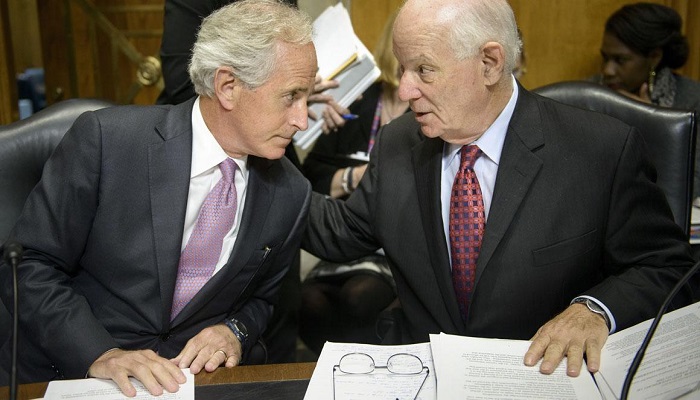
US-IRAN-NUCLEAR-CONGRESSIran’s lobbying machine, led by the National Iranian American Council, failed yet again to sway members of Congress from supporting the Corker-Menendez bill which passed unanimously out of the Senate Foreign Relations Committee and grants Congress a voice in negotiations on the Iran nuclear accord.

The bill now goes to the full Senate where a veto-proof majority is anticipated to approve it. Recognizing the inevitable, the White House signaled the President would sign the bill after gaining some adjustments to the timeline to Congressional review and approvals of any deal negotiated.

The NIAC was left sputtering with a statement denouncing the bill, but powerless to affect its’ almost certain passage. What does this portend for the future of the NIAC and other regime apologists?

It proves once again that no amount of spin can cover up the  harrowing stories coming out of the Mideast of terror groups supported by Iran’s mullahs wreaking havoc across the region, including beheadings, kidnappings, mass murders and government overthrows.

The bill passed out of committee would mandate the administration send the text of a final accord, along with all classified material, to Congress as soon as completed. It halts the lifting of any economic sanctions during congressional review and culminates in a possible vote to forbid lifting congressionally imposed sanctions in exchange for dismantling much of Iran’s nuclear infrastructure.

The provisions are direct repudiation of demands made by Iranian regime’s leaders including Ali Khamenei, Hassan Rouhani and Javad Zarif who all denounced American versions of the framework agreement and demanded lifting of all economic sanctions immediately upon completion of a deal; not just American sanctions, but also European Union and United Nations sanctions.

Quite simply, the American people will have their say over whether or not Iran’s mullahs can be trusted to abide by any agreement.

It is a triumph of democracy over an autocratic theocracy, but it only sets the stage for what will likely prove to be another long summer filled with false hopes, clashing views and endless updates leading to nowhere.

Iran’s mullahs have followed a specific negotiating plan aimed at stalling any final agreement for as long as possible, giving the regime time to destabilize the region through direct military action in Iraq and through proxies in Syria, Lebanon and Yemen, in an effort to force the hand of Western nations into giving in to Iran’s demands in the false hope of enlisting Iran in quelling the very conflicts it has started.

Ultimately though the regime’s plans will fail just as its lobbying machine has failed because it cannot hide its barbarism, nor resist the pathological desire to inflict pain, suffering and death on all those it finds objectionable, such as other Muslims, Christians, Jews, women, gays, kids surfing the Internet, bloggers, artists, journalists, etc.

By Michael Tomlinson

Filed Under: Blog Tagged With: Congress bill on Iran, Iran deal, Iran Lobby, Veto proof bill

The Moral Evil of the Iran Lobby

April 13, 2015 by admin

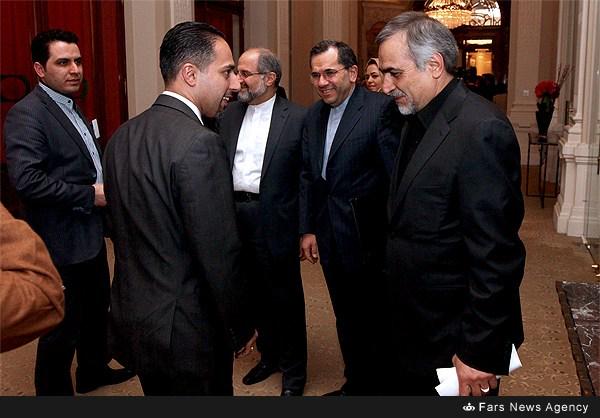
Trita parsi, greeting the mullah's delegation in Geneva during the nuclear negotiations -March 2015

Trita parsi, greeting the mullah’s delegation in Geneva during the nuclear negotiations -March 2015

With debate building over the proposed framework agreement between the P5+1 and the Iran regime, one of the most compelling questions arising is also the most relevant: “How can any agreement signed by an evil and corrupt regime be trusted?”

Any nation state can be relied upon to operate within the confines of an international community based on several factors. These might include the personal conviction and force of will of its leader or the guarantees embodied in its constitution. It might also be as a result of its culture, history or even religion.

In the case of the Iran regime though, the evidence is overwhelming of not only its moral failure to abide by international standards of peace and civility, but also the moral core of its leadership can be summed up as being one of “convenience in service to theology.”

Iran’s mullahs have been guilty of fomenting terror attacks through proxies such as Hezbollah which have claimed thousands of lives all around the world. They have been guilty of spreading an extremist form of Islam that has sparked sectarian conflicts throughout the Mideast and Africa, claiming thousands and displacing hundreds of thousands. They have been guilty of brutal atrocities and human rights violations on their own people in order to stifle dissent including thousands of hangings and punishments that could only be described as medieval.

Iran’s mullahs have denigrated women, targeted religious minorities and even made the simple act of web surfing a crime punishable by imprisonment. It is a leadership willing to contemplate the development of nuclear weapons as a tool of political expediency. It is a leadership claiming the mantle of religious certainty, but instead uses its power to enrich themselves and their families in a familiar reminder of feudal dynasties.

Aiding and abetting that corrupt regime is a lobbying effort that similarly turns a deaf ear and blind eye to the suffering being meted out by these mullahs. Groups such as the National Iranian American Council and its bosses Trita Parsi, Reza Marashi and others, have loyally placed the value of their contracts to Tehran above the morality required to do good in the world.

Haile Selassie, the former emperor of Ethiopia, famously said to the international community in the League of Nations when Italy invaded and used chemical weapons on his people:

“Throughout history, it has been the inaction of those who could have acted; the indifference of those who should have known better; the silence of the voice of justice when it mattered most; that has made it possible for evil to triumph.”

The international community did not rise up. Only five nations protested the invasion and slaughter of his people and in response, Selassie became an outspoken advocate the rest of his life to international security and multilateral support of justice.

The lack of protest, discussion and debate by the Iran lobby over the voluminous injustices and cruelties dispensed by the Iran regime is damning evidence of the lack of moral fiber within groups like the NIAC.

It leaves one wondering just who these men and women are that write editorials, lobby and speak on behalf of the barbarous cruelty of the mullahs. Are they just collecting a paycheck or do they honestly believe and support the mission of the Iran regime to remake the world in the image of its intolerant, extremist and cruel selves?

Selassie was right that by standing by mutely watching these things happen, the NIAC is just as evil and corrupt as the mullahs they defend.

By Michael Tomlinson


Filed Under: Blog, News Tagged With: Iran Lobby, Iran Talks, NIAC, Trita Parsi

Deal With Iran Regime Already Falling Apart

April 10, 2015 by admin

Failed AgreementJust when the Iran regime lobbying network led by the National Iranian American Council tries to make its case, its own masters in Tehran screw things up again it seems for them. Previously message points delivered by Trita Parsi and others were undercut by the regime’s top mullah when Ali Khamenei would call for America’s destruction and vowed to rebuff all efforts to derail Iran’s nuclear program.

Even after crafting a framework agreement with the P5+1 and hailing it as historic, the NIAC and other regime supporters again were faced with contradictions when Iran’s semi-official FARS news agency reported that foreign minister Javad Zarif and its nuclear chief told members of the Iranian parliament that the regime would begin using its latest generation IR-8 centrifuges as soon as its nuclear deal goes into effect.

The news accounts show the empty value of the framework and the lies being perpetuated by the NIAC that the regime truly wants a deal, but already promises to violate key provisions the minute it gets signed.

ccording to the FARS report, “Iran’s foreign minister and nuclear chief both told a closed-door session of the parliament on Tuesday that the country would inject UF6 gas into the latest generation of its centrifuge machines as soon as a final nuclear deal goes into effect by Tehran and the six world powers.”

The IR-8 centrifuges can enrich uranium 20 times faster than the IR-1 centrifuges it currently uses according to the regime.

Additionally, according to FARS, regime defense minister Hossein Dehqan said of the Lausanne Framework “There is no such agreement. Basically, inspection of military facilities is a red line and no inspection of any kind from such facilities would be accepted.”

So what are we to make out of the NIAC’s insistence that Iran’s mullahs are truly interested in peaceful nuclear development? It’s more likely we would believe in unicorns and the Loch Ness monster than the NIAC at this point.

With all of these revelations and statements coming out of Iran, the odds of a Congressional action against the framework and continuing economic sanctions are shrinking to the size of a pinhead with even House Minority Leader Rep. Nancy Pelosi (D-CA) now mulling the odds of being able to derail the momentum building for Congressional review.

As Rep. Ted Deutch (D-FL), the ranking Democrat on the Foreign Affairs Committee’s subpanel on the Middle East, said “Last week’s framework contemplates action by the United Nations Security Council. Surely if U.N. Security Council members should have a vote on sanctions relief, members of the United States Congress should as well.”

The support for continued economic sanctions got a boost inadvertently when Central Intelligence Agency Director John O. Brennan claimed Khamenei was persuaded to approve a deal because of the crippling effects of sanctions on Iran. While Brennan attempted to show this was motivation for the regime to compromise, it was in fact evidence of the what the regime is aiming for all along: relief from economic sanctions in order to flood billions of dollars back into the regime’s coffers as it supports four proxy wars.

The fact the regime’s leadership is already talking about violating the terms of the framework or simply ignoring them demonstrates the regime’s incompetence to make a deal and its commitment to preserving its nuclear infrastructure while getting what it most desperately needs right now, which is cold hard cash.

Already regime representatives are scrambling throughout the world in a mad dash to lock up deals to prop up its economy in anticipation of a final nuclear deal. This includes talks in China for oil sales, and invitations for direct foreign investment.

But as political support for the framework agreement begins to unravel, it is likely these moves for economic support will prove as ephemeral as NIAC’s logic and arguments in support of the regime.

By Michael Tomlinson


Filed Under: Blog, News Tagged With: Iran Lobby, Trita Parsi, Veto proof Sanctions

  • « Previous Page
  • 1
  • …
  • 55
  • 56
  • 57
  • 58
  • 59
  • …
  • 64
  • Next Page »

National Iranian-American Council (NIAC)

  • Bogus Memberships
  • Survey
  • Lobbying
  • Iranians for International Cooperation
  • Defamation Lawsuit
  • People’s Mojahedin
  • Trita Parsi Biography
  • Parsi/Namazi Lobbying Plan
  • Parsi Links to Namazi & Iranian Regime
  • Namazi, NIAC Ringleader
  • Collaborating with Iran’s Ambassador

Recent Posts

  • NIAC Trying to Gain Influence On U.S. Congress
  • While Iran Lobby Plays Blame Game Iran Goes Nuclear
  • Iran Lobby Jumps on Detention of Iranian Newscaster
  • Bad News for Iran Swamps Iran Lobby
  • Iran Starts Off Year by Banning Instagram

© Copyright 2026 IranLobby.net · All Rights Reserved.