Iran Lobby

Exposing the Activities of the lobbies and appeasers of the Mullah's Dictatorship ruling Iran

  • Home
  • About
  • Current Trend
  • National Iranian-American Council(NIAC)
    • Bogus Memberships
    • Survey
    • Lobbying
    • Iranians for International Cooperation
    • Defamation Lawsuit
    • People’s Mojahedin
    • Trita Parsi Biography
    • Parsi/Namazi Lobbying Plan
    • Parsi Links to Namazi& Iranian Regime
    • Namazi, NIAC Ringleader
    • Collaborating with Iran’s Ambassador
  • The Appeasers
    • Gary Sick
    • Flynt Leverett & Hillary Mann Leverett
    • Baroness Nicholson
  • Blog
  • Links
  • Media Reports

Iran – Another Step for Regime Hardliners

March 11, 2015 by admin

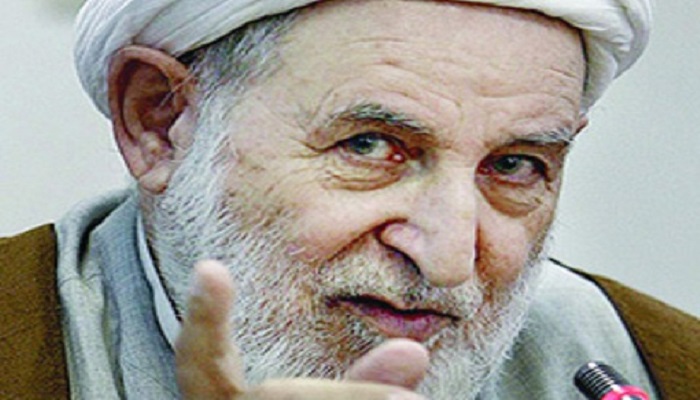
Mohammad YazdiThe Wall Street Journal ran a story the other day saying the Iranian regime had announced the installation of conservative mullah Mohammad Yazdi as the new chairman to the Assembly of Experts, the body that chooses and supervises the regime’s Supreme Leader, a post currently held by Ali Khamenei, who – if news reports are to be believed – is in poor declining health.

While the news, in and of itself, might not be too surprising, it does illustrate a key point about the nature of the Iranian regime that has a direct bearing on current nuclear talks between the Islamic state and the P5+1 group of nations and that is no matter what the public perception might be about a more “moderate” face to Iran, the nation is still firmly and unquestionably in the control of the religious conservatives.

The timing of the move is also interesting considering other moves the regime has taken in the past few weeks to reinforce the perception that it will remain a bastion of Islamic extremists and is not interested in moderating its policies just to gain a deal.

These include regular public denunciations of America as the “Great Satan” and the blowing up of a mock U.S. aircraft carrier in military exercises. The regime has also stepped up its tactical command and control of Iraqi military forces and Shiite militias in the fight with ISIS as it bulks up its ability to extend military power by the commissioning of a new home-made naval warship.

The decision to appoint Yazdi is a crucial one since Khamenei’s death would require a selection of a successor and he is the natural choice given his elevation within the mullahs hierarchy. Yazdi also is a member of the mullah’s Guardian Council and former regime Chief Justice, with lots of blood on his hand.

He has regularly espoused conservative views over the years according to the Journal story, including a quote in 2013 “when he told the Mehr news agency that it wasn’t appropriate for women to run as presidential candidates.”

Why his election is significant, because it illustrates a key conundrum Obama administration officials have been reluctant to talk about which is there are no divisions between “moderates” and “conservatives” in a religious theocracy where the wishes of a small cadre of ruling mullahs carry the power of law.

This narrative of moderates vs. hardliners in Iran is largely a fabrication of the news media controlled by the Iranian regime in order to present to the world the perception there is a battle of wills and ideas and that by acting in a certain way, the forces of moderation will be supported.

In contract talks for free agent professional athletes, we call that “negotiating against oneself.”

Which are exactly what the West and the U.S. in particular has been doing the past three years. There is a perception in the Western media that Hassan Rouhani is some kind of soft, lovable teddy bear of a moderate who is only interested in holding back the dread forces of darkness and medieval thinking in his own country. It’s a perception bolstered by the non-stop lobbying and branding efforts of the regime’s U.S.-based supporters including the National Iranian American Council.

The truth of the matter is that Rouhani is in lock step with his hardline brethren since his days running the regime’s National Security Council and a past negotiator on previous nuclear talks that also collapsed and failed. The fact that during his tenure of president, Iran has stepped up executions to over 1,200 according to Amnesty International and instituted broad crackdowns on internet access, news media, social media and minority religious freedoms leaves little doubt Iran has veered even more conservative since his election.

In fact, in 1999 after student protests, Rouhani was said in a speech at a pro-government rally during his tenure at the National Security Council:

“At dusk yesterday we received a decisive revolutionary order to crush mercilessly and monumentally any move of these opportunist elements wherever it may occur. From today our people shall witness how in the arena our law enforcement force . . . shall deal with these opportunists and riotous elements, if they simply dare to show their faces.”

This is not a man of moderation, but a man that can work well with either Khamenei or Yazdi.

By Michael Tomlinson

Filed Under: Blog Tagged With: Iran, Iran Lobby, Moderate Mullahs, Rouhani, Yazdi

Iran lobby-Why Does NIAC Oppose Democracy?

March 9, 2015 by admin

Senate VotesIt is a curious thing. The National Iranian American Council (NIAC) claims to advocate on behalf of the Iranian American interests, but virtually all of its public and media outreach efforts are devoted towards supporting whatever happens to be the line of the day for the Mullah’s regime in Iran.

Okay, maybe something is changed about its mission statement and hasn’t made it to the “About Us” section of their website. We’ll give them the benefit of the doubt about their aims, but what still remains puzzling is the NIAC’s almost pathological aversion to democracy.

In the run up to the March 24th deadline for a framework agreement between the Iranian regime and the P5+1 group of nations – a too-early deadline accidentally foisted by NIAC and the Iranian lobby’s own actions – the NIAC has steadily maintained that any agreement not be subject to review and vote by Congress.

It is a curious position to take on several levels. First and foremost, the NIAC might have trouble letting go of the Iranian model of government which tends to default to the autocratic side where Iran’s Supreme Leader, in this case top mullah Ali Khamenei, has sole authority over foreign policy and military matters, including any treaty or international agreement.

Contrary to that model, the U.S. Constitution in Article II, section 2, provides that the President “shall have Power, by and with the Advice and Consent of the Senate, to make Treaties, provided two-thirds of the Senators present concur.” The Constitution’s framers gave the Senate a share of the treaty power in order to give the president the benefit of the Senate’s advice and counsel, check presidential power, and safeguard the sovereignty of the states by giving each state an equal vote in the treaty making process.

It is a provision articulated by Founding Father Alexander Hamilton in the Federalist Papers no. 75 and represents a cornerstone of American policy making over the last 200 years with Senate approval given to more than 1,500 treaties, while rejecting only 21 of them. Of course there has always been considerable debate between Presidents and Senates over the meaning of “advice and consent,” but what is not ambiguous is that Presidents who have secured Senate approval, even on controversial proposals, have enjoyed broader public support for their policies.

In the case of a potential Iranian nuclear deal, NIAC has constantly urged that any agreement not be turned over to the Senate for approval. Why? Quite simply, it recognizes that any deal granting Iran the continuation of its nuclear infrastructure would be dead on arrival with a large bipartisan coalition of Senators already lining up to voice concerns over a deal.

Secondly, NIAC’s passionate arguments in favor of a deal with the Iranian regime have largely fallen on deaf ears in the U.S. This has been evidenced by the dearth of coverage given by mainstream U.S. media outlets to NIAC’s statements, as well as the inability to generate any large-scale grassroots campaign aimed at key Senators as most U.S. lobbying groups have enjoyed such as abortion activists, environmentalists, business or labor unions.

Lastly, NIAC has argued the result of no deal would be far worse than taking what essentially amounts to a bad deal allowing Iran to develop and possess a nuclear weapon in as long as ten years or in as short a period as one year if it chooses to breakout of an agreement.

But what is the realistic “bad” alternative NIAC speaks of? The threat of war? It is a far more likely scenario that war might break out if Iran’s mullahs are granted the capacity to develop a nuclear weapon because Iran’s neighbors would feel even more threatened and act to disrupt Iran’s bomb making, not to mention the flow of the most dangerous weapon in to the hands of the most evil terrorist backed by the mullahs, who run the biggest state sponsor of terrorism.

Also, at no point does the proposed agreement condition Iran’s mullahs to changing their behavior; crucial element all but ignored in negotiations. NIAC asks for blind faith in the intentions of Iran’s mullahs, even though the record of the past three years has gotten progressively worse and worse.

Iran’s continued support of terrorist groups, even expanding to include the Houthi in Yemen, in additional to the Hezbollah, coupled with its support of Syria and now Shiite militias in a virtual takeover of Iraq does not bode well as a track record for “moderation.”

But put on top the brutal human rights crackdown and violations within Iran domestically and the exporting of its fanatic views of Islam that now infect the region and are now reaching into the farthest reaches of the globe and you get the idea quickly why Senators are liable to vote thumbs down quickly.

The NIAC opposes a vote and opposes the exercise of democracy by the American people’s elected representatives because it already knows it has lost the vote.

By Michael Tomlinson

Filed Under: American-Iranian Council, Blog

The Marginalization of NIAC

March 6, 2015 by admin

Outside Looking InWith the debris beginning to clear from the build up to the Israeli Prime Minister’s speech to a joint session of Congress and the March 24th deadline fast approaching for the P5+1 negotiators in Geneva, Switzerland for a framework of a deal for halting the Iranian regime’s nuclear program, it is an opportune time to survey the landscape and ask just how effective Iran’s chief lobbyists, the National Iranian American Council (NIAC), have been lately.


The NIAC had performed almost every acrobatic maneuver in drowning out the message about the true nature of the Iranian regime and its role as the center of extremist Islam in the world and terrorism, but how effective has it truly been?


NIAC also held a “National Day of Action” in an attempt to deliver petitions to local Congressional offices calling for an end to economic sanctions against the mullah’s regime in Iran. After much hype, the actual results were not even worthy of a Model UN session of high school students. Roughly 65 teams in only half of the states fanned out to deliver a few petitions and mostly posed for selfies in Congressional offices.


The political muscle of the NIAC falls far short of what we have come to expect from powerhouse political operations such as the National Rifle Association, labor unions, environmental groups or even grassroots efforts like Occupy Wall Street. From an impact standpoint, the NIAC seems to rank somewhere between “irrelevancy” and “obscurity.”


But the NIAC does not lack a certain notoriety, especially in the wake of a disastrous defamation suit it filed in which evidence was produced linking it to the Iranian regime and steps taken by it to obscure and cover up those connections. The NIAC has struggled mightily to recast the decision by the US federal Court of Appeals for the District of Columbia in a favorable light, but the court ruling reads like a blow-by-blow indictment of NIAC.


An excellent review of the decision and its implications for NIAC was published by Business Insider by Armin Rosen the other day and worth reading. Rosen recounts the most damning revelations from the court decision, including finding that:


  • NIAC really didn’t produce calendar records it was ordered to;
  • NIAC initially hid the existence of four of its computers from the court and was not honest about what they were used for;
  • NIAC misrepresented how its computer system was configured;
  • NIAC didn’t explain why it withheld 5,500 emails from its co-founder and former outreach director;
  • NIAC was not truthful about the nature of its record-keeping system;
  • NIAC took two and a half years to produce its membership lists under court order; and
  • NIAC did not turn over mountains of relevant documents and even altered an important document after the lawsuit was brought.


In response, the NIAC issued a “clarification” on its website in a feeble attempt to restate Judge Robert Wilkens’ opinion and heavily edited from his full opinion.


Lastly, there is a growing realization among U.S. news organizations that NIAC is merely a functionary for the Iranian regime and as such less of its “news” is finding its way into mainstream media. A review of just the past few days during the NIAC’s most intense lobbying and media efforts revealed the overwhelming bulk of news organizations carrying NIAC’s statements were Arabic news media with ties to the Iranian regime or semi-official Iranian news organs.


The dearth of in-depth coverage is growing evidence the group has worn out its welcome when it comes to serious policy discussions about Iran’s nuclear program and has even less credibility when taken into context of its apparent lack of criticism of the regime over human rights violations, support for terrorist groups and the propagation of Islamic extremism.


It is a curiosity for American news media to receive media pitches from NIAC that border on hysterical when it blithely ignores injustices committed by the Iranian regime so egregious as to shock even seasoned foreign correspondents.


Thankfully, the NIAC is becoming less of an influence as evidenced by this week’s events. We can only hope it eventually fades into political obscurity the same way the dodo bird became extinct.

By Michael Tomlinson

Filed Under: Blog, National Iranian-American Council Tagged With: Iran Lobby, Iran Talks, National Iranian American Council, NIAC

Women’s Rights in Iran or Lack Thereof

March 5, 2015 by admin

IWD LogoThis Sunday, March 8th will mark International Women’s Day (IWD), a global celebration of women’s economic, political and social achievements and a rallying cry to further women’s rights at a time when they are under serious threat in a number of countries.

Each year the United Nations designates an official theme for IWD and this year’s theme is “Empowering Women, Empowering Humanity: Picture It” with a dedicated social media hashtag of #IWD15, while other popular hashtags making the rounds this weekend include:

#MakeItHappen
#womensday
#IWD2015
#internationalwomensday
#PaintItPurple

All of them aim to raise awareness for women and show support for their causes around the world and support is exactly what women need at a time when their rights and physical safety are under the greatest threats in modern history.

There has been an unprecedented assault against women around the world, especially from Islamic extremist groups who have sought to drastically turn back the clock and treat women as livestock or possessions to be sold, bartered, enslaved and abused.

In Nigeria and now neighboring Chad and Sudan, Boko Haram has gone to great lengths to publicize its kidnappings of thousands of young girls and sell them into sexual slavery. While the nifty little hashtag of #BringOurGirlsBack generated some celebrity support, it did little to actually change things on the ground.

In Syria and Iraq, ISIS has captured thousands of women and girls from Yazadi, Kurdish, Iraqi and Syrian villages and towns and turned them in ISIS fighter brides or simply sold them as sex slaves. Amnesty International and the UN have extensively documented eyewitness accounts of the brutality these women and girls have suffered at the hands of extremists who have used a perverted view of Islam to justify their actions.

Meanwhile an active online recruitment process has enticed unsuspecting young women to flock to Syria and join ISIS, most notably three British teenagers who left for Syria via Turkey.

Sitting at the heart of all of these abuse of women lays the greatest offender of all: the Iranian regime.

Iran’s autocratic and theocratic regime ruled by iconoclastic mullahs regularly oppresses the women of Iran in order to bend them into conforming to its harsh and unyielding views of the role of women in the society that is both oppressive and actually against the teachings of Islam.

For example, Iran has few if any laws specifically safeguarding the rights of women. Instead the laws on the books, both civil and criminal adversely affect women in how they dress, how they act in public and what they can do from shopping to transportation to education to careers.

There are nearly 70 university degrees banned from women, which is absurdly ironic given the lobbying efforts recently by the regime’s U.S. mouthpieces, the National Iranian American Council, which took a U.S. university to task for banning Iranian students from taking classes that could teach technology used in Iran’s nuclear development program.

Iran’s religious and paramilitary police also enforce religious law on the streets through abusive tactics that include public beatings and assaults or arrest and imprisonment. In a further abomination of traditional Islamic values, Iran’s mullahs have allowed over 40,000 child brides to be wedded just in 2014 and recently adopted a new law allowing men to marry their adopted children.

All of these acts flies in the face of the actual teachings of the Muslim faith and demonstrates how religious leaders can twist anything to their own whims and needs, as well as use religion as a blunt weapon to bludgeon dissidents into submission.

But the bright hope still remains in the Muslim world with moderate groups fighting this kind of oppression, most notably Mrs. Maryam Rajavi, a strong woman leader who leads the largest global resistance group to the Iranian regime.

While women and girls undergo acid attacks and shootings just for disobeying the mullah’s dress code, we should all remember them this weekend not just with hashtags, but also action such as telling our Congressmen to hold Iran’s mullahs for their actions and demand change.

By Laura Carnahan

Filed Under: Blog, News Tagged With: international Women's Day, Iran, IWD2015

Can Iran Mullahs Be Trusted?

March 3, 2015 by admin

TrustIn the Wall Street Journal, Rep. Chris Stewart (R-UT), a former Air Force B-1 pilot and member of the House Permanent Select Committee on Intelligence, authored an editorial that raises the most essential question facing the Congress, American people and frankly the world right now: “In what way is Iran a reliable negotiating partner?”

The short answer to that question is: “None.”

Congressman Stewart forthrightly examines the conundrum facing anyone dealing with Iran’s mullahs. What evidence has there been to give reassurance to anyone sitting across from a negotiating table from them that they would adhere to the letter and spirit of any agreement?

His experiences during the Cold War in dealing with the old Soviet Union are instructive because they teach us that for any agreement to work, both sides have to be considered reliable and trustworthy partners. It is also an axiom of politics and nation states that if breaking an agreement serves the national interest, it is likely going to be broken.

He goes on to recount the litany of acts by Iran’s leaders which would give any normally sane person pause, including listing Iran as an official sponsor of state terrorism for the last 30 years and creation of an indigenous military-industrial complex allowing it to create and ship out its own weapons and ammunition to terror groups.

Stewart cites mullahs in Iran as the primary weapons supplier for two other state sponsors of terrorism in Syria and Sudan, while it supplies arms to terrorist groups such as Hezbollah, as well as Shiite militias in Iraq.

“Tehran’s regime suppresses internal dissent and has executed tens of thousands of its own citizens for opposing the regime. It is responsible for the deaths of hundreds of U.S. military personnel in Iraq through improvised explosive devices supplied to Shiite militias in the past decade. Iran counts as close allies Russia, China and North Korea, which team with the regime in developing ballistic missiles and nuclear capabilities,” Stewart writes.

But Stewart correctly goes on to cite the Iranian regime’s involvement in money laundering, drug and arms trafficking, counterfeiting, promoting extremism and plotting terrorist attacks in South and Central America, demonstrating the mullahs reach and global aspirations.

Besides a long record of regular violations of international and human rights law, Stewart asks how can the regime in Iran be trusted if the primary mechanism for compliance – international inspections – isn’t even allowed by the regime? He cites the International Atomic Energy Agency report from Feb. 20 that was harshly critical of Iran’s stonewalling of inspections and continued non-compliance.

If Iran’s mullahs won’t even comply with inspections at this critical juncture when it claims a heartfelt desire to negotiate a deal, when will it ever allow inspections?

The deep and abiding obstacle starts and ends with the intentions of the ruling mullahs. Unfortunately the U.S. and the rest of the P5+1 group have never conditioned a nuclear deal on a fundamental request; that is Iran’s transition from a religious theocracy to a democratic society.

Unless you can change Iran’s society and government to one that is at its core more law-abiding, more peaceful and more interested in being an international partner, then any agreement negotiated with the current regime isn’t worth the paper it’s printed on.

Trust is something that is earned and built upon. It is not something that one “hopes” is inherent when the track record is so devoid of any trust. Therefore in the case of Iran mullahs, it should be “Verify before you trust.”

By Laura Carnahan

Filed Under: Blog Tagged With: Iran, Iran deal, Iran Lobby, Iran Talks

NIAC Day of Action-Lobbying for Iran Mullahs

March 2, 2015 by admin

NIAC Day of Action-Lobbying for Iran Mullahs

NIAC Day of Action-Lobbying for Iran Mullahs

The National Iranian American Council serves primarily as a cheerleader, public relations mouthpiece and lobbying force for the Iranian regime. It does these duties with diligence and not the least enthusiasm for its mission of portraying Islamic fanatics in a gentle and favorable light. It’s almost akin to being the PR firm for ISIS, if there ever was one, with all its attendant challenges.

As part of its lobbying efforts, it coordinates its so-called “Day of Action” in which its volunteers gather up petitions to deliver to designated Congressional field offices in the hopes of steering the Congress towards a more favorable view towards Iran’s mullahs; namely you can trust them with a nuclear capacity in a couple of years.

That is the essence of NIAC’s national day of action today in which, according to the group’s website, 23 states will be targeted, mostly their U.S. Senators with a few Representatives. The bulk of the states targeted were blue states that President Obama carried in the last election, with the notable red state exceptions of Texas, Georgia and Kentucky.

Virtually all of the targeted Senators are Democrats and have already expressed some degree of support for the President’s diplomatic efforts with Iran, so what does this day of action tell us?

For one, it’s not very national. At what is arguably the most important point for NIAC in its years-long effort to build support for the Iranian regime, it can’t even muster support in more than half the states. In the overwhelming majority of the states they do plan to deliver petitions, the offices targeted are already in their column. It is in essence preaching to the choir at this point.

Secondly, this national lobbying effort is timed to coincide with Israeli Prime Minister’s address to a joint session of Congress. NIAC in favoring the mullahs, has noted the Democrats who have chosen not to attend; only 38 members have answered NIAC’s call to boycott.

Coming on the heels of the delivery of books to every Senator by NIAC about the life and efforts of Abdol-Hossein Sardari, an Iranian diplomat who saved the lives of Jews escaping the Nazi’s in Paris, NIAC has clearly gone all out in an effort to try every lever to enhance the brand image of Iran’s mullahs.

But, with mullahs being the role model for ISIS and other extremist groups, it certainly didn’t help NIAC’s efforts to have ISIS reveal new videos rampaging through a museum in Mosul, Iraq destroying antiquities, Iran’s military blowing up a replica of a U.S. aircraft carrier in exercises, and Iran starting commercial air service in Yemen after Houthi rebels backed by Iran overthrew the government, a key ally in the war against terror.

But at the heart of the lack of enthusiasm nationally for NIAC’s day of action can be found in recent polls which show the American people now rank ISIS and the threat of terror as their number one concern this year going into the tune up for the 2016 elections; even ahead of jobs and the economy.

NIAC and Iran’s mullahs have consistently placed their hopes in the idea that if you say “Iran is peace loving” enough times, it can overshadow videotaped beheadings and cremations of prisoners and put a fig leaf on turmoil and chaos roiling across Iraq, Syria, Afghanistan, Nigeria, Yemen, Chad, Sudan and Lebanon. It might even be enough to cover up terror in Paris, Sydney, Ottawa, Copenhagen and now Bangladesh where another American journalist was hacked to death alongside his wife by extremists.

The Iranian regime’s biggest export is terror and its extremist Islam and it is destabilizing large parts of the world right now. If the talks on Iran’s nuclear infrastructure were simply about centrifuges and uranium, we might get a deal, but you cannot ignore the other party at the table and it includes people such as Ali Khamenei who are playing the long game in fulfilling an apocalyptic vision of an Islamic empire with Iran’s mullahs at the controls.

So while NIAC is busy passing out petitions today, we should be thankful the vast majority of Congress isn’t listening to them.
By Michael Tomlinso

Filed Under: Blog Tagged With: #NuclearDeal, Iran, Irandeal, IranLobby, Irantalks, Netanyahu

NIAC Book Gift Embarrassing

February 27, 2015 by admin

Hypocrisy MeterThe National Iranian American Council (NIAC) has been a dutiful spokesperson for the Iranian regime and has carried the mullahs water no matter how ridiculous the claims it had to make, but today was an epic new low in absurdity.

The NIAC delivered to all 100 members of the U.S. Senate a book entitled “In the Lion’s Shadow: The Iranian Schindler and his Homeland in the Second World War,” and autographed by its author Dr. Fariborz Mokhtari. The book details the efforts by Abdol-Hossein Sardari, an Iranian consular official in Paris in 1941 who aided Iranian and non-Iranian Jews by issuing them passports to exit during the war.

While the efforts of Sardari are rightly lauded for his efforts during the war, it is patently absurd that the NIAC would be passing these books out in an effort to portray itself and the Iranian regime in a more positive light in regards to the Jewish people.

It seems that there is a relation between distributing that book and the almost vitriolic nature of near-daily attacks coming from NIAC against Israel and the pending speech by Israeli Prime Minister Benjamin Netanyahu before a joint session of Congress on the Iranian regime’s negotiations over its nuclear weapons development program, Iran’s policies have been anything but humane or peaceful not only against the Jewish people, but the rest of the world.

It’s no secret there are many things wrong with Israel and its policies, especially the plight of the Palestinian people and the roadmap to peace in that part of the world, but there is no doubt that Iran’s long-standing support of terrorist groups hostile and active in and around Israel such as Hezbollah run contrary to any idea of peaceful motives.

Also, the fact that Iran’s mullahs espouse an extremist view of Islam that has fueled and provides intellectual and religious fodder for many of the region’s most extreme Islamic groups such as Boko Haram, ISIS and the Houthis in Yemen, points to the dangers it poses for peace. Not to mention the global range of attacks specifically targeting Christians and Jews by these fanatic Islamic groups supported by mullah’s ideology.

The book giveaway was accompanied by a note from NIAC’s head, Trita Parsi, in which he expressed his hope the book would be a reminder of the potential for a “different reality between the Jewish and Iranian peoples.”

He alluded to the ongoing talks as the linchpin to that new reality. The truth is far from what Parsi depicts. If news reports are accurate, the P5+1 led by the U.S. is prepared to offer Iran’s mullahs a deal that lifts economic sanctions and barely touches Iran’s existing nuclear infrastructure without any commensurate change in Iran’s policies in human rights or the treatment of political and religious dissidents. Yet mullahs have a different agenda.

The reality is that Iran’s mullahs intend to carry out a vision of regional influence for their radical form of Islam across the Middle East and Africa and gain virtual control of the of governments of Syria, Iraq, Lebanon, Afghanistan and Yemen.

It is also worth noting that the hero of the book, Sardari, was left penniless after the Iranian revolution in 1979 with his property seized by the mullahs, he eventually died in Nottingham, England in 1981 in penury; a tragic end for a man of conviction who did so much in the name of humanity.

It is a travesty the NIAC seeks to make hay of this man’s actions and even worse to use it as a fig leaf cover for the brutality of a regime well-known for its hatred of other religions, even of other Muslims who do not share its violent visions.

By Sheldon March

Filed Under: Blog Tagged With: Irantalks, Israel, NIAC, Nuclear

The Façade of a United Iran

February 26, 2015 by admin

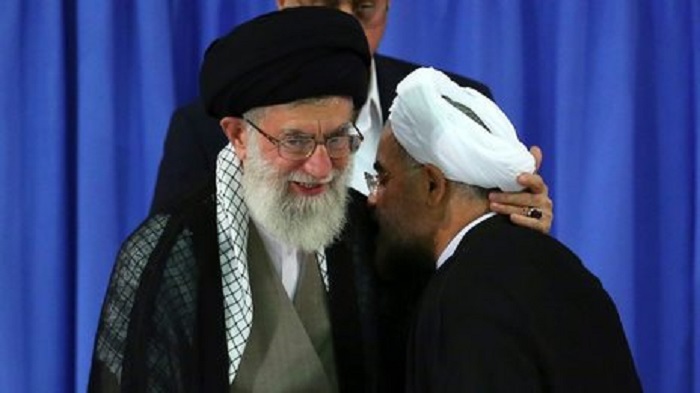
Khamenei and Rouhani (1)Our old friends at the National Iranian American Council put out an interesting opinion piece claiming an undivided Iranian regime leadership when it came to matters of national policy, especially the prospects of a nuclear deal with the P5+1. Authored by well-known regime apologist Reza Marashi, the piece posits the idea that the regime’s top leaders, Ali Khamenei and Hassan Rouhani, wanted to rifts between the two.

It’s an odd statement to make considering Rouhani was Khamenei’s handpicked choice for the job in a ballot cleansed of all other potential opponents in a nation whose prior elections were widely regarded by international observers as rigged. In a strictly controlled society where the religious edicts of the mullahs in charge carry supreme weight and dissident is harshly and swiftly punished by arrest, imprisonment and execution, the idea of dissent of any kind is laughable.

As the saying goes, no puppet moves without a puppet master and every action taken in Iran has a sanctioned purpose by the ruling religious cadres. In fact, if we compare other totalitarian regimes throughout history, it is clear the one facet they all share is an ability to project a united front no matter what is happening behind closed doors.

Outside observers have long been relegated to tea leaf reading of close examinations of photos at ceremonial events to see which leader in waiting was standing next to whom. Iran’s regime is no different where every opinion by an outside analyst is usually confounded by a system wholly devoted to its own peculiar inner workings of dogma.

What I find most interesting is the stretch of imagination Marashi takes in hinting that the reign of former President Mahmoud Ahmadinejad was in some way the work of an eccentric mad man and not representative of the Islamic state. He forgets to mention Ahmadinejad’s election was fixed so he was clearly the regime’s man and his re-election indicated Iran’s mullahs were all in with the idea of showing the West an iron fist of determination.

When that approach failed to yield any benefits and only convinced the rest of the world that Iran’s leadership was delusional, the mullahs huddled and changed tack by offering a perceived more moderate face in Rouhani who has a smiling face busy with selfies, tweets and Facebook posts.

By the Iranian regime’s true intentions remain solidly rooted in the hardline extremism exhibited through its near fanatical support of terror groups and the spread of extreme Islamic groups worldwide, as well as the even harsher crackdown at home on political dissent. It has been left up to the Marashi, Trita Parsi, Tyler Cullis and others of the world to build the perception of an Iran united behind the idea of peace and moderation.

Incidentally, the irony of the Iranian military undertaking exercises this week and blowing up a replica of an American aircraft carrier is just reaffirmation of Iranian regime’s near schizophrenic approach to displaying to the world its eagerness for a deal, but determination to continue fighting “The Great Satan.”

The more things change in Iran, the more things really just stay the same.

The one correct truth Marashi does say is the Iranian regime’s efforts to shift the onus of any deal onto the U.S. and away from Iran. Iran’s lobbying machine has ramped to a fever pitch in advance of the March 24th deadline to find any excuse other than the Iranian regime’s extremist views as a reason talks may fail for yet a third time.

The real truth of Iran’s united front is that it is a front united solidly behind the effort to preserve the regime’s ability to build a nuclear weapon.

By Michael Tomlinson

Filed Under: Blog

Can Anyone Trust Iran’s Mullahs?

February 25, 2015 by admin

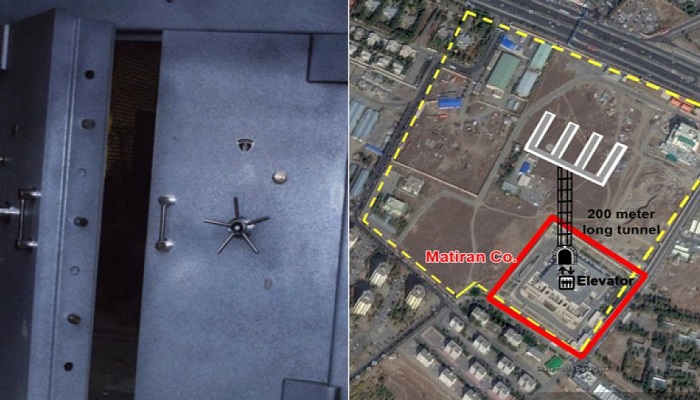
Iran Nuke Facility

If you are like me, you probably Google every day on topics of interest and for me, today was no different. In searching for topics of discussion concerning Iran, its ruling mullahs and topics of interest, Google never fails to turn up some golden nuggets and there were some winners today.

“Dissident group alleges new secret nuke site in Iran.” – USA Today
“Iran pursuing nukes in underground complex despite talks with West.” – Fox News
“Giving Iran everything it wants.” – Washington Post
“Exclusive: Iran smuggles in $1 billion of bank notes to skirt nuclear sanctions.” – Reuters
“Document reveals growth of cyberwarfare between U.S. and Iran.” – New York Times
“U.S. says Iran helped Houthis seize Yemen.” – Al-Arabiya

And all this just in one day. It raises an important question. Even if the P5+1 negotiations yield an agreement, how can the West trust Iran’s mullahs to actually stick to it? Therein lays the proverbial question haunting everyone at the table in Geneva.

When you consider the Iranian regime’s nearly 18 year-long effort to first conceal evidence it was building a nuclear program and only after intelligence agencies and Iranian dissidents on the ground, the National Council of Resistance of Iran finally broke the secret open with smuggled photos, reports and eyewitness accounts did Iran’s mullahs grudgingly even admit a “peaceful program.”

But this “peaceful program” was being developed on military bases and research facilities experimenting with high explosives, nuclear detonators, missile technology and delivery systems. All places Iran’s religious leadership kept hidden for a decade from the prying eyes of inspectors from the International Atomic Energy Agency (IAEA).

In the interim, the world galvanized with economic sanctions that Iran’s mullahs merely shifted over the impact away from its governmental operations and placed the full brunt of it on its own people in order to hold them up to the world as victims of unremitting sanctions. While Iran’s leadership was busy funneling billions of dollars to fund terror groups such as Hezbollah and the embattled Syrian regime of Bashar al-Assad, it continued to pour billions into its nuclear development in spite of global condemnation.

Why?

Because Iran’s mullahs calculate – correctly I might add – that in the time necessary for the world to get its act together and place enough pressure on Iran to curb its activities, they would have bought enough time to build the infrastructure necessary to ramp up production without any real damage to its program.

Now Iran sits on 19,000 centrifuges for enriching nuclear fuel, a ready-made stockpile of enriched fuel of various levels and testing facilities that have already done the heavy lifting of designing and testing various components used in assembling a nuclear warhead, not considering today’s fresh information on an actively parallel nuclear site operating with advanced centrifuges.

In essence, the P5+1 is now negotiating with an Iranian regime that has already achieved what it set out to do and now can sit back and allow a deal to take shape without losing any real ground.

Revelations by the IAEA of Iran’s continued stonewalling and the NCRI of yet another secret nuclear site, on top of reports of over $1 billion in continued sanctions evading smuggling all point to a single conclusion: Iran’s mullah cannot be trusted to keep any bargain made with the West.

The key issue of verification in any agreement is critical since Iran has successfully managed to evade inspection and disclosure for almost two decades. Only through revelations from Iranian dissidents and democracy sympathizers on the ground in Iran – and at great personal peril to their lives – have we been able to even crack open a little bit of the secrecy that shrouds Tehran’s programs.

To think Iran’s mullahs are going to happily oblige opening up all of their secrets in a nuclear deal is naiveté of the highest order.

By Laura Carnahan

Filed Under: Blog, News

Iran-Nuclear Floodgates Open

February 24, 2015 by admin

FloodgatesSeparate reports from various media outlets indicate the U.S. has put forward a significant concession towards the Iranian regime in the third round of nuclear talks between the Islamic state and the P5+1 group of nations seeking to halt its development of nuclear weapons.

As reported in the Wall Street Journal this morning, “the U.S. and Iran are exploring a nuclear deal that would keep Tehran from amassing enough material to make a bomb for at least a decade, but could then allow it to gradually build up its capabilities again.

“Such a deal would represent a significant compromise by the U.S., which had sought to restrain Tehran’s nuclear activities for as long as 20 years. Tehran has insisted on no more than a 10-year freeze.”

The concession is monumental for several reasons.

One, it continues the trend of the West caving in to Iran’s mullahs without gaining any significant concessions from them in return. There are no concessions for Iran’s religious leadership to move towards a democratic, secular society. No assurances on the release of thousands of imprisoned political and religious prisoners. No indication even of any let up in the regime’s support for the global increase in terrorism and extremist groups.

Second, it does not prevent the regime from eventually building a nuclear device anyway. It merely reduces the originally hoped-for period for supervising Iran’s nuclear program from 20 years to now only a decade. It is even more astonishing considering the recent revelations from the International Atomic Energy Agency that Iran has still avoided and stonewalled disclosing details of the military aspects of its nuclear program.

How does anyone expect Iran to undergo a decade of supervision of its nuclear program when it has already successfully evaded international inspection of its military facilities for the past 12 years? Let alone the reports about the continuation of the clandestine activities and its missile program, that can be used to carry nuclear warheads to Europe and Middle East.

The proposal to shrink the window and allow mullahs in Iran the ability to ramp up its enrichment capacity does nothing for improving peace prospects globally as the regime’s lobbying allies such as the National Iranian American Council would have us believe. If anything, the accelerated push towards the ability to construct and deploy nuclear devices is most likely to cause another arms race amongst Iran’s anxious neighbors.

We can only imagine how regime loyalists such as Trita Parsi, Ryan Costello and Tyler Cullis will crow about this development and call it “peace in our time.”

It will also force a confrontation whereby Iran’s mullahs will seek to flex its newfound political muscle by using its leverage in the proxy war against ISIS as it continues to deepen its control over its neighbors in Syria, Iraq and Yemen and be buoyed financially by the lifting of economic sanctions of the flood of billions in petrodollars into its coffers.

The most absurd part of this entire process has been the perception among diplomats and analysts, which is the appearance that the U.S. has been essentially negotiating against itself in giving concession after concession without gaining anything meaningful from the mullahs in return. As Iran’s inscrutable mullahs sit through three years of talks and publicly have denounced America and its policies and the potential of any deal, the U.S. has slowly chipped away at its own position in an effort to entice Iran’s mullahs into agreeing to a deal…any deal.

In sports, it is akin to a team trying to lure a desirable free agent and still bidding higher even as every other team has walked away from the table.

In this specific moment of time, negotiators seemed to have adopted the mantra that “there is no such thing as a bad deal.”

All of which portends significant trouble on Capitol Hill where both Republicans and Democratic Senators have made plain their opposition to any agreement that gives the Iranian regime the ability to develop and possess nuclear weapons period; not just extend the time and inconvenience it takes the regime to develop those weapons.

The right approach will be for the Senate to develop a more skeptical line to any proposed deal.

By Michael Tomlinson

Filed Under: Blog

  • « Previous Page
  • 1
  • …
  • 58
  • 59
  • 60
  • 61
  • 62
  • …
  • 64
  • Next Page »

National Iranian-American Council (NIAC)

  • Bogus Memberships
  • Survey
  • Lobbying
  • Iranians for International Cooperation
  • Defamation Lawsuit
  • People’s Mojahedin
  • Trita Parsi Biography
  • Parsi/Namazi Lobbying Plan
  • Parsi Links to Namazi & Iranian Regime
  • Namazi, NIAC Ringleader
  • Collaborating with Iran’s Ambassador

Recent Posts

  • NIAC Trying to Gain Influence On U.S. Congress
  • While Iran Lobby Plays Blame Game Iran Goes Nuclear
  • Iran Lobby Jumps on Detention of Iranian Newscaster
  • Bad News for Iran Swamps Iran Lobby
  • Iran Starts Off Year by Banning Instagram

© Copyright 2026 IranLobby.net · All Rights Reserved.