Iran Lobby

Exposing the Activities of the lobbies and appeasers of the Mullah's Dictatorship ruling Iran

  • Home
  • About
  • Current Trend
  • National Iranian-American Council(NIAC)
    • Bogus Memberships
    • Survey
    • Lobbying
    • Iranians for International Cooperation
    • Defamation Lawsuit
    • People’s Mojahedin
    • Trita Parsi Biography
    • Parsi/Namazi Lobbying Plan
    • Parsi Links to Namazi& Iranian Regime
    • Namazi, NIAC Ringleader
    • Collaborating with Iran’s Ambassador
  • The Appeasers
    • Gary Sick
    • Flynt Leverett & Hillary Mann Leverett
    • Baroness Nicholson
  • Blog
  • Links
  • Media Reports

Iran Lobby Silent as Religious Persecution Rises

June 3, 2015 by admin

Christian Persecution (1)There are certain truisms in life. Not paying your taxes will get you into trouble. Eating high fat foods makes you gain weight and the paid lobbying machine for the Iran regime will always remain silent when it comes to the mistreatment of those living in Iran.

That was on display the other as Fox News reported that “Iran’s revolutionary court imposed harsh prison sentences on 18 Christian converts for charges including evangelism, propaganda against the regime, and creating house churches to practice their faith.”

The sentences totaled almost 24 years, but the lack of transparency in the regime’s infamous judicial system did not reveal how the sentences were dished out to each person. In addition to prison time, each defendant was barred from organizing home church meetings and given a two-year ban from leaving Iran.

The Christians, many of whom were arrested in 2013, were sentenced in accordance with Article 500 of the Islamic Penal Code, a vague law used as a catch-all criminal statute to penalize threats to Iran’s clerical rulers. According to the law, “Anyone who engages in any type of propaganda against the Islamic Republic of Iran or in support of opposition groups and associations, shall be sentenced to three months to one year of imprisonment.”

It’s a code that has been used widely against religious minority as well as political dissidents as a quick means of throwing them in prison before deciding on more serious charges such as espionage, treason or heresy.

The persecution doesn’t stop with Christians as Iran’s mullahs have also targeted Sunni Muslim sects and other religious minorities such as Baha’is for harassment. The number of Christians in Iran is estimated at between 200,000 and 500,000, out of an overall population of nearly 78 million.

Although the Islamic Republic’s constitution guarantees on paper that Christianity, Judaism, and Zoroastrianism are protected religions, the application of mullah’s constitution relegates the members of the minority religions to second class citizens.

Against that backdrop was testimony given on Capitol Hill yesterday by the families of Americans being held hostage in Iran, including Saeed Abedini, a Christian pastor imprisoned by the regime’s revolutionary court.

The family of Amir Hekmati, an Iranian-American Marine, taken prisoner in 2011, testified before the House Foreign Affairs Committee that he has been subjected to brutal torture both physical and psychological. “Amir’s feet were beaten with cables. His kidneys were shocked with a Taser. He was drugged by his interrogators, who then forced him to suffer through withdrawal. Amir was also kept in solitary confinement for months on end and held in a cell so small for the first year of his imprisonment that he could not fully extend his legs. He was allowed to walk outside his cell once a week,” said Sarah Hekmati, Amir’s sister.

Amir was also kept incommunicado for years. His jailers took advantage of this and falsely told him his mother had been killed in a car accident in a cruel example of the regime’s treatment of its prisoners.

Yet throughout all this mistreatment, Trita Parsi and other advocates for the regime have barely uttered a word of protest, even while Parsi hob nobs with Iranian delegates in Swiss hotel hallways and lounges. Their silence, while deafening, is not unexpected since the brutal treatment of Iranian-Americans could prove troublesome to the end goals of bailing out the Iran regime with a nuclear agreement that lifts all economic sanctions immediately.

It is unfortunate that this Iranian hostage crisis appears to have no end in sight.

By Laura Carnahan
Filed Under: Blog, National Iranian-American Council Tagged With: Baha'is, Human Rights, Iran, Iran Lobby, Iran Talks, Trita Parsi

Iran Lobby Fails Imprisoned Iranian Americans

May 28, 2015 by admin

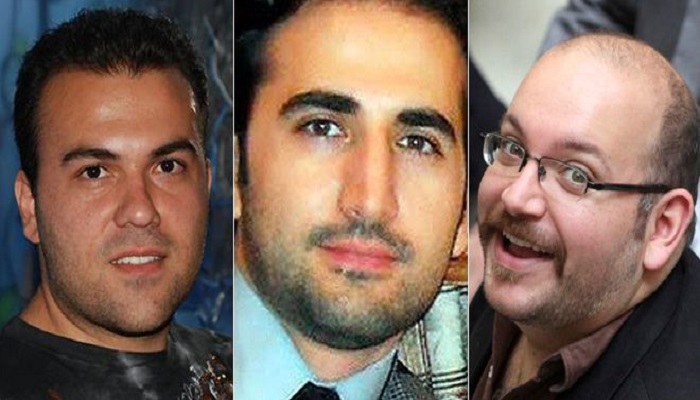
Hekmati Abedini RezaianThe National Iranian American Council touts itself as a champion for Iranian Americans. Its own mission statement trumpets the organization as “a non-profit educational organization dedicated to promoting Iranian-American participation in American civic life.”

One can only assume that its daily verbal assaults against anyone opposing a nuclear deal with the Iran regime is part of that educational process for promoting civic life in America. A casual tallying of public statements, press releases, news quotes and surveys released by NIAC would leave most observers wondering why American civic life happens to be tied so intimately to the foreign policy of the Islamic state.

But the NIAC claims an extended mission to help promote universal human rights in Iran saying on its website:

“NIAC works to ensure that human rights are upheld in Iran and that civil rights are protected in the US. NIAC believes that the principles of universal rights – dignity, due process and freedom from violence – are the cornerstones of a civil society.”

A rational person could then deduce that NIAC would be a vocal and outspoken proponent for the human rights of Iranian Americans who are being abused or mistreated in some fashion. In fact, if you scroll through NIAC’s Issues blog, you cannot find any denunciations, condemnations or calls for better treatment of people within Iran.

Indeed, if NIAC’s mission is to advocate on behalf of Iranian Americans, I can easily come up with three who desperately need its help. Languishing in Iranian prisons are:

  • Jason Rezaian, a Washington Post reporter and Iranian American born in California, who has been held by Iran and only this week has been charged with espionage for reporting Iran news and is not facing trial in the Revolutionary Court in a closed session without even his family allowed in attendance;
  • Amir Hekmati, a former U.S. Marine and the longest-held American prisoner in Iran, who has been sentenced in another sham trial and whose appellate hearing was denied yet again; and
  • Saeed Abedini, a Christian pastor from Idaho, who was convicted for holding religious services in private homes.

In response to the Rezaian closed session trial moving forward, NIAC’s president, Trita Parsi, was quoted in the New York Times saying “If there is a conviction in the Rezaian case and no leniency, it can create a crisis in the nuclear talks, yet another complication.”

It’s a wonder Parsi always seems to find a way to tie everything back to nuclear talks. You think he has a genetic sequence which compels him to burp the word “nuclear” whenever he is asked a question about Iran.

Wouldn’t it be refreshing if Parsi actually lived up to his own organization’s mission statement and said something like: “We think it is horrible that Iranian regime is holding these Iranian Americans in prison without proper due process or transparency. We urge Iran’s authorities to respect international law and all these Americans to come home to their families without any further delay.”

Now was that so hard?

But then again, the Iran regime does seems to share a playbook with other dictatorial regimes which use hostages as political bargaining chips. We can only assume Iran’s mullahs have seen the prisoner swaps and are holding on to these American hostages hoping to leverage them as part of the nuclear talks; talks that Parsi and NIAC seem pathologically tied to as well.

But the plight of these Iranian Americans should be blatant evidence of the true nature of the mission of the NIAC, which is not to help them, but help Iran gain a nuclear deal with the immediate lifting of all economic sanctions as a reward.

By Michael Tomlinson

Filed Under: Blog, National Iranian-American Council Tagged With: Iran, Iran Deals, Iran Lobby, Iran Talks

Iran Lobby Can’t Keep Facts Strai

May 27, 2015 by admin

Lies Truth (1)The National Iranian American Council has been unleashing verbal broadsides at Sen. Lindsey Graham (R-SC) alleging he had called all Iranians “liars” and demanded apologies for what it alleges as racist comments.

NIAC’s head, Trita Parsi, issued a statement condemning Sen. Graham, saying “Senator Graham owes the Iranian-American community – one of the most successful communities in the United States – an apology.”

Sen. Graham might very well owe Iranian-Americans an apology – if he was talking about Iranian Americans, but he wasn’t speaking of them, he instead was focusing his ire at the mullahs leading Iran today, especially as it related to ongoing nuclear talks.

You see, the NIAC again missed the mark in its eagerness to defend the mullahs that it got Sen. Graham’s quotes wrong.

Writing in the Slatest for Slate.com, Ben Mathis-Lilley clarified the error after reviewing the video of Sen. Graham’s remarks to the Southern Republican Leadership Conference in Oklahoma City:

“I met a lot of liars, and I know the Iranians are lying.” The last word is definitely not liars — you can tell by comparing it with when he actually does say liars earlier in the sentence. Moreover, “Iranians” is actually preceded by “the” both times he says the word, which makes a big difference given that referring to “the [name of national population]” is typical diplomatic shorthand for a particular country’s government. See President Obama referring to “the Iranians” here, for example.

Graham’s statement may or may not be correct. But in the context of current events, and with a more accurate transcription, it doesn’t seem to be the attack on an entire nationality that it’s being made out as, Mathis-Lilley wrote.

So if we take Parsi at his word and were feeling generous, we might assume he made an oversight in not checking the video of Sen. Graham’s words and simply relied on the number of liberal-leaning news outlets that mischaracterized the comments. Parsi might be guilty of nothing more than shoddy fact checking.

Considering Parsi’s past track record in losing a libel lawsuit largely on the grounds of shoddy record-keeping, making false statements and discovery abuses, it seems to be par for the course of how Parsi conducts his public business. It is worth noting that Parsi was ordered to pay the journalist he accused of libel for $184,000 to pay for the defendant’s legal expenses.

It does make you wonder how much Sen. Graham might collect from Parsi for making a similar false accusation of racial comments, when the video clearly shows otherwise.

By Michael Tomlinson

Filed Under: Blog, National Iranian-American Council Tagged With: Iran, Iran Lobby, Senator Lindsey Graham, Trita Parsi

Iran Lobby – Trita Parsi Playing Defense Full Time

May 4, 2015 by admin

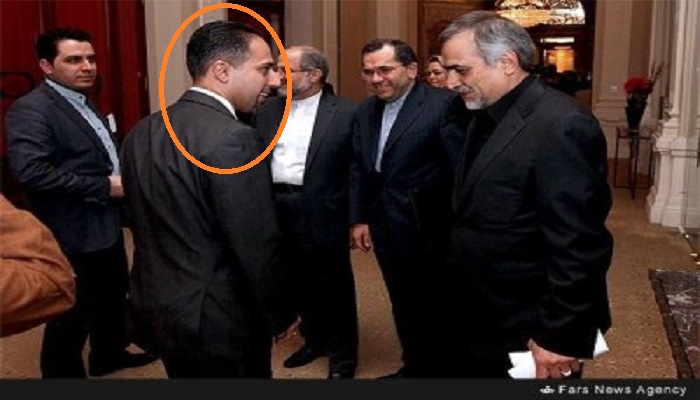
Trita Parsi paying respect the Iranian regime's delegation in Geneva

Trita parsi, greeting the mullah’s delegation in Geneva during the nuclear negotiations -March 2015

In Las Vegas over the weekend, the “Fight of the Century” took place with Floyd Mayweather winning the welterweight championship over Manny Pacquiao with a display of his textbook defensive boxing skills that kept his aggressive opponent at bay, earning him the unified title.

While, Mayweather raked in a reported $200 million for a night’s work, Trita Parsi, the head of the National Iranian American Council, has been busy earning his money on behalf of the Iranian regime trying to plug more holes in the regime’s façade of “moderation” than the Little Dutch Boy had fingers in the dike.

In Politico, Parsi was deflecting questions over insane comments being made by Iran regime officials, including some whoppers that Sen. John McCain (R-AZ) was caught meeting with the founder of ISIS, Abu Bakr al-Baghdadi, the Sunni militant group’s self-declared caliph. The photo used by the regime broadcast doctored images that even a high school student using Photoshop could have done a better job creating.

The litany of imagined and conjured offenses by the U.S. against the mullahs span the spectrum of silly to crazy, but they all point to a recurring pattern of propaganda efforts by the regime in Tehran to portray mullah’s Iran as the offended nation, thereby justifying all of its actions in the name of defending the Islamic nation from its enemies, real or imagined.

In an even more bizarre twist, the Iran regime finally accused imprisoned Washington Post reporter Jason Rezaian of espionage, but oddly charged him with working with the NIAC as proof of his spying against the regime, claiming conversations he had with Parsi through Twitter was proof enough.

Parsi was left in the uncomfortable situation of having to denounce Rezaian was working with the NIAC, but at the same time correct the New York Times characterization of the NIAC as being “supportive of Iran” on all issues. It must be a trying task for Parsi to keep straight all of the disingenuous things he says to various news media.

Parsi, in another interview with the Loyola Marymount University’s Asia Pacific Media Center, claimed the charges against Rezaian were all part of a plot to undermine nuclear negotiations with Iran and the P5+1, which is an odd statement to make. One would think Iran’s provocative attempt to ship arms to Houthi rebels via armed convoy was enough to undermine talks, or Iran’s seizure of an unarmed cargo vessel might be enough to trouble negotiators, both acts that Parsi failed to criticize.

But Parsi also found himself back in the spotlight with disclosures by the Washington Free Beacon that he had met with the White House several times between 2013 and 2014 according to visitor logs to pressure for a deal with the regime.

Interestingly, The Free Beacon also reported links between meetings at the White House with Joseph Cirincione, president of the Ploughshares Fund, a group trying to sell a nuclear deal which has also provided generous funding to NIAC, meeting at the White House as well to help sell the regime’s deal.

According to the Wall Street Journal, Ploughshares has spent more than $7 million funding groups such as NIAC and experts like Parsi who have publicly defended making concessions to Iran’s mullahs as part of a nuclear deal with Iran.

All of that money has certainly helped enrich regime allies such as Parsi. In fact, we should probably congratulate him on the successful sale of his home for $705,000.

It’s good to know business with the mullahs can be lucrative.

By Michael Tomlinson

Filed Under: Blog, National Iranian-American Council

High Seas Drama Proves Iran Regime Untrustworthy

May 1, 2015 by admin

Maersk TigrisWhile the Iran regime has been working hard to portray itself as a peace-loving group of mullahs only interested in the peaceful splitting of the atom, drama was playing out on the high seas as Iran engaged in a high-stakes poker game with the U.S. Navy and commercial fishing vessels much to the consternation of the regime’s lobbying and PR allies who had to answer some uncomfortable questions.

It began last week with the decision by the mullahs to send a nine-ship convoy steaming towards Yemen with what was believed to be a large cache of supplies and weapons for Houthis rebels they had been backing in the overthrow of Yemen’s government.

This was followed by the decision to send in the U.S. nuclear-powered aircraft carrier Theodore Roosevelt with escorts into the Gulf of Aden to deter and possibly detain the Iranian flotilla, which eventually turned back to Iranian waters.

Then this week saw an act bordering on piracy when Iranian navy ships fired across the bow of a Marshall Island-flagged container ship steaming through the Straits of Hormuz. After the ship refused to turn towards Iranian waters, it was boarded and the 24-man crew detained and the ship confiscated over a reported legal dispute.

Earlier reports indicated the Iranian navy ships had reportedly been on the lookout for a U.S.-flagged commercial ship and mistakenly stopped the Maersk Tigris. The U.S. and Marshall Islands share a defense treaty and it remains to be seen if the boarding of the vessel would trigger the security agreement.

The rapid escalation in provocative moves by the regime in international waters has posed a sticky problem for regime supporters, even Congressional supporters of a nuclear agreement with Iran were at a loss of explanation for the actions.

“We have to assure the sea lanes are open. I think it’s important to find out exactly what happened,” said Sen. Jack Reed (D-R.I.), the Armed Services Committee’s ranking Democratic member.

“But we can’t tolerate interference with vessels moving up and down in international waters. It’s very serious when ships are intercepted like that,” he said.

In response, the U.S. Navy instituted a new policy of escorting commercial ships through the Persian Gulf and monitor for any distress signals sent out from vessels traversing the Straits of Hormuz in clear warning to the mullah’s regime in Iran.

Reza Marashi, who has entitled himself as “research director” of the regime’s chief lobbying group the National Iranian American Council, offered the ludicrous notion that Iran may have boarded the ship because of suspicions it was from rival Saudi Arabia and heading to the United Arab Emirates.

“If that’s true, it could be part of an escalation in the conflict between Tehran and Riyadh,” Marashi said. One theory he offered was that the Iranians could be retaliating for the Saudi bombing of a landing strip in Yemen where Iran was said to be planning to land a plane.

Marashi probably would have also offered as explanation that Mercury was in retrograde or aliens had seized control of the Iranian navy commander’s brain since those excuses made as much sense for the regime’s blatant disregard for international maritime law.

All of which poses a pickle for supporters such as the NIAC who have long argued that the Iran regime could be a trustworthy and believable partner in an international nuclear agreement, but is now faced with yet another inconvenient example of Iran’s mullahs flouting the law.

The near constant displays of disregard for agreements, treaties and law by Iran’s mullahs should not catch anyone unawares and only reinforces the growing perception in America that any agreement Iran signs will not be worth the paper it’s printed on.

By Michael Tomlinson

Filed Under: Blog, Current Trend, National Iranian-American Council Tagged With: Iran Lobby, Iran Talks, Yemen

The Weakening Arguments of the Iran Lobby

April 27, 2015 by admin

A new Fox News poll showed a new record low of the administration’s handling of the Iran regime. By a 51-34 percent margin, American voters think President Obama is “being too soft” rather than “striking the right balance” in nuclear talks with Iran. The sizable 17-point margin reflects negative opinion among Democrats, Republicans and independents, with a paltry two percent thinking the administration was “being too tough” on Iran. Untitled-1

The poll also reflected growing opinion among Americans that any deal made with the regime would not work with half believing negotiating itself was the wrong thing to do since Iran’s mullahs could not be trusted to honor any agreement.

Overall, 65 percent of voters think the Iran regime poses a real national security threat to the U.S., representing a slight increase from the 62 percent who felt that way in 2006; a remarkable statistic after nearly a decade of effort by the regime’s allies and lobbyists who have worked tirelessly in an attempt to change the regime’s image with American voters.

The poll also indicated strong support for congressional approval of any deal with a whopping 76 percent supporting it; a troubling sign for the efforts by regime allies such as the National Iranian American Council who have launched several grassroots efforts to bypass Congress and failing at each point. The effectiveness of the NIAC efforts is akin to a weakling trying to lift weights and failing.

But even once staunch allies of the administration’s policies have voiced real concerns over the future direction Iran’s leaders might take should a nuclear agreement come to fruition. Writing in MSNBC, Suzanne Maloney, a senior fellow at the Saban Center for Middle East Policy at the Brookings Institution, said “a nuclear deal won’t alter the fundamental drivers of Iran’s efforts to extend its influence across the Middle East and it won’t sever Tehran’s relationships with the violent, often destabilizing proxy groups it supports and directs in Yemen, Iraq, Syria and beyond.”

“Nor, for that matter, would a nuclear deal have much immediate positive effect on the Iranian government’s treatment of its own people or its handling of judicial cases against Iranian-Americans, several of whom are currently held in Iranian prisons on trumped up charges,” Maloney adds.

Maloney correctly recognizes that the regime’s aims are not resource-driven, but ideological in nature, and the prize of lifting economic sanctions could flood Iran with over $100 billion in frozen assets in a windfall energizing the regime’s proxy wars and efforts to spread its influence far abroad. This deluge of cash is precisely what the mullahs are aiming for and what troubles American voters and allies who recognize what that kind of money could do for Iran’s leaders.

The argument posed by Iran’s lobbying machine that the assets would help ordinary Iranians is so much balderdash as Maloney notes “in fact, (Iran’s) most destabilizing policies have persisted and even worsened during times of economic pressure.” Ironically while the economy is at the verge of bankruptcy, Rouhani’s government has dedicated a bigger budget to the security forces this year in comparison to his “hardliner” predecessor that clearly washes away the illusion of moderation within mullah’s government

All of this serves as backdrop to Secretary of State John Kerry beginning another round of talks by meeting with Iranian foreign minister Javad Zarif in New York on Monday on the sidelines of the 2015 nuclear Non-Proliferation Treaty Conference with pressure mounting on the administration to hold firm for a deal that can pass congressional muster.

The point of maximum leverage for the P5+1 group of nations appears to be now with Iran’s leadership straining to keep its commitments in four major proxy wars going on at the same time in Lebanon, Iraq, Syria and Yemen straining its economy and budget to the breaking point.

With the backing of the American people, the U.S. should hold out only for a deal that does not reward Iran’s mullahs, but instead reins them in.

By Michael Tomlinson

Filed Under: Blog, National Iranian-American Council Tagged With: Appeasement policy, Iran, Iran Talks, Suzanne Maloney

Iran Lobby – The Sales Job of NIAC

April 7, 2015 by admin

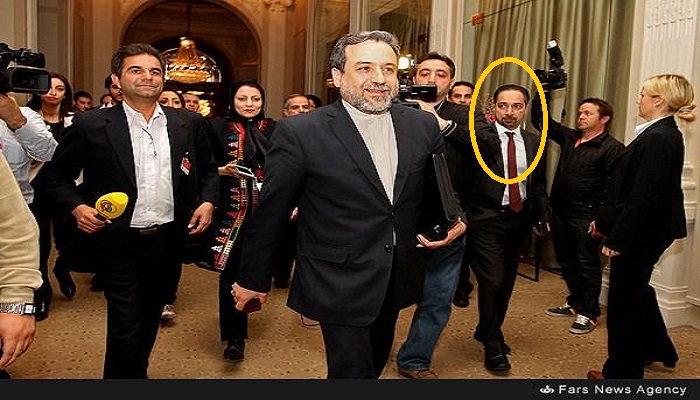
Trita Parsi on NIAC accompanying the Iranian delegation in Geneva - Iran talks March 2015

Trita Parsi on NIAC accompanying the Iranian delegation in Geneva – Iran talks March 2015

With a vague “framework” of a nuclear agreement with the Iran regime and the West now floating around, Iran’s mullahs are cracking the whip on their lobbyists and PR flaks to get the job done and sell what is arguably the smelliest deal since Peter Minuit bought Manhattan from the Lenape tribe for 60 guilders.


Chief amongst the regime’s trusted mouthpieces is Trita Parsi and the National Iranian American Council, who was omnipresent at talks over the last two years and enjoyed close access to Iran regime team members, often being privy to details that virtually all Western journalists didn’t know about.


The close nature of the working relationship between NIAC and Iran’s mullahs has come under intense scrutiny, especially from several articles on Breitbart.com pointing to the cozy working relationship NIAC had with regime officials and most disturbing the recent revelation of a key member of the U.S. National Security Council having previously been a staff member at NIAC.


There has been no denial of Sahar Nowrouzzadeh’s prior work at NIAC from the Obama administration, although an effort has been made to downplay her involvement in nuclear negotiations, but the connections to NIAC are troubling when one examines the scope of NIAC’s sales effort aimed at heading off intervention by Congress in sinking the proposal and hiding its true nature.


Parsi and NIAC have attempted to show Iranians celebrating in the streets of Tehran in support of the deal, in a nation where protests are banned and public celebrations are orchestrated with the care of a Super Bowl halftime show.


Parsi and NIAC have attempted to show the framework embodies all of the safeguards the West and Congress have been asking for, but an examination by The New York Times Michael Gordon revealed vast differences between what the U.S. and Iranian delegations believe the agreement contains.


Parsi and NIAC have attempted to show there was support in Congress for the framework announcement by pointing to favorable statements from 19 Democratic Representatives, none of whom were part of the 367 bipartisan members objecting to agreement of any deal without Congressional review and approval. The 367 members represent a veto-proof majority in the House.


The NIAC has attempted to launch a grassroots effort by urging supporters to contact Senators since it already knows it has lost any chance in the House to sway a vote. Its only hope is to persuade the five or six Democratic Senators still undecided to fall in line with the mullahs and not vote for a sanctions review bill being offered by Sen. Bob Corker (R-TN).


Oddly, while both House and Senate proposes give Congress the chance to review any deal, and hence allow the American people a voice in what is arguably one of the most important foreign policy issues facing global security and peace, NIAC argue strenuously against any input from the American public.


Why? What is NIAC so afraid of?


Like a used car salesman trying to move a clunker off the lot, NIAC is deathly afraid the American public might actually want to look under the hood of this framework and ask some basic questions such as “Can we really trust mullahs who have already violated three prior international agreements allowing inspections of secret nuclear facilities?”


The truth hurts the NIAC and its bosses in Tehran and it is doing everything it can to hide the truth and trust in simple slogans and fear mongering, warning that turning down this deal is tantamount to war with Iran; forgetting that a nuclear-armed extremist Islamic regime is the surest and shortest path to war.


Filed Under: American-Iranian Council, Blog, National Iranian-American Council, News

Iran Lobby – Trita Parsi Can’t Escape His Past

March 13, 2015 by admin

Boxed InTrita Parsi, the head of the National Iranian American Council (NIAC) and apologist-in-chief for the Iranian regime, was caught in another embarrassing revelation about his past conduct when Breitbart.com ran a story detailing a previous effort by Parsi between 2006-2007 to arrange a meeting between 12 Democratic Senators and Iranian officials to coordinate efforts against then President George W. Bush’s foreign policy.

The revelation came in email correspondence that was only made available after NIAC brought a failed defamation suit against Iranian journalist Hassan Dai, in which the enterprising reporter revealed the NIAC’s connections and lobbying efforts on behalf of the regime.

According to Breitbart.com, “Parsi and his group started a campaign called the ‘Iran Negotiation Project,’ where NIAC would help to link up Democratic Congressmen with the state-sponsor of terrorism. Dai reported that NIAC arranged for a group of 12 Democrat ‘Congress members that opposed Bush’s policy toward Iran’ and that they ‘met regularly to coordinate their efforts and planned to meet members of the Iranian parliament.’”

Parsi’s actions are even more ironic considering his statement to the American Thinker at the time in which he said:

“These [Democratic Party] members are very disillusioned with the Bush foreign policy and are tired to sit on the sidelines as Bush undermines the US’s global position. As a result, they are willing to take matters in their own hands and they accept the political risk that comes with it.”

All of which makes his recent condemnation of the efforts by Senate Republicans to hold the Obama administration accountable in current nuclear talks with the Iranian regime the height of hypocrisy. Parsi cannot help but be boxed in by how own past deeds and actions.

More evidence of NIAC’s hypocrisy was on display with a joint letter signed by it and 50 self-claimed groups largely compassionate to the criminal regime of mullahs sent to Senators urging more accommodation with Iran’s mullahs who urged them to not hold a proposed agreement accountable and subject to review.

But these types of mental gymnastics are nothing new for an organization that has so often tossed logic to the wind all in the service of the mullahs in Tehran that maintain an iron grip over their people and serve as the launching point for a large number of the world’s terror groups.

NIAC’s position in favoring the Iranian regime maintaining its nuclear infrastructure in the absurd piece of logic that it would foster regional peace was put to shame with the news reported in the Wall Street Journal out that Saudi Arabia had reached an agreement with South Korea to launch a feasibility study for building two nuclear reactors worth $2 billion over the next 20 years.

“Saudi Arabia’s former intelligence chief, Prince Turki al-Faisal, a member of the royal family, has publicly warned in recent months that Riyadh will seek to match the nuclear capabilities Iran is allowed to maintain as part of any final agreement reached with world powers. This could include the ability to enrich uranium and to harvest the weapons-grade plutonium discharged in a nuclear reactor’s spent fuel,” wrote the Journal.

Far from making the region a safer place, the Iranian regime’s relentless pursuit of nuclear weapons is now triggering a full-scale arms race.

The NIAC has long advocated positions that it later contradicts whenever it suits the whims of its regime masters and Senators are right to be skeptical of anything produced by it.

By Michael Tomlinson

Filed Under: Blog, National Iranian-American Council Tagged With: Appeasement, Iran, Iran Lobby, NIAC, Trita Parsi

NIAC Example of Helsinki for Iran Dead Right

March 12, 2015 by admin

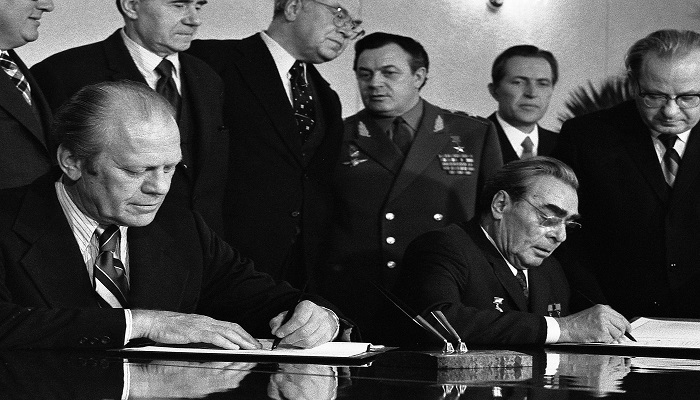
Helsinki AccordsThe lack of intellectual rigor coming from the Iranian regime’s foremost lobbying team in the National Iranian American Council fails to impress and today is no exception with an inane editorial written by Tyler Cullis and appearing in the New York Times.

In it, Cullis attempts to draw parallels between the diplomatic efforts made by President Gerald in overcoming Senate opposition to craft an accord with the old Soviet Union in an effort to lay the groundwork for détente between the East and West. He aligns this scenario with what is currently happening in talks between the Iranian regime and the P5+1 group of nations seeking to restrict the mullahs march to a nuclear weapon.

Cullis fails to mention several key and crucial distinctions between the two that have an even more profound impact on current talks.

For one thing, President Ford attempted to make human rights a core feature of the accords in recognition of the terrible human rights violations occurring regularly within the Warsaw Pact nations. In a speech he gave while trying to sell the Accords to the American public, he said:

“The Helsinki documents involve political and moral commitments aimed at lessening tension and opening further the lines of communication between peoples of East and West. . . We are not committing ourselves to anything beyond what we are already committed to by our own moral and legal standards and by more formal treaty agreements such as the United Nations Charter and Declaration of Human Rights.”

It was significant for President Ford to stress the human rights aspects of the Accords since the agreement would effectively make permanent the Soviet Union’s annexation of the Baltic states of Lithuania, Latvia and Estonia after World War II and place them under harsh rules for the next 30 years.

The Accords were also significant because they were not a treaty per se, as evidenced by the strong objections by nations such as Canada, Spain and Ireland in allowing the Soviets to swallow the Baltic States. In a bit of historical irony, the Accords laid the groundwork for the later Organization for Security and Cooperation in Europe, the same working group which has floundered in building a cohesive response to Russia’s recent annexation of the Crimea and invasion of Eastern Ukraine.

All of which further demonstrates the feebleness of Cullis argument. At no point during the P5+1 talks has the Iranian regime’s dismal human rights record ever been put on the negotiating table, nor its long support and sponsorship of global and Islamic extremist terror groups.

One of the key recognitions of the Helsinki Accords was its commitment and focus to the preservation of human rights as a key element in the dialogue between the West and Soviet Union. It presented the framework by which later talks under détente efforts by preceding Presidents were always framed by the need to dissuade the Soviets from abusing its own people and those of nations under their sway.

It is a model of success that has borne early fruit with the Iranian regime by forcing it to come to the negotiating table after economic sanctions began having their desired effect, but Cullis and other regime sympathizers would have us give Iran’s mullahs the breathing room necessary to rebuild their economy while arming themselves with nuclear weapons under the guise of peaceful talks.

While Cullis holds the Helsinki Accords as a model for Iranian talks, he unwittingly reinforces the true reason why those Accords succeeded and it had nothing to do with President Ford ignoring Congress, but had everything to do with his focus on human rights.

According to the Cold War scholar John Lewis Gaddis in his book “The Cold War: A New History” (2005), “Leonid Brezhnev had looked forward, Anatoly Dobrynin recalls, to the ‘publicity he would gain…when the Soviet public learned of the final settlement of the postwar boundaries for which they had sacrificed so much’… ‘[Instead, the Helsinki Accords] gradually became a manifesto of the dissident and liberal movement’… What this meant was that the people who lived under these systems — at least the more courageous — could claim official permission to say what they thought.”

We can only hope that this proposed agreement with the regime gets scrapped and instead a true human rights-driven manifesto takes its place rightly restoring the importance of Iran’s mullahs getting an agreement conditioned only by their acceptance and implementation of human rights improvements and the renunciation of terror.

Thank you Mr. Culis for so eloquently making my point.

By Michael Tomlinson

Filed Under: Blog, National Iranian-American Council, The Appeasers Tagged With: Helsinki Accord, Iran, Iran deal, Iran Lobby, Iran Talks

The Marginalization of NIAC

March 6, 2015 by admin

Outside Looking InWith the debris beginning to clear from the build up to the Israeli Prime Minister’s speech to a joint session of Congress and the March 24th deadline fast approaching for the P5+1 negotiators in Geneva, Switzerland for a framework of a deal for halting the Iranian regime’s nuclear program, it is an opportune time to survey the landscape and ask just how effective Iran’s chief lobbyists, the National Iranian American Council (NIAC), have been lately.


The NIAC had performed almost every acrobatic maneuver in drowning out the message about the true nature of the Iranian regime and its role as the center of extremist Islam in the world and terrorism, but how effective has it truly been?


NIAC also held a “National Day of Action” in an attempt to deliver petitions to local Congressional offices calling for an end to economic sanctions against the mullah’s regime in Iran. After much hype, the actual results were not even worthy of a Model UN session of high school students. Roughly 65 teams in only half of the states fanned out to deliver a few petitions and mostly posed for selfies in Congressional offices.


The political muscle of the NIAC falls far short of what we have come to expect from powerhouse political operations such as the National Rifle Association, labor unions, environmental groups or even grassroots efforts like Occupy Wall Street. From an impact standpoint, the NIAC seems to rank somewhere between “irrelevancy” and “obscurity.”


But the NIAC does not lack a certain notoriety, especially in the wake of a disastrous defamation suit it filed in which evidence was produced linking it to the Iranian regime and steps taken by it to obscure and cover up those connections. The NIAC has struggled mightily to recast the decision by the US federal Court of Appeals for the District of Columbia in a favorable light, but the court ruling reads like a blow-by-blow indictment of NIAC.


An excellent review of the decision and its implications for NIAC was published by Business Insider by Armin Rosen the other day and worth reading. Rosen recounts the most damning revelations from the court decision, including finding that:


  • NIAC really didn’t produce calendar records it was ordered to;
  • NIAC initially hid the existence of four of its computers from the court and was not honest about what they were used for;
  • NIAC misrepresented how its computer system was configured;
  • NIAC didn’t explain why it withheld 5,500 emails from its co-founder and former outreach director;
  • NIAC was not truthful about the nature of its record-keeping system;
  • NIAC took two and a half years to produce its membership lists under court order; and
  • NIAC did not turn over mountains of relevant documents and even altered an important document after the lawsuit was brought.


In response, the NIAC issued a “clarification” on its website in a feeble attempt to restate Judge Robert Wilkens’ opinion and heavily edited from his full opinion.


Lastly, there is a growing realization among U.S. news organizations that NIAC is merely a functionary for the Iranian regime and as such less of its “news” is finding its way into mainstream media. A review of just the past few days during the NIAC’s most intense lobbying and media efforts revealed the overwhelming bulk of news organizations carrying NIAC’s statements were Arabic news media with ties to the Iranian regime or semi-official Iranian news organs.


The dearth of in-depth coverage is growing evidence the group has worn out its welcome when it comes to serious policy discussions about Iran’s nuclear program and has even less credibility when taken into context of its apparent lack of criticism of the regime over human rights violations, support for terrorist groups and the propagation of Islamic extremism.


It is a curiosity for American news media to receive media pitches from NIAC that border on hysterical when it blithely ignores injustices committed by the Iranian regime so egregious as to shock even seasoned foreign correspondents.


Thankfully, the NIAC is becoming less of an influence as evidenced by this week’s events. We can only hope it eventually fades into political obscurity the same way the dodo bird became extinct.

By Michael Tomlinson

Filed Under: Blog, National Iranian-American Council Tagged With: Iran Lobby, Iran Talks, National Iranian American Council, NIAC

  • « Previous Page
  • 1
  • …
  • 5
  • 6
  • 7
  • 8
  • 9
  • Next Page »

National Iranian-American Council (NIAC)

  • Bogus Memberships
  • Survey
  • Lobbying
  • Iranians for International Cooperation
  • Defamation Lawsuit
  • People’s Mojahedin
  • Trita Parsi Biography
  • Parsi/Namazi Lobbying Plan
  • Parsi Links to Namazi & Iranian Regime
  • Namazi, NIAC Ringleader
  • Collaborating with Iran’s Ambassador

Recent Posts

  • NIAC Trying to Gain Influence On U.S. Congress
  • While Iran Lobby Plays Blame Game Iran Goes Nuclear
  • Iran Lobby Jumps on Detention of Iranian Newscaster
  • Bad News for Iran Swamps Iran Lobby
  • Iran Starts Off Year by Banning Instagram

© Copyright 2026 IranLobby.net · All Rights Reserved.