Iran Lobby

Exposing the Activities of the lobbies and appeasers of the Mullah's Dictatorship ruling Iran

  • Home
  • About
  • Current Trend
  • National Iranian-American Council(NIAC)
    • Bogus Memberships
    • Survey
    • Lobbying
    • Iranians for International Cooperation
    • Defamation Lawsuit
    • People’s Mojahedin
    • Trita Parsi Biography
    • Parsi/Namazi Lobbying Plan
    • Parsi Links to Namazi& Iranian Regime
    • Namazi, NIAC Ringleader
    • Collaborating with Iran’s Ambassador
  • The Appeasers
    • Gary Sick
    • Flynt Leverett & Hillary Mann Leverett
    • Baroness Nicholson
  • Blog
  • Links
  • Media Reports

The Tragedy at Charlie Hebdo and the Silence That Followed

January 8, 2015 by admin

paris-attack-charlie-hebdo (1)The vicious and meticulously executed attack by Islamic extremists on the French news weekly Charlie Hebdo in Paris resulted in the mass killings of journalists, cartoonists and police officers. It has been widely condemned by the international community as a blatant effort to muzzle a free press and punish any of those seeking to shine a spotlight on the radical thugs now perverting Islam and sowing death and destruction around the world.


Social media has been filled with sympathetic tweets and hashtags of #jesuischarlie as the world expresses its revulsion at this act and begins to grapple with the larger and ever growing problem of radicalization of people drawn to the preaching and messages of violence from groups such as ISIS and state-sponsors of terror such as Iranian mullahs.


Curiously there has been one quiet corner of the Internet and that is the domain occupied by the supporters and advocates of the Iranian regime. A casual perusal of the social media feeds of people such as Trita Parsi of the National Iranian American Council showed a lack of commentary or condemnation of the attack. In Parsi’s case he did not even post any comment on the attack until hours later and even then provided a link to an editorial by Juan Cole that attempted to rationalize the murders in the context that it did not represent a broader indictment of Muslims.


Why this is curious is when compared to other acts such as the rioting in Ferguson, Missouri or even the recent protests by New York Police Department officers against New York Mayor Bill de Blasio, Parsi has been vocal and quick to cite these incidents and condemn them. Yet in a case where he could have made a clear demarcation between the violent and extremist acts of Muslims intent on perverting a religion for their own gains, he remained largely silent.


This deafening lack of protest from supporters of Iran illustrates the tightrope they attempt to navigate by avoiding any potential linkages back to Iran from acts of terror and violence occurring around the world. It is well established that Iranian regime’s militant brand of sectarian violence and policy has been at the heart of conflicts in Syria, Iraq, Afghanistan, Lebanon and Yemen just to name a few places. Yet, none of these actions such as the supply of weapons and cash to terror groups such as Hezbollah nary once engender a word of protest or tweet of outrage from Parsi and company.


It points to the rank hypocrisy of the Iranian lobby in condemning acts in the West that help Iran point an accusing finger yet never question the almost daily barbarous acts of violence committed by the Iranian regime and its agents around the world and against its own people.


Members of the U.S. Congress, recently sworn in, should take the opportunity to not only note what Iranian regime supporters such as Parsi tweet and post, but more importantly, what they don’t post or protest.


Sometimes the silence is just as damning as the words.

By Laura Carnahan
Filed Under: Blog, National Iranian-American Council, News

Iran Cannot Have it Both Ways in Nuclear Talks in 2015

January 7, 2015 by admin

Empty-Meeting-RoomOn January 15th, Iran will once again take a seat at the negotiating table with the P5+1 nations and begin a third round of talks over its nuclear weapons program and just as it has done twice before, it will refuse to make any substantial concessions and after another seven tedious months, Iran will undergo its third strike.

Far from crystal-ball gazing, this scenario is more than likely given past history and a newly resurgent Republican majority in both houses of Congress who promise to flex its collective muscle in case President Obama makes any precipitous concessions as he did in normalizing relations with Cuba on his own.

And just as before, Iran’s lobbying and PR machinery has ramped up into overdrive before these talks start to help lay the ground work for another Cuba-like executive action by President Obama for Iran. The initial seeds have been laid by Iran cheerleaders such as Trita Parsi of the National Iranian American Council who have saluted the trial balloons for normalizing relations with Iran with the opening of an American embassy in Tehran again.

Ironically, Parsi has sought to frame this latest round of talks around whether or not the U.S. is willing to offer more concessions and can be trusted by Iran in recent comments, saying:

“There are question marks in the minds of the Iranians as to whether the American promises about sanctions relief actually can be trusted – not to say that they don’t have enough confidence in the president, but they may not have enough confidence in the U.S. Congress,” Parsi said.

One can see how he and other Iran allies are seeking to separate any possible normalization action by the President from a Congress that may object to it.

This, more than anything else, represents the “have their cake and eat it too” approach of Iran to nuclear talks. On the one hand Iran, through its perceived moderate President Hassan Rouhani, holds out an olive branch of concessions and flowery speeches, while on the other is the stern and recalcitrant voice of Iran’s Supreme Leader Ayatollah Ali Khamenei who’s earlier pronouncements sank the other negotiating sessions.

Now Parsi and his cohorts are once again attempting to provide political cover for progressive liberals in Congress who basically want to give Iran whatever it wants in the misguided belief that everything will turn out alright.

But former chairman of the U.S. Joint Chiefs of Staff, Gen. Hugh Shelton recently wrote in an editorial in The Los Angeles Times that “Amnesty International has pointed to the presence of Iran’s proxy militias in Iraq as a key source of instability and sectarian conflict there.”

He goes on to point out that Iran is at the heart of most of the region’s conflicts and instability. All of which has been going on during the time of nuclear talks. One cannot claim to aim for peaceful uses for nuclear power while at the same time sponsor most of the wars and conflicts going on at the same time.

This contradiction lies at the heart of these talks and is the unspoken elephant in the room. Iran cannot claim the mantle of peace while it clutches the proverbial sword of war, no matter what Parsi and others claim.

We can only hope round three ends the same way as rounds one and two.

By Michael Tomlinson


Filed Under: Blog, Latest from Lobbies & Appeasers, News Tagged With: Iran Lobby, Nuclear Iran, nuclear talks

Whitewashing Iran’s human right’s records to lobby softer position on nuclear talks

December 6, 2014 by admin

Photo credit: The gulf and Middle East Association for civil society-August 2014

Photo credit: The gulf and Middle East Association for civil society-August 2014

The Ministry of Intelligence and Security of Iran had instructed its agents to try to advocate themselves as opposition by writing 80% against the regime and the violation of human rights in Iran, but they have to dedicate 20% to denying the opposition, namely the MEK (Mujahedin-e-Khalq), by spreading rumors discredit them. This seems to be the copy framework agreement with the Iranian regime’s lobby and appeasers with respect to the failed Iran talks in Vienna.

Recently, some advocates of Iranian origin who claim to be human rights activists are expressing concerns over the recent resolution of the House of Representatives against the human rights violation in Iran.

One of these “human rights activists” has written an article in The Hill today, expressing concerns that “seeking ways to achieve tangible human rights improvements inside Iran is also closely related to the outcome of the nuclear negotiations” and that including “separate issues – such as Iran’s rights record, or its support for terrorism – will make it more difficult to reach a nuclear deal”.

The author who by the way is a well-known advocate and affiliate of “NIAC” claims that “the Iranian human rights community strongly supports a successful diplomatic resolution of the nuclear crisis, particularly because many believe that without a deal, the human rights crisis in Iran will worsen”. He goes further in whitewashing the regime’s president Rouhani who is just another mullah within the hierarchy of the theocracy ruling Iran, saying: “the perpetuation of tensions over the nuclear file is likely to result in continued and even increased gross human rights violations. For example, throughout the past decade, Iranian hardliners, opposed to a deal, have thrived by capitalizing on the nuclear confrontation and using it to justify their repressive measures. Failure of the negotiations would embolden them. They would seek to weaken the government of relative moderate President Hassan Rouhani.”

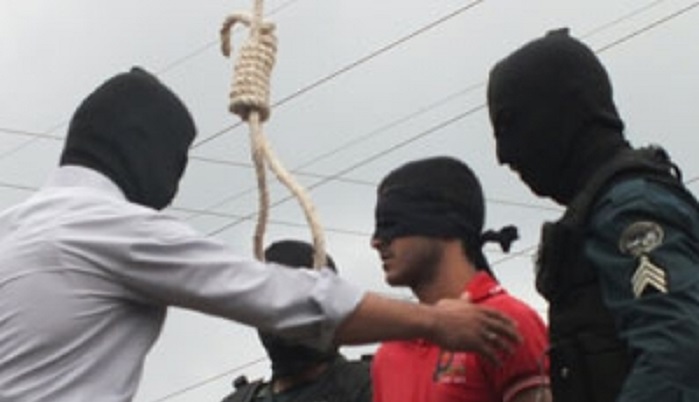
This is while in Iran under the so called “moderate” Rouhani, over 1,100 people have been executed and thousands are on death row. Based on the number of executions that mainly appear on state newspapers in Iran, on average every 8 hours one person is being executed. Women are disgracefully attacked by regime-related thugs, either by acid or being stabbed under the pretext of disobeying the dress code. There is no free access to information, Iran is the biggest prison for journalists and the situation of religious minorities is outrageous, to name a few.

Last November, the United Nations General Assembly’s third committee adopted the UN’s 61st resolution condemning human rights abuses in Iran and urged the regime to stop the executions, in such conditions, overlooking the human rights in Iran and ignoring the fact that people and particularly women in Iran are living under despicable conditions is nothing but cruel, shameful and immoral. Asking the US politicians to be softer on the regime with such inhumane records of human rights, is even worse.

The author is also quoting some activists to strengthen his proposition and represent it as a request by the Iranian human rights community. He writes: “As Nasrin Sotoudeh , the prominent human rights lawyer and former political prisoner put it: ‘It is obvious that we welcome peaceful relations with all countries and as such support the negotiations’.”  This is while reading Nasrin Sotoudeh’s entire quote, you can see that she is actually demanding the human rights issues to be discussed during negotiations and not to be ignored, exactly the opposite of what the Iranian lobby is criticizing the congress for in the Hill article. Here is her quote from the same source:

“if the Iranian state wants to rehabilitate its relations with the international community, it must certainly address fundamental human rights concerns on issues such as juvenile executions and freedom of expression. The Iranian government should clearly state its position on these issues during the nuclear negotiations. In my opinion, keeping silent on such issues until the end of negotiations will make it more difficult. My understanding is the European countries say we cannot easily bring up human rights issues because it will potentially threaten the negotiations. We say at a minimum ask the Iranian negotiators to express their position on fundamental human rights concerns such as juvenile executions which are banned by all international conventions.”

The truth of the matter is that the Iranian regime has strategically invested in its nuclear program. It is doing everything to get more time to complete the program and will not shift from this unless faced with more pressure and more sanctions. After all it was the sanctions that finally forced the mullahs to go to the negotiation table and accept the Geneva accord, not the appeasement policy that has unfortunately been the dominant policy of the West towards Iran in the past two decades.

Filed Under: Current Trend, Latest from Lobbies & Appeasers, News Tagged With: Iran, Iran Human rights, Iran Lobby, Iran Talks, Iran Talks Vienna, Iranian Lobby, nuclear talks

The Pretzel Logic of the Iranian Lobby on the Nuclear Deal

November 20, 2014 by admin

"Dedicated to Improving the Relationship Between the U.S. and Iranian Governments"

“The Pretzel Logic of the Iranian Lobby on the Nuclear Deal”

With the deadline of November 24th fast approaching for the P5+1 negotiators to reach a deal with Iran over its nuclear weapons program, the chorus of the PR machine working on behalf of the regime is reaching a crescendo.

The opening shot came from disclosures in the Washington Free Beacon that the Truman National Security Project issued a call to arms for writers and bloggers to join in the effort to comment, post and tweet U.S. media in favor of a nuclear deal.

This was followed by a virtual avalanche of editorials and commentary that sometimes borders on the ludicrous such Gary Sick’s piece in Politico where he argued that giving Iran a deal that preserves its ability to enrich uranium was preferable to letting Iran walk away. Sick’s piece attempts to make the leap of logic that failure to reach a deal would potentially place Iran’s president Hassan Rouhani at some crucial disadvantage with perceived hardliners in Iran and lead to his ouster.

It’s an argument that reminds me of MIT professor and Obamacare advisor Jonathan Gruber’s recently unearthed comments about the lack of intelligence amongst American voters. Sick must carry a similar opinion of Western negotiators.

This theme that letting Iran walk away from the negotiating table would be disastrous is being echoed on pro-Iranian blogs such as LobeLog.com and lobbyists such as the National Iranian-American Council. All have let loose shrill cries that almost any deal is preferable than letting Iran walk…even if the deal is viewed as an awful one by the West.

What all of these sympathizers ignore though is the biggest obstacle to closing a deal and it is not the West, it is Iran’s Supreme Leader, Ayatollah Khamenei who previously sank negotiations with public comments against reaching a deal that would impede Iran’s ability to develop a weapon. His most recent comments reinforced that view. In fact, the mullah-in-chief  has doubled down with another series of speeches denouncing efforts to rein in Iran’s nuclear capacity.

U.S. Secretary of State John Kerry and other negotiators were also stunned to hear even more denunciations by Iran’s religious leaders who decried any efforts to cave in to what they considered were excessive demands by the West. Iran has also raised the specter that any deal must first be predicated on the unconditional lifting of economic sanctions without a reciprocal rapid deconstruction of Iran’s nuclear program; a non-starter for almost every nation at the bargaining table.

The pathway now shaping up is a potential for yet another deadline extension without any agreement being reached. The impact of the Iranian lobby and PR machine is being severely undercut by Iran’s own leaders out of their own mouths and it seems the best they can hope for now is not a complete meltdown in talks.

There almost seems a calculation by Iran’s mullahs that President Obama needs a foreign policy triumph more than Iran’s economy needs help. It is a calculation seemingly destined to failure with the midterm election results and American voters expressing great alarm over the disintegrating nature of affairs in the Middle East with ISIS, Syria, Iraq, Nigeria, Gaza and Afghanistan.

This is one of those times where pretzel logic doesn’t trump the common sense of American voters.

By Michael Tomlinson

Filed Under: Blog, News Tagged With: Iran, Iran Talks, Iran Talks Vienna

All Hands on Deck for Iran Nuclear Deal

November 14, 2014 by admin

U.S. Secretary of State John Kerry and Iranian Regime Foreign Minister Mohammad Javad Zarif during an earlier session in ongoing nuclear talks. Photo Credit: Christian Science Monitor

U.S. Secretary of State John Kerry and Iranian Regime Foreign Minister Mohammad Javad Zarif during an earlier session in ongoing nuclear talks.
Photo Credit: Christian Science Monitor

Adam Kredo reports in a story in the Washington Free Beacon that the Truman National Security Project, a leading think tank aligned with liberal causes, has begun an effort to enlist supporters in what it characterized as a “all hands on deck” campaign to help secure passage of an Iranian nuclear arms agreement by the Obama administration.

One of the more revealing comments in the article was made by a senior foreign policy official at another DC-based organization who called Truman “reckless.”

“The Truman Institute long ago stopped being a real policy shop and instead became a PR machine for the Obama administration’s foreign policy. The White House will take a deal no matter what, so the Truman Institute is pushing a deal no matter what,” said this official.

This goes to the heart of what is the most troubling aspect of the ongoing negotiations; the perception that the Obama administration is so starved for any kind of foreign policy movement it can call a win that it is willing to take a terrible deal in order to trumpet a victory.

The fact that the administration last month signaled a trial balloon to circumvent Congress in agreeing to a de facto deal with Iran is only more proof of what could soon turn into a disastrous decision.

In granting Iran a deal allowing it to keep thousands of centrifuges, its core missile technology and infuse it with billions in new cash as sanctions ease, the Obama administration could very well seal the deal for a nuclear-armed Iran within this decade. But the administration is not comprised of political idiots. They are shrewd, smart and experienced and realize with the midterm election sea change in Congress, they need to act quickly to make such a deal a fait accompli.

Which is why the administration is ginning up Truman and the Iranian regime’s PR machine, including outfits such as the National Iranian American Council are very much using the opportunity in a full court press to build grassroots support and provide political cover for supporting the President in making this deal.

A key facet is to enlist writers to pen editorials and letters to the editor to key newspapers in selected states where it believes they need to shore up support among Congressmen. Among the states listed as targets by Truman are Illinois, New Hampshire, Georgia, Arizona and New York. It’s worth noting that Republicans won key Senate and gubernatorial races in Illinois and Georgia and pushed New Hampshire to the limit.

While President Obama closing his Asia tour, it is becoming increasingly clear that the leverage in current talks lies almost exclusively with the Iranian mullahs. The President’s missive to Supreme Leader Khamenei (his sixth so far) had a plaintive quality as he almost begged for Iranian help in stopping ISIS.

Based on these services, the mullahs have calculated, that they can live with no deal and continue on their clandestine weapons development program and still maintain the momentum in Iraq and Syria. They also reason that the U.S. is willing to come way over to their side in order to secure a deal. The only question for Khamenei and his lobbies and advocates is how much can they wring out of Obama. If Truman’s proposed PR push is successful, the answer is “a lot.”

By: Michael Tomlinson

Filed Under: Blog, News

Current Islamic extremism took root in Iran, and must be uprooted in Iran

November 1, 2014 by admin

It's a mistake to think Iran will be an ally in the fight against the Islamic State group.

Photo credit to: U.S.News and World Reports

Recent article published in US News and World report, opinion page, challenges the views offered by some pro-Iran advocates who are suggesting to collaborate with Iran in fighting against ISIS.

The article offers a very informative background to the roots of the problem in Middle East and offers a more effective solution.

You can read the entire article below:

By Maryam Rajavi Oct. 28, 2014 | 10:30 a.m. EDT

As the gathering whirlwind of religious extremism masquerading as Islam leaves a trail of devastation in the Middle East and threatens large parts of the globe, a key question lingers about the role of Iran. Some observers – following the tired maxim that “the enemy of my enemy is my friend” – argue that the threat of the Islamic State group transcends policy differences between Tehran and the West and should allow for collaboration against a common enemy. This view is naive and dangerous. In truth, Tehran and the Islamic State group complement and strengthen each other – ideologically as well as tactically on the field of battle.

The Islamic State group is not the only organization that insults the name of our great faith. Since Islamic fundamentalism emerged as an international political force with the establishment of the clerical regime in Iran in 1979, the world has witnessed barbaric acts like stoning, limb amputations, eye-gouging and the massacre of political prisoners in the name of the so-called Islamic Republic. Export of violent fundamentalism has since become the regime’s distinctive feature, earning it the U.S. State Department’s designation as the world’s number one state sponsor of terrorism.

Iraq has always been the mullahs’ gateway to regional domination. That is why they perpetuated a disastrous eight-year war with Iraq, proclaiming that the road to liberating Jerusalem passed through Karbala.

Tehran got a historic opportunity to realize its ambitions after the 2003 U.S. invasion of Iraq opened the gates of Baghdad. In subsequent years, the United States committed a strategic blunder by keeping then-Prime Minister Nouri al-Maliki in power in Iraq, beginning a pro-Tehran tilt that culminated with the wholesale abdication of the country’s politics and security to Iran especially when American forces withdrew in 2011.

A case in point is America’s silence in the face of recurring massacres against members of the Iranian opposition, the Mujahedeen-e-Khalq, or MEK, in the Ashraf and Liberty camps in Iraq. These men and women were given written commitments by Washington assuring their safety. The survivors still languish in inhumane conditions, while Tehran is still intent on wiping them out.

The mullahs have also flooded Syria with Iranian Revolutionary Guards Corps commanders and financial support, playing an indispensable part in ensuring Syrian President Bashar Assad’s survival. Absent Tehran’s role, Damascus would have fallen long ago, saving 200,000 lives and denying the Islamic State group the opportunity to fester and grow.

Western – and particularly U.S. – inaction against Assad’s atrocities and the eight-year-long backing of al-Maliki significantly aided the rise of extremism. And now after wreaking havoc in Syria, Iraq, Lebanon and Palestine, Tehran has targeted Yemen, inundating it with mullahs and Iranian Revolutionary Guards Corps forces, effectively occupying large swaths of the country. It is no small irony that this expansion of the regime’s destructive presence in the region comes at a time when the mullahs are more cornered and vulnerable than ever before.

In the nuclear arena, Tehran’s rulers are at an impasse as the Nov. 24 deadline for a deal draws near. If they abandon their dream of obtaining a nuclear weapon, their regime will implode. And if they choose defiance, they cannot escape confrontation with the international community.

Al-Maliki’s ouster from power undercut Tehran’s eight years of investment in Iraq; its crucial fulcrum in the region thus disintegrated, curbing its plans for regional domination.

A year into Hassan Rouhani’s presidency, internal rifts have deepened. It is increasingly apparent that the Iranian regime’s only path to survival is to terrorize an embittered population. According to the latest report on the human rights situation in Iran by U.N. Secretary General Ban Ki-moon, “the application of the death penalty, including in relation to political prisoners and juvenile offenders, has increased.”

To overcome the current crisis and to rescue the region from more bloodshed and devastation by Islamic fundamentalists, a fresh approach is imperative:

First, defeating terrorism and extremism in the region requires, in addition to taking the fight to the Islamic State group, the eviction of the Iranian regime and its militias from Iraq. Tehran is the main source of the problem and cannot be part of any solution. Engaging Tehran would inexcusably throw a lifeline to an otherwise sinking regime.

Second, Tehran should not be allowed to exploit the Iraqi crisis either to delay a final nuclear deal or to impose its own conditions. Any agreement lacking the implementation of U.N. Security Council resolutions, a halt in uranium enrichment and snap inspections would effectively permit the regime to develop a nuclear weapon.

Third, Islamic fundamentalism in our time took root in Iran, and it must be uprooted in Iran. Standing with the Iranian people’s struggle against religious dictatorship and with the anti-fundamentalist dissidents inside Iran and abroad, as well as ensuring the safety and security of the residents of Camp Liberty in Iraq, are prerequisites for combating religious fundamentalism throughout the region.

Islamic fundamentalism can be defeated only by genuine Islam, a religion that promotes tolerance, advocates gender equality, upholds democracy, human rights and social justice and embraces the separation of religion and state. The experience and courage of those who espouse these ideals and are willing to stand up to extremists – be they in Iran, Iraq or Syria – should serve as our guide.

Maryam Rajavi is the president-elect of the Paris-based National Council of Resistance of Iran, which is seeking the establishment of a democratic, secular and non-nuclear republic in Iran.

Filed Under: Blog, News Tagged With: religion Islam terrorism national security Iran Iraq Islamic State

The Truth about Iran’s Religious Exceptions on Nuclear Weapons

October 23, 2014 by admin

Iran missile program

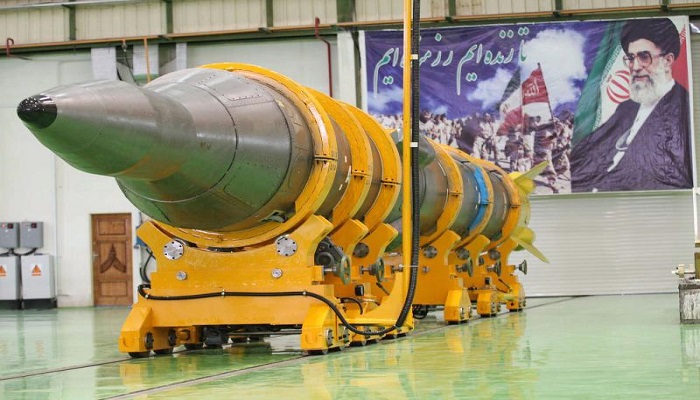
Iran’s Sejil 2 missile is seen in front of a picture of Supreme Leader Ali Khamenei before a test launch.
Photo credit: The Daily Signal

In a recent piece in Truthout, Gareth Porter lays out a historical rationale for Iran not wanting to develop nuclear weapons based on a fatwa, or religious edict, issued by Supreme Leader Ali Khamenei. He goes on to cite a historical precedent with Ayatollah Ruhollah Khomeini, Iran’s first supreme leader in the new Islamic Republic, issuing his own fatwa against chemical weapons after Iraq used them in Saddam Hussein’s war against Iran.

Unfortunately Mr. Porter’s observations and conclusion are fatally flawed for a number of reasons, the biggest being that unlike he has reasoned, the Iranian regime did use chemical weapons against Iraqis, and since the then Supreme Leader lied about it, the present one can certainly lie as well. It is also worth mentioniong that the present Supreme Leader is often  under question as a habitual liar.

It is a given of politics since the dawn of civilization that people in power will do or say most anything that preserves their power or position. Iran and its religious theocracy are not immune to the same temptations. Running a nation state in the service of your religious belief is not much different than serving your political party. In Iran’s case, Khamenei has exemplified the slightly bipolar nature of politics by condemning nuclear weapons, yet ardently defending Iran’s capabilities to develop them.

Mr. Porter fails to note during this summer’s first round of nuclear talks between Iran and the P5+1 group of Western nations, Khamenei delivered his nation’s version of the State of Union where he went into highly technical detail about Iran’s desire to not only preserve its enriching capacity, but indeed significantly expand it almost a hundredfold from where negotiators were at. While negotiators were debating allowing Iran to keep anywhere from 1,900 to 4,000 centrifuges, Khamenei called for 190,000 Separative Work Units (SWU) and the presumption of the rights to build enough centrifuges of the next-generation models (which are the most efficient at refining uranium into highly enriched fuel suitable for nuclear warheads or heavy water reactors which could produce plutonium) as the minimum requirements for their “peaceful nuclear program”.

Since Khamenei represents the final authority in Iran on international treaties, that round of talks was effectively dead on arrival this past July. It is a credit though to the significant international circle of Iranian regime sympathizers and cheerleaders that that collapse was not fatal and in fact another round of talks were scheduled with a November 24th deadline this year.

Mr. Porter bases nearly all his story on the single viewpoint of Mohsen Rafighdoost, who served as minister of the Islamic Revolutionary Guard during the Iran-Iraq war and is obviously responsible for any chemical attacks carried out during the war, and claims that he had broached the subject of weapons of mass destruction to Khomeini who dissuaded him at the time. However as documented by many media outlets, including an article in New York Times, dated January 31, 2003, the truth is the polar opposite.

We only have the current Supreme Leader’s words to go by and unlike the tea reading that went on at May Day parades in front of Lenin’s Tomb of the Politburo members from the old Soviet Union, we are left to discern the rants and ravings of a theocrat that hasn’t spared anything against his own people, while his men in power are widely known to govern the primary state sponsor of terrorism, and had already run a clandestine nuclear program for 18 years before it was first exposed by its opponents in 2002. And in his most recent comments, he certainly lays open the door for enriching on a massive scale.

Indeed the clear facts, unlike Mr. Porters picture of the situation is totally different. In Iran’s case under the leadership of president Hassan Rouhani, Khamenei’s handpicked moderate face to the world, police crackdowns on dissent have sharply risen as have executions; now in excess of 1,000 according to Amnesty International. Access to the internet and outside communications and social media are sharply curtailed if not blocked completely and Iran has stepped up its military and financial support to terror groups such as Hamas and Hezbollah, as well as become involved in the Syrian civil war and the battle with ISIS in Iraq in an attempt to preserve its control of a Shiite hegemony in the region.

Given those actions, it is hard for anyone to take Iran’s leadership at its word that its only interest is in boosting its economy to give its people more access to iPhones and clothes from Gap Kids.

While Mr. Porter’s hopes for a nuclear-free Iran may be commendable and sincere, he may very well have been taken for a ride by an Iranian flying carpet courtesy of the Revolutionary Guard Corps.

By: Michael Tomlinson

Filed Under: Blog, News, The Appeasers Tagged With: Gareth Porter, Iran, Nuclear, Nuclear Iran, nuclear talks

Call for Investigation into VOA for Pro-Iran Corruption

October 18, 2014 by admin

Iranian Lobby

Archive Photo -Taken from Google for Iran lobbies and appeasers

The Washington Free Beacon, has recently reported that a group of bipartisan congressmen have written to Senator Kerry asking for a probe in to the VOA- Persian program’s pro-Iranian regime policies. The program is viewed by the Iranian diaspora as biased and cozy to the Iranian dictatorship for widely censoring the views and activities of the pro regime-change opposition in Iran, or for always offering a negative and absurd picture perpetuated by Iranian intelligence or Iranian lobbies abroad.

The report written by Adam Kredo, a senior commentator of the website, was published on October 17, 2014 on the website.

Excerpts of the article that show how the media is used in favor of the Iranian regime and its lobbies to advocate favorable reports to the Mullahs in Iran is published here:

“Congress is calling for an investigation into Voice of America’s (VOA) Persian language news service as a result of what they say is the station’s systemic pro-Iran bias and cozy ties to the anti-American ruling regime, according to a letter sent recently to Secretary of State John Kerry”, writes Adam Kredo.

Explaining the background, Washington Free Beacon (WFB) writes: “Lawmakers and Iranian dissidents have long accused VOA’s Persian News Network (PNN) of producing sympathetic coverage of the Iranian regime and blacklisting prominent Iranian opposition voices from appearing on the air.”

“The call from Congress for an investigation into these alleged practices comes just a month after the Washington Free Beacon revealed that PNN had banned from the network a prominent Iranian opposition member and placed him on a so-called “black list” after he attacked Iran’s ruling regime for sponsoring terrorism.”

The article continues, “Nine House lawmakers from both sides of the aisle are now demanding that the State Department launch a formal investigation into potential mismanagement at PNN, according to a letter sent to Kerry on Wednesday and obtained by the Free Beacon.”

“We request that you [Kerry] look into this matter and investigate any possible mismanagement and slanted coverage of news by VOA-PNN, including the oversight of management, staffing, and content,” the lawmakers wrote.

“Those members concerned about PNN’s coverage include Reps. Steve Cohen (D., Tenn.), Dana Rohrabacher (R., Calif.), Steve Stockman (R., Texas), Trent Franks (R., Ariz.), Howard Coble (R., N.C.), and several others.”

The core of the corruption

In the article, Adam Kredo explains that “The lawmakers say that their Iranian-American constituents have been complaining about PNN’s failure to cover Iran’s human rights abuses and other matters that are potentially embarrassing to the ruling regime.

“We have received complaints from our Iranian-American constituents that VOA-PNN programs have neglected to adequately cover the abysmal situation of human rights violations in Iran, particularly the alarming and dramatic rise in executions,” they write in the letter.

Examples of the misbehavior of VOA-PNN

Giving examples of the misbehavior of the program, WFB reiterates: “During [Iranian] President Hassan Rouhani’s first term in office, nearly 900 hangings have been ordered with very few of these executions receiving VOA-PNN coverage,” they say. “In our efforts to protect and give voice to vulnerable populations, we must ensure that VOA-PNN upholds its mission to provide truthful news and does not suppress the voices of those Iranians seeking human rights protections and Democratic change in their country.”

“In addition to a significant rise in executions, including one scheduled for a female rape victim who spoke out against her attacker, Iran has continued its pursuit of nuclear weapons and support for terrorism in the Middle East.”

“PNN critics, including former staffers and guests, have discussed systematic corruption at the network that includes a policy of censoring those who criticize the regime and those who may reveal information damaging to the network’s senior officials, some of whom have had ties to the Iranian regime,” WFB’s article continues.

“We are concerned that this network, which is meant to promote freedom and democracy through objective news and information, may have harmed instead of helped the plight of Iranians seeking to claim their human rights,” the lawmakers state in their letter.

Iranian-American community leaders welcomed Congress’ call to investigate PNN.

Majid Sadeghpour, political director of the Organization of Iranian-American Communities-US (OIAC), said that U.S. taxpayers expect better of VOA.

“Regrettably, while VOA-PNN has given voice to the pro-Tehran crowd inside the Beltway, it has censored the views of those who seek a democratic, secular, and non-nuclear republic in Iran,” said Sadeghpour in a statement provided to the Free Beacon.

Regime opponents who have been invited onto PNN say that their comments have been censored, and in some cases have been thrown off the air.

Nikahang Kowsar, an Iranian cartoonist, journalist, and regime critic, told the Free Beacon that he was booted off PNN’s airwaves in March, in the midst of an interview, for discussing corruption in Iran’s oil industry that could be traced back to high-level officials.

Kowsar was being interviewed on VOA Persian’s Last Page program when the host was apparently ordered to stop the interview.

“I was waiting for the second round of questions” when a PNN host claimed that “he was told and ordered not to ask any more questions to me,” recalled Kowsar. “Then a gentleman from the studio came and disconnected my microphone.”

Kowsar said he was shocked by the experience. He later petitioned the Broadcasting Board of Governors (BBG), which oversees VOA and PNN, about the incident.

“When I was in Iran I went to prison for drawing a cartoon, I was cut off from national TV … I was censored in Iran, so somebody who has been censored inside the Islamic republic is not news. But being in the VOA studios in the U.S., the land of the free, and then learning that I have to be censored is … news.”

“If VOA is the channel that wants to talk about American values and freedom of speech and is run by people who have the Islamic republic mindset, that’s not nice,” Kowsar said. “In a way you see that the Islamic republic has exported its values to the heart of Washington and I can’t tolerate that.”

In September – a few months after Kowsar was booted off air – Majid Mohammadi, an Iranian-American academic and critic of Tehran’s hardline regime, was purportedly placed on the station’s “black list” for comparing the Islamic Republic to the terror group Islamic State (IS, ISIS, or ISIL).

“After the program, I was called and one of the staff members of PNN (Mr. Homan Bakhtiar) told me that Mr. Mohammad Manzarpour, the editor, has put me in the black list and PNN will no longer contact me for providing my expertise on Middle East issues in VOA Persian programs,” Mohammadi later wrote in a letter to the BBG.

PNN editor Manzarpour has been singled out for particular criticism by several of the station’s critics and even former employees who have worked with him.

Manzarpour, they allege, has had ties to the Iranian regime and uses his platform at PNN to censor information he finds objectionable.

Manzarpour, his critics note, has previously worked for Iran’s Atieh Bahar Consulting company, which helps foreign companies invest in Iran’s oil sector and “acts as intermediary between them and the government,” according to the Iranian American Forum.

Manzarpour’s previous ties to Atieh Bahar could influence his editorial decisions at PNN, Kowsar said.

“There is something wrong over there, a virus,” Kowsar explained. “You feel there is a sort of conflict of interest over there. Why should somebody coming from Atieh Bahar be in charge of the editorial staff over there?”

“When he cuts me off from a program relating somehow to the oil [industry] … you feel something sketchy over there,” he said.

Read the Source article here


Filed Under: News, The Appeasers Tagged With: Iran, Iran Lobby, VOA, VOA Persian, VOA-PNN

Getting in Bed with Iran Makes for Uneasy Neighbors

October 16, 2014 by admin

The Iranian regime advocates for a policy of appeasement.

The Iranian regime advocates for a policy of appeasement.

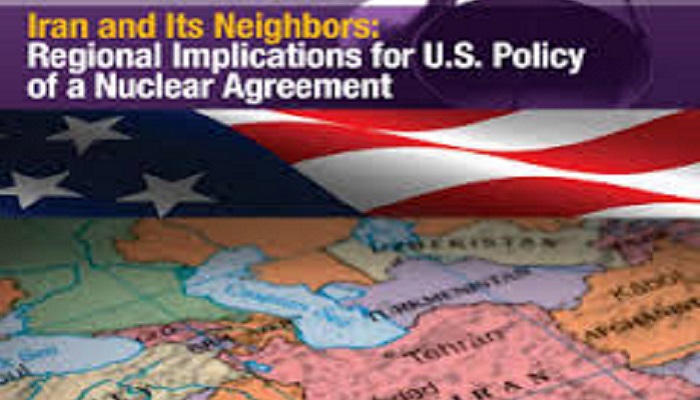
Recently The Iran Project, a collection of former U.S. government officials, issued the fourth in its series of papers devoted to the topic of improving relations between the U.S. and Iran. In it, these former government policy wonks detail the state of Iran’s relationships with its neighbors. In earlier papers they had examined diplomatic, economic and military aspects of the nuclear issue involving Iran.

Quaintly, these would be peaceniks append to their paper a quote from William Shakespeare’s “The Tempest”:

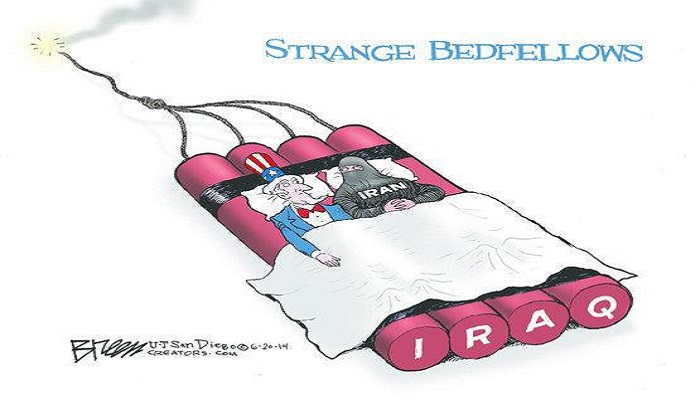
“Misery acquaints a man with strange bedfellows.”

For myself, I think the more appropriate quote would have been from the comedian Groucho Marx:

“Politics doesn’t make strange bedfellows – marriage does.”

It is an appropriate quote for The Iran Project since one of the great failings in logic in its approach to the question of how to deal with Iran is the assumption that Iran can be steered towards an amicable accommodation with its neighbors and the West. That is based largely on the belief by these former officials that diplomacy is the cornerstone of any agreement and thus “talking” is the process by which to secure a more peaceful future for Iran and its neighbors.

But Groucho had one over these guys when he rightly jokes that the ever fluid nature of politics is built largely on deception and the management of perceptions, both internally and externally. In Iran’s case, its leaders have carefully crafted a script in recognition of their perennial adversary’s weaknesses. Those weaknesses are the current Administration’s deep-seated and vocally stated desire to secure a deal with Iran and an isolationist withdrawal from Middle East affairs after the wars in Afghanistan and Iraq.

The paper’s authors make the same fatal mistake that diplomats have made from Chamberlain at Munich to King Priam at ancient Troy which was to underestimate their opponents by thinking they were rational people. To discuss Iran’s relationship with its neighbors and the West as whole must begin and end with one thing: Iran’s status as a theocratic state with meddling in other countries through export of terrorism and fundamentalism as a pillar of survival.

Within the sphere of diplomacy, it is an oft aimed for goal to find common ground and then build a mutually beneficial agreement. Unfortunately, when one of the parties is a religious theocracy that derives the formulation of national policy based on a personal interpretation of a higher authority, and depending on expanding its influence in the region by spreading extremism to compensate and cover up its popular isolation and growing schism within the ruling elite, it leaves little wiggle room for accommodation.

Since the 1979 Revolution, Iran’s government has been co-opted by a cadre of mullahs and clerics who have fallen into the age-old trap of all would-be revolutionaries; the intoxicating effects of power and wealth. The clerical councils grip on power through the military and judicial branches of government have evolved into a death grip that Western diplomats have failed to appreciate fully, especially during nuclear negotiations that began shortly after Hassan Rouhani assumed power.

During these negotiations, Western diplomats and media have also been snookered by a skillful media and PR campaign by Iran branding Rouhani as a moderate and the Islamic nation firmly committed to finding a peaceful solution to the thorny nuclear question. But the past year has demonstrated clearly no dividing line exists between perceived moderates and hardliners in Iran. In fact, Iran’s core political establishment is firmly hardline and hostile to the West and its neighbors and subservient to the religious establishment. This has been put on ample display by the spate of human rights violations designed to stifle public dissent.

These have included:

  • A record pace for executions according to Amnesty International with estimates of between 800 to 1,000 prisoners put to death, most by grisly public hanging since Rouhani took office. Many for political offenses and including women;
  • A crackdown on Internet and satellite access for Iranians, including a banning of social media, the confiscation of dishes, the monitoring of all online traffic and the reporting of IP addresses to police; and
  • Continued diversion of funds to foreign military activities in Syria, Iraq, Afghanistan, Lebanon and Yemen and support for terrorist groups such as Hamas and Hezbollah.

The centerpieces of Iran’s national policies have been the commitment to its nuclear program and the aggressive support and promotion of its particular brand of radicalized Shia religious sect, both of which have been largely ignored within The Iran Project’s analysis.

Iran’s Neighbors

The analysis prepared in the paper urges the U.S. to mount an aggressive effort to reassure Iran’s neighbors of its commitment to regional security, but it leaves out just how those neighbors can be reassured when Iran makes no effort to give up on its efforts to influence its neighbors directly through military intervention as in Syria or through proxies as through Maliki in Iraq and  more recently in Houthis in Yemen.

This question vexes the Sunni Gulf States and Saudi Arabia the most since Iran’s mullahs have made no suggestions they will abandon their efforts to spread their brand of  fundamentalism across the region. Reiterating time and again that in addition to its repressive theocratic ideology,  the clerical regime in Iran cannot survive without expanding its tentacles in the region is not an overstatement.

An interesting note is the position taken in the paper that Iran should develop its energy and natural resources. It implicitly advocates for the U.S. to take a greater role in developing Iran’s infrastructure for the purpose of offsetting Russia’s influence in Europe; a position that seems naive at best and dangerous at worst. But at no point is there an answer of reconciling Iran’s rigid and strict Islamist rule with pluralistic democracies in the West. Are we to assume that Iran will be the next China and the West should ignore crippling human rights violations in favor of the almighty dollar? Iran is not China,  since it considers normal relations with the West as a cultural onslaught against its rigid and theocratic approach.

The paper also positions Israel and Turkey, the U.S. closest allies in the region, as being willing to accept a reduction in their own security in favor of an Iranian deal. Also assumptions not largely rooted in the practical reality of the world.

The Nobel Prize winning economist Paul Krugman recently listed Ronald Reagan as one of the most consequential Presidents of the modern era. What made Reagan effective as a leader was the unwavering nature of his world view, especially towards the old Soviet Union which he openly named the “evil empire” much to the chagrin of the foreign policy establishment. But it was largely through Reagan’s commitment to that vision that the world saw the eventual fall of communism and the radical redrawing of Europe.

What the U.S. and the Middle East, especially Iran’s neighbors, need now is a similar commitment to singular vision. That vision must be aimed with laser-like precision at Iran’s leaders and the eventual solution of regime change. Only in that way could the West be reassured of Iran’s commitment to peace.

Iran’s Nuclear Problem

An essential element missing from the paper’s analysis is the problem of Supreme Leader Khamenei. As Iran’s spiritual and titular head of state, all foreign policy decisions, including approval of all treaties, must pass through him. One would think if Iran was truly committed to a lasting resolution to the nuclear impasse, Khamenei would voice support for a solution and ongoing negotiations. Instead Khamenei went on a much publicized series of public rants where he explicitly and forcefully reiterated Iran’s commitment to its centrifuge capacity to enrich nuclear material and to its missile development program to deliver warheads.

Khamenei’s statements were the primary reason why nuclear talks in July failed and the new deadline for another round set for November. Given the vigorous support within Iran’s clerical circles for a nuclear capability to offset the perceived strategic advantages that Israel and Saudi Arabia possess militarily, it is hard to imagine Iran willingly giving up its capability, let alone actual weapons.

The US misguided policy gave Iraq to Iran in a silver platter, to detriment of not only the Iraqi people but the whole region. As a matter of fact the trend in the past few months have been very much moving to the Ayatollahs’ detriment.  As the time Tehran’s strategic deadlock on two key issues is becoming more evident. It suffered a strategic blow in Iraq. It is desperately trying to regain its foothold in Iraq. On the nuclear front, the snooze is tightening up on Tehran’s neck. Now it is time to turn the heat on the regime. Allowing the Ayatollahs off the hook and providing concessions is a grave mistake of mammoth proportions.

Iran has very little incentive to cut a deal when it is already getting pretty much what it wants while still developing its nuclear program. Iran’s mullahs have also judged that the U.S. and West are much more in need to winning political points than they do at home and as such can hold out far longer. While the reality is that the regime in Tehran is much more vulnerable. The mullahs and their lobbies in the West work hard to portray the opposite.

Another aspect is that the regime’s PR machine in the West has made a concerted effort to propel the myth of a divided Iran with a populace eager to support Western engagement. The truth has been the complete opposite and while the bubble of Rouhani being a moderate has burst, it is becoming a harder sell for Tehran lobbyists and apologists.

Ultimately the only real solution for Iran’s nuclear challenge is to follow the example laid down by President Reagan in his dealings with the Soviets which is to deal from a position of strength bolstered by a firm commitment in a singular vision. That vision should be a nuclear-free Iran and negotiations should accept nothing less than the complete dismantlement of its entire nuclear infrastructure, including centrifuges.

Coupled with that must be a political liberalization that finally forces its mullahs to relinquish power in favor of a pluralistic, democratic government. Without it, no agreement reached with Iran can stand the test of time.

By: Michael J. Tomlinson

Filed Under: Blog, News Tagged With: Gary sick, Iran appeasers, Iran Lobbiest, Iran Lobby, Iran Project, James Dobbins, William H Luers, Zbigniew Brzezinski

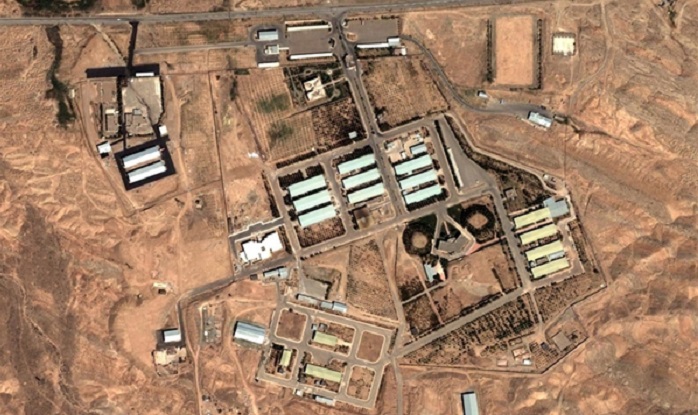
Explosion in Parchin Nuclear Site – Is Iran Pursuing development of Warheads?

October 8, 2014 by admin

Satellite photo of the Parchin military complex in Iran where an explosion killed two workers (The photo credit to digitalglobe

Satellite photo of the Parchin military complex in Iran where an explosion killed two workers (The photo credit to digitalglobe

Iran’s official news agency reported an explosion and fire on Monday, 6th of October at its Parchin military facility in which at least two workers were reported killed. Iran’s Defense Industries Organization said the fire broke out on Sunday evening, IRNA said, giving no further detail.

Reuters reports that the site has been a contentious issue for the International Atomic Energy Agency and Western nations opposed to Iran’s nuclear arms program for some time now since it has long been rumored to be a site for testing of components for its nuclear weapons development program including missile technology development. In fact the IAEA suspected that Iran conducted high explosives testing a decade ago that would be integral in the development of a nuclear warhead. The IAEA has long wanted to inspect the facility, but Iran has steadfastly refused all international access.

According to Reuters, only three years ago, Iran said a massive explosion at a military base 45 km (28 miles) west of Tehran killed 17 Revolutionary Guards, including the head of the elite force’s missile program. It said the blast was caused by an accident while weapons were being moved.

The explosion, raises serious suspicions about the regime’s firm rejection of any visits to the site, by the IAEA inspectors. One can conclude that perhaps significant munitions activity related to its nuclear program is underway at Parchin and out of the sight of international inspectors lays bare the falsehood that Iran and its lobbyist allies in the US have been spreading for a decade now that it is committed to a peaceful nuclear program.

Iran’s allies will make every effort to ignore today’s latest development, but they can no longer hide the fact that even while it bargains at the negotiating table with the P5+1, Iran still actively seeks to refine its explosives program for nuclear warheads.

Filed Under: Blog, News Tagged With: Iran, Nuclear Iran, Nuclear Warhead, Parchin

  • « Previous Page
  • 1
  • …
  • 50
  • 51
  • 52
  • 53
  • Next Page »

National Iranian-American Council (NIAC)

  • Bogus Memberships
  • Survey
  • Lobbying
  • Iranians for International Cooperation
  • Defamation Lawsuit
  • People’s Mojahedin
  • Trita Parsi Biography
  • Parsi/Namazi Lobbying Plan
  • Parsi Links to Namazi & Iranian Regime
  • Namazi, NIAC Ringleader
  • Collaborating with Iran’s Ambassador

Recent Posts

  • NIAC Trying to Gain Influence On U.S. Congress
  • While Iran Lobby Plays Blame Game Iran Goes Nuclear
  • Iran Lobby Jumps on Detention of Iranian Newscaster
  • Bad News for Iran Swamps Iran Lobby
  • Iran Starts Off Year by Banning Instagram

© Copyright 2026 IranLobby.net · All Rights Reserved.