Iran Lobby

Exposing the Activities of the lobbies and appeasers of the Mullah's Dictatorship ruling Iran

  • Home
  • About
  • Current Trend
  • National Iranian-American Council(NIAC)
    • Bogus Memberships
    • Survey
    • Lobbying
    • Iranians for International Cooperation
    • Defamation Lawsuit
    • People’s Mojahedin
    • Trita Parsi Biography
    • Parsi/Namazi Lobbying Plan
    • Parsi Links to Namazi& Iranian Regime
    • Namazi, NIAC Ringleader
    • Collaborating with Iran’s Ambassador
  • The Appeasers
    • Gary Sick
    • Flynt Leverett & Hillary Mann Leverett
    • Baroness Nicholson
  • Blog
  • Links
  • Media Reports

Iran Regime Lobby Losing Grip on Congress

April 8, 2015 by admin

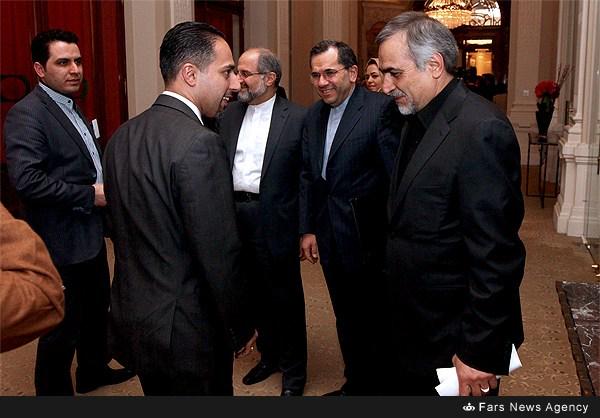
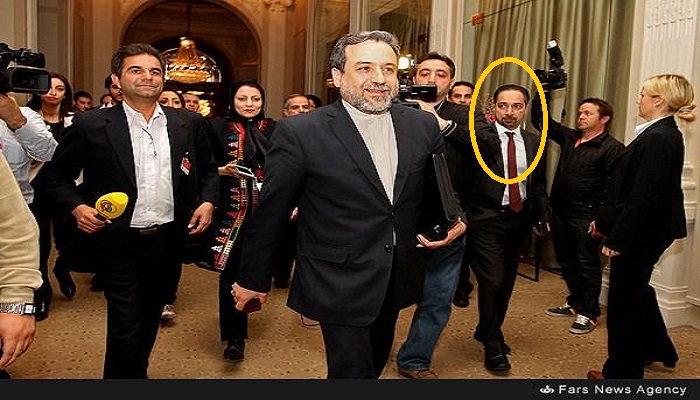
Trita parsi, greeting the mullah's delegation in Geneva during the nuclear negotiations -March 2015

Trita parsi, greeting the mullah’s delegation in Geneva during the nuclear negotiations -March 2015

The Iran regime’s lobbying and PR machine, notably led by the National Iranian American Council, invested significant resources in a blatant effort to lobby and influence members of Congress over the recent negotiations on the regime’s nuclear infrastructure.

The NIAC attempted to portray the negotiations as the only clear path towards peace and any member of Congress denigrating it was no better than a war monger. In response, Congress offered up the Corker-Menendez bill which gives Congress the power to keep economic sanctions in place while it reviewed any deal. Despite NIAC’s objections, it passed out of committee on a bipartisan vote.

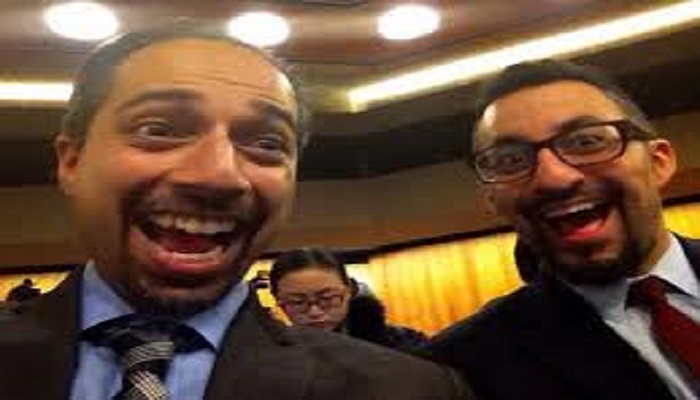
Then NIAC was part of the “National Day of Action” involving delivering petitions to local Congressional offices. The effort produced sporadic selfies in scattered offices of volunteers, mostly Democrats already pledging to support the regime. In response, 47 Senate Republicans sent an open letter to the Iran regime promising to overturn any bad deal.

Itching for more failure, the NIAC marshalled its forces again for the stretch drive of talks and went on a media blitz and sent Trita Parsi and Reza Marashi to troll lobby bars in Lausanne, Switzerland. Instead, the House this time sent out a letter signed by 367 Democrats and Republicans, representing a veto-proof majority, calling for review and approval of any deal.

Even after talks concluded with a “framework” agreement that appears to be different in its terms if you read Iranian, American or French versions, NIAC continued to call it an historic agreement. On Monday, Sen. Chuck Schumer (D-NY), who is on track to be the new Democratic Leader succeeding retiring Sen. Harry Reid (D-NV), announced his support for the Corker-Menendez bill and called on Congress to review and halt any deal it deems bad.

His support is crucial and now probably gives Republicans the 60 votes necessary to override any veto from President Obama. Both houses of Congress now stand united in the need to review, debate, verify and approval or disapprove any final agreement coming out of P5+1 talks with the Iran regime.

Why did NIAC fail? Quite simply, it overpromised and underdelivered.

NIAC members, especially Trita Parsi, regularly mistakenly took positions throughout talks over the past three years that ended up having to be retracted or were proved wrong. Most notably were its claims about the Iran regime’s desire for peace, only to be routinely undercut by top mullah Ali Khamenei who gave his annual “Death to America” speech alongside demands that Iran retain all its nuclear infrastructure, immediate lifting of all economic sanctions and promise to keep developing ballistic missile technology.

In a way, you have to pity Trita Parsi and NIAC for having to work for verbal loose cannons like Khamenei who have all the subtlety of a freight train, but then again, Parsi and NIAC enjoy the perks of being mouthpieces for the biggest state sponsor of terrorism. i.e. Iran’s mullahs which explains how they can manage trips to Switzerland and an unlimited bar tab waiting for journalists to ask their opinions.

But has Iran’s mullahs really gotten the results expected from NIAC? If you judge success based on legislative wins in Congress, the answer has to be a resounding “NO!” The NIAC’s grip on Beltway reality grows looser, especially with new revelations from Breitbart News and others about the deep connections now being uncovered between NIAC and national security and foreign policy teams in the Obama administration.

The lack of disclosure by the administration has further tainted arguments made by NIAC for the deal as it becomes increasingly clear the organizations does not stand for the interests of Iranian Americans – four of whom remain in regime prisons without trial or charge – and instead is simply a cheap lobby for the mullahs.

We would urge Khamenei to get a refund from Parsi and cut his expense account for lack of results.

By Michael Tomlinson
Filed Under: Blog, News Tagged With: Iran deal, Iran Lobby, Iran Talks, NIAC, Trita Parsi

Iran Lobby – The Sales Job of NIAC

April 7, 2015 by admin

Trita Parsi on NIAC accompanying the Iranian delegation in Geneva - Iran talks March 2015

Trita Parsi on NIAC accompanying the Iranian delegation in Geneva – Iran talks March 2015

With a vague “framework” of a nuclear agreement with the Iran regime and the West now floating around, Iran’s mullahs are cracking the whip on their lobbyists and PR flaks to get the job done and sell what is arguably the smelliest deal since Peter Minuit bought Manhattan from the Lenape tribe for 60 guilders.


Chief amongst the regime’s trusted mouthpieces is Trita Parsi and the National Iranian American Council, who was omnipresent at talks over the last two years and enjoyed close access to Iran regime team members, often being privy to details that virtually all Western journalists didn’t know about.


The close nature of the working relationship between NIAC and Iran’s mullahs has come under intense scrutiny, especially from several articles on Breitbart.com pointing to the cozy working relationship NIAC had with regime officials and most disturbing the recent revelation of a key member of the U.S. National Security Council having previously been a staff member at NIAC.


There has been no denial of Sahar Nowrouzzadeh’s prior work at NIAC from the Obama administration, although an effort has been made to downplay her involvement in nuclear negotiations, but the connections to NIAC are troubling when one examines the scope of NIAC’s sales effort aimed at heading off intervention by Congress in sinking the proposal and hiding its true nature.


Parsi and NIAC have attempted to show Iranians celebrating in the streets of Tehran in support of the deal, in a nation where protests are banned and public celebrations are orchestrated with the care of a Super Bowl halftime show.


Parsi and NIAC have attempted to show the framework embodies all of the safeguards the West and Congress have been asking for, but an examination by The New York Times Michael Gordon revealed vast differences between what the U.S. and Iranian delegations believe the agreement contains.


Parsi and NIAC have attempted to show there was support in Congress for the framework announcement by pointing to favorable statements from 19 Democratic Representatives, none of whom were part of the 367 bipartisan members objecting to agreement of any deal without Congressional review and approval. The 367 members represent a veto-proof majority in the House.


The NIAC has attempted to launch a grassroots effort by urging supporters to contact Senators since it already knows it has lost any chance in the House to sway a vote. Its only hope is to persuade the five or six Democratic Senators still undecided to fall in line with the mullahs and not vote for a sanctions review bill being offered by Sen. Bob Corker (R-TN).


Oddly, while both House and Senate proposes give Congress the chance to review any deal, and hence allow the American people a voice in what is arguably one of the most important foreign policy issues facing global security and peace, NIAC argue strenuously against any input from the American public.


Why? What is NIAC so afraid of?


Like a used car salesman trying to move a clunker off the lot, NIAC is deathly afraid the American public might actually want to look under the hood of this framework and ask some basic questions such as “Can we really trust mullahs who have already violated three prior international agreements allowing inspections of secret nuclear facilities?”


The truth hurts the NIAC and its bosses in Tehran and it is doing everything it can to hide the truth and trust in simple slogans and fear mongering, warning that turning down this deal is tantamount to war with Iran; forgetting that a nuclear-armed extremist Islamic regime is the surest and shortest path to war.


Filed Under: American-Iranian Council, Blog, National Iranian-American Council, News

Trita Parsi of NIAC Lobbies for Iran

March 29, 2015 by admin

Trita Parsi has had close working relationship with Javad Zarif, when he was Iran’s Ambassador to the United Nations. In a deposition, Parsi stated he only communicated in 2006 with Zarif in order to “interview him.” But this is not true. Emails made public demonstrate that Parsi and Zarif collaborated on numerous political issues. Parsi publicly distributed an Iranian regime document to influence US policy. He made arrangements for the ambassador to participate in a conference on Capitol Hill and to meet members of Congress, and sought the ambassador’s council regarding the feasibility of a new Persian Gulf security arrangement. About the collusion between Parsi and Zarif, a former Associate Deputy Director of the FBI said Parsi should have been registered as a foreign agent of Iran. Arizona Senator Jon Kyl contacted the US Justice Department, urging an investigation of Parsi.

Trita Parsi has had close working relationship with Javad Zarif, when he was Iran’s Ambassador to the United Nations. In a deposition, Parsi stated he only communicated in 2006 with Zarif in order to “interview him.” But this is not true.
Emails made public demonstrate that Parsi and Zarif collaborated on numerous political issues. Parsi publicly distributed an Iranian regime document to influence US policy. He made arrangements for the ambassador to participate in a conference on Capitol Hill and to meet members of Congress, and sought the ambassador’s council regarding the feasibility of a new Persian Gulf security arrangement.
About the collusion between Parsi and Zarif, a former Associate Deputy Director of the FBI said Parsi should have been registered as a foreign agent of Iran. Arizona Senator Jon Kyl contacted the US Justice Department, urging an investigation of Parsi.

In an article published at the American Thinker titled “Friends of Iran in the United States” Michael Curtis studies Trita Parsi and his lobby firm, NIAC and how they are acting in favor of the mullahs by demanding annihilation of the nuclear related sanctions on Iran. Given the extent of activities by the Iranian lobby, the entire article is published below for our readers.

“On February 19, 2015, a full-page ad was published in the New York Times by the National Iranian American Council (NIAC) opposing the invitation given to Israeli prime minister Benjamin Netanyahu to speak before Congress.  It asked the question: “Will Congress side with our President or a Foreign Leader?”

The ad did not disclose that the founder and president of the organization, Trita Parsi, was an Iranian-Swedish citizen who holds a Green Card and has had links with Iranian authorities, especially the Iranian defense minister, Javad Zarif.  Those links were held to be extremely close by a critic, Hassan Daioleslam, an Iranian-American journalist and human rights activist who left Iran in 1981 and lives in Arizona.  He wrote that NIAC, and its leader Parsi, are an organization engaged in lobbying Congress on behalf of a foreign government – namely, that of Iran.

The invitation to Netanyahu and his speech to Congress became the occasion for dramatic political theater by Team Obama and its supporters, who disliked the Israeli’s criticism of the Obama administration’s attitude toward Iran.  Nothing was said by that team or in the mainstream media on the question of whether the NIAC had lobbied or tried to lobby Congress or had any impact on the current policy of the Obama administration in negotiating with Iran.

In his articles, Daioleslam (Dia) claimed that the NIAC, and former Congressman Bob Ney, who was associated with it, were helping Iran to manipulate U.S. policy on Iran’s behalf.  Among other issues, in 2007, the organization had lobbied to prevent U.S. funds going to democratic elements in Iran.  The NIAC brought a lawsuit in May 2008 in the attempt to halt Daioleslam’s further criticism of the Iranian regime.  But it delayed producing, and sometimes failed to produce, necessary information on its computers, calendar entries, and e-mails.  In addition, the assistant director of the NIAC changed some files from references to “lobbying” to “legislative direct.”

The U.S. District Court for the District of Columbia (Judge John Bates) in September 2012 dismissed the lawsuit.  The Court found that the NIAC had given false information to it, and it ordered the NIAC to pay Daioleslam’s legal expenses – about $184,000.  It held that the work of the NIAC and its founder, Trita Parsi, was not inconsistent with the idea that it was “first and foremost an advocate for the regime.”  Consequently, Daioleslam’s statement could not be considered defamatory.

The court in July 2010 had ordered NIAC three times to submit its server for inspection to determine if all documents had been given to it, and complained that additional computers in the network of the NIAC had not been produced.  The court found that the NIAC had withheld 5,500 e-mails written by its senior officials.  It is unclear whether this refusal or inability to produce documents was deliberate or result or incompetence.

The decision of the District Court was upheld by the opinion of two circuit judges and a senior circuit judge in the U.S. Federal Court of Appeals for the District of Columbia in a decision on February 10, 2015.  The Court of Appeals approved the opinion of the District Court that the NIAC was involved in systematic abuse of the legal discovery process and made false declarations to the court.

The court held that the NIAC had “flouted multiple court orders” and taken “inexcusable” action in delaying delivery of documents to during the lawsuit that it had itself brought, and therefore had driven up the costs imposed on the Daioleslam.  It referred to the NAIC’s conduct as “dilatory, dishonest, and intransigent.”

Ironically, this case is somewhat similar to other events current in Washington where individuals have refused to provide or have misplaced official documents or have given incomplete records after requests by members of Congress for full documentation.

The Court did not finally decide if the NIAC had violated the U.S. Foreign Agents Registration Act (FARA).  The statute, enacted in 1938, requires that persons acting as agents of foreign authorities in a political or quasi-political capacity make periodic public disclosure of their relationship with a foreign entity.  Action of this kind is legally different from advocating better ties with a foreign entity, because this would be in the interests of the U.S.

The NIAC was founded in 2002 by Trita Parsi, who said it would enable Iranian-Americans to condemn the 9/11 attacks.  It is organized as a 501(c)(3) nonprofit organization and states that it is non-partisan and does not receive funds from the Iranian government or from the United States government.  It says it is dedicated to advancing the interests of the Iranian-American community on civic, cultural, and political issues.  It speaks on behalf of that community to which it refers as “one of the most highly educated minority groups in the U.S.”

The founder and president of the NIAC has been invited to the White House, has arranged meetings between the Iranian ambassador to the United Nations and members of Congress, and given talks at the CIA.  He has done so without registering as an agent of a foreign power.

The NIAC also expresses its “vision” to work to ensure that human rights are upheld in Iran and that civil rights are protected in the U.S.  It received funds, almost $200,000, from the National  Endowment for Democracy.

More significantly, the NIAC has pressed for an end to international sanctions on Iran.  The NIAC has also played a partisan role in U.S. and international politics.  It lobbied against the appointment of Dennis Ross to the National Security Council.  The documents revealed to the Court that Parsi had helped prepare reports about Iran and helped send them to Atieh Company in Tehran, which paid Parsi for his work.

One can only hope that the NIAC was not consulted in the current negotiations with Iran on nuclear issues.”

By Michael Curtis, published at American Thinker

Filed Under: American-Iranian Council, News Tagged With: American Thinker, Iran Lobby, Iran Talks, NIAC, Trita Parsi

Women’s Rights in Iran or Lack Thereof

March 5, 2015 by admin

IWD LogoThis Sunday, March 8th will mark International Women’s Day (IWD), a global celebration of women’s economic, political and social achievements and a rallying cry to further women’s rights at a time when they are under serious threat in a number of countries.

Each year the United Nations designates an official theme for IWD and this year’s theme is “Empowering Women, Empowering Humanity: Picture It” with a dedicated social media hashtag of #IWD15, while other popular hashtags making the rounds this weekend include:

#MakeItHappen
#womensday
#IWD2015
#internationalwomensday
#PaintItPurple

All of them aim to raise awareness for women and show support for their causes around the world and support is exactly what women need at a time when their rights and physical safety are under the greatest threats in modern history.

There has been an unprecedented assault against women around the world, especially from Islamic extremist groups who have sought to drastically turn back the clock and treat women as livestock or possessions to be sold, bartered, enslaved and abused.

In Nigeria and now neighboring Chad and Sudan, Boko Haram has gone to great lengths to publicize its kidnappings of thousands of young girls and sell them into sexual slavery. While the nifty little hashtag of #BringOurGirlsBack generated some celebrity support, it did little to actually change things on the ground.

In Syria and Iraq, ISIS has captured thousands of women and girls from Yazadi, Kurdish, Iraqi and Syrian villages and towns and turned them in ISIS fighter brides or simply sold them as sex slaves. Amnesty International and the UN have extensively documented eyewitness accounts of the brutality these women and girls have suffered at the hands of extremists who have used a perverted view of Islam to justify their actions.

Meanwhile an active online recruitment process has enticed unsuspecting young women to flock to Syria and join ISIS, most notably three British teenagers who left for Syria via Turkey.

Sitting at the heart of all of these abuse of women lays the greatest offender of all: the Iranian regime.

Iran’s autocratic and theocratic regime ruled by iconoclastic mullahs regularly oppresses the women of Iran in order to bend them into conforming to its harsh and unyielding views of the role of women in the society that is both oppressive and actually against the teachings of Islam.

For example, Iran has few if any laws specifically safeguarding the rights of women. Instead the laws on the books, both civil and criminal adversely affect women in how they dress, how they act in public and what they can do from shopping to transportation to education to careers.

There are nearly 70 university degrees banned from women, which is absurdly ironic given the lobbying efforts recently by the regime’s U.S. mouthpieces, the National Iranian American Council, which took a U.S. university to task for banning Iranian students from taking classes that could teach technology used in Iran’s nuclear development program.

Iran’s religious and paramilitary police also enforce religious law on the streets through abusive tactics that include public beatings and assaults or arrest and imprisonment. In a further abomination of traditional Islamic values, Iran’s mullahs have allowed over 40,000 child brides to be wedded just in 2014 and recently adopted a new law allowing men to marry their adopted children.

All of these acts flies in the face of the actual teachings of the Muslim faith and demonstrates how religious leaders can twist anything to their own whims and needs, as well as use religion as a blunt weapon to bludgeon dissidents into submission.

But the bright hope still remains in the Muslim world with moderate groups fighting this kind of oppression, most notably Mrs. Maryam Rajavi, a strong woman leader who leads the largest global resistance group to the Iranian regime.

While women and girls undergo acid attacks and shootings just for disobeying the mullah’s dress code, we should all remember them this weekend not just with hashtags, but also action such as telling our Congressmen to hold Iran’s mullahs for their actions and demand change.

By Laura Carnahan

Filed Under: Blog, News Tagged With: international Women's Day, Iran, IWD2015

Can Anyone Trust Iran’s Mullahs?

February 25, 2015 by admin

Iran Nuke Facility

If you are like me, you probably Google every day on topics of interest and for me, today was no different. In searching for topics of discussion concerning Iran, its ruling mullahs and topics of interest, Google never fails to turn up some golden nuggets and there were some winners today.

“Dissident group alleges new secret nuke site in Iran.” – USA Today
“Iran pursuing nukes in underground complex despite talks with West.” – Fox News
“Giving Iran everything it wants.” – Washington Post
“Exclusive: Iran smuggles in $1 billion of bank notes to skirt nuclear sanctions.” – Reuters
“Document reveals growth of cyberwarfare between U.S. and Iran.” – New York Times
“U.S. says Iran helped Houthis seize Yemen.” – Al-Arabiya

And all this just in one day. It raises an important question. Even if the P5+1 negotiations yield an agreement, how can the West trust Iran’s mullahs to actually stick to it? Therein lays the proverbial question haunting everyone at the table in Geneva.

When you consider the Iranian regime’s nearly 18 year-long effort to first conceal evidence it was building a nuclear program and only after intelligence agencies and Iranian dissidents on the ground, the National Council of Resistance of Iran finally broke the secret open with smuggled photos, reports and eyewitness accounts did Iran’s mullahs grudgingly even admit a “peaceful program.”

But this “peaceful program” was being developed on military bases and research facilities experimenting with high explosives, nuclear detonators, missile technology and delivery systems. All places Iran’s religious leadership kept hidden for a decade from the prying eyes of inspectors from the International Atomic Energy Agency (IAEA).

In the interim, the world galvanized with economic sanctions that Iran’s mullahs merely shifted over the impact away from its governmental operations and placed the full brunt of it on its own people in order to hold them up to the world as victims of unremitting sanctions. While Iran’s leadership was busy funneling billions of dollars to fund terror groups such as Hezbollah and the embattled Syrian regime of Bashar al-Assad, it continued to pour billions into its nuclear development in spite of global condemnation.

Why?

Because Iran’s mullahs calculate – correctly I might add – that in the time necessary for the world to get its act together and place enough pressure on Iran to curb its activities, they would have bought enough time to build the infrastructure necessary to ramp up production without any real damage to its program.

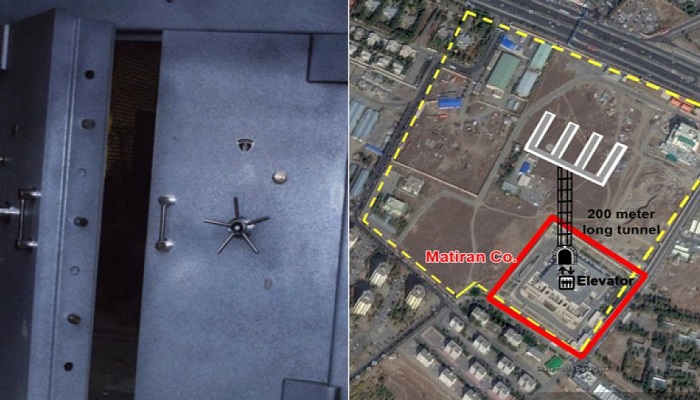
Now Iran sits on 19,000 centrifuges for enriching nuclear fuel, a ready-made stockpile of enriched fuel of various levels and testing facilities that have already done the heavy lifting of designing and testing various components used in assembling a nuclear warhead, not considering today’s fresh information on an actively parallel nuclear site operating with advanced centrifuges.

In essence, the P5+1 is now negotiating with an Iranian regime that has already achieved what it set out to do and now can sit back and allow a deal to take shape without losing any real ground.

Revelations by the IAEA of Iran’s continued stonewalling and the NCRI of yet another secret nuclear site, on top of reports of over $1 billion in continued sanctions evading smuggling all point to a single conclusion: Iran’s mullah cannot be trusted to keep any bargain made with the West.

The key issue of verification in any agreement is critical since Iran has successfully managed to evade inspection and disclosure for almost two decades. Only through revelations from Iranian dissidents and democracy sympathizers on the ground in Iran – and at great personal peril to their lives – have we been able to even crack open a little bit of the secrecy that shrouds Tehran’s programs.

To think Iran’s mullahs are going to happily oblige opening up all of their secrets in a nuclear deal is naiveté of the highest order.

By Laura Carnahan

Filed Under: Blog, News

Khamenei Shows True Colors

February 19, 2015 by admin

Angry KhameneiBenjamin Franklin famously said “In this world nothing can be said to be certain, except death and taxes.” If Franklin were alive today, he might add mullah’s Supreme Leader Ali Khamenei to the list of certainties.

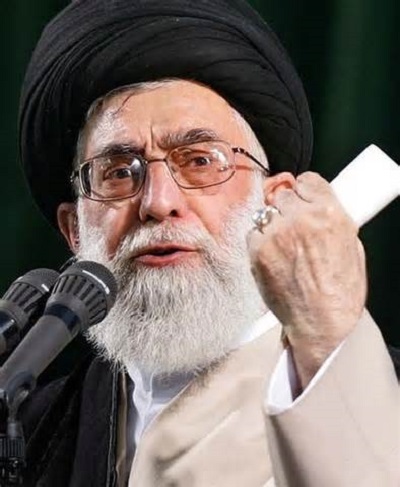
Yesterday in a public speech in Tehran carried by the official IRNA news agency, Khamenei once again vowed Iran would resist global sanctions in its pursuit of nuclear capability and threatened to cut off natural gas exports in retaliation to any continued sanctions.

“Serious work must take place. We can withstand the sanctions and neutralize and foil the enemy’s goals. If we don’t, the enemy would proceed and place conditions on our nuclear program and impose sanctions,” Khamenei said.

“If sanctions are to be the way, the Iranian nation can also do it. A big collection of the world’s oil and gas is in Iran so Iran if necessary can hold back on the gas that Europe and the world is so dependent on,” he added.

It is noteworthy Khamenei still refers to the West and especially the U.S. as the “enemy.” His worldview is clouded by the long-simmering extremist view he has nurtured for the past several decades and seems unable to move forward into a new era of peace and prosperity. He clings to the notion Iran must resist all attempts at compromise and maintain a virtual war footing.

But Khamenei’s threats ring hollow when you consider Iran’s total oil production is estimated at 2.7 million barrels per day, mostly for domestic use. It also produces 600 million cubic meters of natural gas, of which 500 million cubic meters is used at home, meaning Iranian regime’s ability to “punish” Europe with a natural gas embargo is about as real as finding a unicorn.

But Khamenei didn’t stop there. He went on to accuse the U.S. of secretly supporting ISIS and criticized the European Union for placing sanctions on the National Iranian Tanker Company, the regime’s largest tanker company for carrying its petroleum overseas.

All of which flies in the face of recent frantic efforts by the Iranian regime’s lobbying and PR machine to convince the American public Iran does indeed want a compromise in current nuclear talks, even after two previous rounds of talks failed largely because of Khamenei’s hardline position and refusal to accept any deal compromising Iranian regime’s ability to generate large quantities of enriched uranium for use in nuclear warheads.

One might even feel slightly sorry for Iranian regime loyalists such as Trita Parsi of the National Iranian American Council who wax poetic about Iran’s desire for compromise only to be torpedoed on a regular basis by a new rant by Khamenei that reinforces and reminds Americans how mad the guy really is.

But any sympathy evaporates when we realize the stakes involved in this tense game of chicken Khamenei is playing. For all his bluster, he acts like he has virtually no interest in a deal. He regularly dumps on the U.S. He pushes for harder crackdowns at home in gross human rights violations. He has directed a foreign policy and controls a military and intelligence service involved in conflicts in almost a dozen countries now.

Just as ISIS has designs on a new fanatic Islamic caliphate, Khamenei shares the same vision for an Iranian-controlled sphere of influence. It is a dream born out of his virulent hatred of all things from the West including gender equality, free speech, an uncensored media and an unfettered internet.

As negotiators continue talks, they should not ignore the latest outburst by Khamenei because in most people’s minds, three strikes is usually enough to call someone out.

By Michael Tomlinson

Filed Under: Blog, News Tagged With: Iran deal, Iran sanctions, Irantalks, Khamenei

How Can The World Trust Iran mullahs?

February 12, 2015 by admin

Top SecretWhile Iran negotiates with the P5+1 group of nations in what is now the third round of talks following two previous failed rounds, one of the most persistent and nagging questions facing Western diplomats is “How can the West trust Iran to stick to any agreement when it has sought to evade sanctions, inspections and agreements for decades?”

This question comes into even more stark relief on reporting from Jennifer Griffin of Fox News who uncovered a shadowy covert cell operating within the Iranian Revolutionary Guard’s Quds Force known as Unit 190 which has fueled many of the conflicts and civil wars raging across the Middle East and North Africa.

After a lengthy and in-depth investigation, Fox News traced the complex land, sea and air routes used by the Quds Force to move weapons to terror groups like Hezbollah, as well as the Houthis who have recently toppled the government in Yemen which only last year was being held up as an example by the Obama administration in the effective fight against terror.

The irony is overwhelming.

At the heart of Unit 190 is Behnam Shahriyari, born in northwest Iran, who according to western intelligence sources runs a network of straw companies which skirt sanctions by packing rockets, night-vision equipment and grenades in powdered milk, cement and spare kits.

Fox News went on to show photos revealing a hanger at Tehran’s international airport which serves as warehouse and logistics center for the unit’s shipments of illegal weapons fueling conflicts that have killed thousands of innocent civilians globally.

The U.S. has engaged in a veritable cat and mouse game trying to shut down illegal front companies for the Quds Force involved in the trafficking of weapons only to have new ones spring up overnight in an aggressive effort to defeat sanctions. Iran’s weapons have found their way to fighting in Sudan, Yemen, Lebanon, Afghanistan, Iraq, Syria, Egypt, Libya, Somalia and Nigeria.

For intelligence officials, the more operative question to ask is where has Iran not shipped weapons?

All of which raises the central question facing nuclear talk negotiators. How can mullahs in Iran be trusted with any agreement if it already continually and actively seeks to evade sanctions on conventional weapons, let alone nuclear ones?

The answer can be found in only one place; Iran itself. Iran’s actions and the support given by its mullahs for the Quds Force’s activities are more damning than anything else Iran could do. It is a matter of national policy that Iran seeks to stoke these bloody conflicts.

But why?

Put simply, Iran’s mullahs believe sincerely in sowing chaos throughout the world to keep the West off balance and lay the ground work for the expansion and rapid growth of extremist movements beholden and sympathetic to Iran’s brand of religious extremism.

Before anyone forgets, Iran is a religious theocracy governed not by the rule of law and the ballot box, but by the whims and personal interpretations of the mullahs who ruthlessly hold onto their power by crushing political dissent at home and making liberal use of the hangman’s noose; to the tune of 1,200 men and women during the past year and a half.

Through it all, Iran’s lobbying machine in the form of the National Iranian American Council and cadre of sympathetic or clueless commentators, journalists and public interest groups have blithely ignored Iran’s track record.

If negotiators want to see the truth of Iranian regime’s intentions, watching Fox News reporting on Unit 190 would be an instructive place to start.

By Michael Tomlinson

Filed Under: Blog, News

Trita Parsi and The Big Lie

February 11, 2015 by admin

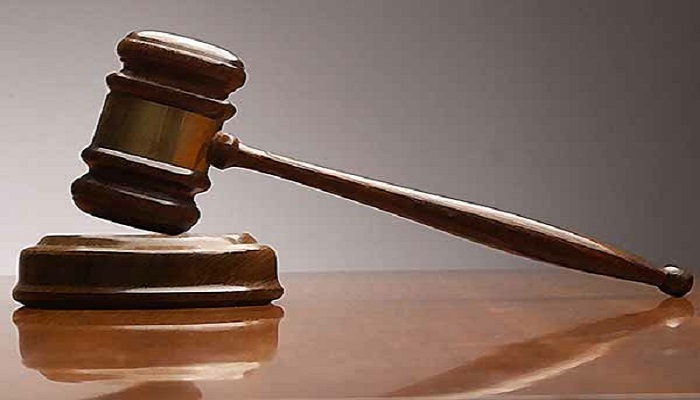
Court GavelYesterday the District of Columbia Court of Appeals issued an order in regards to damages and compensation awarded by the District Court to Seid Hassan Daioleslam, an Iranian American who investigated the National Iranian American Council’s ties to the Iranian regime, as a result of a defamation suit brought by NIAC and its president, Trita Parsi.

The order by the Court only dealt with the issue of reimbursements owed by NIAC to Mr. Daioeslam as a result of the costs he incurred in responding to and researching of NIAC’s claims against him.

It is worth noting the Court upheld the factual elements of the case, which included a litany of bad-faith actions by Parsi and NIAC to avoid, evade, hide and in some cases destroy evidence linking both to key members of the Iranian regime. The core elements of the case against Mr. Daioleslam were thrown out and instead valuable information was unearthed during the course of discovery that proved highly problematic for Parsi and NIAC.

A good roundup of the case merits appeared on Breitbart.com (http://www.breitbart.com/big-journalism/2013/05/26/distorting-niac-s-court-defeat/) so I will save readers from the blow-by-blow descriptions of the case facts.

The Court of Appeal’s order also does a fine job in reiterating the central facts of the case and the lengths to which the NIAC and Parsi attempted to hide their ties to the mullahs in Iran. It is a case of missing computer hard drives, servers and software worthy of Lois Lerner and the IRS fiasco.

The full order is available for reading at http://www.cadc.uscourts.gov/internet/opinions.nsf/95D577149121951685257DE80053C062/$file/12-7111-1536782.pdf

The relevant portion of the order comes last in which the appellate panel writes:

“For the foregoing reasons, we affirm in part the District Court’s award of sanctions, and reverse the award of Mr. Daioleslam’s expenses in preparing the portions of his sanctions motion related to NIAC’s alteration of a document and Parsi’s interrogatory responses, as well as the award of post-judgment interest to run from September 13, 2012. We remand to the District Court for reconsideration of those aspects of its judgment under the proper standard. So ordered.”

What is remarkable is the NIAC’s response in which it issued a statement implying a colossal win over Mr. Daisoleslam. At no point did the Court order dispute the facts of the case.

  • The NIAC willfully over 4,000 entries in electronic calendars detailing who Parsi and other NIAC officers had met with over the years, including representatives of the Iranian regime;
  • The NIAC willfully withheld 5,500 emails of conversations and correspondence between Parsi and other NIAC officers with Iranian officials and supporters;
  • The NIAC never proved any of Mr. Daisoleslam’s conclusions or results from his investigations were in fact defamatory. The first defense from defamation is truth;
  • The NIAC’s failure to produce computers and servers whose existence was only discovered through a forensic sweep of hard drives.

A full listing of all of the charges made against NIAC can be found here at The Legal Project: http://www.legal-project.org/4024/predatory-lawsuit-rebounds-back-on-iranian-front

In short, the Court of Appeals asked the District Court to recalculate the compensation owed to Mr. Daisoleslam by NIAC, taking into account a change in which interest had to be calculated and the costs for preparing a motion related to Parsi’s interrogatory and NIAC’s changing of documents.

The Court never said that any of the facts of the case regarding NIAC and Parsi’s conduct and evasions were in error. It simply required a slight accounting change from the $183,000 award originally given. Once the lower court recalculates the award, NIAC will have no choice but to finally pay up.

Interestingly, NIAC’s statement attempts to reposition the accounting change as a vindication over the facts of the case, which is absurd since they lost of a summary judgment which found all claims made by NIAC to be false.

But trying to make gold out of manure is nothing new for Parsi and NIAC as evidenced by the most recent debacle where they pushed for a delay for a framework nuclear deal and instead of securing the June 30th deadline, they ineptly pushed a new deadline up by two months to March 24th.

Any rational person reading the first two pages of the appellate ruling will quickly come to the conclusion that NIAC and Parsi in particular are accomplished practitioners of the Big Lie for Iran mullahs.


Filed Under: Current Trend, National Iranian-American Council, News Tagged With: Iran, Iran Lobby, Trita Parsi

Iran Sanctions Are Sanctions Are Sanctions

January 27, 2015 by admin

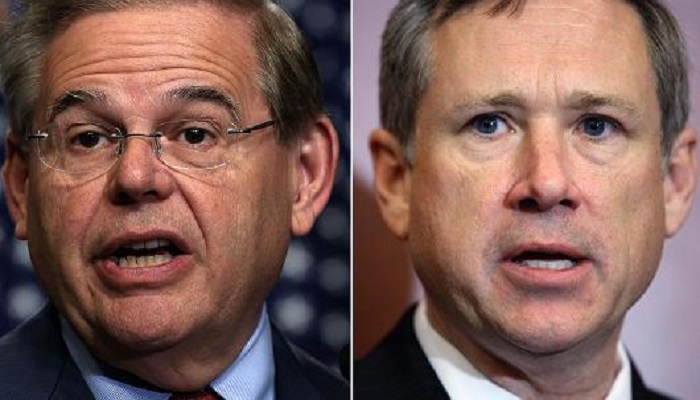
Senators Menendez and KirkThere is an interesting effort being mounted by the Iranian lobby in the wake of a growing strong consensus within Congress to support stiffer sanctions on the regime in Iran should nuclear talks fail for a third time.

But Iran boosters such as the National Iranian American Council have lately preached a line of reasoning pointing towards the potential of various pieces of legislation being proposed in Congress as evidence of a splintering of support for harsher sanctions. They point to proposals by Senators Robert Menendez (D-NJ) and Mark Kirk (R-IL), as well as ideas being floated by Senators Barbara Boxer (D-CA) and Rand Paul (R-KY) and even stream of thought comments made by Senators Chris Murphy (D-CT) and Bob Corker (R-TN) as proof of disagreement on the question of sanctions.

What NIAC and other Iran sympathizers fail to mention is the one constant amongst all these proposals; the support for some sort of enhanced sanctions should talks fail. The only disagreement is one of timing and severity.

Virtually no Senator in Congress has taken an anti-sanctions stand, nor has there been any vocal support for granting mullahs in Iran a blank check in nuclear talks. At a time when Democrats and Republican can’t seem to agree on what’s on the menu in the Senate cafeteria, there is broad, deep and universal agreement that Iran should not get a nuclear weapon and that Iran is a central character in the global rise in Islamic extremism.

Various analysis of the joint proposal from Senators Menendez and Kirk, the Nuclear Weapon Free Iran Act of 2015, clearly shows this trend. It reinstates sanctions that were suspended as part of the interim agreement if a new and comprehensive agreement is not reached. It also specifically targets Iranian senior officials who are part of the religious leadership and its judicial and military systems which have been responsible for the unprecedented crackdown on human rights the past year and the expansion of militant extremism taking place around the world.

It also explicitly grants the President the ability to waive the application of sanctions should he certify to Congress it is necessary for national security, completion of a nuclear deal or Iran is making no further progress on nuclear development and is in compliance with all interim agreements.

One would have to wonder where the idea is coming from that there is large disagreement within Congress over Iranian regime’s sanctions giving the fact the basic outline of these terms were originally supported by an overwhelming majority of Democrats and Republicans two years ago when sanctions were originally imposed.

What Iran’s mullahs see is a small window of opportunity coming on President Obama’s unilateral decision to normalize relations with Cuba to gain the same benefit in the lame duck years of the presidency. Consequently, the NIAC and other Iranian lobbyists are pushing hard the concept that sanctions are not universally supported.

It is a line of reasoning doomed to failure given the massive support the idea of sanctions has right now in light of growing public unease and concern over gains being made by ISIS and Boko Haram, the collapse of Yemen and Iraq and the ongoing social media efforts by terror groups to frighten and bully the West for more beheadings.

Iran mullahs and their brand of Islamic extremism is at the heart of these groups flourishing since the regime in Iran essentially wrote the manual with its own broad range of torture and public punishments such as hangings and amputations on its own people that these extremist groups have since adopted.

But you will not find NIAC others denounce these growing atrocities, nor even condemn the most heinous ones. In fact, if one were to peruse the social media feeds for NIAC and its officers such as Trita Parsi, you would find virtually no condemnations. This only reveals their true nature and cheerleaders for mullahs in Iran and nothing more.

By Michael Tomlinson

Filed Under: Blog, News Tagged With: Iran Lobby, Iran sanctions, Iran Talks, nuclear talks

Iran Sanctions: Stop the Stalling

January 17, 2015 by admin

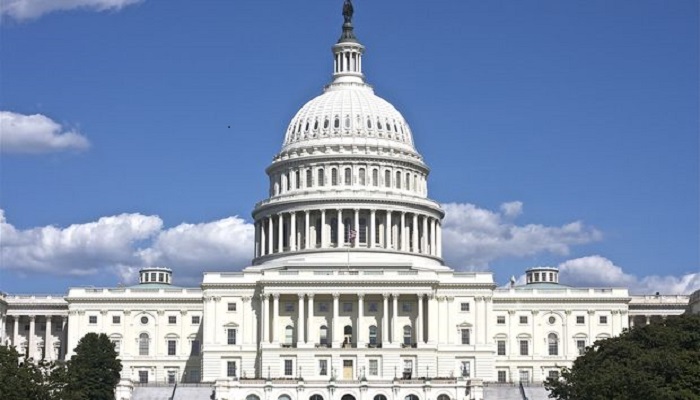
US Capitol (1)With the new Congressional session starting up under Republican control, it has been clearly evident that Iran’s lobbying and PR machines are going into hyperdrive at the prospect of new economic sanctions being proposed by the incoming Congress as a result of twice-failed nuclear negotiations and Iran’s newly aggressive military intrusions into Iraq and Syria.

Iran’s chief apologist in the National Iranian American Council has flooded news media with editorials and opinion pieces warning of disastrous consequences should a new sanctions bill be introduced. A press release issued by NIAC quotes Jamal Abdi, NIAC Policy Director, as saying “If Congress forces through new Iran sanctions legislation over the warnings of the President, our negotiators and the wishes of the American people, they will own the consequences.”

What he neglects to mention is the growing belief among the American people that President Obama’s current course of negotiating session after failed negotiating session is proving fruitless in the wake of the sharply increased about of violence occurring worldwide due to religious extremist terrorists abusing the name of Islam. This sense of unease has been borne out by recent opinion polling and the dramatic midterm elections.

The NIAC and its cohorts are terrified at the prospect of new sanctions since it would finally rip the façade covering Iran’s President Hassan Rouhani’s attempts to portray a moderate face to the world, while buying time for Iranian regime to expand its military and political influence to its neighbor in Iraq, as well as heavily increase its influence in the growing Islamic extremism sweeping across the world.

With plunging oil prices, the pressure on Iran’s ruling mullahs have never been greater and the opportunity to finally leverage real concessions on not only its nuclear program, but its overall dismal human rights record is finally at hand.

The incoming Congress recognizes the opportunity at hand and wants to seize it by moving forward with sanctions. More importantly, a new sanctions authorization would not only be aimed at placing new sanctions on Iranian government as much as ensuring that current sanctions already in place are not evaded or circumvented. President Obama’s recent executive action to normalize relations with Cuba provided the new Congress with the impetus it needed to ensure that West doesn’t give away the proverbial farm without getting anything back for it.

Similarly other Iran apologists such as Jim Lobe at LobeLog.com have also attempted to sound dire warnings of what would happen should a new sanctions bill be passed.

The irony in all this hysteria is that the prospect of failed nuclear talks have already come and gone. If NIAC hasn’t told the world yet, talks have already failed twice before because of Iran’s Supreme Leader Ayatollah Ali Khamenei and his public pronouncements committing Iran to its nuclear capability. Since the last failed talks nothing has changed except Iran’s Revolutionary Guard is spreading in Iraq and extremists have killed innocent people in Ottawa, Sydney and Paris now.

The American people have seen through all of the spin control, manipulations, false warnings and outright fabrications of NIAC and others and voted in a newly confident Congress intent on fulfilling the basic promise of keeping Americans safe. Iranian regime’s supporters realize just how small their island of support has become and have pushed all their chips into the pot in the hopes of putting one final scare into the American people so Iran might wrest from the P5+1 negotiating team more concessions without giving anything up.

Fortunately for the West, Ottawa, Sydney, Paris, Belgium, Nigeria, Syria, Iraq, Yemen and other places around the world have offered ample proof that the best course of action for peace and nuclear free Middle East does not lie in appeasing mullahs in Iran, but instead, getting tougher with its government.


Filed Under: Blog, News

  • « Previous Page
  • 1
  • …
  • 49
  • 50
  • 51
  • 52
  • 53
  • Next Page »

National Iranian-American Council (NIAC)

  • Bogus Memberships
  • Survey
  • Lobbying
  • Iranians for International Cooperation
  • Defamation Lawsuit
  • People’s Mojahedin
  • Trita Parsi Biography
  • Parsi/Namazi Lobbying Plan
  • Parsi Links to Namazi & Iranian Regime
  • Namazi, NIAC Ringleader
  • Collaborating with Iran’s Ambassador

Recent Posts

  • NIAC Trying to Gain Influence On U.S. Congress
  • While Iran Lobby Plays Blame Game Iran Goes Nuclear
  • Iran Lobby Jumps on Detention of Iranian Newscaster
  • Bad News for Iran Swamps Iran Lobby
  • Iran Starts Off Year by Banning Instagram

© Copyright 2026 IranLobby.net · All Rights Reserved.