Iran Lobby

Exposing the Activities of the lobbies and appeasers of the Mullah's Dictatorship ruling Iran

  • Home
  • About
  • Current Trend
  • National Iranian-American Council(NIAC)
    • Bogus Memberships
    • Survey
    • Lobbying
    • Iranians for International Cooperation
    • Defamation Lawsuit
    • People’s Mojahedin
    • Trita Parsi Biography
    • Parsi/Namazi Lobbying Plan
    • Parsi Links to Namazi& Iranian Regime
    • Namazi, NIAC Ringleader
    • Collaborating with Iran’s Ambassador
  • The Appeasers
    • Gary Sick
    • Flynt Leverett & Hillary Mann Leverett
    • Baroness Nicholson
  • Blog
  • Links
  • Media Reports

What Price Appeasement of Iran Regime?

June 18, 2015 by admin

ChamberlainAny kind of negotiation is often an exercise in incremental concession. There is a give and take bound by the needs and desires of the participants at the table. While outside forces influence what happens, the real outcome of any negotiation results strictly from what the parties at the table are willing to give up in order to get what they desire more.

In the case of the ongoing negotiations between the P5+1 group of nations and the Iran regime, the results of nearly three years of talk have revealed these to be less about what the give and take of hard bargaining is, but rather what the U.S. is seemingly willing to give up in order to claim any kind of PR victory in sealing a deal.

As part of that process, the U.S. has steadily given ground on a remarkable range of concessions to mullahs in Iran without securing anything nearly comparable in return. If this was a negotiation between a labor union and company; with the union being Iran and the company being the U.S., the union would have already had the name changed on the building, the managers fired, pay hikes conceded with three days off each week.

So thoroughly have Iran’s mullahs fleeced the world that is it remarkable no one has bothered to catalogue the litany of concessions. Some news media have tried, but the scope of what has been given up exceeds the space available in most daily newspapers.

One columnist taking exception to the Iran fire sale is Lawrence J. Haas of U.S. News and World Report who writes in his World Report blog:

“Facing a June 30 deadline to complete an agreement, U.S. negotiators reportedly are dropping the central demand that, as part of an agreement, Iran must come clean about the ‘possible military dimensions,’ or PMDs, of its nuclear program – that is, the past weapons-related activities,” Haas said.

“Washington’s reversal is particularly striking in light of its insistence – when reports surfaced three months ago that it was considering backing down on possible military dimensions – that it would do no such thing. When, for instance, The Wall Street Journal reported in March that U.S. negotiators were preparing to cave on the issue, Secretary of State John Kerry stated unequivocally that the Iranians would have to come clean about possible military dimensions before the United States would strike a final agreement,” Haas added.

This follows a New York Times report that Secretary of State John Kerry signaled the administration’s willingness to ease economic sanctions without fully resolving evidence suggesting Iranian regime’s scientists have been involved in secret nuclear weapons development.

The ledger of concessions have filled steadily with major heavyweight concessions dealt with years ago including exempting ballistic missile development, improvements in domestic human rights conditions, suspension of death penalty executions and ceasing support for terror groups and militia involved in proxy wars; all given away without any reciprocal concession from Iran’s mullahs.

The most stunning concession came over the weekend in which the Obama administration proposed the U.S. closing the International Atomic Energy Agency’s as yet unresolved case against Iran’s undeclared military sites and forgo actual IAEA inspections of suspect Iranian nuclear sites.

Instead, the U.S. proposed allowing the IAEA conduct token inspections of a handful of sites already publicly known and not allowing inspections of undeclared sites. The stunning news was an about face of a “red-line in the sand” set by the administration for enforcing an agreement with “anytime, anywhere” inspection provisions.

This latest concession effectively permits Iran to develop and assemble nuclear weapons in relative peace and quiet and is an admission by the Obama administration it is prepared to give the mullahs their nuclear weapon.

The Wall Street Journal took a look at more subtle concessions the U.S. has provided during the course of negotiations including pulling U.S. funding support for a Lebanese civil society group aggressively opposed by Hezbollah, the terror group which has enjoyed long-term support from mullahs in Iran.

The Journal also cited the case of Buhary Seyed Abu Tahir, a Dubai-based Sri Lankan businessman who in 2004 was cited personally by President George W. Bush as the “chief financial officer and money launderer” for the nuclear-proliferation network of Pakistani scientist A.Q. Khan. According to a 2004 investigation by Malaysian authorities, in 1994 or 1995 Mr. Khan asked Mr. Tahir to ship uranium centrifuges to Iran.

“The Bush Administration put Mr. Tahir on the U.S. Office of Foreign Assets Control (OFAC) list of sanctioned persons. But the Treasury Department removed his name from that list on April 3, exactly one day after the framework agreement was announced,” the Journal said.

The concessions keep coming at a steadily increasing pace to June 30 and indicate a worrisome trend the Obama administration is basically negotiating against itself at this point in making offer after offer to the Iranians without receiving anything in return in a glaring example of desperation.

The policy of appeasement has never succeeded in history and there is no reason to think doing so to mullahs in Iran will yield any different outcome.

By Michael Tomlinson
Filed Under: Blog, News Tagged With: Iran, Iran deal, Iran Talks, nuclear talks, Obama administration bad deal with Iran.

The Iran Lobby Fig Leaf

June 16, 2015 by admin

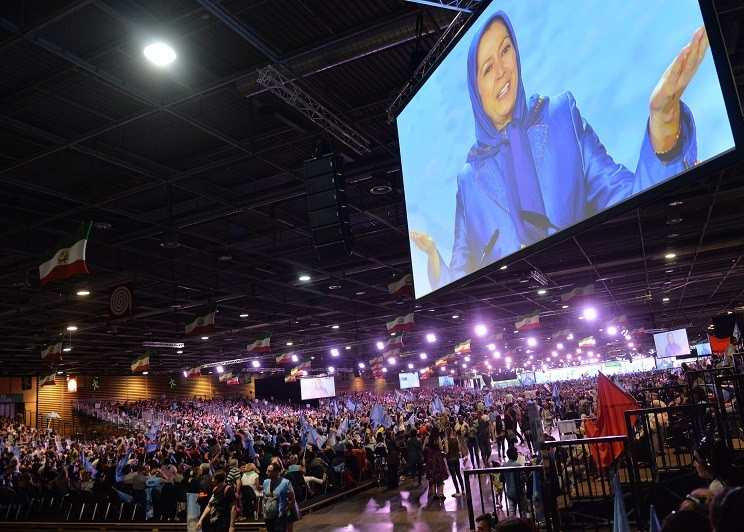
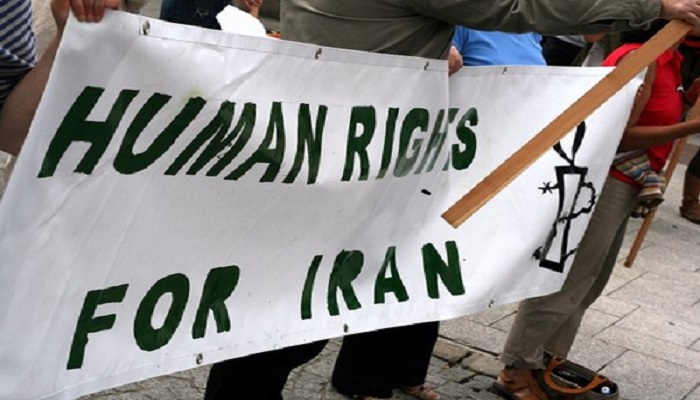
Human Rights for IranThis weekend in Paris was marked by one of the largest gatherings ever assembled of people dedicated to change in the Iran regime and the return of that nation to freedom and democracy.

With a crowd estimated at over 100,000 people, the gathering sponsored by the Iranian diaspora, supporters of the resistance umbrella group, the National Council of Resistance of Iran, featured an eight hour marathon of speeches and remarks by delegations representing over 60 nations, all focused on the brutal nature of the regime and the harsh repression and cruel treatment of Iran’s citizens by their religious mullah overlords.

Even with that much program time, a proper accounting of Iran’s human rights abuses would fill a month’s worth of speeches; so vast and large is the ledger of the abuses by the mullahs. The full extent of Iran’s human rights abuses have been so chronic as to warrant the appointment of a Special Rapporteur by the United Nations focused exclusively on Iran.

The appointment of Ahmed Shaheed as the UN Special Rapporteur on Human Rights for Iran is one of only ten such appointments currently in effect; ranking Iran alongside persistent human rights abusers as Haiti, Myanmar, North Korea and Sudan.

Shaheed has continually spoken out against abuses by the mullahs, most notably as recently as June 5, 2015 over the rapid escalation of arrests and imprisonment of journalists, including American journalist Jason Rezaian.

“The recurrent use of vague references to threats to national security, propaganda against the system and insult to authorities to prosecute and detain journalists or activists is in contradiction to both international norms relating to freedoms of expression and association and the principle of legality,” Mr. Shaheed stated.

Amnesty International’s annual report goes into extensive detail on the litany of human rights abuses flowing from the mullah’s mandates including restrictions on the freedom of expression, association and assembly, widespread use of torture, codified unfair trials, institutional mistreatment of ethnic and religious minorities, the broad denial of women’s rights, lack of privacy, denial of education, and frequent and indiscriminate use of the death penalty.

The chronicle of abuses does not even include the special ire and venom reserved for Iranian dissidents such as those who assembled in Paris by Iran’s mullahs who have sought for the past 35 years to discredit, defame, attack and murder members of Iran’s resistance groups such as the NCRI and People’s Mojahedin Organization of Iran (PMOI).

In the course of resisting Iran’s despotic rule, the groups have seen over 120,000 members murdered by the regime, most recently in hangings from trumped up show trials and at Camp Liberty in Iraq where 2,500 dissident refugees are frequently attacked by Iranian security forces and paramilitaries.

Yet even after the catalogue and almost daily chronicle of abuses against Iranians and Iranian-Americans by the regime, their most vocal supporter, the National Iranian-American Council, has barely uttered a word of protest or criticism even when the abuses are specifically aimed at Iranian-Americans, nominally the reason why the NIAC exists in the first place.

The litany of abuse had become so rampant, so blatant and appearing daily in the front pages of newspapers and global newscasts, that the NIAC finally had to issue some kind of statement recognizing the gross mistreatment going on or risk become a laughingstock every time they opened their mouths; some might argue it already is a laughingstock, but that’s another matter.

So what did the NIAC do to strike fear in the hearts of the mullahs and their prison guards, torturers, hangmen and puppet jurists? It issued a 379-word long press statement in which it “condemns the Iranian government’s recent violations of its international human rights obligations.”

Most notable in the brief statement was that 148 words of it dealt, not with human rights, but with the proposed nuclear deal being negotiated in Switzerland. Even when faced with the overwhelming human misery and suffering being caused by Iran’s leadership, the NIAC can barely force itself to utter a peep about it.

By way of comparison, an editorial written by NIAC policy fellow Ryan Costello in The Hill blog the same week devoted a brawny 891 words to the topic of the issue of inspections of military sites, nearly four times the amount devoted to human rights.

It is a mere fig leaf by the NIAC to cover up for the fact it is a group appearing to be solely dedicated not to the plight of Iranian-Americans, especially four of them languishing in Iran now, but rather towards supporting the political aims of a small cadre of religious rulers in Iran.

By Michael Tomlinson

Filed Under: Blog, News Tagged With: Iran, Iran Lobby, Iran Talks, National Council of resistance of Iran, NCRI, NIAC

Iran- The Importance of Resistance as a Force for Good

June 15, 2015 by admin

18583574530_7b81c1431b_b“Disobedience is the true foundation of liberty. The obedient must be slaves.”

So said famed American author and poet Henry David Thoreau in his landmark essay “Resistance to Civil Government” in which he argued passionately for the importance of disobedience to an unjust state. Thoreau wrote that in 1849 and since then it has influenced the thinking of the likes of Martin Luther King, Jr. and Mohandas Gandhi in the art of civil disobedience.

But resistance to corrupt governments is nothing new. You can look at the 800th anniversary celebrations taking place for Magna Carta, the document that first enshrined protection of church rights, protection for the barons that forced King John of England to sign it from illegal imprisonment, access to swift justice, and limitations on feudal payments to the Crown.

It is almost a genetic imperative for human beings to resist anything that would aim to shackle the free expression of will, creativity or thought. One would like to think in the 800 years since Runnymede or the 166 years since Walden Pond, the world had advanced more in the area of brutality and corruption, but sadly in some parts of the world, it seems we’ve actually gone backwards.

One such place is the Islamic state of Iran, which under the tight rein of a religious theocracy imposed by mullahs, has committed human atrocities and brutalities at home and abroad with mind-numbing frequency. In the 18 months since Hassan Rouhani was handpicked to become president, over 1,700 political dissidents, religious minorities, cultural subversives and ordinary citizens have been executed, most in barbaric public hangings more appropriate for the Dark Ages than the 21st Century.

But a spark of hope, born 50 years ago in Iran struggling against the despotic rule of one tyrant, only to shift after a revolution was hijacked to fight the mullahs who now rule Iran, has now been fanned into a fierce flame of resistance which was on bold display in a crowded, massive convention hall in Paris on Saturday.

The People’s Mojahedin of Iran (PMOI) was started by a group of Muslim Iranian university students, as a Muslim, progressive, nationalist and democratic organization that has since morphed into one of a number of resistance groups joined under the banner of the National Council of Resistance of Iran (NCRI) in working for regime change in Iran and bringing about a new era of freedom and democracy.

The annual meeting sponsored by Iranian diaspora supporting the NCRI brought an impressive crowd of over 100,000, including 600 dignitaries from over 100 nations, together to join in what amounts to a giant pep rally for regime change. It’s a remarkable sight with bleacher stands packed with men, women and children of all ethnicity, religions and languages waving flags enthusiastically, clapping loudly and cheering heartily after speech after speech.

The fact that these people were still just as enthusiastic in the seventh hour listening to speeches by the representatives of Romania and Portugal as they were when Mrs. Maryam Rajavi, head of the NCRI, and Rudy Giuliani, the expressive former mayor of New York, spoke earlier in the day is either a testament to the effectiveness of French coffee or the deep and abiding passion these delegates had for the plight of their brothers, sisters, husbands, wives and children residing in Iran.

Association, let alone membership, with PMOI or its members is punishable by death in Iran. The same holds true for a number of other resistance groups. Yet these people Instagram selfies, tweet defiance and hashtag support to such an extent, the #Iran_Maryam hashtag used for the gathering ended up as a leading global Twitter trend.

But this resistance movement is more than slogans. It carries with it a very real cost and yields tremendous benefits. The NCRI and its extensive network of supporters within Iran has been able to get past government censors, Internet blockades and confiscated satellite dishes to get the word out about protests and demonstrations, arrests, executions and imprisonments and disclosures about secret Iranian nuclear facilities the mullahs were dying to keep secret.

The fact that the resistance gathering took place only two weeks before the June 30 deadline for the current round of nuclear talks was no accident. It was a shout out to the P5+1 group of nations reminding them of the failure to deliver a real deal that not only guarantees Iran does not develop a nuclear weapon, but also has to change how it does business in the arena of human rights and it support for proxy wars against its neighbors.

As the gathering closed and satisfied and resolute people boarded their buses and headed for trains, you could hear their determination in their voices and the hope in their faces that the window for regime change was finally at hand, which only makes me wish that “Get Up, Stand Up” by Bob Marley and Peter Tosh was the exit song.

“Get up, stand up, Stand up for your rights. Get up, stand up, Don’t give up the fight.”

By Michael Tomlinson

Filed Under: Blog, News, Others Tagged With: Iran, Iran Gathering, IRan Resistance, Iranian resistance conference, Maryam Rajavi, NCRI, pmoi

Iran-Giving Voice to the Voiceless

June 15, 2015 by admin

VoicelessOn Saturday, June 13, a cavernous convention hall in Paris will be filled with over 100,000 people who will be joined together in what has become an annual rite of summer; energizing and galvanizing for regime change in Iran and a global movement to turn the Islamic state back to a free, democratic country.

It’s a significant meeting earning wide praise in global news media, blogs, columnists and opinion pages including the Washington Times, The Hill, American Thinker, the Chicago Sun-Times and Western Free Press.

Organized by the Iranian diaspora supporters of the National Council of Resistance of Iran and led by Mrs. Maryam Rajavi, the group’s president, the Grand Gathering of Iranian expatriates will include a formidable array of 600 political dignitaries, including former Democratic and Republican administration officials and 120 parliamentarians from more than 60 countries.

Just a few of the noteworthy luminaries will include a bipartisan delegation from the U.S. Congress, General Hugh Shelton (former U.S. Joint Chiefs of Staff), Gov. Howard Dean (former chair of the Democratic National Committee), Alan Dershowitz (renowned jurist and human rights activist), Michelle Alliot Marie (former defense and foreign minister of France), Sid Ahmed Ghozali (former prime minister of Algeria), Gunter Verhugen (former vice president of the European Commission), and many others.

The fact that Iran, a regime led by mullahs who enforce a brutal suppression of human rights and engage in actively exporting proxy wars and terror for a corrupted ideology, could bring such a wide diversity of political parties, ethnicities, nationalities, religions and economic backgrounds together united in one common goal is irony of the highest order.

The timing of the meeting is also auspicious coming just two weeks before a self-imposed deadline of June 30 for the P5+1 group of nations to come to final agreement with Iran on its nuclear program. The gathering is an opportunity to shine a global spotlight on the dangerous shortcomings in the proposed deal and what still needs to be done to ensure global security.

In an interview with the Washington Times’ Guy Taylor, Mrs. Rajavi warned that “the failure to prevent the Iranian regime’s meddling in Iraq after the 2003 Iraq War, which morphed into the gradual occupation of Iraq by the Iranian regime, gave an unprecedented boost to the growth of fundamentalism.”

“Similarly, the [Khamenei] regime’s crimes in Syria and Iraq and the genocide against Sunnis, which is accompanied by Western silence, have enabled the rise of [the Islamic State],” Mrs. Rajavi added.

It’s a sentiment shared by Linda Chavez, author, syndicated columnist and radio talk show host, wrote in an editorial in the Chicago Sun-Times that “when it comes to supporting our ‘partners on the front lines,’ the one group that gets the cold shoulder from this administration is the organized Iranian opposition. Tehran faces growing internal opposition, which it has answered by engaging in more repression of its own people. Since Hassan Rouhani became president in 2013, Iran has executed more than 1,700 people, a higher total than at a similar point in former Iranian President Mahmoud Ahmadinejad’s tenure. These executions signal that the Iranian regime is growing weaker, not stronger.”

Raymond Tanter, professor emeritus at the University of Michigan and president of the American Committee on Human Rights, echoed the same support for the NCRI in his editorial in The Hill saying “it is only prudent for the West to listen to Iranian dissidents as well in formulating a sound policy on Iran.”

Listening to that voice, the voice of leaders like Mrs. Rajavi, gives the voiceless millions not only in Iran, but also in Syria, Iraq, Yemen, Afghanistan and other places where the Iran regime’s long reach of terror funding and proxies have caused uncountable deaths and inflicted untold suffering on men, women and children a powerful ally in the fight for freedom and regime change in Iran.

As Ken Blackwell, former U.S. ambassador to the United Nations, wrote in American Thinker: “the voices of these leaders and world-renowned experts will also be joined by thousands of Iranians whose brothers and sisters in Iran are brutally repressed.  Their voices not only tell of the threat Iran poses, but also testify to the popularly supported democratic alternative to the Iranian regime.  It may not happen tomorrow, or even the next day, but Iran’s actions at home and across the region exposes the leadership’s hardline, irrational beliefs and the importance of the alternative these Iranians represent.”

To join and watch the gathering live, go online at www.iranfreedom.org and use the hashtag of #iranfeedom and help make a difference.

By Michael Tomlinson

Filed Under: Blog, News

The Heartbeat of a Resistance Movement

June 12, 2015 by admin

Rosa-ParksOn December 1, 1955, in Montgomery, Alabama, Rosa Parks was asked by a bus driver to move to the back of a municipal bus for coloreds and leave the section reserved for white passengers. In response she said “No.”

A simple word, but one filled with profound meaning because while her act of defiance landed her in jail and caused her to lose her job as a seamstress in a local department store, it launched the now famous Montgomery Bus Boycott which was immortalized in the movie “Selma” and helped push Rev. Martin Luther King, Jr. to national prominence.

If we consider the context of place and time, Rosa Parks’ decision could not have been an easy one knowing it could land her in an Alabama jail during segregation when scores of blacks had been mistreated or even killed.

“I have learned over the years that when one’s mind is made up, this diminishes fear; knowing what must be done does away with fear,” Parks said in response to questions over her fears.

That same mindset is one that countless activists around the world have as they battle oppressive regimes with acts of defiance great and small; whether it was Malala Yousafzai, the youngest Nobel Laureate who was shot in the face by Taliban opposed to her activism for women’s rights and education, or Maryam Rajavi, a woman who leads one of the largest resistance groups to the Iran regime in the National Council of Resistance and whose members have been arrested, imprisoned, tortured and killed by the Iran’s religious courts.

Parks quote is important because it clearly illustrates what often separates activists from the rest of us; the willingness to put oneself at risk knowing their actions might bring arrest or even worse upon them.

Nowhere is that more true than in the Islamic state of Iran where the ruling mullahs enforce a brutal religious code that rules everything from civil life to economic matters to making war on its neighbors. Anyone offering up dissent is usually ticketed for a one-way trip to Evin Prison and often a nearby public square for a hanging.

It is a barbaric system that many of risen up to oppose. Mrs. Rajavi’s group, including the PMOI/MEK groups, have led a long-suffering campaign to help get the word out on protests inside Iran past the Internet blockades, social media bans and confiscation of satellite dishes imposed by the mullahs.

This includes recent mass protests by Kurds in the north, large protests over the teetering economy, and waves of protests by teachers sweeping across Iran over wages and working conditions all point to a deep level of disaffection and disenfranchisement by the Iranian people and their religious overlords.

It’s worth remembering that the original Iranian revolution to overthrow the Shah was precipitated with a remarkably similar set of circumstances such as severe economic displacement among the people and a harsh crackdown by the government on dissenters which only grew as the protests grew.

The same scenario is now happening in Iran. Given the steep declines in Iranian GDP over the past year because of the massive drains on the treasury in funding Assad in Syria to the tune of $35 billion and to keep Shiite militias in Iraq equipment and Houthi rebels in Yemen supplied has placed the Iranian economy on a precarious ledge.

This Saturday in Paris, the global resistance to the Iran regime will be holding its annual gathering with a livestream available. We can only hope from that meeting of the thousands come a similar number of Rosa Parks whose simple acts of defiance can be the building blocks, brick by brick, of a new, democratic and free Iran.

By Laura Carnahan

Filed Under: Blog, Current Trend, News Tagged With: Maryam Rajavi, mek, pmoi, resistance

Trita Parsi and Paul Pillar Outdo Themselves

June 3, 2015 by admin

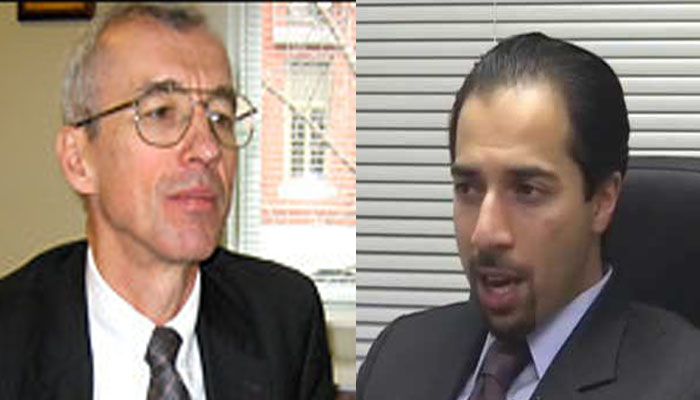
Untitled-1Trita Parsi, head of the Iran regime’s top cheerleader, the National Iranian American Council, and Paul Pillar, a former assistant at the Central Intelligence Agency, authored an editorial in Huffington Post in which they attempted to make the argument that Israel was preparing to attack its adversary Hezbollah in an effort to derail nuclear talks between Iran and the P5+1 group of nations.

It’s an odd editorial since it reinforces the Iran lobby’s belief that in order to save a faltering nuclear deal it needs to raise the boogeyman of Israel. For the Iran lobby, Israel serves the same purpose as neo-cons, Sen. Lindsay Graham (R-SC) or Fox News, it gives people like Parsi and Pillar the opportunity to run hysterical promising war, apocalypse and mayhem should a nuclear deal not be achieved with Iran’s mullahs.

It’s a typical effort to cajole a reaction from American voters by promising war. A curious tactic considering NIAC has consistently promised a pathway to peace, but logic has never been a NIAC strong suit.

In fact, Parsi and Pillar are scraping the bottom of the barrel when they cite a NPR poll as evidence of shifting momentum for a nuclear deal among Americans. A closer reading of the article they cite reveals points quite unfavorable to them. Among those include:

  • An NBC News/Wall Street Journal poll last month found more than 7-in-10 said they thought a deal would “not make a real difference in preventing Iran from producing nuclear weapons.”
  • A Pew survey found that 73 percent said they either knew “a little” or “nothing at all” about nuclear talks. That same poll also found that a strong majority (62 percent) wants Congress to “have the final authority for approving any deal” not President Obama.

The funny thing is that the overwhelming majority of Americans don’t mind talks with Iran on a nuclear deal. Where they disagree with Parsi and Pillar is that the majority of Americans don’t believe Iranian regime will adhere to any deal and that mullahs in Iran simply can’t be trusted.

Americans are an optimistic people. They want to believe negotiations can yield peaceful fruit, but Americans are not stupid – much to the dismay of Parsi and Pillar – they recognize that trust for a regime run by mullahs that has launched and supported three major proxy wars in Syria, Yemen and Iraq can’t be trusted.

Americans also know all too well the brutal human rights situation in Iran and are acutely aware of the inhumane treatment being perpetrated in Iran on these same people.

Anyone typing in the words “Iran” and “hanging” in Google under an image search can see the ample proof on display of how Iranian regime’s judicial system dispenses justice. Americans also see Iran’s mullahs playing games with the lives of four Americans being held in Iranian prisons as pawns in the hopes of bartering concessions in nuclear talks.

It’s also even more galling to see that while Parsi and Pillar produce so much editorial copy aimed at warning of a war, they have never condemned the wars that Iran is already waging:

  • Wars against women, children and anyone who cannot exercise their basic human rights without fear of arrest or public beating;
  • Wars against Christians, Jews, Hindus, Yazadis, Sunni Muslims, or anyone else that doesn’t share their brand of extremist Islam; and
  • Wars against bloggers, journalists, pastors, businessmen, tourists, YouTubers and anyone else that dares shine a light on what is happening within Iran.

These are the wars Parsi and Pillar are not prepared to talk about and the real wars happening now that matter.

By Michael Tomlinson

Filed Under: Blog, National Iranian-American Council, News Tagged With: Hindus, Iran, Iran Christians, Iran Human rights, Iran Lobby, Iran Minorities, Jews, Nuclear, Paul Pillar, Sunni Muslims, Tritta Parsi, Yazadis

Iran Regime Nuclear Stockpile Grows During Talks

June 3, 2015 by admin

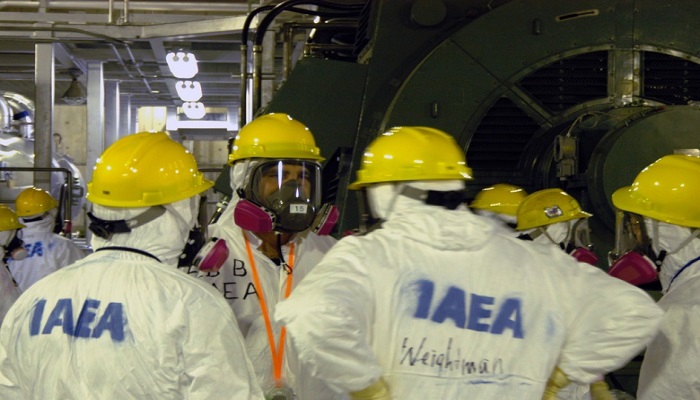
IAEA InspectorsIn a damning revelation, the New York Times revealed that with only one month left before a self-imposed June 30 deadline to complete a nuclear deal with the Iran regime, “international inspectors have reported that Tehran’s stockpile of nuclear fuel increased about 20 percent over the last 18 months of negotiations, partially undercutting the Obama administration’s contention that the Iranian program had been ‘frozen’ during that period.”

The findings were released by the International Atomic Energy Agency which poses a significant stumbling block to the hopes of the Obama administration. As the Times put it:

“In essence, the administration will have to convince Congress and America’s allies that Iran will shrink its stockpile by 96 percent in a matter of months after a deal is signed, even while it continues to produce new material and has demonstrated little success in reducing its current stockpile.”

The fact that Iran has continued building its stockpile of nuclear fuel even while it has consistently said it was not pursuing a nuclear expansion during three years of negotiations leads to the inescapable conclusion that Iranian regime cannot be trusted to comply with any deal reached.

Even while the regime’s chief negotiator Javad Zarif has played the role of charming, accommodating diplomat, his boss, Ali Khamenei, has just as consistently maintained an air of defiance in complying with the most basic of terms such as inspection of military sites.

Iran’s opposition to inspections presents a red line for France’s foreign minister, Laurent Fabius, who reiterated in an interview with the Wall Street Journal that a deal without inspections of military and secret facilities risked sparking a new nuclear arms race in the Middle East.

“The best agreement, if you cannot verify it, it’s useless,” said Mr. Fabius. “Several countries in the region would say, OK, a paper [has been signed] but we think it is not strong enough and therefore we ourselves have to become nuclear.”

But those were not the only disturbing news reports coming out of Iran. The state-run Fars News Agency reported on Monday that Russia’s Rosatom State Atomic Energy Corporation announced it would start construction this year of a second nuclear plant in Iran. The deal comes on the heels of an agreement between Russia and Iran to send the Islamic state an advanced anti-aircraft missile system.

The picture for meeting the June 30 deadline appeared even more muddled with reports from Reuters that Western negotiators appeared to be caving in on key Iranian demands such as shifting complaints about any alleged violations to a “dispute-resolution panel” that would come up with non-binding opinions in an absurd idea.

The proposal would direct complaints to the United Nations Security Council where the same Russia that is busy selling missile batteries and nuclear reactors to Iran would have a veto over any potential sanctions.

All of this would be happening at the same time the regime would be flooded with billions of dollars in oil sales proceeds, new foreign investment and the release of frozen assets at precisely the time Iran needs its coffers replenished after three years of proxy wars.

It does make any rational person wonder how Iran’s mullahs could be trusted when they’ve already added to their nuclear stockpile over the last 18 months while preaching its reduction at the negotiating table.

By Michael Tomlinson

Filed Under: Blog, News

Iran Regime Deepens Efforts for Nukes

May 29, 2015 by admin

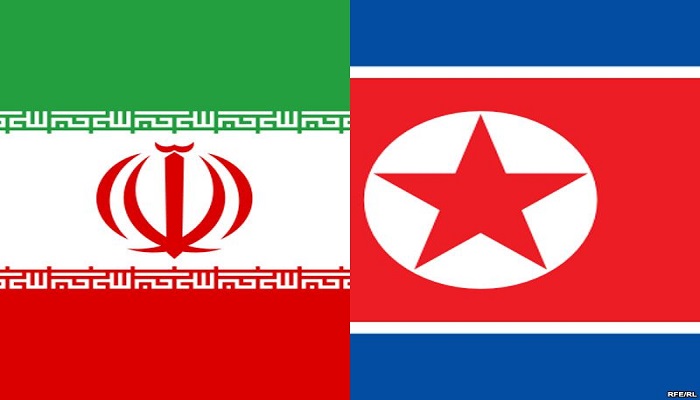
Iran North KoreaGlobal news media shifted their attention to new disclosures of a clandestine visit to Iran by a delegation of North Korean nuclear and missile experts to a military site near Tehran amid a third round of talks between the P5+1 group of nations and the Iran regime over its nuclear program.

As reported by Reuters, the National Council of Resistance of Iran, one of the leading dissident groups against the Iran regime which previously exposed the regime’s uranium enrichment plant at Natanz and a heavy water facility at Arak in 2002, cited information from sources inside Iran, including Iran’s Revolutionary Guards Corps, that a seven-person North Korean Defense Ministry team was in Iran during the last week of April.

The visit marked the third time in 2015 alone that North Koreans had been to Iran, with another nine-person team due to return in June shortly before the self-imposed deadline of June 30 for this current round of talks.

“The delegates included nuclear experts, nuclear warhead experts and experts in various elements of ballistic missiles including guidance systems,” the NCRI said.

The information obtained was based on dozens of reports from various sources inside of the clerical regime. Besides IRGC, sources included the Ministry of Defense (MoD), the Organization of Defensive Innovation and Research (SPND), which is in charge of working on the weaponization aspect of the nuclear program, and the Aerospace Industries Organization (AIO).

Breitbart.com sounded a cautionary note at the prospect of more integrated cooperation between the two totalitarian regimes.

“The North Koreans are growing more emboldened and hostile as they watch Iranian regime humiliate American negotiators. The claims of the NCRI should be vigorously vetted, as with all third-party intelligence, but it is quite plausible Kim Jong-Un would send technical experts to Iran to discuss mutually profitable strategies for getting the mullahs those atomic weapons they want so much,” Breitbart said.

Even Carol Giacomo, the editorial page editor for the New York Times, writing in her blog Taking Note that the optics of such a visit might prove problematic in efforts to keep Iran from gaining a nuclear capability.

“Such cooperation would belie Tehran’s insistence that it is not pursuing a nuclear weapon and would necessarily blow up any nuclear agreement. But even if a nuclear deal is reached, the major powers will need to watch vigilantly to make sure that Iran doesn’t switch from developing the technology that could enable it to produce a bomb to buying one from North Korea,” Giacomo said.

While many political analysts openly wonder why the regime would host such a delegation with the June 30 deadline looming for current talks, the regime has left no doubt that any agreement reached would be only on its terms, including demands from Iran’s top mullah, Ali Khamenei, to not allow international inspection of any military sites, to not allow interviews of Iranian nuclear scientists and an unconditional and immediate lifting of all economic sanctions imposed by the U.S., European Union and United Nations. All of which leaves the prospect of a deal in doubt, let alone meeting the June 30 deadline.

French foreign minister Laurent Fabius took a hard line in response to Khamenei’s demands, saying “France will not accept a deal if it is not clear that inspections can be done at all Iranian installations, including military sites.”

Fabius made his comments to the national assembly in Paris yesterday and urged other negotiating partners to adopt a similar position as talks resumed this week in Switzerland.

With Iran’s mullahs showing such defiance at such a critical time, we can only assume mullahs either don’t intend to honor any agreement reached or suspect they can string the West along or still develop their nuclear weapons just as their visitors, the North Koreans did.

By Michael Tomlinson

Filed Under: Blog, News

Things To Know About the Iran Regime This Week

May 18, 2015 by admin

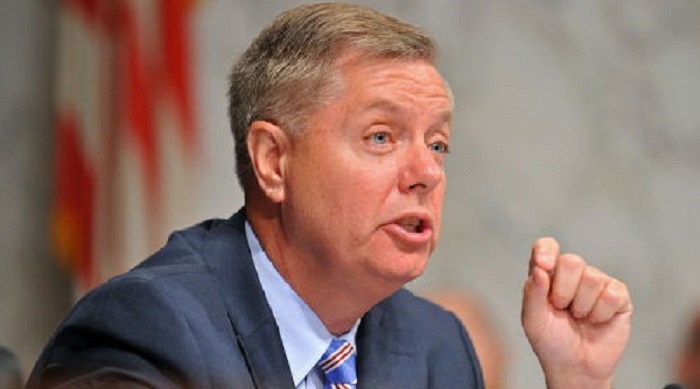
Sen. Lindsey Graham (R-SC) questions Supreme Court nominee Elena Kagan, President Obama's pick to replace retiring Justice John Paul Stevens, during during the second day of her confirmation hearing before the Senate Judiciary Committee on Capitol Hill in Washington on June 29, 2010. UPI/Kevin Dietsch

Sen. Lindsey Graham (R-SC) questions Supreme Court nominee Elena Kagan, President Obama’s pick to replace retiring Justice John Paul Stevens, during the second day of her confirmation hearing before the Senate Judiciary Committee on Capitol Hill in Washington on June 29, 2010. UPI/Kevin Dietsch

Sen. Lindsey Graham (R-SC) wrote in this weekend’s Wall Street Journal an editorial outlining eight conditions the Iran regime must meet before any nuclear agreement is reached. The points included common sense ideas such as closure of all hardened or formerly secret nuclear sites and allowing anytime, anywhere inspections of all Iranian military and nonmilitary facilities.

His points are valid and important in order to ensure any deal removes the threat of nuclear weapons from coming into the possession of the Islamic state., but the most important point he outlined as the conditioning of relief from economic sanctions on certification by the International Atomic Energy Agency that Iran was in full compliance and demonstrate that compliance over a sustained period of time.

The reason why this condition stands out above all others lies in the most pressing need Iran has right now which is cash. Iran’s mullahs have followed a policy of destabilizing the Middle East over the last three years including the funding of Shiite militias in Iraq and virtually taking over its government, supplying arms and support to the Syrian regime in its bloody civil war, and supporting a Houthi rebel army that has overthrown the government of Yemen and plunged the Arabian peninsula into a dangerous proxy war with Saudi Arabia and Sunni gulf states.

Iran’s mullahs have pressed hard for the lifting of all economic sanctions at once should a deal be completed because it needs the estimated $100 billion in frozen assets to help resupply its coffers depleted by proxy wars and plunging oil prices.

But even with this thirst for cash, Iran remains obstinate on even the most basic parts of an agreement. The regime’s top negotiator and Deputy Foreign Minister Abbas Araqchi opened talks with the IAEA recently which has been demanding access to Iranian military sites such as Parchin. “Iran, which is extremely reluctant to allow atomic inspectors access to military sites, has been stalling the investigation since last August,” reported Reuters.

This shows that mullahs’ desire for cash does have limits, namely they do not want to limit their ability to produce nuclear weapons. Iran’s mullahs believe that possession of nukes places Iran in a prime position to be the power in the region and weapons of mass destruction allow it to offset a nuclear-capable Israel, while also holding a hammer over the heads of Sunni states such as Saudi Arabia.

But this pursuit of weapons and funding of proxy wars have come at a steep price for ordinary Iranians. As Al Arabiya News Channel recently reported in a new series of stories focused on poverty in Iran:

“In 1979, shortly after the shah had been toppled, the new theocratic ruler Ruhollah Khomeini promised free electricity, water supplies and transportation services to all Iranians, to be paid for by oil revenues under a ‘just’ Islamic economic system.  Yet this promise – repeated by several regime presidents after him to make the poor feel the benefits of Iran’s oil wealth – was never delivered.”

Oddly enough though, U.S. Secretary of State John Kerry seems to think North Korea can somehow learn a positive lesson from any completed deal with Iran, which leaves objective observers dumbstruck since it was North Korea that provided the mullahs with the template for achieving nuclear capability by negotiating an agreement and then violating every aspect of it. In fact, North Korea has supplied Iran with much of its nuclear research and virtually all of its ballistic missile capability under manufacturing license.

Unfortunately while the rhetoric is starting to heat up on the near presidential campaign trail, the news media have all but ignored violent protests that have broken out in Iranian cities. The recent protests against the regime’s oppression began after a May 4 incident in which 27-year-old Farinaz Khosravani jumped to her death from a window when an Iranian intelligence officer allegedly tried to rape her at the hotel where she worked in the city of Mahabad according to the International Business Times.

The mass protests have been met harshly by Iranian regime’s security forces with the potential for even more deaths as a result.

All of which leads us to the most combustible issue coming to a head this week as an Iranian ship heads towards Yemen with what the regime calls a cargo of “humanitarian supplies,” but with no ability to independently verify it.

Iranian Gen. Masoud Jazayeri, the deputy chief of staff, warned that any attempt to interfere with the vessel would “spark a fire” in a clear warning to the U.S. Navy. The stakes rise higher as the Iran regime starts the weekend talking about a nuclear peace and ends it with warnings of war.

By Michael Tomlinson

Filed Under: Blog, News Tagged With: Iran, Iran sanctions, Iran Talks, Syria, Yemen

Iran Lobby Trying to Make Lemonade From Lemons

May 15, 2015 by admin

LemonsThe House of Representatives voted yesterday overwhelmingly passed by a whopping 400-25 margin legislation giving Congress the power to review and potentially reject a nuclear agreement with the Iran regime. The large margins in the Senate and House votes represent an undeniable proof of the Iran lobby’s failure at halting the drive for Congressional review.

When the Corker-Menendez legislation was first proposed, regime supporters such as the National Iranian American Council went apoplectic claiming the passage of the bill was tantamount to starting a war with Iran. They and other supporters of the Iran regime including bloggers such as Lobelog and columnists such as Eli Clifton went all in with the effort to kill the bill, ultimately failing to convince Democrats to support the Iranian mullahs in the face of dismal poll results showing Americans overwhelmingly believed mullahs could not be trusted to abide by any agreement.

Faced with their impotence to halt the legislation, the NIAC and its cohorts executed a pretty pirouette and now sounded the warning that “with the final passage of this bill, the onus is now on every member of Congress to evaluate a final nuclear deal its merits, compare it against the alternatives, and decide between war and peace with Iran.”

The statement, made by NIAC policy director Jamal Abdi, is an absurd position to take since the choices for Congress have never been between war and peace with Iran, but rather whether or not Iran’s mullahs could be trusted to abide by an agreement. That is the crucial keystone underpinning the calculations being made by Democrats and Republicans in both houses.

What NIAC and other regime supporters have failed to realize is that Congress is increasingly becoming disenfranchised with what is fast-becoming a lame duck Obama administration and are turning their collective gaze to the presidential campaign next year.

With Iran doing its part by continually acting irrationally when supporting conflicts in Syria, where more evidence of chemical weapons use by the Assad regime have come to light again, and Yemen, where Iran is engaged in a high-stakes game of chicken with the U.S. Navy in the Gulf of Aden, the regime is not reassuring American voters or their representatives with this conduct.

It has left the Iran lobby desperately trying to turn lemons into the proverbial lemonade. The hints of their desperation can be seen in the NIAC’s odd insistence of 151 House Democrats signing a letter of support for a deal when the actual number of voting Representatives in the letter is only 145 since members from U.S. territories cannot vote.

Most political analysts have already done the headcounts and the margins needed to override a presidential veto of a thumbs down vote by Congress appears to be in the bag, but it is doubtful any deal will ever come to a vote since Iran’s mullahs appear intent on doing everything they can to kill a deal anyway.

The mullahs continue to use several American hostages as political pawns in Iranian prisons, refusing to discuss their release or even charging them or placing them on trial.

They ignore continued warnings by the International Atomic Energy Agency that Iran still has been non-responsive to repeated demands for access to nuclear facilities at military bases.

They continue to harass commercial shipping in the Straits of Hormuz with Islamic Revolutionary Guard Corps patrol boats firing shots at or aggressively tailing commercial vessels for the third time in as many weeks. In the latest incident, Iran on Thursday fired warning shots across the bow of a Singapore-flagged ship, the Alpine Eternity, after it refused to heed demands to move into Iranian waters, according to Bloomberg News.

All of these actions give Americans a strong impression of a growing irrationality emanating from Tehran which is paradoxical given the start of another round of nuclear talks ostensibly to finalize a deal. All of which makes the task of grinding out lemonade by the Iran lobby out of this mess all the more daunting.

By Michael Tomlinson

Filed Under: Blog, News Tagged With: Congress bill on Iran, Iran bill, Iran Lobby

  • « Previous Page
  • 1
  • …
  • 47
  • 48
  • 49
  • 50
  • 51
  • …
  • 53
  • Next Page »

National Iranian-American Council (NIAC)

  • Bogus Memberships
  • Survey
  • Lobbying
  • Iranians for International Cooperation
  • Defamation Lawsuit
  • People’s Mojahedin
  • Trita Parsi Biography
  • Parsi/Namazi Lobbying Plan
  • Parsi Links to Namazi & Iranian Regime
  • Namazi, NIAC Ringleader
  • Collaborating with Iran’s Ambassador

Recent Posts

  • NIAC Trying to Gain Influence On U.S. Congress
  • While Iran Lobby Plays Blame Game Iran Goes Nuclear
  • Iran Lobby Jumps on Detention of Iranian Newscaster
  • Bad News for Iran Swamps Iran Lobby
  • Iran Starts Off Year by Banning Instagram

© Copyright 2026 IranLobby.net · All Rights Reserved.