Iran Lobby

Exposing the Activities of the lobbies and appeasers of the Mullah's Dictatorship ruling Iran

  • Home
  • About
  • Current Trend
  • National Iranian-American Council(NIAC)
    • Bogus Memberships
    • Survey
    • Lobbying
    • Iranians for International Cooperation
    • Defamation Lawsuit
    • People’s Mojahedin
    • Trita Parsi Biography
    • Parsi/Namazi Lobbying Plan
    • Parsi Links to Namazi& Iranian Regime
    • Namazi, NIAC Ringleader
    • Collaborating with Iran’s Ambassador
  • The Appeasers
    • Gary Sick
    • Flynt Leverett & Hillary Mann Leverett
    • Baroness Nicholson
  • Blog
  • Links
  • Media Reports

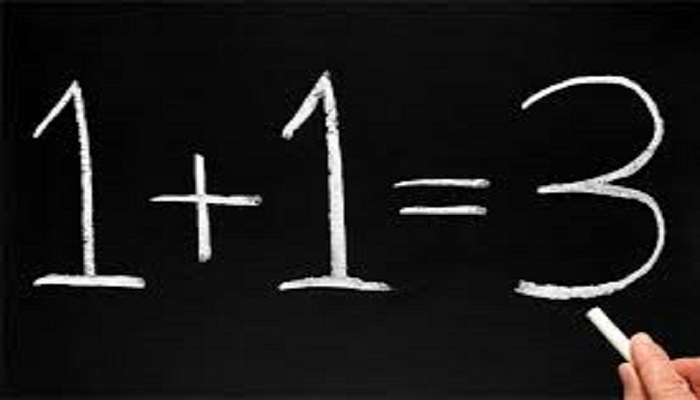
Iran Lobby Still Can’t Do Basic Math

May 14, 2015 by admin

1 plus 1A funny thing happened to a letter by Reps. Jan Schakowsky (D-IL), Lloyd Doggett (D-TX) and (David Price (D-NC) sent to President Obama expressing support for the conclusion of a nuclear agreement with the Iran regime. It was released with much fanfare by the Iran lobby on May 7th and signed by 150 members of the House.

Jamal Abdi, the policy director for the National Iranian American Council, a chief lobbyist for the Iran regime, said “if the President is forced to use his veto to protect an agreement this summer, there are now sufficient lawmakers on the record in support of the envisioned deal to potentially uphold that veto.”

The only problem with that statement was that it was wrong. To override a veto, a supermajority is required in the House or 290 members. The NIAC and Rep. Schakowsky announced a letter signed by only 150 members, but it included members from U.S. territories who are not allowed to vote on matters before the House. This meant the actual voting total was only 144 members, one shy of the number needed to sustain a veto.

But then something happened. The number was updated yesterday to reflect 151 House members had signed. Never the less, the Iran lobby is still counting the six non-voting members as part of the signers even though their participation in a veto override is not in the equation.

Could it be the Iran lobby is worried about the tenuous and nebulous nature of its support? Could it be the Trita Parsi from the National Iranian American Council believes he needs to bolster the support he claims? Could it be they simply can’t do basic math?

Even though we might feel compelled to refer Parsi and his colleagues for some Common Core math lessons, what is clear is that NIAC and other regime supporters such as Lobelog.com are mustering all hands on deck to try and keep House members in line against growing uncertainty building from the increasingly irrational acts by Iran’s mullahs in places such as Yemen, Syria and the Gulf of Aden.

In an editorial in the Huffington Post, Parsi and Abdi write that “this summer, the U.S. Senate will choose between war and peace with Iran.” It is a false choice they present, no more than a straw man, to present choices as war or peace. The actual choices are much more complicated.

Parsi and Abdi maintain that a “good” deal for the West will be too offensive to Iran and be summarily dismissed by the mullahs, plunging the world into a war, but a “bad” deal that rewards Iran with no sanctions and allows them to build nuclear weapons will do the same thing.

But the best course is to hold Iran accountable for its actions, not just in the nuclear arena, but in all its conduct, including pits participation in proxy wars, mistreatment of its citizens and support for terrorism. Iranian regime’s actions within the past three years of talks have clearly shown that its actions at home and abroad are actually getting worse.

News media are beginning to pay more attention and bring these stories to light. The Iranian resistance movement has gained increased stature as its members tell these stories of horror and members of Congress have heard from voters who simply do not trust Iran’s mullahs. That has been reflected in near unanimous votes in Congress to retain the ability to review and approve or disapprove any agreement with Iran.

But for opponents of a bad nuclear deal, Iran mullahs themselves have provided enough reasons for their cause with their provocative actions the past few weeks including the illegal seizure of a commercial cargo vessel on the high seas and their continued meddling in Syria and Iraq, including recent massacre of a Sunnis family in Diyala Iraq.

With friends like these, Parsi and Abdi might be better off representing ISIS from now on.
Filed Under: Current Trend, News

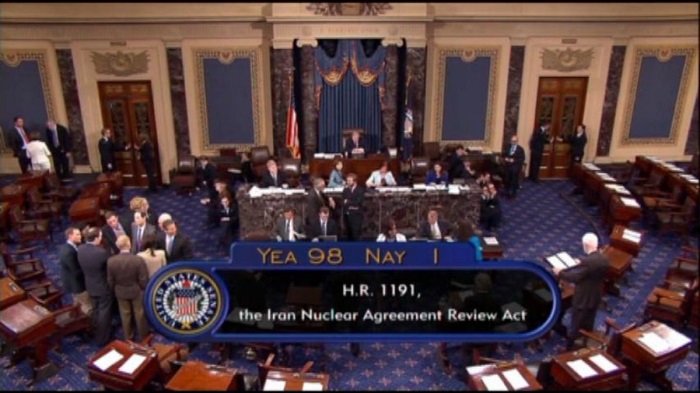
Iran Lobby Loses 98-1 in Senate Vote

May 8, 2015 by admin

98-1 VoteThe Senate voted by a whopping 98-1 margin to approve the Corker-Menendez bill giving it 30 days to review and approve or vote down any nuclear agreement negotiated with the Iran regime and the P5+1 group of nations; affirming the utter failure by Iran’s lobbyists to halt the drive for Congressional review.

While the passage of this landmark legislation – where it is headed towards a similar passage in the House – represents the hard work of a bipartisan coalition of legislators to wedge Congress into the Iran nuclear talks, it boldly shows the ineffectual nature of the Iran lobby, especially the National Iranian American Council led by Trita Parsi.

The NIAC has loudly opposed any effort to allow Congress approval of any deal. When the Corker-Menendez bill was first introduced, NIAC issued a quick denouncement warning that “under this legislation, Congress would delay the implementation of any nuclear deal reached with Iran while deciding whether to permanently remove the President’s powers to execute a deal.”

The NIAC rightly recognizes that allowing Congress to approve any deal would bring the regime’s conduct into the equation and allow a public debate on whether or not a regime involved in proxy wars, terrorist activities, brutal human rights abuses and provoking sectarian civil wars is trustworthy enough for an agreement.

A recent NBC News poll found 68 percent of Americans believed Iran was either not too likely or not likely at all to abide by a nuclear agreement. Senators are not dumb, they can read a poll better than anyone else and these types of numbers compelled them to ignore the complaints of the Iran lobby and opt for further oversight.

But the legislative win wasn’t complete. There still remained within the bill some troubling provisions outlined by the Washington Post and decried by co-sponsor Sen. Robert Menendez (D-NJ) including “provisions that may wind up in a final deal — affording Iran immediate sanctions relief (‘a signing bonus’), allowing Iran to keep working on advanced research, reliance on the faulty concept of snapback sanctions, the failure to secure anytime/any place inspections, Iran’s refusal to come clean on past military dimensions of the program and excluding terrorism from sanctions consideration.”

But Sen. Menendez signaled that this bill would not be the final word on the Iran regime’s conduct, promising additional legislation.

“I stand ready to work with colleagues immediately on pursuing other concerns such as missile technology, such as terrorism, such as their human rights violations, such as their anti-Semitism, such as the Americans who are being held hostage. And to look at either sanctions or enhanced sanctions if they already exist on some of these elements that we should be considering. That is separate and apart from a nuclear program,” he said.

The NIAC, stinging from the Senate defeat, has turned its attention to the upcoming House vote, where it is also headed to another defeat, placing its hopes in a letter circulated among Democratic House members urging President Obama to stay the course in seeking a deal with the Iran regime. The letter, signed by 150 House members, including six non-voting members from U.S. territories, does not represent enough members to halt an override of a presidential veto.

It is clear that even after a “all hands on deck” mobilization by the NIAC to get enough signatures for the House letter, knowing the overwhelming defeat it faced in the Senate, it still could not muster the 145 House members necessary to sustain a presidential veto and instead attempted to hide the failure by counting the six non-voting members.

The fact that NIAC attempted this pathetic fig leaf did little to hide its waning ability to influence the ongoing nuclear debate.

By Michael Tomlinson

Filed Under: Blog, News Tagged With: Iran, Iran Lobby, Iran Talks

Scrutiny of Iran Regime Increasing Over The Nuclear Talks

May 5, 2015 by admin

Magnifying ScrutinyDespite the best efforts of lobbying allies of the Iran regime, including the National Iranian American Council, scrutiny of Iran’s actions and its policies are intensifying with the perception that this latest third round of talks will be the last chance for the Obama administration to close a deal.

With the stakes high, news organizations are finally turning their attention on the regime, and in light of the latest proxy wars started by Iran in Yemen, journalists are taking heed of what those acts may portend for a possible deal.

One such area of increased attention was the collective warning from Sunni Arab leaders to the U.S. that Iran’s role in arming and funding Shiite allies in the Middle East is powering extremist groups like Islamic State and Al Qaeda.

These same Arab leaders are pressing the Obama administration to more aggressively support Saudi Arabia and its allies in pushing back Iranian influence in Yemen, Syria, Lebanon and elsewhere in order to drain support for Islamic State and Al Qaeda.

Journalistic skepticism continued with the apparent contradiction over the issue of the economic sanctions should a nuclear deal be completed. Bloomberg View columnist Josh Rogin detailed speeches by Vice President Joe Biden and Treasury Secretary Jack Lew in which they outlined the administration plan to only lift sanctions after many years of compliance and only through Congressional action.

But “that explanation directly conflicts with what Iranian Foreign Minister Javad Zarif told an audience at New York University earlier that day,” Rogin wrote.” Zarif said that UN sanctions would be lifted within days of an agreement being signed and that all sanctions would be permanently lifted, including Congressional sanctions, once Iran met its initial obligations.”

In Commentary Magazine, Jonathan S. Tobin offered similar skepticism over the idea of “snapback sanctions” actually being of any effect. He correctly points out a critical flaw in the deal being contemplated:

“Just as important, the administration is drawing a broad distinction between branches of the Iranian Revolutionary Guard, the regime’s terror sponsor as well as an economic powerhouse. Lew promised that the U.S. would rightly hold the IRGC’s Quds Force responsible for its terrorist actions and keep sanctions in place on them. But the rest of the IRGC’s vast infrastructure will be exempt from sanctions after the deal is implemented. Such a distinction will enable Tehran to go on funding terrorism through the IRGC’s vast holdings that amount to a third of the Iranian economy. Money, like terrorism is fungible but if you’re determined to turn a blind eye to how the Iranian regime operates, anything is possible.”

But besides focus on the Iran regime’s foreign policy and nuclear talks, journalists are taking a closer look at the human rights abuses that continue to grow in new and alarming ways.

Agence France-Presse ran a story on the regime’s efforts to outlaw certain styles of haircuts for young Iranian men that the mullahs viewed as subversive and oddly “devil worshipping.”

Mostafa Govahi, the head of Iran’s Barbers Union, was quoted in the state-run ISNA news agency that “any shop that cuts hair in the devil worshipping style will be harshly dealt with and their license revoked,’ he said, noting that if a business cut hair in such a style this would ‘violate the Islamic system’s regulations.”

In addition, the mullahs aimed to ban tattoos, tanning beds and the plucking of eyebrows in a departure into the realm of weirdness. We can only assume given the regime’s preference for imprisonment and public hangings, haircutting in Iran might now be considered a dangerous profession.

And in a further embarrassment to those supporting a nuclear deal with Iran, the Observer chronicled the plight of homosexuals in Iran where an estimated 4,000-6,000 gays and lesbians have been executed by the regime since 1979 to today.

At a time when the U.S. is having a national debate over same-sex marriage, there is scant attention being paid to the abuses gays are undergoing in Iran; until now.

All of which points to the growing and well deserved scrutiny the regime is now undergoing. We can only hope the effect of a magnifying glass aimed at the regime’s policies will be similar to putting a bug under the burning glare of the sun.

By Michael Tomlinson

Filed Under: Blog, News Tagged With: Iran, Iran deal, Iran Lobby, Iran sanctions, Iran Talks, IRGC, Sanctions

Ending Sanctions Goal for Iran Lobby

April 30, 2015 by admin

Cash1Iran regime president Hassan Rouhani gave a speech marking Iran’s Labor Day in which he said a ratified nuclear deal would end business for sanctions busters who made millions from the illegal sale of black market Iranian oil and the importation of banned goods and technology. It was a curious statement to make since Rouhani and other regime leaders have benefitted greatly in the black market trafficking of goods.

But the Iranian PR and lobbying machine are busy trying to make the case that ending sanctions would empower the Iranian people and disenfranchise powerful hardline conservative entities as the Revolutionary Guard Corps. It is a disingenuous argument to make since the opposite is the more realistic outcome based on moves being made by Rouhani and his boss, top mullah Ali Khamenei.

It is important to remember that the number one condition of Iran’s mullahs for any deal is a complete lifting of all economic sanctions at the same time when a deal is signed. That includes U.S. sanctions (both executive and Congressional), European Union sanctions and sanctions placed by the UN Security Council. Why? Because it would open floodgates to over $100 billion in immediate cash into Iranian coffers, coffers controlled almost exclusively by the Revolutionary Guard.

In addition, the lifting of sanctions would include the immediate availability of Iranian oil back on the open market, generating almost 3 million barrels of oil for the regime. Right now, the company controlled by the Guard is maintaining a fleet oil tankers in the Gulf filled to the brim with oil in offshore storage it plans to release the minute an agreement is signed.

Also, the large bulk of utilities and services in Iran are also controlled by shell companies for the Guard, this includes the nation’s cellular providers, internet providers, electronics importers, drug importers, power companies, and water companies. The Guard recently took control of Iran’s telecommunications company with a $7.8 billion stake.

All of these firms would be able to take in foreign investment with many market analysts estimating foreign investment in Iran at close to $1 trillion; with most of that money being channeled through Guard controlled companies. The net contribution to the Revolutionary Guard would dwarf anything it currently makes on the black market.

Why this is important to the regime, besides filling the pockets of Guard commanders and regime mullahs and their families, is to help replenish state accounts drained from funding four proxy wars right now, including costly fights in Syria, Iraq and Yemen. Not to mention the need for the Guard to seriously upgrade its technology, including the recent sale of state-of-the-art S-300 anti-aircraft missile systems from the Russians to Iran. Far from hurting the Guard, ending sanctions would be the lifesaver for the Guard just when it needed it the most.

The regime needs cash badly, which is why it is making an all-out push to have all sanctions dropped immediately. It also explains why the West has at its disposal no more leverage than it does now as Iran is badly straining from mismanagement by the mullahs, its conflicts and corruption.

To not take advantage of that opportunity to force serious concessions from Iran’s mullahs in areas such as human rights and terror activities, not to mention its nuclear program would be a historic blunder; one that the world might never recover from.

By Michael Tomlinson


Filed Under: News Tagged With: Iran Economy, Iran Lobby, IRGC

Important Day for Voice of Opposition to Iran Regime

April 30, 2015 by admin

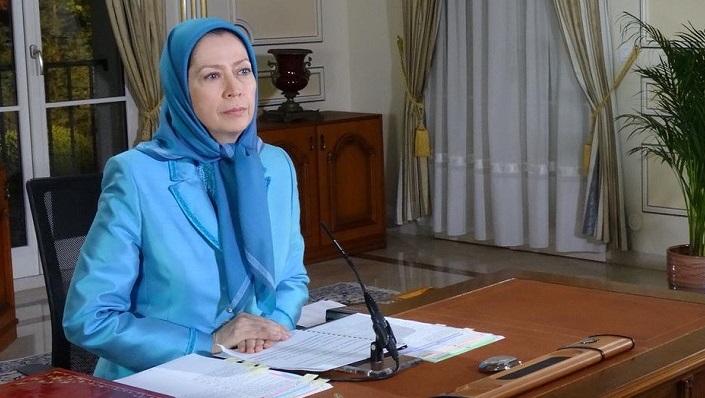
Maryam Rajavi, leader of the Iranian opposition, testifying before the US Congress via video conference

Maryam Rajavi, leader of the Iranian opposition, testifying before the US Congress via video conference

The House Foreign Affairs Committee’s Subcommittee on Terrorism, Nonproliferation and Trade held a hearing on Capitol Hill on the rise and threat posed by ISIS. That in and of itself is not earthshattering news since elected officials have debated heatedly how to address the growing pandemic that is extremist Islamic groups such as ISIS, Boko Haram and the Houthis.

hat was significant was the witness list of speakers because on it was Mrs. Maryam Rajavi, the president-elect of the National Council of Resistance of Iran, a leading Iranian dissident group, who made an appearance via videoconference. It was an important appearance because it represented a key opportunity for the strongest voice of the largest grassroots dissident group to the regime to address Congress on the links between ISIS and Iran.

As Rep. Brad Sherman (D-CA) noted in his comments, the NCRI has proven instrumental in the past in revealing secrets the Iran regime has sought to keep hidden from the outside world such as the secret Natanz nuclear research facility.

Mrs. Rajavi was given the opportunity by the subcommittee because NCRI members have been on the ground in Iran and Iraq having vast knowledge of the situation as the main opposition to the regime in Iran and given the role of the Iranian regime in all crisis in the region. Because there are literally hundreds of thousands of people displaced or brutalized by ISIS and militia forces controlled and directed by Iran’s mullahs, the NCRI has shown itself to be very knowledgeable regarding the regime’s activities in the region.

In her comments to the subcommittee, Mrs. Rajavi explained the origins of ISIS, such as the funding and training of ISIS leader Abu Bakr al-Baghdadi in Iran, including even a doctorate degree in Islamic jurisprudence from Baghdad Islamic University, along with Iranian support for other key ISIS founders who arose out of the war fought against U.S. and coalition forces during the invasion of Iraq and the sectarian civil war in Syria that Iran was backing.

Mrs. Rajavi dubbed the Iran regime as the “godfather” of the Islamic State militant group and noted that “the ultimate solution to this problem is regime change.”

She went on to explain the core issue linking the Iran regime and the Islamic State was the perpetuation of violent and extremist Islamic teachings which provided a template of terror, brutality and abuse for terror groups to follow.

And in a clear warning to Representatives in attendance, she urged caution in approving any nuclear deal that rewarded Iran with economic relief without concrete proof of dismantling of its nuclear program.

“None of the sanctions should be lifted before an agreement has been signed that effectively and definitively denies the mullahs the bomb,” Mrs. Rajavi said. “Otherwise, the regime will spend billions of unfrozen assets to buy weapons, including advanced missiles from Russia.”

Rep. Sheila Jackson Lee (D-TX) praised Ms. Rajavi’s appearance as well and called the session “a historic hearing,” notable for bringing Iran’s opposition into official discourse.

That, more than anything else, was what the Iran regime’s lobbying and PR machine feared the most. The idea that a moderate, Muslim woman, leading a group of dissidents to Iran’s mullahs, would actually be able to speak before the greatest legislative body in the world and tell simply and matter-of-factly of the horrors and abuses being visited on thousands of her fellow Iranian citizens.

It is even more laughable when you hear of some of the complaints voiced by these regime apologists who apply one standard to the NCRI in denouncing it, yet in another breath argue for open and honest dialogue and trust with the Iran regime that has a three decade history of kidnapping, targeting, attacking and killing thousands of American military and civilian personnel in places such as Lebanon, Afghanistan, Syria, Iraq and elsewhere.

The fact that Mrs. Rajavi was able to speak represents a small, but historic step in allowing the voices of those most oppressed to finally have a voice and a forum.

By Laura Carnahan

Filed Under: Blog, News Tagged With: Brad Sherman, Congress, house foreign affairs committee, House foreign affairs hearing, Iran, Iran Lobby, Maryam Rajavi, Sheila Jackson Lee, Ted Poe

Iran Lobby Attempts to Silence the Truth

April 28, 2015 by admin

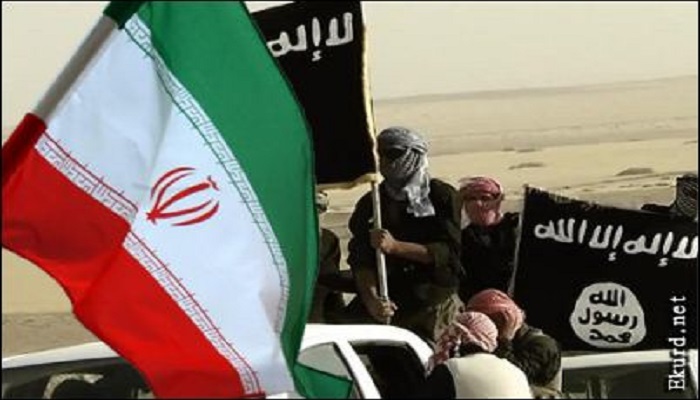
ISIS and IranOn Wednesday, the House Foreign Affairs Committee’s Subcommittee on Terrorism, Nonproliferation and Trade will hold a hearing on the rising threat of ISIS and the need to define the enemy which has caused such havoc and terror across large swathes of the Middle East and Africa.

There will be two panels, the first with Robert Ford, a senior fellow at the Middle East Institute and former U.S. ambassador to Syria, and Walid Phares, co-secretary general of the Transatlantic Parliamentary Group on Counterterrorism. The second panel will feature Mrs. Maryam Rajavi, president-elect of the National Council of Resistance of Iran, one of the largest Iranian dissident groups in the world.

But in true fashion, the Iran regime PR machine is ramping up to denounce Mrs. Rajavi’s appearance before she utters a single word, beginning with the typical nasty comments on websites controlled by Iranian state media and blogs controlled by contractors and PR flaks.

The most interesting question not being asked is why? Why are Iran regime loyalists having apoplectic convulsions over Mrs. Rajavi’s appearance, but utter nary a word about the other panelists? Could it be they fear what she will say? Could it be they worry the truth will be revealed about the connections between ISIS and Iran?

There are two powerful trends at play in the world concerning ISIS and the spreading influence of the Iran regime.

ISIS was born out of the chaos of the Syrian civil war which began when Iran’s top mullah, Ali Khamenei, decided to intervene and save the regime of Bashar al-Assad who was on the brink of being ousted after using chemical weapons on his own people. The Iranian intervention of arms, cash and fighters, alongside US and other allies in action helped turn the tide and allowed extremist groups within the Syrian opposition to rise as Iranian Quds Force fighters concentrated on the moderate, Syrian rebels.

At the same time, Iran’s intervention in the government of Iraqi Prime Minister Nouri al-Maliki led to a schism ruling coalition when Sunnis were effectively tossed out at the urging of Khamenei’s government. The split provided ISIS with much needed manpower as it spread into Iraq drove deep into the south, but this provided Iran with the perfect excuse to step up its backing of Shiite militias it controlled and move military units into Iraq on the pretext of fighting ISIS, but in reality gaining control over Iraq’s military and security apparatus.

Meanwhile, Iran’s mullahs stepped up their spread of their own peculiar brand of extremist Islam which had long validated the use of terror tactics and brutality to advance its own agenda. Hezbollah offered today’s terror groups such as ISIS and Boko Haram with the template by which they added their own technological flair with social media.

All of this is what Mrs. Rajavi is uniquely positioned to discuss as a moderate voice in the Muslim world that also has information available to her because of the NCRI’s presence on the ground in Iran through dissidents who work for regime change at great personal risk.

It is precisely because she can shed light on the relationship between Iran’s religious extremism and the fueling of the ISIS threat that Mrs. Rajavi has been called upon to testify before Congress and why the Iran lobby is working hard in attempt to belittle these truths before they are ever uttered.

As Daniel Greenfield wrote in FrontPage Magazine: “When Western governments embrace the ‘lesser evil’ doctrine, they ally with terrorists who are not fundamentally any different than the terrorists they are fighting. When ISIS broke through into the media, multiple stories emphasized that it was more extreme than Al Qaeda (despite having once identified as Al Qaeda.) But is a terrorist group that flies planes full of civilians into buildings full of civilians more moderate than a sister group that chops off heads on television? Is ISIS’s sex slavery more extreme than Iranian mullah’s practice of raping girls sentenced to death so that they don’t die as virgins?”

“The distinction between one evil and another is insignificant compared to their overall evil. The search for the lesser evil is really a search for ways to exonerate evil,” Greenfield adds.

And so if the need for Mrs. Rajavi’s testimony as a reminder that while ISIS atrocities garner the higher shock value, the real underlying truth is that the group’s ideology is powered by the same hate-machine working overtime in Tehran.

By Michael Tomlinson

Filed Under: Blog, News Tagged With: Iran Lobby

Standing Up to Iran Regime Delivers Results

April 24, 2015 by admin

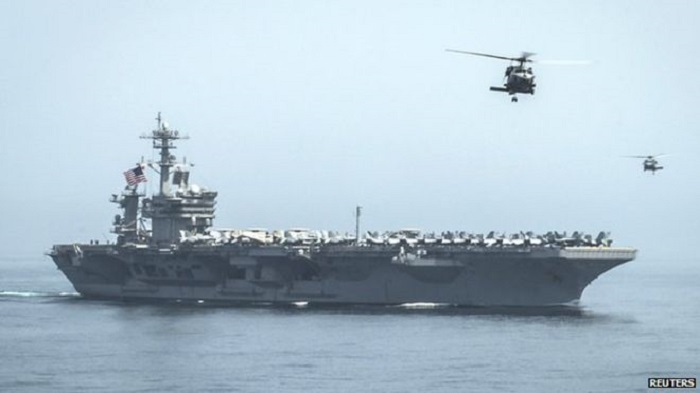
US carrier (1)A curious thing happened the other day. A nine-ship Iranian convoy believed to be filled with weapons bound for Houthi rebels in Yemen turned around after being followed by U.S. warships stationed in the area to prevent covert arms shipments. The convoy of seven freighters and two military frigates turned back to Iranian waters after nine U.S. Navy vessels set a parallel course alongside to monitor them.

Why is this significant? Because it represented one of the few opportunities lately where a direct response to a potential Iran regime violation of international agreements led to the mullahs backing down. Prior to this, the regime had aggressively flouted international agreements by funding Syrian president Bashar al-Assad after his forces used chemical weapons, supplied terror groups and Shiite militias in Iraq and Lebanon targeting Christians, Sunni Muslims, political dissidents, and engaging in a secret and rapid build-up in its nuclear enrichment program; all of which were acts done without a strong, determined international response.

In fact, Iran’s mullahs have long gambled on international passiveness to make their gains in proxy wars, territory or concessions in nuclear talks. It is a strategy built on the idea that if you cause enough chaos, people will look to anyone who might offer some solution – even the people who started the problems in the first place.

Historians have long called this policy by another name: “appeasement.” It’s a term filled with notoriety, especially after the failed effort by Western allies to sway Nazi Germany’s Adolf Hitler from his path to war by offering up parts of annexed countries like so many pork chops.

This policy of appeasement has never proven to work, yet diplomats consistently go back to it over and over again and use different names to describe it: “rapprochement,” “dialogue,” or “engagement.” In each case, it is another form of appeasement and does nothing to sway bullies, thugs or tyrants, instead encouraging them.

To use the analogy, it’s like giving a predator pieces of red meat in the hopes it doesn’t eat you. Eventually you get eaten as well since all you’ve done is stoke the hunger and identified yourself as being part of the food chain.

Iran’s mullahs have been emboldened by the weak response by the international community to its efforts to take over its neighbors and spread its form of extremist ideology. Boko Haram’s mass killings and kidnappings in Nigeria is met with hashtag slogans. Iraq’s exclusion of Sunni coalition partners is met with diplomatic shrugs. Even Yemen’s quick collapse elicited scant reactions until Saudi Arabia finally raised the alarm and put together an Arab coalition and started responding.

It is beyond mere coincidence that the Arab air campaign was suspended the day the U.S. nuclear aircraft carrier Theodore Roosevelt and her battle group were moved into the Gulf of Aden. It is also no coincidence that Iran turned back its arms convoy because the mullahs have correctly calculated they could not push their luck.

This reveals the key weakness of the mullahs ruling Iran which is when push comes to shove, they are not willing to push back. Iranian regime lacks the military capability for a traditional and modern military, having diverted funding to terror groups and lining the pockets of regime elites and their families.

After going all in with deep investment in its nuclear program, coupled with crippling economic sanctions and dropping oil prices, Iran’s mullahs now find their military capabilities to be severely limited. This was shown nowhere else more clearly than in the failed offensive mounted by Iranian-backed Shiite militias in Iraq who failed to take Tikrit and instead had to rely on U.S. airpower to help Iraqi forces take the city and save the effort.

A humbling moment and one that crystalized one key fact: when confronted by strong, unified action, the mullahs will back down. It’s a wonder why the same approach has not been used in nuclear talks instead of waving the white flag and giving into to whatever the mullahs want.

Fortunately, Democrats and Republicans in Congress have recognized this weakness of the mullahs and have decided to stand strong in voting for a voice in the nuclear talks through the Corker-Menendez bill and send a strong signal to the mullahs that the days of appeasement may finally be over.

By Laura Carnahan

Filed Under: News Tagged With: Appeasement policy, Iran, Iran Policy of appeasement

The Moral Evil of the Iran Lobby

April 13, 2015 by admin

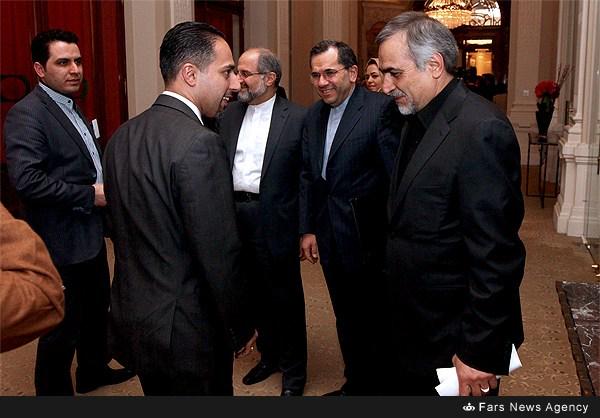
Trita parsi, greeting the mullah's delegation in Geneva during the nuclear negotiations -March 2015

Trita parsi, greeting the mullah’s delegation in Geneva during the nuclear negotiations -March 2015

With debate building over the proposed framework agreement between the P5+1 and the Iran regime, one of the most compelling questions arising is also the most relevant: “How can any agreement signed by an evil and corrupt regime be trusted?”

Any nation state can be relied upon to operate within the confines of an international community based on several factors. These might include the personal conviction and force of will of its leader or the guarantees embodied in its constitution. It might also be as a result of its culture, history or even religion.

In the case of the Iran regime though, the evidence is overwhelming of not only its moral failure to abide by international standards of peace and civility, but also the moral core of its leadership can be summed up as being one of “convenience in service to theology.”

Iran’s mullahs have been guilty of fomenting terror attacks through proxies such as Hezbollah which have claimed thousands of lives all around the world. They have been guilty of spreading an extremist form of Islam that has sparked sectarian conflicts throughout the Mideast and Africa, claiming thousands and displacing hundreds of thousands. They have been guilty of brutal atrocities and human rights violations on their own people in order to stifle dissent including thousands of hangings and punishments that could only be described as medieval.

Iran’s mullahs have denigrated women, targeted religious minorities and even made the simple act of web surfing a crime punishable by imprisonment. It is a leadership willing to contemplate the development of nuclear weapons as a tool of political expediency. It is a leadership claiming the mantle of religious certainty, but instead uses its power to enrich themselves and their families in a familiar reminder of feudal dynasties.

Aiding and abetting that corrupt regime is a lobbying effort that similarly turns a deaf ear and blind eye to the suffering being meted out by these mullahs. Groups such as the National Iranian American Council and its bosses Trita Parsi, Reza Marashi and others, have loyally placed the value of their contracts to Tehran above the morality required to do good in the world.

Haile Selassie, the former emperor of Ethiopia, famously said to the international community in the League of Nations when Italy invaded and used chemical weapons on his people:

“Throughout history, it has been the inaction of those who could have acted; the indifference of those who should have known better; the silence of the voice of justice when it mattered most; that has made it possible for evil to triumph.”

The international community did not rise up. Only five nations protested the invasion and slaughter of his people and in response, Selassie became an outspoken advocate the rest of his life to international security and multilateral support of justice.

The lack of protest, discussion and debate by the Iran lobby over the voluminous injustices and cruelties dispensed by the Iran regime is damning evidence of the lack of moral fiber within groups like the NIAC.

It leaves one wondering just who these men and women are that write editorials, lobby and speak on behalf of the barbarous cruelty of the mullahs. Are they just collecting a paycheck or do they honestly believe and support the mission of the Iran regime to remake the world in the image of its intolerant, extremist and cruel selves?

Selassie was right that by standing by mutely watching these things happen, the NIAC is just as evil and corrupt as the mullahs they defend.

By Michael Tomlinson


Filed Under: Blog, News Tagged With: Iran Lobby, Iran Talks, NIAC, Trita Parsi

Deal With Iran Regime Already Falling Apart

April 10, 2015 by admin

Failed AgreementJust when the Iran regime lobbying network led by the National Iranian American Council tries to make its case, its own masters in Tehran screw things up again it seems for them. Previously message points delivered by Trita Parsi and others were undercut by the regime’s top mullah when Ali Khamenei would call for America’s destruction and vowed to rebuff all efforts to derail Iran’s nuclear program.

Even after crafting a framework agreement with the P5+1 and hailing it as historic, the NIAC and other regime supporters again were faced with contradictions when Iran’s semi-official FARS news agency reported that foreign minister Javad Zarif and its nuclear chief told members of the Iranian parliament that the regime would begin using its latest generation IR-8 centrifuges as soon as its nuclear deal goes into effect.

The news accounts show the empty value of the framework and the lies being perpetuated by the NIAC that the regime truly wants a deal, but already promises to violate key provisions the minute it gets signed.

ccording to the FARS report, “Iran’s foreign minister and nuclear chief both told a closed-door session of the parliament on Tuesday that the country would inject UF6 gas into the latest generation of its centrifuge machines as soon as a final nuclear deal goes into effect by Tehran and the six world powers.”

The IR-8 centrifuges can enrich uranium 20 times faster than the IR-1 centrifuges it currently uses according to the regime.

Additionally, according to FARS, regime defense minister Hossein Dehqan said of the Lausanne Framework “There is no such agreement. Basically, inspection of military facilities is a red line and no inspection of any kind from such facilities would be accepted.”

So what are we to make out of the NIAC’s insistence that Iran’s mullahs are truly interested in peaceful nuclear development? It’s more likely we would believe in unicorns and the Loch Ness monster than the NIAC at this point.

With all of these revelations and statements coming out of Iran, the odds of a Congressional action against the framework and continuing economic sanctions are shrinking to the size of a pinhead with even House Minority Leader Rep. Nancy Pelosi (D-CA) now mulling the odds of being able to derail the momentum building for Congressional review.

As Rep. Ted Deutch (D-FL), the ranking Democrat on the Foreign Affairs Committee’s subpanel on the Middle East, said “Last week’s framework contemplates action by the United Nations Security Council. Surely if U.N. Security Council members should have a vote on sanctions relief, members of the United States Congress should as well.”

The support for continued economic sanctions got a boost inadvertently when Central Intelligence Agency Director John O. Brennan claimed Khamenei was persuaded to approve a deal because of the crippling effects of sanctions on Iran. While Brennan attempted to show this was motivation for the regime to compromise, it was in fact evidence of the what the regime is aiming for all along: relief from economic sanctions in order to flood billions of dollars back into the regime’s coffers as it supports four proxy wars.

The fact the regime’s leadership is already talking about violating the terms of the framework or simply ignoring them demonstrates the regime’s incompetence to make a deal and its commitment to preserving its nuclear infrastructure while getting what it most desperately needs right now, which is cold hard cash.

Already regime representatives are scrambling throughout the world in a mad dash to lock up deals to prop up its economy in anticipation of a final nuclear deal. This includes talks in China for oil sales, and invitations for direct foreign investment.

But as political support for the framework agreement begins to unravel, it is likely these moves for economic support will prove as ephemeral as NIAC’s logic and arguments in support of the regime.

By Michael Tomlinson


Filed Under: Blog, News Tagged With: Iran Lobby, Trita Parsi, Veto proof Sanctions

Iran Regime Rulers Undermine NIAC Claims…Again

April 10, 2015 by admin

Backstabbing BusinessmanIt seems the National Iranian American Council can’t catch a break from its Iran regime taskmasters. Just as NIAC is ramping up a new campaign to try and sway one or two Democratic Senators away from the building coalition in favor of the Corker-Menendez bill to place any nuclear agreement with Iran under Congressional review, the regime’s top mullah, Ali Khamenei and his handpicked president Hassan Rouhani blasted the U.S. version of the framework agreement.

Khamenei strongly denounced two bedrock American principles in nuclear negotiations declaring all economic sanctions from the U.S., European Union and United Nations had to be lifted immediately and military sites would remain strictly off-limits to foreign inspectors.

His comments echoed similar statements made by Foreign Minister Javad Zarif, the regime’s nuclear chief and military officials, all of whom within the past few days have similarly denounced the U.S. position on the framework agreement and reiterated the regime’s red lines in the sand before the June 30th deadline for a final agreement.

The contradictions to U.S. positions extended to Central Intelligence Agency director John O. Brennan who believed Khamenei had been persuaded to approve a deal to avoid economic free fall in Iran, but Khamenei disputed that contention.

“There was no need to take a position,” Khamenei said. “The officials are saying that nothing has been done yet and nothing is obligatory. I neither agree nor disagree.”

Khamenei even took to Twitter claiming that an American fact sheet on the framework deal was “contrary to what was agreed.”

“We will not sign any agreement, unless all economic sanctions are totally lifted on the first day of the implementation of the deal,” Rouhani said during a ceremony marking Iran’s nuclear technology day, which celebrates the country’s nuclear achievements.

The fact that Khamenei is empowered under the regime’s constitution to be the final and authoritative voice on all foreign policy matters leaves its lobbyists like the NIAC in a pickle. While spokesmen such as Trita Parsi have been loud in praising the framework, they’ve been as mute as a monk taking vows of silence over the broad and vociferous denunciations of the same agreement by the Iran regime’s top leadership.

The imposition of a sanctions red-line by Khamenei may again sink nuclear talks for a third time and may very well be the eventual aim of Khamenei unless he gets what he desires most – the immediate lifting of all economic sanctions so he can replenish the coffers of a treasury bled dry by four proxy wars and a plummeting oil market.

“The supreme leader is saying all sanctions must be lifted as soon as a deal is signed, which is an impossible hard line,” said Michael Singh, a fellow at the Washington Institute for Near East Policy and a former senior director for Middle East affairs for the National Security Council. “President Obama can agree to almost anything, but he cannot promise immediate and total sanctions relief because that’s up to Congress and Congress is not going to do that.”

All of which explains NIAC’s desperation to persuade one or two Democratic Senators to switch and support the regime in order to avoid a veto override by Congress. Like the jury in the trial of Boston Marathon bomber Dzhokhar Tsarnaev, the object is to not defend on guilt or innocence, but to simply convince one jury to not impose the death penalty. The NIAC could care less what Iran’s leaders say in denouncing the deal, but what they care about is pressuring just one or two Senators enough to preserve the Administration’s ability to deliver a win for the mullahs.

The real prize for the regime is not nuclear weapons – that would be a bonus – the real win is the lifting of economic sanctions which have placed the mullahs in the uncomfortable position of trying to hold a lid on a dis-satisfied population asking the question: “Why not have regime change and make things better?”

It’s a question worth supporting.

By Michael Tomlinson

Filed Under: Blog, News Tagged With: Iran, Iran Deals, Iran Lobby, Iran Talks, Khamenei, Nuclear Deal

  • « Previous Page
  • 1
  • …
  • 48
  • 49
  • 50
  • 51
  • 52
  • 53
  • Next Page »

National Iranian-American Council (NIAC)

  • Bogus Memberships
  • Survey
  • Lobbying
  • Iranians for International Cooperation
  • Defamation Lawsuit
  • People’s Mojahedin
  • Trita Parsi Biography
  • Parsi/Namazi Lobbying Plan
  • Parsi Links to Namazi & Iranian Regime
  • Namazi, NIAC Ringleader
  • Collaborating with Iran’s Ambassador

Recent Posts

  • NIAC Trying to Gain Influence On U.S. Congress
  • While Iran Lobby Plays Blame Game Iran Goes Nuclear
  • Iran Lobby Jumps on Detention of Iranian Newscaster
  • Bad News for Iran Swamps Iran Lobby
  • Iran Starts Off Year by Banning Instagram

© Copyright 2026 IranLobby.net · All Rights Reserved.