Iran Lobby

Exposing the Activities of the lobbies and appeasers of the Mullah's Dictatorship ruling Iran

  • Home
  • About
  • Current Trend
  • National Iranian-American Council(NIAC)
    • Bogus Memberships
    • Survey
    • Lobbying
    • Iranians for International Cooperation
    • Defamation Lawsuit
    • People’s Mojahedin
    • Trita Parsi Biography
    • Parsi/Namazi Lobbying Plan
    • Parsi Links to Namazi& Iranian Regime
    • Namazi, NIAC Ringleader
    • Collaborating with Iran’s Ambassador
  • The Appeasers
    • Gary Sick
    • Flynt Leverett & Hillary Mann Leverett
    • Baroness Nicholson
  • Blog
  • Links
  • Media Reports

So Many Things Going Wrong for Iranian Regime

May 10, 2016 by admin

So Many Things Going Wrong for Iranian Regime

So Many Things Going Wrong for Iranian Regime

This past weekend The New York Times Magazine published an in-depth look at Ben Rhodes, the national security advisor staffer who spearheaded the communications effort to pass the Iranian nuclear deal.

The fallout from that article has been dramatic as critics of the deal claim validation of the falsehoods perpetuated by Rhodes and his close working relationship with the Iran lobby and regime supporters, including the very leadership in Iran that was characterized as “hardline.”

Meanwhile the Iran lobby has been working furiously to change the narrative and denounce the New Times piece and condemn Samuels, even though the piece appeared to be written as a glorified puff piece in which Rhodes took a boastful pride in his accomplishments in pulling the collective wool over everyone’s eyes.

Actor Kevin Spacey who plays President Frank Underwood in the Netflix series “House of Cards” has a memorable line about hubris: “We’re all victims of our own hubris at times.”

Rhodes seems to be living that truth right now as he frantically back peddles from his statements.

“Every press corps that I interacted with vetted that deal as extensively as any other foreign policy initiative of the presidency,” Rhodes wrote on Medium.

“A review of the press from that period will find plenty of tough journalism and scrutiny. We had to answer countless questions about every element of the deal and our broader Iran policy from reporters.”

Rhodes’ Medium post was a far cry from his gleeful, football-spiking words about vanquishing the press.

The defense of Rhodes and the nuclear deal was on display with a hastily placed editorial by Joe Cirincione, president of Ploughshares Fund, in Politico, in which he sought to validate the nuclear deal with the same “echo chamber” of false experts Rhodes described in the Times article.

The fact that Cirincione led the defense should come as no surprise since Ploughshares Fund was a heavy participant in the Iran lobby and even gave money to the National Iranian American Council, the central lobbying group for the Iranian regime’s policies.

Like the proverbial kid caught with his hand in the cookie jar, Rhodes is out there now trying to walk back his comments, but the damage has already been done. The truth is out. The Iran nuclear deal was a fraud and for the critics of the deal who warned of empowering the mullahs in Tehran, the past few months have been of that concern.

Hossein Salami, deputy commander of the regime’s Revolutionary Guard Corps, warned in a recent Persian-language interview that the Islamic state would not hesitate to block U.S. entry to the Strait of Hormuz, which is the only passage from the Persian Gulf to the open seas.

Salami claimed that the U.S. military fears Iran’s navy, which recently has bolstered forces to directly combat American forces in the region.

“The [Americans] believe that our navy is dangerous. Indeed, that is true,” Salami was quoted as saying in a Farsi-language interview with Iranian state-controlled television that was subsequently translated by the Middle East Media Research Institute, which monitors regional reports.

Additionally, the regime to cover up yet another missile test of an illegal ballistic missile in violation of United Nations sanctions. Brigadier General Ali Abdollahi, the Iranian military’s deputy chief of staff, told Iran’s Tasnim news agency that Iran fired the test missile two weeks ago and that it was accurate to within 25 feet, which he described as zero error.

“We can guide this ballistic missile,” he told Tasnim. Iran has previously asserted it has such missile capability. Its 1,250 mile range puts most of the Middle East and parts of southern Europe within its sights.

Obama administration critics blamed the White House for what one, Sen. John McCain (R., Ariz.), called “Iran’s growing belligerence in the aftermath of the reckless Iran nuclear deal.”

Mr. McCain, chairman of the Senate Armed Services Committee, also said the Obama administration has overlooked other acts of Iranian aggression, including previous launches and the detention of U.S. sailors by Iran’s Islamic Revolutionary Guard Corps earlier this year. The U.S. said later that its sailors had crossed into Iranian waters by mistake.

In Syria, the Iranian regime continued to face mounting losses of soldiers as Syrian rebels make gains against Iranian backed forces, including the reported capture of half a dozen Iranian soldiers.

According to the latest numbers, 13 defenders of the shrine were killed, 18 were wounded and five to six were captured,” Esmail Kosari, chairman of the Iranian parliament’s defense committee, was quoted as saying by the Mizan Online news agency.

The reversals on the battlefield, the admission of the untruths around the nuclear deal and the stalled Iranian economy have eaten away at the support for mullahs such as the top leader Ali Khamenei who finds it necessary to crackdown harder on internal dissent in order to snuff out resistance to his rule.

That toughened approach was echoed by Sayyed Yousef Tabatabaeinejad, who claimed in an interview with AhlulBayt News Agency that Muslims the world over should be emulating the events that brought about Iran’s own revolution in 1979 and called for more violence in pursuit of a revolutionary form of Islam.

Tabatabaeinejad currently serves as Khamenei’s representative in a province of Iran called Esfahan. He lashed out at the false idea that Muslims should accept oppression as a survival strategy without using violence in response.

For Tabatabaeinejad, this extremist view on Islam is baked into the Iranian constitution and is  not just about praying and fasting. The warrior spirit also mandates fighting against “Islam”’s enemies.

By Michael Tomlinson
Filed Under: Blog, News Tagged With: Featured, Iran, Iran deal, Iran Lobby

Iran Lobby Tries to Influence Presidential Campaign

May 2, 2016 by admin

The Iranian lobby, led by the National Iranian American Council, has decided to up its efforts to influence the ongoing U.S. presidential election by directing messages at the campaigns of the front runners.

The reason for this is simple: The NIAC and other Iranian regime supporters want to do whatever they can to ensure that a new incoming administration continue to toe the line in appeasing the mullahs in Tehran and support a deeply flawed nuclear agreement that has allowed the regime to continue its militant ways without serious repercussions.

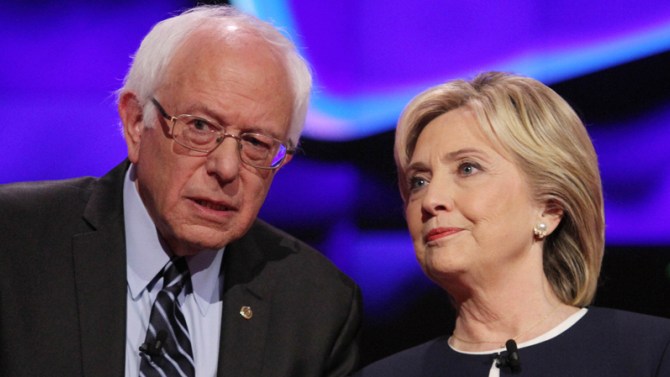
In an editorial by Tyler Cullis and Ryan Costello, the NIAC laid out a presumptive roadmap for Democratic frontrunner Hillary Clinton on how to “woo back Iranian Americans,” but in reality it should be viewed more as a roadmap to “helping the Iranian regime.”

Cullis and Costello spell out how her rival, Sen. Bernie Sanders, garnered overwhelming support from an internal poll of NIAC supporters – Sanders received 62 percent vs. 19 percent for Clinton – based on a perception he was more anti-war.

“Clearly, Iranian Americans who have gravitated towards Sanders have largely done so for the same reasons as other Sanders supporters – because of a distrust of the Washington establishment, anti-war and anti-interventionist sentiments, disillusion with incrementalist political change and concerns about increased economic injustice,” Cullis and Costello write.

“But Clinton’s approach toward Iran is also a major reason why she lagged behind Sanders among Iranian Americans.”

What is amazing is how the NIAC is attempting to portray support for Sanders principally being driven by foreign policy concerns when almost every poll taken during the primary season has shown his supporters backing his domestic views on the economy, wage inequality and regulation of Wall Street as the energizing factors in his campaign.

The NIAC is taking this position largely because it can read public opinion polls and see how American opinion has shifted on the Iranian regime and the rise of Islamic extremism in the wake of a worsened Syrian situation and almost regular terrorist attacks in Paris and Brussels since the deal.

Cullis and Costello have taken Clinton to task for her previous statements against normalizing relations with the Iranian regime, especially if the regime continued its support for terrorism and regional conflict.

“The dispute reflected the debate eight years ago when Clinton, along with other candidates, attacked Obama for his statement that he would sit down with hostile nations, including Iran, without preconditions,” they write.

“Clinton’s stance toward further Iran negotiations might not ultimately be that different than Sanders, but her attacks on normalization send a worrying signal that engagement would be the exception rather than the rule,” they add.

One cannot help but notice a slight hint of desperation in the NIAC and other Iranian regime supporters as they take a deeper dive into the U.S. presidential campaign as they are faced with the very real possibility of having either a Clinton or Trump administration already publicly committed to opposing Iranian extremism.

The lobby’s efforts also highlight the one significant weakness of the Iran nuclear deal in that it is an executive action by President Obama and can just as easily be undone by a new president. The tenuous nature of the deal providing the mullahs in Tehran with relief from sanctions is worrisome to supporters such as Cullis and Costello.

The fact that the NIAC is upping its game in order to try and shape the public perception of how these candidates should perceive the Iranian regime is – on the surface – pretty pathetic and indicative of how weak its position is.

It also explains why other parts of the Iran lobby are making blatant warnings that failure of the deal will lead to serious consequences; although one finds it hard to believe things could get much worse in the Middle East right now.

One of those making those statements is Seyed Hossein Mousavian, formerly of the regime’s National Security Council who wrote in Huffington Post:

“If the deal collapses, not only would there be no chance for any compromise between Iran and the U.S on any other issue, but Iran would also lose its faith in the Security Council,” he writes in the hyperbole that has become typical of the lobby’s efforts.

“Unfortunately, there are powerful forces in U.S. politics that seek to increase U.S.-Iran enmity and revert Iran and the United States back onto the path to war. These special interest groups are doing everything in their power to destroy the landmark diplomatic agreement and have strong sway over Congress, which is pushing for over a dozen new sanctions against Iran,” he added.

These efforts may end up being futile gestures as the Iranian regime seems intent on proving wrong every promise the Iran lobby makes.

For example Iran’s parliament voted to boost the country’s missile capabilities. Members approved an additional article to the next five-year development plan. The article will see Iran’s missile production grow and anti-missile capabilities enhanced even though the United Nations and U.S. considers such missile development in violation of existing sanctions banning them.

Iranian state-run news also reported that an Iranian woman was reportedly publicly flogged 100 times in the Iranian state of Isfahan for an alleged extramarital affair four years ago. The incident earned condemnation from human rights and Iranian dissident groups and continues to highlight the regime’s disregard for human rights.

No matter what the Iran lobby says about the presidential campaign, it’s almost a given the regime will act to contradict it.

By Michael Tomlinson

Iran Lobby Tries to Influence Presidential Campaign

Iran Lobby Tries to Influence Presidential Campaign

Filed Under: Blog, News Tagged With: Featured, Iran, Iran deal, Iran Human rights, Iran Lobby, Iran sanctions, Iran Talks, NIAC, NIAC Action, Ryan Costello, Tyler Cullis

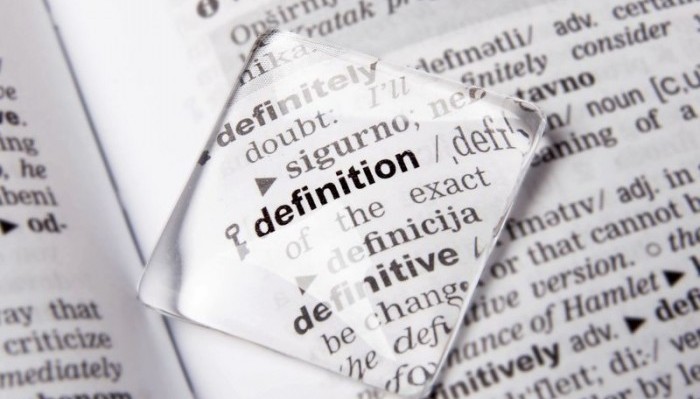
Iranian Regime Dictionary is not Webster’s

April 22, 2016 by admin

Iranian Regime Dictionary is not Webster’s

Iranian Regime Dictionary is not Webster’s

Noah Webster has been called the father of American English dictionaries, publishing the first edition of his dictionaries in 1828. Since then, his name has become synonymous for dictionaries and has become the bedrock for understanding and correcting the English language.

Language and its precise use have determined everything from lawsuits to love poems and most recently language has been at the heart of much of the disputes going on with the Iranian regime. For the mullahs in Tehran, language and the semantic differences it brings has been their lifeline in a sense because it allows them to argue one thing, while agreeing to something totally different.

Take for example the Iranian position in the Syrian conflict. Hassan Rouhani’s government has always maintained that no peaceful solution could happen without guarantees that Syrian leader Assad was still in power. To that end, Iran has targeted the rebel opposition and identified them as “terrorists” and tied them to ISIS and Al-Qaeda, even those moderate elements backed by the U.S. and its allies.

The mullahs have even used deceptive language in describing Iranian military units fighting in Syria, calling them “volunteers” when in fact the regime is now shipping regular army units for the first time. The regime has even recruited tens of thousands of paid mercenaries from the ranks of Afghan refugees seeking shelter in Iran from the war that rages in their country; sometimes signing up only under threat of expulsion of their families.

Iran’s army chief said on Wednesday the forces it had deployed in Syria in the first such operation abroad since the 1979 revolution were volunteers working under Revolutionary Guards supervision, and the regular army was not directly involved.

It announced this month that it had sent commandos from the army’s Brigade 65 to Syria as advisers, suggesting it was using its regular army as well as forces from the Revolutionary Guards to help Assad’s forces in the country’s civil war.

“Some volunteers have been sent to Syria, under the supervision of the related organization, and among them there might be some of the Brigade 65 forces,” armed forces chief Ataollah Salehi was quoted by the Tasnim news agency as saying.

“The army has no responsibility in the military advice given to Syria,” Salehi added.

The talking points are a clear example of how the Iranian regime obscures its real intentions with nuanced language. It’s a tactic adopted by the Iran lobby and its supporters as well in trying to divert attention through misnomers such as the use of the term “moderate” in describing certain elements within the Iranian government.

Moderation does not exist within the Iranian government. It is like making a distinction between the SS and Brown shirts of Hitler’s Nazi Germany and calling one more moderate than the other.

Nowhere is that tactic more apparent than during the recent parliamentary elections in which thousands of “moderates” were kicked off ballots and in their place, candidates loyal to the regime’s leadership were left to run virtually unchallenged, yet they were hailed as “moderates.”

The Iran lobby uses those distinctions in its efforts to distort the truth in Iran. Groups such as the National Iranian American Council have long sought to portray a clear distinction within Iran of an active moderate faction seeking change, but it has gone out of its way to attack all dissident groups not aligned with the regime in some manner.

Entities such as the National Council of Resistance of Iran which is one of the largest Iranian dissident groups in the world has long been vilified by the Iran lobby and portrayed in various nefarious ways in order to denigrate their claims and protests.

The Iranian regime continues this practice in how it makes threats all the time, including warnings by Rouhani of a “serious reaction” should the U.S. not make good on what it perceives as promises to grant Iran expanded sanctions relief under the nuclear agreement such as access to U.S. currency exchanges, while the U.S. steadfastly maintains that no such conditions existed.

Should the rest of the world be worried about these linguistic differences? Yes, to the extent they provide the Iranian regime the excuses necessary to engage in its aggressive behavior.

Iran, much like regimes such as North Korea, use language as a first-line of excuses in justifying any sort of bad behavior.

Test fire ballistic missiles capable of carrying nuclear warheads in violation of international sanctions?

Call it “defensive testing.”

Round up journalists, ethnic and religious minorities and toss them in prison?

Call it “protecting the faith.”

Hang a 13-year-old girl?

Call it “protecting virtue and purity.”

The absurdity of it all makes a mockery of language. We can only assume that Noah Webster is turning in his grave.

By Michael Tomlinson

Filed Under: Blog, News Tagged With: Featured, Iran, Iran deal, Iran Human rights, Iran Lobby, National Iranian American Council, Syria

Iranian Regime Begging for US Dollars

April 19, 2016 by admin

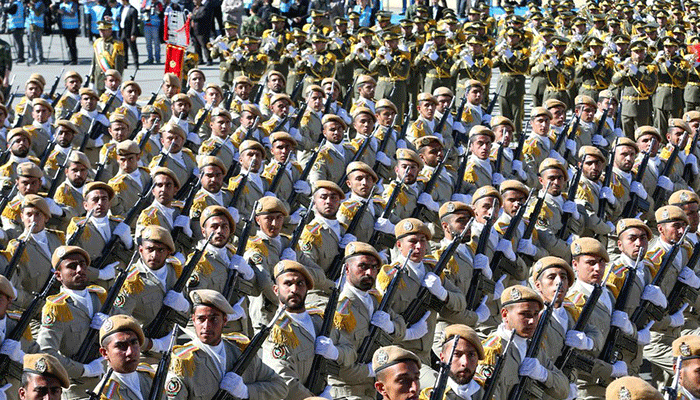
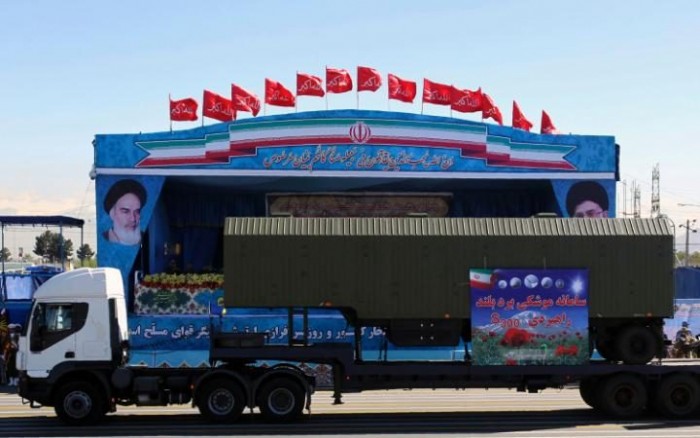
army-day-paradeThe famous physicist Albert Einstein once said “Too many of us look upon Americans as dollar chasers. This is a cruel libel, even if it is reiterated thoughtlessly by the Americans themselves.”
The sentiment still applies today to the extent that many people around the world assume Americans are infatuated with money and its pursuit and have built into a kind of urban legend and mythology that has come to dominate the perceptions of Americans around the world.

The mullahs in Tehran have used the same verbiage to draw a portrait of America as a nation bereft of morality, filled with infidels more intent on opening McDonalds and Starbucks locations than pursuing a “moral” life.

It is an image the mullahs wish to grow since it allows them to convey a perception of moral and ethical superiority and re-invests the Iranian people in the mythology of the religious theocracy; one founded on a single vision and interpretation of Islam.

It also happens to be a hypocritical view since the mullahs are just as obsessed about the almighty dollar as hedge fund managers and bond traders on Wall Street. That obsessing drives the mullahs as they use all of their PR and lobbying tools to press the Obama administration to lift sanctions restricting Iran’s access to U.S. currency exchanges as part of the nuclear agreement reached last year.

According to news reports, “Iranian and European officials say they are pushing the United States to grant the Islamic Republic unprecedented access to American financial markets and the U.S. dollar, working against promises by top Obama administration officials who had claimed Iran would never be granted such access, according to recent remarks.”

Regime foreign minister Javad Zarif, speaking at a joint press conference this weekend with European Union foreign policy chief Federica Mogherini, said that officials are pressuring the U.S. to grant Iran access to American markets.

“Iran and the EU will put pressure on the United States to facilitate the cooperation of non-American banks with Iran,” Zarif was quoted as saying at a briefing with reporters and Mogherini.

Both Iran and the EU said in a joint statement later in the day that the United States must work hard to uphold its obligations under the recent nuclear deal. The White House has argued that it is not mandated to provide dollar access under the agreement.
It is one of the rare occasions where the vagaries of the nuclear agreement, which the Iranian regime fought so hard to secure is now working against it.

In Foreign Policy, Eric Lorber and Peter Feaver pointed out the problems with the imprecise language in the nuclear agreement.

“In order to get a deal that had a chance of constraining Iran’s nuclear ambitions, the United States had to make significant concessions on nuclear-related sanctions. At the time, the Obama administration sold the deal with the assurance that the United States would retain enough coercive leverage on Iran to keep the regime in check on these other issues, including the Islamic Republic’s support for international terrorism, human rights abuses, and the development of its ballistic missile programs. And administration spokespeople emphasized again and again that they would be vigilant and vigorous in wielding this coercive leverage,” they write.

“In the past few weeks, however, the administration has signaled that it is on the cusp of making an additional and unexpected concession to Iran that significantly weakens remaining U.S. leverage: giving Iran backdoor access to financial transactions in dollars. The administration reportedly believes it needs to make this additional concession to honor the spirit of the agreement. Congress is crying foul, asserting that such dollar access was not included in the letter of the original deal and constitutes a gift to Iran that should not be given without additional Iranian concessions. As President Obama himself asked recently: Why should the United States offer additional concessions to honor the spirit of the deal if Iran is not also making additional concessions?” they added.

The inability of the Iranian regime to lift the restrictions on accessing U.S. currency has put a halt to their flood of deal making with European and Asian banks and companies leery of running afoul of U.S. regulators, especially with a pending election that could bring a new administration less favorable of the deal.

Members of Congress have been outraged. Many members on both sides of the aisle felt they had been misled by the administration, and that if the administration had been considering granting Iran access to U.S. dollars, it should been more forthcoming with this plan in the summer of 2015 and afterwards, rather than making statements that indicated that Iran would not have access to the benefits of the U.S. financial system.

All of which points towards the mullahs obsession about money: It is the grease that fuels its proxy wars in Syria, Yemen and Iraq. It arms terrorist groups like Hezbollah. It buys weapons that kill civilians and it helps oppress the Iranian people and lines the pockets of family members of the mullahs and other regime elites.

As the U.S. considers continuing the currency ban, it should remember what the regime will use those dollars for and it is not for buying every Iranian an air conditioner or Playstation.

By Michael Tomlinson

Filed Under: News Tagged With: Iran, Iran deal

Iranian Regime No Longer Hiding Its Military Intentions

April 18, 2016 by admin

Iranian Regime No Longer Hiding Its Military Intentions

Iranian Regime No Longer Hiding Its Military Intentions

The Iranian regime held its annual Army Day parade as a showcase to pose itself as a mighty power in the region, but more importantly for the mullahs it provided an opportunity to show off parts of the long-awaited new S-300 air defense system from Russia.

While the advanced anti-aircraft missiles were originally ordered by Iran in 2007, their delivery was held up due to the imposition of sanctions related to Iranian regime’s violations concerning the development of nuclear weapons. Only after the nuclear agreement was reached last year was the delivery allowed to go through.

The delivery of the missile system is significant since it instantly brings the regime’s air defense to a much more modern and sophisticated level; a major issue for the mullahs and Revolutionary Guard since without it, any effort to restart its nuclear program would be subject to air attack by the U.S. and its allies.

The fact that the mullahs pushed hard to remove weapon systems such as this and the development of new ballistic missiles from the nuclear negotiations spoke volumes of their determination to upgrade their military capabilities far beyond where they stand today, particularly since they see this the only path to survival of the vast internal discontent.

According to pictures published by the semi-official ISNA news agency, S-300 missile tubes and the radar equipment were shown during the military parade held in southern Tehran.

Iran and Russia are also in talks on a sale of the advanced Sukhoi SU-30 fighter, another proposal criticized by the U.S. The regime’s current air force fleet dates from the pre-revolutionary era of the former Shah.

Speaking at Sunday’s parade, Hassan Rouhani insisted Iran’s plans to upgrade its military capabilities were defensive in nature, referring to the worst conflicts in the Middle East.

“Our military, political and economic power is not directed against neighboring countries and the countries of the Islamic world.

“When Baghdad was threatened by terrorists, the Islamic Republic of Iran responded to the call of the people, the army and the Iraqi government to defend Baghdad and the holy places,” he said, referring to the surge of the ISIL group in June 2014.

The argument he makes is similar to those consistently made by the Iran lobby from groups such as the National Iranian American Council which has sought to portray the Iranian regime as some sort of dedicated freedom fighter against Islamic extremism. The only difficulty with that portrayal is that Iran’s mullahs are the ones spreading it, not the other way around.

The beefing up of its military capability, including the multiple test launches of new ballistic missiles, comes at a time when the Iranian regime is also ramping up its military presence in Syria in support of the regime of Bashar al-Assad, except now the Iranians are not even trying to hide their deepening presence even as they pretend to advocate for peace talks.

Fearing that Russia may side with the U.S. and approve the removal of Assad from power, the Iranian government is now, more than ever, investing in propping up the regime’s dwindling army and air force.

“They [the Iranians] saw it as an opportunity to move closer to the regime,” one U.S. official told the Financial Times.

The Russian military pullback announced last month threatens Tehran’s position not only in Syria, but in the region. If Assad is ousted, Iranian military presence in the country will be diminished and Iran will no longer be able to present itself as a player in the region.

Iranian regime officials have in number of times reiterated that Syria is their front line and if they don’t fight the enemy in Syria, soon they have to do it in Tehran, referring to the strategic importance of Syrian dictatorship for the Ayatollahs in Iran. That’s why Iran is deploying more troops to Damascus. Those deployments, though, come at a cost. At least four Iranian soldiers have been killed in one week. Iranian media have reported that more than 150 Guards died in more than a year of fighting in Syria.

Tehran has kept its army at home for decades and tried to keep conflict at bay through a strategy — manned and managed by the Guards — of fighting its regional rivals through proxies in Iraq, Syria and Lebanon. Syria is crucial to its success. It is on the ‘frontline’ with Israel and is an important bridge to Hezbollah, Iran’s Shia proxy force in Lebanon.

Iran has vowed that it will not compromise on the fate of Assad, and backs his offer to include opposition figures in a national unity government while ruling out a “transitional governing body with full executive powers” — the formula agreed at talks in Geneva in 2012.

In the meantime, the high casualty rate among Revolutionary Guards — whose “military advisers” are reckoned by a western diplomat in Tehran to number fewer than 10,000 — has prompted Tehran to deploy its regular army to bolster Assad’s forces in Syria.

The stakes are high for the Iranian regime as it again sent Qassem Soleimani, the notorious leader of its Quds Force, to Moscow again in violation of international travel bans restricting his movements to discuss with Russian military officials on the deteriorating situation in Syria and the delivery of nearly $8 billion of new weapons just purchased by Iran.

The delivery of new military hardware is viewed by Tehran as an important adjunct to the use of Hezbollah proxies, Quds Force fighters, Basiji paramilitaries and thousands of paid mercenary Afghans that the Iranian regime has been sending to Syria in a desperate bid to keep Assad in power.

According to the BBC, the first Afghan militias began to arrive in 2012 in Syria.

“The Iranian Revolutionary Guards Corps decided that the Syrian military could not succeed on their own,” one former Afghan fighter told the BBC. “The frontlines were too depleted and men were trying to avoid conscription.”

The Iranians decided to set up a 50,000-strong National Defense Force to fight alongside the Syrian army.

With a shortage of willing fighters inside Syria, they began looking elsewhere – signing up Iranian Afghans, Lebanese, Iraqi and Pakistani Shia recruits. The fact that the mullahs are now committing Iranian regular army units to the Syrian fight shows a significant leap in their desperation over the situation there.

Mrs. Maryam Rajavi, the leader of the National Council of Resistance of Iran, one of the leading Iranian dissident groups in the world, took note of these changes in an interview with Asharq Al-Awsat on Sunday in which she pointed out that the Iranian regime would collapse consequentially should Assad be toppled in Syria, which is why Iran’s regime has been trying to keep Assad in power at any cost.

“If Assad falls out of power in Damascus, then the Iranian regime will evidently follow and collapse in Tehran,” Mrs. Rajavi said.

By Michael Tomlinson

Filed Under: Blog, News Tagged With: Ballistic Missiles, Featured, Ghassem Soleimani, Iran, Iran deal, Iran sanctions, NIAC, S300 Missiles

Iranian Regime Executions of Juveniles Does Not Stop

April 16, 2016 by admin

There is no surer sign of a government’s barbarity than the execution of people who should not be executed. There is no surer sign of a government’s lack of trustworthiness than in its inability to change or improve how it treats its own citizens.

In the case of the Iranian regime, repeated reports, investigations and reviews have documented and chronicled the catalog of abuses and horrors the mullahs visit on ordinary Iranian citizens every day.

Human rights groups such as Amnesty International and Iranian dissident groups such as the National Council of Resistance of Iran have long reported of arrests, imprisonment, torture and executions of many people whose only crimes have been to defend themselves against an abusive spouse, criticize the government or attempt to improve their economic condition.

Like so many other despotic governments such as North Korea, the Iranian regime has blithely ignored such criticism and continued on its barbaric ways. The litany of woe has almost become problematic to the extent the rest of the world has become numb to it; much as American news media have become numb to urban crime reporting.

Human rights and dissident groups have sought to shock the social consciousness of the world about Iran at times through the personal stories of those being tortured or executed – often at great personal risk to tell these stories – but even the most horrific tales are now consigned to obscure blogs or the back pages of newspapers.

Even when high profile prisoners such as the Washington Post’s Jason Rezaian or Christian pastor Saeed Abedini have been released and tell their stories or mistreatment and abuse, it often doesn’t go anywhere beyond the obligatory debriefing interview upon their release.

It does not result in governments changing their policies towards the regime and it does not advance efforts to improve the human rights situation in Iran. In fact, the example of the nuclear agreement reached last year is a glaring example of how low priority human rights seem to have become in that the Iranian regime specifically demanded and received a provision not to link human rights with the agreement.

Now the U.S. State Department has released its annual country survey of human rights practices for 2015 and Iran continues to be perpetrator of severe abuses. The listing of abuses is too numerous to recount here, but it is all too familiar. It reads in part:

“The most significant human rights problems were severe restrictions on civil liberties, including the freedoms of assembly, association, speech (including via the internet), religion, and press; limitations on citizens’ ability to choose the government peacefully through free and fair elections; and abuse of due process combined with escalating use of capital punishment for crimes that do not meet the threshold of most serious crime or are committed by juvenile offenders.”

“Other reported human rights problems included disregard for the physical integrity of persons, whom authorities arbitrarily and unlawfully detained, tortured, or killed; disappearances; cruel, inhuman, or degrading treatment or punishment, including judicially sanctioned amputation and flogging; politically motivated violence and repression; harsh and life-threatening conditions in detention and prison facilities, with instances of deaths in custody; arbitrary arrest and lengthy pretrial detention, sometimes incommunicado; continued impunity of the security forces; denial of fair public trial, sometimes resulting in executions without due process; the lack of an independent judiciary; political prisoners and detainees; ineffective implementation of civil judicial procedures and remedies; arbitrary interference with privacy, family, home, and correspondence; harassment and arrest of journalists; censorship and media content restrictions; severe restrictions on academic freedom; restrictions on freedom of movement; official corruption and lack of government transparency; constraints on investigations by international and nongovernmental organizations (NGOs) into alleged violations of human rights; legal and societal discrimination and violence against women, ethnic and religious minorities, and lesbian, gay, bisexual, transgender, and intersex (LGBTI) persons based on perceived sexual orientation and gender identity; incitement to anti-Semitism; trafficking in persons; and severe restrictions on the exercise of labor rights.”

And all that is just in the summary page with much more detailed in the report. Yet even with the acknowledgement of all of Iran’s violations, there is not enough movement to rectify these terrible problems, nor hold the regime accountable for them.

A Reuters story highlighted one case to illustrate the appalling act of executing juveniles. In the southern province of Fars, Fatemeh Salbehi suffocated her husband after drugging him, a capital crime in the Islamic Republic.

What made the case controversial is that Salbehi was only 17, a minor by international legal standards, when she allegedly committed the crime. Her alleged confession also came during a series of interrogations where there was no lawyer present.

The case was retried but Salbehi was hanged in the Adel Abad prison in Shiraz last October.

The issue has come under scrutiny because of a scathing U.N. report on human rights in Iran last month which highlighted what it called the “alarmingly high” rate of executions in the country, including juveniles.

That report, along with an Amnesty International report in January, spurred commentary from ordinary Iranians on social media at least some of which criticized the administration of Hassan Rouhani for not doing more to stop the juvenile executions.

Iran has the highest rate of juvenile executions in the world, despite being a signatory to the Convention on the Rights of the Child, an international human rights treaty that forbids capital punishment for anyone under 18.

“The fact that there were two executions in less than two weeks just shows how indifferent and contemptuous the Iranian authorities are of their obligations,” said Raha Bahreini, the Iran researcher for Amnesty International.

In the past decade, Iran has executed at least 73 juvenile offenders, according to the January Amnesty report.

Clearly the regime has little regard for international agreements when it does not suit its needs and until the world unites in holding Iran accountable, human rights abuses or development of new ballistic missiles or

Iranian Regime Executions of Juveniles Does Not Stop

Iranian Regime Executions of Juveniles Does Not Stop

deepening of the Syrian war will only continue unabated.

By Michael Tomlinson

Filed Under: News Tagged With: Featured, Iran, Iran deal, Iran Human rights, Juvenile execution

Iran Regime Gets New Missiles and Acts More Deadly

April 16, 2016 by admin

Iran Regime Gets New Missiles and Acts More Deadly

Iran Regime Gets New Missiles and Acts More Deadly

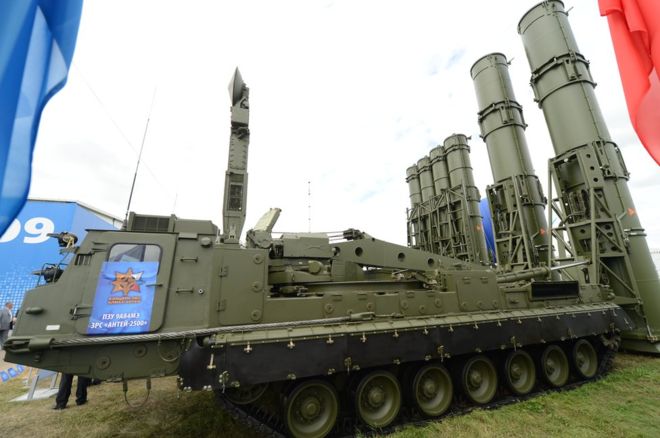
Russia has reportedly begun delivery of the first components in the new S-300 surface-to-air missile batteries to the Iranian regime as part of a larger military build-up utilizing a portion of the financial windfall the mullahs received from the nuclear deal reached last July allowing previously frozen deals to now go through.

The $800 million contract originally signed in 2007 was frozen due to international sanctions in 2010, but was unfrozen last year in the wake of the nuclear agreement.

The S-300, made by Rostec, can be used against multiple targets including jets, or to shoot down other missiles. It is one of the most advanced medium-range defensive weapons in the world. It can engage multiple aircraft at low to high altitude, up to 90 miles away. It is battle tested and in high demand from militaries around the world.

The S-300V4 variant, delivered to the Russian armed forces in 2014, can shoot down any medium-range missile in the world today, flies at five times the speed of sound and has a range of 400km (249 miles), Russia’s Tass news agency reports.

In addition to the S-300, Iran plans to license production of the Russian T-90 tank and has expressed interest in front-line Russian fighters like the SU-34. Russia is also assisting Iranian regime in rebuilding its nuclear energy capability.

The significant rebuilding and upgrading of Iran’s military capability in both offensive and defensive categories comes at the same time the regime has test fired new ballistic missile designs capable of carrying nuclear, chemical or biological payloads reaching deep into Europe, Africa and Asia.

The introduction of advanced missiles, anti-aircraft batteries, fighter jets and battle tanks clearly indicate the Iranian regime’s desire to significantly improve its combat capabilities as well as its military reach far beyond its own borders.

The delivery of S-300 systems is problematic for the U.S. and other nations concerned over Iran’s nuclear program since one of the promises made by the Iran lobby during nuclear talks was that the West would still retain the ability to bomb out of existence any illegal nuclear program. The introduction of the new missile systems makes such a response that much more difficult and protects the regime from military response should it cheat.

This points out the serious flaw in the arguments posed by Iran lobby supporters such as the National Iranian American Council and the Ploughshares Fund; by separating other corresponding acts by the regime – such as support of terrorism or proxy wars from the nuclear talks – the mullahs were empowered to engage in other provocative acts with impunity.

The next link in the chain of restrictions the mullahs are trying to break now involves accessing the international financial system, specifically trading and exchanging in and out of U.S. currency markets which would allow the mullahs to engage in commerce worldwide.

But many foreign banks remain uncertain about allowing the regime into their systems since the U.S. government still has sanctions in place related to Iran’s support of terrorism. This has proven to be a sore spot for the mullahs to such an extent that leaders such as Ali Khamenei and Hassan Rouhani have made the issue of access to U.S. dollars almost a “red line” in the sand and have threatened to walk away from the nuclear deal and restart its nuclear program.

It is clear however from the regime’s actions since the deal, that the mullahs have every intention of breaking the deal anyway after they get everything they want from West.

That possibility was only reinforced by repeated statements by senior regime leaders about its ballistic missile program, the most recent coming from regime foreign minister Javad Zarif who rejected making any concessions to the international community on the missile topic according to the Guardian newspaper.

“Secretary Kerry and the U.S. State Department know well that Iran’s missile and defense capabilities are not open to negotiation,” state media quoted Zarif as saying during a joint press conference with his visiting Estonian counterpart.

Meanwhile the regime continues a broad human rights crackdown at home and has now reached out beyond its borders to focus on its oldest enemies; Iranian dissident groups that have long worked to oppose the regime and bring democratic reforms to Iran.

German prosecutors on Friday accused two Iranian men, 31-year-old Maysam P. and 33-year-old Saied R., of spying on the People’s Mujahedin of Iran (MEK) and the National Council of Resistance of Iran (NCRI) on behalf of Iranian intelligence.

Prosecutors said both men infiltrated MEK with Maysam P. starting in January 2013 and Saied R. in August 2014 to gather information for Iranian intelligence on opposition members in Germany and other EU countries.

The NCRI welcomed “the fact that German prosecutor has brought the case of espionage targeting PMOI and NCRI to justice and calls on the German government and relevant officials to disclose and make public the details of the case of espionage and illegal activities of the Iranian regime and its agents in Germany. This is an imperative step to prevent these criminal activities.”

The crazy nature of the see-saw back and forth between lifting sanctions and imposing sanctions was highlighted as the European Union announced the extension of sanctions against 82 Iranian regime officials until 2017 because of deteriorating human rights in Iran.

The 28-nation bloc has had asset freezes and travel bans in place against Iranians since 2011 because of perceived violations of human rights.

By Michael Tomlinson


Filed Under: Blog, News Tagged With: Featured, Iran, Iran deal, NIAC, Ploughshares, S 300 Missiles, spying on people's Mojahedin

Iran Lobby Pressing for More Appeasement

April 13, 2016 by admin

Iran Lobby Pressing for More Appeasement

Iran Lobby Pressing for More Appeasement

A year after completion of the nuclear deal with the Iranian regime, the U.S. and its allies are confronted increasingly with acts by the regime demonstrating the mullahs complete lack of interest in engaging in peaceful and moderate ways.

The fact that the nuclear deal was not tied to corresponding improvements in Iran’s human rights record, support for terrorism and involvement in proxy wars made the situation even more muddled for the rest of the world. Even as the U.S. and European Union sought to lift sanctions against the regime as part of the deal, they were forced to deliberate imposing new ones to address growing problems such as the launch of illegal ballistic missiles.

As a result, the full impact of loosened economic sanctions has been lessened by the uncertainty being created by the regime’s actions and has prompted the Iran lobby to rally to the defense of the Iranian regime and push harder for full implementation of the nuclear deal irrespective of the militant acts being undertaken.

A key objective of the Iran lobby is to lift the last of the financial restrictions remaining on the regime, specifically the prohibitions in place preventing Iran to access U.S. currency markets and conduct business in U.S. dollars.

A lifting of those prohibitions would effectively lift the last dam holding back the floodwaters of Islamic extremism streaming out of Iran. It would also clear a pathway for the regime to jump feet first back into the waters of high finance where it could launder black market dollars, shift funds to supply and back terrorism groups and utilize foreign banks to make payments with almost complete anonymity.

Iranian regime’s past history of engaging in illegal financial transactions, most of it not related to nuclear weapons development, has persistently ranked it as a “high-risk, non-cooperative” jurisdiction by the Financial Action Task Force, an inter-governmental body that sets and promotes standards aimed at curbing money laundering and terrorist financing.

The FATF statement read in part:

“The FATF remains particularly and exceptionally concerned about Iran’s failure to address the risk of terrorist financing and the serious threat this poses to the integrity of the international financial system.

“The FATF reaffirms its call on members and urges all jurisdictions to advise their financial institutions to give special attention to business relationships and transactions with Iran, including Iranian companies and financial institutions.”

In this way, the Iran lobby’s insistence that the nuclear deal not be linked to issues not related to nuclear weapons has left it open to the problem of having certain sanctions kept in place that were not affected by the agreement.

Tyler Cullis of the National Iranian American Council took to the Atlantic Council to publish an editorial that reads as a press release for the regime’s finance ministry.

“Currently, Iran is taking unilateral steps to beef up its AML/CFT laws.  Last month, Iran’s Deputy Foreign Minister Majid Takht Ravanchi noted that legislation aimed at addressing Iran’s AML/CFT deficiencies was awaiting approval before the Guardian Council and would soon take effect.  Moreover, Ravanchi pointed to recent amendments made to Iran’s current laws to resolve issues with existing legislation,” Cullis writes.

Cullis recognizes the irony of attempting to provide Iran greater access to financial systems while still designated a state sponsor of terrorism and supporter of terrorism financing, but he does not acknowledge that Iran’s mullahs must first change those policies before being allowed to have these restrictions lifted.

He only argues that the regime’s “good intentions” are sufficient for the lifting of these sanctions without any movement by Iran to withdraw support for Hezbollah, without any effort to cut off the black market dealings of the regime’s elites and Revolutionary Guard or to halt the corruption that runs rampant through the government of Hassan Rouhani.

“It is time to take advantage of new channels opened by the nuclear agreement and move towards a more constructive US relationship with Iran,” Cullis adds.

The fact that Cullis is still pushing the line that the relationship between Iran and the U.S. has to improve even after the significant efforts of the Obama administration to appease the regime in order to gain a foreign policy “win” demonstrates how the mullahs are committed to getting everything for nothing.

The Iranian regime’s efforts to regain its old market share in global oil markets with the lifting of sanctions on its petroleum industry illustrate that take no-prisoners approach by the mullahs. Iran is driving down prices in order to secure long-term supply contracts and bring badly needed cash reserves into the country because even though it got as $100 billion windfall as a result of the nuclear deal, Iran is quickly burning through that cash to buy new weapon systems and deepen its support of Hezbollah in Syria and Houthi rebels in Yemen.

Thus despite the terms to which U.S.-led global negotiators and Iran supposedly agreed in July, the deal is less a firm agreement than a continuing drama with one storyline: Tehran demands a concession, the administration proposes a response, Iran-watchers in Congress and elsewhere voice concerns and U.S. officials offer a middle ground to satisfy Tehran without igniting a revolt in Washington.

As Lawrence Haas, a senior fellow at the American Foreign Policy Council, writes in U.S. News and World Report “the concessions – the most recent of which involve Iran’s ballistic missiles program and its access to the U.S. financial system – are not just rewriting the previous consensus among government officials, diplomats, nuclear experts and Iran-watchers in the United States, Europe and the Middle East over how the deal would work. They’re also serving to expand Iran’s military capability, strengthen its economy and leave U.S. allies in the region feeling more abandoned.”

By Michael Tomlinson


Filed Under: Blog, News Tagged With: Featured, Iran, Iran deal, Iran Lobby, Trita Parsi, Tyler Cullis

Meeting of Arab States Shows Challenge of Confronting Iran

April 8, 2016 by admin

Meeting of Arab States Shows Challenge of Confronting Iran

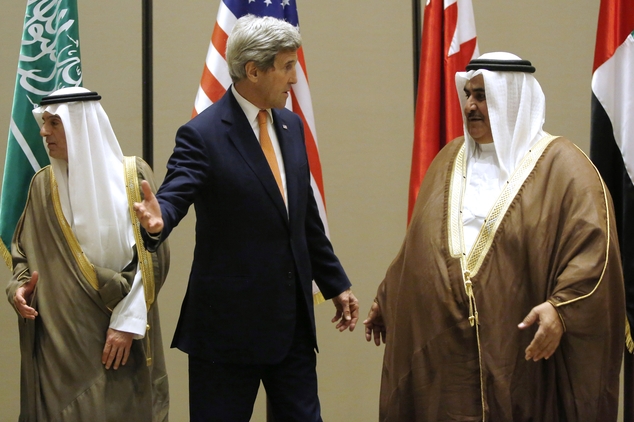
Secretary of State John Kerry talks with Bahrain Foreign Minister Khalid bin Ahmed Al Khalifa, right, after they and Saudi Arabia Foreign Minister Adel al-Jubeir, left, gathered for a family photo at the start of the Gulf Cooperation Council (GCC) Ministerial meetings in Manama, Bahrain, Thursday, April 7, 2016. (Jonathan Ernst/Pool Photo via AP)

The Gulf Cooperation Council (GCC) is a regional political and economic union of Arab States within the Persian Gulf and includes Bahrain, Kuwait, Oman, Qatar, Saudi Arabia and the United Arab Emirates. Since 1981 when it was founded, it has come to form a cohesive union of Arab states that share in the massive oil wealth of the Persian Gulf and within the last few years has created military alliances to combat the rise of ISIS and the increased militant forays of the Iranian regime.

These states have found themselves at the forefront of various Iranian provocations ranging from Bahrain battling insurgents armed by Iranian agents to Saudi Arabia which is trying to stem a full-scale insurrection on its border with neighboring Yemen fueled by Houthi rebels armed, trained and advised by Iran’s Revolutionary Guard Corps.

These Arab states have also intercepted considerable amounts of arms being smuggled by Iran to various proxies and terrorists to fuel insurrection and strikes at the various states in a stark reminder of how committed the mullahs in Tehran are in destabilizing their Arab neighbors.

All of this highlights one of the untruths uttered by the Iran lobby during the run up to the nuclear deal last year which was securing a deal would empower moderate forces within Iran to take greater control over Iran’s government and temper its more extreme elements.

We now know since the deal was agreed to last July, the Iranian regime has taken every opportunity to step up its military activities throughout the region; from Syria on the Mediterranean to Yemen on the Indian Ocean.

It is against this backdrop that U.S. Secretary of State John Kerry travels to Bahrain for a meeting of the GCC whose members are intent on reading Kerry the riot act about the rise of Iranian extremism.

Part of that process included statements from Kerry and Bahrain’s foreign minister on Thursday urging Iran to stop escalating its provocative behavior and pursue a more constructive foreign policy.

Kerry is in Bahrain to consult with officials from Bahrain and other Gulf Arab countries frustrated by Tehran’s policies and lay the groundwork for meetings between President Barack Obama and Gulf Arab leaders in Riyadh later this month. The president held a meeting in Washington last year with Gulf Arab leaders and senior officials to pledge military aid and calm allies’ nerves about Tehran as the nuclear deal neared completion.

“Today we are noticing two things that we kind have expected,” Sheik Khalid bin Ahmed Al Khalifa, Bahrain’s foreign minister, said, outlining the views of Bahrain and the GCC. “The missile program is moving forward with full support of the leadership of the Islamic Republic and we are seeing the hegemonic interventions through proxies in several parts of our region continuing unabated.”

While Kerry once again stressed the positive virtues of the nuclear agreement, the reality is that the almost slavish dedication to keeping afloat a nuclear deal that is already – for all intents and purposes – dead from the Iranian point of view has allowed the Iranian regime to move forward aggressively on several other fronts now that sanctions have been lifted and it can access a new credit line of $100 billion to replenish its military losses at a critical time for the mullahs.

That reality has forced Kerry to make a complex argument here to the ministers of the GCC, where he repeated that the U.S. would continue to lift the economic sanctions against Iran that it agreed to as part of the nuclear accord, even while imposing new ones to counter Tehran’s missile launches, an effort now underway in the United Nations Security Council.

The bipolar nature of American diplomacy has caused consternation and confusion among America’s allies such as the Gulf states and what can only be construed as unbridled joy amongst the mullahs who are taking advantage of the mixed messages.

But sentiment was hardening against Iran and the weak administration position as the editorial board for the Washington Post decried the ramp up in missile testing by Iran and the need to sanction the regime.

“Tehran’s behavior comes as no surprise to the many observers who predicted the deal would not alter its hostility to the West or its defiance of international norms. Unfortunately, the Obama administration’s response has also been much as critics predicted: It has done its best to play down Iran’s violations and avoid any conflict out of fear that the regime might walk away from a centerpiece of President Obama’s legacy,” the Post wrote.

In reference to a push by Iran to lift restrictions on accessing U.S. currency markets, the Post said “Secretary of State John F. Kerry, the accord’s architect, said Tuesday that the regime ‘deserves the benefits of the deal they struck.’ There’s logic to that. But there’s also a problem of reciprocity: Should the United States take steps not strictly mandated by the text of the nuclear accord at a time when Iran is testing nuclear-capable missiles?”

What has all this wrought? Not the peace and moderation promised by Iran lobby supporters such as Trita Parsi of the National Iranian American Council, but instead the world has witnessed a global military spending boost of nearly $1.7 trillion in 2015, the first increase in several years as a result of Iranian regime’s rise and increase in global terrorism and proxy wars fueled by Iran according to a new report.

Tiny Qatar has signed a deal for $7.6 billion to buy 24 Dassault Rafal fighter jets from France. Kuwait on Tuesday finalized a deal to purchase 28 Eurofighter Typhoons, a deal estimated to be worth around $8 billion; all in response to the uncertainty the Iranian regime is sowing.

By Laura Carnahan


Filed Under: Blog, News Tagged With: Featured, Iran, Iran deal, Iran Lobby, Iran Mullahs, Iran sanctions, National Iranian American Council, NIAC, Trita Parsi

One Year after Nuclear Agreement Iran Is Worse

April 6, 2016 by admin

One Year after Nuclear Agreement Iran Is Worse

One Year after Nuclear Agreement Iran Is Worse

This weekend marked one year since the nuclear agreement with the Iranian regime – known as the Joint Comprehensive Plan of Action – was reached between Iran and the group of nations known as the P5+1 and subsequently adopted by the United Nations Security Council and European Union.

The Iran lobby made it a life or death struggle between forces of good and moderation versus dark and hardliners. The Iran lobby promised a new era of rising moderate political influence and an opening to the West. The Iran lobby warned that failure to approve the agreement would plunge the region into chaos and open the door for decades of unremitting violence and turmoil.

The Iran lobby promised that failure to approve a deal would lead to a cataclysmic war with Iran that could unleash nuclear weapons. It warned of a war-mongering hunger within the U.S. government intent on eradicating the poor, peaceful mullahs.

“War against Iran has been on the agenda in Washington since at least 2005. The 2007 National Intelligence Estimate is credited with thwarting the George W. Bush administration’s plans — confirmed to me by administration officials — to attack Iran by revealing that the U.S. intelligence community had concluded that Iran did not have an active nuclear weapons program,” wrote Trita Parsi of the National Iranian American Council last June 2015 in Foreign Policy.

His warnings were part of the “good cop, bad cop” playbook the Iran lobby used in praising Iran’s intentions and denouncing the threat of war from those opposed to the deal.

Unfortunately for the rest of the world, they were spectacularly wrong in their promises and warnings. One year later the Middle East is in chaos with three full blown wars raging across Syria, Iraq and Yemen, causing the largest refugee crisis the world has seen since Adolf Hitler went goose-steeping across Europe.

Yousef al-Otaiba, the ambassador of the United Arab Emirates to the U.S., wrote in this weekend’s Wall Street Journal of the uncertainty and angst being felt throughout the region with a newly empowered and aggressive Iranian regime since the nuclear deal.

“Since the nuclear deal, however, Iran has only doubled down on its posturing and provocations. In October, November and again in early March, Iran conducted ballistic-missile tests in violation of United Nations Security Council resolutions.

“In December, Iran fired rockets dangerously close to a U.S. aircraft carrier in the Strait of Hormuz, just weeks before it detained a group of American sailors. In February, Iranian Defense Minister Hossein Dehghan visited Moscow for talks to purchase more than $8 billion in Russian fighter jets, planes and helicopters.

“In Yemen, where peace talks now hold some real promise, Iran’s disruptive interference only grows worse. Last week, the French navy seized a large cache of weapons on its way from Iran to support the Houthis in their rebellion against the U.N.-backed legitimate Yemeni government. In late February, the Australian navy intercepted a ship off the coast of Oman with thousands of AK-47s and rocket-propelled grenades. And last month, a senior Iranian military official said Tehran was ready to send military ‘advisers’ to assist the Houthis,” Otaiba writes.

The laundry list of militant acts by the Iranian regime grows longer each day to include smuggling warheads and arms to Shiite cells in Bahrain and Saudi Arabia, widespread crackdowns at home aimed at political dissidents and religious minorities, large-scale human rights violations including historic levels of executions of women and children, and rigging of parliamentary elections to remove over half of the candidates from even appearing on the ballot, including the most loyal agents and officials of the same regime in the past few decades.

The swiftness of the transformation of the Iranian regime since the nuclear deal was approved last year has been stunning. The mullahs are flush with cash, they’ve invited foreign companies to invest billions, not suffered any repercussions from human rights violations or involvement in proxy wars, kept their nuclear enrichment infrastructure intact and elevated development of their ballistic missiles to reach Europe, Africa and American military bases from the Indian Ocean to the Mediterranean.

And the regime has no intentions of taking its foot off the gas, especially in the area of boosting its missile capability.

Ali Larijani, the regime’s parliamentary speaker and someone lauded by the Iran lobby as a “born-again moderate” said that Iran should continue to develop its missile capabilities despite opposition from western countries.

“Although some excuses recently raised by a number of Western countries about Iran’s missile [tests] are flimsy and legally worthless, they are indicative of their long-term policy which [shows] that they do not want the Islamic Republic to be powerful enough to ensure regional security,” he said according to Tasnim News on Saturday.

“For this reason,” he added, “we should insist on strengthening the country’s defense capability, especially in the field of missiles.”

There is a certain irony that last year the world was worried about nuclear warheads and now it has to worry about missiles to carry those warheads and battlefields across the region, as well as a sharp rise in terror attacks striking at cities around the world killing hundreds.

The ultimate irony came in President Obama’s remarks at the so-called National Security Summit this weekend in Washington in which he criticized the regime for undermining the “spirit” of the agreement even as they stick to the “letter” of the deal.

“Iran so far has followed the letter of the agreement, but the spirit of the agreement involves Iran also sending signals to the world community and businesses that it is not going to be engaging in a range of provocative actions that are going to scare businesses off,” Obama said at a press conference.

“When they launch ballistic missiles with slogans calling for the destruction of Israel, that makes businesses nervous.”

“Iran has to understand what every country in the world understands, which is businesses want to go where they feel safe, where they don’t see massive controversy, where they can be confident that transactions are going to operate normally,” he added. “And that’s an adjustment that Iran’s going to have to make as well.”

I can’t tell if the president is naïve or just-plain dumb when he equates a burgeoning missile program and threat of nuclear annihilation to a need to improve Iran’s business climate. The problem the world is dealing with in Iran is not that businesses are skittish of investing, but rather that the mullahs are intent on remaking the world in their own image.

We can only hope that come November, a new administration will be more intent on reigning in Iranian extremism rather than the opening of a new McDonalds or Starbucks in Tehran.

By Michael Tomlinson

Filed Under: Blog, News Tagged With: #NuclearDeal, Featured, Iran deal, Iran Human rights, Iran Lobby, National Iranian American Council, NIAC Action, Trita Parsi

  • « Previous Page
  • 1
  • …
  • 16
  • 17
  • 18
  • 19
  • 20
  • …
  • 29
  • Next Page »

National Iranian-American Council (NIAC)

  • Bogus Memberships
  • Survey
  • Lobbying
  • Iranians for International Cooperation
  • Defamation Lawsuit
  • People’s Mojahedin
  • Trita Parsi Biography
  • Parsi/Namazi Lobbying Plan
  • Parsi Links to Namazi & Iranian Regime
  • Namazi, NIAC Ringleader
  • Collaborating with Iran’s Ambassador

Recent Posts

  • NIAC Trying to Gain Influence On U.S. Congress
  • While Iran Lobby Plays Blame Game Iran Goes Nuclear
  • Iran Lobby Jumps on Detention of Iranian Newscaster
  • Bad News for Iran Swamps Iran Lobby
  • Iran Starts Off Year by Banning Instagram

© Copyright 2026 IranLobby.net · All Rights Reserved.