Iran Lobby

Exposing the Activities of the lobbies and appeasers of the Mullah's Dictatorship ruling Iran

  • Home
  • About
  • Current Trend
  • National Iranian-American Council(NIAC)
    • Bogus Memberships
    • Survey
    • Lobbying
    • Iranians for International Cooperation
    • Defamation Lawsuit
    • People’s Mojahedin
    • Trita Parsi Biography
    • Parsi/Namazi Lobbying Plan
    • Parsi Links to Namazi& Iranian Regime
    • Namazi, NIAC Ringleader
    • Collaborating with Iran’s Ambassador
  • The Appeasers
    • Gary Sick
    • Flynt Leverett & Hillary Mann Leverett
    • Baroness Nicholson
  • Blog
  • Links
  • Media Reports

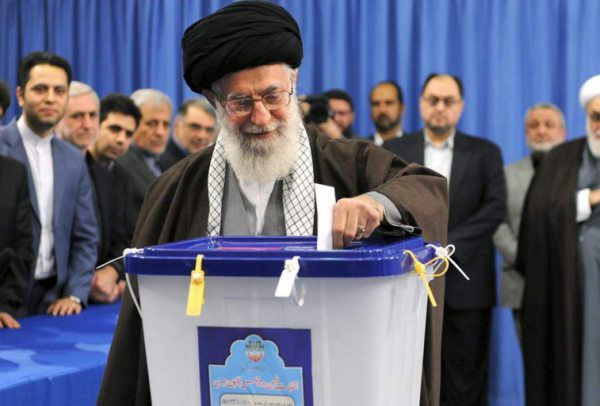
Pushback Grows Against Iran Lobby Claims of Moderate Win

March 4, 2016 by admin

Pushback Grows Against Iran Lobby Claims of Moderate Win

Pushback Grows Against Iran Lobby Claims of Moderate Win

Basking in the afterglow of the Iranian regime’s parliamentary election results, the Iran lobby predictably boasted of the massive wins by moderate and reformist forces within Iran, but now the pushback is coming from a wide variety of the political spectrum as the results and actual winning candidates are absorbed and evaluated.

The realization is settling in that far from the moderate tsunami described by regime supporters such as Trita Parsi and Reza Marashi of the National Iranian American Council, the truth is that very little has changed within the regime leadership and the Iranian people still remain firmly in the grip and thrall of the mullahs.

The parade of cold water on the moderate landslide theory was led by the editorial board of the Washington Post, which has intimate first-hand knowledge of the extremist nature of the regime through the hostage taking and eventual prisoner swap of its reporter, Jason Rezaian. It editorialized:

“Claims of a reformist triumph, however, are overblown. Before the elections, an Iranian liberal coalition said that 99 percent of 3,000 pro-reform candidates had been disqualified by a hard-line clerical council. Most of those in Mr. Rouhani’s coalition are, like him, moderate conservatives, meaning they favor economic reforms and greater Western investment, but not liberalization of the political system or a moderation of Iran’s aspiration to become the hegemon of the Middle East. True Iranian religious and political reformers, like those who joined the 2009 Green Movement, are in jail or exile, or were banned from the ballot.

“For now, Iran can be expected to continue the course it has been pursuing in the months since the nuclear deal was struck: waging proxy wars against the United States and its allies around the Middle East, using its unfrozen reserves to buy weapons, and defying non-nuclear limits — such as by testing long-range missiles. The elections won’t make the regime more pliable, and they won’t change the need for a U.S. counter to its aggressions. They shouldn’t provide an excuse for the Obama administration to tolerate Tehran’s provocations,” the Post said.

The Post is correct in its assertions and admits to the basic problem facing those nervously praising the “moderate” wins: they are left with hoping for the best outcome even though it will most likely come to pass since the alternative is to face the difficult choices of pushing for regime change against a regime firmly entrenched.

The Atlantic’s Kathy Gilsinan noted some of the difficulties in the tea leaf reading going on post-election in discerning who actually won.

“Institutions whose members aren’t popularly elected, including the office of the supreme leader, the Guardian Council, the judiciary, and the security services, are the most powerful in Iran’s government. And they remain in the hands of hardliners,” she writes.

“Another reason it’s difficult to know the significance of these elections—aside from the dueling claims of victory from each camp, and the fact that, as Thomas Erdbink of The New York Times reported Wednesday, ‘there has been no official comment on the affiliation of the winning candidates’—is that Iran does not have strong political parties. Knowing that Republicans have a majority in the U.S. Congress, for example, gives you a rough sense of that body’s legislative priorities and how they would differ from those of a Democratic Congress. As Majlis Monitor, a website devoted to Iranian politics, notes, ‘While political parties help us see a country’s political fault-lines, their absence in Iran makes it difficult to understand how politics are actually [organized] and work there.’”

This points out the fundamental problem with the claims being made by Parsi or Jim Lobe over at Lobelog that moderates won the election: the absence of political parties stems from the mullahs aim to eliminate all dissent and organize the government around homogenous support for the Islamic revolution. True dissident parties such as the Mojahedin Khalgh (MEK or PMOI) were outlawed and membership was classified as punishable by death.

There is no doubt that the Iranian people want real reform and a true turn towards democracy. They are tired of living in an oppressive regime where their every online move is monitored and their every economic move is stymied by widespread official corruption.

The New York Times’ Erdbink also explained how results of the election may never be publicly revealed.

“The Interior Ministry, which is overseeing the voting for the 290-seat Parliament and the clerical Assembly of Experts, announced on Tuesday the names of 222 parliamentary candidates who won nationwide. It also announced that there would be a second round of voting for 68 seats in several constituencies in April,” he said. “But there has been no official comment on the affiliation of the winning candidates, and there may never be, making it difficult to determine how many seats the various factions have won.”

The Interior Ministry also oversees the internal security for the regime and already has a checkered history with the hijacking of the 2009 elections. It wouldn’t be unreasonable to see some similar shenanigans with these results to ensure the right kinds of “moderates” eventually won seats.

Former UN ambassador John R. Bolton took a similar viewpoint in writing for the American Enterprise Institute:

“Efforts to distinguish Tehran’s moderates from hard-liners have a long historical record of failure, as have similar precedents in analyzing Moscow and Beijing. Today in Iran, while there are disagreements over economic, social and religious policies among the elite, there is no disagreement over the objective of mastering the difficult science and technology required to achieve nuclear weapons deliverable on ballistic missiles. There is simply no credible evidence that the ayatollahs and other key Iranian leaders have ever diverged on that goal. Moreover, the nuclear and ballistic missile programs are firmly controlled by the Revolutionary Guards, which is about as likely to cede responsibility to the elected Majlis as to America’s Congress,” he writes.

Ultimately the real test of real reform will come if Evin Prison is emptied, ballistic missiles are shelved and support is withdrawn from Syria, Iraq and Yemen.

I wouldn’t hold your breath for that.

By Michael Tomlinson
Filed Under: Blog, News Tagged With: Appeasement policy, Featured, Iran, Iran deal, Iran Lobby, Lobelog, National Iranian American Council, NIAC, Reza Marashi, Trita Parsi

Iran Lobby Working Hard to Spin Iran Elections

March 3, 2016 by admin

Iran Lobby Working Hard to Spin Iran Elections

Iran Lobby Working Hard to Spin Iran Elections

With the recent parliamentary elections in Iran, the regime and its allies are working hard to project the image of a moderate landslide setting the stage for a new era of peace, prosperity and happiness. Somewhere in there are probably also promises that eating ice cream doesn’t make you fat and pots of gold lie at the end of rainbows.

At the center of that spin control exercise stands the National Iranian American Council, the chief lobbyist and public advocate for the mullahs in Tehran, which sent its leaders out to talk to virtually any journalist that would listen to them about how great things turned out in Iran.

“The stunning setback of the hardliners in the elections is precisely why they opposed the Iran nuclear deal,” said Trita Parsi, president of the NIAC. “They knew that if successful, the Rouhani faction would benefit electorally from the significant achievement of resolving the nuclear issue and reducing tensions with United States.”

Parsi’s comments are the key message for regime supporters: that approval of the nuclear deal was the key for the moderate wins. It makes for a nice fiction, but it is also as blatantly wrong.

First, Parsi’s contention of a moderate win is beguilingly false since he ignores the months-long vetting process in which the handpicked members of the Guardian Council bounced over half of the 12,000 candidates that submitted for approval to appear on the ballot. Those that survived were largely approved based on their allegiance to the Supreme leader of the mullahs and adherence to the supporting the policies of the ruling mullahs, backed by the Revolutionary Guard.

Anyone who deviated from those goals was arrested and thrown in jail during a massive crackdown across Iran that saw journalists, dissidents and potential opposition politicians rounded up. Of course, Parsi and his colleagues did not utter a word of protest during these arrests.

In another quote given in an editorial in the Washington Post, Parsi added that hardliners “knew that if successful, the Rouhani faction would benefit electorally from the significant achievement of resolving the nuclear issue and reducing tensions with United States. These benefits would not just be limited to the parliamentary elections, but could establish a new balance of power in Iran’s internal politics with significant long-term repercussions.”

It’s the second falsehood Parsi preaches in claiming there are indeed factions splitting the Iranian regime, including a bloc of moderates aligned with Hassan Rouhani.

Where Parsi is wrong is his claim that the differences separating these so-called “faction” are political, when they are in fact more about power and greed.

The Iranian regime ranks as one of the most corrupt economies in the world with the Revolutionary Guard and the families of the mullahs running the regime deeply involved and controlling of virtually all the major industries in Iran, including petroleum, aviation, telecommunications, mining, shipping and manufacturing.

With the cash infusion of $100 billion in hard currency being made available, the mullahs and military are loathe to give up control of those assets, or the billions in foreign investment that will flow as a result of the nuclear deal. The fight over parliamentary seats is less about opening up Iranian society and broadening human rights and more about securing enough seats to control how that spoils of the nuclear deal get divided up.

The mullahs have long made clear their political strategy in crafting a regime modeled after China in which the economy is liberalized while maintaining tight political control over the people. In that manner, the parliamentary elections and claims of moderation by the Iran lobby make perfect sense. As Parsi and others proclaim moderation, the government is still left firmly in the hands of those intent on enriching themselves and not improving the lot of the Iranian people.

The deception by Parsi does go to some absurd lengths as he claims in an interview on The Real News that Ali Larijani, the current head of the parliament and overseer of the judiciary, is actually in favor of moderate policies.

“Ali Larijani, who is the current head of the parliament, is a conservative. And he’s been a conservative for a very long time, belongs to a very conservative and well-established family. But he has aligned himself with Rouhani most of the time on most issues. And he’s not considered right now to be in the anti-Rouhani camp,” Parsi claims.

It’s a silly claim when you consider that the regime’s judicial and police functions are firmly in control of hardliners that enforced the vetting process in the first place and removed all the opponents to Rouhani’s slate of “moderate” allies. This is also the same judiciary that has consistently imprisoned Americans, Christians and sentences children to death, and most recently snatched up Parsi’s friend and ally, Siamak Namazi, and threw him in prison without legal representation or charge.

The fact that Parsi called these “the most consequential non-presidential elections in Iran at least for the last two decades” in an interview with the Cato Institute, is even more absurd given that many would claim that the disputed 2009 presidential elections that were stolen and protested with mass demonstrations that were brutally put down violently by the mullahs were the most consequential elections in Iran since that was the last time the Iranian people actually took a stab at real regime change.

The last false argument being put forth by the Iran lobby is the contention that real change is possible down the road with the possibility of a new supreme leader being elected following the inevitable death of the 76-year old Ali Khamenei.

“In the short term the parliamentary elections will impact Iran’s economic policies. But for the long term, this assembly could elect the next supreme leader, which has greater long-term implications for Iran and its people,” said Reza Marashi, also of the NIAC.

It is laughable to think there will be any real possibility of installing a new top mullah that would deviate from the path the Islamic revolution has taken, or loosen the control the mullahs and Revolutionary Guard have over the country. For Marashi to think there would be any change over a long, incremental pathway ignores the abject suffering and brutality being meted out against the Iranian people every day.

When the Rouhani regime has overseen a record number of executions, far exceeding the high water mark set by Mahmoud Ahmadinejad, the idea of a loosening of the regime is merely a smokescreen.

Already Rouhani has seen fit to keep the vast majority of the billions in released funds in overseas accounts to help pay for the new military hardware Iran is busy buying from Russia and soon China. The Iranian people are unlikely to see any of it and ultimately their hopes for an improving economy will remain only an unfilled dream so long as the mullahs are in Power.

By Michael Tomlinson

Filed Under: Blog, News Tagged With: Featured, Iran deal, Iran Human rights, Iran Lobby, NIAC, Reza Marashi, Rouhani, Trita Parsi

Iran Election Results Predictably Praised by Iran Lobby

February 29, 2016 by admin

http://www.theguardian.com/world/iran-blog/2016/feb/28/five-lessons-from-irans-2016-elections-tehranbureau

http://www.theguardian.com/world/iran-blog/2016/feb/28/five-lessons-from-irans-2016-elections-tehranbureau

As the Iranian regime counts the ballots from this weekend’s parliamentary elections, the Iran lobby is already hailing it as a momentous victory for “moderate” forces in Iran in what may be one of the most blatant obfuscations since Adolf Hitler’s Anschluss of Austria based on the pretext of being invited in to restore order.

“The stunning setback of the hardliners in the elections is precisely why they opposed the Iran nuclear deal. They knew that if successful, the Rouhani faction would benefit electorally from the significant achievement of resolving the nuclear issue and reducing tensions with United States. These benefits would not just be limited to the parliamentary elections, but could establish a new balance of power in Iran’s internal politics with significant long-term repercussions,” said Trita Parsi, head of the National Iranian American Council and lead cheerleader for the Iranian regime.

His absurd comment came in a piece in Huffington Post in which he failed to acknowledge the most glaring problem with his effusive praise: the handpicked Guardian Council of Ali Khamenei removed almost 90 percent of the “moderates” from the ballot during the months-long vetting process.

The only candidates left on the ballot, especially outside of Tehran, were devoted and dedicated candidates solidly aligned with Khamenei, the ruling mullahs and Revolutionary Guards’ leadership.

Taking a few scattered wins in and around Tehran and calling it a “moderate” win is akin to Parsi’s previous arguments about the nuclear deal being a moderating force for Iran and the West, but in its aftermath the regime has conducted illegal missile tests, arrested scores of dissidents and journalists and stepped up its war in Syria.

The money line from Parsi is when he says “In order to avoid a hardline backlash, the moderation of Iranian policies need to happen at a moderate pace.” We can only assume Parsi thinks reform in Iran happens at a snail’s pace. For him and the rest of the Iran lobby, electing one moderate out of 12,000 thrown off the ballot would be considered “progress,” which is why his proclamation of moderates is so silly, especially when we consider that candidates backing Hassan Rouhani are dubbed “reformists” in a stretch of logic that hurts the brain when thinking about it.

Rouhani has turned into anything but a moderate. Rouhani’s sole purpose in being hand selected by Khamenei and all other candidates cleared from the field beforehand was to convince the West of a moderate image and secure a deal lifting crippling sanctions. In his tenure, he has instead presided over the highest increase in executions ever in Iran, cracked down hard on journalists and presided over three proxy wars in Syria, Iraq and Yemen in a show of extremist Islamic expansion that Mahmoud Ahmadinejad, his much-reviled predecessor, could only dream about.

The fact that Rouhani supporters could only win 30 seats in heavily populated Tehran and lose across the rest of the country indicates the usual pattern of deceit coming from the mullahs: Let the “moderates” claim a victory for global media consumption in Tehran, but dominate and assure control everywhere else in Iran.

The recipe for electoral success has worked since decades ago and has allowed the mullahs to play with the world, around their internal fighting. While the infighting is only about their share of power and both “moderates” and “Hardliners” are the same when it comes to executions, domestic repression, and their support for terrorism abroad. Take for instance the so called moderate Rouhani, the reign of executions under his watch has been much larger than his “hardliner” Ahmadinejad, and he and his Foreign Minister Zarif (Another person that is referred to as “moderate” within the mullah’s regime) have continuously expressed their support for the Syrian dictatorship, the Hezbollah and most extremist movements in Iraq and Yemen. Under Rouhani and his predecessors, virtually all legitimate dissident groups and political parties have long been outlawed and even the nascent Green Movement which was crushed in 2009 and was led by leaders arguably still cozy with the regime leadership has no recognition or legitimacy within Iran.

Add to that the contention by the Iranian regime that democracy was served by the participation of an estimated 33 million of Iran’s 55 million eligible voters and you find remarkable similarities with claims by other totalitarian regimes such as the old Soviet Union, North Korea and Nazi Germany in which near universal participation by the electorate was often forced and compulsory as was who to vote for. The Iranian regime is no different.

“Iranian voters delivered a strong message to the elite that political and social aspirations that have long been unmet need to be addressed more robustly,” said Reza Marashi, also of NIAC who claimed voters wanted change, even if it was exchanging one regime diehard for another.

Aaron David Miller, a vice president at the Woodrow Wilson International Center for Scholars, noted in an editorial in the Los Angeles Times that “none of this favors Iran’s pragmatists and centrists, let alone its reformers. In fact, as the International Crisis Group notes, in Iran historically ‘external loosening’ is balanced with ‘internal stiffening.’

“That is what happened after the 1988 cease-fire in the war with Iraq, and after the 2003 nuclear agreement with Britain, France and Germany, when the powerful Guardian Council disqualified reformist candidates in the next elections and conservatives regained their parliamentary majority. A step forward in a highly authoritarian and ideological system can easily produce a few steps back, or at least to the side,” Miller notes.

The Guardian, had similar takeaways in looking at the elections, including that there are no simple divisions of “moderates” and “reformists” since candidates were disqualified less on political views and more on devotion to the ruling mullahs.

In describing Rouhani, Gareth said “Iran’s president has proved himself an astute, hard-headed operator,” adding that “politically, Rouhani will need to maintain public support with an eye to being re-elected as president next year. Anecdotal reports of a lower turn-out in poorer parts of Tehran may reflect most strongly a wider sense among Iranians they are not benefiting from the easing of sanctions.”

While the Iran lobby may be praising this weekend’s election results, the reality of a rigged election means nothing really changed as most Americans tuned into the Oscars instead.

By Michael Tomlinson

Filed Under: Blog, News Tagged With: Featured, hassan rouhani, Iran deal, Iran Human rights, Iran Lobby, Reza Marashi, Trita Parsi

Iran Elections Results Are In a Day Early: The Mullahs Won

February 26, 2016 by admin

Iran Elections Results Are In a Day Early: The Mullahs Won

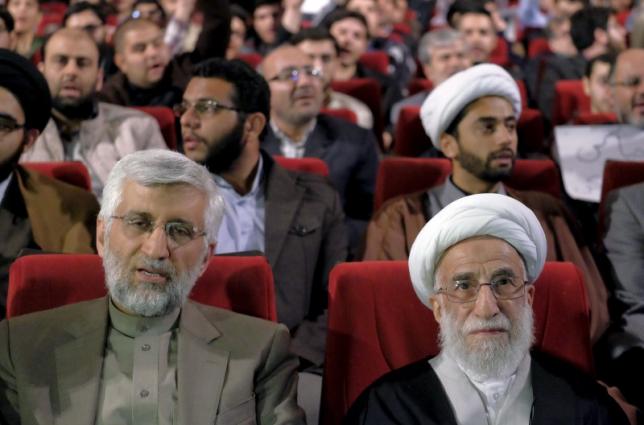
Ayatollah Ahmad Jannati (R), a candidate for the upcoming vote on the Assembly of Experts, and Iran’s former chief negotiator Saeed Jalili attend a conservatives election campaign gathering in Tehran February 24, 2016. REUTERS/Raheb Homavandi/TIMA

The headlines screamed out from various news publications around the world on the day before parliamentary elections were to be held in Iran:

“Moderates Test Hardliners’ Grip on Power in Iran Vote” – Reuters

“Iran’s Moderates Face a Major Challenge in First Elections Since the Nuclear Deal” – TIME

“Iran Reformists Hoping for Boost in Parliament Election” – New York Times

“Why Iran’s Parliamentary Elections This Friday Are So Crucial” – The Nation

Most of the international media seem to be suffering from the same form of mass amnesia in that they have conveniently forgotten the fact that the elections were rigged months ago when the Guardian Council, whose members are handpicked by top mullah Ali Khamenei, kicked off virtually all candidates from ballots with even a hint of moderation or lack of ideological purity.

Just as it has done in every election since the mullahs seized the revolution in 1979 and turned Iran into an theocratic dictatorship, there is no doubt to the outcome. There was no doubt when Mahmoud Ahmadinejad was re-elected in a blatant steal of the ballot box and there was no doubt when Hassan Rouhani was elected after virtually all potential challengers were rejected by the same Guardian Council that mowed down this election.

So as Iranians go to the polls, they are going to find themselves confronted with few choices and fewer options if they truly want regime change. Not only have any potential “moderates” been knocked off the ballot, but true opposition parties and dissident groups are outlawed and membership in any is grounds for arrest and even execution.

While the U.S. is engaged in a presidential race marked by hyperbole, multiple debates, flooding of social media and a months-long process of examination, questioning and arguing with candidates, the mullahs in Iran spent months dumping candidates and allowing only one week of actual campaigning.

But some media have tried prying the lid the mullahs have placed on these elections and are running stories that look more critically at how these elections are a sham and already decided.

David Blair, writing for the Telegraph, visited Qom, one of Iran’s holiest cities, and found residents there with little to no choices available to them.

“If any of the inhabitants of Iran’s second-holiest city wish to vote for reformists in Friday’s election, they will be disappointed,” he writes. “Every moderate candidate who tried to stand in Qom has already been disqualified, leaving the 1.1 million people of this desert city – known as the Shia Vatican – to choose between different brands of hardliners.”

“The voting that will take place in Qom sums up everything important about Iran’s election. On the face of it, people will have the freedom to choose both a new Majles, or parliament, and a new Assembly of Experts, the body which appoints and supervises the Supreme Leader, Ayatollah Ali Khamenei,” Blair correctly points out. “In reality, another committee in Iran’s labyrinthine power structure, the Guardian Council, has already vetted every candidate for both elections, banning almost half of the 12,000 hopefuls from standing and weeding out most of the reformers.”

Outside of Tehran, Blair and other journalists have cities and communities in more rural areas with virtually no moderates on any ballot and limited campaigning with most Iranians resigned to picking from lists of hardliners vs. more hardliners.

A senior fellow at the Washington Institute for Near East Policy, writing in the Wall Street Journal, acknowledged the same situation playing out.

“The upcoming vote will largely mirror past elections in Iran, being neither free nor fair. The candidates have been closely screened and the outcome is expected to uphold the largely conservative makeup in parliament and the Assembly of Experts. In addition, the victors will remain largely dependent on military institutions, namely the Islamic Revolutionary Guard Corps. Moderates will stay marginalized in this arrangement and face intensified pressure from hard-line colleagues,” Khalaji said.

He goes on to point out that Rouhani’s election was devoted to getting a nuclear deal done to relieve the regime of crippling economic sanctions.

“Mr. Rouhani has focused most of his energy on the nuclear deal. He has not improved the dismal human rights situation in Iran”… During his tenure, military and intelligence suppression of political activists has remained robust and effective,” he writes.

“Presidential candidates in 2017 will need to establish strong relations with the supreme leader and his apparatus, especially the Revolutionary Guards, and are likely to succeed by reassuring these entities that their political and economic interests will not be undermined,” he added.

The fact of the matter elections in Iran are already pre-determined. The Revolutionary Guards and religious clergy exert overwhelming control of the country’s economy and industries and quickly stifle any dissent by tossing dissidents in prison and hanging them publicly to deter any future opponents.

That control will almost certainly continue to flow through regime leaders such as Ahmad Jannati who will be a shoo-in for re-election to the 88-member Assembly of Experts and will also shepherd the process to ensure the replacement for Khamenei is just as ideologically pure and committed to the Velayat-e-Faqih and more important keep the mullahs hold on power intact.

In remarks echoed by Khamenei, Jannati this week accused the United States and Britain of trying to influence Friday’s votes.

“The United States and the United Kingdom were trying to take advantage of the Iranian elections and send their agents and infiltrators into the Assembly of Experts, but God helped us and we managed to identify and block them all,” he was quoted as saying by the Fars news agency on Wednesday.

Jannati is a clear example of the type of extremist Iran will be electing and it was already decided long ago. Today’s vote is just a formality.

By Michael Tomlinson

Filed Under: Blog, News Tagged With: Featured, Iran, Iran deal, Iran Election, Iran Elections 2016, Iran Human rights, iranelections2016, Iranian election

Iranian Regime Use Boogeyman of Great Satan to Control Elections

February 23, 2016 by admin

Iranian Regime Use Boogeyman of Great Satan to Control Elections

Iranian Regime Use Boogeyman of Great Satan to Control Elections

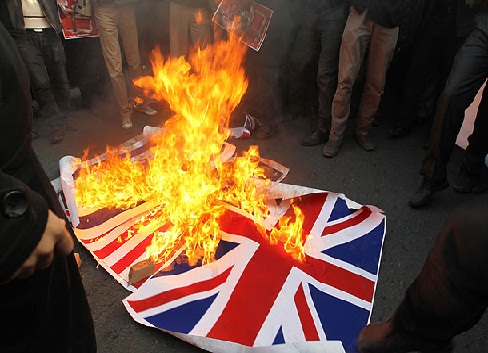
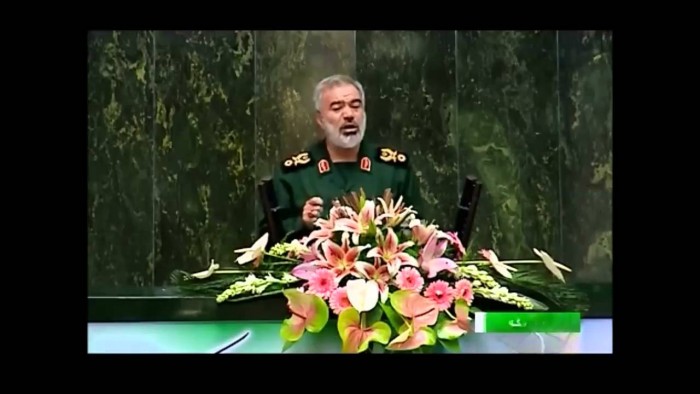
As parliamentary elections for the Iranian regime approaches, the regime continue their verbal drumbeat blaming the U.S., Great Britain and anyone else not named “Iran” for meddling in the elections. The latest verbal volley came from Hassan Firouzabadi, the chief of staff of the regime’s armed forces, who accused the U.S. and Great Britain of meddling by campaign for and against certain candidates.

“Such interference is [part of] aggressive strategies adopted by the US and Britain toward the Iranian nation, and the country’s officials should not underestimate it,” Firouzabadi said on Saturday.

He added that the “impudent” move by arrogant powers, including the U.S. and Britain, would provoke the wrath of the “revolutionary” Iranian nation.

Of course the good general neglected to mention any specific examples of meddling in his diatribe, but that is par for the course for the regime to hurl invective without any evidence, proof or backing. The truth is that there is no meddling going on or intrusive acts, especially from an Obama administration which seems intent on appeasing the mullahs in any way imaginable.

A compliant and friendly U.S. government though doesn’t fit the Islamic revolutionary beliefs held near and dear to the mullahs as their means of oppressing the Iranian people in what top mullah Ali Khamenei affectionately calls the “resistance economy;” an economy designed to keep Iranians struggling, impoverished and dependent on the regime for subsidized fuel, food and medicine.

It serves the regime’s purposes to keep blaming the U.S. and rest of the West for all the ills that have befallen Iran, especially during the time of economic sanctions, but since those have been lifted as part of the nuclear deal negotiated last summer, the mullahs are caught in the bind of having to explain to the Iranian people why things – like the economy – remain so bad under their stewardship.

For the mullahs, continued scapegoating of the U.S. is about the only excuse they have left to divert blame away from their own corruption, incompetence and mismanagement. It is also the strategy the Iran lobby follows in turning every issue into a blame game against the poor mullahs of Tehran.

All of which is a behavior that is only reinforced when the Obama administration fails to stand up aggressively to the regime’s misbehavior, thereby engendering even more egregious acts by the Iranian regime.

Case in point is the letter sent from Iranian general Mohsen Rezaei to Hassan Rouhani in which he detailed how to force even more concessions from the U.S. by aggressively building longer-range ballistic missiles.

The letter follows the capturing of U.S. sailors, the firing rockets near a U.S. carrier, and the flying of drones over U.S. and French carriers and it claims the U.S. only was willing to make a nuclear deal because Tehran aggressively pursued a renegade nuclear bomb program that violated UN sanctions.

“Just as Iran’s success in developing 20,000 centrifuges was a slap in the face of the United States and forced the Americans to come to the negotiating table and recognize our right to enrich uranium, I am hoping that with your support, the range of Iran’s missiles will exceed 5,000 kilometers [3,106 miles],” Rezaei wrote Rouhani.

The expanded reach of the missiles would threaten the U.S. and its allies by putting American military installations and Europe within range of an Iranian missile, which currently can only travel 2,000 kilometers.

If the regime were to develop a longer-range missile, no doubt using technology already developed and tested by North Korea, it would pose a significant threat to most of Europe and Asia. Not surprisingly, the Obama administration has been largely silent and the Iran lobby has been deaf and mute on these latest provocations.

North Korea is an interesting case study, since the efforts to rein in that rogue nation’s nuclear program through international monitoring – similar to the deal reached with the Iranian regime – has been an utter failure and has only allowed the North Koreans to assemble a small arsenal of nuclear warheads, but also develop intercontinental ballistic missile capability which it has been eager to sell to Iran for hard currency; of which the mullahs are swimming in $100 billion of it courtesy of the nuclear deal.

All of which is fueling a wild new arms race throughout the Middle East as the Iranian regime’s neighbors worry – and rightly so – about the mullahs intentions. Support of proxy wars in Syria, Yemen and Iraq has not bred much confidence in Iran’s neighbors, nor has an $8 billion shopping spree in Moscow for advanced weapons.

Escalating conflicts driving Middle Eastern nations to buy more weapons include conflicts in Libya, Yemen, Syria and Iraq, along with violence in Egypt and Turkey, says Ken Pollack, a senior fellow researching the Middle East at the Brookings Institution.

“We are seeing a region on fire,” Pollack says. “A lot of countries feel the need to increase their military capabilities to intervene in those conflicts or to fend off rivals.”

Pollack says the top rivalry in the region “consuming ammunition” is between Iran and Saudi Arabia and their allies, especially in Yemen where Tehran is backing the Houthi opposition to the Saudi-supported government. Iran is also supporting embattled Syrian President Bashar Assad while Saudi Arabia is sending weapons to groups opposing his government, but Pollack says the two nations appear to be vying for influence through other proxy wars in the region.

As long as the Iranian regime is allowed to continue the fantasy of blaming its ills on others such as the U.S., the longer the mullahs will feel safe in continuing on their path of destruction and oppression.

By Michael Tomlinson

Filed Under: Blog, News Tagged With: Featured, Iran, Iran deal, Iran Economy, Iran sanctions, Khamenei, Rouhani

Iranian Regime Antagonizes as Iran Lobby Ignores It All

February 11, 2016 by admin

Iranian Regime Antagonizes as Iran Lobby Ignores It All

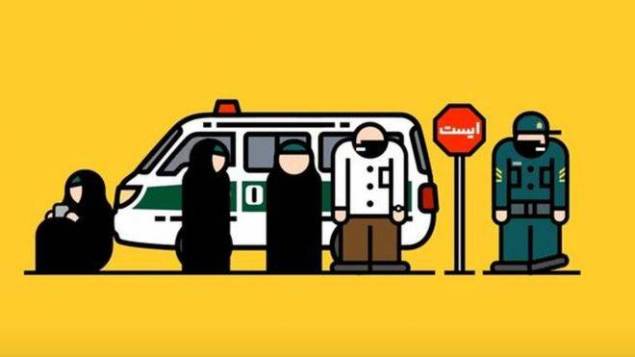
New App to get around the oppressive “Ershad” security units.


W

hile the Iran lobby is trying to push for the idea, of moderate forces existing inside the Iranian regime, the violation of human rights in Iran is on the rise. Things have gotten so bad, that some smart Iranian app developers have created a remarkable mobile phone app to help young fashion conscious Iranians avoid the regime’s notorious morality police known as “Ershad.”

According to the BBC, Ershad’s mobile checkpoints which usually consist of a van, a few bearded men and one or two women in black chadors, are deployed in towns across Iran and appear with no notice.

Ershad personnel have a very extensive list of powers ranging from issuing warnings and forcing those they accuse of violating the regime’s strict Islamic code of conduct, to make a written statement pledging to never do so again, to fines or even prosecuting offenders.

The new phone app which is called “Gershad” (probably meaning get around Ershad instead of facing them) however, will alert users to checkpoints and help them to avoid them by choosing a different route.

The data for the app is crowdsourced. It relies on users to point out the location of the Ershad vans on maps and when a sufficient number of users point out the same point, an alert will show up on the map for other users. When the number decreases, the alert will fade gradually from the map.

In a statement on their web page the app’s developers explain their motives in this way: “Why do we have to be humiliated for our most obvious right which is the right to wear what we want? Social media networks and websites are full of footage and photos of innocent women who have been beaten up and dragged on the ground by the Ershad patrol agents.”

“Police need to provide security for the citizens not to turn into a factor for fear. A while ago, angry with such unreasonable oppressions, we looked for a solution to find a practical way to resist the volume of injustices peacefully with low risk level, to restore part of our freedom.”

According to the designers of Gershad, in 2014 alone, around three million people were issued with official warnings, 18,000 were prosecuted and more than 200,000 were made to write formal pledges of repentance.

While it is laudable that Iranians are developing new and innovative ways to get around the strict control imposed by the mullahs, the price of that covert activity can be high in a regime where over 2,200 executions have already occurred under the tenure of Hassan Rouhani.

That point was emphasized by Mohammad Rez Naqdi, commander of the regime’s infamous Basij paramilitary force, who claimed that the U.S. could no longer act in the Middle East without the consent of top mullah Ali Khamenei.

Those kinds of boasts have caused an ever-increasing number of news outlets and political leaders from both sides of the aisle to demand more accountability from the regime.

According to the Washington Post, this week alone, U.S. lawmakers will gather for at least five separate committee meetings specifically dedicated to reviewing Iran’s actions ranging from its compliance with the nuclear pact to its dedication to locating and freeing still-missing former FBI agent Robert Levinson, who disappeared in Iran in 2007. Top U.S. intelligence officials were grilled Tuesday in two additional hearings for their take on the threat posed by Iran.

And later this month, senators are expected to roll out a series of bills to bring the greater weight of more non-nuclear sanctions down on Tehran, seeking to punish Iran for everything from recent ballistic missile tests to pervasive human rights abuses.

Among the proposals was one offered by Sen. Chris Coons (D-Del.) who pledged to get more funding for the group responsible for making sure Iran doesn’t cheat on the nuclear deal, suggesting President Obama’s budget request doesn’t go far enough.

“As a member of the Appropriations Committee, I am committed to doing everything I can to increase funding for the [International Atomic Energy Agency] during the Appropriations process,” he said in a statement. “However, this goal is made considerably more difficult by the administration’s low baseline request.”

It is almost a given that Iran’s upcoming parliamentary elections are being engineered by the mullahs to deliver an overwhelming slate of winners favorable to Khamenei and his cadre of mullahs. It remains to be seen what the rest of the world will do in response to another stolen election in Iran.

By Michael Tomlinson

Filed Under: Blog, News Tagged With: Featured, Iran deal, Iran Human rights

Iran Lobby Silent as Iranian Regime Promises More Humiliation of US

February 3, 2016 by admin

Iran Lobby Silent as Iranian Regime Promises More Humiliation of US

Iran Lobby Silent as Iranian Regime Promises More Humiliation of US

After awarding medals to Iranian navy commanders who had detained ten U.S. sailors, Sardar Fadavi, head of the regime’s Revolutionary Guards Corps Navy, addressed regime lawmakers about the incident, telling them his personnel had collected information from the sailors’ laptops and cell phones that had not yet been released, in addition to more footage. This information would be released if the United States ever sought to humiliate Iran, he said.

“If U.S. officials say they are angry with and frustrated by the footage released, they would be 100 times more embarrassed if the IRGC releases other films of the capture, the Iranian commander said,” Tasnim, the regime-owned news agency reported.

“Iran does not seek to humiliate any nation, he said, but stressed that if they want to humiliate Iran, the IRGC would publish the footage and make them even more embarrassed and humiliated,” it continued.

One could argue successfully that these are not the comments of a government interested in smoothing over differences and becoming an engaged, moderate member of the community of nations, but rather a regime that still views the world in a hostile, militant way and intent on enforcing its superiority in any manner possible.

But not everyone is buying the party line of the Iran lobby of Iran’s moderation and good intentions. The House of Representatives took up a new vote on legislation to prevent the Obama administration from lifting sanctions on Iranian entities unless it certifies they aren’t affiliated with terrorism or ballistic missile development technically already passed in the House last month, but a revote occurred on Tuesday to allow the full House to vote.

The Obama administration predictably issued a veto threat of the Iran legislation and warned it would hinder its ability to implement the nuclear accord.

“By preventing the United States from fulfilling its JCPOA commitments, H.R. 3662 could result in the collapse of a comprehensive diplomatic arrangement that peacefully and verifiably prevents Iran from acquiring a nuclear weapon,” the White House said in a Statement of Administration Policy.

Paradoxically though, the administration had previously imposed new sanctions on the regime for the test launching of illegal nuclear-capable ballistic missiles. If you confused by now, you’re not the only one.

The Senate Foreign Relations Committee also is taking fresh aim at Tehran with stepped-up sanctions to punish the regime for aggressive non-nuclear activities.

Chairman Bob Corker (R-Tenn.) and at least one other senator are crafting new measures to address everything from Iran’s recent ballistic missile tests to the country’s human rights violations to a reauthorization of the soon-expiring Iran Sanctions Act (ISA). The measures, which are likely to come up in February, will be Congress’ latest attempts to ensure President Obama punishes mullahs in Tehran for bad behavior in the wake of the now-implemented nuclear deal.

“We are looking at ways of having a much stronger pushback on the violations that took place,” Corker said of his proposed sanctions aimed at Iran’s recent ballistic missile tests.

The ballistic missile measure is part of a trio Corker is readying, along with a reauthorization of ISA — a sweeping, longstanding law to curb Iran’s nuclear and missile activities as well as its support for terrorism through sanctions on the trade, energy, defense and banking sectors. Corker is also crafting a third measure, but declined to identify its content.

Sen. Bob Menendez (D-N.J.) is also planning a package of “actions that we should be considering against Iran outside the nuclear portfolio.” Menendez has already co-authored, along with Sen. Mark Kirk (R-Ill.), legislation to extend ISA past 2016, and wants to step up sanctions against Tehran for its ballistic missile tests and human rights violations.

Their actions mark the first significant move by lawmakers against Iranian regime since the pact took effect as they seek to keep Tehran on a tight leash. It remains to be seen how the congressional pushback will be greeted by the White House.

The move by Congress are being motivated in part by the clear signals being sent by the Iranian regime in advance of parliamentary elections with the selective removal of any potential dissidents among candidates and to deliver a slate that is ideologically pure.

David Gardner, writing in the Financial Times, put it best:

“Iran’s rulers are best seen not so much as convinced theocrats but as a post-revolutionary elite of vested interests using religion as their standard. The institutions of theocracy, such as the Guardian Council or the Assembly of Experts that selects the supreme leader, guarantee their own hegemony over the republican institutions, such as the elected majlis…”

The upcoming elections then are just a formality for the ruling mullahs to legitimize their rule in their eyes and provide the illusion of democracy as they reap the financial rewards of the lifting of economic sanctions.

Ultimately the Iran lobby, led by the National Iranian American Council chooses to ignore these facts and instead continuing carrying the water for the mullahs.

By Michael Tomlinson

Filed Under: Blog, News Tagged With: #NuclearDeal, Featured, Iran deal

Iran Lobby Continues to Ignore Human Rights Violations

February 2, 2016 by admin

Iran Lobby Continues to Ignore Human Rights Violations

Iran Lobby Continues to Ignore Human Rights Violations

The Iran lobby’s leading cheerleaders seem to have a problem with selective memory recall as evidenced by the latest editorial by Reza Marashi from the National Iranian American Council in the National Interest in which he praised Hassan Rouhani’s European tour and boasted of the Iranian regime’s plans for its newfound wealth as a result of the nuclear deal.

“Iran is pursuing this agenda in an effort to increase government legitimacy and security among Iranian society through improved economic conditions,” Marashi says in of the more inane comments he makes.

“Alliances and enmities shift regularly in Iranian politics, but survival of the system is the shared goal of all stakeholders. Thus far, Rouhani’s political coalition has won Iran’s internal political debate by arguing that survival is better guaranteed through flexibility than intransigence,” he adds in typical think tank-speak.

What Marashi is missing from his less than eloquent dissertation is the reality that is going on within Iran now which is the swift action by the Guardian Council to remove from parliamentary election ballots upwards of 90 percent of all candidates perceived to be moderate or opposed to the current mullah leadership. Even the grandson of the regime’s founder, Ruhollah Khomeini, was tossed off the ballot for being too moderate!

Marashi’s piece is titled “Can Iran Get Out of Its Own Way?” That much he got right, since it is clear the mullahs in Tehran have absolutely no desire to halt their steady stream of militant and aggressive actions in solidifying their hold on power, continue their crackdown on human rights and internal dissent and utilize its newfound wealth to rebuild its infrastructure and enrich themselves at the same time.

The upcoming parliamentary elections are now set to deliver a hand-picked slate of loyalists beholden to the mullahs and Ali Khamenei and Rouhani – far from being the moderate struggling to preserve the future of democracy in Iran – has ably served in his capacity as the puppet face for Khamenei.

It’s also worth noting that Marashi’s claim of the regime realigning to provide an economic boon to ordinary Iranians is also a farce since the deals being signed are lined up to funnel billions back into the coffers of the Revolutionary Guard which controls the heavy industries such as petroleum, aviation and manufacturing.

Marashi also doesn’t address the unseen corruption so deeply rooted in the regime economy that any foreign investor is likely to face barriers. He also does not dare mention the sophisticated cyberwall cutting Iran off from the rest of the world and the high degree of surveillance conducted by the regime’s intelligence agencies that monitor virtually all traffic in and out of the country and often leads them to dissidents and other activists.

Despite the deals and the desire of European governments to begin trading with Iran, financing remains a big issue as major European banks remain reluctant to handle Iranian payments, deterred by previous huge fines from the US treasury. Nuclear-related sanctions have been lifted but other US measures relating to terrorism and human rights are still in place, according to The Guardian.

In typical regime fashion indicative of the corruption within it, far from being a political fight between “hard line” and “moderate” factions, the fight within the regime can be viewed as a fight over the spoils of getting the nuclear deal since the vast majorities of Iranian industries are controlled in whole or part through shell companies belonging to the Revolutionary Guard, which in turn has provided a steady source of illicit income to regime officials for the past two decades.

Even as Khamenei has still called for a “resistance economy,” his intent and those of the mullahs is not to resist any American threat, but instead keep the Iranian people under the boot of oppression and not allow the full benefits of a reopened economy to flow to them.

Evidence of this schism was shown as the regime cancelled plans for a conference set for London where new contracts for foreign oil companies to drill in Iran. Regime officials ostensibly claimed the cancellation was due to British visa requirements, but in fact political turmoil domestically was to blame as various regime groups jockeyed for their share of the corrupt spoils.

Some oil officials are worried the contracts won’t be attractive enough to offset the majors’ reluctance to invest globally due to low oil prices. Others fear mounting criticism by hard-liners who say the deals would give too much away of the country’s natural wealth, according to the Wall Street Journal.

The new deals have been criticized by the Basij, the paramilitary oppressive forces, formed to uphold the principles of the mullah’s rule. On Saturday, members of Basij’s student wing were arrested after protesting against the contracts, the semiofficial Tasnim news agency reported.

Political crackdowns in Iran are so commonplace and for so many trivial acts, that some Iranians who have been repeatedly arrested have developed handbook to help those who might face arrest in the regime.

One of the student activists jailed three times and tortured, believes there are steps activists in Iran can take to better protect themselves, both inside and outside prison walls. He belongs to a group of over a dozen activists who used their hard-earned personal experiences to create a 19-chapter booklet in Farsi and English titled “Safe Activism: Reducing the Risks and Impact of Arrest,” according to the Guardian.

Designed to teach activists and journalists how to avoid careless behaviors that could endanger them and those around them, the booklet, now online, also offers guidelines on what to do in case of arrest and how to mitigate the consequences of incarceration,” the Guardian added.

Basic safety measures are highlighted in the first chapters of the ‘Safe Activism’ booklet. Readers are reminded to take precautions before meeting with other activists and not communicate important information over the phone. They are advised to keep sensitive documents as well as identification papers and travel documents at a safe place outside their residence, and to clear their homes of illegal items like drugs, alcohol and banned media.

The fact that ordinary Iranians would need a handbook like these speaks volumes about conditions in Iran and is damning proof that Marashi’s optimistic views are really flights of fantasy.

It would be more of a service if the NIAC published the handbook on its website so future Iranian-Americans visiting Iran are not imprisoned like so many others have been.

By Michael Tomlinson

Filed Under: Blog, Current Trend, News Tagged With: #NuclearDeal, Featured, Iran deal, Iran Economy, Iran Human rights, Iran Lobby, Marashi, NIAC, Reza Marashi, Rouhani

As Rouhani Tour Starts Amnesty International Exposes Juvenile Executions

January 26, 2016 by admin

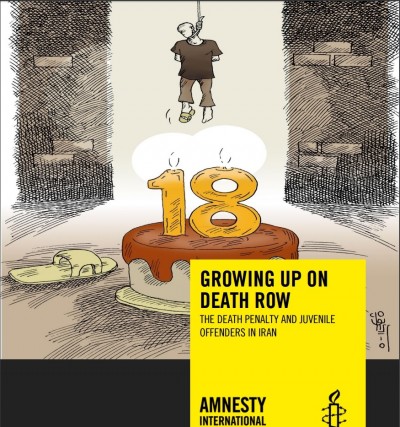
Amnesty International Report: Growing up under death row

Amnesty International Report: Growing up under death row

The Magical Mystery Tour of Hassan Rouhani got off to a start in Italy against the stark backdrop of a new report issued by human rights group Amnesty International calling the Iranian regime one of the leading executioners of juveniles in the world.

In a new report, Amnesty International said that it had documented the execution of at least 73 juveniles in Iran from 2005 to 2015, and that 160 juvenile offenders are languishing on the country’s death row.

According to the New York Times, Amnesty International released its report as a United Nations committee is reviewing compliance with the Convention of the Rights of the Child. In 1994, Iran ratified that treaty, which prohibits capital punishment and life imprisonment without the possibility of release for offenses committed by people younger than 18.

“This report sheds light on Iran’s shameful disregard for the rights of children,” Said Boumedouha, deputy director of Amnesty International’s Middle East and North Africa Program, said in a statement released with the report. “Despite some juvenile justice reforms, Iran continues to lag behind the rest of the world, maintaining laws that permit girls as young as 9 and boys as young as 15 to be sentenced to death.”

Elise Auerbach, an Iran specialist in Amnesty International’s United States branch, said Iran had in the past sought to sidestep criticism of its juvenile death-penalty practices by saying that offenders were not executed until after they had reached adulthood.

“They have executed juvenile offenders,” she said. “If the person commits a crime at age 15 and is not executed until age 21, they’re still executed as juvenile offenders.”

This brutal record of killing young people is only a small part of a much larger record of human rights abuses that has only worsened under Rouhani; the alleged “moderate” face of the regime. According to Iranian dissident groups such as the National Council of Resistance of Iran, the total number of executions under Rouhani’s watch has skyrocketed to over 2,000 people, dwarfing what his universally-reviled predecessor Mahmoud Ahmadinejad accomplished.

The release of the report comes at an inconvenient time for Rouhani as he made his first stop in Italy in the hopes of securing business deals now that sanctions had begun to be lifted as a result of the nuclear deal.

Italian and Iranian regime-controlled companies signed deals valued at about $18.36 billion late Monday ahead of a formal dinner between Rouhani and Italian Prime Minister Matteo Renzi. Earlier in the day, Italian steel firm Danieli said it would sign deals worth about $6.18 billion during the visit. Other firms signing agreements on Monday included oil-field services company Saipem SpA, energy group Ansaldo Energia and ship maker Fincantieri SpA, but further details weren’t available according to the Wall Street Journal.

The rush to lock in deals for many of these European companies who previously had ties to Iran prior to the Islamic revolution in 1979, ignores the fluid state of sanctions still in place from the U.S. and the prospect of additional sanctions that could still be imposed for issues left outstanding from the nuclear agreement such as the regime’s ballistic missile program, support of terror and brutal human rights record.

One of the nasty surprises waiting for companies rushing into doing business with the regime was the insistence of the regime to delink these issues from the nuclear deal. While the deal allowed the removal of a significant number of sanctions, it did not address other thorny issues of the regime’s behavior that could become problematic for anyone looking to do business in Iran.

Thousands of Iranian dissidents are planning to counter Rouhani’s charm offensive by attending a rally in Paris Thursday, said Shahin Gobadi of the NCRI, to protest Tehran’s human rights violations as well as its support of Syrian President Bashar al-Assad, whom France has accused of massacring his own people.

“We need to show to the world Rouhani is anything but a moderate,” Gobadi said.

So the question for many of these companies is whether or not the rush to be first in market is worth the risk of facing new rounds of sanctions should the regime undertake additional aggressive and militant actions such as launching more ballistic missiles in violation of UN sanctions as it has said it would do or take more American sailors prisoner as it did two weeks ago?

The difficulty for any company is that it is now dependent on the choices the Iranian regime leadership makes in the future for the success or failure of its business opportunity and given the track record of the mullahs so far, that is a gamble that many shareholders and investors will find hard to take.

The most compelling peek into the regime’s policies and brutality was given by Christian pastor Saeed Abedini who endured repeated beatings, torture and mistreatment since his arrest in 2012 on charges he was attempting to overthrow the regime by spreading Christianity, and was released along with other American hostages as part of a prisoner swap.

As Rouhani Tour Starts Amnesty International Exposes Juvenile Executions

As Rouhani Tour Starts Amnesty International Exposes Juvenile Executions

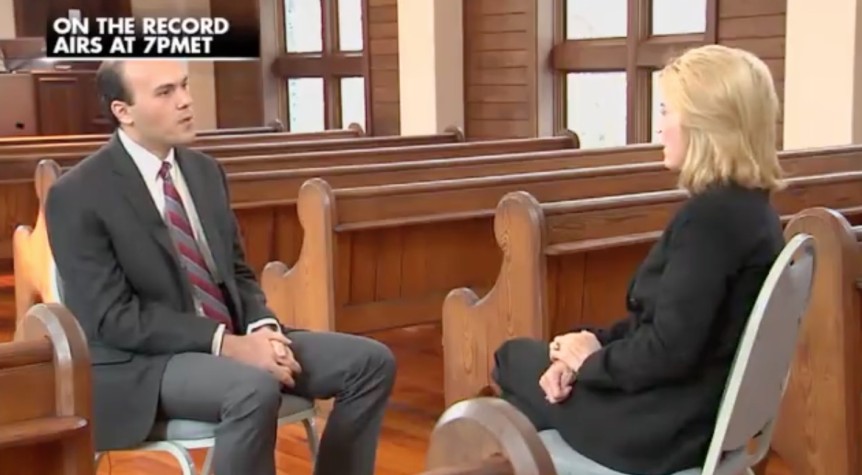
Abedini broke his silence with an interview with Fox News’ Greta Van Susteren by recounting his initial encounter with regime justice when he was brought before a judge.

“He said you are here because you want to use Christianity to remove government and it was like no, I don’t want to do that, I just came here to start orphanage, loving people and share the gospel with people and just that,” he said.

Abedini said the judge then told him he was using Christianity to “remove the government,” and yelled at him after saying he would pray for the judge.

According to Abedini, his Iranian captors gave him no clothing or reading material the entire time he was in the solitary confinement.

“Once they beat me very badly because they wanted me to write something I didn’t want,” he told Van Susteren.

He was also subject to the threat of death by his interrogators, and was taken to watch several executions.

“The worst thing I saw was when they took some Sunnis for execution, it was in front of our eyes, and they took like tens of them to hang, every Wednesday,” he said.

When he was imprisoned for 60 days with retired U.S. Marine Amir Hekmati, Abedini said he felt “very heartbroken” to see what happened when he first saw him, but said it was the best time in captivity to be with someone else.

“I made a plan that I could talk to him, encourage him,” he said. “The best thing I could do over there was praying.”

Abedini’s disclosures, coupled with the Amnesty International report and the demonstrations by Iranian dissidents paint a very different picture than Rouhani wishes portrayed and leaves an uncertain future for companies looking to do business with the regime with an American presidential election looming and the prospect of more sanctions still on the horizon.

By Michael Tomlinson

Filed Under: Blog, News Tagged With: #NuclearDeal, Featured, Iran deal, Iran Economy, Iran Human rights

Hassan Rouhani Begins European Tour Under Cloud of Executions

January 25, 2016 by admin

Hassan Rouhani Begins European Tour Under Cloud of Executions

Hassan Rouhani Begins European Tour Under Cloud of Executions

Iran regime leader Hassan Rouhani begins a European tour previously postponed because of the terrorist attacks in Paris with stops in France and Italy which has been highlighted by the regime as a goodwill tour as well as a shopping spree to use some of the $100 billion in frozen assets being returned to Iran as part of the nuclear agreement.

Both in France and Italy there are companies with long established business relationships in Iran but they remain hesitant given the regime’s actions in the months immediately following signing of the deal including the test launching of ballistic missiles violating United Nations sanctions against development of nuclear-capable missiles and the continued escalation of the Syrian conflict and support for proxy militias in Iraq and Yemen leading to broad sectarian violence.

More recently the regime engaged in a prisoner swap, releasing several Americans being held by the regime including Washington Post reporter Jason Rezaian and Christian pastor Saeed Abedini, in exchange for a large number of Iranians who had been charged and convicted of arms smuggling and trading in illegal nuclear and military components.

Additionally, both Democrats and Republicans in Congress and on the presidential campaign trail have expressed doubts over the regime’s ability and willingness to give up its militant ways, as well as what the mullahs plan do with all of the billions of dollars they are about to receive. Several pieces of legislation have been put forward addressing the levying of additional sanctions on Iran should the regime prove recalcitrant moving forward.

This has caused the Iran lobby to push back and attempt to make the issue of new sanctions a partisan issue by placing blame on Republicans, even though support for a tough approach to Iran has come from both sides of the aisle.

“From the European side, there is a concern that if they enter Iranian market they will be subjected to American sanctions. Because there are conflicts in the U.S.,” said Trita Parsi, head of National Iranian American Council, the regime’s chief lobbyist. “Congress is very skeptical about the deal and republicans are still pushing for new sanctions and this is sending a conflicting message making Europeans concerned.”

Parsi made his comments to regime-controlled media in an attempt to convince European companies on the eve of Rouhani’s visit to open wide the doors of trade and investment to the regime even with growing doubts over the corrupt nature of the economy and high level of censorship, human rights abuses and control of most industries by the Revolutionary Guard Corps.

Those doubts were only reinforced this weekend by comments made by top mullah Ali Khamenei who commended the actions taken by Revolutionary Guard Corps members in detaining American sailors, calling their actions “courageous.”

“You did a brilliant, interesting and timely job. In fact, this event should be considered God’s work. He drew them towards our waters so that with your timely measure, they would be arrested in that manner – with their hands on their heads,” Khamenei said on his official website.

The statements being made by Khameneni, Rouhani and other regime officials over all the incidents are often conflicting; adding to the confusion over what the regime’s true goals and aims are. Doyle McManus examined this almost bipolar quality within the Iran regime in an editorial in the Los Angeles Times.

“The underlying problem is that Iran still hasn’t made the choice Henry Kissinger described several years ago: whether it is a country or a cause — a normal state, or a revolutionary one,” McManus writes. “On the other hand, the Iranians have repeatedly rejected proposals for normal diplomatic relations with the U.S. (an offer floated by George W. Bush before Barack Obama). They even rejected a U.S. proposal for a hotline between the two countries’ armed forces, even though that could avert unnecessary clashes.”

“This resistance to formal normalization is partly about preserving Iran’s revolutionary self-image,” he added. “So even as he has authorized a de facto rapprochement with the United States, Khamenei has released an uninterrupted flow of statements denouncing the Great Satan and warning against Western subversion.”

This explains much of what is confounding to outside observers about the regime and why the arguments made by the Iran lobby about regime “moderation” is so much hot air. As Michael Rubin, a resident scholar at American Enterprise Institute, pointed out in a recent editorial:

“So what to make of President Hassan Rouhani’s election? Rouhani might have embraced a softer rhetorical style than Mahmoud Ahmadinejad, his predecessor, but he is no more reformist. True, he purged a lot of the Islamic Revolutionary Guard Corps officers from the cabinet, but he replaced them with Ministry of Intelligence veterans. Public executions have skyrocketed under Rouhani.”

“Khamenei is not only supreme leader, but he’s also master marionette, playing factions off each other in order to maintain his own power. The seeming rotation between hardline and less hardline factions has less to do with liberalization and more to do with simply cleaning house before any alternative power can consolidate.” Rubin added. “Obama may believe change in Iran to be inevitable. Unfortunately, it is not the change he imagines. That the Iran deal as constructed provides the cash to Iran’s most hardline elements will only catalyze the slow decline of Iranian reformism.”

It is against this backdrop that Rouhani’s European tour comes soaked in the blood of over 2,000 men, women, children, political opponents, dissidents, activists and others who have been executed since Rouhani took power; a large number of them in grisly public hangings.

According to human rights groups, Iranian dissidents and even United Nations officials, the pace of executions have been stunning even for Iran’s bloody history and are likely to continue unabated. According to the National Council of Resistance of Iran, the first two weeks in January have already seen over 52 executions.

The prospects for the future remain bleak as the regime’s Guardian Council, comprised of 12 Islamic jurists appointed by Khamenei, disqualified more than 6,500 candidates from upcoming parliamentary elections, with opposition groups claiming upwards of 90 percent of “reformist” candidates had been eliminated.

For Europeans meeting with Rouhani this week, it is best to think twice before making a big risk in trading with the regime in Iran, particularly since in the eyes of the Iranians inside and outside the country trading with the mullahs is the equivalent to neglecting the gross violations of human rights in Iran.

By Michael Tomlinson

Filed Under: Blog, News Tagged With: Featured, hassan rouhani, Iran deal, Iran Human rights, Iran sanctions, National Iranian American Council, NIAC Action

  • « Previous Page
  • 1
  • …
  • 18
  • 19
  • 20
  • 21
  • 22
  • …
  • 29
  • Next Page »

National Iranian-American Council (NIAC)

  • Bogus Memberships
  • Survey
  • Lobbying
  • Iranians for International Cooperation
  • Defamation Lawsuit
  • People’s Mojahedin
  • Trita Parsi Biography
  • Parsi/Namazi Lobbying Plan
  • Parsi Links to Namazi & Iranian Regime
  • Namazi, NIAC Ringleader
  • Collaborating with Iran’s Ambassador

Recent Posts

  • NIAC Trying to Gain Influence On U.S. Congress
  • While Iran Lobby Plays Blame Game Iran Goes Nuclear
  • Iran Lobby Jumps on Detention of Iranian Newscaster
  • Bad News for Iran Swamps Iran Lobby
  • Iran Starts Off Year by Banning Instagram

© Copyright 2026 IranLobby.net · All Rights Reserved.