Iran Lobby

Exposing the Activities of the lobbies and appeasers of the Mullah's Dictatorship ruling Iran

  • Home
  • About
  • Current Trend
  • National Iranian-American Council(NIAC)
    • Bogus Memberships
    • Survey
    • Lobbying
    • Iranians for International Cooperation
    • Defamation Lawsuit
    • People’s Mojahedin
    • Trita Parsi Biography
    • Parsi/Namazi Lobbying Plan
    • Parsi Links to Namazi& Iranian Regime
    • Namazi, NIAC Ringleader
    • Collaborating with Iran’s Ambassador
  • The Appeasers
    • Gary Sick
    • Flynt Leverett & Hillary Mann Leverett
    • Baroness Nicholson
  • Blog
  • Links
  • Media Reports

Iran Lobby Glosses Over IAEA Report on Iran Nuclear Work

December 3, 2015 by admin

Iran Lobby Glosses Over IAEA Report on Iran Nuclear Work

Iran Lobby Glosses Over IAEA Report on Iran Nuclear Work

The International Atomic Energy Agency released its long-awaited report detailing the military dimensions of the Iranian regime’s nuclear program and unveiled disturbing new details that have left the Iran lobby, especially the National Iranian American Council, scrambling to cover up.

In the report, Iran was actively designing a nuclear weapon until at least 2009, far later than virtually all intelligence agencies had believed and proving the regime’s ability to conceal its design activities while under intense scrutiny and even spying from various nations.

The report, which according to the New York Times, was compiled largely based on partial answers provided by Iran after completing nuclear talks last July, concluded that the regime was “conducting computer modeling of a nuclear explosive device” before 2004 and continued those efforts right through President Obama’s first term in office.

The IAEA detailed a long list of experiments conducted by the regime “relevant to a nuclear explosive device” directly contradicting claims made by the Iran lobby and the mullahs that Iranian regime’s nuclear program was only for civilian and peaceful purposes.

We now know through Iranian regime’s own admission, it was trying to build nuclear weapons at a feverish pace.

But the IAEA concluded that substantial gaps existed because the regime refused to provide answers to several key questions, restricted the ability to interview key scientific personnel and limited sampling of sites and facilities only after they had been scrubbed.

The nuclear deal negotiated with the Iranian regime mandated limiting Iran’s ability to build a bomb for at least 15 years, but the inability to paint a complete picture and the revelation that Tehran had been conducting work unbeknownst to the rest of the world leaves significant doubt as even that goal is attainable.

According to the Times, Tehran gave no substantive answers to one quarter of the dozen specific questions or documents it was asked about, leaving open the question of how much progress it had made.

At Iran’s Parchin complex, where the agency thought there had been nuclear experimental work in 2000, “extensive activities undertaken by Iran” to alter the site “seriously undermined” the agency’s ability to come to conclusions about past activities, the report said.

The response from Capitol Hill was swift and bipartisan.

“I think we’re getting off to a very, very poor start,” Senate Foreign Relations Committee Chairman Bob Corker (R-Tenn.) told reporters after a roughly two-hour top-secret committee hearing.

“These are exactly the things that we talked about during the hearing process that raised concerns and they’re being validated right now,” he added.

“It just sets a very bad precedent that if Iran thinks it can violate the world’s will, as expressed by Security Council resolutions, and in essence face no consequence for it,” said Sen. Robert Menendez (N.J.), one of the four Democrats who voted against the deal in September.

The defense offered by the NIAC’s Trita Parsi through a press release was tepid and paper thin as he focused on the issue of complying with the terms of the agreement in releasing the report, but not in the report’s findings themselves, praising the IAEA’s “assessment of coordinated ‘activities relevant to the development of a nuclear explosive device,’ in Iran prior to 2003, and that there have been no credible indications of such relevant activities since 2009.”

Parsi of course does not mention the fact the work conducted through 2009 was denied by Tehran and by Parsi himself and that the refusal by the mullahs to answer specific questions left the report, at best incomplete, and at worst a whitewash.

The Iran lobby is now finding it harder and harder to cover for the regime because its own promises and arguments are now all coming to be uncovered as falsehoods and outright deceptions. The fortunate thing about the internet is you can always search and look back at the statements people like Parsi have made and in the context of what is happening now, realize just how really wrong they were.

With the IAEA report, it’s just another blow to any shred of credibility the Iran lobby had.

By Michael Tomlinson
Filed Under: Current Trend, News Tagged With: #NuclearDeal, Featured, Iran deal, Iran Human rights, Iran Lobby, Iran Mullahs, Iran sanctions, Iran Talks, National Iranian American Council, NIAC Action, Rouhani, Sanctions, Trita Parsi

Reasons To Be Thankful This Past Weekend

December 1, 2015 by admin

Reasons To Be Thankful This Past Weekend

Reasons To Be Thankful This Past Weekend

This past weekend, across the U.S., families sat down together to celebrate family and give thanks for all what they have, including secularism in government, freedom of speech and the practice of religion, support for the rights of women and minorities, protection for a free and active press and the guarantee of due process and a presumption of innocence in criminal cases.

All those things and more have formed the bedrock of American civil society for 239 years, but are virtually non-existent in the one country that has steadily called for the destruction of the American way of life since 1979: the Iranian regime.

The past few months of 2015 have certainly caused significant concern and alarm among Americans and throughout most parts of the world. We have seen terror attacks spring up literally around the world, most recently in the horrific attacks in Paris – first with the Charlie Hebdo attacks and then the bombings – and in the wave of atrocities perpetuated by Al-Qaeda, Boko Haram, Hezbollah and Shiite militias.

Couple that with the spread of sectarian conflicts – most fueled by the Iranian regime – in Syria, Iraq and Yemen, and you begin to get a pretty good idea of how chaotic the year has become in spite of the promises made by the Iran lobby that things would settle down after a deal was struck with the mullahs in Tehran over a new nuclear deal.

How wrong people like Trita Parsi of the National Iranian American Council were.

But for most Americans, their Thanksgiving wishes and victories were much smaller and personal. For them, most Americans could be thankful that this past weekend:

  • No more Americans were arrested and held hostage in Iran, except for the five currently held captive by the Iranian regime;
  • No new terror attacks were launched against Americans at home or abroad; and
  • The Iranian regime didn’t launch any new ballistic missiles like it did last month violating United Nations arms embargoes.

But for the Iranian regime, this past weekend wasn’t nearly a peaceful or good one for the mullahs as setbacks continue to dog the regime and stymie each of its efforts to expand its vision for a greater Islamic sphere of influence controlled from Tehran.

Among the news coming from media sources this weekend include:

  • Reports that Quds Force commander Qassem Soleimani was seriously injured in Syria while supervising Iranian regime forces fighting rebels on behalf of the Assad regime. This follows previous news of deaths of other top Iranian military commanders in Syria;
  • The Washington Post reported that findings by the International Atomic Energy Agency can be expected to spark another round of intense scrutiny over the Iran regime’s claims its previously undisclosed nuclear program did not have any military components to it;
  • In anticipation of the IAEA report, the regime denounced the ongoing investigation and warned that Iran would not follow through on the nuclear deal unless the IAEA closed its investigation no later than Dec. 15;
  • Kenyan security forces have arrested two Kenyan men with links to the Iranian regime’s Quds Forces on suspicion of planning attacks in the East African nation, the Interior Ministry said on Saturday. It said their targets included “hotels in Nairobi frequented by Western tourists and diplomats;”
  • A flurry of reports in the Iran regime’s official and semi­official news outlets that have flooded out about more combat deaths suffered by Iranian forces in Syria have surprised analysts who monitor the country’s tightly controlled media. The reports, they say, indicate that at least 67 Iranians have been killed in Syria since the beginning of October, in a move some have described as an attempt by the mullahs to grab headlines back from Russia in an effort to burnish the image of regime forces fighting in Syria.

And to top off the weekend, top mullah Ali Khamenei went on his usual Sunday rant denouncing the U.S. and promising to keep the regime’s policies aimed squarely at preserving the Islamic revolution and spreading it throughout the region.

As reported in the Washington Times, Khamenei’s message was the subject of an analysis in a report by the U.S. Army Foreign Military Studies Office at Fort Leavenworth, Kansas.

“To encourage perpetual revolution might mean to foment continuous crisis,” the report said. “This, in turn, suggests greater regional instability and Iranian Revolutionary Guards Corps provocations toward U.S. forces and others.”

In other words, the Joint Comprehensive Plan of Action, the nuclear deal on which the Obama administration gambled for a more moderate Iran, has not tempered Khamenei’s fiery outcry.

“Khamenei’s endorsement of an expansive and perhaps even growing IRGC role confirms the group’s position as the chief obstacle to any political and economic reform in the Islamic Republic, and also suggests that the IRGC may win disproportionate advantage from any unfrozen assets or foreign direct investment entering the Iranian economy,” the report added.

All of which points out that while Americans celebrated values of family, peace, forgiveness and charity on Thanksgiving, the Iranian regime was busy deepening a conflict that has displaced half of Syria’s population, creating the largest refugee crisis in Europe since the end of World War II and spreading a radicalized form of extremist Islam manifesting itself in various terrorist groups around the world.

We can only hope the mullahs don’t get their holiday wishes granted next month.

By Michael Tomlinson

Filed Under: Blog, News Tagged With: Featured, Iran, Iran deal, Iran Terrorism, IRGC, Khamenei, Quds force, Syria, Trita Parsi, Yemen

Iran Regime Serves as Center of Terrorism Now

November 25, 2015 by admin


Iran Regime Serves as Center of Terrorism Now

Iran Regime Serves as Center of Terrorism Now

There are 196 countries on the planet and they all have their issues with their neighbors. They squabble, they fight, they complain, they protest, they even spy on one another and in a few cases they openly make war.

Some of those countries are vast and powerful such as the U.S., Russia or China, while others are small to the point of being insignificant on the world stage such as Monaco, Tuvalu or San Marino.

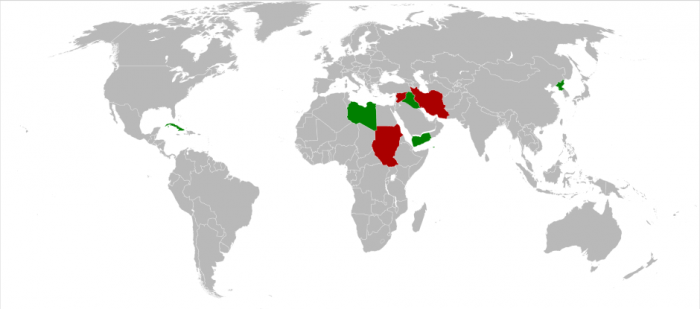
But there are only three countries that share a unique and disturbing distinction. There are only three countries remaining on the U.S. State Department’s list of state sponsors of terrorism:

  • Syria
  • Iran
  • Sudan

It’s a pretty exclusive club, one that used to have as its members Libya, Iraq, South Yemen, Cuba and North Korea.

To be placed on this list, countries are alleged to have “repeatedly provided support for acts of international terrorism.”

In order to get off the list, countries have to demonstrate:

  • Fundamental change in the leadership and policies of the government of the country concerned;
  • Not supporting acts of international terrorism, and
  • The government has provided assurances that it will not support acts of international terrorism in the future.

It doesn’t seem like an unreasonable set of criteria to follow, especially if a country wants to be part of the international community. But in Syria and Sudan’s cases, it’s understandable considering the civil wars they are embroiled in and inability of any central government to eliminate any safe havens for terrorist groups to operate in.

The Iranian regime stands out as the only government not undergoing any turmoil that actively and aggressively supports terrorism around the world; and does so with religious fervor.

The State Department terrorism report describes the Iranian regime polices this way:

“While its main effort focused on supporting goals in the Middle East, particularly in Syria, Iran and its proxies also continued subtle efforts at growing influence elsewhere including in Africa, Asia, and, to a lesser extent, Latin America. Iran used the Islamic Revolutionary Guard Corps-Qods Force (IRGC-QF) to implement foreign policy goals, provide cover for intelligence operations, and create instability in the Middle East. The IRGC-QF is the regime’s primary mechanism for cultivating and supporting terrorists abroad.”

The mullahs in Tehran are using all of the available levers of state power to further their support of terrorism whether it is providing safe havens for terrorist leaders, financing of operations, supplying fighters and manpower, equipping them with arms and ammunition, providing transportation and intelligence or actively directing them in attacks.

In many ways, the Iran regime resembles the fictional Hydra organization in the Marvel Cinematic Universe as its tentacles stretch across the world seeking influence in Asia, Africa, Europe and the Americas. Unfortunately, in our universe, we don’t have Captain America or Iron Man to rely on.

That propagation of terrorism has served as a template for extremist groups such as ISIS and affiliated Al-Qaeda groups to spring up everywhere and launch attacks to the extent that the U.S. State Department issued a global travel advisory for only the fourth time in history and most ominously the alert extends through the busy holiday travel season through February 2016.

The general degeneration of global peace and stability can be traced in many ways back to the Iranian regime, including its support of the Assad regime in Syria’s civil war, the collapse of the Sunni-Shiite coalition government of Nouri al-Maliki in Iraq, the overthrow of the Yemen government by Iran-backed Houthi rebels and the recruitment of Hezbollah and Afghan fighters across Syria and Iraq.

All of which puts a harsh spotlight on the rosy claims made by the Iran lobby and backers of the regime by a variety of groups and analysts such as the National Iranian American Council and Paul R. Pillar and Ali Gharib that approval of a landmark nuclear deal would usher in a new era of moderation and cooperation.

That naïve sentiment was again proven wrong as news reports came out revealing a surge in sophisticated computer espionage by the Iran regime resulting in serious cyberattacks against State Department officials over the past month.

According to the New York Times, “over the past month, Iranian hackers identified individual State Department officials who focus on Iran and the Middle East, and broke into their email and social media accounts, according to diplomatic and law enforcement officials familiar with the investigation. The State Department became aware of the compromises only after Facebook told the victims that state-sponsored hackers had compromised their accounts.”

“It was very carefully designed and showed the degree to which they understood which of our staff was working on Iran issues now that the nuclear deal is done,” said one senior American official who oversees much of that operation and who requested anonymity to discuss a continuing investigation. “It was subtle.”

It is clear now that the Iranian regime is not only the center of state-sponsored terrorism in the world, it is its living heart.

By Michael Tomlinson

Filed Under: News Tagged With: ALi Gharib, Featured, Iran, Iran deal, Iran Lobby, Paul Pillar, Reza Marashi

Human Rights and Nuclear Issues Move to Forefront of Iran

November 21, 2015 by admin


Human Rights and Nuclear Issues Move to Forefront of Iran

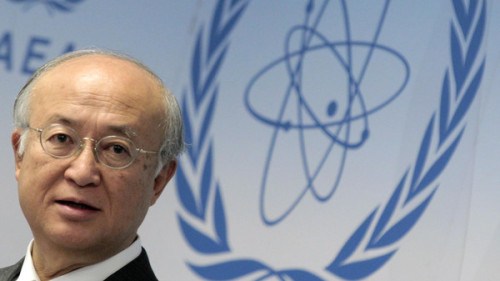
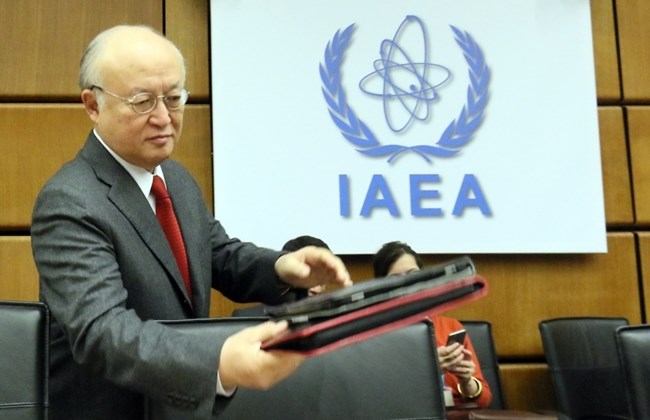
International Atomic Energy Agency (IAEA) Director General Yukiya Amano reacts as he attends a news conference during a board of governors meeting at the UN headquarters in Vienna November 29, 2012. The U.N. nuclear agency made no progress in a year-long push to find out if Iran worked on developing an atomic bomb, its chief said on Thursday, calling for urgent efforts to end Tehran’s standoff with the West. Amano said he would not give up seeking to end what Western diplomats describe as Iranian stonewalling of the agency’s investigation into possible military dimensions to the Islamic state’s nuclear programme. REUTERS/Herwig Prammer (AUSTRIA – Tags: POLITICS ENERGY HEADSHOT TPX IMAGES OF THE DAY) – RTR3B0LF

Like twin hammer blows, breaking news concerning the Iranian regime came out revealing that the two issues the Iran lobby have tried mightily to keep separate and growing more entwined; namely human rights and the nuclear agreement given to the regime last July.

The Iran lobby, led by the National Iranian American Council, rabidly argued that human rights issues – which the regime has an abysmal record on – needed to be decoupled from any nuclear agreement because it could jeopardize momentum for an accord and was outweighed by the perceived benefit of gaining an agreement with the regime.

The logic being, as advanced by regime stalwarts such as Trita Parsi, was that an agreement would empower “moderate” elements led by Hassan Rouhani and usher in a new period of cooperation with the West.

Unfortunately for Parsi, the opposite has come to happen. Reuters reported on a confidential International Atomic Energy Agency report it gained access to which describes that the regime’s stockpile of low-enriched uranium has actually increased instead of decreased under the terms of the agreement.

Iran’s stockpile of low-enriched uranium had increased by 460.2 kg in the past three months to 8,305.6 kg, the report said. Under the deal with major powers, that stockpile must be slashed to no more than 300 kg.

Additionally, the centrifuges being dismantled are only ones previously unused by the regime and those that have been dismantled are only being stored, not destroyed, allowing the regime the flexibility to quickly put them back into service whenever it wants.

That quick restart ability is being preserved also at the Arak nuclear reactor where a regime member of Parliament said it could be reactivated within as little as six months unless all sanctions against the regime were lifted quickly.

“If the Americans break the terms of the Joint Comprehensive Plan of Action (JCPOA) regarding lifting the sanctions, Iran will activate the Arak reactor within six months,” ISNA news agency quoted head of National Security and Foreign Policy Commission, Alaeddin Boroujerdi, as saying.

The threats have only increased as top mullah Ali Khamenei has voiced displeasure over the slow pace of lifting sanctions repeatedly warned the regime would restart its nuclear program unless all sanctions were lifted at once. This is of course at odds with what was actually agreed to last July under the Joint Comprehensive Plan of Action (JCPOA), but it fits with the regime’s pattern of rewriting international accords even before the ink dries to suit its needs.

This pattern of purposeful evasion by the regime also applies to its callous treatment of human rights of its own people, including religious minorities such as those who follow the Baha’i faith who recently have been subjected to mass arrests, Iranian women who have been threatened with arrest for driving cars without proper coverings, and even social media administrators getting rounded up.

But the world is beginning to take notice and coming on the heels of the Friday the 13th massacres in Paris, showing a greater willingness to confront extremist views prevalent in the Iran regime and terror networks such as ISIS, as evidenced by a vote by the United Nations General Assembly’s human rights committee which approved a resolution expressing deep concern about rights violations in Iran by a 76 to 35 vote.

The resolution is the 62nd resolution the UN has adopted censuring the regime for its ongoing human rights violations. This resolution stemmed from the recent report issued by Ahmad Shaheed, the UN Special Rapporteur for human rights in Iran.

It calls on the Iranian regime “to abolish, in law and in practice, public executions… and executions carried out in violation of its international obligations” and “to ensure, in law and in practice, that no one is subjected to torture or other cruel, inhuman or degrading treatment or punishment.”

The victims of such treatment include political opponents, human rights defenders, women’s and minority rights activists, labor leaders, students’ rights activists and others, the resolution said.

The regime’s notorious Revolutionary Guards Corps has rounded up artists, journalists and U.S. citizens as part of a crackdown on what it has called Western infiltration.

The crackdown includes announcements this week of 170 people arrested in Qazvin Province in Iran, a number of others in Gilan Province, and five journalists in Tehran, all by Iran’s Revolutionary Guards, amounts to the largest crackdown since the violent state suppression of the protests that followed the disputed 2009 presidential election in Iran.

The 170 arrested were called “managers of groups active in mobile social networks,” which the regime claimed for acting “against moral security” and distributing “indecent and immoral” content in the form of text and images that “encouraged people to commit obscene acts” and “insult ethnic minorities, officials and distinguished national figures,” according to the Fars news service.

Even with the increased criticism over human rights, the mullahs in Tehran may believe they have an ace up their sleeve with the Paris attacks which they believe may aid the regime in keeping Assad in power and shifting attention away from its involvement in the civil war.

The Guardian in an interview with a MacArthur fellow at King’s College London, said:“I think Iran might think that the Paris attacks give it an upper hand over Syria because naturally it gives a little bit more credibility to the rhetoric that combating Isis is more important than combating Assad.

“Iran will think that its position will be strengthened as the result of the attack but I am not sure it necessarily will. The only thing that the Paris attacks will really change is rhetoric in the west but I’m not sure if it changes much on the ground. France is going to say that the focus is going to be on attacking Isis. To be fair, that’s always been the focus but that hasn’t detracted away [from] trying to get rid of Assad,” she said.

Ultimately, the West must focus on tying the Iranian regime’s human rights record back into judging its progress towards dismantling its nuclear infrastructure as well as its support for terrorism abroad. Without that linkage, the regime is as well shielded against any meaningful reforms as ISIS is from attack if it was using human shields.

By Michael Tomlinson

Filed Under: Blog, News Tagged With: #NuclearDeal, Appeasement policy, Featured, Iran deal, Iran Human rights, Iran sanctions, NIAC, Parchin, Trita Parsi

Iran Lobby Ramps Up Efforts to Influence US Presidential Campaign

November 19, 2015 by admin

Iran Lobby Ramps Up Efforts to Influence US Presidential Campaign

Iran Lobby Ramps Up Efforts to Influence US Presidential Campaign

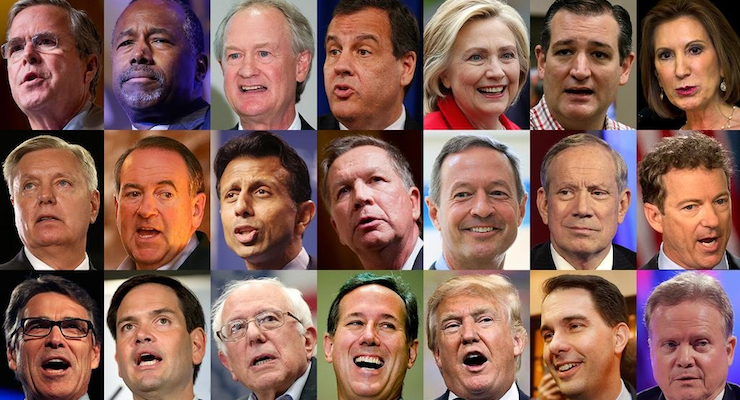
The silly season is upon us and we don’t mean the College Football Playoff selection process. We mean the quadrennial presidential election season and with it, what promises to be a year filled with debates, poll results, gaffes, blizzard of television advertising and a healthy barrage of social media postings.

But the stakes for this election cycle are enormous and carry with it a sense of gravity we have not seen since during the height of the Cold War when Lyndon B. Johnson famously aired the “Daisy” ad against Barry Goldwater hinting that electing the Arizona conservative would start World War III.

Even though the ad only aired once, it has become one of the most controversial political ads ever aired used in American politics, but it did show what some political candidates are willing to entertain in terms of tackling controversial topics and issues.

Every campaign season has its own rhythms and rollercoaster swings in emotions and momentum. This season has been no different starting with a Republican field of candidates that has been dominated by two total outsiders in Donald Trump and Ben Carson, while the Democratic side was stuck in relative limbo while Vice President Joe Biden was deciding if he was in or out of the race and Hillary Clinton waded through her email controversy as Sen. Bernie Sanders rallied huge numbers of supporters.

But with the recent nuclear deal with the Iranian regime and the bloody Friday the 13th massacre in Paris, terrorism and what to do with Syria has moved front and center in the consciousness of American voters.

According to a new Reuters/lpsos poll done after the Paris attacks, showed that terrorism had moved to the front of all topics of concern to voters (20.5%), ahead of the economy (15.9%) and healthcare (8.8%) and unemployment (8.6%).

The five-day tracking showed concern over terror effectively doubled over the weekend of the Paris attacks and shows only signs of increasing as France battles additional terror cells in its suburbs while French warplanes bomb targets in Syria.

“What is almost certain is that the demands on the candidates will grow more exacting. As previous presidential campaigns jarred by outside events have demonstrated, how a candidate responds can be as important to a campaign as the event itself,” speculated Jonathan Martin in the New York Times.

What is certain has been the tepid response from the Iran lobby which has gone virtually mute and deaf over the Paris attacks. Iranian regime loyalists such as Trita Parsi and Reza Marashi of the National Iranian American Council, Jim Lobe of Lobelog, The Ploughshares Fund, just to name a few, have offered little in the way of sympathy over the victims, nor condemnation of the terrorists themselves.

If anything, their social media feeds and public statements have been largely focused on centering blame for the attacks and creation of ISIS on the doorstep of Saudi Arabia as the primary regional rival to the mullahs in Tehran.

It’s a curious stand to make since clearly sectarian violence is at the heart of most of what ails the Middle East both historically and moving forward. In fact, Iran’s all-in support for Assad in Syria help spawn ISIS in the first place as Al-Qaeda fighters pushed out of Afghanistan and Iraq by the U.S. surge flocked to Syria and splintered off to form their own groups, eventually coalescing into the ISIS we know today.

The fact that the Iranian regime has also served as a terror blueprint of sorts through its longtime sponsorship of Hezbollah in Lebanon and Shiite militias in Iraq has given ISIS a roadmap for exploiting the shock value of its attacks and dominate the news cycle; gives it the dubious honor of being a “godfather” to ISIS.

This in turn has placed a burden on the Iranian lobby to step up to the proverbial plate to try and influence the presidential elections since a new president – especially if it’s a Republican – will feel no obligation to stay the course President Obama has set with the nuclear deal with Iranian regime and the hands-off policy he has largely taken in Syria and Iraq.

To that end, NIAC Action, the official lobbying arm of NIAC, launched a petition drive directed at all presidential candidates to refrain from using rhetoric that would be deemed “hostile” at the Iranian regime.

The letter it is circulating reads in part:

“That is why we urge you and everyone running for the White House to retire the hostile rhetoric of the past. This hostile rhetoric often makes no distinction between the Iranian government and the Iranian people. It empowers hardliners, undermines those working to resolve challenges, and promotes conflict.

“Instead, we urge you to articulate how you will seize the opportunity created by the diplomatic breakthrough with Iran to build a more peaceful future.”

To say it is a shameful misdirection of the truth would be generous, because the mullahs in Iran have been very open and specific since the nuclear agreement was secured last July in venting their vitriol about the U.S., let alone keeping up the ritual “Death to America” chants at Friday prayers.

As we move deeper into the election cycle, we can be assured of increased action by the Iran lobby as it seeks to keep a lid on American voters’ concerns over terrorism and it combats any damaging news coming out of the Middle East such as more terror attacks or the Iranian regime’s complicity in some new human rights atrocity.

But from the early signs, it seems that Republican candidates have firmly chosen to not swallow the Kool-Aid on a “moderate” Iran and the Democrats will hedge their bets and set terms for Iran that only aid in ensuring a more stable and cooperative Middle East – both goals that the mullahs are opposed to.

By Laura Carnahan

Filed Under: Blog, News Tagged With: #NuclearDeal, Appeasement policy, Featured, Iran deal, Iran Lobby, National Iranian American Council, NIAC, NIAC Action, Reza Marashi, Trita Parsi

Iran Regime Crackdowns Continues as Paris Weeps

November 17, 2015 by admin

Iran Regime Crackdowns Continues as Paris Weeps

Iran Regime Crackdowns Continues as Paris Weeps

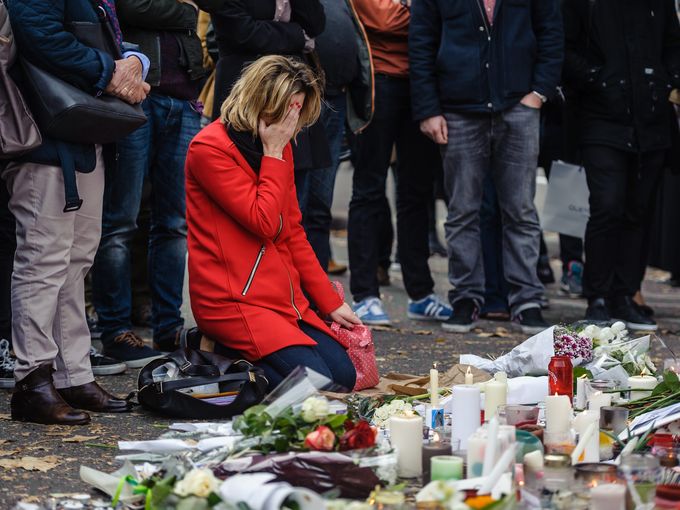
The contrasts in image and tone could not be more striking. On the streets of Paris, thousands gather to mourn those killed in ISIS terror attacks that shook Europe, while on the streets of Tehran, agents for the Revolutionary Guard are busy rounding up more journalists and dissidents in one of the fiercest crackdowns since the days of Mahmoud Ahmadinejad’s reign.

The latest victim of the Iran regime’s security crackdown was the arrest of a press cartoonist who was taken into custody while at work at The Shahrvand, a state daily newspaper in Tehran that is owned by Iran’s Red Crescent Society, or Red Cross according to New York Times.

The arrest had not been reported in the official news media as of Monday night. It came after the publication of a cartoon depicting tearful solidarity with the people of France over the attacks Friday that left at least 129 people dead. The cartoon was also posted on the Instagram.

The fact that a cartoonist is arrested by the regime for publishing a cartoon expressing sympathy for those slain by ISIS – the putative enemy of the Iranian regime – tells us all we need to know about what the mullahs in Tehran are thinking about the slaughter of French, German, American, British, Spanish and Swedish citizens.

The cartoonist’s arrest follows a nationwide crackdown in which several journalists and even two poets have been arrested as being subversive to the regime and serving as tools for Western influence as the regime seeks to stifle any voice of dissent in the wake of the nuclear deal it agreed to last July.

The “to-do” list for the mullahs have been busy lately as they have sought to win the civil war in Syria and secure the Assad regime, gone on a shopping spree for new weapon systems from the Russians, and send proxies to attack an Iranian dissident camp in Iraq in a brutal rocket barrage.

The mullahs have even instituted a new policy to impound the cars of any Iranian women caught driving a car without wearing a “proper” hijab or head covering. This follows past policies that forbade Iranian women from driving alone and allowed basij paramilitaries to beat women drivers and failed to prosecute others who threw acid at women while driving.

Senior mullahs have in recent weeks intensified their verbal attacks on “bad-hijab” women in Iran, with one likening them to “soliciting for sex.”

“The courageous decision by the commander of our police force to confront those women who defy and remove their hijab behind the wheel must be appreciated as it amounts to fighting prostitution on our streets,” said a mullah named Ahmed Alam Ulhoda in one of the more absurd comments ever published.

Another series of arrests targeted social media apps as the Revolutionary Guard also went after administrators on the popular Telegram messaging app for spreading “immoral content” according to the regime’s Fars news agency.

Telegram’s Chief Executive Pavel Durov said last month that Iranian regime authorities had demanded he hand over “spying and censorship tools”, and temporarily blocked the app when he refused.

The IRGC announced the Telegram users’ arrests last week, saying they had shared images and text “insulting to Iranian officials” as well as “satire and sexual advice”. At the time, the judiciary denied any such arrests had even occurred.

This comes after efforts by the regime to block access to popular social media platforms such as Whatsapp, Facebook, Twitter, Tango and Viber.

The crackdowns, especially the widespread nature and swiftness in their enforcement, underscore just how farcical the myth was that Hassan Rouhani’s elevation to president would represent some new “moderate” breakthrough for the regime. Indeed the violations of human rights in Iran has got worse during his tenure.

The alarming rise in human rights abuses moved Human Rights Watch to issue a joint letter signed by 36 human rights groups and other organizations urging support for United Nations General Assembly Resolution A/C.3/70/L.45 which seeks to promote human rights in Iran by calling on the regime to meet its domestic and international obligations to protect human rights.

The vote is scheduled on November 19, 2015 during the 70th session of the General Assembly.

“The Iranian authorities shouldn’t think they are getting a pass on human rights just because the nuclear accord has been signed,” said Sarah Leah Whitson, Human Rights Watch Middle East director. “Passing this resolution will send the message that the world has not forgotten about the country’s ongoing human rights abuses.”

More importantly, supporters of the regime have uttered not a word of criticism over the recent crackdowns. Groups such as the National Iranian American Council and The Ploughshares Fund and bloggers and commentators such as Jim Lobe and Ali Gharib have shifted their focus not on the tragedy suffered by the people of France, but rather in attempting to link the attacks and ISIS to Saudi Arabia in an effort to attack the Iran regime’s long-time rival.

Trita Parsi, head of the NIAC, has been busy on his social media feeds denouncing Saudi Arabia during the Paris attacks as much as he was busy denouncing Israel during the nuclear talks. In both cases, the real goal of his comments is to shift attention away from the bad acts of the Iranian regime.

Ultimately, the world is beginning to see past the facades put up by Iran lobby supporters and are recognizing that the true center of sectarian hate sits squarely in Tehran.

By Michael Tomlinson

Filed Under: Blog, News Tagged With: Featured, hassan rouhani, Iran, Iran deal, Iran Human rights, Iran Lobby, National Iranian American Council, NIAC, NIAC Action, Syria, Trita Parsi

As Rouhani Goes on European Shopping Trip Dissidents Raise Voices

November 13, 2015 by admin


As Rouhani Goes on European Shopping Trip Dissidents Raise Voices

As Rouhani Goes on European Shopping Trip Dissidents Raise Voices

This week regime’s assigned president, Hassan Rouhani will become the first leader of the mullah’s regime to travel to Europe in a decade as part of effort to establish trade and foreign investment pacts in the wake of the nuclear agreement completed last July.

To say the tour begins on a rocky footing is an understatement. In France, a diplomatic row over French wine erupted when Rouhani snubbed the French with a demand for no alcohol at an official state dinner. Telling the French they can’t serve wine in their own palace is like telling a French chef he cannot use truffles.

A counterproposal by French officials for a breakfast was snubbed by Rouhani’s delegation as being a “cheap” offering by the French. Rouhani and French President Francois Hollande will instead just have a simple meet and greet moment for the cameras.

All of which underscores an important point for the regime: everything will always be on Iran’s terms.

While Hollande’s advisors have called the situation “ridiculous,” it is anything but ridiculous for Rouhani who has been busy trying to keep up the charade that he is a champion of opening Iran to the West, while at the same time towing the party line from top mullah Ali Khamenei on the brutal crackdown happening at home as scores of journalists are harassed and arrested.

Rouhani’s European trip has a more practical and important aspect for the regime. Rouhani hopes to pursue deals in car manufacturing, agriculture and most importantly Airbus aircraft to upgrade its aging fleet of airliners.

But his trip will be met with that is expected to be a week-long series protests from human rights and dissident groups aimed at raising the issue of the regime’s harsh human rights records; especially the dramatic rise in executions being carried out in Iran.

A large march and rally is planned for November 16th in Paris with other actions planned during the week to include:

  • Declarations by human rights organizations, including sponsors of this week’s protests, on the deteriorating human rights situation in Iran under Rouhani and the need for immediate action;
  • Delivery of a letter by 100 French MPs from different parties to the French president insisting that relations with the regime in Tehran must be contingent upon a moratorium on executions and improvement of the human rights situation in Iran;
  • Release of a statement by French political, social and intellectual figures condemning the deterioration of the human rights situation in Iran and the regime’s export of fundamentalism and terrorism;
  • Street exhibitions and displays in central Paris explaining the human rights situation in Iran.

In a reminder of just how much the Iran regime expects the rest of the world to dance to its tune, Rouhani said in an interview with the Italian newspaper, Corriere della Sera, that the U.S. and Iran could normalize relations but that the U.S. should “apologize” first without going into further detail as to what kind of apology the regime was demanding.

It’s an odd demand to make considering that the regime currently holds several Americans hostage and in a report just released this week, was identified as the source of manufacturing bombs that killed hundreds of U.S. service personnel in Iraq through its Quds Forces.

But nothing this outrageous would be unexpected from a regime that has been growing more aggressive towards the world since the nuclear deal was completed.

The discontent in the U.S. has grown substantially as the Iran regime acts so belligerently. The New York Observer ran an editorial warning of the regime’s actions, saying:
“Since President Obama pushed through his Iran nuclear deal without a congressional vote, the folks in Tehran have responded in some mighty unusual ways.

“First, they’ve jailed five visiting Americans—and are holding them hostage. Then they launched a massive cyberattack against the U.S. State Department, Aramco and several American banks. Plus, they are cracking down on Iranians who advocate better ties with the United States, even shutting down businesses that have American connections—including a KFC knock-off in Tehran. But most significantly, the Ayatollahs are threatening to renege on the nuclear deal if we push too hard to get our citizens back.

“We hope this gives pause to President Obama and the deal’s supporters in Congress. If this is how Iran acts before we have released the $100 billion-plus in frozen funds, how might they behave when we have no more Iranian funds to use as leverage?”

As Rouhani tours Europe, we can only hope Pope Francis raises the issue of executions, the Italian prime minister stresses the importance of human rights and the French president discusses the need for an end to executions in Iran and releasing all political prisoners in Iran’s prisons.

By Michael Tomlinson


Filed Under: Blog, News Tagged With: #NuclearDeal, Appeasement policy, Featured, Iran deal, Iran Lobby

Push Back Begins As UN Condemns Iran Regime Arrests of Journalists

November 12, 2015 by admin


Push Back Begins As UN Condemns Iran Regime Arrests of Journalists

Push Back Begins As UN Condemns Iran Regime Arrests of Journalists

“The Government of Iran should not silence critical or dissenting voices under the guise of vague and unsubstantiated national security concerns,” Ahmed Shaheed, Special Rapporteur on the situation of human rights in Iran, said in a news release.

Shaheed, along with other UN human rights experts, called on the Iran regime to halt a new wave of intimidation aimed at journalists in the wake of the recently agreed to nuclear deal that proponents such as the National Iranian American Council claimed would usher in a new period of moderation by the Islamic state.

The Iran regime has one of the highest numbers of journalists and activists in detention in the world. According to figures released by the UN, from April 2015, at least 45 were being held for their peaceful activities. On November 2nd, five journalists were arrested by plainclothes members of the Revolutionary Guard and accused of taking part in an infiltration network and seeking to undermine Iran on behalf of Western governments.

“Freedom of expression is central to guarantee open, free and fair political processes,” David Kaye, the Special Rapporteur on the right to freedom of opinion and expression, echoed in a similar vein, underscoring that “democratic processes are unsustainable if media workers and activists have no safety to perform their vital role.”

Both human rights experts further warned that arrests and prosecution of journalists not only affect their free operation in the country, but also make public participation in any electoral process impossible. However, this concern had been raised before the last elections in Iran said the human rights experts.

The sudden crackdown on journalists follows the incarceration of Iranian-Americans such as Washington Post reporter Jason Rezaian, and a broad range of aggressive moves by the regime in Syria, Yemen and domestically as it seeks to assert its perceived position of strength following the nuclear deal.

But underlying all of these recent moves is the growing belief that in advance of parliamentary elections scheduled next year in Iran, the mullahs are contending with rising discontent and a widely held expectation by the Iranian people that the nuclear deal will open up the regime to foreign investment, trade, travel and culture.

For the mullahs, the prospect of a more open and inclusive Iran fueled by foreign companies, corporate brands and their marketing campaigns aimed at Iran’s young people frankly terrifies them.

To that end, the mullahs – at the behest and blessing of top mullah Ali Khamenei – have given the Revolutionary Guard free rein to arrest dissidents and journalists, launch a major new offensive in Syria and acquire and develop new military hardware as fast as possible.

Conveniently enough for the mullahs, all of this comes fueled by a level of anti-American rhetoric reminiscent of the early days of the Islamic revolution in 1979 as the mullahs seek to reignite hatred for the U.S. at a time when most Iranians would rather buy an iPhone and get on Facebook.

According to Helle Dale of the Heritage Foundation writing in the Daily Signal; the “targeting of the United States is connected with a new crack-down on the media. Independent journalism is as dangerous an occupation in Iran as it ever was.”

As “reported” by the revolutionary guard “news agencies” Tasnim and Fars, the journalists were charged with being “members of an illegal network linked with the governments of the US and Britain who were active in Iranian media.”

The fact that the Revolutionary Guard has been in the forefront of this crackdown as the chosen instrument of force employed by Khamenei has led many in Congress to renew a push to have the infamous group labeled as a “foreign terrorist organization” (FTO).

Legislation has been introduced in the House by Rep. Michael McCaul (R-Texas), and in the Senate by Sen. Ted Cruz (R-Texas), calling on the secretary of state to designate the IRGC as an FTO under U.S. law – or provide the legal justification for not doing so.

The IRGC is also heavily engaged in the Iranian economy, including the banking, construction and energy sectors, and Iran experts say it stands to benefit significantly from the unfreezing of assets and ongoing easing of sanctions under the nuclear agreement reached with Iran last summer.

The depth of the IRGC’s involvement in the death of Americans was outlined in a report released by the U.S. Central Command which cited the regime’s responsibility in the deaths of nearly 200 U.S. soldiers, comprising 14 percent of U.S. forces in Iraq between 2003 and 2011.

The Iran regime is also responsible for wounding nearly 1,000 other U.S. soldiers during the eight-year period, said the new disclosures from a partially declassified government report, according to Fox News.

The attacks were principally carried out by Iranian regime-made explosive devices that were manufactured and supplied to Shiite militias throughout Iraq by Quds Force members and directed by Qassem Soleimani, the commander who is now coordinating the regime’s offensive operations in Syria alongside Russia against Syrian rebel forces.

The arrests of journalists is only the tip of a much larger iceberg as the Iran regime expands its activities and disprove all of the claims made by supporters such as the NIAC.

By Laura Carnahan

Filed Under: News Tagged With: #NuclearDeal, Featured, Iran deal

Iran Regime Breaks Nuclear Agreement Already

November 11, 2015 by admin

Iran Regime Breaks Nuclear Agreement Already

Iran Regime Breaks Nuclear Agreement Already

The 159 pages in the nuclear agreement with the Iran regime is by the standards of most international agreements, pretty flimsy, but even its meager few pages specify clearly the expectations the rest of the world has for the regime’s centrifuges used to enrich uranium: dismantling them.

Reuters reported that the regime has halted work in dismantling centrifuges at the Natanz and Fordow nuclear enrichment plants. The nuclear agreement struck last July specified that initial dismantling work would begin on some 10,000 decommissioned centrifuges at the two facilities.

The halt in work was announced by Ali Shamkhani, secretary of the National Security Council for the regime, who was quoted as saying by the ISNA student news agency that “the (dismantling) process stopped with a warning.”

He did not specify what the warning was or who issued it, but the head of the regime parliament’s nuclear deal commission, Alireza Zakani, told Mehr news agency that the dismantling had stopped in Fordow because of a letter to Hassan Rouhani from a group of lawmakers complaining that the dismantling process was moving too swiftly and contradicted directives from top mullah Ali Khamenei.

Khamenei has publicly stated his opposition to several terms within the treaty, including refusal to allow regime military facilities to be inspected and the need for all Western sanctions to be lifted at once before the regime would comply fully with the agreement.

Khamenei has also said the deal should only be implemented once allegations of past military dimensions of the regime’s nuclear program had been settled.

The International Atomic Energy Agency is expected to announce its conclusions on PMD by Dec. 15, according to Reuters.

The 10,000 older, decommissioned centrifuges are only half of what the regime has available to it to enrich low-grade uranium into highly enriched weapons-grade fuel. The nuclear agreement only allows for the regime to actively use a few thousand centrifuges for medical and scientific research purposes.

As Rick Moran in American Thinker notes, “there’s very little difference between the so-called ‘hardliners’ and those the Western press has designated as ‘moderates.’ And Rouhani may try to use the hardliners as an excuse to not fully implement the deal.  Supreme Leader Khamenei has already redefined key elements of the deal to favor Iran’s nuclear program, which Rouhani will probably cite when he violates the terms of the agreement as we go along.”

It is clear now that the regime has no intention of complying with the nuclear agreement and in fact is doing everything it can to push the West with aggressive moves designed to take advantage of the Obama administration’s lame duck political status and lack of desire to force a confrontation on the eve of U.S. presidential elections.

This is why the mullahs in Tehran have doubled down on wiping out opposition to Assad in Syria with a new offensive alongside Russia, test fired a new ballistic missile that violates United Nations Security Council restrictions, attacked and killed Iranian resistance members in Iraq, smuggled new arms to Houthi rebels in Yemen, completed the sale of advanced anti-aircraft missiles from Russia, and cracked down at home by arresting and jailing dissidents and inflaming ethnic tensions with the Azeri minority group in northern Iran.

All of this has been done because the mullahs have already decided to break from the nuclear agreement and see the opportunity for significant gains in the absence of any real threat of retaliation from the U.S. and the rest of the world.

As the Iran lobby, led by the National Iranian American Council, put so eloquently during the debate over the nuclear agreement, the choice for Americans was between “war” and “peace.”

In fact, they were correct, but only in reverse. Approving the pact has surely put the world on a more dangerous path towards greater conflict, while rejecting it may very well have stopped Iranian aggression and brought about stability in the region.

By Michael Tomlinson

Filed Under: News Tagged With: #NuclearDeal, Appeasement policy, Featured, hassan rouhani, Iran, Iran deal, Iran Human rights, Iran Lobby, Iran sanctions, National Iranian American Council, NIAC, NIAC Action, nuclear talks, Parchin

If You Never Talk About Human Rights, Maybe It Doesn’t Exist?

November 10, 2015 by admin

parsi-MarashiThe first thing they teach you in any 12-step recovery program is that you have to admit you have a problem before you can start the road to getting better. The Iran lobby suffers from the basic problem that it cannot admit it has a problem backing a regime that has absolutely no intention of ever abiding by international norms of civility and normality.

Depending on your point of view, Iran regime supporters such as Trita Parsi of the National Iranian American Council or Jim Lobe of Lobelog, or Gareth Porter is either partners with the regime or unwitting dupes who are hopelessly locked into a myopic point of view regardless of the facts disputing their worldview.

If we take the more charitable view and give them the benefit of the doubt about their motivations, then it is a head scratching moment to think of why they virtually ignore human rights violations in Iran in almost all of their public pronouncements, media interviews and social media postings. Why would anyone proclaiming deep interest in the well-being of the Iranian people never say a contrary word about record levels of arrests, imprisonments and executions?

Take for example the NIAC, which any casual perusal of its website would reveal little criticism of the Iran regime on the issue of human rights. In fact, if you type in “human rights” in its search box, you’ll find the bulk of any mention about human rights issues occurs during the run up with nuclear talks, but after the deal is done…nothing.

Even more impressive, for the entire year of 2015 so far, NIAC only issued one statement even mildly criticizing Iran on the issue of Washington Post reporter Jason Rezaian who was arrested and falsely accused by the regime of espionage.

Considering the litany of human rights abuses so far in 2015 in Iran, including over 1,000 public executions, the holding of five Americans illegally, the suppression of mass demonstrations and the support for terrorist acts and proxy wars in three different countries, it’s a wonder the NIAC could even be bothered to issue the single statement it did.

But like the age-old philosophy question posed by professors everyone, “if a tree falls in the forest and no one is around to hear it, does it make a sound?” The same question could be applied to the NIAC and other regime supporters within the Iran lobby. If you never talk about human rights, do you think they don’t exist?

The only substantial mention about human rights from NIAC comes within the context of passing the nuclear agreement with Iran as a pathway towards a more moderate and forgiving Iran.

As we have seen, the true nature of the Iranian regime has been revealed since passage of the agreement with a wide range of bewildering, militant and aggressive acts ranging from the alarming such as the test firing of new ballistic missile design capable of carrying nuclear warheads to defending the meaning of keeping its “Death to America” chants.

In all of these cases, the NIAC and other regime supporters have been silent as a tomb in raising any concern or these aggressive acts by the regime and in the one specific case where Iranian-American businessman Siamak Namazi, a key supporter of the NIAC and the regime, was arrested in Iran and tossed into the infamous Evin Prison, NIAC issued a statement expressing how “deeply troubled” it was by the report, but then spent most of the statement trying mightily to distance itself from Namazi.

You have to pity Namazi. On the one hand he had devoted considerable time and effort working with Trita Parsi and Reza Marashi during their collective time together at the consulting company Atieh on opening up avenues for the regime past sanctions imposed by the rest of the world, but then once he wears out his own welcome with the regime and gets tossed in prison, his old friends claim no knowledge of him.

You’d think Namazi would have chosen more reliable friends.

But the NIAC’s lack of concern over human rights is more likely a function of the fact that any deep discussion of human rights is ultimately embarrassing to the regime and hinders the process of gaining advantages for the mullahs in Tehran. Since the Obama administration was readily agreeable to the idea of un-linking human rights from nuclear talks, the regime has been essentially freed from the pesky restraints of being sanctioned or held accountable for anything it does from now on.

This explains why the Iran regime has closed its deal with Russia to buy advanced S-300 anti-aircraft missile batteries, launched a series of cyberattacks on U.S. and European computer systems,  broadened its offensive in Syria, and attempted smuggling even more weapons to support Houthi rebels in its proxy war in Yemen aimed at Saudi Arabia next door.

The alarming increase and speed in actions by the Iran regime has spawned a broad and equally alarmed reaction from many and warnings are now being raised on the eve of the presidential election in 2016 that restraining and controlling Iranian regime may now rank as serious a foreign policy issue as combatting ISIS for most Americans.

These reactions come from small community newspapers such as the Staten Island Advance editorializing against the flaws in the nuclear deal to major market editorials such as the New York Post warning how mullahs in Iran have used the nuclear deal as a blank check to go wild.

The negative reactions have also come from both sides of the political aisle as evidenced by an editorial by Reps. Gerald E. Connolly (D-VA) and Richard Hanna (R-NY) in Huffington Post advocating their proposal for a new joint commission to monitor and verify Iran’s compliance with the nuclear deal as an additional safeguard to what they call a flaw in the nuclear agreement.

We can only hope it is not an example of too little, too late.

By Michael Tomlinson


Filed Under: Blog, Current Trend, National Iranian-American Council, News, The Appeasers Tagged With: Featured, Iran, Iran deal

  • « Previous Page
  • 1
  • …
  • 20
  • 21
  • 22
  • 23
  • 24
  • …
  • 29
  • Next Page »

National Iranian-American Council (NIAC)

  • Bogus Memberships
  • Survey
  • Lobbying
  • Iranians for International Cooperation
  • Defamation Lawsuit
  • People’s Mojahedin
  • Trita Parsi Biography
  • Parsi/Namazi Lobbying Plan
  • Parsi Links to Namazi & Iranian Regime
  • Namazi, NIAC Ringleader
  • Collaborating with Iran’s Ambassador

Recent Posts

  • NIAC Trying to Gain Influence On U.S. Congress
  • While Iran Lobby Plays Blame Game Iran Goes Nuclear
  • Iran Lobby Jumps on Detention of Iranian Newscaster
  • Bad News for Iran Swamps Iran Lobby
  • Iran Starts Off Year by Banning Instagram

© Copyright 2026 IranLobby.net · All Rights Reserved.