Iran Lobby

Exposing the Activities of the lobbies and appeasers of the Mullah's Dictatorship ruling Iran

  • Home
  • About
  • Current Trend
  • National Iranian-American Council(NIAC)
    • Bogus Memberships
    • Survey
    • Lobbying
    • Iranians for International Cooperation
    • Defamation Lawsuit
    • People’s Mojahedin
    • Trita Parsi Biography
    • Parsi/Namazi Lobbying Plan
    • Parsi Links to Namazi& Iranian Regime
    • Namazi, NIAC Ringleader
    • Collaborating with Iran’s Ambassador
  • The Appeasers
    • Gary Sick
    • Flynt Leverett & Hillary Mann Leverett
    • Baroness Nicholson
  • Blog
  • Links
  • Media Reports

Iran Lobby Turns Attention to Protecting Iranian Regime

May 26, 2017 by admin

Iran Lobby Turns Attention to Protecting Iranian Regime

Iran Lobby Turns Attention to Protecting Iranian Regime

The effort by President Trump to build a new international coalition to confront and contain the Iranian regime got off to a solid start with summits and meetings in Saudi Arabia and Israel. The warm welcome he received from Arab leaders must have unnerved the mullahs in Tehran since the Iran lobby has turned its attention a full-throated defense of the regime.

Trita Parsi of the National Iranian American Council took to authoring an editorial on the NIAC website that attempts to downplay Trump’s efforts.

“A key factor explaining the violence in the Middle East in the past few decades is that the region has lacked a sustainable, indigenous order. The process of establishing an order is by definition disruptive and the Middle East has almost continuously been in this state since the end of the Cold War,” Parsi writes.

“To make matters worse, the temporary equilibriums that briefly provided a resemblance of order were established and sustained by an external power – the United States – rather than by the states of the region themselves. As a result, these temporary periods of stability could only last as long as the external power was willing to sustain the order with its own blood and treasure,” he adds.

Parsi’s logic is perverse since he effectively argues for a process in which Iranian regime institutes order by eradicating everyone else that stands in its path. Of course, Parsi claims that Iran only has the best of intentions for its neighbors, but the track record does not show that as Iran is now embroiled in three wars in Syria, Iraq and Yemen.

Parsi goes on to blame Saudi Arabia for Middle East turmoil all in an effort to isolate Iran, but Parsi never admits to Iranian regime’s own culpability in setting the region ablaze in bloodshed and sectarian violence.

We have seen the profound loss of life after the Obama administration abdicated any role in fixing Syria in favor of the Iranian regime settling issues through barrel bombs and chemical gas attacks.

Parsi’s colleague, Reza Marashi, takes up the cause of whitewashing Iran in his own editorial reiterating the tired old refrain of Hassan Rouhani of being a tried and true moderate, whose real goal is only alleviating the economic malaise gripping Iran.

Unfortunately, no one told Marashi it seems that Iran’s economy will not improve so long as the mullahs continue to siphon billions for their own personal enrichment, as well as ship off more billions to prop up the Assad regime in Syria and pay to support Hezbollah and Houthi rebels in their wars.

Marashi even dubs the newly formed partnership against Iran as an “Axis of Rejection” a nifty piece of word play that reminds us of President George W. Bush’s “Axis of Evil” speech.

“Rouhani’s track record demonstrates that sustained engagement can lower tensions and produce peaceful solutions to conflict,” Marashi writes.

It is a claim that is both surreal and fantasy since Rouhani has presided over a massive escalation in wars that Iranian regime is fighting with no discernible pathway to peace other than to kill off Iran’s enemies.

But the NIAC isn’t through trying to support Iran as Ryan Costello weighed in with a press release lauding tweets made by former Secretary of State John Kerry who negotiated the horrific Iran nuclear agreement in the first place opposing proposed Senate legislation to levy new sanctions on the regime.

“Sec. Kerry’s public intervention cautioning against new Iran sanctions legislation should be another wake-up call that this is the wrong bill at the wrong time. Sec. Kerry would not be turning to the microphones unless the bill was an Iran deal-killer and private efforts to remove poison pills had failed,” Cosello writes.

“Lawmakers must ask themselves why they would give President Trump a mandate to undermine the Iran nuclear deal, ratchet up tensions in the region and undermine Iran’s moderates on the heels of their election victory. Tens of millions of Iranians voted in favor of openness and engagement with the outside world while Trump danced with unelected Saudi monarchs and called for Iran’s isolation,” he adds.

The more appropriate question back to Costello would be “why would lawmakers ever think they could trust the Iranian regime anymore after its commitment to waging proxy wars on its neighbors.”

The NIAC wasn’t the only Iran lobby supporter busy propping up the mullahs. Hooman Majd, a former advisor to Mahmoud Ahmadinejad, offered up the fairy tale that Iran had opted for peaceful co-existence with Rouhani’s re-election in a piece for Foreign Policy.

“Iran’s presidential election also proved the adage that the only thing predictable about Iranian politics is its unpredictability. Which, to the consternation of the Washington foreign-policy class, puts Iran experts on the same professional level as astrologers or palm readers,” Majd writes.

Again, Iranian regime supporters like Majd show their silliness when the election outcome in Iran was far from unpredictable. In fact, no incumbent Iranian president has ever lost re-election, not even Ahmadinejad when his re-election had to be rigged with widespread ballot tampering.

Iranian elections are so predictable, they remind us of the old Soviet Union-style elections with 99 percent voter participation and zero percent uncertainty.

The more the Iran lobby tries to prop up the Iranian regime the more it reveals how weak and vulnerable the mullahs have become.
 

Filed Under: Blog, News Tagged With: Appeasement policy, Featured, hassan rouhani, Iran Lobby, Iran Mullahs, National Iranian American Council, NIAC, NIAC Action, Reza Marashi, Rouhani, Trita Parsi, Tyler Cullis

Iranian Regime Uniting the World…Against It

May 23, 2017 by admin

Iranian Regime Uniting the World…Against It

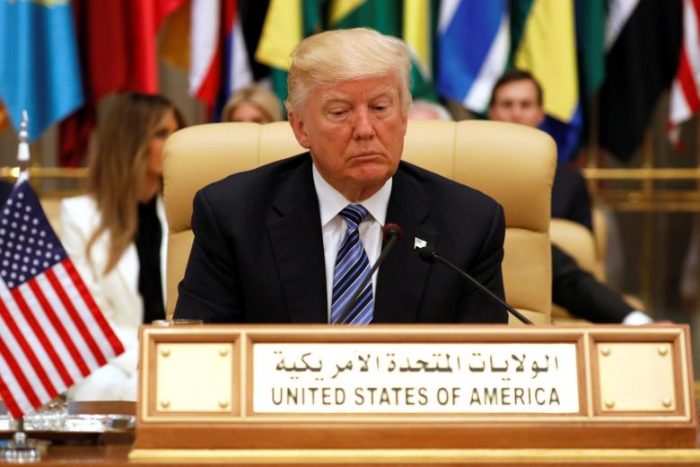
U.S. President Donald Trump takes his seat before his speech to the Arab Islamic American Summit in Riyadh, Saudi Arabia May 21, 2017. REUTERS/Jonathan Ernst

The Iranian regime election has given the world another dose of Hassan Rouhani, but in and of itself, his election to another term is meaningless since the world has seen that Ali Khamenei and his close circle of mullahs set policy, backed by the muscle of the Revolutionary Guard Corps.

The arguments against the Iranian government have never been directed at its people. For the most part, the Iranian people have been manipulated, coerced, bullied and even brutalized into submission. It has been the conduct of the leadership of the mullahs that have brought so much misery to that part of the world.

The leadership of Iran has pursued a policy that emphasizes harsh suppression of internal dissent, while using brute force to enact a foreign policy of war and terrorism to advance its aims, which is to expand the sphere of influence for its form of radicalized Shia theology.

But in an interesting twist of irony, Iran’s very actions to unite underneath its own banner have yielded the opposite effect: countries that have previously been adversaries are now aligning to form an international coalition to halt Iranian regime’s expansion.

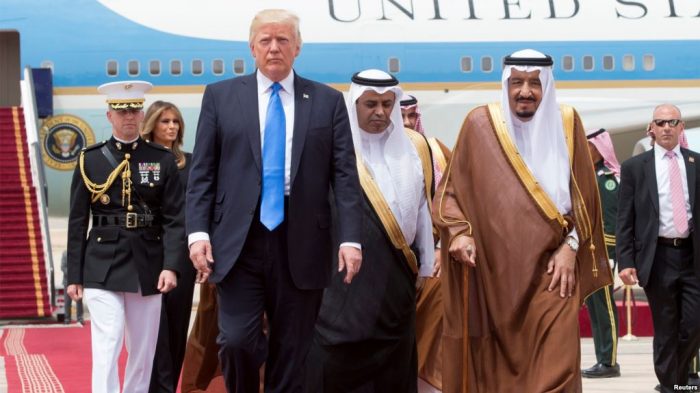
President Trump’s first overseas trip started off with Saudi Arabia and extended into Israel, two countries that have not only been at odds and even war, but are also under their own scrutiny. Now both they and other countries, including the Gulf states, have begun the tenuous process of working together at keeping the Iranian regime contained.

The ancient proverb: “The enemy of my enemy is my friend” is finding utility now among countries that are being confronted by Iranian extremism and for President Trump, the opportunity exists to redefine a new order in the Middle East predicated at halting Iranian expansion and bring about a political realignment within the Iranian regime.

Trump’s visit to Saudi Arabia was the first to a Muslim majority nation for an incoming U.S. president and set the tone for reaching out to the Muslim world in a manner his predecessor never managed to achieve.

Trump said on Monday that shared concern about Iran was driving Israel and many Arab states closer and demanded that Tehran immediately cease military and financial backing of “terrorists and militias”.

In stressing threats from Iran, Trump echoed a theme laid out during weekend meetings in Saudi Arabia with Muslim leaders from around the world, many wary of the Islamic state’s growing regional influence and financial muscle.

Trump said there were opportunities for cooperation across the Middle East: “That includes advancing prosperity, defeating the evils of terrorism and facing the threat of an Iranian regime that is threatening the region and causing so much violence and suffering.”

Worried about the movement being made in realigning against the Iranian regime, newly minted Rouhani claimed that regional stability could not happen without Iran.

He said the summit in Saudi Arabia “had no political value, and will bear no results”.

“Who can say the region will experience total stability without Iran? Who fought against the terrorists? It was Iran, Syria, Hezbollah and Syria. But who funded the terrorists?”

In this one area, Rouhani is correct, but not for the reasons he claimed. Regional stability is dependent on Iran, but only if Iran stopped fueling the instability it has caused across the Middle East in Iraq, Syria and Yemen.

Rouhani also trotted out the time-worn claim that Saudi Arabia was in fact more dangerous because of the rise of Sunni-dominant terrorist groups such as ISIS, but ignored his own country’s role in helping spawn ISIS with the downfall of the Sunni-Shia coalition government of Nouri al-Maliki in Iraq.

While Rouhani tries to diminish the importance of Arab states aligning against Iran, the broader and more important strategic implications are more troubling for Rouhani and his fellow clerics. A clear alliance among fellow Muslim nations with non-Arab states such as Israel, the U.S. and Turkey would represent a sea change in relations among countries with long histories of opposing each other.

It also puts to a lie the message Rouhani and his Iran lobby supporters have long pushed which is that opposition to Iran has always been built around sectarian issues and as such lack legitimacy. The opposite is now true; a coalition of diverse nations with varying beliefs all share the same concerns over an Iran that stands at the center of virtually all the instability now wreaking havoc there.

The real proof of Iran’s intentions will not come from words but deeds. If the Iranian regime continues to fling ballistic missiles and supply its various proxies in their ongoing wars, then the regime has no intention of altering its course.

It is ironic that Rouhani pointed a finger at Saudi Arabia claiming it held no free elections when Iran’s own history of elections is more checkered, including the debacle of the 2009 disputed elections.

“Mr. Trump has come to the region at a time when 45 million Iranian people went to polling stations, and he went to a country where they don’t know what elections are about,” Rouhani said. “It’s not in their dictionary.

“Hopefully the day will come when Saudi Arabia will adopt this path.”

His triumphant comments neglected to mention that Iran’s elections are hardly free or fair, with candidates chosen by an unelected 12-man council, according to the Los Angeles Times, not to mention that the figure made up by the regime could not be verified, given no independent monitoring has been present, and Iran’s state media are full of facts on how both rivals have made unprecedented deceits in the ballots. The opposition to the Iranian regime has estimated the total number of participants in the fake election, to have been increased by four in order to cover, the regime’s isolation at home.

Rouhani for his part deflected questions about Trump’s calls to isolate Iran over its support for militant groups and its ballistic missile program, suggesting that the new U.S. administration had yet to “settle down” and formulate a coherent policy in the Middle East.

“We are waiting for this new U.S. government to be settled in terms of their stances, posture and future plans,” Rouhani said.

“Hopefully things will be settled down and well established in the U.S. so that we can actually pass judgments on the new administration.”

We can only assume Rouhani hopes to squeeze a few more months out of the appeasement policy pursued by the Obama administration before things go south on him and his fellow mullahs.

Michael Tomlinson

Filed Under: Blog, News Tagged With: Appeasement policy, Featured, hassan rouhani, Iran Lobby, Iran Mullahs, Iran sanctions, Iran Talks, National Iranian American Council, NIAC Action, Rouhani

As If We Expected a Different Result in Iran Election?

May 22, 2017 by admin

As If We Expected a Different Result in Iran Election?

As If We Expected a Different Result in Iran Election?

Without much drama, Hassan Rouhani was re-elected to a second term as president of the Iranian regime. The result didn’t come as a surprise to any experienced Iran watcher since no incumbent has ever lost a bid for a second term, even if the results had to be faked to get the job done as was the case with Mahmoud Ahmadinejad.

But what has been lost on a large part of the global media is now the mullahs manage to always stage a convenient drama to be played out for them in terms of a fateful showdown between “reformist and moderate” forces against “hardline and conservative” ones bent on rolling back the freedoms of the Iranian people.

If Nazi Germany had staged an election between Adolf Hitler and Joseph Goebbels, the latter probably would have looked like a moderate too.

The same was true here in which a careful choreography ensued. First thousands of candidates filing to be on the ballot had to be summarily tossed aside to clear the field.

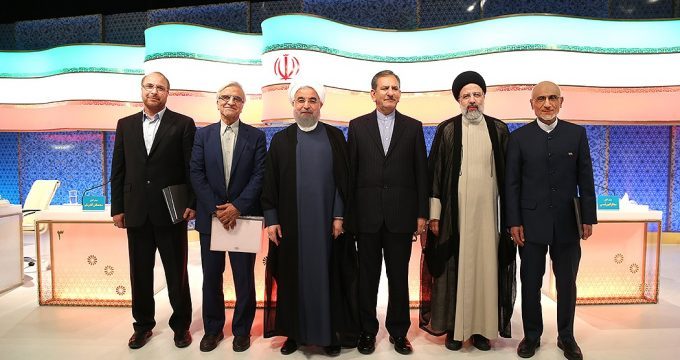
That left only six men to move forward—no women and no active or known dissidents—and then several dropped out to throw their support to one of the two remaining choices: Rouhani and Ebrahim Raisi.

Conveniently, Raisi was portrayed as the “hardline” choice of Ali Khamenei and was portrayed by media as the man who would roll back all the “positive” achievements wrought by Rouhani over the past four years.

Given Raisi’s bloody history as a special prosecutor that oversaw the executions of tens of thousands of Iranian dissidents, it’s easy to see why he might be viewed as slightly more bloodthirsty than Rouhani who oversaw only the execution of mere thousands of dissidents.

It was a Hobson’s choice and a well-played one.

While the Iran lobby focused on Rouhani’s achievements in securing the nuclear deal and opening Iran back up to Western investment, never were there any mentions of the broad human rights crackdowns during his tenure including the largest number of public executions since the 1979 revolution.

In fact, global media were eager to eat up the narrative of a “moderate” win which is exactly what Khamenei and his fellow mullahs wanted to see portrayed.

How easily the world has forgotten the parliamentary elections only last year in which tens of thousands of candidates were knocked off ballots and faithful followers of the mullahs were re-elected.

The Iranian regime smartly chooses to fight its public battles only after the game has been rigged.

Trita Parsi of the National Iranian American Council brayed like a wild animal over the results as the NIAC quickly issued statements lauding the outcome.

“President Rouhani’s convincing win is a sharp rebuke to Iran’s unelected institutions that were a significant brake on progress during Rouhani’s first term. It is also a rebuke of Washington hawks who openly called for either a boycott of the vote or for the hardline candidate Ebrahim Raisi to win in order to hasten a confrontation,” Parsi said.

“In addition to Trump’s America, there are two other countries that will continue to form an Axis of Rejection in response to Rouhani’s foreign policy. One is Saudi Arabia. Despite Tehran’s repeated outreach, Riyadh has refused to respond in kind,” said Parsi’s NIAC colleague Reza Marashi in a piece for Huffington Post.

Fortunately for the rest of the world, many countries are not hearkening to Parsi and Marashi’s messages.

During President Trump’s state visit to Saudi Arabia, he found common ground with the Saudis on the need to confront Iranian regime’s aggression since Rouhani has clearly followed a foreign policy of engaging in wars in Syria, Iraq and Yemen; coupled with a North Korea-like ramp up in ballistic missile testing.

The king said on Sunday Saudi Arabia had not witnessed terrorism until the 1979 Revolution in Iran. Instead of accepting good-faith initiatives, Iran has “pursued expansionary ambitions, and criminal practices and the meddling of other countries’ internal affairs,” he said. The kingdom, however, respects the Iranian people and won’t judge them “by the crimes of their regime,” he said, according to Bloomberg.

Trump later singled out Iran as a terror sponsor. Iran’s leaders speak “openly” of mass murder, Trump said in his keynote speech before dozens of Muslim leaders gathered in the Saudi capital, Riyadh. He said the Iranian government gives terrorists “safe harbor, financial backing, and the social standing needed for recruitment.”

Sen. John McCain lauded President Trump’s trip to Saudi Arabia this weekend saying it sent a strong message to Iran that the U.S. and its allies are ready to block Iran’s efforts to destabilize the region.

“There’s no doubt that if we’re going to impede the Iranian’s continued efforts to exert, certainly, significant strength in the region that this is an important step forward,” the Arizona Republican said on “Fox News Sunday.”

Orde Kittrie, a professor of law at Arizona State University and a senior fellow at the Foundation for Defense of Democracies, lauded the Trump administration’s approach to the Iranian regime and how—in this one area—bipartisan cooperation with Congress seems to be taking root.

“The Trump administration’s different approach is very consistent with that advocated by leading members of Congress including Senate Foreign Relations Committee Chair Bob Corker (R-Tenn.) and Ranking Member Ben Cardin (D-Md.) in their S. 722, and House Committee on Foreign Affairs Chair Ed Royce (R-Calif.) and Ranking Member Elliot Engel (D-N.Y.) in their H.R. 1698,” he writes in the Hill.

“The Trump administration has been accused by some of acting impulsively at times. Its apparently careful, measured and thoughtful approach to Iran policy is encouraging. Tearing up the JCPOA, without a better strategy for preventing an Iranian nuclear bomb and a broader strategy for combating non-nuclear malign Iranian behavior, would make no sense,” he added.

While the world discusses the “moderate” victory in Iran, it would do well to remember how bloody the past four years have been around the Middle East under Rouhani’s term.


Filed Under: Blog, News Tagged With: Featured, hassan rouhani, Iran, Iran Human rights, Iran Lobby, Iran Mullahs, Iran Terrorism, McCain, National Iranian American Council, NIAC, NIAC Action, Trita Parsi, Trump visit to Saudi Arabia

Iran Lobby Sets Up Expectations of Moderate vs Hardliner

May 22, 2017 by admin

Iran Lobby Sets Up Expectations of Moderate vs Hardliner

Iran Lobby Sets Up Expectations of Moderate vs Hardliner

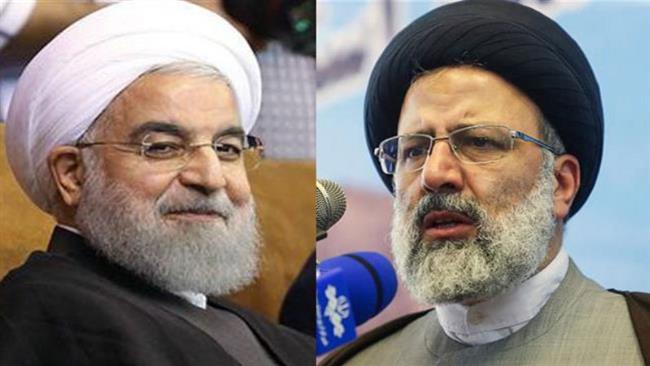
The Iran lobby has been posturing to depict the Iranian presidential election as a battle between “moderates” and “hardliners” as personified by Hassan Rouhani versus Ebrahim Raisi. It has also sought to downplay any role top mullah Ali Khamenei plays in determining the outcome of the election.

The National Iranian American Council has been the most vocal of these groups in pushing this narrative. Examples of this includes pieces appearing in Huffington Post.

The first one by Reza Marashi of the NIAC argues this central conceit of reformists and pragmatists fending off hardline conservatives. The way Marashi describes it, it is almost a heroic struggle. The only thing missing is a dramatic musical score.

Marashi argues that the Iranian people want moderation and reform in their president. Not an unreasonable idea and one that he argues is supported by the election history of Mohammad Khatami and Rouhani, as well as the dismal election effort of Mahmoud Ahmadinejad.

He even portrays Rouhani as a trailblazer in opening political discourse with his election in 2013.

“While it’s true that election season in Iran traditionally allows for an expansion of otherwise taboo political discourse, Rouhani taken it to uncharted waters. First, he publicly committed to engaging in the process of lifting all non-nuclear sanctions if he wins a second term. Then he told a rally that he had not forgotten his 2013 campaign promises, openly stating: ‘Either they have been achieved, or I have been prevented from keeping them.’ And remarkably, he directly told voters: ‘I’ll need votes higher than 51% in order to do certain things,’” Marashi writes.

He goes on to portray Rouhani’s statement as threatening to the regime and a minor miracle he wasn’t hauled off to Evin Prison for daring to utter such statements.

Pardon us while we laugh hysterically at Marashi.

Rouhani has never been, nor ever will be considered a true moderate. He is a loyal member of the regime, pledging allegiance to the same radical theology that all office holders swear to. His past record in military, religious and judicial matters have provided him with bona fides as a harsh punisher of dissent.

His term over the past four years clearly demonstrates his willingness to go to extraordinary lengths to protect the Islamic revolution. During his tenure, the pace of executions rose to the highest level since the revolution, earning annual condemnations from the United Nations, Amnesty International and just about every other human rights organization on the planet.

He has also enforced a broad crackdown on free speech that Iranians access to unmonitored internet access is non-existent. Add to that mass arrests of journalists, the shutdown of blogs and newspapers, and efforts to crack the encryption of social apps such as Telegraph and WhatsApp and you start getting the picture of how bleak things are in Iran right now.

Marashi is correct on one point, which is that this election really is not about the presidency, but rather the positioning going on to succeed Khamenei at the top of the mullah pyramid.

In that regard Marashi and the Iran lobby are getting their cake and eating it too. If Rouhani is elected, they will get to trumpet the victory of moderation even though Rouhani is no moderate.

If Raisi is elected, they can blame it on a newly muscular approach by the Trump administration towards Iran and Middle East policy and never address the horrific crimes of the Iranian regime.

It is a neat solution for the Iran lobby.

Tyler Cullis of the NIAC takes up this issue in his piece in Huffington Post when he questions why Democratic members of Congress seem willing to give the Trump administration leeway in leveling additional sanctions on Iran.

“Democrats have signed up as co-sponsors for Senate and House legislation, believing their political fortunes best lie in supporting aggressive action against Iran rather than acting as a buffer against the Trump administration’s efforts to derail a nuclear accord that, by all accounts, is working as intended,” Cullis writes.

“Democrats are risking a historic mistake – an error in judgment that could end up both alienating their progressive base and costing them hoped-for electoral gains, not to mention setting the stage for a new conflict in the Middle East,” he adds.

Cullis raises the apocalyptic specter of war with Iran as the inevitable path from tightening sanctions against Iran.

It’s the same argument the NIAC has made repeatedly ever since Congress moved to get tougher with Iran as the regime fired off ballistic missiles, sent ships to aggressively confront the U.S. Navy and supported bloody conflicts in Syria, Iraq and Yemen with men, arms and cash.

Cullis proclaims that war with Iran is the sure outcome from any effort to get tougher with Iran. Of course, that assumes that the mullahs only reaction is to go to war with the U.S by this logic.

In fact, the real story is that the mullahs purposely used the nuclear deal to buy time and get out from crushing economic sanctions that were threatening the very existence of the regime.

Now that Iran has received the benefits of billions in cash, foreign investment and the sale of its oil back on the open market, the usefulness and utility of keeping up the pretense of wanting to reach out to the global community is at an end.

Consequently, whether Rouhani or Raisi gets elected is a moot point, since the policies of the regime are not going to change no matter who gets elected. The NIAC has long acknowledged that the office of president in Iran lacks real power, which makes its impassioned arguments for “moderates” to win there even more incomprehensible.

Then again, logic was never a strong suit of the NIAC.

Cullis even makes the outrageous assumption that getting together on Iran will inevitably compel North Korea to take bolder action and not trust the word of the U.S. in any agreement.

“North Korea will view the U.S.’s abrogation of the Iran nuclear accord as clear evidence that the U.S. cannot be trusted to keep to its commitments and will refuse to deal with the Trump administration. In this case, peace will be impossible and war inevitable. Congress’s failings on Iran will spill over and deter peaceful settlement in other areas of conflict such as the Korean peninsula. Democrats will be on the hook once again,”

Really? Are we to assume that a North Korean regime that has broken every agreement it entered into, detonated nuclear devices and openly launches missiles with increasing range is going to be dissuaded by the U.S. commitment to Iran?

The lack of logic from the NIAC never ceases to amaze.

Filed Under: Blog, Current Trend, News Tagged With: Featured, hassan rouhani, Iran, Iran Human rights, Iran Lobby, National Iranian American Council, NIAC, NIAC Action, Reza Marashi, Tyler Cullis

Iran Lobby Peddles False Narratives for Iran Elections

May 16, 2017 by admin

Iran Lobby Peddles False Narratives for Iran Elections

Iran Lobby Peddles False Narratives for Iran Elections

With only scant days before the Iran presidential election, the Iran lobby’s most ardent supporters weighed in on the race with typical obsequiousness. The best example was an editorial by Trita Parsi, founder and president of the National Iranian American Council, in Foreign Affairs.

Predictably he offered up one of the more ridiculous spin lines in the history of disinformation on behalf of the Iranian regime. Parsi actually tried to push the idea that top mullah Ali Khamenei had no influence on the outcome of the election and that “reformist” former president Mohammad Khatami was the real power in this election.

Parsi bases that silly idea on the concept that Khamenei represents the “establishment” and as such his perceived candidates are constantly defeated at the polls by the Iranian people.

To say Parsi’s reasoning is flawed is like saying President Trump likes to tweet.

First of all is the idiotic idea that Khamenei has no influence on the election.

The Supreme Council has the final say in terms of vetting candidates to appear on the ballot for any election right down to a lowly provincial seat. Khamenei has the right to directly select half of the Council’s members. The others are appointed indirectly by him as well.

So right off the bat, Khamenei exercises a monopoly on who even goes on the ballot before the first vote is cast.

Secondly, the regime’s constitution itself ensures that only candidates meeting specific loyalty tests to the regime and its theocracy are allowed to run for office, thus ensuring adherence to preserving the mullah’s rule in Iran.

Control of who appears on the ballot allows Khamenei to control the narrative as to which candidates are perceived to be “moderate.” By stacking the ballot with four candidates who essentially have no chance at all, Khamenei can create the perception of a clear choice between a “moderate” Hassan Rouhani or a “hardline” Ebrahim Raisi.

Over 1,636 people registered to appear on the ballot for president. Only six were approved by Khamenei’s council.

Both of these men are dyed-in-the-wool insiders who are dedicated to serving the religious theocracy and Khamenei’s wishes, but Iran, with the help of the Iran lobby, creates a false perception of a real “choice” in the election.

“Another unknown candidate by the name of Mahmoud Ahmadinejad defeated the presumed favorite, the late Ali Akbar Hashemi Rafsanjani, who is considered one of the pillars of the revolutionary regime. But precisely because Rafsanjani was perceived as an embodiment of the establishment, the antiestablishment vote went to Ahmadinejad,” Parsi writes.

Of course, Parsi tries to posit that the 2009 race, which was widely considered rigged for Ahmadinejad causing widespread mass protests, was in fact actually a portrayal of the former “outsider” to be an “insider” now which caused the vote discrepancy.

Far from being honest with the reader, Parsi tries yet again to pull the wool over everyone by slicing Iran’s politicians into neat little camps opposed to each other and representing widely divergent viewpoints.

The reality is that there is very little difference between these candidates since are all loyal members of the regime.

Take Rouhani for instance. He was elected on the platform of being a moderate vowing reforms, but during his tenure, Iran has taken a huge step backward in human rights and now is involved in three wars sending thousands of young Iranians to fight and die, while the mullahs and elites skim huge personal fortunes through a massive network of corrupt shell companies.

These are not the facts that Parsi wants people to know about since it would ruin his carefully constructed fantasy.

Benny Avni writes in the New York Post how this election may be one where Khamenei decides the pretense of a moderate face for the regime is no longer necessary since Iran gained concessions from the nuclear deal already.

“Just as Americans and others are reorienting themselves for the age of President Trump, so are the mullahs. In their calculation, they now need to replace the friendly sounding voices, like those of Rouhani and his sidekick, Foreign Minister Javad Zarif, with angrier men,” Avni writes.

“Raisi is an insider who has climbed the political ladder. Supreme Leader Ali Khamenei is said to favor him as successor, when the time comes,” he adds.

“But before Raisi follows Khamenei and his predecessor, Ayatollah Ruholla Khomeini, at the top of the mullahs’ greasy poll, Raisi first needs a bit of public exposure. He could also use some governing experience, which he currently lacks. The position of president, which doesn’t have nearly as much power as Supreme Leader, is a perfect stepping stone.”

More evidence in the manipulation of the outcome was on display when Raisi’s path to the presidency became easier Monday, when a fellow hardliner, Tehran’s Mayor Mohammad-Baghar Ghalibaf, dropped out of the race.

Analysts believe Ghalibaf won the TV debates and is clearly more qualified, but, under pressure, he’s now calling on supporters to vote for Raisi.

What is clear from all this is that Parsi makes no mention of Raisi in his editorial which only demonstrates how close Raisi is to becoming elected and returning a public hardliner back into power to confront a U.S. administration no longer committed to a policy of appeasing Tehran.

We can be assured that if Raisi is elected, Parsi will no doubt ascribe his election as resulting from being a “outsider.”

Michael Tomlinson

Filed Under: Blog, National Iranian-American Council, News Tagged With: Ebrahim Raisi, Featured, Iran Election 2017, Iran Lobby, Iran Terrorism, IRGC, Khamenei, National Iranian American Council, NIAC, NIAC Action, Qalibaf, Rouhani, Trita Parsi

Ali Khamenei Reinforces Why Things Will Not Change After Elections

May 11, 2017 by admin

Ali Khamenei Reinforces Why Things Will Not Change After Elections

Ali Khamenei Reinforces Why Things Will Not Change After Elections

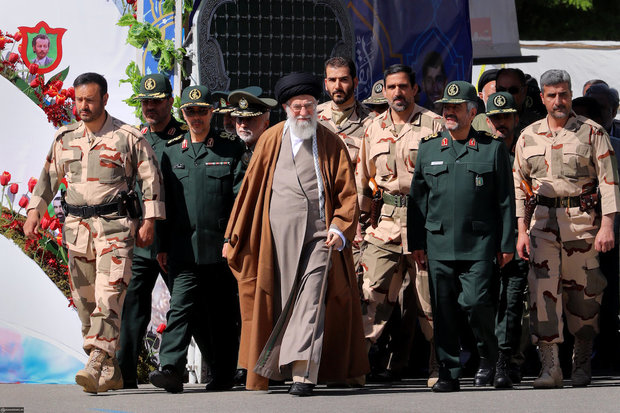
Ali Khamenei, the mullah at the top of the power pyramid in Iran, gave another of his vitriolic speeches in which he reinforced exactly why things won’t change much in the Iranian regime after presidential elections May 19th no matter who gets elected.

He warned that any disrupters of the election would receive a “slap in the face” which is a not so-veiled warning to anyone planning protests over the election results.

The warning came in remarks he made to graduating cadets of the Revolutionary Guard Corps, in which he stressed the importance of security as the dominant issue in the election. An emphasis that is at odds with protests around Iran by ordinary Iranians demanding better jobs wages and economic growth.

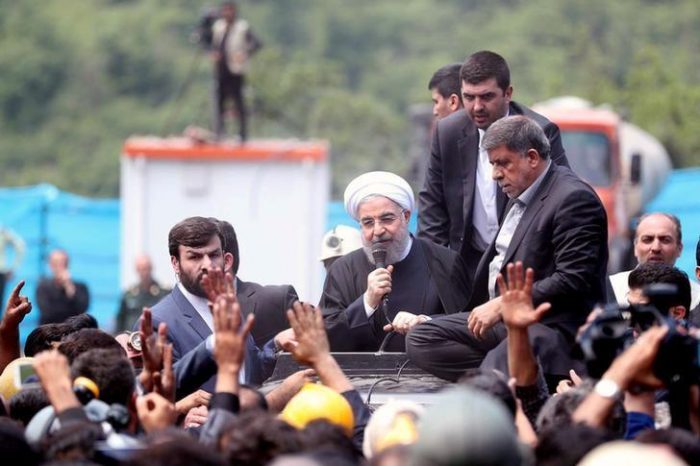
The tensions are so bad that Hassan Rouhani’s recent appearance at the scene of a mine collapse trapping and killing scores of miners was met with derision and protesting miners kicking and banging on his car.

Those underlying tensions are a clear signal to Khamenei and the other mullahs of the precarious nature of their hold on power, which is why Khamenei chose to deliver his comments before the regime’s military.

It is also why controls on this year’s elections are much stricter with street rallies banned and restrictions on televised debates.

The elections have also done nothing to alter the trajectory of the regime’s military build-up, which if anything has stepped up in tempo as evidenced by Iran’s communications minister recently announced plans to put two satellites into space, but the impending launch may be cover for ballistic missile research.

Mahmoud Vaezi announced on Monday that the two supposedly home-made satellites will be launched into orbit in the coming months. The launches may seem innocuous, but such space technology could be used to help advance Iran’s missile technology.

“Iran is certainly using its satellite program to shield the ICBM (inter-continental ballistic missile) program. The technology and challenges in the two programs are similar in many aspects and one can move from one to another,” Saeed Ghasseminejad, an Iran research fellow at the Foundation for Defense of Democracies, told The Daily Caller News Foundation.

Iran needs to disguise its ICBM program, he added, and satellite launches are an ideal method. The Islamic Republic has been sanctioned by the U.S. for its missile tests in the past, even since the signing of Joint Comprehensive Plan of Action nuclear agreement in 2015. Iran’s military has engaged in at least eight missile launches since the deal was inked.

Iran’s missile arsenal forms the backbone of its national defense. The Islamic Republic was cut off from Western military support after its revolution in 1979, diminishing the capabilities of its air force. The country instead focused on advancing its missile program, which was easier to maintain thanks to the help of North Korea. An Iranian missile tested in January had North Korean origins, according to the Pentagon.

That commitment to Iran’s missile capability was reinforced by Khamenei in the same remarks to the Revolutionary Guard Corps cadets.

“The hype over Iran’s missile capability is because of their (enemies) spite and anger about this element of power in Iran,” Khamenei said.

“We possess missiles which are very precise and can hit the targets with high precision from thousands of kilometres away,” he said, adding that “We will preserve this capability with all in power and will increase it powerfully.”

He said that Iran’s military power serves as a tool for “deterring purposes” and relies on domestic potentials.

Also, the regime test-fired a high speed torpedo, a senior U.S. defense official told Fox News, marking the latest provocative action from the Islamic Republic.

The Hoot torpedo, which has a range of six miles, was fired in the Strait of Hormuz, where much of the world’s oil passes each day.

It’s unclear if the torpedo test was successful.

It is not the first time Iran has tried to test this torpedo. The last time it did so was in February 2015. It also follows a cruise missile test from a midget submarine also based on North Korean designs.

Iranian officials announced in April that the regime’s defense budget increased 145 percent under Rouhani, hardly the sign of a government intent on becoming a “moderating” influence in the region as promised by the Iran lobby.

In the end, very little has changed in Iran and will remain so no matter who gets elected. The only real hope for democratic reforms and change remains empowering the global Iranian resistance movement and give it the international backing it needs to become a force within Iranian politics again.

Laura Carnahan

Filed Under: Blog, News Tagged With: Featured, Hoot, Iran, Iran Lobby, Iran Terrorism, IRGC, Khamenei

Why Nothing Changes in Iranian Regime Elections

May 9, 2017 by admin

Why Nothing Changes in Iranian Regime Elections

Iran’s President Hassan Rouhani speaks as he visits Azadshahr mine explosion site in Azadshahr, Golestan Province, Iran May 7, 2017. Picture taken May 7, 2017. President.ir/Handout via REUTERS

What ‘s the line? Same stuff, different day? That’s accurate when it comes to describing the so-called “presidential election” scheduled for May 19th. Elections in Iran are neither fair nor free and because of their illegitimacy, they invariably result in further weakening the already embattled regime; like a cancer eating away at a patient.

The most common fallacy being trumpeted around about how the regime government works, especially by Iran lobby advocates such as the National Iranian American Council, is that Iranian elections are democratic.

Nothing could be further from the truth.

When elections are held, all candidates are vigorously vetted by the Guardian Council, a body of 12 clerics, six of whom are appointed directly and the other six indirectly by top mullah Ali Khamenei. When the president is selected, he is nothing more than a puppet, acting according to the will of the supreme leader. Based on the Islamic state’s constitution, the president must be confirmed by the supreme leader no matter what the people voted.

It’s the kind of absolute control that campaign managers in Western nations must envy. Democracy can be such a messy experience that the mullahs in Tehran have done away with the inconvenience.

The idea that “moderates” are going to be empowered is silly when you consider that Khamenei, has final veto power over foreign policy, treaties, military commitments, economic policy, the judiciary and culture. These are enforced through state mechanisms appointed by him including the Revolutionary Guards and Quds Force (which owns over two-thirds of the industrial capacity of the economy through shell companies), Basji paramilitaries and morality police that enforce, arrest and imprison anyone violating generic sharia laws designed to stamp out dissent.

And all candidates, including the incumbent Hassan Rouhani and leading pro-Khamenei camp loyalist Ebrahim Raisi, are in line with all the regime’s strategic objectives. Otherwise, their candidacy would not enjoy Khamenei’s necessary approval.

The citizens of Iran are defined as people without rights or voice. Their choices in the upcoming elections can’t get any worse:

  • Ebrahim Raisi, known for his role in the “Death Commission” ordered by regime founder Ruhollah Khomeini, presided over the1988 massacre of over 30,000 political prisoners, mainly members and supporters of the opposition People’s Mojahedin Organization of Iran;
  • Hassan Rouhani, although portrayed as a moderate by the Iran lobby, he is known for key roles in supporting terrorism; his support for chemical, biological, and nuclear weapons; how he duped the West when he was Iran’s top nuclear negotiator; his early years as a fundamentalist activist and protege of Khomeini. His record during his current term clearly demonstrated his hardline opposition to human rights, freedom, and democracy.

The lengths that the Iran regime will go to keep its grip on power may be shown in the grisly April 29th assassination of exiled Iran TV executive Saeed Karimian in Istanbul.

Saeed Karimian, born in Tehran, the manager and owner of GEM TV group, was assassinated along with a Kuwaiti business partner while in his car after he was sentenced in absentia for “spreading propaganda.”

The regime claimed that Karimian had close relations with the Iranian opposition; going so far as to photoshop an image showing Karimian meeting with Iranian opposition leader Maryam Rajavi.  Karimian had strongly denied such reports in the past, but all Iranians know that linking anyone to the PMOI/MEK is tantamount to an undeclared execution order.

The killing of Karimian is indicative of the new paranoia gripping the theocratic regime; the ruling mullahs are now looking like they are in their death throes. After eight years of appeasement by the Obama administration, the plethora of human rights violations within Iran has increased. More than 3,000 people have been executed since the “so-called” moderate Hassan Rouhani took office as president in 2013.

It would not be surprising that the mullahs anticipate another uprising, similar to what occurred following the fraudulent second election of Mahmoud Ahmadinejad in 2009. With this presidential election, they are terrified that the people of Iran will once again take to the streets to protest the oppression and corruption that have been the modality of the Iranian regime since the 1979 revolution.

Nevertheless, whether Rouhani or Raisi becomes president, one thing is clear: the April 29 assassination in Istanbul and political discontent among the populace is a political signal indicating where the Iranian theocracy is heading after the elections.

The only solution for the people of Iran is to seek change from within. This can be achieved by supporting opposition groups such as National Council of Resistance of Iran, which is largest opposition against Tehran.  This coalition enjoys the most support among Iranians inside the country and abroad, as seen vividly in its annual 100,000-strong rallies, where supporters gather in Paris from all four corners of the globe.

Michael Tomlinson


Filed Under: Blog, News Tagged With: Featured, hassan rouhani, Iran Election 2017, Iran Human rights, Iran Lobby, Iran Mullahs

Iran Regime Ties With North Korea Requires a Marriage License

May 9, 2017 by admin

Iran Regime Ties With North Korea Requires a Marriage License

Iran Regime Ties With North Korea Requires a Marriage License

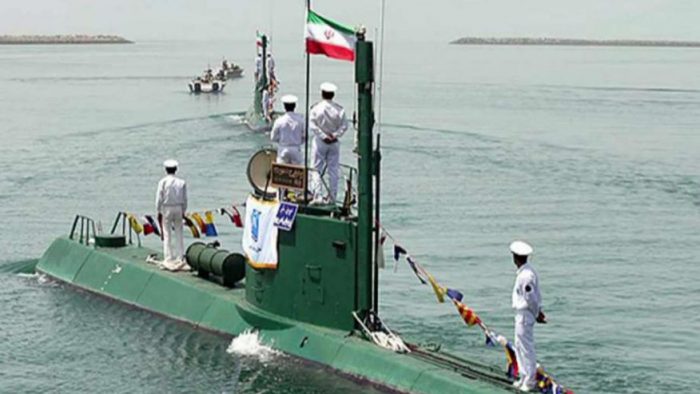
Iran’s recent failed ballistic missile  launch from a submerged “midget” submarine has once again bought up the specter of Iran’s military ties with North Korea.

The two rogue regimes are so joined at the hip, their relationship would require a marriage license to be this close.

To say the mullahs in Tehran share a lot of the same values with Kim Jong-un would be an understatement of historic proportions. Both regimes have engaged in overseas assassinations and terrorist operations, especially killing dissidents and political opponents—and in the case of Kim, even family members.

Both have invested heavily in developing illicit nuclear programs, including extensive development of ballistic missile designs. The level of cooperation and sharing is akin to Intel designing microprocessors for Dell computers.

In the latest incident, the launch of what is being portrayed as Iran’s first with the Jask-2 underwater cruise missile, uses a missile design intelligence experts believe to be a copy of previous missiles tested in North Korea.

This revelation would hardly be a surprise, as the Ghadir class electric submarine used as a platform to launch the cruise missile is also a direct copy of the North Korean Yono class sub.

Both Iran and North Korea were part of the notorious A.Q. Kahn nuclear proliferation network, and bilateral trade in oil and weapons has continued despite UN resolutions designed to stop it. Ballistic missile cooperation is documented, and nuclear cooperation has been an unspoken theme in Washington.

According to Jeffrey Lewis of the Middlebury Institute of International Studies in Monterey, California, the evidence of collaboration between North Korea and Iran is ample and of long standing.

“The very first missiles we saw in Iran were simply copies of North Korean missiles,” he told Fox News “Over the years, we’ve seen photographs of North Korean and Iranian officials in each other’s countries, and we’ve seen all kinds of common hardware.”

With decades of previous cooperation between the two countries raises the concern that Iran —after its economic windfall from the nuclear agreement, including the $1.7 billion in cash it received from the U.S. for the swap of hostages. — could offer financial assistance to the cash-strapped hermit kingdom in exchange for missile technology.

Despite the overwhelming evidence of collusion between these two rouge nations the Iran lobby and its appeasers still make the false claim of moderation while Iran continues its aggressive behavior in the Persian Gulf and its meddling in the Middle East, as well as its continued efforts to develop missiles.

And North Korea has solidified its nuclear forces and is working on designing solid-fuel missiles that are much more easily concealed and dangerous than its current, liquid-fueled missile arsenal, as well as nuclear warheads that are small enough for missile delivery.

It is ironic that while Iran and North Korea share so much, they also share in the lack of condemnation or criticism from the Iran lobby. Supporters such as the National Iranian American Council can’t even be bothered to issue a press release condemning North Korea’s underground nuclear tests.

If the evidence cited in the  Fox News report is true, then the Trump administration will have to face the need to deal with two problems at once: North Korea’s active development of nuclear weapons and missiles and Iran’s use of North Korean technology to improve its own military might.

Therein lies the danger of one rogue nuclear armed state that has already been threatening nuclear war is now working with an aspirant nuclear armed state that is the world’s leading state sponsor of terrorism. The risk to U.S. and international security is greatly at risk unless steps can be taken to stop the collaboration in its tracks.

But the solution for both regimes long term lies in prying open the opportunity for domestic political reforms and enabling dissident groups to finally come in from exile. In the case of North Korea that means gaining support from China and for Iran it means empowering Iranian dissident groups to participate in Iranian society openly and freely again.

Laura Carnahan

Filed Under: Blog, News Tagged With: Featured, Iran, Iran Lobby, Iran-North korea, Jask-2

Announcement of “De-Escalation Zones” in Syria Just More Hot Air from Iran

May 6, 2017 by admin

Announcement of “De-Escalation Zones” in Syria Just More Hot Air from Iran

Announcement of “De-Escalation Zones” in Syria Just More Hot Air from Iran

Russia, Turkey and the Iranian regime jointly announced the establishment of so-called “de-escalation zones” in Syria in which the Assad regime would allegedly halt military flights over designated areas according to the Washington Post.

As officials from the three countries — Russia, Iran and Turkey — that back rival sides in the conflict signed the agreement at Syria talks in Kazakhstan on Thursday, some members of the Syrian opposition delegation shouted in protest and walked out of the conference room in Astana, the Kazakh capital.

The opposition is protesting Iranian regime’s participation at the conference and role as a guarantor of the agreement, accusing it of fueling the sectarian nature of the conflict that has killed some 400,000 people and displaced half the country’s population.

“Iran is a country that is killing the Syrian people and the killer cannot be the rescuer,” said Abu Osama Golani, a rebel commander who attended the gathering in Astana.

The Iranian regime’s role in the carnage and escalation in Syria makes it a dubious guarantor of safety and security, especially since it was Iran that begged Russia into intervening in the war in a last-ditch effort to save the Assad regime from being toppled by opposition forces.

The Syrian government has said that although it will abide by the agreement, it would continue fighting “terrorism” wherever it exists, code for most armed rebel groups fighting government troops.

It’s the reason why a previous cease-fire agreement signed in Astana on Dec. 30 eventually collapsed. Other attempts at a cease-fire in Syria have all ended in failure largely because of Iran and Syria’s willingness to continue attacking rebel-controlled areas, including those with large civilian populations.

Past efforts at protecting “safe zones” have had a pretty dismal record, largely because combatants are still allowed to engage in attacks without serious repercussions.

“Iran’s activities in Syria have only contributed to the violence, not stopped it, and Iran’s unquestioning support for the Assad regime has perpetuated the misery of ordinary Syrians,” said U.S. State Department spokeswoman Heather Nauert.

The problems in Syria are only one aspect of the larger difficulties of Iranian influence and activities throughout the region and as such requires a more comprehensive solution attacking the instability at its source: Iranian regime itself.

When Iran attempted to launch a cruise missile from a “midget” submarine earlier this week, Pentagon officials saw more evidence of North Korean influence in the Islamic Republic – with intelligence reports saying the submarine was based on a Pyongyang design, the same type that sank a South Korean warship in 2010, according to Fox News.

According to U.S. defense officials, Iran was attempting to launch a Jask-2 cruise missile underwater for the first time, but the launch failed. Nonproliferation experts have long suspected North Korea and Iran are sharing expertise when it comes to their rogue missile programs.

Only two countries in the world deploy the Yono-class submarine – North Korea and Iran. Midget subs operate in shallow waters where they can hide.

“When those midget subs are operating underwater, they are running on battery power—making themselves very quiet and hard to detect,” said a U.S. defense official who declined to be identified.

Perhaps most worrisome for the United States is that Iran attempted this latest missile launch from a midget sub Tuesday in the narrow and crowded Strait of Hormuz, where much of the world’s oil passes each day, Fox News said.

Over a year ago, Iran fired off a number of unguided rockets near the USS Harry Truman aircraft carrier as she passed through the Strait of Hormuz in late December 2015. The U.S. Navy called the incident “highly provocative” at the time and said the American aircraft carrier was only 1,500 yards away from the Iranian rockets.

In July 2016, two days before the anniversary of the nuclear agreement between Iran and world powers, the Islamic Republic attempted to launch a new type of ballistic missile using North Korean technology, according to multiple intelligence officials.

Even with this overwhelming evidence of collusion between the two rogue nations, some Iran lobby apologists continue to make the case of appeasement. In this case, Robert S. Litwak, the vice president for scholars and the director of international security studies at the Woodrow Wilson International Center for Scholars in Washington, D.C., argued that an “Iran-style nuclear deal” with North Korea was a viable solution.

Buying into the false narrative of moderation within the Iranian regime, Litwak argues that making a diplomatic effort to cap North Korea’s nuclear capability—similar to the Iran nuclear deal—is the “least bad” option.

Unfortunately for Litwak, history demonstrates that this least bad option stinks to high heaven and has done nothing to curb Iran’s regional ambitions, thirst for bloodshed or improved its dismal human rights record.

A repeat of the Iran deal for North Korea would no doubt similar disastrous results.

Michael Tomlinson

Filed Under: Blog, News Tagged With: #NuclearDeal, Appeasement policy, Featured, Iran, Iran deal, Iran Human rights, Iran Lobby, Iran Mullahs, Iran sanctions, North Korea, Robert S. Litwak

Iran Military Buildup Continues Obscured by Election

May 6, 2017 by admin

Iran Military Buildup Continues Obscured by Election

Iran Military Buildup Continues Obscured by Election

It’s no secret that while the Iran lobby was busy promising more moderation and accommodation from the Iranian regime during nuclear talks two years ago, the mullahs in Tehran were busy working over their calculators figuring out what they were going to buy with their newfound cash coming from relief from economic sanctions and the bonus of billions coming from a prisoner swap with the U.S.

Since the completion of the deal, the Iranian regime has been busy replenishing its military which was drained from years of fighting in Syria and Yemen, as well as supplying its proxies with weapons and ammunition including Hezbollah, Shiite militias and the Houthis.

More worrisome though is analysis indicating that Iran has sought to not only rebuild its military, but transform it primarily from tactical, regional actions to a more strategic, offensive posture posing a menacing threat to its neighbors, especially long-time rivals Saudi Arabia and the Gulf states.

Iranian officials announced late last month that Iran’s defense budget had increased by 145 percent under President Hassan Rouhani and that the military is moving forward with a massive restructuring effort aimed at making it “a forward moving force,” according to regional reports.

Regime leaders have stated since the Iran deal was enacted that they are using the massive amounts of cash released under the agreement to fund the purchase of new military equipment and other armaments. Iran also has pursued multi-million dollar arms deals with Russia since economic sanctions were nixed as part of the deal, according to the Washington Free Beacon.

Leading members of Congress and U.S. officials working on the Iran portfolio suspect that at least a portion of the Obama administration’s $1.7 billion cash payment to Iran  has been used to fund and support terrorists in the Middle East.

The latest disclosure about Iran’s military buildup is further fueling concerns that U.S. cash assets returned to the country—which were released with no strings attached by the Obama administration—are helping Iran pursue a more aggressive military stance against U.S. forces in the region.

Iranian Brigadier General Kiumars Heidari announced the military buildup during Iran’s annual Army Day. While the announcement did not grab many headlines in the Western media, national security insiders have been discussing the announcement for weeks, according to conversations with multiple sources.

Iran’s goal is to turn its army into an “offensive” force, a major shift from its historic role as a support agent for the Iranian Revolutionary Guards Corps, or IRGC, Iran’s extremely well funded primary fighting force.

Iran hopes to revamp its army from top to bottom, including improving logistical capabilities, weaponry, and other armaments.

The regime has also escalated its attempts to demonstrate additional military capabilities including the launching of ballistic missiles.

Another sign was an Iranian Yono-class “midget” submarine attempted to launch a cruise missile from the Strait of Hormuz on Tuesday, according to U.S. officials.  The only two countries in the world that operate this type of submarine are Iran and North Korea. The test launch was not successful, reported Fox News.  Iran had previously announced it had successfully tested a sea-launched missile and it is not known if this was the first actual submarine launch of the weapon.

The increase in military activity and emphasis on first-strike weapons and tactics is leading many to speculate what path the Trump administration will pursue to stymie the mullahs.

Much crystal-ball gazing has been going on lately, not the least of which coming from Iran lobby members such as the National Iranian American Council who hope to shape the narrative much as it did during the nuclear negotiations.

Secretary of State Rex Tillerson said last month that Iran is complying with the terms of the 2015 nuclear agreement. The positive finding of the State Department’s routine periodic review of the nuclear agreement, known formally as the Joint Comprehensive Plan of Action (JCPOA), was surprising given President Trump’s assessment that it was “the worst deal ever negotiated.” Some analysts believed Tillerson was signaling that the Trump administration would let the agreement stand rather than “rip it up” as the president had promised.

But according to James S. Robbins, a member of USA TODAY’s Board of Contributors, who served as a special assistant to the secretary of defense in the George W. Bush administration, there is something deeper going on. The key language in Tillerson’s statement dealt with the National Security Council’s inter-agency review to determine whether continued suspension of the sanctions is “vital to the national security interests of the United States.” This phrasing points to the key weakness in the structure of the deal, said Robbins.

“In addition, previously secret aspects of the deal have begun to be revealed, such as the Obama administration freeing Iranian prisoners accused of major crimes related to the nuclear and missile programs. These shady aspects of the bargain make it easier for the Trump administration to make the political case against it, which Americans opposed by wide margins to begin with,” he added.

If the National Security Council determines that Iran’s activities are not in U.S. national security interests, the president can lift the sanctions waivers. This puts Iran in a bind. Tehran has threatened it could restart its nuclear program “in a new manner that would shock Washington.” But if Iran chooses openly to violate the terms of the deal, this would activate the agreement’s Article 37 “snap back” mechanism which restores all the pre-JCPOA international sanctions. The only way the “snap back” would not happen is if the UN Security Council votes otherwise, but the United States could veto any resolution that keeps the deal alive, according to Robbins.

This puts Iran in a lose/lose position: accept renewed and potentially tougher U.S. sanctions while staying within the framework of the JCPOA; or breach the deal and suffer the “snap back” consequences. Of course, Iran could just attempt to go full-bore to develop nuclear-armed missiles as quickly as possible and hope for the best. But the developing crisis with North Korea should be instructive to Tehran. The Trump administration is less willing than its predecessors to accommodate or ignore the nuclear ambitions of rogue states.

All of which places the Iranian regime squarely in the sights of the international community for the first time in nearly four years when Iran was dragged unwillingly to the bargaining table because of the effectiveness of previous sanctions.

We shouldn’t let this opportunity slip away like the last one.

Michael Tomlinson

Filed Under: Blog, News Tagged With: Featured, Iran Lobby, Iran Mullahs, Iran sanctions, Iran Talks, Iran Terrorism, IRGC, Khamenei, National Iranian American Council, Nuclear Deal

  • « Previous Page
  • 1
  • …
  • 8
  • 9
  • 10
  • 11
  • 12
  • …
  • 38
  • Next Page »

National Iranian-American Council (NIAC)

  • Bogus Memberships
  • Survey
  • Lobbying
  • Iranians for International Cooperation
  • Defamation Lawsuit
  • People’s Mojahedin
  • Trita Parsi Biography
  • Parsi/Namazi Lobbying Plan
  • Parsi Links to Namazi & Iranian Regime
  • Namazi, NIAC Ringleader
  • Collaborating with Iran’s Ambassador

Recent Posts

  • NIAC Trying to Gain Influence On U.S. Congress
  • While Iran Lobby Plays Blame Game Iran Goes Nuclear
  • Iran Lobby Jumps on Detention of Iranian Newscaster
  • Bad News for Iran Swamps Iran Lobby
  • Iran Starts Off Year by Banning Instagram

© Copyright 2026 IranLobby.net · All Rights Reserved.