Iran Lobby

Exposing the Activities of the lobbies and appeasers of the Mullah's Dictatorship ruling Iran

  • Home
  • About
  • Current Trend
  • National Iranian-American Council(NIAC)
    • Bogus Memberships
    • Survey
    • Lobbying
    • Iranians for International Cooperation
    • Defamation Lawsuit
    • People’s Mojahedin
    • Trita Parsi Biography
    • Parsi/Namazi Lobbying Plan
    • Parsi Links to Namazi& Iranian Regime
    • Namazi, NIAC Ringleader
    • Collaborating with Iran’s Ambassador
  • The Appeasers
    • Gary Sick
    • Flynt Leverett & Hillary Mann Leverett
    • Baroness Nicholson
  • Blog
  • Links
  • Media Reports

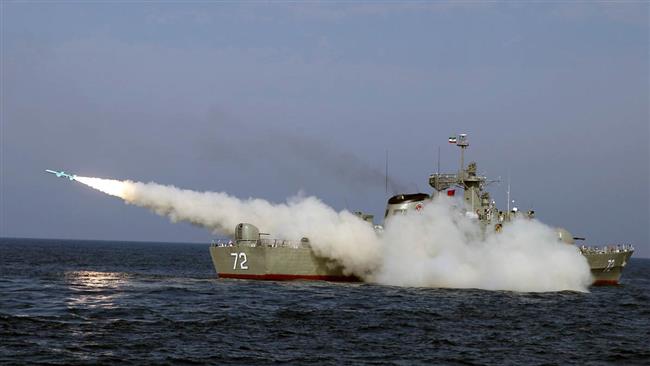
Iran Regime Continues to Ramp up Tensions with Naval War Games

February 27, 2017 by admin

Iran Regime Continues to Ramp up Tensions with Naval War Games

Iran Regime Continues to Ramp up Tensions with Naval War Games

The Iranian regime has been busy lately playing at war games with the gusto of a 10-year-old boy with his new toys. After going on a multi-billion dollar shopping spree using cash provided courtesy of the U.S. for the release of American hostages and as a result of lifting economic sanctions with the nuclear agreement, the mullahs in Tehran have been busy showing off their new toys.

This has included test firing new ballistic missiles, launching new Russian-made anti-aircraft missiles, flying new aerial drones and sailing new ships designed to launch small ship raids against larger warships such as the U.S. Navy.

The Iranian regime has also been busy resupplying Houthi rebels in Yemen with smuggled shipments of rockets, mortar rounds, ammunition and guns. It has also been sending a steady stream of fighters culled from Afghan mercenaries, Shiite militias in Iraq and its own Quds Forces and Revolutionary Guard Corps to fight in Syria.

Meanwhile its navy has been busy flitting about the Persian Gulf and Red Sea to run aggressively at U.S. Navy warships in an attempt to intimidate and possibly cause an incident on the high seas.

This sort of action continued with the launch of a series of war games both on the ground and at sea. The regime just completed three days of war games and launched another series of war games; these to be conducted in a massive area stretching 772,000 square miles from the Strait of Hormuz, the Sea of Oman, through the Indian Ocean and the Bab-el-Mandeb Strait.

Announcing the exercise on Sunday, regime Navy Commander Rear Admiral Habibollah Sayyari said: “The aim of the Velayat 95 drill is to upgrade the country’s defensive capabilities and send Iran’s message of peace and friendship to the regional countries.”

Millions of barrels of oil are transported daily to Europe, the US and Asia through the Bab el-Mandab and the Strait of Hormuz, waterways that run along the coasts of Yemen and Iran and has often been used by the Iranian regime as a threat to global trade.

The US Navy’s Fifth Fleet is based in the region and protects shipping lanes in the Gulf and nearby waters.

On top of the regime banging the war drum loudly, it announced its intentions to buy 950 tons of uranium ore from Kazakhstan over the next three years and is relying on Russia to help refining the uranium into nuclear fuel.

The deal would not technically violate the horrifically bad nuclear agreement between Iran and the U.S. and other nations because the deal did not set limits on the Iranian regime’s ability to produce supplies of uranium ore, which gives you an idea of how idiotic the deal was to begin with.

Ali Akbar Salehi, head of Iran’s Atomic Energy Organisation, told the ISNA news agency that the purchase was supposed to happen “within three years.”

“650 tons will enter the country in two consignments and 300 tons will enter Iran in the third year,” he said.

Salehi said the final shipment of concentrate, known as yellow cake, would be turned into uranium hexafluoride gas and sold back to Kazakhstan — its first international sale of the compound which is used in the uranium enrichment process, according to Breitbart News.

Salehi said Iran has already received around 382 tons of yellow cake, primarily from Russia, since the nuclear deal came into force in January last year.

Under the deal, Iran is allowed to run around 5,000 “IR-1” centrifuges and has been testing more advanced models that can produce greater quantities of enriched uranium.

Taken together, the order to buy tons of uranium along with an almost constant string of military actions set an unsettling stage for the world in 2017. Couple these developments with the upcoming Iranian presidential elections in which it is assured that no dissident candidate will be allowed on the ballot by the regime’s ultraconservative Guardian Council, Iran will remain firmly in the control of mullah Ali Khamenei.

Amidst all of these provocative moves, the Iran lobby has been completely silent, never raising any objections to the escalation in Iran’s military activities, nor its desire to ramp up a civilian nuclear program that could be easily converted to military purposes.

For example, the Ploughshares Fund, which partly funds the National Iranian American Council, has been aggressive in making the claims that it works to stop nuclear proliferation, but in the case of the Iranian regime expanding its nuclear capacity, it is as deaf and dumb as a door post.

The lack of objections from the Iran lobby demonstrates its complicity in supporting these aggressive acts by the mullahs.

Michael Tomlinson

Filed Under: Blog, News Tagged With: #NuclearDeal, Featured, Iran deal, Iran Lobby, Iran Mullahs

Iran Regime Absurdly Punishes 18 Year Old Chess Prodigy

February 22, 2017 by admin

Iran Regime Absurdly Punishes 18 Year Old Chess Prodigy

Iran Regime Absurdly Punishes 18 Year Old Chess Prodigy

There are lots of reasons why teenagers get punished. They stay out too late. They get bad grades in school. They drink alcohol or take drugs.

Why then would an 18-year-old chess prodigy who has achieved the exalted status a grand master get punished? Did she fail to sacrifice her queen to win a gambit?

In the case of

, when she competed at the Tradewise Gibraltar Chess Festival last month, she committed a grave act in the eyes of the Iranian regime; she chose to wear a simple headband instead of a mandated hijab head covering while she played.

As a result of this grave act, Mehrdad Pahlevanzadeh, the head of Iran’s Chess Federation, ruled this week that Derakshani would be kicked off the national team.

Derakhshani’s younger brother Borna, 15, who also entered the tournament, was also kicked off the team. His offense was agreeing to play an Israeli opponent, according to the Washington Post.

Let’s forget for a moment that kicking a grand master off your national team is akin to benching LeBron James before the Olympics, but punishing children is even more absurd.

“Unfortunately, what shouldn’t have happened has happened,” Pahlevanzadeh told the semiofficial Fars News Agency on Monday (via Radio Free Europe). “Our national interests have priority over everything.”

“As a first step, these two will be denied entry to all tournaments taking place in Iran,” he continued, “And, in the name of Iran, they will no longer be allowed the opportunity to be present on the national team.”

That the two young chess masters received such a harsh punishment is not a surprise. Sports in Iran and other parts of the Middle East have long been affected by the region’s strict cultural norms and precarious political stance.

Last year, American chess master Nazi Paikidze did not compete in the chess world championships in Iran because of the country’s requirement that she don a hijab, said the Post.

“Some consider a hijab part of culture,” Paikidze said in an Instagram post announcing her decision. “But, I know that a lot of Iranian women are bravely protesting this forced law daily and risking a lot by doing so. That’s why I will NOT wear a hijab and support women’s oppression.”

The controversy over the hijab is incidental to the larger issues it represents which is the near constant oppression of Iranian women in a society that legitimizes misogyny, allows for the public beating of women found in violation of dress codes, and regularly arrests girls and women who post on social media selfies in which they do not wear head coverings.

The fact that the Iranian regime uses sports and competition as platforms to advance its views is nothing new. The recent welcoming entry of an American wrestling team to wide media coverage stands out in sharp contrast to the disqualification of these teenaged prodigies.

It is also interesting to see the silence from the Iran lobby on this subject. While groups such as the National Iranian American Council have been vociferous in its protests of social issues such as the controversy over President Trump’s immigrant visa moratorium, it has been stone-dead silent on issues such as the rights of women in Iran and the abuse they suffer at the hands of the regime’s dreaded morality police.

The contrast and hypocrisy is stunning.

It may also explain why American views of the leadership in Iran has plunged to all-time lows in spite of the full-court public relations offensive put on by the Iran lobby.

An annual survey by Gallup on Americans’ views of foreign countries earlier this month revealed that Iran and North Korea were the least liked countries out of the 21 on the list.

Other countries in the “most unfavorable” category, which contains nations that have favorable ratings lower than 20 percent and unfavorable ratings above 70 percent, were Iran, Syria, Afghanistan and Iraq.

The poll was conducted before recent events such as North Korea’s ballistic missile test in violation of U.N. resolutions and the assassination of North Korean leader Kim Jong Un’s half-brother.

It does put into perspective though that in spite of the efforts by the Iran lobby to portray Iran as a moderate state, its militant actions such as intervention in Syria and support for a civil war in Yemen, along with its recent launches of ballistic missiles have firmly convinced the American people that the Iranian regime’s leadership is dangerous and untrustworthy.

Also noteworthy was a call by 100 leading Iranian dissidents to Congress to investigate the Iran lobby’s efforts to influence U.S. policy through its network of lobbyists and spin doctors.

The group of dissidents, composed of prominent Iranian voices that oppose the hardline regime in Tehran, says that Congress is not doing enough to expose the Iranian regime’s lobbying efforts in D.C. and propaganda network, which is said to include some at Voice of America Persia.

Iranian-American groups claiming to represent American interests are said to be carrying water for the Islamic regime inside the White House and on Capitol Hill, according to these dissident voices.

The letter cites VOA’s Persian service as a source of pro-Iran corruption. The Free Beacon has reported multiple times on claims that VOA has been infiltrated by Iran regime loyalists who seek to spin coverage in a favorable way for Tehran. In one instance, an Iranian dissident was barred from appearing on VOA Persia for voicing critical opinions about the regime.

Laura Carnahan


Filed Under: Blog, News Tagged With: Featured, Iran Human rights, Iran Lobby, Iran Mullahs

Campaign of Disinformation by Iran Regime Revealed

February 14, 2017 by admin

Campaign of Disinformation by Iran Regime Revealed

Campaign of Disinformation by Iran Regime Revealed

Besides the much-discussed “echo chamber” that arose out of the negotiations for the Iran nuclear deal utilizing a network of so-called experts in academia and organizations such as the National Iranian American Council to push false narratives about the benefits of the deal, the Iranian regime itself has undertaken several initiatives to push other false and misleading narratives to defame the Iranian dissident movement.

At the center of that disinformation campaign lays the Iranian regime’s Ministry of Intelligence Services. If Hitler relied on Joseph Goebbels to help spread Nazi propaganda, the mullahs in Tehran rely on the MOIS to do the same job.

To say the MOIS is a shadowy organization is like saying grease is slippery. The MOIS was created out of the former Shah of Iran’s infamous SAVAK intelligence service which had been notorious for its brutal methods.

The mullahs opted to keep much of the former intelligence services more ruthless elements in support of the founding of their religious theocracy. As part of its first missions, it sought to infiltrate many of the democracy and opposition groups in those early years and insidiously target and even assassinate many of its leaders to help secure the mullahs’ rule.

Since then the MOIS has blazed a trail that included an infamous series of assassinations of dissident writers and intellectuals and Iranian political dissidents both inside and outside Iran. Of special importance were members of resistance groups such as the People’s Mojahedin Organization of Iran otherwise known as the Mojahedin-e Khalq.

For the MOIS and the mullahs it serves, nothing is more galling than to have fellow Iranians actively and aggressively resist their rule because as long as Iranians oppose their rule, the pathway exists for regime change and a transition to freedom and democracy.

One of the more aggressive tactics the MOIS has employed to distort the discussion about the Iranian regime’s policies has been the use of former dissident members who were either recruited or coerced into denouncing opposition movements.

Col. Wes Martin (US), former Anti-terrorism/Force Protection Officer of all Coalition forces in Iraq and a frequent news contributor, wrote about the MOIS use of disinformation in the U.S. in a piece in The Hill.

A report commissioned by the Pentagon and released by the Library of Congress provides an alarming look into the operations of Iran’s MOIS right here in the United States, he writes.

“MOIS recruited former members of the (People’s Mujahedin of Iran-PMOI, also known as MEK) in Europe and used them to launch a disinformation campaign against (PMOI),” the report reads.

Among those named in the Pentagon report are Massoud Khodabandeh and his British wife, Anne. They were recruited by the MOIS in the mid-1990s and used as assets against the opposition before launching the ‘Iran-Interlink’ website explicitly under Tehran’s orders, Martin adds.

“The MOIS resorts to character assassination against lawmakers and reporters who hold positive views of the Iranian opposition, aiming to silence their voices,” he said.

Martin cited a 2014 report by iSight Partners which uncovered a three-year espionage campaign, originating in Iran, that used an elaborate scheme involving a fabricated news agency, fake social media accounts and bogus journalist identities to deceive victims in the United States and elsewhere.

Martin went on to cite other fake news sites operated by Khodabandeh such as mesconult.com are hosted by Ravand Cybertech, an entity run by the Iranian regime directly. It is not a coincidence that postings from these sites are often cited in Iranian state-controlled media as “news sources.”

Dr. Majid Rafizadeh, an Iranian-American scholar, author and U.S. foreign policy specialist and president of the International American Council, also wrote about the more direct introduction of Iranian regime lobbyists and operatives into the U.S. and Europe on the ground to push the regime’s agenda.

“Many argue that some of Iran’s lobbyists work in plain sight and had access to top officials at the White House and State Department; they lobbied for the lifting of sanctions against the Islamic Republic, top state sponsor of terrorism, and subsequently lifting of sanctions against Iran’s Revolutionary Guards Corp (IRGC), while demonizing Iranian-Americans who called for firmness against Iran’s ruling clerics and ayatollahs,” he writes.

“Cutting to the chase, it seems that the lobbyists and advocates for the Islamic Republic, next dismiss anyone suggesting the US should respond to this appalling conduct with firmness as a warmonger. But nobody appears to want, or ask for, armed conflict with Iran, so that is not an option,” he adds.

The disconnect between the claims of the Iranian regime’s lobbyists and supporters and the reality of the day grows larger every day. Unfortunately, those who are capable of setting a new standard for disagreeing with the regime even on a subtle level seem to cave to the Iran lobby’s arguments.

One example was a visit by a delegation from Sweden’s self-declared “first feminist government” which folded and enshrouded themselves in head coverings as they met with Hassan Rouhani in a blatant blow to Iran’s feminist movement, which has been under severe attacks by the mullahs.

UN Watch declared in a press release its concern over Sweden’s failure to promote a “gender equality perspective.”

In doing so, the Swedish female politicians ignored the recent appeal by Iranian women’s right activists who urged Europeans female politicians “to stand for [their] own dignity” and refuse to wear the hijab when visiting Iran.

“European female politicians are hypocrites,” says one activist. “Because they stand up with French Muslim women and condemn the burkini ban—because they think compulsion is bad—but when it happens to Iran, they just care about money.”

The scene in Tehran on Saturday was also a sharp contrast to Deputy Prime Minister Isabella Lövin’s feminist stance against Trump, in a viral tweet and then in a Guardian op-ed last week, in which she wrote that “the world need strong leadership for women’s rights.”

Linde “sees no conflict” between her government’s human rights policy and signing trade deals with an oppressive dictatorship that tortures prisoners, persecutes gays, and is a leading executioner of minors, UN Watch declared.

We can only hope that world media attention is more tightly focused on the real machinations going on with the Iran lobby and its MOIS taskmasters.

Michael Tomlinson

Filed Under: Blog, News Tagged With: #NuclearDeal, Appeasement policy, Featured, Iran deal, Iran Human rights, Iran Lobby, Iran Terrorism, National Iranian American Council, NIAC, NIAC Action

Iran Lobby Echo Chamber Going Full Bore to Support Iran Regime

February 10, 2017 by admin

Iran Lobby Echo Chamber Going Full Bore to Support Iran Regime

Iran Lobby Echo Chamber Going Full Bore to Support Iran Regime

With the Trump White House announcing a series of new sanctions aimed at officials of the Revolutionary Guard Corps for the Iranian regime’s ballistic missile program, as well as contemplating broad new sanctions stemming from a possible designation of the IRGC as a terrorist organization, the Iran lobby and supporters of the regime have launched an all-out PR effort to prop up the faltering regime.

In a campaign similar to the infamous “echo chamber” of academics and advocates furiously penning editorials and giving interviews to sympathetic media outlets, the Iran lobby is trying anything to deflect attention on the regime’s militancy and instead claim anything aimed at punishing the regime is somehow racist or a prelude to armed conflict.

But the effort to come to the aid of the mullahs in Tehran isn’t just limited to the usual assorted Iran sympathizers as European Union foreign policy chief Federica Mogherini met with U.S. Secretary of State Rex Tillerson and spoke “at length” about the Iran nuclear deal according to Reuters.

Mogherini helped negotiate the 2015 nuclear deal with Iran, along with diplomats from Iran, the United States and other major world powers. The deal curbed Iran’s nuclear program in return for sanctions relief said Reuters.

Trump has said the deal is terrible, and Flynn put Iran “on notice” last week for test-firing a ballistic missile, raising the prospect of spiking tensions between Iran and the United States.

Since the deal, Mogherini has visited Tehran while the regime commenced a series of ghastly executions of men and women; none of which were protested by the EU.

Even Russia Today weighed in as well by publishing an opinion piece by John Wright, an outspoken supporter of the Iran nuclear deal, who took the Trump administration to task for focusing on Iran instead of the world’s “number one terrorist state” in his mind—Saudi Arabia.

“The Trump administration’s consistent and ongoing demonization of Iran flies in the face of reality in which Iran has stood, alongside Syria, Russia, the Kurds, and the Iranian-backed Lebanese resistance movement Hezbollah, as a pillar against the very same Salafi-jihadist terrorism that poses a threat to the American people,” Wright said in a splendid example of mimicking the very same messages consistently uttered by the National Iranian American Council and other Iran lobby members.

Wright went on to hammer Saudi Arabia, while essentially excusing the vile acts of ISIS and downplaying anything the Iranian regime has done by comparison. His logic or lack thereof defies commonsense and represent the intellectual vacuum that characterizes much of the Iran lobby’s arguments.

In a more flimsy example of casting doubt on efforts to designate the IRGC a terrorist organization, the Chicago Tribune offered up a story with the dubious headline of “Warnings for White House on terror designation for Iran Revolutionary Guard” and goes on to hint at warnings from defense officials, but neglects to mention anyone specifically, nor offer a single quote against the planned designation.

It does however rehash the discredited story of the terror designation of Iranian dissident groups in a message point repeatedly endlessly by the Iran lobby as part of the smear campaign against opposition groups.

Another Iran lobby message point was trolled out by William O. Beeman, an anthropology professor and not a national security expert, who nevertheless offered up the same silly arguments that folks like Trita Parsi and Reza Marashi of NIAC put forth, in an editorial.

“The tiny issue on which the US objection rests is whether the Iranian missiles are capable of carrying a nuclear warhead. Iran says: no! The United States (and Israel) say ‘maybe,’ because they can’t know for sure whether this is the case. In the latest missile test, the missile blew up, so no one can say one way or the other,” he writes.

Beeman should stick to teaching about dead civilizations.

The issue of ballistic missiles is not a “tiny” one. Iran’s development of longer-range missiles based on illicitly acquired North Korean designs has produced missiles with over a 2,000-km range, giving it intercontinental reach. Tie this with the development of solid fuel boosters and you now approach the threshold weight necessary for a nuclear weapon. But put that aside, it is more than enough thrust and range for a chemical or biological weapon to be aimed at Eastern Europe, North Africa and India and China.

The Economist went even further claiming that Trump’s punitive actions against the Iranian regime were actually helping it.

Most incredulous of all was the opening line from the piece which claimed “the ritual chants of ‘Death to America’ had grown fainter in recent years. The feverish crowds had thinned. Some demonstrators seemed to wave Uncle Sam banners less to jeer America than to cheer it. Yet thanks to Donald Trump this year’s annual rally to commemorate Islamic Revolution Day on February 10th in Tehran looks set to be one of Iran’s biggest.”

The Economist fails to mention that the regime can ramp up attendance any time it needs to with help from the Basij paramilitaries to round up supporters under threat of beatings and the chants aimed at America have not stopped and will never stop under the mullahs.

It also makes the same mistake all media make who do not understand the dynamics of the mullahs’ hold over Iran by continuing to make a distinction between “hardliners” and “moderates” in Iran’s government.

Let’s set the record straight: There are no moderates in Iran’s government. Moderation within the regime is akin to making distinctions between the SS and Brown shirts in Hitler’s Reich. It’s only variations on the theme of extremism. One could say that compared to ISIS, Al-Qaeda looks like a Boy Scout troop.

The argument that Trump only emboldens the “hardliners” is a self-fulfilling prophecy since the hardliners have been and always will be in control of Iran.

Michael Tomlinson

Filed Under: Blog, News Tagged With: #NuclearDeal, Featured, Iran, Iran deal, Iran Lobby, Iran Mullahs, Iran Terrorism, National Iranian American Council, NIAC, NIAC Action, Reza Marashi, Trita Parsi

Possible Designation of IRGC as Terror Organization Huge Step Forward

February 9, 2017 by admin

Possible Designation of IRGC as Terror Organization Huge Step Forward

Possible Designation of IRGC as Terror Organization Huge Step Forward

The Trump White House’s deliberations over designating the Iranian regime’s Revolutionary Guard Corps as a Foreign Terrorist Organization (FTO) is a monumental and long overdue step on the road to finally blocking the expansion of extremism in the region.

For too long, past administrations have placed sanctions on aspects of the IRGC, including specific leaders and even units within it such as the Quds Force, but none had been willing to seriously raise the question about designating the IRGC as a whole.

For the U.S., this administration’s team is making a series of calculations based on the fundamental truth about the IRGC, which is that to solve the puzzle of rising Islamic extremism, you cannot nibble at the edges, but have to attack it at its center.

The White House is likely to move more quickly on the designation of the Islamic Revolutionary Guard Corps, which could be less of a challenge to implement, one person familiar with the discussions said. It was unclear when a decision would be made on that designation, according to the Wall Street Journal.

The Revolutionary Guard is the Iranian regime’s elite military unit and reports directly to top mullah, Ali Khamenei, with a command separate from Iran’s traditional military. It was established following the 1979 Islamic revolution in Iran and over the past decade has also grown to dominate Iran’s economy, with holdings in property, oil and gas and telecommunications. U.S. officials estimate the IRGC controls as much as 50% of Iran’s economy.

The Trump administration last week imposed new sanctions on more than two dozen Iranian individuals and entities in retaliation for the country’s latest ballistic missile test launch, in January.

Taking the step of designating the Revolutionary Guard as a terrorist organization would give the U.S. further latitude to target the IRGC’s finances and companies, which would affect large sectors of Iranian regime’s economy.

Emanuele Ottolenghi, an expert at the Foundation for Defense of Democracies who supports the move to designate the IRGC, said it would go beyond efforts by the Bush administration to more narrowly target the military group’s illicit trade and funding for terrorism.

“The net effect would be more significant. It would cast the net more widely,” he said.

According to the Journal, there is broad and bipartisan support within Congress to designate the IRGC and levy additional sanctions much to the chagrin of the Iran lobby which went into full-defense mode and scrambled to block this latest in a string of moves aimed at the regime.

Loyal regime ally, the National Iranian American Council issued talking points opposing the designation which was a verbatim regurgitation of past defenses of the regime and offered nothing new; hanging its hat on the sole prospect that the nuclear deal would be jeopardized.

The move to designate the IRGC strikes at the very heart of the economic engine that fuels the mullahs rule and expansion of terrorism in the region.

Without access to the ill-gotten gains they secure from the industries controlled by the IRGC, the mullahs could not support their proxy wars, could not upgrade its military and could not continue to funnel cash to the Assad regime in Syria or keep Hezbollah afloat.

As pointed at in a piece for the Daily Caller, targeting the IRGC is the culmination of a long series of militant actions by the IRGC that has resulted in loss of U.S. lives.

Iran and elements of the IRGC were implicated several times in assisting in the killing of U.S. soldiers in Iraq. Marine Gen. Joseph Dunford, chairman of the Joint Chiefs of Staff, told Congress a year ago, “I know the total number of soldiers, sailors, airmen and Marines that were killed by Iranian activities, and the number has been recently quoted as about 500.”

It could also cripple the Iranian regime to a point where the prospect of true democratic reforms could finally emerge.

Of course all of this is only hopeful speculation at this point, but the prospect of aggressive action against the regime after years of trying to appease the mullahs bore no fruit is a welcome turnaround for critics of the regime and should provide a valuable morale boost to the long struggle against the regime waged by Iranian dissident groups.


Shahriar Kia, a political analyst and member of the Iranian opposition, the People’s Mujahedin Organization of Iran (PMOI, also known as the MEK), wrote in the Hill that the Kayhan daily, the known Khamenei mouthpiece, revealed the Iranian regime’s terrified status quo, describing this as a “historic turn.”

“There are times when developments take such an unprecedented pace, making any forecasting about the future quite difficult,” the piece reads.

Iranian Deputy Foreign Minister Abbas Araqchi said in a recent TV interview Tehran’s foreign policy will face serious crises with Donald Trump coming to the White House.

Ali Khorram, an Iranian Foreign Ministry official, suggested the mullahs’ regime should use “common sense” and keep a low profile during such times.

The state-run Iran daily wrote, “This measure by Iran provides an excuse for Trump to take actions against Iran, increasing his intention to disrupt the status quo resulting from the Iran nuclear deal.”

That has to be pretty disturbing to them.

Laura Carnahan

Filed Under: Blog, Current Trend, National Iranian-American Council, News Tagged With: Featured, Iran, Iran deal, Iran Human rights, Iran Lobby, Iran Terrorism, National Iranian American Council, NIAC, NIAC Action, Sanctions

Iran Lobby Tries to Deflect from More Sanctions With Smear Campaign

February 6, 2017 by admin

Iran Lobby Tries to Deflect from More Sanctions With Smear Campaign

Iran Lobby Tries to Deflect from More Sanctions With Smear Campaign

The mullahs in Tehran are probably wondering how things went so bad, so fast for them as the Trump administration followed up it’s tough talk of putting the Iranian regime “on notice” with new sanctions aimed at its ballistic missile program.

The difference from the accommodating Obama administration to the Trump approach to Iran has been night and day and one that must be causing consternation in Tehran. It has also spurred the Iran lobby into action to try and defuse the rising tide of momentum against the Iranian regime.

For the Iran lobby, it is taking a page out of their old playbook to attack and smear anyone even remotely associated with the Iranian resistance movement. The latest example has been the effort to try and smear one of President Trump’s cabinet secretaries and his circle of advisories. In this case, Elaine Chao, confirmed last week as transportation secretary, and former New York mayor Rudy Giuliani.

The Associated Press’ Jon Gambrell ran a story saying that Chao, while as a private citizen, was paid a speaking fee from a human rights group associated with an Iranian dissident group that had at one time been placed on the U.S. State Department’s terrorism watch list only to be removed after the facts in question were proven untrue.

Chao herself confirmed she received $50,000 in 2015 for delivering a speech to a rally held in support of human rights in Iran sponsored by a coalition of human rights and dissident groups under the umbrella of the National Council of Resistance of Iran.

One of the groups belonging to the coalition is the Mujahedeen-e-Khalq (MEK), otherwise known as the People’s Mujahedin Organization of Iran. Giuliani was also a featured speaker and paid an honorarium.

The list of supporters of the Iranian dissident movement though is much broader and bipartisan than the AP intimates, including prominent Republicans such as former speaker of the House Newt Gingrich and Democrats such as former Sen. Robert Torricelli.

From these loose “facts” the Iran lobby has consistently attempted to peddle a “guilt-by-association” theory, which might work if there was anything to be guilty about. The true facts are that former secretary of state Hillary Clinton’s own State Department made the decision to remove these Iranian dissident groups from any watch or terror lists and since then, these groups have worked tirelessly on behalf of the Iranian people.

Moreover, these Iranian dissident groups have proven instrumental in revelations about the Iranian regime’s secret practices, including the first leaks made to the public about Iran’s secret nuclear weapons program and its horrific human rights abuses.

All of which makes Gambrell’s story even more ludicrous since he writes himself that the “nothing was prohibited” about the paid speeches both Chao and Giuliani made. He also neglects to make any comparisons on the other side.

For example, even though the Iranian regime and its functionaries such as the Revolutionary Guard Corps and its Quds Force remain on the U.S. list of designated sponsors of terrorism and that these groups supplied the IEDs to Shiite militias in Iraq that killed and wounded thousands of U.S. men and women service personnel, the Obama administration felt it okay to engage in active diplomacy and agree to a nuclear deal.

The difference is appalling.

What is even more curious about Gambrell’s article is how he takes the Iranian dissident groups to task for cheerleading against the Iranian regime and recruiting American political leaders to the cause.

Last time we checked, we didn’t see any problems in opposing the public execution of women and children in Iran or the arrest and imprisonment of dual national citizens, including Americans or the use of terrorist proxies such as Hezbollah to eradicate entire Syrian villages of men, women and children.

Gambrell even goes to the deepest, darkest well of lies promoted by the Iran lobby in trying to link these dissident groups to attacks on Americans in 1975 (which he admits, has been rejected by the organization, as all its leaders were in Shah’s SAVAK prisons), but fails to mention the Americans killed by Iranian agents in Lebanon, Syria, Saudi Arabia, Afghanistan and Iraq. At some point, any reasonable journalist would ask the question why is it okay to excuse Iranian regime-sponsored killing of Americans, yet try to appease and accommodate that same regime.

Gambrell’s biggest complaint about the Iranian dissident movement seems to be its effectiveness in fundraising and communicating its message to global media. In that regard, these groups are no different than environmental activists or free trade protestors.

To say these claims have been discredited over and over again would be redundant and eventually pointless since Chao, as transportation secretary, has no influence over foreign policy, unless the U.S. plans on building a new subway in Tehran, but it seems this is the best the Iran lobby can come up with these days as it sees the Trump administration take its first firm steps in finally holding Iran accountable once again.

While the initial sanctions announced by the Trump administration seem relatively minor in scope and effect by targeting Iranian officers and executives tied to the IRGC, it also included related Chinese, Emirati and Iranian business executives for their role as well.

The expansion is important since it broadens the scope of what the U.S. is looking for in terms of suppliers to the regime, but it also signals that the administration is open to widening the net in the future.

U.S. lawmakers are drafting legislation that would require the White House to designate Iran’s elite military unit, the Revolutionary Guard Corps, as a terrorist organization. Companies owned by the IRGC control large sectors of the Iranian economy, according to the Wall Street Journal.

This is a significant step since a broad terror designation for the IRGC, linked to its web of companies in support of an illicit ballistic missile program could make wide sectors of the Iranian regime’s economy open to new sanctions separate and apart from the nuclear deal.

Hence it would be able to sanction Iran’s most corrupt organizations without having to scrap the nuclear deal as the Iran lobby has warned the new U.S. administration would.

All of which is sure to worry the Iran lobby even more and spur even more scandalous lies and falsehoods.

Michael Tomlinson

Filed Under: News Tagged With: #NuclearDeal, Appeasement policy, Featured, Iran, Iran deal, Iran Lobby, Iran Terrorism, IRGC

Obama White House Logs Disclose Access to Iran Lobbyists

January 26, 2017 by admin

Obama White House Logs Disclose Access to Iran Lobbyists

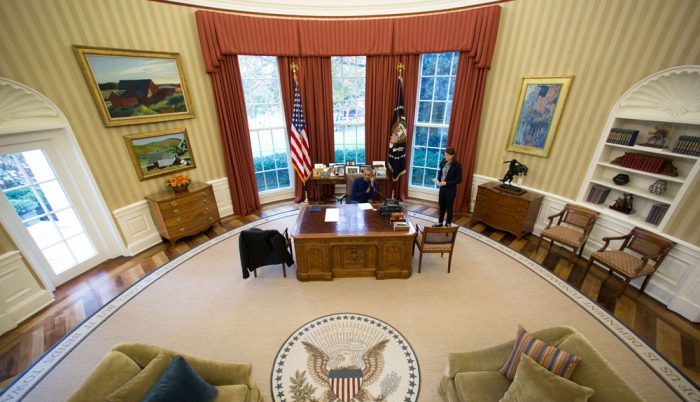
President Barack Obama makes Thanksgiving Day phone calls from the Oval Office to U.S. troops stationed around the world, Nov. 24, 2016. The President’s Coast Guard military aide, LCDR Ginny Nadolny is at right.
(Official White House Photo by Pete Souza)

The Washington Free Beacon disclosed that a former Iranian regime official and a leader in the Iran lobby enjoyed unprecedented access to the White House under the Obama administration.

The two were hosted at the White House for more than 30 meetings with top officials at key junctures in the former administration’s contested diplomacy with Iran, according to White House visitor logs that provide a window into the former administration’s outreach to leading pro-Iran advocates, according to the Free Beacon.

Seyed Mousavian, a former Iranian diplomat and head of the regime’s national security council, was hosted at the White House at least three times, while Trita Parsi, a pro-Iran advocate long accused of hiding his ties to the Iranian government, met with Obama administration officials a stunning 33 times, according to recently updated visitor logs.

Sources familiar with the nature of the meetings told the Washington Free Beacon that both Parsi and Mousavian helped the White House craft its pro-Iran messaging and talking points that helped lead to the nuclear agreement with Iran. These efforts were part of a larger pro-Iran deal “echo chamber” led by senior Obama administration officials who were tasked with misleading Congress about the nature of the deal.

Mousavian, who also served as Iran’s spokesperson during negotiations with the international community on the Iran deal, visited with White House National Security Council official Robert Malley, who advised the former president about the Middle East and the Islamic State terror group.

“Mousavian was Iran’s ambassador to Germany back in the 1990s, when that embassy was the central node of Iran’s European terror network and those in Germany were murdering dissidents in Berlin,” one veteran Iran analyst who frequently works with Congress on the issue told the Free Beacon. “Later he came to the U.S., where he’s being paid for with tens of thousands of dollars from the Ploughshares Fund, which funded the Ben Rhodes echo chamber.”

Parsi, head of the National Iranian American Council, a group tied to the broader Iran lobbying movement and tied to the Obama White House that helped spearhead a pro-Iran narrative, met with several senior Obama administration officials during dozens of visits to the White House, the logs show.

This included private, one-on-one meetings with Obama adviser Ben Rhodes, who helmed what he described as the White House’s pro-Iran deal “echo chamber,” as well as meetings with Malley and Colin Kahl, national security adviser to former Vice President Joe Biden. Parsi also met with the White House NSC’s director for Iran, its senior director, legislative liaisons, and public engagement officials, according to sources familiar with the nature of these meetings.

In one instance, Parsi was signed into the White House by Solomon Tarlin, a West Wing intern and supporter of the Middle East advocacy group J Street.

Free Beacon quoting an expert on Pentagon writes: “Talk about letting the fox into the hen house. Letting the head of an organization whose foreign policy positions are indistinguishable from the Islamic Republic more than 30 times would be analogous to letting the Soviet Union’s chief lobbyist help guide policy during the Cold War.”

“During the Bush administration, Parsi thought nothing of dining with [Former Iranian President] Mahmoud Ahmadinejad, and his private emails, released as part of a court-ordered discovery process, show that he lied to the U.S. press and coached Iranian officials in order to weaken sanctions and promote the Islamic Republic,” The expert said.

The visitor’s logs reveal the depth of Parsi’s involvement in building the false narrative of the Iran nuclear deal and also may explain why the Obama administration was quick to appease the mullahs in Tehran, by forgoing linking such important issues as ballistic missiles, human rights and terrorism.

With the incoming Trump administration, it is almost assured that Parsi’s access to the White House and key advisors has been reduced to zero, which explains why Parsi now has taken to authoring editorials in a tedious effort to influence a monumental shift in American foreign policy.

In many ways Parsi efforts are more akin to the Little Dutch Boy sticking his finger in dike than his previous august position as White House visitor.

In a piece for Foreign Policy, Parsi trotted out the same, tired talking points: Iran is good. Saudi Arabia is bad. Hard liners will be empowered in Iran. Trump’s cabinet picks are war mongers. Iran does not support proxies.

Parsi’s efforts to try and convince everyone that Iran does not fund and control Hezbollah or Shiite militias in Iraqi or Houthi rebels in Yemen is pathetic and patently false. All anyone has to do is follow the trail of cash and arms from Tehran to all parts of the Middle East and you can see how the Iranian regime sits at the center of the proxy wars in the region.

But Parsi’s efforts may be waning as he and his Iran lobby colleagues shift chaotically from issue to issue in an effort to keep up with the wide ranging agenda of the Trump administration which called for a moratorium on Syrian refugees pending verification of their backgrounds in a nod to the Islamic extremist terror attacks taking place across Europe in Paris, Nice, Brussels and Berlin.

A new poll revealed in the Wall Street Journal that support for Hassan Rouhani among the Iranian people has plummeted as years of war and economic stagnation coupled with unrelenting human rights abuses had sapped his favorability.

The survey results paint a picture of an Iranian public wary and skeptical about the economic benefits they thought it would bring as a result of the Iran Deal.

Conducted in December for the University of Maryland, the survey is based on telephone interviews with 1,000 Iranians and provides a gauge of public opinion in a country where independent polling is rare.

“Rouhani’s popularity is taking a hit primarily because he is perceived to have failed to deliver on his campaign promises,” said the president and chief executive of Toronto-based company which conducted the survey on the school’s behalf.

About 51% said the country’s economic conditions were worsening, up from 43% in June. Almost three-quarters of the Iranians surveyed said the deal hadn’t improved people’s living conditions.

With the presidential election looming in May, it is almost assured that the regime will once again rig the election to deliver a candidate in lock-step with the mullahs’ policies and those of top mullah Ali Khmenei.

Michael Tomlinson

Filed Under: Blog, Current Trend, Latest from Lobbies & Appeasers, National Iranian-American Council, News Tagged With: Appeasement policy, Featured, hassan rouhani, Iran, Iran deal, Iran Human rights, Iran Lobby, National Iranian American Council, NIAC, NIAC Action, Rouhani, Trita Parsi

Iranian Regime Under Pressure Everywhere

January 20, 2017 by admin

Iranian Regime Under Pressure Everywhere

Iranian Regime Under Pressure Everywhere

Like some rodent prey being squeezed by a python, the Iranian regime’s mullahs are finding themselves under pressure from all quarters as they find themselves under scrutiny for human rights violations, its militant actions and the deeply flawed nuclear agreement.

The central and most consistent issue confronting the Iranian regime has been its abysmal human rights record which continually has drawn international condemnation for the oppression of dissidents, abuse of women and children, heinous public execution of prisoners and widespread use of torture on political prisoners.

Groups such as Amnesty International have consistently documented these abuses and tried to draw international attention to the suffering at the hands of the mullahs. In its most recent report, Amnesty International described the widespread of medieval punishments including some of the most barbaric practices.

Iran’s persistent use of cruel and inhuman punishments, including floggings, amputations and forced blinding over the past year, exposes the authorities’ utterly brutal sense of justice, said Amnesty International.

Hundreds are routinely flogged in Iran each year, sometimes in public. In the most recent flogging case recorded by Amnesty International, a journalist was lashed 40 times in Najaf Abad, Esfahan Province, on 5 January after a court found him guilty of inaccurately reporting the number of motorcycles confiscated by police in the city.

“The authorities’ prolific use of corporal punishment, including flogging, amputation and blinding, throughout 2016 highlights the inhumanity of a justice system that legalizes brutality. These cruel and inhuman punishments are a shocking assault on human dignity and violate the absolute international prohibition on torture and other ill-treatment,” said Randa Habib, Amnesty International’s Regional Director for the Middle East and North Africa.

“The latest flogging of a journalist raises alarms that the authorities intend to continue the spree of cruel punishments we have witnessed over the past year into 2017.”

According to Amnesty International, under Iranian regime law, more than 100 “offenses” are punishable by flogging. These cover a wide array of acts, ranging from theft, assault, vandalism, defamation and fraud to acts that should not be criminalized at all such as adultery, intimate relationships between unmarried men and women, “breach of public morals” and consensual same-sex sexual relations.

Many of those flogged in Iran are young people under the age of 35 who have been arrested for peaceful activities such as publicly eating during Ramadan, having relationships outside of marriage and attending mixed-gender parties.

The Amnesty International report goes on to document a long list of heinous punishments inflicted by the regime on its own people.

Besides pressure being brought Amnesty International, potential avenues of dialogue may finally be opening between an incoming U.S. administration and Iranian resistance groups that have helped shine a bright light on transgressions by the Iranian regime, not only human rights abuses, but also its then-secret nuclear weapons program.

With the Trump administration taking office, a ripple effect has been moving out affecting the Iranian regime in all sorts of ways, including concern coming from commercial aircraft leasing companies that may be having second thoughts about doing business with the Iranian regime in these uncertain times.

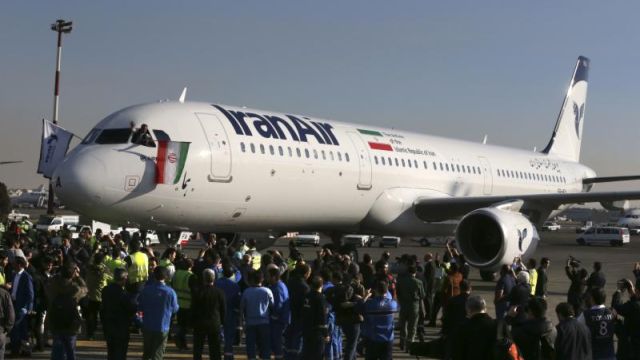
Even though Iran’s flag carrier, Iran Air, last week received the first new jetliner from Airbus, and last year finalized deals to buy 100 planes from the European plane maker and another 80 from Boeing, big aircraft lessors still are reluctant to do business in Iran. “We will remain cautious,” said John Plueger, chief executive of Air Lease Corp.

Trump has voiced skepticism about the Iran accord and “we have to be mindful of that,” Air Lease Corp.’s Plueger said Tuesday at an Airline Economics forum.

U.S. critics of the Iran deal have tried to block financing of the planes. Members of the House of Representatives this week introduced a bill to force the Trump administration’s director of national intelligence to investigate whether planes operated by Iran Air or other carriers are being used to support terrorism.

“We’re asking the intelligence community to provide a full accounting of Iran’s use of commercial airlines to support its global network of terror proxies” including in Syria, Rep. Peter J. Roskam (R-IL) said in a statement Tuesday.

Businesses are worried the U.S. may reimpose sanctions. “There is a substantial snap-back risk,” said Olaf Sachau, chief executive of Intrepid Aviation. Although he sees Iran as an attractive market for plane-leasing companies to do businesses, the U.S. election outcome means tapping the market isn’t on the agenda for now.

These uncertainties have taken the shine off of the anniversary of the nuclear agreement as Hassan Rouhani has tried to celebrate it. Rohani has been saddled by the high expectations he set, as Iran’s economy continues to struggle and the great boost in foreign investment and other benefits he envisioned has so far failed to materialize mostly as a result of the lack of capabilities within the ruling elite and for spending much of the cash in promoting the war in Syria, Iraq, Yemen, etc and on empowering the IRGC at home for domestic repression.

The Iranian currency, the rial, hit a record low against the dollar in recent weeks, prompting fears that efforts to boost the exports of industrial goods will suffer and anticipated foreign goods will be prohibitively costly. The unemployment rate is on the rise, reaching 11.3 percent in 2016 compared to 10.8 in 2015.

In a nutshell, the limited economic progress Rohani’s government has made has yet to trickle down to the average Iranian household in terms of jobs, salaries, and the prices of basic goods. This is something that none other than top mullah Ali Khamenei had to admit, saying in August that Iranians had yet to see a “tangible effect” in their daily lives.

Khamenei has sharpened his criticism. He has continued to emphasize a “resistance economy” aimed at boosting domestic production for export and warned against Western “infiltration” by way of the agreement, highlighting the fact that the mullah’s regime is incapable of making any radical change in country’s economy.

He may be recognizing that as the Iranian regime is getting squeezed again, he and his fellow mullahs will need to crack down harder to keep their tenuous hold on the Iranian people.

Laura Carnahan

Filed Under: Blog, News Tagged With: #NuclearDeal, Appeasement policy, Featured, hassan rouhani, Iran, Iran deal, Iran Lobby, Iran sanctions, IRGC

Iran Lobby Working Feverishly to Avoid Collapse

January 17, 2017 by admin

Iran Lobby Working Feverishly to Avoid Collapse

Iran Lobby Working Feverishly to Avoid Collapse

As the sun sets on the Obama administration and its flawed policy of appeasing the Iranian regime, the Iran lobby is working in overdrive to do anything and everything it can to preserve the few wins it managed to snag over the past eight years; most notably the Iran nuclear deal.

Trita Parsi, the head of the National Iranian American Council, has been trying to insert himself into any Iranian-related news story he can find; most recently the death of Hashem Rafsanjani. He has also weighed in president-elect Donald Trump’s potential scrapping of the nuclear agreement, banking restrictions on Iranians in the U.S., the Boeing deal and if he could manage it discussing the potential of Iranian films in the Oscar race this year.

For Parsi and the rest of the Iran lobby, the biggest potential disaster looming is the possible revocation or alteration of the nuclear agreement once the Trump administration takes office next week. Parsi and the mullahs in Tehran seem resigned to the fact that Trump will almost certainly act on his campaign promise to trash or redo it.

“The deal is in tremendous danger,” Parsi said in the Washington Post. “Iranians are building a case to make sure that once the deal falls apart they can point to a strong record of the U.S. causing it. It’s going to be part of the cost the administration will have to decide if it’s willing to pay.”

Parsi is already trying to frame the debate as the fault of the U.S. knowing that Tehran’s free ride is coming to an end. Similarly, the jockeying for rhetorical position illustrates the key flaw in the nuclear agreement in the first place which was that it did not address the motivations of the Iranian regime in supporting terrorism, oppressive human rights abuses or proxy wars.

Without correcting the underlying behavior of the mullahs, the agreement was doomed from the start, something the Trump team has already publicly acknowledged.

“There’s a recognition in the incoming team that the regime cheats incrementally, not egregiously, even though the sum total of cheating turns out to be egregious,” said Mark Dubowitz, executive director of the Foundation for Defense of Democracies and a prominent critic of the agreement. “Trump should show a zero-tolerance policy to cheating. Which means, at a minimum, using U.S. sanctions to respond. At a maximum, it means building up a case there’s a history of incremental violations, and move to snap back sanctions.”

For the Iranian regime though the deal has served its purposes. It has enabled the regime to:

  • Replenish its coffers with over $100 billion in badly needed cash that was redirected to support the Assad regime in Syria on the brink of collapse and pay for Hezbollah fighters and Afghan mercenaries to fight a holding action there until Russia was dragged into the conflict by Iran;
  • Allowed the regime to burnish the public image of “moderates” winning in Iran when in fact there are virtually no real moderates left in Tehran, only various factions differentiated only by their fight for control of state industries and their piece of the trough of cash, kickbacks and skimmed funds; and
  • Support the renewal of sectarian wars in Iraq and Yemen aimed at building a Shiite sphere of influence there Iraqi Shiite militias and Houthi rebels through the purchase and shipping of massive quantities of guns, ammunition, rockets, mortars and missiles.

The mullahs in Tehran are not stupid. They saw the gravy train coming to an end and have worked to gain as much advantage as they can to jump start a nuclear program that never really stopped as Jennifer Rubin points out in the Washington Post.

We saw just how lopsided the U.S.-Iran relationship has become. “The 2015 nuclear deal obligated Iran to keep no more than 130 metric tons of heavy water, a material used in the production of weapons-grade plutonium,” explains Iran analyst Omri Ceren. “But the Iranians have continued to produce heavy water, and they exceeded the cap in February and November. The violations [are] functionally blackmailing the Obama administration: Either someone would purchase the excess heavy water, allowing Iran to literally profit from violating the deal, or the Iranians would go into formal noncompliance, endangering the deal,” she writes.

Now the Associated Press has reported:

“Iran is to receive a huge shipment of natural uranium from Russia to compensate it for exporting tons of reactor coolant, diplomats say, in a move approved by the outgoing U.S. administration and other governments seeking to keep Tehran committed to a landmark nuclear pact.

“Two senior diplomats said the transfer recently approved by the U.S. and five other world powers that negotiated the nuclear deal with Iran foresees delivery of 116 metric tons (nearly 130 tons) of natural uranium.”

Rather than police the deal to ensure compliance, the Obama administration is assisting Iran in violating the JCPOA. Ceren remarks, “That’s enough for more than 10 nuclear bombs.”  We both allow the Iranians to exceed the heavy-water limits in the deal — and then richly compensate them with uranium that can be used for bombs. Our allies would be excused for thinking we are now promoting Iran’s interests, not the West’s,” Rubin adds.

She also noted that Reuters reported, “Iranian lawmakers approved plans on Monday to expand military spending to five percent of the budget, including developing the country’s long-range missile program which U.S. President-elect Donald Trump has pledged to halt. The vote is a boost to Iran’s military establishment –– the regular army, the elite Islamic Revolutionary Guard Corps (IRGC) and defense ministry — which was allocated almost 2 percent of the 2015-16 budget.” This, of course, refutes the notion peddled by Iran and echoed by the administration that the deal would empower “moderates” and without the deal “hard-liners” would get the upper hand. It seems that the deal has empowered the hard-liners (the IRGC), just as critics of the deal anticipated.

So while Parsi spins away like an Olympic cyclist, the reality of how to confront a double-talking Iranian regime will soon face the Trump team.

Laura Carnahan

Filed Under: Blog, News Tagged With: Featured, Iran deal, Iran Lobby, Iran Mullahs, Iran sanctions, Iran Terrorism, IRGC, National Iranian American Council, NIAC, Trita Parsi

Iran Lobby Pleading to Save Iran Nuclear Deal Despite Regime Militancy

January 17, 2017 by admin

Iran Lobby Pleading to Save Iran Nuclear Deal Despite Regime Militancy

Iran Lobby Pleading to Save Iran Nuclear Deal Despite Regime Militancy

With only a few days left until Donald Trump is sworn in as the next president of the United States, the Iran lobby and their Iranian regime leaders are in an absolute tizzy about the nuclear agreement and its future.

For the Iran lobby, especially the National Iranian American Council and the Ploughshares Fund, the nuclear deal with Iran represented a high water mark for their perceived effectiveness, but like a evaporating lake in a desert, their success was illusory since it was largely built on the decision by the Obama administration to try a policy of appeasing the Iranian regime.

With the ascension of the Trump administration with such noted critics of the Iranian deal in many of cabinet nominees now undergoing confirmation hearings, the Iran lobby is faced with rollback of all of their gains in one fell swoop.

Iran lobby supporters such as Trita Parsi have tried all sorts of tactics in an effort to save the deal in a shotgun approach of messages. First they openly criticized Trump during the presidential election, joining the tactics of his opponents with personal attacks.

When that failed and he won election, Parsi and his cohorts shifted to the threat of war if the Iran nuclear deal was scrapped by Trump. When that fell on deaf ears and gained almost no traction with the media and Trump announced his cabinet picks, the attacks shifted to the nominees.

Now that line of attack has essentially failed, the Iran lobby is now trying to float the idea that the Trump is actually in support of the nuclear deal and not likely to scrap it because the consequences would be so devastating.

Trying to keep track of all the misses by the Iran lobby is like trying to keep track of clanks off the rim by a worst shooting team in the NBA.

And now their worst fears are finally starting to come to fruition: the U.S. is finally beginning to realize that instead of appeasing the mullahs in Tehran, it is now time to hold them accountable for their actions.

The Iranian lobby fears that deeds and not words are likely to be the new currency of diplomacy in 2017.

But it isn’t just a Trump administration that is causing the Iran lobby to freak-out, it is the changeover in Congress and the potential for a whole raft of actions aimed at the mullahs ranging from the re-imposition of economic sanctions on the federal level to state-by-state sanctions means the Iran lobby is poised to be overwhelmed.

Congress has already begun offering up a series of bills taking aim at various aspects of the Iranian regime’s conduct including the near unanimous passage of the Iran Sanctions Act. Now comes a bill offered up last week to initiate an investigation into Iran Air and other regime airlines by the new Director of National Intelligence into whether or not they provide support to the Revolutionary Guard Corps or other terrorist groups.

The timing of this legislation is important to the Iranian regime as it takes delivery of new commercial airliners from Airbus and soon Boeing to replace aging aircraft in its fleet. Iran Air took delivery last week of the first of 100 jets it ordered from Airbus with Boeing scheduled to deliver in 2018.

Should the investigation of Iranian airlines lead to the discovery of a link between them and support for terrorist activities, the suspect airline could end up back on the U.S. sanctions list and be prevented from receiving any new aircraft or U.S.-made parts according to CNN News.

There has always been deep suspicion that the Iranian regime uses commercial airliners to ferry troops, ammunition and cash to hotspots such as Syria and Iraq. Should that link prove true, the Iran lobby could find itself fighting for the economic survival of the regime again.

Mahan Air, Iran’s second biggest carrier, is still on the sanctions list for aiding Iran’s military and is barred from buying Western planes and parts.

Iran Air was removed from the U.S. sanctions list in January 2016 as part of an agreement to convince Iran to restrain its nuclear program. It opened the path for multi-billion dollar sales by Boeing and Airbus. That prompted an outcry from some lawmakers who said the Obama administration offered no proof that Iran Air had stopped its support of the Iranian military or designated terrorist organizations.

The news for the Iran lobby got worse with the release of a letter from 23 former U.S. officials urging the Trump administration to open up a dialogue with Iranian dissident groups, specifically the National Council of Resistance, which counts as one of its members the People’s Mujahedin Organization of Iran; a dissident group the mullahs in Iran have made it their mission to pursue and destroy.

Trump transition officials did not immediately respond to a request for comment. An NCRI spokesman, Ali Safavi, said the group had no “role whatsoever” in the letter, but forwarded a statement from an NCRI official, Soona Samsami, welcoming the letter as an “appropriate and timely initiative.”

In spite of these changing political fortunes, the Iranian regime seems intent on maintaining the same militant attitude to the rest of the world as news came out of Iran of the mass execution of 20 prisoners over the past two days.

Amnesty International reports indicate that Iran executed at least 977 people in 2015, mainly for drug-related crimes.

The human rights activist NGO also blames Iran for continuing to execute juvenile offenders, those aged under 18 at the time of the crime, in violation of the international law.

For the mullahs, some things don’t change.

Michael Tomlinson

Filed Under: Blog, Current Trend, National Iranian-American Council, News Tagged With: #NuclearDeal, Appeasement policy, Featured, Iran, Iran Lobby, Iran Terrorism, IRGC, National Iranian American Council, NIAC, NIAC Action, Nuclear Deal, Ploughshares, Syria

  • « Previous Page
  • 1
  • …
  • 11
  • 12
  • 13
  • 14
  • 15
  • …
  • 38
  • Next Page »

National Iranian-American Council (NIAC)

  • Bogus Memberships
  • Survey
  • Lobbying
  • Iranians for International Cooperation
  • Defamation Lawsuit
  • People’s Mojahedin
  • Trita Parsi Biography
  • Parsi/Namazi Lobbying Plan
  • Parsi Links to Namazi & Iranian Regime
  • Namazi, NIAC Ringleader
  • Collaborating with Iran’s Ambassador

Recent Posts

  • NIAC Trying to Gain Influence On U.S. Congress
  • While Iran Lobby Plays Blame Game Iran Goes Nuclear
  • Iran Lobby Jumps on Detention of Iranian Newscaster
  • Bad News for Iran Swamps Iran Lobby
  • Iran Starts Off Year by Banning Instagram

© Copyright 2026 IranLobby.net · All Rights Reserved.