Iran Lobby

Exposing the Activities of the lobbies and appeasers of the Mullah's Dictatorship ruling Iran

  • Home
  • About
  • Current Trend
  • National Iranian-American Council(NIAC)
    • Bogus Memberships
    • Survey
    • Lobbying
    • Iranians for International Cooperation
    • Defamation Lawsuit
    • People’s Mojahedin
    • Trita Parsi Biography
    • Parsi/Namazi Lobbying Plan
    • Parsi Links to Namazi& Iranian Regime
    • Namazi, NIAC Ringleader
    • Collaborating with Iran’s Ambassador
  • The Appeasers
    • Gary Sick
    • Flynt Leverett & Hillary Mann Leverett
    • Baroness Nicholson
  • Blog
  • Links
  • Media Reports

Momentum Builds for Trump to Reach Out to Iranian Opposition

January 17, 2017 by admin

Momentum Builds for Trump to Reach Out to Iranian Opposition

Momentum Builds for Trump to Reach Out to Iranian Opposition

A letter signed by 23 former officeholders calls on president-elect Donald Trump to consult with the Paris-based National Council of Resistance of Iran (NCRI), an umbrella organization representing several Iranian dissident and opposition groups. The group has called for free elections and freedom of religion in Iran, as well as an end to what it calls Tehran’s “religious dictatorship.”

According to Fox News, while the Iranian regime called the group terrorists, the NCRI’s network of supporters in Iran helped expose Iran’s nascent nuclear weapons program by revealing secret sites that had escaped detection from Western intelligence agencies.

“Iran’s rulers have directly targeted US strategic interests, policies and principles, and those of our allies and friends in the Middle East,” the letter reads, in part. “To restore American influence and credibility in the world, the United States needs a revised policy.”

The letter’s signatories include former New York City mayor Rudolph Giuliani; former Sen. Joe Lieberman; and retired Army Gen. Hugh Shelton, a former chairman of the Joint Chiefs of Staff under President Bill Clinton.

Organized opposition to the mullahs in Tehran has always been thorn in the side of the religious theocracy holding power in Iran and the regime has spent considerable resources in targeting, attacking and defaming these dissidents.

Until recently, the Iranian regime used Iraqi intelligence forces to mount attacks on unarmed members of various dissident groups at refugee camps located in Iraq leading to scores killed over the years until the refugees were finally moved to countries granting them asylum and refugee status.

Even membership or affiliation with any of these groups is punishable with imprisonment and even execution, a policy stretching back to an infamous massacre in 1988 in which the Iranian regime’s leadership ordered the mass executions of thousands of dissidents.

Ironically, many of the current leaders of the Iranian regime, including Hassan Rouhani and the recently deceased Hashem Rafsanjani, participated in the conducting the arrests, imprisonments and trials of these dissidents.

The prospect of the Iranian dissident movement having a seat at the table in Washington, DC with a Trump administration is driving the mullahs into an apoplectic state; one evidenced by the mobilization of the Iran lobby to attack members of Trump’s cabinet who may be perceived to be receptive to these opposition groups.

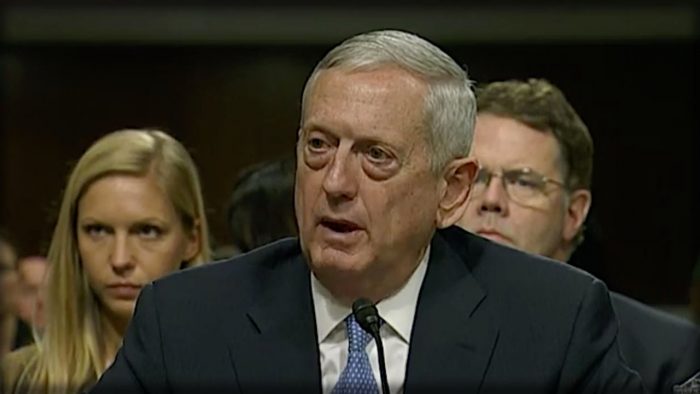
In Democracy Now, which aggressively supported the Iran nuclear deal, the blog characterized retired Gen. James Mattis’ confirmation hearings as being less about policy and more about a discussion of his personal wealth and the promise to preserve the military-industrial complex.

“It is interesting that this is among the many other issues that wasn’t really discussed during the hearing, that could have been discussed instead of the pork-barrel projects that you were talking about. And, you know, he could have been asked about these apparent conflicts of interest that might have developed as a result of his consulting work, and how he might deal with them,” said Aaron Glantz, a senior reporter at Reveal from The Center for Investigative Reporting.

Meanwhile, Iran lobby leader, Trita Parsi of the National Iranian American Council, took to doing more interviews, this time claiming that Mattis had promised to enforce the Iran nuclear deal in spite of Trump’s long criticism of it on the campaign trail, even though Mattis’ testimony was clearly not an endorsement of the deal.

The status of the nuclear deal is proving to be an important topic for the mullahs as they seek to position any break in it as the fault of the U.S. Iran’s deputy foreign minister says the nuclear deal between the Iranian regime and world powers “will not be renegotiated” ahead of U.S. President-elect Donald Trump taking office this week.

In a press conference Sunday marking the one-year anniversary of the agreement’s implementation, Abbas Araghchi told reporters that “the new U.S. administration cannot abandon the deal.”

Araghchi repeated an earlier warning by Iran’s Supreme Leader Ayatollah Ali Khamenei, who publicly stated, “If they tear it up, we will burn it,” without elaborating.

“There will be no renegotiation and the (agreement) will not be reopened,” said Araqchi, Iran’s top nuclear negotiator at the talks that led to the agreement in 2015, quoted by the state news agency IRNA.

“We and many analysts believe that the (agreement) is consolidated. The new U.S. administration will not be able to abandon it,” Araqchi told a news conference in Tehran, held a year after the deal took effect.

The potential for the Trump administration to scrap or renegotiate the nuclear deal, tied with the possibility of the incoming administration to build a rapport with Iranian dissident groups may prove to be a volatile mix of problems for the mullahs.

We can only hope that Trump extends to these Iranian dissidents the opportunity to talk and listen to their stories of the horror suffered by them and their loved ones at the hands of the mullahs and why ultimately any agreement with Iran must be based not on faith, but cold hard, verifiable facts.

Michael Tomlinson
Filed Under: Blog, News Tagged With: #NuclearDeal, Appeasement policy, Featured, Iran, Iran deal, Iran Lobby, Iran Talks, National Iranian American Council, NIAC Action, Nuclear Deal, Trita Parsi

Iran Lobby Voice Becoming Lonelier With New Congress

January 7, 2017 by admin

Iran Lobby Voice Becoming Lonelier With New Congress

Iran Lobby Voice Becoming Lonelier With New Congress

A new Republican-controlled Congress took office on Tuesday and with it comes the promise of sweeping changes in American foreign policy versus the last eight years. Most notable will be an almost certain end to the policy of appeasing the Iranian regime followed by the Obama administration in the hopes of moderating Iran’s behavior.

What is also sure to happen as well is a greatly diminished role for the Iran lobby in this new administration, especially for supporters such as the National Iranian American Council. Evidence of that reduced stature and influence has come in the downward spiral in media opportunities members of the NIAC are receiving.

Trita Parsi for example has been relegated to providing analysis on Russia Today segments and the self-blogging forum TopTopic has become the go-to publisher of NIAC commentary. Gone are the heady days of placements in the New York Times and CBS News and now they face the uncomfortable truth that they are in danger of becoming irrelevant.

One of those TopTopic pieces was written by Ryan Costello from NIAC in which he lamented the tidal wave of bills being introduced aimed at punishing various aspects of the Iranian regime such as a bill by Rep. Alcee Hastings (D-FL) authorizing the Trump administration to use military force against Iran should it be necessary.

Costello characterizes Hasting’s move as representative of a “small minority” of Democrats opposed to the nuclear deal with Iran, but what he fails to acknowledge is the fact that there is actually a growing nucleus of Democrats that the American people want to stop giving Iran endless concessions.

Costello goes on to mention additional bills being offered up including one proposal by Sen. Dean Heller (R-NV) that would impose sanctions on Iran for its ballistic missile program. While Costello laments the flood of bills coming to the fore with the change in Congress, he—and the rest of the Iran lobby—ignore the reasons why these bills are being offered up now.

The mood in America and frankly through most of Europe has swung dramatically since the nuclear agreement was reached with Iran from one of hopeful optimism to uncertainty and fear. The rise of Islamic extremism rippling across the globe, striking in cities such as Boston, San Bernardino, Orlando, Paris, Brussels, Nice and Berlin, have all been harsh reminders to elected officials that wishing for moderation does not yield moderation from extremist groups and hostile nations such as Iran.

The question of how to confront Iranian extremism has never been answered by the Iran lobby other than to repeatedly call for more accommodation and more restraint. That position has now lost its status and consigned to the political junk heap of obscure blogs and media controlled by Iran and its few allies.

Now the major media have turned their attention to the specific pathways open to Trump to restrain the Iranian regime and that is a fundamentally different approach from what the Iran lobby has tried to champion over the past five years.

The Wall Street Journal looked at the possibility of re-imposing economic sanctions, which may be opposed by European allies, is certainly available to Trump as a leverage tool at the very least.

President Trump could, among other things, re-impose the “secondary” sanctions that bar foreign companies from doing business with those individuals or entities on sanctions lists, the Journal said.

“The Iran sanctions program will be the one with the quickest attempt by the administration to put their mark on,” said Adam Smith, an attorney at Gibson Dunn & Crutcher LLP who previously served as a senior adviser at the U.S. Treasury Department’s Office of Foreign Assets Control, the main enforcement body for sanctions.

Heshmat Alavi, a political and rights activist, authored a piece in The Hill tackling this notion of Iranian “moderation” and declaring it a myth solely designed to gain Western support for a deal that would allow the mullahs access to billions of dollars in desperately needed cash.

“If Tehran truly bore the intent to not only embrace the nuclear agreement but the spirit of the accord with the West, they would not have test-fired missiles in March or October of this year,” he said.

“If the mullahs are actually sensitive about the human rights of ordinary Iranian citizens, then this regime would not have executed over 3,000 people in the past four years alone and nearly 1,000 in 2015.

“This regime, if actually sensitive about its ‘moderate’ image, would not be executing women and minors, and would not be sending opposition supporters to the gallows. This certainly doesn’t sound anything similar to ‘moderate’ behavior, at least not in the democratic world,” Alavi added.

Alavi calls for greater outreach by the Trump administration to avowed opposition and dissident groups such as the National Council of Resistance of Iran, a broad coalition of Iranian dissident and human rights groups opposed to the mullahs rule.

By switching from listening to the propaganda of the Iran lobby to the sound policy recommendations of the Iranian opposition, Trump can advance the cause of peace and democracy in the Middle East faster than anyone could imagine.

Michael Tomlinson

Filed Under: Blog, National Iranian-American Council, News Tagged With: #NuclearDeal, Appeasement policy, Featured, hassan rouhani, Iran Human rights, Iran Lobby, NIAC, NIAC Action, Trita Parsi, Tyler Cullis

Iran Regime Operates Through Fear and Intimidation to Work

January 7, 2017 by admin

Iran Regime Operates Through Fear and Intimidation to Work

Iran Regime Operates Through Fear and Intimidation to Work

“I learned that courage was not the absence of fear, but the triumph over it. The brave man is not he who does not feel afraid, but he who conquers that fear,” said Nelson Mandela, the former president of South Africa and prisoner of conscience who led his nation out of apartheid rule.

He recognized during his long imprisonment for his political beliefs that to conquer a regime and policy of institutionalized oppression, one had to first conquer the fear that institution uses to control its people. It is through the tools of violence, fear and intimidation that a people can remain oppressed for generations.

For the Iranian regime, the mullahs learned early on the lessons of similar oppressive regimes throughout history. Whether you were a Roman tribune enslaving barbarians or a Nazi Stormtrooper kicking down doors in the Warsaw ghetto or a Boko Haram fighter kidnapping scores of girls to auction them as sex slaves, the tools of intimidation and fear were universal in your efforts to maintain control.

Throughout Iran, the mullahs impose the same practices through the use of religious courts that hand down brutal sentences almost on a whim with no accountability, to roving bands of Basji paramilitaries who are free to accost and beat women on the street for violating dress codes.

The mullahs use the same principles in exporting their extremist brand of Islam by supporting terrorist proxies such as Hezbollah or growing their own Shiite militia in Iraq which can be used to subjugate Sunni villages or be shipped off to fight in Syria.

The use of military power and violence is a tried and tested prescription for the Iranian regime to impose its will.

Unfortunately for the mullahs, history has proven those policies eventually fail. Although Rome stood for thousands of years, it eventually collapsed under its own corruption and inability to assimilate the regions it conquered into peaceful co-existence. Eventually all totalitarian regimes have fallen throughout human history; the only question has been how long has it taken?

For the Iranian regime, the clock is running and the mullahs recognize their time may very well run out on them as their economy remains stagnant, unemployment especially among young people remains sky-high and technology improvements in social media and mobility have made it almost impossible to keep a lid on dissenting voices.

Even a string of hunger strikes by political prisoners has resonance as their plight is carried throughout the world on Twitter, Facebook, WhatsApp and Snapchat and has led to noted people such as Nobel peace prize laureate Shirin Ebadi to openly call for the head of Iran’s judiciary to quit.

Sadeq Larijani was appointed by Ali Khamenei and cannot be summoned by MPs for questioning and is not directly accountable to the public. Under his watch the judiciary has made a number of high-profile arrests of dual nationals, according to the Guardian.

Ebadi, a human rights lawyer and women’s rights activist living in exile in the UK, said she considered Larijani to be “directly responsible for the injustices and corruption” in the system.

She said that “in the name of religion and with the excuse of national security”, the judiciary was “overseeing a miscarriage of justice”.

“Civil and social activists and thinkers who voice criticism or protest are put in jail and condemned to lengthy prison sentences and torture and persecution, while criminals, serial killers and those involved in embezzlement continue to abuse people under the shadows of a corrupted judicial system,” she said in a statement posted on the website of the Defenders of Human Rights Centre, of which she is president.

“A considerable number of prisoners are those held on political or religious grounds. In what part of the world and according to what history, you would call this judicial system fair?” she added.

An example of the harsh treatment by Iranian courts was put on display when a British-Iranian woman being held in Tehran’s notorious Evin prison has appeared in an appeals court, using the last legal opportunity to challenge her five-year jail sentence.

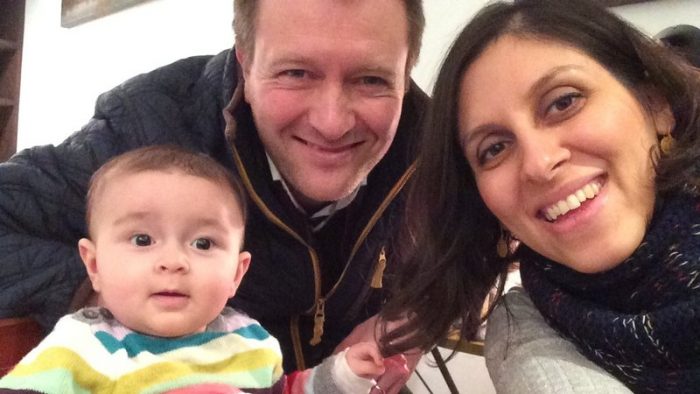
Nazanin Zaghari-Ratcliffe, a project manager with the Thomson Reuters Foundation, the news agency’s charitable arm, was found guilty in September on unspecific charges relating to national security.

On Wednesday, she attended a court session in the Iranian capital that lasted up to three hours, her husband told the Guardian. Few details have emerged about the hearing but a verdict is expected to be announced next week.

The exact reason why the 38-year-old has been convicted in Iran is still unclear, but the Revolutionary Guards, which arrested her at the airport in April while she was about to return to the UK after a family visit, have accused her of fomenting a “soft overthrow” of the Islamic republic.

“What I know is that the appeals happened and went on for three hours, the family weren’t able to go but Nazanin was there and her lawyer was there,” said Richard Ratcliffe. “There were lots of revolutionary guards there from both Kerman’s branch and the Tehran branch.”

According to Amnesty International, Iranian authorities have hinted that Zaghari-Ratcliffe’s arrest is connected to the 2014 imprisonment of several employees of an Iranian technology news website. They were given lengthy prison terms for participating in a BBC journalism training course. Zaghari-Ratcliffe was a project assistant at the BBC’s Media Action, the broadcaster’s international development charity, in 2008-09.

Ratcliffe said he last spoke to his wife on Christmas Day. Zaghari-Ratcliffe, who was previously described as being at breaking point, has recently been removed from solitary confinement and taken to Evin’s women’s wards alongside other political prisoners including journalist Reyhaneh Tabatabaei and leading activist Narges Mohammadi, and a number of Baha’i women held because of their faith.

Ultimately, the full force and weight of the Iranian judicial system is being used to focus on a British mother and charity worker and is emblematic of how fragile the mullahs control is if they are forced to have to imprison someone like her.

Michael Tomlinson

Filed Under: Blog, News Tagged With: #NuclearDeal, Appeasement policy, Featured, hassan rouhani, Iran, Iran deal, Iran Human rights, Iran Lobby, Iran Mullahs, Iran sanctions, Khamenei

Trump Can Fix Biggest Flaw in Iran Nuclear Deal

January 5, 2017 by admin

Trump Can Fix Biggest Flaw in Iran Nuclear Deal

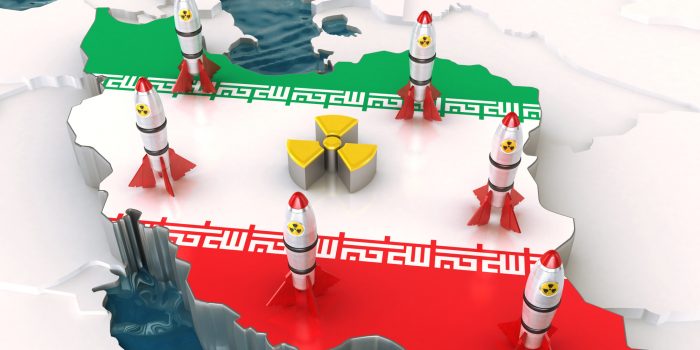
Iran: Nuclear Force

A letter was delivered to incoming president Donald Trump signed by 37 people, most of them scientists who previously supported the Iran nuclear deal, urging him to maintain the agreement and refrain from dismantling it after he takes office. The signers included the cadre of academics who have previously joined with the Iran lobby in the debate over the flawed nuclear agreement.

As behooves a group of academics, their central argument was that the nuclear agreement was working effectively in preventing Iran from developing a nuclear weapon, saying that “as agreed, Iran has deactivated and put into storage under International Atomic Energy Agency (IAEA) seal about 2/3 of its centrifuges, and it has exported more than 95% of its stockpile of low-enriched uranium—a springboard to weapon-usable highly enriched uranium.”

The letter checks off the usual boxes mentioned by Iran supporters such as Trita Parsi of the National Iranian American Council and Joseph Cirincione of the Ploughshares Fund, who have consistently argued that the agreement would not only reduce the chance of Iran developing nuclear weapons, but would also help move it to become a moderating force in the Middle East and empower moderate elements in the Iranian government.

Therein lies the greatest failing in the scientists’ letter and the greatest opportunity Trump has been presented, which is that the Iran nuclear deal really had nothing to do with nuclear weapons, but rather about lifting sanctions in order for a reeling Iranian government to replenish its funds just as it was starting proxy wars in three different countries.

There was one absolute condition the Iranian regime had when it entered into negotiations with the P5+1 group of nations and that was for a clear separation of issues not-related directly to nuclear weapons. This included Iranian regime’s long history of support for terrorism, its harsh treatment of human rights, its crackdown on dissent at home and its eagerness to supply proxy military forces.

For the mullahs, there was nothing more important than in gaining relief from crippling economic sanctions that had pushed their iron grip to the edge with a population grown restless because of lowered wages, stagnant growth and diminished expectations for the future, including an unemployment rate among young Iranians that threatened to feed a revolt in a similar way it did in 1979 with the revolution.

And what was Tehran’s reward? According to the Wall Street Journal, over $10 billion in cash and gold was funneled to the mullahs since the deal passed in a variety of ways, some worthy of a spy novel including late night flights of jets stuffed with pallets of cash and transfers to small Iranian banks of currency converted into gold bullion.

This tallying of the sanctions relief to date includes payments previously announced and others that haven’t been. In one previously unreported payment, the U.S. authorized Iran to receive $1.4 billion in sanctions relief between when the final deal was struck in July 2015 and when it took effect, according to the U.S. officials,” the Journal said.

“Some U.S. lawmakers and Middle East allies contend that the shipments of cash and gold, a highly liquid form of money, can be used to fund Iran’s allies in the region, including the Assad regime in Syria, the Lebanese militia Hezbollah and the Houthi political movement in Yemen,” the Journal added.

This is precisely why the mullahs and their leaders Hassan Rouhani and Ali Khamenei were so desperate to complete a deal. The Iranian regime needed funds badly in order to provide Hezbollah with weapons to support the faltering Assad regime in Syria, as well as launch a civil war in Yemen with the Houthis to take on Saudi Arabia and support Shiite militias in Iraq as they launched a sectarian war against Sunni Muslims.

It also represents the greatest opportunity for Trump since the issue is not the dismantling of the nuclear agreement, but rather the threat of sanctions to link Iranian conduct back to the bargaining table.

This includes finally holding Iran accountable for items kept out of the nuclear agreement such as the development of long-range ballistic missiles capable of delivering nuclear payloads, as well as Iran’s support of three wars that have turned the Middle East into a bloodbath and large parts of Europe into refugee camps.

As part of the deal, Iran is entitled to a whopping $115 billion in sanctions relief over the past three years, but accessing those funds have been difficult since sanctions on currency transfers over the international financial network remain in place. This provides Trump with the greatest leverage possible over the mullahs.

Failure on the part of Tehran to halt its support of terrorism or lift the hammer of oppression at home is why the West should keep the firehose of funds from flowing to Tehran. This would make things problematic for the mullahs as they are facing a presidential election this spring.

Another round of broad discontent and protests again, as in 2009, could force the mullahs to once again engage in a bloody crackdown that turns international opinion firmly against them and away from the perception of moderation the Iran lobby has worked hard to try and preserve.

For the Iranian regime, the flow of cash is paramount to fulfilling its ambitions of extending its sphere of influence from the Mediterranean to Indian Ocean. A piece in Foreign Affairs examined the regime’s efforts to secure naval bases in Syria and Yemen to help its navy breakout of the Persian Gulf bubble it’s been locked in for decades.

This explains why supporting Assad in Syria and fomenting the civil war in Yemen were so crucial to the Iranian strategy for creating its own version of a Shiite Warsaw Pact.

“Bases in Syria and Yemen would be particularly important to Iran. Yemen sits on the strategic shipping route of the Bab el Mandeb Strait, one of the world’s most heavily trafficked waterways, and a naval outpost there would give Tehran unfettered access to the Red Sea and put it in a more advantageous position to threaten its main regional rival, Saudi Arabia,” Foreign Affairs said.

These are all facts the scientists who signed the letter to Trump failed to recognize or chose to ignore. It also underscores how incredibly wrong these people were in their original estimation of the success of the Iran nuclear deal.

Michael Tomlinson

Filed Under: Blog, News Tagged With: #NuclearDeal, Appeasement policy, Featured, hassan rouhani, Iran, Iran deal, Iran Human rights, Iran Lobby, NIAC, NIAC Action, Sanctions, Trita Parsi

Trita Parsi Predicts a Worse 2017 But for the Wrong Reasons

December 29, 2016 by admin

Trita Parsi Predicts a Worse 2017 But for the Wrong Reasons

Trita Parsi Predicts a Worse 2017 But for the Wrong Reasons

Trita Parsi, the head of the National Iranian American Council and chief apologist for the Iranian regime, penned an editorial in Middle East Eye that curiously finally recognizes the complete and utter lack of stability in the Middle East. Unfortunately, he never assigns any blame to the Iranian regime.

He does however recognize that the split between Iran and its chief rival, Saudi Arabia, is likely to fuel and deepen even wider divisions and instability in the region.

“Indeed, while some point to Tehran celebrating its victory in Aleppo, success on the battlefield is coupled with even deeper divisions between Iran and some of its Arab or Sunni neighbors, paving a path towards greater conflict rather than reconciliation,” Parsi writes. “Ultimately, as all parties involved should know, true security only stems from the ability to live in peace with one’s neighbors, not one’s ability to outgun them.”

“Thus, the celebrations of today ring very hollow, as the region as a whole is likely heading towards greater instability in the year to come,” he adds.”

Parsi is correct in that the future is bleak in 2017, but his inability to focus on the constant push by Iran of its own extremist Shiite ideology is the fuel that has burned through Syria, Iraq and Yemen fueling new rounds of bloody sectarian violence that haven’t been seen since the decade-long civil war in Lebanon in the 1980s.

Parsi blames previous U.S. administrations for following a policy that was too reliant on supporting traditional U.S. regional allies such as Saudi Arabia, Israel and Egypt and isolated regional pariahs such as Iran and Iraq.

He goes on to blame the U.S.-led invasion of Iraq in 2003 the cause of the latest round of instability in the region; a curiously silly assumption since he blithely ignores Iran’s role in serving as the primary supporter, funder and guardian of the region’s most notorious terrorist groups in Hezbollah, Al-Qaeda and Shiite militias.

Parsi’s ignorance of the role terrorism plays in regional instability and the rise of trans-national groups such as ISIS in instigating the kind of horrific bloodshed that plunged virtually all of the Middle East into war and subjected cities as far flung as Sydney to San Bernardino to Boston to Ottawa to Paris to Brussels and Berlin to mass terror attacks.

Sectarian terrorism is the fuel that has convulsed the world, not the Cold War-era politics of superpowers such as the U.S. and its military might. As far back as the beginning of Christianity and the rise of Islam, religious fervor has sparked millennia of conflict and still does to this day.

This simple fact is why the Iranian regime stands squarely in the middle of virtually all of the conflicts going on today because it is the only religiously-controlled nation there and as such views its foreign and military policies through the colored lens of extremist religious ideology.

Since Iran’s leadership is personified in the religious supreme leader Ali Khamenei, whose wishes are akin to the absolute reign of medieval monarchs, the odds are the bloodshed and violence we are likely to see in 2017 is going to be firmly rooted in the same religious edicts that motivated violence in 2016.

Any child can trace the lines of Shiite fanaticism connecting Tehran to Damascus, Baghdad, Sana, Kabul, Beirut and countless other cities; any child it seems except Parsi. The one truth that Parsi does speak is the prospect of a grim 2017.

“Going forward, there are few signs that stability will return to the region in 2017. Even if the battle of Aleppo signals a turning point in the war in Syria, it is unlikely to signal the end of the war,” he writes. “Russia and Iran may be celebrating their victory, but true stability will only come to the region when all of the regional powers commit themselves to a diplomatic process of brokering a new order.”

“Currently, however, there is far more commitment to military rather than diplomatic strategies. Absent a reversal of this, 2017 will be even grimmer than 2016,” he adds.

Parsi is correct that stability is only going to come when regional powers finally recognize that diplomacy is a preferable path than a military one, but that is a conclusion that the mullahs in Tehran are not even close to reaching.

Tehran’s all-in support for a massive war in Syria, even to the point of dragging in Russia to save the Assad regime—one of Iran’s few reliable allies—demonstrate that diplomacy is not a priority for them. Indeed any solution that involves the mullahs in Iran will have the same faith, since they are the roots of the problem.

Tehran’s support of Houthi rebels in Yemen only broadened the conflict to drag in Saudi Arabia into a shooting war and the use of Shiite militias in Iraq to punish Sunni opponents only pushed the endless cycle of sectarian violence farther down the road.

Parsi’s inability to name Iran’s extremist Islamic policies and priorities as a motivating factor for a dreadful 2016 demonstrates clearly that even now, he cannot bring himself to criticize his Iranian masters in the slightest.

All of this shouldn’t be surprising since Parsi has been a loyal soldier for the Iranian regime and as Donald Trump assumes office in January, Parsi is devoting his time to trying to shape the narrative into painting Saudi Arabia as evil and Iran as good in an effort to drive a deeper wedge into the U.S. relationship with its traditional allies.

As 2016 has demonstrated, 2017 is likely to be just as disappointing for Parsi and his colleagues, but not for the reasons he thinks.

Michael Tomlinson

Filed Under: Blog, News Tagged With: Featured, Iran, Iran deal, Iran Human rights, Iran Lobby, Iran Terrorism, Khamenei, NIAC, NIAC Action, Trita Parsi

The Cruelty of the Iranian Regime at the Holidays

December 23, 2016 by admin

The Cruelty of the Iranian Regime at the Holidays

The Cruelty of the Iranian Regime at the Holidays

Amidst the horror of World War I over a century ago, a remarkable event occurred that has almost never been seen again in the history of human conflict.

During Christmas in 1914, the Western Front of World War I in France was a devastated moonscape of trenches filled with mud, dead bodies, snow and men filled with despair and lost hope amidst the first modern war of the Industrial Age.

The First World War introduced machine guns, aerial bombardment and poison gas and chemical attacks. It was brutal, unforgiving and merciless. Yet that Christmas saw what was to become known as “the Christmas Truce” where French, German and British soldiers got out of their trenches to walk across no man’s land and exchange seasonal greetings with their enemy.

They exchanged food and souvenirs, held prisoner swaps and even ended up singing holiday carols together. Some units even played football games together. It was a remarkable sight and one that some hoped might portend a pathway to ending the bloody conflict.

Unfortunately, war, as in all human conflict, resumed its proceedings with brisk abandon and there would be no further repeats of this holiday miracle.

This episode is instructive since it shows us that even the most bitter of enemies can pause and allow the good nature of the holiday period seep in and allow a few moments of grace to settle over a bloody battlefield.

One hundred and two years later, a different kind of uneasy peace has settled over the city of Aleppo in Syria, but unlike the battlefields of Europe, this silence has been brought about by the utter destruction of a city and its residents by the round-the-clock merciless attacks and bombings by the Syrian regime and its allies, especially Iran.

The wreckage of Aleppo mirrors old black and white photos of cities blasted to bits in that long ago war in France, but today there is no hope for truce, no compassion and no hearkening to a holiday message of peace and forgiveness.

For the mullahs in Tehran, a cold blackness rules their collective Islamic extremist hearts and their judgment is swayed by the needs of the moment which almost always revolves around their struggle to keep their shaky grip on power.

While the rest of the world takes a break this weekend to celebrate the holidays with family gatherings and goodwill towards one another, the Iranian regime continues to find new ways to demonstrate its depravity.

Nazanin Zaghari-Ratcliffe, 37, has been told that she must choose between taking her two-year old daughter, Gabriella, into a Tehran’s notorious Evin prison or sign away her rights to be with her daughters, her husband Richard Ratcliffe told the Telegraph.

“The ultimatum is that Gabriella lives with her three days a week in prison or she signs a paper waiving her rights of custody,” he said.

“She is deeply wary of having Gabriella move into prison partly because prison is horrible, and partly because after a hunger strike she does not have the strength to look after her three days a week,” he said.

Zaghari-Ratcliffe, a project manager with the Thomson Reuters Foundation, was sentenced to five years in prison in September following a conviction on unspecified “national security-related” offences following a trial before a Revolutionary Court in the capital Tehran.

The 37-year old charity worker has been in custody – much of it solitary confinement – since being detained by the Revolutionary Guard Corps on April 3.

Ratcliffe, who has dual British-Iranian nationality, was on holiday visiting her parents in Tehran. She was arrested at the check-in desks of Khomeini International Airport.

Gabriella was left in the care of her grandparents after the arrest, but her passport was confiscated meaning the child was trapped in Iran.

Hassan Rouhani earlier articulated the regime policy that it did not recognize dual-national citizens, arresting several Canadians, Americans, French and British subjects following the nuclear agreement reached last year.

The arrests, coupled with a broad crackdown domestically against Iranian dissidents, journalists, students and artists, highlight the chief motivation for the mullahs in Tehran which is fear. The mullahs are afraid of dissent. They are afraid of Iranians living abroad coming home and spreading dangerous ideas such as freedom, democracy and peace with their friends and family.

The mullahs fear an open and free press and they fear young people and artists who have utilized social media to show their objections to the mullahs by simple acts of defiance.

For the Iranian regime, the only thing the mullahs understand is power and violence and how to apply brute force to advance their goals. It’s the recipe the regime has followed since its founding in using violence in Lebanon, Syria, Iraq, Afghanistan and Yemen.

While Aleppo stands empty and Iranian commanders take public tours of the destruction they have wrought, the most telling indictment of the Iranian regime may not be bombed out buildings, but in the message that the mullahs are forcing a mother to decide between losing her child or bringing her into one of the darkest and most brutal hellholes on Earth.

The next time the Iran lobby advocates for accommodating Iran, you may want to ask why there is not accommodation for a mother and her child at Christmas?

Laura Carnahan


Filed Under: Blog, News Tagged With: Featured, hassan rouhani, Iran, Iran Human rights, Iran Lobby, Iran Mullahs, Nazanin Zaghari-Ratcliffe

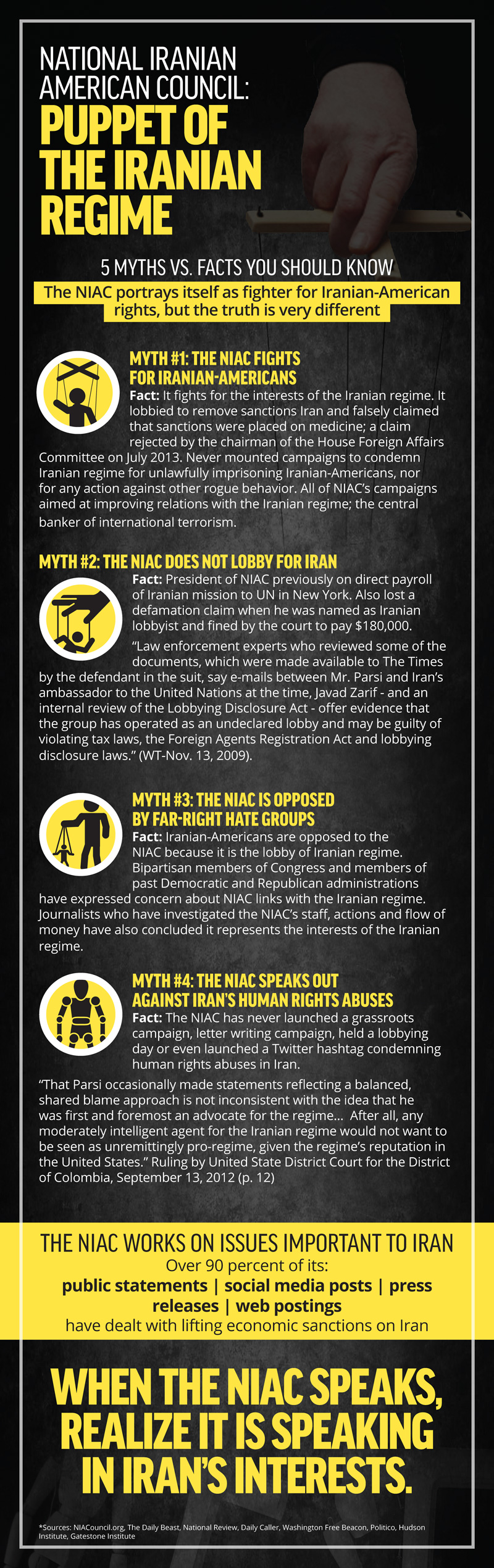
When the NIAC speaks, realize it is speaking on Iran’s interests.

December 21, 2016 by admin

Myths and Facts about National Iranian-American Council-NIAC

Myths and Facts about the National Iranian-American Council-NIAC

Filed Under: Latest from Lobbies & Appeasers, National Iranian-American Council, News Tagged With: Featured, Iran Lobby, National Iranian American Council, NIAC, NIAC Action, Trita Parsi

Complications and Conflicts Are Coming with Iran in 2017

December 19, 2016 by admin

Complications and Conflicts Are Coming with Iran in 2017

Complications and Conflicts Are Coming with Iran in 2017

Sir Isaac Newton’s Third Law of Physics states that for every action there is an opposite and equal reaction. The same could be said for geopolitics as it relates to the Middle East where every act of terror seems to be met with a corresponding act of retribution and every scheme is met with another scheme by a competing entity or enemy.

For the Iranian regime, its actions throughout the Mideast has wrought suffering and destruction on a level not seen since World War II as the fall of Aleppo demonstrated with pictures and images reminiscent of bombed out cities such as Dresden or Tokyo.

Iran’s intervention at the start of the Syrian civil war to prop up the Assad regime set into motion a conflict that has claimed over 800,000 men, women and children and turned into refugees a whopping eight million people who have overwhelmed nations from Greece to Sweden.

Iranian regime sits at the center of most of the foreign policy challenges facing it in 2017, including:

Hezbollah

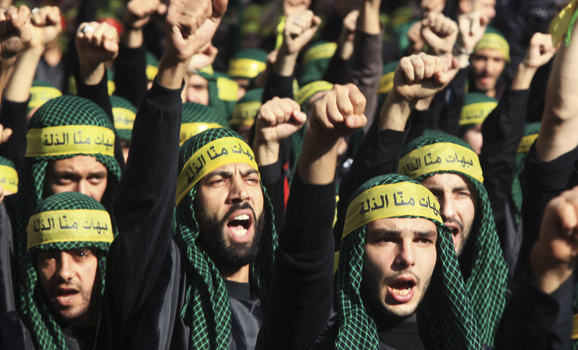
Long a loyal military proxy for the Iranian regime, the terrorist group Hezbollah has risen in prominence with its long campaign in Syria culminating in the fall of the rebel stronghold Aleppo. Iran has supplied Hezbollah with arms, cash and advanced weaponry for its campaigns, but the terror group’s bank account got a huge influx in cash coincidentally when the Obama administration secretly transferred $1.7 billion to Iran as part of the nuclear deal and hostage swap.

“While we cannot establish whether the money transferred from the U.S. went directly into the expanded defense budget, it, at a minimum, enabled the government to release an equal amount of money for defense purposes,” said Nimrod Raphaeli, a senior analyst at the Middle East Media Research Institute.

“It is noteworthy that the increase in the proposed defense budget for 2017 is approximately equal to the amount transferred by the U.S.,” he continued.

Raphaeli explained the government of Rohani “has submitted to the Majlis (parliament) a draft budget for the fiscal year March 2017-March 2018 for a total of $99.7 billion equivalent.”

That, he said, is up 13.9 percent, with a “sharp increase of 39 percent … in funds earmarked for defense, including a big increase in the budget of Iran’s Islamic Revolutionary Guards.”

The report described the IRGC as “a potent military force accountable to the supreme leader, in regional politics, and particularly in Syria and Iraq.”

“A branch of the IRGC, the Qods Force Brigade, commanded by Gen. Qasem Soleimani, is responsible for spreading Iran’s subversive and, often, terrorist activities across the Middle East and beyond.”

Soleimani was seen in eastern Aleppo this weekend surveying the remains of the city as residents, long trapped by the fighting, struggled to evacuate.

Syria

Syrian rebel leaders blamed Iran for halting the evacuation of civilians from Aleppo, leaving an uncertain fate for residents as Iranian forces backed Syrian government troops entering the beleaguered city.

The operation to evacuate fighters and civilians from the last opposition-held area of Aleppo was suspended on Friday, its second day, after pro-government militias demanded that wounded people also be brought out of al-Foua and Kefraya, and protesters blocked the road out of Aleppo.

Munir al Sayal, the head of the political wing of the Ahrar al Sham rebel group involved in negotiations over the deal said Iranian-backed Shi’ite fighters led by Hezbollah militia and other Iraqi Shi’ite groups were behind the detention of hundreds of people trying to leave on Friday, leading to some deaths before they were turned back, in an effort to disrupt the evacuation.

Iran Nuclear Deal

The success or failure of the Iran nuclear deal (depending on your affiliation with the Iran lobby) hinges not so much on whether or not Iranian regime adheres to the deal (since it already has broken several sections of it) but rather whether or not the U.S. finally holds Iran accountable for specific violations instead of trying to paper them over with waivers and exemptions.

The process of appeasing of the Iranian regime in order to support an illusory “moderate” movement within the Iranian government has yielded nothing of tangible worth and has only emboldened and empowered the regime and strengthened the hold the Revolutionary Guards Corp has on virtually every aspect of Iran.

In many ways, the UN’s international nuclear watchdog agency has already been compromised by politics by looking the other way with violations by Iran in heavy water limits, enrichment levels and amounts of enriched uranium. Hassan Rouhani’s recent pledges to launch a crash program to develop nuclear-power naval vessels would require fuel far in excess of the agreement’s levels; thereby putting the UN’s watchdog again on the spot.

Economic Sanctions

Unfortunately, the Obama administration’s insistence on paying $1.7 billion in cash to Iran and opening up the doors to foreign investment weakened the usefulness of future of economic sanctions by providing the Iranian regime with an economic cushion.

The mullahs recognize their vulnerability on this score and are in a mad dash to complete as many business deals as possible even threatening Trump with harsh repercussions should he interfere in the recently announced deal by Boeing to sell $16.6 billion worth of jet airliners to Iran.

For the mullahs, the airliners are vital since a nation cannot operate in a global economy without a strong and viable air network, but in Iran’s case airliners also serve as the vital air bridge to move arms, cash, supplies and fighters to their proxies in far flung battlefields. Emanuele Ottolenghi wrote in the Hill of Iran’s use of its airlines to support its wars.

“It is well known that Iranian passenger planes ferry Iranian-backed militias to Damascus from Iran’s airports such as Abadan, Yazd and Tehran. The aircraft also carry weaponry in their cargo compartment. Weapons flown to Damascus supply Lebanon’s Hezbollah, the regime forces of the Syrian army, Iran’s Islamic Revolutionary Guard Corps (IRGC), and their Afghan, Iraqi and Pakistani Shiite militias,” Ottolenghi wrote.

“Conclusive evidence that Iran’s aircraft is the principal conduit for Tehran’s weapons and military personnel airlift in support of Assad’s war of extermination against his own people emerged recently, as Boeing representatives were in Tehran to finalize a $16.6 billion aircraft deal with Iran Air. Airbus will soon follow suit with an even larger deal,” he said.

While the outlook for the Mideast remains murky to say the least, there is no doubt that Iranian regime’s role and how it can be confronted will dominant much of 2017.

Michael Tomlinson

Filed Under: Blog, News Tagged With: #NuclearDeal, Appeasement policy, Featured, hassan rouhani, Iran, Iran Lobby, Khamenei, Nuclear Deal, nuclear talks, Rouhani, Sanctions, Syria

Iran Lobby Tries Best Spin on Bad Day for Iran Regime

December 17, 2016 by admin

Iran Lobby Tries Best Spin on Bad Day for Iran Regime

Iran Lobby Tries Best Spin on Bad Day for Iran Regime

In what can be considered a symbolic show of disapproval, the Iran Sanctions Act reauthorization became law without President Obama’s signature. The near unanimous margins in Congress made Obama’s signature superfluous; providing a veto-proof margin.

The act was a last measure of defiance from Obama as he leaves office and the new president-elect has built a cabinet and national security team made up of critics of the nuclear agreement with the Iranian. It’s a childish and petulant act that reinforces how out of step the administration was from an American electorate unnerved by numerous terrorists attacks in the U.S., Asia, Africa and Europe motivated by Islamic extremism.

Clearly the Obama administration intends to provide as much running room for the mullahs in Tehran before it leaves office as Secretary of State John Kerry said that even though he considers it unnecessary to renew the existing waivers, he had done so anyway “to ensure maximum clarity” that the United States will meet its obligations under the deal, according to the Washington Post.

All of these efforts might be intended to reassure the Iranian regime, but they are largely meaningless actions since Trump can overturn all of the waivers granted for Iranian violations of the agreement, as well as impose economic sanctions, obliterating the nearly eight year effort to appease the mullahs in Tehran.

“President Obama doesn’t want to provide an excuse in the waning days of his administration for the Iranians to walk away from the deal,” said Mark Dubowitz, head of the Foundation for the Defense of Democracies and a prominent critic of the Iran deal.

“But at this point, he’s a lame-duck president, and what he does or does not do is completely irrelevant to the incoming administration and completely irrelevant to the Iranians.”

The irony of all these machinations is that the Iran lobby is left with so little leverage anymore within the U.S. government to influence any positive changes for the benefit of the regime that all it can do is whine and complain.

One example of that was a short statement put out by the National Iranian American Council, the regime’s chief lobbying force, lauding a modification to a list of Frequently Asked Questions (FAQ) issued by the U.S. Treasury Department’s Office of Foreign Asset Control (OFAC).

“We applaud OFAC for taking a significant step towards fully realizing the U.S.’s JCPOA commitments and providing guidance intended to reduce the risk for non-U.S. banks and companies interested in lawfully engaging the Iranian market. OFAC clarified that it would permit foreign companies to receive payment for goods or services rendered in the case of a U.S. sanctions snapback,” the statement said.

The FAQs do not carry the force of law and are simply administrative answers to common questions, but the fact that the NIAC is left to applaud a modest change demonstrates how low it has sunk in trying to find good news about Iran.

There is a significant irony in the NIAC’s statement since it criticized attacks on those same OFAC FAQs back in October when Iran critics attacked them for “easing” sanctions. The NIAC issued a statement saying the revised FAQs are a simple restatement and clarification of existing U.S. sanctions laws – not an “easing” of U.S. sanctions as some reports have erroneously claimed.

“There is a simple reason for this: Regulatory guidelines – like these FAQs – cannot change the operative law, but can merely explain and interpret that law,” the NIAC said.

So in one case, the FAQs should be judged as merely clarification, but in another case the FAQs are necessary as clear mandates to adhere to the nuclear agreement.

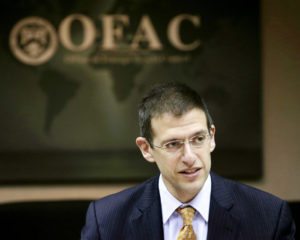
The NIAC cannot have it both ways, but the confusion from the OFAC is understandable since its officers have made steady pilgrimages to NIAC functions, including Adam Szubin, currently the acting undersecretary for terrorism and financial intelligence and former director of OFAC from 2006-2015, who recently spoke at a NIAC-sponsored conference and has often been quoted in NIAC publications and press announcements.

We can only assume how the cozy relationship between members of the OFAC and the NIAC might have produced these changes to the FAQ.

Even as the NIAC is busy flogging these tiny wins for the regime, the mullahs are moving as quickly as possible to consolidate their military advantages with final bloody battle to retake Aleppo in Syria that has resulted in the slaughter of countless men, women and children.

Freelance writer Heshmat Alavi wrote in the Daily Caller a sad recounting of the regime’s use of extremism to gain political leverage and how it must be confronted by the rest of the world.

“Syria is the 35th province [of Iran] and a strategic one for us. If the enemy attacks us and wants to appropriate either Syria or Khuzestan [in southern Iran], our priority is to keep Syria.”

These are the words of Mehdi Taeb, former chief of Revolutionary Guards intelligence. This provides a very vivid incite of the importance of Syria, specifically, for Iran, and the necessity to continue meddling outside its borders, in general.

Being a flashpoint region of sectarian quarrels, continuously fueled by Iran’s mullahs, the Middle East has been witnessing a slow dragging into a new wave of sectarianism. Iran has been applying sectarian policies against others in the region, centralizing its efforts in provoking extremist and fundamentalist viewpoints, Alavi writes.

The mounting criticism of the Iranian regime continued to pour in as Gen. Michael Hayden, the former director of the CIA, blasted the Obama administration’s handling of Iran.

“We have held our response to a whole bunch of egregious Iranian activity … hostage to the preservation of the near-term nuclear deal,” Hayden said Wednesday during the Jamestown Foundation’s tenth annual terrorism conference.

“What they’re doing in Syria, what they’re doing in Iraq, what they’re doing with Hezbollah, what they’re doing in Lebanon, what they’re doing in Yemen, what they’re doing in the Gulf,” Hayden said. “I would push back and push back hard.”

“The fear is if you did that, if you pushed back, they’d walk from the deal,” he continued. “My response is, that’s their decision.”

On a day when the regime was taking punches left and right, the NIAC was left applauding a FAQ.

Laura Carnahan

Filed Under: Blog, News Tagged With: #NuclearDeal, Appeasement policy, Featured, hassan rouhani, Iran, Iran Lobby, Iran sanctions, NIAC, Nuclear Deal, Rouhani, Sanctions

Iran Lobby Defends Iranian Regime Threats

December 16, 2016 by admin

Iran Lobby Defends Iranian Regime Threats

Iran Lobby Defends Iranian Regime Threats

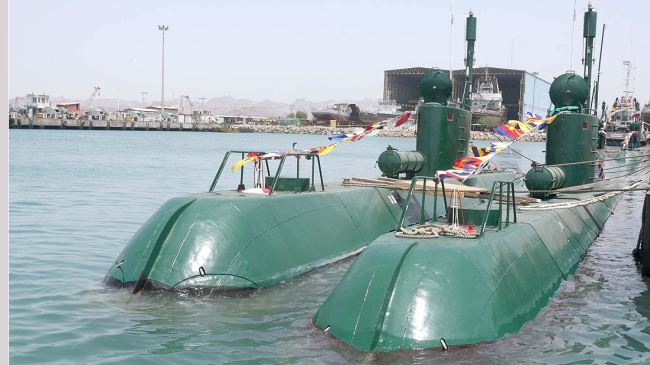
In the wake of overwhelming votes by both houses of Congress to reauthorize the Iran Sanctions Act, the Iranian regime has been vocal in its threats and bravado, but Iran upped its aggression game when Hassan Rouhani announced that Iran would start developing systems for nuclear-powered marine vessels.

According to Reuters, nuclear experts said that Rouhani’s move, if carried out, would probably require Iran to enrich uranium to a fissile purity above the maximum level set in the nuclear deal. The announcement was the first declarative statement by the regime’s leadership of an action taken in direct response to the ISA vote.

Predictably, the Obama administration downplayed the comments in the hopes of maintaining the badly flawed deal in the face of mounting criticism from the foreign policy team being assembled by incoming president Donald Trump.

“The announcement from the Iranians today does not run counter to the international agreement to prevent Iran from obtaining a nuclear weapon,” White House spokesman Josh Earnest told a news briefing.

Rouhani also ordered planning for production of fuel for nuclear-powered marine vessels “in line with the development of a peaceful nuclear program of Iran.”

But under the nuclear settlement Iran reached with the United States, France, Germany, Britain, Russia and China, it is not allowed to enrich uranium above a 3.67 percent purity for 15 years, a level unlikely to be enough to run such vessels, according to Reuters.

“On the basis of international experience, were Iran to go ahead with such a (nuclear propulsion) project, it would have to increase its enrichment level,” said Mark Hibbs, nuclear expert and senior fellow at Carnegie Endowment for International Peace.

The threat to seek nuclear propulsion would give the Iranian regime a convenient way of circumventing the nuclear agreement and get back into the enrichment game quickly and still claim it was adhering to the deal.

It is ironic that Rouhani is citing the reauthorization of the ISA as the straw that broke the proverbial camel’s back in pushing this announcement since the ISA applied largely to Iran’s ballistic missile program and its sponsorship of terror groups, as well as its nuclear program. The ISA is crucial to fulfilling the Obama administration’s promise of “snapback” sanctions should Iran be found in violation.

Also, the president maintains the authority to waive sanctions under the ISA, which Obama has done. This can only mean Rouhani and his fellow mullahs are terrified of what Trump will do when he takes office.

But one possible motivation for Rouhani may be to goad President Obama into not signing the ISA bill before the deadline expires December 31, 2016, which would ultimately prove futile since the bill easily cleared with unanimous approval—enough to override any veto—but Tehran may be hoping for a symbolic act of defiance in support of them from Obama.

Predictably, the Iran lobby led by the National Iranian American Council voiced its support for the deal and warned of dire consequences with Rouhani’s announcement as proof of impending disaster.

“For months, we warned that ISA’s renewal would have real consequences. Today, those consequences have been realized. While Iran’s move to undertake studies related to nuclear-propelled ships is not in violation of the nuclear accord, it does undermine U.S. foreign policy objectives,” the NIAC statement said. “Iran is signaling that for every negative U.S. action, there will be an Iranian reaction anathema to U.S. interests.”

The NIAC statement is the height of absurdity because the logic to it is akin to having a police officer catch a burglar, only to have the thief produce a weapon and threaten the officer and the officer is held to blame for the escalation.

Iran has already received several waivers and exemptions for violating terms of the nuclear agreement and yet when Congress reauthorizes a bill that the Obama administration has already said does not violate the nuclear agreement, the Iranian regime’s first thought is to threat the U.S.

It is a reaction that is a perfect reflection of why the nuclear deal was doomed from the start and why the Iran lobby cannot be trusted in advancing it.

Instead of urging Iran to reach out diplomatically to the incoming Trump administration, the NIAC has from the beginning sought to characterize Trump as a war monger, Muslim hater, insane person and intellectual idiot. These are not the kinds of comments that would engender a positive reaction from the new president.

While the NIAC has gone all in on supporting Iran, even in the face of outrageous statements, it delegitimizes its stated role as an advocate for Iranian-American interests. How can Iranian-Americans be helped by an organization that does not urge Iran to refrain from making outlandish and dangerous threats?

Michael Tomlinson


Filed Under: Blog, News Tagged With: Featured, hassan rouhani, Iran, Iran deal, Iran Lobby, Iran Terrorism, IRGC, NIAC, Sanctions

  • « Previous Page
  • 1
  • …
  • 12
  • 13
  • 14
  • 15
  • 16
  • …
  • 38
  • Next Page »

National Iranian-American Council (NIAC)

  • Bogus Memberships
  • Survey
  • Lobbying
  • Iranians for International Cooperation
  • Defamation Lawsuit
  • People’s Mojahedin
  • Trita Parsi Biography
  • Parsi/Namazi Lobbying Plan
  • Parsi Links to Namazi & Iranian Regime
  • Namazi, NIAC Ringleader
  • Collaborating with Iran’s Ambassador

Recent Posts

  • NIAC Trying to Gain Influence On U.S. Congress
  • While Iran Lobby Plays Blame Game Iran Goes Nuclear
  • Iran Lobby Jumps on Detention of Iranian Newscaster
  • Bad News for Iran Swamps Iran Lobby
  • Iran Starts Off Year by Banning Instagram

© Copyright 2026 IranLobby.net · All Rights Reserved.