Iran Lobby

Exposing the Activities of the lobbies and appeasers of the Mullah's Dictatorship ruling Iran

  • Home
  • About
  • Current Trend
  • National Iranian-American Council(NIAC)
    • Bogus Memberships
    • Survey
    • Lobbying
    • Iranians for International Cooperation
    • Defamation Lawsuit
    • People’s Mojahedin
    • Trita Parsi Biography
    • Parsi/Namazi Lobbying Plan
    • Parsi Links to Namazi& Iranian Regime
    • Namazi, NIAC Ringleader
    • Collaborating with Iran’s Ambassador
  • The Appeasers
    • Gary Sick
    • Flynt Leverett & Hillary Mann Leverett
    • Baroness Nicholson
  • Blog
  • Links
  • Media Reports

How Much Are Four Americans Worth to Iran? $400 Million

August 3, 2016 by admin

How Much Are Four Americans Worth to Iran? $400 Million

How Much Are Four Americans Worth to Iran? $400 Million

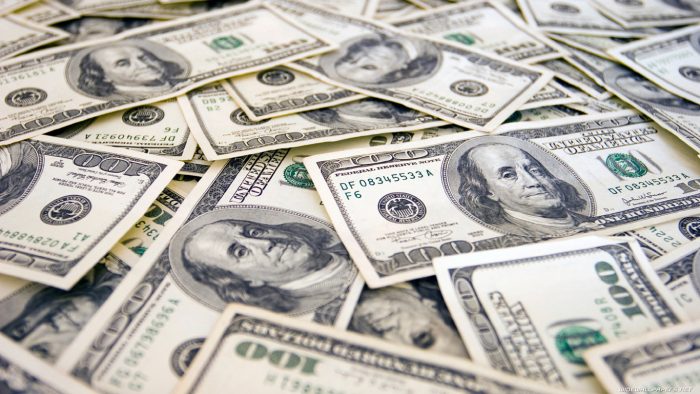
How much are four Americans worth to the Iranian regime? Apparently $400 million since news reports indicate the Obama administration secretly shipped $400 million worth of cash to Iran coinciding with the release of four Americans detained in Tehran and released as part of the nuclear agreement.

According to the Wall Street Journal, Wooden pallets stacked with euros, Swiss francs and other currencies were flown into Iran on an unmarked cargo plane, according to these officials. The U.S. procured the money from the central banks of the Netherlands and Switzerland, they said.

The money represented the first installment of a $1.7 billion settlement the Obama administration reached with Iran to resolve a decades-old dispute over a failed arms deal signed just before the 1979 fall of Iran’s last monarch, Shah Mohammad Reza Pahlavi.

While Obama officials denied any quid pro quo of cash for the prisoners, U.S. officials also acknowledged that Iranian regime negotiators on the prisoner exchange said they wanted the cash to show they had gained something tangible.

Sen. Tom Cotton, a Republican from Arkansas and a fierce foe of the Iran nuclear deal, accused the Obama administration of paying “a $1.7 billion ransom to the ayatollahs for U.S. hostages.”

“This break with longstanding U.S. policy put a price on the head of Americans, and has led Iran to continue its illegal seizures” of Americans, he said.

Since the cash shipment, the intelligence arm of the Revolutionary Guard has arrested two more Iranian-Americans. Tehran has also detained dual-nationals from France, Canada and the U.K. in recent months.

The Iranian regime’s news media quoted senior regime defense officials who described the cash as a ransom payment themselves putting into proper focus how they perceive the cash payment.

Ironically, the $400 million was paid in foreign currency because any transaction with Iran in U.S. dollars is still illegal under existing sanctions not related to the nuclear agreement for violations of human rights and sponsorship of terrorism.

A report by an Iranian news site close to the Revolutionary Guard, the Tasnim agency, said the cash arrived in Tehran’s Mehrabad airport on the same day the Americans departed.

Revolutionary Guard commanders boasted at the time that the Americans had succumbed to Iranian pressure. “Taking this much money back was in return for the release of the American spies,” said Gen. Mohammad Reza Naghdi, commander of the Guard’s Basij militia, on state media.

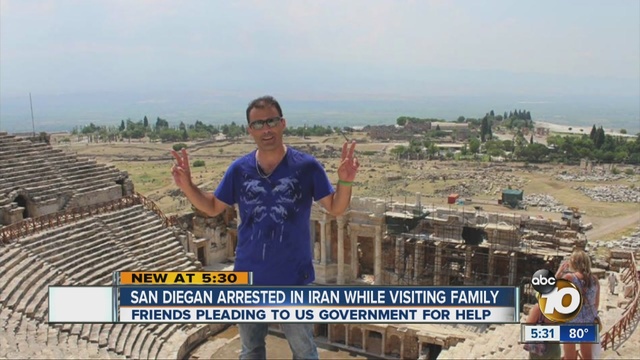
Among the Americans currently being held are an energy executive named Siamak Namazi and his 80-year old father, Baqer, according to U.S. and Iranian officials. Iran’s judiciary spokesman last month confirmed Tehran had arrested the third American, believed to be a San Diego resident named Reza “Robin” Shahini.

Friends and family of the Namazis believe the Iranians are seeking to increase their leverage to force another prisoner exchange or cash payment in the final six months of the Obama administration. Secretary of State John Kerry and other U.S. officials have been raising their case with Iranian diplomats, U.S. officials say.

Iranian officials have demanded in recent weeks the U.S. return $2 billion in Iranian funds that were frozen in New York in 2009. The Supreme Court recently ruled that the money should be given to victims of Iranian-sponsored terror attacks.

Clearly the Iranian regime expects to use the same tried and true tactics to squeeze more cash out of the Obama administration in its waning days as the three proxy wars it funds in Syria, Iraq and Yemen drain it of cash as fast as it can replenish it.

The $100 million value per American hostage is a stunning amount. As a point of comparison, the four highest paid professional athletes in the world make less money: Soccer stars Cristiano Ronaldo and Lionel Messi make $88 and $81.4 million respectively, basketball star LeBron James banks $77.2 million and tennis great Roger Federer brings in a paltry $67.8 million compared to what the Iranian regime received.

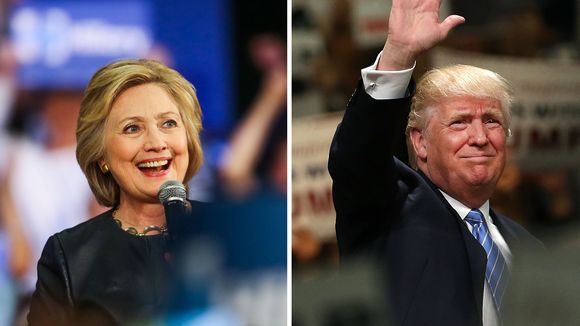
The fact that the last days of the Obama administration are coming and with both presidential candidates—Hillary Clinton and Donald Trump—promising to hold the Iranian regime more accountable, the regime’s leaders may be seeing the end of the road to the usefulness of the nuclear deal.

Top mullah Ali Khamenei harshly denounced the Iran nuclear deal Monday, referring to the negotiations as a “lethal poison” that will prevent his country from negotiating with the U.S. in the future.

“They [the U.S.] want us to negotiate with them on the regional issues but the nuclear deal experience tells us that this is a lethal poison and we cannot trust the Americans’ words in any issue,” Khamenei told a gathering of Iranian citizens Monday.

Various officials within the Islamic Republic have criticized the U.S. for implementing new sanctions against Iran since the JCPOA went into effect in January. They claim the deal prevents the U.S. from implementing any new sanctions against their country, however, the deal only pertains to nuclear related sanctions that existed before the accord was signed. Khamenei threatened to “set fire” to the deal in June should the West violate it, he did not elaborate on what exactly entailed a violation.

It’s a silly claim since the Iranians specifically demanded the deal be de-linked from non-nuclear issues such as human rights and terrorism. In essence, the mullahs have trapped themselves.

Khamenei cautioned against talks with the United States on other regional crises, presumably including the wars in Syria and Yemen and the Islamic State extremist group. The experience of the nuclear deal, he said, “tells us that taking this step would be a deadly poison and that the Americans’ remarks cannot be trusted on any issue.”

His remarks are a verbal backflip from the original promises made by the Iran lobby, especially the National Iranian American Council, that passage of the agreement would help in moderating the various conflicts going on in the region with Iran’s help.

Those claims, like most made in support of the Iranian regime, have proven false.

By  Michael Tomlinson
Filed Under: Blog, News Tagged With: #NuclearDeal, Appeasement policy, Featured, Iran Human rights, Iran Lobby, Iran sanctions, Iran Talks, Khamenei, National Iranian American Council

Iran Lobby Tries to Hold Off Iran Sanctions

August 2, 2016 by admin

Iran Lobby Tries to Hold Off Iran Sanctions

Iran Lobby Tries to Hold Off Iran Sanctions

The Iran lobby, led by the National Iranian American Council, has consistently raised the idea that Iran has not been rewarded with the full lifting of economic sanctions per the nuclear agreement reached last year.

It makes this case based on the continued shaky nature of the Iranian economy, and by the threatening statements of various regime officials such as top mullah Ali Khamenei and foreign minister Javad Zarif who maintain the U.S. is deliberately trying to sabotage the deal.

It is a profoundly ludicrous ideal given the fact that the Obama administration has broken with past U.S. policy over the past three decades in maneuvering to get this deal done in the first place. The Obama administration has set new standards for political gymnastics in trying to secure this policy win, including treating the agreement as a political framework and not a formal treaty in order to avoid an uncertain Senate vote.

It even de-linked Iranian regime’s notoriously bad human rights record and sponsorship of terrorism as conditions for doing the deal; an unheard of step in modern diplomacy.

It also ignored blatant tampering by the Iranian regime in sanitizing military sites where prior uranium enrichment had been ongoing and ignored copious mountains of evidence that Iran was still pursuing dual-use nuclear technology from Germany and ballistic missile designs from North Korea.

Even after all that, the Iran lobby and regime still blame the U.S. for not following through on its commitments.

With friends like these, who needs enemies?

A key goal for the regime remains the lifting of the remaining sanctions put in place by the U.S. in response to Iran’s abysmal human rights record and terror support. These items were ostensibly left out from the nuclear deal since—by the Iranians argument—they had nothing to do with nuclear production, but now the mullahs want these sanctions lifted even though Iranian regime has done nothing to improve its conduct in either area.

The fact that the Iran lobby and regime are now trying to link these sanctions—previously off the table—now back on the table and have threatened to walk away from a deal they have already walked away from, demonstrates how completely useless the nuclear exercise has become.

In a posting on its website, the NIAC, argued that the pending renewal of the Iran Sanctions Act could bring disastrous consequences if it was amended with so-called “poison pills” to impose new restrictions, sanctions or even lengthen its term.

“There is a danger that passage of new sanctions legislation, even if it is to renew sanctions already on the books, could exacerbate tensions over JCPOA sanctions relief. The prospect of Congress renewing ISA, especially extending them beyond the 2023 deadline for lifting sanctions, could send troubling signals regarding the U.S. commitment to the JCPOA at a time of ongoing political uncertainty. Iranian officials and many in the broader Iranian public say the sanctions relief promised under the deal has not been delivered,” the NIAC statement said.

It’s a perverse position to take since the gross mismanagement of the regime’s economy and the decision to support three ongoing wars in Syria, Iraq and Yemen have badly hobbled an economy already rife with public corruption and battered by plummeting oil prices that have nothing to do with the sanctions; especially since Iranian regime is now free to sell the country’s oil back on the open market.

The Iranian people are rightly angry and upset at the stagnant economy, but Tehran’s streets and the channels of social media are not being filled with vocal denunciations of the U.S., instead it is filled with harsh protests of inflated paychecks for regime officials and the pouring of thousands of young Iranian lives to die on the battlefields far from Iran’s borders.

The effort to misdirect attention away from the real failings of the regime and try to blame it on the U.S.—even after the U.S. has tried to do everything it can to appease the Iranian regime short of baking cookies—is a time-worn tactic of the mullahs and we should not fall for it.

Robert Spencer, noted author and director of Jihad Watch, wrote an editorial in the New York Post warning that the Iranian regime is the greatest threat the U.S. and West face right now and dwarfs ISIS in its threat.

“Iran is not as flashy as ISIS but is actively working now on numerous anti-American initiatives that could turn out to be even more lethal than anything ISIS has yet perpetrated,” he said. “The nation is a breeding ground for terrorist activity: funding and controlling a global network of jihad terror organizations with a truly global reach, ready to do Iran’s bidding up to and including the killing of its perceived enemies.”

“Iran’s Hezbollah doesn’t just operate in Lebanon. It continues to target the United States through Mexico, where it has teamed with drug cartels along the US border. This partnership is mutually beneficial: Hezbollah gets massive amounts of cash to finance its jihad operations, and the drug cartels receive extensive training in ways to strike terror into the hearts of their enemies. That is one principal reason why the Mexican drug cartels have adopted what up until recently had been two trademarks of jihad groups: kidnapping and beheading,” he added.

Bob Blackman, a member of the British Parliament, similarly warned of trusting the Iranian regime in a piece in The Hill after the United Nations released a report assessing the regime’s compliance with the nuclear agreement, which found it had failed to meet the higher standards for compliance.

“The critical report by the UN is only the latest in a long series of marks against the Rouhani administration’s supposedly moderate credentials. In order to believe in that moderation in the first place, Western policy-makers had to ignore Rouhani’s long history in the security apparatus of Iran’s clerical regime, including his former role as lead nuclear negotiator, about which he boasted of raising Tehran’s nuclear profile while keeping international scrutiny at bay. And in order to keep the moderation narrative alive to the current date, those same policy-makers have had to ignore various statistical indicators and warnings from the Iranian opposition,” he said.

“The U.S. gave up important leverage in hope of improved relations, but it remained the main object of Tehran’s wrath. The UN closed the file on Tehran’s nuclear weapons program and Iran has continued to accuse it of political bias. And the six major powers involved in the JCPOA, having given in to even last-minute demands by the Islamic Republic, received nothing in return but the most cursory and minimal compliance with the deal. As the Associated Press reported last week, secret side-agreements already outline the expanded nuclear activities that Iran plans to pursue at its earliest possible opportunity,” Blackman added in a warning we should all heed.

By Michael Tomlinson

Filed Under: Blog, News Tagged With: #NuclearDeal, Appeasement policy, Featured, Iran, Iran deal, Iran Human rights, Iran Lobby, Iran sanctions, Iran Terrorism, NIAC Action

Who is Really in Charge of the Iran Regime?

July 29, 2016 by admin

Who is Really in Charge of the Iran Regime?

Who is Really in Charge of the Iran Regime?

The Iranian regime has been busy snatching up citizens of other countries without charge, trial or contact with the outside world. They have been U.S., British, French and Canadian citizens; dual national Iranians. They have been professors, students and aid workers.

None were terrorists, criminals or even political. They all had the misfortune of being in Iran and possessing a passport of a foreign country. It seems that alone was sufficient for the Revolutionary Guards to pick them up, put them in prison and walk away.

The New York Post editorial board blasted the practice and blamed earlier acts of appeasement for sowing the seeds for this behavior.

“Iran is re-stocking its larder of American and other Western hostages, clearly convinced the Obama administration won’t dare make it an issue. Tehran this week arrested yet another US citizen and plans to place him on trial — though on what charges, it won’t say,” the Post said.

“The State Department says it’s ‘looking into’ the latest arrest, which is pretty much all it can do. Iran doesn’t recognize dual citizenship, so won’t even allow consular visits to those being held.

“Some analysts suggest the Revolutionary Guard is insisting on the arrests in order to deter Western businessmen from visiting Iran with investment cash. Funny: Getting such investment was supposedly Tehran’s major motive for accepting the deal’s supposedly tough restrictions on its nuclear-weapons program in the first place,” it added.

The arrests do raise an interesting question: Who is calling the shots in the Iranian regime?

The Iran lobby has long maintained that a rift and power struggle is going on within the regime between the forces of moderates versus hardliners. Loyalists such as Trita Parsi of the National Iranian American Council have used that talking point incessantly in pushing for approval of the nuclear deal with Iran last year.

They promised a nuclear deal would usher in a period of moderation and empower these so-called moderates in upcoming elections.

The opposite has happened as the region has literally gone up in flames with wars now raging from Syria to Yemen and terrorist attacks striking the U.S. and Europe with almost daily frequency.

In Iran, parliamentary elections were rigged with the removal of virtually all perceived dissenters or moderates removed from the ballot even before voting began. The only group of “moderates” elected was a small cadre in Tehran only and even they have turned out to be loyal to the regime and ruling mullahs as evidenced by elections to return the hardest core extremists to leadership positions in the parliament and supreme council.

Many media outlets have characterized the hostage taking as evidence of the internal power struggle within the regime.

The Christian Science Monitor described by saying “the targets of the most radical elements of Iran’s competing power blocs are increasingly Iranian-Americans and other dual nationals visiting Iran to see family or pursue academic interests. They are being ensnared in the upheaval and redistribution of power in the wake of last year’s nuclear deal, experts in United States-Iran relations say.”

“Iranian hardliners opposed to President Hassan Rouhani and his diplomatic opening to the US and the West are widely assumed to be behind the detentions – and would not appear to be easily persuaded to permit the detainees’ release. But at the same time, some Iran experts say they see a window of opportunity for some kind of prisoner deal before President Obama leaves office,” it added.

The fact that speculation centers on the Iranian regime snatching up Americans and Brits for the purpose of another round of prisoner swaps in exchange for more economic concessions says volumes about the intentions about the regime, but it says even more about who is calling the shots in the leadership of the regime.

The time-honored tradition of hostage taking by the mullahs in Tehran was even conceded by Iran lobbyists as being unlikely to die off.

“But the prospects for freeing Iran’s imprisoned dual nationals before Mr. Obama leaves office – not to mention ending the practice altogether – are not bright,” says Reza Marashi of the NIAC.

“You have to put the likelihood at 50-50 at best,” he says. “The ability to align timing and interests, that’s completely up in the air.”

The best the Iran lobby can offer these poor, innocent victims of the regime are 50-50 odds they will be joined by more hostages.

All the evidence points to the fact that Hassan Rouhani has never been a moderate and is rock-solid in step with Ali Khamenei and his fellow mullahs on these actions. Has Rouhani called for these prisoners’ release? Has he condemned them? Has he even so much as posted a tweet describing any regret over these actions?

The answer is a resounding no.

The hardline nature of the regime can be seen in the everyday cruelties and injustices visited on ordinary Iranians. Beyond the more gruesome aspects of the regime’s rule, including public executions, amputations and beatings of women on the street, everyday acts that seem perfectly normal to any Western citizen are viewed as subversive and dangerous.

A group of women were reportedly arrested for riding bicycles in Iran and made to sign pledges not to repeat the “violation”.

They were planning to participate in a cycling event in the north-western city of Marivan when police told them a new government directive had barred women riding bicycles in public.

The opposition National Council of Resistance of Iran said officers ordered them to sign written pledges vowing not to repeat the “unlawful violation” and took several women who protested into custody, according to the Independent.

In another incident, up to 150 people were detained by Iran’s morality police at a mixed-gender party in Tehran. In the sweltering heat of summer, as people spend more time outside, the authorities tighten their grip on social norms, cracking down on activities deemed un-Islamic.

Such restrictions have become a regular feature of Iranian life since the current theocracy has come to power after the 1979 revolution, as members of the morality police appear on the streets, or are deployed in vans at public places, to tackle women defying the compulsory hijab, men with non-approved hairstyles, or males and females partying together, according to the Media outlets.

But even with all these acts of suppressing free expression, defiance among the Iranian people still finds a way to surface as many men have posted photos of themselves wearing the hijab to social media, in solidarity with women in the country, who are forced to cover their heads in public, the Independent reported.

Many of the photos show a man wearing the hijab next to his wife or a female relative whose hair is uncovered.

It isn’t much in the way of defying the regime, but in a nation where simply holding a U.S. passport and being an Iranian can land you in prison, even these small acts can grow to become important changes to the regime.

By Laura Carnahan

Filed Under: Blog, News Tagged With: hassan rouhani, Iran, Iran deal, Iran Human rights, Iran Lobby, Trita Parsi

Why the Iran Regime Needs ISIS

July 28, 2016 by admin

Why the Iran Regime Needs ISIS

Why the Iran Regime Needs ISIS

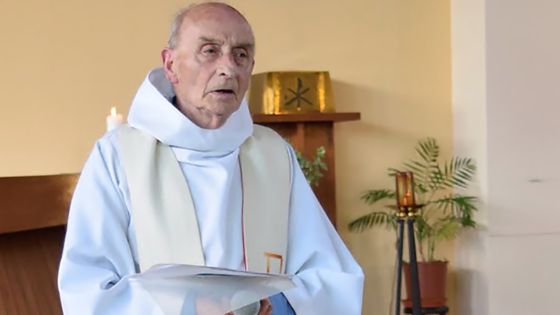
Rev. Jacques Hamel was an 85-year old priest shepherding a flock in a small church in Normandy, France. He was celebrating Mass when two dedicated followers of the terrorist group ISIS stormed in, made him kneel at the altar and then slit his throat in front of two shocked parishioners and two nuns who then heard a sermon from the killers.

ISIS claimed responsibility for the attack and fulfilled its long-standing vow to bring a war against Christians and the Catholic Church by killing a priest in the sanctity of a church.

“They forced him to his knees and obviously he wanted to defend himself and that’s when the drama began,” said one nun, who identified herself as Sister Danielle, The Guardian reported. “They were filming themselves preaching in Arabic in front of the altar. It was a horror.”

The attack comes amid a spate of terror strikes in France, including Tunisian Mohamed Lahouaiej Bouhlel’s truck rampage in Nice on July 14, when he plowed into a crowd of Bastille Day revelers – killing 84 and wounded over 300.

For two years, the black-clad jihadist army has called for attacks on Christians in Rome, throughout Europe and across the world. It has even called for the assassination of Pope Francis. The attack — which the knife-wielding ISIS killers reportedly videotaped — in the northern French town of Saint-Etienne-du-Rouvray shows Islamist killers have heeded the call.

“The Islamic State is persistently demoralizing European unity by launching divisive attacks within its borders — the most recent attack on the Catholic Church aims directly at the French sense of identity,” said Veryan Khan, editorial director for the U.S.-based Terrorism Research & Analysis Consortium.

Over the weekend, ISIS Twitter accounts called for more operatives to take up arms in France and carry out additional deadly attacks, according to an analyst with the U.S. based company GiPEC.

ISIS warned that London and Washington DC are next on the list of target cities, with images threatening major world capitals being posted online.

With a secure base of operations extending from Syria to northern Iraq, ISIS can continue to recruit young extremists, engineer the return of fighters to their home countries and supply arms, cash and documents to move terrorists around the world.

The inability to crush ISIS in Syria and Iraq has been largely the result of the almost-never ending wars brought about by Iranian intervention in both countries. It has been well-known that Iran’s last minute support for the Assad regime kept it from falling during the Arab spring protests.

The decision by Iranian commanders to target not extremist Islamic groups, but instead go after Western-funded and backed rebels, was a key step towards freeing militants to expand their ranks. Iranian regime’s manipulation of the administration of former Iraqi prime minister Nouri al-Maliki was the defining blow though in driving out Sunnis from a coalition government straight into the arms of ISIS and leading to the downfall of Mosul, the most important victory for the terror group.

The cold calculation of the mullahs in Tehran explains why the regime did not go after ISIS and why ISIS has so far largely left Iranian interests and its citizens alone and untouched.

For the mullahs ruling Iran, the mere existence of ISIS and its sheer brutality provides a usual counterweight to attacks on its own human rights record and support for terrorism such as its long-standing partner Hezbollah. As ISIS ratchets up the severity, frequency and brutality of its attacks, Iranian regime’s conduct begins to pale in the opinions of media and governments.

Imagine a wife beating, rapist living on your block. You would be rightly worried about him, but instead a notorious serial killer moves into the neighborhood and starts slaughtering people. Who would you be more concerned about?

It’s a sleight of hand trick that gives the mullahs freedom to operate and gain some political cover for their abuses. If the world protests the arrests of dual-national citizens by Iran, don’t worry, there’s an ISIS attack on a church.

These efforts at deception have been part and parcel part of the tools the mullahs use to distract attention. They used it to great effect during the negotiations for the nuclear talks by pointing to the Syrian conflict’s start and how a more “moderate” Iran could help ease tensions there; never mind Iran started it all in the first place.

It is also why Iranian regime has done little to actually combat ISIS. Even with the enlistment of Russia to fight in Syria alongside Iran, the targeting list for Russian warplanes includes American-backed militias and not ISIS units.

Now that the regime has set the date for its next presidential election for May 2017, you can be assured the mullahs will use ISIS to demonstrate their commitment to helping combat terrorism, while continuing its own sponsorship of terror.

Predictably the media, with the help of the Iran lobby, was pedaling the notion that the election represents a battle between “moderates” vs. “hardliners.” If the past three years under Hassan Rouhani have taught us anything, it is that there are no real moderates within the Iranian regime.

Anyone espousing a dissenting view has either been put in prison or sent to the gallows to be hung. It’s a tidy way to clear your ballot of any dissenting views.

By Michael Tomlinson

Filed Under: Blog, News Tagged With: Featured, hassan rouhani, Iran, Iran Lobby, Iran Mullahs, Iran Terrorism, IRGC

Iran Regime Cracks Down Again and Confirms American Prisoner

July 26, 2016 by admin

Iran Regime Cracks Down Again and Confirms American Prisoner

Iran Regime Cracks Down Again and Confirms American Prisoner

The Iranian regime has always followed a simple rule when it comes to the freedom of its own people: Never let the Iranian people have too much freedom.

Nothing personifies that rule than in the complete control the regime has tried to maintain over the nation’s communications. The mullahs know that allowing Iranians free and unfettered access to the internet, social media and video services makes their rule incredibly vulnerable to scrutiny.

If ordinary Iranians could share with the outside world what was going on inside the regime, the world would see the brutality and ruthlessness of the mullahs and the maltreatment of Iranian women.

They would see paramilitary Basij militia beating women on the street for dress code violations. They would see demonstrations broken up with clubs and truncheons. They would see daily executions taking place in public squares with hangings and punishment such as the amputation of limbs with power tools.

If ordinary Iranians had access to the internet, they could see the news unfiltered from around the world. They would see the proxy wars the regime has started in Syria, Iraq and Yemen. They would see young Iranians being sent to die on behalf of the mullahs to save a brutal regime in Syria that has resulted in the deaths of over 600,000 people and driven another four million into refugee status.

The mullahs have sought every advantage to keep the internet bottled up, including installing Iran’s version of China’s great wall to block unwanted sites, filter all internet traffic and monitor the online activities of all Iranians.

It has regularly tracked down and arrested bloggers who have posted controversial topics and it has yanked the myriad of satellite dishes that dot the rooftops of Iranian homes throughout the country. It has sought Iranians who have posted on banned social networks such as Instagram, Facebook, Twitter, Snapchat and others; even though it allows regime leaders to have their own social accounts to post propaganda.

Even with all these restrictions, Iranians have used their education, intellect and ingenuity in skirting around the mullahs’ walls. They have used routers to work around blockades. They have used illegally made mobile apps to install hacks and work arounds on certain IP addresses.

This underground access has helped Iranians, including those sympathetic with the organized Iranian resistance movement to smuggle out photos, videos and other information about what is really happening inside Iran and make the world aware of violations and abuses being committed by the regime.

That is how the world has been able to find out about Iran’s illegal and secret nuclear program in the first place and most recently that is how the world has known about the recent turmoil involving corruption among regime officials.

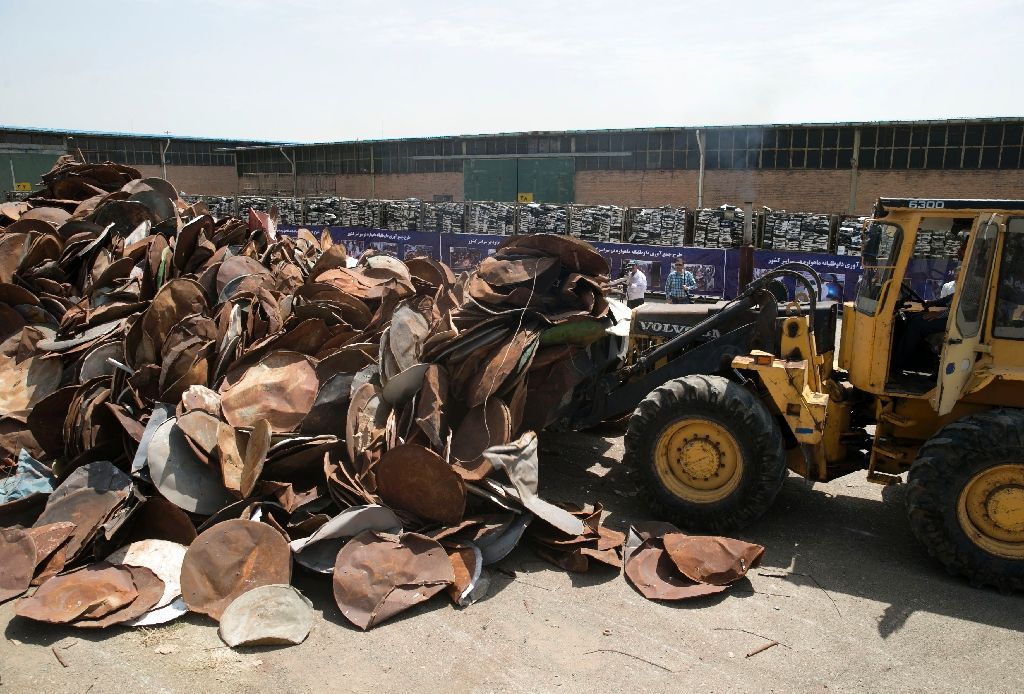
All of this doesn’t stop the regime from still trying to keep a stranglehold on the Iranian people’s access to communications as regime authorities have again destroyed a startling 100,000 satellite dishes and receivers as part of a widespread crackdown they say “deviate morality and culture.”

General Mohammad Reza Naghdi, the head of Iran’s Basij militia, oversaw the destruction ceremony in Tehran on Sunday and warned of the impact that satellite television was having in the country.

“The truth is that most satellite channels… deviate the society’s morality and culture,” AFP news agency reported him as saying.

“What these televisions really achieve is increased divorce, addiction and insecurity in society.”

While Naghdi said that a total of one million Iranians had already voluntarily handed over their satellite dishes to authorities, the vast majority were confiscated by regime police and militia.

Iranian police regularly raid neighborhoods and confiscate dishes from rooftops, and under Iranian law, satellite equipment is banned and those who distribute, use, or repair them can be fined up to $2,800, putting Naghdi’s explanation in a clearer light.

The effort to control communications points out the deeper actions of the regime as it confirmed the arrest of another American, but did not provide specifics even though family members have confirmed it is Robin Reza Shahini, an Iranian-American man from San Diego, California who was arrested.

Asked about reports of the arrest of a dual citizen on national security charges, the semi-official Fars news agency reported, judiciary spokesman Gholamhossein Mohseni Ejei told a weekly news conference: “The report on the arrest of an Iranian American dual national is correct.”

“But I don’t know what the charges are. The person was arrested in Gorgan … but the trial may be held in Tehran.”

In the past nine months, the Revolutionary Guards have arrested at least six dual-national Iranians, friends and family members say, the highest number of Iranians with dual nationality detained at one time in recent years to have been acknowledged.

The government has confirmed most of the detentions, without giving details of any charges. The Iranian government does not recognize dual nationality, which prevents relevant western embassies from seeing detainees.

Shahini was active on social media, running two Facebook accounts, and maintained a blog, but the blog and one of his Facebook accounts appear to have been disabled, his girlfriend said. His WhatsApp account shows someone used the account as recently as July 20th.

Predictably the Iran lobby was again silent on another American’s abduction, preferring instead to insert itself into the U.S. presidential election by denouncing presidential candidate Donald Trump’s speech at the Republican National Convention in which he denounced the nuclear deal made with the Iranian regime.

By Michael Tomlinson

Filed Under: Blog, News Tagged With: Featured, Iran Human rights, Iran Lobby

Clinton and Trump Must Face Dealing with Iran

July 23, 2016 by admin


Clinton and Trump Must Face Dealing with Iran

Clinton and Trump Must Face Dealing with Iran

The Republican National Convention is going on in Cleveland where Donald Trump will become the nominee for the Republican Party. Hillary Clinton will follow suit in Philadelphia and then another season of American politicking will launch into its usual fall fury.

This election year though is different from any other in that the U.S. and the rest of the world are confronted by a problem it has never seen before and that is the rise and spread of Islamic extremism and the terror being perpetuated by organizations such as Hezbollah and ISIS, but also aided by nation states such as the Iranian and Syrian regimes.

Through the use of the internet and social media, extremist groups are now able to preach their hatred around the world and manipulate individuals to commit heinous acts, as well as coordinate terror cells in a playbook that has already been proven time and again from Sydney and Ottawa to Boston and San Bernardino to Paris and Bangladesh.

That makes the problem of dealing with terror not so much a law enforcement exercise of going after specific individuals, but rather a geopolitical strategic exercise in battling an ideology. This makes the problem facing the next president all the more daunting because the battlefront is in trying to kill an idea instead of just using a Predator drone to fire a missile at a terrorist leader.

This also helps frame a better understanding of the role the Iranian regime plays in the spread of global terrorism.

Iran remains on the U.S. State Department list of nations that is a state-sponsor of terror; a list that has ironically shrunk over the years as the Cold War ended much of the friction that occurred between the U.S. versus the old Soviet empire and each respective client states.

Instead, we are left with a world of unaligned rogue nations such as Iran and North Korea, and nations that have fallen apart to such a degree that terrorist organizations operate essentially freely such as Somalia, Syria and to a lesser degree now Libya.

The rise of Al-Qaeda and ISIS into essentially nation-state status illustrates the fundamentally changed nature of the world we live in and it is a world that could not happen unless countries such as Iran under the mullahs have provided support, cash, expertise and political cover for those rogue entities.

When Al-Qaeda was driven from Afghanistan after the U.S. invasion, many of its key leaders were granted refuge in Iran by the mullahs in Tehran. The mullahs also provided support to Shiite militias backed by Iran fighting U.S. troops in Iraq, killing many with Iranian-manufactured explosive devices.

When Syria’s Assad regime was on the brink of collapse, the Iranian regime stepped in with Quds Force fighters, Hezbollah terrorists, Afghan mercenaries recruited from refugees in Iran, billions of dollars in cash support and arms and ammunition.

Staving off Syria’s governmental collapse allowed Islamic extremist groups to flourish in the carnage of that war as Iran targeted Western-backed moderate rebel groups and left terror groups such as ISIS to spring forth and take root.

Iran did as much as anyone to pump ISIS up with the collapse of the Iraqi government of Nouri al-Maliki which drive disaffected Sunni tribes into the arms of ISIS and opened the door for the fall of Mosul and the rich oilfields in the north which have sustained ISIS with millions of dollars in illicit oil revenues a day.

These are all facts that the Iran lobby have mightily sought to deflect and hide from scrutiny. Groups such as the National Iranian American Council have concocted straw man issues out of immigration visas and banking transactions while ignoring the much more significant problems of human rights violations and the incredible suffering being caused by Iranian regime’s policies.

Iranian regime itself has publicly and aggressive announced its intentions for the all the world to see, most notably in flouting a nuclear agreement which was dead on arrival a year ago.

Even the regime’s foreign minister, Javad Zarif, who pulled this pathetic deal from the arms of a compliant and submissive Obama administration, boasted yesterday of Iran’s ability to bring its nuclear program back on track to producing literally tons of enriched uranium quickly as the deal eases off more quickly than the advertised 15 years promised.

Zarif said a document, submitted by Iran to the International Atomic Energy Agency and outlining plans to expand Iran’s uranium enrichment program, is a “matter of pride.”

The absurdity of the contention that Iran is abiding by the nuclear deal was on display when the United Nations issued a 17-page report that pointed out Iran may be abiding by the letter of the agreement, but not the spirit of it.

No greater understatement in diplomacy has been uttered since Neville Chamberlain claimed “peace in our time” after meeting with Adolf Hitler in Munich.

The report did have the common sense to point out the destabilizing nature of Iran’s recent test launches of ballistic missiles capable of carrying nuclear warheads and its illicit supplying of arms to Yemen and Iraq in those proxy wars.

Those understated concerns were too little and too late to offset the deaths and violence escalating around the world as Islamic extremist terrorist acts are now becoming the norm rather than the exception.

The fuel for that extremism comes from an Iranian regime that commits such cruel acts of barbarism as to set a bar that ISIS seems compelled to match and exceed with each new act of bloodshed.

Amnesty International took Iran to task with a new report on the denial of medical care to Iran’s numerous political prisoners; a reprehensible situation revealed broadly by Americans taken prisoner by Iran such as Christian pastor Saeed Abedini and former U.S. Marine Amir Hekmati.

The report, Health taken hostage: Cruel denial of medical care in Iran’s prisons, provides a grim snapshot of health care in the country’s prisons. It presents strong evidence that the judiciary, in particular the Office of the Prosecutor, and prison administrations deliberately prevent access to adequate medical care, in many cases as an intentional act of cruelty intended to intimidate, punish or humiliate political prisoners, or to extract forced “confessions” or statements of “repentance” from them.

“In Iran a prisoner’s health is routinely taken hostage by the authorities, who recklessly ignore the medical needs of those in custody. Denying medical care to political prisoners is cruel and utterly indefensible,” said Philip Luther, Director of Amnesty International’s Middle East and North Africa Program.

“Prisoners’ access to health care is a right enshrined in both international and Iranian law. When depriving a prisoner of medical care causes severe pain or suffering and it is intentionally done for purposes such as punishment, intimidation or to extract a forced ‘confession’, it constitutes torture.”

Iran sets the template and ISIS follows and unless Donald Trump or Hillary Clinton deal first and foremost with the behavior of the Iranian regime, its actions will never to checked and altered.

By Michael Tomlinson

Filed Under: Blog, News Tagged With: Featured, Iran deal, Iran Human rights, Iran Lobby, Iran Mullahs, Iran Terrorism, zarif

Different Day Same Outcome as Iran Arrests Another American

July 22, 2016 by admin

Different Day Same Outcome as Iran Arrests Another American

Different Day Same Outcome as Iran Arrests Another American

It feels like the summer version of Groundhog Day as the U.S. State Department said it was looking into reports that another American has been detained by the Iranian regime.

According to the San Francisco Chronicle, State Department spokesman John Kirby would not comment further Thursday on the detention of Robin Shahini. The girlfriend of the San Diego man said Shahini’s sister told her Iranian authorities took him into custody July 11 while he was visiting family in his native Iran and he has not been heard from since.

The girlfriend asked not to be identified because she has family in Iran and fears for their safety. She said she worries Shahini was detained because of his online comments criticizing Iran’s human rights record.

It’s getting to the point that if you want to get arrested all you have to do is post a tweet criticizing Iran’s human rights record and then wait for the knock on the door by the Revolutionary Guards.

The Chronicle noted that the Revolutionary Guard has increasingly targeted those with Western ties since the nuclear deal in which Iran agreed to limit its uranium enrichment in exchange for the lifting of sanctions.

Shahini, 46, graduated in May from San Diego State University with a degree in International Security and Conflict Resolution. He had been accepted to SDSU’s graduate program in Homeland Security.

The Chronicle said His girlfriend said he left for Iran on May 25 to see his mother who was diagnosed with Alzheimer’s. The girlfriend said she communicated with Shahini on July 10 and was expecting to hear back the next day to help him get his paperwork into the university. She grew concerned after not hearing from him.

She eventually reached his family who told him Iranian intelligence officials came to their home in Gordon, Iran, and took him away. Authorities searched the home and took his personal belongings, she said. The family has not talked or seen him since. He had a plane ticket to return to San Diego on July 25 and had planned to start classes on Aug. 22, the girlfriend said.

The day Shahini’s family says he was detained on July 11, Iran announced the indictments of a Lebanese man and three dual nationals. The four were arrested in connection with separate cases over the past year. Family members and representatives of the four say they did nothing wrong. All four have ties to Britain, Canada and the United States. The charges they face remain unclear.

The recipe for getting these prisoners of other nations released from Iranian prison often relies more on public pressure than diplomacy according to human rights groups.

“Fortunately, all the cases of Americans we’ve worked on were eventually resolved, but only after a great deal of public pressure was put on Iranian authorities,” said Elise Auerbach, Amnesty International USA’s Iran specialist.  “Very often the authorities will tell prisoners and their families to just be quiet and not go public and all will go well, but the opposite is true.”

The much-ballyhooed prisoner swap of five Americans in the wake of the Iran nuclear deal set the stage for the mullahs in Tehran to believe they can snatch up innocent citizens and hold them as bargaining chips later.

That policy of appeasing the regime has led to a veritable avalanche of arrests of foreigners who hold dual citizenship, which the regime has proclaimed not to recognize. Once a regime subject, always a regime subject no matter what passport you hold it seems the mullahs are saying.

The practice is getting so out of hand that the British Foreign Office issued a travel advisory for Iran warning its citizens, especially any with dual Iranian nationality, of the risk of being scooped up and arrested.

According to the Guardian, the British government relaxed its advice against all but essential travel to Iran in July 2015 after the landmark nuclear agreement. But a stalemate over the fate of at least two British-Iranians currently detained in Tehran appears to have led the FCO to amend its instructions, although it has not raised concerns to the same level as before the nuclear deal.

“British nationals – including dual British/Iranian nationals – face greater risks than nationals of many other countries,” reads the new advice, which was updated on Friday. “The security forces may be suspicious of people with British connections. The risks are likely to be higher for independent travellers or students than for people travelling as part of an organised tour or business people invited by the Iranian authorities or companies.”

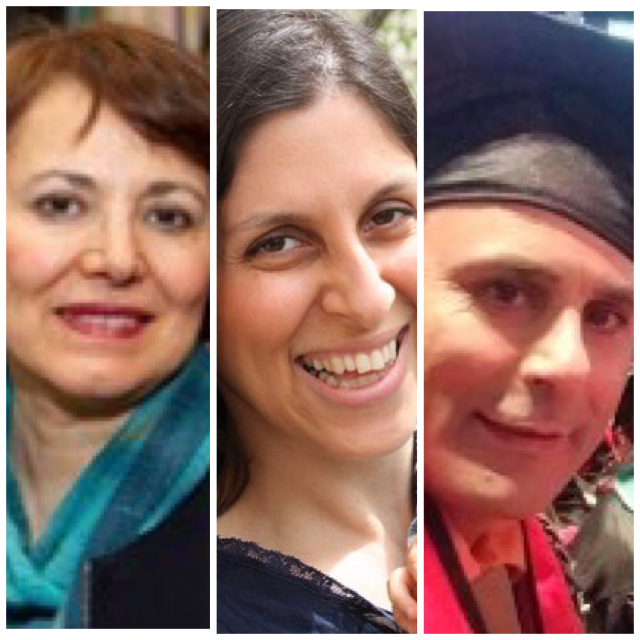
The warning will be bad news for Iran as it struggles to strengthen economic ties with the UK and attract more foreign tourists. The ongoing detentions of Nazanin Zaghari-Ratcliffe, a British-Iranian woman held since April, and 76-year-old businessman Kamal Foroughi, a dual national in prison since May 2011, have undermined efforts by London and Tehran to improve relations.

In Why Does Iran Keep Taking American Hostages?, published in the September 2015 issue of The Tower Magazine, Iran expert Ali Alfoneh described the regime’s detainment of foreign and dual-nationals as “a perfectly normal procedure and political practice in the Islamic Republic. That has been the case since the first day of the revolution and continues until today.”

The public outcry over the regime’s hostage taking erupted into Canada as Lawyers Without Borders Canada and Quebec’s Bar association called on Iran’s government to make public its case against Homa Hoodfar, the Iranian-Canadian academic currently imprisoned in Tehran’s notorious Evin Prison on unknown charges.

Hoodfar was first arrested in March by the counter-intelligence unit of the Iranian Revolutionary Guards. They told her she could not leave Iran to return to Canada.

Over the next two months, relatives say she was interrogated without a lawyer and then summoned to the prosecutor’s office at Evin prison where she was allowed to post bond and was released on bail.

She was then re-arrested on June 6 and charges against her have now been filed, but Tehran prosecutor Abbas Jafari Dowlatabadi has not detailed the charges she faces.

“The failure to reveal the charges against professor Hoodfar, the limits and constraints that seem to be imposed on her attorney, the lack of clarity surrounding the case, and the treatment professor Hoodfar has received to date bring back dark memories for Canadians and raise serious questions regarding compliance with Iranian law and international law applicable to Iran,” Pascal Paradis, executive director of Lawyers Without Borders Canada, said in a statement.

“Like any other Iranian citizen, professor Hoodfar has the right to full answer and defense under the International Covenant on Civil and Political Rights, to which Iran has been a party since 1975”, he added.

Predictably, the Iran lobby, most notably the National Iranian American Council and other regime apologists, were silent on this latest round of hostage taking.

Hopefully public pressure and growing awareness that the Iranian regime hasn’t changed one bit since the nuclear deal agreement will prevent this Groundhog Day from repeating itself anymore.

By Michael Tomlinson

Filed Under: Blog, News Tagged With: Featured, Iran, Iran deal, Iran Human rights, Iran Lobby, Iran Mullahs, National Iranian American Council

World Will be Paying for Flawed Iran Nuclear Deal for Years

July 21, 2016 by admin


World Will be Paying for Flawed Iran Nuclear Deal for Years

World Will be Paying for Flawed Iran Nuclear Deal for Years

The Iran nuclear deal has moved front and center in the attention of the media and among policymakers since it has been a year now since the agreement was hailed as a ground breaking exercise in diplomacy.

The Iran lobby has predictably cheered its perceived successes in keeping the Iranian regime in check, with regime apologists such as the National Iranian American Council in the vanguard of that cheerleading squad.

For the mullahs in Tehran, the past year has yielded some fruit as a result of the deal; namely the release of badly needed cash reserves they have been able to tap for a massive shopping expedition to Russia to replenish arms used up in fighting three proxy wars in Syria, Yemen and Iraq.

The deal has also helped the regime upgrade the technical sophistication of its military with the purchase of state-of-the-art anti-aircraft missile batteries from Russia, alongside new fighter jets, battle tanks and anti-ship missiles.

Most importantly for the regime is the political cover the deal has provided in allowing Iran to continue its brutal crackdown on human rights at home while receiving a free pass from the U.S. and other nations since linking the deal to improvements in human rights was left out.

The most recent revelation of the deal in hindsight has been the disclosure by the Associated Press of a secret side deal that grants Iran an accelerated pathway to enriching uranium back to full capacity well before the 15-year time frame outlined in the deal.

The damning disclosure has wrecked the Iran lobby’s carefully laid arguments and brought on a wave of negative media coverage pointing out the irregularity in the promise of nuclear containment. The disclosure also undercuts the central conceit of the nuclear deal, which was that it could buy time to push Iran’s ability to build a nuclear weapon back over a decade and half.

The reality is that Iranian regime has been freed of adequate international inspection and monitoring and can legally accelerate its enrichment program to produce enough nuclear material to produce several warheads in short order.

When you tie in that fact with the accelerated development of Iran’s ballistic missile program, you can see the blueprint laid out by North Korea a decade earlier that enabled it to join the ranks of nuclear weaponized nations.

James Phillips, a senior research fellow for Middle Eastern Affairs at the Heritage Foundation, outlined this key failing in the nuclear deal in a piece in the Daily Signal.

“The published text of the nuclear agreement was vague on the exact timing of what happens to Iran’s uranium enrichment program after ten years,” he writes. ““But the new document indicates that after ten years, Iran plans to start replacing its current centrifuges with thousands of more advanced models that would be up to five times more efficient than the 5,060 centrifuges that it is allowed to operate currently under the agreement.”

“This concession could allow Tehran to enrich at more than twice the rate that it is now doing, even if the total number of operating centrifuges are reduced. This is a major concern because if the enrichment rate doubles, the time Tehran would need to stage a nuclear breakout would be reduced from the 12 months promised by the Obama administration to six months or less, much earlier than the administration had advertised when it was trying to sell the nuclear deal,” he added.

The fact that the side deal was part of an add-on document prepared and submitted by the Iranian regime to the United Nations as part of its report on Iran’s compliance essentially codifies the regime’s ability to accelerate its enrichment program.

This poses a monumental problem for the future of the world in any new nuclear negotiations—not just with Iran, but any rogue nation—since a country such as Saudi Arabia or even Egypt might be tempted to develop a nuclear capability in response to the Iranian regime and point out, correctly, it is deserving of the same concessions.

A Non-Resident Iran Research Fellow at the Foundation for Defense of Democracies, pointed out this dangerous pathway for the future of nuclear agreements in a piece in the National Interest.

FDD report points out that by appeasing the Iranian regime, the U.S. has set the precedents that “intransigence can lead the international community to accept domestic enrichment” and “that being a Western ally does not guarantee more flexible treatment when accessing nuclear technology.”

“Key American allies that have previously limited their nuclear activities—like South Korea or the United Arab Emirates—have already noted that Iran, which has been repeatedly sanctioned for its nuclear noncompliance, has been permitted to sign a deal allowing it to develop industrial-scale nuclear capacity,” he writes.

The report also correctly points that creating an artificial divide between fissile material and development of warhead delivery systems is useless since Iran has already moved quickly to possess the ability to lob a nuclear warhead across continents. This “de-linking” process sets the precedent for any other nation to demand similar concessions.

The final lesson he writes about is that just because an agreement is lengthy (159 pages) does not mean it is always specific. The JCPOA contains a vague condition called “significant non-performance” under which parties can walk away from the deal. Such legalese incentivizes a devious negotiator like the Islamic State to define violations on its own terms.

Jed Babbin, former deputy undersecretary of defense in the George H.W. Bush administration and a senior fellow of the London Center for Policy Research, also noted in a piece in the Washington Times how the nuclear deal has actually prevented international monitoring of Iran’s nuclear activities.

“Parts of the side deals evidently bar Americans from participating in the inspection of Iranian nuclear sites. The side deals also allow Iran to inspect some of its own sites, preventing U.N. inspectors any access. To no one’s surprise, the Iranians have reported they are complying with the deal even in the uninspected sites,” he said.

“In 2003 Iraq, mistaken intelligence led to war. In 2016 Iran, the lack of intelligence is leading to a false peace” he adds.

The warning is explicit here. Because of the failures of the Iran nuclear deal, the world will have to suffer the consequences of a militant, extremist Iranian regime armed with nuclear weapons in the very near future and that prospect is one that the next incoming U.S. president must prevent.

By Michael Tomlinson

Filed Under: Blog, News Tagged With: Featured, Iran deal, Iran Lobby, Iran sanctions, National Iranian American Council, NIAC Action

Iran Lobby Working Hard to Preserve Flawed Nuclear Deal

July 19, 2016 by admin

Iran Lobby Working Hard to Preserve Flawed Nuclear Deal

Iran Lobby Working Hard to Preserve Flawed Nuclear Deal

It has been one year since the Iran nuclear deal was agreed approved and freed the Iranian regime from a host of economic sanctions, as well as gave itself truckloads of political and diplomatic capital it has spread around the world in support of three proxy wars it is now waging.

By any objective standard, the Iranian nuclear deal has been a failure because it never was tied to modifying the behavior of the mullahs in Tehran. If the mullahs suffer no consequences for actions to support terror, commit cruel human rights violations and continue to build the infrastructure necessary to deliver a nuclear warhead to a target, then they are going to continue with that abhorrent behavior.

Nowhere was that point made more clear than in revelations by the Associated Press that in a secret side deal with the Iranian regime granted by the Obama administration, key restrictions on Iran’s nuclear program will start to ease years before the publicly-stated 15 year accord’s expiration, thus allowing the regime to pursue full development of a nuclear bomb well before the end of the pact.

The confidential document is the only text linked to last year’s deal between Iran and six foreign powers that hasn’t been made public, although U.S. officials say members of Congress who expressed interest were briefed on its substance. It was given to the AP by a diplomat whose work has focused on Iran’s nuclear program for more than a decade, and its authenticity was confirmed by another diplomat who possesses the same document.

although some of the constraints extend for 15 years, documents in the public domain are short on details of what happens with Iran’s most proliferation-prone nuclear activity — its uranium enrichment — beyond the first 10 years of the agreement.

The document obtained by the AP fills in the gap. It says that as of January 2027 — 11 years after the deal was implemented — Iran will start replacing its mainstay centrifuges with thousands of advanced machines.

Continue reading the main story

Centrifuges churn out uranium to levels that can range from use as reactor fuel and for medical and research purposes to much higher levels for the core of a nuclear warhead. From year 11 to 13, says the document, Iran will install centrifuges up to five times as efficient as the 5,060 machines it is now restricted to using.

Those new models will number less than those being used now, ranging between 2,500 and 3,500, depending on their efficiency, according to the document. But because they are more effective, they will allow Iran to enrich at more than twice the rate it is doing now, according to the New York Times.

The blockbuster revelations mean that Iran can massively expand its uranium enrichment capacity to produce several nuclear warheads within a time frame as little as 10 years, which contradicts virtually every public reassurance uttered by Iran lobby proponents such as the National Iranian American Council and Ploughshares Fund.

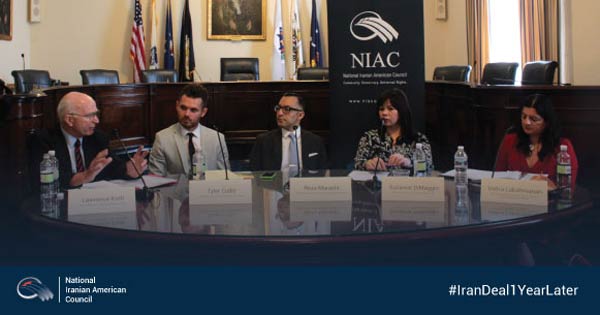
The NIAC’s deliberate misleading of the public continued during a briefing on Capitol Hill in which the NIAC was represented by noted regime apologists Reza Marashi and Tyler Cullis. Also attending were Suzanne DiMaggio of New America and Lawrence Korb of the Center for American Progress.

DiMaggio was especially adept at turning verbal gymnastics in trying to pound home the idea that the nuclear agreement should not be tied to other issues such as Iran’s consistent support for the Assad regime as it busily wipes out virtually the entire civilian population of Syria.

It is funny DiMaggio also mentioned the heightened state of crisis in the Strait of Hormuz and thought it would be a good idea for the U.S. and the regime to negotiate an agreement government interactions at sea. That would be nice since Iran has been busy continually threatening U.S. and foreign vessels, capturing and parading U.S. sailors and threatening to blow up commercial shipping repeatedly, as well as use its own vessels to smuggle illicit weapons and arms to Houthi rebels in Yemen, threatening Saudi Arabia and opening a new war front.

Yeah, that would be a nice idea. So would hitting the lottery three times in a row, but you shouldn’t count on it.

Most remarkable of all was the complete absence of any discussions about human rights in the presentations. Only during questioning did Marashi mention human rights in the context of having a dialogue, which is cold comfort to the thousands of Iranians and dual-nationality citizens currently being held in Evin prison.

The fact that the Iran lobby never discusses human rights reveals the Achilles heel of its position in trying to defend the nuclear deal. Regime apologists such as Trita Parsi of NIAC understand the threat that discussing human rights poses to the nuclear deal since the topic is deadly radioactive to them. They have no defense for the barbaric actions of the regime and no deflection of the human misery being suffered by Iranians at the hands of their own leaders.

In a lengthy piece in Politico, Indira A.R. Lakshmanan, a Boston Globe columnist, wrote extensively about efforts to derail the nuclear deal, taking special effort to go after Mark Dubowitz of the Foundation for Defense of Democracies, and staunch opponent of the nuclear deal.

She also ironically only mentions human rights once in her piece and only in terms of what Dubowitz is focusing on in working against the flawed deal. She quotes Parsi in his efforts to portray the potential consequences of the nuclear deal failing and blaming it on the U.S. exclusively, even though the Iranian regime has moved aggressively to exceed the limits of the agreement with a huge increase in testing of ballistic missiles outlawed by United Nations sanctions.

Iran is barred from conducting ballistic missile tests for eight years under UN Resolution 2231, which went effect July 20, 2015, days after the nuclear accord was signed.

Iran is “called upon not to undertake any activity related to ballistic missiles designed to be capable of delivering nuclear weapons, including launches using such ballistic missile technology,” according to the text of the resolution.

Yet, only two days before the anniversary of the agreement, Iran conducted its fourth missile test since the deal was signed in clear violation of the sanction and has boldly proclaimed it would accelerate its missile program; choosing the same path that pariah state North Korea has taken in missile development.

With the looming end of the Obama administration and the very real possibility of a Trump or Clinton administration seeking to redo the deal to address these concerns, the Iran lobby is working feverishly to buy the mullahs more time to accelerate its nuclear infrastructure work before the start of 2017.

By Michael Tomlinson

Filed Under: Blog, News Tagged With: #NuclearDeal, Featured, Indira A.R. Lakshmanan, Iran, Iran Human rights, Iran Lobby, National Iranian American Council, NIAC, NIAC Action, Reza Marashi, Suzanne DiMaggi, Trita Parsi, Tyler Cullis

July 14th Proves Infamous in More Ways Than One

July 16, 2016 by admin

July 14th Proves Infamous in More Ways Than One

July 14th Proves Infamous in More Ways Than One

July 14 is traditionally celebrated throughout France as Bastille Day, the national day of independence for the French republic. The nation marks it with parades, family outings, fireworks and all the trappings of a national holiday; not dissimilar to the 4th of July in the U.S.

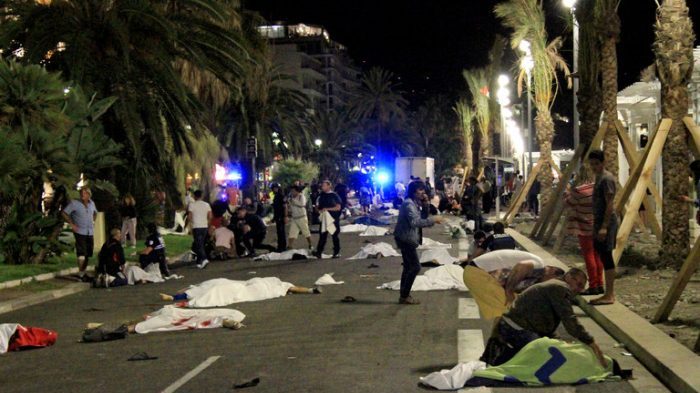
July 14, 2016 also marks the one year point since the Iran nuclear deal was reached by the P5+1 group of nations. Both milestones were joined by a more dubious one last night in which a purported terrorist attack struck the tony waterfront promenade of the French seaside resort of Nice where a man drive a large panel truck down a street packed with thousands of revelers watching a fireworks display.

As the large white truck veered widely left and right—appearing to aim at hapless bystanders—scores of people were flung like rag dolls or dragged and crushed underneath. Initial reports by French officials cited 80 killed, including two Americans, and another 20 critically injured with many more wounded.

French President Francois Hollande declared it a terrorist attack after a cache of grenades and weapons were also found in the struck after the driver engaged with police in a firefight before being killed.

This attack follows the Charlie Hebdo killings and the massive Paris attacks, bringing the specter of terrorism to the people of France three times now in only 18 months. The sheer brutality of this attack was captured throughout social media as people recorded the carnage, which was celebrated and welcomed on the social media profiles of Islamic extremists and their sympathizers.

Nice now joins the long list of cities victimized by the rapid spread of Islamic extremism including Boston, Sydney, Ottawa, Brussels, San Bernardino, Orlando, Bangladesh and Istanbul.

Those cities now join the wars raging in Syria, Iraq and Afghanistan. The reach of Islamic terror now cuts across all religions, continents, ethnicities and governments. It respects no boundaries; murdering Muslims next to Christians, Hindus and Jews.

It is a world much different than the one promised by supporters of the Iran nuclear deal. Iran lobby participants such as Trita Parsi of the National Iranian American Council pushed a pile of lies, the foremost amongst them was the promise of a newly-empowered moderate Iran to help stabilize the region and aid in the fight against Islamic extremists and terrorism.

It is noteworthy though that the one year anniversary statement issued by Parsi neglected mention anything about terrorism and its global impact.

“There are a whole host of opportunities that can strengthen U.S.-Iran diplomatic channels and insulate the deal from political opposition – including via efforts to fix sanctions relief complications; pursue sustainable diplomatic solutions in Syria and Yemen; enabling enhanced U.S.-Iran academic exchanges; establishing a permanent diplomatic channel; and by securing the freedom of imprisoned dual nationals like Siamak and Baquer Namazi,” Parsi said.

To say the opposite has happened would be an understatement of monumental proportions. Iran’s intervention in Syria to save the Assad regime from falling set the stage for the rise of ISIS and the expansion of a war that now includes Iraq and Yemen and helped build a terror network that stretches from Lebanon to Nigeria to Libya to Bangladesh.

It is also interesting that Parsi has mentioned the plight of father and son team Siamak and Baquer Namazi; since Siamak is a close personal friend of Parsi and helped found the basis of the Iran lobby and NIAC, without mentioning the despicable practice of the Iran regime to illegal arrest and hold dual nationals such as several Canadians and British citizens now.

The greatest failing of the nuclear deal was the complete separation of holding Iran’s conduct accountable in a whole host of related issues such as missile testing, human rights violations and the sponsorship of terrorism. These issues have fed into the Iranian regime policy of provocation and export of its extremist Islamic theology which has helped set the template for much of the global terrorism we are now experiencing.

Iran does not actively combat ISIS in Syria or anywhere else. Its forces have largely targeted Western-backed rebel groups in Syria, while its Shiite militias in Iraq have greatly aided ISIS by driving Sunni tribes to join its ranks as the result of sectarian conflict and tribal score settling.

Let’s also not forget that the nuclear deal fails at what it is purported to do in the first place which is prevent Iran from getting a nuclear weapon.

In the year since its approval, international monitoring agencies have detected uranium particles at Iran’s Parchin facility even after it was thoroughly scrubbed clean by Iran. Its nuclear infrastructure such as centrifuges remain intact in storage and ready to be reactivated, while the regime continues testing new, improved nuclear-capable ballistic missiles.

Rep. Mike Pompeo (R-KS) put it succinctly in a Fox News editorial saying that “one year on, the region is far less stable as well.  Iran increasingly controls Baghdad, Damascus, Sanaa, and Beirut.  Terror attacks have increased.  While the deal itself is problematic, also devastating is the fact that America is no longer viewed as a reliable partner to our traditional regional allies.”

Robert Spencer, director of Jihad Watch, writing for Breitbart, made the case that Iran is an even greater threat that ISIS noting that Iran already possesses a nuclear program which ISIS does not that be easily restarted.

While ISIS has significant reach especially in its ability to spread extremism among locals through social media, Iranian regime possesses and funds a global network of terror groups it supplies with its own intelligence, fighters, weapons and cash; something that ISIS only aspires to build.

Lastly, while ISIS has called upon its followers to strike at foreigners, the Iran regime has pursued that policy as a military objective for decades from orchestrating the attack on the U.S. Marine barracks in Lebanon in 1983 to the bombing of the Khobar Towers in Saudi Arabia to the killing of U.S. service personnel in Iraq. Iran has been at the center of instituting policies directly leading to the death of Americans.

Ultimately, the attacks in Nice is just another bloody reminder of how Iran’s full-fledged support for Islamic terrorism has set the stage for even more bloodshed and death unless the West acts to support regime change through the Iranian people.

By Michael Tomlinson

Filed Under: News Tagged With: Featured, Iran Lobby, Iran Terrorism, IRGC, Khamenei, Trita Parsi

  • « Previous Page
  • 1
  • …
  • 17
  • 18
  • 19
  • 20
  • 21
  • …
  • 38
  • Next Page »

National Iranian-American Council (NIAC)

  • Bogus Memberships
  • Survey
  • Lobbying
  • Iranians for International Cooperation
  • Defamation Lawsuit
  • People’s Mojahedin
  • Trita Parsi Biography
  • Parsi/Namazi Lobbying Plan
  • Parsi Links to Namazi & Iranian Regime
  • Namazi, NIAC Ringleader
  • Collaborating with Iran’s Ambassador

Recent Posts

  • NIAC Trying to Gain Influence On U.S. Congress
  • While Iran Lobby Plays Blame Game Iran Goes Nuclear
  • Iran Lobby Jumps on Detention of Iranian Newscaster
  • Bad News for Iran Swamps Iran Lobby
  • Iran Starts Off Year by Banning Instagram

© Copyright 2026 IranLobby.net · All Rights Reserved.