Iran Lobby

Exposing the Activities of the lobbies and appeasers of the Mullah's Dictatorship ruling Iran

  • Home
  • About
  • Current Trend
  • National Iranian-American Council(NIAC)
    • Bogus Memberships
    • Survey
    • Lobbying
    • Iranians for International Cooperation
    • Defamation Lawsuit
    • People’s Mojahedin
    • Trita Parsi Biography
    • Parsi/Namazi Lobbying Plan
    • Parsi Links to Namazi& Iranian Regime
    • Namazi, NIAC Ringleader
    • Collaborating with Iran’s Ambassador
  • The Appeasers
    • Gary Sick
    • Flynt Leverett & Hillary Mann Leverett
    • Baroness Nicholson
  • Blog
  • Links
  • Media Reports

Is the Open for Business Sign for Iran Now Closed?

July 11, 2017 by admin

Is the Open for Business Sign for Iran Now Closed?

Is the Open for Business Sign for Iran Now Closed?

One of the primary reasons why the Iran lobby was conceived and brought to life was a recognition by the mullahs in Tehran that they lacked all credibility when it came to the Western news media and needed surrogates to help shape the world’s perception of them as more open, accommodating and moderate than they really were.

This was especially important in light of the crippling economic sanctions that were bringing the Iranian regime’s economy to its knees, which was part of the discontent that was on display in the aftermath of the scandalous 2009 presidential election.

The massive street protests came at the height of the Arab Spring protests toppling governments throughout the Middle East and threatened to take down the mullahs in Tehran.

After brutally putting down the protests, the mullahs figured out they needed help to keep their grip on power which led to the election of “moderate” Hassan Rouhani in 2013 and a massive PR push aimed at the Obama administration to craft a nuclear deal that would lift the economic sanctions on Iran.

Much has already been written about the launching of Iran lobby advocates such as the National Iranian American Council and its prominent role in pushing for the nuclear deal by working in coordination with the Obama administration in creating the much-discussed “echo chamber” of supporters.

The aftermath of the nuclear deal and hasty implementation by the outgoing Obama administration created a narrow window of opportunity for the Iranian regime to get what it needed most at that time: cash and lots of it.

The regime was bleeding cash in its support of wars in Syria, Iraq and Yemen so accessing frozen assets, as well as the planeloads of cash paid as part of ransom payments for American hostages, helped stave off imminent collapse.

The next aim for the regime and Iran lobby was the lifting of economic sanctions so that business and investment deals could be struck to provide steady future sources of revenue.

After an initial rush by some European companies, later followed by Russian and Chinese military sales, the proverbial land rush slowed to a crawl amid uncertainty that the Trump administration and U.S. Congress might reinstitute sanctions because of Iranian regime’s support for terrorism and an alarming increase in ballistic missile launches.

It didn’t help the mullahs that their technological partner, North Korea, was busy flinging ballistic missiles into orbit faster than reruns of Real Housewives of Orange County, and alarming most of the nations in the Pacific.

The prospect that the U.S. might levy new sanctions slowed investment to a crawl, aside from a few high-profile sales of commercial jetliners, there has been few business deals announced.

That drought of new investment once again stirred ordinary Iranians to anger in the most recent presidential election a few months ago which saw mass protests throughout Iran; even including harsh demonstrations aimed at Rouhani himself.

The poor condition of the Iranian economy was also a contributing factor to the implosion of the candidacy of Ebrahim Raisi, the handpicked would-be successor by top mullah Ali Khamenei, leading to broad speculation that the mullahs’ grip on power was slipping.

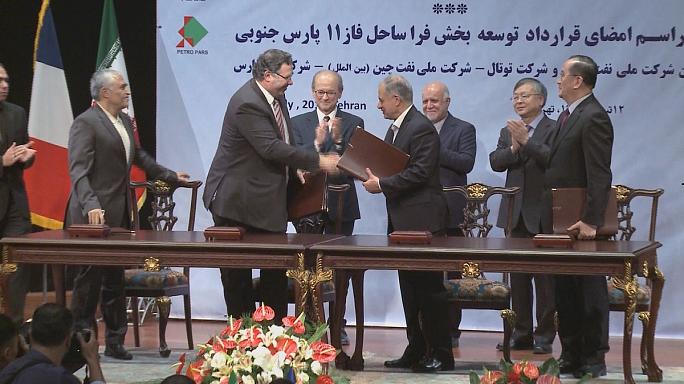
The most recent high-profile deal announced by Iran was with French petroleum giant Total, which agreed to a deal to jointly develop Iran’s massive South Pars gas field. Total was the first, and so far, only major oil player to commit to returning to Iran, while other firms, especially U.S. and British ones remain on the sidelines uncertain of the potential of the re-imposition of economic sanctions.

The risks for Total, and for that matter any other foreign company, doing business with Iran are substantial, as outlined in an insightful editorial by Dr. Majid Rafizadeh, president of the International American Council, in Arab News.

“U.S. pressure and sanctions on Tehran will likely continue to escalate, affecting American and non-American companies. The US may re-impose its sanctions bill that targets non-American companies doing business with Iran. If a company does business with both countries, its investments could be in peril. Quitting Iran’s market would not be easy for those with long-term investments,” Rafizadeh said.

He also alludes to the increasing political instability within Iran, as well as the tightening grip on the Iranian economy by Khamenei and the Revolutionary Guard Corps. That grip exists because of the rising need by the IRGC to funnel even more funds for its foreign adventures which have expanded in various fronts.

Also, as Iranian regime ramps up its ballistic missile program, the United Nations may feel compelled to act and sanction Iran lest it has to deal with both an Iran and North Korea crisscrossing the sky with ballistic missiles.

Recognizing the threat of possibly having its economy shutdown once again, the mullahs are moving rapidly to take advantage of the Total deal to ready an additional 14 oil and gas exploration for tender offers to foreign companies.

Sitting on some of the world’s biggest energy reserves, Iran has already been working on deals to develop fields such as South Pars, South Azadegan, Yadavaran, West Karoun, Mansouri and Abteymour, Reuters reported.

France’s Total last week became the first major to sign a post-sanctions development deal with Iran. Russia’s Lukoil and Denmark’s Maersk are also potential investors.

“Next on the horizon is the search for new oil, with the National Iranian Oil Company planning to tender 14 oil and gas blocks for exploration in the next two to three months,” NIOC’s deputy director for exploration blocks, Rahim Nematollahi, said in Istanbul.

But these deals may become moot should either the U.S. or UN act to impose new sanctions, especially any sanctions once again removing Iran from accessing the international wire transfer network or currency exchanges.

All of which places any foreign entity in a precarious position should it decide to invest in Iran. A company also runs the risk being labelled a supporter of terrorism since the vast majority of revenue Iran generates from one of these deals would inevitably be used to fund its proxy wars and support its terrorist allies.

This may mean that for the short-term at least, the “open for business” sign for Iran may be just another example of fake news.

Laura Carnahan
Filed Under: Blog, Current Trend, News Tagged With: #NuclearDeal, Appeasement policy, Featured, hassan rouhani, Iran, Iran deal, Iran Economy, Iran Lobby, Iran Mullahs, Iran sanctions, Iran Talks, Iran Terrorism, IRGC, Khamenei, National Iranian American Council

Iranian Drones and Missiles Increase Tensions and Risk of US Conflict

June 23, 2017 by admin

Iranian Drones and Missiles Increase Tensions and Risk of US Conflict

Iranian Drones and Missiles Increase Tensions and Risk of US Conflict

The Iranian regime continues to invent innovative ways to destabilize the Middle East. First it relied on supporting terrorist groups such as Hezbollah and proxies such as Shiite militias in Iraq and Houthi rebels in Yemen.

Then it turned to technology to build a nuclear program in secret, then construct ballistic missiles using North Korean designs initially, but then adapted updated designs to increase their range, payload capacity and targeting.

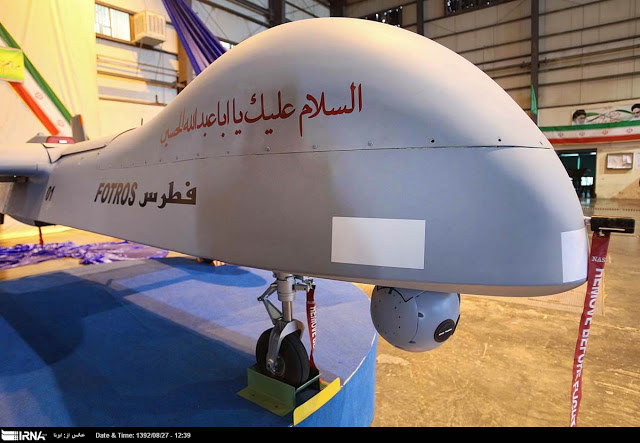
Now the Iranian regime has turned to drones to widen the scope of its military and strike capabilities. In Syria, U.S. forces have already shot down Iranian drones being used in attacks against U.S.-backed forces.

In Pakistan, the Pakistan Air Force shot down an Iranian spy drone in its airspace. The incident is first of its kind in the history of two Islamic countries, which share a porous border.

Wajahat Khan, a journalist and security expert, tweeted: “Confirmed: Iranian spy drone shot down by PAF JF-17 over Panjgur, Balochistan, 45Km inside Pak territory. Unprecedented. New front opening?”

The drone’s downing was reported amid an emergency flag meeting between Pakistani and Iranian officials following the unprovoked firing of several mortar shells into Pakistani territory over the weekend.

On Sunday, Iranian border forces fired several shells near Prom, an area of Panjgur. No casualty was reported though. On May 27, a mortar shell fired from Iranian side in Panjgur district had killed one person. On May 21, at least five mortar shells were fired into Taftan from across the border.

Pakistan has accused Iranians of violating its territorial integrity and lodged protests several times in the last few years.

The increase in incidents ranging from Pakistan to Syria to the Persian Gulf to Yemen paints a disturbing picture of Iranian regime’s aggression on a wide front and threatens to trigger conflicts with and between the U.S., Russia, Saudi Arabia, Turkey, Pakistan and Iraq.

That heightened struggle was highlighted in a piece in USA Today as the Trump administration showed a willingness to confront Iranian regime’s aggression rather than the policies of appeasement by the previous Obama administration.

“The underlying problem is Iranian expansionism,” said James Jeffrey, a former U.S. ambassador to Iraq with extensive experience in the region. The Iranians are worried about who will fill the power vacuum after the defeat of the Islamic State, which is steadily losing territory, he said.

Jeffrey said the Trump administration is now grappling with developing a new strategy that takes into account efforts to blunt Iran’s actions to expand its influence at the same time the U.S. military is focused on defeating the Islamic State, also known as ISIS.

“They believe Iran must be contained, but what they haven’t worked out is the implications of that,” Jeffrey said.

Iranian-backed forces likely will continue to challenge the Syrian Democratic Forces (SDF), an alliance of about 50,000 local troops that the U.S.-led coalition has trained and equipped to combat ISIS.

The Iranians want to hold “an arc of influence” that runs from Iran through Iraq and Syria into Lebanon, said Jack Keane, a retired four-star Army general. “If that ground ends up held by U.S.-backed forces, that interferes with their strategic plans.”

In recent weeks, the United States shot down two Iranian-built armed drones and a Syrian aircraft over Syria. U.S. aircraft have also attacked ground forces around a coalition outpost in southeastern Syria.

Analysts say Iranian mullahs are directly challenging U.S. forces because controlling territory between Iran and Lebanon is critical to their strategic objectives.

That prize of controlling Syrian territory liberated from ISIS is also driving Iranian regime supporters to attack U.S. policy in order to build political pressure on the Trump administration to cave in to Iranian moves.

An editorial in MarketWatch by Faysal Itani, a senior fellow with the Atlantic Council’s Rafik Hariri Center for the Middle East and Ali Marhoon, a policy intern there, warns of the potential for confusion as all of these elements converge and collide and Iran’s willingness to test U.S. resolve in Syria.

“The (Assad) regime itself seems too weak and preoccupied to threaten the U.S.-led coalition in al-Tanf. However, Iran is far more capable, with large reserves of (proxy) manpower and little tolerance for a U.S.-backed de facto statelet in its Syrian client’s territory. It is more likely that Iran, acting through its local proxies, would test the coalition’s resolve through increasing provocations. If so, it would calculate that the United States would back down to avoid serious escalation, thereby curtailing its territorial advances,” they write.

They warn that U.S. policy remains muddled other than eliminating ISIS, which leaves open the potential for the mullahs in Tehran to test the limits of U.S. policy and essentially see what they can get away with.

This testing can be seen in Iraq as forces move to retake Mosul from ISIS, but at the same time Iranian-backed Shiite militias have begun moving into liberated territory to stake their claim to the villages and towns under their banner instead of ISIS.

“It is not clear what the Baghdad government can do about this territorial grab for power in Ba’aj. It has not had the military or security reach to enforce its authority in this region of Nineveh province for many years, and has relied on the goodwill of local tribal forces. It was those forces that were persuaded to take part in former United States president George W. Bush’s famous ‘Awakening’ that defeated the insurgency during the American occupation, but it was also those forces that were eventually betrayed by the sectarian policies of the Nouri Al Maliki government, which led them to acquiesce in (if not actively support) the Daesh takeover in 2014,” writes Francis Matthew in GulfNews.

As Iranian regimes’ drones continue to fly and be shot down, the question inevitably arises as to whether or not the mullahs will back down.

Laura Carnahan

Filed Under: Blog, News Tagged With: #NuclearDeal, Appeasement policy, Featured, Iran Mullahs, Iran sanctions, Iran Terrorism, Khamenei, Sanctions, Syria

Iranian Ballistic Missiles Take Center Stage in Global Debate

June 21, 2017 by admin

Iranian Ballistic Missiles Take Center Stage in Global Debate

Iranian Ballistic Missiles Take Center Stage in Global Debate

Iranian regime ballistic missiles have moved to the forefront of discussions and military action around the world as events shifted rapidly putting a spotlight on the mullahs’ use of the weapons for the first time on the battlefield.

All of the debate and editorials produced by the Iran lobby has always consistently tried defusing Iran’s escalating supply of longer range ballistic missiles as nothing more than a defensive armament, but the recent launching of these missiles at targets in Syria moved them from the theoretical to the practical.

There can be no argument now that Iran possesses and has shown the willingness to use weapons that can prove just as destabilizing to the region as nuclear weapons. In fact, the mullahs’ willingness to continue investing heavily in the development of longer-range missiles with heavier lift capabilities and more sophisticated targeting systems makes Iran the pre-eminent threat in the Middle East.

The fact that the Iranian regime fought hard to exclude ballistic missile development from the nuclear talks two years ago demonstrates the value the mullahs and the Revolutionary Guard Corps places on these weapon systems.

In a practical sense, ballistic missiles provide a longer reach for the IRGC to attack targets far from Iran’s borders and gives the mullahs the political leverage to blackmail neighboring Gulf states for example into compliant behavior.

Previous sanctions on Iran’s ballistic missile program from the United Nations Security Council have been largely ignored by the mullahs and the sheer size and scope of its program has been largely unknown to the rest of the world.

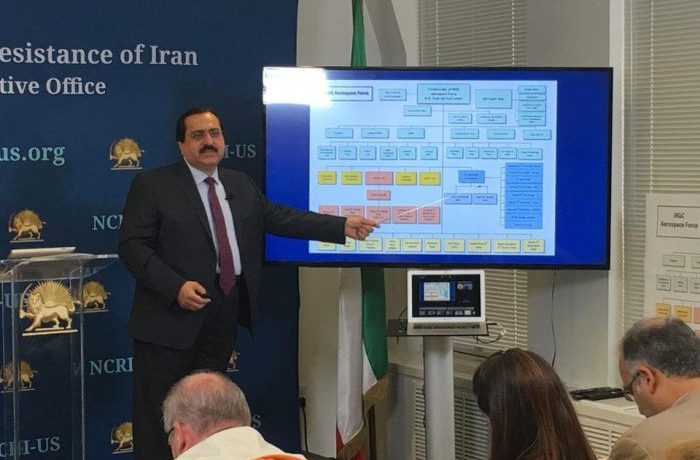
But Iranian opposition groups did hold a press conference the other day in Washington, DC to disclose additional missile sites previously unknown to the rest of the world.

The National Council of Resistance of Iran (NCRI), an umbrella group for Iranian opposition groups, citing sources of coalition member the People’s Mojahedin Organization of Iran (PMOI/MEK) network inside Iran, in this case in Iran’s Defense Ministry & the Islamic Revolutionary Guards Corps (IRGC), has a history of blowing the whistle on Tehran’s ballistic missile program, nuclear weapons drive, terrorism and meddling across the Middle East and beyond, and human rights violations, according to Heshmat Alavi in Forbes.

Various aspects of the dozen hitherto-unknown sites involved in ballistic missile production, testing and launches, all controlled by the IRGC, were also unveiled.

NCRI U.S. Office Deputy Director Alireza Jafarzadeh presented satellite imagery on the sites and details of North Korean experts who took part in the construction of such highly essential centers.

The scope of Iran’s IRGC-pursued missile program is far more extensive than previously perceived. In this press conference the NCRI identified the locations of 42 IRGC sites, of which 15 are involved in missile manufacturing and containing several factories linked to a missile industry group.

Four of Iran’s most important missile sites are located in the cities of Semnan (east of Tehran), Lar (southcentral Iran), Khorramabad (western Iran) and near Karaj (west of Tehran), according to the PMOI/MEK sources. Iran has only acknowledged the existence of two of these sites to this day, Alavi said.

The Semnan site has been actively associated to SPND, Iran’s organization in charge of building a nuclear weapon, PMOI/MEK sources revealed. SPND has carried out many of its tests at this site.

SPND is the Persian acronym for the Organization of Defensive Innovation and Research, including Iran’s nuclear weapons program engineering unit. The NCRI first unveiled the existence of SPND in July 2011, leading to its sanctioning three years later.

IRGC missile sites have all been constructed based on North Korean blueprints, according to PMOI/MEK sources, adding Pyongyang’s experts have also been present at sites assisting their Iranian counterparts.

The existence of the Iranian missile program and North Korean cooperation is not news, but the ramp up in size of the missile fleet and Iran’s willingness to use it now are deeply disturbing to policymakers from Washington to Riyadh.

U.S. senators who passed tough new legislation imposing sanctions for Iran’s missile program stated flatly that the Iranian regime now poses the greatest security threat to the U.S. as U.S. warplanes shot down yet another Iranian drone over Syria.

“The Iranians never like sanctions, but if they don’t like them, then they should stop testing ballistic missiles in violation of U.N. resolutions,” said Connecticut senator Chris Murphy.

Texas senator Ted Cruz warned Tuesday that Iran and the potential for a nuclear Iran are “the single greatest national security threat facing America.”

The discussion over Iranian missiles didn’t stop the regime’s ardent supporters from weighing in and coming to the mullahs’ defense, as well as opponents in verbal fireworks rivaling what is happening on the battlefield.

Dennis Ross, a former U.S. Mideast negotiator and author, laid out the unpleasant choices left on the table as Iran steps up its military involvement in Syria, Iraq and now the Gulf region.

“Amid this confusion, Iran is pressing ahead to strengthen its grip on Syria, even as Trump goes after ISIS. Iran’s intervention to save President Bashar al-Assad’s regime has involved sending not just elite Iranian military advisers but also bringing in Lebanese Hezbollah and other Shia militias from as far away as Afghanistan. While estimates vary on the size of these forces, the numbers are in the tens of thousands. Iran’s sectarian shock troops are being used to extend the regime’s writ, especially as the Syrian regime’s deployable military manpower has shrunk to about 20,000 forces,” he writes in Politico.

“Iran is actively trying to create a land corridor through Iraq and Syria to Lebanon. To that end, Iran is pushing from within Iraq and Syria, using its Shia militia proxies on both sides of the border. On the Iraqi side, the Shia militias have now largely cleared ISIS from border crossings. Within Syria, Iran has sent significant Hezbollah forces eastward to Deir ez-Zour, a major Syrian city along the Euphrates River. With the U.S.-supported effort to liberate Raqqa under way, Iran wants to prevent any U.S.-backed groups from establishing themselves in eastern Syria—something that could preclude the Iranian aim of controlling Syria’s borders with Iraq and Jordan. (With Hezbollah also now active in the area of Deraa, a southern Syrian city close to the Golan Heights, the Iranians have their eye on the Syrian-Israeli border as well,)” Ross adds.

The implications are clear. The price of not confronting Iranian aggression will soon become very expensive, which is what the mullahs are hoping for; a victory without cost is their mantra.

The world should make the mullahs have to pay a very heavy price.

Laura Carnahan


Filed Under: Blog, News Tagged With: Featured, Iran, Iran Missile program, Iran Mullahs, Iran sanctions, Iran Terrorism, IRGC, Khamenei

Iran Lobby Attacks Trump Administration for Favoring Regime Change

June 16, 2017 by admin

Iran Lobby Attacks Trump Administration for Favoring Regime Change

Iran Lobby Attacks Trump Administration for Favoring Regime Change

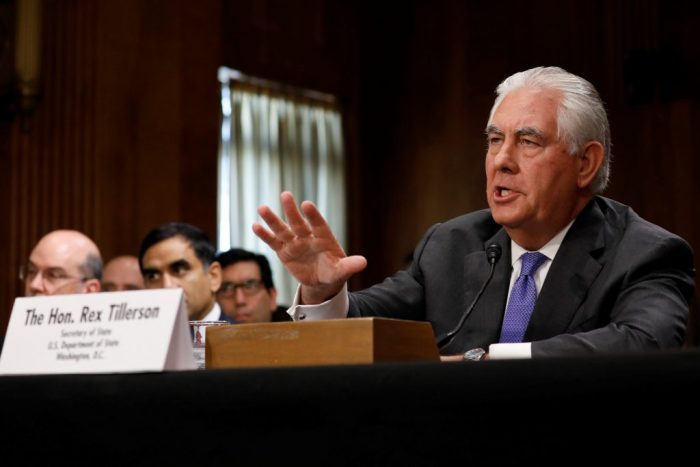
U.S. Secretary of State Rex Tillerson gave testimony to the House and Senate Foreign Affairs Committees this week in detailing the State Department budget priorities for the upcoming year. While the bulk of his testimony concerned the issues such as North Korea and Russian relations, Tillerson made a few comments on Iran that engendered a full-fledged response from the Iran lobby.

While the majority of news media gave ample coverage to Tillerson’s testimony concerning Russia, he was asked a question regarding Iran by Rep. Ted Poe (R-TX), a noted critic of the Iranian regime and the mullahs who control it, that drew scant attention, but clearly worried the Iran lobby.

Tillerson was asked about future plans to enter into negotiations with the Iranian regime and he replied the administration had no immediate plans to do so and expressed support for elements within Iran working towards regime change and a transition to democracy in Iran.

Predictably, the National Iranian American Council, staunch supporters of the Iranian regime, led the charge against Tillerson’s comments; literally breathing fire.

It appears that the concept of promoting democracy in Iran strikes mortal terror in the hearts of Trita Parsi and his fellow travelers at the NIAC.

Darius Namazi at NIAC whipped out a statement condemning Tillerson’s remarks and taking a swipe at Iranian dissident movements, namely the Mujahedin-e-Khalq (MEK), which had supporters in attendance at the hearings to express support for democratic change in Iran.

Poe asked Tillerson whether the U.S. supports “a peaceful regime change” and whether it is U.S. policy “to lead things as they are or set up a peaceful long-term regime change.”

Namazi claimed that Tillerson implied that it was U.S. policy to move toward supporting regime change, stating the U.S. would “work toward support of those elements inside of Iran that would lead to a peaceful transition of those governments.”

Only the NIAC would have a problem with the concept of a “peaceful regime change,” but that is par for the course for the Iran lobby.

The NIAC contends that any effort to force regime change would naturally be tantamount to an open declaration of war on the mullahs in Tehran, which is understandable considering the last time there was a mass effort for regime change following the disputed 2009 presidential elections, protests were brutally put down and innocent Iranians killed in the streets.

Of course, Namazi accuses the MEK of seeking to “violently overthrow the Iranian government,” as part of the Iran lobby’s continuing efforts to denigrate any organized opposition movement to the mullahs’ rule.

Namazi goes on to criticize Tillerson’s statements that the administration had no plans to negotiate with Iran on a range of issues such as the situations in Syria and Yemen, but Tillerson only correctly pointed out that granting Iran a seat at the bargaining table when it is the key agent causing the chaos in the first place was a pointless exercise.

According to Tillerson, “The Iranians are part of the problem…They are not directly at the table because we do not believe they have earned a seat at that table. We would like for the Iranians to end their flow of weapons to the Houthis, in particular their flow of sophisticated missiles to the Houthis. We need for them to stop supplying that, and we are working with others as to how to get their agreement to do that.”

These are not unreasonable sentiments, but apparently for the NIAC they are totally unreasonable.

Not that their efforts mattered since the Senate passed new sanctions on the Iranian regime by near unanimous margins in a further sign that the U.S. is moving past the failed policies of appeasing the Iranian regime under the Obama administration.

The Senate passed the sanctions bill by a 98-2 margin. The bill places new sanctions on Iran over its ballistic missile program and other activities not related to the international nuclear agreement reached with the United States and other world powers.

To become law, the legislation must pass the House of Representatives and be signed by Trump. House aides said they expected the chamber would begin to debate the measure in coming weeks, according to Reuters.

The Iranian regime itself didn’t waste time in attacking Tillerson’s assertions that Iran has “aspirations of hegemony in the region.”

The top U.S. diplomat’s remarks are “interventionist, in gross violation of the compelling rules of international law, unacceptable and strongly condemned,” Foreign Ministry spokesman Bahram Qassemi said in Tehran Thursday.

Qassemi went on to blame a history of U.S. “meddling in Iran in different forms” since the 1950s, saying the policy has only brought about “defeat and global shame” for Washington.

For all the bombastic the Iranian regime and its allies are hurling, the plain truth is that the U.S. is moving quickly and broadly on a number of fronts to rein in Iranian expansionism and militancy.

Congress is seeking new authorities that would enable it to expose and crack down on an Iranian state-controlled commercial airline known for transporting weapons and terrorist fighters to hotspots such as Syria, where Iranian-backed forces have begun launching direct attacks on U.S. forces in the country, according to new legislation obtained by the Washington Free Beacon.

Congressional efforts to expose Iran’s illicit terror networks more forcefully come as U.S. and European air carriers such as Boeing and Airbus move forward with multi-billion dollar deals to provide the Islamic Republic with a fleet of new airplanes, which lawmakers suspect Iran will use to amplify its terror operations.

The new sanction legislation targets Iran’s Mahan Airlines, which operates commercial flights across the globe while transporting militants and weapons to fighters in Syria, Yemen, and other regional hotspots.

A crackdown on Mahan could indicate that Congress is more seriously eyeing ways to thwart Iran’s mainly unchecked terror pipeline in the region.

We breathlessly await the NIAC’s next bout of hyperbole.


Filed Under: Blog, Latest from Lobbies & Appeasers, National Iranian-American Council, News Tagged With: Darius Namazi, Featured, Iran, Iran Human rights, Iran Lobby, Iran Mullahs, Iran sanctions, Iran Terrorism, IRGC, National Iranian American Council, NIAC, NIAC Action, ُTillerson. Ted Poe, Trita Parsi

Iranian Regime Uniting the World…Against It

May 23, 2017 by admin

Iranian Regime Uniting the World…Against It

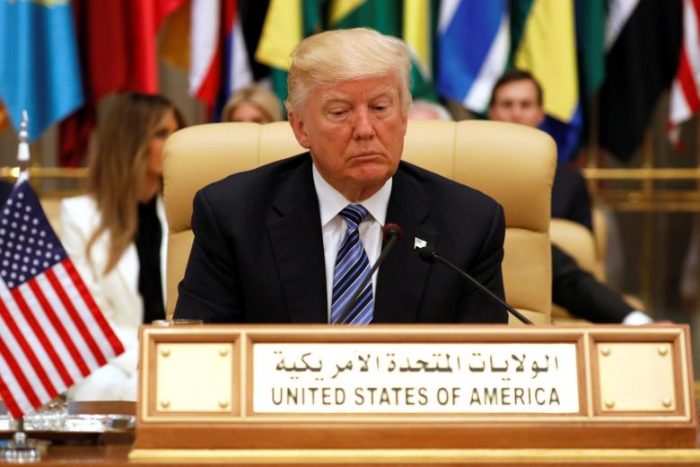
U.S. President Donald Trump takes his seat before his speech to the Arab Islamic American Summit in Riyadh, Saudi Arabia May 21, 2017. REUTERS/Jonathan Ernst

The Iranian regime election has given the world another dose of Hassan Rouhani, but in and of itself, his election to another term is meaningless since the world has seen that Ali Khamenei and his close circle of mullahs set policy, backed by the muscle of the Revolutionary Guard Corps.

The arguments against the Iranian government have never been directed at its people. For the most part, the Iranian people have been manipulated, coerced, bullied and even brutalized into submission. It has been the conduct of the leadership of the mullahs that have brought so much misery to that part of the world.

The leadership of Iran has pursued a policy that emphasizes harsh suppression of internal dissent, while using brute force to enact a foreign policy of war and terrorism to advance its aims, which is to expand the sphere of influence for its form of radicalized Shia theology.

But in an interesting twist of irony, Iran’s very actions to unite underneath its own banner have yielded the opposite effect: countries that have previously been adversaries are now aligning to form an international coalition to halt Iranian regime’s expansion.

President Trump’s first overseas trip started off with Saudi Arabia and extended into Israel, two countries that have not only been at odds and even war, but are also under their own scrutiny. Now both they and other countries, including the Gulf states, have begun the tenuous process of working together at keeping the Iranian regime contained.

The ancient proverb: “The enemy of my enemy is my friend” is finding utility now among countries that are being confronted by Iranian extremism and for President Trump, the opportunity exists to redefine a new order in the Middle East predicated at halting Iranian expansion and bring about a political realignment within the Iranian regime.

Trump’s visit to Saudi Arabia was the first to a Muslim majority nation for an incoming U.S. president and set the tone for reaching out to the Muslim world in a manner his predecessor never managed to achieve.

Trump said on Monday that shared concern about Iran was driving Israel and many Arab states closer and demanded that Tehran immediately cease military and financial backing of “terrorists and militias”.

In stressing threats from Iran, Trump echoed a theme laid out during weekend meetings in Saudi Arabia with Muslim leaders from around the world, many wary of the Islamic state’s growing regional influence and financial muscle.

Trump said there were opportunities for cooperation across the Middle East: “That includes advancing prosperity, defeating the evils of terrorism and facing the threat of an Iranian regime that is threatening the region and causing so much violence and suffering.”

Worried about the movement being made in realigning against the Iranian regime, newly minted Rouhani claimed that regional stability could not happen without Iran.

He said the summit in Saudi Arabia “had no political value, and will bear no results”.

“Who can say the region will experience total stability without Iran? Who fought against the terrorists? It was Iran, Syria, Hezbollah and Syria. But who funded the terrorists?”

In this one area, Rouhani is correct, but not for the reasons he claimed. Regional stability is dependent on Iran, but only if Iran stopped fueling the instability it has caused across the Middle East in Iraq, Syria and Yemen.

Rouhani also trotted out the time-worn claim that Saudi Arabia was in fact more dangerous because of the rise of Sunni-dominant terrorist groups such as ISIS, but ignored his own country’s role in helping spawn ISIS with the downfall of the Sunni-Shia coalition government of Nouri al-Maliki in Iraq.

While Rouhani tries to diminish the importance of Arab states aligning against Iran, the broader and more important strategic implications are more troubling for Rouhani and his fellow clerics. A clear alliance among fellow Muslim nations with non-Arab states such as Israel, the U.S. and Turkey would represent a sea change in relations among countries with long histories of opposing each other.

It also puts to a lie the message Rouhani and his Iran lobby supporters have long pushed which is that opposition to Iran has always been built around sectarian issues and as such lack legitimacy. The opposite is now true; a coalition of diverse nations with varying beliefs all share the same concerns over an Iran that stands at the center of virtually all the instability now wreaking havoc there.

The real proof of Iran’s intentions will not come from words but deeds. If the Iranian regime continues to fling ballistic missiles and supply its various proxies in their ongoing wars, then the regime has no intention of altering its course.

It is ironic that Rouhani pointed a finger at Saudi Arabia claiming it held no free elections when Iran’s own history of elections is more checkered, including the debacle of the 2009 disputed elections.

“Mr. Trump has come to the region at a time when 45 million Iranian people went to polling stations, and he went to a country where they don’t know what elections are about,” Rouhani said. “It’s not in their dictionary.

“Hopefully the day will come when Saudi Arabia will adopt this path.”

His triumphant comments neglected to mention that Iran’s elections are hardly free or fair, with candidates chosen by an unelected 12-man council, according to the Los Angeles Times, not to mention that the figure made up by the regime could not be verified, given no independent monitoring has been present, and Iran’s state media are full of facts on how both rivals have made unprecedented deceits in the ballots. The opposition to the Iranian regime has estimated the total number of participants in the fake election, to have been increased by four in order to cover, the regime’s isolation at home.

Rouhani for his part deflected questions about Trump’s calls to isolate Iran over its support for militant groups and its ballistic missile program, suggesting that the new U.S. administration had yet to “settle down” and formulate a coherent policy in the Middle East.

“We are waiting for this new U.S. government to be settled in terms of their stances, posture and future plans,” Rouhani said.

“Hopefully things will be settled down and well established in the U.S. so that we can actually pass judgments on the new administration.”

We can only assume Rouhani hopes to squeeze a few more months out of the appeasement policy pursued by the Obama administration before things go south on him and his fellow mullahs.

Michael Tomlinson

Filed Under: Blog, News Tagged With: Appeasement policy, Featured, hassan rouhani, Iran Lobby, Iran Mullahs, Iran sanctions, Iran Talks, National Iranian American Council, NIAC Action, Rouhani

What Happens After the Iran Presidential Elections?

May 17, 2017 by admin

What Happens After the Iran Presidential Elections?

What Happens After the Iran Presidential Elections?

The steady flow of analysis and opinion pieces regarding the upcoming Iranian presidential election keeps on coming and much of it is critical of anything really changing after the election no matter who gets elected.

One such piece comes in TIME magazine from Dennis B. Ross, co-founder of United Against a Nuclear Iran, and Jason M. Brodsky, policy director for UANI.

“Iran’s upcoming presidential election on May 19th has all the hallmarks of a Western-style democracy: a series of television debates, endorsements by elder statesmen and catchy campaign banners adorning cityscapes,” they write. “But it is all window dressing.”

“The Supreme Leader and the Islamic Revolutionary Guard Corps (IRGC) control much of the economy, and they continue to block deals that might build the strength of the private sector in Iran. Yes, there has been an infusion of cash, but following the money shows that funds have flowed to the Supreme Leader, to companies he controls and to the security services — not to ordinary Iranians,” they added.

The structural control of much of Iran remains firmly in the hands of the ruling clergy and the military that backs them. There is no opportunity for anyone rising to the top of the political pyramid without their explicit permission. This eliminates any real meaningful change from ever taking root within the regime’s government.

The evidence of that lack of change in direction has been on display for the last four years of Hassan Rouhani’s term when his much-anticipated election came with near-reverent promises of moderation and openness from the Iran lobby.

The only problem is that since his election, Iran has been anything but moderate. It’s track record since 2013 has been littered with a brutal and savage war in Syria that has claimed almost half a million lives and another insurrection in Yemen spurred by Iran that threatens to drag Saudi Arabia into direct conflict with the Islamic state.

Add to that a brutal crackdown on human rights that has all but wiped out any dissenters within Iran, and a rash of arrests and prison sentences for dual-national citizens, including five Americans, and things don’t look so great now.

The smoke signals moving forward after the election are just as bleak.

Ross and Brodsky point out that Rouhani has warned in this campaign cycle of increased “extremism” in Iran, saying “[w]e will not let them bring the security and police atmosphere back to the country.” But actions of the deep state inside the regime — the judiciary and security services — speak louder than words.

In March, to lay the groundwork before the presidential election, officials arrested administrators of twelve Telegram (an instant-messaging service) channels on unspecified charges, they noted.

Sonna Samsami, the U.S. representative for the National Council of Resistance of Iran, one of the largest Iranian dissident groups, wrote about the lack of changes coming in a piece for the Hill.

“In a recent survey of Iranians in 15 provinces, by the International American Council on the Middle East and North Africa, 79 percent of those asked said they don’t believe the outcome of the election will make any difference in their lives. Faces change, but policies remain the same,” Samsami writes.

“Meanwhile, the lot of the Iranian people remains dire as wages stagnate, needed investments in infrastructure are deferred and corruption runs rampant. These grievances have no real outlet and no real hope for redress. The greatest danger in a theocracy is that all state actions are sanctified by an authority for whom there is no higher appeal. Democracy is but a mirage under the theocracy,” Samsami adds.

The sorry state of the Iranian economy and rampant corruption has caused a simmering discontent among the Iranian people which explains why the mullahs exert such ruthless control over the electoral process for fear of an actual reformist candidate getting elected.

Author Seth M. Siegel writes about this deep dissatisfaction in an opinion piece in the Washington Post resulting from the collapse of the regime’s water supplies.

“Due to gross water mismanagement and its ruinous impact on the country, Iran faces the worst water future of any industrialized nation. After the fall of the shah in 1979, water policy became a victim of bad governance and corruption, putting the country on what may be an irreversible path to environmental doom and disruption that owes nothing to sanctions or years of war with its neighbors,” Siegel writes.

“Recklessly, these companies began damming major rivers, changing the historical water flows of Iran. This was done to give water preferences to powerful landowners and favored ethnic communities while also transferring billions from the public treasury to IRGC leaders’ accounts. In all, since the 1979 revolution, more than 600 dam projects have been completed, contrasted with 13 dams built in Iran prior to the shah’s fall,” he adds.

These policies after only a few years resulted in dammed rivers and over-drafted groundwater, aquifers began to go dry and lakes shriveled. Iran’s once massive Lake Urmia, until recently 2,000-square-mile expanse, contracted 90 percent between 1985 and 2015, creating cascading regional environmental problems. Other surface water resources experienced similar shrinkage and ecological consequences.

“With farmland ruined, topsoil blown away and insufficient water to grow crops, millions of farmers and herders have left the countryside to live in dismal conditions in Iran’s growing cities. Meanwhile, deserts have also expanded, and the environmental damage to the country continues,” Siegel said.

The end result has been a country on the path to ruin that no amount of militant police can control.

All of which means that the pathway to democracy may not lie in the ballot box, but in the parched soil of destroyed farmlands.

Laura Carnahan


Filed Under: Blog, News Tagged With: Featured, Iran sanctions, Lake Urmia, Raisi, Rouhani

Announcement of “De-Escalation Zones” in Syria Just More Hot Air from Iran

May 6, 2017 by admin

Announcement of “De-Escalation Zones” in Syria Just More Hot Air from Iran

Announcement of “De-Escalation Zones” in Syria Just More Hot Air from Iran

Russia, Turkey and the Iranian regime jointly announced the establishment of so-called “de-escalation zones” in Syria in which the Assad regime would allegedly halt military flights over designated areas according to the Washington Post.

As officials from the three countries — Russia, Iran and Turkey — that back rival sides in the conflict signed the agreement at Syria talks in Kazakhstan on Thursday, some members of the Syrian opposition delegation shouted in protest and walked out of the conference room in Astana, the Kazakh capital.

The opposition is protesting Iranian regime’s participation at the conference and role as a guarantor of the agreement, accusing it of fueling the sectarian nature of the conflict that has killed some 400,000 people and displaced half the country’s population.

“Iran is a country that is killing the Syrian people and the killer cannot be the rescuer,” said Abu Osama Golani, a rebel commander who attended the gathering in Astana.

The Iranian regime’s role in the carnage and escalation in Syria makes it a dubious guarantor of safety and security, especially since it was Iran that begged Russia into intervening in the war in a last-ditch effort to save the Assad regime from being toppled by opposition forces.

The Syrian government has said that although it will abide by the agreement, it would continue fighting “terrorism” wherever it exists, code for most armed rebel groups fighting government troops.

It’s the reason why a previous cease-fire agreement signed in Astana on Dec. 30 eventually collapsed. Other attempts at a cease-fire in Syria have all ended in failure largely because of Iran and Syria’s willingness to continue attacking rebel-controlled areas, including those with large civilian populations.

Past efforts at protecting “safe zones” have had a pretty dismal record, largely because combatants are still allowed to engage in attacks without serious repercussions.

“Iran’s activities in Syria have only contributed to the violence, not stopped it, and Iran’s unquestioning support for the Assad regime has perpetuated the misery of ordinary Syrians,” said U.S. State Department spokeswoman Heather Nauert.

The problems in Syria are only one aspect of the larger difficulties of Iranian influence and activities throughout the region and as such requires a more comprehensive solution attacking the instability at its source: Iranian regime itself.

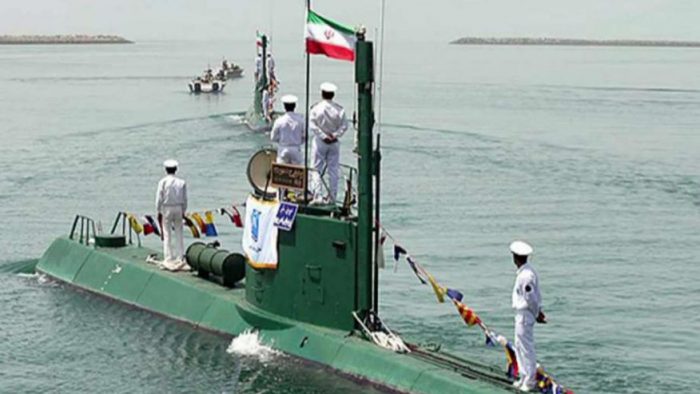
When Iran attempted to launch a cruise missile from a “midget” submarine earlier this week, Pentagon officials saw more evidence of North Korean influence in the Islamic Republic – with intelligence reports saying the submarine was based on a Pyongyang design, the same type that sank a South Korean warship in 2010, according to Fox News.

According to U.S. defense officials, Iran was attempting to launch a Jask-2 cruise missile underwater for the first time, but the launch failed. Nonproliferation experts have long suspected North Korea and Iran are sharing expertise when it comes to their rogue missile programs.

Only two countries in the world deploy the Yono-class submarine – North Korea and Iran. Midget subs operate in shallow waters where they can hide.

“When those midget subs are operating underwater, they are running on battery power—making themselves very quiet and hard to detect,” said a U.S. defense official who declined to be identified.

Perhaps most worrisome for the United States is that Iran attempted this latest missile launch from a midget sub Tuesday in the narrow and crowded Strait of Hormuz, where much of the world’s oil passes each day, Fox News said.

Over a year ago, Iran fired off a number of unguided rockets near the USS Harry Truman aircraft carrier as she passed through the Strait of Hormuz in late December 2015. The U.S. Navy called the incident “highly provocative” at the time and said the American aircraft carrier was only 1,500 yards away from the Iranian rockets.

In July 2016, two days before the anniversary of the nuclear agreement between Iran and world powers, the Islamic Republic attempted to launch a new type of ballistic missile using North Korean technology, according to multiple intelligence officials.

Even with this overwhelming evidence of collusion between the two rogue nations, some Iran lobby apologists continue to make the case of appeasement. In this case, Robert S. Litwak, the vice president for scholars and the director of international security studies at the Woodrow Wilson International Center for Scholars in Washington, D.C., argued that an “Iran-style nuclear deal” with North Korea was a viable solution.

Buying into the false narrative of moderation within the Iranian regime, Litwak argues that making a diplomatic effort to cap North Korea’s nuclear capability—similar to the Iran nuclear deal—is the “least bad” option.

Unfortunately for Litwak, history demonstrates that this least bad option stinks to high heaven and has done nothing to curb Iran’s regional ambitions, thirst for bloodshed or improved its dismal human rights record.

A repeat of the Iran deal for North Korea would no doubt similar disastrous results.

Michael Tomlinson

Filed Under: Blog, News Tagged With: #NuclearDeal, Appeasement policy, Featured, Iran, Iran deal, Iran Human rights, Iran Lobby, Iran Mullahs, Iran sanctions, North Korea, Robert S. Litwak

Iran Military Buildup Continues Obscured by Election

May 6, 2017 by admin

Iran Military Buildup Continues Obscured by Election

Iran Military Buildup Continues Obscured by Election

It’s no secret that while the Iran lobby was busy promising more moderation and accommodation from the Iranian regime during nuclear talks two years ago, the mullahs in Tehran were busy working over their calculators figuring out what they were going to buy with their newfound cash coming from relief from economic sanctions and the bonus of billions coming from a prisoner swap with the U.S.

Since the completion of the deal, the Iranian regime has been busy replenishing its military which was drained from years of fighting in Syria and Yemen, as well as supplying its proxies with weapons and ammunition including Hezbollah, Shiite militias and the Houthis.

More worrisome though is analysis indicating that Iran has sought to not only rebuild its military, but transform it primarily from tactical, regional actions to a more strategic, offensive posture posing a menacing threat to its neighbors, especially long-time rivals Saudi Arabia and the Gulf states.

Iranian officials announced late last month that Iran’s defense budget had increased by 145 percent under President Hassan Rouhani and that the military is moving forward with a massive restructuring effort aimed at making it “a forward moving force,” according to regional reports.

Regime leaders have stated since the Iran deal was enacted that they are using the massive amounts of cash released under the agreement to fund the purchase of new military equipment and other armaments. Iran also has pursued multi-million dollar arms deals with Russia since economic sanctions were nixed as part of the deal, according to the Washington Free Beacon.

Leading members of Congress and U.S. officials working on the Iran portfolio suspect that at least a portion of the Obama administration’s $1.7 billion cash payment to Iran  has been used to fund and support terrorists in the Middle East.

The latest disclosure about Iran’s military buildup is further fueling concerns that U.S. cash assets returned to the country—which were released with no strings attached by the Obama administration—are helping Iran pursue a more aggressive military stance against U.S. forces in the region.

Iranian Brigadier General Kiumars Heidari announced the military buildup during Iran’s annual Army Day. While the announcement did not grab many headlines in the Western media, national security insiders have been discussing the announcement for weeks, according to conversations with multiple sources.

Iran’s goal is to turn its army into an “offensive” force, a major shift from its historic role as a support agent for the Iranian Revolutionary Guards Corps, or IRGC, Iran’s extremely well funded primary fighting force.

Iran hopes to revamp its army from top to bottom, including improving logistical capabilities, weaponry, and other armaments.

The regime has also escalated its attempts to demonstrate additional military capabilities including the launching of ballistic missiles.

Another sign was an Iranian Yono-class “midget” submarine attempted to launch a cruise missile from the Strait of Hormuz on Tuesday, according to U.S. officials.  The only two countries in the world that operate this type of submarine are Iran and North Korea. The test launch was not successful, reported Fox News.  Iran had previously announced it had successfully tested a sea-launched missile and it is not known if this was the first actual submarine launch of the weapon.

The increase in military activity and emphasis on first-strike weapons and tactics is leading many to speculate what path the Trump administration will pursue to stymie the mullahs.

Much crystal-ball gazing has been going on lately, not the least of which coming from Iran lobby members such as the National Iranian American Council who hope to shape the narrative much as it did during the nuclear negotiations.

Secretary of State Rex Tillerson said last month that Iran is complying with the terms of the 2015 nuclear agreement. The positive finding of the State Department’s routine periodic review of the nuclear agreement, known formally as the Joint Comprehensive Plan of Action (JCPOA), was surprising given President Trump’s assessment that it was “the worst deal ever negotiated.” Some analysts believed Tillerson was signaling that the Trump administration would let the agreement stand rather than “rip it up” as the president had promised.

But according to James S. Robbins, a member of USA TODAY’s Board of Contributors, who served as a special assistant to the secretary of defense in the George W. Bush administration, there is something deeper going on. The key language in Tillerson’s statement dealt with the National Security Council’s inter-agency review to determine whether continued suspension of the sanctions is “vital to the national security interests of the United States.” This phrasing points to the key weakness in the structure of the deal, said Robbins.

“In addition, previously secret aspects of the deal have begun to be revealed, such as the Obama administration freeing Iranian prisoners accused of major crimes related to the nuclear and missile programs. These shady aspects of the bargain make it easier for the Trump administration to make the political case against it, which Americans opposed by wide margins to begin with,” he added.

If the National Security Council determines that Iran’s activities are not in U.S. national security interests, the president can lift the sanctions waivers. This puts Iran in a bind. Tehran has threatened it could restart its nuclear program “in a new manner that would shock Washington.” But if Iran chooses openly to violate the terms of the deal, this would activate the agreement’s Article 37 “snap back” mechanism which restores all the pre-JCPOA international sanctions. The only way the “snap back” would not happen is if the UN Security Council votes otherwise, but the United States could veto any resolution that keeps the deal alive, according to Robbins.

This puts Iran in a lose/lose position: accept renewed and potentially tougher U.S. sanctions while staying within the framework of the JCPOA; or breach the deal and suffer the “snap back” consequences. Of course, Iran could just attempt to go full-bore to develop nuclear-armed missiles as quickly as possible and hope for the best. But the developing crisis with North Korea should be instructive to Tehran. The Trump administration is less willing than its predecessors to accommodate or ignore the nuclear ambitions of rogue states.

All of which places the Iranian regime squarely in the sights of the international community for the first time in nearly four years when Iran was dragged unwillingly to the bargaining table because of the effectiveness of previous sanctions.

We shouldn’t let this opportunity slip away like the last one.

Michael Tomlinson

Filed Under: Blog, News Tagged With: Featured, Iran Lobby, Iran Mullahs, Iran sanctions, Iran Talks, Iran Terrorism, IRGC, Khamenei, National Iranian American Council, Nuclear Deal

Iran Denies British Aid Worker Appeal and Keeps Her Imprisoned

April 25, 2017 by admin

Iran Denies British Aid Worker Appeal and Keeps Her Imprisoned

Iran Denies British Aid Worker Appeal and Keeps Her Imprisoned

In another display of the cold-blooded nature of the Iranian regime, Iran’s supreme court up held the conviction of a British-Iranian women sentenced to five years in jail on vague charges relating to national security. The decision ends her last legal avenue to ending her harsh imprisonment.

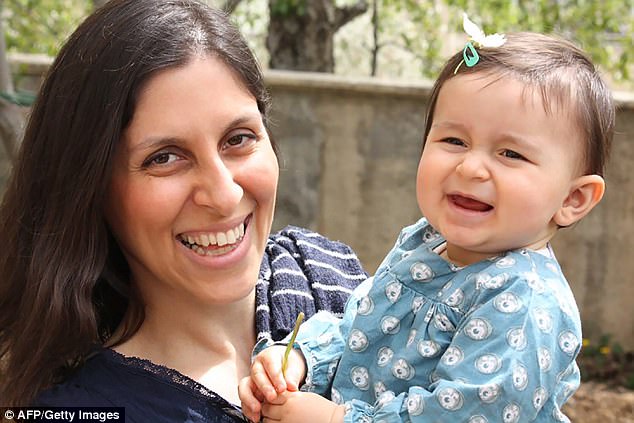
Nazanin Zaghari-Ratcliffe, a project manager with the Thomson Reuters Foundation, the news agency’s charitable arm, had lodged a final appeal in January after the confirmation of her sentence in a lower court. Her husband, Richard Ratcliffe, said on Monday that the supreme court had rejected her appeal.

“I hadn’t had great hopes for the supreme court appeal,” he told the Guardian. “Now, realizing that that’s it, that all options are gone … in the middle of an election cycle, it’s hard to get attention on Nazanin’s case.”

According to the Guardian, Zaghari-Ratcliffe, 38, has spent 387 days behind bars, most of which have been in the notorious Evin prison. The regime’s Revolutionary Guards arrested her in April 2016 while she and her two-year-old daughter, Gabriella, were about to return to the UK after a family visit to Iran. She was tried and found guilty on the unspecified charges relating to national security last September.

Although the exact reasons behind Zaghari-Ratcliffe’s incarceration remain unclear, the Guards have accused her of attempting to orchestrate a “soft overthrow” of the Islamic Republic. An Iranian news agency affiliated to the country’s judiciary also said in April that she was a spy. Richard Ratcliffe has vehemently denied both allegations.

It also reinforces the regime’s dubious practice—articulated by Hassan Rouhani in media interviews—that it does not recognize the dual-national status of any Iranian and as such maintains the rights to arrest anyone.

The use of imprisoned American-Iranians as hostage bargaining chips during nuclear negotiations yielded billions of dollars in cash and sanctions relief and only emboldened the regime to go on another spree of arrests shortly after the deal was reached.

New revelations by Politico also revealed disturbing information about that prisoner swap by the Obama administration with the Iranian regime.

Obama announced the “one-time gesture” of releasing Iranian-born prisoners who “were not charged with terrorism or any violent offenses” last year, his administration presented the move as a modest trade-off for the greater good of the Iran nuclear agreement.

Obama portrayed the seven men he freed as “civilians.” The senior official described them as businessmen convicted of or awaiting trial for mere “sanctions-related offenses, violations of the trade embargo.”

In reality, some were accused by Obama’s own Justice Department of posing threats to national security. Three allegedly were part of an illegal procurement network supplying Iran with U.S.-made microelectronics with applications in surface-to-air and cruise missiles like the kind Tehran test-fired recently. Another was serving an eight-year sentence for conspiring to supply Iran with satellite technology and hardware, according to Politico.

And in a series of unpublicized court filings, the Justice Department dropped charges and international arrest warrants against 14 other men, all of them fugitives. The administration didn’t disclose their names or what they were accused of doing, noting only in an unattributed, 152-word statement about the swap that the U.S. “also removed any Interpol red notices and dismissed any charges against 14 Iranians for whom it was assessed that extradition requests were unlikely to be successful.”

Three of the fugitives allegedly sought to lease Boeing aircraft for an Iranian airline that authorities say had supported Hezbollah, the U.S.-designated terrorist organization. A fourth, Behrouz Dolatzadeh, was charged with conspiring to buy thousands of U.S.-made assault rifles and illegally import them into Iran.

A fifth, Amin Ravan, was charged with smuggling U.S. military antennas to Hong Kong and Singapore for use in Iran. U.S. authorities also believe he was part of a procurement network providing Iran with high-tech components for an especially deadly type of IED used by Shiite militias to kill hundreds of American troops in Iraq.

The most worrisome prisoner was Seyed Abolfazl Shahab Jamili, who had been charged with being part of a conspiracy that from 2005 to 2012 procured thousands of parts with nuclear applications for Iran via China, including hundreds of U.S.-made sensors for the uranium enrichment centrifuges in Iran whose progress had prompted the nuclear deal talks in the first place.

The revelations were devastating to federal prosecutors and cast a dark shadow over the claims constantly made by the Obama administration and the Iran lobby about the nature of concessions granted to the Iranian regime and proved the promises of “moderation” to be illusory.

The damage to long-running investigations into the regime’s illicit efforts to procure technologies to boost its ballistic missile program and military capabilities was severe, but the more important question yet to be answered is how to repair the damage to refocus efforts on pushing democracy forward in Iran.

Dr. Majid Sadeghpour, political director of the Organization of Iranian American Communities (OIACUS), a non-profit organization that works to promote human rights and democratic freedoms in Iran, emphasized that one positive that came from the Obama administration was the saving of Iranian dissidents under constant attack in Iraq by the regime in a piece for The Hill.

“Recently, Senate Armed Service Committee Chairman Sen. John McCain (R-Ariz.) met with Maryam Rajavi, the president-elect of the National Council of Resistance of Iran (NCRI) and addressed members of the People’s Mojahedin Organization of Iran (PMOI/MEK) in a rally in Tirana, Albania,” he said.

“Senator McCain’s visit represents a turning point in the plight of the Iranian dissidents now in Albania, but more importantly, marks a significant milestone in their struggle to bring about democratic change in Iran,” Sadeghpour added.

“Despite years of delays and several deadly attacks by mercenaries loyal to the Iranian regime, the MEK left Camp Liberty in Iraq with help from the previous occupants of the White House — perhaps the only piece of former President Obama’s Iran policy that will prove to have a lasting positive effect. As many as 3,000 lives were saved.”

It’s unfortunate the Obama administration could exercise the same foresight in confronting the Iran regime instead of appeasing it on the nuclear deal.

Michael Tomlinson

Filed Under: Blog, News Tagged With: Featured, Iran, Iran deal, Iran Human rights, Iran Lobby, Iran Mullahs, Iran sanctions, Iran Terrorism, Khamenei, Nazanin Zaghari-Ratcliffe

Iran Lobby Frantically Tries to Counter Trump Administration Warnings

April 21, 2017 by admin

Iran Lobby Frantically Tries to Counter Trump Administration Warnings

Iran Lobby Frantically Tries to Counter Trump Administration Warnings

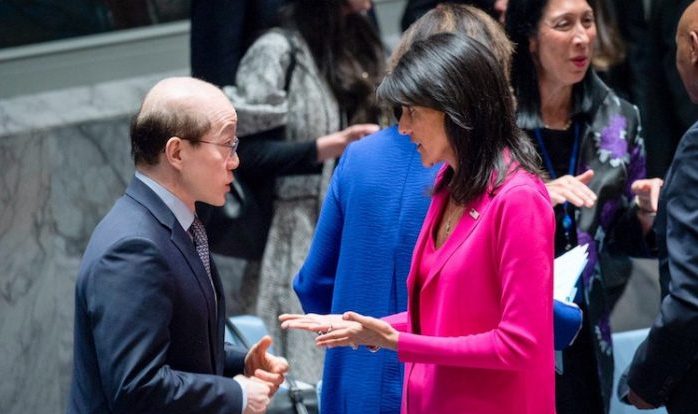
Less than 24 hours the Iran lobby was crowing about the Trump administration’s decision to re-certify the Iranian regime in compliance for another 90 days with the nuclear agreement, it went on the offensive as it faced a barrage of explicit statements from high-ranking officials denouncing the Iranian regime including United Nations ambassador Nikki Haley, Defense Secretary James Mattis and Secretary of State Rex Tillerson.

All three, top foreign policy and defense officials made the same statement that the source of trouble in the Middle East today was based in Tehran and that only a policy comprehensively dealing with all aspects of the Iranian regime was going to work moving forward in returning stability to the region.

For the mullahs in Tehran and their Iran lobby supporters, the objective has always been to divide and conquer the issues the rest of the world finds objectionable towards Iran; such as its support for terrorist groups like Hezbollah and dictators like Bashar al-Assad in Syria, as well as a dismal human rights record that would make Joseph Goebbels proud.

Which is why the Iran lobby’s cheering for the 90-day compliance notice had a lifespan of a gnat since it was merely a formality while the administration conducts a national security review of policy towards Iran.

But that didn’t stop the National Iranian American Council from bloviating like a water buffalo in heat.

“It’s a significant contradiction to first come out and say that the Iranians – contrary to all of their claims that Iran would be cheating – actually is living up to the deal only to come out the day after and saying, well, we hate the deal anyways and signaling that the U.S. might actually be walking away from the deal, unless of course the aim is to get rid of the deal without the U.S. having to pay the cost for it, meaning instead of the U.S. violating the deal directly by not renewing these sanctions waivers, killing the deal by escalating tensions in Yemen and elsewhere in the region and hoping that that will force the Iranians out of the deal,” said Trita Parsi, NIAC president on NPR.

Parsi is trying to have it both ways in separating the nuclear from other issues such as human rights or Iran’s meddling in wars raging in Syria and Yemen, but he deliberately skips over the most glaring consequence of the nuclear deal which is because we separated these issues, the mullahs were free to act without fear of reprisal in their ambitions for Syria or in the crushing of dissent at home.

The cold hard truth is that these are all connected issues like the strings of a spider web; the web would never succeed or exist unless all the strands were connected and working together.

The Iranian regime, for lack of a better comparison, is a legal criminal enterprise on a national scale. It concentrates power ruthlessly at the very top, uses the judicial system and religion to enforce disciple and stifle dissent while its military owns just about every industrial activity and skims off the top to line the pockets of the elites.

It’s like the Sopranos on steroids, except Ali Khamenei isn’t seeing a shrink unfortunately.

Of course other members of the Iran lobby weighed in too as Reza Marashi from the NIAC penned a ludicrous piece on TopTopic in which he claimed the European Union was galvanized and united in supporting the Iranian regime.

Unfortunately, yesterday’s terror attack on the Champs-Elysees in Paris only reinforced a growing uncertainty throughout a Europe that has been rattled by Islamic extremists attacks in Berlin, Brussels, Paris and elsewhere.

“While U.S. policy congeals, most European stakeholders remain in wait-and-see mode before making policy decisions – rather than taking steps to shape American policy,” Marashi writes.

We’re sure Marashi wishes for the good old Obama days when the NIAC could pick up the phone and call the White House and find a receptive audience, but it and Europe and finding that shaping policy in the White House now is not about lobbying, but about answering the central question the Obama administration never bothered to ask: “How do we rein in Iranian excesses across the board?”

Parsi reinforced that complete lack of understanding in an editorial in the New York Times in which he cited “a number of potential land mines on the near horizon. The first is in Congress, where a bipartisan effort is underway to introduce new sanctions on Iran that, despite the protestations of the legislation’s sponsors, would violate the terms of the nuclear agreement by adding new conditions onto the deal.”

Once again Parsi ignores the inconvenient truth for the Iran lobby which is that in their mind anything “new” in terms of sanctions levied against the Iranian regime would be considered a violation of the terms of the agreement, even though the agreement was purposely devoid of any clauses or mention of issues such as human rights.

Their twisted pretzel logic has them boxed in where now they are forced to denounce any and all efforts to sanction Iran as a threat to the regime. If Iranian warplanes dropped sarin gas on Sunni refugees in Iraq, Parsi and his colleagues would undoubtedly argue against any sanctions as a violation of the agreement; a convenient catch-all.

It’s also hilarious Parsi raises the prospect of a “moderate” Hassan Rouhani being defeated at the ballot box in next month’s elections since he ignores Iran’s long history of rigging every election. In fact, the regime’s Guardian Council only yesterday tossed former president Mahmoud Ahmadinejad off the ballot after much fanfare of him registering as a candidate.

In Iran, you don’t get on the ballot unless you are expected to get the blessing of the mullahs.

The most absurd comment Parsi makes is the assertion that if the U.S. reneges on the deal, Iran will undoubtedly move forward with its nuclear ambitions.

We hate to break it to the regime lackey, but the deal—by Parsi’s own admission—was never designed to halt Iranian nuclear work, only slow it down by a decade before the much ballyhooed “breakout period,” but even that has been whittled down by most analysts to just a few years.

All of which makes the statement issued by the NIAC in response to Secretary Tillerson’s remarks the other day even more laughable.

“There is little room to interpret this statement as anything less than a proclamation of the Trump administration’s intent to scrap the nuclear deal and reset the United States on a path to war,” said the NIAC.

Have they not been paying attention to Syria, Iraq, Yemen or Bahrain lately?

Michael Tomlinson

Filed Under: Blog, Current Trend, National Iranian-American Council, News Tagged With: #NuclearDeal, Appeasement policy, Featured, Iran, Iran deal, Iran Human rights, Iran Lobby, Iran Mullahs, Iran sanctions, National Iranian American Council, NIAC, NIAC Action, Reza Marashi, Syria, Trita Parsi, Yemen

  • « Previous Page
  • 1
  • …
  • 3
  • 4
  • 5
  • 6
  • 7
  • …
  • 15
  • Next Page »

National Iranian-American Council (NIAC)

  • Bogus Memberships
  • Survey
  • Lobbying
  • Iranians for International Cooperation
  • Defamation Lawsuit
  • People’s Mojahedin
  • Trita Parsi Biography
  • Parsi/Namazi Lobbying Plan
  • Parsi Links to Namazi & Iranian Regime
  • Namazi, NIAC Ringleader
  • Collaborating with Iran’s Ambassador

Recent Posts

  • NIAC Trying to Gain Influence On U.S. Congress
  • While Iran Lobby Plays Blame Game Iran Goes Nuclear
  • Iran Lobby Jumps on Detention of Iranian Newscaster
  • Bad News for Iran Swamps Iran Lobby
  • Iran Starts Off Year by Banning Instagram

© Copyright 2026 IranLobby.net · All Rights Reserved.